Route guide for visitors throughout Catalonia – Barcelona – Costa Brava – Catalan Pyrenees – Personalized experiences – Customized tour guide services – A small tribute to the wonderful city and land that saw us born – Transforming experiences into unforgettable memories - Magic Dreams Collection: exclusive universes inspired by Salvador Dalí and Gaudí. Niche perfumes, jewelry, lithographs, and collectible items celebrating the Mediterranean spirit.
In the upper area of Barcelona, discreet yet deeply evocative, stand the Güell Pavilions, one of the most elegant works of Antoni Gaudí. Built between 1884 and 1887 by commission of Eusebi Güell, this architectural ensemble represents a key early stage in the evolution of …
Torre de Radiodifusión de Montjuïc · Barcelona La Torre de Radiodifusión de Montjuïc, diseñada por el arquitecto e ingeniero valenciano Santiago Calatrava, es una de las obras más emblemáticas de Barcelona. Construida entre 1989 y 1992, se encuentra en el corazón de la Anilla Olímpica …
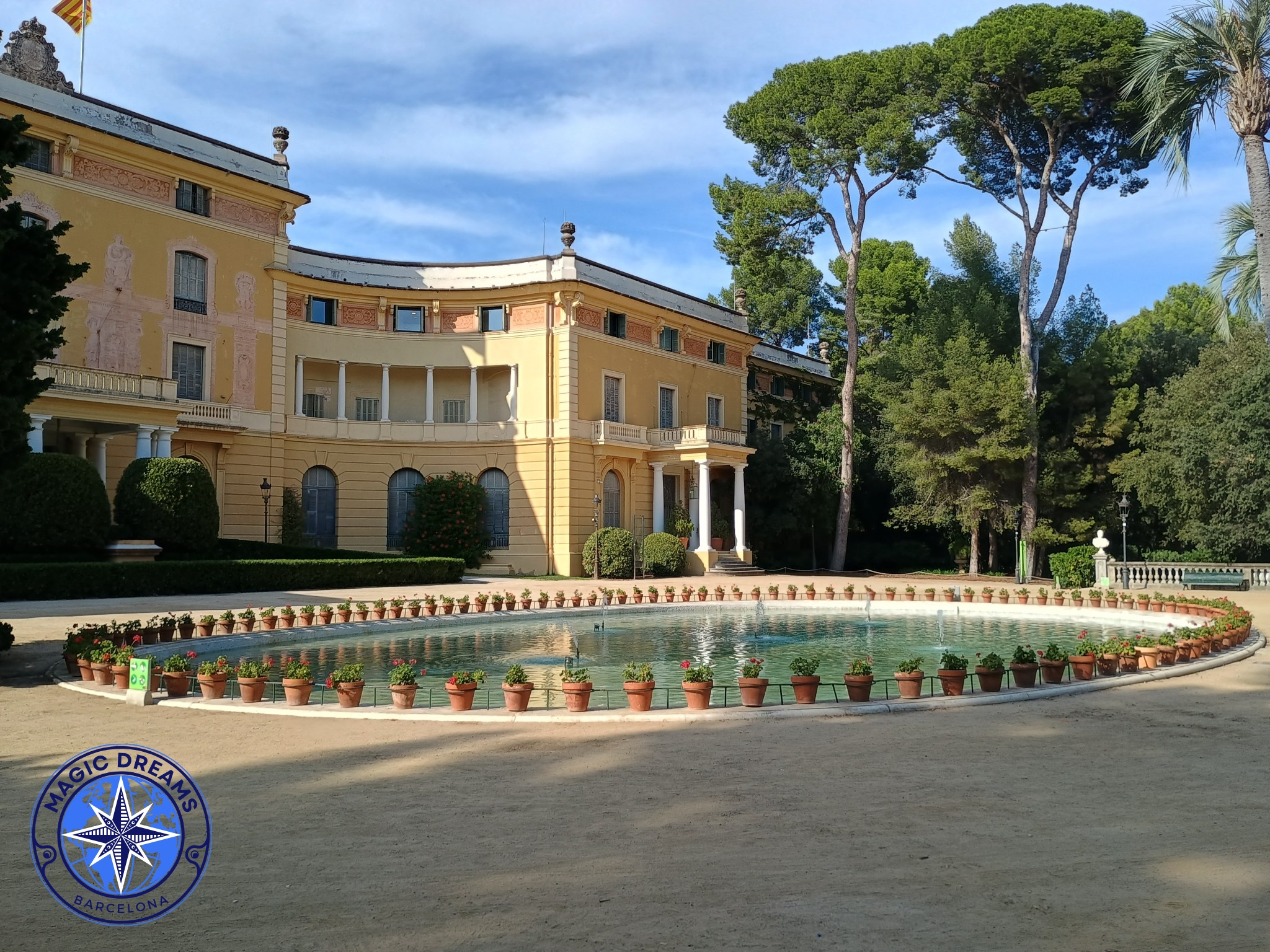
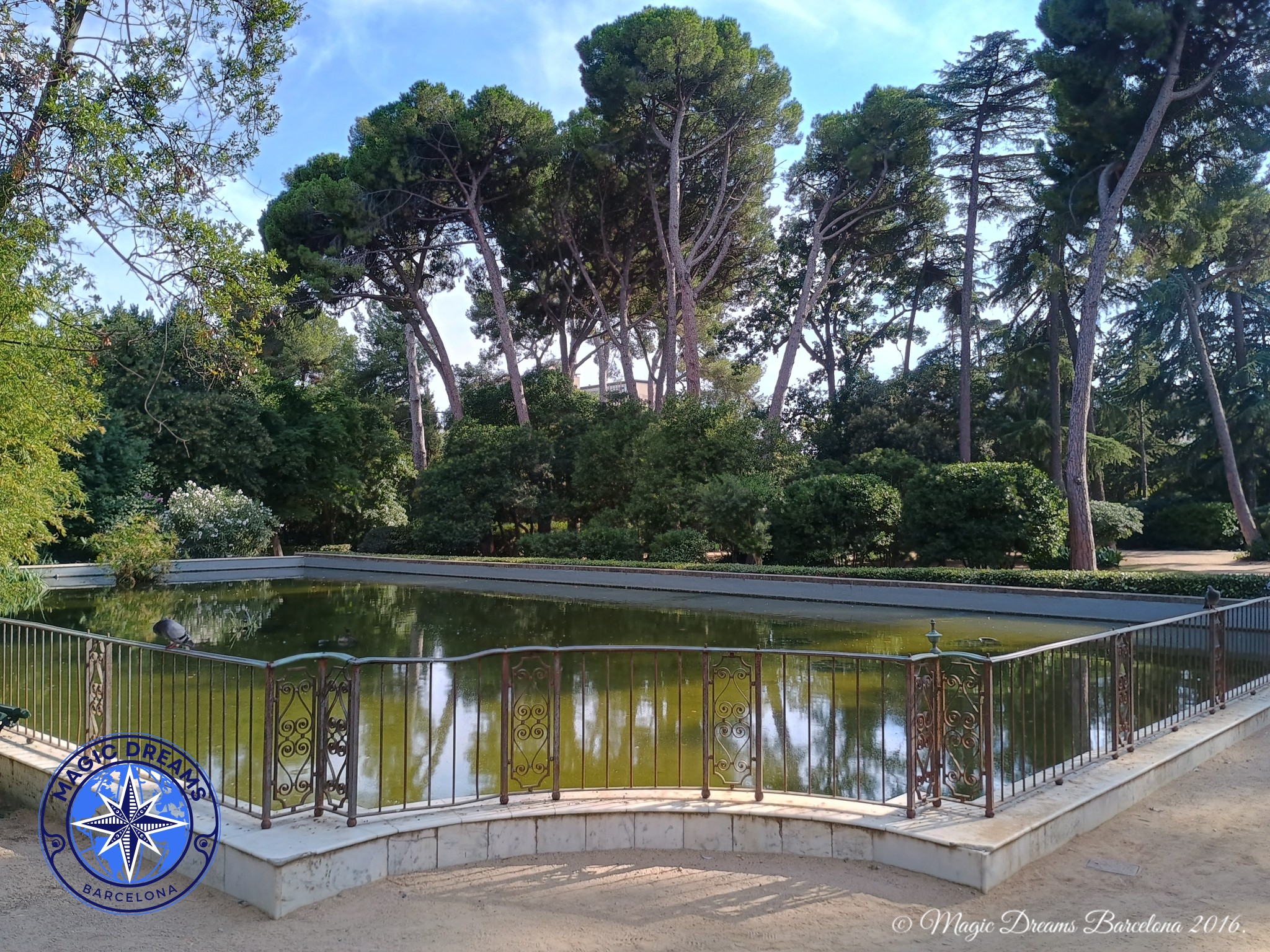
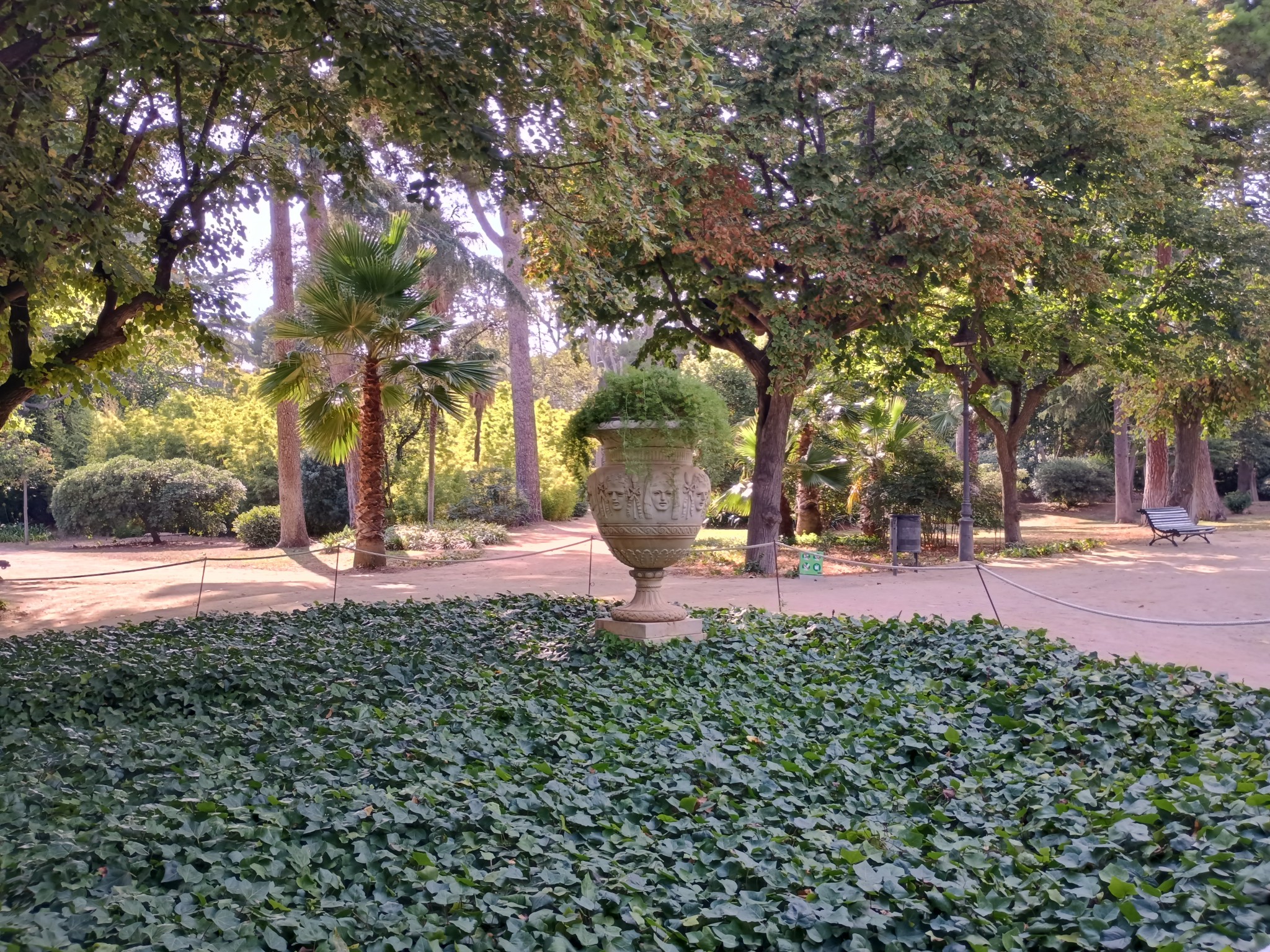
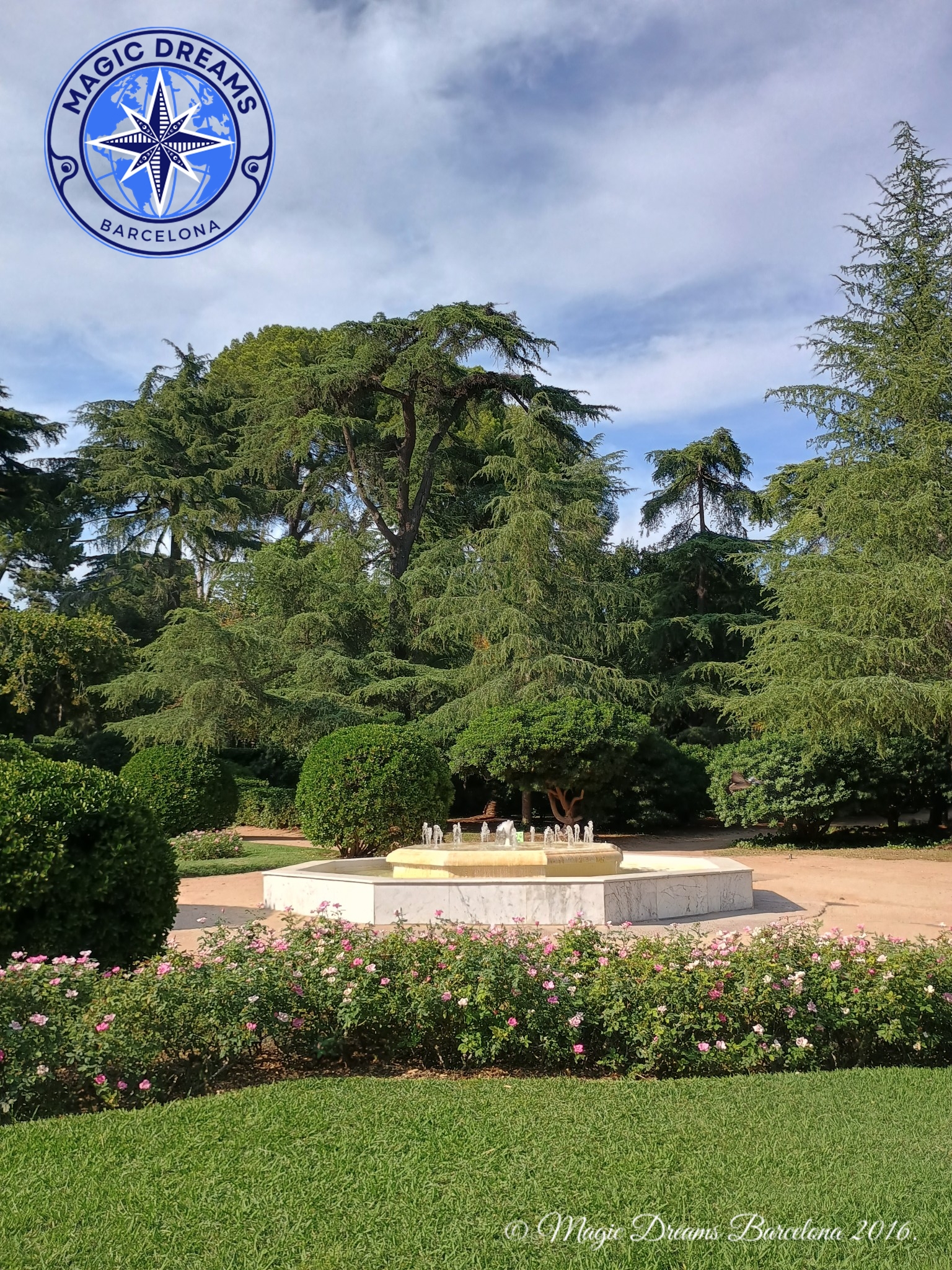
El Palacio Real de Pedralbes, situado en Avinguda Diagonal, 686,es un emblema de la historia, la arquitectura y la naturaleza que caracteriza a la ciudad. Concebido inicialmente como residencia aristocrática y posteriormente cedido a la Familia Real Española, este palacio refleja la elegancia neoclásica combinada con la sensibilidad paisajística del siglo XX. Su diseño estuvo a cargo de los arquitectos Eusebi Bona y Francesc de P. Nebot, mientras que los jardines fueron desarrollados con influencia de Antoni Gaudí y Nicolau Maria Rubió i Tudurí, quienes integraron fuentes, esculturas y especies vegetales de gran valor histórico y ornamental.
Historia y Arquitectura
La transformación del antiguo Can Feliu en palacio real comenzó en 1919 y se completó en 1924, incorporando una capilla neogótica y salones decorados con mobiliario elegante. La residencia refleja el gusto aristocrático y la armonía entre espacios interiores y exteriores, constituyendo un verdadero testimonio del patrimonio cultural catalán.
Jardines y Naturaleza
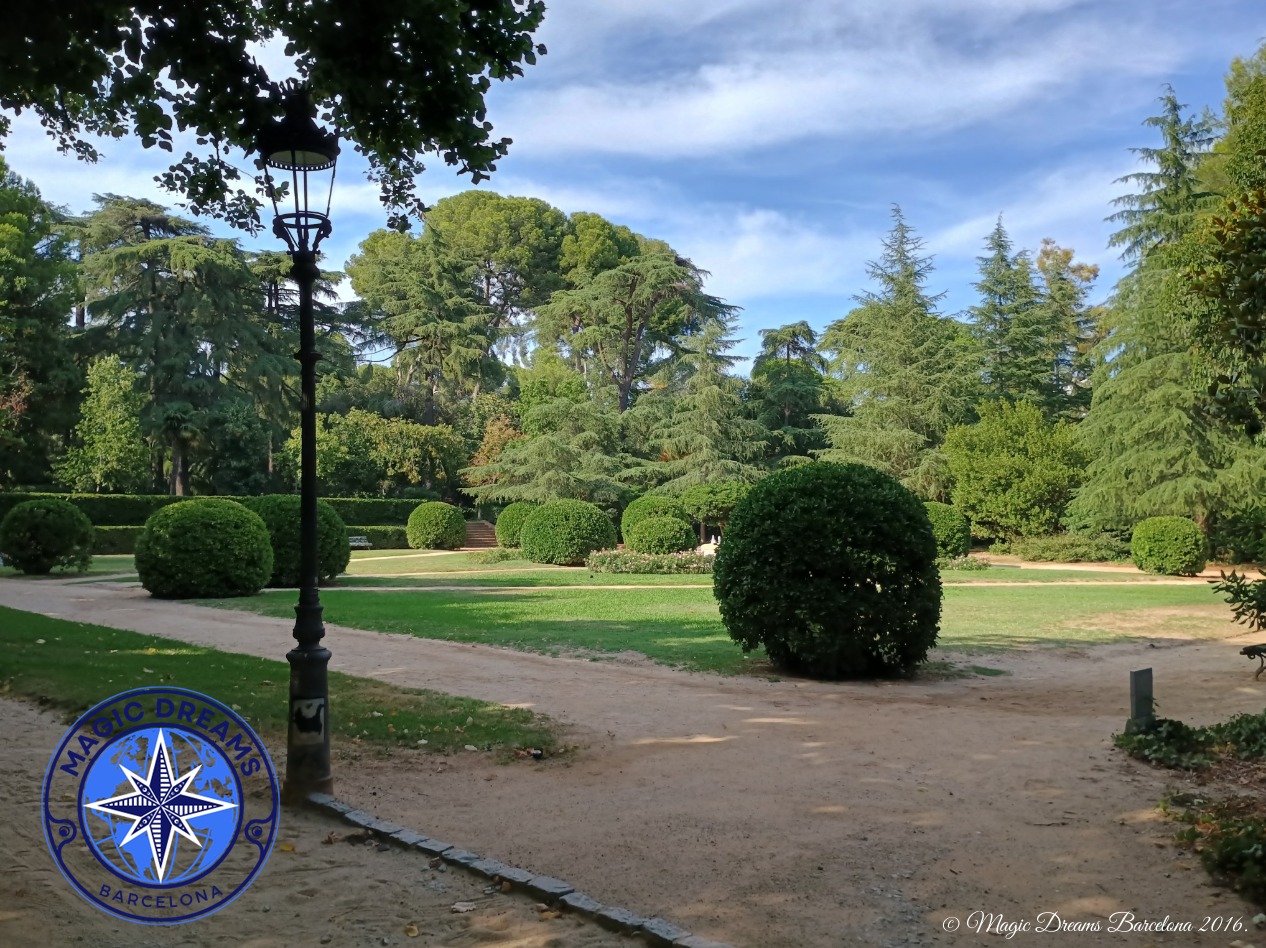
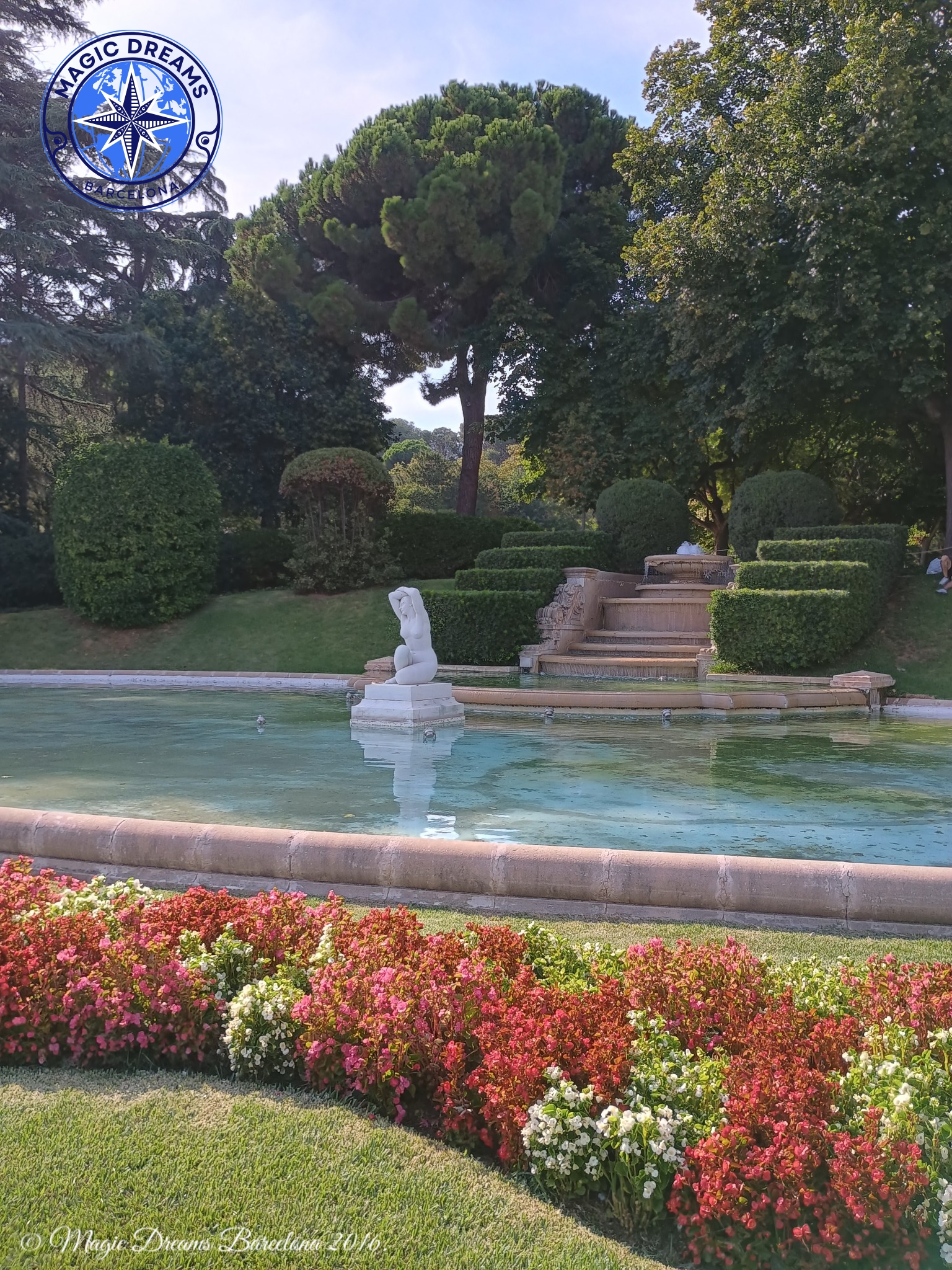
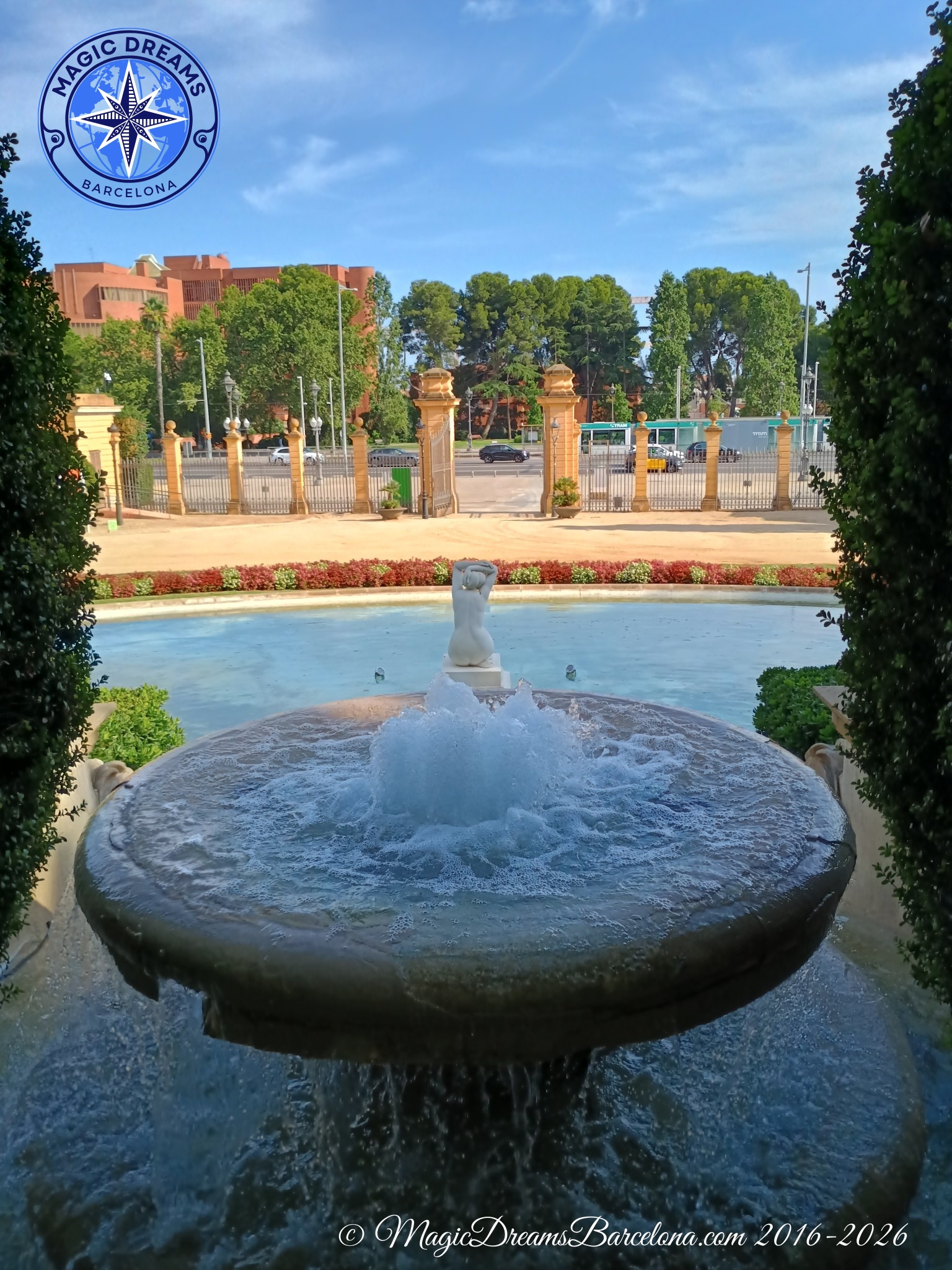
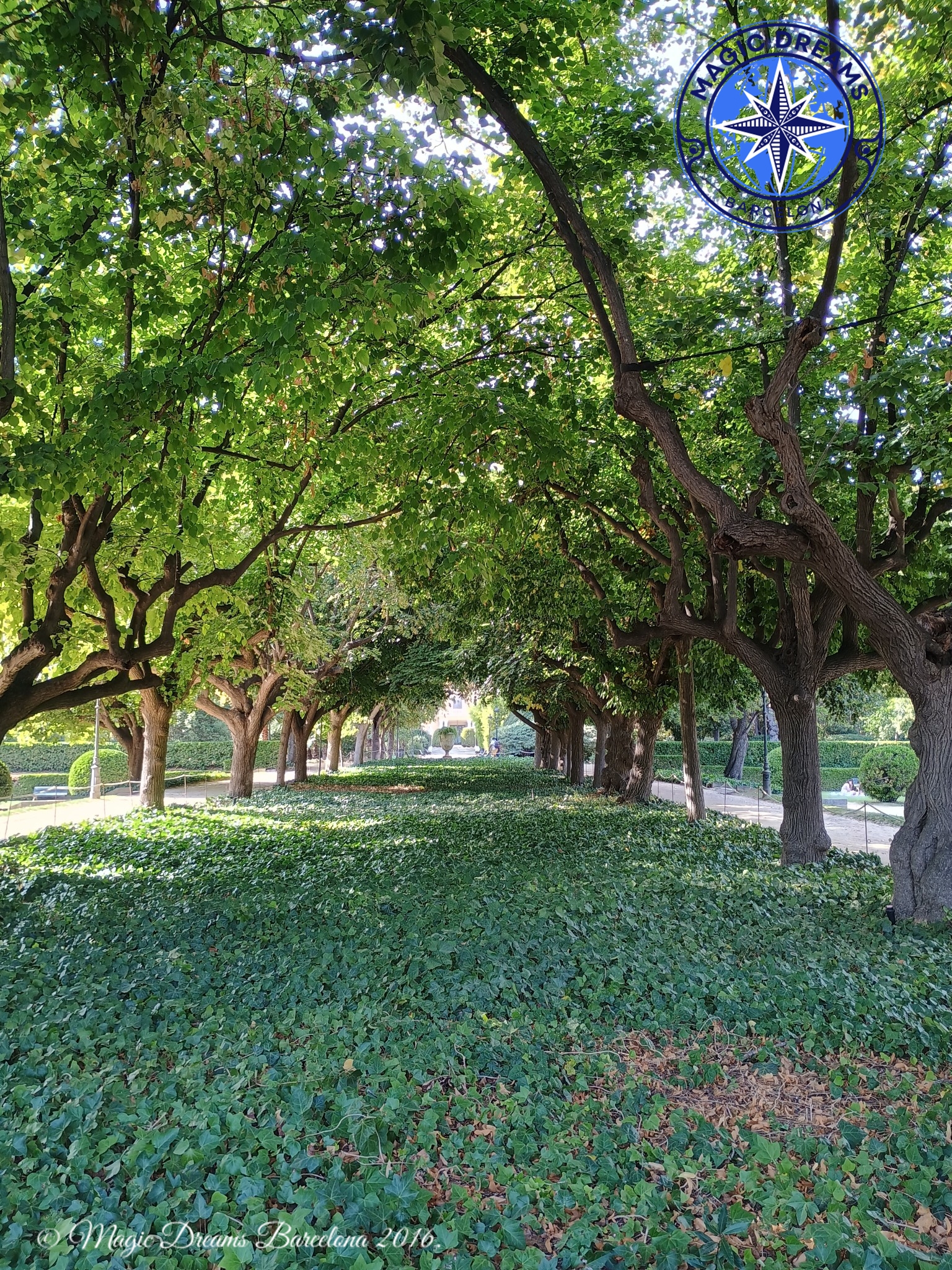
Los jardines que rodean el palacio combinan estilos francés e inglés, con árboles centenarios y especies autóctonas mediterráneas como magnolias, palmeras, cipreses y pinos. La Font d’Hèrcules de Gaudí y diferentes esculturas completan un recorrido donde arte y naturaleza se funden. Además, el espacio permite la observación de aves locales y la exploración de la flora de forma sensorial y educativa.
Servicios y Experiencias Magic Dreams Barcelona
Todo ello pueden descubrirlo de la mano de Magic Dreams Barcelona, un servicio diseñado para que no tengan que preocuparse de nada. Nos encargamos de cada detalle para que se sientan cómodos y acompañados en todo momento.
Ofrecemos transporte privado, guía turístico profesional en castellano, catalán e inglés —y en otros idiomas bajo aviso previo—, adaptándonos siempre a sus necesidades. Contamos con alojamientos seleccionados con esmero y experiencias personalizadas, como picnics en los jardines con mantelería a elegir y catering de autor, que incluyen opciones dulces y saladas, así como selección de zumos naturales, vinos y cavas sin alcohol.
Ponemos a su disposición servicio de floristería personalizada, guía arquitectónico y artístico, profundizando en el simbolismo y la historia local. Somos guías locales que enseñamos la Barcelona más auténtica, complementando la experiencia con actividades artísticas, música en vivo y cenas temáticas, tanto en los espacios de nuestra selección como en la intimidad de su alojamiento, con chefs nativos e internacionales.
Nuestra experiencia se enriquece con la presencia de un guía nativo y experto en botánica emocional, quien ofrece lecturas sensibles y didácticas del entorno durante el recorrido y especialmente durante el picnic. Se explican las especies vegetales, su simbolismo, historia y relación con el paisaje mediterráneo, junto con la observación y reconocimiento de aves, transformando cada explicación en un relato vivo y memorable.
Nuestro objetivo es que cada visitante se sienta cuidado, inspirado y libre para descubrir la magia de Barcelona, viviendo la ciudad no solo como un destino, sino como una experiencia sensorial, educativa y emocional.
Horarios y Acceso
El palacio y sus jardines están abiertos generalmente de martes a domingo, de 10:00 a 18:00 horas, aunque se recomienda verificar los horarios antes de la visita, especialmente durante exposiciones y eventos especiales.
Casa Vicens: el origen de un genio, donde la naturaleza se convierte en arquitectura Casa Vicens no es solo una obra arquitectónica, es el punto de partida del universo creativo de Antoni Gaudí. Construida entre 1883 y 1885 en la entonces villa de Gràcia, esta …
La plaza Real es uno de los lugares más emblemáticos de la ciudad además de activos, tanto por el día como por las noches, con una esencia cosmopolita-bohemio-artística; colinda con la Rambla dels Caputxins, la calle Ferran, la calle Colón y la calle Escudellers y …
La oferta museística de Barcelona es una de las más diversas de Europa, existen aproximadamente unos 105 museos en Barcelona que cubren una variedad de materias que incluyen arte, historia, arquitectura, ciencia, deporte, guerra y el mar, a continuación encontrareis un lista de todos ellos con breve explicación:
1.- Aquarium: Situado en el Port Vell de Barcelona, es el principal y único gran acuario de la ciudad y de Cataluña. Además, es el centro más importante del mundo en temática mediterránea.
2.- Archivo de la Corona de Aragón: El Archivo General de la Corona de Aragón es un archivo histórico Español con sede en Barcelona, dependiente del Ministerio de Cultura y Deporte, situado en el Carrer dels Comtes, 2.
3.- Archivo Fotográfico de Barcelona: Es un Museo dedicado a la recogida, conservación, organización y difusión de los fondos fotográficos de carácter histórico generados por el Ayuntamiento de Barcelona, está situado en Plaça de Pons i Clerch, 2.
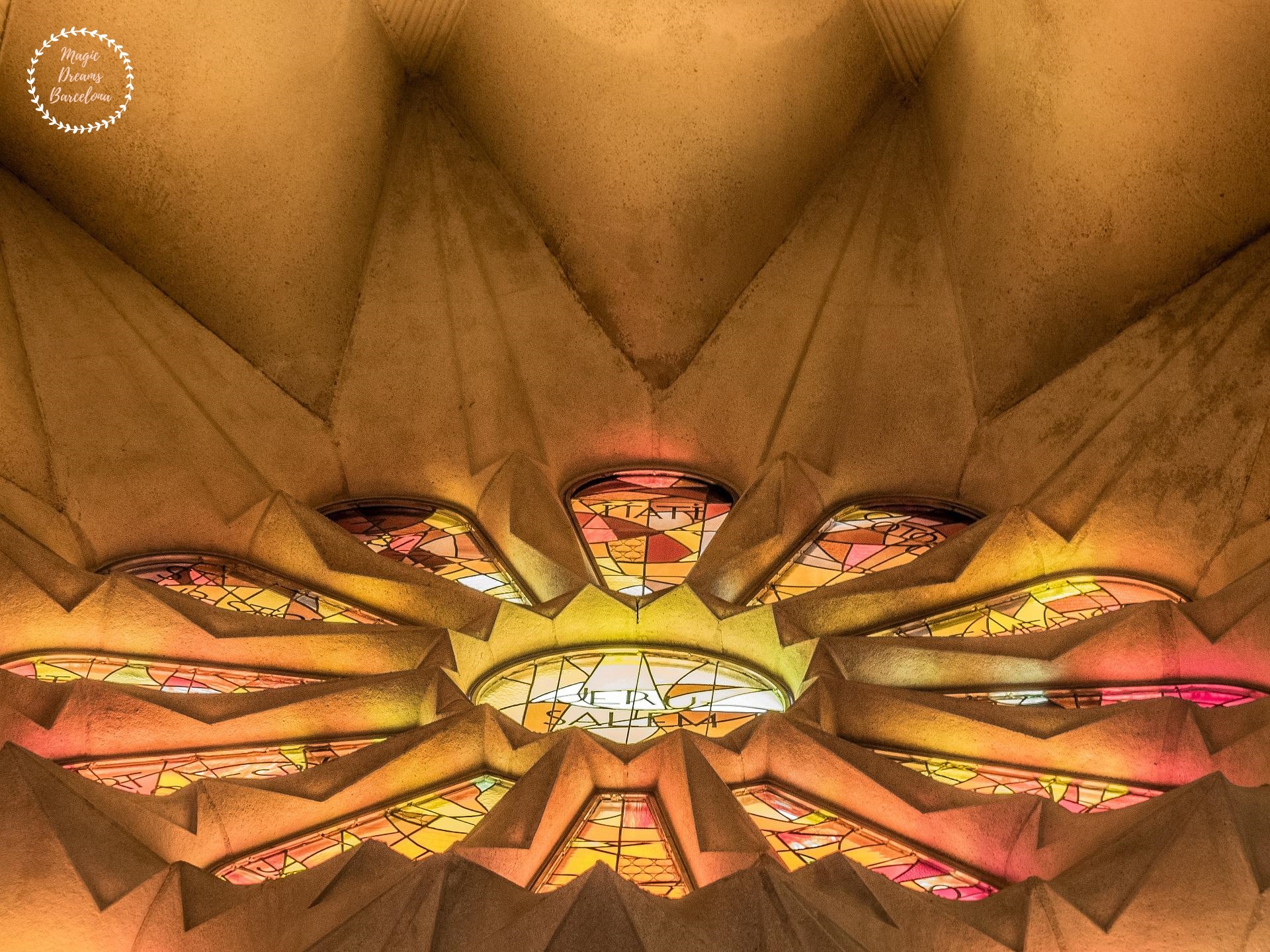
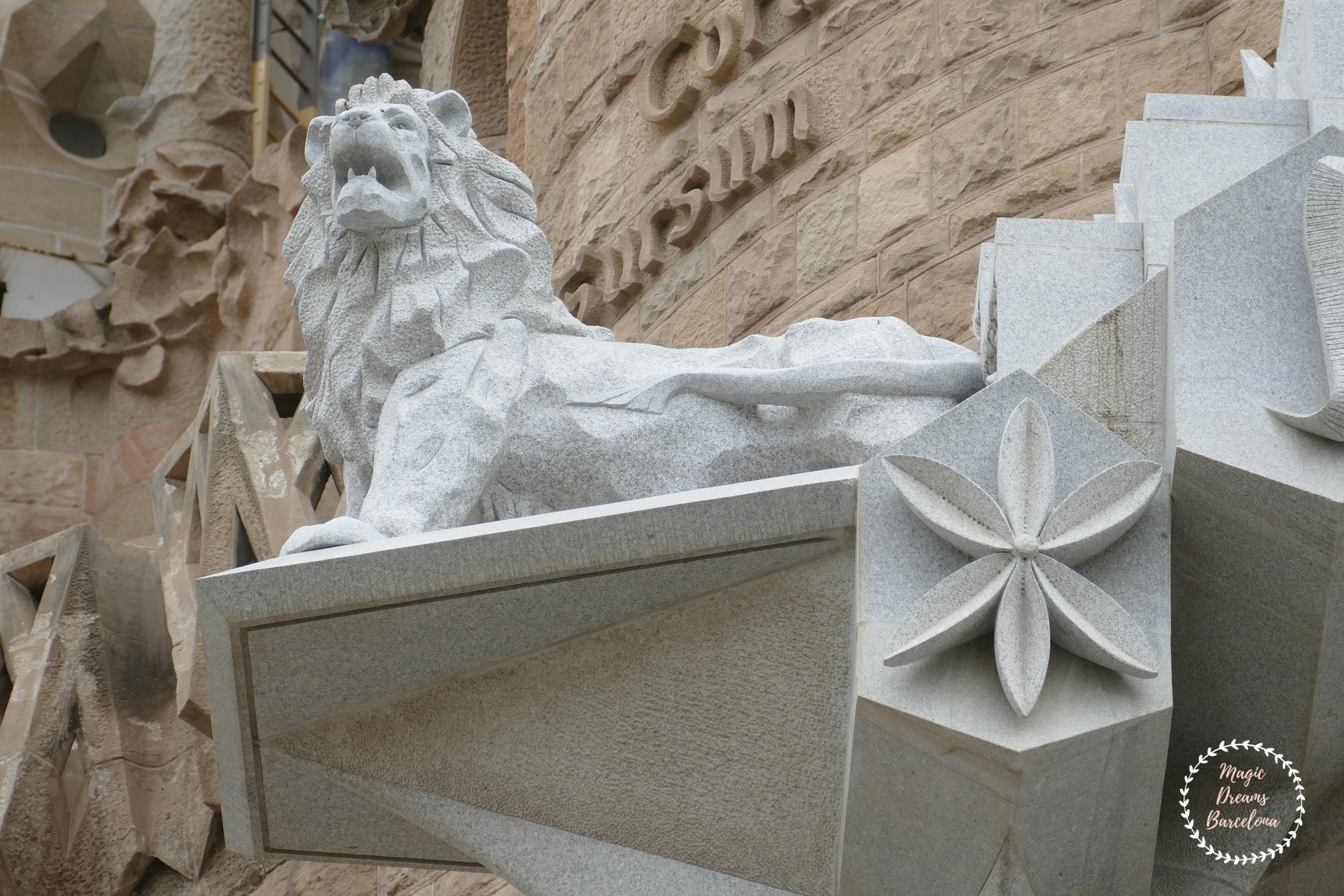
Detalle rosetón en el Museo-Templo Expiatorio de la Sagrada Familia de Antoni Gaudí.
4.- Archivo Joan Maragall: Es un centro de documentación que reúne un importante fondo documental sobre la figura y la obra del poeta y el conjunto del Modernismo. Está situado en la última residencia de Joan Maragall, en el número 79 de la calle Alfonso XII, en el distrito de Sarriá-San Gervasio de Barcelona.
5.- Archivo Histórico de la Ciudad de Barcelona: Es el archivo responsable de la custodia, tratamiento y difusión de la documentación producida por los órganos de gobierno de la ciudad de Barcelona, situado en la Casa de l’Ardiaca, Carrer de Santa Llúcia, 1.
6.- Arts Santa Mònica: Espacio donde confluyen e interactúan diferentes disciplinas artísticas, desde las artes visuales y las artes escénicas hasta la música, la creación audiovisual y el diseño, está situado en el Carrer la Rambla, 7.
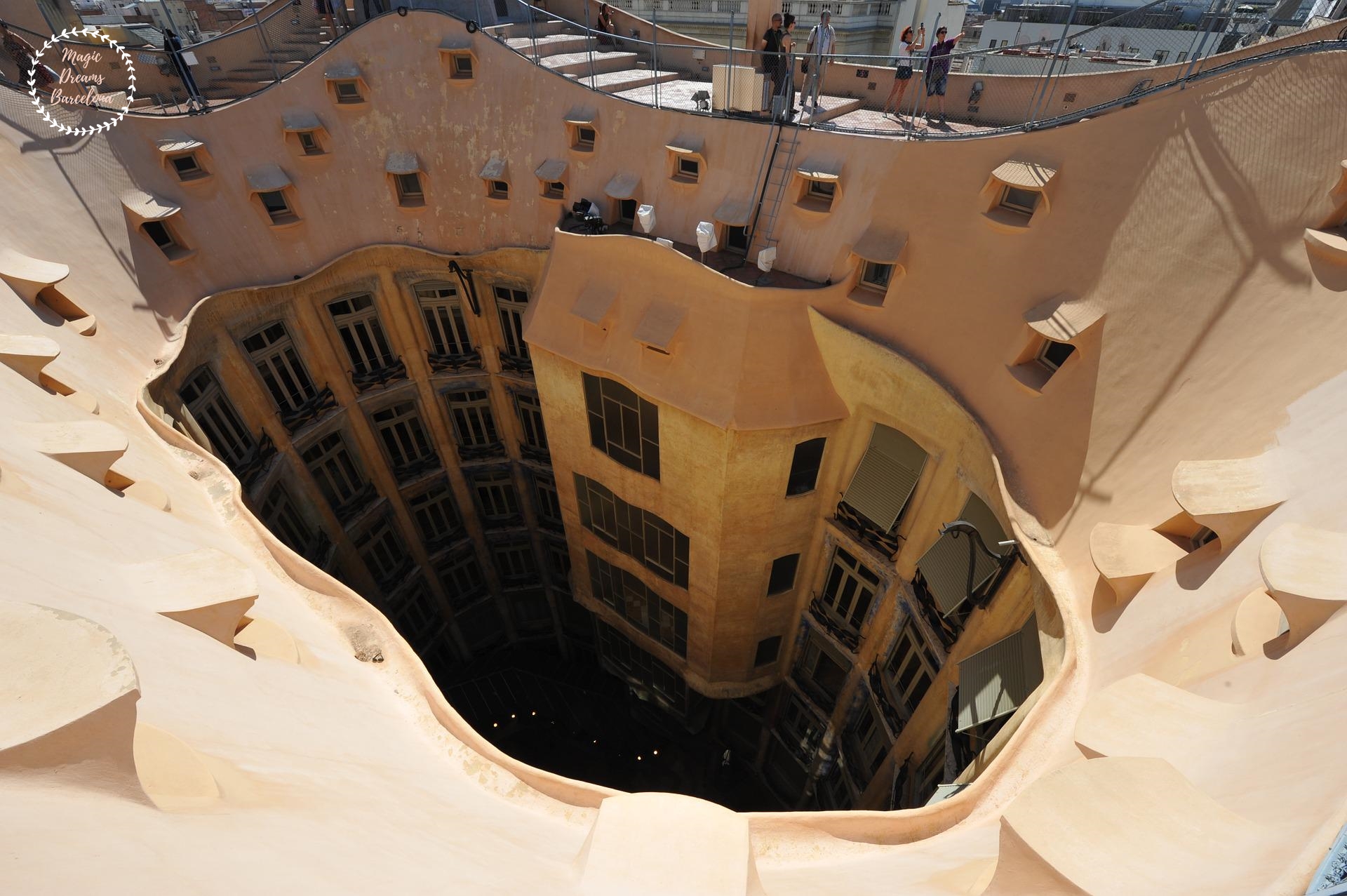
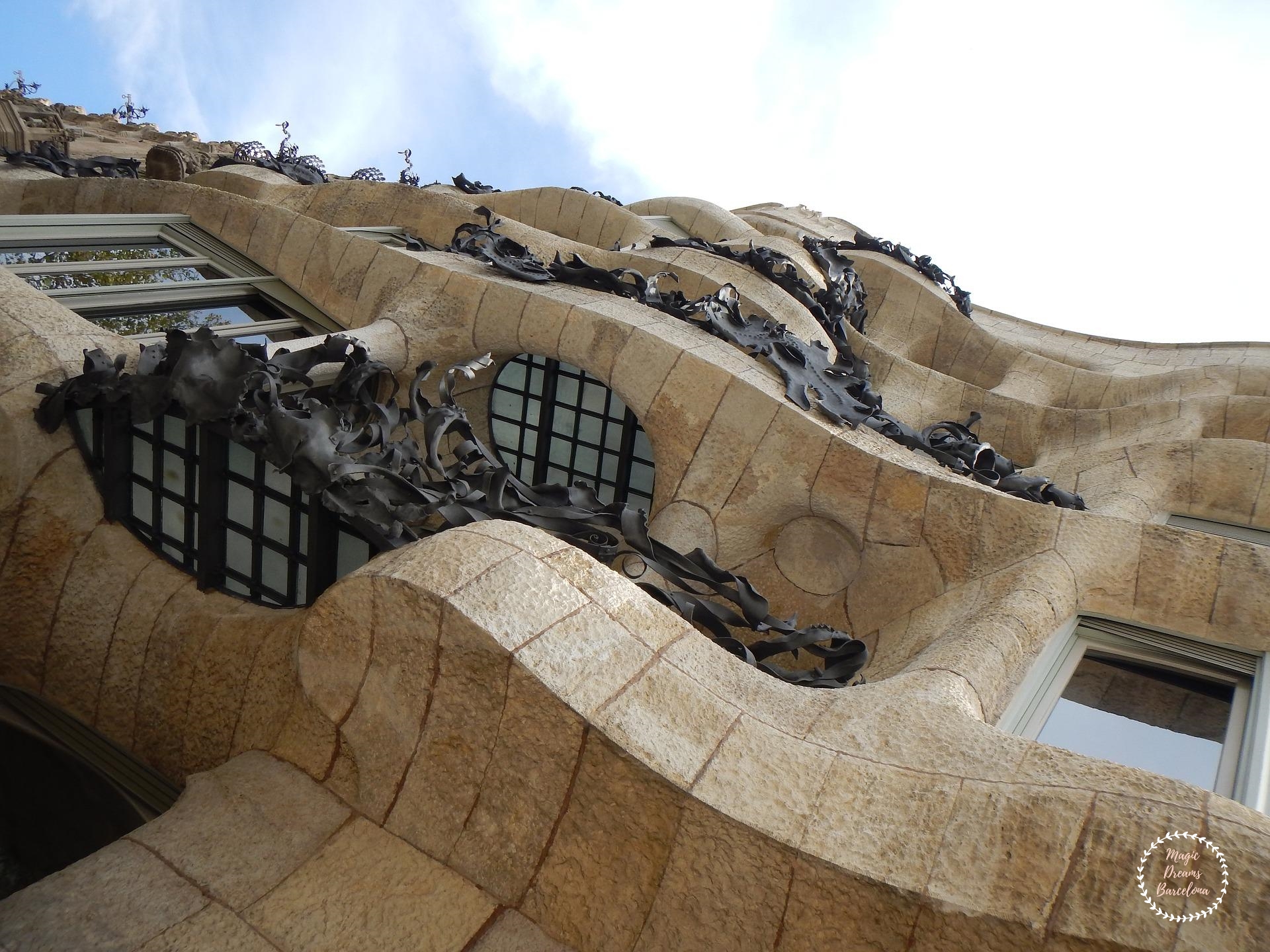
Detalle exterior en la Casa-Museo de la Pedrera-Casa Milá de Antoni Gaudí.
7.- Biblioteca de Cataluña: Es un organismo adscrito al Departamento de Cultura de la Generalitat como biblioteca nacional con competencias en la recolección, conservación, preservación y difusión del patrimonio, y en la normativa bibliográfica y catalogación, está situada en el Carrer de l’Hospital, 56.
8.- Capilla de Santa Ágata (MUHBA): La Capilla de Santa Ágata de Barcelona es un edificio de arquitectura gótica del año 1302, situado en la plaza del Rey en el centro del barrio gótico barcelonés. En la actualidad, el Salón del Tinell junto con la Capilla de Santa Ágata forman parte del Museo de Historia de Barcelona.
9.- Casa Amatller: La Casa Amatller es un edificio modernista de Barcelona colindante con la Casa Batlló y cerca de la Casa Lleó Morera. Fue proyectado por el arquitecto Josep Puig i Cadafalch entre 1898 y 1900, está situado en el Paseo de Gràcia, 41.
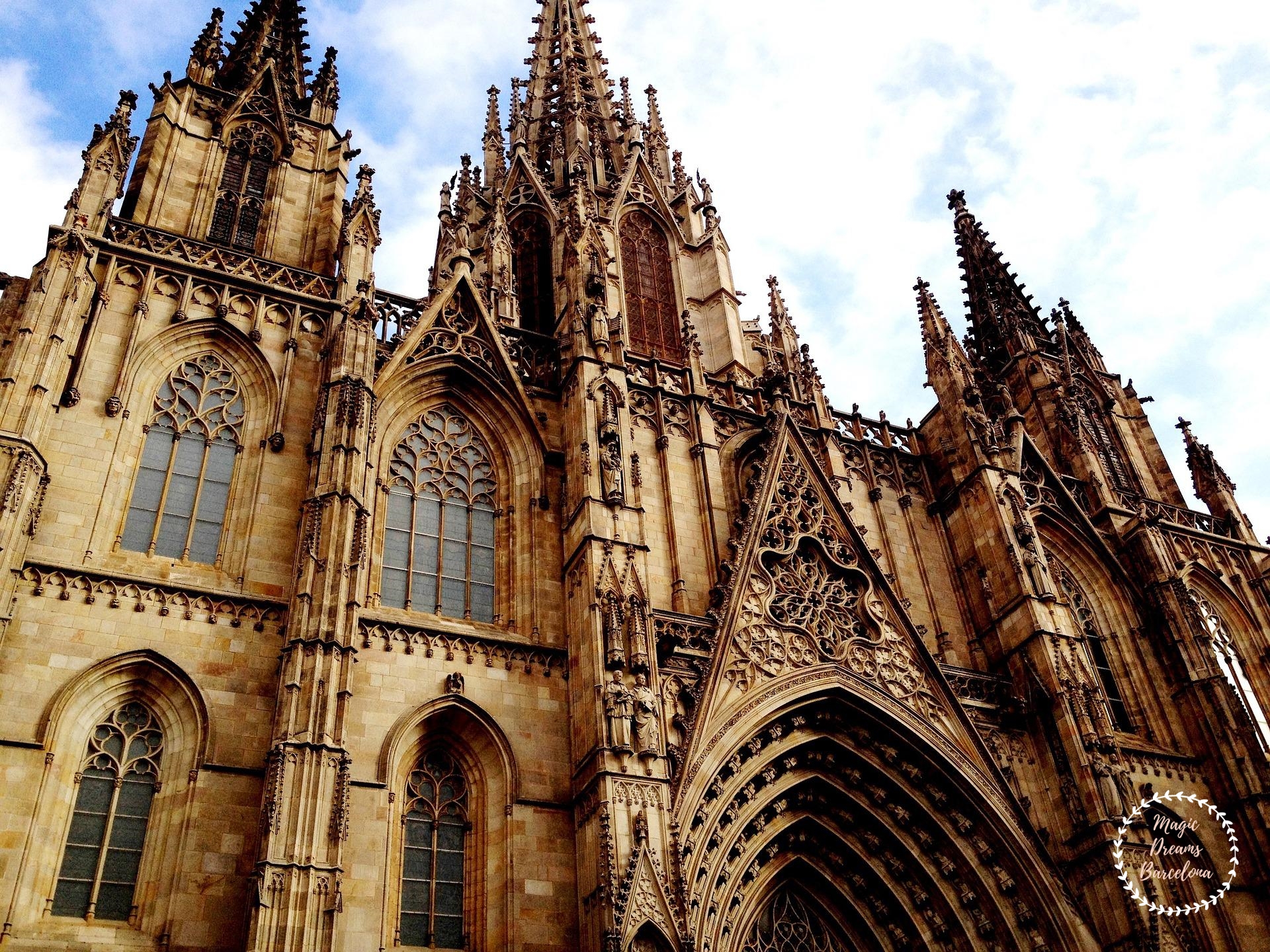
Detalle exterior Museo-Catedral Gótica de Barcelona.
10.- Casa Asia: Casa Asia tiene por objetivo contribuir a un mejor conocimiento y al impulso de las relaciones entre las sociedades de Asia, el Pacífico y España en el ámbito institucional, económico, cultural, y educativo, además de facilitar el intercambio de culturas, ideas y proyectos de interés común, está situada en el Recinto de Can Tiana, C/ de Bolívia, 56 y también tiene sede en uno de los pabellones del Recinto Modernista de Sant Pau.
11.- Casa Batlló: Es Patrimonio Mundial de la Unesco, y un icono de la ciudad de Barcelona, una parada imprescindible para conocer la obra de Gaudí y el modernismo en su máxima expresión. También es uno de los atractivos culturales y turísticos mejor valorados, acogiendo a 1 millón de visitantes al año, está situada en Paseo de Gràcia, 43.
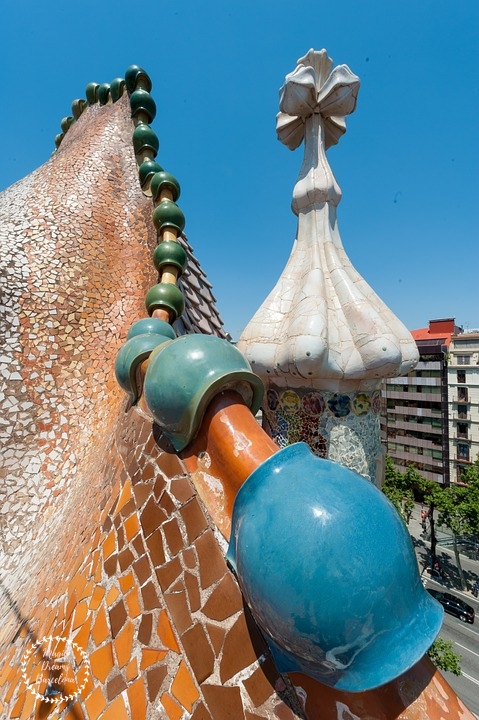
Detalle exterior Casa-Museo Batlló de Antoni Gaudí.
12.- Casa del Agua (MUHBA): La Casa del Agua de Trinitat Vella era la estación elevadora de agua del sistema de abastecimiento municipal de Barcelona, construido entre 1915 y 1919, año en que entró en funcionamiento. Después de la epidemia de tifus que asoló la ciudad en 1914, que produjo una alta mortalidad debido a la contaminación del agua distribuida por la compañía municipal, se renovó el sistema de suministro del agua.
El nuevo sistema se nutría de agua de la mina y de los pozos de Moncada, que desde la estación elevadora de Trinitat Vella se impulsaba hasta el depósito de la Trinitat Nova donde se cloro y desde donde, por gravedad, era conducida hasta Ciudad Vieja y la Barceloneta. Funcionó hasta 1989.
Actualmente esta instalación está en proceso de adecuación para la visita pública con el objetivo es hacer visitables las instalaciones principales la estación elevadora de Trinitat Vella, el depósito de Trinitat Nova y las conducciones que las conectan entre sí y con la ciudad y comprender la complejidad del suministro de agua en la ciudad de Barcelona. La exposición permanente instalada en la galería subterránea principal, muestra las estrategias y sistemas de provisión de agua a la ciudad desde la época romana hasta la actualidad, está situada en Carrer del Torrent de la Perera, s/n.
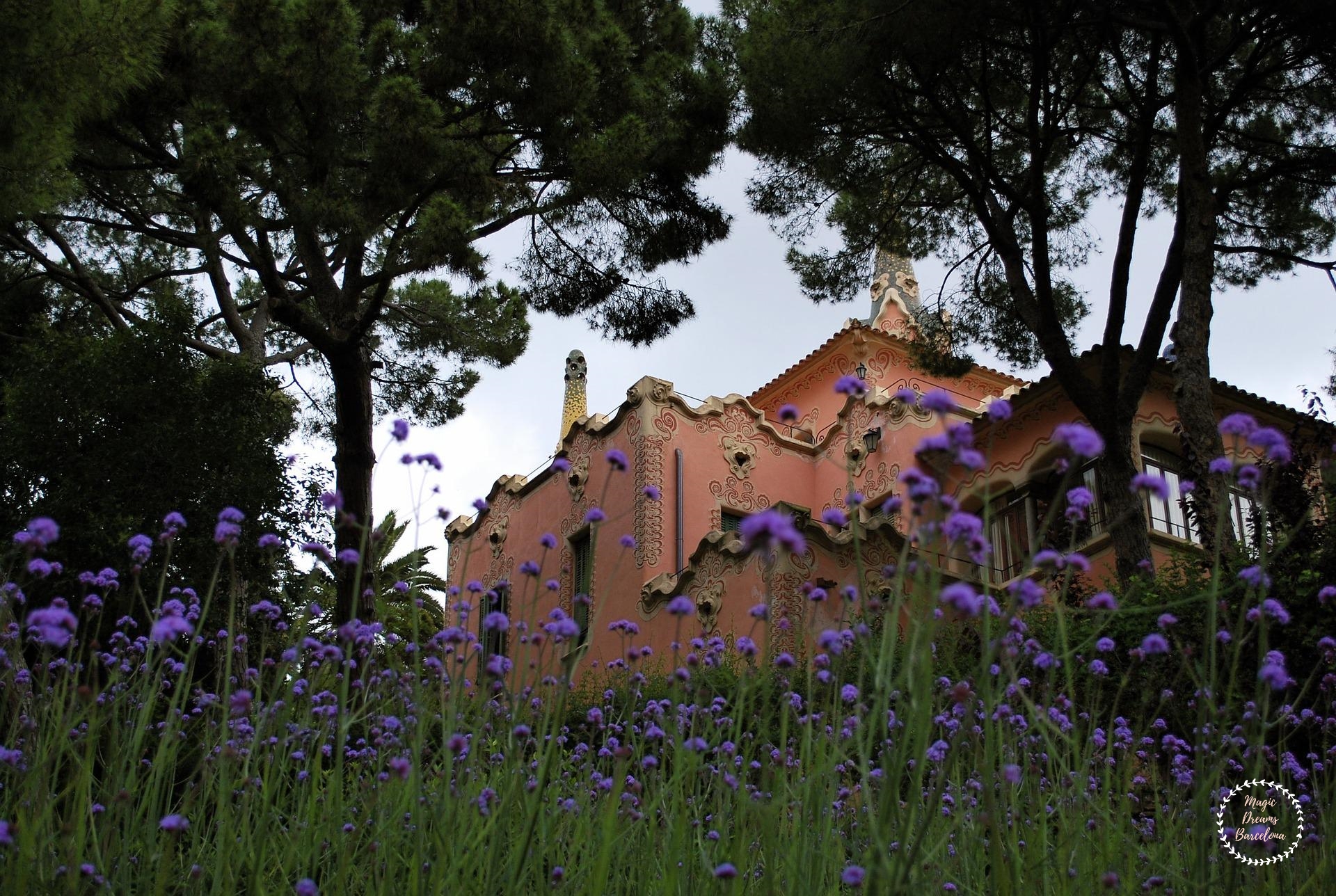
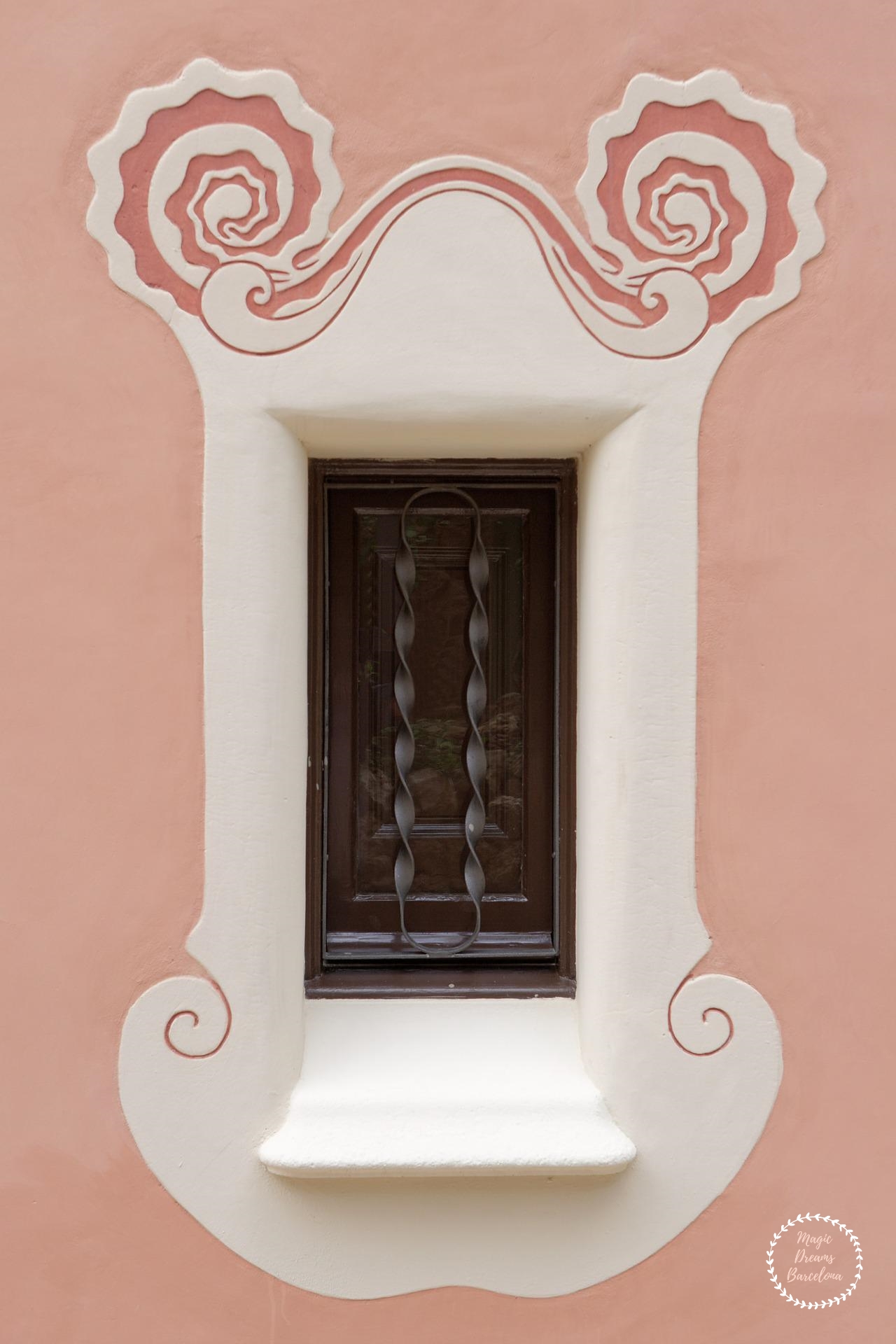
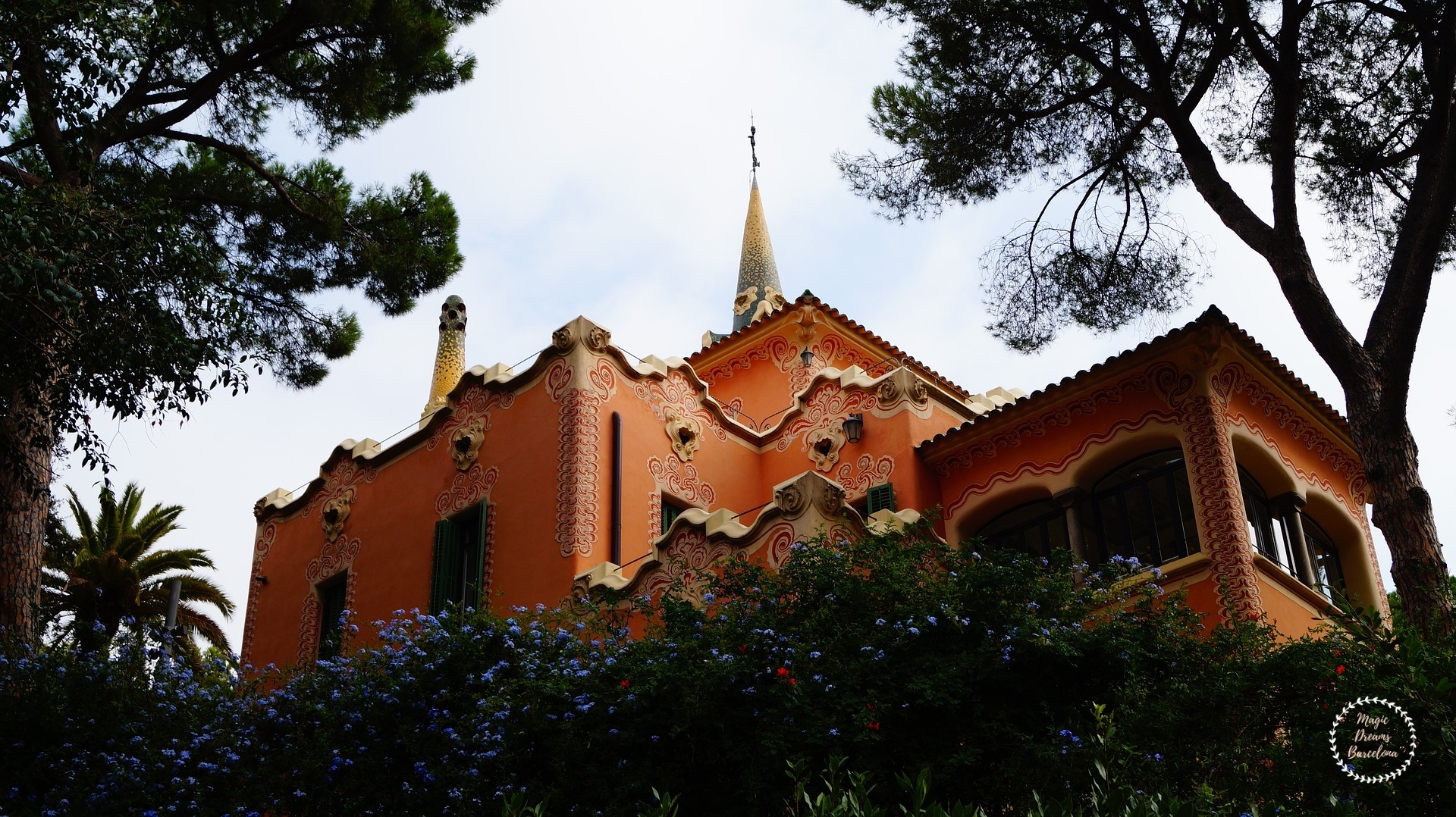
Detalle exterior de la Casa-Museo de Antoni Gaudí en el Park Güell.
13.- Casa Museo Gaudí: Está situada dentro del recinto del Park Güell, en el distrito de Gracia, en Barcelona. Fue la residencia de Antoni Gaudí durante casi veinte años, desde 1906 hasta finales de 1925.
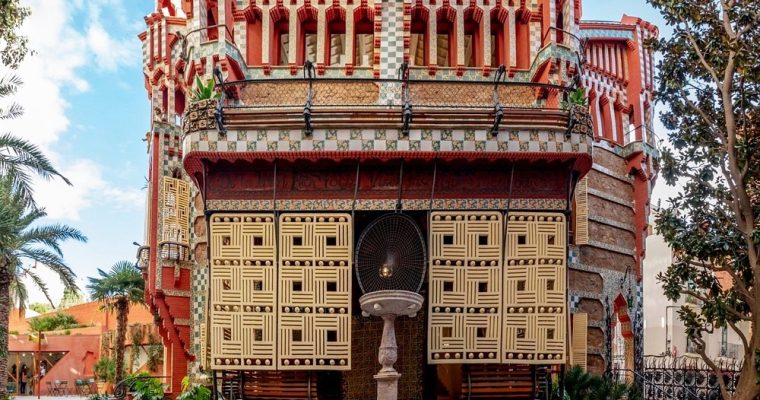
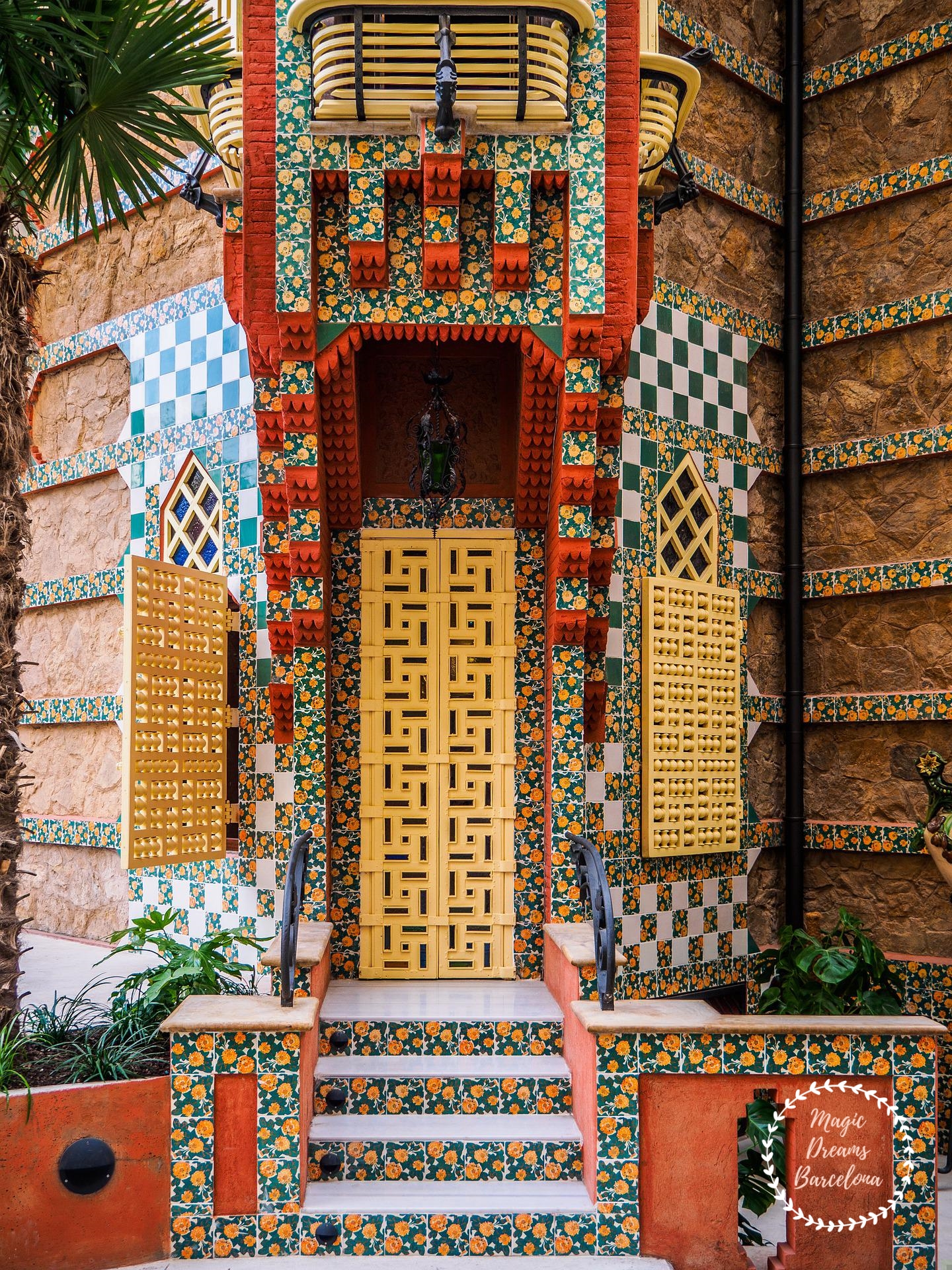
14.- Casa Vicens: Es un edificio modernista situado en Barcelona, en el distrito de Gracia. Obra de Antoni Gaudí, fue el primer proyecto de importancia del arquitecto. Se construyó entre 1883 y 1885, aunque Gaudí elaboró el proyecto original entre 1878 y 1880.
Detalle exterior de la Casa Vicens de Antoni Gaudí.
15.- Centro de Conocimiento e Investigación (Museo Picasso): El museo Picasso de barcelona es el primer museo que Picasso abrió en el mundo y el único que fue creado por voluntad propia del artista, posee una colección de más de 3500 obras del pintor, en los múltiples medios que abordó (pintura, escultura, dibujo, grabado) la cual es la más completa del mundo en obras de su juventud. Se encuentra situado en la calle Montcada 15-23 de la Ciudad Condal. Abrió sus puertas al público por primera vez el 9 de marzo de 1963. Está declarado museo de interés nacional por la Generalidad de Cataluña.
16.- Centro de Cultura Contemporánea de Barcelona (CCCB): Es uno de los centros culturales y expositivos más visitados de la ciudad de Barcelona. Situado en el Raval, tiene como temática principal la ciudad y la cultura urbana, está situado en el Carrer de Montalegre, 5.
17.- Centro de Documentación y Museo de las Artes Escénicas (Instituto del Teatro): Es una institución museística de Barcelona, que pertenece al Instituto del Teatro y que está especializada en teatro, danza, ópera, zarzuela, variedades, magia, circo y manifestaciones parateatrales, está situado en la Plaça Margarida Xirgu, s/n.
18.- Centro de Interpretación del Castillo de Montjuic: Este espacio propone un recorrido por la historia de este monumento a través de cuatro ámbitos temáticos. El CIM ocupa cuatro salas del Castillo, remodeladas y adaptadas para servir al proyecto museográfico, y se accede a él desde el patio de armas, situado en la Carretera de Montjuïc, 66.
Detalle exterior en el Museo- emplo Expiatorio de la Sagrada Familia de Antoni Gaudí.
19.- Centro de Recursos de Biodiversidad Animal: El CRBA es un servicio de apoyo a la investigación y la docencia en materia de colecciones zoológicas de la UB, está situado en Avinguda Diagonal, 643.
20.- Colección de Carrozas Fúnebres: Creada en el año 1970, la colección de Carrozas Fúnebres se encuentra desde principios del año 2013 en el Cementerio de Montjuïc. Museo único en toda Europa, está situado en la calle Mare de Deu del Port, 56-58.
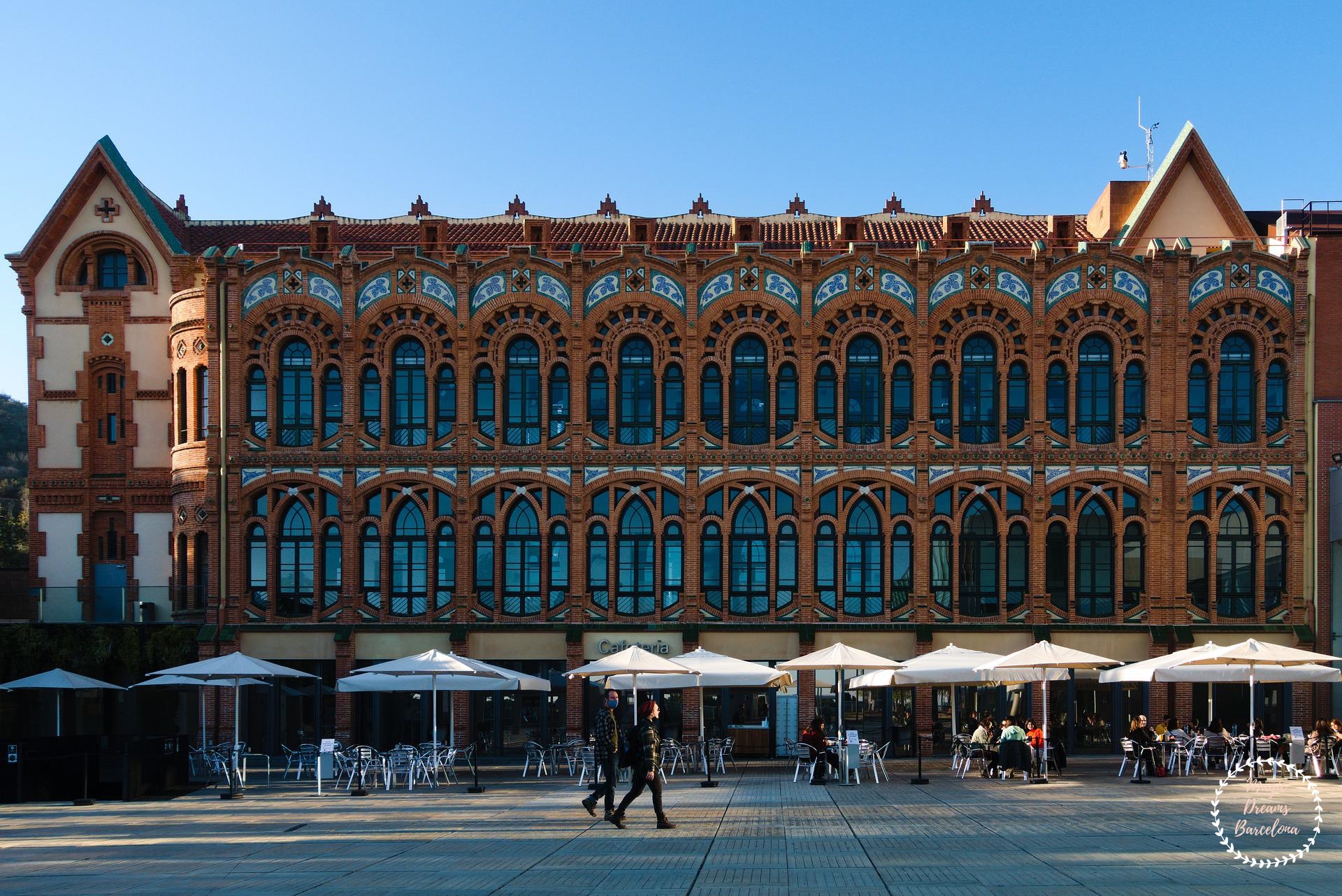
21.- CosmoCaixa Barcelona: CosmoCaixa es el museo de la ciencia de Barcelona y pertenece a la Fundación ”la Caixa”, está situado en Carrer d’Isaac Newton, 26.
Detalle exterior del CosmoCaixa
22.- Davis Museum-Mini Museo de Arte Contemporáneo: Mini museo de arte contemporáneo de Barcelona, situado en Carrer de Puigmartí, 7, 1º, 2.
23.- Domus Avinyò (MUHBA): Visita guiada “La vivienda en Barcino. Las domus romanas de las calles Sant Honorat y Avinyó”. Una visita conjunta a dos domus que pertenecieron a personajes importantes de la Barcelona romana. La domus de Avinyó, que data del siglo y d. C., destaca por el rico conjunto de pinturas de techo y pared que han sido recuperadas. La domus de Sant Honorat, construida en el siglo IV, conserva el jardín central y habitaciones pavimentadas con mosaicos policromos geométricos, está situada en C/ Avinyó, 15.
24.- Domus romana y silos medievales de Sant Honorat (MUHBA): En este espacio se conservan los restos de una gran domus romana y de varios locales comerciales del siglo IV, propiedad de un personaje importante. Del siglo XIII-XIV se conservan seis silos para almacenar todo tipo de productos, está situado en c/ de la Fruita, 2.
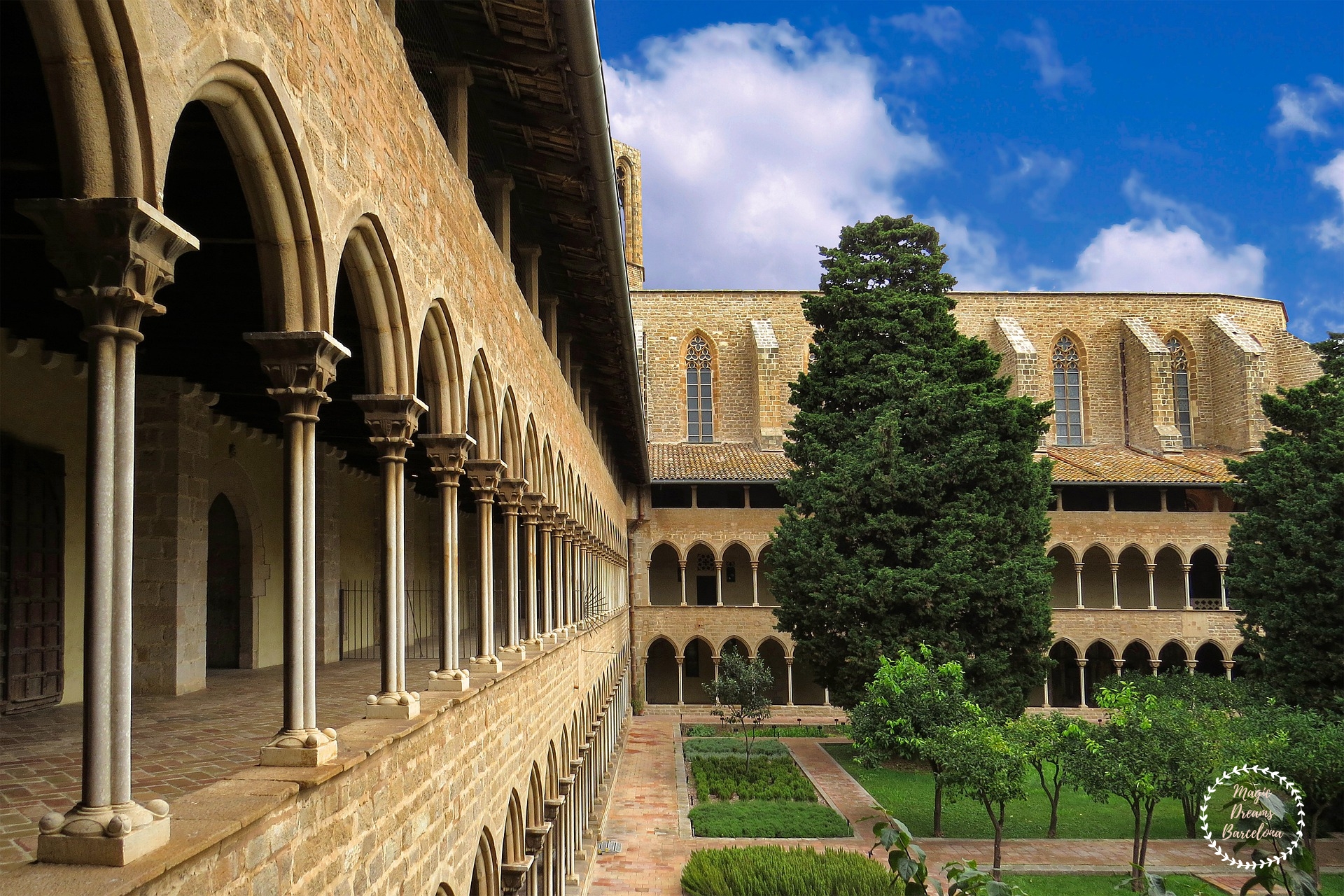
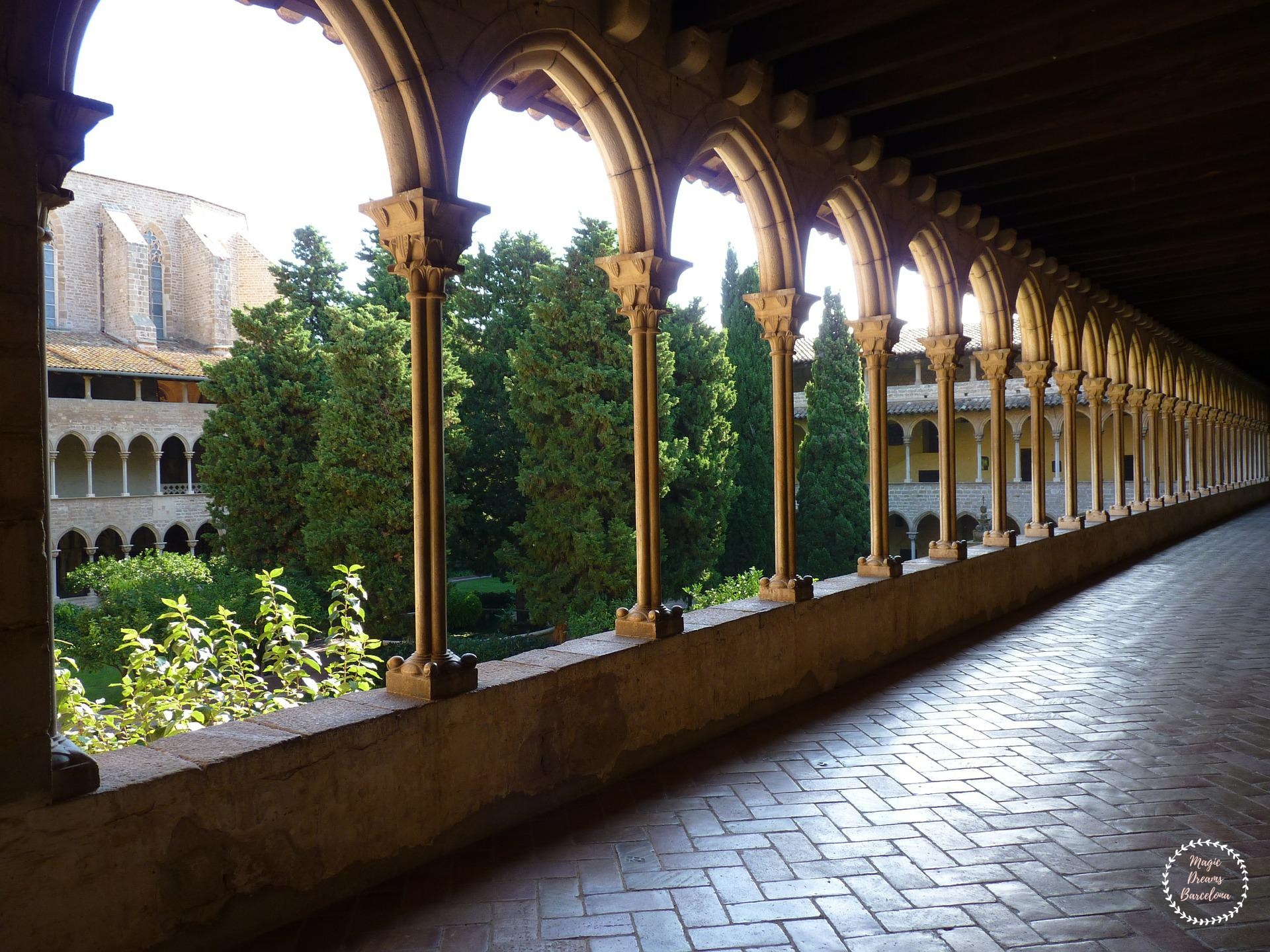
Perspectiva a pie en el claustro del Palacio Real de Pedralbes.
25.- El Borne-Centro de cultura y memoria: Es Centro cultural y espacio para eventos en un antiguo mercado restaurado, con un yacimiento del siglo XVIII, situado en Plaça Comercial, 12.
26.- El Call (MUHBA): Es un museo de ciudad que conserva, estudia, documenta, divulga y expone el patrimonio histórico y la historia de Barcelona desde sus orígenes hasta el presente, está situado en Plaça del Rei, s/n.
27.- Espacio Santa Catalina-Centro de Interpretación Arqueológica (MUHBA): Situado dentro del actual mercado de Santa Caterina, el Espacio Santa Caterina. Centro de Interpretación Arqueológica, resume algunos de los hechos fundamentales de la historia de Barcelona desde la Edad del Bronce hasta las últimas manifestaciones de la arquitectura contemporánea, está situado en Carrer d’En Giralt el Pellicer.
28.- Espacio Subirachs: Es un museo ubicado en Barcelona, dedicado a la obra del artista Josep Maria Subirachs. Se encuentra en un local de propiedad privada en la calle Batista, 6, en el barrio del Pueblo Nuevo. Abrió sus puertas el 27 de mayo de 2017.
29.- Espacio Volart 2 (Fundación Vila Casas): Exposiciones de arte temporales en la calle d’Ausiàs Marc, 22.
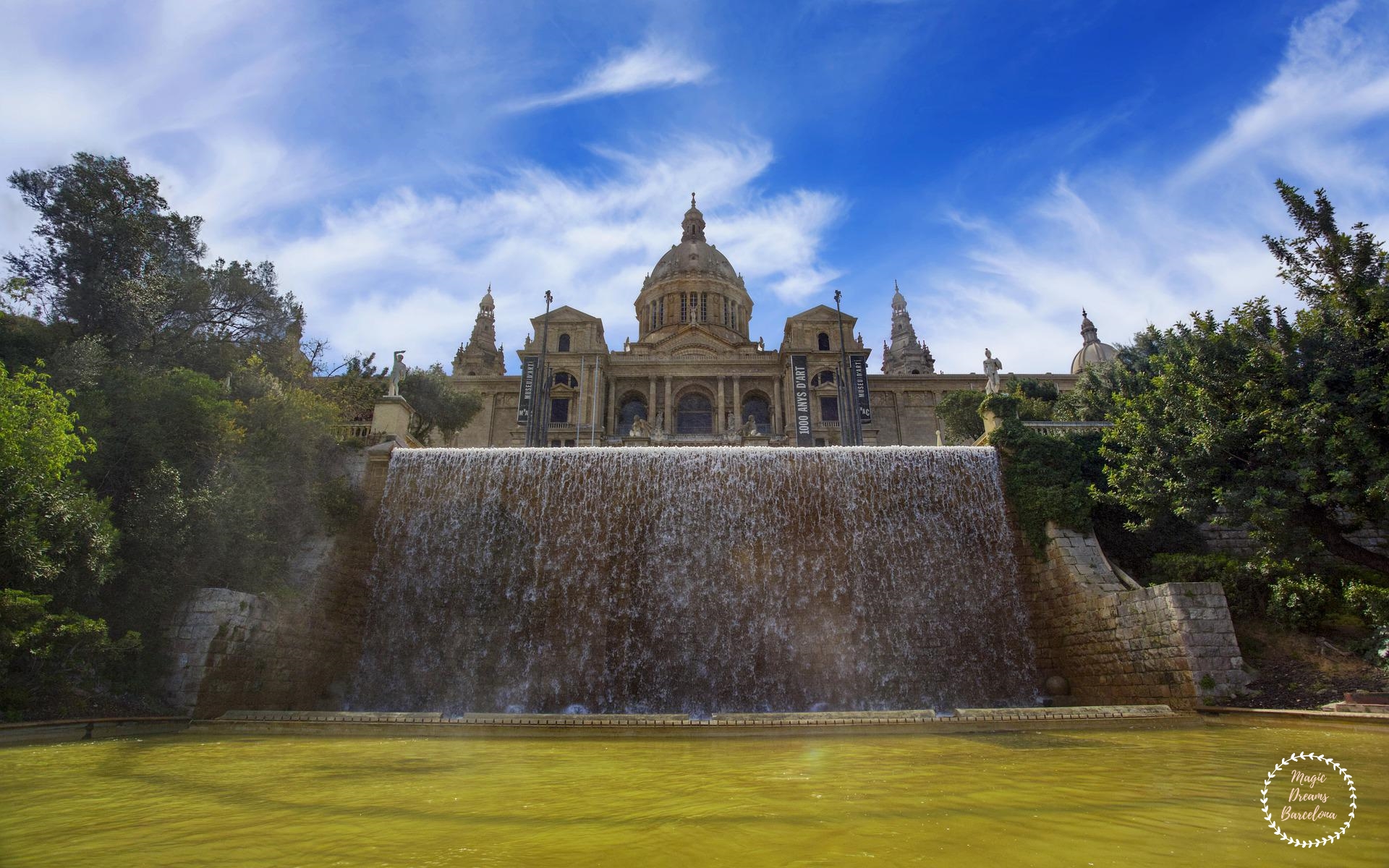
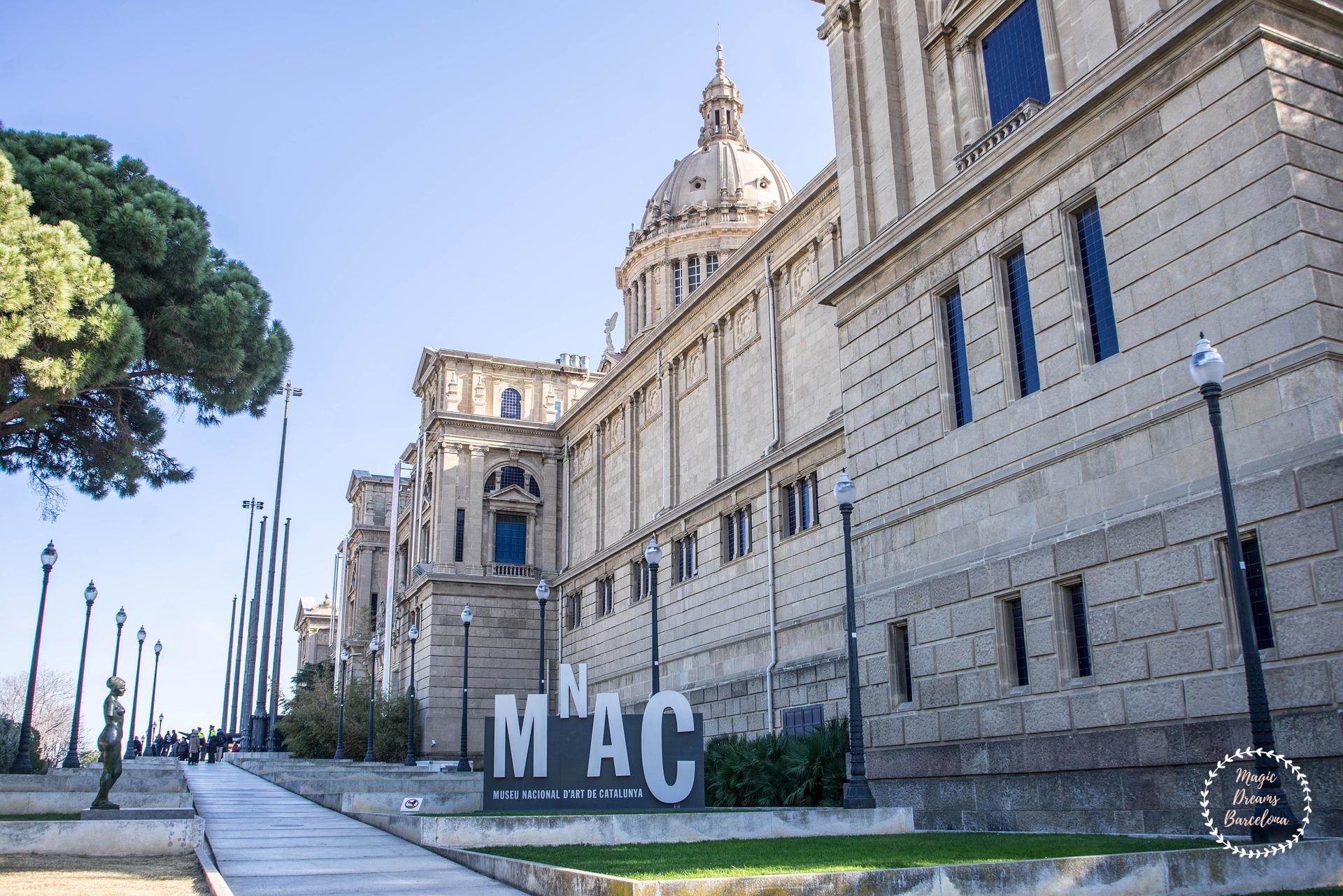
Perspectiva a pie del MNAC.
30.- Fundación Antoni Tàpies: Es un museo y centro cultural situado en la ciudad de Barcelona en la calle Aragón, 255. Está dedicado principalmente a la vida y la obra del pintor Antoni Tàpies. Fue fundada por el propio artista en 1984.
31.- Fundación Blueproject: Elegante galería con una cafetería orgánica y obras de artistas contemporáneos emergentes y consagrados, situada en Carrer de la Princesa, 57.
32.- Fundación Foto Colectania: Es una entidad sin ánimo de lucro, creada en Barcelona en 2002, con el objetivo de difundir la fotografía y darla a conocer en el ámbito social, artístico y educativo de nuestro país, está situada en Passeig de Picasso, 14.
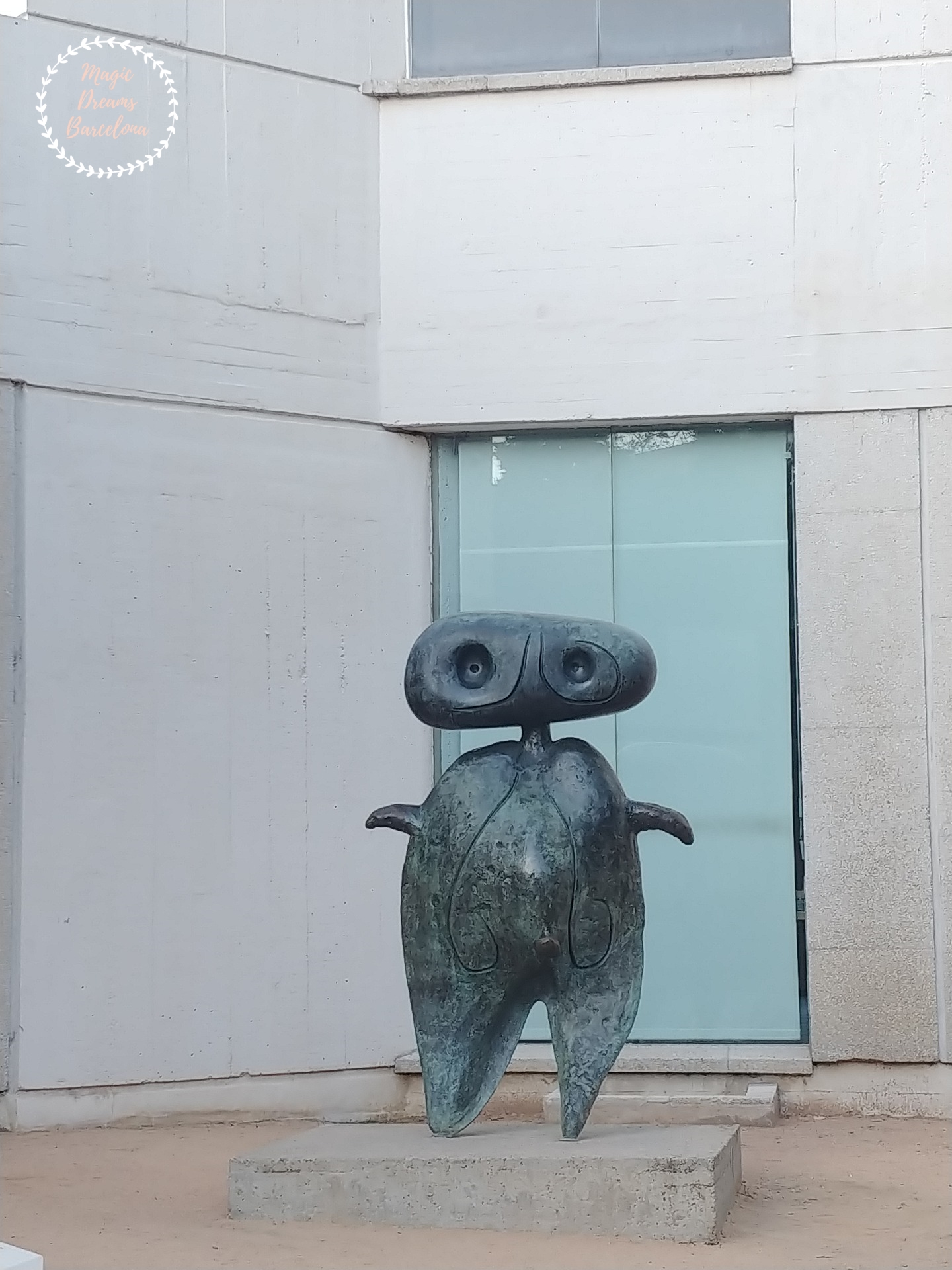
33.- Fundación Joan Miró: La Fundación Joan Miró es una institución cultural de Barcelona que custodia algunas de las obras más representativas del pintor catalán. Contiene más de 104.000 piezas entre pinturas, esculturas y tapices, está situada en Parc de Montjuïc, s/n.
Detalle escultura en la Fundación Joan Miró.
34.- Fundación Mapfre-Casa Garriga Nogués: La Fundación Mapfre organiza en la casa Garriga-Nogués exposiciones de los inicios de la modernidad pictórica (1850-1950) y de los grandes maestros de la fotografía, está situada en Av. del Litoral, 30.
35.- Fundación Rocamora:La Fundación Rocamora es una entidad sin ánimo de lucro, creada en 1976, a partir del legado de la colección de arte de su tío abuelo Manuel Rocamora Vidal. La fundación está ubicada en la que fuera la residencia habitual de Manuel Rocamora desde 1935, un palacete isabelino de la calle Ballester, en el barrio del Putxet de Barcelona.
36.- Fundación Suñol: es una entidad privada sin ánimo de lucro que muestra al público la colección de arte contemporáneo de Josep Suñol, compuesta por más de 1200 obras de arte, y, al mismo tiempo, impulsa un proyecto para favorecer la difusión y la producción artística de vanguardia., está situada en calle Mejía Lequerica, 14.
37.- Galería de Catalanes Ilustres (MUHBA): Es una galería de retratos de personalidades catalanas creada por el Ayuntamiento de Barcelona en el año 1871, situada en Plaça del Rei, s/n.
Perspectiva a pie del MNAC.
38.- Gaudí Experiencia: Es un museo centrado en el arquitecto modernista español, con exposiciones y una película interactiva en 4D, situado en Carrer de Larrard, 41.
39.- Hangar (Centro de Producción de Artes Visuales): Es un centro para la investigación y la producción artística que apoya a creadores y artistas, situado en Carrer Emilia Coranty, 16.
40.- Herbario BCN del Centro de Documentación de Biodiversidad Vegetal: El Herbario de la ciudad de Barcelona, reconocido internacionalmente con el acrónimo BCN, reúne más de 400.000 especímenes , con una importante representación de todos los grandes grupos de vegetales algas, briófitos, cormófitos, hongos y líquenes. Es uno de los herbarios más antiguos y diversos de la península ibérica y ocupa la tercera posición en cuánto a números de ejemplares.
Es un herbario en constante crecimiento gracias a la actividad de investigación en biodiversidad vegetal de los investigadores de la UB, pero también por donaciones e intercambios con otros herbarios del mundo, Está situado en Carrer de Baldiri Reixac, 2.
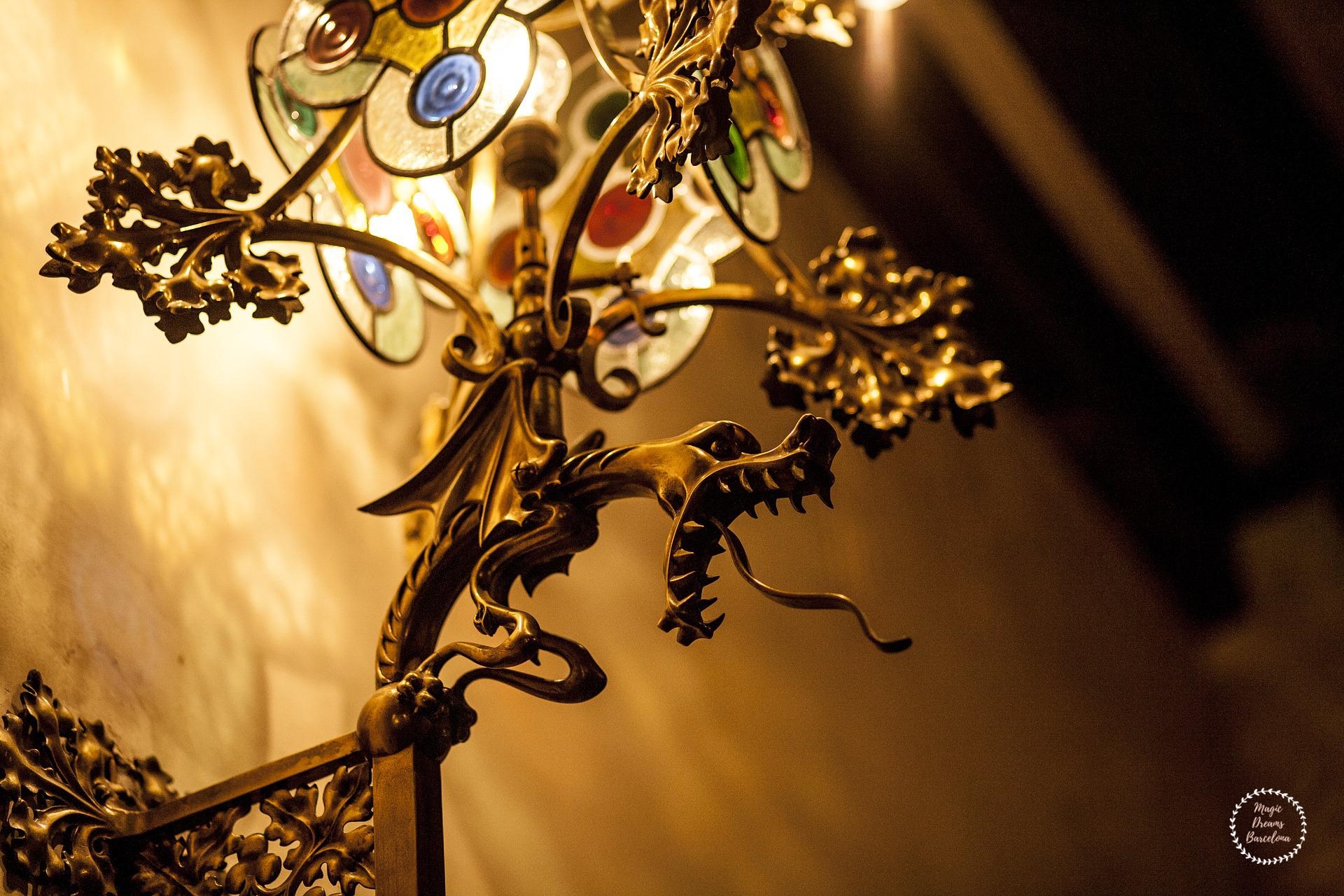
Detalle de lámpara Modernista en la Casa-Museo Amatller.
41.- Jardín Botánico (Museo de Ciencias Naturales):La función del Jardín es preservar y dar a conocer colecciones de plantas mediterráneas de todo el mundo. Entre sus objetivos principales destacan la conservación y documentación del patrimonio natural de Cataluña, actuar como elemento difusor de la cultura botánica y naturalista y promover el conocimiento y el respeto por la naturaleza, está situado en la calle Font del Quer, 2.
42.- La Capella: Es un espacio que dedica el instituto de Cultura de Barcelona a la creación emergente centrándose en la organización de exposiciones con el fin de acercar al público a las propuestas de los artistas de la ciudad. Participan artistas y profesionales del sector seleccionados por un jurado independiente a partir de convocatorias públicas, está situada en calle Hospital, 56.
43.- La Pedrera-Casa Milà: Es un edificio modernista obra del arquitecto catalán Antoni Gaudí, construido entre los años 1906 y 1910 en el distrito del Ensanche de Barcelona, en el número 92 del paseo de Gracia.
Detalle exterior en la Casa-Museo Pedrera-Casa Milá de Antoni Gaudí.
44.- Laboratorio de Naturaleza (Museo de Ciencias Naturales): Se encuentra en el edificio del “castell del Tres Dragons” en el parque de la Ciutadella, una de las sedes científicas del Museo que custodia las colecciones de zoología y próximamente también las de geología.
45.- Memorial San Josep Manyanet: Museo situado en una sala contigua al santuario de Sant Josep Manyanet del barrio de Sant Andreu de Barcelona, este pequeño museo recorre su vida y acción apostólica a través de fotografías y objetos que usó, Carrer de Sant Sebastià, 47.
46.- Monasterio de Pedralbes: Fundado en 1327 por la reina Elisenda de Montcada, con casi 700 años de historia del cenobio constituyen un testimonio único no solo de la vida de la comunidad de clarisas que lo ha habitado ininterrumpidamente hasta prácticamente el día de hoy, sino también de la historia de la ciudad de Barcelona y de Cataluña.
El claustro gótico de tres pisos articula las diferentes dependencias de la comunidad, entre las que destacan la capilla de San Miguel, el dormitorio, el refectorio, la cocina, la enfermería, las procuras, la abadía y la sala capitular, además de las distintas celdas de día, está situado en la Baixada del Monestir, 9.
Perspectiva a pie en el claustro del Palacio Real de Pedralbes.
47.- MUHBA en Fabra i Coats: Se trata de un espacio museístico centrado en la relación entre la ciudad y el trabajo, situado en la calle Sant Adrià, 20.
48.- MUHBA Oliva Artés: Es un punto de encuentro entre la formación de la ciudad a lo largo del tiempo y sus potenciales de futuro. Esta antigua fábrica taller, construida en 1920 y que se dedicaba a la producción y reparación de maquinaria, es ahora un espacio laboratorio del Museo de Historia de Barcelona en Poblenou, está situado en la C. Espronceda, 142-146.
49.- MUHBA Parque Güell: La exposición Güell, Gaudí y Barcelona. La expresión de un ideal urbano explica la Casa del Guarda, el Park Güell y la Barcelona del tiempo del modernismo a partir de tres ejes -la casa, el parque y la ciudad- que corresponden a las tres plantas del edificio, situado en la calle d’Olot, s/n.
50.- Museo Africano Daniel Comboni: Reúne una colección muy valiosa de arte africano que representa la variedad cultural y antropológica de este continente. Se trata de un lugar ideal para conocer la realidad africana a través de su arte, sus costumbres y su cosmología, situado en Carrer de Feliu i Codina, 59.
Detalle exterior del CosmoCaixa.
51.- Museo Can Framis: Es un centro dedicado a la difusión de la pintura contemporánea catalana, situado en Carrer de Roc Boronat, 116.
52.- Museo de Arqueología de Cataluña-Sede de Barcelona: Es un museo arqueológico con cinco salas que expone la colección arqueológica más importante de Cataluña, centrándose en los tiempos prehistóricos y la historia antigua, situado en Passeig de Santa Madrona, 39.
53.- Museo de Arte Contemporáneo (MACBA): Museo dedicado a la exposición de arte y a las prácticas culturales contemporáneas, situado en la Plaça dels Àngels, 1.
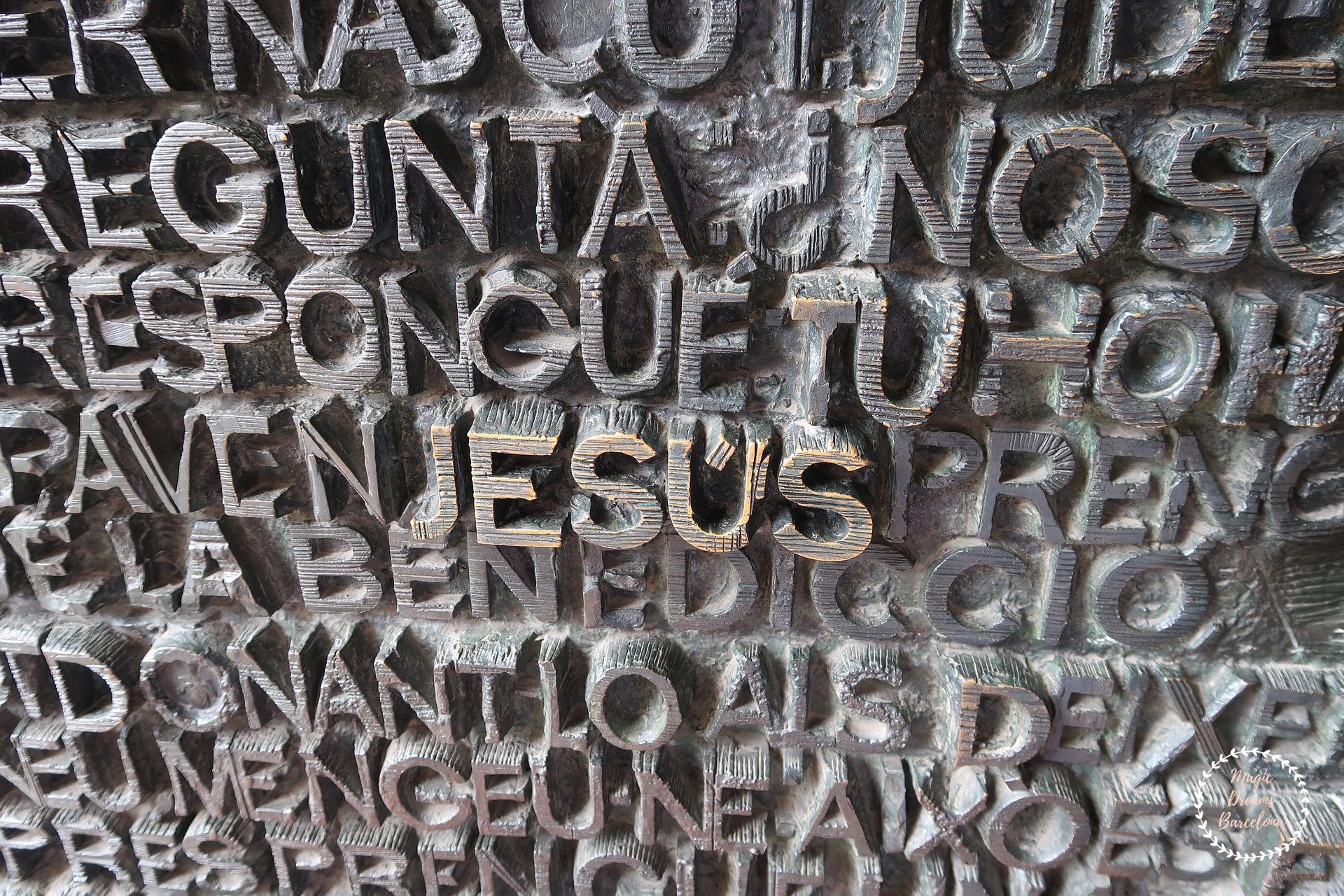
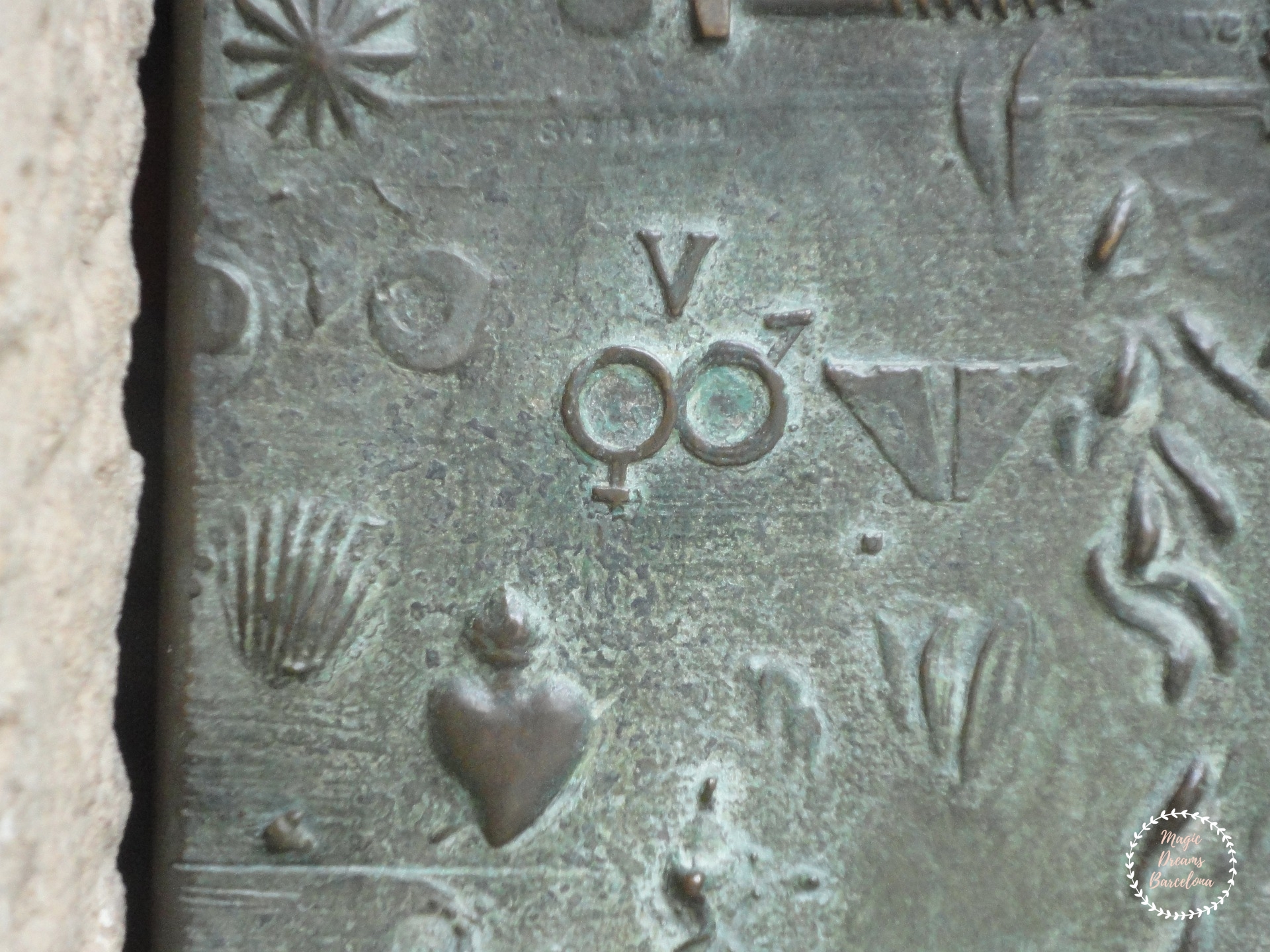
Detalle puerta exterior en el Templo Expiatorio de la Sagrada Familia de Antoni Gaudí.
54.- Museo de Autómatas: Más de 30 autómatas antiguos e inquietantes en la colección de un museo, situado en el Parque de Atracciones del Tibidabo, 3-4.
55.- Museo de Cera: Dispone de una colección de más de 150 figuras y 28 escenarios diferentes. Fue sometido a una renovación total en 2020, con el objetivo de modernizarlo y mejorar su oferta de ocio y cultural, está situado en Passatge de la Banca, 7.
56.- Museo de Ciencias Naturales: El Museo de Ciencias Naturales de Barcelona es el principal museo de ciencias naturales de la ciudad de Barcelona, está situado en la Plaza Leonardo Da Vinci, 4-5.
57.- Museo de Historia de Cataluña: La exposición permanente ofrece un relato interactivo de la historia de Cataluña desde los tiempos más remotos hasta nuestros días y se complementa con una serie de actividades educativas y lúdicas, talleres y exposiciones temporales,está situado en Pl. de Pau Vila, 3.
Detalle escultura exterior en el Museo-Templo Expiatorio de la Sagrada Familia de Antoni Gaudí.
59.- Museo de Historia de la Peluquería Raffel Pagès: Este espacio tiene como misión la conservación del patrimonio histórico relacionado con la historia y el oficio de la peluquería. Expone piezas procedentes de todo el mundo que forman parte de la colección personal de Raffel Pagès a lo largo de sus cincuenta años de profesión. Para los más curiosos, la colección también cuenta con cabellos de personajes famosos como los de Napoleón Bonaparte, Elvis Presley, Marilyn Monroe y John Lennon, entre otros, ofrece hasta 7000 piezas relacionadas con la historia de la peluquería, a la que habría que sumar los 2000 libros y revistas especializadas en el tema, convirtiéndolo en el más importante del mundo. Está situado en la Rambla de Catalunya, 99.
60.- Museo de la Catedral: El Museo de la Catedral de Barcelona es un museo dedicado a la historia y el arte religioso de gremios y monarquías, especialmente centrado en obras relacionadas con la Catedral de Santa Eulalia, está situado en el Carrer de Santa Llúcia, 5.
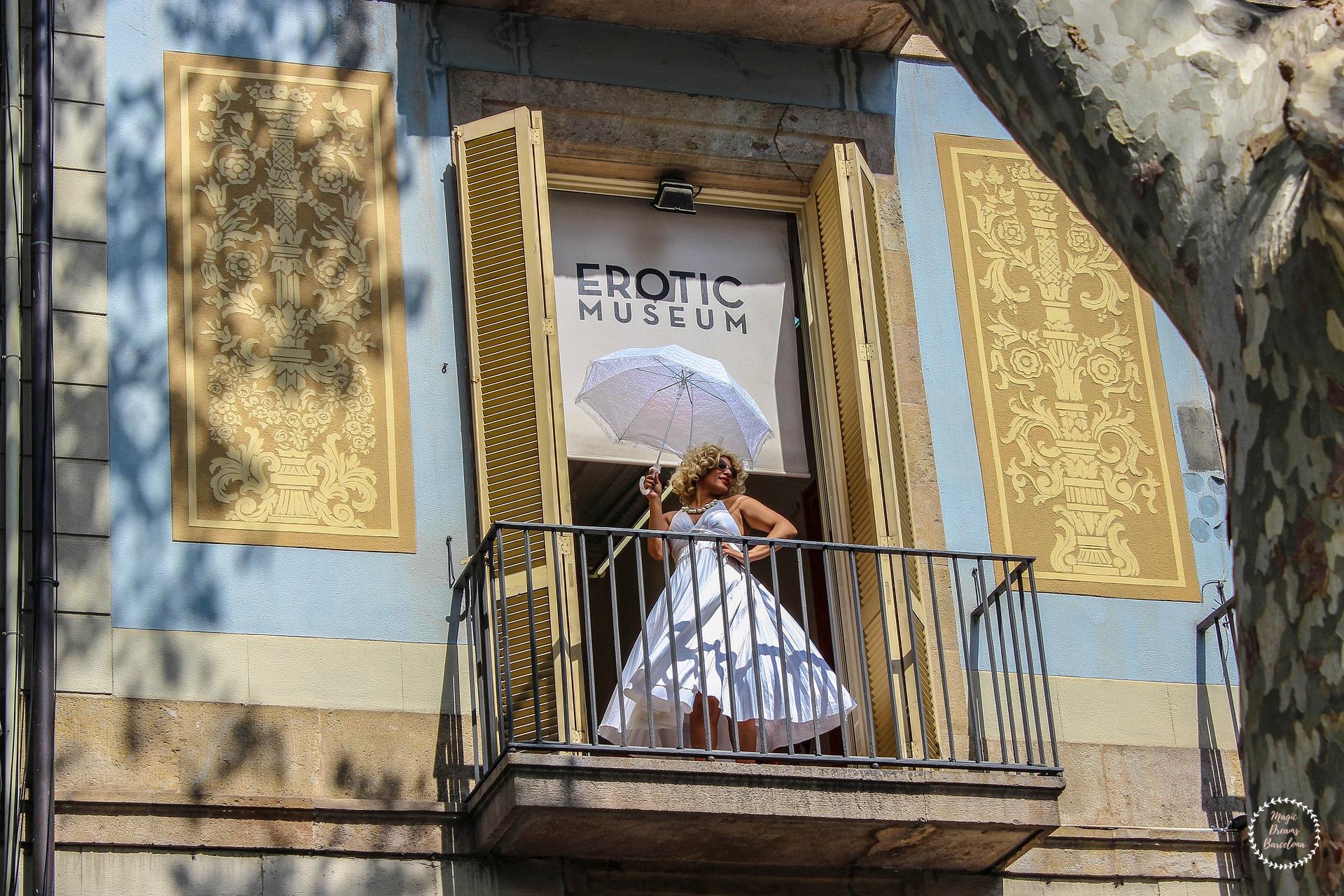
61.- Museo Erótico (MEB): Es un museo de arte erótico ubicado en La Rambla de Barcelona. Fue el primer museo de España de temática sexual. Contiene alrededor de 800 obras de arte.
62.- Museo de la Farmacia Catalana: El Museo de la Farmacia Catalana acoge un fondo histórico de más de dos mil objetos representativos de la historia de la farmacia catalana, está situado en la Gran Vía de les Corts catalanes, 585.
63.- Museo de la Música: Es un museo de música en Barcelona que agrupa una colección de instrumentos y documentos musicales de todo el mundo, desde las antiguas civilizaciones hasta las nuevas tecnologías del siglo XXI, está situado en Carrer de Lepant, 150.
64.- Museo del Automóvil: Se encuentra situado en la sede del Antic Car Club de Catalunya, en el barrio de Sant Gervasi de la ciudad. Detrás de una fachada y de una entrada de parking, se encuentra un elegante espacio museístico que recorre la historia del automóvil a través de algunos de los modelos más representativos y emblemáticos.
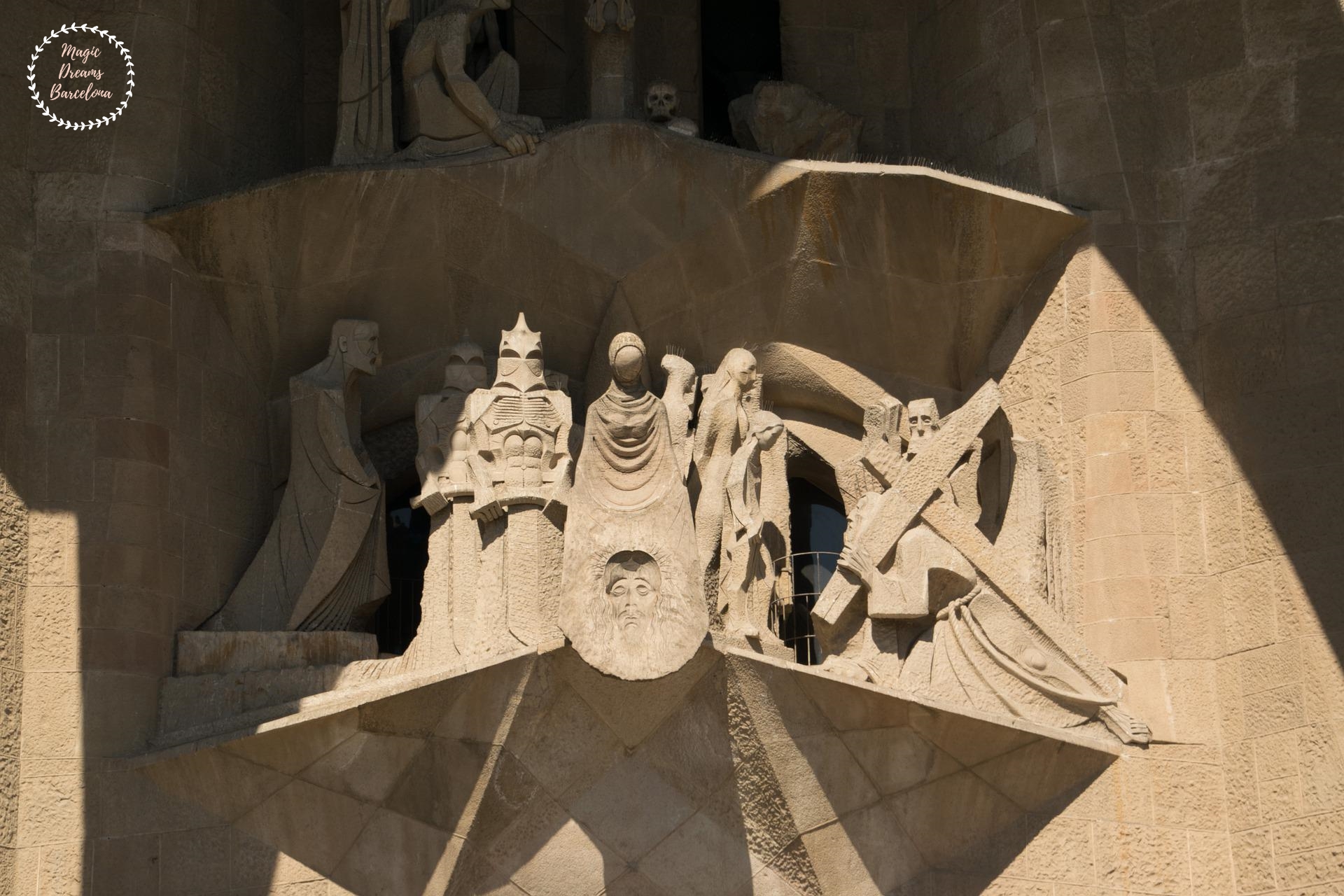
Detalle esculturas exteriores en el Templo Expiatorio de la Sagrada Familia de Antoni Gaudí.
Además de los coches propiamente dichos, la sede cuenta con un snack bar y una zona de club con un estilo de decoración de reminiscencias británicas, con una presencia importante de madera.
La entidad, fundada en 1974, agrupa a coleccionistas y amantes de los vehículos antiguos y cuenta con una biblioteca única en Europa, con más de 20.000 títulos, está situado en Vía Augusta, 182.
65.- Museo del Chocolate: El museo del Chocolate es un museo Propiedad del Gremio de Pastelería de Barcelona dedicado en exclusiva al chocolate, está situado en la calle Comerç, 36.
66.- Museo del Diseño: Es un museo dependiente del Instituto de Cultura de Barcelona que se origina a partir de la integración de las colecciones del Museo de las Artes Decorativas, el Museo de Cerámica, el Museo Textil y de Indumentaria y el Gabinete de las Artes Gráficas, está situado en Pl. de las Glorias Catalanas, 37-38.
67.- Museo del Fútbol Club Barcelona: Es un museo situado en las instalaciones del Camp Nou, en Barcelona, que exhibe todos los trofeos conseguidos por todas las secciones deportivas del club catalán a lo largo de la historia, y además todo tipo de objetos relacionados con sus equipos, jugadores y masa social, está situado en C. d’Arístides Maillol, s/n.
68.- Museo del Instituto Botánico: Por su relevancia científica y el volumen de sus colecciones, el IBB es el segundo centro botánico de España. En la actualidad, las colecciones comprenden cerca de los 800.000 pliegos de herbario. Estas colecciones están abiertas a la consulta de todos los investigadores interesados. El IBB también conserva el Gabinete Salvador, una de las pocas colecciones naturalistas de la Ilustración que han llegado a nuestros días.
Esta colección incluye toda clase de piezas (fósiles, conchas, semillas, productos animales y vegetales diversos, además de un herbario) y una biblioteca científica, médica y farmacéutica de los siglos XVI a XVIII que es, en su ámbito, una de las más importantes del mundo. Actualmente, la investigación se lleva a cabo en cuatro grupos de investigación: Biodiversidad y evolución de plantas,Genómica evolutiva de plantas y etnobotánica, Flora autóctona y alóctona, diversidad, colecciones y conservación, está situado en Passeig del Migdia s/n.
Detalle exterior de la Casa-Museo de Antoni Gaudí en el Park Güell.
69.- Museo del Libro Frédéric Marès: Alberga la colección donada a la ciudad por el escultor Frederic marés Deulovol, La primera sala del museo está dedicada al mundo antiguo. Se pueden ver diferentes trabajos escultóricos: retratos, torsos, esculturas de cuerpo entero y un grupo formado por dos figuras femeninas o ninfas, así como el frontal de un sarcófago romano tarde, conocido con el nombre de Sarcófago de Layos. Una serie de colecciones diversas nos permiten acercarnos a las culturas del Mediterráneo entre el siglo V aC y el IV dC: exvotos ibéricos de bronce, terracotas helenísticas y romanas, tragaluces o lámparas de aceite, figuritas de divinidades y objetos de uso doméstico de bronce y fragmentos de apliques de hueso decorados. Finalmente, en el mismo ámbito se exponen piezas que cronológicamente no corresponden a la antigüedad, se trata de réplicas de obras conocidas y modelos hechos al estilo clásico, que siguiendo la tradición de los coleccionistas privados desde el Renacimiento, s exponen conjuntamente con las obras antiguas.
El arte románico se expone de las salas 2 a la 5 y está presente tanto en obras de tamaño como en trabajos de piedra.
La primera etapa del gótico se exhibe en las salas 6 a la 13, y las obras góticas del siglo XV se concentran en las salas 14, 15 y 17. Encontramos también, piezas del renacimiento siglo (XVI), del siglo XIX de Cataluña, y del Barroco (XVII Y XVIII), está situado en la Plaza Sant Iu, 5.
70.- Museo del Marionetarium Herta Frankel: Es el teatro museo taller y escuela de marionetas de Barcelona, es un espacio dedicado a la Marioneta: animación, difusión, creación, formación, de todo tipo de títeres.
Es la única colección de marionetas de europa que sigue en escena tras 70 años de historia., está situado en la Plaça del Tibidabo, 3.
71.- Museo del Modernismo Catalán: Es un museo inaugurado en 2010 y dedicado íntegramente al modernismo catalán. Ocupa mil metros cuadrados divididos en dos plantas de un edificio modernista del arquitecto Enric Sagnier en carrer de Balmes 48.
72.- Museo del Perfume: El museo presenta una amplia colección de cerca de 5.000 vasijas de esencias y perfumes de diferentes culturas y civilizaciones.
La colección abarca largos períodos históricos que van desde vasijas egipcias, cerámicas griegas, , vidrios romanos y púnicos, recipientes árabes y orientales, hasta una interesante colección de tarros de esencias realizados en porcelana, cristal, y materiales nobles, de los siglos XVII al XIX.
También hay una exposición de perfumería industrializada, desde sus inicios hasta la actualidad.
La colección incluye artículos muy especiales como una caja de perfume que contiene dos recipientes de esencias que pertenecieron a la reina María Antonieta y un frasco de perfume llamado «Le Roi Soleil» diseñado por Salvador Dalí, entre muchas otras piezas únicas en el mundo de la perfumería, está situado en el Paseo de de Gràcia, 39.
73.- Museo del Templo Expiatorio de la Sagrada Familia: este museo ofrece multitud de elementos y objetos que permiten comprender el significado y la complejidad de la gran obra de Gaudí.
A través de planos, dibujos originales, maquetas reconstruidas y distintas piezas, el visitante descubrirá más a fondo el proceso de creación de este impresionante templo.
Desde el museo, que se encuentra situado en el interior de la iglesia, también se puede admirar la sepultura de Gaudí, está situado en la calle Mallorca, 401.
74.- Museo Diocesano: Es un museo de arte religioso, gestionado por la Delegación Diocesana del Patrimonio Cultural del Arzobispado de Barcelona. Está situado en la plaza de la Catedral de Barcelona, en la Casa de la Pia Almoina.
75.- Museo Egipcio: Fue el primer museo de temática faraónica inaugurado en España y sus más de 1100 piezas, sus constantes exposiciones temporales y su fondo bibliográfico especializado, lo convierten en un referente dentro del ámbito de la arqueologíaegipcia. Está situado en la calle València, 284.
76.- Museo Etnográfico Andino-Amazónico: En este museo, que solo puede visitarse si se solicita cita con antelación, se expone una colección de piezas etnográficas, zoológicas y botánicas recogidas desde la segunda mitad del siglo XIX por religiosos capuchinos en el Amazonas colombiano.
El Museu Etnogràfic Andino-Amazònic se encuentra en la iglesia de los Caputxins de Sarrià.
77.- Museo Etnológico y de las Culturas del Mundo-Sede de Montcada: Museo etnológico y cultural, con exposiciones de objetos de humanos de África, Asia y otras regiones, está situado en Carrer de Montcada, 12.
78.- Museo Etnológico y de las Culturas del Mundo-Sede de Montjuic: Es un museo municipal que centra su atención principal en el ámbito catalán y en las culturas de las comunidades que están presentes en la ciudad de Barcelona, está situado en Passeig de Santa Madrona, 16.
79.- Museo Europeo de Arte Moderno: Es el primer museo de arte figurativo contemporáneo de España. y está situado en el Carrer de la Barra de Ferro, 5.
80.- Museo Fran Daurel: Está dedicado al arte contemporáneo con más de 300 obras de artistas como Pablo Picasso, Joan Miró, Salvador Dalí, Antoni Tápies o Miquel Barceló.
Además de la colección ubicada en el edificio sede del museo, cuenta con un jardín de esculturas situado fuera del edificio, en los jardines exteriores del Pueblo Español, está situado en la Av. Francesc Ferrer i Guàrdia, 13.
81.- Museo Geológico del Seminario de Barcelona: Ofrece una colección de cerca de 90.000 entradas fósiles de todo los períodos geológicos. La documentación para llevar a cabo el trabajo de clasificación y estudio forma una biblioteca especializada con 13.000 títulos.
También dispone de un laboratorio apto para preparar fósiles.
Además, posee un archivo histórico con diversa documentación de ilustres geólogos, está situado en Carrer de la Diputació, 231.
82.- Museo Marítimo: Es un equipamiento público dedicado a la conservación y difusión de la cultura y el patrimonio cultural marítimo de Cataluña, está situado en la Av. de les Drassanes, s/n.
83.- Museo Martorell (Museo de Ciencias Naturales): Proximamente alojará una exposición sobre la evolución de los museos de ciencias naturales desde los gabinetes de curiosidades hasta la fecha y el Centro de Documentación, está situado en el Parc de la Ciutadella, s/n.
84.- Museo Nacional de Arte de Cataluña (MNAC): Destaca por su colección de arte románico, considerada una de las más completas del mundo, está situado en Palau Nacional, Parc de Montjuïc, s/n.
85.- Museo Odontológico de Cataluña: Cuenta con piezas de instrumental, prótesis dentales, aparatos, mobiliario, títulos, fotografías y medallas, muchos de ellos de los siglos XIX-XX, está situado en Travesera de Gracia, 93-956.
86.- Museo Olímpico y del Deporte Joan Antoni Samaranch: Este innovador museo ofrece al visitante una visión global de las diversas disciplinas de deporte y modalidades del deporte que existen actualmente, utilizando de una manera destacada las nuevas tecnologías de representación interactiva y diversas instalaciones multimedia.
El museo y sus exposiciones permiten la experimentación de una forma nunca antes vista. Gracias a sus simuladores se puede correr contra Usain Bolt, comprobar cómo nadaba Michael Phelps, mejorar la aerodinámica al pedalear en bicicleta o comparar el peso real que pueden llegar a levantar los grandes campeones de halterofilia. Toda una experiencia en el deporte, está situado en Av. de l’Estadi, 60.
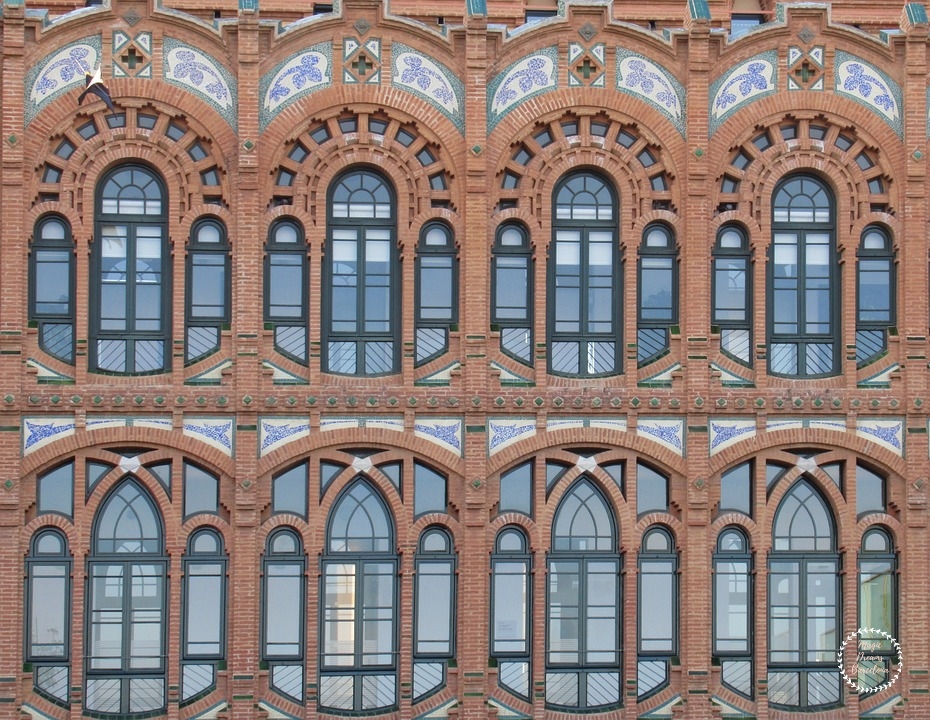
87.- Museo Taurino: Se inauguró en 1969 y está situado en la Plaza de Toros Monumental, un edificio de estilo neomudéjar y bizantino, con ladrillos a la vista y azulejos policromados.
Su colección incluye una selección única de carteles taurinos, cabezas de toros famosos, insignias adornadas con cintas de colores propias de cada ganadería, y trajes de luces llevados por matadores de renombre y conocidos picadores y rejoneadores, además de otros objetos relacionados con la fiesta brava, como hierros de marcar de criadores de toros de lidia. También se pueden visitar los corrales y la capilla, está situado en Gran Via de les Corts Catalanes, 749.
88.- Museo y Centro de Estudios del Deporte Doctor Melcior Colet: es un museo dedicado a la difusión y exhibición de los elementos más destacados en el desarrollo de la historia del deporte catalán de los últimos siglos, está situado en el carrer de Buenos Aires, 56.
89.- Museo y Tesoro-Basílica de Santa María del Pi: La Basílica de Santa Maria del Pi (Basílica de Nuestra Señora del Pino) de Barcelona es un templo del siglo XIV, construido en estilo gótico catalán. El motivo principal que decora su interior, en referencia al nombre, es el pino. Los monumentos más valiosos incluyen el campanario octogonal del siglo XV con 6 campanas y la estatua de la Virgen María de 3 metros.está situada en la Plaça del Pi, 7.
90.- Pabellón Alemán de Barcelona (Mies van der Rohe): Este edificio constituye uno de los hitos en la historia de la arquitectura moderna, al ser una obra donde se plasman con particular rotundidad y libertad las ideas del entonces naciente Movimiento Moderno , y está considerado por muchos autores como una de las cuatro piezas canónicas de la arquitectura del movimiento moderno, está situado en la Av. Francesc Ferrer i Guàrdia, 7.
91.- Palacio Moxó: Se trata de un edificio de estilo barroco tardío con rasgos clásicos. Es el único palacio privado barcelonés del siglo XVIII que aún conserva su mobiliario y los interiores originales, dado que numerosas casas-palacio fueron destruidas durante la guerra civil española, está situado en la Plaza de Sant Just, 4.
92.- Palacio Robert: Es un edificio situado en el número 107 del Paseo de Gracia, esquina con la Avenida Diagonal, en la ciudad de Barcelona. Fue construido entre 1898 y 1903 como residencia privada de Robert Robert i Surís, marqués de Robert, un influyente aristócrata, financiero y político catalán de origen gerundense.
93.- Pueblo Español: Es un museo que ofrece arte contemporáneo, arquitectura, artesanía y gastronomía. El recinto está integrado por 117 edificios a escala real, que componen un pueblo típicamente español con sus calles, casas, plazas, teatro, escuela, iglesia, restaurantes y talleres artesanos, está situado en Av. Francesc Ferrer i Guàrdia, 13.
95.- Puerta del Mar y Termas Portuarias (MUHBA): Se pueden visitar, por un lado, un tramo de 17 metros de muralla romana del siglo IV y, por otro lado, los restos de unas termas del siglo I. También forma parte del conjunto la antigua capilla de San Cristóbal, situada a pie de calle entre este edificio y el centro cívico Pati Llimona, que ha sido restaurada, está situado en la calle Regomir, 7-9.
96.- Real Academia Catalana de Bellas Artes de San Jorge (Museo): Está centrada en la difusión de su fondo artístico, bibliográfico y archivístico. Su colección de arte está formada por más de 700 pinturas, 250 esculturas y varios dibujos y grabados de artistas desde el siglo XVI hasta el siglo XX: desde Annibale Carracci o Juan Ribalta hasta Modest Cuixart o Josep Maria Subirachs. Son destacables las colecciones de dibujos de Pablo Milá i Fontanals y de Lluís Rigalt. Aún así, el Museo de la Academia es un referente, sobre todo, en arte catalán de los siglos XVIII-XIX, con pinturas de Mariano Fortuny y Ramón Martí Alsina, entre otros.está situada en el Edificio Llotja, Passeig d’Isabel II.
97.- Refugio 307 (MUHBA): Es uno de los ejemplares mejor conservados de la red de túneles creados por los barceloneses durante la Guerra Civil Española, como medio de defensa para los bombardeos que, hasta entonces, nunca habían sido practicados en Occidente sobre ciudades habitada, está situado en el Carrer Nou de la Rambla, 175.
98.- Sala Ciutat: se trata de una librería especializada en publicaciones sobre barcelona, en el amplio catálogo de publicaciones se encuentran desde cómics hasta obras de filosofía, urbanismo o poesía; desde historia hasta ficción, siempre con Barcelona como temática, está situada en el Carrer de la Ciutat, 2.
99.- Salón del Tinell (MUHBA): Es uno de los tres edificios que componen el Palacio Real Mayor de Barcelona, situado en la plaza del Rey, 10, del Barrio Gótico de la misma ciudad catalana. Es la sala de ceremonias del antiguo Palacio Real, residencia de los condes de Barcelona y, posteriormente, de los reyes de la Corona de Aragón.
100.- Templo de Augusto (MUHBA: Fue un templo romano dedicado al culto imperial a César Augusto construido en Barcino, colonia fundada con el permiso de Augusto, que sería con el paso del tiempo la ciudad de Barcelona, está situado en el Carrer del Paradís, 10.
101.- Tennis Museum: El Tennis Museum hace un repaso histórico de la evolución que el tenis ha seguido en nuestro país, desde que el deporte de la raqueta se importará de Gran Bretaña hasta nuestros días, con una serie de éxitos que coronó el triunfo en la Copa Davis del 2000 en el Palau Sant Jordi de Barcelona como gran hito, está situado en el Passeig de la Vall d’ Hebron, 196.
102.- Turó de la Rovira (MUHBA): Vistas de Barcelona desde los búnkeres de la Guerra Civil española que albergaban los cañones antiaéreos., situado en el Carrer de Marià Labèrnia, s/n.
103.- Villa Joana (MUHBA): Villa Joana fue una de las masías más importantes de Vallvidrera.Documentada desde el siglo XVI fue adquirida en el siglo XIX por la familia Miralles, que la reformó completamente y le dio carácter residencial y el nombre de Villa Joana con el cual es conocida.
En mayo de 1902, Ramón Miralles acogió al poeta Jacinto Verdarguer cuando los médicos le recomendaron aires de montaña para paliar los efectos de su avanzada tuberculosis. Verdaguer murió en esta casa el día 10 de junio de aquel mismo año, está situada en Ctra. de l’Església, 104.
104.- Vía sepulcral romana (MUHBA): Aquí podemos encontrar objetos encontrados en un yacimiento y donde se explica la organización del territorio de Barcino, la centuriación, las vías, los caminos y también el complejo mundo funerario romano, gracias a los diversos ritos documentados en la necrópolis, el lugar .está situado en la Pl. de la Vila de Madrid.
105.- Museo de las Ilusiones: Se trata de un museo con ilusiones ópticas que hacen que parezca que los visitantes forman parte de las grandes imágenes, está situado en el carrer del Pintor Fortuny, 17,
En la zona alta de Barcelona, discretos y profundamente evocadores, están situados los Pabellones Güell, una de las obras más elegantes de Antoni Gaudí. Construidos entre 1884 y 1887 por encargo de Eusebi Güell, este conjunto arquitectónico representa una etapa inicial clave en la evolución …
Casa Batlló is one of the crowning achievements of Antoni Gaudí, an icon of Catalan Modernism and an essential reference in world architecture. More than a building, it has become a myth of art and a symbol of Barcelona, where creativity and functionality coexist in …
Cada experiencia empieza con una conversación. Un intercambio sereno donde escuchamos, comprendemos y damos forma a lo que realmente se adapta a sus necesidades.
Diseñamos experiencias a medida que integran alojamientos cuidadosamente seleccionados, experiencias gastronómicas privadas o rutas por nuestra selecta gama de los mejores establecimientos locales, así como servicios de guía especializados en historia, arte, arquitectura, antropología, sociología, simbolismo, botánica, lepidopterología, etología y ornitología, y especialistas en experiencias sobre Antoni Gaudí y Salvador Dalí, con servicio principalmente en castellano, catalán e inglés, adaptándonos a cualquier idioma con aviso previo, siempre con una atención meticulosa enfocada al detalle y al ritmo de cada persona.
Explore todos los secretos de Barcelona de manera profunda y disfrute de escapadas de fin de semana a la Costa Brava y los Pirineos catalanes, con todos los servicios incluidos:
Chef privado con cocina nacional, catalana e internacional en el alojamiento, ofreciendo desayunos, comidas y cenas temáticas (Dalí, Gaudí, Templo Romano, Renacimiento, Barroco, Grecia, etc.)
Música en vivo: piano, violín, ópera, a escoger.
Servicio de floristería y reportajes fotográficos profesionales.
Rutas exclusivas por nuestra selección de los mejores locales de la ciudad, Pirineo y Costa Brava.
Entradas premium a museos y eventos.
Picnics sensoriales con mantelería, vajilla personalizada, catering, refrescos y cavas sin alcohol, en jardines, frente al mar o en yate, con guía sensorial.
Además, ofrecemos talleres exclusivos de “Trencadís”, surrealismo, gastronomía, arte floral, esencias, entre otros.
Nuestros servicios de bienestar incluyen:
Masajes hawaianos Lomi Lomi al aire libre frente al mar.
Spa, circuitos termales y sauna.
Meditaciones y oraciones guiadas al aire libre con cestas de frutas, té y zumos naturales.
Contamos con logística completa, para que usted no tenga que preocuparse por nada, incluyendo atardeceres sensoriales en rincones secretos con historia del lugar, actividades de senderismo, excursiones, vehículos privados y experiencias Sky.
Con Magic Dreams Barcelona, cada viaje es una experiencia única y personalizada, cuidando hasta el más mínimo detalle, incluyendo desayunos gourmet, para que disfrute de Barcelona y sus alrededores de manera exclusiva y memorable.
Nuestra forma de crear nace de una profunda sensibilidad personal conectada con la cultura, la naturaleza y el conocimiento. Nos inspira la arquitectura, el arte, el diseño y la botánica, así como disciplinas como la sociología, la antropología, la filosofía y la psicología profunda, especialmente la psicología analítica junguiana. La espiritualidad, vivida y practicada a través de nuestro día a día, y la música —en particular el jazz, la música clásica y el piano— forman parte esencial de nuestra vida diaria y se reflejan sutilmente en cada experiencia que diseñamos.
Privacidad, Discreción y Seguridad: Nuestro Compromiso Absoluto
Nuestras experiencias están diseñadas bajo un principio inmutable: la privacidad y la discreción de nuestros clientes son inquebrantables.
Quienes nos eligen buscan, principalmente, confianza y un trato personalizado con una experiencia única, creada especialmente en base a sus preferencias y gustos a través de nuestro profundo y extenso conocimiento del lugar.
Por ello, todos los datos, preferencias y experiencias permanecen estrictamente confidenciales, excepto aquellos que deseen dejar su opinión personalmente.
Este compromiso no es temporal ni negociable; es la esencia de nuestra filosofía. Quienes buscan trato personalizado, atención privilegiada y experiencias auténticas saben que aquí han encontrado un espacio seguro, donde la discreción nunca se rompe y la privacidad siempre se protege.
– Equipo Magic Dreams Barcelona –
Si desea organizar una experiencia privada personalizada, contacte a través del formulario.
Para colaboraciones, proyectos o consultas profesionales – Reservas y presupuestos
Por favor, deje sus datos y su número de teléfono, y nos pondremos en contacto con usted a la mayor brevedad, a lo largo del día.
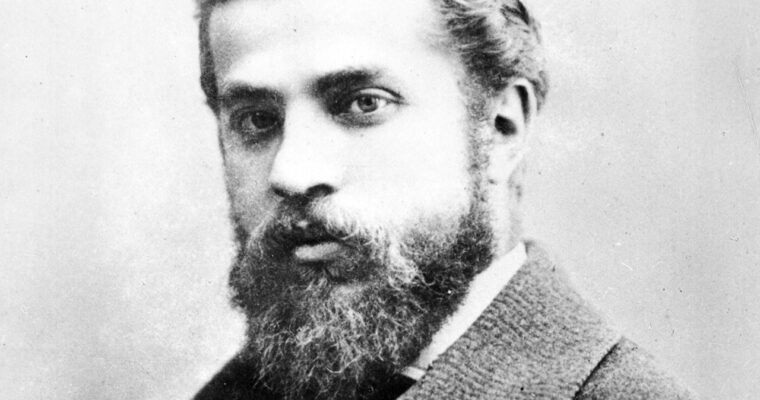
Antoni Gaudí i Cornet was a Catalan architect internationally recognized as one of the most prodigious experts in his field, and a leading exponent of Modernism. His exceptionally groundbreaking genius created a unique, personal, and incomparable architectural language, difficult to categorize. Gaudí was born on …
La Casa Batlló es una de las obras cumbre de Antoni Gaudí, un ícono del modernismo catalán y un referente imprescindible de la arquitectura mundial. Más que un edificio, se ha convertido en un mito del arte y un emblema de Barcelona, donde la creatividad …
Casa Vicens is not just an architectural masterpiece; it is the starting point of the creative universe of Antoni Gaudí. Built between 1883 and 1885 in the former village of Gràcia, this summer residence represents the architect’s first major commission and the moment when his visionary approach to domestic architecture began to take shape.
From the very beginning, Gaudí was ahead of his time with a surprisingly sustainable vision. The house was designed to maximize natural light and cross ventilation, incorporating a rainwater collection system used to irrigate the garden — an early example of architecture integrated harmoniously with nature.
At Casa Vicens, Gaudí expressed his personal concept of home: a space both functional and deeply artistic, where ornamentation carries symbolic meaning rather than purely decorative intent. Although his mature Modernist language had not yet fully emerged, the house already reveals his genius through a bold fusion of Oriental, Mudéjar, and naturalistic influences — a prelude to his later works in Barcelona.
Nature became his primary source of inspiration. During the study of the site, Gaudí was fascinated by dwarf palm leaves and yellow carnations growing on the land. These botanical forms were translated into architecture, appearing in wrought-iron gates and vibrant polychrome ceramic tiles that cover the façade. The green and yellow tones deliberately echo the original vegetation — ivy, palms, and flowers — reinforcing the dialogue between building and landscape.
One of the most distinctive features of Casa Vicens is the wrought-iron entrance gate designed by Gaudí himself, composed of cast-iron modules faithfully reproducing palm leaves. More than a boundary, it symbolizes the fusion of art, craftsmanship, and nature, marking an early example of organic forms integrated into structural and decorative design.
The pioneering use of colorful ceramic tiles — showcased at the Paris Universal Exhibition of 1878 — helped project Gaudí’s work beyond Spain and laid the foundations of Catalan Modernism.
Over time, the estate evolved. Today, Casa Vicens consists of three main areas: Gaudí’s original building, the 1925 extension by Joan Baptista Serra de Martínez, and the surrounding garden that reflects its historical transformation.
Located in the heart of Gràcia, the garden remains a true urban oasis. Originally much larger and filled with waterfalls and fountains, it has been carefully restored while respecting its 19th-century botanical layout. The current 300 m² garden preserves remarkable specimens, including a century-old holm oak and a monumental magnolia tree.
The space reads like a living botanical book where Mediterranean and exotic species coexist — camellias, monsteras, fatsias, and date palms. Here, floral motifs seem to come alive, as if the plants decorating the walls had stepped out of art to take root in the earth.
Casa Vicens is ultimately the seed of everything that followed: the moment when Gaudí began merging architecture, craftsmanship, and nature into a unique vision that would forever transform Barcelona and the history of art.
Discover Casa Vicens through a deep, emotional, and magical perspective with Magic Dreams Barcelona, where every experience becomes a journey into the soul of the city.
We take care of everything:
Personalized logistics and full organization
Unique cultural and sensory experiences
Specialized botanical routes with historical and symbolic interpretation
Architectural and artistic itineraries through museums and creative spaces
Private themed gastronomy experiences in authentic venues and accommodations
Private concerts and exclusive experiences
Tailor-made themed stays in carefully selected accommodations
Our team speaks Spanish, Catalan, and English, and upon request adapts to any language, offering a close, professional, and fully customized service.
Magic Dreams Barcelona — a journey into depth, where architecture, nature, and emotion walk hand in hand.
Casa Vicens By Antoni Gaudí.
Casa Vicens By Antoni Gaudí.
Casa Vicens By Antoni Gaudí.
Casa Vicens By Antoni Gaudí.
Casa Vicens By Antoni Gaudí.
Casa Vicens By Antoni Gaudí.
Casa Vicens By Antoni Gaudí.
Casa Vicens By Antoni Gaudí.
Casa Vicens By Antoni Gaudí.
Casa Vicens By Antoni Gaudí.
Casa Vicens By Antoni Gaudí.
Casa Vicens By Antoni Gaudí.
Casa Vicens By Antoni Gaudí.
Casa Vicens By Antoni Gaudí.
For collaborations, projects or professional inquiries – Reservations and quotes
Please leave your details and phone number, and we will get in touch with you as soon as possible, within the same day.
La Casa Milà, conocida universalmente como La Pedrera, se situa como una de las cumbres absolutas de la arquitectura moderna y como la última gran obra civil de Antoni Gaudí, desarrollada entre 1906 y 1912. Concebida en plena madurez creativa del arquitecto, esta obra maestra …
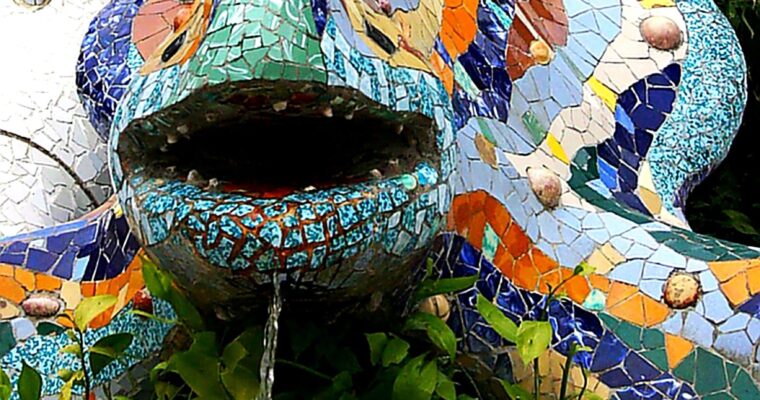
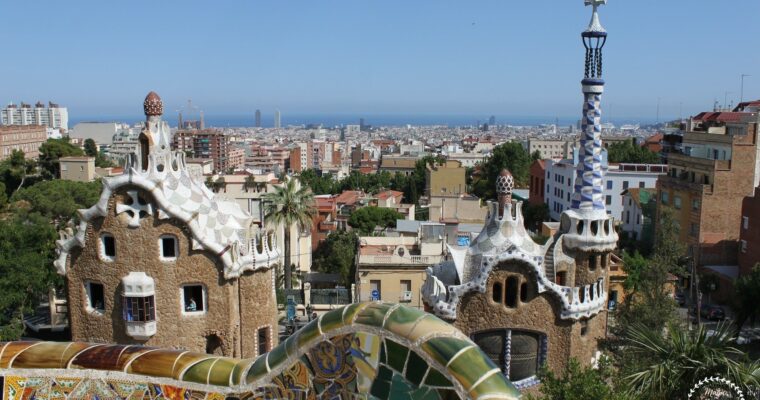
Located in the upper part of Barcelona, Park Güell is one of the city’s most admired icons, where Antoni Gaudí’s creativity merges with nature in a language of organic and curved forms. Barcelona, a city of more than 400 dragons evoking the legend of Saint …
The Spiritual Vision of Antoni Gaudí, with Magic Dreams Barcelona
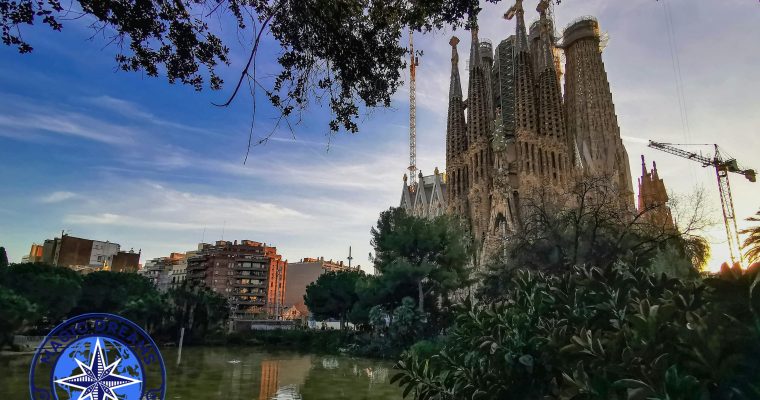
Discover the Basilica of the Expiatory Temple of the Sagrada Família, the architectural soul of Barcelona and the most transcendent work of the modernist genius Antoni Gaudí. More than a monument, this temple is a living creation, conceived as an act of faith, a collective offering driven by the people, and a bridge between nature, spirituality, and architecture.
Located at Carrer de Mallorca, 41 (Barcelona), the Sagrada Família is today one of the most visited monuments in Spain and the world. Its construction began in 1882 through private donations, and Gaudí took over the project in 1883, dedicating 43 years of his life to it, aware that he would not see it completed. Its completion is expected in 2026, coinciding with the centenary of his death.
Antoni Gaudí did not conceive architecture as an aesthetic exercise but as a spiritual mission. Deeply religious and leading an austere life in the second stage of his life, he understood his work as a service to God and the community. He often said: “My client is not in a hurry,” referring to God and eternal time.
Gaudí envisioned the Sagrada Família as a Bible in stone, where each façade tells an essential chapter of the Christian faith:
Nativity Façade (facing east): celebrates life, nature, and hope. It is the only façade built almost entirely during Gaudí’s lifetime.
Passion Façade (west): sober, angular, and dramatic, representing Christ’s suffering and crucifixion, with sculptures by Josep Maria Subirachs.
Glory Façade (south): the main entrance, dedicated to death, the Last Judgment, Glory, and the path toward God.
The temple will feature 18 towers:
12 dedicated to the Apostles, 4 to the Evangelists, 1 to the Virgin Mary, and the central tower to Jesus Christ, which will make the Sagrada Família the tallest church in the world and the tallest building in Barcelona.
On the exterior, Gaudí drew direct inspiration from living nature—mountains, trees, animals, flowers, and life cycles. The stone is not rigid but organic; it does not weigh, it blooms. Each façade expresses a key moment in Christ’s life—Nativity, Passion, and Glory—through a symbolic language accessible to all, conceived as a visual catechism for the people.
The interior is the culmination of his vision: a sacred forest where columns rise like tree trunks branching toward the light. Gaudí studied natural geometry—hyperboloids, helicoids, spirals—to create a structure that is light, resistant, and harmonious.
Sunlight, filtered through colorful stained glass, changes throughout the day—cool tones at dawn, warm tones at sunset—turning the space into a cosmic and spiritual clock. For Gaudí, light was the manifestation of the divine.
In his later years, Gaudí led a humble, almost monastic life, dedicating his body and soul to the Sagrada Família. He dressed simply, ate frugally, and spent long hours in prayer and work. On June 7, 1926, he was hit by a tram on Barcelona’s Gran Via. Because of his modest appearance, he was not immediately recognized and was taken to Hospital de la Santa Creu, where he died three days later.
He was subsequently buried in the crypt of the Sagrada Família. His death deeply moved the city. Today, the Catholic Church has initiated his beatification process, recognizing his life of faith, humility, and service.
The Tower of Mary, within the Sagrada Família complex, is a central symbol of devotion and spirituality. Dedicated to the Virgin Mary, this tower represents purity, grace, and maternal intercession before God, rising as a beacon of faith over Barcelona. Its completion marks a milestone in Antoni Gaudí’s architectural vision, conceived as an axis of spiritual elevation, representing humanity’s aspiration toward the divine. The tower will be crowned with an eight-pointed star, a symbol of celestial guidance and Mary’s light shining over the world.
The Glory Façade, facing south (Carrer de Mallorca), is the main and most ambitious entrance of the Sagrada Família. Conceived by Gaudí to represent the path toward God, it focuses on redemption and spiritual transcendence. Its structure, begun in 2002, is organized in three levels: earthly, spiritual, and celestial, and is articulated through a grand staircase leading worshippers toward the contemplation of the divine.
This façade symbolizes the path to glory through virtue, redemption, and the grace of the Holy Spirit. It will include representations of the Holy Trinity, stone clouds with scenes from Genesis, and columns dedicated to the seven deadly sins and heavenly virtues. The structure will feature four monumental bell towers dedicated to Saint Andrew, Saint Peter, Saint Paul, and Saint James the Greater, reaching extraordinary heights, while the main portal will be crowned with sixteen hyperboloid-shaped lanterns.
Currently, between 2025 and 2026, the first columns and structures are being erected along Carrer de Mallorca. Artistic and sculptural work is expected to continue for at least another decade.
We are professional native guides with over 10 years of experience, specialists in Gaudí, Catalonia, and high-level cultural tourism. We offer personalized, private, worry-free experiences, taking care of every detail. We know the symbols, mysteries, and deep history that do not appear in conventional guides.
Premium services:
Private guided tours (daily or weekly).
Daily or weekly cultural, botanical, architectural, and gastronomic routes.
Artistic guidance and workshops inspired by Gaudí’s “Trencadís” mosaic system.
Emotional botanical routes with optional premium picnic.
Personalized accommodations and full logistics.
Private gastronomy with a local chef (Catalan, Spanish, or international cuisine, themed menus available).
Live music in your accommodation or scheduled space, artisanal pastries, and floral decoration.
Gastronomic experiences on a yacht.
Photographic experiences in unique corners.
Romantic getaways, weekends, and tailor-made experiences.
Discover Barcelona from the sea with our private yacht gastronomic experience: an exclusive Mediterranean journey with privileged city skyline views, a personalized menu by our local chef, 0.0 wine pairings, live music, and premium service. A unique sensory experience where art, the sea, and gastronomy blend.
Everything is designed with sensitivity, excellence, and personalized attention. Our services are offered in Spanish, Catalan, and English, and upon request, we adapt to any language.
Finally, discover the words of Antoni Gaudí:
“Build beauty! Seek in nature the image of mystery and turn it into architecture.”
“The great book, always open, is that of Nature.”
“Nothing has been invented in the world; fortune consists in seeing what God has placed before our eyes.”
“Life is a battle; strength is virtue, and this can only be sustained through spiritual cultivation.”
Body, mind, and spirit – Magic Dreams Barcelona.
Basílica del Templo Expiatorio de la Sagrada Familia.
Basílica del Templo Expiatorio de la Sagrada Familia.
Basílica del Templo Expiatorio de la Sagrada Familia.
Basílica del Templo Expiatorio de la Sagrada Familia.
Basílica del Templo Expiatorio de la Sagrada Familia.
Basílica del Templo Expiatorio de la Sagrada Familia.
Basílica del Templo Expiatorio de la Sagrada Familia.
Basílica del Templo Expiatorio de la Sagrada Familia.
Basílica del Templo Expiatorio de la Sagrada Familia.
Basílica del Templo Expiatorio de la Sagrada Familia.
Basílica del Templo Expiatorio de la Sagrada Familia.
Basílica del Templo Expiatorio de la Sagrada Familia.
Basílica del Templo Expiatorio de la Sagrada Familia.
Basílica del Templo Expiatorio de la Sagrada Familia.
Basílica del Templo Expiatorio de la Sagrada Familia.
Basílica del Templo Expiatorio de la Sagrada Familia.
Basílica del Templo Expiatorio de la Sagrada Familia.
Basílica del Templo Expiatorio de la Sagrada Familia.
Basílica del Templo Expiatorio de la Sagrada Familia.
Basílica del Templo Expiatorio de la Sagrada Familia.
Basílica del Templo Expiatorio de la Sagrada Familia.
Basílica del Templo Expiatorio de la Sagrada Familia.
La visión espiritual de Antoni Gaudí, de la mano de Magic Dreams Barcelona. Descubra la Basílica del Templo Expiatorio de la Sagrada Familia, el alma arquitectónica de Barcelona y la obra más trascendente del genio modernista Antoni Gaudí. Más que un monumento, este templo es …
En la parte superior de Barcelona está situado el Park Güell, uno de los iconos más admirados de la ciudad, donde la creatividad de Antoni Gaudí se fusiona con la naturaleza en un lenguaje de formas orgánicas y curvadas. Barcelona, ciudad de más de 400 …