Route guide for visitors throughout Catalonia – Barcelona – Costa Brava – Catalan Pyrenees – Personalized experiences – Customized tour guide services – A small tribute to the wonderful city and land that saw us born – Transforming experiences into unforgettable memories - Magic Dreams Collection: exclusive universes inspired by Salvador Dalí and Gaudí. Niche perfumes, jewelry, lithographs, and collectible items celebrating the Mediterranean spirit.
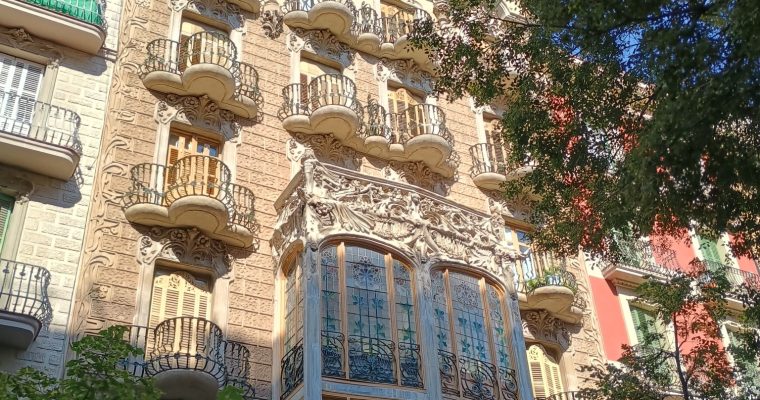
Located in the heart of the Eixample district, one of the most iconic urban areas of Barcelona, Casa Sala-Cairó is a refined example of residential architecture from the era of Modernisme català. Standing on the elegant Enric Granados Street, today known for its vibrant cultural …
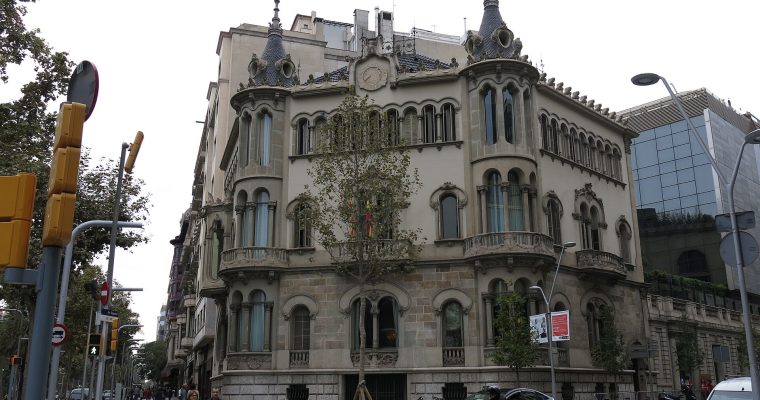
An Art Nouveau Mansion Preserving the Splendour of a Bygone Era At the intersection of Avinguda Diagonal and Carrer de Balmes, in the heart of Barcelona, stands Casa Pérez Samanillo, the current headquarters of the Círculo Ecuestre. This remarkable mansion is one of the most …
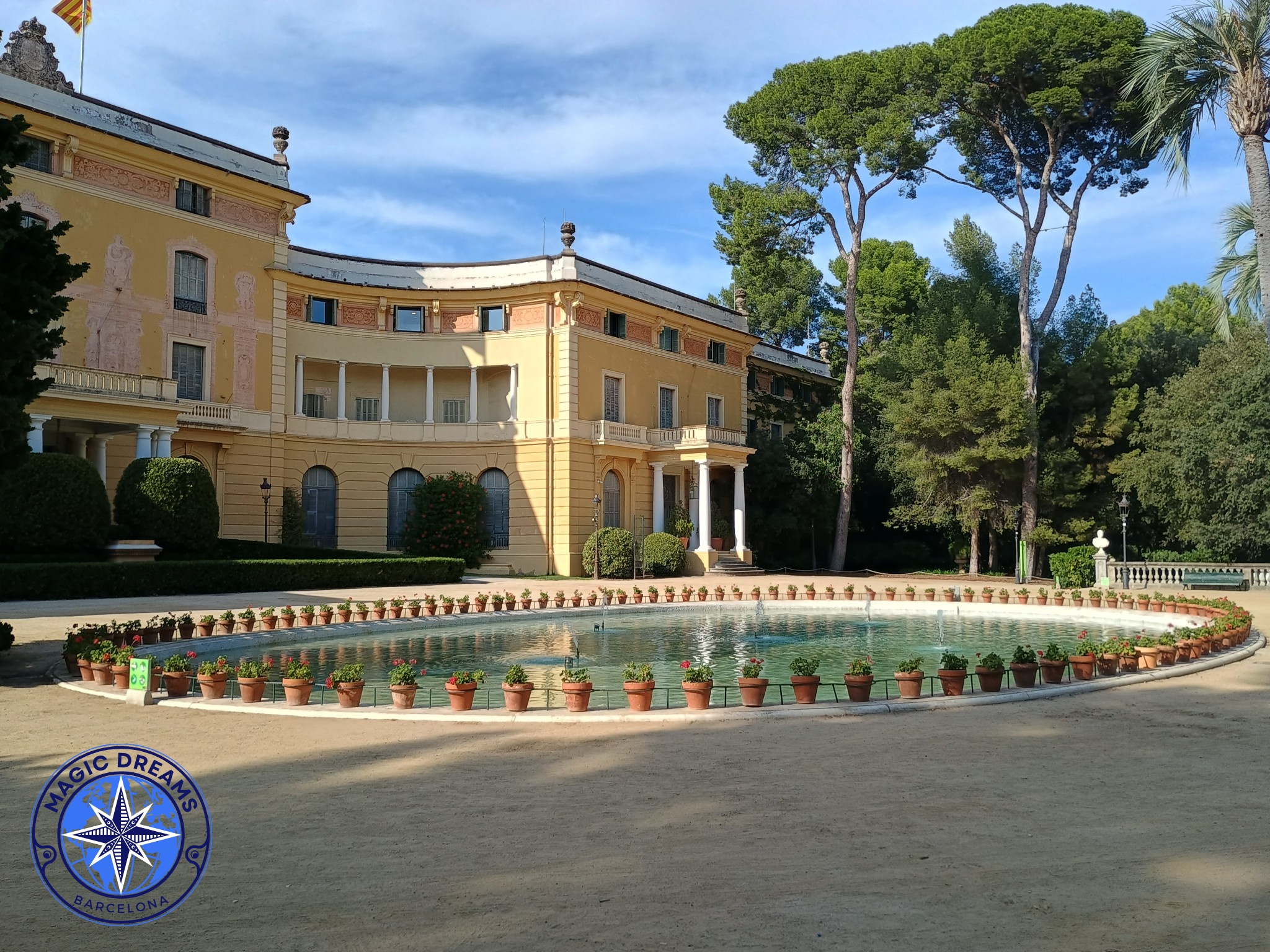
The Royal Palace of Pedralbes, located at 686 Avinguda Diagonal, is one of Barcelona’s most distinctive heritage sites. Surrounded by historic gardens and removed from the hustle and bustle of the city’s main avenues, this remarkable place invites visitors to discover an essential part of Barcelona’s history, where stately architecture, royal life and the landscape design sensibilities of the early twentieth century come together.
Its origins lie in an old aristocratic estate that, following an extensive transformation, became the Spanish Royal Family’s residence during their stays in Barcelona. Today, the palace and its gardens bear witness to the city’s urban and cultural evolution, as well as to the relationship between architecture, nature and the representation of power.
More than just a historic building, Pedralbes is a place where visitors can observe how architecture and landscape come together to create an atmosphere of serenity, elegance and historical memory.
The Origins of the Royal Palace of Pedralbes
From a Stately Estate to a Royal Residence
The palace’s history begins with the former Can Feliu estate, a property associated with Barcelona’s aristocracy. The estate subsequently passed into the hands of the Güell family, who initiated the transformation of the property and the development of its gardens.
The estate became a royal residence following the decision to provide the Spanish monarchy with a residence in Barcelona. The adaptation and construction works took place between 1919 and 1924, with the participation of architects Eusebi Bona and Francesc de Paula Nebot.
The result was a stately palace designed to accommodate the Royal Family during official visits and to represent the Crown’s institutional presence in the city.
The new residence combined ceremonial spaces, reception rooms and private quarters within a sober and elegant architectural framework. Its appearance reflected a traditional concept of the palace, adapted to the requirements of court life in the twentieth century.
Architecture of Classical Elegance
The Monumental Restraint of a Royal Residence
The architecture of the Royal Palace of Pedralbes is characterised by its balanced composition, the symmetry of its volumes and the restrained ornamentation of its façades.
Unlike the more organic Modernist designs that shaped Barcelona during the first decades of the twentieth century, Pedralbes embraces a classically inspired architectural expression in which proportion, regularity and the hierarchy of spaces convey solemnity.
The building integrates into the landscape without visually competing with it. The relationship between the façades, terraces and gardens creates a gradual transition between the residential interior and the natural surroundings.
This harmony also reflects the palace’s representative function. Every space had to combine comfort, protocol and an appropriate institutional image for receiving members of the Royal Family, public officials and prominent figures of the time.
The architecture of Pedralbes must therefore be understood not only through its construction elements but also through the historical uses that determined its layout and decoration.
The Palace Interiors
Reception Rooms, Royal Protocol and Historical Memory
The interior of the Royal Palace of Pedralbes was designed to meet the requirements of an official residence. Its reception rooms and representative spaces evoked the palace tradition, with decoration intended to convey distinction and solemnity.
The layout allowed reception and ceremonial areas to be separated from those intended for private life. This arrangement was an essential feature of royal residences, where ceremony and intimacy had to coexist.
The interiors also reflect the decorative tastes of their time, combining historical references, classical elements and solutions adapted to modern comfort.
Although access to the interiors depends on the building’s institutional and cultural uses, its history helps us understand how Barcelona prepared to accommodate a residence associated with the monarchy and the country’s official life.
The Gardens of the Royal Palace
A Historic Landscape Between Nature and Architecture
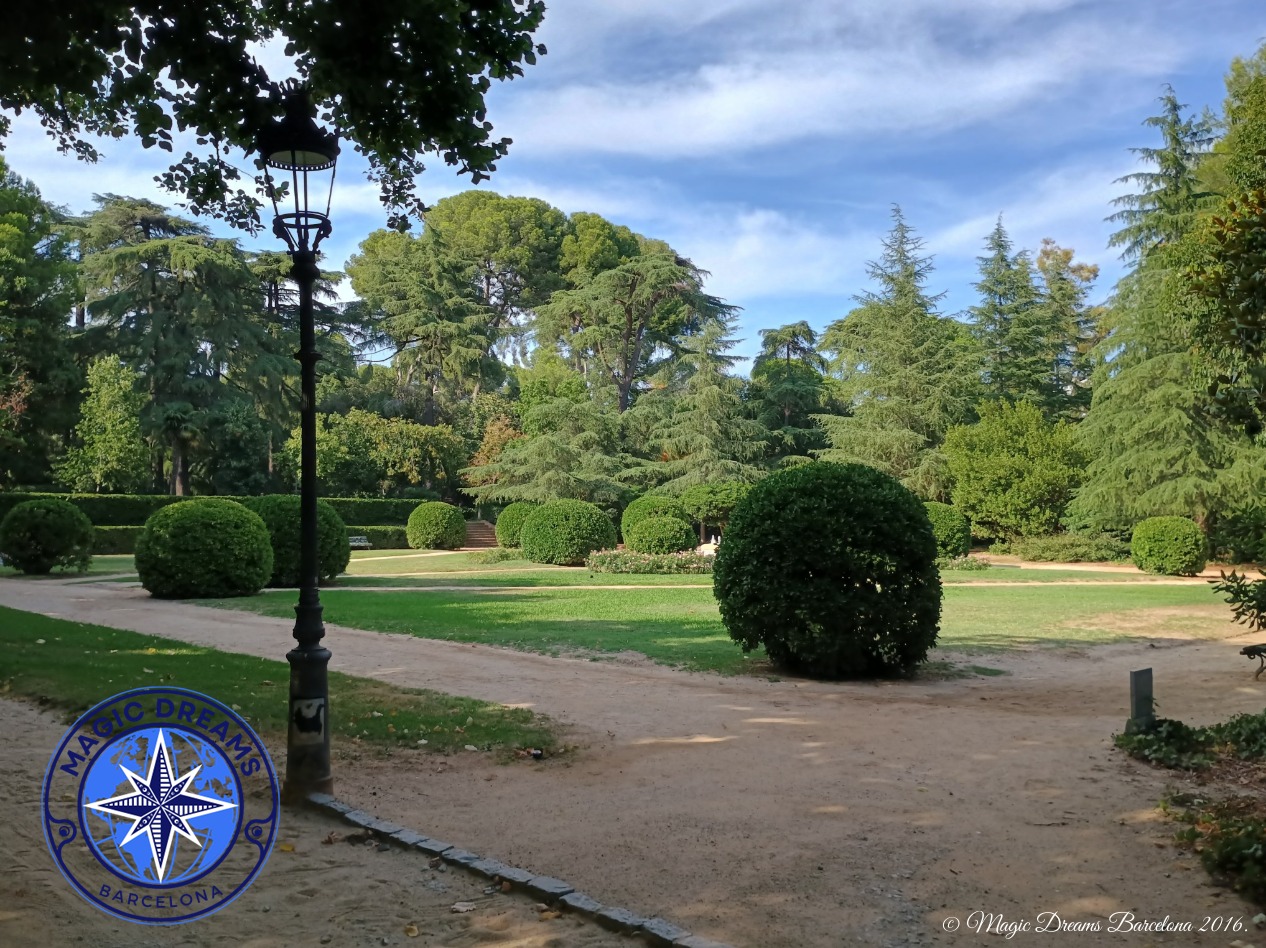
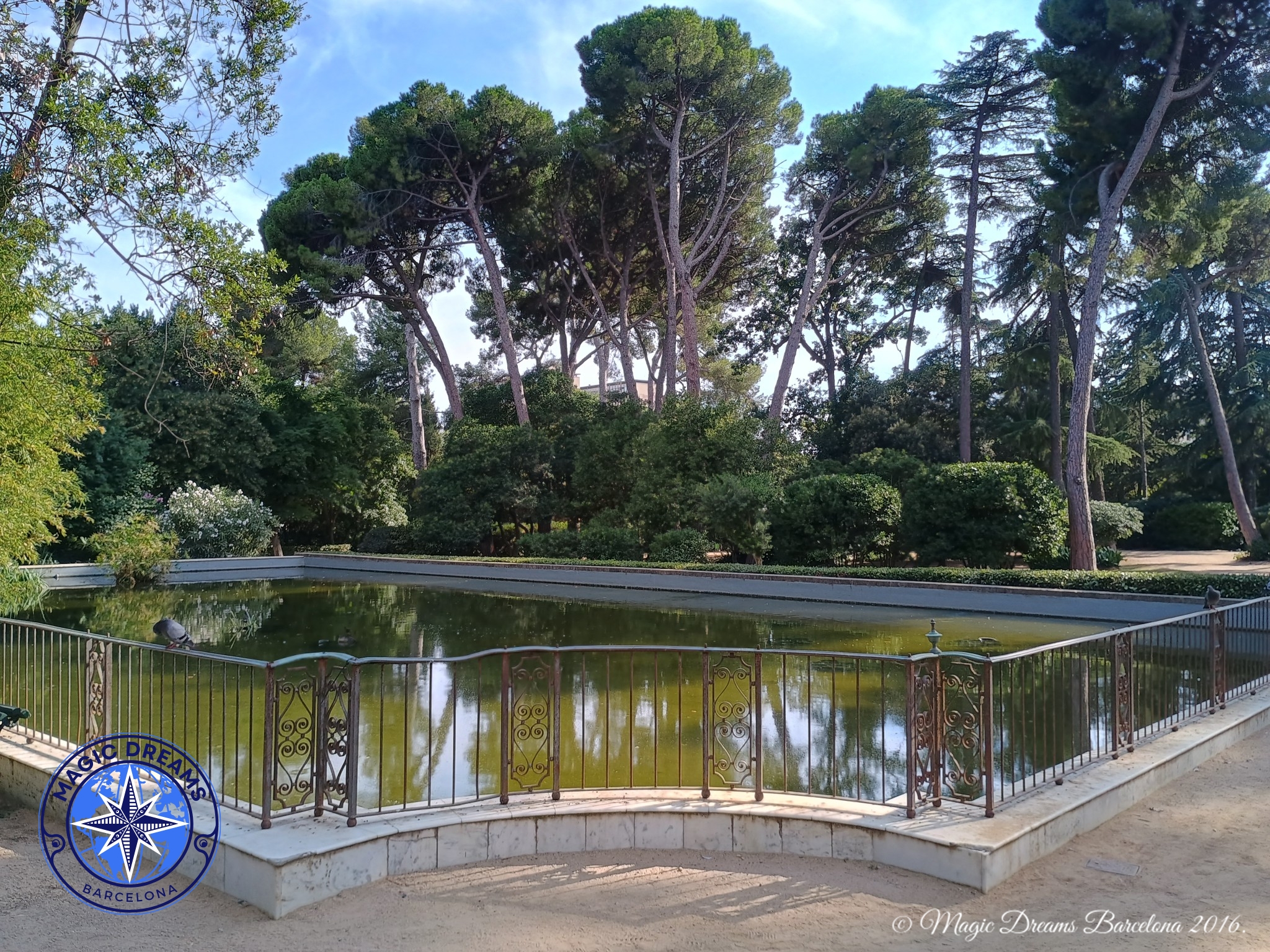
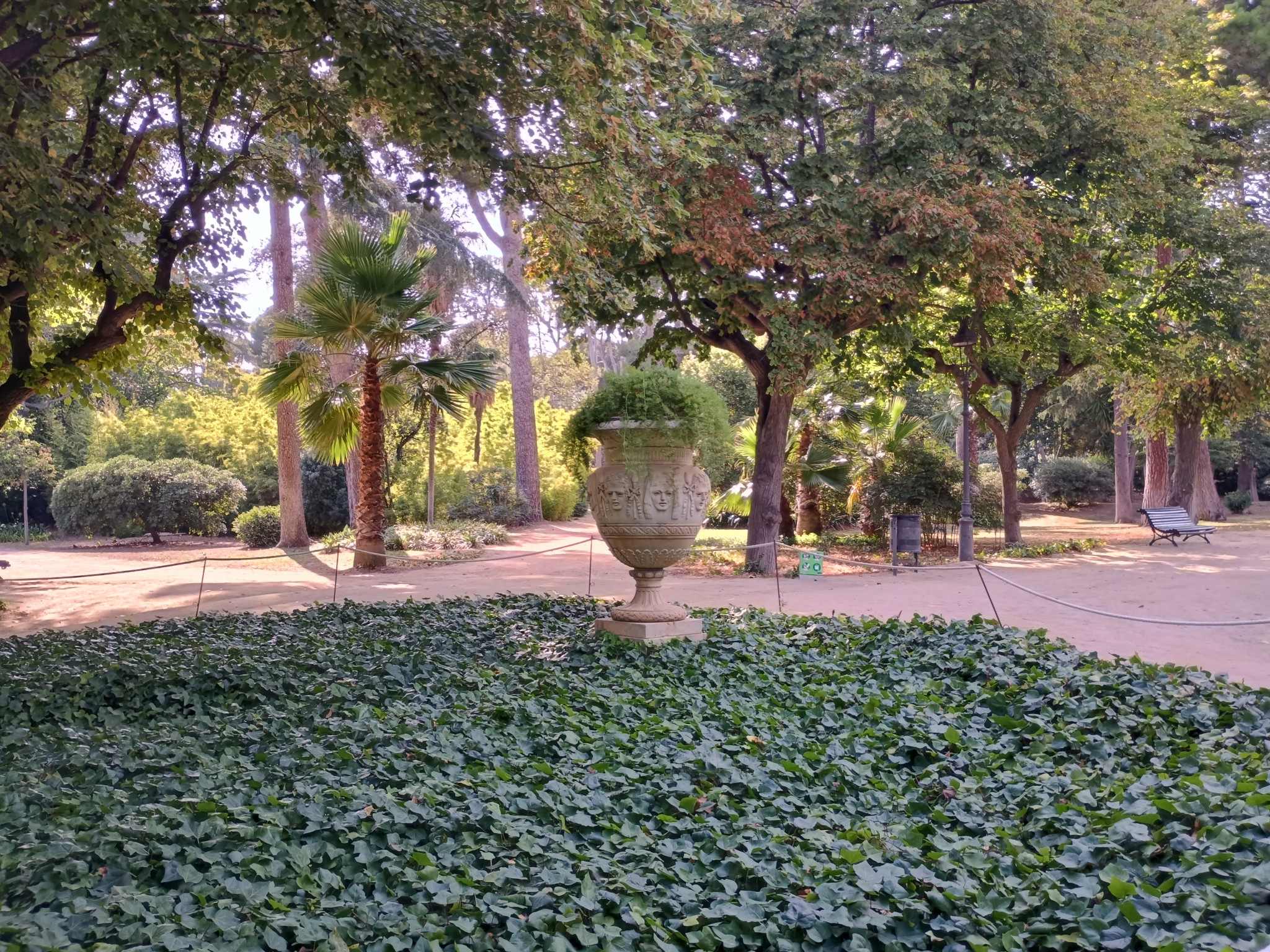
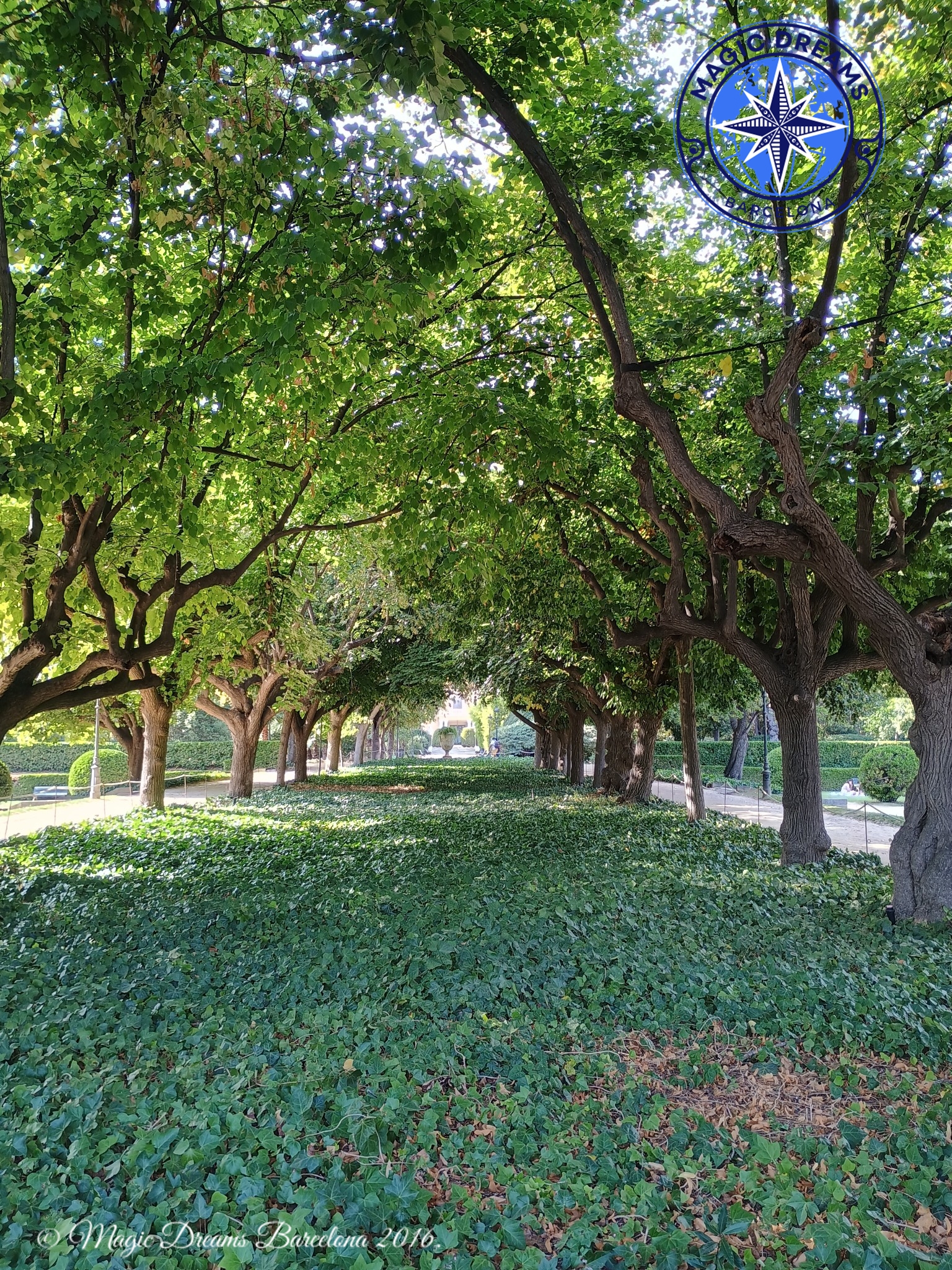
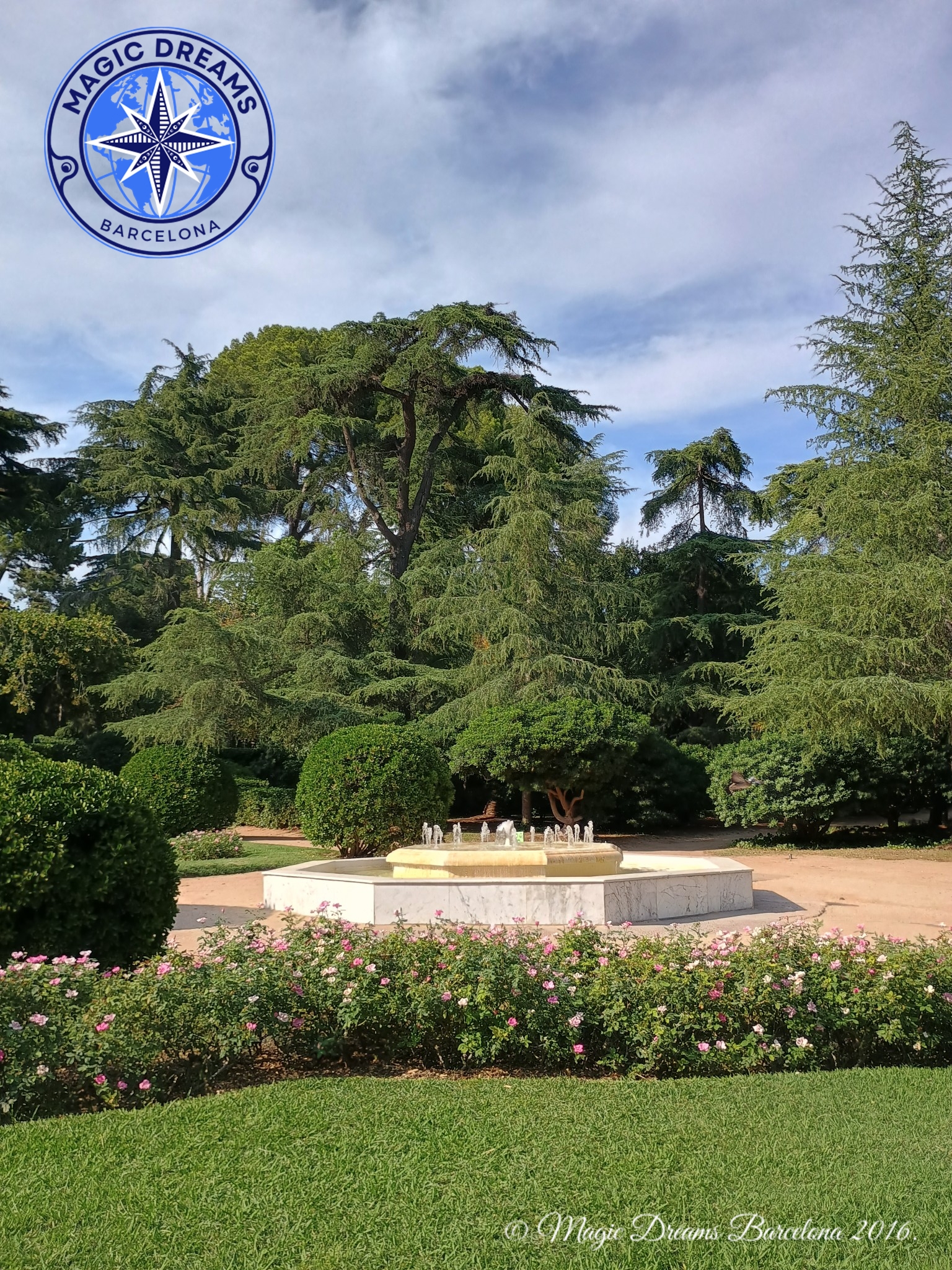
The gardens are among the principal attractions of the Pedralbes complex. Their pathways, flowerbeds, monumental trees and open spaces create an atmosphere of tranquillity that contrasts with the urban intensity of Avinguda Diagonal.
The landscape combines the geometry of formal garden design with areas that have a more naturalistic appearance. This coexistence of order and visual freedom reflects the landscape-design movements that developed in Europe in the late nineteenth and early twentieth centuries.
Mediterranean vegetation plays a fundamental role in the identity of the grounds. Palm trees, cypresses, pines and other ornamental species define perspectives, provide shade and establish a changing relationship between light and architecture.
The larger trees lend historical depth to the landscape. Their trunks, branches and canopies reveal the passing of the seasons and demonstrate how a historic garden evolves without losing its essential structure.
Walking through Pedralbes means discovering a landscape that does more than decorate the palace: it forms part of its cultural identity and of the experience of those who visit.
Antoni Gaudí and the Gardens of Pedralbes
The Font d’Hèrcules and the Symbolic Language of Water
One of the garden’s most remarkable features is the Font d’Hèrcules (Hercules Fountain), associated with Antoni Gaudí and created during his period of work for the Güell family.
The fountain is a distinctive work within the architect’s career. Its composition combines stone, iron and water in a symbolic arrangement in which natural elements play a particularly important role.
The work is associated with the mythological figure of Hercules, traditionally linked to strength and extraordinary feats. As with other creations by Gaudí, the fountain’s significance lies both in its construction and in the ability of its elements to suggest deeper meanings.
Its presence in the gardens reveals a lesser-known aspect of the architect’s work: his approach to outdoor spaces, where the design of water features, vegetation and ornamental elements becomes part of a unified composition.
The Font d’Hèrcules invites visitors to pause, observe its details, appreciate the relationship between its materials and discover how a seemingly small feature can embody considerable historical and artistic richness.
Nicolau Maria Rubió i Tudurí and the Art of Garden Design
Landscape Design, Perspective and Mediterranean Sensibility
The evolution of the Pedralbes gardens is also connected with the Catalan landscape-design tradition of the twentieth century and with Nicolau Maria Rubió i Tudurí, a highly influential architect, urban planner and landscape designer.
His work was associated with an approach to gardens as spaces designed to be lived in, integrated into the city and adapted to the Mediterranean climate and vegetation.
Within this tradition, a garden is not merely a succession of plant species. It is a composition of pathways, perspectives, shade, textures and resting places that shapes the visitor’s experience.
The combination of paths, trees and ornamental features reveals different scenes as visitors move through the grounds. Each viewpoint offers a different interpretation of the ensemble and highlights the importance of landscape planning in the preservation of historic gardens.
The interventions and evolution of these spaces should be understood within a broader history in which different professionals and generations have contributed to shaping the landscape we see today.
Sculptures, Fountains and Ornamental Details
Art Integrated into the Landscape
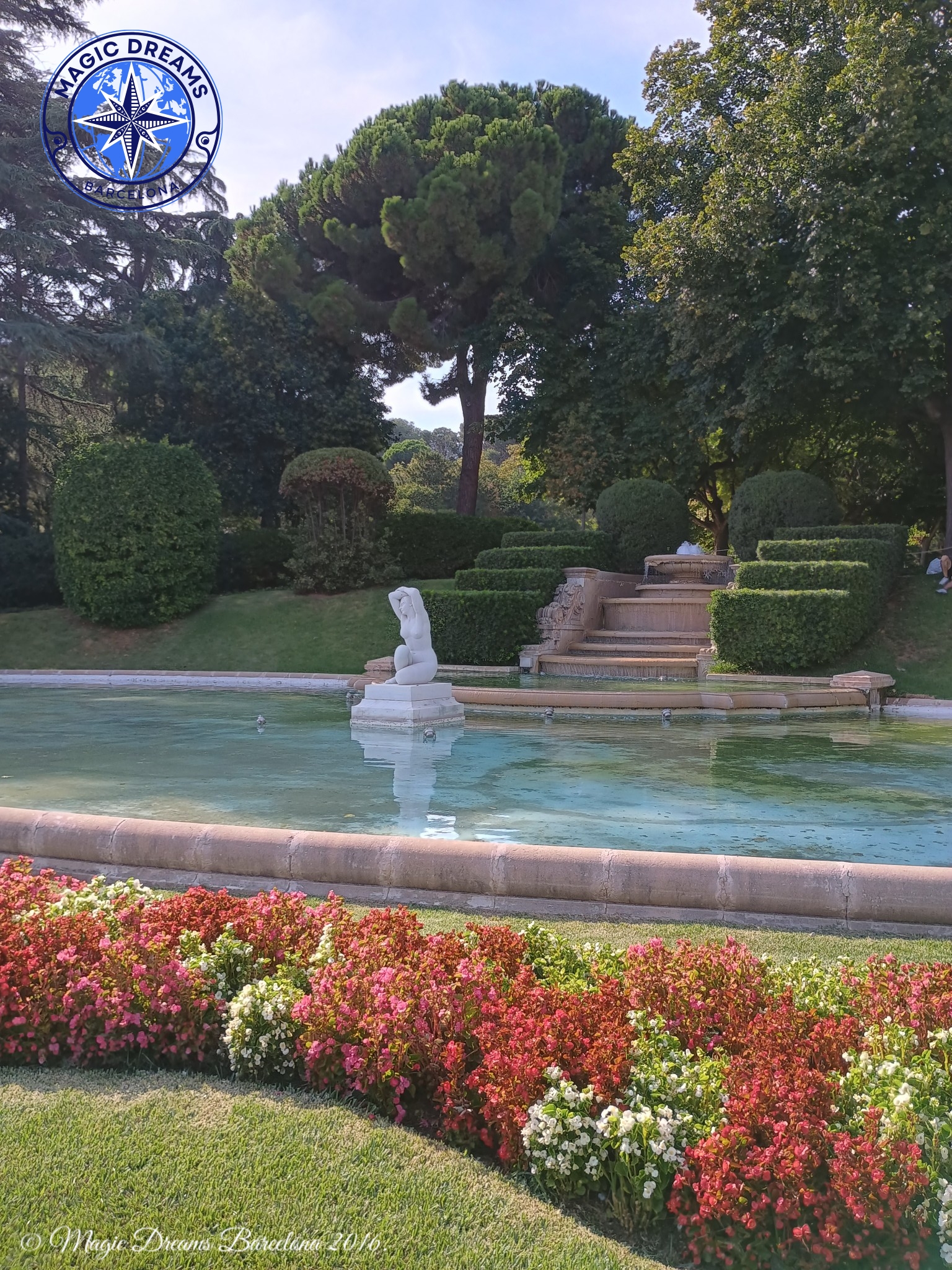
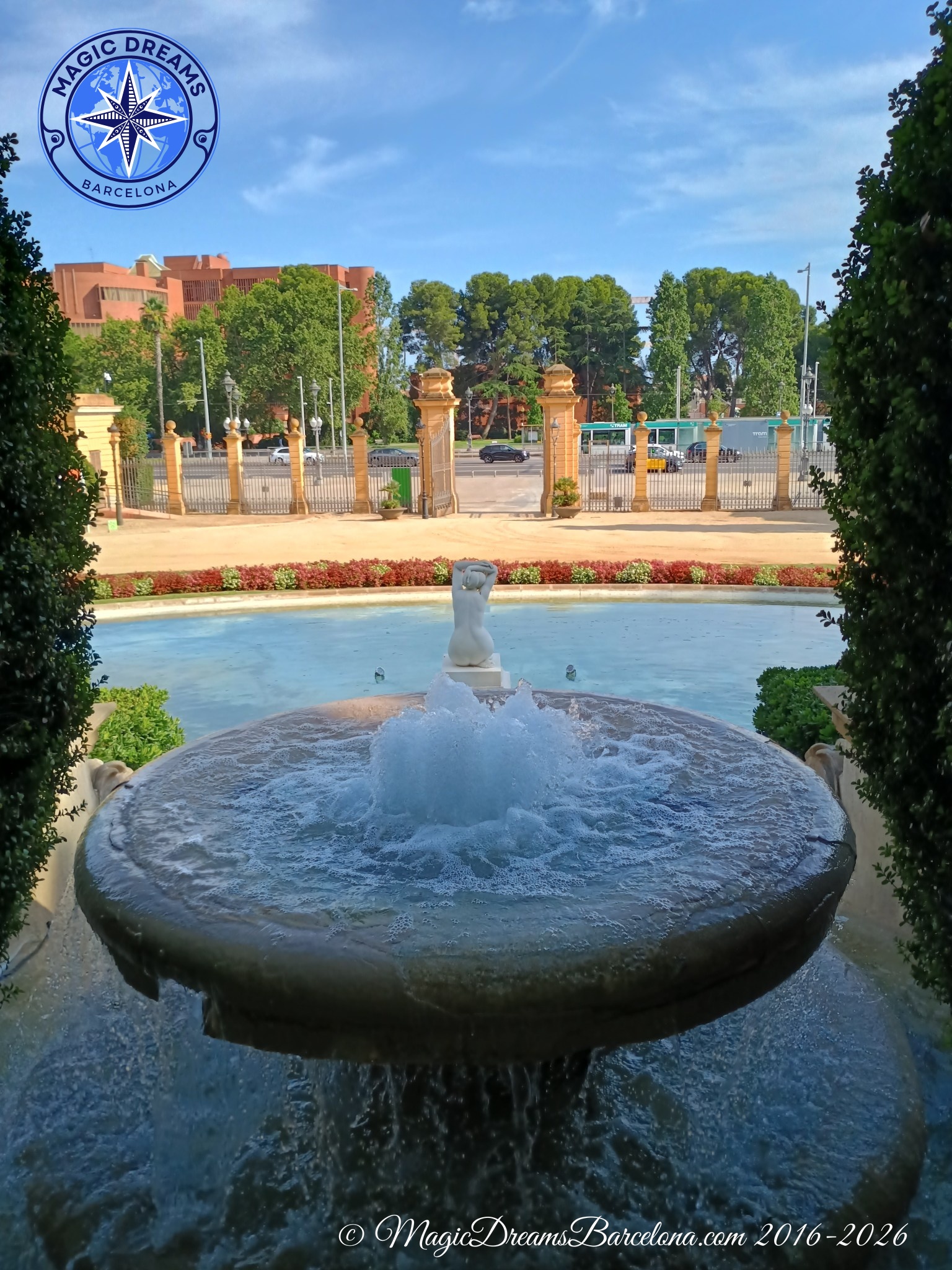
The Pedralbes gardens contain ornamental features that enrich the visitor’s route and establish a dialogue between art and nature.
Fountains introduce the movement and sound of water; sculptures provide focal points and symbolic references; and pathways gradually reveal the structure of the garden.
These elements serve an aesthetic purpose, but they also have cultural significance. They help visitors understand the artistic tastes of different periods and the importance gardens acquired as places for representation, strolling and contemplation.
A visit becomes more rewarding when attention is paid to the details: the texture of the stone, the vegetation framing a sculpture, the reflection of light on the water or the way a pathway guides the eye towards the palace.
In this sense, Pedralbes is a place where heritage can be discovered through its great monuments as well as through the small details that create its distinctive atmosphere.
The Mediterranean Nature of Pedralbes
Trees, Scents and Biodiversity in the Heart of Barcelona
Vegetation is an essential part of the gardens’ identity. Palm trees, magnolias, cypresses, pines and other ornamental species create a landscape of contrasting leaves, bark, scents and shapes.
Each species has characteristics that allow visitors to interpret the garden from a botanical perspective. Magnolias, with their striking flowers and prominent foliage, contrast with the upright silhouettes of cypresses. Palm trees provide a visual reference characteristic of countless Mediterranean gardens, while pines offer shade and a connection with Catalonia’s natural landscapes.
Careful observation also reveals seasonal changes. Flowering, falling leaves, the appearance of fruit and variations in the intensity of the light continually transform the grounds.
The gardens also provide opportunities to observe birds and other small animals that find shelter among the trees. The presence of wildlife depends on the season, environmental conditions and the level of human activity.
A guided visit with a botanical focus allows visitors to identify species, understand their adaptations to the climate and discover how vegetation contributes to improving the urban microclimate.
The Garden as a Sensory Experience
Listen, Observe and Discover at a Leisurely Pace
Pedralbes invites visitors to experience heritage beyond visual appreciation.
The sound of water, the movement of leaves, the scents of plants and the temperature differences between sunny areas and shaded pathways create a sensory experience that changes throughout the day.
Observing nature can become an educational activity for families, adults and groups interested in cultural and environmental heritage. Recognising a leaf, identifying a flower, observing a bird’s behaviour or understanding the relationship between a species and its surroundings transforms a walk into a learning experience.
Botany also offers a way to explore the symbolic dimension of plants. Cypresses, palm trees, laurels and olive trees have acquired different cultural meanings throughout history, although their interpretation depends on the tradition and context in which they appear.
This approach connects the garden’s history with the cultural memory of the Mediterranean and reveals how people have attributed meaning to nature over generations.
The Royal Palace and the History of Barcelona
A Witness to the City’s Urban Transformation in the Twentieth Century
The history of Pedralbes is closely linked to Barcelona’s growth and the transformation of its former stately estates into spaces for institutional and cultural representation.
At the beginning of the twentieth century, the city was undergoing significant urban, social and architectural changes. The expansion of the Eixample district, the development of new residential areas and the evolution of public spaces reshaped the relationship between the urban centre and its former rural surroundings.
The transformation of the Pedralbes estate into a royal residence formed part of this process. Its location, then associated with an area of large private estates, gradually acquired a new significance within modern Barcelona.
Over time, the palace ceased to serve exclusively as a residence and was incorporated into new institutional and cultural uses. This evolution demonstrates how historic buildings can acquire new functions without losing their value as witnesses to the past.
Today, the complex is associated with the city’s architectural and landscape heritage, as well as with a range of cultural and institutional activities.
Pedralbes Today
Heritage, Culture and Spaces for Learning
The Royal Palace of Pedralbes and its gardens form part of Barcelona’s historic heritage. Their significance lies in the combination of architecture, political history, ornamental art and landscape.
The grounds and their buildings have served different purposes over time, meaning that access conditions are not necessarily the same for every area. The gardens, exhibitions and cultural activities may be subject to specific opening hours, partial closures or scheduled programmes.
Before planning a visit, it is advisable to consult the latest official information to confirm which areas are open, what activities are scheduled and what access conditions apply.
This preparation allows visitors to enjoy the complex at a relaxed pace and devote sufficient time to the features that interest them most.
What to Discover During Your Visit
A Journey Through History, Architecture and Nature
A visit to the gardens of the Royal Palace of Pedralbes can be organised around several points of interest:
The palace: its stately architecture and its connection with the history of the monarchy in Barcelona.
The Font d’Hèrcules: a work associated with Gaudí that offers an opportunity to explore the symbolism of water and materials.
The pathways and flowerbeds: spaces that reveal the garden’s landscape structure and carefully composed perspectives.
The historic trees: ornamental trees that contribute to the identity of the grounds.
The sculptures and fountains: features that bring art, history and nature together.
The Mediterranean flora: an opportunity to identify species, study their characteristics and understand their environmental adaptations.
Birdwatching: an additional activity for discovering urban biodiversity.
The ornamental details: materials, textures, shapes and perspectives that often go unnoticed during a hurried walk.
The recommended duration depends on the pace of the visit, the level of interest in botany and the availability of the different areas. A leisurely route allows visitors to appreciate both the main highlights and the smaller details of the landscape.
How to Get to the Royal Palace of Pedralbes
A Visit to Barcelona’s Upper District
The complex is located at 686 Avinguda Diagonal, Barcelona, in the Pedralbes area.
Its location makes it possible to combine a visit with other places of cultural and architectural interest in the city, although it is advisable to plan travel according to the chosen mode of transport and traffic conditions.
The area can be reached by public transport, including the metro, buses and other urban services with stops nearby. The most convenient combination will depend on the starting point and service conditions on the day of the visit.
For those who prefer comfort and flexibility, private transport makes it possible to adapt schedules and combine the visit with other places of interest in Barcelona.
Opening Hours and Access
Practical Information Before Planning Your Visit
Opening hours and access conditions may vary according to the season, institutional activities and scheduled events.
Before travelling, we therefore recommend checking the official channels to confirm:
The opening days and hours of the gardens.
Whether the palace interiors are accessible.
Any temporary closures or access restrictions.
Available cultural activities and guided tours.
Conditions applicable to groups, families and visitors with specific accessibility needs.
It is important to distinguish between access to the gardens and access to the palace interiors, as they are not always subject to the same conditions.
Discover the Pedralbes Gardens with Magic Dreams Barcelona
Discovering the Royal Palace of Pedralbes takes on a different dimension when the visit is tailored to each person’s interests, pace and expectations.
Magic Dreams Barcelona designs personalised experiences for those who wish to explore the city in depth, in an authentic and enriching way. Our aim is to ensure that every visitor can enjoy Barcelona’s heritage without having to worry about organising the details.
We offer private transport, the services of professional guides in Spanish, Catalan and English, with other languages available on request, as well as experiences tailored to families, couples, private groups of up to four people and visitors interested in art, architecture and nature.
Our tours combine the palace’s history with an architectural and artistic interpretation of its spaces, paying particular attention to symbolism, materials, perspectives and the evolution of the landscape.
A Native Guide with a Botanical and Emotional Perspective
The experience can be enriched by the accompaniment of a native guide specialising in botany and birdwatching, who can interpret the garden from a cultural, sensory and educational perspective.
During the tour, plant species become more than simple decorative features. Every tree, flower or shrub can provide an opportunity to learn about its origins, characteristics, traditional uses and the cultural meanings attributed to it.
Birdwatching and the interpretation of the surrounding environment help visitors better understand urban biodiversity and the relationship between historic gardens and Mediterranean ecosystems.
This approach transforms a walk into an experience of discovery, combining knowledge with sensitivity and contemplation.
Private Picnics and Tailor-Made Gastronomic Experiences
For those who wish to extend their experience, Magic Dreams Barcelona organises personalised gastronomic proposals, subject to the conditions and authorisations of the chosen venue.
We can design picnics in suitable locations, complete with table linen, carefully selected tableware and bespoke gourmet catering, including sweet and savoury options, fresh juices and non-alcoholic beverages.
The location and format are selected according to access regulations, the actual possibilities offered by the venue and the client’s preferences. When a historic garden does not permit meals or private catering services, we can suggest alternative locations that preserve the same atmosphere of intimacy and connection with nature.
Art, Music and Bespoke Experiences
Our offering goes beyond a conventional visit. We can coordinate complementary cultural experiences, floral design services, professional photography, artistic activities, live music and themed dinners at selected venues or private accommodation, always subject to availability and authorisation.
We also design itineraries connecting the Pedralbes gardens with other places of interest in Barcelona, bringing architecture, heritage, gastronomy and nature together in a single day.
Each proposal is individually prepared, taking into account cultural interests, available time, preferred pace and the type of experience desired.
Accommodation and Attention to Every Detail
For those visiting Barcelona for several days, we offer assistance with planning their stay and selecting accommodation, as well as organising day trips, weekend getaways to the Catalan Pyrenees or the Costa Brava, and tailor-made itineraries.
Our aim is to ensure that every service forms part of a coherent experience, from arrival to the final excursion, with particular attention to comfort, quality and the smallest details.
A Place to Discover Slowly
Pedralbes: Memory, Beauty and Nature in Barcelona
The Royal Palace of Pedralbes cannot be fully appreciated simply by looking at its façades or walking through its gardens. Its true richness emerges when visitors understand the history of the estate, the palace’s representative function, the evolution of the landscape and the presence of art in its smallest details.
The architecture tells the story of an era and a particular approach to institutional representation.
The fountains evoke the movement of water and the ornamental tradition.
The trees preserve the memory of the landscape.
The sculptures connect nature with culture.
The light transforms each route and changes how the spaces are perceived.
And the relative tranquillity of the gardens reveals a different Barcelona: quieter, more intimate and more closely connected with its heritage.
With Magic Dreams Barcelona, the Royal Palace of Pedralbes becomes an experience that brings together knowledge, sensitivity and discovery.
Because travelling is not simply about visiting places, but about understanding them, experiencing them and keeping their memory alive long after leaving them behind.