Route guide for visitors throughout Catalonia – Barcelona – Costa Brava – Catalan Pyrenees – Personalized experiences – Customized tour guide services – A small tribute to the wonderful city and land that saw us born – Transforming experiences into unforgettable memories - Magic Dreams Collection: exclusive universes inspired by Salvador Dalí and Gaudí. Niche perfumes, jewelry, lithographs, and collectible items celebrating the Mediterranean spirit.
Some places surprise us with their history, others with their beauty, and some with their ability to convey a sense of calm even when they are located right in the heart of the city. Turó Park combines all three qualities. Located in the Sarrià-Sant Gervasi …
The Güell Pavilions: Elegance, Symbolism, and the Beginnings of Gaudí’s Universe In the upper part of Barcelona, in the historic surroundings of Pedralbes, stands one of Antoni Gaudí’s most fascinating architectural ensembles: the Güell Pavilions. Less internationally renowned than the Sagrada Família, Park Güell, or …
The summit of Barcelona where history, nature and entertainment come together
Tibidabo, the highest part of the city of Barcelona, stands at 575 metres above sea level, offering an incomparable perspective of the city, the Mediterranean Sea and the surrounding hills. This remarkable place combines history, architecture, nature and entertainment, creating an unforgettable journey for all the senses.
The Temple of the Sacred Heart of Jesus
A monumental landmark overlooking Barcelona
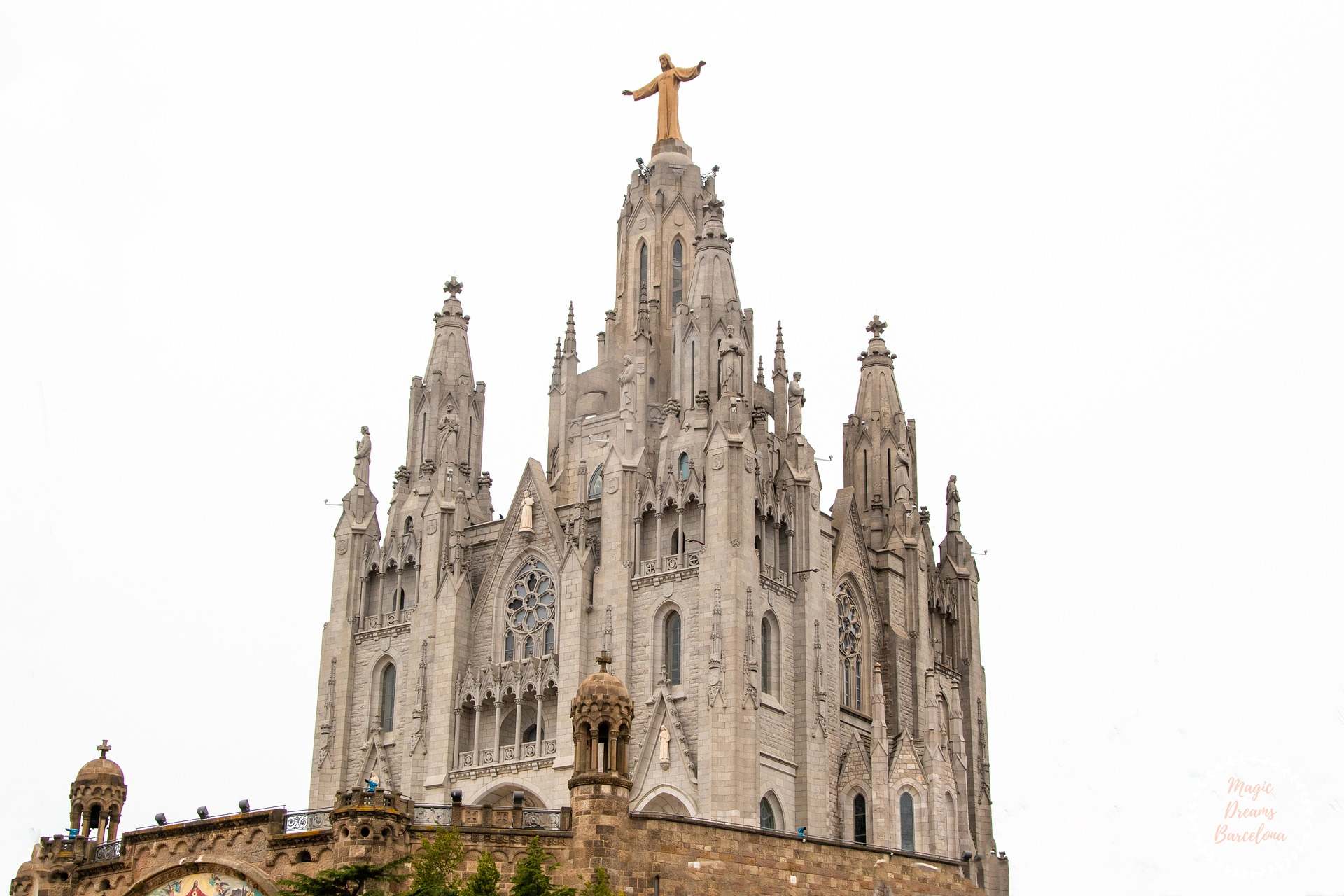
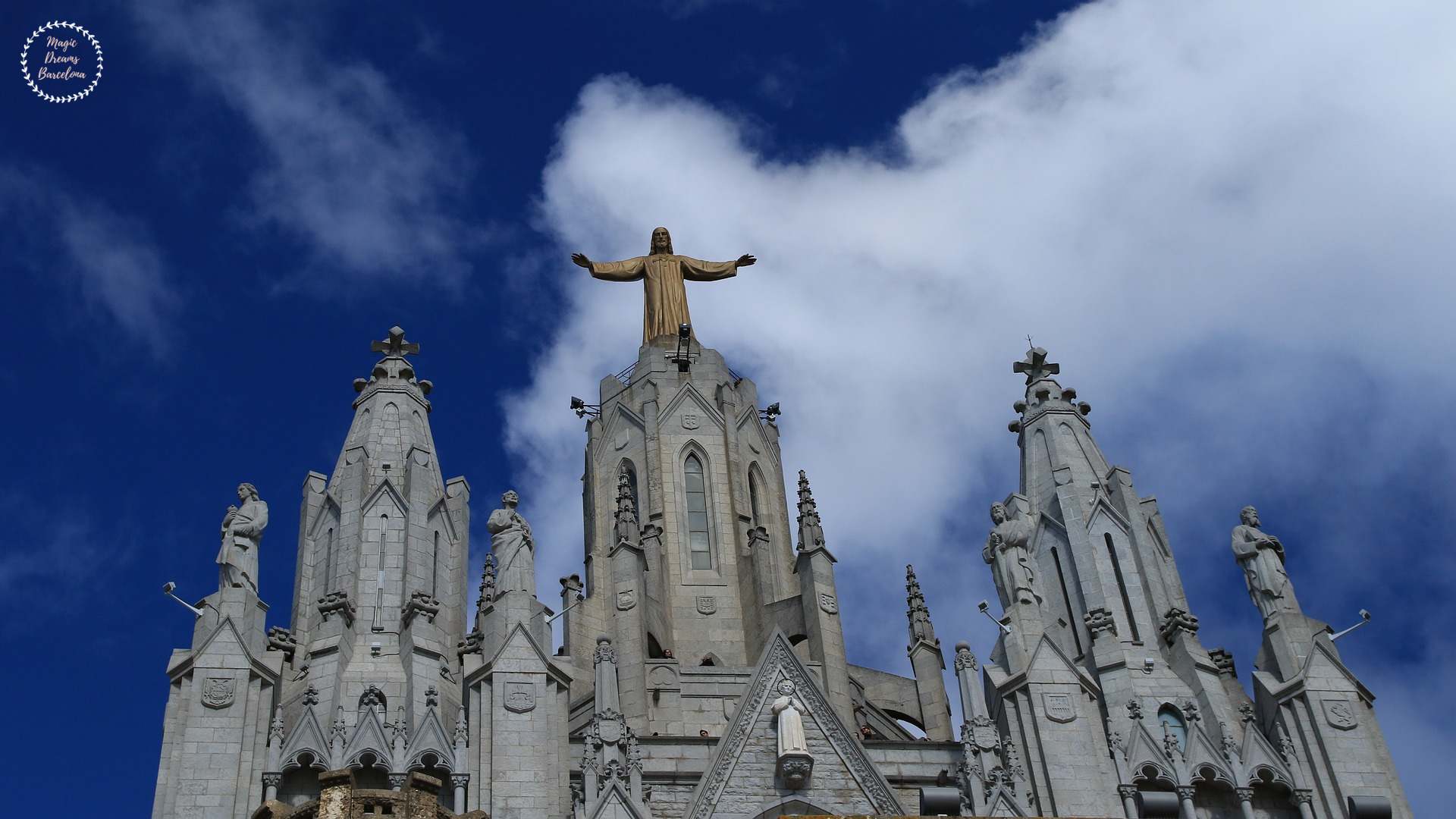
The Temple of the Sacred Heart of Jesus dominates the summit. Originally, there was a hermitage built by the Salesians, inaugurated in 1886 during the visit of Saint John Bosco to Barcelona.
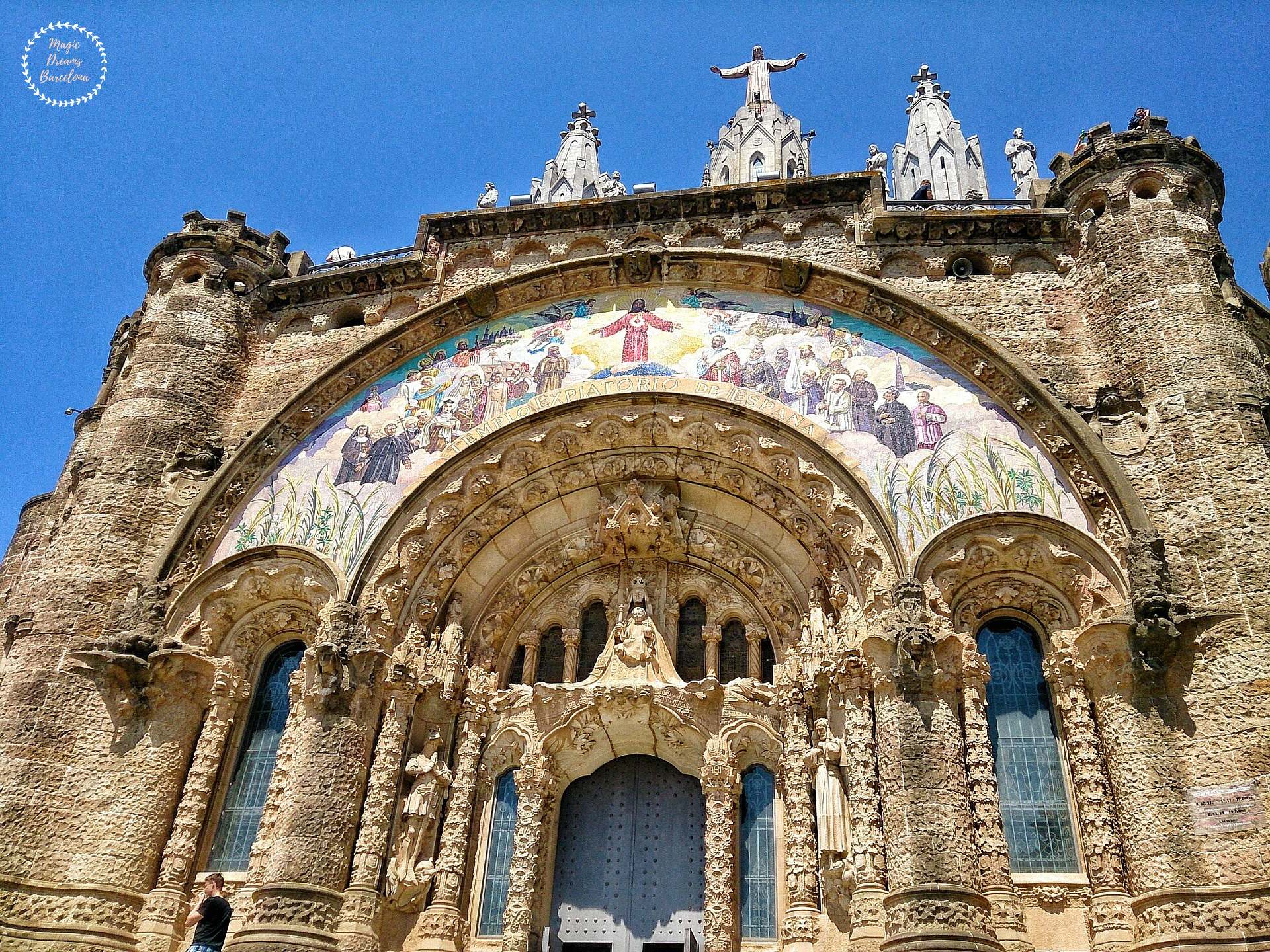
The construction of the Expiatory Temple, designed by Enric Sagnier, began in 1902 and was completed in 1961. Its historicist style combines Neo-Gothic, Neo-Romanesque and Neo-Byzantine elements.
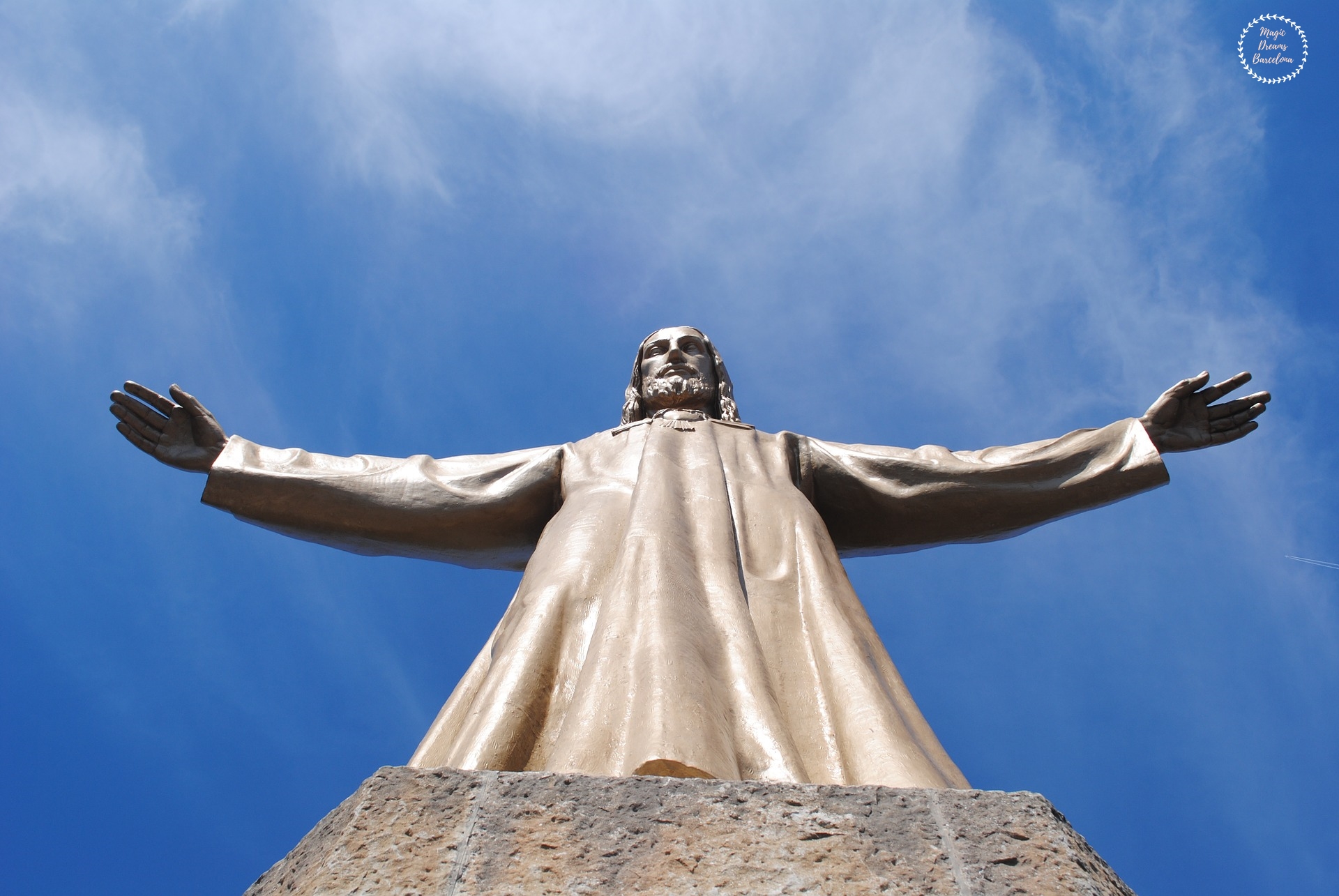
A bronze statue of the Sacred Heart crowns the summit, extending its arms over the city. An elevator provides access to the upper terrace, where visitors can enjoy privileged panoramic views of Barcelona, the Mediterranean and the surrounding landscape.
On one side, the original hermitage is still preserved, a testimony to the origins of this extraordinary place.
A Summit with an Incomparable Perspective
Barcelona, the Mediterranean and the surrounding hills at your feet
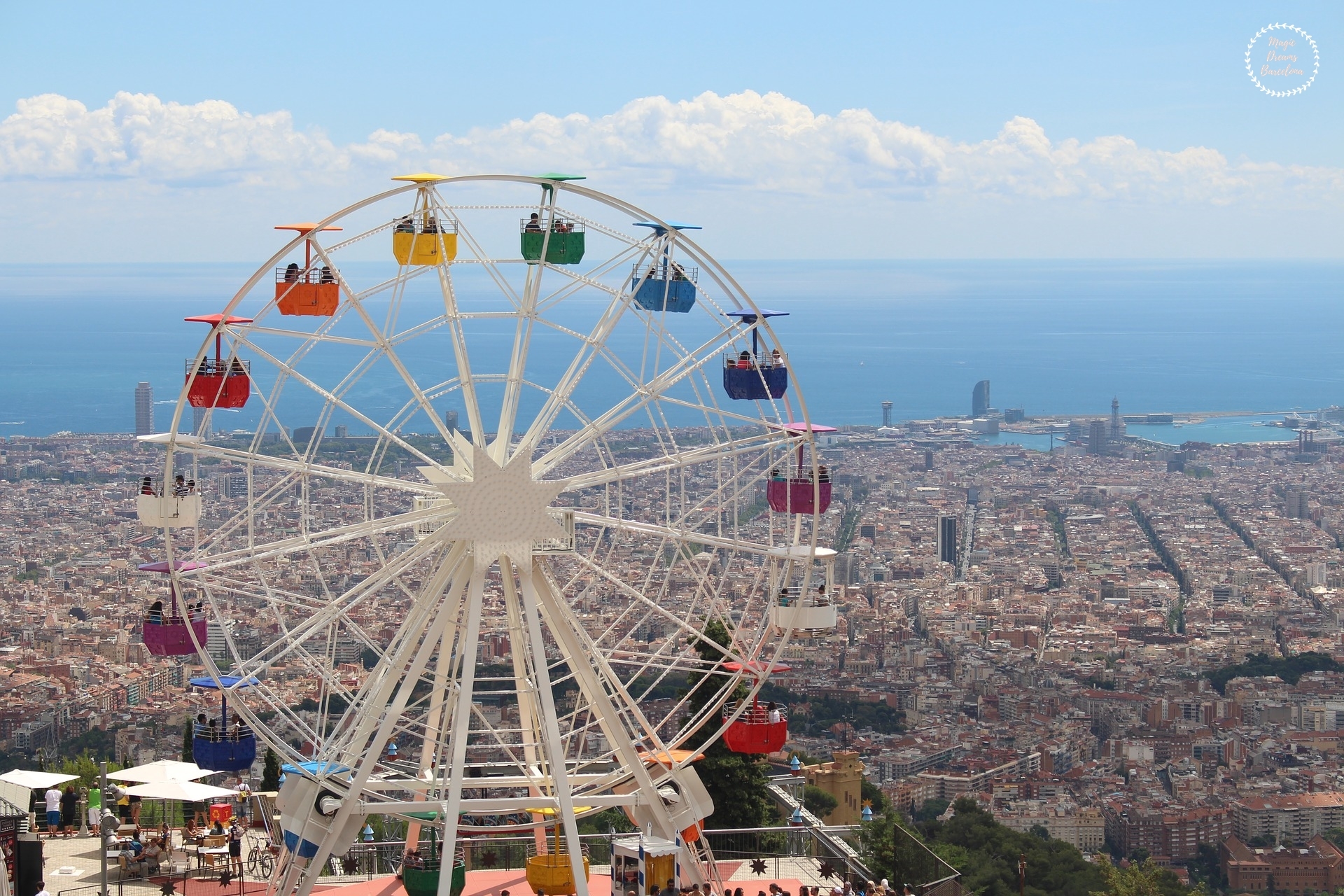
From the summit of Tibidabo, Barcelona unfolds beneath you in an extraordinary panorama. The combination of the city, the Mediterranean Sea and the surrounding hills creates a unique setting in which architecture and nature come together.
The elevated position of Tibidabo makes it one of the most remarkable viewpoints in Barcelona, offering a perspective that can be enjoyed in every season and at different times of the day.
Tibidabo Amusement Park
More than a century of entertainment overlooking Barcelona
The Tibidabo Amusement Park, inaugurated in 1899, is located next to the temple and covers more than 70,000 m² dedicated to entertainment.
Some of its historic attractions are still operating today, creating a fascinating connection between Barcelona’s past and present. Among them are the Avió, one of the world’s first flight simulators, the Museum of Automata, with more than 40 pieces from the 19th and 20th centuries, and the Talaia, which raises visitors 50 metres above the ground.
Alongside these historic attractions, modern rides such as the roller coaster offer excitement for visitors of all ages, always surrounded by a spectacular landscape.
The Avió
One of the historic icons of Tibidabo
The Avió is one of the most emblematic historic attractions in the park and one of the first flight simulators. Its presence on the summit adds a distinctive character to the Tibidabo experience, combining history, engineering and entertainment.
The Museum of Automata
A journey through mechanical art
The Museum of Automata houses more than 40 pieces from the 19th and 20th centuries.
These historic automata offer a fascinating glimpse into mechanical creativity and entertainment from another era, making the museum an essential part of the cultural and historical experience of Tibidabo.
The Talaia
Fifty metres above the summit
The Talaia raises visitors 50 metres above the ground, offering an extraordinary sensation of height and spectacular views over Barcelona and its surroundings.
It is one of the attractions that best represents the unique character of Tibidabo: a place where entertainment and panoramic views come together.
Science and Technology at the Summit
Discovering Barcelona from another perspective
The summit of Tibidabo also houses remarkable treasures of science and technology, offering experiences that go beyond its architecture and entertainment.
Two of its most significant landmarks are the Torre Collserola and the Fabra Observatory.
Torre Collserola
360° views over Barcelona
The Torre Collserola was built for the 1992 Olympic Games. Its tenth-floor observation deck offers 360° views over Barcelona and the surrounding landscape.
From this elevated viewpoint, the city can be contemplated from a completely different perspective, revealing the relationship between Barcelona, the Mediterranean Sea and the natural landscape of the surrounding hills.
Fabra Observatory
Astronomy, science and the beauty of the night sky
The Fabra Observatory has been active since 1901 and offers visitors the opportunity to observe the Moon, planets such as Jupiter, Saturn and Mars, as well as stellar systems and nebulae such as Alcyone, Albireo and the Orion Nebula.
Its scientific heritage makes it one of the most fascinating places on Tibidabo for those interested in astronomy and the universe.
The Botanical Gardens of the Fabra Observatory
Nature completing a unique sensory journey
The gardens of the Fabra Observatory, with pine trees, fir trees, holm oaks and mimosas, complete a unique sensory journey.
The combination of botanical surroundings, architecture, science and the panoramic landscape creates an experience in which nature becomes an essential part of the visit.
Dining Under the Stars
Astronomy and gastronomy in an extraordinary setting
The Fabra Observatory even offers the possibility of dining under the stars, combining astronomy and gastronomy in an exceptional setting.
It is an experience in which the night sky, the lights of Barcelona and the flavours of gastronomy come together, creating a memorable evening at one of the city’s most distinctive locations.
How to Reach Tibidabo
Comfortable and varied access to the summit
Reaching the summit of Tibidabo is comfortable and varied, with several transport options available:
Funicular from Torre de San Sebastián.
Metro, lines L3 and L5, with Vall de Hebron station.
Blue Tram.
Bus, lines 196 and T2A.
The different options make it possible to organise the visit according to each traveller’s preferences and itinerary.
Tibidabo for All the Senses
A place where history, art, architecture and nature are fully experienced
Tibidabo is much more than a viewpoint or an amusement park. It is a place where history, architecture, science, nature and entertainment coexist in a unique environment.
The Temple of the Sacred Heart of Jesus, the historic attractions of the amusement park, the Fabra Observatory, the Torre Collserola and the surrounding natural landscape create a complete experience in which every element contributes to the character of the summit.
Tibidabo with Magic Dreams Barcelona
An exclusive, intimate and sensory experience
At Magic Dreams Barcelona, we transform this visit into an exclusive, intimate and sensory experience.
Our premium services include:
Expert guides in history, architecture, art and astronomy, personalising each itinerary according to your interests and pace.
Private sensory experiences with live music, aromas, literature and themed dinners with a private chef.
Picnics and signature gastronomy in gardens, viewpoints or on yachts, with bespoke table linen and catering.
Professional photography sessions that capture every moment of the experience.
Creative workshops and exclusive getaways to the Costa Brava and the Catalan Pyrenees.
Signature Gastronomy and Private Experiences
Tibidabo experienced through the senses
A visit to Tibidabo can become much more than a sightseeing experience. With Magic Dreams Barcelona, every element can be carefully designed to create a private and personalised journey.
From gastronomy and carefully selected settings to music, aromas, literature and photography, each experience is created to reflect the character, interests and rhythm of each guest.
Experiences Created Just for You
Personalisation as the essence of a premium experience
Every journey can be adapted to your preferences, allowing you to discover Tibidabo through history, architecture, art, astronomy, nature or gastronomy.
The aim is to create an experience that is not simply observed, but fully lived and remembered.
Professional Photography and Lasting Memories
Capturing every moment of the experience
Professional photography allows every special moment to be preserved, transforming the visit into a collection of memories that can be enjoyed long after the experience has ended.
The panoramic landscapes, architecture, natural surroundings and personal moments become part of a visual story created exclusively for you.
Creative Workshops and Exclusive Getaways
Barcelona, the Costa Brava and the Catalan Pyrenees
Magic Dreams Barcelona also offers creative workshops and exclusive getaways to the Costa Brava and the Catalan Pyrenees.
These experiences extend beyond Barcelona, allowing guests to discover new landscapes, cultural traditions, gastronomy and natural environments through carefully designed private experiences.
An Experience to Be Fully Lived
History, art, architecture and nature in perfect harmony
Every visit with Magic Dreams Barcelona becomes a profound journey in which history, art, architecture and nature are experienced to the fullest.
It is not simply about observing Tibidabo, but about feeling it and understanding it in all its dimensions.
The summit becomes a place where every detail contributes to an unforgettable memory: the architecture of the temple, the views over Barcelona, the historic attractions, the stars above the city, the gardens, gastronomy and the surrounding landscape.
Discover Tibidabo with Magic Dreams Barcelona
Where every experience becomes an unforgettable memory
Discover this magical corner of Barcelona with Magic Dreams Barcelona and allow yourself to be captivated by the majesty of Tibidabo, where every experience becomes an unforgettable memory.
From its historic origins and extraordinary architecture to its panoramic views, scientific heritage, nature and entertainment, Tibidabo offers a unique way to experience Barcelona.
With Magic Dreams Barcelona, this extraordinary setting becomes an exclusive, intimate and sensory journey designed to be remembered.
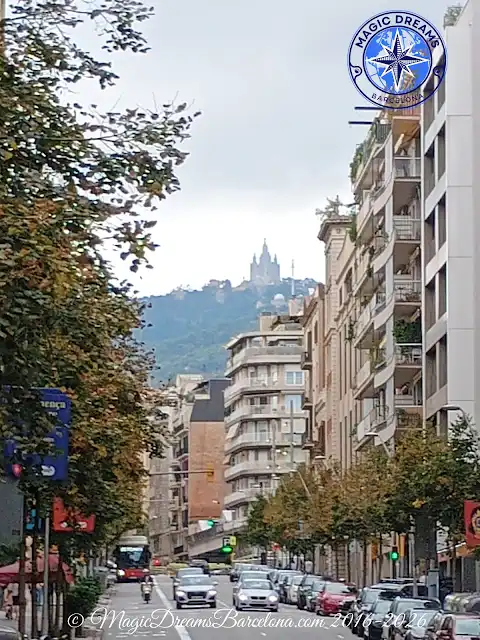
Perspectiva del Templo del Sagrado Corazón de Jesús en cima Tibidabo desde calle Balmes.
Detalle del Templo Expiatorio del Sagrado Corazón de Jesús en la cima Tibidabo
Perspectiva nocturna del Templo Expiatorio del Sagrado Corazón de Jesús en la cima Tibidabo junto al Parque de Atracciones.
Perspectiva de parte de la ciudad desde Templo Expiatorio del Sagrado Corazón de Jesús en la cima Tibidabo.
Perspectiva de parte de la ciudad desde el parque de Atracciones en la cima Tibidabo.
Templo Sagrado Corazón de Jesús.
Templo Sagrado Corazón de Jesús.
Templo Sagrado Corazón de Jesús.
Templo Sagrado Corazón de Jesús.
Templo Sagrado Corazón de Jesús.
Templo Expiatorio del Sagrado Corazón de Jesús – Barcelona.
Templo Expiatorio del Sagrado Corazón de Jesús – Barcelona.
Templo Expiatorio del Sagrado Corazón de Jesús – Barcelona.
Templo Expiatorio del Sagrado Corazón de Jesús – Barcelona.
Templo Expiatorio del Sagrado Corazón de Jesús – Barcelona.
Templo Expiatorio del Sagrado Corazón de Jesús – Barcelona.
Templo Expiatorio del Sagrado Corazón de Jesús – Barcelona.
Templo Expiatorio del Sagrado Corazón de Jesús – Barcelona.
Templo Expiatorio del Sagrado Corazón de Jesús – Barcelona.
Templo Expiatorio del Sagrado Corazón de Jesús – Barcelona.
Templo Expiatorio del Sagrado Corazón de Jesús – Barcelona.
Templo Expiatorio del Sagrado Corazón de Jesús – Barcelona.
Templo Expiatorio del Sagrado Corazón de Jesús – Barcelona.
Templo Expiatorio del Sagrado Corazón de Jesús – Barcelona.
Templo Expiatorio del Sagrado Corazón de Jesús – Barcelona.
Observatorio Fabra – By Ismaelromero – Own work, CC BY-SA 3.0 es, https://commons.wikimedia.org/w/index.php?curid=21490932.
Perspectiva de parte de la ciudad desde la noria del parque de Atracciones del Tibidabo.
Perspectiva de parte de la ciudad desde la noria del parque de Atracciones del Tibidabo.
Detalle noria del parque de Atracciones del Tibidabo.
Detalle noria del parque de Atracciones del Tibidabo.
Perspectiva de parte de la ciudad desde la noria del parque de Atracciones del Tibidabo.
An iconic promenade between two of Barcelona’s landmarks Avinguda Gaudí is one of Barcelona’s most distinctive, elegant, and harmonious promenades. Located in the Eixample district, this pedestrian avenue connects two of the great masterpieces of Catalan Modernism: the Sagrada Família and the Hospital de Sant …
Las Ramblas of Barcelona: History, Culture & Unique Experiences Las Ramblas of Barcelona is one of the city’s most emblematic and visited promenades. Stretching approximately 1.3 kilometers, this historic boulevard connects Plaça de Catalunya with Port Vell, forming the natural boundary between the Barri Gòtic …
The Moll de la Fusta is one of the most emblematic spaces along Barcelona’s waterfront.
Located opposite the historic city centre, next to Port Vell, this promenade represents much more than a pleasant area by the sea.
It is the result of one of the great urban transformations of contemporary Barcelona.
For centuries, this area was closely connected to port activity, trade and the movement of goods.
Today, it is an open civic space where the Mediterranean, architecture, gastronomy, culture and urban life come together.
Walking along the Moll de la Fusta means discovering a fundamental part of Barcelona’s history.
It means seeing the place where the city began to look towards the sea once again.
And it also means understanding how Barcelona transformed a former port area into a new urban landscape.
What is the Moll de la Fusta?
The former Bosch i Alsina Wharf
The official name of the area is Moll de Bosch i Alsina, although virtually everyone knows it as Moll de la Fusta.
The nickname is connected to the activity that historically took place here, particularly the storage and distribution of timber.
The wharf forms part of the historic Port Vell, Barcelona’s old port.
Today, the area is one of the places where the city and the sea are most closely integrated.
Palm trees, promenades, terraces, boats and broad views towards the Mediterranean create an urban landscape very different from the one that existed only a few decades ago.
Barcelona’s Maritime Origins
A city born looking towards the Mediterranean
Barcelona’s relationship with the sea is much older than the present-day promenade.
The area of today’s Port Vell lies around the site of the ancient port of the Roman city.
For centuries, the waterfront was fundamental to Barcelona’s trade and economic activity.
The development of the port accompanied the growth of the city.
With the commercial and industrial expansion of the eighteenth, nineteenth and twentieth centuries, port facilities became increasingly important.
Wharves, warehouses, railway lines and cargo areas progressively occupied this waterfront.
For a long time, the port was primarily a place of work.
Citizens were physically close to the sea, but they could not necessarily enjoy it.
This separation between city and port would change radically during the final decades of the twentieth century.
The Moll de la Fusta Before Its Transformation
When the Port Was a Place of Work
For much of the twentieth century, the area we now know as the Moll de la Fusta looked completely different.
Large port warehouses occupied much of the space.
The movement of goods, railway transport and industrial activity defined the landscape.
Until the early 1980s, public access was highly restricted.
The old port warehouses gradually disappeared during the 1960s, but the port area remained separated from urban life.
The transformation that followed would aim precisely to break down this barrier.
It was not simply a question of beautifying the port.
It was about returning the sea to the city.
1981: Barcelona Opens Up to the Sea Again
The Beginning of a New Relationship Between City and Port
One of the decisive moments came in 1981.
On the occasion of Armed Forces Day, the Autonomous Port allowed citizens to access the Bosch i Alsina wharf.
It was the first time in more than seventy years that the port had opened to the city in this way.
That gesture was far more significant than it might initially appear.
Barcelona was beginning to physically recover its relationship with the Mediterranean.
The port was no longer exclusively a space for economic activity and was beginning to become a civic space as well.
The following year, the port and the City Council commissioned architect Manuel de Solà-Morales to develop a plan for the wharf and its urban surroundings.
The project also included the reorganisation of traffic along Passeig de Colom.
Manuel de Solà-Morales and the New Image of the Moll de la Fusta
Architecture Designed to Look Towards the Sea Again
Manuel de Solà-Morales’ project was much more than an aesthetic intervention.
The idea was to create a new public space beside the water while also resolving the complex relationship between the port, traffic and the historic city centre.
The works took place between 1983 and 1985.
The result was an open waterfront promenade lined with palm trees and visually connected to the city.
The intervention became one of the first major examples of waterfront regeneration in Barcelona.
The Moll de la Fusta project is considered one of the starting points for the subsequent transformation of Port Vell.
The Great Olympic Transformation
Barcelona 1992 Changes the City’s Relationship with the Sea
Barcelona’s bid and subsequent selection as host city of the 1992 Olympic Games accelerated an urban transformation that had already begun.
The city needed to recover degraded areas, improve its infrastructure and project itself towards the Mediterranean.
The Moll de la Fusta became a key element of this process.
The experience of regenerating the wharf helped drive a much broader transformation of Port Vell.
In 1988, the Port 2000 Urban Management Office was created and, the following year, the Special Plan for Port Vell was approved.
The aim was to preserve the area’s port character while introducing new commercial, tourist, cultural and civic uses.
The Moll de la Fusta had shown that it was possible.
From Industrial Port to Port Vell
A New Way of Understanding the Waterfront
The transformation of the Moll de la Fusta was not an isolated project.
It formed part of a much broader strategy to regenerate the old port.
New urban spaces and facilities were developed throughout the surrounding area.
Moll d’Espanya introduced new commercial and leisure uses.
Rambla de Mar created a new pedestrian connection over the water.
Maremagnum became one of the new activity hubs.
The Barcelona Aquarium added an educational and tourism dimension.
At Moll de Barcelona, the World Trade Center strengthened the relationship between the port and international business activity.
Barcelona was creating a new waterfront.
The Moll de la Fusta and the Olympic Games
The Sea as the Setting for the New Barcelona
The 1992 Olympic Games consolidated the transformation of the waterfront.
The renewal was not limited to Port Vell.
Barcelona created new beaches, reclaimed former industrial areas and developed the Olympic Port and other sections of the waterfront.
The result was a new urban geography.
A city that had spent decades turning its back on the sea began to use the waterfront as one of its principal public spaces.
The Moll de la Fusta was one of the first chapters in this transformation.
The Famous Chiringuitos of the Moll de la Fusta
A New Life Beside the Sea
The transformation also had a gastronomic and social dimension.
In the 1980s, five small establishments were built along the promenade.
In 1987, the City Council organised a competition to allocate these spaces, conceived as new dining venues.
The proposals included a champagne bar, a restaurant, a croissanterie, a beer bar and a seafood restaurant.
The establishments began operating in 1988.
These venues quickly became part of the new image of the Moll de la Fusta.
Barcelona was discovering a new way of enjoying its port.
Gastronomy, terraces, architecture and views of the sea were becoming part of the urban experience.
Barcelona’s Famous Prawn
A Sculpture Turned into an Icon
Among the best-remembered elements from that period is the famous Prawn, designed by Javier Mariscal.
The sculpture stood above the Gambrinus restaurant and quickly became one of the popular symbols of Barcelona’s new waterfront.
The enormous prawn belongs to the visual memory of pre-Olympic and Olympic Barcelona.
Its playful aesthetic fitted perfectly with the international image the city was creating.
The sculpture remains one of the most recognisable elements associated with the Moll de la Fusta and the Port Vell landscape.
A Transformation That Was Not Perfect
The Evolution of an Urban Space
The history of the Moll de la Fusta also demonstrates that major urban transformations take time.
The original project sought to turn the area into a large promenade dedicated to leisure and dining.
However, in subsequent years, various problems emerged concerning nightlife, commercial establishments and the relationship between the promenade and major road infrastructure.
For a period, the space lost some of the prominence it had initially enjoyed.
The opening of new facilities in other parts of Port Vell also changed visitor flows.
The city intervened once again.
A New Renovation
More Shade, More Vegetation and More Space to Walk
At the beginning of the twenty-first century, the Moll de la Fusta underwent another transformation.
The former restaurants were removed and the promenade acquired a quieter character.
New trees, paving, pergolas, shaded areas and benches facing the sea were introduced.
The aim was to reinforce its role as a place for walking and relaxation.
The intervention restored certain elements of the area’s recent history while seeking to make the space more pleasant for pedestrians.
Its evolution demonstrates how Barcelona has progressively adapted its waterfront to the needs of its citizens.
The Moll de la Fusta Today
A Place Where Barcelona Meets the Mediterranean
Today, the Moll de la Fusta is one of the great public spaces of Port Vell.
Its location is privileged.
From here, visitors can contemplate the Mediterranean while enjoying an extraordinary perspective of the historic city centre.
On one side lies the profile of Ciutat Vella.
On the other, the port and its boats.
Beyond them stretches Barcelona’s maritime horizon.
The promenade offers opportunities for walking, relaxing, enjoying activities, attending events and observing the life of the port.
The Port of Barcelona notes that the area currently hosts major public events and activities, including La Mercè celebrations and other large-scale events.
A Balcony Overlooking the Mediterranean
One of Barcelona’s Finest Urban Perspectives
One of the great virtues of the Moll de la Fusta is its ability to offer different perspectives of the city.
From the promenade, visitors can look towards:
La Rambla
The great pedestrian artery of the historic centre leads towards the port and connects the heart of Barcelona with the Mediterranean.
The Columbus Monument
The column dedicated to Christopher Columbus has become one of the great visual landmarks of Barcelona’s waterfront.
Montjuïc
Towards the southwest, the mountain rises as a dramatic backdrop to the city.
Barceloneta
In the opposite direction stretches the maritime landscape leading towards the former fishermen’s district and the beaches.
Port Vell
The boats and marinas constantly remind visitors that this remains a living and active port.
The Architecture of the Moll de la Fusta
Infrastructure Transformed into Urban Landscape
The architecture of the Moll de la Fusta has a particular quality.
It does not seek to compete with the city’s great historic monuments.
Its value lies precisely in the way it organises space.
The relationship between different levels, the promenade, road infrastructure, palm trees, street furniture and water creates a highly distinctive spatial experience.
Manuel de Solà-Morales’ project introduced a new way of understanding the waterfront.
Infrastructure ceased to be exclusively functional and also became public space.
This idea would have an enormous influence on the subsequent transformation of Barcelona’s waterfront.
The Moll de la Fusta and the Contemporary City
One of Barcelona’s Great Examples of Urban Transformation
The importance of the Moll de la Fusta lies not only in its present-day beauty.
Its true value lies in what it represents.
Before its transformation, the port operated primarily as an industrial infrastructure separated from the city.
Afterwards, it began to become a civic space.
This transformation forms part of one of the great urban stories of Barcelona during the final decades of the twentieth century.
The city progressively reclaimed its waterfront.
New public spaces were created.
Neighbourhoods were connected.
Beaches were recovered.
Former industrial areas were transformed.
And the Mediterranean came to occupy a central place in Barcelona’s contemporary identity.
A Walk Through History and Everyday Life
Where the Port’s Past Remains Present
Despite its transformation, the Moll de la Fusta has not completely lost its past.
Traces of its former port activity can still be perceived.
Port structures.
Historic buildings.
Boats.
Former warehouses.
Major infrastructure.
All remind us that this was once a place of work.
The difference is that today this heritage is experienced from a completely different perspective.
No longer as a port worker.
But as a citizen, traveller, photographer or visitor.
Dining Beside the Sea
The Mediterranean Can Also Be Savoured
Gastronomy is an inseparable part of the Port Vell experience.
Around the Moll de la Fusta, visitors will find restaurants, terraces and places where they can enjoy Mediterranean cuisine while looking out over the harbour.
It is an especially attractive area for those who wish to combine a cultural visit with a gastronomic experience.
Fish.
Seafood.
Rice dishes.
Tapas.
Catalan cuisine.
Mediterranean produce.
And a glass of wine overlooking the sea.
Barcelona offers one of its most characteristic combinations here:
history, architecture, gastronomy and the Mediterranean.
The Moll de la Fusta at Sunset
When the City Changes Colour
One of the best times to discover the promenade is during the final hours of the afternoon.
The light begins to soften.
The façades of the historic centre take on warm tones.
The Mediterranean reflects the sky.
The boats begin to light up.
And the promenade takes on a much calmer atmosphere.
It is an especially rewarding time for photography.
And for walking without hurry.
Or simply sitting down and contemplating Barcelona.
The Moll de la Fusta at Night
Barcelona Illuminated by the Sea
At night, the promenade takes on a different personality.
The lights of Port Vell create reflections on the water and the urban skyline is transformed.
Its proximity to the historic centre makes it easy to continue towards La Rambla, the Gothic Quarter or Barceloneta.
For those looking for a more relaxed evening experience, the Moll de la Fusta offers an interesting alternative to some of the city’s busier areas.
Events and Cultural Life
An Active Space Throughout the Year
The Moll de la Fusta is not simply a place for walking.
Its large open area allows it to host major events, celebrations and large-scale activities.
Throughout the year, Port Vell becomes the setting for cultural, festive, gastronomic and maritime events.
Celebrations such as La Mercè and various port-related events form part of the programme that makes use of this civic space.
The port also maintains a strong relationship with nautical activity.
In 2026, for example, the Moll de la Fusta and Marina Port Vell are among the venues associated with the Barcelona International Boat Show, a historic event in the city’s nautical calendar.
The Moll de la Fusta and Port Vell
Two Names for Understanding the Same Transformation
It is important to distinguish between the Moll de la Fusta and Port Vell.
Port Vell is the broader area of the old port located opposite Ciutat Vella.
The Moll de la Fusta, officially Moll de Bosch i Alsina, is one of its central spaces.
From here, visitors can continue their journey towards different areas of the port.
Towards Rambla de Mar.
Towards Moll d’Espanya.
Towards Maremagnum.
Towards Moll de Barcelona.
Or towards Barceloneta.
This makes the Moll de la Fusta an excellent starting point for exploring Barcelona’s waterfront.
What to See Near the Moll de la Fusta
A Route Through Barcelona’s Maritime Centre
A visit to the Moll de la Fusta can easily be combined with other emblematic places.
01 · Columbus Monument
One of the great symbols of Barcelona’s port.
02 · La Rambla
The historic avenue connecting the city centre with the sea.
03 · Gothic Quarter
A labyrinth of medieval streets, squares and historic buildings.
04 · Port Vell
The former port transformed into one of Barcelona’s great public spaces.
05 · Maremagnum
A shopping and leisure centre located at the end of Rambla de Mar.
06 · Barcelona Aquarium
One of the city’s major facilities dedicated to marine life.
07 · Barceloneta
The former fishermen’s neighbourhood and one of the most characteristic areas of Barcelona’s waterfront.
08 · Palau de Mar
A former port commercial building that now houses, among other institutions, the Museu d’Història de Catalunya.
A Historic Route Along the Waterfront
From Ancient Barcino to Contemporary Barcelona
The Moll de la Fusta can be understood as a kind of summary of Barcelona’s evolution.
Here we can imagine the ancient Roman port.
Then the commercial port.
Later, the industrial port.
Afterwards, the port area closed to the public.
And finally, the contemporary waterfront promenade.
Few places in the city allow visitors to understand so clearly the transformation of the relationship between Barcelona and the Mediterranean.
Photography at the Moll de la Fusta
A Privileged Setting for Discovering Barcelona
The promenade offers countless possibilities for urban photography.
Palm trees create strong lines of perspective.
The water provides reflections.
Historic buildings form the backdrop.
Boats add movement.
And Mediterranean light transforms the landscape throughout the day.
Among the most interesting images are:
The Columbus Monument from the promenade.
The boats of Port Vell.
Rambla de Mar.
The profile of Ciutat Vella.
Montjuïc at sunset.
Night-time reflections on the water.
The Prawn sculpture.
The palm trees along the promenade.
The maritime activity of the port.
The Moll de la Fusta as a Mediterranean Experience
Much More Than a Waterfront Promenade
The true appeal of the Moll de la Fusta lies in the experience.
Walking beside the sea.
Feeling the Mediterranean breeze.
Watching the boats.
Discovering historic architecture.
Sitting on a terrace.
Watching the sunset.
Listening to the movement of the city.
And understanding that this same place was, for generations, a working port.
The transformation is particularly fascinating because it allows visitors to physically experience Barcelona’s evolution.
One of Barcelona’s Great Urban Stories
When a City Reclaimed Its Sea
The story of the Moll de la Fusta is, in reality, a story about Barcelona’s transformation.
For decades, the port and the city lived separately.
From the 1980s onwards, that relationship began to change.
The Moll de la Fusta was one of the first places where Barcelona experimented with a new way of relating to the Mediterranean.
Then came the renewed Port Vell, the Olympic beaches, the Olympic Port and the subsequent transformations of the waterfront.
The result is the maritime Barcelona we know today.
That is why walking along the Moll de la Fusta means much more than enjoying a beautiful promenade.
It means walking through one of the most important chapters in Barcelona’s recent urban history.
Would You Like to Discover the Moll de la Fusta with Us?
Barcelona Through the Sea, History and Architecture
At Magic Dreams Barcelona, we believe that the most fascinating places in a city are not always the ones that appear first in the guidebooks.
Sometimes, to truly understand Barcelona, you need to observe how its streets relate to the sea, how its buildings connect with history, and how its public spaces interact with everyday life.
Our native guide, specialising in history, architecture, art, botany and ornithology, can accompany you on a private experience through the Moll de la Fusta and Port Vell, tailoring the itinerary to your interests.
We can design an experience that combines the waterfront with the Gothic Quarter, La Rambla, Barceloneta, Montjuïc or Modernist architecture, creating a completely personalised day.
We can also incorporate gastronomic experiences, carefully selected restaurants, professional photography, private picnics with table settings and catering, yacht outings, floristry, musicians, romantic proposals and other experiences designed especially for each visitor.
For those who wish to discover Barcelona from a deeper perspective, we also offer itineraries focused on the city’s port history, architecture, art, gastronomy, nature and urban evolution.
Each experience is designed around the visitor’s interests, from a Premium proposal to a completely bespoke experience.
The Moll de la Fusta is not simply a promenade by the sea. It is the place where Barcelona found its way back to the Mediterranean.
Perspectiva superior del Port Vell, con el paseo del Moll de la Fusta en la parte izquierda – By Diliff – Treball propi, CC BY-SA 3.0, https://commons.wikimedia.org/w/index.php?curid=5952307.
Avenida Gaudí, Barcelona Modernism, comfort and a privileged location in the heart of Barcelona Avenida Gaudí stretches from the Sagrada Família to the Hospital de Sant Pau, connecting two of the great masterpieces of Catalan Modernism, designed by Antoni Gaudí and Lluís Domènech i Montaner. …
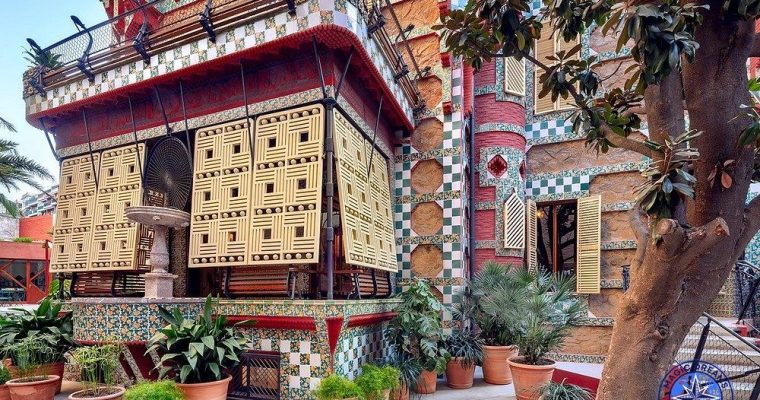
Casa Vicens: The Origins of a Genius Where Nature Becomes Architecture Casa Vicens is more than an architectural masterpiece: it is the starting point of Antoni Gaudí’s creative universe. Built between 1883 and 1885 in the then-independent town of Gràcia, this summer residence marked the …