Route guide for visitors throughout Catalonia – Barcelona – Costa Brava – Catalan Pyrenees – Personalized experiences – Customized tour guide services – A small tribute to the wonderful city and land that saw us born – Transforming experiences into unforgettable memories - Magic Dreams Collection: exclusive universes inspired by Salvador Dalí and Gaudí. Niche perfumes, jewelry, lithographs, and collectible items celebrating the Mediterranean spirit.
Salvador Dalí’s great surrealist universe The Dalí Theatre-Museum in Figueres is one of the most extraordinary museums in Catalonia and one of the most iconic places associated with Salvador Dalí. Conceived as a total work of art, the museum invites visitors to enter the artist’s …
Perched on the eastern slopes of the Serra de Rodes, overlooking the Mediterranean and the spectacular landscape of Cap de Creus, Sant Pere de Rodes is one of the most extraordinary Romanesque monuments in Catalonia. Its isolated location, monumental architecture, centuries of history and fascinating …
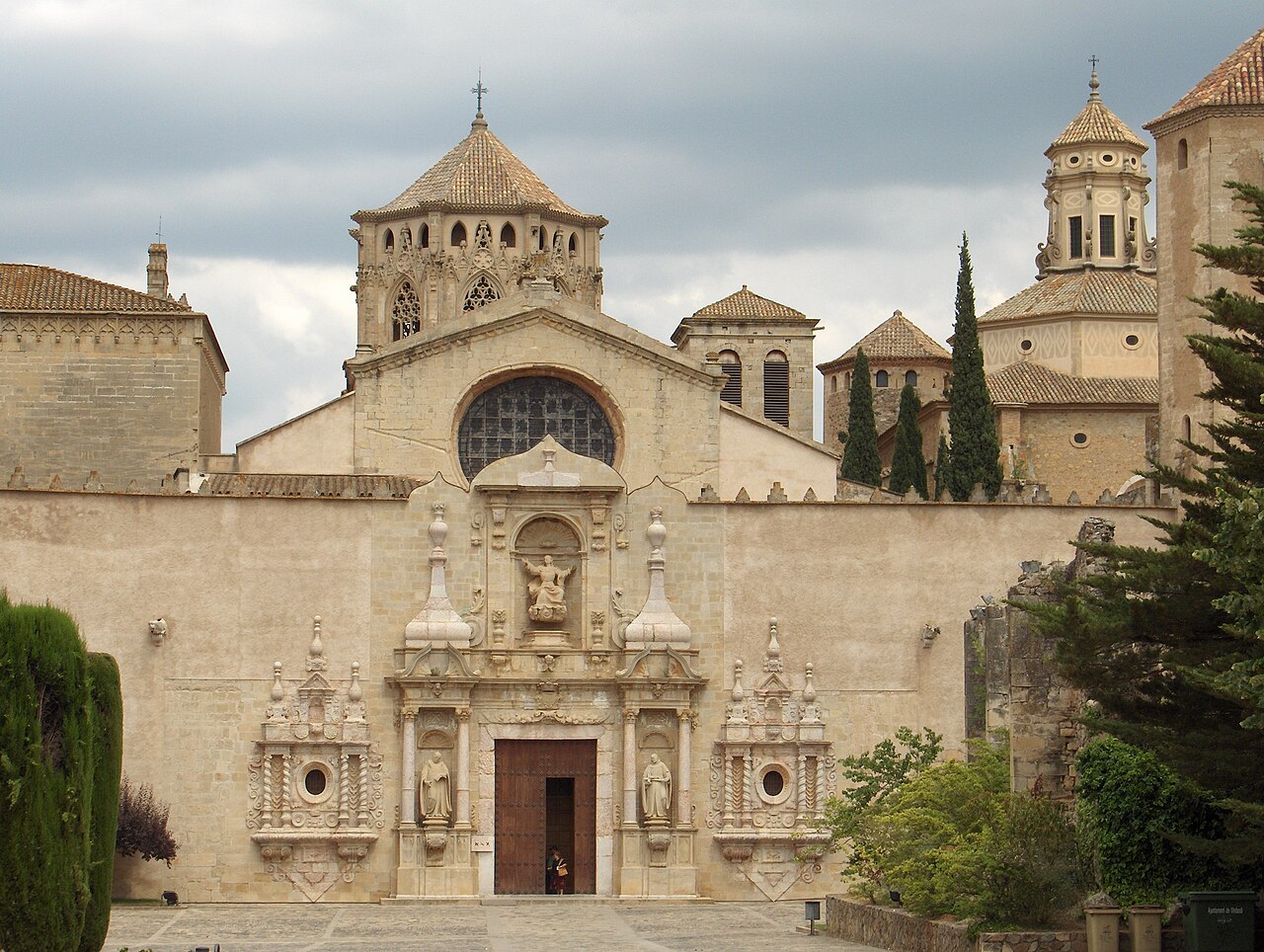
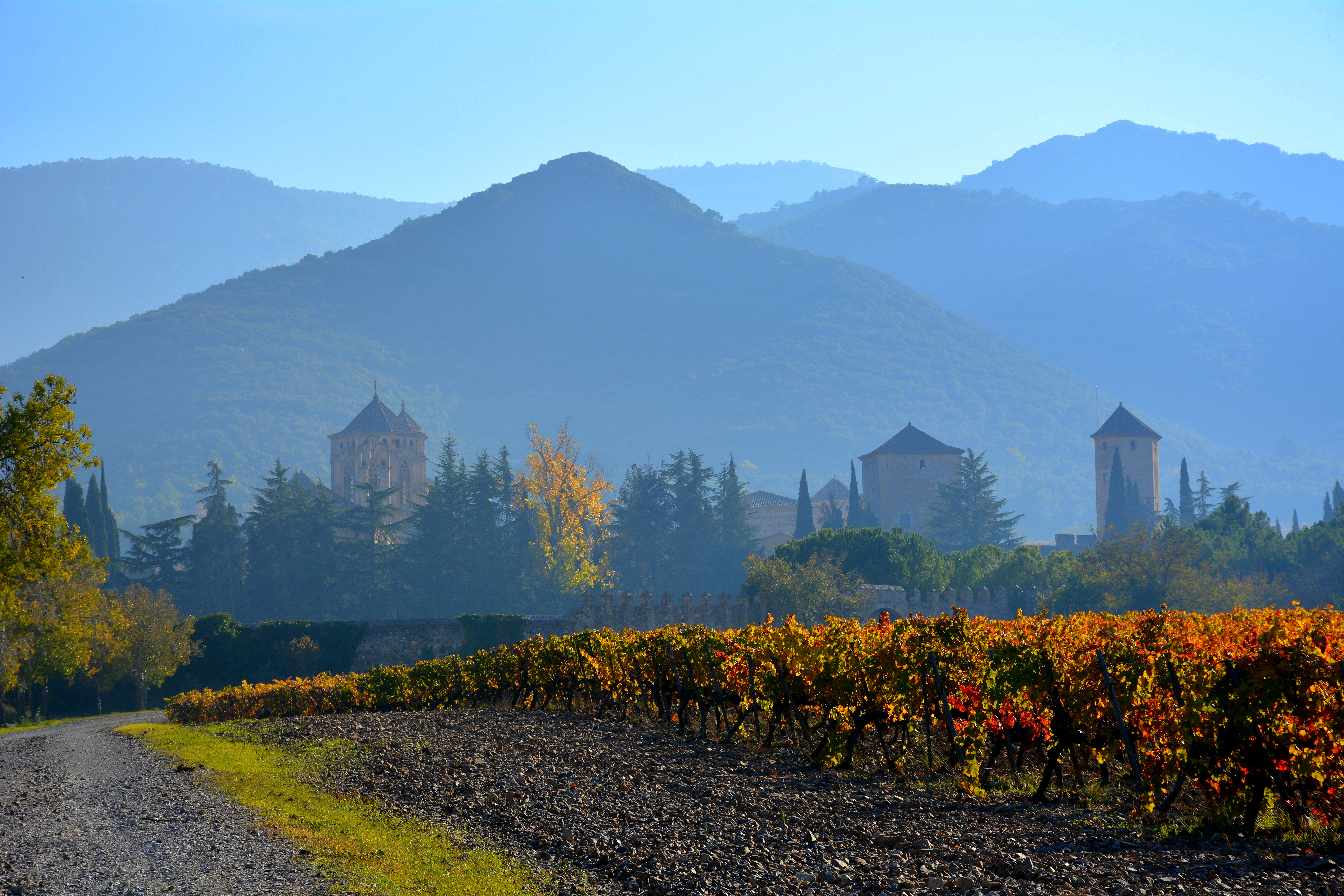
Hidden among the landscapes of the Conca de Barberà, in the province of Tarragona, stands one of Catalonia’s most extraordinary historical treasures: the Royal Monastery of Santa Maria de Poblet.
This impressive Cistercian monastery is much more than a beautiful medieval building. It is a place connected to the history of the Crown of Aragon, the Catalan royal dynasty, medieval monastic life and some of the most remarkable architectural traditions of Catalonia.
Declared a UNESCO World Heritage Site in 1991, Poblet is considered one of the largest and most complete Cistercian abbeys in the world.
If you are staying in Barcelona and would like to discover a different side of Catalonia, we highly recommend including Poblet in your itinerary.
Where is the Royal Monastery of Poblet?
The monastery is located in the municipality of Vimbodí i Poblet, in the Conca de Barberà region of Tarragona.
Its surroundings make the journey particularly attractive. The monastery is surrounded by forests, mountains and historic villages, creating an atmosphere that feels very different from the urban environment of Barcelona.
The location also makes Poblet an excellent destination for a cultural day trip from Barcelona.
How far is Poblet from Barcelona?
By car, the journey from Barcelona to Poblet is approximately 120 kilometres, depending on the exact route.
Under normal traffic conditions, the drive takes around 1 hour and 20 minutes to 1 hour and 30 minutes.
The usual route is via the AP-7 and AP-2, followed by the exit towards L’Espluga de Francolí and Poblet.
For visitors who prefer not to drive, there are also public transport options, although they require considerably more planning.
The nearest railway station is L’Espluga de Francolí, approximately 3 kilometres from the monastery.
A Brief History of Poblet
The history of Poblet begins in 1150, when the Cistercian monastery was founded in the context of the Christian expansion of the Crown of Aragon.
Over the following centuries, the monastery grew in importance and became one of the principal religious and political centres of the region.
Its relationship with the royal house became particularly significant.
Poblet eventually became the royal pantheon of the Crown of Aragon, and several kings and queens were buried here.
This royal connection transformed the monastery into much more than a religious institution. It became a powerful symbol of the medieval Crown of Aragon and an important centre of culture, administration and spirituality.
The Royal Pantheon
One of the most fascinating parts of Poblet is the Royal Pantheon, where members of the royal dynasties of Catalonia and Aragon were buried.
The tombs are located inside the monastery church, above the passageways between the columns.
Among the monarchs associated with the pantheon are Peter the Ceremonious, Martin the Humanist, Alfonso the Magnanimous and James II of Aragon, among others.
For visitors interested in medieval history, this is one of the most important highlights of the entire complex.
Walking through the church and seeing the royal tombs provides a direct connection with centuries of European history.
The Architecture of Poblet
Poblet is particularly interesting because it combines several architectural periods.
Its construction developed over centuries, and visitors can identify Romanesque, Gothic, Renaissance and Baroque elements throughout the complex.
However, Gothic architecture is particularly prominent in some of the monastery’s most important spaces.
The monastery was designed according to the principles of Cistercian architecture, which traditionally emphasized simplicity, functionality, light and spiritual contemplation.
At the same time, Poblet developed into an extraordinarily complex architectural ensemble.
The Three Enclosures of the Monastery
One of the most distinctive characteristics of Poblet is its organization into three main enclosures.
The complex is surrounded by defensive walls and towers, giving the monastery an imposing fortified appearance.
The First Enclosure
The first enclosure contains historic spaces that were connected with practical and everyday activities.
Among them are former stores, workshops and housing dating from later periods.
One of the most notable buildings is the Chapel of Saint George, a Gothic chapel dating from the 15th century.
This area provides an interesting introduction to the monastery before visitors reach its principal monumental spaces.
The Second Enclosure
The second enclosure leads visitors further into the historical heart of the complex.
Here you can find the Plaça Major, remains associated with the former hospital for the poor, the Romanesque Chapel of Santa Catherine and other historic spaces.
The architecture gradually becomes more monumental as you approach the main monastic enclosure.
The Third Enclosure
The third enclosure contains the heart of Poblet.
This is where visitors find the monastery church, the great cloister and many of the rooms associated with monastic life.
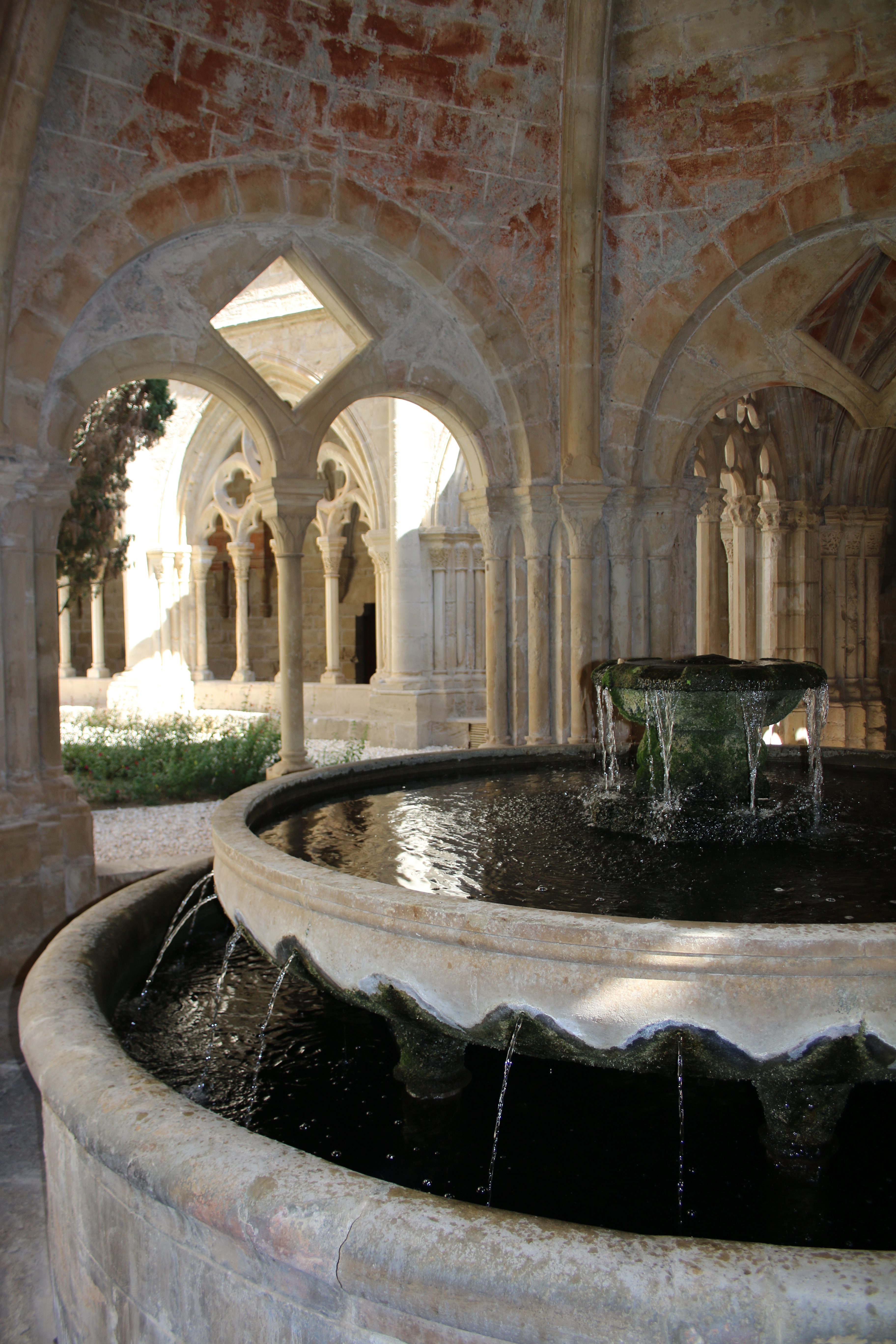
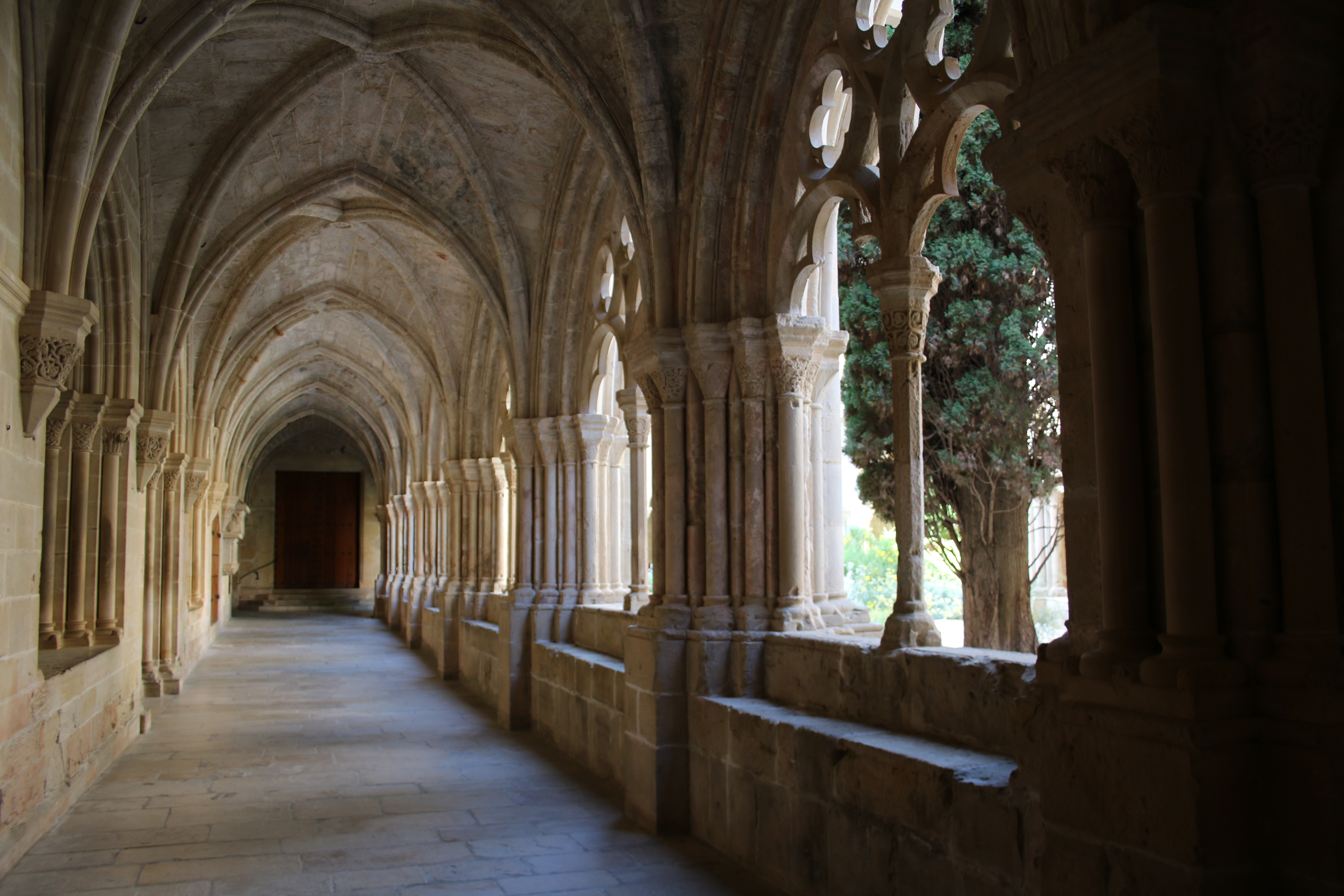
The cloister is particularly impressive and is one of the best places to appreciate the Gothic character of the monastery.
The Royal Gate and Defensive Walls
The monastery’s defensive character is impossible to miss.
The surrounding wall is approximately 11 metres high and extends for around 608 metres.
The fortifications were commissioned during the reign of Peter the Ceremonious, reflecting the political and strategic importance that Poblet had acquired.
The impressive Royal Gate was commissioned in the 14th century from the military engineer Guillem de Guimerà.
It is one of the most striking entrances to the monastery.
The Monastery Church
The church is at the centre of the monumental complex.
Its architecture follows the Cistercian tradition while incorporating Gothic elements.
The church has three naves, a transept and an ambulatory around the main altar.
The central nave is covered by a pointed vault, while the side aisles feature ribbed vaulting.
Inside, visitors can also admire the royal tombs and the impressive Renaissance alabaster altarpiece.
For many visitors, the combination of monumental architecture, royal history and religious symbolism makes the church one of the highlights of Poblet.
The Great Cloister
The great cloister is one of the most beautiful spaces in the monastery.
Its Gothic architecture creates a peaceful environment that contrasts with the defensive character of the exterior walls.
The cloister connected many of the monastery’s principal rooms and played an essential role in the daily life of the monks.
It is also one of the best places to appreciate the proportions, stonework and architectural details of Poblet.
The Chapter House
The Chapter House was one of the most important spaces in the daily life of the Cistercian community.
The monks gathered here to discuss matters concerning the monastery, listen to readings and deal with the administration of their community.
Its architecture reflects the importance of the space within monastic life.
The Refectory and Kitchen
The monastery also preserves spaces associated with the everyday life of the monks.
The refectory was where the community took its meals.
Nearby were the kitchen and other service areas required to support the monastic community.
These spaces help visitors understand that Poblet was not simply a monumental or religious building. It was a complete community designed around prayer, work, study and communal life.
The Scriptorium and Library
Poblet also became an important centre of learning.
The monastery had a library and scriptorium, where manuscripts were copied, preserved and studied.
The monks contributed to the transmission of knowledge, particularly in areas such as law and history.
This intellectual dimension is another reason why Poblet is so significant.
Its importance goes beyond architecture: it was also a centre of culture and knowledge.
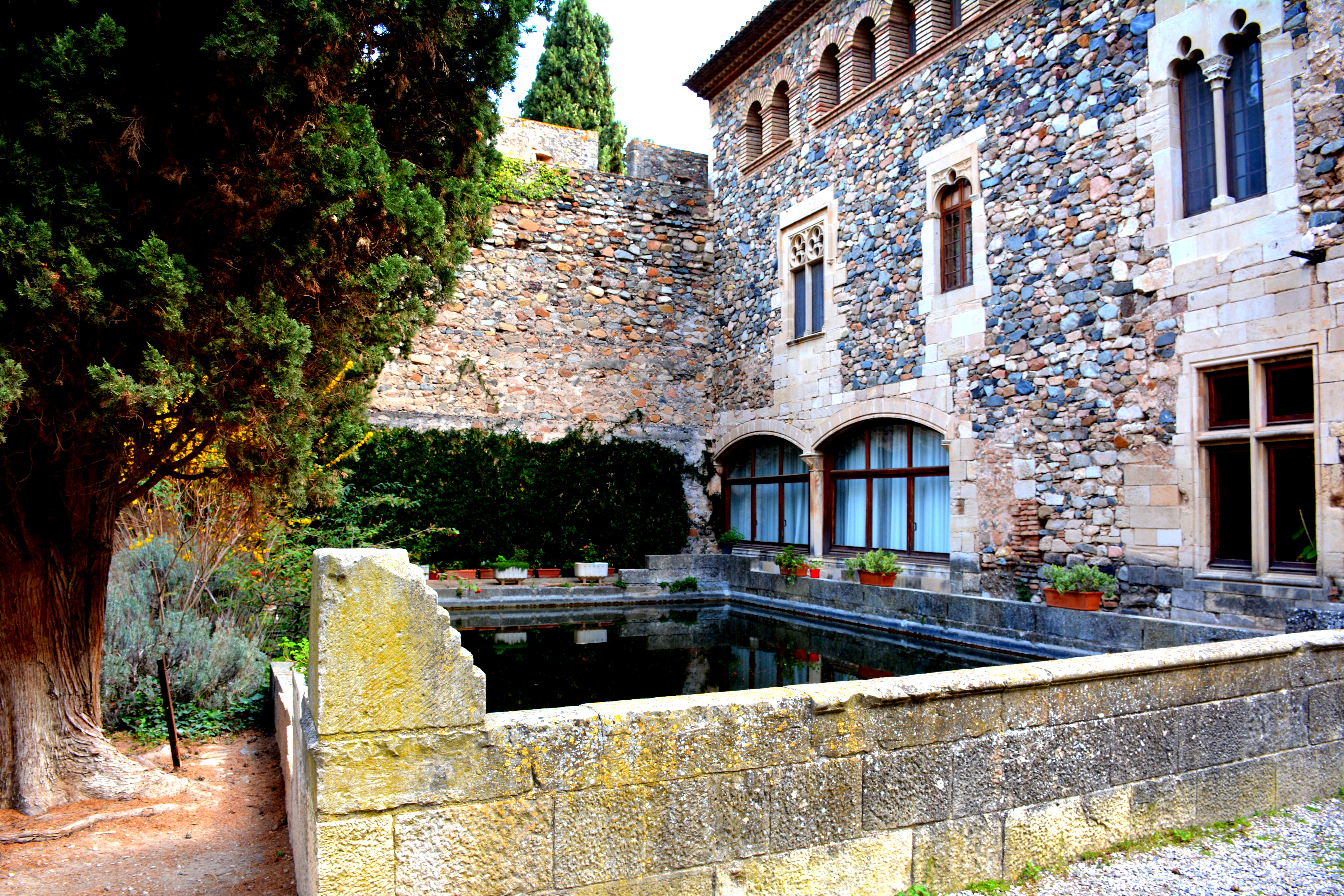
The Palace of King Martin
One of the most fascinating structures within the complex is the Palace of King Martin.
Construction began towards the end of the 14th century, although the building was never completely finished after the death of King Martin in 1410.
Its Gothic windows are particularly distinctive.
The interiors were later completed and reconstructed during the 20th century to accommodate historical collections.
The palace is an excellent example of the connection between the monastery and the royal court.
What Happened to Poblet?
The monastery experienced a dramatic period of decline during the 19th century.
In 1835, following the confiscation of church property in Spain, the monks were forced to leave Poblet.
The abandoned monastery suffered looting and deterioration, and many of its buildings were seriously damaged.
For decades, Poblet remained in a state of ruin.
Fortunately, restoration efforts eventually began, and monastic life returned in 1940.
The restoration of Poblet became one of the most important heritage projects in Catalonia.
Poblet and UNESCO
The Royal Monastery of Santa Maria de Poblet was declared a UNESCO World Heritage Site in 1991.
UNESCO recognizes Poblet as one of the largest and most complete Cistercian abbeys in the world.
Its importance lies not only in its architecture but also in its historical relationship with the Crown of Aragon, its royal pantheon and its extraordinary preservation as a complete monastic complex.
How Do You Visit the Monastery?
The tourist visit to Poblet can be completed independently using the official “Poblet, guía oficial” application.
We recommend bringing headphones so that you can comfortably follow the information during the visit.
In addition to the monumental area, the visit includes the museum and interpretation centre, providing further information about the history and significance of the monastery.
We recommend preparing your visit in advance and checking the opening times before travelling, particularly during public holidays and special dates.
Would you prefer to discover Poblet without worrying about the organization?
If you would like to experience the monastery in a more comfortable and personalized way, Magic Dreams Barcelona can organize the entire experience for you.
We can arrange a private excursion from Barcelona including private transportation, guide services, scheduling, gastronomy and all the essential details required for a relaxed and enjoyable day.
You will not have to worry about how to get there, where to park, how to organize your time or where to enjoy a good meal.
We take care of the logistics so that you can concentrate on discovering Poblet and enjoying its history.
For visitors looking for a private and carefully planned experience, we highly recommend combining culture, heritage, gastronomy and the beautiful landscapes surrounding the monastery.
If you are considering visiting the Royal Monastery of Poblet from Barcelona, Magic Dreams Barcelona can design the complete experience for you, adapting the itinerary to your interests, preferred pace and requirements.
Opening Hours
The official tourist opening hours vary according to the season.
Winter season
15 September – 14 June
Monday to Saturday: 10:00–12:30 and 15:00–18:00
Sundays and public holidays: 10:30–12:30 and 15:00–18:00
Summer season
15 June – 14 September
Monday to Saturday: 10:00–12:30 and 15:00–18:30
Sundays and public holidays: 10:30–12:30 and 15:00–18:30
Tickets are normally sold until 30 minutes before closing.
The monastery is closed all day on certain public holidays, including 1 January, 6 January, 25 December and 26 December.
We strongly recommend checking the official schedule before travelling because special opening times may apply on specific dates.
Ticket Prices
Current general admission prices include:
General admission: €10.50
Reduced admission: €7.50
School and university groups: €6
Combined Cistercian Route ticket: €18
The combined ticket includes Poblet, Santes Creus and Vallbona de les Monges.
Reduced admission applies to several categories, including seniors, children from 7 years old, students and certain other groups with the appropriate documentation.
How to Get to Poblet from Barcelona
By Car
Driving is the most convenient option, particularly if you would like to combine Poblet with other destinations in the area.
The journey from Barcelona takes approximately 1 hour and 20–30 minutes, depending on traffic and the route.
By Train
You can travel by train from Barcelona towards the Tarragona/Lleida area and reach L’Espluga de Francolí.
The station is approximately 3 kilometres from the monastery, meaning that you will need to arrange the final part of the journey.
By Bus
Bus connections are possible, but they generally require more planning and transfers.
For this reason, visitors who want to make the most of a single day often find private transportation considerably more comfortable.
Where to Eat Near Poblet
A visit to Poblet can easily be combined with lunch in the surrounding area.
Among the nearby options are:
Restaurant Hostatgeria de Poblet — located very close to the monastery and a convenient option for combining the visit with lunch.
Restaurant El Grèvol — located in Vimbodí and offering a more informal local dining option.
Restaurant Dels Torrents — another nearby choice for enjoying a meal during your visit.
Opening times can change according to the season, so we recommend checking availability before travelling.
For a private excursion with Magic Dreams Barcelona, we can also help coordinate the gastronomic part of your experience so that your day is organized smoothly from beginning to end.
What Can You Do Around Poblet?
A visit to the monastery can be extended into a broader cultural excursion.
The surrounding area offers opportunities to discover:
Historic villages in the Conca de Barberà
The Cistercian heritage of Catalonia
Forest landscapes surrounding Poblet
L’Espluga de Francolí
Montblanc and its medieval heritage
Other historic monasteries in the region
Local gastronomy and traditional Catalan cuisine
One particularly interesting option is the Cistercian Route, which connects Poblet with the monasteries of Santes Creus and Vallbona de les Monges.
7 Fascinating Facts About Poblet
1. It is a royal burial place
Poblet became the royal pantheon of the Crown of Aragon, making it one of the most important royal burial sites in Catalonia.
2. It is a UNESCO World Heritage Site
Poblet has been recognized by UNESCO since 1991 because of its exceptional historical and architectural value.
3. It is a fortified monastery
Unlike many monasteries, Poblet has imposing defensive walls and towers, reflecting its historical importance.
4. It combines different architectural periods
Romanesque, Gothic, Renaissance and Baroque elements can all be found throughout the complex.
5. Monastic life returned in the 20th century
After decades of abandonment following the events of 1835, the monastic community returned in 1940.
6. It was an important centre of knowledge
The monastery developed an important library and scriptorium, contributing to the preservation and transmission of historical knowledge.
7. It remains one of Catalonia’s great historical landmarks
Today, Poblet is one of the most important examples of Cistercian heritage in Europe and one of the most remarkable cultural destinations in Catalonia.
Why Visit Poblet from Barcelona?
If you are staying in Barcelona, Poblet offers the opportunity to experience a completely different side of Catalonia.
Instead of focusing only on Barcelona’s urban attractions, you can discover medieval architecture, royal history, monastic traditions and spectacular landscapes in a single day.
We highly recommend Poblet for travelers interested in history, architecture, culture and authentic Catalan heritage.
And if you would rather enjoy the experience without worrying about transportation, reservations or logistics, Magic Dreams Barcelona can take care of the entire journey for you.
From the moment you leave Barcelona until your return, we can coordinate the vehicle, guide, itinerary, gastronomy and the details that make the difference between simply visiting a monument and enjoying a truly memorable cultural experience.
We invite you to discover the Royal Monastery of Poblet and experience one of Catalonia’s most fascinating historical treasures.
Iglesia del monasterio, parte de la Epístola. Sepulcros reconstruidos por Federico Marés Deulovol en 1944 – José Luis Filpo Cabana, CC BY 3.0 , via Wikimedia Commons.
Arcos del claustro – Francis Raher, CC BY 2.0 , via Wikimedia Commons.
Monestir de Poblet, Vimbodí – Angela Llop de España, CC BY-SA 2.0 , via Wikimedia Commons.
Monasterio, otoño, viñas, cisterna – By Angela Llop – https://www.flickr.com/photos/angela_llop/26730740849/, CC BY-SA 2.0, https://commons.wikimedia.org/w/index.php?curid=91000669.
Monasterio de Poblet – By FrDr – Own work, CC BY-SA 4.0, https://commons.wikimedia.org/w/index.php?curid=109229564.
Monasterio de Poblet – By FrDr – Own work, CC BY-SA 4.0, https://commons.wikimedia.org/w/index.php?curid=109229889.
Alrededores del Real Monasterio de Poblet – By LBM1948 – Own work, CC BY-SA 4.0, https://commons.wikimedia.org/w/index.php?curid=120602240.
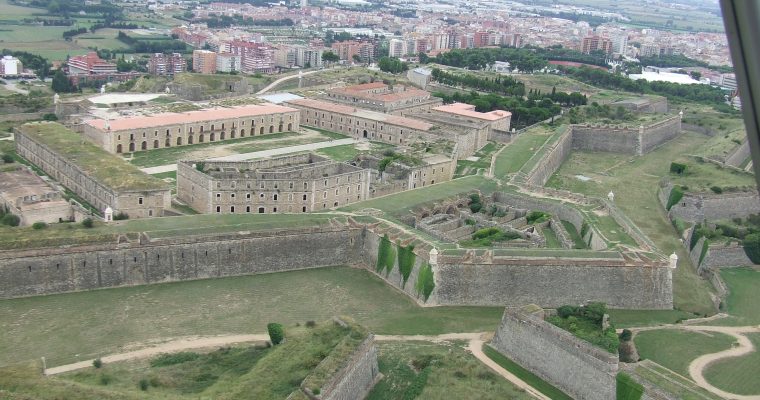
One of Europe’s Great Fortresses in the Heart of the Empordà Just a few minutes from the centre of Figueres, on a hill overlooking much of the Alt Empordà, stands Sant Ferran Castle, one of the most extraordinary military constructions in Catalonia. This is not …
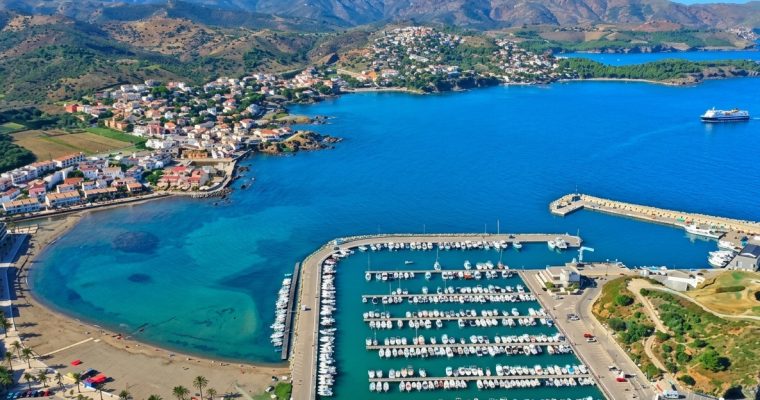
Discover Llançà with Magic Dreams Barcelona At the northernmost end of the Costa Brava, between the deep blue waters of the Mediterranean and the natural landscapes of Alt Empordà, lies Llançà, a charming fishing village that preserves the authentic spirit of the Catalan coast. Its …
Approximately 40 kilometres from Barcelona, Caldetas retains an identity closely linked to the Mediterranean, its thermal waters and the residential architecture of the late 19th and early 20th centuries. Located in the Maresme region, this small town brings together heritage, culture, beaches and a gastronomic tradition in which the sea plays a central role.
Officially known as Caldes d’Estrac, the town developed a distinctive character thanks to its thermal springs and the arrival of Barcelona families who chose this part of the coast for their summer stays. That period transformed the urban landscape and left its mark, still visible today in the historic villas, seafront promenades and streets of the old town.
Caldetas offers several ways to explore the area. You can discover its historic sites, visit an exhibition, walk alongside the Mediterranean, follow the paths connecting the Three Villages or enjoy a seafood meal overlooking the beach.
Caldetas and Its Thermal Heritage
The history of Caldetas is closely linked to its thermal waters. The presence of natural springs helped shape the town’s character and encouraged the development of a tradition associated with wellbeing and relaxation.
The Balneari Termal, located in the town centre beside Plaça de la Vila, is one of the main reminders of this history. Its waters, which emerge at a temperature of approximately 38°C, have distinguished Caldetas from other coastal towns and help explain its development.
During the 19th century, thermal establishments acquired a social and cultural dimension. Extended stays, walks and social gatherings formed part of an approach to relaxation that helped transform the town.
The surroundings of the spa and Plaça de la Vila offer a glimpse of the historic centre and its relationship with local traditions. If you wish to visit the thermal facilities, check admission requirements, available services and current opening hours in advance.
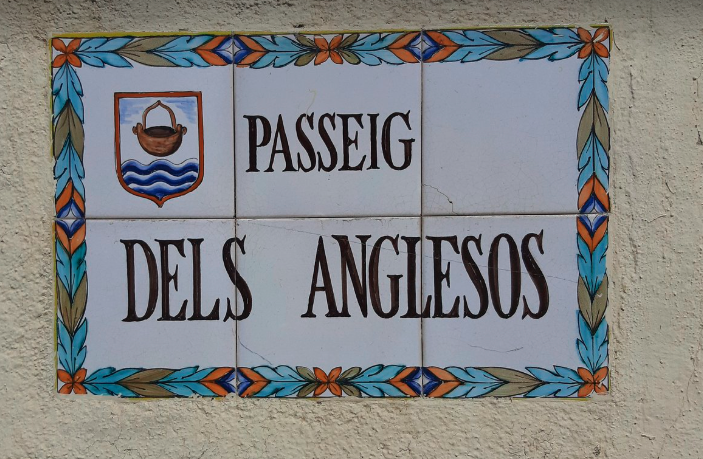
Passeig dels Anglesos and the Historic Villas
One of the most representative walks in Caldetas follows Passeig dels Anglesos, alongside the Mediterranean. Its historic residences evoke the period when families from Barcelona chose the Maresme coast as the setting for their summer homes.
The surviving houses display a variety of architectural styles, from historicist designs to Modernist details and more understated buildings. Terraces, gardens, balconies and decorated façades reveal the evolution of residential architecture and the lifestyle of a society that found a place of relaxation along the coast.
Not all the original buildings have survived. However, those that remain help explain the importance summer living acquired in this part of the Catalan coastline.
We recommend walking along the promenade at an unhurried pace, paying attention to the façade details, the relationship between the houses and public spaces, and the views opening towards the sea. It is an easy route that offers insight into Caldetas’ urban history without requiring a rigid itinerary.
The nearby beaches complete the experience and illustrate how the Mediterranean has influenced both the architecture and the town’s development.
Fundació Palau: Art and Ideas
Fundació Palau, located on Carrer de la Riera, is dedicated to the poet, writer and essayist Josep Palau i Fabre. Its collection and exhibitions explore the author’s intellectual journey and his relationship with Pablo Picasso, a major figure in modern art.
The centre houses works and documents that illuminate the connections between literature, thought and artistic creation. Its significance lies not only in the pieces on display but also in the opportunity to approach art from a critical and literary perspective.
A visit can be combined with a walk through the old town and the surrounding streets.
Practical information
Address: Carrer de la Riera, 54, Caldes d’Estrac.
Admission: Check current ticket prices before visiting.
Opening hours: These may vary depending on the season and exhibition programme.
We recommend checking the exhibition programme and confirming opening hours before planning your visit.
Beaches and Green Spaces
Caldetas’ coastline offers several places to enjoy the sea and walk alongside the shore.
Platja dels Tres Micos is one of the town’s best-known beaches. Its residential surroundings and proximity to the seafront promenade make it easy to combine time by the water with a walk through the nearby streets.
Platja de la Riera is another option for enjoying the Mediterranean. Services, swimming conditions and the shape of the beach may change throughout the year, so it is advisable to check the local council’s information before visiting.
Outside the summer months, the coastline takes on a quieter atmosphere. A walk beside the sea offers the chance to appreciate the landscape without making swimming the main focus of the day.
For those who prefer walking among trees and Mediterranean vegetation, Parc de Can Muntanyà offers paths and wooded areas on the slopes of Puig Castellar. Its inclines and vegetation provide a different perspective on the town and make it possible to alternate the coastline with a more natural setting.
The Three Villages Route: Coastline and Inland Trails
The Three Villages Route connects Caldes d’Estrac, Sant Andreu de Llavaneres and Sant Vicenç de Montalt. These three towns share a history linked to the Mediterranean, historic summer residences and the evolution of the Maresme landscape.
The route reveals how the surroundings change over a relatively short distance. Along the coast, you will find seafront promenades and historic villas; further inland, paths follow streams and wooded areas before climbing towards the Serralada Litoral mountain range.
There are several route variations, so it is important to distinguish between the circular countryside route and the historic walk along the coastline.
The Countryside Route
One published circular version covers approximately 17.4 kilometres, with around 500 metres of positive elevation gain. It can be completed on foot or by mountain bike, although the distance and inclines require an appropriate level of fitness.
The route can begin in Caldetas and continue inland along paths connecting with Sant Vicenç de Montalt. As you gain elevation, the urban landscape gives way to wooded areas and forest tracks. The route then continues towards Sant Andreu de Llavaneres before returning to the coast.
Approximate details
Distance: Approximately 17–21 kilometres, depending on the route variation.
Elevation gain: Around 500 metres on one published version.
Walking time: Four to six hours, depending on pace and stops.
Difficulty: Moderate to challenging, due to the distance and inclines.
Recommended equipment: Suitable footwear, water, sun protection and a downloaded route on your phone.
Figures may vary depending on the starting point and chosen trail. Before setting off, check the latest route information and trail conditions.
The Historic Three Villages Walk
For those who prefer a shorter route, there is a coastal walking option of approximately four kilometres linking Caldetas with the area around Sant Andreu de Llavaneres, passing through Sant Vicenç de Montalt.
This walk offers views of the seafront, historic residences and the relationship between the three towns. It is a suitable option for a leisurely stroll without the physical demands of the inland route.
You can complete it independently or combine it with a meal overlooking the sea. If you plan to walk back to your starting point, allow for the total distance and check the route in advance.
Musclera Beach and Its Naturist Tradition
North of Caldetas, within the municipality of Arenys de Mar and close to the boundary with Caldes d’Estrac, lies Musclera Beach. Its setting is more open than that of the urban beaches, and one section has a long-standing naturist tradition.
The beach is approximately 630 metres long and is known for visitors who practise naturism, particularly towards its eastern end. If you decide to visit, respect the different uses of the space and the preferences of others sharing the beach.
Musclera can be included in a coastal walk, although access points, facilities and beach conditions should be checked according to the time of year.
Where to Eat in Caldetas
Food is an important part of the Maresme region’s identity. Fish, seafood, rice dishes and seasonal produce feature prominently in the local cuisine. In Caldetas, you will find everything from seafood restaurants to Catalan cooking and Italian-inspired dishes.
Sotavent: Seafood Dining by the Sea
Located on Passeig dels Anglesos, Sotavent offers a Mediterranean menu focused on seafood and fresh ingredients. Its position overlooking the beach allows you to enjoy a meal with views of the Mediterranean before continuing your walk along the coast.
The menu has included rice dishes, fideuà, fish, seafood and starters designed for sharing. Specialities have included black rice with cuttlefish and aioli, lobster rice and the house fideuà.
It is a suitable choice if you are looking for seafood in a setting close to the water, both during summer and in the quieter months.
Indicative prices
Salads: approximately €11–18.
Calamari: around €17–18.
Garlic prawns: approximately €18.
Sotavent rice: €20.60 per person.
Black rice: €21 per person.
Sotavent fideuà: €19.60 per person.
Lobster rice: €31.90 per person.
As a general guide, allow approximately €30–45 per person, depending on the dishes, drinks and starters you choose.
Address: Passeig dels Anglesos, 24, Caldes d’Estrac.
El Taller is an alternative for those who prefer Catalan cuisine in a traditional restaurant setting. Its location makes it easy to include in a walk through the town centre.
Seasonal cooking and fresh produce are worth considering when checking its menu. We recommend confirming the available dishes and opening hours before visiting.
Address: Passatge de Sant Pere, 2, Caldes d’Estrac.
Casa Viveca offers a contemporary take on Mediterranean cuisine. It is located beside Parc Joan Maragall, making it possible to combine a relaxed meal with a walk through the town.
Before visiting, check the current opening hours and menu, particularly if you plan to go at the weekend or outside the peak season.
Address: Parc Joan Maragall, 9, Caldes d’Estrac.
Telephone: +34 658 416 426.
Pizzeria Estrac: Italian Cuisine
Pizzeria Estrac is a more informal option, serving Italian-inspired pizzas and dishes featuring Mediterranean ingredients. Its location on Camí Ral makes it convenient to include in a walk around the centre.
It is an alternative for those looking for a relaxed meal without spending as much time at the table.
A few minutes from Caldes d’Estrac, golf offers another way to enjoy the Maresme landscape, where gentle terrain, Mediterranean vegetation and the proximity of the sea help define the character of the region. The surrounding area has facilities where visitors can combine sport with time outdoors, whether they are experienced players or interested in taking up the game.
One of the area’s notable options is Club de Golf Llavaneras, located in Sant Andreu de Llavaneres. Founded in 1945, it is one of Catalonia’s historic golf clubs. Its 18-hole course winds among pine trees and native vegetation, with views of the Mediterranean from various points. The layout requires precision and strategy, making the course a sporting experience shaped by both its design and the natural characteristics of the terrain.
The proximity of Caldes d’Estrac to Llavaneres makes it possible to include a round of golf in a visit to the area without travelling far. Those looking for a shorter activity can also contact the club directly to enquire about access requirements, green fees, lessons and equipment rental, as these may vary depending on the season and the player’s status.
How to Get to Caldetas from Barcelona
Caldetas is located approximately 40 kilometres from Barcelona. You can travel by car, train or bus, although each option offers different levels of frequency and flexibility.
By Car
The journey usually takes between 35 and 50 minutes, depending on your starting point and traffic conditions.
The usual route follows the C-32 motorway, with an exit for Caldes d’Estrac. You can also take the N-II road, which runs along the Maresme coastline.
Driving makes it easier to combine Caldetas with Sant Andreu de Llavaneres, Sant Vicenç de Montalt and other coastal destinations. During summer and at weekends, allow extra time for parking.
By Train
The Rodalies R1 line connects Barcelona with Caldes d’Estrac. The journey generally takes approximately 45–55 minutes, depending on your departure station and the service.
From the station, you can continue on foot towards the town centre, seafront promenade and several of the main points of interest.
As a general reference, a single ticket may cost around €6–7, although the fare depends on current prices and the applicable ticket type.
Intercity connections depend on the routes and timetables available during each period. Before choosing this option, check the service, journey time and location of the stops.
A Day Exploring Caldetas
To discover the town at a relaxed pace, you could start the morning at Fundació Palau and continue towards the Balneari Termal and Plaça de la Vila. This first part of the day offers an introduction to the town’s cultural and thermal history.
Next, Passeig dels Anglesos provides a walk among historic residences and views of the Mediterranean. From there, you can head towards Platja dels Tres Micos or continue along other stretches of the coastline.
At lunchtime, a meal at Sotavent allows you to enjoy local seafood. If you prefer Catalan cuisine, El Taller offers an alternative in the town centre; Casa Viveca and Pizzeria Estrac complete the selection, depending on the type of food you prefer.
In the afternoon, choose between a walk through Parc de Can Muntanyà, a visit to Musclera Beach or a longer walk along the Three Villages Route. The latter requires several hours and is better suited to those who want to walk and explore the inland landscape as well.
Your choice will depend on the time of year and your preferences. If you want to focus on culture and food, the town centre and coastline offer plenty of possibilities. If you prefer an active day, the route connecting the three towns extends the experience towards the paths of the Serralada Litoral.
Caldetas: Between History and the Mediterranean
Caldetas brings together, within a relatively small area, several elements that explain the evolution of the Catalan coast: thermal waters, historic summer villas, residential architecture, culture and a cuisine closely connected to the sea.
Its appeal lies in the relationship between these elements and the opportunity to explore them at an unhurried pace. The seafront promenade reveals the town’s architectural evolution; Fundació Palau adds a cultural dimension; the Three Villages paths connect the coast with the inland landscape; and seafood cuisine offers a way to discover the region’s ingredients and flavours.
A visit can be limited to a single day or extended with a walk through neighbouring towns. In either case, it is worth paying attention to the details: a façade, a stretch of coastline, a street in the old town or a table overlooking the sea.
Caldetas retains a distinctive identity within the Maresme region, shaped by its history, its landscape and the enduring relationship between the Mediterranean and the lives of its residents.
Detalle Platja dels tres micos.
Passeig dels anglesos.
Baños termales de Caldas d’Estrac – By Friviere – Own work, CC BY-SA 4.0, https://commons.wikimedia.org/w/index.php?curid=162681070.
La Riera (Caldes d’Estrac) – By Enfo – Own work, CC BY-SA 3.0, https://commons.wikimedia.org/w/index.php?curid=28032821.
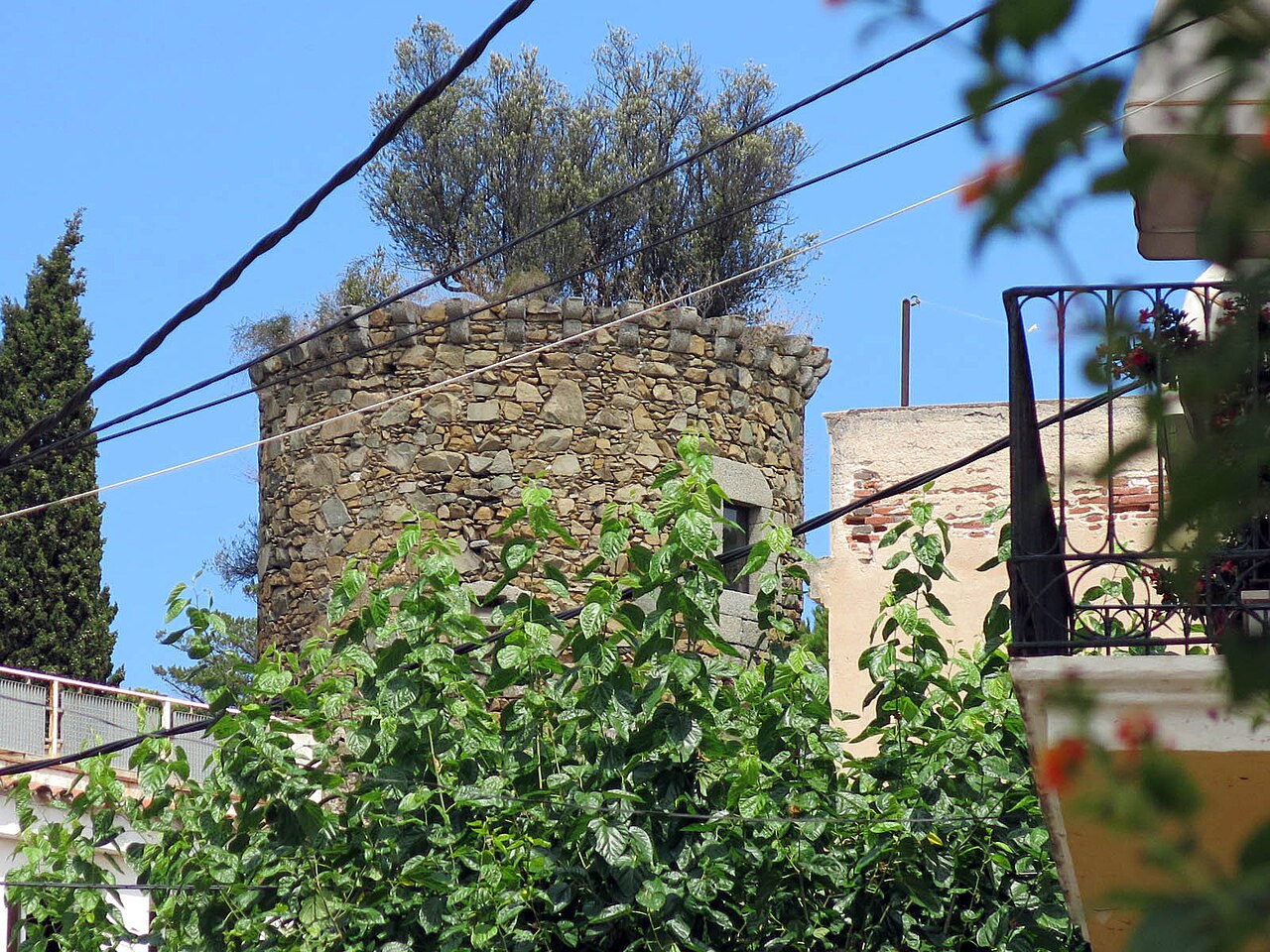
Torre Busquets (Caldes d’Estrac) – By Enfo – Own work, CC BY-SA 3.0, https://commons.wikimedia.org/w/index.php?curid=28033353.
Iglesia de Santa María del Remei, Caldas de Estrac, Maresme – By Deosringas – Own work, CC BY-SA 3.0, https://commons.wikimedia.org/w/index.php?curid=16655024.
La Torre Verda (Caldes d’Estrac) – By Enfo – Own work, CC BY-SA 3.0, https://commons.wikimedia.org/w/index.php?curid=28033215.
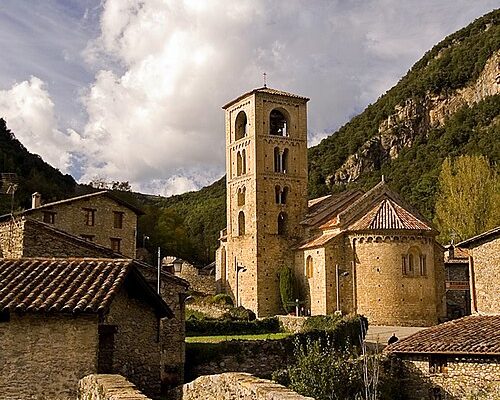
At the easternmost edge of the Alta Garrotxa, surrounded by forest-covered mountains, ancient medieval paths and small waterways, lies Beget, one of the villages that has best preserved the architecture, history and rural essence of the Eastern Pyrenees. Situated at an altitude of 541 metres, …
A little over half an hour from Barcelona, we find a landscape that seems much farther away from the city than it actually is. Cabrils is one of those gateways to the Maresme where all it takes is starting to climb towards the mountains to …
Tossa de Mar: the fishing village of the walls, the lighthouse, Ava Gardner, the coves and Chagall’s Blue Paradise
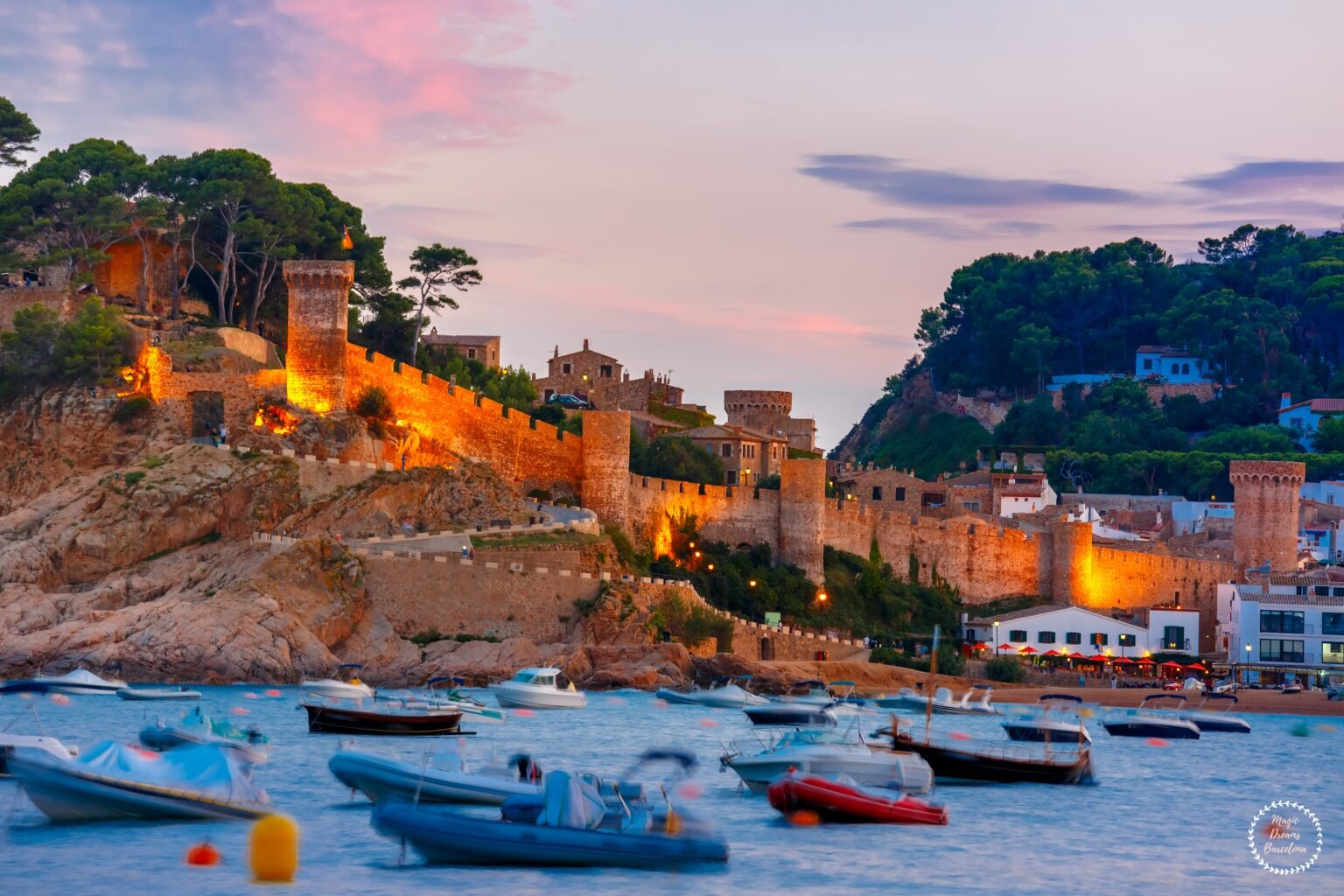
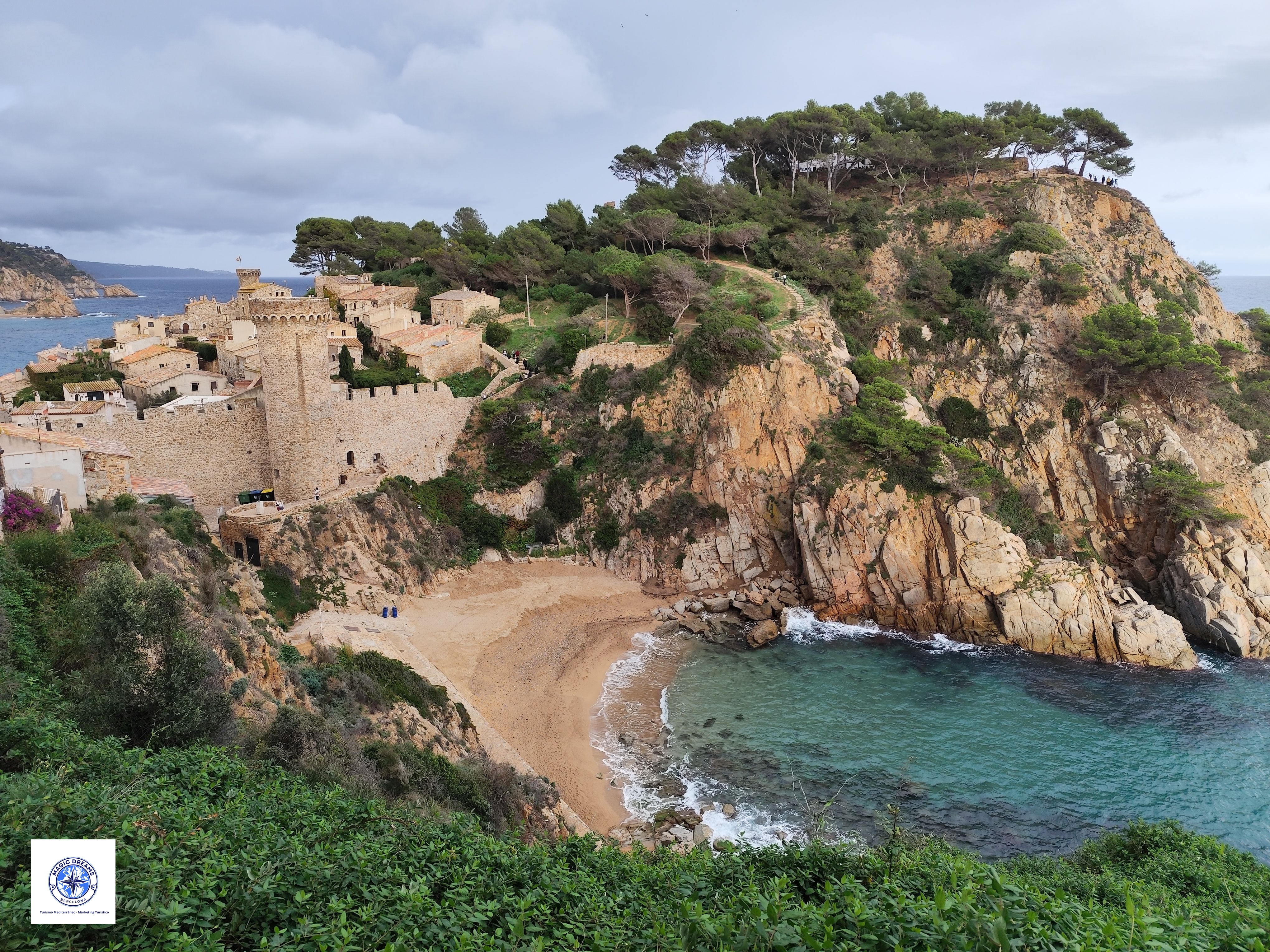
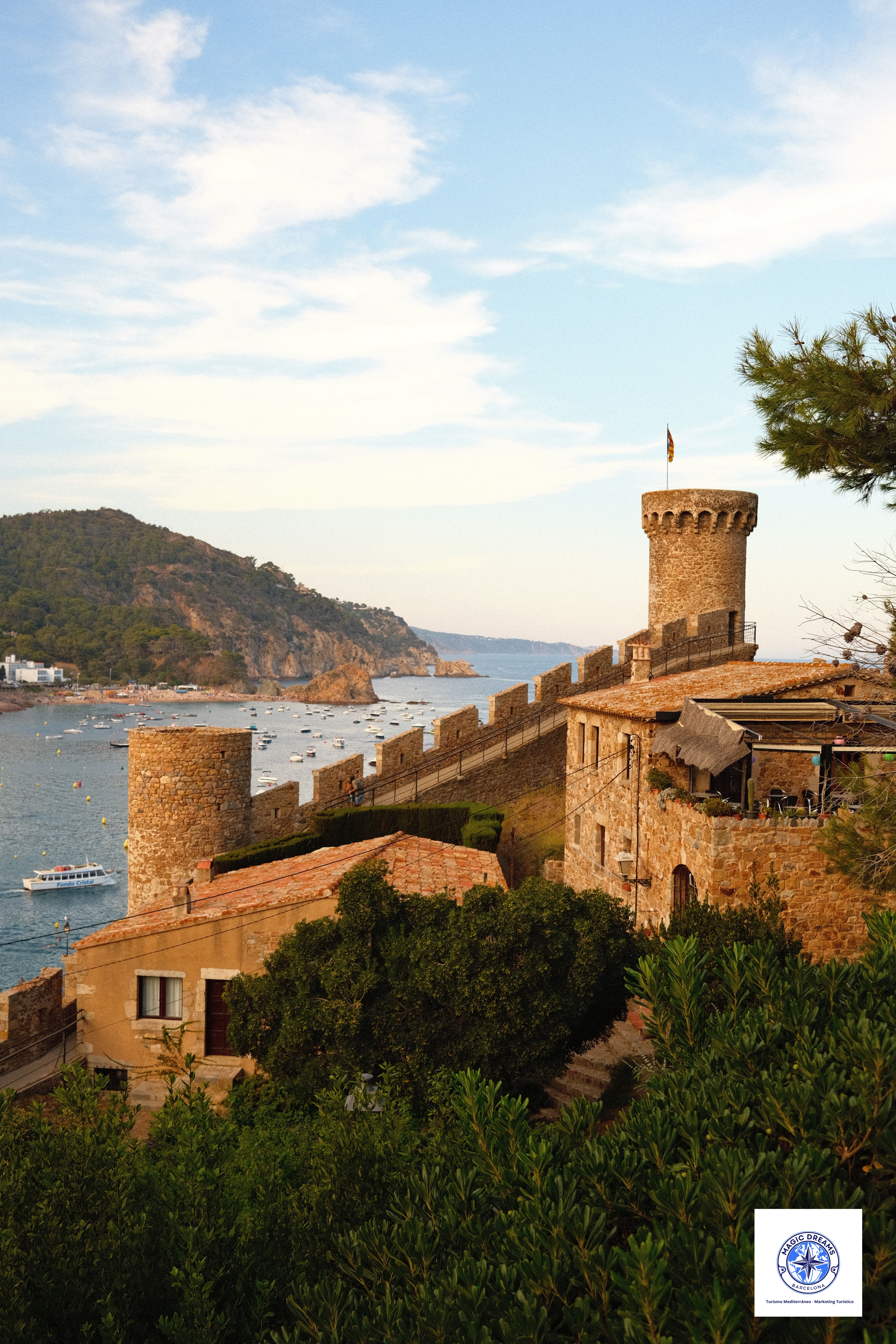
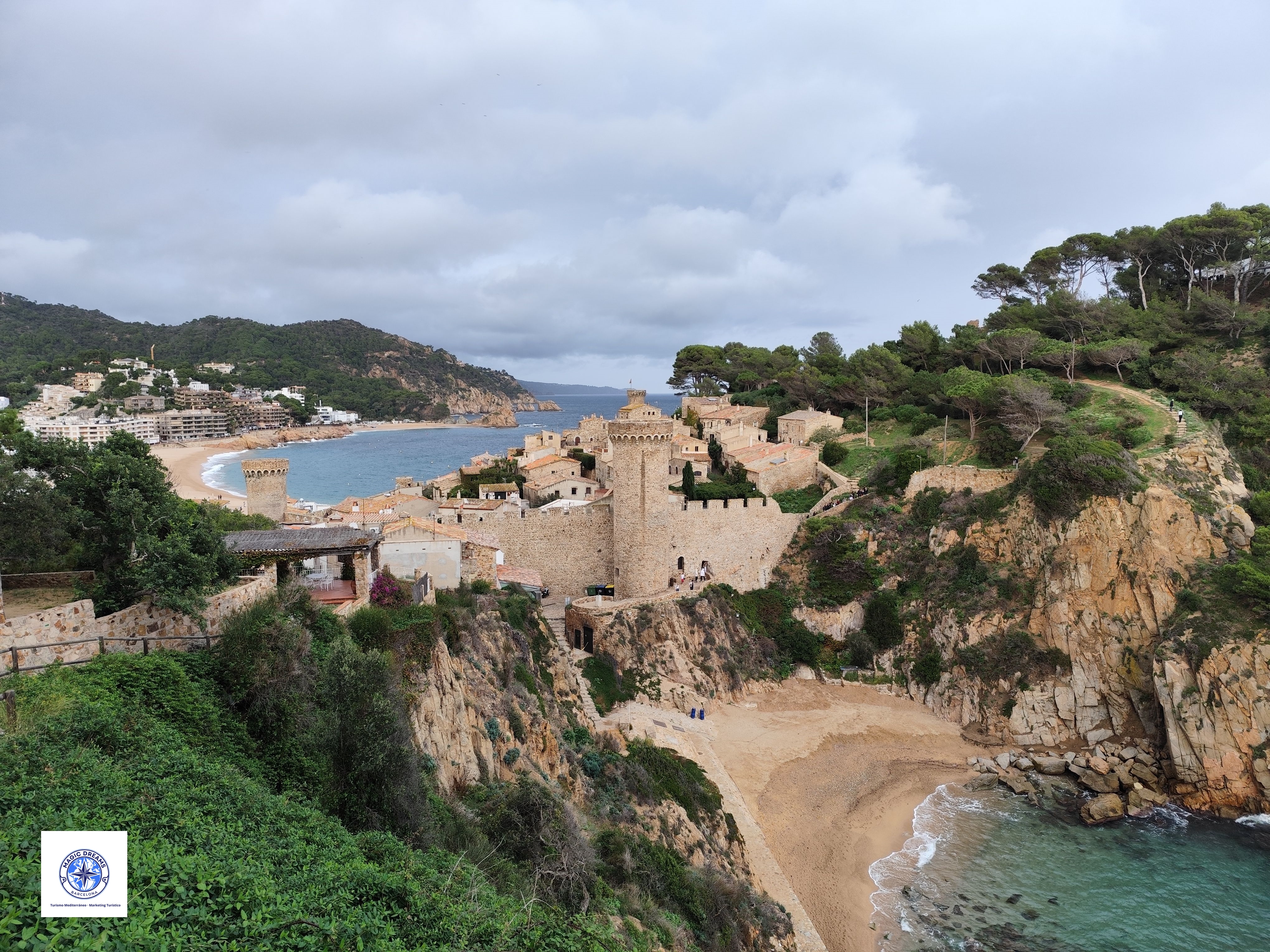
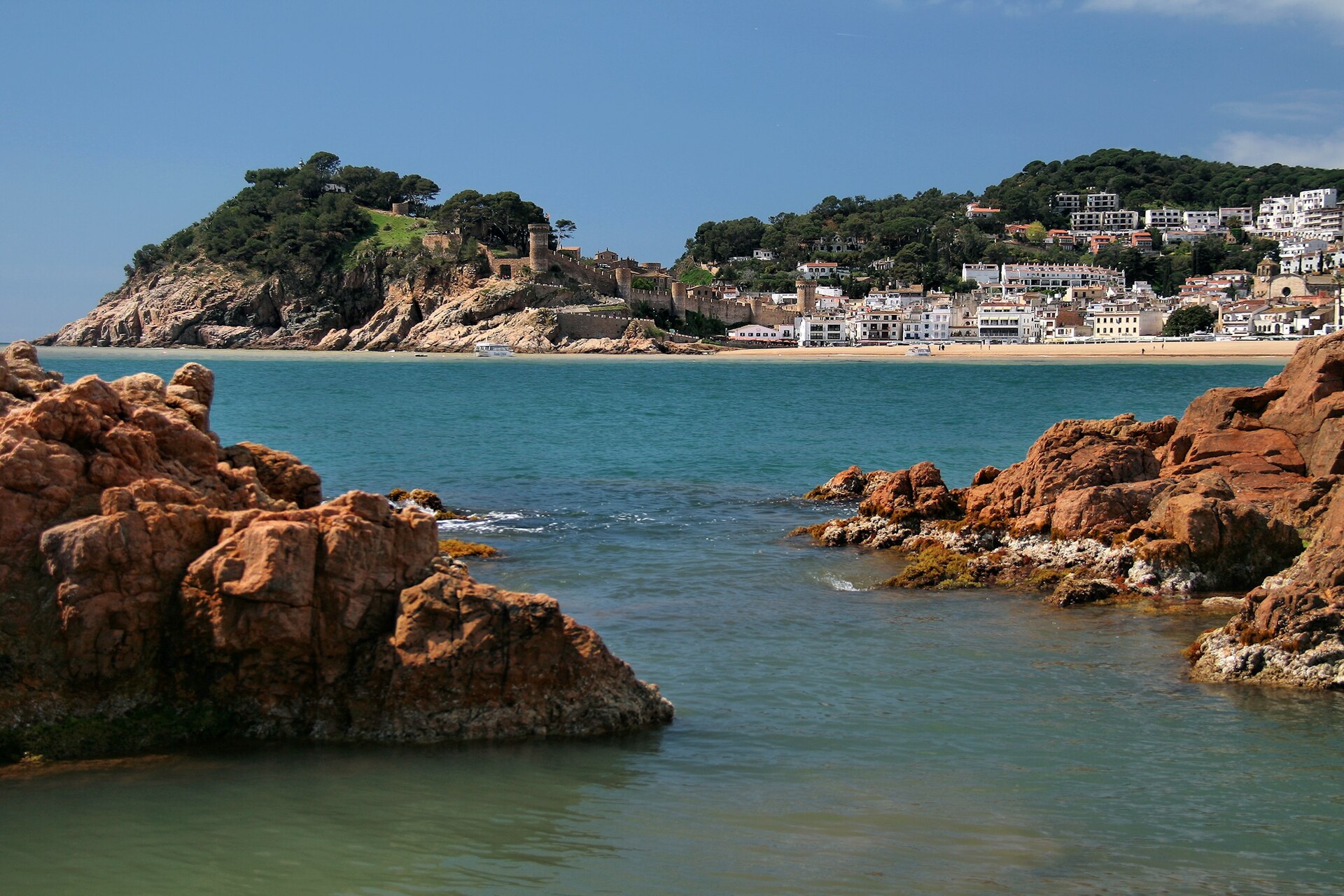
A medieval wall overlooking a Mediterranean Sea of crystal-clear waters, ancient watchtowers, cobbled streets rising between stone houses, a lighthouse built on the site where the castle once stood, the remains of a Roman villa, Mediterranean forests where megalithic monuments still survive, hidden coves among the cliffs, and a history shaped by fishermen, artists and Hollywood stars.
Tossa de Mar is one of those places on the Costa Brava where the beauty of the landscape and history seem to have agreed to create an extraordinary setting.
Recognized by the Generalitat de Catalunya with the designation of “Fishing Village”, Tossa preserves an identity deeply connected to the Mediterranean. Its location between Sant Feliu de Guíxols and Lloret de Mar, protected inland by the Cadiretes-Ardenya Massif, makes it possible to enjoy historical heritage, nature, hiking, beaches, coves, gastronomy and sea-related activities all in the same destination.
And all of this approximately 100 kilometres from Barcelona, making it an exceptional destination for a day trip, a romantic weekend or a longer stay dedicated to discovering the Costa Brava at a leisurely pace.
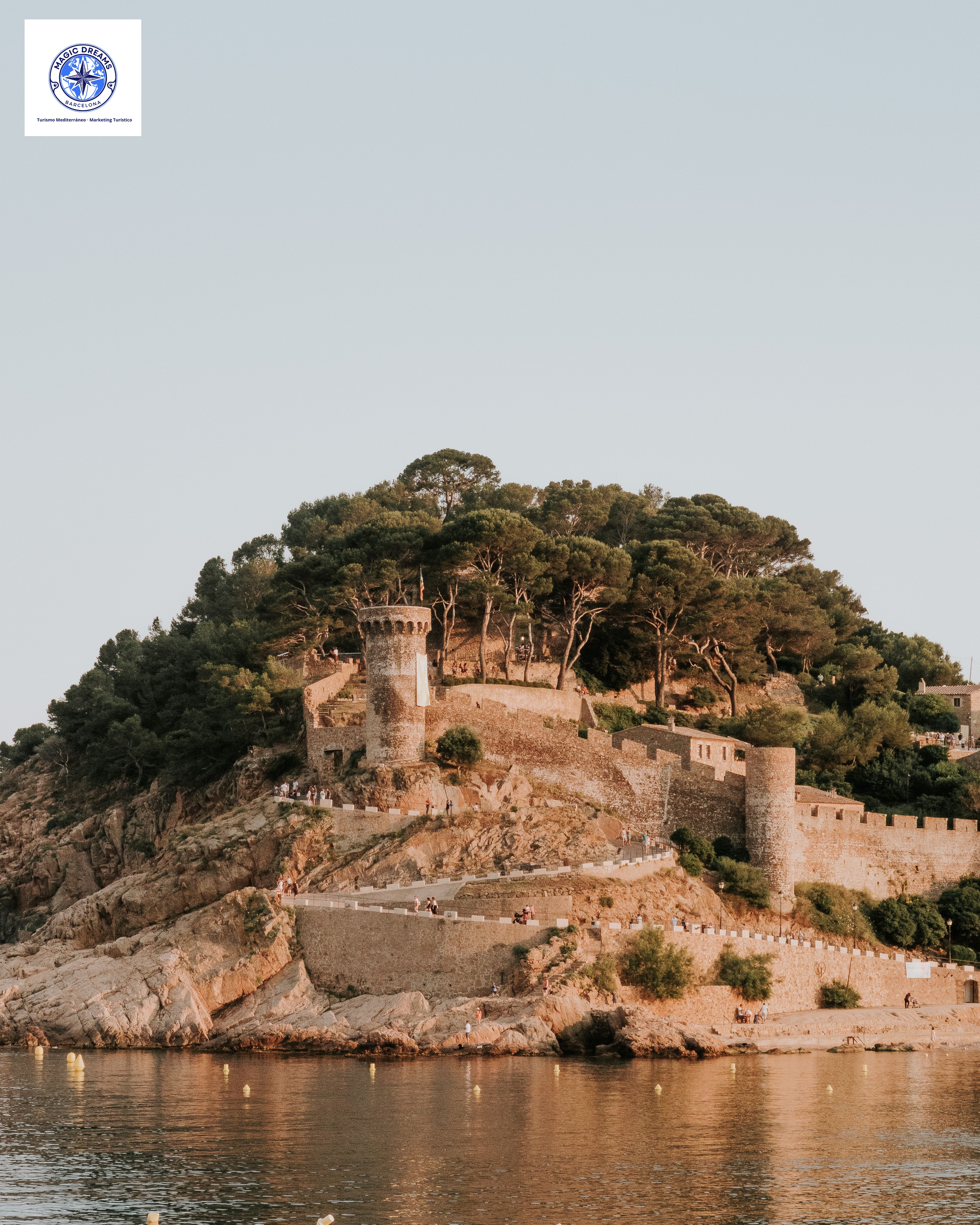
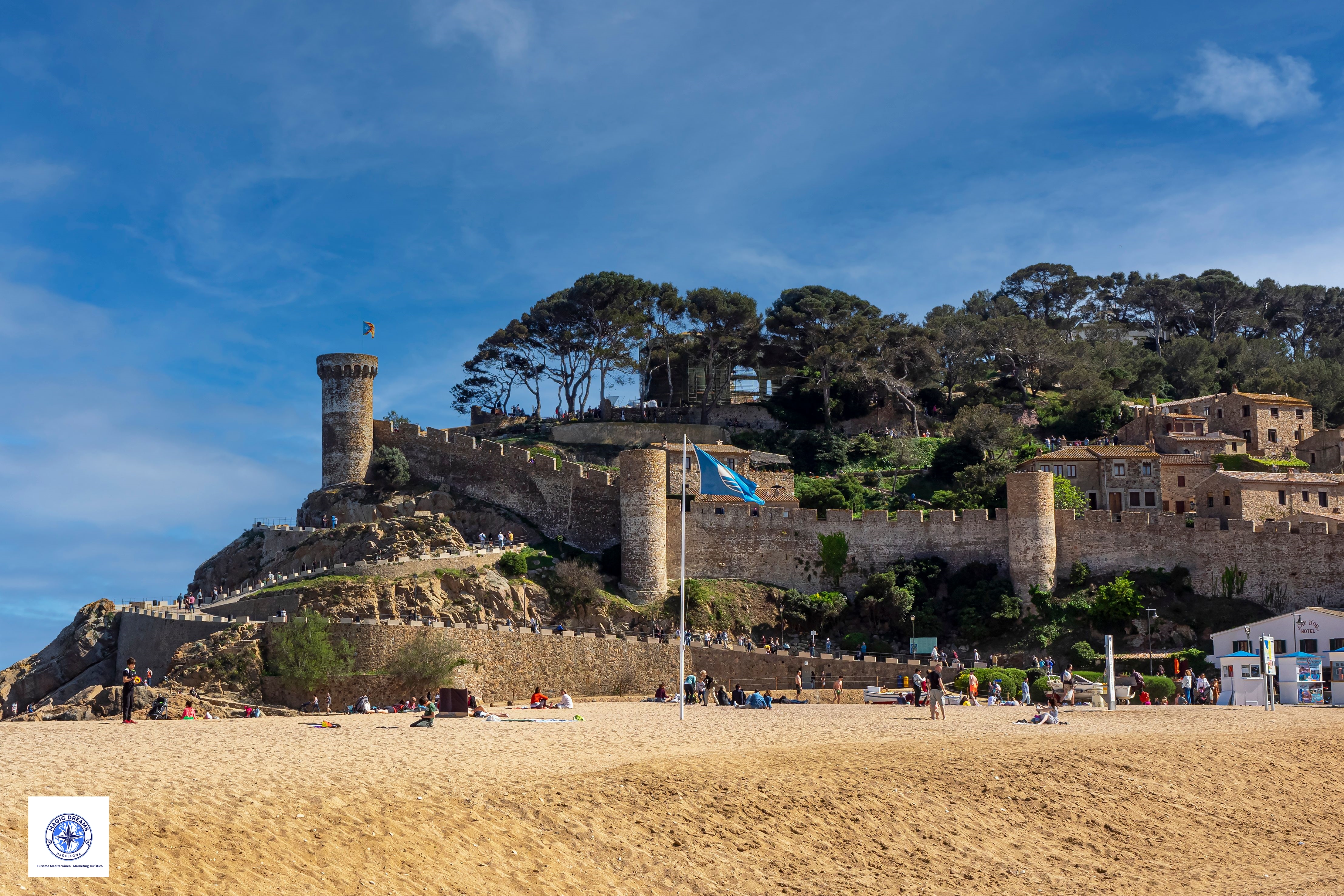
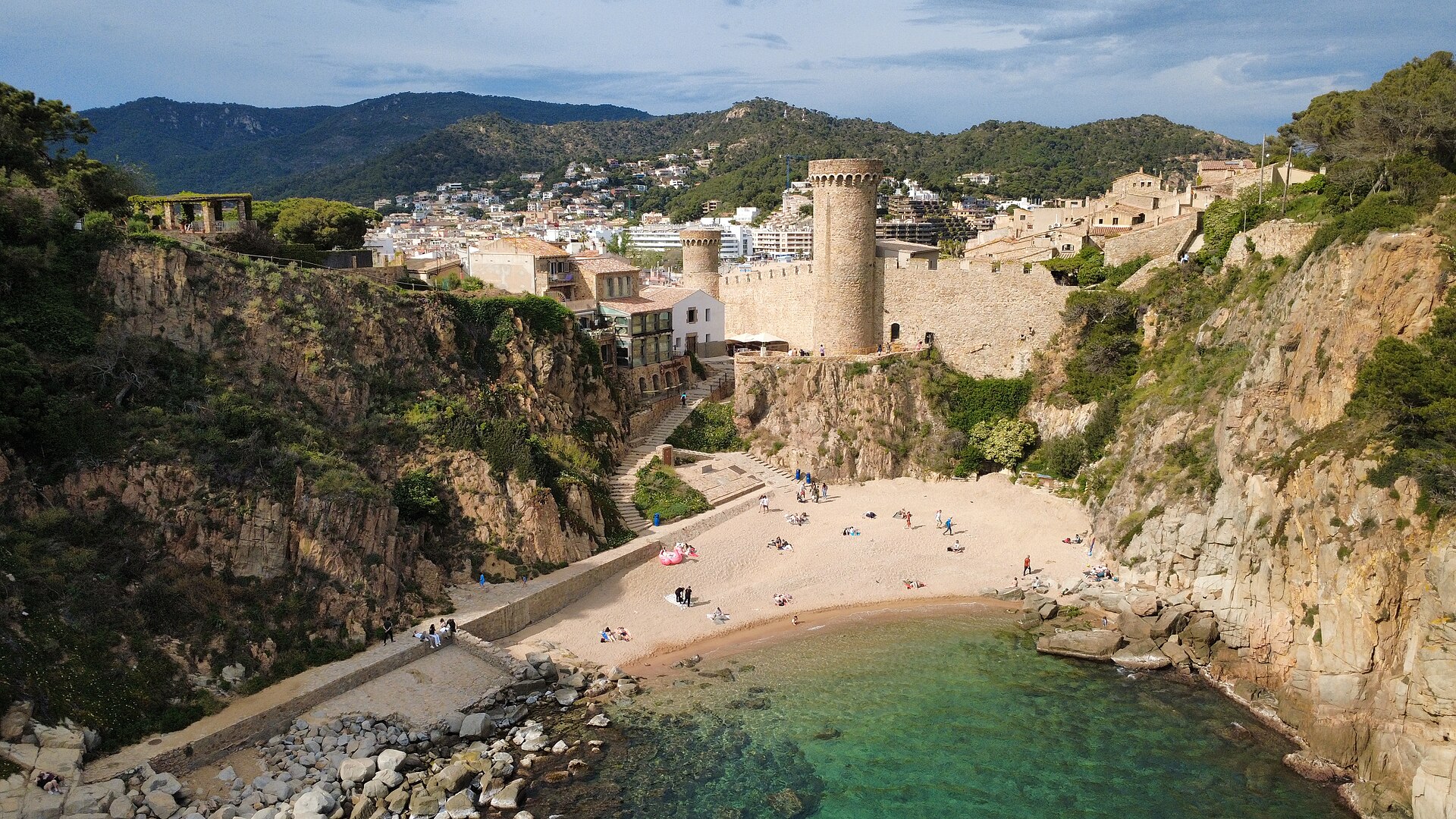
But if there is one image that defines Tossa de Mar above all others, it is that of its Vila Vella, the ancient walled town rising above the Mediterranean.
Vila Vella: the historic heart of Tossa de Mar
Vila Vella is Tossa’s great monumental treasure.
The walled enclosure began to be built at the beginning of the 13th century to protect the population from pirate attacks and preserves practically its entire original perimeter. In 1931, it was declared a National Historic-Artistic Monument.
The Tossa Tourist Office currently considers it the only surviving example of a fortified medieval settlement on the Catalan coast. The enclosure can be visited free of charge and remains open throughout the year, 24 hours a day, although certain cultural spaces inside have their own opening hours.
Entering Vila Vella means leaving contemporary tourist Tossa behind for a few moments.
Visitors pass through the magnificent Portal de la Vila Vella, with its large voussoir arch, and enter the former parade ground.
From here, the route continues among walls, towers, houses, small squares, stairways and viewpoints.
And the higher you climb, the more spectacular the landscape becomes.
On one side lies the Mediterranean.
On the other, the houses and streets of the old town.
And ahead, the immense blue horizon that explains why Tossa eventually became a refuge for artists.
The towers that protected the medieval town
The wall preserves a complex defensive system made up of towers and cylindrical turrets topped with machicolations.
Among the best known are Torre d’en Joanàs, overlooking the bay; Torre de les Hores, next to the entrance to the former parade ground; and Torre d’es Codolar or Torre del Homenatge, which dominates Es Codolar beach.
Torre de les Hores takes its name from the fact that it was once home to the old public clock.
Torre d’en Joanàs occupies a privileged position above the sea and is one of the best places to understand the defensive function of the fortification.
And Torre d’es Codolar overlooks a small beach historically associated with the activities of fishermen.
These towers are not merely decorative elements.
They were lookout posts.
From them, the horizon was monitored and warnings were given when suspicious vessels approached.
For centuries, living beside the sea also meant living with an eye constantly on the sea.
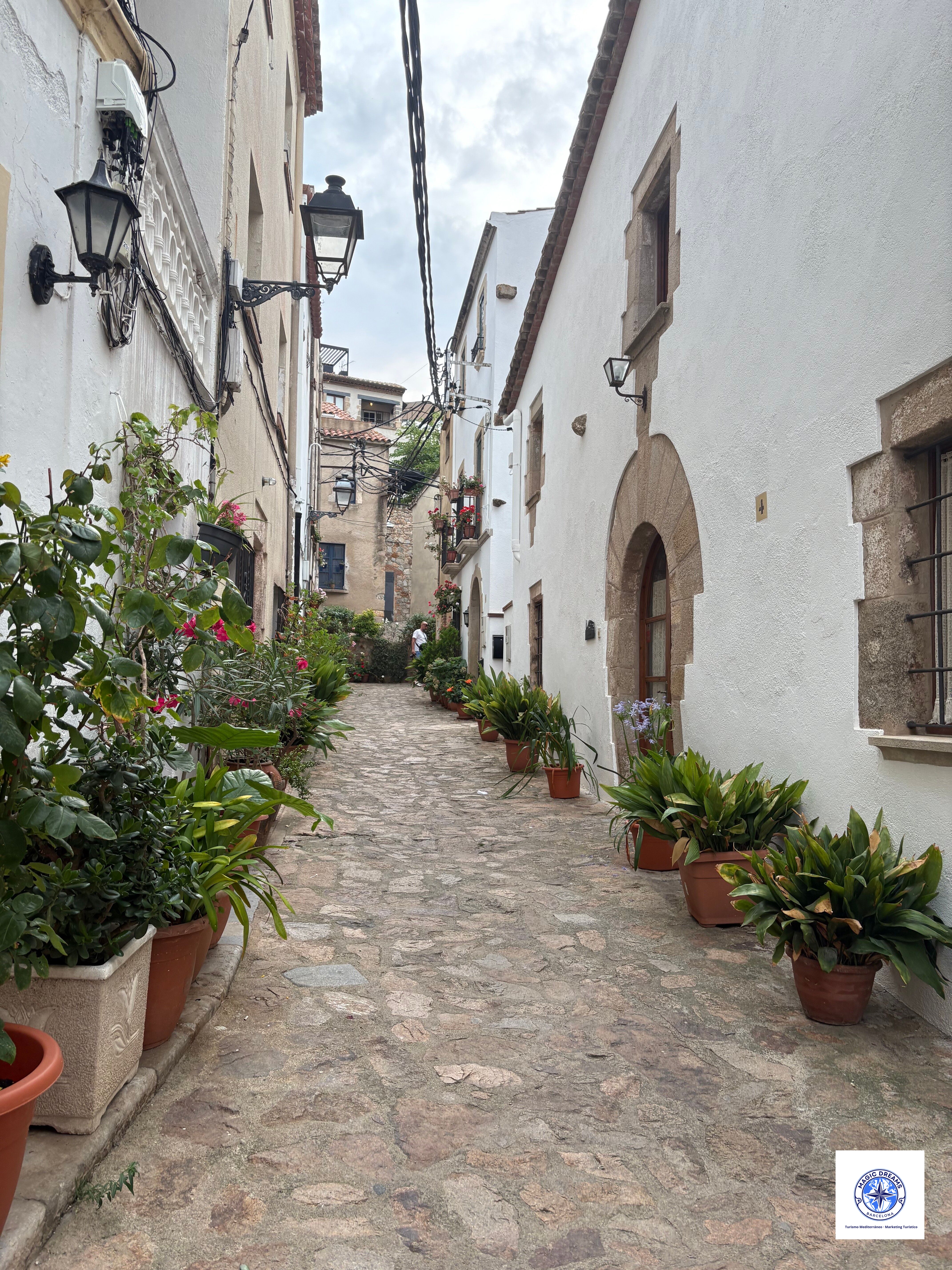
The streets of Vila Vella: a city within the walls
One of the biggest mistakes would be to visit Tossa, photograph the wall from the beach and leave.
The real experience begins when you enter.
Vila Vella preserves a collection of narrow streets, stone houses, small squares and corners that allow visitors to imagine what everyday life was like in the old settlement.
Here we do not find merely a monument.
We find an ancient city.
The houses made use of the protection provided by the wall and were arranged around the interior streets.
As we climb, new viewpoints appear.
The sea reappears between the houses.
The towers rise above the rooftops.
And the ancient stones reflect the different stages through which Tossa has passed.
El Forat del Dimoni: one of Vila Vella’s little stories
Among the most curious corners is the well-known Forat del Dimoni, or “Devil’s Hole.”
It is a small opening associated with one of the traditional accesses towards the Es Codolar area.
Local traditions and stories connected with ancient fishermen have turned this small passage into one of those corners that add a touch of mystery to the route.
The exit leads towards a spectacular setting above the coast.
It is precisely in places like this that a guided visit takes on another dimension: you are not simply looking at stones, but discovering stories, legends and ways of life connected to the sea.
The ancient church of Sant Vicenç
In the upper part of Vila Vella we find the remains of the old church of Sant Vicenç, testimony to the medieval population that lived within the walls.
Its presence helps us understand that Vila Vella was an inhabited settlement for centuries and that the fortification contained a real community, with homes, religious spaces and public buildings.
Later, as the population grew outside the walled enclosure, urban life gradually moved towards what became known as Vila Nova.
The present parish church of Sant Vicenç is located there. It was built in the 18th century and is associated with late popular Baroque architecture.
Its interior preserves various artistic elements and chapels, although a significant part of its religious heritage was lost during the Spanish Civil War.
The present church is another essential place for understanding Tossa’s evolution from a medieval settlement into the modern town.
The Batlle Palace and the Municipal Museum
Inside Vila Vella we also find the former Palau del Batlle de Sac or Casa del Governador, a building that later became the headquarters of the Municipal Museum.
The museum was inaugurated on 1 September 1935, during one of the most important artistic periods in Tossa, and played a pioneering role in promoting contemporary art. According to the Tourist Office, it was the first contemporary art museum in Spain.
The museum houses archaeological heritage from the Villa Romana dels Ametllers and works connected with the artists who found inspiration in Tossa.
Important for today’s visitor: the Tourist Office currently reports that the Municipal Museum is closed for renovations, so it is advisable to check its current status before planning your visit.
Tossa Lighthouse: the highest point of Vila Vella
And then one of the most beautiful parts of the visit begins.
The climb towards the lighthouse.
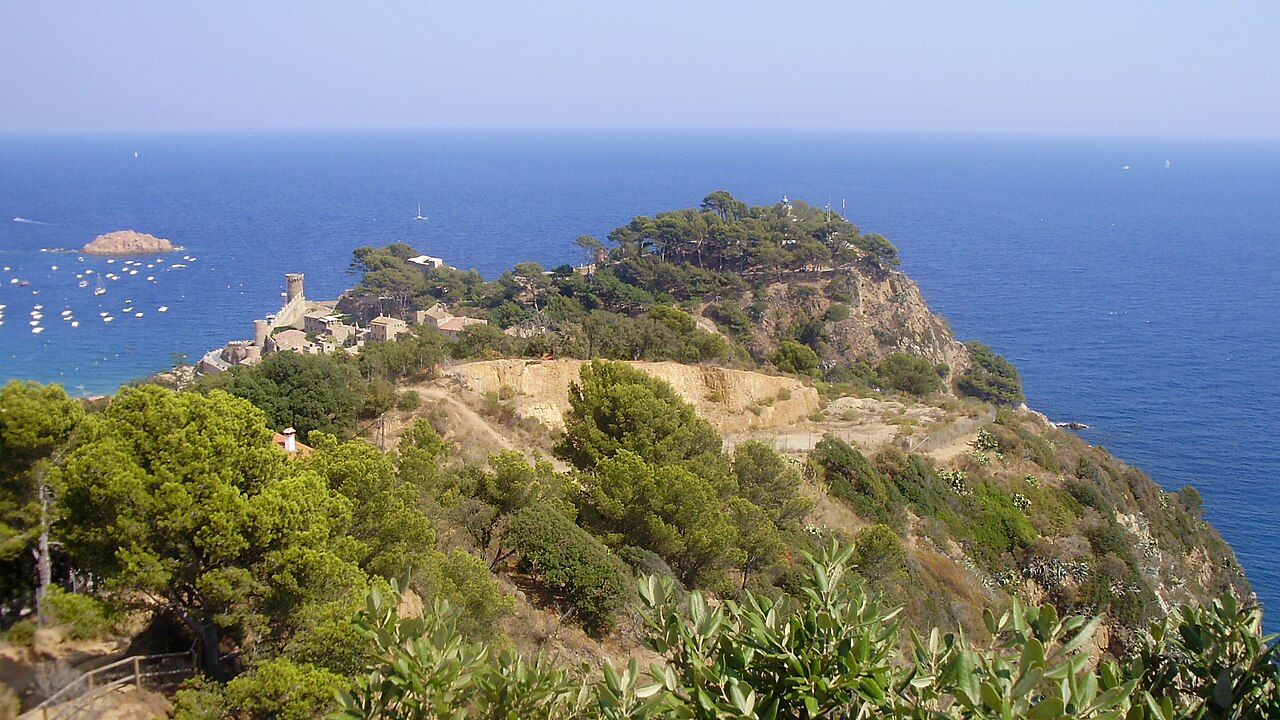
The highest point of Cape Tossa was once occupied by the medieval castle.
The fortress disappeared over the centuries and the strategically important promontory was later dedicated to navigation.
The current lighthouse was built in 1917 and now houses the museum project “Tossa Lighthouse. A Century of Maritime Signals on the Costa Brava.”
The lighthouse helps us understand the importance of maritime signals on a coastline such as this.
Cliffs.
Headlands.
Coves.
Rocks.
Navigation areas.
For generations, lighthouses were essential for guiding ships and warning them of the dangers of the coast.
The Interpretation Centre explains precisely this evolution and the history of maritime signalling.
Tossa Lighthouse opening hours
According to the current information from the Tourist Office:
Monday to Sunday: 10:00–13:00 and 16:00–20:00.
The currently published price is €3, with a reduced rate of €1.50. It is advisable to check the opening hours before visiting, especially during the low season or in case of changes.
The wall, on the other hand, remains freely accessible throughout the year.
The restaurant and a gastronomic break near the lighthouse
Reaching the lighthouse does not necessarily mean that the visit has to end immediately.
In the upper part of Vila Vella and its surroundings there are establishments where visitors can stop for a drink and enjoy the views.
The lighthouse area offers the opportunity to take a break while contemplating the Mediterranean from a privileged position, and there are restaurants and terraces in the Vila Vella surroundings.
For example, La Placeta is located in Plaça de les Armes, within the historic complex, while other establishments in the area offer terraces and drinks with views.
There are also options such as Vila Vella Terraza Bar, located on the Vila Vella promenade, where the experience is particularly connected to the atmosphere of the fortification and the panoramic views over the bay.
For those who prefer a more complete gastronomic experience, Tossa offers a wide variety of restaurants around the old town and the fishermen’s quarter.
The local cuisine deserves to be part of the visit in its own right.
Es Xalet d’en Bram: one of the most romantic viewpoints
Very close to the lighthouse we find another unique spot:
Es Xalet d’en Bram.
It is a viewpoint carved into the rock whose history is connected with Abraham Canals, a local man from Tossa who returned from Cuba and created this peculiar space in the rock.
From here, the views change once again.
The coastline appears sharply outlined.
The water takes on different shades of blue and green.
The cliffs descend towards the sea.
It is one of those places where it becomes easy to understand why so many artists were attracted to Tossa.
Marc Chagall and the Blue Paradise
During the 1930s and 1940s, Tossa experienced one of the most extraordinary cultural chapters in its history.
Between 1930 and 1936, the town became an important centre of artistic avant-garde activity.
Artists such as Marc Chagall, André Masson, Georges Kars, Rafael Benet and Pere Créixams passed through and worked in Tossa.
The Tourist Office calls this period “The Babel of the Arts,” reflecting the variety of nationalities and disciplines that came together in the town.
Marc Chagall arrived in Tossa in 1934 and was deeply impressed by its light, calling Tossa his “Blue Paradise.”
Here he found the blues of the Mediterranean, the contrast between the houses and stone, the walls and a light that transformed the landscape.
One of the works associated with this experience is The Celestial Violinist, connected with Chagall’s period in Tossa.
Ava Gardner: when Hollywood came to Tossa
And then the cameras arrived.
In 1951, Tossa became the setting for Pandora and the Flying Dutchman, starring Ava Gardner and James Mason.
The film brought the small fishing town to millions of viewers around the world.
But the filming left more than just cinematic images.
It left a story.
Ava Gardner became closely associated with Tossa and with her relationship with bullfighter and actor Mario Cabré, and the two became protagonists of countless stories and anecdotes connected with that summer.
The memory of the actress remains present in the town.
In Vila Vella stands her famous bronze statue, facing the Mediterranean.
Ava looks towards the sea.
And her figure has become one of the essential photographs of Tossa.
Ava Gardner’s Kisses: Tossa’s sweet memory
Ava Gardner’s story also has a gastronomic side.
At the historic Granja Tomàs, a pastry shop founded in 1885, visitors can find the famous “Ava Gardner’s Kisses”, small meringues associated with the traditional Illes de Tossa.
It is the perfect stop after exploring Vila Vella.
A small box of meringues.
A photograph of Ava Gardner.
And the memory of one of the most famous cinematic stories on the Costa Brava.
For a couple, it can even become a little ritual:
visit Ava’s statue, discover her story and finish the route by sharing her famous “Kisses.”
The Villa Romana dels Ametllers: when Tossa was Turissa
Long before Ava Gardner and long before Vila Vella, this area was already of extraordinary importance.
The Villa Romana dels Ametllers was discovered in 1914, and its origins date back to the 1st century BC, remaining active until approximately the 5th century AD.
It was an important agricultural estate in the Roman world, dedicated particularly to vine cultivation and the production and export of wine.
The complex was divided into two main areas:
the pars urbana, intended for the residential and elite area;
and the pars fructuaria, dedicated to agricultural and industrial activities.
The remains include baths, mosaics, stucco, a nymphaeum, a swimming pool and various structures associated with the production of wine, olive oil, salted products and cereals.
It is one of Tossa’s great contrasts:
in the morning, we can be walking through a medieval city;
and a few minutes later, looking at the remains of a major Roman agricultural estate.
The architecture of Tossa: medieval stone, fishing traditions and Modernisme
Tossa does not have a single architectural style.
Its identity is made up of different layers.
The medieval stone of Vila Vella.
The traditional fishermen’s houses.
The religious architecture of Sant Vicenç.
The bourgeois buildings of the late 19th and early 20th centuries.
And Modernista buildings reflecting the town’s economic and social transformation.
Visitors who walk slowly through the centre can discover façades, balconies, courtyards and architectural details that are often overlooked when a visit is limited to the wall.
That is why Tossa deserves more than a photograph.
It deserves a walk.
Tossa’s forests: a Costa Brava that cannot be seen from the beach
Tossa is also mountains.
The Cadiretes-Ardenya Massif forms the great natural lung of the municipality.
Pine forests, holm oak forests, cork oaks, forest tracks, streams, springs, viewpoints and ancient paths allow visitors to discover a Mediterranean landscape completely different from the coastline.
There are different hiking routes.
Among them is the Megalithic Route, measuring 10.50 kilometres, with an easy difficulty level, approximately 480 metres of maximum elevation and a duration of around 3 hours. It starts at the Sanctuary of Sant Grau and crosses an area particularly rich in megalithic monuments.
One of its main features is Pedra-sobre-altra, literally “Stone upon stone.”
There is something fascinating about walking through this landscape.
While the sea draws our gaze towards the horizon, the dolmens force us to look backwards, towards a history thousands of years old.
Dolmens, standing stones and a prehistoric Tossa
The megalithic monuments are evidence that these mountains were used by human communities long before the arrival of the Romans.
The route allows visitors to discover different funerary constructions and monumental stones integrated into the landscape.
It is not a route of grand urban monuments.
Its beauty lies precisely in the opposite.
We find them among the trees.
In places where the landscape seems to have protected them for centuries.
The Megalithic Route is not signposted on the ground, and it is advisable to use the Natura Local application to follow it.
For this reason, for a private experience it is advisable to plan the route carefully rather than improvise.
The Camí de Ronda: walking among forests, cliffs and the Mediterranean
If the Megalithic Route allows us to discover the interior, the Camí de Ronda reveals the coastline.
These traditional coastal paths cross pine forests, cliffs and small coves.
In Tossa we find some of the most spectacular landscapes along these trails.
The Camí de Ronda routes are walks where the scent of salt, rosemary and thyme accompanies visitors while the cliffs descend towards the sea and coves appear between the rocks.
There is no need to cover great distances to enjoy them.
We can select a short section.
One of moderate difficulty.
A romantic route.
Or a longer trail for experienced hikers.
The beaches and coves of Tossa de Mar
One of the municipality’s greatest attractions is the variety of its coastline.
The Tourist Office lists Platja Gran, Mar Menuda, Es Codolar, Cala Bona, Cala d’en Carlos, Cala Figuera, Cala Llevadó, Cala Pola, Cala Giverola, Cala Futadera, Cala Salions, Vallpresona, the beaches of Llorell, Porto Pi and Cala Morisca.
They are not all the same.
Some are urban.
Others are semi-urban.
Others retain a completely natural character.
Some have restaurants and services.
At others, you need to bring absolutely everything yourself.
And this is precisely where the richness of Tossa’s coastline lies.
Platja Gran: the postcard beach
Distance from Tossa: within the town centre.
Approximate length: 370 metres.
This is Tossa’s main beach and the one that appears in most photographs of the town.
It is located at the foot of Vila Vella and offers one of the most famous panoramas on the Costa Brava.
It has showers, adapted toilets, lifeguard services, accessibility for people with reduced mobility, restaurants, bars, beach bars, sun loungers, water activities and other services.
It is the best option for those who want to combine:
beach + gastronomy + history + convenience.
Mar Menuda and Banyera de ses Dones
Mar Menuda is located a short distance from the centre.
Its surroundings are rockier and quieter and make it one of the most interesting areas for enjoying the sea.
Within it we find the well-known Banyera de ses Dones, a small area of calm, shallow water.
It is particularly pleasant for families and for those who want to enjoy the water in a more peaceful setting.
It is also known for its snorkelling and diving opportunities.
Es Codolar: the beach beneath the walls
Few beaches on the Costa Brava have such a spectacular location.
Es Codolar lies directly beneath Vila Vella.
The small beach is protected by the cliffs and the fortification itself.
It is the perfect place to understand the historical relationship between Tossa and the sea.
Fishermen used these natural spaces to shelter their boats.
Today it is one of the most photographed corners of the municipality.
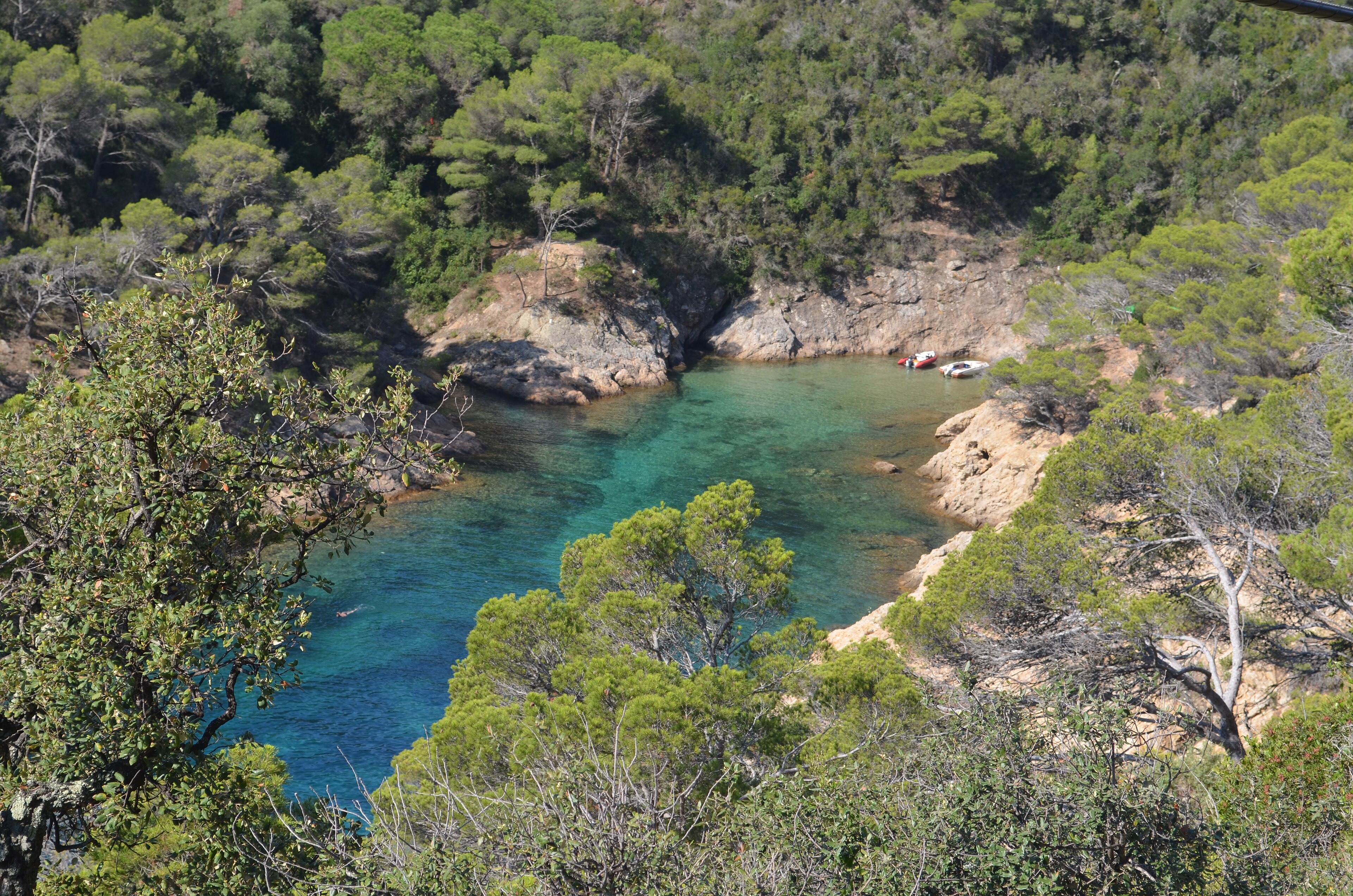
Cala Bona
Cala Bona is a small, more natural-looking cove.
It can be reached via coastal paths or from the sea.
It is suitable for those who prefer smaller, quieter spaces to urban beaches.
Its rocky surroundings and Mediterranean vegetation provide an experience very different from that of Platja Gran.
Cala d’en Carlos
Cala d’en Carlos is another small stretch of Tossa’s coastline where the forest almost reaches the sea.
Its transparent waters and rocky seabed make it particularly interesting for snorkelling enthusiasts.
It is a cove for experiencing the Mediterranean in a more natural way.
Cala Figuera
Cala Figuera is a small natural cove.
Its main attraction is precisely its tranquillity and surroundings.
Visitors should not expect the same level of services as at Platja Gran.
Here, the landscape is the main attraction.
Cala Llevadó
Cala Llevadó combines nature and the sea.
It is surrounded by vegetation and offers transparent waters.
Access is influenced by the facilities in its surroundings, so it is advisable to check conditions before visiting.
It is an interesting alternative for those looking for a beach integrated into nature.
Cala Pola
Distance from Tossa: approximately 4 kilometres.
Length: around 70 metres.
Cala Pola is one of the most characteristic landscapes of Tossa’s coastline.
Located in a semi-urban setting, it has a beach bar and toilets. It can be reached by road and then on foot, via the Camí de Ronda, or by private boat.
The cove is surrounded by vegetation and cliffs.
For a romantic experience, arriving by sea is particularly appealing.
Approaching by boat allows you to contemplate the coastline from another perspective before entering the small bay.
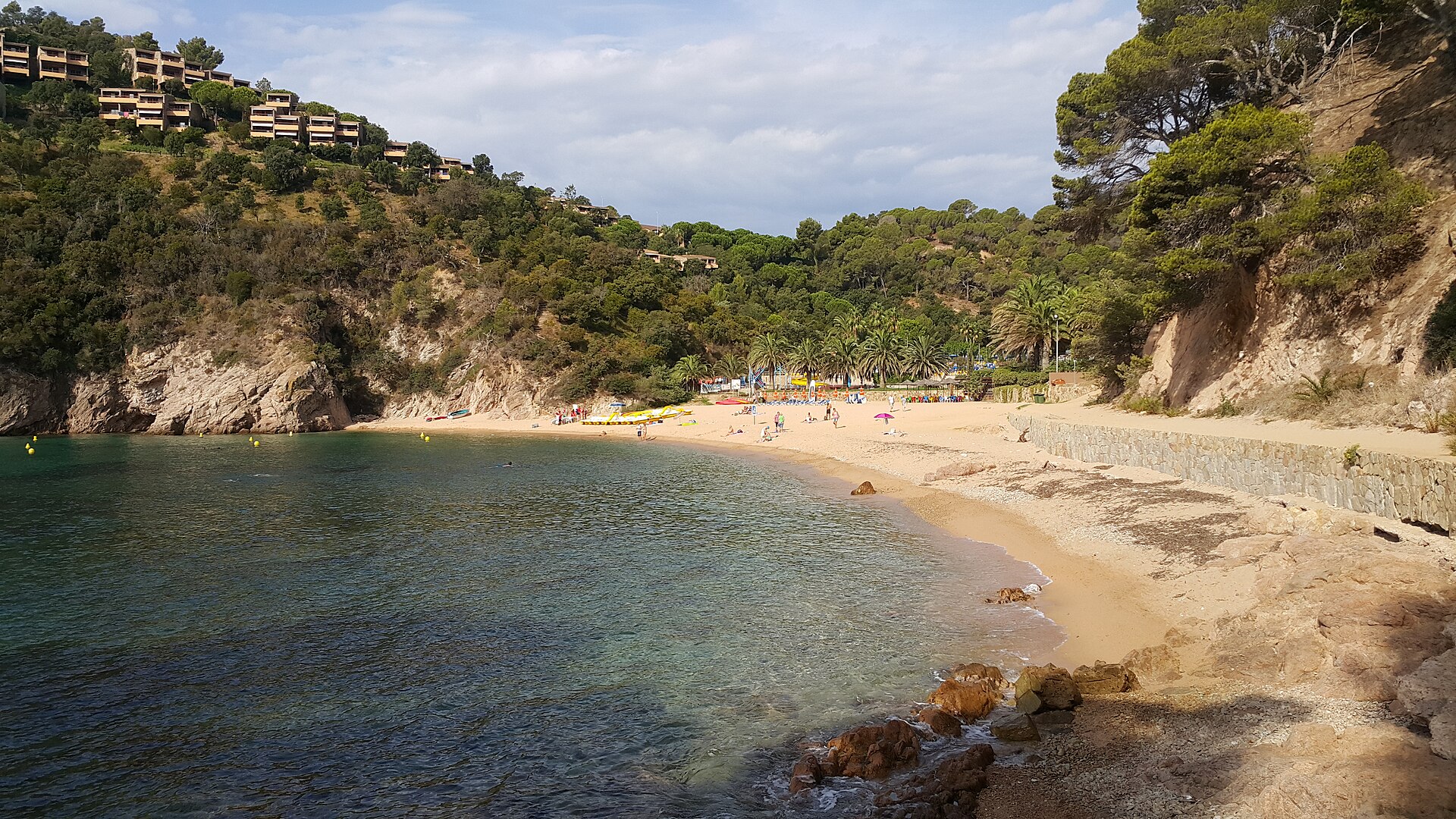
Cala Giverola
Distance from Tossa: approximately 5 kilometres.
Length: around 175 metres.
Cala Giverola is one of the municipality’s most fully equipped coves.
Crystal-clear waters.
Pine trees.
Cliffs.
Coarse sand.
Restaurant.
Bar.
Beach bar.
Showers.
Adapted toilets.
Sun loungers.
Parasols.
Water activities.
Equipment rental.
Mooring area.
And paid parking.
It can also be reached by private boat or by tourist boats with glass bottoms departing from Platja Gran.
It is one of the best options for those who want nature without giving up services.
Cala Futadera: one of the great natural jewels
Distance from Tossa: approximately 6 kilometres.
Length: around 80 metres.
The Tourist Office classifies it as a natural environment.
It is located beneath a cliff and surrounded by vegetation.
Its waters display emerald tones and the landscape has an almost untouched appearance.
There are no services.
Access requires leaving the vehicle on the road and walking for a few minutes before descending a long flight of steps.
For this reason, it is recommended for people who can manage the access comfortably.
It is also advisable to go in the morning, as the cliff itself can leave the cove in the shade during the afternoon.
Cala Salions
Cala Salions combines a beautiful coastal landscape with a residential area and various services.
It is an option for those who want to enjoy the coastline without completely giving up tourist infrastructure.
It also allows visitors to combine swimming with gastronomy and maritime activities.
Vallpresona: the wildest Costa Brava
Distance from Tossa: approximately 10 kilometres.
Length: around 160 metres.
Vallpresona represents one of the most natural versions of the coastline.
The beach consists of pebbles, stones and rocks and is surrounded by lush vegetation.
It is a completely untouched area with no services. Access from the road requires continuing on foot for approximately ten minutes.
It is precisely the absence of services that gives this place its special charm.
Llorell
The beaches of Llorell offer a different landscape, with a greater presence of facilities and services.
They are suitable for families and visitors who want to combine nature with comfort.
They are a good alternative when the objective is not to find a completely isolated cove but rather to enjoy a coastal setting with services nearby.
Cala Morisca
Cala Morisca is a small natural cove.
It is suitable for those looking for quieter and less urbanized spaces.
As with other small coves in the area, access and services may be more limited than at the main beaches.
Porto Pi
Porto Pi is also part of the municipality’s collection of beaches and coves.
However, due to the terrain and possible risks of rockfalls, it is especially important to check the current official safety recommendations before organizing a visit.
In Tossa, the beauty of the landscape should always be accompanied by respect for safety conditions.
The Mediterranean beneath our feet: Posidonia and marine life
Tossa should not only be experienced from land.
Its seabeds are among the great natural treasures of the coastline.
Rocky areas and meadows of Posidonia oceanica provide shelter and food for a wide variety of species.
Octopuses.
Moray eels.
Conger eels.
Groupers.
Sea bream.
Lobsters.
And an enormous variety of small Mediterranean fish.
For those who snorkel or dive, discovering this underwater world means experiencing a second Tossa.
A silent Tossa.
A blue Tossa.
A Tossa where every rock can hide life.
Tossa’s seahorses
Among the species that inspire particular fascination are seahorses.
Tossa’s diving and marine observation tradition has made these small animals one of the great symbols of the municipality’s underwater biodiversity.
However, it is advisable to avoid absolute claims such as saying that Tossa has “the largest population in Catalonia” unless supported by an up-to-date scientific study.
What truly matters is that its seabeds provide suitable habitats for a wide variety of species and that the seahorse perfectly represents the fragility of these ecosystems.
Seeing one in the wild requires patience.
Do not touch it.
Do not chase it.
Do not disturb the vegetation.
Do not stir up sediment.
Simply observe.
And understand that the true beauty of this experience lies in leaving the Mediterranean exactly as we found it.
The cuisine of a former Fishing Village
Tossa’s history can also be tasted.
Traditional cuisine is linked to fishing and to the so-called fishermen’s boat dishes, recipes that originated in the everyday lives of fishermen.
One of the most representative dishes is cim i tomba, traditionally prepared with fish and potatoes and closely associated with the local maritime cuisine.
Gastronomy can thus become another way of getting to know the town.
A lunch by the sea.
Fresh fish.
Rice.
Seafood.
A Catalan 0.0 Alcohol Free wine.
And afterwards, to finish, the famous Ava’s Kisses.
Tossa de Mar from Barcelona
Tossa is located approximately 100 kilometres from Barcelona, although the exact distance depends on the starting point.
By private vehicle, the journey usually takes around 1.5 hours under normal conditions, although during summer, weekends and public holidays it can take considerably longer.
There are different road access options, including the AP-7 and connections from Vidreres, Lloret de Mar and Sant Feliu de Guíxols.
There are also bus connections.
For a comfortable experience, especially when the plan is to visit several coves or combine Tossa with inland routes, a private vehicle is much more practical.
Tossa de Mar in one day
A first visit could be organized as follows:
Morning
Arrival in Tossa.
Walk through Vila Vella.
Medieval gateway.
Walls.
Towers.
Forat del Dimoni.
Ancient church of Sant Vicenç.
Governor’s House.
Climb to the Lighthouse.
Interpretation Centre.
Es Xalet d’en Bram viewpoint.
Midday
Mediterranean lunch.
Fish.
Seafood.
Cim i tomba.
Catalan 0.0 Alcohol Free wine.
Afternoon
Platja Gran, Mar Menuda or one of the coves.
Or:
Camí de Ronda.
Forest route.
Megalithic route.
Sunset
Return to Vila Vella.
Mediterranean views.
Ava Gardner.
A walk through the medieval streets.
And Ava’s Kisses as a souvenir.
Tossa de Mar for a nature and wellness weekend
If we have more time, the experience can be expanded.
Day One: history and culture.
Vila Vella.
Lighthouse.
Church.
Roman Villa.
Ava Gardner.
Chagall.
Gastronomy.
Day Two: nature and sea.
Forest route.
Dolmens.
Camí de Ronda.
Cove.
Snorkelling.
Meditation.
Fresh fruit.
Fresh juices.
Massage.
Spa.
Sauna or hammam.
Dinner overlooking the Mediterranean.
In this way, Tossa ceases to be simply a day trip.
It becomes a complete experience.
A moment of silence facing the Mediterranean
For those looking for a different experience, a walk through the forest can end at a quiet cove.
After walking among trees and megalithic monuments, reaching the sea creates an extraordinary contrast.
We can sit facing the water.
Breathe.
Listen to the waves.
Close our eyes.
Practice a short guided meditation.
Or simply remain silent.
For those who practise spirituality, it can also become a moment of personal prayer.
And afterwards:
a basket of fresh fruit,
fresh juices,
water,
and time to enjoy the Mediterranean.
Always respecting the rules of the natural area and avoiding any activity that could disturb the environment.
Massages, spa and relaxation
After a day of hiking, wellness options can complete the experience.
Depending on availability and the season, we can incorporate:
personalized Lomi-Lomi massages by the sea,
water circuits,
sauna,
steam bath,
hammam,
body treatments
or simply a few hours of relaxation.
The idea is not to fill the day with activities.
Quite the opposite.
It is about leaving empty spaces.
Spaces to breathe.
To contemplate.
To rest.
Because wellness also means not having to rush.
The Tossa de Mar experience with Magic Dreams Barcelona
And this is where our proposal can naturally fit in.
We do not want visitors to see Tossa solely from a tourist perspective.
We want them to experience it.
We can organize private transportation from Barcelona, adapt the routes, coordinate visits, select restaurants, arrange wellness experiences and design a day according to each guest’s preferred pace.
But Tossa remains the protagonist.
The protagonist is the wall.
The lighthouse.
Ava Gardner.
Chagall.
The fishermen.
The dolmens.
The forest.
The coves.
The Mediterranean.
The gastronomy.
And the history.
Our services simply make it possible to enjoy all of this with greater comfort.
A romantic getaway to Tossa de Mar
Imagine starting the morning in Barcelona.
A private vehicle is waiting.
The journey towards the Costa Brava.
Upon arrival in Tossa, the first sight:
the wall above the sea.
Walk through the gateway.
Climb among the stones.
Discover the towers.
Reach the lighthouse.
Contemplate the Mediterranean.
Descend towards the town.
Discover the story of Ava Gardner.
Buy a box of Ava’s Kisses.
Have lunch with fresh fish.
In the afternoon, leave the town and enter the forest.
Discover the ancient megalithic monuments.
Walk.
Breathe.
Later, reach a cove.
Sit facing the sea.
A basket of fruit.
Fresh juices.
A moment of silence.
And, if desired, a massage and a few hours at the spa.
At sunset, return to Vila Vella.
The stone begins to change colour.
The sea reflects the last light.
And the walls once again become the image of that Tossa that captivated artists and filmmakers.
Tossa de Mar: much more than a beach
Tossa should not be discovered only in summer.
In spring, the forest paths take on another dimension.
In autumn, the routes can be enjoyed in more pleasant temperatures.
In winter, Vila Vella can be experienced with much greater tranquillity.
And in summer, the Mediterranean transforms its coves into the perfect setting for swimming, snorkelling, boating and water activities.
Each season offers a different Tossa.
But the wall remains.
The lighthouse remains.
The history remains.
And the Mediterranean continues to be the great protagonist.
Tossa de Mar, the place where history looks out to sea
Perhaps that is the best way to describe Tossa.
A town where history always ends up looking towards the Mediterranean.
The Romans arrived by the coast.
The fishermen lived from the sea.
The walls were built to protect the town from those who arrived from the sea.
The lighthouse was created to guide those who sailed upon it.
Artists came, attracted by its light.
Ava Gardner arrived with Hollywood.
Chagall found his Blue Paradise.
And today we continue to arrive to discover all of this.
Tossa de Mar is wall and beach.
It is forest and Mediterranean.
It is Rome and the Middle Ages.
It is Chagall and Ava Gardner.
It is hiking and gastronomy.
It is history and nature.
It is a hidden cove and a terrace overlooking the sea.
It is a dolmen among the trees and a medieval tower above the water.
And it can also be a place to stop.
To breathe.
To share a basket of fresh fruit.
To contemplate the sea.
To enjoy a massage.
To listen to the silence.
To savour a good dish of maritime cuisine.
To end the day watching the sun disappear behind the Costa Brava.
And that is precisely the experience we want to offer at Magic Dreams Barcelona: to make an authentic, historic, natural, romantic and Mediterranean Tossa accessible to our guests, taking care of the logistics and the details so that they can devote their time to what truly matters:
enjoying the journey.
Tossa-de-Mar-Magic-Dreams-Barcelona.
Tossa-de-Mar-Magic-Dreams-Barcelona.
Tossa-de-Mar-Magic-Dreams-Barcelona.
Tossa-de-Mar-Magic-Dreams-Barcelona.
Tossa-de-Mar-Magic-Dreams-Barcelona.
Tossa-de-Mar-Magic-Dreams-Barcelona.
Tossa-de-Mar-Magic-Dreams-Barcelona.
Tossa de Mar – By Jorge Franganillo – Own work, CC BY-SA 4.0, https://commons.wikimedia.org/w/index.php?curid=41186774.
Tossa al atardecer – By Moahim – File:!MQ_DSF9592-EnhancedAnd2more_fused_1.jpg, CC BY-SA 4.0, https://commons.wikimedia.org/w/index.php?curid=92798820.
Tossa de Mar – By Alberto-g-rovi – Own work, CC BY 3.0, https://commons.wikimedia.org/w/index.php?curid=42278527.
Muralla del Pueblo Medieval de Tossa – By EliziR, CC BY-SA 3.0, https://commons.wikimedia.org/w/index.php?curid=56360496.
Tamariu visto desde la GR-92 hacia el sur – By Chris j wood – Own work, CC BY-SA 4.0, https://commons.wikimedia.org/w/index.php?curid=125087399.
Playa de Es Codolar en Tossa de Mar – By Sylvestre – Own work, CC BY-SA 4.0, https://commons.wikimedia.org/w/index.php?curid=198493196.
Detalle de Tossa de Mar des del Camí de ronda tranvía – By klimmanet, CC BY 3.0, https://commons.wikimedia.org/w/index.php?curid=54554875.
Perspectiva a pie en Tossa – By Felipe Gabaldón – Costa Brava, CC BY 2.0, https://commons.wikimedia.org/w/index.php?curid=63294183.
Perspectiva a pie en Tossa – By Felipe Gabaldón – Costa Brava, CC BY 2.0, https://commons.wikimedia.org/w/index.php?curid=63294183.
Iglesia de Sant Vicenç (Tossa de Mar) – By Enric – Own work, CC BY-SA 4.0, https://commons.wikimedia.org/w/index.php?curid=94151734.
Cala Giverola, Tossa de Mar – By Friviere – Own work, CC BY-SA 3.0, https://commons.wikimedia.org/w/index.php?curid=62081939.
Cala Bona – Magic Dreams Barcelona – Karsten Ratzke, CC0, via Wikimedia Commons.
Forat del Dimoni – Txllxt TxllxT, CC BY-SA 4.0 , via Wikimedia Commons.