Route guide for visitors throughout Catalonia – Barcelona – Costa Brava – Catalan Pyrenees – Personalized experiences – Customized tour guide services – A small tribute to the wonderful city and land that saw us born – Transforming experiences into unforgettable memories - Magic Dreams Collection: exclusive universes inspired by Salvador Dalí and Gaudí. Niche perfumes, jewelry, lithographs, and collectible items celebrating the Mediterranean spirit.
Where History, Art, and the Mediterranean Lifestyle Converge Plaça de Catalunya is the epicentre of Barcelona, a vibrant meeting point where the historic district of Ciutat Vella meets the modern Eixample neighbourhood. Considered one of the city’s most iconic public spaces, the square connects some …
El edificio La Rotonda —también conocido como Torre Andreu— es uno de los grandes símbolos arquitectónicos de Sant Gervasi–La Bonanova, situado en la Avinguda del Tibidabo, en la zona alta de Barcelona. A lo largo de más de un siglo de historia, este emblemático edificio …
High above Barcelona, surrounded by Mediterranean vegetation and the gentle slopes of Carmel Hill, lies Park Güell, one of the city’s most iconic landmarks and one of Antoni Gaudí’s most extraordinary creations.
Here, architecture and nature cease to be separate elements and become part of the same language.
Curving forms, stone, ceramics, trees, columns and pathways merge into a landscape designed not simply to be admired, but to be walked through and experienced.
Barcelona, a city with more than 400 dragons inspired by the legend of Sant Jordi, is home to the most famous and photographed of them all: Gaudí’s dragon, located on the monumental staircase and now one of the city’s great symbols.
Its colourful mosaic-covered body seems to emerge directly from the stone.
It is more than a sculpture.
It is a fantastical creature that embodies much of Gaudí’s creative universe: nature, religion, colour, geometry, Catalan tradition and imagination.
Eusebi Güell’s Urban Dream
Park Güell began as an ambitious urban development project promoted by Eusebi Güell, businessman, patron and one of the key figures of Catalan Modernisme.
Güell commissioned Antoni Gaudí to design a garden city inspired by certain English urban planning models, particularly the idea of combining private residences, nature and communal facilities.
The project envisaged approximately 60 residential plots, together with roads, communal areas, a chapel and other facilities.
However, the development failed to achieve the expected commercial success.
The project was left unfinished, and only two houses were ultimately built within the original development: the property known as Casa Larrard, Eusebi Güell’s residence, and another house later associated with the Gaudí family.
What had begun as an ambitious real-estate venture eventually became one of the most extraordinary architectural works of the twentieth century.
In 1922, Barcelona City Council acquired the estate and transformed it into a public park.
A private project that had never been fully completed thus became one of Barcelona’s most visited and remarkable public spaces.
A Landscape Designed for Walking
One of the most fascinating aspects of Park Güell is that Gaudí did not conceive it as a collection of independent buildings.
He designed an architectural landscape.
The paths follow the natural contours of the mountain.
The walls adapt to the terrain.
The columns evoke tree trunks.
The viaducts appear as extensions of the rocks.
The galleries merge into the hillside.
And the stone structures seem as though they have always belonged there.
Gaudí deliberately avoided the rigidity of straight lines.
For him, nature was one of architecture’s greatest teachers.
As a result, walking through the park reveals constant references to organic forms: caves, roots, trunks, leaves, animals, shells and structures that seem to have been sculpted by time.
Architecture does not attempt to dominate nature.
It seeks to become part of it.
The Monumental Stairway and the Famous Dragon
One of the first spaces visitors encounter when entering the monumental area is the great staircase leading towards the Hypostyle Room.
Various symbolic and decorative elements appear along the staircase, but none has achieved the fame of the trencadís-covered dragon.
Surrounded by botanical and geometric forms, the creature has become one of Barcelona’s most recognisable images.
Its presence also connects the park with one of Catalonia’s most deeply rooted cultural traditions: the legend of Saint George and the Dragon.
The mosaic covering its surface is made from fragments of ceramic in different colours, a technique known as trencadís, which Gaudí and other Modernista architects elevated to an extraordinary artistic expression.
The result changes constantly according to the light.
In the morning, the colours acquire a different intensity.
At midday, sunlight transforms the ceramic surface.
And at sunset, warm tones turn the mosaic into an almost fluid composition.
Trencadís: Fragments Transformed into Beauty
Trencadís is one of the techniques most closely associated with Catalan Modernisme.
Instead of using large, perfectly regular ceramic pieces, small fragments are arranged to create decorative surfaces.
Gaudí used this technique to create compositions in which no individual fragment seems particularly important.
The beauty emerges from the whole.
Every piece is different.
Every irregularity adds texture.
Every change of colour alters the perception of the composition.
At Park Güell, trencadís reaches some of its most celebrated expressions in benches, sculptures, walls and architectural elements.
Visitors may appreciate it simply as decoration.
But it can also be understood as a metaphor for the park itself:
many different fragments becoming one unified work of art.
The Hypostyle Room
Above the monumental staircase stands the Hypostyle Room, one of the most impressive architectural spaces in the complex.
It was originally conceived as a large marketplace for the future residential development.
The space contains 86 columns, some of which are slightly inclined or vary from the conventional arrangement expected in strictly geometric architecture.
The ceiling once again demonstrates Gaudí’s ability to transform a functional structure into an artistic experience.
Geometric forms and ceramic compositions appear across its surfaces, some connected to natural and symbolic elements.
The room was not designed merely to be admired.
Its structure also forms part of a sophisticated architectural and drainage solution.
Rainwater collected on the surface above is channelled into the system of reservoirs and conduits designed by Gaudí.
The Nature Square
Above the Hypostyle Room extends one of Park Güell’s most emblematic spaces: the Nature Square, historically also known as the Greek Theatre.
Its vast open area was intended to serve as a communal space for the future development.
Today, it is one of Barcelona’s great viewpoints.
It is also one of the places where the relationship between architecture and landscape that defines the entire park can be understood most clearly.
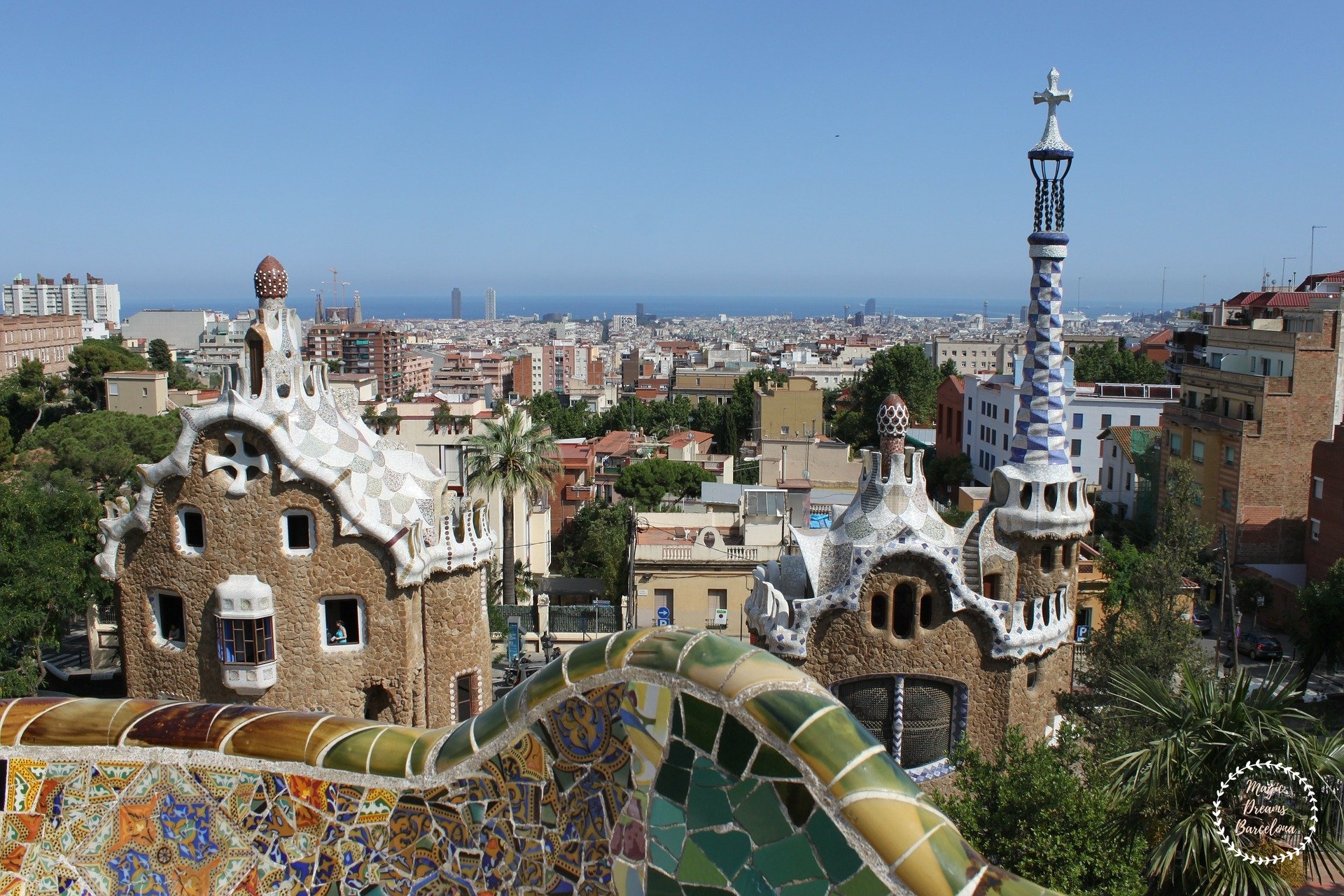
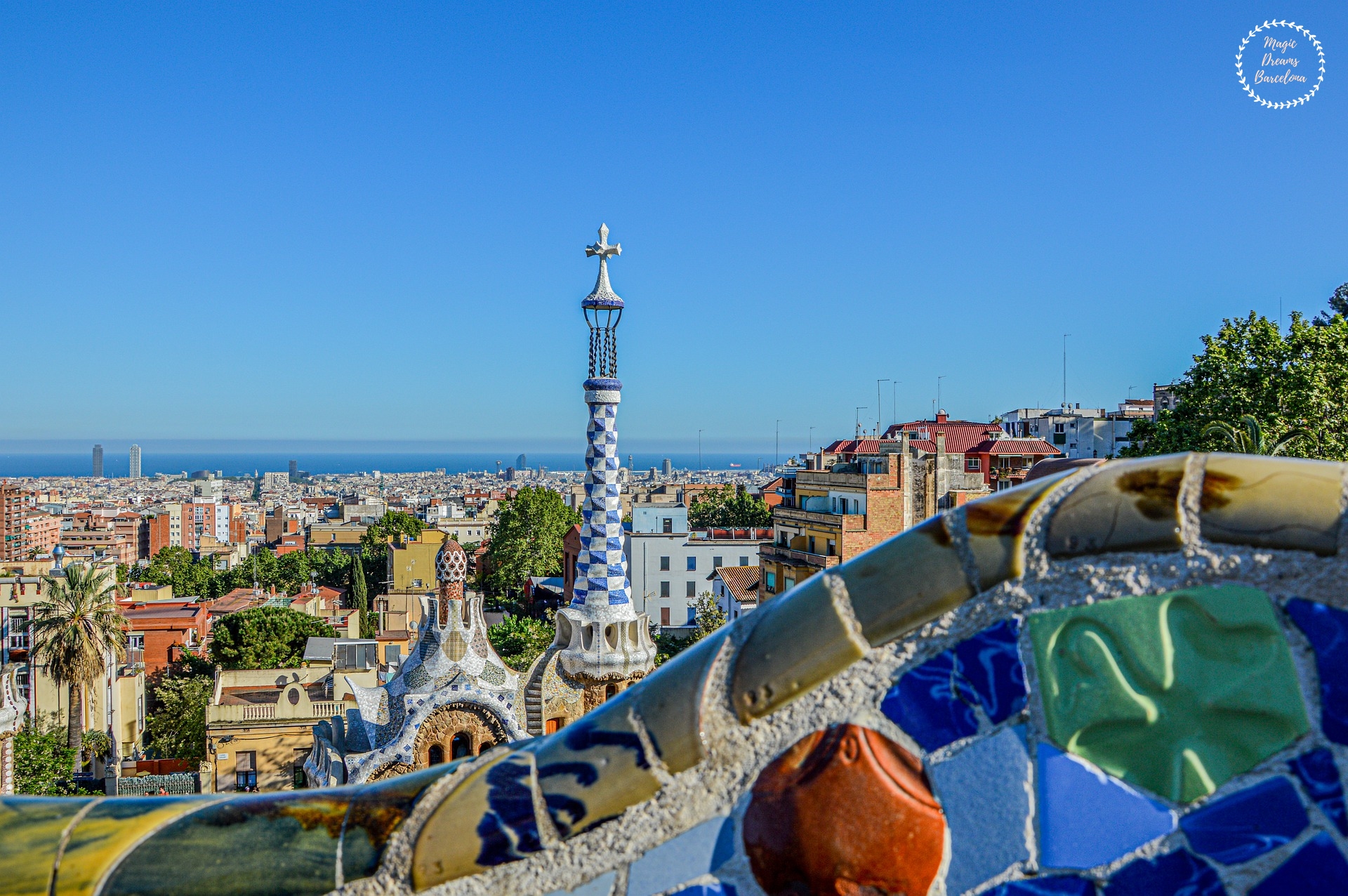
The most distinctive feature is its enormous serpentine bench, covered in trencadís.
Its curved form creates different seating areas while following the contours of the space.
Its design is not merely aesthetic.
The geometry of the bench was carefully related to the human body, creating a surprisingly comfortable surface for sitting.
Gaudí worked with builder and designer Josep Maria Jujol on various decorative elements, and the bench is one of the best-known examples of their collaboration.
Every fragment of colour — green, blue, gold, white and yellow — reflects the light differently.
From here, Barcelona unfolds below the visitor.
The urban grid, the towers of the Sagrada Família and, on clear days, the Mediterranean create a panorama that reveals the relationship between the city and its natural surroundings.
Water as Architecture
Park Güell is also a remarkable feat of engineering.
Gaudí understood that water would be one of the major challenges of building on the slope of the mountain.
The upper square functions as a vast water-collection surface.
The system channels rainwater into a cistern beneath the Hypostyle Room, with an approximate capacity of 1,200 cubic metres.
Excess water is discharged through the famous staircase and is symbolically associated with the mouth of the dragon.
Thus, an element that appears purely decorative is also part of a sophisticated hydraulic system.
Once again, beauty and functionality become inseparable.
The Rosary Path
One of the lesser-known features for first-time visitors is the Rosary Path, also known as the viaduct of the spheres.
The pathway consists of a succession of stone spheres reminiscent of the beads of a rosary.
It winds through vegetation and stone structures, reinforcing the sensation of being within an architecture that belongs naturally to the landscape.
Its symbolic character becomes particularly interesting when considered alongside the religious elements present throughout the project.
For Gaudí, architecture was never separate from spirituality.
Park Güell and Gaudí’s Spirituality
The religious dimension is one of the keys to understanding the park.
Gaudí was deeply religious and regarded nature as a manifestation of divine creation.
For this reason, several elements of Park Güell can be interpreted through a symbolic lens.
From the entrance and lower areas, associated with the earthly realm, the route gradually rises towards higher spaces.
The culmination is the Turó de les Tres Creus, where a group of three stone crosses stands.
This space was originally conceived as a kind of calvary.
Here, architecture gradually gives way to landscape.
The city lies below.
The sky occupies an increasingly larger part of the view.
The physical journey becomes, in a sense, a symbolic journey as well.
From earth towards the sky.
Turó de les Tres Creus
At the highest point of the project stands Turó de les Tres Creus.
The three crosses are among the elements most clearly connected with Gaudí’s spirituality.
Their elevated position is deliberate.
From here, visitors enjoy one of the broadest views across the park and the territory surrounding Barcelona.
The mountain, the city and the Mediterranean can all appear within the same field of vision.
It is a place particularly suited to pause.
Not necessarily to focus on a single monument, but to contemplate the relationship between all the elements.
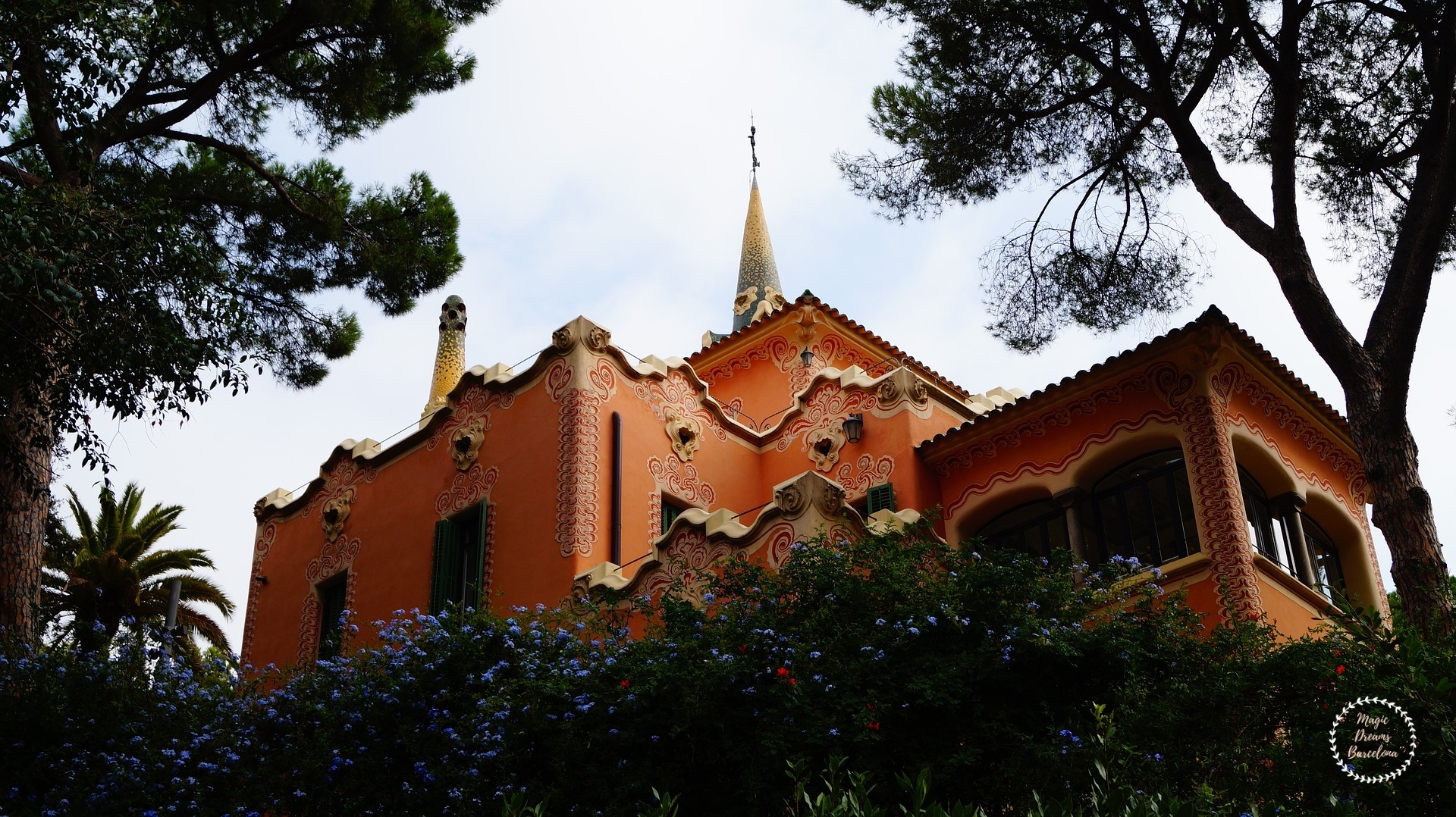
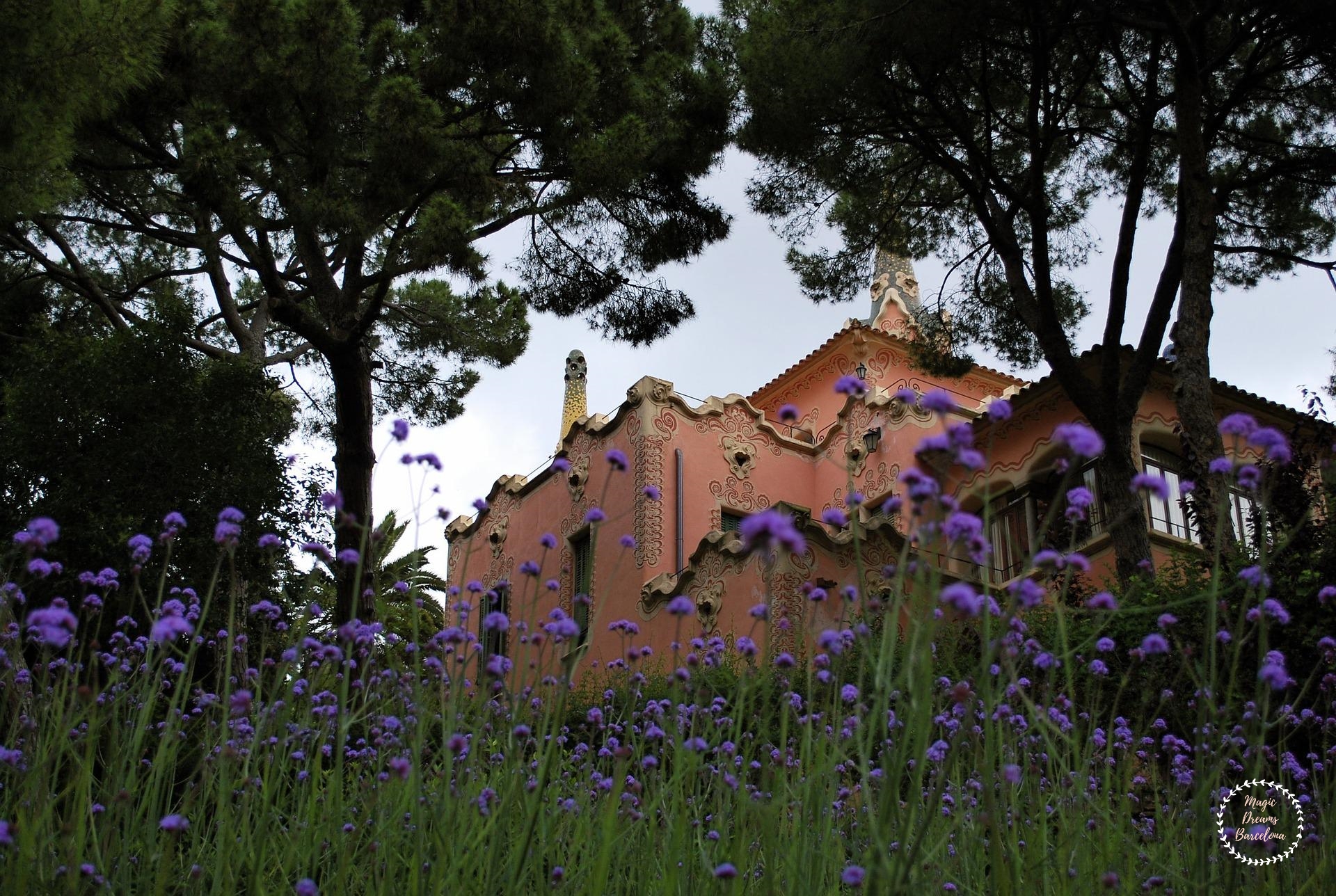
Gaudí House Museum
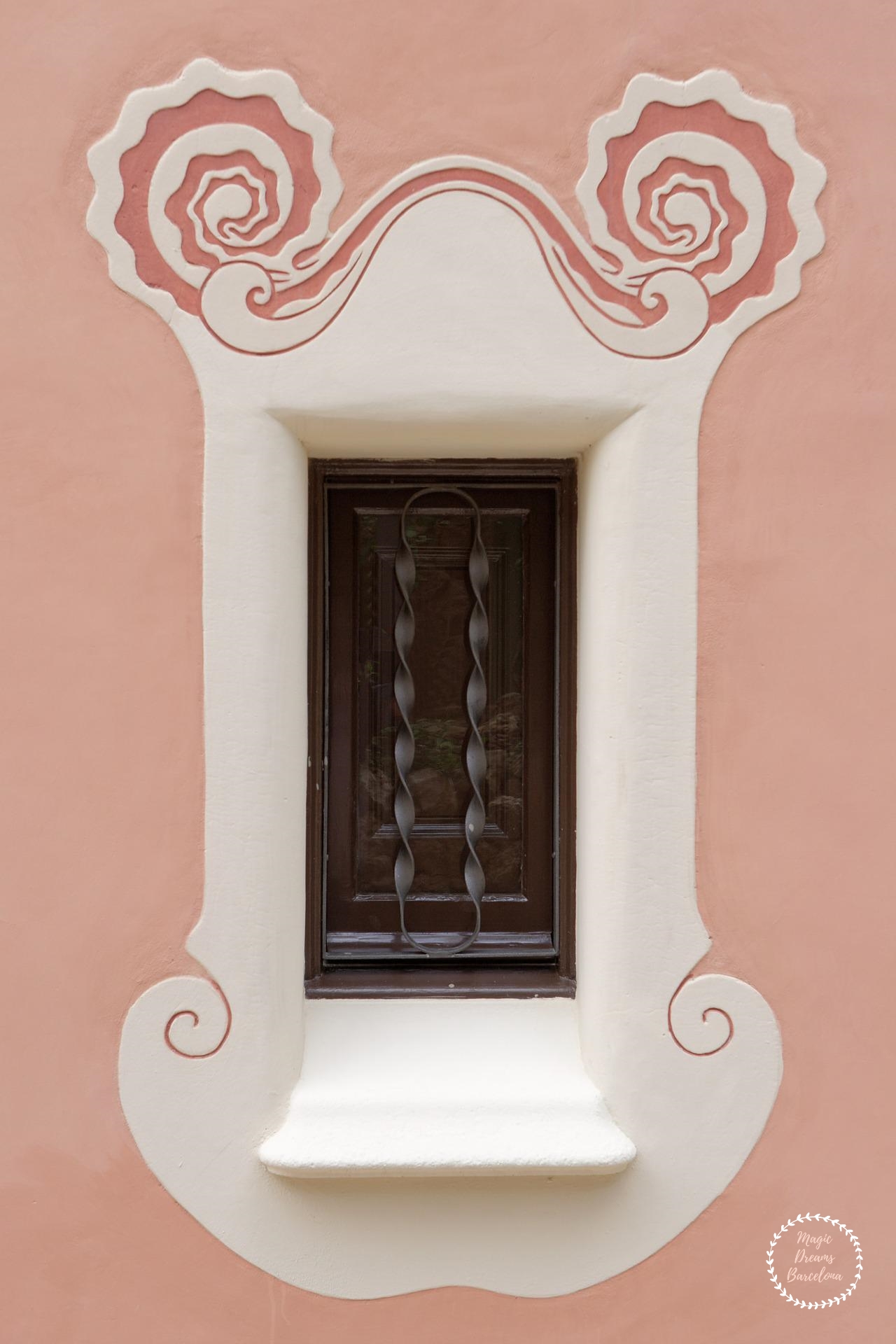
The park is also home to the Gaudí House Museum, located in one of the houses that formed part of the original development.
The house was originally designed by Francesc Berenguer, one of Gaudí’s collaborators, and Antoni Gaudí himself lived there for almost two decades.
Today, it is dedicated to the architect and houses furniture and objects associated with his life and work.
A visit provides an opportunity to complement the outdoor experience with a more personal insight into the architect.
It is not simply about looking at buildings.
It offers a glimpse into some of the objects, forms and references that contributed to the creation of Gaudí’s artistic universe.
Viaducts and Architecture Integrated into the Terrain
One of the less immediately visible characteristics of Park Güell is its system of viaducts.
Gaudí designed different routes to allow movement through the development without drastically altering the natural terrain.
Some paths are supported by imposing stone columns.
Others pass through spaces reminiscent of natural caves.
The result is extraordinarily cinematic.
As visitors walk, they may feel as though they are passing through a mountain that has somehow been built rather than formed.
The viaducts also demonstrate how Gaudí used structural geometry to solve complex architectural challenges.
Nature and Biodiversity
Park Güell is not simply a monumental complex.
It is also a green space integrated into Carmel Hill.
Mediterranean vegetation forms an essential part of the experience.
Pines, palms, carob trees, olive trees and other species create different levels of shade and texture throughout the landscape.
At certain times of year, visitors can also observe significant bird and insect activity.
For this reason, a visit accompanied by specialists in botany and ornithology can reveal a dimension of the park that often goes unnoticed.
The trees are not merely a scenic backdrop.
They participate in the experience.
They alter the temperature, filter the light, create sounds and change the way the architectural spaces are perceived.
A Park That Changes with the Seasons
Park Güell does not feel the same throughout the year.
In spring, vegetation takes centre stage.
During summer, the early morning and late afternoon offer more comfortable temperatures and particularly striking light on the mosaics.
Autumn brings a quieter atmosphere and different tones to the vegetation.
And in winter, when the light is lower and visitor numbers can be reduced, the stone structures acquire an extraordinary presence.
Each season subtly changes the dialogue between architecture and landscape.
Barcelona from Park Güell
Reaching the Nature Square and looking out over Barcelona is one of the essential moments of a visit.
The city appears as an immense urban mosaic.
The streets form a grid.
Buildings extend towards the horizon.
The Sagrada Família rises among the cityscape.
Tibidabo dominates part of the view.
And in the distance, the Mediterranean introduces a blue line that seems to complete the composition.
From here, one of the fundamental principles of Gaudí’s work becomes particularly clear:
architecture is never isolated from its surroundings.
It belongs to a city, a mountain, a horizon and a particular way of understanding the landscape.
Park Güell at Sunset
As evening approaches, the light completely transforms the park.
The mosaics begin to reflect golden tones.
The shadows of the columns grow longer.
The stone takes on a warm colour.
And Barcelona gradually begins to illuminate beneath the visitor.
The Nature Square becomes a natural stage.
The serpentine bench is no longer simply an architectural element but a privileged place from which to watch the changing light over the city.
It is one of those moments when time seems to stand still.
Perhaps it is also the moment when Gaudí’s intention becomes most apparent:
to create a place where human beings, architecture and nature could exist in harmony.
World Heritage
The significance of Park Güell extends far beyond Barcelona.
In 1984, UNESCO included Park Güell on the World Heritage List, as part of the group of works by Antoni Gaudí recognised for their outstanding contribution to the development of architecture and the decorative arts.
This recognition places the park among the world’s cultural heritage of outstanding universal value.
Yet its importance does not depend solely on a title.
It lies in the ability of the work to continue inspiring emotion more than a century after its creation.
A Personalised Park Güell Experience
Visiting Park Güell can simply mean exploring its monumental spaces.
But it can also become a much more intimate, cultural and sensory experience.
With Magic Dreams Barcelona, every visit begins with a conversation.
We want to understand what each guest is looking for.
History.
Architecture.
Nature.
Photography.
Gastronomy.
Wellness.
Art.
Spirituality.
Or simply the opportunity to experience Barcelona from a different perspective.
Our itineraries are individually designed so that every journey has its own rhythm.
Our Park Güell Services
We can arrange experiences including:
Private transportation, adapted to the number of guests and the nature of the experience.
Professional guides in Spanish, Catalan and English, with additional languages available upon request.
Private and personalised tours of Park Güell and its historical and natural surroundings.
Specialist architectural and art guides focusing on Antoni Gaudí, Catalan Modernisme and the symbolism of his work.
In-depth interpretation of trencadís, geometry, structural design and the park’s hydraulic systems.
Cultural experiences adapted to each guest’s pace and preferences.
Personalised sensory picnics in carefully selected natural settings, with a choice of table styling.
Chef-led catering, including sweet and savoury options, fresh juices and proposals inspired by local and international cuisine.
Alcohol-Free experiences, including non-alcoholic wines, cavas and cocktails.
Personalised floral design and floristry services.
Live music and artistic experiences integrated into the surroundings.
Professional photography sessions.
Wellness services and creative workshops.
Private introductions to the trencadís technique, inspired by Gaudí’s artistic language.
Traditional Catalan cooking workshops.
Private art, architecture and cultural experiences.
Gastronomic tours featuring our selection of Barcelona establishments.
Private day trips or weekend escapes to the Costa Brava or the Catalan Pyrenees.
Botany and Ornithology: Discovering the Park Through Different Eyes
In addition to our specialist guides in architecture and history, we work with professionals specialising in emotional botany and ornithology.
This perspective allows guests to discover Park Güell from an entirely different dimension.
The experience can include an introduction to the plant species found throughout the surroundings, the birds that use the park as a passage or refuge, and the relationship between the Mediterranean landscape and Gaudí’s creative universe.
The experience may also incorporate a sensory interpretation of nature:
aromas,
textures,
sounds,
colours,
temperature,
light
and movement.
An architectural visit thus becomes an opportunity to connect with the landscape itself.
Art, Gastronomy and Creativity
Gaudí’s universe can continue beyond the boundaries of the park.
An experience designed for art lovers can connect Park Güell with other important Barcelona landmarks associated with Catalan Modernisme.
The day can continue with a private visit to other Gaudí buildings, a chef-led gastronomic experience or a creative workshop.
Photography and Memories
Park Güell offers countless possibilities for a professional photography session.
The monumental staircase, dragon, mosaics, Nature Square, viaducts and panoramic views of Barcelona can create an entirely different visual narrative depending on the time of day.
We can arrange private sessions for:
Couples.
Families.
Special celebrations.
Marriage proposals.
Anniversaries.
Private journeys.
Editorial portraits.
Fashion or lifestyle sessions.
Photography is not treated merely as a record of the visit.
It becomes part of the experience.
Wellness and Contemplation
Park Güell also contains spaces particularly suited to moments of pause.
A private experience may incorporate a wellness session, meditation, prayer or contemplation in a carefully selected natural setting, always respecting the conditions and regulations of the park.
We can also design complementary experiences involving spa treatments, massage, healthy gastronomy and other wellness services in Barcelona.
The intention is not for the visit to become a race to see monuments.
We want there to be time to look.
To breathe.
To listen.
To feel.
A Perfect Day at Park Güell
A personalised experience can begin in the morning with private vehicle collection.
Morning
Arrival at Park Güell and a private tour of the monumental area.
The visit may begin at the staircase and continue towards the dragon, Hypostyle Room, Nature Square, viaducts and the different paths throughout the complex.
The guide interprets the history of the project, Gaudí’s universe, its religious symbolism and the architectural complexity of the park.
Midday
The experience can continue with a private gastronomic proposal.
Depending on the guest’s preferences, we can arrange a sensory picnic, a chef-led lunch or a gastronomic tour of Barcelona.
Proposals can be adapted to different dietary preferences and accompanied by Alcohol-Free beverages.
Afternoon
The day can continue with an artistic or cultural experience.
A trencadís workshop, a visit to other Modernista landmarks, a private photography session or a cultural experience connected with Catalan gastronomy.
Sunset
The day can culminate by contemplating Barcelona from one of its great viewpoints.
Golden light across the mosaics.
Tibidabo in the distance.
The city stretching towards the Mediterranean.
And Gaudí’s architecture taking on new shades.
It is the perfect moment to pause.
Practical Information
To enjoy Park Güell comfortably, we recommend keeping the following in mind:
The monumental area has regulated access and limited capacity, so advance ticket reservations are recommended.
Opening hours and access conditions may vary according to the season.
The visit involves walking along paths with slopes and different surfaces.
During the summer months, it is advisable to avoid the hottest hours of the day.
Early morning and late afternoon generally provide particularly pleasant conditions for certain experiences.
The time required to explore the park depends on the visitor’s pace and the experiences included in the itinerary.
For a fully private experience, it is advisable to coordinate transportation, guiding, dining and additional activities in advance.
Barcelona Beyond Park Güell
One of Park Güell’s great advantages is its ability to become the starting point for a broader Barcelona experience.
From here, we can continue towards Sagrada Família, Hospital de Sant Pau, Passeig de Gràcia, Casa Batlló or La Pedrera, creating an itinerary dedicated to Catalan Modernisme.
Alternatively, we can change the setting completely and head towards the Gothic Quarter, El Born, Montjuïc, the coastline or one of our selected restaurants in the city.
The experience adapts to the guest.
There is no single perfect itinerary.
There is the itinerary that makes sense for each individual.
Privacy, Discretion and Security
At Magic Dreams Barcelona, we understand that certain guests are looking for more than a conventional sightseeing experience.
For this reason, we work according to one essential principle:
our clients’ privacy and discretion are paramount.
Every experience is individually coordinated, including transportation, timing, personal assistance, dining and activities, allowing guests to enjoy the destination without having to worry about logistics.
Discretion is an integral part of our service philosophy.
Conclusion
Park Güell is not simply a park.
It is a place where architecture seems to grow like a tree.
Where stone becomes landscape.
Where mosaics capture the light.
Where water becomes architecture.
Where a dragon guards a monumental staircase.
And where Barcelona unfolds below as an immense urban mosaic.
Gaudí created a place that cannot be fully understood through a photograph.
It must be walked.
Listened to.
Observed as the light changes.
Experienced from its curved benches.
Its details discovered slowly.
And its architecture allowed to enter into dialogue with nature.
With Magic Dreams Barcelona, that visit can become something much deeper.
An experience designed around each guest, where history, architecture, art, gastronomy, nature, wellness and culture come together to discover Barcelona from a different perspective.
Detalle exterior de la Casa-Museo de Antoni Gaudí en el Park Güell.
Detalle exterior de la Casa-Museo de Antoni Gaudí en el Park Güell.
Detalle exterior de la Casa-Museo de Antoni Gaudí en el Park Güell.
Park Güell by Antoni Gaudí.
Perspectiva a pie en la la Sala de las Cien Columnas o Sala Hipóstila en el Park Güell diseño de Antoni Gaudí.
Detalle de las columnas en el viaducto del park Güell, diseño del arquitecto catalán Antoni Gaudí.
Perspectiva de parte de la ciudad de Barcelona con el mar Mediterráneo de fondo, desde el Park Güell.
Detalle mosaico diseño «Trencadís» por Antoni Gaudí, en el Park Güell.
Detalle mosaico del Dragón del Park Güell.
Detalle mosaico diseño «Trencadís» por Antoni Gaudí, en el Park Güell.
Perspectiva a pie de la Casa del Guarda, en el Park Güell de Antoni Gaudí.
Perspectiva de parte de la ciudad de Barcelona con el mar Mediterráneo de fondo, desde el Park Güell.
Detalle sol mosaico en la sala Hipóstila del Park Güell de Antoni Gaudí.
Perspectiva a pie, de la escalinata del Dragón, con la sala Hipóstila en la parte derecha superior, en el Park Güell de Antoni Gaudí.
Perspectiva de parte de la ciudad de Barcelona, desde el Park Güell.
Perspectiva a pie de las columnas en el viaducto del park Güell diseño del arquitecto catalán Antoni Gaudí.
Perspectiva a pie de las columnas en el viaducto del park Güell diseño del arquitecto catalán Antoni Gaudí
Perspectiva de las columnas del viaducto del park Güell diseño del arquitecto catalán Antoni Gaudí
Detalle banco ondulado recubierto de mosaico en forma de trencadís proyectado por Josep M. Jujol, que hace de barandilla, en el Teatro Griego o Plaza de la Naturaleza, del Park Güell de Antoni Gaudí.
Perspectiva de parte de la ciudad de Barcelona con el mar Mediterráneo de fondo, desde el Park Güell.
Detalle de la Casa del Guarda, en el Park Güell de Antoni Gaudí.
Dragón mosaico en el Park Güell.
Perspectiva de parte de la ciudad de Barcelona con el mar Mediterráneo de fondo, desde el Park Güell.
Perspectiva a pie de la Casa del Guarda, en el Park Güell de Antoni Gaudí.
Perspectiva a pie, de la escalinata del Dragón, con la sala Hipóstila de fondo, en el Park Güell de Antoni Gaudí.
Detalle mosaico diseño «Trencadís» por Antoni Gaudí, en el Park Güell.
Detalle exterior de la Casa-Museo Gaudí, en el Park Güell.