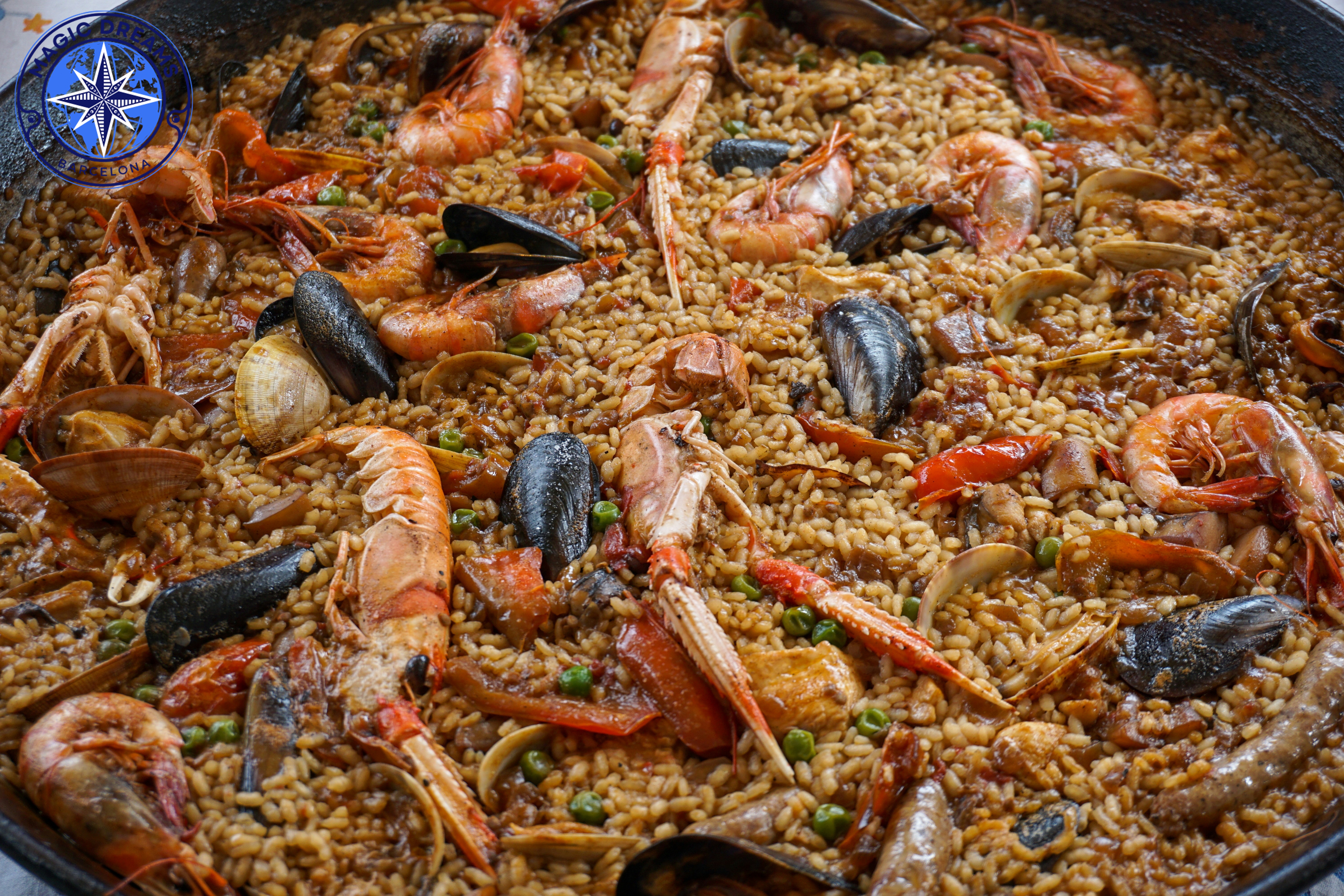
The Mediterranean meeting of sea and land
The Paella Mar i Muntanya is one of the most fascinating expressions of Catalan cuisine. Its name literally means “Sea and Mountain”, referring to the combination of ingredients from the Mediterranean coast with products traditionally associated with the countryside.
This culinary tradition is especially connected with Catalonia and the Costa Brava, where fishermen, farmers and rural families developed recipes that brought together what the sea and the land had to offer.
Unlike a purely seafood paella, the Mar i Muntanya combines meat, vegetables, seafood and rice in the same dish. Sausages provide richness and depth, while mussels, clams, langoustines, prawns and Norway lobsters bring the unmistakable character of the Mediterranean.
The foundation is a good Catalan sofrito, slowly cooked with onion, garlic and tomato, which creates the aromatic base for the rice.
The result is a generous, colourful and intensely flavoured dish that perfectly represents the Catalan philosophy of combining contrasting ingredients while allowing each one to retain its character.
Ingredients
For 4 people
For the paella
- 320 g of bomba or other short-grain rice
- 4 fresh Catalan sausages
- 8 prawns
- 4 Norway lobsters
- 8 mussels
- 8–10 clams
- 150 g peas, fresh or frozen
- 1 medium onion, finely chopped
- 2–3 ripe tomatoes, grated
- 2 garlic cloves, finely chopped
- 1 small red pepper, finely diced
- 1.2 litres of fish stock
- 100 ml white wine
- Extra virgin olive oil
- Salt
- Black pepper
For the sofrito
- The onion
- The garlic
- The grated tomatoes
- The red pepper
- Extra virgin olive oil
Optional Catalan touches
- A small teaspoon of sweet paprika
- A pinch of saffron
- A little chopped fresh parsley
- A small amount of romesco-style picada with almonds and garlic
Preparation
01 · Prepare the seafood
The flavour of the Mediterranean
Clean the mussels carefully, removing any external impurities and beards.
Rinse the clams thoroughly.
Check the prawns and Norway lobsters and remove any unwanted shell fragments.
Keep the seafood refrigerated until needed.
If the clams contain sand, soak them in cold salted water for approximately 30–60 minutes, changing the water if necessary.
02 · Brown the sausages
The mountain begins in the pan
Cut the Catalan sausages into medium-sized pieces.
Heat a generous splash of extra virgin olive oil in a wide paella pan.
Add the sausage pieces and brown them gently on all sides.
They do not need to be completely cooked at this stage.
Remove them from the pan and set aside.
The oil will now contain some of the flavour and juices released by the meat.
This forms the first layer of flavour in our Mar i Muntanya.
03 · Sauté the seafood
The sea joins the mountain
Using the same pan, briefly sauté the prawns and Norway lobsters.
Cook them for approximately 1–2 minutes per side, just enough to release their aromas and lightly colour the shells.
Remove them and reserve.
We do not want to overcook the seafood because it will finish cooking later with the rice.
Preparing the Catalan Sofrito
04 · Cook the onion and pepper
The aromatic foundation
Reduce the heat to medium-low.
Add the finely chopped onion and red pepper to the same pan.
Cook slowly for approximately 10–15 minutes, stirring occasionally.
The onion should become soft, translucent and slightly golden.
This slow cooking is essential.
A good Catalan sofrito is not simply fried vegetables; it is a concentrated preparation in which time allows the flavours to develop.
05 · Add the garlic and tomato
The heart of the recipe
Add the chopped garlic and cook for approximately one minute.
Then add the grated tomatoes.
Cook slowly for 15–20 minutes, stirring occasionally, until the tomato has reduced considerably.
The sofrito should become thick, aromatic and slightly caramelised.
Add the sweet paprika if desired and stir quickly to prevent it from burning.
At this point, the kitchen should already be filled with the characteristic aromas of Catalan Mediterranean cooking.
Cooking the Rice
06 · Add the rice
The moment everything comes together
Add the rice directly to the sofrito.
Stir gently for approximately 1–2 minutes, allowing the grains to become coated with the concentrated flavours of the sauce.
This brief step helps the rice absorb the aromas of the sofrito before the stock is added.
07 · Add the wine
A touch of Mediterranean acidity
Pour in the white wine.
Allow the alcohol to evaporate for approximately 2–3 minutes.
Continue stirring gently until most of the liquid has disappeared.
08 · Add the hot stock
Building the foundation of the rice
Heat the fish stock separately until it is hot.
Pour it into the paella pan.
Add the peas and season lightly with salt and black pepper.
If using saffron, add it at this stage.
Bring the liquid to a lively simmer.
From this moment, avoid excessive stirring.
The rice should cook calmly and evenly while absorbing the stock and flavours of the sofrito.
09 · Add the seafood and sausages
Sea and mountain unite
After approximately 8–10 minutes, distribute the browned sausage pieces throughout the pan.
Arrange the mussels, clams, prawns and Norway lobsters over the rice.
Continue cooking for another 6–8 minutes, depending on the rice variety and the intensity of the heat.
The clams and mussels should open naturally during cooking.
Discard any shellfish that remain closed after cooking.
10 · Finish the paella
The final Mediterranean touch
When the rice is almost cooked and only a small amount of liquid remains, reduce the heat.
Allow the rice to finish absorbing the remaining stock.
If you want a traditional toasted layer at the bottom, increase the heat slightly during the final 30–60 seconds, carefully monitoring the pan.
The objective is to develop a delicate socarrat, not to burn the rice.
Turn off the heat.
The Essential Rest
11 · Let the rice rest
Patience creates flavour
Cover the paella loosely with a clean kitchen cloth or aluminium foil.
Let it rest for approximately 5 minutes.
This allows the remaining moisture to distribute evenly through the rice and helps the flavours settle.
The grains should remain separate, tender and full of flavour.
Gourmet Suggestions
Magic Dreams Barcelona
For a more sophisticated version of this Catalan classic:
- Use bomba rice or another high-quality short-grain Mediterranean rice.
- Prepare a slow-cooked sofrito rather than rushing the tomato and onion.
- Use a homemade fish fumet prepared with fish bones, heads and aromatic vegetables.
- Brown the sausages before preparing the sofrito to incorporate their flavour into the cooking oil.
- Briefly sauté the seafood before adding it to the rice.
- Use fresh peas when they are in season.
- Add saffron sparingly so it enhances rather than dominates the dish.
- For extra depth, prepare a small picada of almonds, garlic and parsley and incorporate a little into the stock.
- Do not stir the rice continuously once the stock has been added.
- Allow the paella to rest before serving.
The secret to a great Mar i Muntanya
The secret is balance.
The sausages should provide depth without overwhelming the seafood.
The seafood should contribute its natural marine flavour without becoming overcooked.
The peas add sweetness, while the sofrito provides the concentrated Mediterranean foundation.
The rice is the ingredient that brings everything together.
A successful Mar i Muntanya should therefore offer different sensations in every bite:
savory sausage, sweet peas, aromatic sofrito, tender rice and the unmistakable flavour of Mediterranean seafood.
Presentation
Serve the paella directly in the pan, placing the seafood attractively across the surface.
Arrange the prawns and Norway lobsters so that they are clearly visible.
The mussels and clams provide natural colour and contrast.
Finish with a small amount of freshly chopped parsley and a few drops of extra virgin olive oil.
For a more contemporary presentation, serve individual portions with one prawn, one piece of Norway lobster and a selection of mussels and clams on each plate.
A few lemon wedges can be served on the side, although the acidity should be used sparingly so that it does not overpower the carefully balanced flavours.
Serving
The Paella Mar i Muntanya should be served immediately after its resting period.
Traditionally, everyone gathers around the pan and shares the rice directly from the centre.
This communal style is part of the character of Mediterranean cuisine.
Serve with crusty rustic bread and, if desired, a fresh green salad.
For a non-alcoholic pairing, a Catalan-style 0.0% white wine or a chilled sparkling water with lemon provides a refreshing contrast.
The Catalan Spirit of Mar i Muntanya
The true importance of this dish goes beyond its ingredients.
Mar i Muntanya represents a fundamental idea in Catalan gastronomy: the ability to bring together products that at first seem completely different and transform them into a harmonious dish.
The Mediterranean provides the seafood.
The countryside provides the sausages and vegetables.
The rice connects both worlds.
And the sofrito gives the dish its Catalan soul.
It is precisely this combination of sea, land, tradition and creativity that makes Paella Mar i Muntanya such a distinctive expression of Catalan cuisine.
Sea and mountain on one plate — the essence of Catalonia in every grain of rice.