Route guide for visitors throughout Catalonia – Barcelona – Costa Brava – Catalan Pyrenees – Personalized experiences – Customized tour guide services – A small tribute to the wonderful city and land that saw us born – Transforming experiences into unforgettable memories - Magic Dreams Collection: exclusive universes inspired by Salvador Dalí and Gaudí. Niche perfumes, jewelry, lithographs, and collectible items celebrating the Mediterranean spirit.
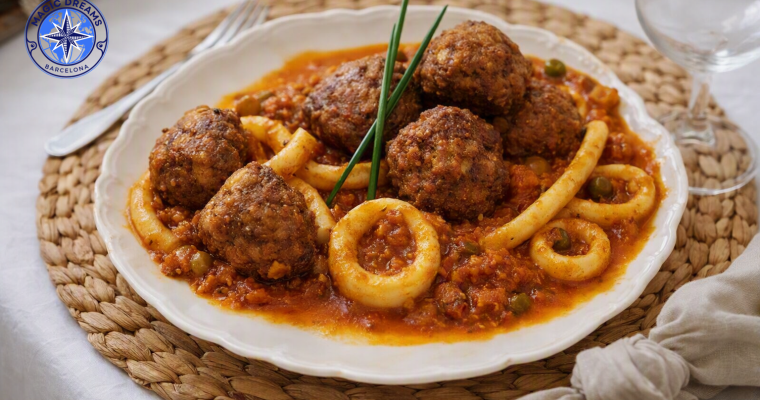
Mandonguilles amb Sèpia · A Traditional Catalan “Sea and Mountain” Recipe Catalan meatballs with cuttlefish, known locally as mandonguilles amb sèpia, are one of the finest examples of mar i muntanya, the traditional Catalan culinary philosophy that brings together ingredients from the sea and the …
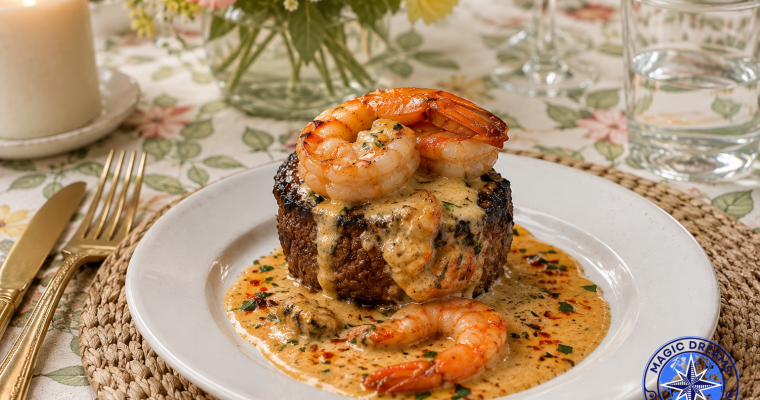
Pork tenderloin with creamy lobster and shrimp sauce is an elegant and sophisticated recipe that combines the tenderness of pork with the delicate flavors of lobster and shrimp. The meat is beautifully browned on the outside while remaining juicy inside, then served with a rich, …
Seafaring Tradition Elevated into a Gastronomic Experience
Fish and seafood stew is one of the great culinary legacies of the Mediterranean and Atlantic coasts.
It originated as a humble dish, prepared aboard fishing boats or in kitchens close to the harbor, where fishermen made use of the day’s catch to create a comforting, nourishing dish full of character.
Over time, this recipe evolved without losing its essence: fresh ingredients, gentle cooking and absolute respect for the natural flavors of the sea.
Each region developed its own nuances, adapting the recipe to the fish available, the local variety of potatoes, regional paprika and the nuts characteristic of each area.
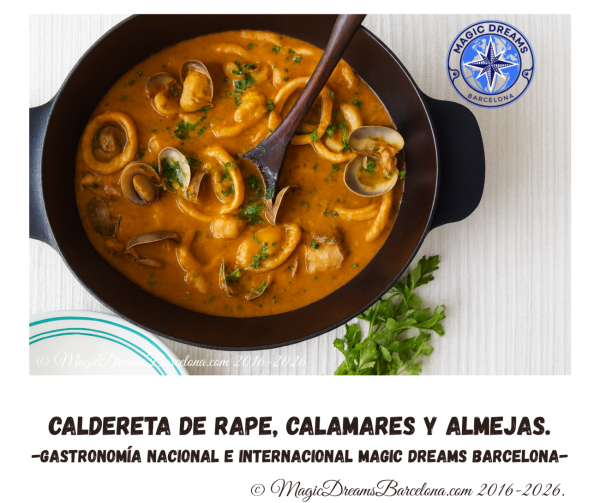
Our Premium Monkfish, Squid and Clam Stew pays tribute to this seafaring tradition by incorporating a classic majado made with bread, garlic and hazelnuts, adding depth, texture and an unmistakable aroma.
The use of bittersweet Pimentón de la Vera brings a delicate smoky and mildly spicy note that enhances the dish without overpowering the natural character of the fish and seafood.
It is a dish that speaks of the coast, long conversations around the table, shared cooking and that authentic kind of luxury that can only come from recipes prepared with time, knowledge and respect for the ingredients.
A Gastronomic Experience to Be Enjoyed Without Haste
Served piping hot, this stew invites you to dip your bread into the sauce, share the dish and enjoy honest cooking elevated to a sophisticated gastronomic level.
The combination of firm yet delicate monkfish, tender squid and juicy clams creates a perfect balance of intensity, texture and elegance.
It is not simply a stew.
It is a sensory experience that connects with seafaring traditions while allowing you to discover Mediterranean cuisine from a more refined perspective.
Monkfish, Squid and Clam Stew
Serves 4
Ingredients
For the Stew
1 liter high-quality fish or seafood stock
500 g cleaned monkfish, cut into pieces
250 g fresh squid, cut into rings
500 g live clams
4 medium potatoes, roughly cracked
2 tablespoons bittersweet Pimentón de la Vera
Extra virgin olive oil
Sea salt
Fresh parsley, finely chopped
For the Traditional Majado
4 garlic cloves
2 slices artisan bread
A handful of toasted hazelnuts
Extra virgin olive oil
Preparation
01 · Cleaning the Clams
Place the clams in a large bowl filled with cold salted water.
Leave them to soak for approximately 2 hours in the refrigerator.
This process allows the clams to release any sand they may contain.
Once the time has elapsed, remove them from the water and rinse them carefully.
Set aside.
Chef’s Tip
Discard any clams that remain open and do not react when gently touched before cooking.
The Traditional Majado
02 · Creating the Aromatic Base
Heat a wide casserole or heavy-based pot with a small amount of extra virgin olive oil.
Add the peeled garlic cloves and toasted hazelnuts.
Cook gently until they begin to develop a light golden color.
Add the slices of bread during the final minutes so that they become lightly golden.
Remove everything from the heat before the garlic becomes too dark.
03 · Creating a Fine Majado
Place the garlic, hazelnuts and toasted bread in a mortar.
Crush until you obtain a fine, homogeneous and aromatic paste.
It does not need to be completely smooth.
A slightly rustic texture helps preserve the traditional character of the dish.
Set aside.
The Secret
The majado is one of the defining elements of this stew.
It does more than add flavor: it also provides body, texture and depth to the stock.
The Base of the Stew
04 · Browning the Potatoes
Using the same casserole in which you prepared the majado, add a little more olive oil if necessary.
Add the roughly cracked potatoes.
Sauté them for several minutes, stirring carefully.
The goal is not to cook them completely, but to begin developing a lightly golden exterior.
05 · Adding the Paprika
Temporarily remove the casserole from the heat.
Add the bittersweet Pimentón de la Vera.
Stir quickly to coat the potatoes.
This step requires particular attention.
The paprika must not burn, as this would create a bitter flavor that could affect the balance of the final dish.
Once incorporated, remove the potatoes and set them aside.
The Flavor of the Sea
06 · Cooking the Squid
Pour the fish or seafood stock into the casserole.
Add the squid.
Bring the liquid to a gentle simmer and cook for approximately 10 minutes over medium heat.
During this time, the squid will begin to tenderize and gradually release its flavor into the stock.
There is no need to use excessive heat.
Controlled cooking will help maintain a pleasant texture.
Slow Cooking
07 · Adding the Potatoes
Return the potatoes to the casserole.
Season with salt.
Reduce the heat and continue cooking for approximately 20 minutes.
The potatoes should become tender while maintaining their structure.
The stock will gradually develop more body as the potatoes release their starch and the flavors of the paprika and seafood become more pronounced.
The Perfect Point
The potato should be easily pierced with a knife without completely breaking apart.
Bringing the Flavors Together
08 · Adding the Majado
When the potatoes are almost cooked, add the reserved majado.
Stir gently to incorporate it into the stock.
Continue cooking over low heat for a few minutes.
The majado will slightly thicken the stew while releasing the characteristic aromas of garlic, toasted bread and hazelnuts.
The sauce should become lightly thickened while remaining fluid.
The Monkfish and Clams
09 · The Most Delicate Moment
Add the monkfish pieces.
Immediately add the cleaned clams.
Cook for approximately 3 minutes over medium-low heat.
The clams should open and the monkfish should remain juicy, firm and delicate.
Do not extend the cooking time unnecessarily.
Monkfish has a naturally firm texture, but overcooking can cause it to lose some of its juiciness.
Important
Discard any clams that have not opened after cooking.
The Finishing Touch
10 · Resting and Balancing
Turn off the heat and allow the stew to rest for approximately 2–3 minutes.
This brief resting period allows the flavors to fully come together.
Taste the stock and adjust the seasoning if necessary.
The final result should balance:
the marine character of the stock, the delicacy of the monkfish, the intensity of the squid, the freshness of the clams and the toasted depth of the majado.
Gourmet Presentation
11 · Bringing the Stew to the Table
Serve the stew immediately in preheated deep plates or bowls.
Carefully arrange the monkfish, squid, potatoes and clams.
Add a generous amount of the rich, lightly thickened stock.
Finish with finely chopped fresh parsley.
Serve with slices of lightly toasted artisan bread if desired.
The bread is not simply an accompaniment.
It is part of the experience, allowing you to enjoy every last drop of the sauce.
The Secret to a Perfect Seafood Stew
The success of this recipe depends mainly on three elements:
Ingredients
Use fish and seafood that are as fresh as possible.
The monkfish should have a firm texture and the clams should be alive before cooking.
Temperature
The stew requires controlled cooking.
The potatoes need time to develop the stock, while the monkfish and clams should be added towards the end to prevent overcooking.
Majado
The garlic, bread and hazelnut majado gives the dish its distinctive personality.
It is the element that transforms a simple fish stock into a sauce with body, depth and character.
The Role of Pimentón de la Vera
Bittersweet Pimentón de la Vera should always be added carefully.
Its purpose is not to dominate the dish.
It should provide a warm, smoky and mildly spiced note that complements the natural flavors of the seafood.
For this reason, it is essential to prevent it from burning.
Temporarily removing the casserole from the heat before adding it allows its temperature to be controlled more effectively.
The Balance of Textures
A good seafood stew should not have a single texture.
It should offer different sensations in every spoonful:
The potato: soft and creamy inside.
The monkfish: firm, juicy and delicate.
The squid: tender with a pleasant texture.
The clam: juicy and intensely marine.
The stock: aromatic, lightly thickened and deeply flavorful.
It is precisely this combination that transforms a traditional stew into a complete gastronomic experience.
Premium Tip
If you wish to intensify the flavor even further, you can prepare a homemade fish and seafood fumet using fish bones and trimmings, prawn or langoustine heads and aromatic vegetables.
A great stock is the foundation of any exceptional seafood stew.
You can also prepare the majado in advance and keep it refrigerated until needed.
The important point is to incorporate it during the final stages of cooking so that its aromas remain vibrant.
A Recipe with History
The Monkfish, Squid and Clam Stew represents a style of cooking deeply connected to the Mediterranean.
It is a recipe born from the need to make the most of the day’s catch and transform it into a complete, comforting and deeply flavorful dish.
Over time, this seafaring cuisine has become an essential part of the gastronomic heritage of the Mediterranean coast.
This version preserves that essence while presenting it in a more refined way.
The result is a recipe that retains its traditional soul while embracing a contemporary perspective.
Magic Dreams Gastronomic Collection
This recipe is part of our Magic Dreams Gastronomic Collection, included in our book:
“Gastronomy with History: Premium Recipes from Eixample”
A collection dedicated to rediscovering recipes, ingredients and culinary traditions and presenting them from a contemporary and elegant perspective.
Cooking is a language through which harmony, creativity, happiness, beauty, poetry, complexity, magic, humor, provocation and culture can be expressed.
A classic of Mediterranean seafaring cuisine transformed into a premium gastronomic experience.
Some dishes need time to reveal their full character.
This stew is one of them.
Fresh ingredients, controlled heat and a tradition that continues to speak through every spoonful.
The taste of the Mediterranean, served with history.
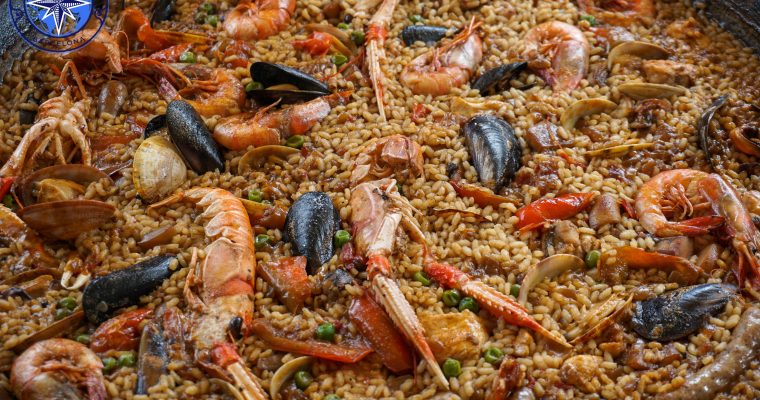
The Mediterranean meeting of sea and land The Paella Mar i Muntanya is one of the most fascinating expressions of Catalan cuisine. Its name literally means “Sea and Mountain”, referring to the combination of ingredients from the Mediterranean coast with products traditionally associated with the …
Mediterranean flavour, maritime tradition and the essence of the sea Arròs Negre, or Spanish-style black rice, is one of the great icons of Western Mediterranean seafood cuisine, with a particularly strong tradition in Catalonia and Valencia. Its deep black colour and intense marine character make …
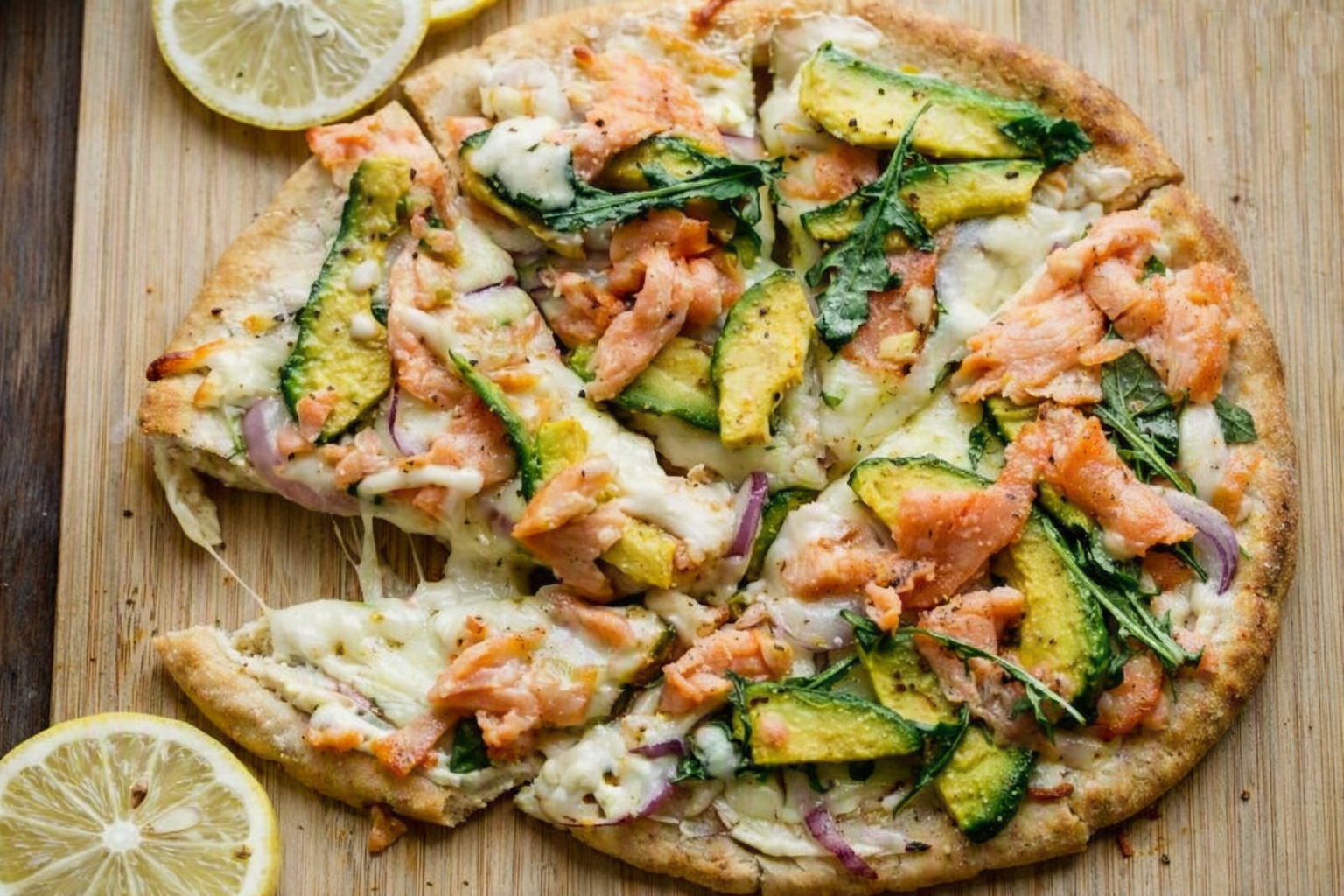
This is a delicate, thin pizza that combines the creaminess of avocado, the intense aroma of smoked salmon, and the fresh herbal character of arugula, all served on a light, crisp, fragrant artisan base. A dish that transforms a simple preparation into a fine dining experience.
Ingredients
1 medium gourmet pizza
For the artisan dough
200 g good-quality wheat flour.
120 ml lukewarm water (not hot).
1 teaspoon dry baker’s yeast.
1 tablespoon extra virgin olive oil.
½ teaspoon fine salt.
½ teaspoon sugar.
For the topping
120 salmon, gently torn by hand.
½ ripe avocado, cut into thin, even slices.
A handful of fresh arugula.
3–4 tablespoons cream cheese, ricotta, or crème fraîche.
Red onion, cut into very thin slivers.
Extra virgin olive oil.
Sea salt and freshly ground black pepper.
Optional: fresh dill, lemon zest, or a drizzle of floral honey.
Preparation
01 · Activating the yeast
The beginning of the aroma
In a small bowl, mix the lukewarm water with the sugar and yeast. Let it rest for 8–10 minutes, until a layer of foam forms on the surface.
This step ensures a lighter, airier dough.
02 · Gourmet dough
Perfect texture
Place the flour in a large bowl and mix with the salt. Make a well in the center and pour in the yeast mixture together with the olive oil.
Begin incorporating the ingredients with a spoon or your hands until you obtain a sticky dough. Transfer the dough to a lightly floured surface and knead for 8–10 minutes, until it becomes elastic, smooth, and homogeneous.
03 · First rise
Rest and magic
Form the dough into a ball, place it in a greased bowl, and cover it with a clean cloth.
Let it rest for 1 hour, or until it doubles in size.
This rising time is essential for achieving a thin yet characterful base.
04 · Shaping the base
Gently deflate the dough with your hands. Stretch it with a rolling pin or with your fingertips until you obtain a thin, even disc, ideal for a crisp and elegant finish.
Place the dough on a baking tray or pizza stone.
05 · Delicate pre-baking
Preheat the oven to 220 °C.
Spread a thin layer of cream cheese or crème fraîche over the surface of the dough, then gently arrange the avocado slices.
Add the salmon in irregular but harmonious pieces. Add the thinly sliced red onion and fresh arugula to provide volume and freshness.
Bake for 8–10 minutes, until the edges turn a soft golden brown.
07 · Final touch
The gourmet signature
Drizzle with extra virgin olive oil and season with a touch of freshly ground black pepper.
Optional, but highly recommended:
Lemon zest to enhance the aromas.
Dill for a fresh herbal fragrance.
A drizzle of floral honey for a sublime sweet-and-savory contrast.
Gourmet Suggestions
Magic Dreams Barcelona
Add a few small capers for a sophisticated salty accent.
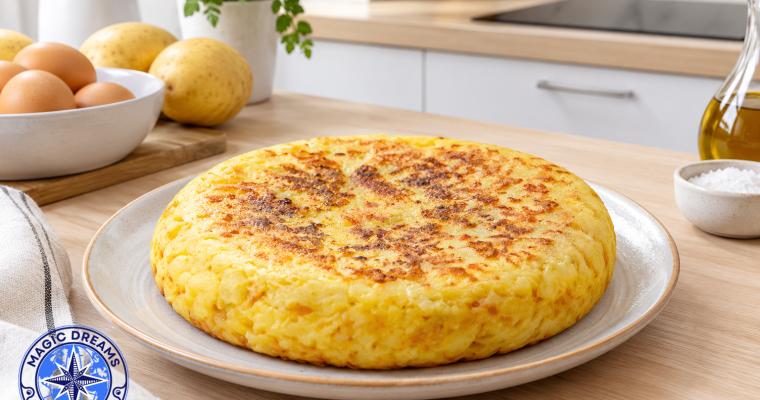
A Spanish classic transformed into a gourmet experience Some recipes do not need sophisticated ingredients to become extraordinary. Spanish tortilla is one of them. Potatoes, eggs, olive oil and, depending on tradition, onion. A simple combination that, when prepared with precision, can achieve a creamy …