Route guide for visitors throughout Catalonia – Barcelona – Costa Brava – Catalan Pyrenees – Personalized experiences – Customized tour guide services – A small tribute to the wonderful city and land that saw us born – Transforming experiences into unforgettable memories - Magic Dreams Collection: exclusive universes inspired by Salvador Dalí and Gaudí. Niche perfumes, jewelry, lithographs, and collectible items celebrating the Mediterranean spirit.
In the far northeastern corner of Alt Empordà, where the Mediterranean landscape begins to give way to the mountains, lies Maçanet de Cabrenys. The municipality is surrounded by forests, streams, old farmhouses, mountain paths and peaks that form part of the landscape along the border …
A Pyrenean paradise that awakens all the senses At an altitude of 1,539 metres, in the heart of Cerdanya, lies Meranges, the municipal capital located at the highest elevation in Catalonia. This small mountain village is a place where stone houses, slate roofs and wooden …
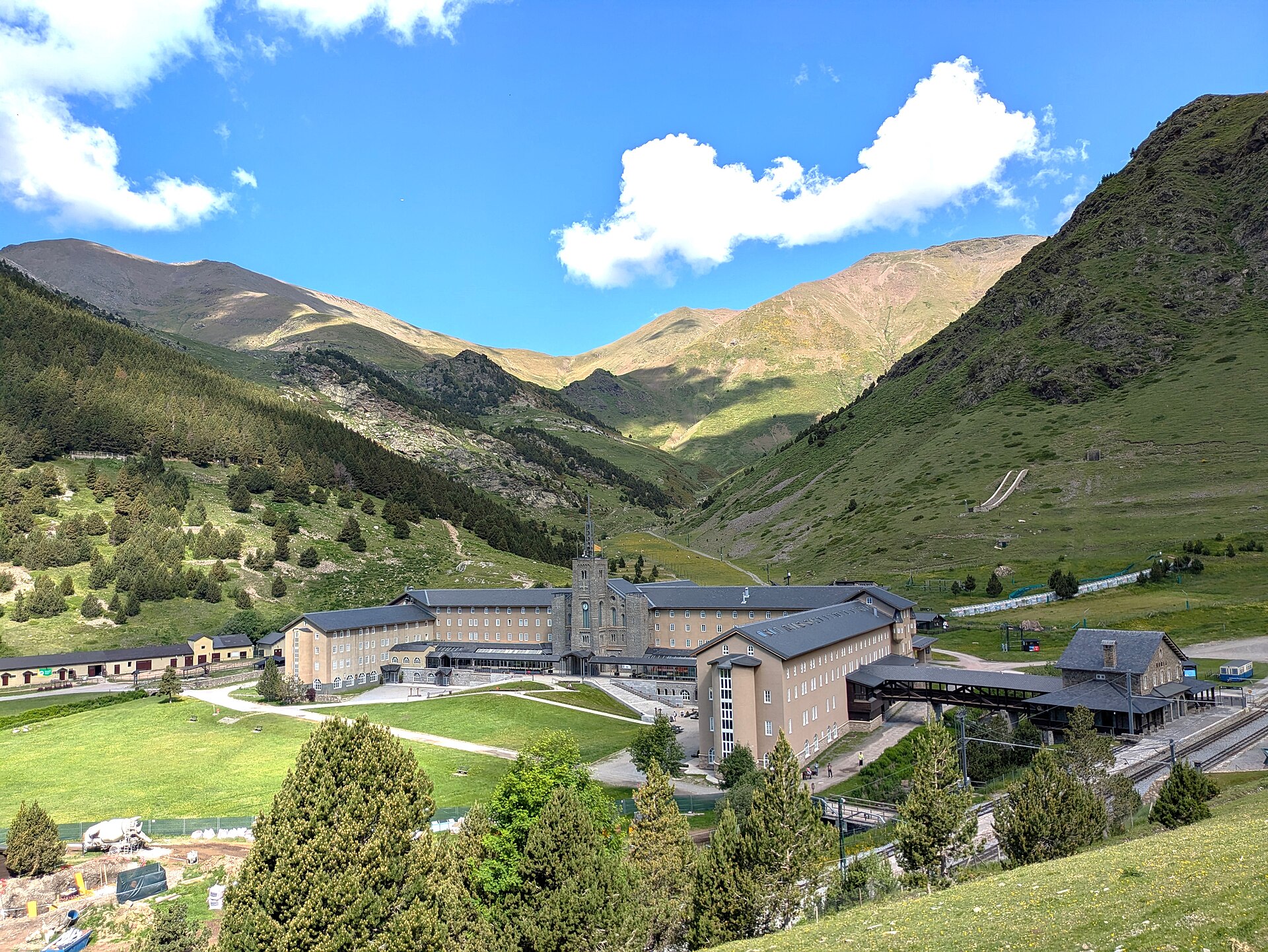
Vall de Núria is one of those places that surprises you from the very first moment. Located in the heart of the Eastern Pyrenees, within the municipality of Queralbs, the valley is surrounded by mountains, forests, alpine meadows and peaks rising above 2,500 metres.
At almost 2,000 metres above sea level, Núria offers an exceptional combination of nature, history, spirituality and mountain activities. It also has a feature that makes it even more special: you cannot reach the valley by car. To get there, you have to take the historic Núria Rack Railway or walk along one of the paths connecting the valley with Queralbs and other points in the mountains.
This means that the journey begins long before you reach your destination.
Where is Vall de Núria?
Vall de Núria is located in the Catalan Pyrenees, within the municipality of Queralbs, in the Ripollès region.
The valley lies at approximately 1,964 metres above sea level and is surrounded by some of the most characteristic mountains of the Eastern Pyrenees, including Puigmal, which reaches 2,913 metres.
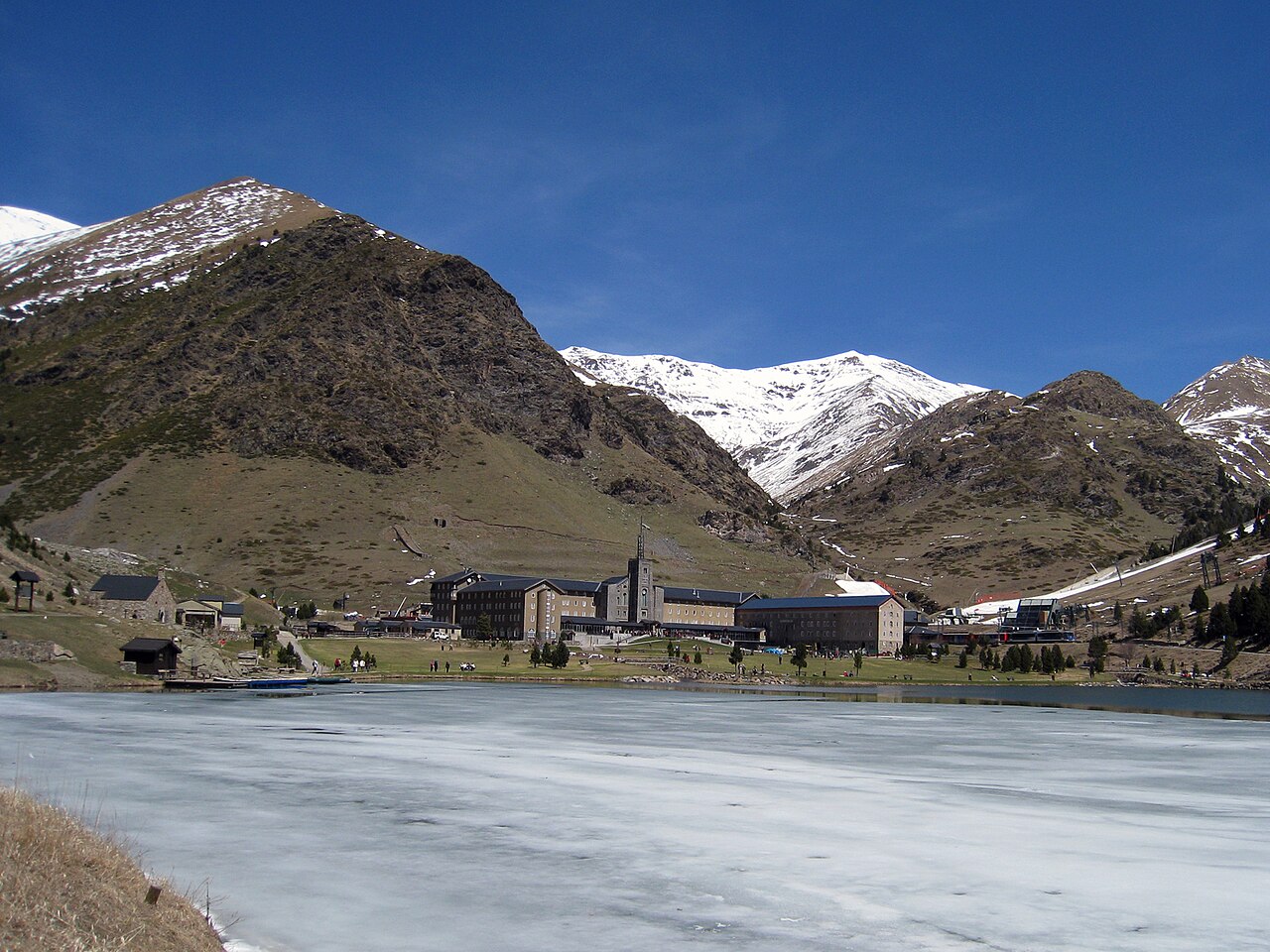
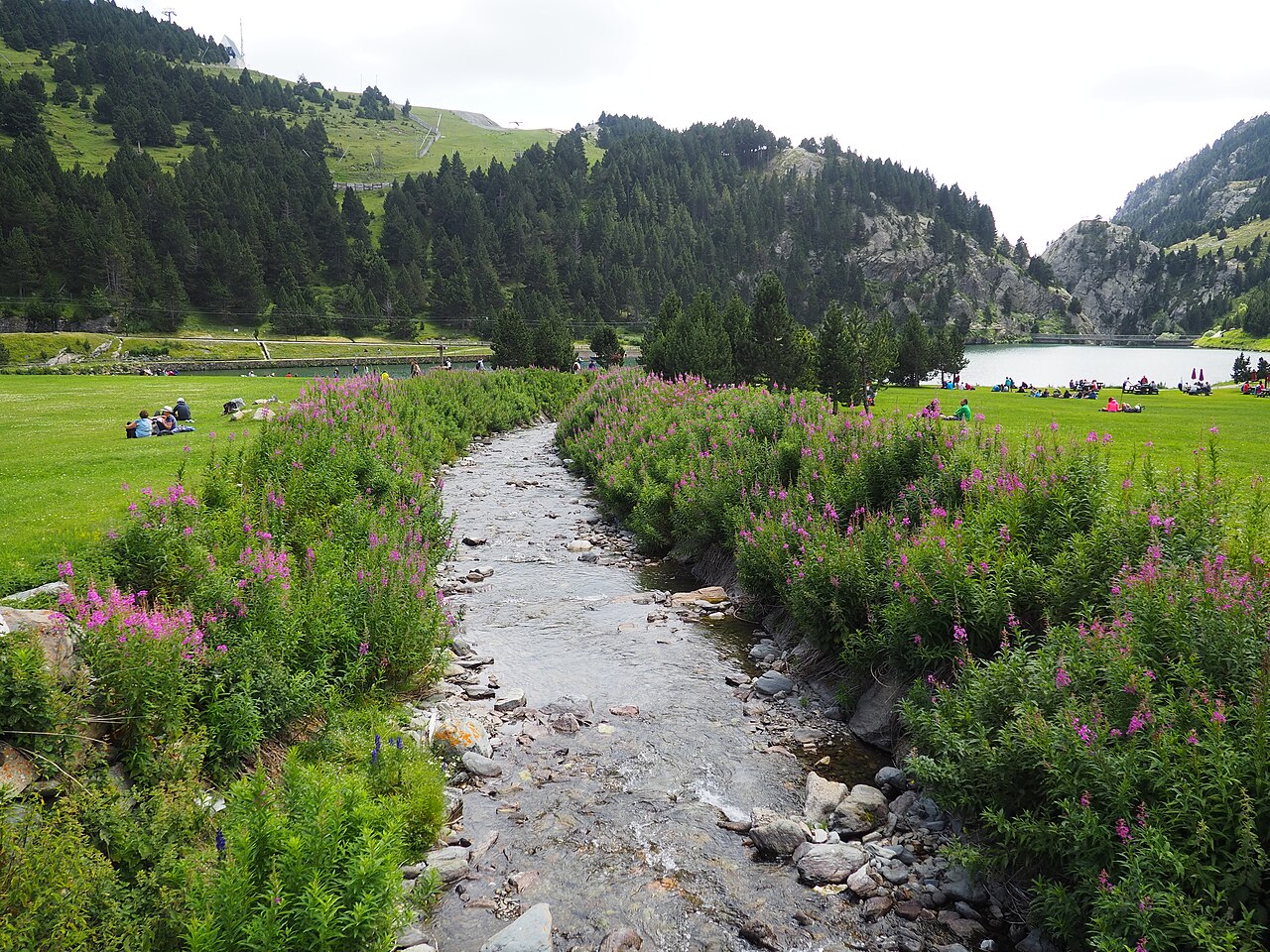
The landscape changes considerably depending on the season. In winter, snow covers the meadows and mountains, transforming Núria into a completely white landscape. During spring and summer, alpine flowers appear and the meadows regain their colour, while autumn offers a spectacular combination of changing hues.
How to get to Vall de Núria from Barcelona
From Barcelona to Queralbs, the journey is approximately 125 kilometres by road and can take around one hour and forty-five minutes, although the travel time depends on traffic and your starting point.
The usual route is:
Barcelona – Granollers – Vic – Ripoll – Ribes de Freser – Queralbs
Once you reach Queralbs, the most special part of the journey begins: travelling to Núria by rack railway.
It is also possible to travel from Barcelona by public transport, taking the train to Ribes de Freser and then connecting with the Núria Rack Railway.
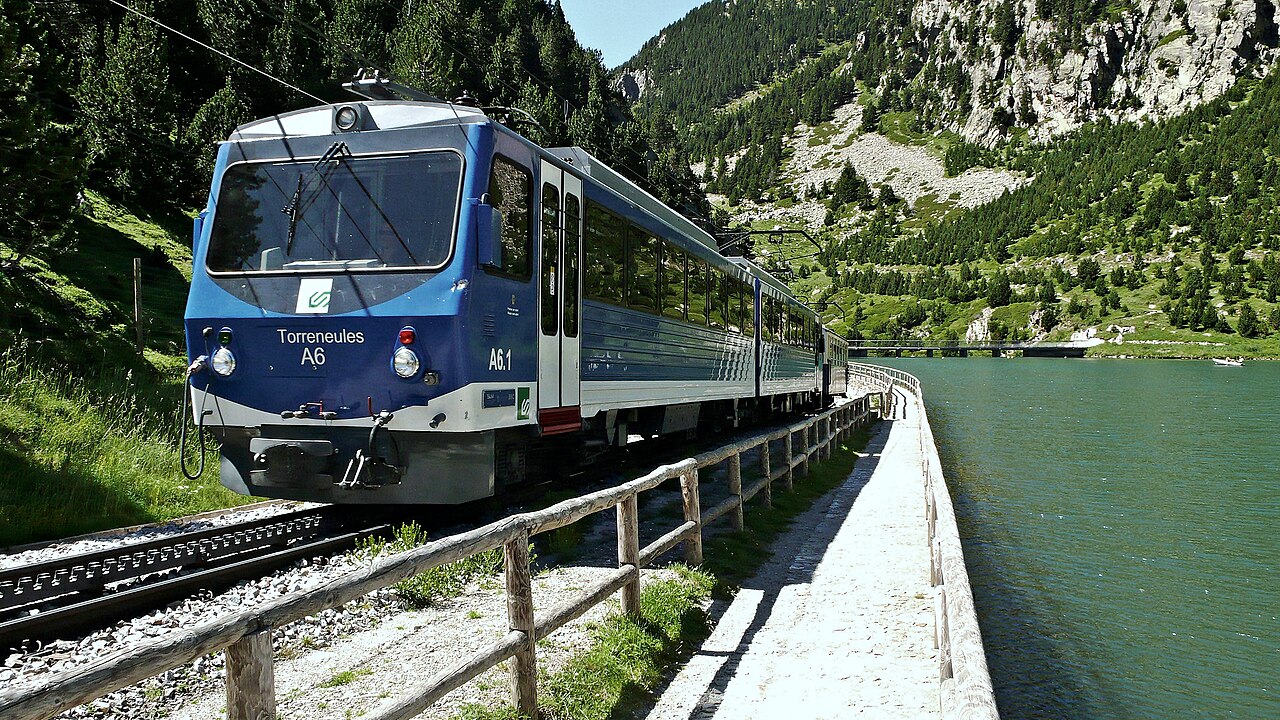
The Núria Rack Railway
The Rack Railway is much more than a means of transport. It is one of the defining experiences of the journey.
The route is approximately 12.4 kilometres long and climbs almost 1,000 metres in elevation before reaching the valley. Along the way, you can watch the landscape gradually change as the train climbs higher into the mountains.
The railway was inaugurated in 1931 and has been an inseparable part of Núria’s history ever since.
For many visitors, arriving by rack railway is one of the most memorable moments of the trip.
How much does it cost to get to Núria?
Prices depend on the departure point, the visitor’s age, the season and the type of ticket.
As a general reference, a return ticket between Queralbs and Núria costs around €31 per adult, while the price from Ribes is somewhat higher.
There are also different ticket options and combinations that may include activities or additional services.
For this reason, if you are planning a specific getaway, it is advisable to check the price for your chosen dates before organising your trip.
The History of Vall de Núria
Núria’s history is closely linked to shepherding, ancient mountain routes and pilgrimage.
For centuries, shepherds used the valley’s meadows for grazing, and the area eventually also became an important pilgrimage destination.
But if there is one story that has remained particularly closely associated with Núria, it is the legend of Saint Gil and the Virgin of Núria.
The Legend of Saint Gil
According to tradition, Saint Gil arrived in the valley around the year 700.
This saint, who was of Athenian origin, is said to have lived in Núria for several years. Legend has it that he carved an image of the Virgin and also made a cross, a cooking pot and a bell.
When he had to leave the valley, he hid these objects inside a cave.
Centuries later, a pilgrim named Amadeus is said to have reached Núria following a revelation telling him to search for the image of the Virgin.
Tradition dates the discovery to 1079.
The cross, cooking pot and bell were also found alongside the image. These four objects have remained closely associated with the identity of the sanctuary ever since.
The Virgin of Núria
The image currently venerated is a Romanesque wooden carving generally dated to between the 12th and 13th centuries.
The Virgin is depicted seated as a Virgin in Majesty, with the Child resting on her left knee.
One of the most curious features of the statue is its dark appearance, traditionally associated over the centuries with candle smoke, humidity and the passage of time. This colouring gave rise to the traditional nickname Moreneta del Pirineu, meaning “Little Dark Virgin of the Pyrenees”.
The statue also displays some unusual characteristics, such as uncovered hair and ears, as well as clothing associated with the figure of a shepherdess.
The Tradition of the Cooking Pot and Bell
One of Núria’s best-known traditions is associated with fertility.
According to popular tradition, women who wished to have children would place their heads beneath the Pot of Saint Gil while the bell was rung.
Each ring symbolically represented a child.
Over time, this ritual has become one of the most famous and curious traditions associated with the sanctuary.
Beyond its religious significance, it forms part of Núria’s cultural and popular heritage and continues to attract the interest of visitors.
The Sanctuary of Núria
The present-day sanctuary originated from a group of buildings that evolved over the centuries.
The current church was inaugurated in 1911, and additional buildings and spaces were subsequently added.
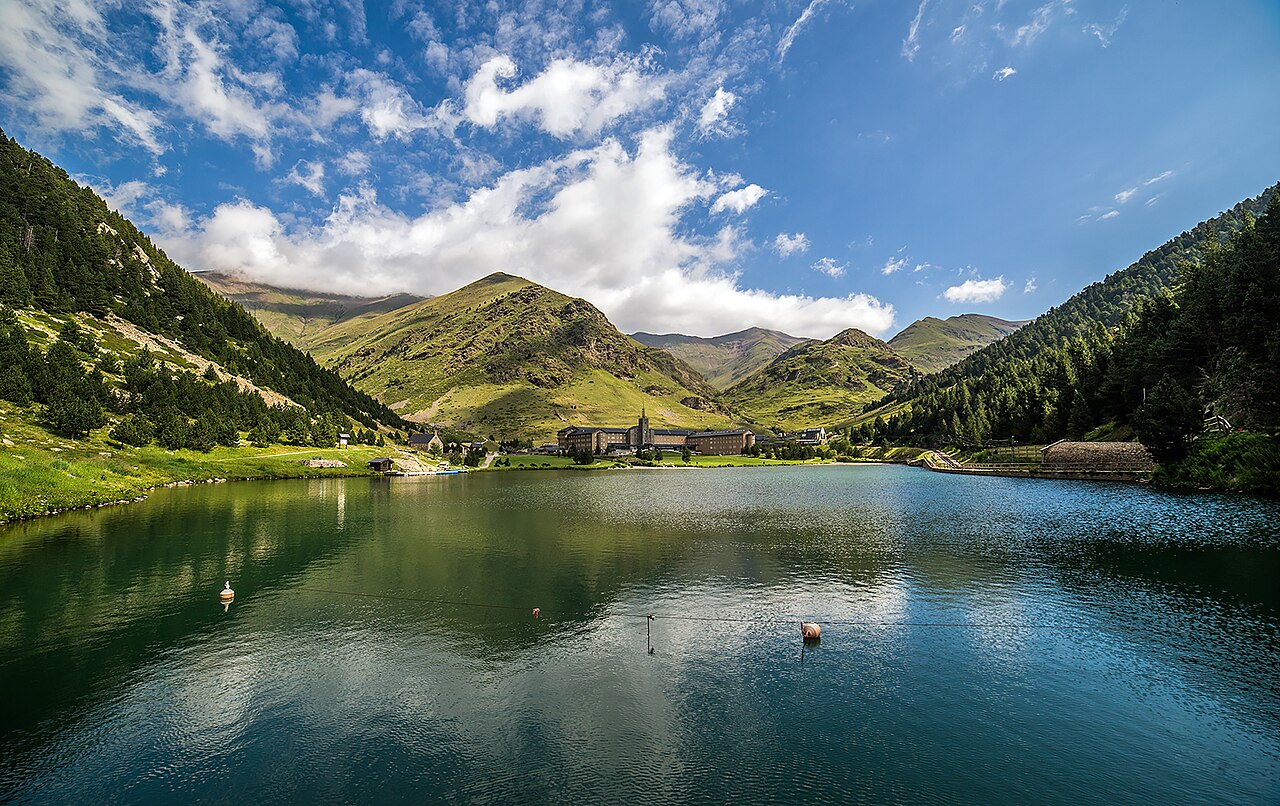
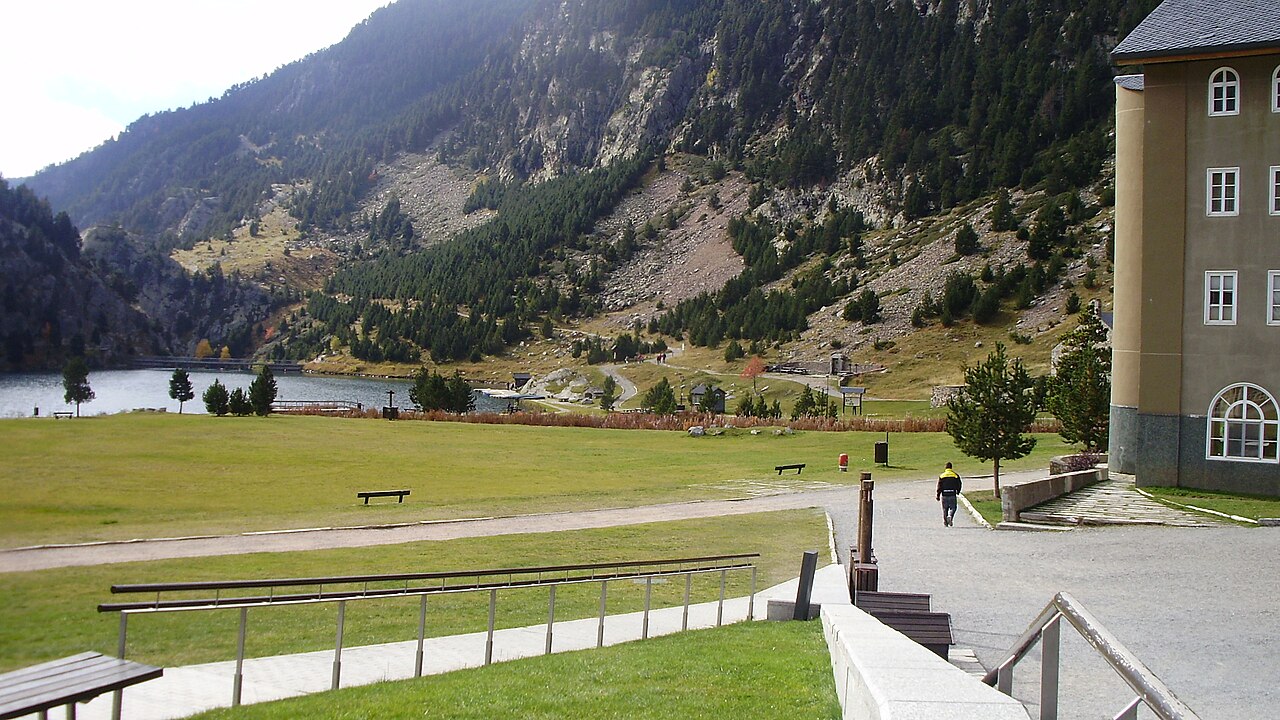
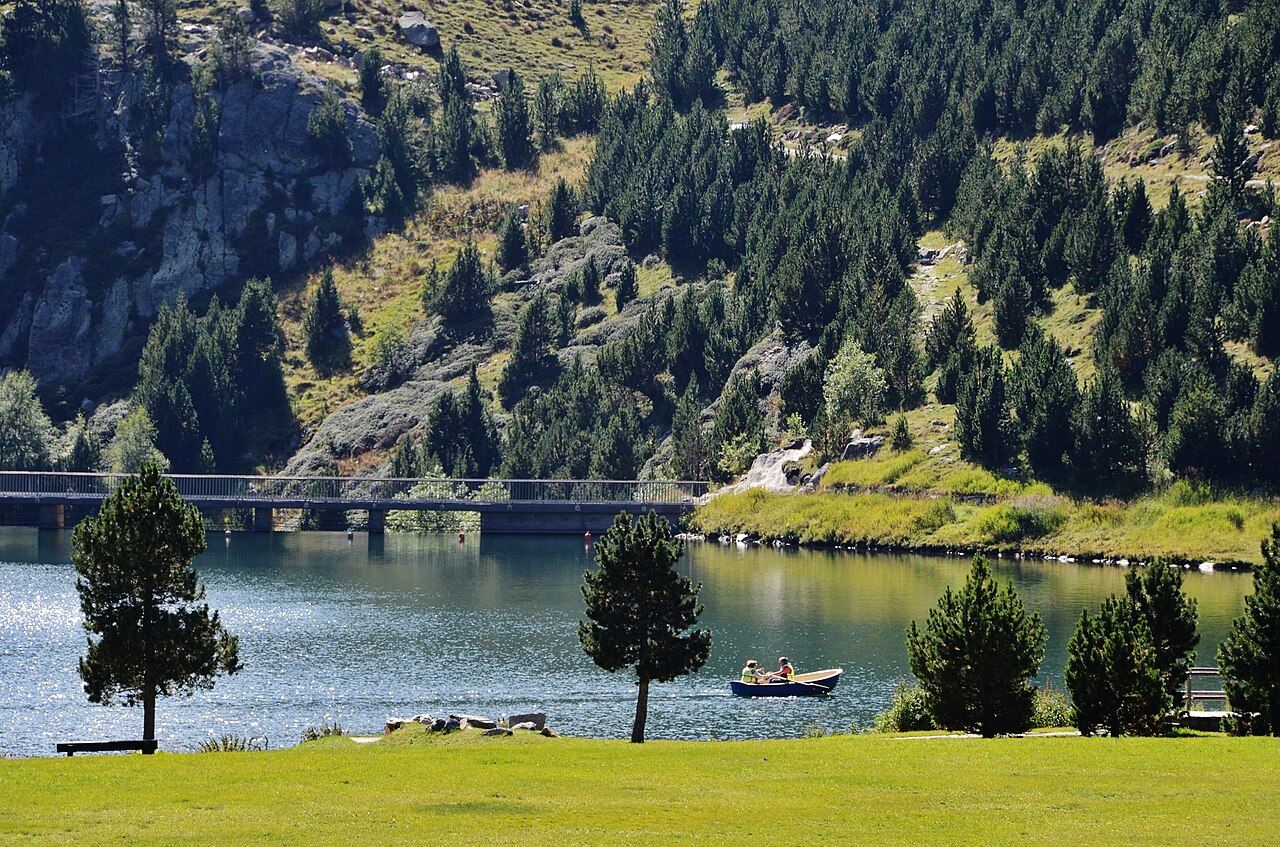
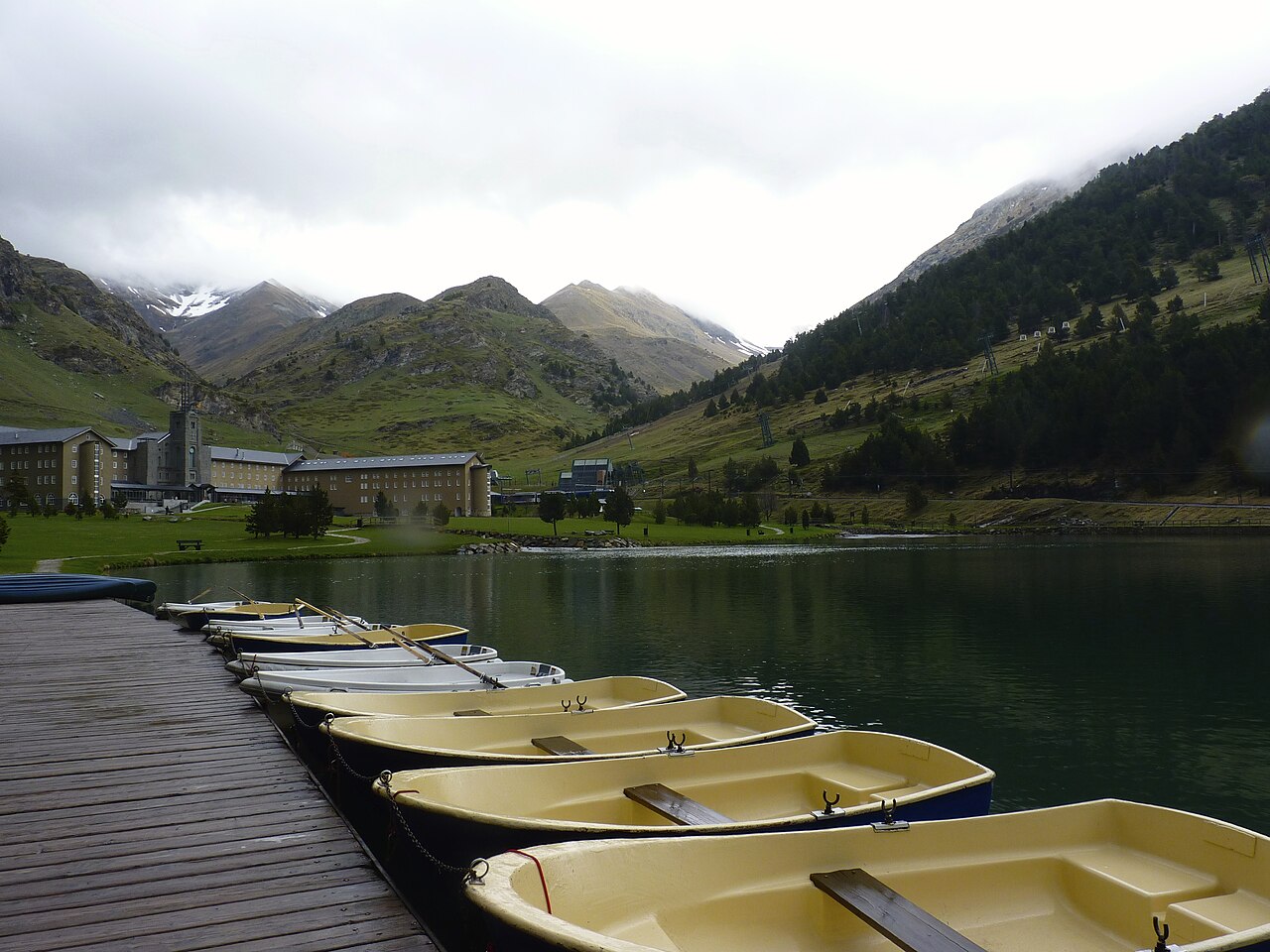
Today, the complex forms the heart of the valley and stands beside the lake, surrounded by mountains.
The combination of the sanctuary, lake and surrounding peaks creates one of the most recognisable landscapes in the Catalan Pyrenees.
Núria and the 1931 Statute
Núria’s history is not exclusively connected with religion and the mountains.
In 1931, the preliminary draft known as the Statute of Núria was drawn up in this valley, becoming one of the significant episodes in Catalonia’s political history during the 20th century.
The fact that such an isolated mountain location became the setting for this event adds another historical dimension to the valley.
Skiing in Vall de Núria
Yes, you can ski in Núria.
During winter, the valley becomes a mountain resort specialising in snow-related activities.
It has approximately 7 kilometres of marked ski runs, distributed across different levels of difficulty:
3 green runs.
3 blue runs.
3 red runs.
2 black runs.
There is also a dedicated sledging area and various other snow-related activities.
The resort is particularly appealing to beginners, families and people looking to combine outdoor sports with spectacular mountain scenery.
How much does skiing cost?
Prices vary depending on the day and the type of pass selected.
As a general reference, combined passes are available that include the return rack railway journey and access to the ski slopes, with prices that can be around €38 per adult under certain conditions.
There are also options for beginners and various family packages.
Ski equipment, lessons and other services can be booked separately.
Things to Do in Vall de Núria
One of Núria’s greatest attractions is that it is not exclusively a winter destination.
During the snow-free months, the valley becomes an excellent starting point for hiking and mountain activities.
Options include:
Hiking.
High-mountain excursions.
Family-friendly routes.
Nature photography.
Wildlife watching.
Birdwatching.
Botany.
Excursions along historic mountain paths.
Cable car rides.
Family activities.
Fishing and water activities during certain periods.
Skiing and snowshoeing in winter.
Sledging.
The Camí Vell de Núria
One of the most iconic routes is the Camí Vell de Núria, the old path connecting Queralbs with the valley before the rack railway was built.
It is particularly interesting because it allows visitors to experience how people used to reach Núria in the past.
The path passes through different mountain environments and offers views of waterfalls, forests, rocky walls and the river.
For those who want to experience Núria at a slower pace, hiking up and then returning by rack railway can make for an excellent day trip.
The Olla de Núria
For mountain enthusiasts, one of the major routes is the Olla de Núria.
This is a high-mountain traverse following the peaks surrounding the valley.
It is a demanding route requiring good physical fitness and mountain experience. The difficulty increases considerably in snow, ice or adverse weather conditions.
This is not a route to undertake without preparation: before setting out, it is important to check the weather forecast and current ground conditions.
Puigmal
At 2,913 metres, Puigmal is one of the great peaks of the Eastern Pyrenees.
Climbing it from Núria is one of the usual objectives for mountaineers visiting the valley.
From the summit, in good visibility, you can enjoy an impressive panorama of the Pyrenean mountains.
In winter, however, the ascent changes completely and may require specific high-mountain skills and equipment.
Flora: An Alpine Garden
Nature is one of the great protagonists of Núria.
As you climb higher, different vegetation zones appear, progressing from forests to subalpine and alpine meadows.
Species found in the area include:
Black pine.
Scots pine.
Birch.
Ash.
Oak.
Rhododendron.
Gentians.
Fescues.
Rampions.
Pasque flowers.
Yellow martagon lilies.
One of the most spectacular flowers is the yellow martagon lily, a yellow-flowered lily that stands out particularly during its blooming season.
Spring and summer are the most interesting months for those who enjoy botany.
Wildlife in Vall de Núria
Wildlife is another of the valley’s great attractions.
One of the most emblematic animals is the chamois, perfectly adapted to the rocky terrain and steep slopes of the high mountains.
It is also possible to spot marmots, particularly during the warmer months.
Their distinctive whistles can often be heard before the animals themselves are located.
Other animals found in the area include:
Foxes.
Roe deer.
Wild boar.
Hares.
Stoats.
Various small mammals.
Wildlife watching requires patience and respect. Wild animals should never be fed or chased in order to obtain a photograph.
Birdwatching in Vall de Núria
Núria also offers excellent opportunities for birdwatching enthusiasts.
The landscape combines forests, meadows, rocky areas, streams and high mountain terrain, providing a variety of habitats within a relatively small area.
The species found in the area include different forest birds, meadow birds and large birds of prey.
Some particularly interesting species for birdwatchers include:
Black woodpecker.
Tengmalm’s owl.
Red crossbill.
Northern wheatear.
Skylark.
Grey wagtail.
White-throated dipper.
Various corvids and birds of prey.
Spring and summer offer greater activity for many species, although sightings always depend on weather conditions and animal behaviour.
Butterflies and Other Small Mountain Creatures
When warm weather arrives, Núria’s meadows fill with flowers, bringing with them an enormous variety of insects.
Butterflies are particularly noticeable during the summer months.
You may also encounter:
Bees.
Bumblebees.
Grasshoppers.
Crickets.
Beetles.
Different species of pollinators.
The relationship between flowers, insects and birds is essential to understanding how high-mountain ecosystems function.
For nature photographers, Núria’s meadows can offer excellent opportunities during the flowering season.
Where to Stay in Vall de Núria
One of the advantages of spending the night in the valley is being able to enjoy Núria after the main influx of visitors has left.
The accommodation options include several possibilities.
Hotel Vall de Núria
The hotel is located next to the sanctuary and allows you to stay literally in the heart of the valley.
It is particularly appealing to those who want to enjoy several activities without having to travel in and out of the valley every day.
Apartments
The apartments offer greater independence and can be practical for families or groups.
Having a kitchen and private space makes it easier to organise a multi-day stay with greater flexibility.
Hostel
There is also mountain accommodation in the area of Pic de l’Àliga, suitable for those looking for a simpler experience closely connected with the mountains.
How Much Does It Cost to Stay in Núria?
Prices vary considerably depending on the season.
Staying:
during the week is different from staying at the weekend;
in summer is different from winter;
during the snow season is different from the low season;
in a room is different from an apartment;
on an accommodation-only basis is different from a package including activities.
For this reason, the actual price needs to be checked for the specific dates.
For a budget-friendly getaway, it may be worthwhile comparing accommodation, transport and activities as a single package rather than booking each service separately.
Mountain Cuisine
After a day of hiking or skiing, food becomes even more important.
In Núria, you will find options inspired by Catalan and mountain cuisine, as well as more informal alternatives.
Options may include:
Hot dishes.
Meat dishes.
Grilled food.
Burgers.
Sandwiches.
Salads.
Pasta.
Homemade-style cuisine.
Local products.
Food is a great way to complete the mountain experience and discover some of the characteristic products of the region.
Vall de Núria in Spring, Summer, Autumn and Winter
Spring: Water and Flowers
The melting snow feeds streams and waterfalls, while vegetation begins to awaken.
It is a wonderful time for landscape photography and observing the first flowers of the season.
Summer: Hiking and Nature
The summer months are ideal for hiking, climbing peaks, watching marmots, looking for birds and discovering alpine flora.
It is also the most interesting season for observing butterflies and other insects.
Autumn: Colours and Tranquillity
The changing colours of the vegetation transform the landscape.
It also tends to offer a quieter atmosphere than the height of the summer season.
Winter: Snow and Skiing
Núria completely changes its appearance.
The mountains, trees and lake become surrounded by snow, and activities focus on skiing, sledging, snowshoeing and other winter experiences.
Vall de Núria with Children
Núria is also an interesting destination for a family getaway.
The rack railway journey itself often becomes an adventure for younger visitors.
Once in the valley, families can enjoy easy walks, visit the sanctuary, explore the lake, watch birds and marmots, or take part in snow activities during winter.
The key is to choose routes and activities according to the children’s age and the weather conditions.
How Many Days Do You Need to Discover Núria?
For a first visit, one full day is enough to see the main highlights.
However, staying for one or two nights considerably changes the experience.
With two days, you can combine:
Day 1: Rack Railway + sanctuary + lake + walk through the valley.
Day 2: Hiking route + wildlife and flora watching + return journey.
During winter, a two-day stay allows you to combine skiing with other snow activities.
For mountain enthusiasts, the valley can easily become the base for a multi-day adventure.
Why Is Vall de Núria Worth Visiting?
Núria offers something that few mountain destinations can.
It is not simply somewhere you arrive at, take a photograph and leave.
The rack railway journey, the sanctuary, the story of Saint Gil, the legend of the Virgin, the historic paths, the landscape, the peaks, wildlife and mountain activities all form part of the same experience.
In summer, you can follow the tracks of marmots and chamois, watch birds, discover alpine flowers and walk along historic mountain paths.
In winter, the landscape is transformed and snow turns the valley into a completely different setting.
And throughout the year, one unique feature remains: there is no road leading into the valley.
We Design Your Vall de Núria Experience
Would you like to discover Vall de Núria but prefer to have someone organise the experience for you?
We can help you create a personalised proposal tailored to your interests, dates and budget.
We can design experiences for:
Day trips.
Weekend getaways.
Family trips.
Hiking routes.
Nature experiences.
Landscape and wildlife photography.
Birdwatching.
Botany and butterfly experiences.
Winter getaways.
Skiing and snow activities.
Gastronomic experiences.
Couples’ getaways.
Group programmes.
Special proposals and tailor-made experiences.
Romantic getaways.
Not every visitor is looking for the same thing. That is why we create every proposal from scratch, taking into account what you would like to do, how much time you have and what kind of experience you are looking for.
Would you like us to prepare your proposal?
Fill in our contact form and tell us what you have in mind.
Let us know your preferred date, number of people, interests and approximate budget, and we will organise a tailor-made proposal for you.
You choose how you want to experience Vall de Núria. We design the experience.
El Tren Cremallera de la Vall de Núria circulando junto al embalse en la Vall de Núria – By Alberto-g-rovi – Own work, CC BY-SA 3.0, https://commons.wikimedia.org/w/index.php?curid=26966978.
Plano de pistas de la estación de esquí de Vall de Núria – By Valldenuria Ferrocarils de la Generalitat de Catalunya – Own work, Public Domain, https://commons.wikimedia.org/w/index.php?curid=11886788.
Camino por la Vall de Núria – By Pere López – Own work, CC BY-SA 3.0, https://commons.wikimedia.org/w/index.php?curid=32628271.
La estación de montaña con el santuario y el embalse de la Vall de Núria – By Till F. Teenck – Own work, CC BY-SA 3.0, https://commons.wikimedia.org/w/index.php?curid=3951140.
«El Santuario de la Virgen de Núria en recuerdo y agradecimiento al Papa Francisco por su encíclica sobre la ecología humana integral «Alabado seas, Mi Señor»» – By Jordi Gili – Own work, CC BY 4.0, https://commons.wikimedia.org/w/index.php?curid=154433465.
Perspectiva desde el Lago de la Vall de Núria – By Carmemolistvidal – Own work, CC BY-SA 4.0, https://commons.wikimedia.org/w/index.php?curid=122922921
Perspectiva a pie en la Vall de Núria – By Teresa Grau Ros from Barcelona, Catalunya – La vall de Núria_Queralbs_P8090091, CC BY-SA 4.0, https://commons.wikimedia.org/w/index.php?curid=177911098.
Perspectiva a pie en la Vall de Núria – By klimmanet, CC BY 3.0, https://commons.wikimedia.org/w/index.php?curid=57401465.
Perspectiva del Lago en la Vall de Núria – By Reimeu1 – Own work, CC BY-SA 4.0, https://commons.wikimedia.org/w/index.php?curid=73296226.
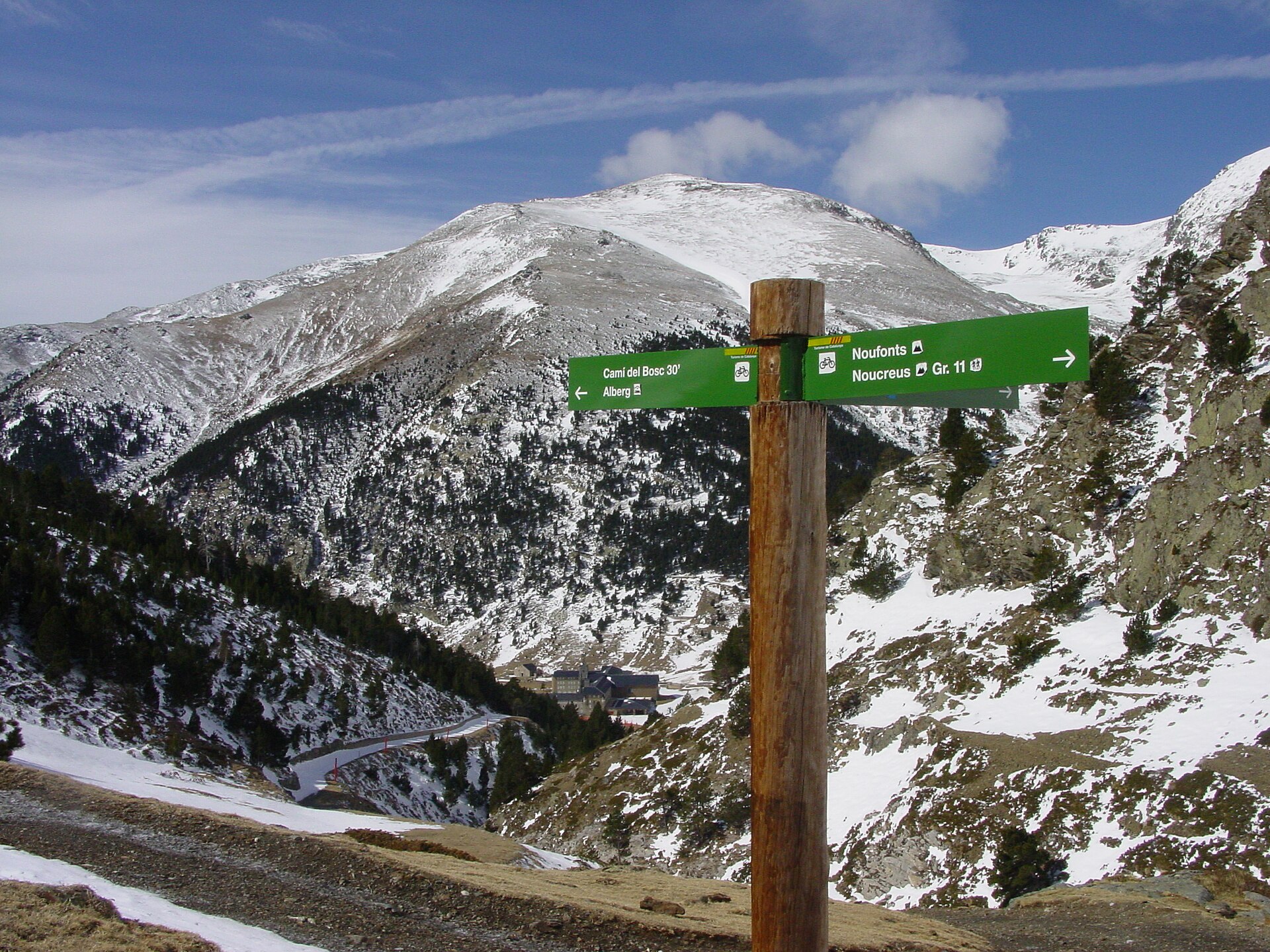
Señalización de caminos en el valle de Noucreus, cerca de Núria – By Otto Hundsdorfer – Self-photographed, CC BY-SA 2.0 de, https://commons.wikimedia.org/w/index.php?curid=7277515.
Vall de Núria – By MARIA ROSA FERRE ✿ – Flickr: Vall de Núria, CC BY-SA 2.0, https://commons.wikimedia.org/w/index.php?curid=33140718.
Perspectiva desde el Lago de la Vall de Núria – By Victor Molas – Own work, CC BY-SA 3.0, https://commons.wikimedia.org/w/index.php?curid=32682032.
La Vall de Núria – By Kent Wang – Own work, CC BY-SA 4.0, https://commons.wikimedia.org/w/index.php?curid=153621948.
Albergue Pic de l’Àliga – By Jorge Franganillo – Alberg Pic de l’Àliga, CC BY 2.0, https://commons.wikimedia.org/w/index.php?curid=121249247.
In our “Charming Places” section, you will find a carefully curated selection of the most remarkable towns, valleys, and corners throughout Catalonia. From the magical landscapes of the Garrotxa volcanic region, to the impressive Montserrat mountains, and the serene Pyrenean valleys, each place offers unique …
Between the Mountains, Snow, Forests and Culture of the Val d’Aran In the highest part of the Val d’Aran, where the mountains begin to open out into a vast plateau of alpine meadows, we find one of the most distinctive landscapes in the Pyrenees: the …
Some places surprise you with their landscapes, others with their history, and some because of the unique circumstances that make them truly exceptional destinations. Llívia combines all three.
Located in the heart of Cerdanya, at an altitude of around 1,224 metres, Llívia is a Catalan village completely surrounded by French territory. Its unusual geographical situation makes it one of the most fascinating enclaves in the Pyrenees and an ideal destination for those wishing to discover history, architecture, nature, gastronomy and traditions all in one journey.
A Catalan Village Surrounded by France
Llívia’s history is closely connected to the Treaty of the Pyrenees of 1659. Following the agreement, it was established that certain territories in Cerdanya would become part of France. However, Llívia was excluded from the transfer because it held the title of town, granted in 1528 by Emperor Charles I.
The subsequent Treaty of Llívia, signed on 12 November 1660, confirmed this situation and gave rise to the unique enclave we know today: a Catalan town geographically separated from the rest of Catalonia and surrounded by French territory.
This historical circumstance has profoundly shaped Llívia’s identity. For centuries, its inhabitants have maintained social, economic and cultural relationships with communities on both sides of the border.
Today, this geographical peculiarity should not be understood merely as a curiosity. It is also an opportunity to understand how political borders can coexist with a deeply rooted culture, language, traditions and way of life.
Llívia and Ancient Iulia Libica
Long before becoming a border enclave, Llívia was already of considerable strategic importance.
The town is associated with Iulia Libica, a Roman settlement linked to Cerdanya. The Roman presence left important archaeological remains and represents one of the key periods in understanding the history of the town.
The location chosen for the settlement was no coincidence. From Llívia, much of the Cerdanya plain could be surveyed, making it a strategic location throughout different historical periods.
Today, walking through its streets means travelling through a landscape where different historical layers overlap: Roman, medieval, modern and contemporary.
Llívia Castle: History on the Mountain
One of the town’s great landmarks is Llívia Castle, located on Puig del Castell.
The hill was occupied from very ancient times, and there are indications of a Roman presence. The first documentary reference to the castle dates back to the year 672, when it was mentioned as Castrum Libyae. The fortress subsequently became highly important during the Middle Ages.
The castle was rebuilt and strengthened during medieval times, becoming a strategically significant stronghold. During the Catalan Civil War, it endured a long siege and was eventually conquered in 1479, after which its destruction was ordered.
Today, visitors can explore the restored remains and enjoy magnificent panoramic views of Cerdanya and the surrounding Pyrenean mountains from the top.
Depending on visibility conditions, some of the area’s major peaks can be seen from here, including Puigmal, Tosa d’Alp, Moixeró, Cadí, Puigpedrós and Carlit.
The Church of Mare de Déu dels Àngels
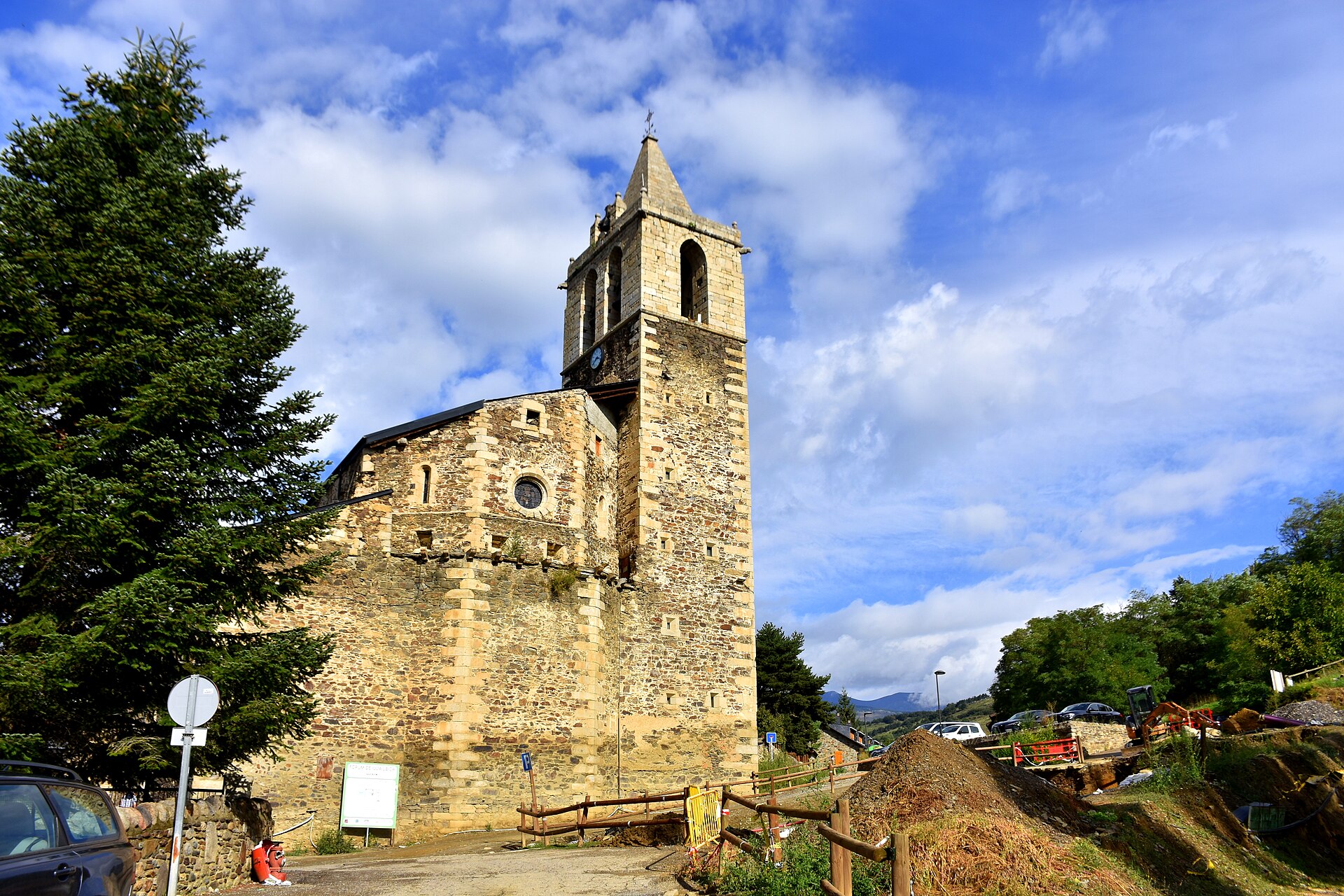
In the historic centre stands the Church of Mare de Déu dels Àngels, one of the buildings that best represents Llívia.
The present church was completed in 1617 and has a solid, almost fortified appearance, reflecting the strategic character of the town during different periods of its history.
Its interior contains several elements of artistic and historical interest, including a Renaissance doorway, medieval ironwork, a Baroque altarpiece, a baptismal font and funerary stones from different centuries. A particularly notable feature is a polychrome Christ dating from the transition between the Romanesque and Gothic periods.
Bernat de So Tower
Another essential architectural landmark is the Bernat de So Tower.
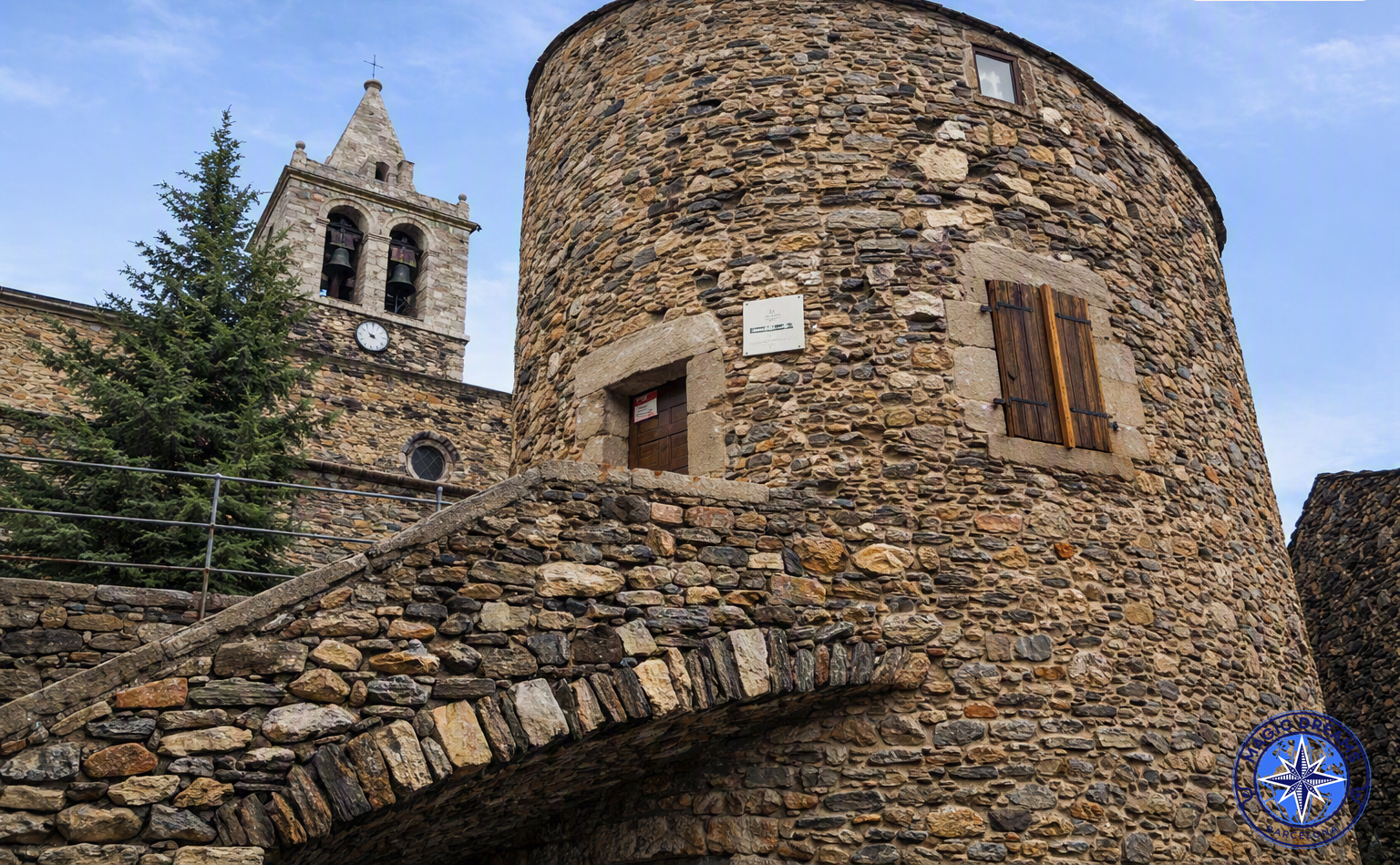
The present tower was built between 1584 and 1585 and was associated with the defensive needs of the town. It subsequently served various purposes and was used as a prison from 1834 onwards.
Over time, the building acquired a new role and today forms part of Llívia’s historical and cultural heritage.
Its presence is a reminder that Llívia was not simply a place of passage, but a community that for centuries had to protect its territory and strategic position.
Strolling Through the Old Town
One of the best ways to discover Llívia is simply to walk through its streets.
The historic centre preserves characteristic elements of traditional Cerdanya architecture: stone façades, slate roofs, granite doorways and wooden balconies and features.
The lintels of many houses also reveal part of the history of the families who once lived there. Some date from the 17th, 18th and 19th centuries and reflect the social and economic position of their former owners.
Farmàcia Esteva: A Treasure in the History of Medicine
One of Llívia’s most remarkable attractions is the Municipal Museum, located in the Town Hall building.
Its best-known collection is the Farmàcia Esteva, considered one of Europe’s oldest preserved pharmacies open to the public, with origins dating back to the beginning of the 17th century.
The collection preserves furniture, containers, instruments and various objects related to the history of pharmacy. The museum also offers an insight into local history, archaeology, ethnology and botany.
Life Between Two Territories
Llívia’s unique geographical situation has created a close relationship over the centuries with the communities of French Cerdanya.
Families in the area have historically maintained commercial, educational, family and social ties on both sides of the border. This reality remains visible today.
Children in Llívia can attend school locally within the Catalan education system, while relations with nearby French communities form a natural part of everyday life.
The Escola Jaume I provides education from the age of three through the sixth year of primary school and, among other activities, offers French and English language learning together with various cultural and educational initiatives.
In terms of employment and economic activity, Llívia currently combines tourism, hospitality, commerce, services, agriculture and livestock farming. Its proximity to communities on both sides of the border also facilitates a cross-border economic dynamic that forms part of everyday life in Cerdanya.
However, working on one side or the other of the border involves different tax, employment and social security obligations, meaning that each situation depends on the individual circumstances of the worker.
Nature: Mountains, Forests and Meadows
Llívia is surrounded by an exceptional natural environment.
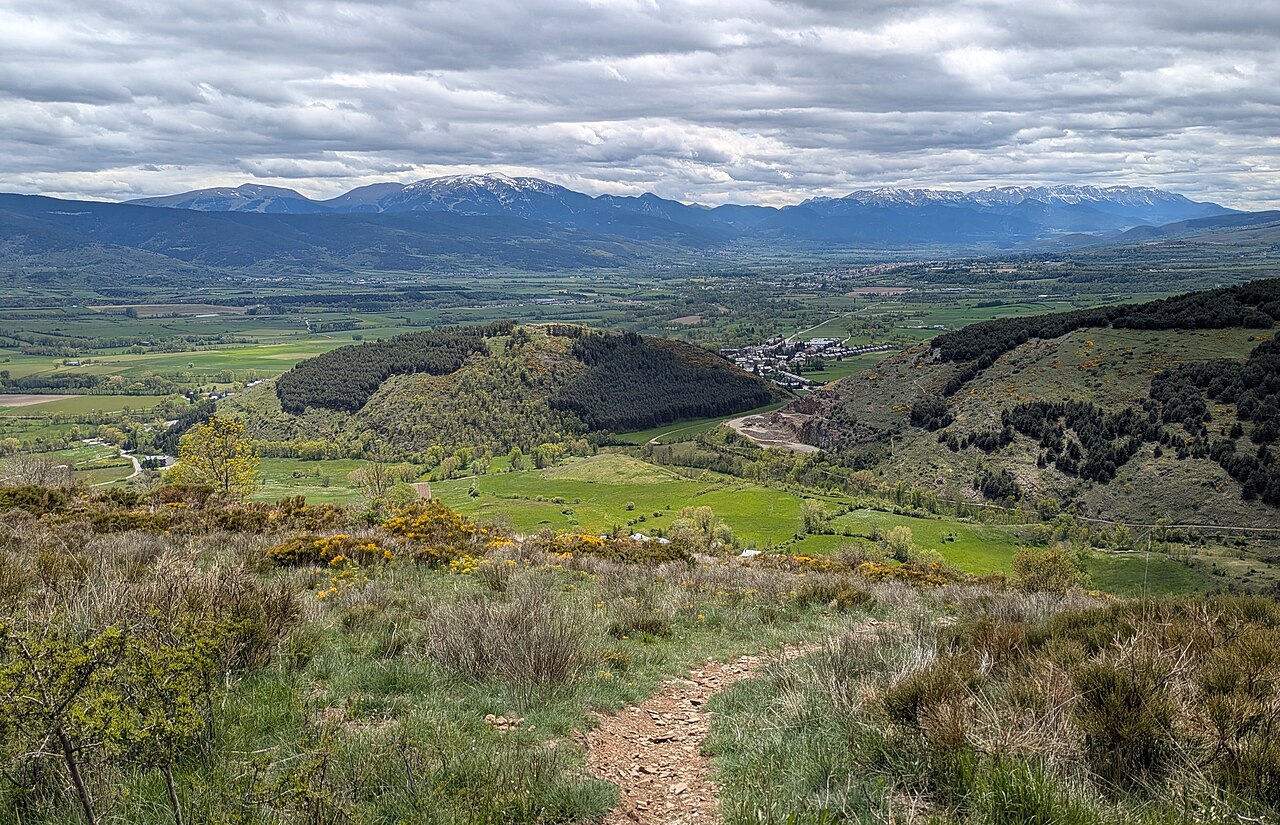
Cerdanya combines a broad plain situated at around 1,200 metres above sea level with mountains, forests, rivers, meadows and high-mountain landscapes. This setting provides opportunities for excursions throughout almost the entire year.
The Pyrenean forests around Llívia include different pine species as well as areas of deciduous vegetation, while open landscapes are home to meadows and a wide variety of mountain flora.
For nature lovers, the area also offers countless opportunities for hiking, photography, wildlife watching and outdoor activities.
A Paradise for Birdwatching
Cerdanya is also a particularly interesting destination for birdwatching.
Around 220 bird species have been recorded in the region, including resident, summer, migratory and high-mountain species. Among them are ducks, booted eagles, yellow wagtails, rock thrushes and other species associated with different habitats.
In the nearby mountain and forest areas, it is also possible to encounter species such as the wallcreeper, rock ptarmigan, black woodpecker, boreal owl and capercaillie, although sightings depend on the season, habitat and terrain conditions.
For nature photographers, Llívia and Cerdanya offer an extraordinary setting: mountains, open skies, forests, meadows and wildlife that changes with the seasons.
Mountain Wildlife
The surrounding Pyrenean environment is also home to a fascinating variety of mammals.
In the mountain areas of Cerdanya and nearby natural spaces, visitors may encounter chamois, deer, roe deer, wild boar, marmots and other animals adapted to the area’s diverse landscapes and vegetation.
Observing wild animals always requires respect for the environment. Keeping a safe distance, remaining quiet and being patient are essential to avoid disturbing their natural behaviour.
Mountain Gastronomy
After walking, exploring and discovering the region, one of the great pleasures of visiting Llívia is undoubtedly its gastronomy.
Cerdanya’s cuisine is deeply connected to the mountains and to the products traditionally available in the region.
Potatoes, cabbage, meats, cured sausages, cheeses, mushrooms and hearty stews form part of a robust and comforting cuisine, particularly appealing during the colder months.
One of the region’s most representative dishes is trinxat de Cerdanya, traditionally prepared with potatoes, cabbage and bacon or crispy pork. It is a simple recipe, yet one that is deeply connected to the gastronomic identity of the region.
Other traditional dishes include escudella, mountain stews, meats and various preparations using local products.
Festivals and Traditions
Llívia maintains a calendar of celebrations that offers an insight into an important part of the town’s local identity.
Among them is Pasqüetes, Llívia’s main spring festival, which welcomes the arrival of spring with activities for all ages, an artisan fair, games, workshops, gastronomic events, music and traditional sardana dancing.
The festival of Sant Guillem, the town’s patron saint, is held during the third weekend of June and includes religious celebrations, a procession to the hermitage and sardanas.
Another particularly interesting tradition is the Transhumance Festival, revived in 2000. During the celebration, livestock is accompanied towards the mountain pastures, reviving a traditional practice closely associated with livestock farming and Pyrenean life.
On 15 August, activities connected with local flora are also held, including the creation of floral arrangements and botanical photography competitions.
Music also plays an important role thanks to the Cerdanya Music Festival, whose connection with Llívia dates back to 1982.
How to Get to Llívia from Barcelona
From Barcelona, the journey to Llívia is approximately 155–160 kilometres by road and can take around two hours, although actual travel time can vary considerably depending on traffic, weather conditions and congestion around the Cadí Tunnel.
One of the usual routes is to leave Barcelona via the C-16, travel through the Cadí Tunnel and continue towards Cerdanya. From Puigcerdà, travellers then take the N-154 to reach Llívia.
The road connecting Puigcerdà with Llívia is approximately seven kilometres long and crosses French territory before reaching the enclave.
For an organised excursion, particularly in winter or during weekends and holiday periods, it is advisable to plan the journey in advance.
What to Visit Around Llívia
One of the advantages of choosing Llívia as a destination is that it can easily be combined with other places of great interest in Cerdanya and the Pyrenees.
Depending on the time available, you can extend your experience by visiting:
Puigcerdà, with its historic centre, lake and lively commercial atmosphere.
Bourg-Madame, a French town located practically next to Puigcerdà.
Font-Romeu, known for its mountain surroundings and outdoor activities.
Mont-Louis, a fortified town of great historical interest.
Les Angles, particularly attractive for mountain activities.
Les Bulloses and the Carlit area, offering some of the most spectacular natural landscapes in the region.
In this way, a visit to Llívia can easily become a much broader experience across Cerdanya and the Pyrenees.
Llívia: A Destination to Discover at Your Own Pace
Llívia is not a destination that should be visited simply to take a photograph beside a sign or to experience a geographical curiosity.
Its true appeal emerges when you walk through its streets, admire its architecture, discover its history, visit its historic pharmacy, climb to the castle, take in the landscape and enjoy the local cuisine.
It is precisely this combination of history, culture, nature and everyday life that makes Llívia such a special destination.
Here, the border ceases to be merely a line on a map and becomes part of the history of a community that has managed to preserve its identity for centuries.
Discover Llívia with Magic Dreams Barcelona
Discovering Llívia can be much more than simply taking a day trip.
It can become an experience in which you disconnect, breathe, learn, discover, share and enjoy one of the most special corners of Catalonia and the Pyrenees.
At Magic Dreams Barcelona, we take care of every detail so that you do not have to worry about anything.
We design private and personalised experiences so that you can discover Llívia, Cerdanya, its villages, history, gastronomy and landscapes in a truly special way, adapting each experience to your preferences, interests and desired pace.
We take care of the organisation, transportation, visits, gastronomic experiences, activities, the small details and everything else that can make your journey genuinely memorable.
Because we want you to forget about the organisation and concentrate on what really matters:
enjoying, discovering and being happy.
For us, travelling is not simply about arriving at a destination.
It is about how a place is experienced, what you feel, what you discover and which memories remain long after you return home.
Let us show you Llívia in a different, thoughtful and personalised way.
Magic Dreams Barcelona
Unique experiences to discover extraordinary places, enjoy nature, explore our culture and create memories that last a lifetime.
Torre de Bernat de So de Llívia.
Por Bernard-Boehne, CC BY-SA 3.0, https://commons.wikimedia.org/w/index.php?curid=23423.
Marmota alpina – Fauna del entorno – Por François Trazzi. – François Trazzi., CC BY-SA 3.0, https://commons.wikimedia.org/w/index.php?curid=178597.
Perspectiva general de Llívia desde el Turó del Castell – Marcbel, Public domain, via Wikimedia Commons.
Museo Municipal (Farmacia antigua) – By Marcbel – Own work, Public Domain, https://commons.wikimedia.org/w/index.php?curid=7586288.
Detalle interior del Museo Farmacia Esteva – Alberto-g-rovi, CC BY 3.0 , via Wikimedia Commons.
Detalle interior del Retablo Mayor de la Iglesia de la Mare de Déu dels Àngels en Llívia,
Perspectiva exterior de la Iglesia de la Mare de Déu dels Àngels en Llívia – By Angela Llop – https://www.flickr.com/photos/angela_llop/52335262067/, CC BY-SA 2.0, https://commons.wikimedia.org/w/index.php?curid=122911019.
Águila Real, fauna del entorno – Juan Lacruz, CC BY 3.0 , via Wikimedia Commons.
Perspectiva de la distancia entre Llívia y Puigcerdà – https://en.wikipedia.org/wiki/User:Alan_Mattingly.