Etiqueta: Spanish recipes

Bombas de la Barceloneta – Barcelona’s most emblematic tapas.

Bombas de la Barceloneta – Barcelona’s most emblematic tapas.

Bombas de la Barceloneta are one of the most iconic and recognisable tapas in Barcelona. Born in the historic fishing district of La Barceloneta, they are part of the popular culinary tradition that transformed simple ingredients into small, generous and characterful bites. Traditionally associated with 

Romesco Sauce and Calçots

Romesco Sauce and Calçots

The great gastronomic ritual of Catalan cuisine Calçots with Romesco sauce are much more than a recipe: they represent one of the great gastronomic rituals of Catalonia. Closely associated with Valls and the Camp de Tarragona, calçots are a variety of tender green onion traditionally 

Catalan-Style Fideuà with Traditional Allioli.

Catalan-Style Fideuà with Traditional Allioli.

Maritime tradition, Mediterranean flavour and elegance in every bite

Catalan-style fideuà, prepared using the traditional rossejat de fideus technique, is a delicious interpretation of Mediterranean coastal cuisine. Although fideuà originated on the Valencian coast, Catalonia has embraced and adapted this dish thanks to its deep maritime heritage and its culinary traditions based on quality ingredients, time and local flavours.

Fideuà is traditionally associated with fishermen and working boats, where available fish and seafood were used to prepare an intensely flavoured stock. The noodles were then toasted before being cooked in the broth, creating a dish that was simple, nourishing and full of character.

In this Catalan-inspired version, we combine calamari, fresh king prawns, peas, green beans, carrot and tomato sofrito, finishing the dish with a traditional homemade allioli prepared in a mortar.

The result is a deeply aromatic fideuà with beautifully toasted noodles, a concentrated seafood flavour and a creamy garlic allioli that provides the perfect contrast.


Preparation Time

Approximately 40 minutes

Serves

3 people


Ingredients

For the Fideuà

  • 300 g nº 3 noodles
  • Calamari tentacles, to taste
  • 10 fresh king prawns
  • 1 small onion
  • 300 ml homemade seafood stock
  • ½ cup peas
  • A handful of round green beans
  • 1 carrot
  • 3 teaspoons grated fresh tomato
  • A small pinch of sugar, to balance the acidity of the tomato
  • Extra virgin olive oil
  • Sweet or hot paprika, to taste
  • 2 garlic cloves
  • Salt
  • A medium-sized paella pan or fideuà pan

For the Traditional Allioli

  • A ceramic or marble mortar
  • Wooden pestle
  • 3 garlic cloves
  • 500 ml extra virgin olive oil
  • Salt
  • A few drops of lemon juice
  • 1 egg yolk, only if needed to rescue a split emulsion

Step-by-Step Preparation

01 · Infuse the Olive Oil

Heat a generous base of extra virgin olive oil in the paella pan.

Add the peeled garlic cloves and gently fry them until lightly golden, allowing their flavour to infuse the oil.

Remove them before they become too dark or bitter.


02 · The Rossejat de Fideus

Add the noodles to the same pan.

Toast them over medium heat, stirring carefully so they become evenly golden.

This is one of the most important steps of the recipe.

The rossejat technique gives the noodles their characteristic toasted flavour and adds considerably more depth to the finished dish.

Once golden, remove the noodles from the pan and set them aside.


03 · Prepare the Sofrito

Add a little more olive oil to the pan.

Add the calamari, finely chopped onion, carrot and green beans.

Cook over medium heat until the onion becomes translucent and the vegetables begin to soften.

Add the peas.


04 · Add the Tomato

Add the grated fresh tomato.

If necessary, add a small pinch of sugar to balance its acidity.

Cook gently for several minutes until the sofrito becomes concentrated, aromatic and slightly reduced.


05 · Add the Noodles and Paprika

Return the toasted noodles to the pan.

Sprinkle the paprika evenly over the mixture.

Stir briefly.

Immediately add the hot seafood stock so that the paprika does not burn.


06 · Cook the Fideuà

Spread the ingredients evenly throughout the pan and cook according to the cooking time recommended for the noodles.

Avoid stirring constantly.

The fideuà should cook gently so the noodles can gradually absorb the flavour of the seafood stock.


07 · Add the King Prawns

Peel the king prawns, carefully remove the intestinal tract and set them aside.

Approximately 3–4 minutes before the fideuà is finished, add the prawns to the pan.

Allow them to cook gently with the noodles and stock.

Taste and adjust the seasoning.


08 · Rest Before Serving

Remove the fideuà from the heat.

Allow it to rest for a few minutes before serving.

This short resting period allows the flavours to settle and the noodles to finish absorbing the remaining stock.


Traditional Allioli

09 · Prepare the Allioli in a Mortar

Peel the garlic cloves and place them in the mortar with a pinch of salt.

Crush them slowly until you obtain a smooth garlic paste.

Begin adding the extra virgin olive oil very slowly, in a thin and steady stream.

Continue working the mixture in the same direction.

Gradually, the garlic and olive oil will form a thick, glossy and creamy emulsion.

Add a few drops of lemon juice and adjust the salt.


10 · If the Allioli Splits

If the emulsion breaks, you can use one egg yolk to help bring it back together.

Add the yolk to the mortar and continue working the mixture until the allioli becomes smooth and creamy again.


The Secret of Rossejat

Rossejat de fideus is a traditional Mediterranean technique in which the noodles are toasted before the stock is added.

This simple step develops deeper toasted aromas and gives the fideuà its distinctive character.

The noodles should be golden and aromatic, never burnt.


The Soul of the Fideuà

The seafood stock is essential.

A homemade seafood fumet, prepared with quality ingredients and reduced to concentrate its flavour, gives the noodles the depth needed to make the dish truly memorable.

The better the stock, the more expressive the final fideuà will be.


The Catalan Touch

This version combines the flavours of the sea with ingredients commonly found in Mediterranean cooking:

calamari + king prawns + sofrito + vegetables + toasted noodles + traditional allioli.

The result is a harmonious balance between the richness of the seafood, the natural sweetness of the sofrito and the powerful aroma of garlic and extra virgin olive oil.


Presentation

Serve the fideuà directly in the paella or fideuà pan.

Arrange the king prawns visibly over the noodles and serve with a small portion of traditional allioli on the side.

For a Premium Magic Dreams Barcelona presentation, serve individual portions carefully plated while preserving the Mediterranean character of the dish.

The contrast between the golden toasted noodles, fresh seafood and creamy allioli creates an elegant and highly appetising presentation.


Pairing

This fideuà pairs beautifully with a chilled 0.0% alcohol-free Mediterranean-style white wine, particularly one that is fresh and aromatic.

A 0.0% alcohol-free Xarel·lo-style wine or a fresh 0.0% alcohol-free rosé can also complement the seafood without overpowering it.

For a completely refreshing alternative, serve with sparkling water, lemon and fresh Mediterranean herbs.


Tradition and Culture

Fideuà reflects the close relationship between the Mediterranean, fishing culture and traditional coastal cuisine.

The rossejat technique demonstrates how a simple cooking method can transform an everyday ingredient into something rich and deeply aromatic.

And allioli, found throughout Catalan cuisine, brings the powerful Mediterranean character of garlic and olive oil that makes this fideuà so distinctive.


The Premium Magic Dreams Barcelona Touch

At Magic Dreams Barcelona, tradition is not replaced — it is elevated.

We select quality ingredients, respect traditional techniques and pay particular attention to presentation, transforming a classic maritime recipe into a refined gastronomic experience.

Quality ingredients, tradition, local character and Mediterranean elegance in one unforgettable dish.

Copyright © 2016-2026 Magic Dreams Barcelona.

Chicken with Lobster — Mar i Muntanya.

Chicken with Lobster — Mar i Muntanya.

The essence of the Empordà in one dish: land, sea and Catalan tradition Chicken with lobster, known in Catalan cuisine as Pollastre amb llagosta, is one of the finest expressions of the Mar i Muntanya tradition. This distinctive style of Catalan cooking brings together ingredients 

Croquettes with Allioli.

Croquettes with Allioli.

An iconic Spanish and Catalan tapa Croquettes are one of Spain’s most popular tapas and are also deeply rooted in Catalan culinary tradition. Their modern origins are associated with French cuisine and the croquette, but in Spain they evolved into a distinctive dish strongly connected 

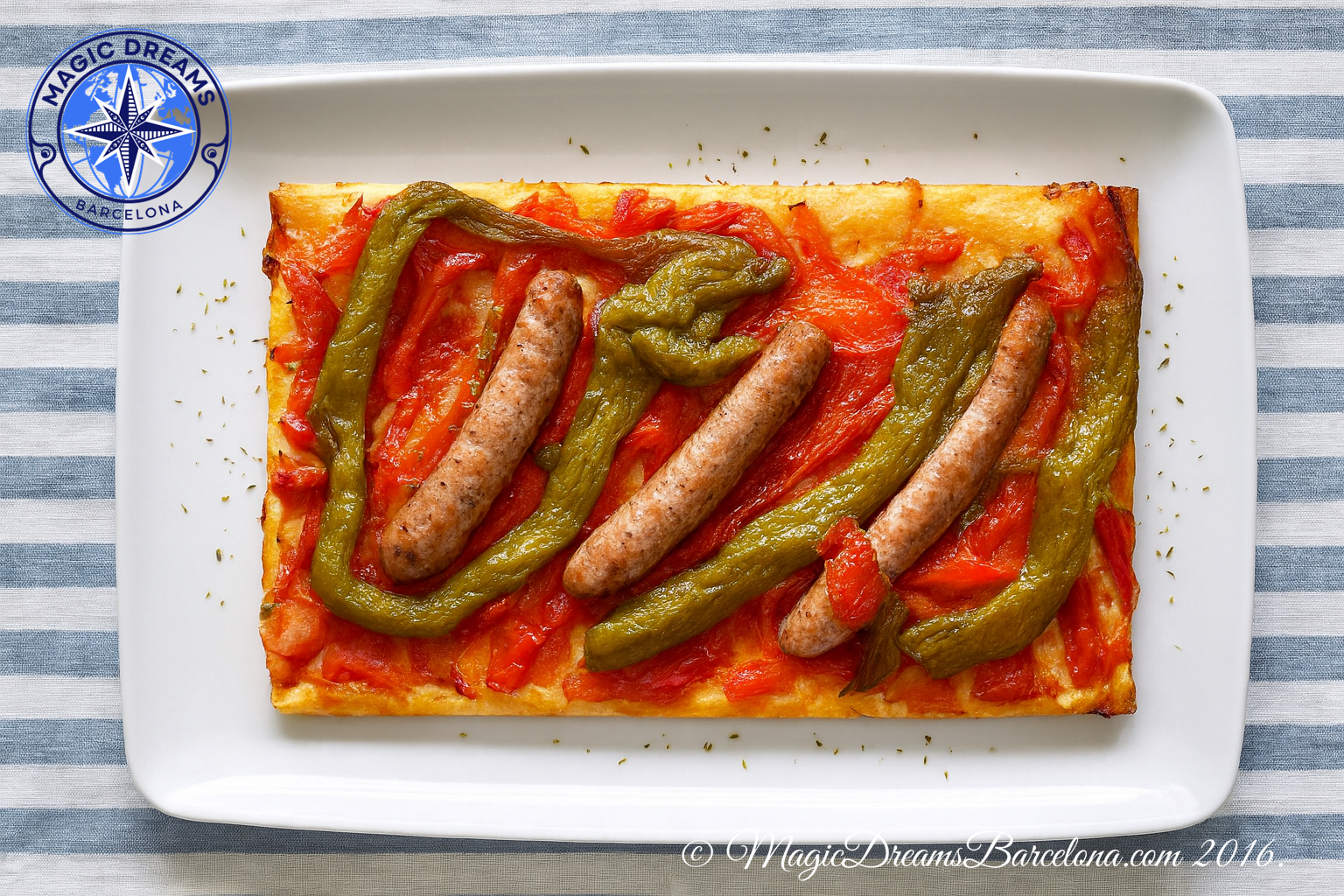
Catalan Coca with Sausages, Tomato and Roasted Peppers.

Catalan Coca with Sausages, Tomato and Roasted Peppers.

Catalan tradition, artisan dough and authentic Mediterranean flavour

Coca Catalana is one of the great symbols of Catalan gastronomy and one of the oldest preparations in Catalan culinary tradition.

Its origins go back centuries, when simple bread made with flour, water, salt and yeast was transformed into a versatile base that could be topped with whatever ingredients were available in each region.

This simple preparation allowed families to create both sweet and savoury versions, adapting the coca to local products and seasonal ingredients.

In Catalonia, coca is far more than food.

It is part of the region’s culture, celebrations and family traditions.

It is especially associated with occasions such as Easter, Christmas and the night of Sant Joan, when the famous Coca de Sant Joan takes centre stage.

But coca is also enjoyed throughout the year, proving its versatility and its place in everyday Catalan cooking.

There are countless varieties.

Savoury versions include coca de recapte, spinach coca, tomato and roasted pepper coca, sausage coca and tuna coca.

Sweet versions include anise, custard, angel hair, candied fruit and pine nut coca.

There are even sweet-and-savoury combinations involving meat and fruit, demonstrating the creativity and adaptability of this traditional preparation.

In this version, we combine artisan fresh sausages, concentrated tomato sauce and roasted red and green peppers, creating a rustic Mediterranean coca that is ideal for sharing.

A simple dough transformed into a true taste of Catalonia.


Premium Catalan Coca Recipe

Serves 4–6

Ingredients

For the Dough

  • 500 g wheat flour
  • 10 g salt
  • 10 g sugar
  • 20 g fresh yeast
  • 250 ml warm water
  • 50 ml extra virgin olive oil

For the Topping

  • 2 red peppers, roasted and peeled
  • 2 green peppers, roasted and peeled
  • 4–5 high-quality fresh sausages
  • 2 ripe tomatoes, grated
  • 1 garlic clove, finely chopped
  • 1 teaspoon sweet paprika
  • Extra virgin olive oil
  • Salt
  • Freshly ground black pepper

Optional

  • Fresh rosemary
  • A final drizzle of extra virgin olive oil

Step-by-Step Preparation

01 · Activate the Yeast

The beginning of a great dough

Place the warm water in a small bowl.

Add the fresh yeast and sugar.

Mix gently and leave to rest for 5–10 minutes.

A light foam should begin to appear on the surface, indicating that the yeast is active.


02 · Prepare the Flour

Place the flour in a large mixing bowl.

Add the salt and mix.

Make a well in the centre.


03 · Make the Dough

Soft, elastic and homogeneous

Pour the dissolved yeast mixture into the centre and add the 50 ml extra virgin olive oil.

Mix carefully until all the ingredients are incorporated.

Transfer the dough to a lightly floured work surface.

Knead for approximately 8–10 minutes, until the dough becomes smooth, homogeneous and elastic.


04 · First Rise

Give the dough time

Place the dough in a lightly oiled bowl.

Cover with a clean kitchen towel.

Leave to rest for approximately 1 hour, or until the dough has doubled in volume.

The exact fermentation time will depend on the room temperature.


Preparing the Topping

05 · Roast the Peppers

The aroma of escalivada

Roast the peppers until the skins become lightly charred and the flesh is completely tender.

Once cool enough to handle, remove the skins and seeds.

Cut the peppers into long strips.

Set aside.


06 · Prepare the Tomato Sauce

Heat a small drizzle of olive oil in a frying pan.

Add the chopped garlic and cook gently to release its aroma.

Add the grated tomatoes.

Add the sweet paprika.

Cook over medium heat until the mixture becomes a thick, concentrated and aromatic sauce.

Season with salt and freshly ground black pepper.


Assembling the Coca

07 · Stretch the Dough

Once the dough has finished rising, place it on a baking tray lined with baking paper.

Stretch it gently with your hands or a rolling pin.

It can be shaped into a rectangle, oval or slightly irregular rustic shape, preserving the handmade character of the coca.

There is no need to make it excessively thin.


08 · Add the Tomato

Spread the tomato sauce evenly over the dough.

Leave a small border around the edges.

The sauce should cover the surface without becoming too thick.


09 · Add the Roasted Peppers

Arrange the strips of roasted red and green peppers over the tomato sauce.

Distribute them evenly so that every portion contains a good balance of flavours.


10 · Add the Sausages

Cut the fresh sausages into medium-sized pieces.

Arrange them over the roasted peppers.

Finish with a light drizzle of extra virgin olive oil.


Baking

11 · Bake the Coca

Preheat the oven to 200°C / 392°F.

Bake for approximately 20–25 minutes.

The exact time will depend on the thickness of the dough and the characteristics of the oven.

The coca is ready when:

the edges are golden + the base is fully baked + the sausages are cooked through.


12 · Final Finish

Remove the coca from the oven.

Add a small drizzle of extra virgin olive oil.

Finish with a few leaves of fresh rosemary, if desired.

Allow to rest for a few minutes before slicing.


The Secret to a Great Catalan Coca

The dough should be light and tender inside, with slightly crisp edges.

The tomato sauce should be concentrated rather than watery.

The roasted peppers should retain their sweetness and subtle smoky character.

The sausages should remain juicy while developing a beautifully browned exterior.

The ideal balance is:

artisan dough + concentrated tomato + sweet roasted peppers + juicy sausage + extra virgin olive oil.


Gourmet Suggestions

Magic Dreams Barcelona

To elevate this traditional coca:

  • Use high-quality wheat flour.
  • Give the dough enough time to ferment properly.
  • Roast the peppers in advance to intensify their flavour.
  • Use fresh artisanal sausages.
  • Slowly reduce the tomato sauce.
  • Choose a fruity extra virgin olive oil.
  • Add fresh rosemary just before serving.
  • For a more sophisticated version, add black olives or thin shavings of aged cheese.
  • Serve freshly baked or slightly warm.

Mar i Muntanya Variation

Bringing the Mediterranean into the coca

Coca can also become a Mar i Muntanya creation.

Replace part of the sausage with:

  • Prawns.
  • Squid.
  • Mussels.
  • Anchovies.

Another excellent combination is fresh sausage with prawns, bringing together the richness of the countryside and the flavour of the Mediterranean.

This interpretation preserves the creative spirit of Catalan cuisine.


Presentation

Traditional coca is served cut into generous portions and placed in the centre of the table.

For a Premium Magic Dreams Barcelona presentation, cut the coca into elegant individual rectangles and arrange them on a wooden board or handcrafted ceramic serving platter.

Finish with:

  • Fresh rosemary.
  • A few drops of extra virgin olive oil.
  • Small touches of reduced tomato.
  • Fresh seasonal herbs, optional.

The objective is to preserve the handmade character of the coca while giving it a more refined presentation.


Pairing

For the table, we recommend a fresh Mediterranean-style 0.0% alcohol-free rosé, served well chilled.

A medium-bodied 0.0% alcohol-free red wine is also an excellent choice, particularly because of the fresh sausages.

For a lighter option, serve with very cold sparkling water, lemon and fresh Mediterranean herbs.


Serving

The coca can be served hot, warm or at room temperature.

As a tapa, cut it into small pieces for sharing.

As a main dish, serve more generous portions alongside a fresh Mediterranean salad.

It is also perfect for a family-style meal or informal gathering.


Storage

The coca can be kept in an airtight container for approximately 1–2 days.

To restore some of its texture, reheat it briefly in the oven.

Avoid excessive reheating, which can dry the dough.


The Coca — The Soul of Catalonia

Catalan coca represents one of the great strengths of traditional cooking:

a simple dough can become an entirely different dish depending on the region, the season and the cook’s imagination.

It can be sweet.

It can be savoury.

It can be rustic.

It can be refined.

It can be prepared for a celebration or for an everyday meal.

This extraordinary adaptability is one of the reasons coca has remained such an important part of Catalan culture.


The Premium Magic Dreams Barcelona Touch

At Magic Dreams Barcelona, we respect the traditional recipe while elevating it through quality ingredients, careful fermentation, precise baking and elegant presentation.

The Catalan soul remains; the experience becomes Premium.

Copyright © 2016-2026 Magic Dreams Barcelona.
Catalan-Style Noodles in a Casserole — Fideus a la Cassola.

Catalan-Style Noodles in a Casserole — Fideus a la Cassola.

Family tradition, rich sofrito and the authentic flavour of Catalan cuisine Fideus a la cassola, also known as Catalan-style casserole noodles, are one of the most representative dishes of traditional Catalan home cooking. Their defining characteristic is also their greatest difference from classic Italian pasta: 

Cap i Pota – Traditional Catalan Style.

Cap i Pota – Traditional Catalan Style.

A historic Catalan stew of tender beef, sofrito and silky sauce Cap i Pota is one of the most authentic dishes of traditional Catalan cuisine. Its name literally means “head and foot”, referring to the traditional use of beef head and feet, slowly cooked until 

Taps of Cadaqués.

Taps of Cadaqués.

A sweet taste of Costa Brava heritage

In the picturesque coastal town of Cadaqués, on the Costa Brava, a unique Catalan pastry has been preserved through generations: the famous Taps de Cadaqués.

These delicate sponge cakes, traditionally made with eggs, flour and sugar and finished with syrup and powdered sugar, are one of the most characteristic sweet specialties of this beautiful Mediterranean town.

Their history is traditionally associated with the 18th century and with Cadaqués’ strong maritime connections. Sailors travelling along Mediterranean and Atlantic routes encountered ingredients and culinary influences from distant countries, including rum, which eventually became associated with the preparation of these exceptionally moist sponge cakes.


Origins and Curiosities

The name “Tap” refers to the cake’s characteristic cylindrical shape, reminiscent of a cork stopper (tap in Catalan).

The distinctive shape became one of the pastry’s defining features and helped establish Taps de Cadaqués as a recognisable local specialty.

Cadaqués itself has always had a strong connection with the sea. Its fishermen, traders and sailors created a cosmopolitan atmosphere in which Mediterranean traditions met influences arriving from overseas.

Rum became particularly interesting in pastry because it could be incorporated into a syrup, giving the sponge a richer aroma and a wonderfully moist texture.


A Catalan Pastry Tradition

The Taps are closely associated with the historic pastry-making tradition of Cadaqués and with La Mallorquina, a renowned local pastry shop whose history is connected with the Cabrisas family.

For generations, the pastry has remained part of the town’s culinary identity.

Today, the Taps represent much more than a simple dessert.

They are a small edible connection between Cadaqués, the Mediterranean, maritime trade and Catalan pastry tradition.


Premium Recipe for Taps de Cadaqués

Makes approximately 8–10 small Taps

Ingredients

For the sponge cakes

  • 4 eggs
  • 125 g wheat flour
  • 125 g sugar
  • 4 g baking powder
  • A small amount of water, if needed
  • Powdered sugar for finishing

For the syrup

  • 50 ml water
  • 50 g sugar
  • A small glass of rum

The rum is used for cooking the syrup. For a completely alcohol-free version, replace it with a little vanilla, orange zest or lemon zest.


Preparation

01 · Prepare the Eggs

Separate the egg whites from the yolks.

Place the egg whites in a clean bowl and whisk until they begin to form stiff peaks.

Gradually incorporate half of the sugar — approximately 62.5 g — while continuing to whisk.

The mixture should be light, glossy and stable.


02 · Prepare the Yolks

In another bowl, beat the egg yolks with the remaining 62.5 g of sugar.

Continue mixing until the yolks become pale, creamy and slightly aerated.

This step helps create the characteristic light texture of the Taps.


03 · Add the Flour

Sift the flour together with the baking powder.

Gradually incorporate it into the egg-yolk mixture.

Add a small amount of water only if necessary to obtain a smooth, light batter.

Do not overmix.


04 · Fold in the Egg Whites

Carefully incorporate the whipped egg whites into the batter.

Use a spatula and work gently from the bottom upwards.

The objective is to preserve as much air as possible.

This is essential for achieving a light and delicate sponge.


Shaping the Taps

05 · Use Cylindrical Moulds

Lightly grease individual cylindrical moulds.

Fill them with the batter, leaving enough room for the cakes to rise.

The batter may rise slightly above the mould during baking, creating the characteristic cork-like shape.


Baking

06 · Bake

Preheat the oven to 180°C / 356°F.

Bake the Taps for approximately 20 minutes, checking their colour towards the end of the cooking time.

They should be lightly golden and cooked through while remaining soft and airy inside.

Allow them to cool before applying the syrup.


Preparing the Syrup

07 · Make the Syrup

Place the water and sugar in a small saucepan.

Heat gently until the sugar has completely dissolved.

Remove from the heat and allow it to cool for approximately 5 minutes.

Add the rum and mix carefully.

Important: if you are preparing the alcohol-free version, do not add rum. Use vanilla or citrus zest instead.


Finishing the Taps

08 · Brush with Syrup

Once the sponge cakes have cooled, lightly brush them with the syrup.

Do not saturate them.

The goal is to introduce moisture and aroma while preserving the delicate structure of the sponge.

Allow them to rest so the syrup can penetrate evenly.


09 · Finish with Powdered Sugar

Just before serving, generously dust the Taps with powdered sugar.

Their simple appearance is part of their charm.


The Magic Dreams Barcelona Premium Touch

A traditional sweet transformed into a refined Mediterranean experience

For a Magic Dreams Barcelona premium presentation, serve the Taps individually on elegant ceramic plates.

Add:

  • A light dusting of powdered sugar.
  • A few fresh berries or seasonal fruit.
  • Finely grated lemon or orange zest.
  • A small spoonful of cream or vanilla mousse, if desired.
  • A delicate drizzle of citrus syrup.

The presentation should remain elegant and restrained, allowing the traditional Tap to remain the star.


The Perfect Texture

A great Tap de Cadaqués should be:

light, airy, delicately sweet and slightly moist from the syrup.

The exterior should remain soft rather than wet, while the interior should retain the characteristic sponge-like texture.

The secret is to fold the egg whites gently and avoid overbaking.


Serving Suggestion

Taps de Cadaqués are ideal as:

  • A traditional Catalan dessert.
  • An afternoon pastry with coffee.
  • A sweet ending to a Mediterranean meal.
  • Part of a Catalan pastry tasting.
  • A refined petit-four for a special event.

They are particularly beautiful when served as part of a Costa Brava-inspired dessert selection.


Pairing

For the table, we recommend a chilled 0.0% alcohol-free sparkling drink, which provides freshness and balances the sweetness of the pastry.

A 0.0% alcohol-free dessert-style aperitif with citrus notes can also work beautifully.

For a classic alternative, serve with espresso, cappuccino or a delicate black tea.


A Sweet Heritage That Endures

Today, the Taps de Cadaqués remain closely connected with the identity of this extraordinary Costa Brava town.

They represent the meeting of Catalan pastry, Mediterranean culture and Cadaqués’ maritime history.

Each bite evokes the whitewashed streets, the fishing boats, the Mediterranean light and the cosmopolitan spirit that has made Cadaqués one of the most fascinating destinations on the Catalan coast.

The Taps are not simply a dessert.

They are a small piece of Cadaqués’ history, preserved through taste.


Copyright © 2016-2026 Magic Dreams Barcelona.

Salt-Baked Sea Bream.

Salt-Baked Sea Bream.

Mediterranean tradition, pure flavour and elegance in every bite Salt-baked sea bream is one of the most elegant and natural ways to prepare fish in Mediterranean cuisine. Its secret lies not in adding numerous ingredients, but in respecting the fish itself and using an ancient 

Catalan Olivada with Anchovies – Gourmet Mediterranean Spread.

Catalan Olivada with Anchovies – Gourmet Mediterranean Spread.

Catalan olivada is one of those simple preparations that perfectly expresses the character of Mediterranean cuisine. Traditionally made with black olives, this aromatic olive spread captures the flavour of the Catalan landscape in just a few ingredients: olive trees, extra virgin olive oil and Mediterranean