Etiqueta: traditional Catalan recipes

Vilanova-Style Monkfish with Burnt Garlic.

Vilanova-Style Monkfish with Burnt Garlic.

Maritime tradition, roasted garlic and the authentic flavour of the Mediterranean Monkfish with burnt garlic, known in Catalan as Rap a l’All Cremat, is a traditional seafood recipe associated with Vilanova i la Geltrú, on the Catalan coast near Barcelona. The name all cremat literally 

Bombas de la Barceloneta – Barcelona’s most emblematic tapas.

Bombas de la Barceloneta – Barcelona’s most emblematic tapas.

Bombas de la Barceloneta are one of the most iconic and recognisable tapas in Barcelona. Born in the historic fishing district of La Barceloneta, they are part of the popular culinary tradition that transformed simple ingredients into small, generous and characterful bites. Traditionally associated with 

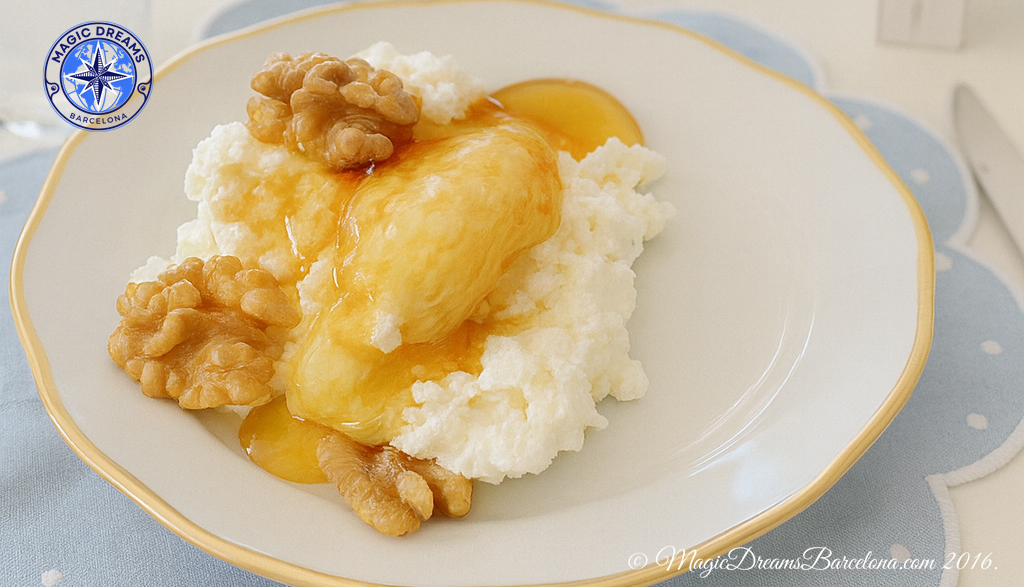
Mel i Mató with Honey and Walnuts.

Mel i Mató with Honey and Walnuts.

Three simple ingredients carrying centuries of Catalan tradition

Mel i Mató is one of the simplest desserts in Catalan cuisine and, at the same time, one of the recipes that most clearly represents the region’s culinary identity.

Its essence lies in a humble combination: fresh mató cheese, honey and, in this version, toasted walnuts.

Few ingredients.

Very little preparation.

An extraordinary amount of tradition.

The result is a delicate, creamy and deeply Mediterranean dessert, where the softness of the fresh cheese contrasts beautifully with the sweetness of honey and the crunch of toasted nuts.


A Dessert with Centuries of History

The flavour of rural Catalonia

Mató is documented as early as the 14th century in the Llibre de Sent Soví, one of the great medieval Iberian cookbooks.

Medieval tradition particularly valued mató when sweetened with honey or sugar, and historical references describe it as an almost heavenly food.

For centuries, mató was closely connected with rural life, monasteries and homemade dairy production.

It was traditionally made from fresh milk, especially goat’s milk, although cow’s and sheep’s milk were also used.

Its delicate texture made it an everyday food, but it also became an important part of Catalan gastronomic identity.


What Exactly Is Mató?

A fresh cheese with its own identity

Although it is sometimes compared with ricotta or similar fresh cheeses, mató is not exactly the same product.

It is a traditional fresh Catalan cheese, made directly from milk and characterised by its soft, moist and delicate texture.

Its tradition is especially strong in Central Catalonia and Old Catalonia, although it is produced and enjoyed throughout the region.

Mató can be made from:

  • Goat’s milk.
  • Cow’s milk.
  • Sheep’s milk.

Each type offers different characteristics.

Goat’s milk can provide a more aromatic profile.

Cow’s milk creates a particularly smooth texture.

Sheep’s milk produces a richer and more intense flavour.


Montserrat and Mató

A product connected with landscape and tradition

One of the places most strongly associated with artisanal mató is Montserrat.

For generations, local producers have sold fresh mató to pilgrims and visitors around the mountain.

The image of artisanal mató being offered at Montserrat has become part of Catalonia’s gastronomic memory.

Here, the product is never completely separate from its surroundings.

It belongs to a landscape.

A tradition.

A way of life.

And a culinary culture passed from one generation to another.


Honey

The natural companion to Mató

Honey is one of the oldest sweeteners used by Mediterranean cultures.

Its role in this dessert goes beyond adding sweetness.

Honey provides aroma, richness and texture while creating the perfect contrast with the delicate fresh cheese.

Different varieties can be used:

Rosemary honey

Aromatic, Mediterranean and lightly floral.

Wildflower honey

Soft and balanced.

Mountain honey

Deeper and more complex.

Orange blossom honey

Particularly interesting for a more fragrant interpretation.

Whenever possible, choose good-quality honey from a local producer.


The Walnut Touch

Walnuts are not essential to the most basic traditional combination of mel i mató, but they complement it beautifully.

They provide:

crunch + richness + toasted flavour.

Lightly toasting them intensifies their aroma and creates a wonderful contrast with the creamy mató.


Premium Mel i Mató Recipe

Serves 2

Ingredients

  • 1 litre fresh milk, goat, cow or sheep.
  • 1–2 tablespoons curdled milk or whey, to initiate coagulation.
  • 3–4 tablespoons raw honey, preferably rosemary, wildflower or mountain honey.
  • 30 g shelled walnuts.
  • Finely grated lemon or orange zest, optional.
  • A few drops of walnut oil or mild olive oil, optional.
  • Flaked sea salt, optional.

Step-by-Step Preparation

01 · Warm the Milk

The foundation of the mató

Heat the milk gently to approximately 35–40°C.

It should be warm but never boiling.

Careful temperature control is important for achieving the correct coagulation and preserving the character of the milk.


02 · Begin the Coagulation

Add the curdled milk or whey and stir gently.

Cover the container.

Allow it to rest for approximately 30–60 minutes, until the curds begin to form.

The exact time will depend on the milk and the coagulation method used.


03 · Drain the Mató

Texture is everything

Carefully collect the curds with a large spoon.

Place them in a fine-mesh strainer or clean muslin cloth.

Allow the whey to drain for approximately 30 minutes.

Do not press the curds too aggressively.

The aim is to preserve a soft, moist and creamy texture.


04 · Toast the Walnuts

Roughly chop the walnuts.

Place them in a dry frying pan and toast over medium heat for approximately 2–3 minutes.

Stir continuously.

They should become lightly golden and intensely aromatic.

Remove them immediately to prevent them from burning.


05 · Serve the Mató

Place the fresh mató in a bowl, deep plate or ceramic serving dish.

It is best served cool or close to room temperature rather than ice-cold.

This allows its natural dairy aromas and delicate texture to be appreciated more clearly.


06 · Add the Honey

The simplest and most important moment

Warm the honey slightly if it is very thick.

Drizzle it in a thin stream over the mató, allowing it to spread naturally.

There is no need to use too much.

The honey should complement the cheese rather than dominate it.


07 · Add the Walnuts

Scatter the toasted walnuts over the mató and honey.

Finish, if desired, with:

  • Finely grated lemon zest.
  • Orange zest.
  • A few drops of walnut oil.
  • A few drops of mild olive oil.
  • A small pinch of flaked sea salt.

The Secret to Great Mel i Mató

The key is precisely not to overcomplicate it.

The mató should remain the protagonist.

Its texture should be soft and creamy.

The honey should provide natural sweetness.

The walnuts should add the crunch.

Optional ingredients should be used sparingly.

The ideal balance is:

creamy + sweet + crunchy + subtly savoury.


Gourmet Suggestions

Magic Dreams Barcelona

To elevate this traditional dessert:

  • Use high-quality artisanal mató.
  • Compare different types of milk to discover different flavour profiles.
  • Choose locally produced honey.
  • Lightly toast the walnuts before serving.
  • Add the honey just before bringing the dessert to the table.
  • Use lemon or orange zest for freshness.
  • A small amount of walnut oil can provide an especially elegant finish.
  • A touch of flaked sea salt intensifies the sweet-and-savoury contrast.
  • Serve in handcrafted ceramic dishes for a stronger traditional character.

Traditional Presentation

The simplest presentation is to place a generous portion of fresh mató in the centre of the plate.

Drizzle the honey gently over the top.

Add the toasted walnuts around and over the cheese.

Finish with a little citrus zest.

Nothing more is necessary.

The beauty of mel i mató lies in its simplicity.


Premium Presentation

Catalan tradition elevated by Magic Dreams Barcelona

For a more sophisticated presentation, use a white or artisanal ceramic plate.

Shape the mató into a delicate quenelle or maintain a natural rustic portion.

Drizzle a fine line of honey.

Arrange the toasted walnuts asymmetrically.

Finish with:

orange zest + flaked sea salt + a few drops of walnut oil.

The result preserves the identity of the traditional dessert while giving it a contemporary, elegant appearance.


Serving Suggestions

Mel i Mató can be accompanied by:

  • Carquinyolis, traditional Catalan almond biscuits.
  • Lightly toasted rustic bread.
  • Fresh fruit.
  • Figs.
  • Pear.
  • Apple.
  • Berries.

Figs and pears work particularly well with honey and the delicate flavour of mató.


Pairing

For the table, we recommend a chilled 0.0% alcohol-free sparkling drink, which provides freshness and balances the sweetness of the dessert.

A 0.0% alcohol-free dessert-style drink with honey, vanilla or nut notes can also work beautifully.

For a classic option, serve with espresso, coffee with milk or a delicate tea.


Storage

Fresh mató should be kept refrigerated.

Once prepared, it is best consumed relatively quickly to preserve its freshness and delicate texture.

The mató and honey combination is best assembled immediately before serving.

Toasted walnuts can be stored separately in an airtight container.


The Magic Dreams Barcelona Private Workshop

Learn the tradition directly with our private chef

At Magic Dreams Barcelona, we transform this simple dessert into a private gastronomic experience.

During our private mató-making workshop in Barcelona, guests can learn step by step how to prepare their own fresh cheese and discover the secrets behind one of Catalonia’s most iconic desserts.

With our private chef, you will explore the history of mató, learn how to work with fresh milk and then transform your creation into a delicious Mel i Mató with honey and walnuts.

The experience is designed to enjoy, learn and discover Catalan gastronomy from the inside.

And the experience continues beyond the workshop: you can take your own creation home, turning the class into a lasting culinary memory.

There is also the possibility of purchasing artisanal mató to continue the experience, share it with family and friends or give someone a small taste of Catalan tradition.


The Premium Magic Dreams Barcelona Touch

We do not seek to transform a simple dessert into something unrecognisable.

We want to do the opposite:

preserve its identity and elevate the experience.

Artisanal ingredients.

Quality products.

Elegant presentation.

History.

Tradition.

And a moment to share.

Mel i Mató proves that fine gastronomy does not always require complexity.

Sometimes it simply requires excellent ingredients and the knowledge to respect them.


The Essence of Catalonia in One Dessert

Mel i Mató is humble.

It is rural.

It is Mediterranean.

And it is unmistakably Catalan.

Fresh cheese.

Honey.

Walnuts.

And centuries of culinary heritage.

It is the kind of recipe that demonstrates how Catalan gastronomy can transform the simplest products into powerful cultural symbols.

A simple dessert in appearance, extraordinary in history, identity and flavour.

Copyright © 2016-2026 Magic Dreams Barcelona.

Romesco Sauce and Calçots

Romesco Sauce and Calçots

The great gastronomic ritual of Catalan cuisine Calçots with Romesco sauce are much more than a recipe: they represent one of the great gastronomic rituals of Catalonia. Closely associated with Valls and the Camp de Tarragona, calçots are a variety of tender green onion traditionally 

Catalan Shrimp Suquet.

Catalan Shrimp Suquet.

A timeless maritime tradition of Catalan cuisine Suquet de Langostinos, or Catalan shrimp suquet, is an elegant interpretation of one of the most representative dishes of Catalonia’s maritime cuisine. Its name is associated with the Catalan word “suc”, meaning juice or cooking liquid, referring to 

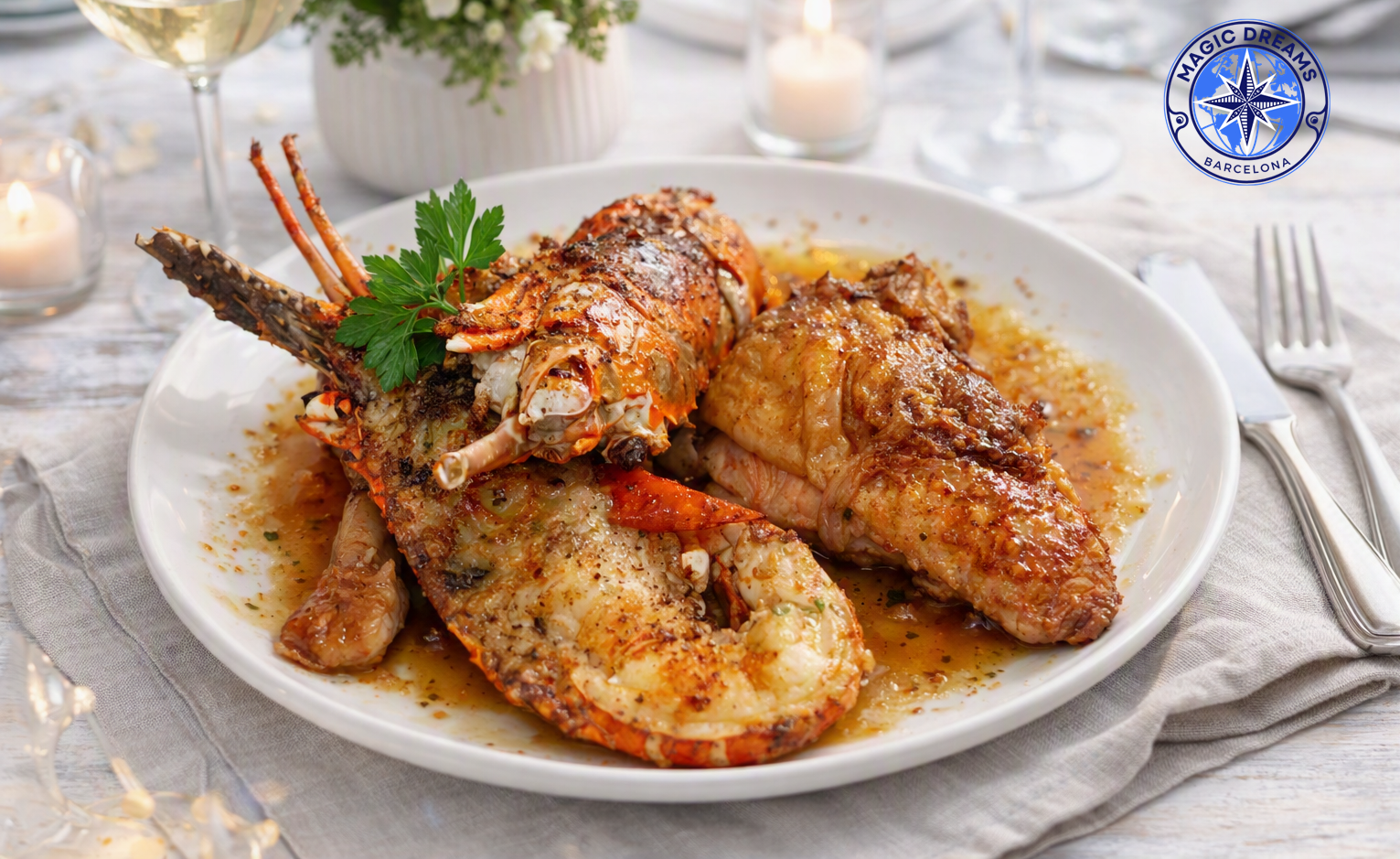
Chicken with Lobster — Mar i Muntanya.

Chicken with Lobster — Mar i Muntanya.

The essence of the Empordà in one dish: land, sea and Catalan tradition

Chicken with lobster, known in Catalan cuisine as Pollastre amb llagosta, is one of the finest expressions of the Mar i Muntanya tradition. This distinctive style of Catalan cooking brings together ingredients from the land and the sea in the same dish. It is particularly associated with the Empordà and Costa Brava, where the Mediterranean coast lies close to the inland countryside and the Pyrenees.

The combination may initially seem unusual, but it reflects a centuries-old culinary tradition based on local ingredients and the close relationship between fishermen and farmers. In the Empordà, seafood from the coast could be combined with poultry, meat and vegetables from inland farms, creating dishes with remarkable contrasts of flavour and texture.

Pollastre amb llagosta is considered one of the classic examples of Mar i Muntanya, alongside dishes such as chicken with Dublin bay prawns and meatballs with cuttlefish.

The magic of this recipe lies in the sauce: a traditional Catalan sofrito enriched with toasted almonds, hazelnuts, saffron, parsley and dark chocolate. The result is a rich, glossy and intensely aromatic sauce that brings the land and the Mediterranean together.


Traditional Chicken with Lobster Recipe

Serves 4

Ingredients

For the Chicken and Lobster

  • 4 chicken thighs with their drumsticks
  • 1 lobster tail, approximately 450 g
  • 1 teaspoon plain flour
  • 4 tablespoons extra virgin olive oil
  • Salt
  • Black pepper

For the Sofrito and Sauce

  • 1 onion
  • 1 garlic clove
  • 3 ripe medium tomatoes
  • 1 small bundle of dried herbs — bay leaf, thyme, etc.
  • ½ teaspoon sugar
  • 1 cinnamon stick
  • 1 cup water, stock or seafood fumet
  • 1 cup white wine
  • ¼ cup aguardiente

For the Catalan Picada

  • 15 toasted hazelnuts
  • 15 toasted almonds
  • 1 tablespoon chopped fresh parsley
  • A few strands of saffron
  • 20 g dark chocolate
  • A pinch of salt
  • Black pepper

Step-by-Step Preparation

01 · Prepare the Chicken and Lobster

Cut the chicken thighs into manageable pieces.

Cut the lobster tail into pieces, taking care to preserve any natural juices released during preparation.

Set the chicken and lobster aside separately.


02 · Prepare the Sofrito Ingredients

Peel and finely chop the onion and garlic.

Grate or finely chop the ripe tomatoes.

Set everything aside.


03 · Brown the Chicken

Season the chicken generously with salt and pepper.

Heat the extra virgin olive oil in a wide casserole dish and brown the chicken over medium-high heat.

The chicken should be well sealed and golden on the outside, while remaining uncooked in the centre.

Remove from the casserole and set aside.


04 · Prepare the Catalan Sofrito

Using the same casserole, add the onion and garlic.

Cook over medium-low heat for approximately 3–4 minutes.

Add the tomatoes, herb bundle, salt and ½ teaspoon of sugar.

Cook slowly for approximately 10 minutes, until the sofrito becomes concentrated, soft and rich.


05 · Build the Sauce

Add the cinnamon stick.

Pour in the white wine and aguardiente.

Cover the casserole and cook for approximately 5 minutes, allowing the alcohol to evaporate while the flavours develop.

Add one cup of water, stock or seafood fumet.

Add approximately one level teaspoon of flour to give the sauce a little more body.

Stir well to prevent lumps.


06 · Sear the Lobster

Heat a separate frying pan with one or two tablespoons of olive oil.

When very hot, sear the lobster pieces over high heat for approximately 2 minutes.

The lobster does not need to be fully cooked at this stage.

The aim is to lightly caramelise the exterior and concentrate its flavour.

Add the lobster to the casserole together with the chicken.


07 · Prepare the Catalan Picada

Place the following ingredients in a mortar:

hazelnuts + almonds + parsley + saffron + dark chocolate + salt + pepper.

Crush slowly until you obtain a fine, aromatic paste.

Add several tablespoons of the sauce from the casserole.

Mix until the picada becomes smooth and fully incorporated.


08 · Add the Picada

Add the picada to the casserole.

Stir gently so that it becomes fully incorporated into the sauce.

The chocolate should not dominate the dish. Its purpose is to add depth, colour and balance.


09 · Final Slow Cooking

Cook everything over low heat for approximately 20–25 minutes.

The sauce should gradually reduce until it becomes rich, glossy, silky and slightly thick.

The chicken should be completely tender and cooked through, while the lobster should remain juicy and delicate.

Taste and adjust the seasoning.


The Secret of Mar i Muntanya

The magic of this dish lies in the contrast.

The chicken provides depth and a rich meaty texture.

The lobster brings sweetness, delicacy and intense Mediterranean flavour.

The sofrito provides the aromatic Catalan foundation.

And the picada combines nuts, saffron, parsley and dark chocolate, creating a complex sauce with a distinctly Catalan character.

This extraordinary combination of ingredients from two different worlds is precisely what defines Mar i Muntanya.


The Premium Magic Dreams Barcelona Touch

Empordà tradition elevated into a refined gastronomic experience

For a Premium Magic Dreams Barcelona presentation, serve the chicken and lobster in an elegant ceramic or cast-iron casserole.

Arrange the lobster pieces visibly over the chicken and spoon the glossy sauce generously around them.

Finish with:

  • A few drops of extra virgin olive oil.
  • Small fresh parsley leaves.
  • A few toasted almonds or hazelnuts.
  • A very subtle touch of saffron.

The sauce should remain the star: deep, glossy, aromatic and beautifully reduced.

Serve with rustic bread so that every last drop of this extraordinary sauce can be enjoyed.


Pairing

For the table, we recommend a chilled 0.0% alcohol-free Mediterranean-style white wine, with fresh acidity to balance the richness of the sauce.

A 0.0% alcohol-free rosé, served well chilled, is another excellent option.

For a completely refreshing alternative, serve with sparkling water, lemon and fresh Mediterranean herbs.

Important: the wine used during cooking is different from the table pairing. If the recipe includes white wine or aguardiente, these are cooking ingredients used to develop the sauce. The recommended drink served at the table is 0.0% alcohol-free.


A Dish That Tells the Story of the Empordà

Chicken with lobster captures an essential part of Catalan culinary identity in a single casserole.

Sea and mountains, fishermen and farmers, humble ingredients and celebratory cooking.

The Mar i Muntanya tradition demonstrates how Catalan cuisine has historically brought together the resources of its coast, countryside and mountains.

It is a cuisine born from local ingredients and ingenuity, transformed over generations into one of the most distinctive expressions of Empordà gastronomy.

Here, the Mediterranean and the Catalan countryside meet in one unforgettable dish.

Copyright © 2016-2026 Magic Dreams Barcelona.
Catalan-Style Noodles in a Casserole — Fideus a la Cassola.

Catalan-Style Noodles in a Casserole — Fideus a la Cassola.

Family tradition, rich sofrito and the authentic flavour of Catalan cuisine Fideus a la cassola, also known as Catalan-style casserole noodles, are one of the most representative dishes of traditional Catalan home cooking. Their defining characteristic is also their greatest difference from classic Italian pasta: 

Catalan Paella Mar i Muntanya.

Catalan Paella Mar i Muntanya.

The Mediterranean meeting of sea and land The Paella Mar i Muntanya is one of the most fascinating expressions of Catalan cuisine. Its name literally means “Sea and Mountain”, referring to the combination of ingredients from the Mediterranean coast with products traditionally associated with the 

Catalan Espardenya with Escalivada and L’Escala Anchovies.

Catalan Espardenya with Escalivada and L’Escala Anchovies.

The Mediterranean on a slice of toasted bread

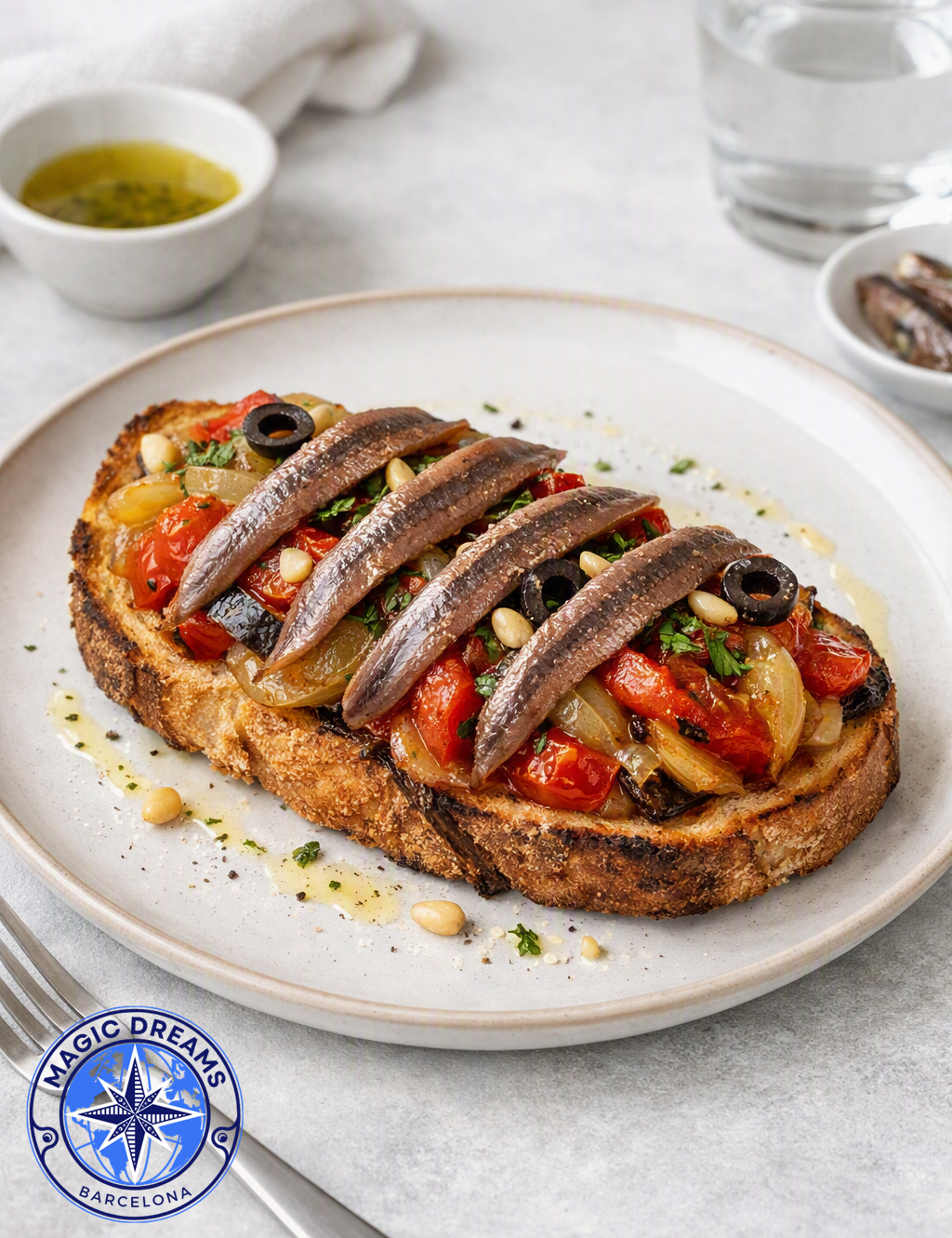
The Espardenya is a traditional Catalan-style tapa combining toasted bread, escalivada and anchovies, bringing together the flavours of the land and the sea.

The name espardenya is associated with this rustic style of preparation in Catalan cuisine, although the term can have different meanings depending on the region.

This version features escalivada, a traditional Catalan preparation of roasted red peppers, aubergine and onion, topped with anchovies from L’Escala, one of the best-known seafood products of the Costa Brava.

The vegetables are slowly roasted until tender, sweet and slightly smoky, while the anchovies provide a salty, intense contrast.

Finished with extra virgin olive oil, toasted pine nuts, black olives and fresh parsley, this simple tapa becomes a beautiful expression of Catalan Mediterranean cuisine.


Ingredients

Serves 4

For the Escalivada

  • 2 large red peppers
  • 1 large aubergine
  • 2 onions
  • 2 garlic cloves, optional
  • Extra virgin olive oil
  • Salt

For the Espardenya

  • 4 large slices of rustic country bread
  • 12–16 L’Escala anchovy fillets in olive oil
  • 40 g pine nuts
  • Black olives
  • Fresh parsley
  • Extra virgin olive oil
  • A little salt, if needed

Preparation

01 · Roast the vegetables

Fire as an ingredient

Preheat the oven to 200°C.

Place the whole peppers, aubergine and onions on a baking tray.

Roast for approximately 40–50 minutes, turning the vegetables halfway through cooking.

The skins should become nicely charred in places while the flesh becomes completely tender.

For a more traditional smoky flavour, the vegetables can also be roasted directly over hot embers.


02 · Rest and peel the vegetables

Keep all their natural juices

Remove the vegetables from the oven and cover them for several minutes.

This makes them easier to peel and allows their natural juices to redistribute.

Peel the peppers, remove the seeds and cut them into long strips.

Peel the aubergine and onions and cut them into strips or rustic pieces.

Do not discard the roasting juices.

Adding them to the escalivada gives the dish even more depth and flavour.


03 · Season the Escalivada

Place the roasted vegetables in a bowl.

Add extra virgin olive oil, a little salt and, if desired, finely chopped garlic.

Mix gently.

Allow the vegetables to rest for a few minutes so that they absorb the olive oil and the flavours become more integrated.


Preparing the Espardenya

04 · Toast the bread

The crisp foundation

Cut the rustic bread into thick slices.

Toast until the surface is golden and crisp, while keeping the centre slightly tender.

A few drops of extra virgin olive oil can be added before toasting.


05 · Add the Escalivada

Place a generous portion of escalivada on each slice of toasted bread.

Arrange the roasted red pepper, aubergine and onion so that they cover most of the surface.

The vegetables should remain juicy rather than dry.


06 · Add the L’Escala anchovies

The meeting of land and sea

Place 3–4 L’Escala anchovy fillets on each Espardenya.

The intense, salty flavour of the anchovies creates a wonderful contrast with the natural sweetness of the roasted vegetables.

Add a few black olives and toasted pine nuts.

Finish with fresh parsley and a few drops of extra virgin olive oil.


The Secret to a Great Escalivada

The vegetables should remain tender, juicy and slightly smoky.

The peppers should be fleshy, the aubergine creamy and the onions sweet and soft.

Avoid overcooking the vegetables until they become dry.

Good-quality extra virgin olive oil should enhance the vegetables rather than overpower their natural flavour.


The Pine Nuts

Pine nuts provide an excellent crunchy contrast.

Toast them lightly in a dry frying pan for a few minutes, stirring constantly.

They should become golden and aromatic without burning.

Add them immediately before serving so they retain their crisp texture.


Gourmet Suggestions

Magic Dreams Barcelona

To elevate this traditional Catalan tapa:

  • Use artisan rustic bread.
  • Roast the vegetables until they develop lightly charred areas.
  • Prepare the escalivada several hours in advance.
  • Choose high-quality L’Escala anchovies.
  • Lightly toast the pine nuts.
  • Add the olive oil just before serving.
  • Avoid excessive salt because the anchovies are naturally salty.
  • Finish with a few drops of extra virgin olive oil.
  • Add small Mediterranean herbs for a more contemporary presentation.

Presentation

For a traditional presentation, serve the Espardenya on a wooden board or handcrafted ceramic plate.

Arrange the escalivada generously over the toasted bread and place the anchovies neatly on top.

Add toasted pine nuts, black olives and fresh parsley.

Finish with a few drops of extra virgin olive oil.

The ideal presentation combines rustic simplicity with Mediterranean elegance, preserving the character of traditional Catalan cuisine.


Pairing

This Espardenya pairs particularly well with a fresh, crisp 0.0% alcohol-free white wine, whose acidity balances the saltiness of the anchovies and the richness of the olive oil.

A Mediterranean-style 0.0% alcohol-free vermouth is also an excellent choice as an aperitif.

For a completely refreshing option, serve with very cold sparkling water, lemon and fresh Mediterranean herbs.

Copyright © 2016-2026 Magic Dreams Barcelona.
Cap i Pota – Traditional Catalan Style.

Cap i Pota – Traditional Catalan Style.

A historic Catalan stew of tender beef, sofrito and silky sauce Cap i Pota is one of the most authentic dishes of traditional Catalan cuisine. Its name literally means “head and foot”, referring to the traditional use of beef head and feet, slowly cooked until 

Bacallà a la Llauna a great classics of traditional Catalan cuisine.

Bacallà a la Llauna a great classics of traditional Catalan cuisine.

Bacallà a la Llauna is one of the great classics of traditional Catalan cuisine: a humble dish in origin, yet remarkably rich in aromas, contrasts and Mediterranean character. Its history is closely linked to the popular cuisine of Catalonia and, particularly, Barcelona, where salt cod 

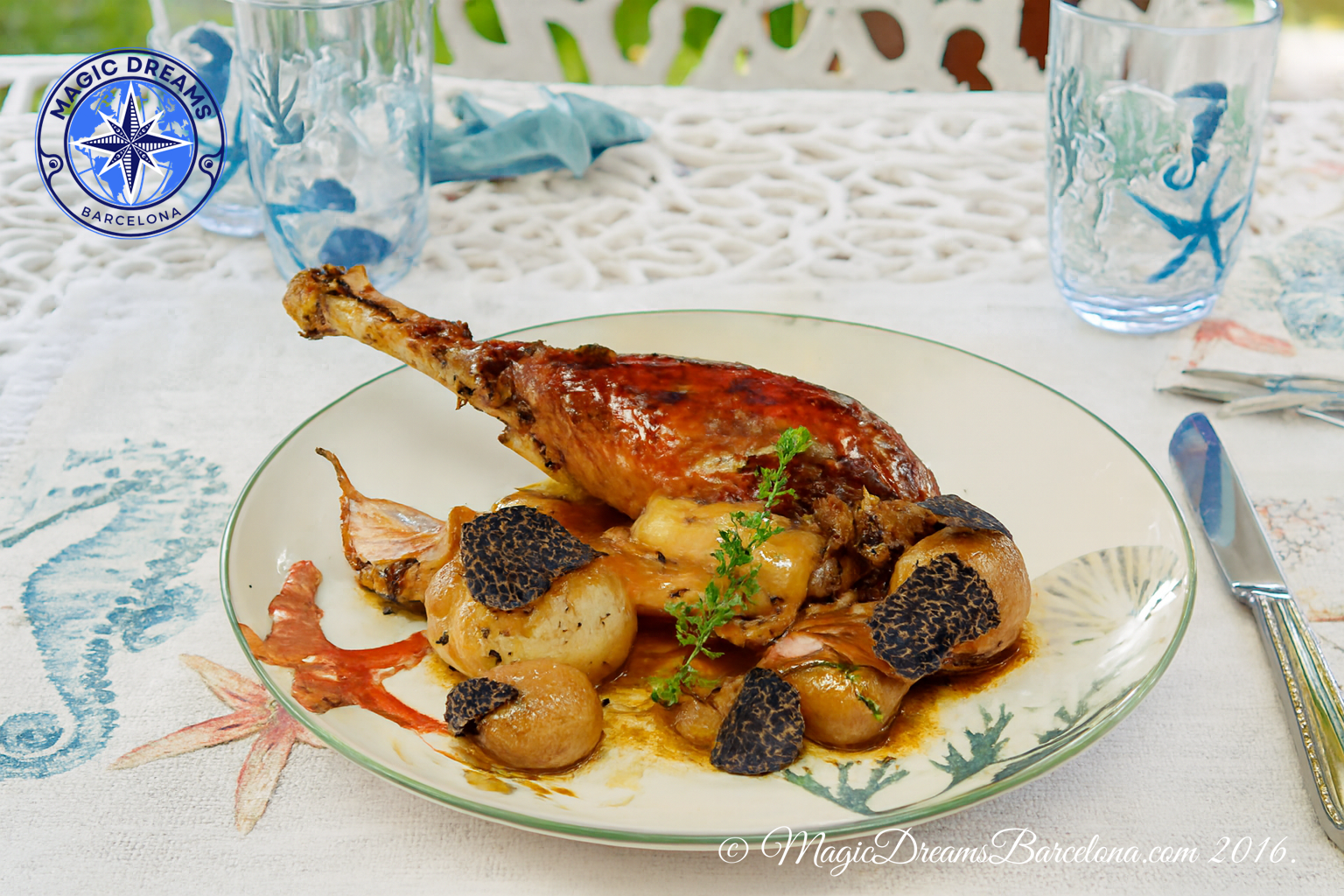
Pintada a la Catalana – Traditional Catalan cuisine.

Pintada a la Catalana – Traditional Catalan cuisine.

A festive classic of traditional Catalan cuisine

Pintada a la Catalana, also known as Catalan-style guinea fowl, is a traditional dish that perfectly reflects the character of Catalan festive cuisine.

The guinea fowl, also known as Guinea hen or guinea fowl, is an African bird that was appreciated for its fine, lean and aromatic meat. It reached Europe through the Mediterranean and gradually became part of different European culinary traditions.

In Catalonia, particularly in areas such as Berguedà, Osona and Central Catalonia, guinea fowl became associated with festive meals, family celebrations and winter cooking.

Its preparation follows one of the great principles of traditional Catalan cuisine: combining savory meats with dried fruits, nuts, aromatic herbs and fortified or sweet wines.

Prunes, dried apricots and pine nuts provide sweetness and texture, while wine and slow cooking create a rich, glossy and intensely flavored sauce.

The result is a dish that expresses the characteristic sweet-and-savory balance of Catalan cuisine.

Tender meat, caramelized vegetables, dried fruit, toasted pine nuts and a rich Mediterranean sauce.


Ingredients

Serves 4

For the guinea fowl

  • 1 guinea fowl, cut into portions.
  • 2 large onions.
  • 3 garlic cloves.
  • 2 carrots.
  • 2 ripe tomatoes, grated.
  • 200 ml aged wine or dry white wine.
  • 200 ml poultry stock.
  • 12 pitted prunes.
  • 8 dried apricots.
  • A handful of pine nuts.
  • Extra virgin olive oil.
  • Salt.
  • Freshly ground black pepper.
  • 1 cinnamon stick, optional.
  • 1 bay leaf.

Preparation

01 · Brown the guinea fowl

Building the foundation of the dish

Season the guinea fowl pieces generously with salt and freshly ground black pepper.

Heat a wide casserole with a good drizzle of extra virgin olive oil.

Add the guinea fowl and brown the pieces thoroughly on all sides.

The aim is not to cook the meat completely at this stage, but to create a deep golden crust that will add flavor to the sauce.

Once browned, remove the guinea fowl from the casserole and set aside.


02 · Prepare the Catalan sofregit

The aromatic heart of the recipe

Using the same casserole and the cooking juices left by the guinea fowl, add the finely chopped onions.

Cook gently over medium-low heat for approximately 15–20 minutes, stirring occasionally.

Add the chopped garlic and sliced carrots.

Continue cooking until the vegetables become soft and slightly caramelized.

Add the grated tomatoes.

Cook slowly until the tomato has reduced and the mixture becomes thick, concentrated and aromatic.

This slow-cooked sofregit provides the foundation for the final sauce.


03 · Deglaze and add the aromas

Wine, cinnamon and Mediterranean character

Return the browned guinea fowl to the casserole.

Pour in the aged wine or dry white wine.

Increase the heat slightly and allow the alcohol to evaporate for a few minutes.

Add the bay leaf and, if desired, the cinnamon stick.

The cinnamon is optional, but it adds a subtle aromatic note that is particularly characteristic of traditional festive preparations.


04 · Slow-cook the guinea fowl

Tender meat and a rich sauce

Pour in the poultry stock.

The liquid should come approximately halfway up the guinea fowl rather than completely submerging it.

Cover the casserole and cook gently for approximately 45–60 minutes.

Turn the pieces occasionally and check the level of liquid during cooking.

The guinea fowl should gradually become tender while the sauce reduces and concentrates.

If necessary, add a small amount of additional stock during cooking.


05 · Add the dried fruit

The sweet-and-savory balance

Once the guinea fowl is almost tender, add the prunes and dried apricots.

Continue cooking for approximately 10 minutes.

The dried fruit will soften and release its natural sweetness into the sauce.

The sauce should gradually become thicker, darker and more glossy.

Taste and adjust the seasoning.


06 · Toast the pine nuts

The final texture

While the guinea fowl finishes cooking, lightly toast the pine nuts in a dry frying pan.

Cook them over medium heat, stirring frequently, until lightly golden and fragrant.

Be careful not to burn them.

Add the toasted pine nuts to the casserole during the final few minutes of cooking, or scatter them over the dish immediately before serving.

Their toasted flavor and slight crunch provide an excellent contrast to the tender meat and soft dried fruit.


Resting

07 · Let the dish rest

A traditional Catalan secret

Turn off the heat and allow the guinea fowl to rest for at least 10–15 minutes before serving.

As with many traditional Catalan casseroles, the dish can be prepared several hours in advance.

It is often even better the following day.

The resting period allows the meat to absorb the flavors of the sofregit, wine and dried fruit while the sauce becomes deeper and more harmonious.

If preparing it the day before, cool it quickly, refrigerate it properly and reheat gently before serving.


Gourmet Suggestions

Magic Dreams Barcelona

To elevate Pintada a la Catalana while preserving its traditional character:

  • Choose a good-quality guinea fowl with firm, flavorful meat.
  • Brown the meat thoroughly before beginning the sofregit.
  • Cook the onions slowly to develop natural sweetness.
  • Reduce the tomato until it becomes concentrated rather than leaving the sauce watery.
  • Use a good aged wine, dry white wine or Catalan fortified wine.
  • Add the dried fruit toward the end so that it retains some texture.
  • Toast the pine nuts separately to intensify their flavor.
  • Use cinnamon sparingly so that it complements rather than dominates the dish.
  • Allow the casserole to rest before serving.
  • For an especially rich sauce, finish with a small amount of the reserved roasting juices or additional stock if needed.

The secret to a great Catalan-style guinea fowl

The secret lies in slow cooking and balance.

Guinea fowl has leaner and firmer meat than ordinary chicken, so gentle cooking is essential.

The sofregit should be deeply concentrated, while the wine provides acidity and aromatic complexity.

The prunes and dried apricots introduce sweetness, and the pine nuts add a delicate toasted note.

The final sauce should be:

rich, glossy, aromatic and perfectly balanced between sweet and savory.


Gourmet Presentation

For a traditional presentation, serve the guinea fowl in a rustic ceramic casserole or earthenware dish, surrounded by the dried fruit and vegetables.

Spoon the glossy sauce generously over the meat.

Finish with toasted pine nuts and a few small leaves of fresh thyme or parsley.

For a contemporary presentation, place one portion of guinea fowl in the center of each plate.

Arrange the prunes and dried apricots around the meat and add a small amount of sauce underneath and around the plate.

Finish with toasted pine nuts and a few drops of extra virgin olive oil.

The presentation should remain elegant but rustic, reflecting the origins of this festive Catalan dish.


Serving

Pintada a la Catalana should be served hot, with plenty of sauce.

A good rustic bread is essential for soaking up the rich sauce.

It can be served as the centerpiece of a festive winter meal, accompanied by roasted vegetables, potatoes or a simple green salad.

The combination of tender meat, dried fruit and aromatic sauce makes it particularly suitable for Christmas, family celebrations and special occasions.


Pairing

This dish pairs well with a Catalan 0.0% alcohol-free red wine with enough body to complement the richness of the sauce.

A 0.0% alcohol-free vermouth can also work beautifully as an aperitif before the meal.

For a lighter option, sparkling water with a slice of lemon provides a refreshing contrast to the rich sauce and dried fruit.


Make-Ahead Preparation

This is an excellent dish to prepare in advance.

The guinea fowl can be cooked the day before and refrigerated once completely cooled.

When ready to serve, reheat it slowly over low heat.

If the sauce has become too thick during refrigeration, add a small amount of poultry stock and gently bring it back to the desired consistency.

Add the toasted pine nuts just before serving to preserve their texture.

The dried fruit will become even more flavorful after resting overnight.


Storage

Cooked guinea fowl: refrigerate in an airtight container and consume within approximately 2–3 days.

Sauce and vegetables: keep refrigerated together with the meat and consume within the same period.

Pine nuts: store separately in an airtight container if possible so they remain crisp.

Freezing: the cooked guinea fowl and sauce can be frozen, although the texture of the dried fruit may change slightly after thawing.

For the best gastronomic result, prepare the dish one day ahead and reheat gently before serving.


The Essence of Catalan Festive Cuisine

Pintada a la Catalana is a perfect expression of the traditional Catalan approach to festive cooking.

A humble casserole becomes something extraordinary through slow cooking, quality ingredients and the balance between sweet and savory flavors.

The combination of guinea fowl, sofregit, wine, prunes, dried apricots, pine nuts and aromatic spices creates a dish that is rustic yet refined.

Tender meat, rich sauce, sweet fruit and toasted pine nuts — the unmistakable character of Catalan festive cuisine.

Copyright © 2016–2026 Magic Dreams Barcelona.
Neules (Catalan Wafer Rolls).

Neules (Catalan Wafer Rolls).

Neules are a traditional Catalan sweet and an essential part of Christmas pastry in Catalonia. They are especially appreciated for their fine, crisp and delicate texture, which distinguishes them from denser and harder types of wafers. Their origins date back to the Middle Ages, when