Crispy Whitebait Tempura with Wild Asparagus.
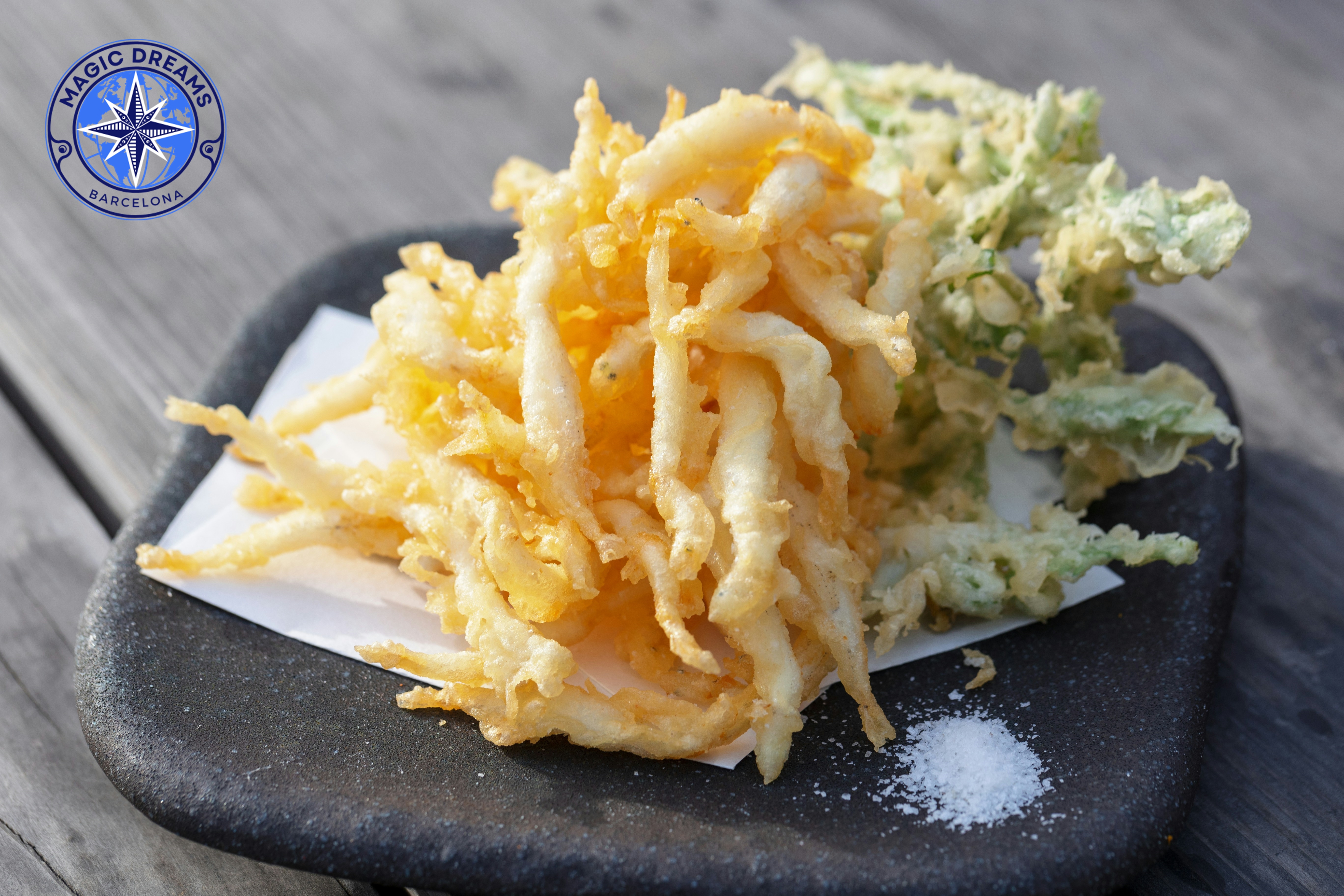
Japanese-inspired kakiage with a Mediterranean soul
Small, delicate, and intensely marine, whitebait takes on an elegant new expression in this refined tempura.
In this recipe, the tiny fish are coated in a light tempura batter and fried until crisp, delicate, and golden. They are paired with thin wild asparagus, cut into small pieces to provide freshness, vibrant color, and a subtle vegetal contrast.
The presentation draws inspiration from the Japanese kakiage technique, in which small ingredients are lightly bound together before being fried. However, this dish has a distinctly Mediterranean identity: whitebait, wild asparagus, sea salt, and lemon, brought together through the delicate technique of tempura.
The result is a refined, deeply savory bite in which the crisp texture of the fish meets the freshness of the asparagus.
A Little Story
Japanese tempura is one of the world’s most refined frying techniques. Its secret lies not in a thick coating, but in the opposite: a very light, cold batter that is barely mixed before being plunged into hot oil.
The concept of kakiage is particularly well suited to small ingredients. Rather than frying each piece individually, several ingredients are lightly combined to create a delicate, irregular, crisp fritter.
This recipe brings that idea into the Mediterranean kitchen.
The star ingredient is whitebait, a tiny fish traditionally associated with coastal cuisines, paired with tender wild asparagus.
It is not intended to reproduce a traditional Japanese recipe. Instead, it is a Mediterranean interpretation of tempura technique and kakiage presentation.
Ingredients
For the kakiage
- 200 g fresh whitebait, cleaned
- 80–100 g thin wild asparagus
- 100 g all-purpose flour
- 30 g cornstarch
- 160 ml ice-cold sparkling or mineral water
- 1 egg yolk, optional
- High-oleic sunflower oil, for frying
- Fine sea salt
To finish
- Fine sea salt or delicate sea-salt flakes
- ½ lemon
- Finely grated lemon zest
- A few small parsley, chervil, or microgreen leaves, optional
Preparation
1. Prepare the Whitebait
Spread the whitebait over paper towels and carefully pat them dry.
This step is essential. The drier the fish, the better the batter will adhere and the crispier the final result will be.
If the whitebait is very small and already cleaned, it can be used whole.
There is no need to handle it excessively: its small size is precisely what creates the delicate effect of tiny crisp fish.
2. Prepare the Asparagus
Wash the wild asparagus and remove the tougher lower section.
Cut the stalks diagonally into small pieces, approximately 1–2 cm long.
Reserve the most delicate tips.
The small cut is important: the asparagus should contribute color, freshness, and texture without visually competing with the whitebait.
3. Make the Tempura Batter
Combine the flour and cornstarch.
Gradually add the ice-cold water.
You may add an egg yolk if you want a slightly richer and more golden batter, although the tempura can also be made with just flour and water.
Mix very lightly.
The batter should remain cold, loose, and slightly lumpy.
It should never resemble a thick fritter batter.
The secret
Prepare the batter immediately before frying.
Cold water and minimal mixing help limit gluten development and create the delicate, crisp texture characteristic of good tempura.
4. Form the Kakiage
Place the whitebait and small pieces of asparagus in a bowl.
Add just enough batter to lightly bind the ingredients together.
The batter should never completely coat them.
Heat plenty of oil to 170–175°C / 340–350°F.
Using a spoon, carefully place small portions of the mixture into the hot oil.
Do not compress them.
The goal is to create small, irregular, open pieces in which the tiny whitebait remain recognizable.
Fry for approximately 1½–2½ minutes, depending on size, until golden and crisp.
Remove and place on a wire rack to drain.
The Perfect Texture
A good whitebait tempura should be crisp, light, and never greasy.
When you bite into it, the coating should break immediately, followed by the delicate marine flavor of the fish.
The asparagus provides a slightly firmer texture and a fresh vegetal contrast that keeps the dish balanced.
The combination works through contrast:
marine + vegetal, crisp + tender, savory + subtly sweet.
Gourmet Presentation
For a fine-dining presentation, use a handcrafted matte-black ceramic plate, stone-colored plate, or warm off-white ceramic.
Place a small sheet of Japanese-style serving paper or natural parchment on the plate.
Arrange a small composition of whitebait tempura on top, creating height without building an overly compact mound.
Scatter a few small pieces of asparagus throughout.
You may place two or three lightly fried asparagus tips to one side, but avoid arranging them in long parallel lines.
Add a small amount of fine sea salt in one corner of the plate.
Finish with an extremely delicate touch of lemon zest.
The presentation should feel spontaneous yet carefully composed.
Visual Palette
Golden tempura.
Vivid green asparagus.
White sea salt.
Matte ceramic.
A simple Mediterranean composition with a subtle Japanese visual language.
The Perfect Accompaniment
This dish does not need a heavy sauce.
In fact, a powerful sauce would overwhelm the delicate flavor of the whitebait.
The most elegant approach is to serve it simply with sea salt and lemon.
If you prefer a sauce, prepare a light Japanese-inspired dipping sauce:
Mediterranean Tentsuyu
- 50 ml mild fish stock
- 25 ml soy sauce
- 25 ml mirin
- A few drops of lemon juice
Warm gently and serve separately in a small dipping bowl.
The sauce should be used sparingly and never poured directly over the tempura, as moisture would quickly destroy its crisp texture.
A More Mediterranean Alternative
To emphasize the Spanish-Mediterranean character of the dish, serve it with a light lemon mayonnaise made with:
- Mild mayonnaise
- Lemon zest
- A few drops of lemon juice
- A small amount of extra-virgin olive oil
Keep it light and use only a small amount.
Wine Pairing
The combination of delicate fish, crisp batter, and asparagus calls for a fresh wine with good acidity.
Excellent choices include:
- Albariño
- Txakoli
- Dry Verdejo
- Cava Brut Nature
- Champagne Brut
- Dry sake, as a bridge to the Japanese inspiration
For a non-alcoholic option, serve very cold sparkling water with a thin strip of lemon peel.
An Important Culinary Note
Authentic whitebait and small juvenile fish are subject to fishing and marketing regulations, and availability varies depending on the species and location.
For this recipe, always use legally marketed, responsibly sourced whitebait from an authorized supplier. Where fresh whitebait is unavailable or restricted, the recipe can be adapted using another legally available small fish with similar characteristics.
The Result
This dish transforms a humble small fish into an elegant gourmet preparation.
The whitebait brings the character of the sea; the wild asparagus introduces freshness and a subtle vegetal bitterness; and the tempura creates a delicate, golden crust that makes every bite wonderfully crisp.
It is not a literal reproduction of a traditional Japanese recipe.
It is a Mediterranean interpretation of tempura and kakiage, built around accessible ingredients and a simple culinary philosophy: let the product remain at the center.
Crispy whitebait, vibrant wild asparagus, sea salt, and lemon — a delicate meeting of Japanese technique and Mediterranean flavor.
Copyright © 2016-2026 Magic Dreams Barcelona.