Route guide for visitors throughout Catalonia – Barcelona – Costa Brava – Catalan Pyrenees – Personalized experiences – Customized tour guide services – A small tribute to the wonderful city and land that saw us born – Transforming experiences into unforgettable memories - Magic Dreams Collection: exclusive universes inspired by Salvador Dalí and Gaudí. Niche perfumes, jewelry, lithographs, and collectible items celebrating the Mediterranean spirit.
The Balmes Street, located in the heart of Barcelona, is one of the most representative urban arteries of the city’s modern evolution. Far more than a simple traffic route, Balmes is an urban narrative where history, architecture, economy, and everyday life intertwine within a broader …
La Calle Balmes, situada en el corazón del Eixample de Barcelona, es una de las arterias urbanas más representativas de la evolución de la ciudad moderna. Más que una simple vía de circulación, Balmes es un relato urbano donde se entrelazan historia, arquitectura, economía y …
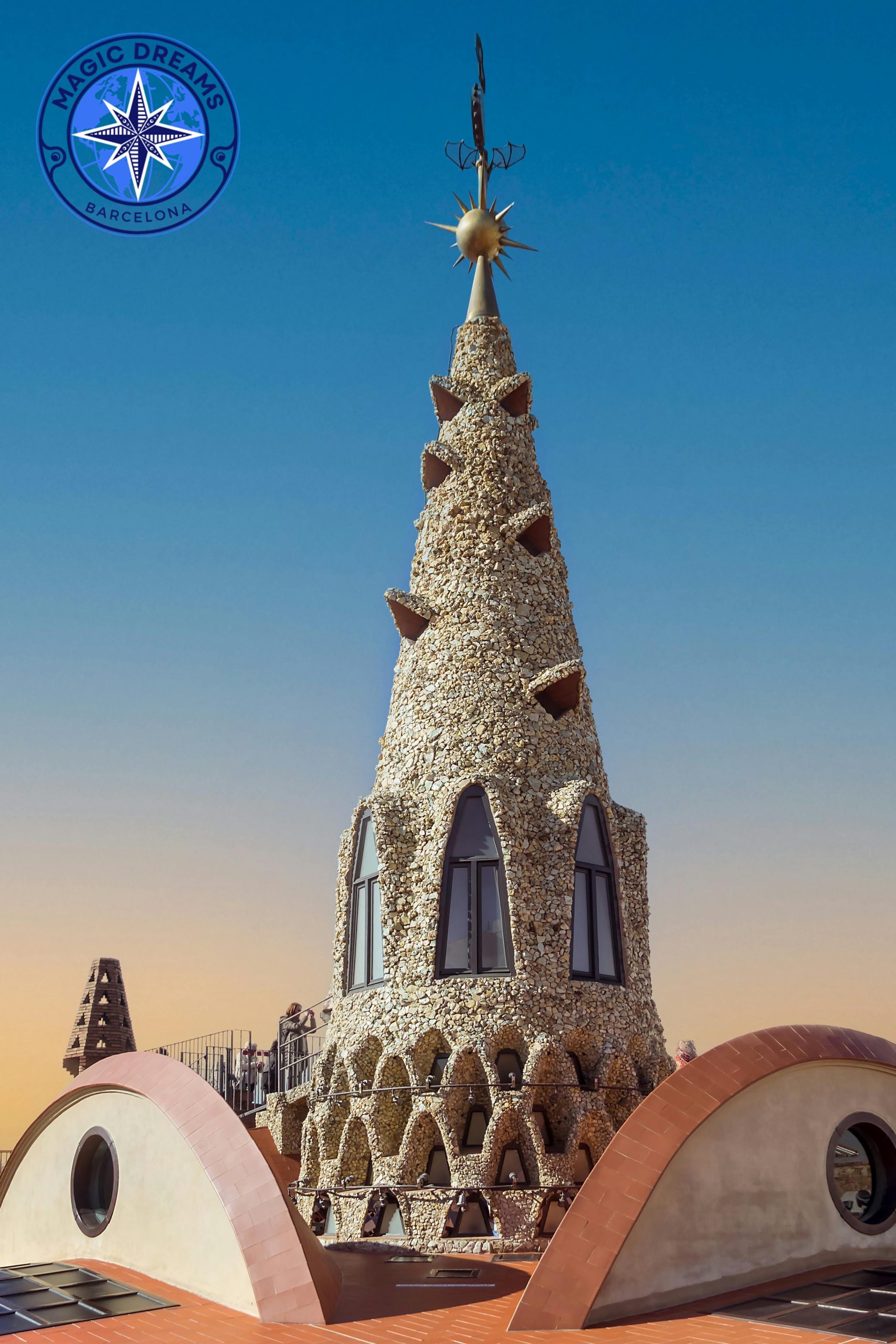
In the upper area of Barcelona, discreet yet deeply evocative, stand the Güell Pavilions, one of the most elegant works of Antoni Gaudí. Built between 1884 and 1887 by commission of Eusebi Güell, this architectural ensemble represents a key early stage in the evolution of the master of Catalan modernism.
Originally conceived as part of the private estate of the Güell family, these pavilions served as stables and gatehouses within an extensive recreational property. Today, they stand as an exceptional testimony to the emergence of a unique architectural language, where nature, geometry, and symbolism converge in perfect harmony.
Architecture and Design
The style of the Güell Pavilions combines Neo-Gothic and Mudéjar influences, integrated within the emerging Catalan Modernism. Gaudí employed materials such as exposed brick, ceramics, and wrought iron, most notably in the famous dragon-shaped gate inspired by the mythology of the Garden of the Hesperides.
This dragon, crafted with exceptional artisanal mastery, symbolizes the guardianship of an almost mythical space, anticipating the symbolic universe that Gaudí would later develop in works such as the Sagrada Familia and Park Güell.
Location
The Güell Pavilions are located on Avenida de Pedralbes, in the Les Corts district. Today, they form part of the surroundings of the University of Barcelona, blending into a space where history, architecture, and academic life coexist.
How to Get There
Metro: Line L3 (green), Palau Reial station Tram: Lines T1, T2 and T3, Palau Reial stop Bus: Lines H6, V5, 7, 33, 63, 67, 68, 75 and 78 (stops along Av. Diagonal / Palau Reial / Pedralbes) Private vehicle: Direct access via Avenida Diagonal On foot or bicycle: Ideal for enjoying the urban and landscaped surroundings
Current State
Today, the Güell Pavilions are preserved as an architectural gem less crowded than other works by Gaudí, allowing for a more intimate, शांत and contemplative visit. Restoration efforts have maintained their original essence, preserving their artistic and symbolic value.
Experiences with Magic Dreams Barcelona
Our tour guides are native and speak Spanish, Catalan, English, and other languages upon request. They are experts in history, architecture, art, symbolism, and botany (lepidopterology, ornithology, floriculture, arboriculture), as well as specialists in experiences related to Antoni Gaudí and Salvador Dalí.
Explore all the secrets of Barcelona in depth and enjoy weekend getaways to the Costa Brava and the Catalan Pyrenees, with all services included:
Private chef offering national, Catalan, and international cuisine at your accommodation, including themed breakfasts, lunches, and dinners (Dalí, Gaudí, Roman Temple, Renaissance, Baroque, Greece, etc.)
Live music: piano, violin, opera, of your choice
Floristry service and professional photography sessions
Exclusive routes through the finest venues in the city, Pyrenees, and Costa Brava
Premium tickets to museums and events
Sensory picnics in gardens, by the sea, or on a yacht, with a sensory guide
We also offer exclusive workshops in Trencadís, surrealism, gastronomy, floral art, and essences.
Wellness services:
Hawaiian Lomi Lomi massages outdoors by the sea
Spa, thermal circuits, and sauna
Guided prayers with fruit baskets, tea, and natural juices
We provide full logistics, including sensory sunsets, excursions, hiking, private vehicles, and exclusive experiences.
With Magic Dreams Barcelona, every journey becomes a unique and personalized experience, where every detail is carefully curated for you to enjoy Barcelona in a profound and memorable way.
For collaborations, projects or professional inquiries – Reservations and quotes
Please leave your details and phone number, and we will get in touch with you as soon as possible, within the same day.
Origen del Plato El tortellini es un icono de la gastronomía italiana, originario de Emilia-Romaña, especialmente de las ciudades de Boloña y Módena. Su forma característica se inspira en el ombligo de Venus, evocando delicadeza y romanticismo. Tradicionalmente se rellenaba con carne, jamón o queso, …
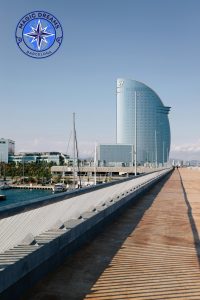
Located on Barcelona’s most iconic beach, the Mirador Vela is an exceptional viewpoint offering vistas that merge the majestic Mediterranean Sea with the city’s skyline. This viewpoint and its accompanying pedestrian staircases were designed by the studio External Reference Architects, under the direction of architect …
Situado en la playa más emblemática de Barcelona, el Mirador Vela es un punto panorámico excepcional, que ofrece vistas que fusionan el imponente mar Mediterráneo con la silueta urbana de la ciudad. Este mirador y las escaleras peatonales que lo acompañan fueron diseñados por el estudio External Reference Architects, bajo la dirección del arquitecto Carmelo Zappulla, con la colaboración de IlarSebastian Amorelli, Ilaria Rampazzo, Ivan Marchuk y Stefano Fontolan, en coordinación con Pigra Engineering. Concebido como un espacio de contemplación del paisaje marítimo, su diseño combina funcionalidad y estética contemporánea, convirtiéndolo en un referente arquitectónico frente al Mediterráneo.
Junto al Mirador, el Paseo Marenostrum del Rompeolas y la Rambla del Rompeolas fueron proyectados por Antoni Barceló y Gustau Gili Galfetti, integrando la estructura con la transformación urbana del puerto y el paseo marítimo. Este elegante pasaje invita a paseos tranquilos y a la exploración de los rincones más secretos del litoral. El rompeolas permite sentir la brisa mediterránea y escuchar el rumor de las olas mientras se observa la danza de embarcaciones y aves marinas. Desde aquí, los visitantes disfrutan de un paisaje que abarca desde el perfil urbano de Barcelona hasta el horizonte azul del Mediterráneo, con atardeceres que se convierten en auténticas experiencias sensoriales.
Cómo llegar y qué se siente
A pie desde el centro: Desde Plaça Catalunya o el Barri Gòtic, se tarda aproximadamente 25‑40 minutos caminando, atravesando calles históricas hasta el puerto y el paseo marítimo.
Autobús urbano: Líneas V15, V19, D20 y N24, con precio aproximado €2,40 por trayecto y 5‑10 minutos caminando hasta el mirador.
Metro: Línea L4 (amarilla), estación Barceloneta, seguida de un paseo de 15‑20 minutos.
Tren / Cercanías: Líneas R1, R2S, S1 y S2, combinadas con un corto paseo de 10‑15 minutos hasta el paseo.
Taxi o VTC: Desde Plaça Catalunya, 10‑15 minutos según tráfico; tarifa aproximada €12‑€20.
Al llegar, se percibe una sensación de serenidad y amplitud; un lugar donde la historia, la naturaleza y la arquitectura conviven junto con la textura de la piedra hasta la intensidad de la luz, invitando a la contemplación y la inspiración.
Entorno, gastronomía y alojamiento
Restaurantes recomendados
Port Vela Barcelona – Tapas, paellas y marisco mediterráneo, ideal para almuerzos o cenas frente al mar.
Maná 75 – Terraza con vista marina, tapas, vinos y cocina mediterránea contemporánea.
Gallito – Cocina creativa mediterránea en el Passeig del Mare Nostrum.
Julieta’s – Gastronomía mediterránea con productos locales y presentación elegante.
Terrazza Ravello – Cocina italiana mediterránea elegante frente al mar.
Mirandoalmar – Marisco y platos mediterráneos con vistas al puerto y atardecer.
Sal Mar – Paellas y arroces tradicionales catalanes junto a la playa.
Alojamiento destacado
W Barcelona – Icono hotelero frente al mar y junto al paseo marítimo de la Barceloneta, conocido popularmente como Hotel Vela por su forma esculpida que recuerda una vela al viento. Diseñado para ofrecer una estancia de lujo con vistas panorámicas al Mediterráneo, servicios premium y acceso directo a la playa, es una experiencia memorable tanto para quienes se alojan como para quienes visitan sus espacios gastronómicos y terrazas.
Servicios exclusivos de Magic Dreams Barcelona
Guías turísticos nativos hablan castellano, catalán, inglés y otros idiomas bajo reserva, especialistas en historia, arquitectura, arte, simbolismo y botánica, así como experiencias de Antoni Gaudí y Salvador Dalí.
Chef privado con cocina nacional, catalana e internacional, incluyendo cenas temáticas inspiradas en Dalí, Gaudí, Templo Romano, Renacimiento, Barroco o Grecia.
Música en vivo: piano, violín, ópera, a elegir.
Servicio de floristería y reportajes fotográficos profesionales.
Rutas exclusivas por los mejores locales de la ciudad, el Pirineo y la Costa Brava.
Entradas premium a museos y eventos.
Picnics sensoriales frente al mar o en jardines, con vajilla personalizada y guía sensorial.
Talleres de “Trencadís”, surrealismo, gastronomía, arte floral y esencias.
Experiencias de bienestar: masajes hawaianos Lomi Lomi al aire libre, spa, circuitos termales, meditación y sesiones guiadas con frutas, té y zumos naturales.
Logística completa: transporte privado, senderismo, excursiones, atardeceres sensoriales en rincones históricos y experiencias Sky.
Con Magic Dreams Barcelona, cada visita al Mirador Vela y al Paseo Marenostrum del Rompeolas se transforma en un viaje único, donde cada detalle está cuidadosamente diseñado para que descubra Barcelona y sus alrededores de manera exclusiva y memorable.
Mirador Vela – Magic Dreams Barcelona.
Para colaboraciones, proyectos o consultas profesionales – Reservas y presupuestos
Por favor, deje sus datos y su número de teléfono, y nos pondremos en contacto con usted a la mayor brevedad, a lo largo del día.
A Historic Garden in the Eixample The Palau Robert Gardens form part of one of Barcelona’s most emblematic historical estates. Created in the early 20th century alongside the construction of the palace for the Marquis of Robert, the gardens were designed by municipal gardener Ramon …
Un jardín histórico en el Eixample Los Jardines del Palau Robert forman parte de una de las fincas históricas más representativas de Barcelona. Fueron creados a principios del siglo XX junto al palacio del marqués de Robert y diseñados por el jardinero municipal Ramon Oliva, …
In the vibrant neighborhood of Gràcia, far from the monumental displays of Barcelona’s Eixample, Casa Cama i Escurra stands as a refined and understated example of Catalan modernism. Located on Gran de Gràcia street, the historic heart of the former independent municipality, the building blends seamlessly into a lively cultural and social environment.
Constructed between 1902 and 1904, the house emerged during a period of intense modernist experimentation, when residential architecture became a vehicle for social prestige and artistic expression. The project is officially credited to the architect Joan Baptista Feu, but creative authorship is often attributed to Francesc Berenguer i Mestres, a close collaborator of Gaudí. This dual attribution reflects a common practice of the time, where the signature and the artistic vision were sometimes distinct.
Casa Cama i Escurra is a sophisticated yet modest modernist residence, where decorative richness is concentrated in details rather than scale:
Façade: Features wrought iron balconies with stained glass windows that create an elegant play of light and color.
Ornamentation: Esgrafiados, corbels, railings, and plant-inspired motifs convey a naturalistic decorative language.
Entrances and common areas: The lobby preserves decorative ceramics, plasterwork, lanterns, and a wooden elevator with velvet seating, reflecting early 20th-century domestic luxury.
Structure: A multi-story building between party walls, with residential floors above and commercial space on the ground floor, typical of Gràcia’s urban expansion.
Unlike grand iconic modernist works, here the style expresses itself on an intimate and functional domestic scale, proving that modernism could flourish beyond monumental avenues.
Over time, the building has undergone minor modifications, including changes to the ground floor and upper cornice, partial loss of decorative elements, and adaptations for commercial and residential use. Yet, its essential character and defining features remain intact.
Today, Casa Cama i Escurra continues to be a living building:
Upper floors remain residential, preserving the domestic function.
The ground floor hosts the historic pastry shop La Colmena, in operation since 1928, maintaining the neighborhood’s cultural memory.
Protected as a local cultural heritage site, the building has undergone careful restorations that recover its original lobby and communal elements.
Casa Cama i Escurra demonstrates that modernism was not only expressed in iconic landmarks but also in everyday urban architecture, where art and life converge naturally. It represents the expansion of modernism beyond elite boulevards, the influence of Gaudí-inspired collaborators, and the evolution of Gràcia from an independent village to a culturally rich Barcelona neighborhood.
Elegant without ostentation, Casa Cama i Escurra is a crucial piece for understanding human-scale modernism. Here, ornamentation is not excess but a language, and architecture is not a spectacle but a continuity with daily life.
For collaborations, projects or professional inquiries – Reservations and quotes
Please leave your details and phone number, and we will get in touch with you as soon as possible, within the same day.
En el tejido urbano de la Vila de Gràcia, lejos del espectáculo monumental del Eixample, la Casa Cama i Escurra aparece como una obra elegante del modernismo barcelonés. Situada en la calle Gran de Gràcia, eje histórico de un antiguo municipio independiente, el edificio se …
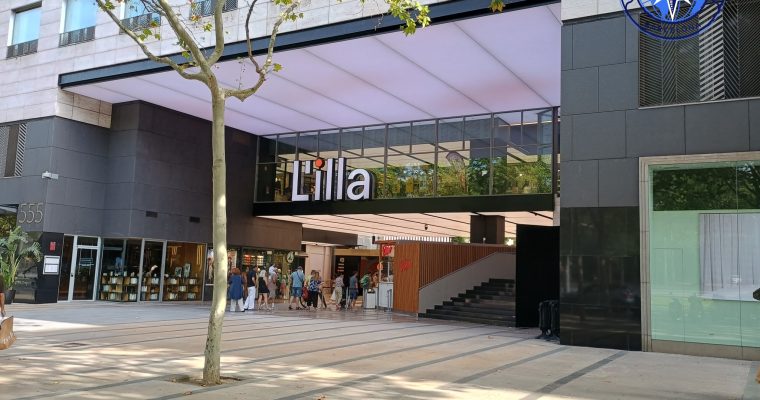
L’Illa Diagonal – Architecture, Commerce, and Urban Evolution in Barcelona The L’Illa Diagonal shopping center is one of the most emblematic commercial and urban spaces in Barcelona. Located on Avinguda Diagonal, this complex stands out not only for its retail offerings but also for its …
L’Illa Diagonal – Arquitectura, comercio y evolución urbana en Barcelona
El centro comercial L’Illa Diagonal es uno de los espacios comerciales y urbanos más emblemáticos de Barcelona. Situado en la avenida Diagonal, este complejo no solo destaca por su oferta comercial, sino también por su valor arquitectónico, su integración urbana y su reciente transformación hacia un modelo más sostenible y experiencial.
Origen e historia
L’Illa Diagonal fue inaugurado el 2 de diciembre de 1993, convirtiéndose en el primer gran centro comercial urbano de Barcelona. Su creación se enmarca en el proceso de modernización de la ciudad tras los Juegos Olímpicos de 1992.
El proyecto nació de la colaboración entre el Grupo Sanahuja y la aseguradora Winterthur (actualmente AXA), dentro de un plan para consolidar la zona alta de la Diagonal como nuevo eje económico y empresarial.
Desde sus inicios, el complejo fue concebido como una “supermanzana” multifuncional, integrando comercio, oficinas, hotel, espacios verdes y servicios.
Diseño y arquitectura
El diseño fue obra de los arquitectos Rafael Moneo y Manuel de Solà-Morales, quienes plantearon un concepto innovador: un edificio largo y horizontal paralelo a la avenida, conocido como “rascacielos tumbado”.
Fachada longitudinal de más de 300 metros
Integración con el urbanismo del Plan Cerdà
Uso mixto: comercio, oficinas, hotel y espacios públicos
Conexión entre barrios
Relación interior-exterior
El proyecto recibió el Premio FAD de arquitectura en 1994, consolidándose como referente urbano.
Oferta comercial y experiencia
Actualmente, L’Illa Diagonal cuenta con más de 170 tiendas y aproximadamente 35.000 m² de superficie comercial, combinando moda, tecnología, hogar y servicios.
Destaca también el espacio gastronómico El Rebost, así como una oferta variada de restauración que incluye brunch, cocina mediterránea, propuestas saludables y coffee shops premium.
El Umbracle
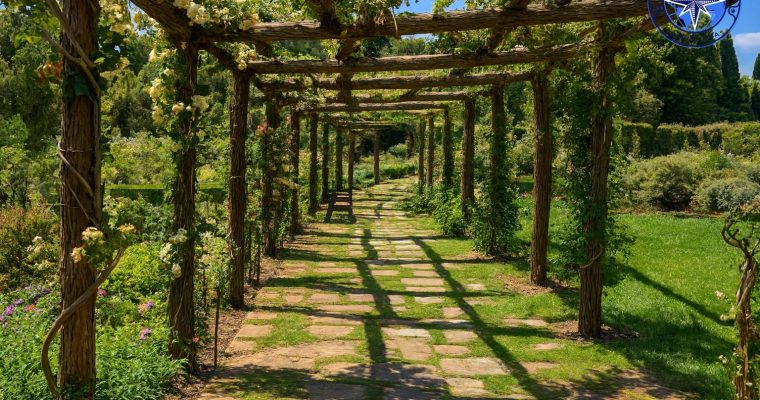
Uno de los elementos más innovadores es el Umbracle, una estructura exterior de aproximadamente 200 metros concebida como pérgola vegetal.
Diseñado por Batlleiroig
Estructura de madera con vegetación
Espacio bioclimático
Refugio climático urbano
Zonas de descanso y restauración
Su objetivo es crear un oasis urbano que combina naturaleza, arquitectura y experiencia.
Transformación reciente
En los últimos años, el centro ha experimentado una renovación significativa con una inversión cercana a 35 millones de euros, modernizando espacios y mejorando su sostenibilidad.
Más de 15,7 millones de visitantes anuales
Ocupación cercana al 100%
Consolidación como polo comercial clave
Importancia urbana
L’Illa Diagonal actúa como nexo entre barrios, integra espacio público y privado, y se adapta a las nuevas tendencias del retail, evolucionando hacia un modelo basado en la experiencia.
Hoy representa un ejemplo de cómo los centros comerciales se transforman en espacios híbridos de ocio, naturaleza y comunidad.
Conclusión
L’Illa Diagonal ha pasado de ser un centro comercial pionero a convertirse en un ecosistema urbano moderno, donde arquitectura, comercio y sostenibilidad conviven.
Su evolución refleja el futuro del retail: menos consumo y más experiencia.
Umbracle.
Illa Diagonal.
Para colaboraciones, proyectos o consultas profesionales – Reservas y presupuestos
Por favor, deje sus datos y su número de teléfono, y nos pondremos en contacto con usted a la mayor brevedad, a lo largo del día.
The Portal de l’Àngel was originally one of the gates of Barcelona’s medieval wall, built in the 13th century, known as the Portal dels Orbs, meaning “Gate of the Blind.” The name refers to the presence of poor people in the area, including the blind …
El Portal de l’Àngel fue originalmente una de las puertas de la muralla medieval de Barcelona, construida en el siglo XIII, conocida como Portal dels Orbs, es decir, “portal de los ciegos”. El nombre hace referencia a la presencia en esta zona de personas pobres, …
For collaborations, projects or professional inquiries – Reservations and quotes
Please leave your details and phone number, and we will get in touch with you as soon as possible, within the same day.
In the heart of Barcelona’s Eixample district, along the prestigious Rambla de Catalunya, stands a building that embodies history, style, and distinction: Cases Godó‑Lallana. Located at numbers 112–114, on the corner with Carrer Rosselló, this residence is not only a testament to early 20th-century architecture …
En el corazón del Eixample barcelonés, en Rambla de Catalunya, está situado un edificio que combina historia, estilo y distinción: Cases Godó‑Lallana. Situado en los números 112–114, en la esquina con Carrer Rosselló, este inmueble no solo es un testimonio de la arquitectura de principios …
Casa Verdú – Modernism in Barcelona’s Eixample District
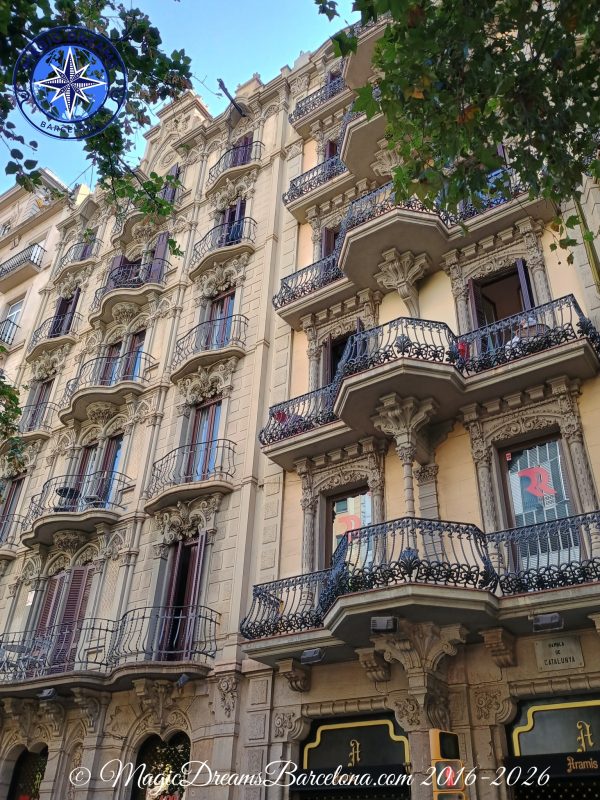
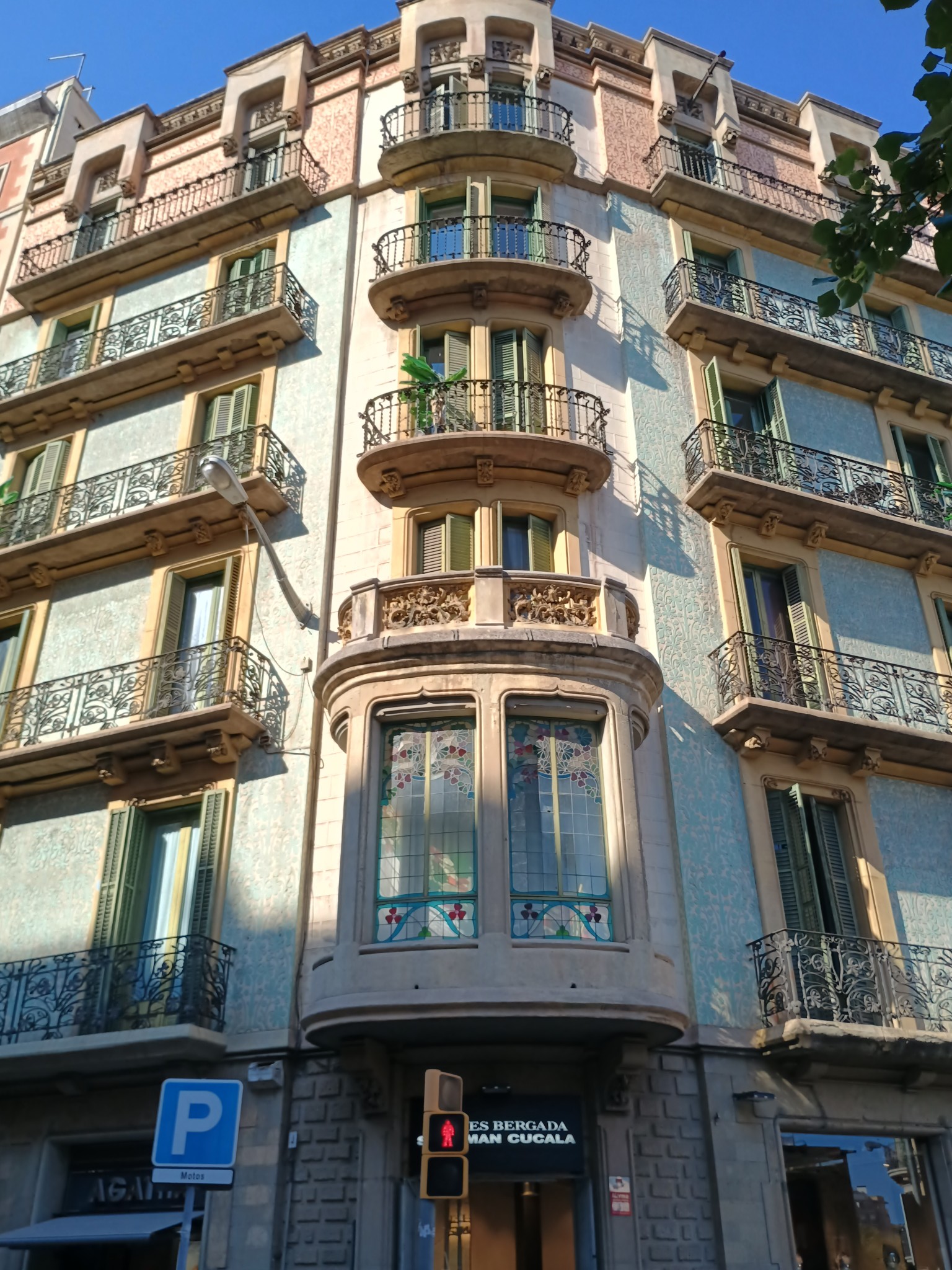
We are standing in front of the building known as Casa Verdú, located at 103 Rambla de Cataluña, at the intersection with Provenza Street, in the emblematic Eixample district of Barcelona.
This property is a remarkable example of Barcelona’s Modernist architecture. It was designed between 1903 and 1904 by architect Maurici Augé i Robert, with later contributions by Melcior Viñals and Salvador Viñals, which further enriched its artistic and architectural value.
The chamfered façade reflects the characteristic layout of Barcelona’s urban expansion, yet it stands out for its refined ornamental composition. Among its most notable features are the wrought iron balconies, showcasing organic and flowing forms inspired by nature; the glazed ceramic elements, introducing a subtle polychromy typical of the Modernist style; and the window and lintel moldings, decorated with delicate floral and geometric motifs.
Particularly noteworthy is the vertical axis at the corner, conceived as the main compositional element, which visually organizes the entire building and gives it a distinguished urban presence.
For collaborations, projects or professional inquiries – Reservations and quotes
Please leave your details and phone number, and we will get in touch with you as soon as possible, within the same day.
Casa Verdú – Modernismo en el Eixample de Barcelona Nos encontramos frente al edificio conocido como Casa Verdú, situado en la Rambla de Cataluña número 103, a la altura de la calle Provenza, en el emblemático barrio del Eixample de Barcelona. Este inmueble constituye un …
Avinguda de Pau Casals is one of the most emblematic and elegant avenues in Barcelona, located next to the historic Turó Park in the Sant Gervasi-Galvany neighborhood, within the Sarrià-Sant Gervasi district. This avenue combines cultural history, distinguished residential architecture, and one of the city’s …
La Avinguda de Pau Casals es una de las avenidas más emblemáticas y elegantes de Barcelona, situada junto al histórico Turó Park en el barrio de Sant Gervasi-Galvany, dentro del distrito de Sarrià-Sant Gervasi. Esta avenida combina historia cultural, arquitectura residencial distinguida y uno de los parques urbanos más elegantes de la ciudad.
El origen del nombre: el legado de Pau Casals
La avenida rinde homenaje a Pau Casals (1876–1973), considerado uno de los violonchelistas más influyentes de la historia de la música clásica.
Casals revolucionó la interpretación del violonchelo y contribuyó decisivamente a popularizar las Suites para violonchelo de Bach, que hasta entonces eran obras poco interpretadas. Su carrera lo llevó a los principales escenarios del mundo, donde fue reconocido por su sensibilidad musical, técnica excepcional y profundo respeto por la tradición musical europea.
Sin embargo, su legado trasciende la música. Tras la Spanish Civil War, Casals se exilió y se convirtió en un firme defensor de la paz, la democracia y los derechos humanos. Durante años se negó a actuar en países que reconocieran el régimen de Francisco Franco. En 1971 pronunció un célebre discurso en la United Nations, donde interpretó “El cant dels ocells”, símbolo de paz y libertad para Cataluña.
Debido a esta combinación de excelencia artística y compromiso humanista, diferentes ciudades españolas dedicaron avenidas y plazas a su nombre.
Turó Park: del parque de atracciones a oasis urbano
El actual Turó Park situado al final de la avenida, tiene una historia poco conocida pero muy interesante. A principios del siglo XX, el lugar albergaba un pequeño parque de atracciones inaugurado en 1912. El recinto incluía:
carruseles y atracciones mecánicas
un lago artificial
cafés y zonas de paseo
espacios de ocio muy populares entre las familias barcelonesas
Durante la década de 1920 el parque fue uno de los principales centros de entretenimiento de la zona alta de Barcelona. Sin embargo, el proyecto dejó de ser rentable y cerró definitivamente en 1929.
Posteriormente, el terreno fue transformado en parque público y urbanizado progresivamente. Con el tiempo se convirtió en un espacio verde elegante, rodeado de edificios residenciales de alto nivel.
Hoy el parque destaca por:
caminos sombreados y tranquilos
árboles centenarios
un estanque con nenúfares
esculturas y jardines paisajísticos
zonas de lectura y descanso
Este entorno convierte al parque en uno de los espacios más tranquilos y elegantes de Barcelona.
La avenida y su entorno urbano
La Avinguda de Pau Casals está situada muy cerca de Plaça de Francesc Macià y de Avinguda Diagonal, lo que la sitúa en una localización estratégica dentro de la ciudad.
La zona se caracteriza por:
edificios residenciales de arquitectura señorial
boutiques y comercios exclusivos
restaurantes y cafés elegantes
proximidad a uno de los parques más tranquilos de la ciudad
Por estas razones, el área de Turó Park està considerada una de las zonas residenciales más prestigiosas de Barcelona.
Bares y lugares destacados cerca de Turó Park
En el entorno de la avenida y del parque existen varios establecimientos conocidos en la escena gastronómica de la ciudad. Uno de los más míticos en la zona es:
Velódromo, un histórico café-restaurante cercano que combina tradición barcelonesa con cocina contemporánea y un ambiente clásico muy apreciado por residentes y visitantes.
También es frecuente encontrar pequeños cafés, terrazas y restaurantes elegantes alrededor del parque, que contribuyen al carácter sofisticado del barrio.
Un espacio donde conviven historia, cultura y vida urbana
La combinación entre la historia cultural vinculada a Pau Casals, la transformación urbana del antiguo parque de atracciones y la tranquilidad del actual Turó Park hacen de esta avenida un lugar único dentro de Barcelona.
Hoy, Avinguda de Pau Casals y Turó Park representan una síntesis perfecta entre patrimonio cultural, calidad de vida y elegancia urbana.
En el corazón del distrito del Eixample, uno de los paisajes urbanos más emblemáticos de Barcelona, se encuentra la elegante Casa Sala-Cairó, un edificio residencial que forma parte del rico patrimonio del Modernisme català. Situada en la calle Enric Granados, una de las vías más …
Located in the heart of the Eixample district, one of the most iconic urban areas of Barcelona, Casa Sala-Cairó is a refined example of residential architecture from the era of Modernisme català. Standing on the elegant Enric Granados Street, today known for its vibrant cultural …
Built between 1905 and 1908 as the headquarters of the Orfeó Català, the Palau de la Música Catalana is one of the most emblematic monuments of Catalan Modernism and one of the most unique concert halls in the world. Architect Lluís Domènech i Montaner conceived this building as a sanctuary for Catalan choral music, erected on the site of the former Convent of San Francisco de Paula, with the foundation stone laid on Saint George’s Day in 1905.
The Concert Hall, the jewel of the palace, dazzles visitors with its impeccable acoustics, admired by internationally renowned musicians. Its luminous and colorful interior, defined by stained glass and meticulous craftsmanship, transports the audience into a dreamlike universe where music, light, nature, and art merge. The enormous stained-glass skylight — shaped like an inverted bell and weighing more than a ton — symbolizes a heart of female angels surrounding the sun, while the glass panels and light steel structure filter natural light, recreating the mystical atmosphere of Gothic cathedrals.
The palace is adorned with busts, reliefs, and sculptures representing musical and mythological figures, from the muses surrounding the stage to Wagnerian Valkyries emerging from the ceiling. Natural elements — Mediterranean flowers, palms, and fruits — dialogue with columns covered in trencadís mosaics, each unique and symbolic of the Modernist ideal uniting art and life. The mosaics, created in the workshops of Lluís Bru, complete a harmonious ensemble that transforms every visit into an artistic and sensory journey.
Beyond its architectural value, the Palau de la Música Catalana is a vibrant cultural center hosting more than 600 concerts annually and welcoming over 350,000 visitors each year. Immersive experiences such as Essència Palau, combining aromas, literature, and music, allow guests to experience the artistic richness of the building deeply. The visit may conclude in the Sala Lluís Millet, a Modernist lounge opening onto a small terrace decorated with mosaic columns — a peaceful oasis of beauty and serenity.
Location
C/ Sant Pere Més Alt, s/n — Barcelona, Spain
How to arrive: Bus lines V15, V17, 45 Metro: Urquinaona — Lines L1 and L4
Magic Dreams Barcelona Experiences — Discover the Essence of Beauty
Magic Dreams Barcelona offers an intimate, personalized, and sensory way to discover the Palau de la Música Catalana. Our service transforms the visit into an educational and emotional journey where architecture and music are fully experienced with sensitivity and precision.
Exclusive Services Include:
Native expert guides specialized in history, architecture, Modernism, and symbolism
Tailor-made private routes adapted to your interests, pace, and preferences, including private transportation
Private sensory experiences: live music performances at your accommodation, aromas, literature, private chef experiences, themed lunches or dinners
Signature gastronomy & luxury picnics: sweets, savory selections, natural juices, alcohol-free wines and cavas in unique locations — seaside settings, gardens, or yachts
Floristry service
Professional photography reports capturing every moment
Wellness and creative workshops: Catalan traditional cuisine, mosaic and trencadís workshops
One-day or weekend escapes to the best locations of the Costa Brava and Catalan Pyrenees, including curated gastronomic routes
Every visit with Magic Dreams Barcelona becomes a profound encounter with music, art, architecture, and nature — an experience not only to admire but to feel, understand, and listen to the language that unites history, art, and life. Magic Dreams Barcelona invites you to experience the Palau de la Música Catalana as an unforgettable and exquisitely curated journey.
Detalle interior del Palau de la Música Catalana diseño del arquitecto barcelonés Lluís Domènech i Montaner.
Detalle interior del Palau de la Música Catalana diseño del arquitecto barcelonés Lluís Domènech i Montaner.
Detalle interior del Palau de la Música Catalana diseño del arquitecto barcelonés Lluís Domènech i Montaner.
Detalle exterior del Palau de la Música Catalana diseño del arquitecto barcelonés Lluís Domènech i Montaner.
Detalle exterior del Palau de la Música Catalana diseño del arquitecto barcelonés Lluís Domènech i Montaner.
Detalle interior del Palau de la Música Catalana diseño del arquitecto barcelonés Lluís Domènech i Montaner.
Detalle interior del Palau de la Música Catalana diseño del arquitecto barcelonés Lluís Domènech i Montaner.
Detalle interior del Palau de la Música Catalana diseño del arquitecto barcelonés Lluís Domènech i Montaner.
Detalle interior del Palau de la Música Catalana diseño del arquitecto barcelonés Lluís Domènech i Montaner.
Detalle interior del Palau de la Música Catalana diseño del arquitecto barcelonés Lluís Domènech i Montaner.
Detalle interior del Palau de la Música Catalana diseño del arquitecto barcelonés Lluís Domènech i Montaner.
Detalle exterior del Palau de la Música Catalana diseño del arquitecto barcelonés Lluís Domènech i Montaner.
Detalle interior del Palau de la Música Catalana diseño del arquitecto barcelonés Lluís Domènech i Montaner.
Detalle interior del Palau de la Música Catalana diseño del arquitecto barcelonés Lluís Domènech i Montaner.
Located at one of the most iconic entrances to Barcelona’s Eixample district, the Residential Building of Plaça Francesc Macià is a landmark that defines the city’s urban personality and invites you to discover Barcelona’s architectural elegance from the 1930s. This monumental building represents one of …
En uno de los accesos más emblemáticos al Eixample barcelonés está situado el Edificio Residencial de Plaça Francesc Macià, un inmueble que define la personalidad urbana de la ciudad y le invita a descubrir la elegancia arquitectónica de Barcelona de la década de 1930. Este …
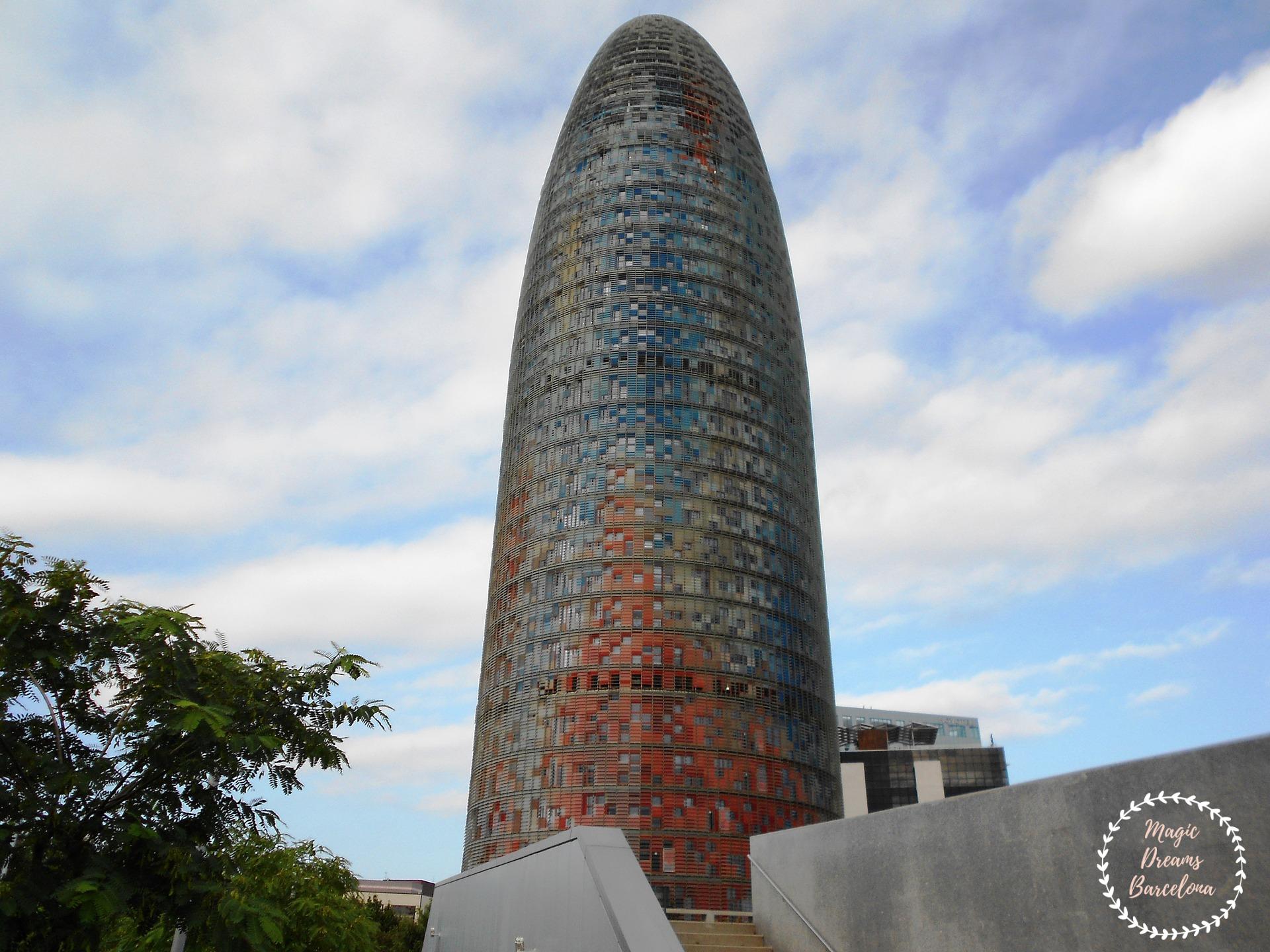
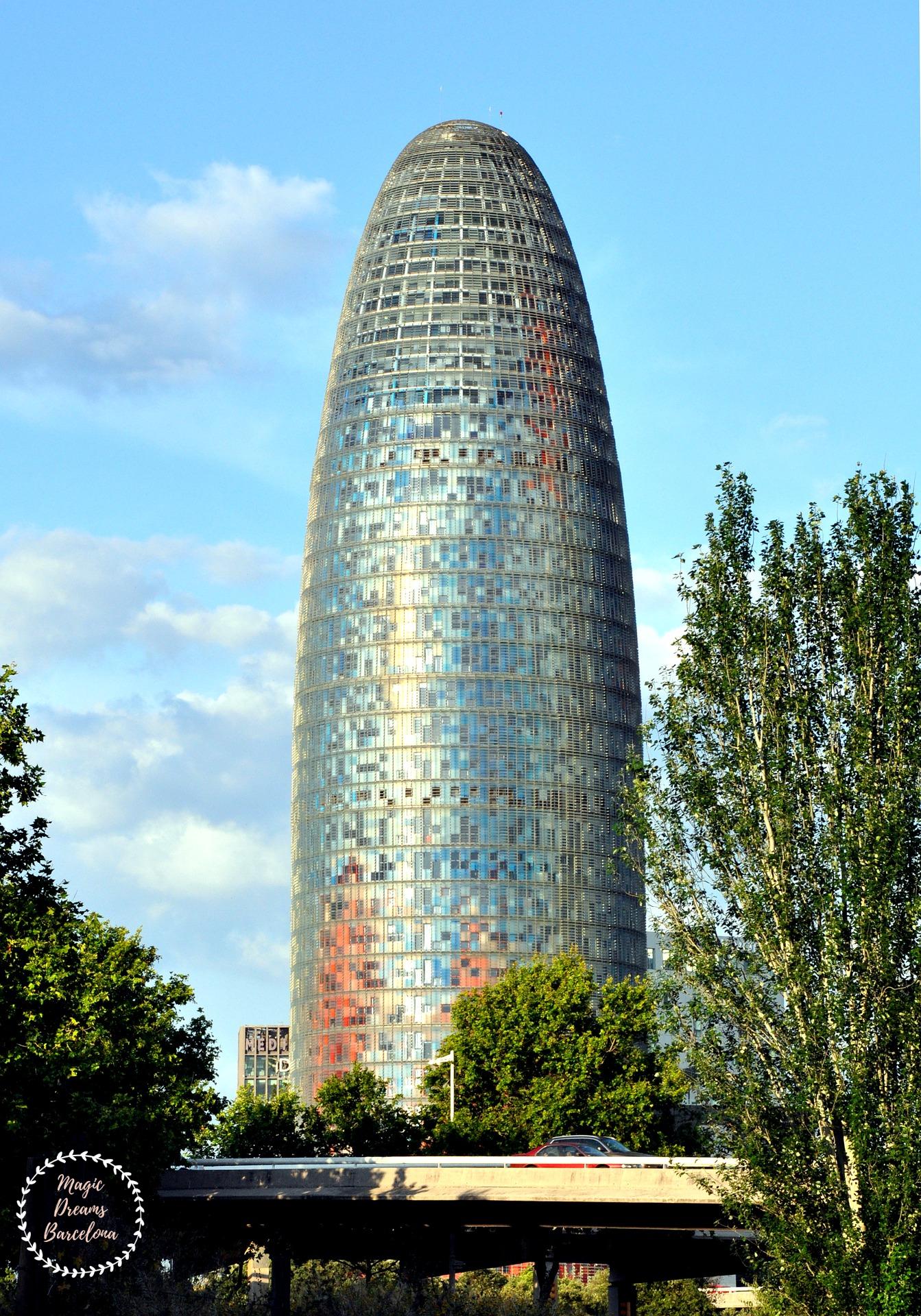
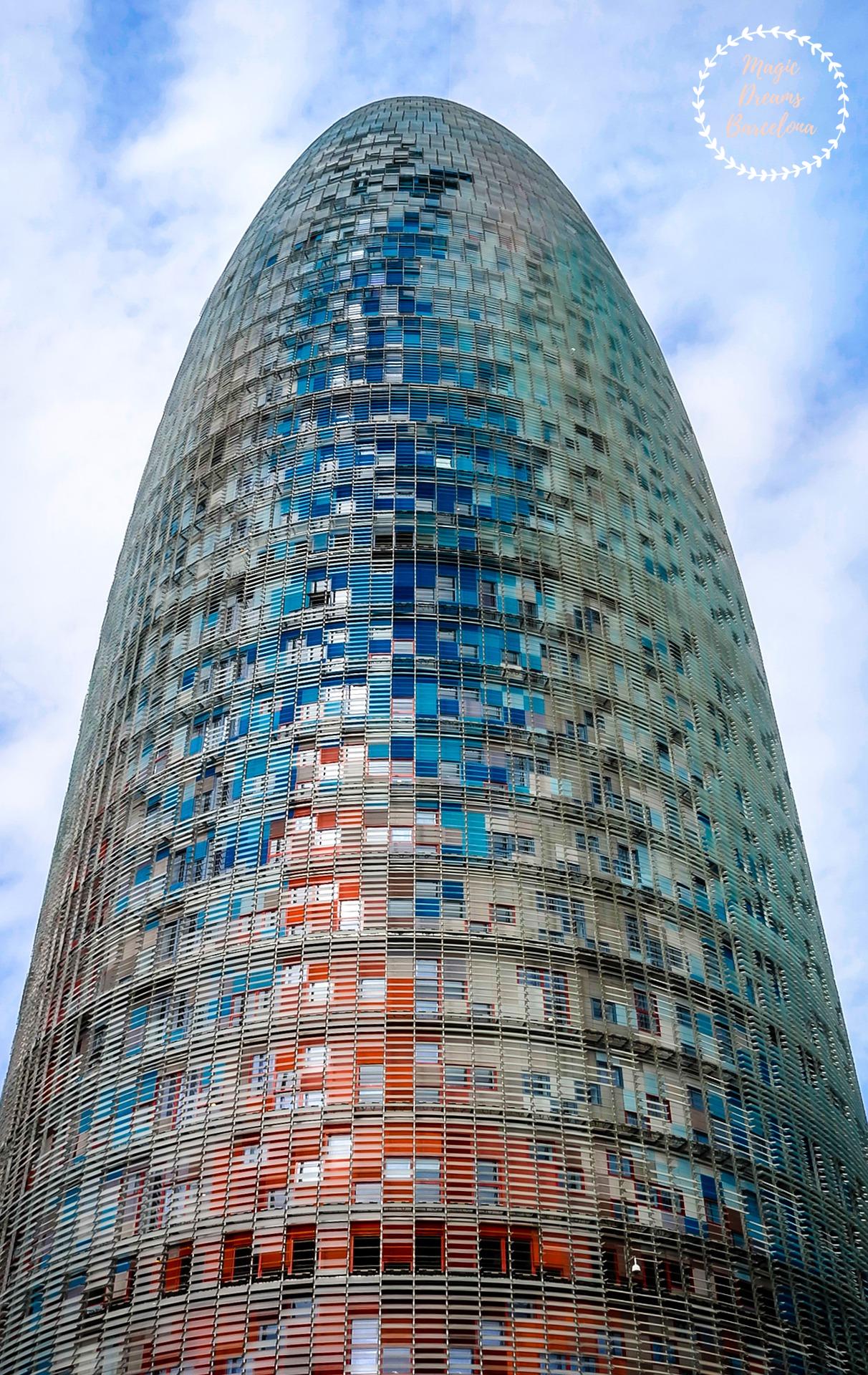
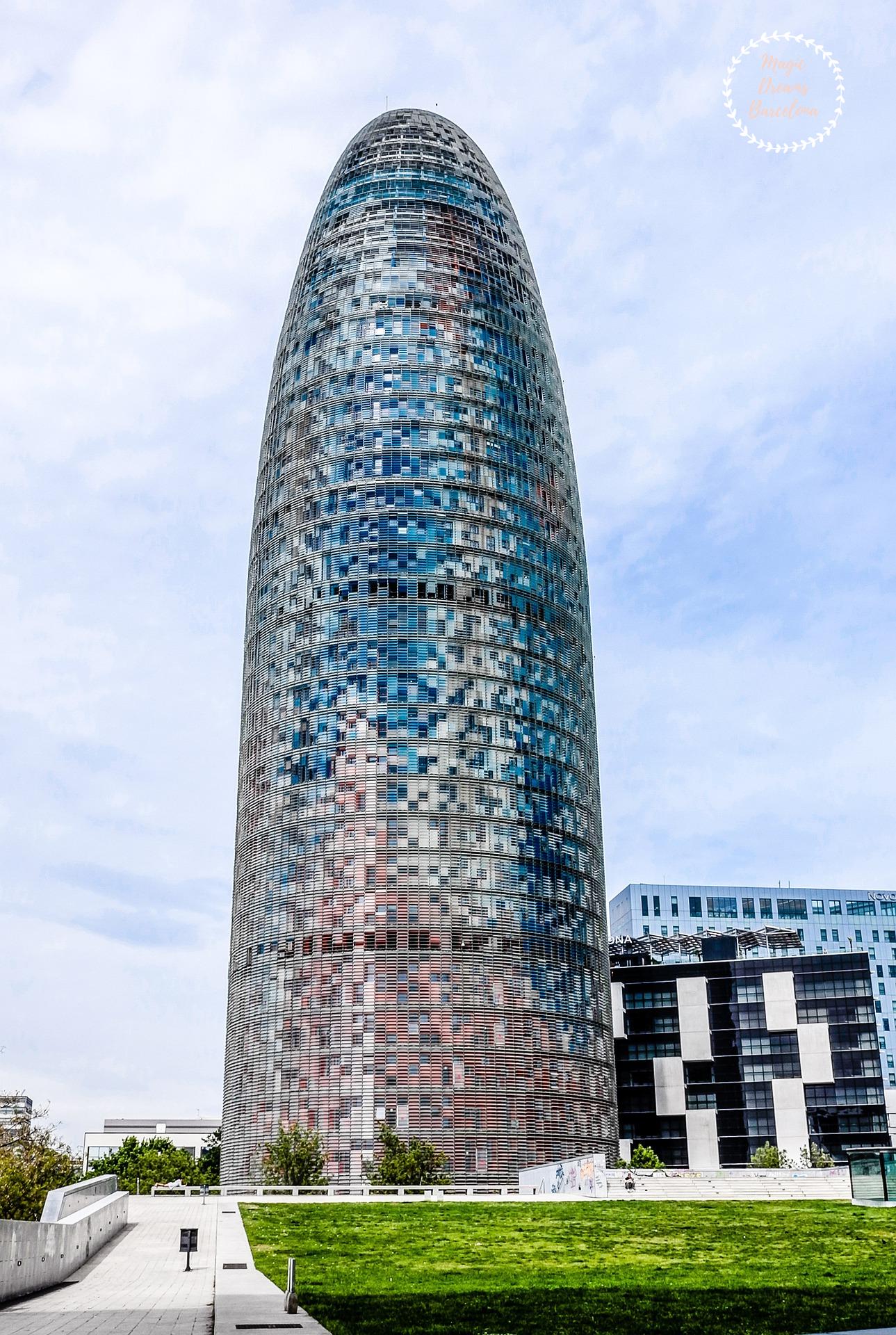
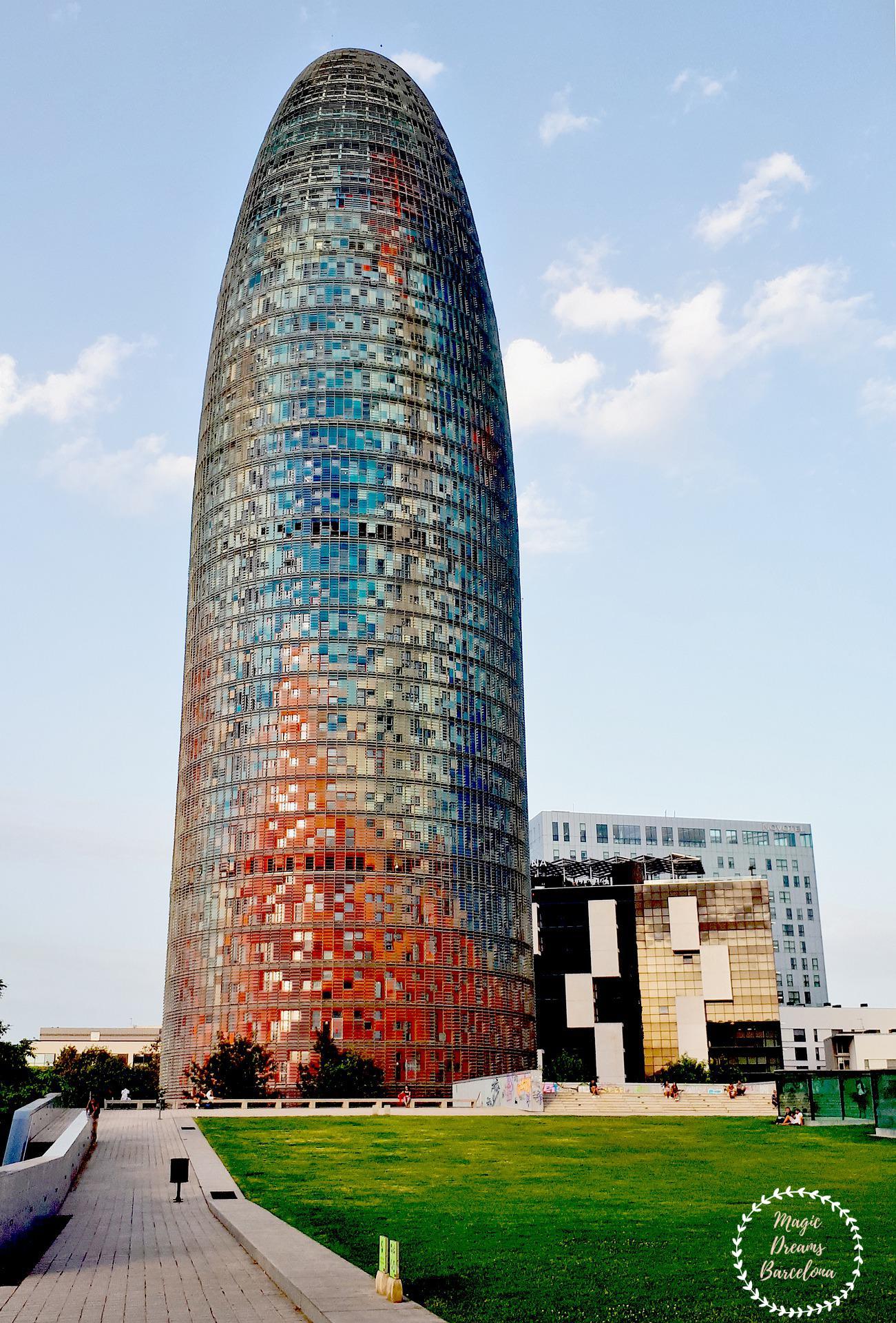
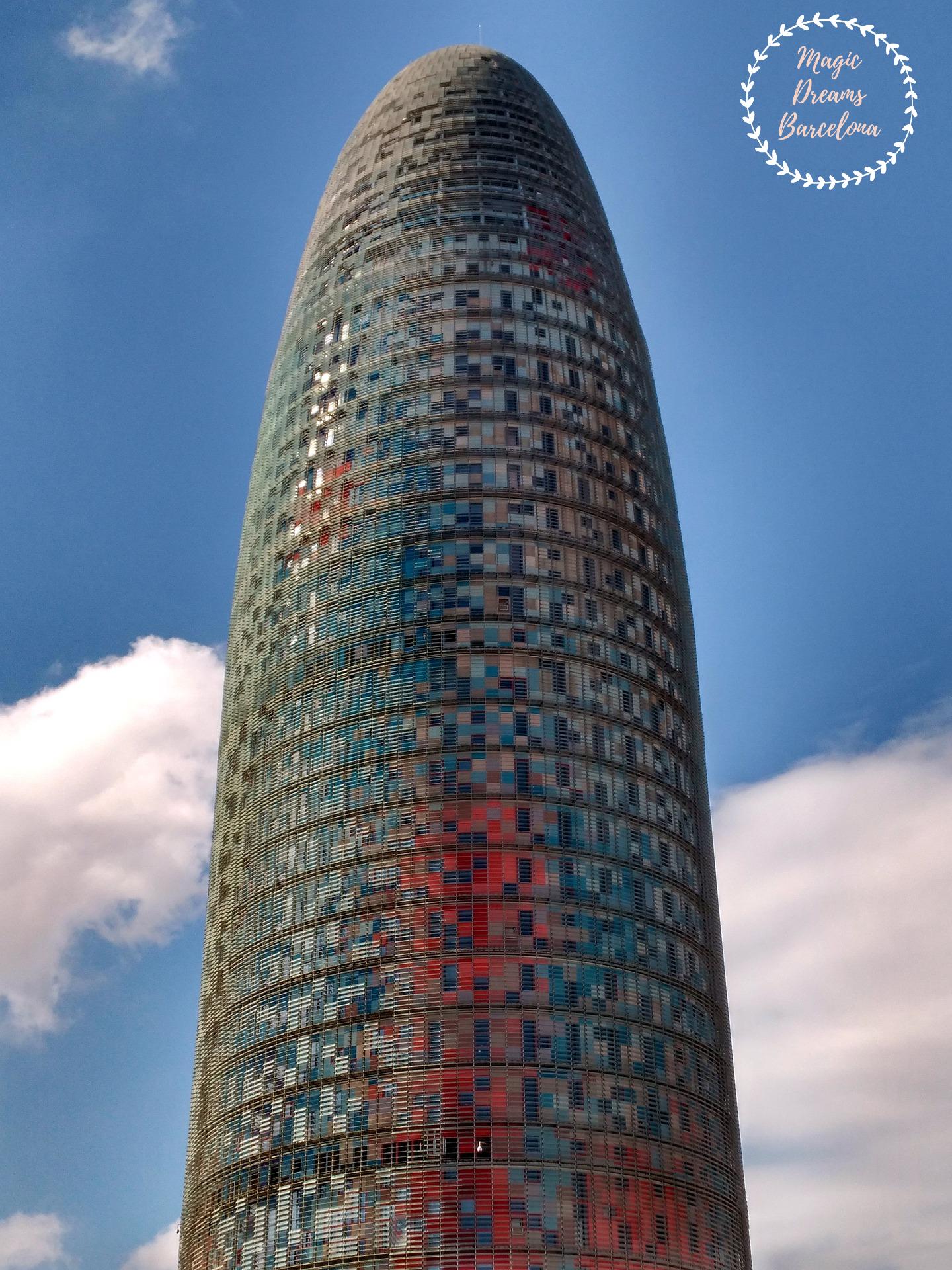
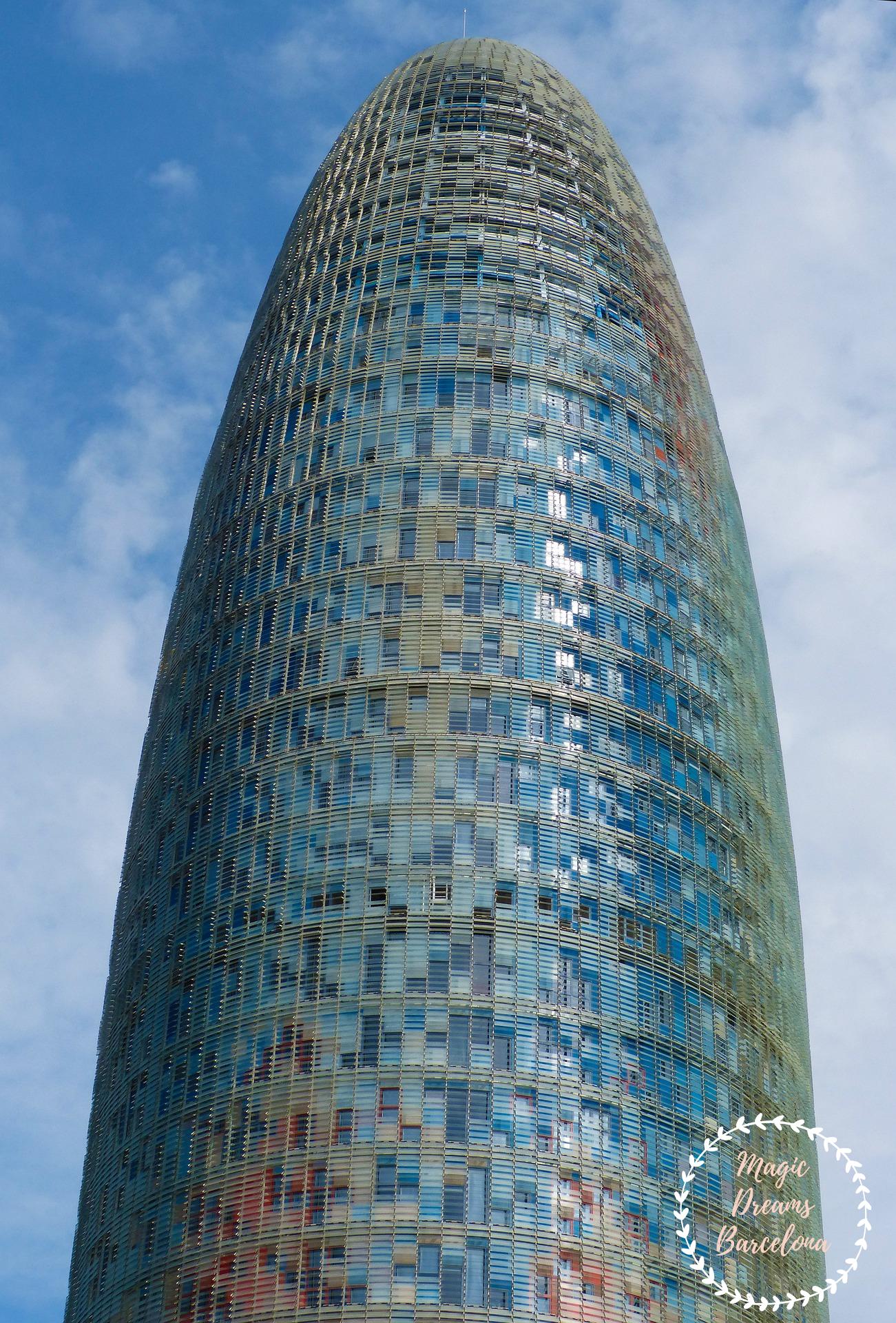
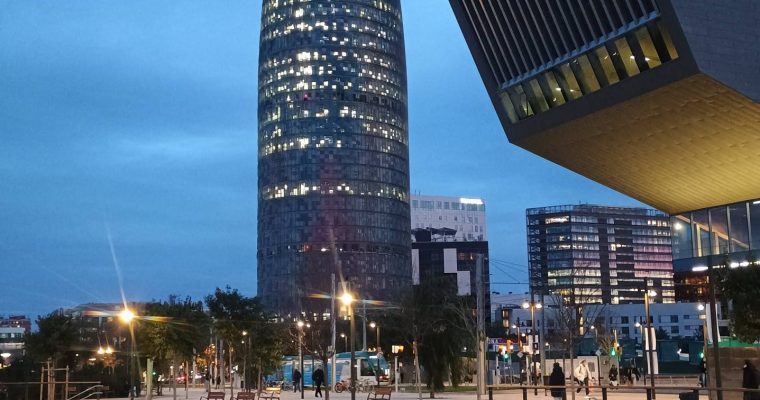
Architecture, design, art, and innovation converge at Mirador Torre Glòries, one of the most iconic cultural and sensory experiences in contemporary Barcelona. Located at the intersection of Avinguda Diagonal and Carrer de Badajoz, near Plaça de les Glòries, Torre Glòries marks the gateway to the city’s technological and creative district, symbolizing urban transformation and the innovative spirit of Barcelona.
Architectural Masterpiece
Designed by renowned architect Jean Nouvel, in collaboration with b720 Fermín Vázquez Arquitectos, Torre Glòries deliberately moves away from the traditional rectilinear skyscraper concept. Its organic, enveloping form is inspired by a geyser emerging from the depths, evoking water as a vital element of life and reflecting Barcelona’s Mediterranean identity. Standing 144 meters tall with 34 above-ground floors and four underground levels, it is one of the most recognized buildings in Barcelona’s skyline.
With over 50,000 m² of space, the tower integrates offices, auditoriums, technical services, and parking. Its crowning feature, the Mirador Torre Glòries, offers a 360º panoramic view of Barcelona, the Mediterranean Sea, and the Collserola mountain range. From this viewpoint, the city unfolds in a single gesture, revealing its past, present, and future.
Iconic Lighting and Cultural Presence
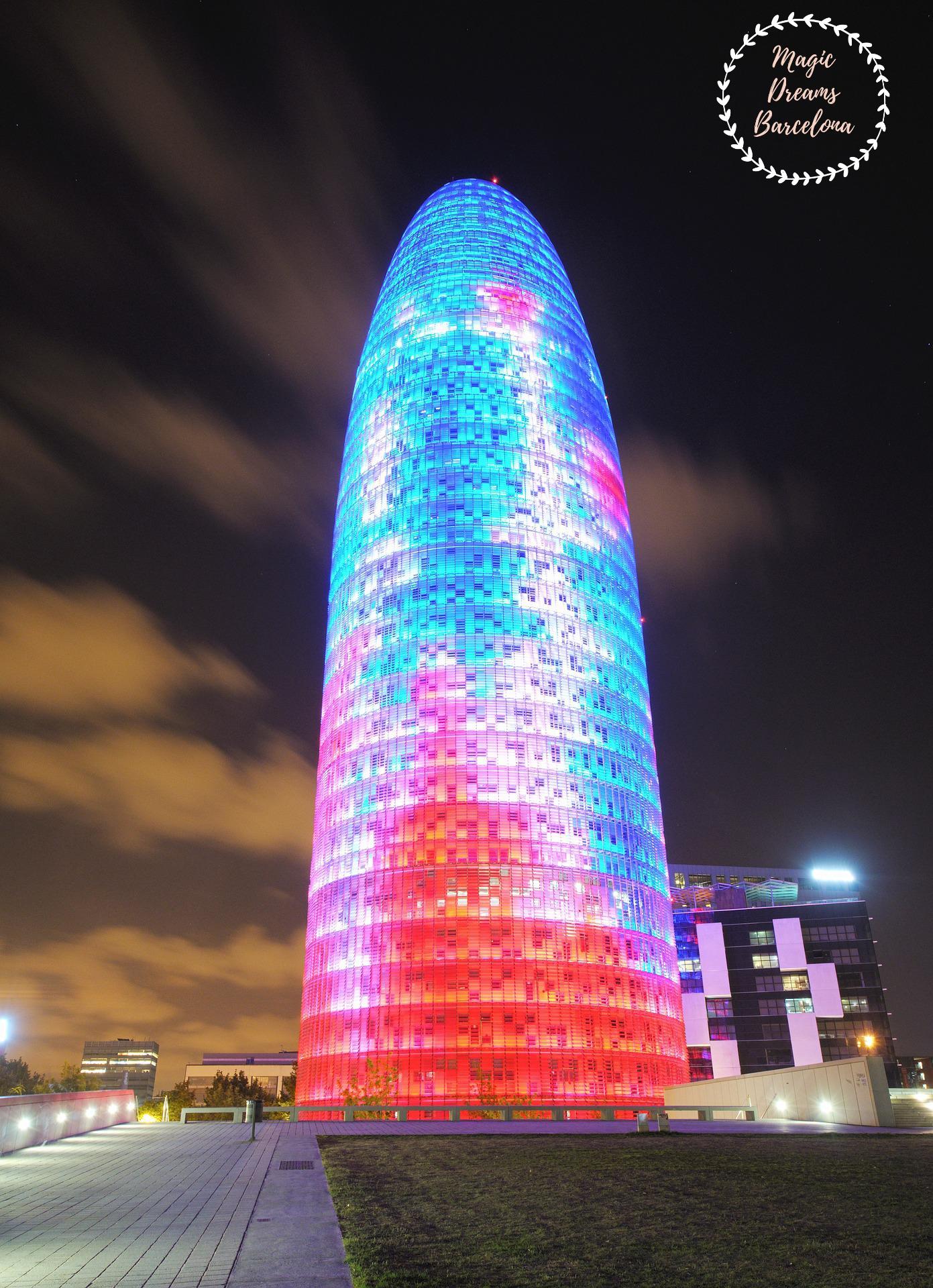
One of Torre Glòries’ most iconic elements is its nighttime illumination: over 4,500 LED devices capable of generating up to 16 million colors. This advanced system creates dynamic light compositions and smooth transitions, transforming the façade into an urban canvas. The tower becomes a modern beacon, celebrating international cultural, artistic, and social events.
Technological Innovation and Sustainability
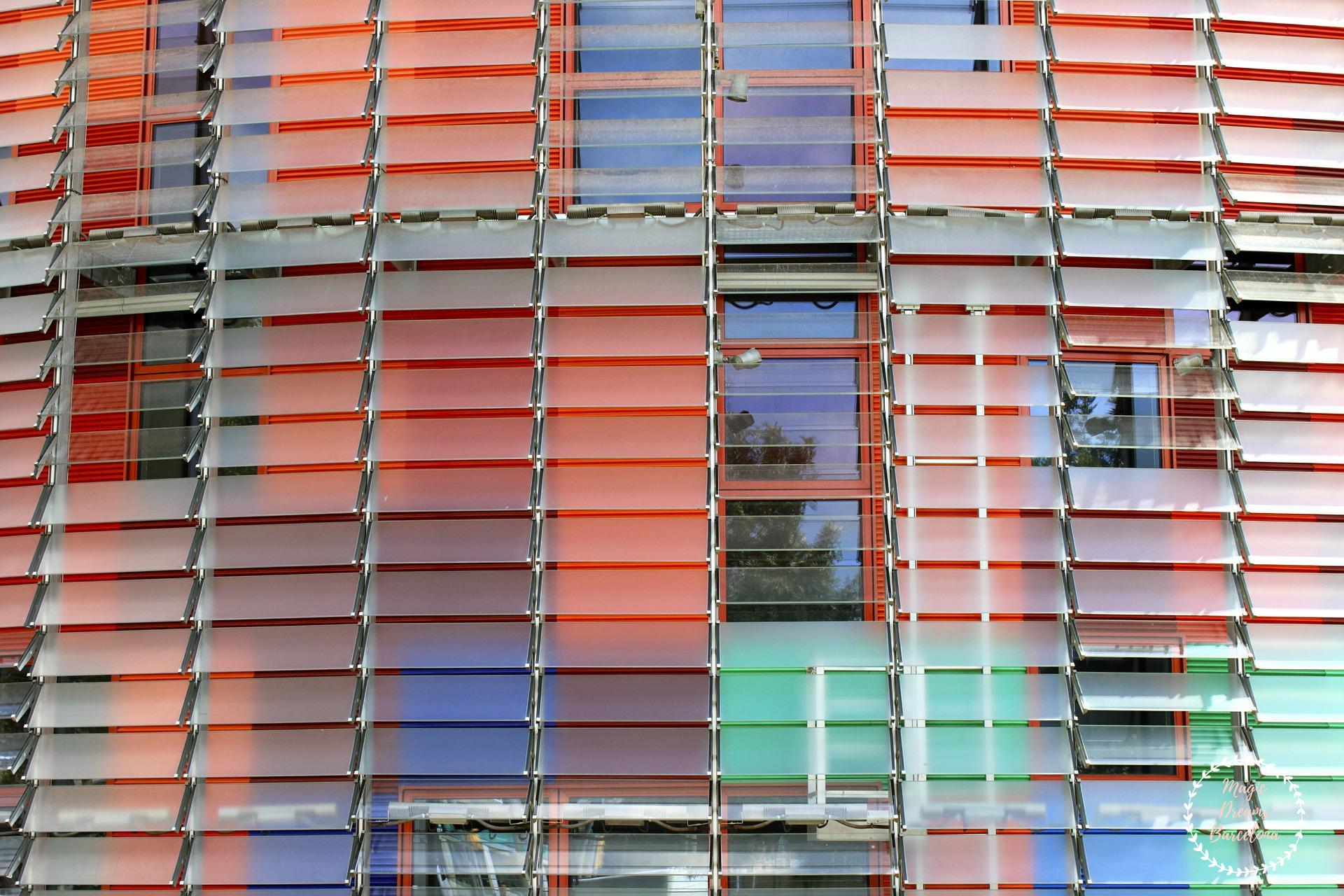
Torre Glòries is a pioneer in technological innovation and sustainability, recognized as a Green Building by the European Commission. Its energy efficiency includes intelligent zoned climate control, automated lighting, and photovoltaic louvers contributing to self-sufficient energy and reduced CO₂ emissions.
Cultural Landmark and Exclusive Experiences
Today, Torre Glòries is a universal symbol of Barcelona, a must-visit on cultural and architectural tours, whether by foot, tourist bus, private transport, or even helicopter. Its iconic image has reached worldwide audiences, serving as a backdrop for major celebrations and events.
At Magic Dreams Barcelona, we offer unique ways to explore Torre Glòries and its surroundings through fully personalized touristic, cultural, and gastronomic experiences. We design private itineraries combining architecture, contemporary art, urban design, botanical spaces, and the city’s top restaurants and gastronomic venues.
Our team of Barcelona locals shares an authentic and in-depth perspective, revealing the city’s hidden stories, secrets, and lesser-known corners. We handle all private transfer logistics, ensuring comfort, punctuality, and a service tailored to each need, whether cultural visits, exclusive culinary experiences, or custom itineraries.
We operate in Spanish, Catalan, and English, and upon request, experiences can be adapted to other languages, providing professional, personalized, and attentive service.
With our sensitive, magical, local, and professional approach, we invite you to discover experiences designed for those seeking sublimity, authenticity, and emotion.
Torre Glòries – Entrada distrito tecnológico de Barcelona.
Torre Glòries – Entrada distrito tecnológico de Barcelona.
Torre Glòries – Entrada distrito tecnológico de Barcelona.
Torre Glòries – Entrada distrito tecnológico de Barcelona.
Torre Glòries – Entrada distrito tecnológico de Barcelona.
Torre Glòries – Entrada distrito tecnológico de Barcelona.
Torre Glòries – Entrada distrito tecnológico de Barcelona.
Torre Glòries – Entrada distrito tecnológico de Barcelona.
Torre Glòries – Entrada distrito tecnológico de Barcelona.
Welcome to a space where knowledge becomes experience In this section, a carefully curated universe of knowledge unfolds for discerning and curious readers. Our articles page is an intellectual sanctuary where depth meets narrative beauty, and where each topic is treated with rigor, sensitivity, and …
La sección “Arquitectura Barcelona” está dedicada a los edificios más relevantes y arquitectónicamente llamativos de la ciudad. Aquí encontrará una selección de construcciones emblemáticas, desde obras modernistas de Gaudí hasta arquitectura contemporánea, pasando por espacios históricos y monumentos que definen el carácter único de Barcelona. …
The Modernist Architecture in Barcelona section is dedicated to the city’s most remarkable and visually striking buildings. Here you will find a selection of emblematic constructions, to other modernist works that define the unique architectural character of Barcelona. Explore must-see locations for architecture enthusiasts, as well as surprising corners that reflect the creativity and urban legacy of the city.
En nuestra sección “Lugares con Encanto” encontrará una cuidada selección de los pueblos, valles y rincones más destacados de toda Cataluña. Desde la magia de la Garrotxa y sus paisajes volcánicos, hasta la imponencia de Montserrat y la serenidad de los Monasterios, cada lugar ofrece …
Barcelona, the jewel of Catalonia, invites you to immerse yourself in a city where history, art, and architecture converge. From the whimsical creations of Antoni Gaudí to the bustling squares and ancient Gothic streets, every corner of Barcelona tells a story. Stroll through its world-famous …
In the quiet stillness of February, when winter continues to grace much of the Northern Hemisphere with its presence, a date emerges that has crossed centuries, creeds and borders: Saint Valentine’s Day. Its historical roots trace back to third-century Rome, during the reign of Emperor Claudius II, when, according to tradition, a priest named Valentine defied imperial decrees that forbade marriage among young soldiers. That gesture—more spiritual than political—transformed his name into a symbol of union, fidelity and devotion.
Over time, the memory of this Christian martyr intertwined with ancient Roman celebrations associated with fertility and the renewal of life in spring. Medieval liturgy established February 14 as a commemorative day, and it was within the refined culture of courtly love in Europe that the date began to be explicitly linked to romantic expression. The earliest surviving love letters written for this occasion date back to the Late Middle Ages, when the written word became a bridge between souls.
The date itself is not arbitrary. Positioned at the symbolic threshold between winter and the anticipation of spring, it embodies the passage from dormancy to blossoming, from introspection to openness. It expresses humanity’s longing for connection, the need for mutual recognition and the desire for continuity in a world shaped by transience.
From a symbolic perspective, Saint Valentine represents the consecration of affection as a conscious act. Flowers—especially the rose—evoke both beauty and fragility; the exchange of letters or gifts materializes the intention of permanence; the heart, now a universal emblem, encapsulates the metaphorical seat of emotion. Beyond its contemporary commercial dimension, the date retains an archetypal core: the celebration of the human capacity to love and to be loved.
The celebration awakens profound images connected to desire, idealization and the search for complementarity. Love projected onto another often reflects the aspiration for inner integration. Thus, Saint Valentine’s Day does not merely commemorate the union of two individuals; it symbolizes the dialogue between the personal and the universal, between intimacy and the collective imagination shaped by culture.
Today, February 14 is observed in numerous countries across Europe, the Americas and Asia. Although the date is widely shared in the Western world, meaningful cultural variations exist. In some Asian countries, for instance, traditions distinguish specific days for men and women to express their feelings at different times of the calendar. Yet the essence remains constant: to honor affection, friendship and human connection.
Across the centuries, the celebration has evolved from a liturgical remembrance into a global cultural phenomenon. Reinterpreted by literature, art and modern industry, it continues to pose an essential question: what does it mean to love in each era? The answer lies not solely in the exchange of gifts, but in the willingness to cultivate bonds with respect, patience and awareness.
Ultimately, Saint Valentine’s Day has reached our time as a multifaceted celebration, shaped by history and cultural sensibilities, yet united by a shared aspiration: to recognize in another a reflection of our common humanity.
In the gentle penumbra of winter,
when the air still carries the whisper of cold,
February awakens with hands of silk
and lights, one by one, the lanterns of the heart.
Today, under the ancient name of Valentine’s Day,
words bloom like invisible roses,
and love — that eternal traveler —
sits at the table of the soul
with its cup of light and its bread of promises.
It is not only the caress that brushes the skin,
nor the warm sigh that trembles through the night; it is the quiet certainty of two destinies
that, upon meeting, recognize their music.
It is a heartbeat answering another heartbeat,
as if the universe, for a moment,
breathed in rhythm with a single dream.
To love is to embroider patience upon time,
to guard the flame when the wind insists,
to speak the other’s name
as one who invokes a daily miracle.
May this day be more than petals and promises,
and become an embrace that builds a home within the chest.
For love, when it is true,
does not heed calendars,
it dwells in every shared dawn
and turns the simple into eternity.
En la quietud del mes de febrero, cuando el invierno aún nos regala su presencia en gran parte del hemisferio norte, asoma una fecha que ha atravesado siglos, credos y fronteras: el Día de San Valentín. Su raíz histórica se remonta a la Roma del …
Bienvenidos a un espacio donde el conocimiento se convierte en experiencia En esta sección se despliega un universo de conocimientos cuidadosamente seleccionados para lectores exigentes y curiosos. Nuestra página de artículos es un santuario intelectual donde la profundidad aparece con la belleza narrativa, y donde …
La Casa Raimunda Puntí está situada en la calle de Coroleu, 65 en Barcelona, obra de Antoni de Falguera i Sivilla, 1918.
La Casa Raimunda Puntí constituye una joya discreta del patrimonio arquitectónico barcelonés, situada en la calle de Coroleu, en el corazón histórico de Sant Andreu. Proyectada en 1918 por el arquitecto Antoni de Falguera i Sivilla, la obra se inscribe en el modernismo tardío, en un momento de transición en el que la ornamentación dialoga con una creciente sobriedad formal.
La fachada del edificio destaca por su equilibrio a nivel de composición y por la delicadeza de sus detalles artesanales. Los balcones, la cerámica y los elementos decorativos demuestran una atención minuciosa al oficio y al simbolismo, valores esenciales del modernismo catalán. Nada es superfluo, cada forma responde a una voluntad estética que busca ennoblecer la vida cotidiana a través de la arquitectura.
Antoni de Falguera, figura relevante pero a menudo menos visible dentro del panorama modernista, imprime en esta casa una sensibilidad elegante y serena.
Dentro de las rutas modernistas de Barcelona, este edificio invita a mirar más allá de los iconos más conocidos y a comprender el modernismo como un movimiento amplio, variado y profundamente humano.
En pleno barrio de Sant Pere, Santa Caterina i la Ribera, la Plaça de les Olles es un rincón que parece detener el tiempo, sus calles evocan siglos de historia y la vitalidad del presente convive con ecos del pasado medieval. Entre sus edificios surge …
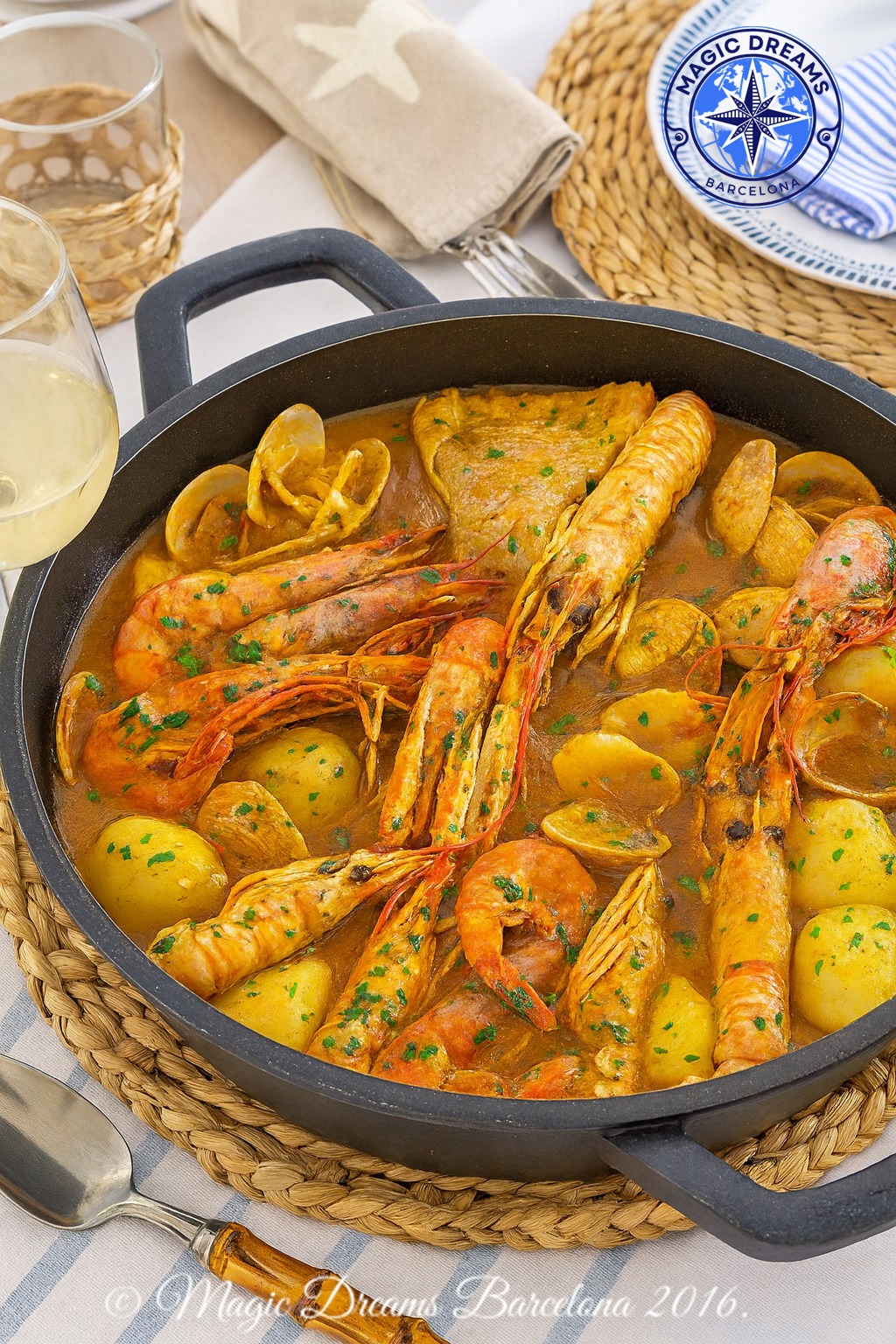
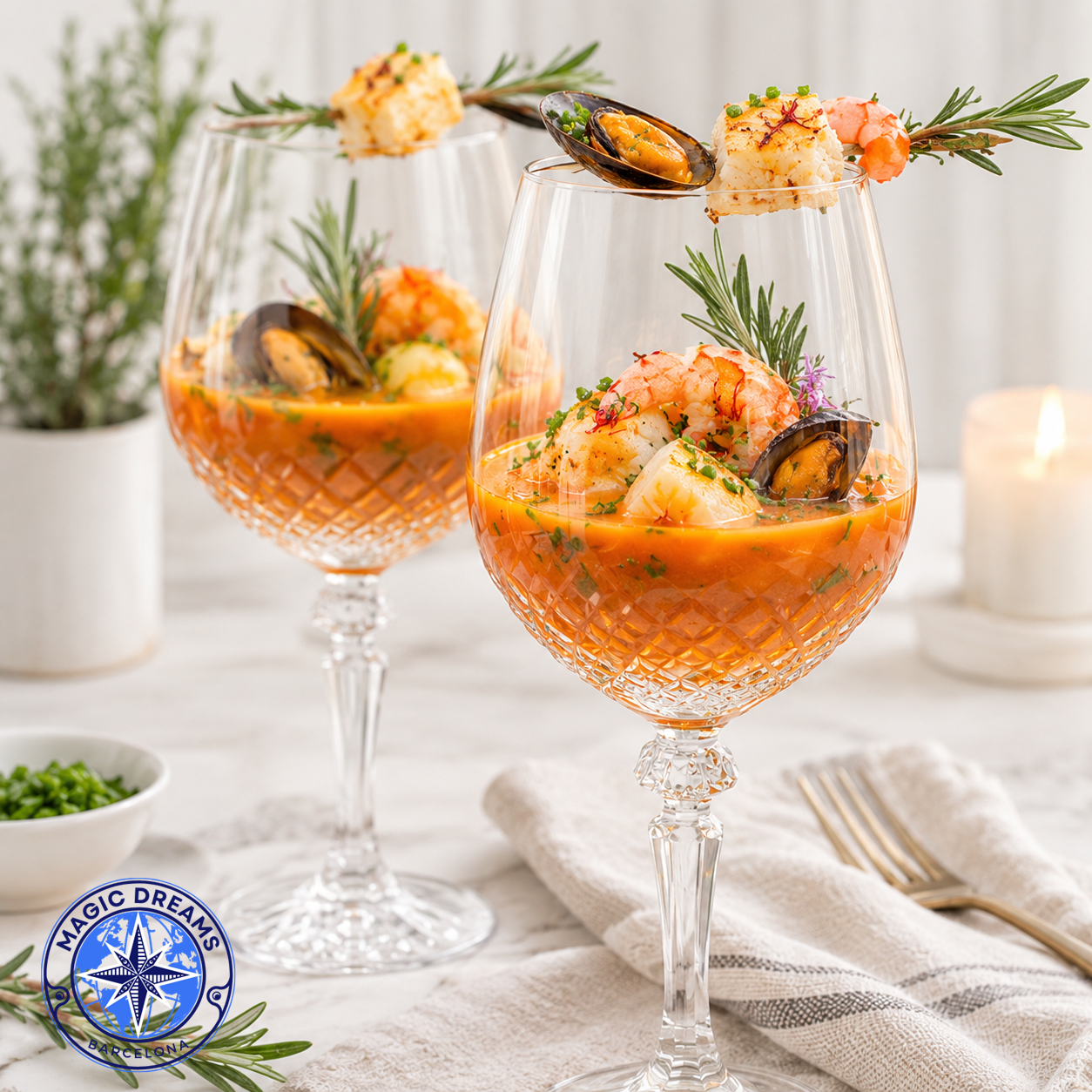
Caldereta Premium de Rape, Calamares y Almejas Tradición marinera elevada a experiencia gastronómica La caldereta de pescado y marisco es uno de los grandes legados de la cocina de la costa mediterránea y atlántica. Nació como un guiso humilde, preparado a bordo de las embarcaciones …
La Torre de Radiodifusión de Montjuïc, diseñada por el arquitecto e ingeniero valenciano Santiago Calatrava, es una de las obras más emblemáticas de Barcelona. Construida entre 1989 y 1992, se encuentra en el corazón de la Anilla Olímpica de Montjuïc, rodeada por importantes instalaciones deportivas como el Palau Sant Jordi, el Estadio Olímpico Lluís Companys y las Piscinas Picornell, convirtiéndose en un referente visual de la ciudad desde los Juegos Olímpicos de Verano de 1992.
Arquitectura y Diseño
Esta torre de acero de 136 metros de altura destaca por su diseño innovador, que representa la figura de un atleta de la antigua Grecia con la antorcha olímpica en su mano, simbolizando la esencia del deporte clásico y moderno. Su base alberga una fuente de hormigón armado decorada con trencadís, en homenaje al legado de Antoni Gaudí, fusionando tradición y modernidad.
La orientación de la torre está cuidadosamente diseñada para funcionar como reloj de sol, proyectando la sombra de su aguja central sobre la Plaza de Europa, combinando funcionalidad con estética arquitectónica.
Acceso y Experiencia del Visitante
El acceso a la torre es cómodo y accesible: se puede llegar a pie desde la Plaza España, ascendiendo por la Avenida María Cristina, o utilizando escaleras mecánicas y el funicular de Montjuïc, disfrutando de vistas panorámicas de la ciudad durante el trayecto.
Visitar la Torre de Radiodifusión ofrece un recorrido arquitectónico único y una experiencia cultural y deportiva, ideal para amantes de la arquitectura, la historia y la fotografía urbana.
Experiencias y Servicios de Magic Dreams Barcelona
Guías turísticos y trayectos privados: expertos en historia, arte y simbolismo, disponibles en castellano e inglés, y adaptables a otros idiomas con previo aviso. Rutas privadas para máxima comodidad y tranquilidad.
Experiencias gastronómicas y sensitivas: picnics sensoriales con catering premium, zumos, refrescos, cavas y vinos sin alcohol, menús personalizados con gastronomía catalana, nacional e internacional, cenas privadas con chef profesional en alojamientos seleccionados, frente al mar, yates o espacios exclusivos, y rutas de tapas en locales de referencia.
Guías expertos en botánica, lepidopterología y ornitología: rutas guiadas que combinan naturaleza, aprendizaje y relajación.
Talleres de música, arte, botánica y floricultura: especializados en Gaudí, Dalí y gastronomía. Conciertos privados en vivo, cenas tematizadas y experiencias culturales premium.
Fotografía y ambientación: fotógrafos profesionales, floristería y decoración personalizada para crear momentos únicos.
Escapadas románticas y paquetes todo incluido: Costa Brava, Pirineos y rincones emblemáticos de Cataluña, combinando naturaleza, cultura y gastronomía sin preocupaciones.
Valor añadido: atención premium, totalmente personalizada, adaptada a intereses, gustos y preferencias. Experiencias diseñadas para parejas, grupos o familias, con itinerarios a medida.
Magic Dreams Barcelona ofrece un viaje único donde arquitectura, historia, naturaleza, gastronomía, arte y emoción se combinan para crear recuerdos imborrables.
Torre de Comunicaciones de Montjuïc.
Torre de Comunicaciones de Montjuïc
Torre de Comunicaciones de Montjuïc
Estadio Olímpico Lluís Companys.
Estadio Olímpico Lluís Companys.
Torre de Comunicaciones de Montjuïc
Torre de Comunicaciones de Montjuïc
Torre de Comunicaciones de Montjuïc
Para colaboraciones, proyectos o consultas profesionales – Reservas y presupuestos
Por favor, deje sus datos y su número de teléfono, y nos pondremos en contacto con usted a la mayor brevedad, a lo largo del día.
El Hotel Arts Barcelona es un hotel de lujo 5 estrellas situado en pleno corazón del “Port Olimpic” junto a su melliza “Torre Mapfre”, a orillas del mar Mediterráneo, y con vistas panorámicas también de la ciudad, emblema de Barcelona, siendo del más alto …
In the heart of Sant Gervasi, at 282 Muntaner Street, lies a green treasure of the city of Barcelona: the gardens of the Fundación Julio Muñoz Ramonet. Originally designed in 1916 by the French landscape architect Jean-Claude Nicolas Forestier, who introduced the concept of the …
Plaça de Catalunya stands as the epicenter of Barcelona, a meeting point where the historic Ciutat Vella and the modern Eixample converge. From here, some of the city’s most emblematic avenues radiate: La Rambla, Passeig de Gràcia, Rambla de Catalunya, Portal de l’Àngel Avenue, Pelai Street, and the Rondes of Universitat and Sant Pere, making the square a central hub for both locals and international visitors.
Although it may seem timeless, the square was urbanized between the late 19th and early 20th centuries, following the demolition of the medieval walls, and officially inaugurated in 1927 by King Alfonso XIII. Today, Plaça de Catalunya remains a vibrant stage of city life: demonstrations, sports celebrations, and cultural events unfold here, blending tradition with modernity.
Art and Monuments
The square features numerous sculptures by renowned artists such as Josep Clarà and Josep Llimona, along with decorative fountains that illuminate at night and sometimes form part of visual performances, attracting both tourists and locals. Historically, cafés and restaurants—such as Maison Dorée, Colón, La Lluna, and El Suís—were centers of literary gatherings and political debates, while historic theaters like Bon Retir (1876–1885), Circ Eqüestre Alegria (1879–1895), El Dorado Concert (1887), and Teatre Barcelona (1923) enriched the city’s cultural scene.
Visitors can now enjoy unique panoramic views from the terrace of El Corte Inglés café, a privileged vantage point over the square and the Passeig de Gràcia surroundings.
Hidden History Beneath the Square
Beneath Plaça de Catalunya lie air-raid shelters from the Spanish Civil War, silent witnesses to Barcelona’s history and the resilience of its citizens. Although not open to the public, these shelters are part of the city’s living memory, which constructed 1,322 protective spaces during the conflict.
Unique Experiences with Magic Dreams Barcelona
In our experience, Plaça de Catalunya and its surroundings become a sensory and cultural journey, where every detail is meticulously planned to provide an elegant, comfortable, and enriching experience.
At Park Güell, our 2026 offerings include:
Private transportation and professional guides in Spanish, Catalan, and English (other languages upon request).
Customized routes through the park and its historical and natural surroundings.
Specialized guides in Gaudí symbolism and Catalan Modernism.
Exclusive experiences, from sensory picnics with gourmet catering to creative workshops in Catalan cuisine and Gaudí’s trencadís technique.
Professional photography sessions and live music integrated into the environment.
Day or weekend trips to the Costa Brava and the Pyrenees with curated itineraries.
Gastronomic tours of carefully selected local restaurants in Barcelona.
Native guides specializing in emotional botany and ornithology, revealing the park’s flora, birds, and butterflies, and their symbolic connection to Gaudí’s work.
Each visit transforms into an educational, sensory, and emotional experience, allowing visitors not only to observe the work but to feel, understand, and connect with the Mediterranean landscape that inspired Gaudí. Our goal is for you to discover Barcelona not just as a destination, but as an unforgettable, carefully curated, and authentic journey.
2026 Highlights & Curiosities
Since 2025, the square features an interactive sustainable lighting system that synchronizes fountains with cultural and musical events.
New gourmet terraces have revitalized the culinary experience around Plaça de Catalunya, offering local and international cuisine.
Several historic sculptures, including works by Llimona and Clarà, have been restored, preserving the square’s artistic heritage.
Located on Passeig de Gràcia in Barcelona, Casa Amatller is one of Catalonia’s most exquisite Modernist gems. This architectural masterpiece combines art, design, and bourgeois tradition at the turn of the 20th century. History of Casa Amatller Casa Amatller was commissioned by Antoni Amatller, a …
En el Passeig de Gràcia de Barcelona encontramos una de las joyas más exquisitas del modernismo catalán: la Casa Amatller, un edificio que representa la perfecta unión entre arte, arquitectura y tradición burguesa de finales del siglo XIX. Historia de la Casa Amatller La Casa …
The Palau Güell, one of the earliest masterpieces by visionary architect Antoni Gaudí, marks the beginning of the creative genius that would forever transform world architecture.
Located in the historic heart of Barcelona, this extraordinary urban palace blends luxury, symbolism, structural innovation, and deep artistic spirituality — continuing to captivate visitors, art lovers, and architecture experts in 2026.
Today, Palau Güell stands as an essential cultural landmark for understanding the evolution of Catalan Modernism and the origins of Gaudí’s unique architectural language.
History of Palau Güell: The Birth of an Architectural Revolution
Commissioned by industrialist and patron Eusebi Güell, a key supporter of Gaudí’s talent, the palace was built between 1886 and 1890 as both a family residence and a prestigious social venue.
Gaudí conceived an entirely innovative urban palace:
Advanced structural solutions far ahead of its time
A seamless fusion of art, architecture, music, and spirituality
Organic forms and dramatic light compositions breaking classical rigidity
The result was a revolutionary building that anticipated many of Gaudí’s later iconic creations.
Gaudí’s Inspiration: Nature, Spirituality and Symbolism
Within Palau Güell, the essential foundations of Gaudí’s creative universe already appear:
Direct inspiration from natural forms
Medieval, Oriental, and Gothic influences reinterpreted
Symbolic use of light as a spiritual element
Complete unity between craftsmanship and architecture
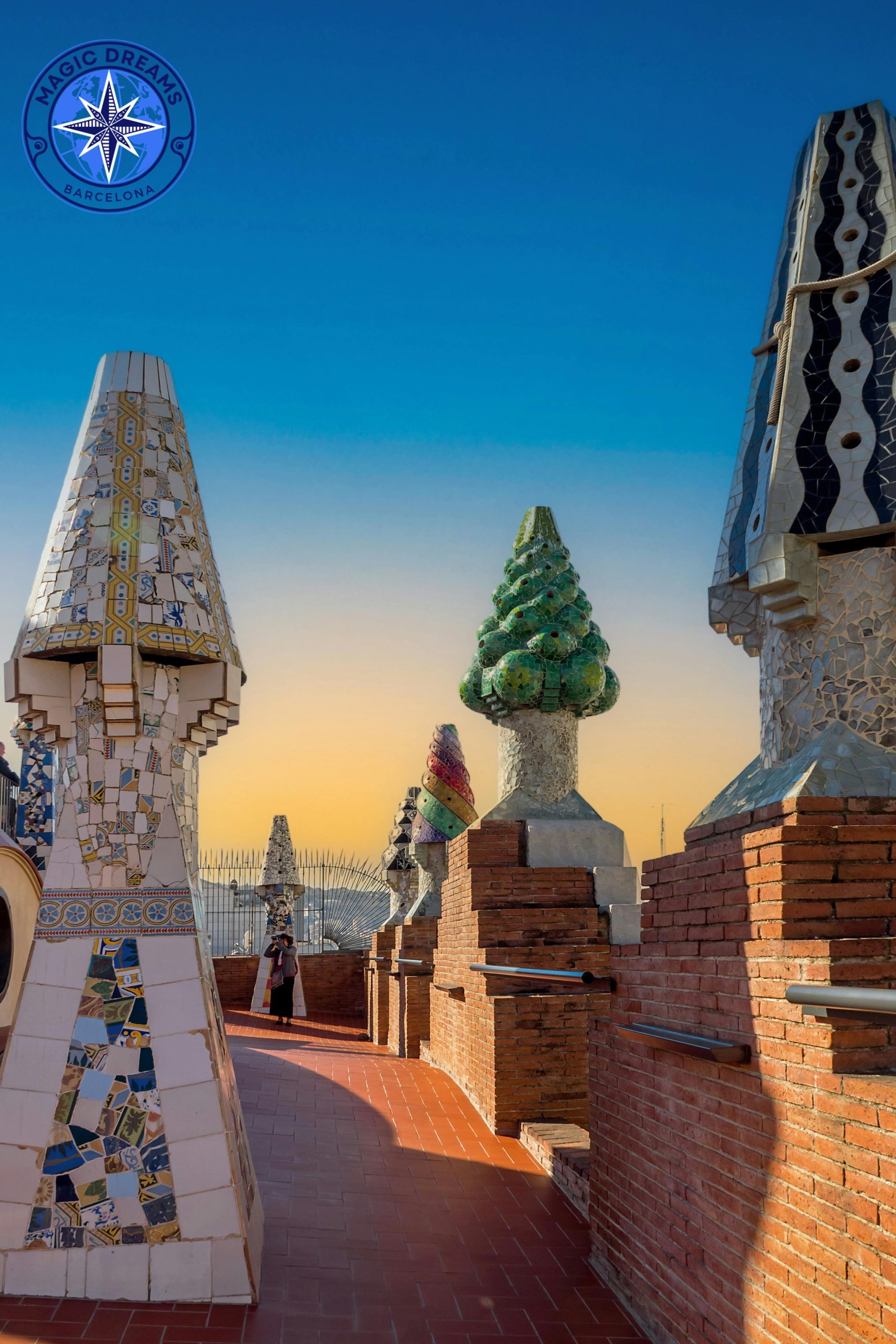
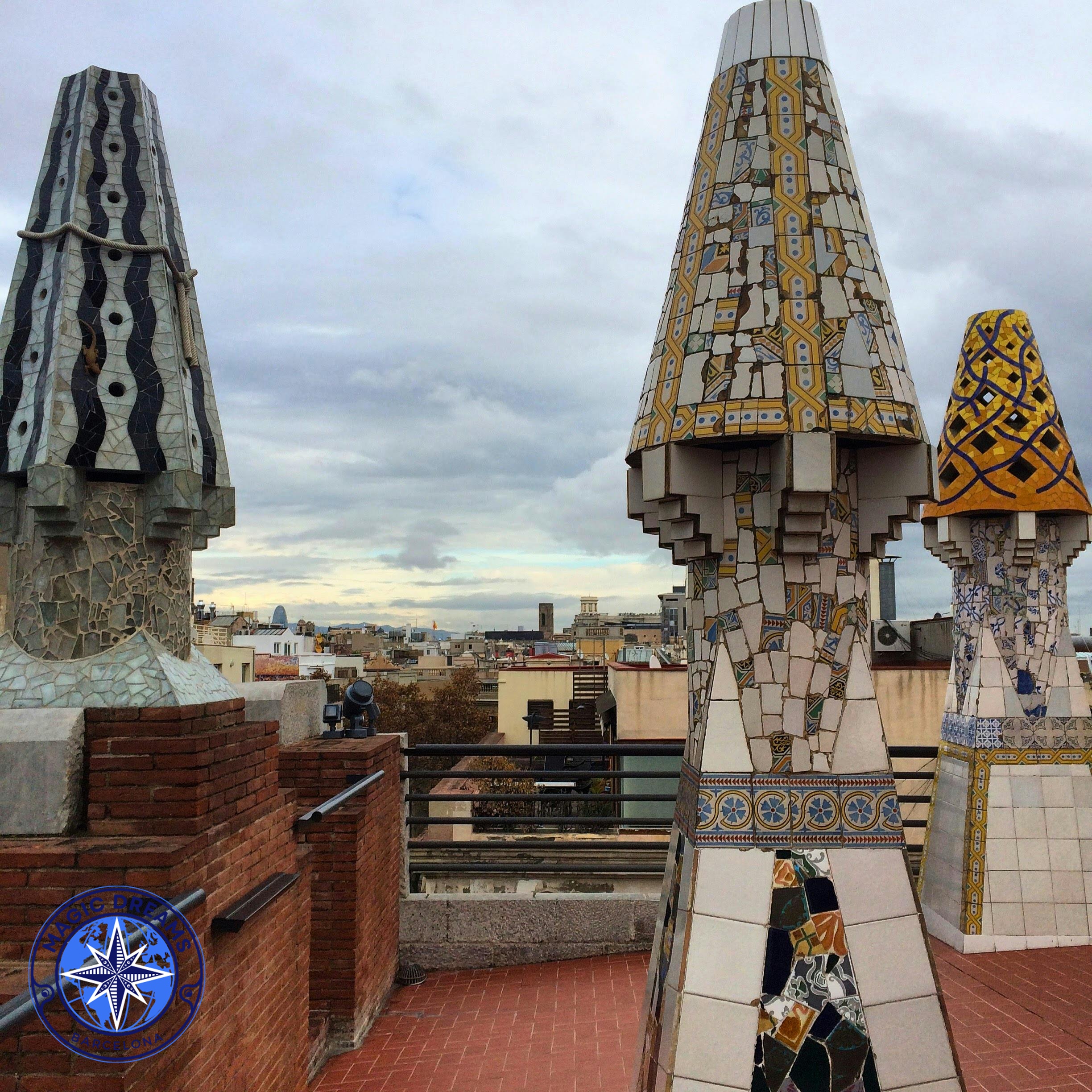
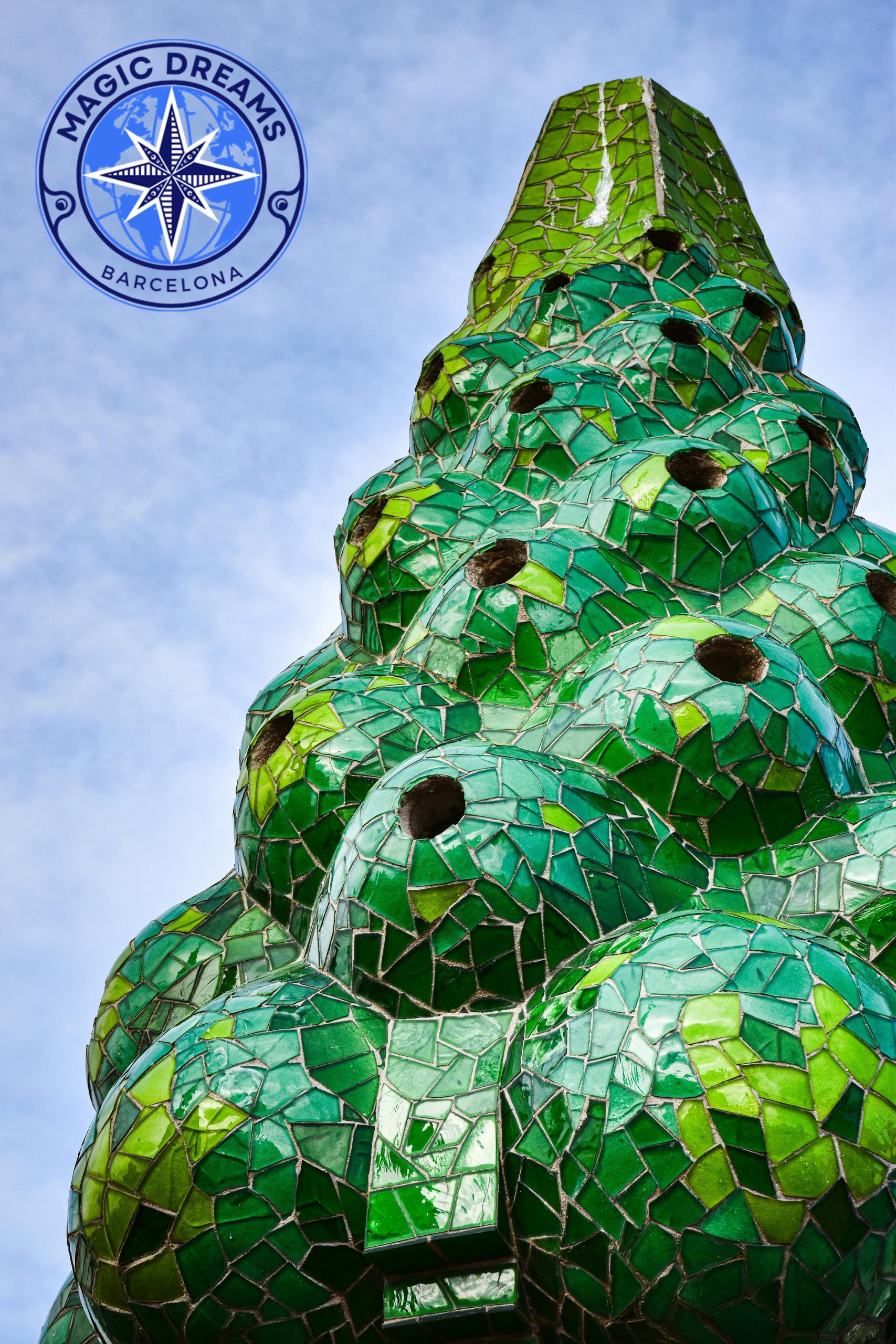
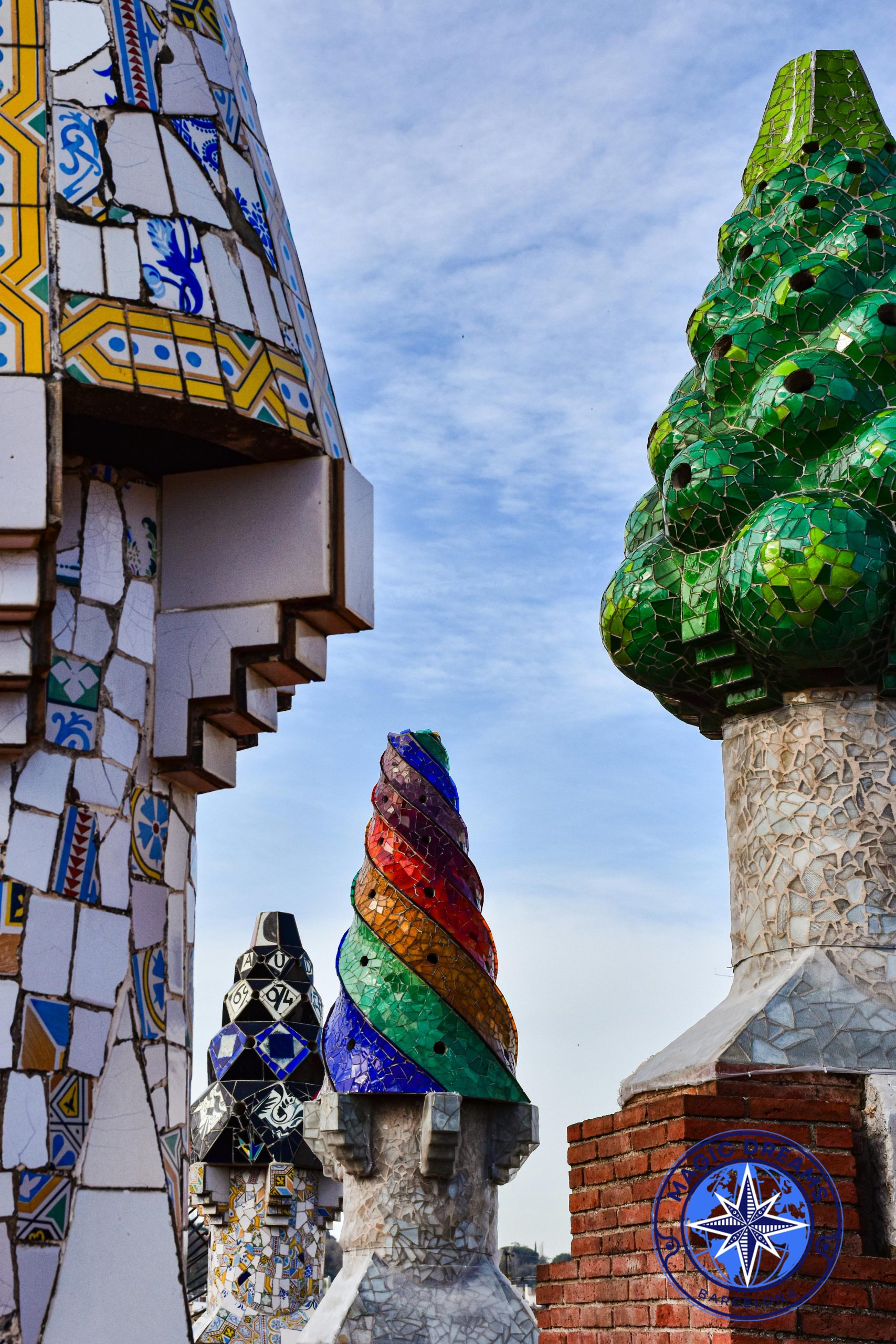
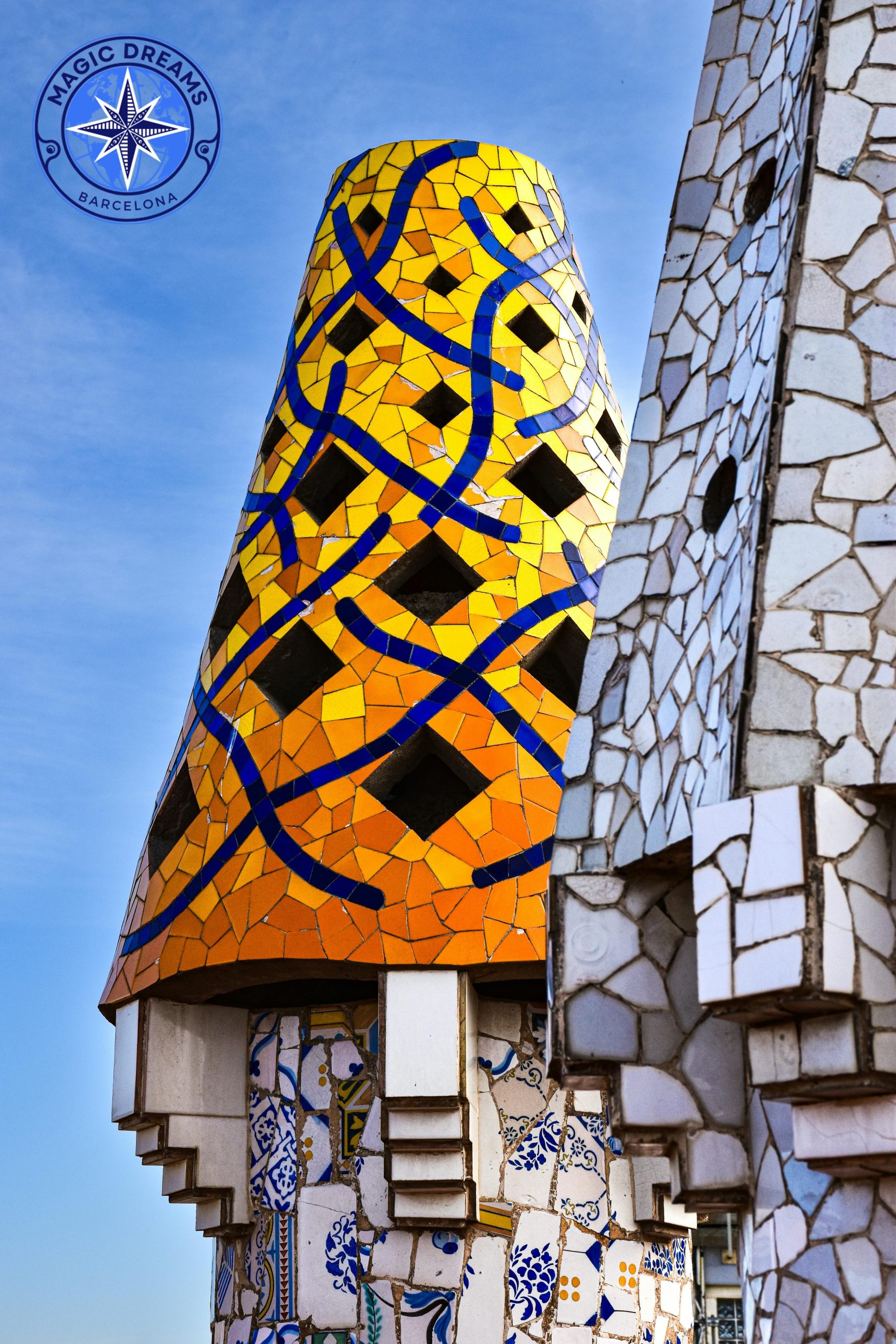
Every detail — from wrought iron gates to the sculptural rooftop chimneys — communicates emotion and meaning. Gaudí did not merely design spaces; he created immersive sensory experiences.
What You Will Discover Inside Palau Güell
The Entrance Hall & Stables
A monumental arrival space designed for horse-drawn carriages, featuring innovative parabolic vaults.
The Central Hall
The architectural heart of the palace, crowned by a perforated dome that creates a celestial, star-like light effect.
Private and Social Rooms
Elegant salons and music spaces where the Güell family hosted concerts and intellectual gatherings.
The Magical Rooftop
One of Barcelona’s most unique viewpoints:
Sculptural chimneys
Experimental ceramics and mosaics
Panoramic views over the historic city center
Location of Palau Güell
📍 Address: Carrer Nou de la Rambla, 3–5, Barcelona
Just steps from La Rambla, in the historic neighborhood of El Raval.
Its privileged location makes it ideal to include in architectural and cultural walking routes across the city.
Opening Hours & Visits — 2026
Regular Schedule:
Tuesday to Sunday: 10:00 AM – 8:00 PM
Last entry: 7:00 PM
Closed Mondays (except holidays)
Advance booking is recommended due to increasing international demand.
In 2026, Palau Güell continues expanding its cultural program with immersive guided tours, temporary exhibitions, and enhanced visitor experiences.
Palau Güell Today (2026)
Recognized as a UNESCO World Heritage Site within Gaudí’s architectural works, the palace is experiencing renewed cultural prominence:
Advanced conservation restorations
Immersive digital audioguides
Contemporary cultural programming
Integration into premium architectural routes across Barcelona
Visitors increasingly seek to understand the early ideas that later shaped icons such as Sagrada Família and Park Güell.
Discover Barcelona with Magic Dreams Barcelona
We invite you to explore Palau Güell from a deep, emotional, and magical perspective with Magic Dreams Barcelona, where every experience becomes a journey into the soul of the city.
We take care of everything:
Full logistics and personalized organization
Unique cultural and sensory experiences
Specialized botanical routes exploring species, history, and symbolism
Architectural and artistic itineraries through museums and creative spaces
Private gastronomic experiences featuring authentic international and local cuisine
Private concerts and exclusive cultural experiences
Fully personalized themed stays in carefully selected accommodations
Our multilingual team speaks Spanish, Catalan, and English, adapting to any language upon request while providing a close, professional, and fully bespoke service.
Magic Dreams Barcelona — a journey into depth, where architecture, nature, and emotion walk together.
Seafaring tradition elevated to a gastronomic experience Fish and seafood stew is one of the great legacies of Mediterranean and Atlantic coastal cuisine. It was born as a humble dish, prepared aboard fishing boats or in kitchens near the harbor, where fishermen made use of …
Situado en el exclusivo barrio de Pedralbes, dentro del distrito de Les Corts en Barcelona, el Parque de Cervantes es un remanso de tranquilidad en plena ciudad. Este jardín público está situado estratégicamente entre la Avenida Diagonal y la Avenida de Esplugues, muy cerca de …
Maritime tradition, roasted garlic and the authentic flavour of the Mediterranean
Monkfish with burnt garlic, known in Catalan as Rap a l’All Cremat, is a traditional seafood recipe associated with Vilanova i la Geltrú, on the Catalan coast near Barcelona.
The name all cremat literally means “burnt garlic” and refers to the technique that gives the dish its distinctive character: the garlic cloves are deeply toasted until their skins become almost black, while the inside remains aromatic rather than bitter.
This traditional maritime preparation dates back to the 19th century and reflects the resourceful cooking of coastal communities, where simple ingredients were transformed into deeply flavourful dishes.
The fish could vary according to the day’s catch, with preparations using monkfish, hake, sea bream and other local fish.
In this version, monkfish is gently cooked in a sauce made with deeply toasted garlic, ripe tomatoes, fish stock, white wine and bay leaf.
The result is a rich, aromatic sauce with a subtle smoky character that perfectly complements the firm, delicate flesh of the monkfish.
A humble maritime recipe transformed into an unforgettable taste of the Catalan Mediterranean.
Premium Rap a l’All Cremat
Serves 4
Ingredients
For the Monkfish
4 monkfish fillets, approximately 800 g in total
1 whole head of garlic, approximately 8–10 cloves, left whole and unpeeled
3 ripe tomatoes
1 glass of dry white wine
1 glass of fish stock
1 bay leaf
Plain flour, for lightly coating the monkfish
Extra virgin olive oil
Salt
Freshly ground black pepper
Fresh parsley, optional
Optional
A small amount of cayenne pepper for a gentle spicy finish
Step-by-Step Preparation
01 · Prepare the Monkfish
Dry the monkfish fillets carefully.
Season both sides with salt and black pepper.
Lightly coat each piece with flour, shaking off any excess.
Heat a little extra virgin olive oil in a wide casserole.
Brown the monkfish briefly on both sides to seal it.
It does not need to be cooked through at this stage.
Remove and set aside.
02 · The All Cremat Garlic
The soul of the recipe
Using the same casserole, add the whole garlic cloves with their skins on.
Cook over medium heat, turning them regularly, until the skins become very dark, almost black.
This is the most important stage of the recipe.
The garlic should be intensely toasted on the outside while remaining aromatic and tender inside.
The objective is to create depth and a subtle smoky flavour, not bitterness.
03 · Add the Tomato
If necessary, temporarily remove the garlic to control the heat.
Add the grated or peeled and chopped tomatoes.
Cook over medium heat until the tomato loses most of its moisture and develops into a thick, concentrated sofrito.
Add the bay leaf.
For a slightly spicy version, add a small amount of cayenne.
04 · Add the Wine
Pour in the dry white wine.
Increase the heat slightly and cook for approximately 2–3 minutes, allowing the alcohol to evaporate.
The caramelised flavours from the bottom of the casserole will begin to combine with the tomato.
05 · Add the Fish Stock
Pour in the hot fish stock.
Stir gently to combine the sofrito and stock.
Return the toasted garlic cloves to the casserole.
The sauce will begin to develop the distinctive character of all cremat.
06 · Cook the Monkfish
Place the monkfish fillets into the sauce.
Cook gently for approximately 8–10 minutes, depending on the thickness of the fillets.
Gently move the casserole in small circular motions during cooking.
This helps the sauce emulsify naturally and become smoother and more glossy.
Avoid stirring directly with a spoon, as the monkfish can break apart.
07 · Final Finish
Taste and adjust the seasoning.
Remove the bay leaf.
Sprinkle with a little fresh chopped parsley.
Serve immediately.
The Secret of All Cremat
The entire personality of this dish comes from a paradox:
the garlic must be almost burnt on the outside, but not burnt through.
If the garlic is completely burnt, it becomes intensely bitter.
If it is not toasted enough, the distinctive character of the recipe is lost.
The perfect point is reached when the skin is very dark while the interior remains aromatic and mellow.
That deeply toasted garlic, combined with tomato and fish stock, creates the signature sauce.
The Secret to Perfect Monkfish
Monkfish has a firm, dense texture that works beautifully in rich sauces.
However, it should not be overcooked.
The ideal result is:
a sauce-covered exterior + firm, succulent and tender flesh inside.
The final stage should therefore be cooked gently over low heat.
Gourmet Suggestions
Magic Dreams Barcelona
To elevate this traditional maritime recipe:
Use fresh, high-quality monkfish.
Prepare homemade fish stock using rock fish and fish bones.
Toast the garlic slowly so you can control the colour.
Use ripe, flavourful tomatoes.
Choose a fruity extra virgin olive oil.
Add cayenne only for a subtle spicy note.
Avoid overcooking the monkfish.
Gently swirl the casserole to help emulsify the sauce.
Finish with fresh parsley.
Serve immediately with rustic bread.
The Sauce
The sauce should be thick, glossy and deeply aromatic.
We are not looking for a thin, watery sauce.
The aim is to allow the reduced tomato, toasted garlic, fish stock and natural juices of the monkfish to create a sauce that completely coats the fish.
And this is one of the great pleasures of the dish:
dipping good rustic bread into the sauce.
Traditional Presentation
Serve one monkfish fillet per person with a generous spoonful of all cremat sauce.
Arrange several roasted garlic cloves around the fish.
Finish with fresh parsley and a delicate drizzle of extra virgin olive oil.
The dish should arrive at the table very hot, ideally in the casserole in which it was cooked.
Premium Presentation
The Mediterranean of Vilanova elevated by Magic Dreams Barcelona
For a more sophisticated presentation, place the monkfish in the centre of a deep plate.
Carefully spoon the all cremat sauce around and over the fish.
Add one toasted garlic clove, a few small parsley leaves and a few drops of extra virgin olive oil.
Serve with a small slice of artisan toasted rustic bread.
The presentation should remain unmistakably Catalan and maritime.
Elegance lies in simplicity.
Pairing
For the table, we recommend a fresh, dry 0.0% alcohol-free Catalan white wine, with enough acidity to refresh the palate while respecting the delicate flavour of the monkfish.
A 0.0% alcohol-free Penedès-style white wine is particularly suitable.
A chilled 0.0% alcohol-free sparkling white wine is another excellent option.
For a completely refreshing alternative, serve with very cold sparkling water, lemon and fresh Mediterranean herbs.
Variations
Although monkfish is one of the most appreciated versions, the all cremat technique can be used with several types of fish.
Hake
A lighter and more delicate interpretation.
Sea Bream
Elegant and distinctly Mediterranean.
Rock Fish
Perfect for a deeper, more intense maritime flavour.
At Magic Dreams Barcelona, we bring the maritime tradition of Vilanova into a refined contemporary dining experience.
We select fresh fish, carefully prepare the stock, respect the precise roasting point of the garlic and allow the sauce enough time to develop its full depth.
Catalan maritime tradition, exceptional ingredients and elegant presentation — transforming a humble coastal recipe into a memorable experience.
A Recipe with Maritime Soul
All Cremat perfectly captures a style of cooking born beside the Mediterranean.
It does not need a long list of ingredients.
It needs good fish, good garlic, tomato, fish stock, olive oil and patience.
The maritime cuisine of Vilanova shows once again that the greatness of a dish can come from something as seemingly simple as a perfectly toasted garlic clove.
An intense, deeply Mediterranean flavour forever connected to the memory of the Catalan coast.
The taste of the Mediterranean in an elegant dish Some dishes need very little to become a memorable experience. Hake with seafood sauce is one of them: a delicate yet deeply Mediterranean recipe where the softness of the hake meets the rich flavour of a …
El sabor del Mediterráneo en un plato elegante Hay platos que necesitan muy poco para convertirse en una experiencia. La merluza con salsa de marisco es uno de ellos: un plato delicado y profundamente mediterráneo en el que la suavidad de la merluza se mezcla …
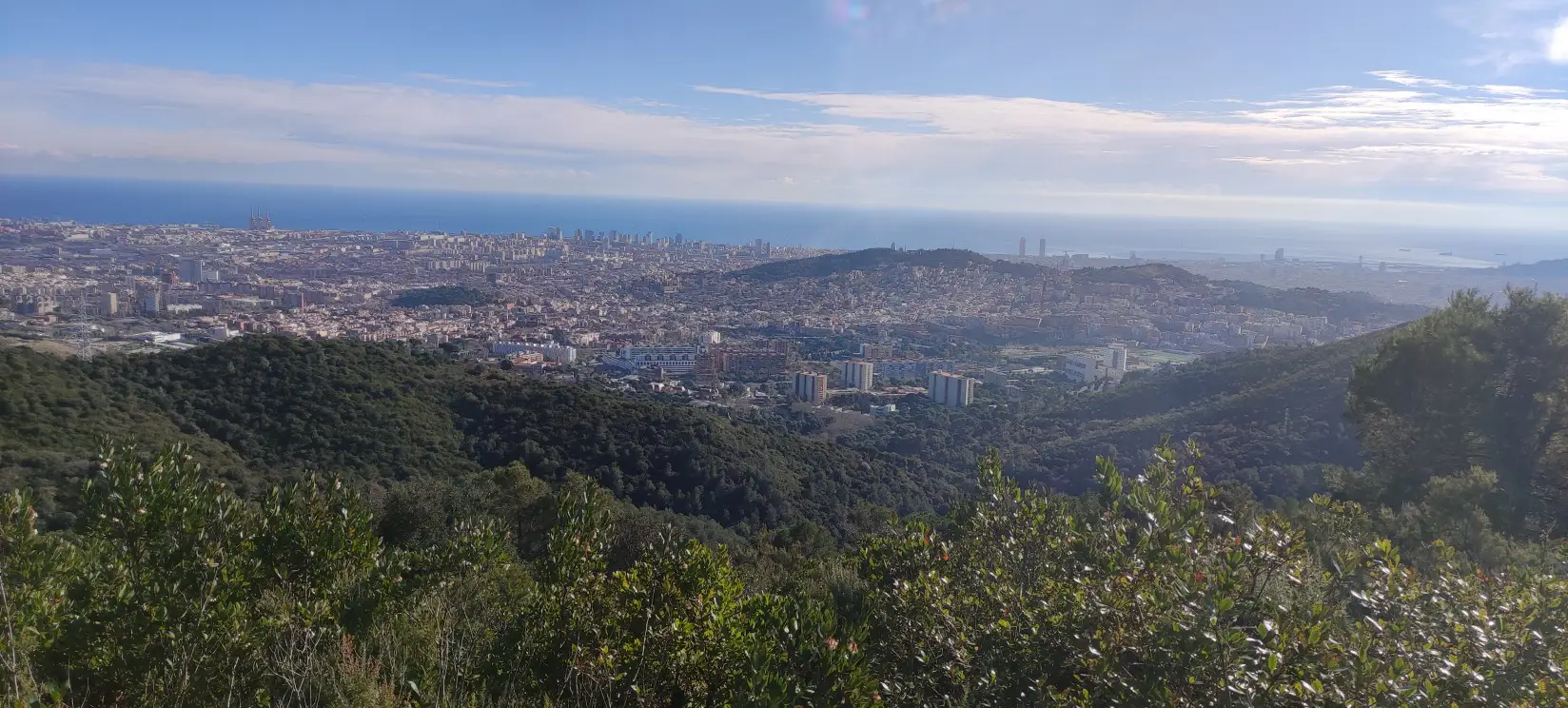
Se trata de una extensa área natural, relativamente poco urbanizada, en medio de la región más densamente poblada del país, un parque periurbano, perfecto para practicar senderismo, ir de excursión o practicar deporte con 1001 caminos para perderse, con vistas increíbles de la ciudad, uno de los parques metropolitanos más grandes del mundo.
Más de 8.000 hectáreas de espacio natural preservado, donde predominan los espacios forestales con una variedad de formaciones vegetales que aportan una significativa diversidad biológica.
La fauna de Collserola es mucho más rica de lo que cabría esperar en un espacio natural metropolitano, gracias en buena parte a la gran diversidad de ecosistemas.
El encinar con roble alberga mamíferos como el jabalí, la jineta y el ratón de campo. También se encuentran otros animales como el zorro, la comadreja, la ardilla roja, el tejón, el conejo, erizo y la salamandra común.
Entre las aves pueden mencionarse el herrerillo capuchino, el carbonero común, el mirlo, el petirrojo, el gavilán, el azor y el cárabo común.
En la maquia abundan diversas especies de curruca, una de las aves más características del paisaje arbustivo mediterráneo. El único pez autóctono es el Barbo colirrojo (Barbus haasi), el cual se halla restringido a la Rierada.
La cima del Tibidabo es la altura máxima de la sierra del parque, con 512 metros.
La sierra de Collserola se extiende a lo largo de 4 distritos de la propia ciudad. Es por ello que acercarse a ver este espacio natural es muy sencillo y tanto puede hacerse caminando, en autobús, en tren, en metro e incluso en funicular.
Existen diferentes opciones para llegar en transporte público desde el centro de la ciudad:
Metro: Parada Mundet, Canyelles, Valldaura, Vall d’Hebrón, Torre Baró o Trinitat Nova/Can Cuiàs L11, línea L3.
Autobús: líneas 102, 104, 111 y 128.
Funicular: También pueden optar por el funicular, que les dejará a las puertas de la sierra, en la parada de Vallvidrera.
Ferrocarriles Catalanes FGC: También se puede acceder en tren desde el centro de la ciudad, tomando el S1 o S2 y bajando en la parada de Baixador de Vallvidrera, que nos dejará en las inmediaciones del Parque Natural de Collserola.
También es posible acceder a la sierra de Collserola en coche particular, ya que la carretera C-16 atraviesa buena parte del parque, pero dadas las pocas opciones de aparcamiento que existen, les recomiendo que utilicen alguna de las demás opciones de transporte.
Lugares de interés:
La Ermita de Sant Medir.
Ermita de Sant Medir.
La ermita de Sant Medir es un santuario de origen románico situado en la sierra de Collserola, en el término municipal de San Cugat del Vallés.
Consta de planta rectangular con sacristía. En el exterior se aprecia un campanario de espadaña y la puerta de entrada con arco de medio punto, donde se encuentra un relieve grabado fechado en 1447 con las imágenes de la Santísima Trinidad.
En el año 962 se encuentra la primera referencia documentada a la ermita como propiedad del monasterio de San Cucufato y como una de las cinco parroquias del término. Los monjes del monasterio la tuvieron bajo sus cuidados hasta el año 1446.
En su interior hay unos esbozos originales del año 1948 de las pinturas murales que el artista local Josep Grau-Garriga proyectó y que no se llegaron a realizar.
La ermita de Sant Medir es un lugar del que parten numerosas rutas de senderismo.
Proporciona un espacio muy agradable para hacer un descanso antes de continuar la marcha.
Hay una fuente de agua, merenderos y zonas de sombra. También se puede llegar en coche. Subiendo por el sendero, pasado el aparcamiento, hay un restaurante llamado Masía Can Jané.
Ermita de Sant Medir.
El Salto de agua de la rierada.
Sendero hacía el Salto de Agua.
La ribera de Vallvidrera, conocida también como la Rierada, es un afluente del margen izquierdo del río Llobregat y el único curso de agua permanente del Parc de Collserola. Esta zona tiene el entorno natural de ribera mejor conservado de toda la sierra de Collserola (bosques de encinas, pinos y robles).
El salto de agua de la Rierada es una cascada única dentro del Parque Natural de Collserola , en el municipio de Molins de Rei.
Esta cascada tiene una caída de casi 5 metros y, además, es el escenario de una antigua fábula que habla de la existencia de una «dona d’aigua» (mujer de agua), un tipo de hada vinculada con el agua.
Indicaciones para llegar al Salto de Agua.
Se trata de una pequeña excursión, de hora y media, sin ningún tipo de dificultad, por un bosque muy bien conservado y señalizado de robles y pinos.
Es recomendable hacerla después de lluvias, ya que la cascada baja con más agua.
La ruta es muy fácil, basta con seguir el trazado del camino desde Can Planes deben de seguir adelante hasta encontrar un candado a mano izquierda.
Hay que atravesarlo y seguir caminando hasta la riera. Tomen un desvío a la derecha que se adentra en el bosque y seguir el bonito camino hasta el salto.
Salto de Agua.
Mirador dels Xiprers.
Se encuentra en el extremo meridional de la sierra de Collserola, en el «Passeig de les Aigües», por debajo de Sant Pere Mártir.
Se puede acceder por el «Passeig de les Aigües» desde la pasarela que va por encima de la carretera de Sarriá a Vallvidrera (BV-1462) y también desde la Plaza Mireia, en el municipio de Esplugues de Llobregat, pasando por la pasarela de madera junto al depósito de agua de Sant Pere Mártir.
Desde el mirador se domina parte de la llanura de Barcelona, el delta del Llobregat y las montañas que lo rodean. Hace unos años, al hacerse la restauración del lugar se añadieron algunos ejemplares de cipreses a los tres ya existentes y que dan el nombre al mirador.
Mirador dels Xiprers.
Ermita de Santa Creu d’Olorda.
Aunque está situada más cerca de poblaciones como Molins de Rei o Sant Cugat del Vallès, la ermita románica de Santa Creu d’Olorda es patrimonio arquitectónico barcelonés, data del siglo IX , le acompañaban también un cementerio y una casa rectoral que ya han desaparecido.
El ábside y la nave principal de la iglesia se construyeron como base para después añadir otros elementos. En cualquier caso, en 1936, se incendió durante la Guerra Civil Española y más tarde la restauró el Centro Excursionista «Els Blaus» de Sarrià.
En esta zona disponen de una capilla románica, un restaurante y un área de picnic.
La capilla está abierta sólo los sábados de 11:00 a 13:00. El restaurante y la zona de picnic son perfectos para hacer una parada durante caminatas por el parque de Collserola.
La situación central de este paraje, en la vertiente occidental del Parque de Collserola, lo hace accesible desde todos los núcleos de población próximos: Molins de Rei, Valldoreix, Sant Feliu de Llobregat y Vallvidrera.
Tiempos a pie:
Desde Molins de Rei: 1h 25’
Desde Sant Feliu de Llobregat: 1h 10’
Desde Vallvidrera: 1h 5’
Desde Les Planes: 55’
Ermita Santa Creu d’Olorda.
Mirador de María Gisbert.
Mirador María Gispert.
El mirador de María Gisbert se sitúa en la cima del Turó de Magarola (430 metros de altitud), en Collserola, desde donde no solo tenemos grandes vistas de Barcelona, sino de la costa del Maresme, Montserrat o la Serralada de Marina.
Amanecer el el mirador María Gispert.
Además, cada año desde 1988, en los meses de septiembre y octubre, durante la época de paso de las aves rapaces, se lleva a cabo una campaña de observación y seguimiento de los pájaros desde el Turó de Magarola. Unos técnicos especializados ayudan a identificar las especies.
Mirador María Gispert.
Cumbre de 430 metros incluida en el reto de las 100 cimas de la FEEC.
Las paradas más cercanas a Mirador María Gispert son:
Mundet está a 2731 m de distancia, 35 minutos andando.
Vall D’Hebron | Sant Genís está a 3089 m de distancia, 40 minutos andando.
Tibidabo está a 3102 m de distancia, 40 minutos andando.
Metro: L3
Estas líneas de Autobús se detiene cerca de Mirador Maria Gispert:112, 27, 76, M19, V21.
Mirador María Gispert.
Ermita de la Salut.
Una ermita del siglo IX, reformada el siglo XI, es realmente bonita, en un paraje acogedor dentro de un espacio cuidado y tranquilo, ideal para subir a verla entre semana y descansar allí un buen rato.
Se trata de una construcción sencilla, con poca decoración, pero con un estado de conservación excelente. El edificio en un primer momento era de nave única, con posible cabecera cuadrangular y una cubierta de madera que data del s. X. En una ampliación en el s. XI se añadió una cabecera triple con un ábside semicircular y dos absidiolas en los laterales, una bóveda de cañón con arcos fajones y se amplió la nave que se convirtió en más larga y, posiblemente, más alta.
En el exterior se hacen evidentes los contrafuertes. En la parte de los pies hay una interesante ventana geminada con un capitel de hojas de acanto sobre una pequeña columna, de las que se conservan pocas en la arquitectura prerrománica. El ábside central presenta atracciones lombardas y escenas típicas de la arquitectura románica catalana. Además, la puerta central, también edificada en el s. XI, presenta una puerta adintelada decorada con un arco de medio punto inscrito en el muro que genera un tímpano hoy sin decoración.
El itinerario aconsejado de acceso es saliendo de la estación de Valldoreix, la subida es fácil hasta la Ermita, luego a Puig de Madrona y finalmente después de un paseo por el circuito de Valldoreix a la estación de Mirasol, itinerario de una hora y cuarenta minutos aproximado.
Ermita de la Salut.
La Masia de Can Borrell.
Masia de Can Borrell.
Los primeros referentes históricos de asentamientos humanos en el lugar donde hoy en día se sitúa Can Borrell, llevan a retroceder muchos siglos atrás. Hay citas que hablan de hallazgos de fragmentos de cerámica íbera y romana por los alrededores.
Detalle «Cuina catalana» en Masia de Can Borrell.
Por su situación al antiguo camino de Sant Cugat a Barcelona y lugar de paso hacia Sant Medir, la masía se convirtió en lugar obligado de parada, primero por los campesinos de la comarca que traían sus productos a la capital, y más tarde por los excursionistas y romeros de Sant Medir.
Detalle acceso a la Masia Can Borrell.
El día de esta celebración la casa abría las puertas de delante y atrás y se convertía en una parte más del camino. De retorno, se hacía baile y se danzaba la última sardana del Aplec. Hasta hace poco todavía se celebraba aquí el último baile de la fiesta.
El paso de excursionistas y demás gente hizo que se empezaran a servir almuerzos y bebidas y, en vistas del éxito se convirtió en la casa restaurante que es hoy.
Detalle «Cuina catalana» en Masia de Can Borrell.
Esta bella masía catalana disfruta de un paisaje forestal y agrícola que nos hace reencontrar con la naturaleza y nos hace pensar que estamos lejos del área metropolitana, a pesar de estar a escasos veinte minutos de Barcelona.
Detalle «Cuina catalana» en la Masia Can Borrell.
Desde Barcelona se llega:
En vehículo por la ctra. del Velòdrom d’Horta, BV-1415, hasta el Km-3. Una vez allí coger la pista forestal (30 minutos).
En transporte público con los FGC desde la estación de Sant Cugat y a pie hasta la Pl. Rotary y después haciendo la excursión hasta el restaurante por la pista forestal B06, pasando por el Pi d’en Xandri.
Desde Sant Cugat se llega a pie o en bicicleta desde la Pl. Rotary.
Desde Cerdanyola del Vallès se llega en vehículo en 15 minutos por la ctra. de Cerdanyola a Horta. Después camino de pista hasta llegar al restaurante.
Traditional Catalan Country Chicken with Prunes and Pine Nuts Rostit de Pollastre de Pagès amb Prunes i Pinyons is one of the most traditional festive dishes in Catalan cuisine, especially associated with Christmas celebrations and special family gatherings. This traditional casserole roast was commonly prepared …
At the foot of Plaza de España stands Arenas de Barcelona, an icon of urban transformation — a space where past and present engage in dialogue through architecture, culture, and emotion. Built in 1900 by architect August Font i Carreras in Neo-Mudéjar style and promoted …
La Barceloneta is one of Barcelona’s most emblematic and evocative neighborhoods. Located in the Ciutat Vella district, this historic fishing quarter preserves a unique identity, shaped by the Mediterranean Sea, fishing traditions, and the city’s urban evolution.
With its characteristic triangular shape, La Barceloneta borders Port Olímpic, the Ronda Litoral, and the sea, encompassing some of Barcelona’s most iconic beaches: Barceloneta, Somorrostro, Sant Sebastià, and Sant Miquel. It is a privileged enclave where daily life, heritage, and coastal landscapes coexist in perfect harmony.
History and Origins
Until the mid-18th century, La Barceloneta was almost uninhabited. Its origins date back to 1719 when engineer Próspero de Verboom designed the neighborhood to relocate the residents of La Ribera, whose homes were demolished by order of Philip V to build the military Citadel.
The urban layout—regular, bright, and functional—was conceived for a community closely tied to the sea. Over the centuries, La Barceloneta has preserved its popular maritime character, even after major urban transformations for the 1992 Olympic Games, which revitalized Barcelona’s waterfront and projected the city internationally as an open Mediterranean destination.
The Seafront Promenade
Today, the Barceloneta Promenade is a vibrant urban space combining sport, leisure, gastronomy, and culture. Its wide pedestrian areas, bike lanes, and green spaces make it perfect for contemplative walks or active outdoor recreation, spanning over 6 km from Colón to the Fòrum.
At dawn, runners and cyclists take to the coast; at sunset, golden light transforms the scenery; at night, soft lighting creates a serene and sophisticated atmosphere. Restaurants, beach bars, and cultural venues offer carefully curated gastronomy based on fresh Mediterranean products.
Among the contemporary sculptures, “El Peix d’Or” by Frank Gehry stands out as an icon of Barcelona’s coastline, symbolizing the fusion of art, architecture, and the sea.
Sant Miquel del Port – The Spiritual Heart
At the center of the neighborhood, in Plaça de la Barceloneta, stands the Church of Sant Miquel del Port, guardian of the community’s collective memory. Built between 1753–1755 by military engineer Pedro Martín Cermeño, the church serves as the spiritual core of this seafaring community.
Its sober Baroque façade, crowned by Saint Michael the Archangel (sculpted by Emili Colom after the original was destroyed in 1936), reflects the humility and serenity of the area. Inside, a square floor plan with a central dome and skylights lets the light of the harbor filter in, creating an atmosphere of peace and balance.
Tradition Meets Contemporary Life
Despite urban evolution, La Barceloneta maintains deeply rooted traditions. At dusk, visitors can still witness the arrival of fishing boats and the unloading of fresh catches for auction, a ritual connecting the present to centuries of maritime history.
Its narrow streets, century-old buildings, the Evangelical Baptist Church (inaugurated in 1950), the Campus del Mar of Universitat Pompeu Fabra, and nearby cultural venues such as the Museum of the History of Catalonia or Barcelona Aquarium enrich the neighborhood, where past and present blend naturally.
Magic Dreams Barcelona – Exclusive Experiences
At Magic Dreams Barcelona, we transform visits to La Barceloneta and the city into intimate, sensory, and emotional journeys designed for those who want to discover Barcelona beyond the obvious.
Our exclusive services include:
Private guided tours of La Barceloneta, Port Vell, and Barcelona’s coastline with local experts in history, architecture, art, and symbolism.
Sensory experiences by the sea: live music, Mediterranean aromas, curated readings, and gourmet proposals.
Author picnics and personalized gastronomy in selected beaches, urban gardens, or private spaces with premium products, wines, and non-alcoholic cavas.
Expert guides in botany, ornithology, and urban biodiversity to connect authentically with Barcelona’s coastal nature.
Professional photo reports to capture every moment.
Creative and wellness workshops: traditional Catalan cuisine, Gaudí-style mosaic trencadís, and more.
Exclusive gastronomic tours blending tradition and innovation.
Private one-day or multi-day escapes along the Costa Brava and Catalan Pyrenees.
Elegant accommodations and premium experiences in the city’s heart.
Every experience with Magic Dreams Barcelona is meticulously designed, allowing visitors to feel, understand, and remember the city. La Barceloneta, with its light, history, and eternal bond with the sea, remains one of our most cherished settings—a place where Barcelona expresses its most authentic essence.
Escondidos entre las suaves pendientes del barrio de Sarrià-Sant Gervasi, los Jardins de la Tamarita representan uno de los espacios verdes más elegantes y tranquilos de Barcelona. Lejos del bullicio urbano, estos jardines invitan a descubrir un universo donde arquitectura paisajística, botánica mediterránea y simbolismo …
Arroz Parellada is one of the most iconic dishes of Catalan cuisine, especially popular in Barcelona. Its origins date back to the early 20th century and it is named after Chef Juli Maria Parellada, who created it as an elegant variation of traditional paella.This rice …
El Palacio Real de Pedralbes, situado en Avinguda Diagonal, 686,es un emblema de la historia, la arquitectura y la naturaleza que caracteriza a la ciudad. Concebido inicialmente como residencia aristocrática y posteriormente cedido a la Familia Real Española, este palacio refleja la elegancia neoclásica combinada con la sensibilidad paisajística del siglo XX. Su diseño estuvo a cargo de los arquitectos Eusebi Bona y Francesc de P. Nebot, mientras que los jardines fueron desarrollados con influencia de Antoni Gaudí y Nicolau Maria Rubió i Tudurí, quienes integraron fuentes, esculturas y especies vegetales de gran valor histórico y ornamental.
Historia y Arquitectura
La transformación del antiguo Can Feliu en palacio real comenzó en 1919 y se completó en 1924, incorporando una capilla neogótica y salones decorados con mobiliario elegante. La residencia refleja el gusto aristocrático y la armonía entre espacios interiores y exteriores, constituyendo un verdadero testimonio del patrimonio cultural catalán.
Jardines y Naturaleza
Los jardines que rodean el palacio combinan estilos francés e inglés, con árboles centenarios y especies autóctonas mediterráneas como magnolias, palmeras, cipreses y pinos. La Font d’Hèrcules de Gaudí y diferentes esculturas completan un recorrido donde arte y naturaleza se funden. Además, el espacio permite la observación de aves locales y la exploración de la flora de forma sensorial y educativa.
Servicios y Experiencias Magic Dreams Barcelona
Todo ello pueden descubrirlo de la mano de Magic Dreams Barcelona, un servicio diseñado para que no tengan que preocuparse de nada. Nos encargamos de cada detalle para que se sientan cómodos y acompañados en todo momento.
Ofrecemos transporte privado, guía turístico profesional en castellano, catalán e inglés —y en otros idiomas bajo aviso previo—, adaptándonos siempre a sus necesidades. Contamos con alojamientos seleccionados con esmero y experiencias personalizadas, como picnics en los jardines con mantelería a elegir y catering de autor, que incluyen opciones dulces y saladas, así como selección de zumos naturales, vinos y cavas sin alcohol.
Ponemos a su disposición servicio de floristería personalizada, guía arquitectónico y artístico, profundizando en el simbolismo y la historia local. Somos guías locales que enseñamos la Barcelona más auténtica, complementando la experiencia con actividades artísticas, música en vivo y cenas temáticas, tanto en los espacios de nuestra selección como en la intimidad de su alojamiento, con chefs nativos e internacionales.
Nuestra experiencia se enriquece con la presencia de un guía nativo y experto en botánica emocional, quien ofrece lecturas sensibles y didácticas del entorno durante el recorrido y especialmente durante el picnic. Se explican las especies vegetales, su simbolismo, historia y relación con el paisaje mediterráneo, junto con la observación y reconocimiento de aves, transformando cada explicación en un relato vivo y memorable.
Nuestro objetivo es que cada visitante se sienta cuidado, inspirado y libre para descubrir la magia de Barcelona, viviendo la ciudad no solo como un destino, sino como una experiencia sensorial, educativa y emocional.
Horarios y Acceso
El palacio y sus jardines están abiertos generalmente de martes a domingo, de 10:00 a 18:00 horas, aunque se recomienda verificar los horarios antes de la visita, especialmente durante exposiciones y eventos especiales.
Casa Vicens: el origen de un genio, donde la naturaleza se convierte en arquitectura Casa Vicens no es solo una obra arquitectónica, es el punto de partida del universo creativo de Antoni Gaudí. Construida entre 1883 y 1885 en la entonces villa de Gràcia, esta …
En la cima del Tibidabo, dominando la ciudad de Barcelona, está situado el Templo Expiatorio del Sagrado Corazón de Jesús, un monumento que combina historia, arquitectura y espiritualidad en un solo lugar. Desde su posición privilegiada, a 575 metros sobre el nivel del mar, ofrece …
Las Ramblas de Barcelona: Historia, Cultura y Experiencias Únicas.
Las Ramblas de Barcelona es uno de los paseos más emblemáticos y visitados de la ciudad. Con una longitud aproximada de 1,3 kilómetros, este histórico boulevard conecta la Plaça de Catalunya con el Port Vell, marcando el límite natural entre el Barri Gòtic y El Raval.
Pasear por Las Ramblas es sumergirse en el alma de Barcelona, un espacio donde conviven historia, arte, arquitectura, gastronomía y vida urbana, en un entorno siempre animado y lleno de contrastes.
Historia y Origen de Las Ramblas.
El origen de La Rambla se remonta a su función como antiguo cauce de agua procedente de la sierra de Collserola. Este pasado aún se percibe en el diseño ondulante del pavimento, que evoca el fluir del agua y confiere al paseo su carácter singular.
A lo largo de los siglos, Las Ramblas se han convertido en escenario de encuentros sociales, celebraciones populares y expresión artística, consolidándose como uno de los grandes símbolos de la ciudad.
Los Tramos de Las Ramblas.
Desde Plaça de Catalunya hasta el mar, Las Ramblas se dividen en distintos tramos:
Rambla de Canaletes.
Famosa por la Font de Canaletes, punto de encuentro tradicional y lugar de leyendas populares.
Rambla dels Estudis.
Antiguamente vinculada a la primera universidad de la ciudad y al histórico Mercado de los Pájaros.
Rambla de les Flors o Sant Josep.
La más colorida y aromática, con puestos de flores y el emblemático Mercado de la Boquería.
Rambla dels Caputxins.
Centro cultural del paseo, donde está situado el Gran Teatre del Liceu, el Palau Güell y el acceso a la Plaça Reial.
Rambla de Santa Mònica.
Tramo final junto al puerto, lleno de bares, artistas callejeros y con vistas al mar, culminando en el Mirador de Colón.
Puntos de Interés Destacados:
Mercado de la Boquería.
Gran Teatre del Liceu.
Palau de la Virreina.
Mosaico de Joan Miró.
Museo de Cera.
Plaça Reial.
Mirador de Colón.
Metro: Catalunya, Liceu, Drassanes (Línea 3).
Descubrir Las Ramblas con Magic Dreams Barcelona.
Vivir Las Ramblas va mucho más allá de caminar por ellas. Magic Dreams Barcelona ofrece una forma única y personalizada de descubrir este emblemático paseo y sus rincones más auténticos.
Nuestro servicio está diseñado para que no tenga que preocuparse de nada, nos ocupamos de cada detalle para que se sienta acompañado y cómodo.
Nuestros Servicios:
Transporte privado.
Guía turístico profesional en castellano, catalán e inglés (otros idiomas bajo solicitud).
Rutas personalizadas por Las Ramblas y barrios históricos.
Guía arquitectónico y artístico especializado en simbolismo local.
Alojamientos exclusivos cuidadosamente seleccionados, con servicios privados.
Picnics sensoriales personalizados en jardines, frente al mar, yate o espacios singulares.
Catering de autor con propuestas dulces y saladas, zumos naturales, vinos y cavas sin alcohol, nacional e internacional.
Floristería personalizada.
Música en vivo y experiencias artísticas.
Cenas temáticas con chefs nativos e internacionales.
Servicios en jardines y yates.
Reportajes fotográficos profesionales.
Servicios de bienestar y talleres desde cocina por ejemplo aprender a cocinar una «Paella» pasando por aprender la técnica de Gaudí «Trencadís».
Escapadas de fin de semana o excursiones de un día a los rincones más espectaculares de la Costa Brava o el pirineo catalán con todos los servicios.
Rutas gastrónomicas por una selección de los mejores locales de la ciudad.
Además, contamos con guías nativos expertos en botánica emocional y ornitología, que enriquecen la experiencia explicando las especies vegetales, aves y mariposas del entorno, su simbolismo y su relación con el paisaje mediterráneo.
Cada recorrido se transforma en un viaje sensorial y educativo, desde el que se siente, se comprende y se vive Barcelona desde una mirada profunda y auténtica.
Nuestro Objetivo es que descubra Barcelona no solo como un destino, sino de una manera profunda, desde la mirada de una persona nativa de la ciudad, que conoce toda su evolución y secretos, para que se convierta en una experiencia inolvidable, cuidada y llena de magia.
Detalle «Fuente Canaletas» situada en el tramo de «Las Ramblas» que recibe el mismo nombre.
Perspectiva a pie del Bruno Cuadros, frente al mosaico Miró.
Detalle estatua humana de «Las Ramblas».
Detalle «Fuente Canaletas» situada en el tramo de «Las Ramblas» que recibe el mismo nombre.
Perspectiva a pie en «Las Ramblas».
Detalle estatua humana de «Las Ramblas».
Perspectiva a pie en «Las Ramblas».
Detalle del edificio Bruno Cuadros,
Detalle «Fuente Canaletas» situada en el tramo de «Las Ramblas» que recibe el mismo nombre.
Detalle de flores típicas de las floristerías de «Las Ramblas».
Detalle arboles de «Las Ramblas».
Detalle cartel de la parte de la «Rambla Santa Mónica» el tramo de estatuas vivientes, los caricaturistas y el Monumento a Colón.
Las galtas de cerdo al horno con patatas son uno de esos platos tradicionales que, con una cocción lenta y una presentación cuidada, pueden convertirse en una auténtica experiencia gastronómica. La carne queda extraordinariamente tierna y melosa, mientras las patatas absorben los jugos del asado, …
Oven-baked pork cheeks with potatoes are one of those traditional dishes that, with slow cooking and careful presentation, can be transformed into a truly exceptional gastronomic experience. The meat becomes extraordinarily tender and succulent, while the potatoes absorb the rich roasting juices, caramelized onions, and …
Situada en el barrio del Eixample Dret, dominando uno de los chaflanes de la Diagonal, destaca entre los edificios que se crearon durante la época dorada de la Barcelona modernista de principios del siglo XX.
Casa de Terradas, conocida popularmente como “Casa de les Punxes” es un edificio diseñado por el arquitecto modernista catalán Josep Puig i Cadafalch.
En 1905, Bartomeu Terradas Brutau encargó a Josep Puig i Cadafalch el diseño de una casa para cada una de sus tres hijas, Àngela, Josefa y Rosa. El resultado fue un gran edificio inspirado en el castillo de Neuschwanstein, en Baviera (Alemania), que recordaba a los antiguos castillos medievales, con elementos de diferentes corrientes arquitectónicas y diversas innovaciones técnicas, con seis torres puntiagudas (coronadas por agujas de forma cónica), uno de sus rasgos distintivos y el que le dio el nombre popular de “Casa de les Punxes”.
Casa de les Punxes por Josep Puig i Cadafalch.
El conjunto está formado por tres edificios independientes entre sí, resueltos en un lenguaje unitario, de cuatro pisos, más la azotea, donde disfrutar de unas preciosas vistas de la Eixample, con balcones forjados en hierro y diferentes cúpulas situadas en los picos de las torres
El ladrillo de la fachada se combina con el trabajo de hierro forjado de los balcones, obra de Manuel Ballarín, con relieves esculpidos de referencia neogótica en los que trabajó Alfons Juyol, y en las vidrieras de colores de Eduard Amigó.
Casa de les Punxes por Josep Puig i Cadafalch.
En su interior abundan los bellísimos detalles de decoración medieval, gótica y modernista. Los murales están hechos con azulejos, la bonita forma de las puertas, la robustez de sus columnas, la variedad de estatuas, los amplios ventanales y las delicadas vidrieras repletas de colores.
Casa de les Punxes por Josep Puig i Cadafalch.
Este espectacular edificio es uno de los más emblemáticos de Barcelona.
En 1975 fue declarado monumento histórico nacional, y actualmente es de propiedad privada, con espacios para diferentes sistemas de oficinas de alquiler y diferentes tipos de eventos, desde una cena de gala pasando por un cóctel de empresa a un team building, situados en espacios privados que no admiten visitantes, pero el resto del edificio puede visitarse.
Casa de les Punxes por Josep Puig i Cadafalch.
Situada en la Avenida Diagonal, 420, el horario de apertura al público es de 9 a 20.00 h.
Tarifas visitas por libre:
Entrada general: 12.5Є.
Entrada infantil: 11.25Є
Entrada menos de 5 años: gratuita.
Tarifas visitas guiadas:
Entrada general: 20Є.
Entrada infantil de menos de 5 años: gratuita.
La plaza Real es uno de los lugares más emblemáticos de la ciudad además de activos, tanto por el día como por las noches, con una esencia cosmopolita-bohemio-artística; colinda con la Rambla dels Caputxins, la calle Ferran, la calle Colón y la calle Escudellers y …
La oferta museística de Barcelona es una de las más diversas de Europa, existen aproximadamente unos 105 museos en Barcelona que cubren una variedad de materias que incluyen arte, historia, arquitectura, ciencia, deporte, guerra y el mar, a continuación encontrareis un lista de …
Suquet de Peix is one of the great classics of Catalan coastal cuisine. A humble fishermen’s stew in origin, it has become one of the most representative dishes of the Mediterranean gastronomic tradition.
Traditionally prepared with the fish available that day, Suquet combines fish, potatoes, sofrito, fish stock and a picada that gives the dish body, depth and aroma.
Its essence lies in creating a rich, flavorful and slightly thickened broth, perfect for soaking up with rustic bread and enjoying every last drop.
Along the Catalan coast, there are countless family versions. Some use rock fish, while others include monkfish, hake, scorpionfish or sea bream. More generous versions may also include prawns, langoustines, mussels or clams.
The combination of seafood with potatoes and picada perfectly represents the philosophy of Catalan coastal cuisine: simple ingredients transformed through technique, patience and quality produce.
Ingredients
Serves 4
For the fish and seafood
600–800 g mixed fresh fish, such as monkfish, hake, scorpionfish, sea bream or rock fish.
8 prawns or langoustines.
300 g mussels or clams, optional.
Salt.
Freshly ground black pepper.
Extra virgin olive oil.
For the stew
3 medium potatoes.
1 onion, finely chopped.
2 ripe tomatoes, grated.
2 garlic cloves, finely chopped.
1 small glass of dry white wine.
1 litre fish stock.
1 bay leaf.
1 teaspoon sweet paprika.
Extra virgin olive oil.
Salt and black pepper.
For the picada
1 garlic clove.
8–10 toasted almonds.
1 small sprig of fresh parsley.
A small piece of fried or toasted bread.
Optional: a few saffron threads or a small amount of ñora pepper pulp for additional colour and depth.
Preparation
01 · Prepare the fish
The product is the true protagonist
Clean the fish carefully and check that no unwanted bones remain.
Cut it into evenly sized portions and season lightly with salt and freshly ground black pepper.
If using mussels or clams, clean them thoroughly and set them aside.
Keep the prawns or langoustines refrigerated until they are ready to be added to the stew.
For an especially flavorful Suquet, prepare a homemade fish stock beforehand using fish bones, heads and trimmings.
02 · Prepare the sofrito
The aromatic foundation of the stew
Heat a wide casserole or heavy-based pot with a generous drizzle of extra virgin olive oil.
Add the chopped onion and cook over medium-low heat until soft and translucent.
Add the chopped garlic and cook gently for a few moments, taking care not to brown it too much.
Add the grated tomatoes and cook slowly until you have a rich, concentrated and aromatic sofrito.
Patience is essential at this stage.
A properly reduced sofrito provides much of the depth and character of the Suquet.
03 · Add the paprika and white wine
The Mediterranean aroma
Temporarily remove the casserole from the heat and add the sweet paprika.
Stir quickly to prevent it from burning.
Return the casserole to the heat and pour in the white wine.
Allow it to reduce for several minutes until most of the alcohol has evaporated.
The result should be a moist, aromatic and well-integrated sofrito.
04 · Add the potatoes
The characteristic texture of Suquet
Peel the potatoes and cut them using the traditional “breaking” technique: begin cutting with a knife and then break the final part of each piece rather than cutting it completely.
This releases some of the potato starch and helps naturally thicken the broth.
Add the potatoes to the casserole and toss them with the sofrito for a couple of minutes.
05 · Add the fish stock
The heart of the dish
Pour in the hot fish stock, making sure the potatoes are well covered.
Add the bay leaf and adjust the seasoning lightly.
Bring to a boil, then reduce the heat.
Cook for approximately 15–20 minutes, until the potatoes are almost tender.
The broth should gradually develop a richer texture as the starch from the potatoes is released.
06 · Prepare the picada
The secret to its depth of flavour
While the potatoes are cooking, prepare the picada.
Place the garlic, toasted almonds, parsley and fried or toasted bread in a mortar.
Crush everything until you obtain a fine, aromatic paste.
If using saffron, add it at this stage.
Stir the picada into the casserole.
The broth will begin to develop a more silky, rich and aromatic texture.
07 · Cook the fish
Just the right amount of cooking
Once the potatoes are almost tender, carefully arrange the pieces of fish on top of the stew.
Cook for approximately 6–8 minutes, depending on the thickness of the fish.
Avoid stirring vigorously, as this can break the fish apart.
Instead, gently shake the casserole in small circular movements so the sauce integrates without damaging the ingredients.
08 · Add the seafood
The final touch of the Mediterranean
Add the prawns or langoustines during the final 3 minutes of cooking.
If using mussels or clams, add them at this stage as well and cover the casserole until they open.
Discard any shellfish that remain closed after cooking.
The seafood should remain juicy and perfectly cooked, never overdone.
09 · Rest the Suquet
Time completes the dish
Turn off the heat and allow the Suquet to rest for approximately 5 minutes.
This short resting period allows the flavours to integrate and the broth to develop an even more harmonious texture.
Taste and adjust the seasoning if necessary.
The finished broth should be rich, slightly thick, glossy and deeply infused with the flavours of the sea.
Gourmet Suggestions
Magic Dreams Barcelona
To elevate the Suquet de Peix while preserving its traditional identity:
Use fresh fish with different textures to create greater complexity.
Prepare a homemade fish stock using bones and heads for a deeper flavour.
Cook the sofrito slowly and reduce the tomato thoroughly before adding the stock.
Break the potatoes rather than cutting them cleanly to release their starch and naturally thicken the broth.
Use freshly toasted almonds in the picada to intensify the Mediterranean character.
Add the picada towards the end of cooking to preserve its aromas.
Avoid overcooking the fish and seafood.
For a more refined version, add a few threads of saffron or a little ñora pepper pulp.
Always serve with rustic bread, as the broth is an essential part of the experience.
The secret to a great Suquet
The key is the balance between broth, sofrito, potatoes and fish.
The broth should have enough intensity to support the dish without becoming excessively salty.
The potatoes should be tender while retaining their shape.
The fish should be cooked just until its flesh separates easily into flakes.
The picada should add body and depth without turning the broth into an overly heavy sauce.
The ideal result is a seafood stew in which every ingredient remains recognizable.
Gourmet Presentation
Serve the Suquet directly in a traditional earthenware or ceramic casserole, preserving its rustic character.
For a more refined presentation, place a portion of potatoes in the centre of the plate and arrange a piece of fish on top.
Add a few prawns or langoustines and, if using them, mussels or clams.
Spoon some of the broth around the fish and finish with a few drops of extra virgin olive oil and fresh parsley.
The broth should remain visible without completely covering the main ingredients.
Serve with rustic toasted bread, essential for enjoying the sauce.
The presentation should express one simple idea:
the Mediterranean served on a plate.
Serving
Suquet de Peix should be served hot and immediately after cooking.
It is best to cook the fish shortly before serving in order to preserve its delicate texture.
The casserole can be brought directly to the table to maintain its traditional character and retain the heat.
Serve plenty of rustic bread on the side for dipping into the broth.
Pairing
Suquet pairs particularly well with a fresh, dry Catalan-style alcohol-free white wine, preferably with good acidity.
A Mediterranean-style white wine helps balance the richness of the broth, olive oil and seafood.
For a more festive experience, an alcohol-free sparkling wine can also work beautifully.
For a simple and refreshing option, serve sparkling water with lemon to cleanse the palate between bites.
Make-Ahead Preparation
The fish stock and sofrito can be prepared in advance.
The picada can also be prepared several hours ahead.
However, we recommend adding the potatoes, fish and seafood close to serving time.
This allows you to control the cooking precisely and keep the fish juicy.
The Suquet can benefit from a short resting period, but avoid prolonged reheating once the fish has been added.
Storage
Suquet is best enjoyed freshly prepared.
If leftovers remain, store them in an airtight container in the refrigerator for approximately 1–2 days.
To reheat, warm gently over low heat and avoid vigorous boiling, which can dry out the fish.
The broth and sofrito can be stored separately and used as a base for future preparations.
We do not recommend freezing the finished Suquet with potatoes and fish, as the texture may deteriorate.
Cardona forma parte de la provincia de Barcelona, situada en la comarca del Bages, a unos 90 Kilómetros de la ciudad de Barcelona, es conocida como «la villa de la sal» y fue un importante centro comercial en la Edad Media que acumuló …
Blanes está situado en la comarca de «La Selva» en la provincia de Gerona. Es el primer pueblo de la Costa Brava, por lo que es conocido como el «Portal de la Costa Brava». Blanes es también una conocida población turística , …
Detalle de parte de la ciudad Greco – Romana y Museo de Castelló d’Empúries es el único yacimiento arqueológico de la Península Ibérica donde conviven los restos de una ciudad griega con los restos de una ciudad romana.
El municipio de Castelló d’ Empúries se encuentra a a unos 17 m de altitud sobre el nivel del mar y tiene una superficie de 42,3 km², dentro de los cuales se incluye el Parque Natural de las Marismas del Empordà.
Tiene dos núcleos de población: el núcleo medieval de Castelló d’ Empúries en el interior donde se encuentran las ruinas, y la marina residencial de Empuriabrava.
Esta pequeña ciudad medieval se encuentra en un punto equidistante entre Figueres y Roses, aproximadamente a 4 kilómetros del Golfo de Rosas.
Detalle detalle gaviota sobre una piedra de la ciudad Greco – Romana de Castelló d’Empúries.
El río Muga, uno de los más importantes de la región, bordea el sur de la población regando campos y viñedos hasta desembocar en la playa cercana al parque Natural de los Aiguamolls de l’Empordà
Castelló d’Empúries posee la iglesia gótica más importante del Empordà. Conocida como»la catedral», la iglesia de Santa Maria de Castelló es un edificio del siglo XIV con un campanario de estilo románico y una fachada gótica.
De tres naves, posee un portal en el que se representa esculpidos a los doce apóstoles junto a otros temas. El altar mayor es una obra maestra de Vicenç Borràs (1485) de piedra y alabastro y que narra la vida de Jesús.
También alberga uno de los órganos más importantes de Cataluña construido en el siglo XVIII por Juan Pedro Cavaillé al estilo francés, capaz de hacer sonar 59 registros diferentes
Empuriabrava conserva la marina residencial más grande de toda Europa. Es la Venecia de la Costa Brava española. La villa pertenece al municipio de Castelló d’Empúries, que mantiene un pie en el pasado en torno a un núcleo medieval lleno de edificaciones que recuerdan su esplendor de antaño.
Detalle ruinas de la ciudad Greco – Romana de Castelló d’Empúries.
Visitar Castelló d’Empúries es pasear por vestigios medievales como la judería, el Puente Viejo o la Basílica de Santa María.
El paseo marítimo de Sant Martí d’Empúries es un camino de ronda arbolado precioso y muy bien arreglado, de unos 2 kms, que visita playas tan espectaculares como el Moll Grec, Portitxol, Muscleres… junto al Museo d’Empúries, transcurriendo además por una zona dunar de gran valor natural.
Las vistas de la bahía de Roses y del Cap de Creus son perfectas, y la exposición al viento de tramontana, cuando sopla, es aquí directa
Detalle ruinas de la ciudad Greco – Romana de Castelló d’Empúries.
Las ruinas y el museo están abiertos durante todo el año. Los griegos se establecieron aquí a principios del siglo VI antes de Jesucristo, y más tarde los romanos iniciaron la romanización de la península (s.II aC) también desde este lugar, no sólo por las razones estratégicas que les brindaba el Golfo de Rosas, sino también por la indudable belleza de este enclave.
Primero los griegos llegaron por el mar para la compra, venta o intercambio de productos por lo que fueron bienvenidos y se integraron en la población, se quedaron aquí, y le dieron el nombre de Empúries o Emporium que significa mercado.
Detalle ruinas de la ciudad Greco – Romana de Castelló d’Empúries.
Más tarde, llegaron los Romanos, pero no venían a negociar ni a intercambiar productos, llegaron para conquistar, por lo que no fueron bienvenidos en estas tierras de la Costa Brava
Las excavaciones se encuentran a 2 km de L’Escala,y a algo más de 500m de St. Martí d’Empúries. Desde ambas poblaciones se puede acceder al recinto a través de un paseo peatonal, siguiendo la línea de la playa.
Desde este paseo, que bordea las playas de St.Martí, puede observarse un muelle helenístico en excelente estado de conservación (s.I aC).
El primer asentamiento griego está datado en el siglo VI aC. Su emplazamiento se situaba en la actual población de St.Martí d’Empúries (Palaiá Polis), que en aquella época se encontraba totalmente rodeada de agua, y que más tarde se integraría en el litoral gracias a las aportaciones de sedimentos del Fluvià.
En el siglo V antes de Cristo los griegos trasladaron Emporion de St. Martí d’Empúries a la localización actual de las excavaciones. Emporion se convirtió rápidamente en uno de los puertos comerciales más importantes del mediterráneo.
Detalle ruinas de la ciudad Greco – Romana de Castelló d’Empúries.
Durante la segunda guerra púnica, (s. III aC), Emporion pasó a formar parte del imperio romano y cambió su nombre a Emporiae. Ése fue el comienzo de la romanización de la Península ibérica.
Julio César apreció, muy probablemente, que Emporiae era un lugar especial, y construyó un nuevo barrio romano detrás de la ciudad originariamente griega, pero diez veces mayor, para los veteranos de sus campañas bélicas.
Mientras que los griegos adaptaron sus construcciones al terreno, los romanos diseñaron un plan urbanístico similar a un tablero de ajedrez e hicieron que el terreno se acomodará a sus necesidades.
Detalle ruinas de la ciudad Greco – Romana de Castelló d’Empúries.
Con el fin de entretener a los residentes se construyó un anfiteatro y un gimnasio, así como comercios y tabernas agrupadas alrededor del foro.
De obligada mención es la estatua de Asklepiós (Esculapio), Dios de la medicina, en excelente estado de conservación, cuya imagen representa a menudo a las ruinas, situada en el templo del mismo nombre.
En el siglo III dC Empúries perdió su importancia y la ciudad quedó abandonada. Fué durante el siglo XVII cuando L’Escala fue ganando importancia, y muchas piedras griegas y romanas de Emporion / Emporiae sirvieron como material de construcción.
Las excavaciones de Empúries comenzaron en 1908 y continúan hoy. Sólo se ha excavado el 25% de la superficie.
Empúries es el único yacimiento arqueológico de la Península Ibérica donde conviven los restos de una ciudad griega con los restos de una ciudad romana.
Los mosaicos de las viejas casas señoriales, la escultura de Asclepio o el imponente foro romano son de visita obligada.
Detalle mosaico de la ciudad Greco – Romana de Castelló d’Empúries.
Desde el MAC-Empúries se organizan visitas guiadas muy interesantes.
Las primeras excavaciones del recinto empezaron en 1908, y desde entonces se ha impulsado una constante recuperación científica.
En las ruinas de Empúries se pueden visitar la ciudad griega, la ciudad romana y el Museo de Arqueología.
Durante el verano se organizan visitas teatralizadas para familias en diferentes idiomas.
Entrada normal: 6€
+65 años: 4€
De 8 a 25 años: 4€
Menores de 8 años: Gratuito
Some places surprise us with their history, others with their beauty, and some with their ability to convey a sense of calm even when they are located right in the heart of the city. Turó Park combines all three qualities. Located in the Sarrià-Sant Gervasi …
Existen lugares que sorprenden por su historia, otros por su belleza y algunos por la capacidad de transmitir una sensación de calma incluso cuando están situados en plena ciudad. El Turó Park reúne las tres características. Situado en el distrito de Sarrià-Sant Gervasi, junto a …
History, heritage, beaches and coves of the Costa Brava
Roses is a Catalan municipality in the Alt Empordà comarca, in the province of Girona, located on the northern coast of the Gulf of Roses, south of Cap de Creus, in the heart of the Costa Brava.
It is a Mediterranean, maritime and tourist town, with residential developments, hotels, beaches, coves and two ports — a fishing port and a marina — which has become one of the main tourist destinations on the Catalan coast for visitors from all over the world.
Its bay combines long sandy beaches with a much more rugged coastline to the east, where cliffs, coastal paths and a great variety of coves can be found within the Cap de Creus Natural Park. Among them are Canyelles Petites, Almadrava, Murtra, Rostella, Montjoi, Pelosa, Jóncols and the small coves of Calitjàs and Canadell.
Roses is also one of those places where the Mediterranean landscape and history come together in an exceptional way. Greeks, Romans, Visigoths, medieval inhabitants, soldiers from the modern period and contemporary visitors have all left their mark on this territory.
How to Get There from Barcelona
Roses from Barcelona
Roses is approximately 152–155 km from Barcelona by road.
From Barcelona, the journey usually takes approximately 1 hour 45 minutes to 2 hours, depending on the starting point, traffic and the season. The route mainly follows the AP-7 northbound and then the roads leading towards Figueres and Roses.
By Bus
There is a direct connection from Barcelona Nord Bus Station to Roses. The journey usually takes approximately 2 hours 10 minutes, although this may vary depending on the service and traffic conditions.
By Train + Bus
Roses does not have a railway station. One alternative is to travel by train from Barcelona to Figueres and continue from there by bus to Roses.
The complete journey usually takes around 2 hours 50 minutes–3 hours 25 minutes, depending on the connection.
To explore the coves of Cap de Creus, especially the more remote ones, a car is the most practical option, although some areas have specific vehicle-access regulations and many of the most natural spots require walking.
Roses and Its Origins
A Territory Inhabited Since Prehistory
The earliest traces of human settlement in the municipality of Roses are located in the mountains surrounding the present-day town centre.
At the so-called Cau de les Guilles, archaeological remains dating from the Upper Palaeolithic or Magdalenian period have been found. They are considered among the oldest evidence of human presence discovered in the municipality.
In the area known as Casa Cremada, we find several megalithic monuments, including the Creu d’en Cobertella Dolmen, the Llit de la Generala Dolmen and other funerary remains, as well as menhirs and cists.
These monuments constitute an extraordinary example of human presence in the territory during Prehistory and help us understand that the Bay of Roses was already a place of settlement and passage long before the arrival of the Greeks and Romans.
Rhode, the Greek City
The First Great Mediterranean Gateway
The classical history of Roses is closely connected with Rhode, the ancient Greek colony located in the area now occupied by the Citadel.
The exact chronology of the foundation of Rhode remains a subject of historical debate. Ancient sources traditionally associated its origin with the Rhodians, while archaeology has documented Greek remains that allow us to place an established urban presence, at least, between the 5th and 4th centuries BC.
During the Hellenistic period, particularly between the 4th and 3rd centuries BC, Rhode achieved considerable economic prosperity.
Its strategic position in the Gulf of Roses allowed it to control maritime and commercial communications in the western Mediterranean.
The colony became an important commercial centre and minted its own currency. Among the coins associated with Rhode is the famous drachma bearing the rose, a symbol associated with the city.
Today, an essential part of that ancient city can be seen inside the Roses Citadel, where the remains of the Hellenistic quarter and the later Roman city are preserved.
The Arrival of Rome
Rhode Under Roman Influence
Roman presence in Roses is documented from the late 3rd and early 2nd centuries BC, in the context of Roman expansion into the northeastern Iberian Peninsula.
Traditional accounts of the history of Roses have associated the arrival of the Romans with the military campaigns of the Second Punic War. However, it is important to distinguish between historical traditions and what can currently be demonstrated through archaeology.
The Greek Rhode experienced a significant decline after the Punic Wars and the expansion of Rome. Later, the settlement regained importance during the Late Roman period.
The Citadel allows visitors to observe this historical continuity: its interior contains remains of the Greek colony of Rhode and subsequently the Roman city, as well as traces from medieval and modern periods.
The Mystery of the “Venus” Temple
History, Tradition and Archaeology
One of the most evocative elements of the ancient history of Roses is the reference to a supposed temple dedicated to Venus.
Traditional historical sources have associated representations of ancient Roses with the existence of a temple of Venus located in the mountains.
However, there is currently no archaeologically identified temple of Venus in Roses.
Therefore, the reference should be understood as a historical tradition connected with ancient sources and later interpretations, rather than as a preserved monument that can currently be visited.
This circumstance does not diminish the interest of the story. On the contrary, it makes the history of Roses a territory full of questions that remain open.
Archaeology has indeed confirmed the extraordinary importance of the ancient city of Rhode and its subsequent Roman occupation, whose remains can currently be seen in the Citadel.
The Roman City
Trade, Agriculture and Fish Salting
During the Roman period, various economic activities developed throughout the territory.
The ceramic industry played an important role, and agricultural villas also existed for the production of wine, olive oil and cereals.
The proximity of the sea also encouraged fishing and fish processing.
Archaeological remains corresponding to the Roman occupation are preserved in the Citadel, while research has documented different phases of the city from the Republican period through Late Antiquity.
The Bay of Roses therefore continued to be a strategic area for communication, trade and navigation.
Puig Rom
The Visigothic Castrum
Between the 6th and 7th centuries, the territory underwent an important transformation.
At Puig Rom we find a fortified settlement from the Visigothic period, which constitutes one of the most significant archaeological sites in Roses.
Its elevated position allowed the bay and access routes to the territory to be visually controlled.
Puig Rom represents a new stage in the history of Roses: after the classical world, the landscape was once again organised around an elevated defensive position.
The Roses Citadel
Twenty-Five Centuries of History in a Single Enclosure
The Roses Citadel is probably the essential place for understanding the history of the town.
The complex brings together the remains of the Greek colony of Rhode, the Roman city, Early Christian and Visigothic elements, the Romanesque monastery of Santa Maria, the medieval town and the fortifications of the modern period.
The Renaissance fortress was built in the 16th century and occupies a huge walled enclosure.
Today, the Citadel also functions as a cultural centre and archaeological museum.
What can be visited:
Remains of the Greek colony of Rhode.
Remains of the Roman city.
Early Christian necropolis.
Visigothic remains.
Romanesque Monastery of Santa Maria.
Remains of the medieval town.
Renaissance fortifications.
Archaeological Museum.
Exhibition hall.
Cultural and family activities.
The visit allows visitors to travel through more than two thousand years of history without practically leaving the same site.
Trinity Castle
The Fortress Overlooking the Gulf of Roses
Trinity Castle, also known as Poncella Castle, is one of the great defensive constructions of Roses.
It was built in 1544, during the reign of Charles I, as a strategic complement to the Citadel.
Its star-shaped design and thick walls were conceived to withstand artillery fire.
From its terrace, visitors can enjoy one of the best panoramic views over the Bay of Roses, the harbour, the coastline and Cap de Creus.
During the Peninsular War, it was partially destroyed by French troops.
It has now been restored as a monument and cultural space, with guided tours, family activities and special events during the summer.
The Megalithic Complex of Roses
Five Thousand Years Looking Out over the Mediterranean
The mountains of Roses preserve an exceptional collection of megalithic constructions.
Among the most notable sites are:
Creu d’en Cobertella Dolmen.
Llit de la Generala Dolmen.
Cap de l’Home Dolmen.
Menhirs of Casa Cremada.
Various cists and funerary structures.
These monuments reveal a very different Roses from the one of beaches and hotels: a prehistoric territory where human communities were already using the mountains as funerary and symbolic spaces.
Punta Falconera
Cliffs, Mediterranean Sea and Military Heritage
Punta Falconera is one of the most spectacular places along the Roses coastline.
The headland is located at the entrance to the gulf and forms part of the Cap de Creus landscape.
In addition to its natural value, it preserves military remains and old bunkers associated with the defence of the bay.
One of the most interesting routes is the coastal path between Almadrava and Cala Montjoi, which passes Punta Falconera and allows visitors to see the remains of the former military installations.
The official route is 4.4 km long, takes approximately 2 hours, has 193 metres of positive elevation gain and is of moderate difficulty.
Roses During the Spanish Civil War
The Air-Raid Shelters
During the Spanish Civil War, Roses suffered bombing raids and several shelters were built to protect the civilian population.
The best known and currently visitable is the Air-Raid Shelter in Plaça de la Pau.
The shelter preserves its corridors and provides an insight into one of the most difficult episodes in the contemporary history of Roses.
Between 1939 and 1948, several military installations were also built at Punta Falconera to defend the bay against a possible invasion.
The Transformation into a Tourist Destination
From Fishing Village to International Destination
From the 1960s onwards, strong tourism expansion took place.
The development of hotels, apartments and residential areas transformed the urban fabric and extended Roses along the coastline.
A broad seafront promenade was created, while Santa Margarida was developed with a network of navigable canals that allows certain boats to reach areas close to the houses.
Tourism became one of the municipality’s main economic drivers.
The Beaches and Coves of Roses
A Coastline to Discover on Foot, by Car or from the Sea
Roses offers a coastline of contrasts: urban and family-friendly beaches alongside small, wild coves surrounded by cliffs.
The municipality’s beaches and coves have EMAS and ISO 14001 environmental management systems, and many areas of Cap de Creus are particularly interesting for hiking, snorkelling and scuba diving.
Canyelles Petites Beach
Golden Sand and Crystal-Clear Waters
Canyelles Petites is located approximately 3 km from the centre of Roses.
From the centre:
On foot: approximately 40–45 minutes.
By car: around 7–10 minutes, depending on traffic.
Public transport: services to the coastal area are available, although seasonal timetables should be checked.
It is a beach of fine golden sand and crystal-clear waters with a sandy seabed, sheltered from the Tramontana wind.
Services:
Lifeguard and rescue service.
Foot-washing facilities.
Walkways.
Access for people with reduced mobility.
Restaurants.
Hotel.
Kiosks.
Sun-lounger and parasol rental.
Pedalo rental.
Boat anchoring area.
It is one of the best options for families.
Almadrava Beach
The Large Beach Sheltered from the Tramontana
Almadrava is located approximately 5 km from the centre of Roses.
From the centre:
On foot: approximately 1 hour–1 hour 15 minutes.
By car: around 10–15 minutes.
Bus: there is a bus stop.
The beach is approximately 500 metres long and 25 metres wide.
Services:
Lifeguard and rescue service.
Foot-washing facilities.
Walkways.
Access for people with reduced mobility.
Restaurants.
Hotels.
Kiosks.
Sun loungers and parasols.
Pedalo and kayak rental.
Anchoring area.
Unattended parking.
It is one of the best options for those looking to combine a comfortable beach, services and beautiful scenery.
Palangrers Beach
A Small Beach Next to the Harbour
It is located approximately 1 km from the town centre, beyond the fishing port.
From the centre
On foot: around 15–20 minutes.
By car: around 4–5 minutes.
It is approximately 140 metres long and combines sand and rocks.
Services:
Buoyed swimming area.
Lifeguard and rescue service.
Foot-washing facilities.
Bins.
Unattended parking.
Bus stop.
It is also an interesting area for activities related to the marine environment, including snorkelling.
Bonifaci Beach
A Small Gem Between Canyelles and Almadrava
Bonifaci Beach is located between Canyelles Petites and Almadrava.
There is no direct vehicle access to the beach: it is reached on foot along the coastal path from either of the two beaches.
Approximate walking times:
From Canyelles Petites: around 15–25 minutes.
From Almadrava: around 20–30 minutes.
By car: drive to Canyelles or Almadrava and continue on foot.
It is a small cove with clean, crystal-clear waters, consisting of coarse sand and pebbles.
Services:
Buoyed swimming area.
Floating mooring platform for boats.
Cala Murtra
Wild Nature and Silence
Cala Murtra is located approximately 10 km from Roses.
It is a secluded, wild-looking cove made up of pebbles and stones, where naturism is practised.
From the centre
By car: approximately 20–25 minutes to the access area.
On foot: it requires a hiking route; the time depends on the exact starting point and chosen itinerary.
Motor vehicles cannot access the cove directly.
Services:
It mainly has a buoyed swimming area.
It is therefore a cove for those looking for nature and tranquillity rather than tourist services.
Cala Murtra is also one of the areas where responsible snorkelling itineraries of 300 and 600 metres have been developed, designed to discover marine biodiversity.
Cala Rostella
A Small Cove with Turquoise Waters
Cala Rostella is located approximately 10 km from Roses.
It is a small, unspoilt cove surrounded by cliffs.
From the centre
By car: approximately 20–25 minutes to the access point.
On foot: it requires walking from the access area along a trail; the time may vary depending on where you park.
Motor vehicles cannot reach the sand directly.
Services:
Buoyed swimming area.
It is one of the best options for those looking for a natural and little-developed environment.
Cala Montjoi
The Landscape That Made Culinary History
Cala Montjoi is located approximately 12 km from the centre of Roses, within Cap de Creus Natural Park.
From the centre:
By car: approximately 25–30 minutes, depending on traffic and road conditions.
On foot: there is a coastal path from Almadrava; the official section to Montjoi is 4.4 km and takes approximately 2 hours, passing Punta Falconera, Cala Murtra and Cala Rostella.
Cala Montjoi is a wide cove made up of coarse sand and pebbles and provides natural shelter for boats.
Services:
Buoyed swimming area.
Bar and restaurant.
Bins.
It is also a place particularly associated with the history of “El Bulli”, the celebrated restaurant of Ferran Adrià that was located in this cove.
The cuisine of Roses and the Empordà region finds one of its most emblematic settings here.
Cala Calitjàs
A Small Cove Between Montjoi and Pelosa
Cala Calitjàs is located approximately 14 km from the centre of Roses.
It is a small cove of approximately 110 metres, surrounded by cliffs and crystal-clear waters.
Access:
The cove cannot be reached directly by vehicle.
It can be accessed by car along the coastal track to the nearby area and then continuing on foot along the dirt path connecting Montjoi and Jóncols.
Services
Buoyed swimming area.
It does not have the tourist infrastructure of urban beaches, so it is advisable to bring water, sun protection and everything necessary for spending several hours in nature.
Cala Pelosa
The Refuge of Cap Norfeu
Cala Pelosa is located approximately 15 km from Roses, following the coastal road towards Jóncols.
From the centre:
By car: approximately 30–40 minutes.
On foot: possible via hiking routes, although this is not a simple urban walk and requires good preparation.
The cove is protected by Cap Norfeu and has coarse sand.
Services:
Buoyed swimming area.
Bar and restaurant.
Bins.
Floating jetty.
It is an excellent option for combining swimming, scenery and Mediterranean cuisine.
Cala Canadell
The Small Wild Cove of Cap Norfeu
Cala Canadell is located between Jóncols and Pelosa, at the foot of the Cap Norfeu peninsula.
It is a small cove of barely 60 metres, made up of pebbles and rounded stones.
Access:
Access is mainly on foot from the coastal paths.
There is no motorised access to the cove itself.
Services:
Buoyed swimming area.
It is one of those places where nature completely dominates over tourist infrastructure.
Cala Jóncols
The End of the Road and the Beginning of Nature
Cala Jóncols is located approximately 18 km from the centre of Roses.
From the centre:
By car: approximately 35–45 minutes.
On foot: it requires a hiking route of several hours.
By sea: it is also possible to arrive on certain excursions and maritime services.
The coastal road reaches the area of the cove.
It is an unspoilt cove with a wild landscape and steep cliffs, particularly interesting for scuba diving.
Services:
Buoyed swimming area.
Hotel.
Bar.
Restaurant.
Bins.
Floating jetty.
There is also accommodation in the area, as well as a swimming pool, diving centre, kayak rental and water taxi services.
The GR 92 route between Cala Montjoi and Cadaqués crosses this spectacular section of Cap de Creus. The official route is approximately 10 km long and takes around 2 hours 50 minutes, with 387 metres of elevation gain and a high level of difficulty.
Cap Norfeu
The Great Natural Balcony of the Costa Brava
Cap Norfeu is one of the most impressive natural landscapes in Roses.
From its trails, visitors can contemplate the Mediterranean Sea, the Bay of Roses and the rocky formations of Cap de Creus.
Along the routes, places such as Cala Jóncols, Cala Canadell and Cala Pelosa appear, together with spectacular rock faces.
It is an area particularly suitable for:
Hiking.
Photography.
Landscape observation.
Snorkelling and marine activities.
Boating.
Wildlife and flora observation.
GR 92 Route: Cala Montjoi – Cadaqués
A Path Between Sea, Mountains and Cliffs
One of the most spectacular walks is the GR 92 section between Cala Montjoi and Cadaqués.
Route information:
Distance: 10 km.
Duration: approximately 2 hours 50 minutes.
Elevation gain: 387 m.
Type: linear.
Difficulty: 3/3.
During the route, visitors cross some of the most impressive landscapes of Cap de Creus, passing through areas near Cala Calitjàs, Cala Pelosa and Cala Jóncols.
This is a route that should be undertaken with suitable footwear, water and sun protection, especially during the summer months.
El Bulli and the Gastronomic Revolution
A Restaurant That Changed Global Cuisine
El Bulli was the restaurant located at Cala Montjoi that achieved international fame under the direction of Catalan chef Ferran Adrià.
The restaurant was awarded three Michelin stars and was repeatedly considered one of the best restaurants in the world.
Although the original restaurant ceased operating in 2011, its legacy remains closely linked to Roses.
Today, elBulli1846 represents the cultural and conceptual continuation of that gastronomic project and is one of the relevant places worth including in a contemporary visit to Roses.
Roses Lighthouse
The Guardian of the Coast
The Roses Lighthouse is another place worth including in the itinerary.
Its position beside the coastline offers magnificent views over the bay and Cap de Creus.
Its surroundings are particularly interesting because they combine:
Lighthouse.
Rocky coastline.
Trinity Castle.
Coastal paths.
Mediterranean landscape.
Views over the Gulf of Roses.
Roses Town Council currently includes the lighthouse among the municipality’s main heritage attractions.
Roses Old Town
The City Beyond the Beaches
Not everything in Roses is related to the sea.
The historic centre preserves streets, squares, traditional buildings and spaces connected with the development of the former town.
A complete visit can combine the old town with:
Citadel.
Church of Santa Maria.
Air-raid shelter.
Fishing harbour.
Seafront promenade.
Trinity Castle.
Lighthouse.
In this way, Roses can be discovered as a historic and maritime town, rather than simply as a beach destination.
Fishing Port
The Maritime Origins of Roses
The fishing port continues to be a fundamental part of the town’s identity.
Roses has an important fishing tradition, and fresh fish remains one of the protagonists of its cuisine.
The relationship between the port and local cooking largely explains the importance of fish, seafood and rice dishes in the gastronomy of Roses.
Catamaran and Boat Excursions
Roses from the Mediterranean
One of the best ways to discover the coves of Cap de Creus is from the sea.
Boat excursions allow visitors to see from another perspective:
Cala Murtra.
Cala Montjoi.
Cala Rostella.
Cala Pelosa.
Cala Calitjàs.
Cala Jóncols.
Cap Norfeu.
There are also boats with underwater viewing areas and different sailing options departing from Roses.
For a first visit, this alternative makes it possible to discover in a single trip places that would require several days of hiking to explore on foot.
Aquabrava
Fun for the Whole Family
Aquabrava is the water park in Roses, designed for enjoying a different kind of day during the summer months.
It is particularly interesting for families or groups wishing to alternate cultural excursions and beaches with leisure activities and water attractions.
Karting Roses
Speed and Fun
Karting Roses offers a go-kart track aimed at both adults and juniors.
It is a leisure alternative to complement a day at the beach, especially for families and groups.
Mini Golf Green
A Relaxing Activity by the Sea
Mini Golf Green, located on the seafront promenade, combines a sporting activity with views over the coastline.
Its facilities include grass courses with ramps, tunnels and obstacles, as well as landscaped areas.
It is an easy-going activity for families and for those looking for a relaxing leisure option after a day at the beach.
Gastronomy of Roses
The Mediterranean Served at the Table
The gastronomy of Roses is predominantly based on fresh fish.
As a natural harbour and traditional fishing town, Roses has an important fishing industry that provides fresh fish and seafood every day.
The most representative traditional dish is “Suquet de Peix”, a fish stew deeply connected with the Catalan fishing tradition.
Traditional cuisine and modern gastronomy are dominated by the Mediterranean character of the territory:
Fresh fish.
Seafood.
Olive oil.
Garden produce.
Anchovies.
Honey.
Rice dishes.
Meat.
Seasonal produce.
All these products create a varied, healthy and deeply Mediterranean cuisine.
Empordà Wines
A Glass to Accompany the Mediterranean
Meals in Roses can be accompanied by wines produced by wineries in the region under the Empordà Designation of Origin.
Among them we find:
Young wines.
Fruity rosés.
White wines.
Aged wines.
Blended wines.
Cava.
Garnatxa.
The gastronomy of Roses thus acquires a complete dimension: sea, mountains, agriculture, fishing and winemaking tradition.
Roses: A City Between Two Worlds
History and the Mediterranean
Roses is not simply a tourist town on the Costa Brava.
It is a territory where, practically superimposed upon one another, we can find prehistoric remains, an ancient Greek colony, a Roman city, a Visigothic settlement, a medieval monastery, a great Renaissance fortress, Civil War shelters, military installations and a modern tourist town.
All of this is complemented by one of the most extraordinary coastal landscapes in Catalonia.
From the Citadel to Cap Norfeu, from the fishing port to Cala Jóncols, Roses allows visitors to travel through thousands of years of history within a relatively compact area.
And perhaps that is precisely where the beauty of this ancient territory associated with Rhode and the old traditions concerning Venus lies: not in a temple that we can see today, but in the extraordinary accumulation of cultures, peoples, merchants, sailors, soldiers and visitors who have transformed this bay into one of the great historic landscapes of the Mediterranean.
Practical Information
Before You Travel
Distance Barcelona–Roses: approximately 152–155 km by road.
Best option for exploring the coves: car + hiking.
Best option for visiting several coves without walking long distances: boat excursion.
For Cap de Creus: bring water, suitable footwear and sun protection, and always check access conditions.
At the natural coves: do not expect the same services as at urban beaches.
Vehicle access: some coves have specific regulations, and motor vehicles are not permitted to reach the actual sand or rocky shore.
Would You Like to Discover Roses with Us?
Roses and the Costa Brava
If you would like to request any of our tourist services, excursions, experiences or activities in Roses and the Costa Brava, please do not hesitate to contact us through our web form.
Our team will receive your request and we will contact you during the day to provide you with all the information you need and help you organise your experience.
Este lugar emblemático de la ciudad de visita obligada, fue la arteria principal en la época romana y se encuentra escondido entre las calles del barrio Gótico. Actualmente se trata de un bello arco-puente con un balcón de estilo neogótico en una estrecha …
Ubicado en el majestuoso Palacio Nacional de Montjuic, el Museo Nacional de Arte de Cataluña (MNAC) es uno de los museos más importantes de Barcelona y de toda España. El Museo Nacional de Arte de Cataluña (MNAC) es un completo museo que destaca …
The xuixo de crema is one of the most iconic sweet pastries in Catalan cuisine, and particularly in the city of Girona. It is a delicate, laminated and lightly flaky cylindrical pastry, filled with pastry cream, deep-fried and generously coated in sugar.
Crisp and golden on the outside, delicate and creamy on the inside, the xuixo offers an irresistible contrast between the texture of freshly fried pastry and the smoothness of its filling.
This speciality is an important part of Girona’s gastronomic identity and has been recognised by the Generalitat de Catalunya as a Producte de la Terra. Traditionally enjoyed for breakfast or as an afternoon snack, it is also served as a dessert or enjoyed as a sweet treat at any time of day.
At Magic Dreams Barcelona, we celebrate the essence of this traditional Catalan speciality, offering a xuixo de crema that preserves the character of this iconic pastry: golden dough, a sugar-coated exterior and a generous filling of pastry cream.
The Origins of the Xuixo
A story rooted in Girona
The xuixo was created in Girona during the first decades of the 20th century. The most widely told story places its creation at the former pastry shop of Emili Puig, located on Carrer de la Cort Reial in the city’s Barri Vell.
Sources place its origins in 1918 or around 1920. In fact, in 2018, Girona City Council celebrated the centenary of the xuixo, using 1918 as the reference year.
According to the story traditionally associated with its creation, a French pastry chef arrived at Emili Puig’s bakery and introduced him to a pastry known as “chou à la crème.”
This preparation inspired the creation of a new speciality adapted to the local pastry-making tradition.
The result was a completely different pastry in both preparation and presentation: a thin, laminated dough filled with cream, rolled, left to ferment, then deep-fried and coated with sugar.
Thus was born a sweet that would eventually become one of Girona’s great gastronomic symbols.
What Exactly Is a Xuixo?
Crispy on the outside, creamy on the inside
The traditional xuixo is a pastry with an approximately cylindrical shape, made from thin dough that develops multiple layers during the preparation process.
Its exterior should have a characteristic golden colour, a lightly crisp texture and a generous coating of sugar.
Inside, we find its unmistakable star: pastry cream.
The combination of these two textures is precisely one of the secrets of its appeal:
crispy pastry + sugar + smooth, aromatic cream.
The traditional dough is made with ingredients such as flour, eggs, salt, butter, sugar, milk and yeast, while the pastry cream generally contains milk, sugar, egg yolks, starch and aromatic ingredients such as lemon and cinnamon.
Ingredients
For traditional cream-filled xuixos
For the dough
500 g strong bread flour
80 g sugar
10 g salt
2 eggs
150 ml milk
20 g fresh yeast
50 g butter
Approximately 150 g butter for laminating
Oil for deep-frying
For the pastry cream
500 ml whole milk
4 egg yolks
100 g sugar
40 g cornstarch
1 strip of lemon peel
1 cinnamon stick
1 teaspoon vanilla extract, optional
To finish
Plenty of sugar for coating
The recipe may vary from one bakery to another. Traditional xuixo recipes from Girona can differ in proportions and small details depending on the pastry chef or family recipe. What remains essential is the combination of thin laminated dough, pastry cream, deep-frying and sugar.
Preparation
01 · Prepare the Dough
The beginning of a great xuixo
Combine the flour, sugar and salt in a large bowl.
Add the eggs, milk and crumbled fresh yeast.
Knead until you obtain a smooth and elastic dough.
Gradually incorporate the butter and continue kneading until the dough becomes smooth, soft and slightly elastic.
Shape the dough into a ball, cover it and leave it to rest until it increases in volume.
This first resting period is important for developing the dough’s structure and achieving a light texture later on.
02 · Prepare the Pastry Cream
The heart of the xuixo
Heat the milk together with the lemon peel and cinnamon stick.
Meanwhile, mix the egg yolks with the sugar and cornstarch until smooth.
Gradually pour the hot milk over the mixture, stirring continuously.
Return the mixture to the heat and cook over medium heat, stirring constantly, until the cream thickens.
Remove from the heat, transfer to a clean container and cover directly with cling film to prevent a skin from forming.
Allow the pastry cream to cool completely before using it.
The cream should be smooth, firm yet creamy, so that it can be piped into the dough without becoming too runny.
03 · Laminate the Dough
The key to its texture
Once the dough has rested, roll it out into a thin, even sheet.
Place the laminating butter on the dough and make the appropriate folds.
Roll and fold the dough several times to create its characteristic layers.
This process creates the thin laminated structure that will give the xuixo its distinctive texture after frying.
The dough should be rolled thin enough to produce a light and crisp pastry once fried.
04 · Cut and Fill
Cream at the centre
Roll out the dough and cut it into portions, creating elongated or triangular pieces depending on the technique used.
Place a generous amount of pastry cream in the centre.
Carefully roll the dough over itself, making sure to seal the ends properly.
It is important that the cream remains completely enclosed inside the pastry during shaping.
The xuixo should be compact without compressing the dough excessively.
05 · Allow to Proof
A light and airy pastry
Place the shaped xuixos on a tray and leave them to rest until they increase in volume.
This second resting period allows the dough to develop a lighter and airier texture.
The exact time will depend on the room temperature and the amount of yeast used.
This process should not be rushed: proper fermentation is essential for achieving a light interior and even frying.
06 · Fry the Xuixos
The decisive moment
Heat plenty of oil and carefully control the temperature.
Gently place the xuixos into the hot oil and fry until they achieve an even golden colour.
The frying process should be carefully controlled so that the pastry cooks properly inside without becoming too dark on the outside.
Excessively high temperatures can brown the exterior too quickly while leaving the interior insufficiently cooked.
A well-controlled frying process produces an exterior that is crisp, golden and light.
07 · Coat with Sugar
The finishing touch
Once fried, remove the xuixos and allow them to drain briefly.
While they are still slightly warm, roll them in sugar, coating the entire surface.
The sugar adheres to the exterior, creating the characteristic sweet finish associated with the traditional xuixo.
The result should be a golden, slightly crisp pastry covered in sugar.
Gourmet Presentation
Magic Dreams Barcelona
For an elegant presentation, place the cream-filled xuixos on a white porcelain tray or a simple pastry plate.
Arrange them slightly apart or in a staggered composition that highlights their volume and characteristic golden finish.
The cream can be left slightly visible at the ends, creating a visual contrast between the golden pastry and the soft colour of the pastry cream.
Finish with a light dusting of sugar and, for a more contemporary presentation, accompany the xuixos with a few small green leaves or natural elements for contrast.
The importance of every layer
A great xuixo depends on more than just its filling.
The final result is the combination of several elements:
Thin, well-laminated dough.
It should have delicate layers and a light structure after frying.
Proper fermentation.
This is essential for achieving a less dense interior and a pleasant texture.
Balanced pastry cream.
It should be creamy and aromatic, yet firm enough to remain inside the pastry.
Controlled frying.
The exterior should be golden and crisp without becoming excessively greasy.
Sugar.
It is an essential part of the traditional finish and provides the sweet contrast that defines the xuixo.
Pastry Cream
The Soul of the Xuixo
The cream is arguably the element that most defines the experience of eating a xuixo.
Traditionally made with milk, egg yolks, sugar and starch, it is flavoured with ingredients such as lemon peel and cinnamon.
It should have a smooth, velvety and sufficiently thick texture, allowing it to remain inside the pastry while melting delicately in the mouth.
The contrast between the warm or slightly warm pastry, the sugar and the smooth cream is one of the great pleasures of this traditional sweet.
When Is a Xuixo Enjoyed?
The xuixo is especially associated with breakfast and afternoon snacks, although its versatility also makes it perfect as a dessert or accompaniment to coffee.
It pairs beautifully with:
Café con leche / latte
Espresso
Cortado
Hot chocolate
Black tea or chai
Mild herbal teas
It can also be enjoyed as a small dessert after a meal, particularly when served slightly warm.
Storage and Enjoyment
A pastry best enjoyed fresh
The xuixo is at its best when freshly made.
Its exterior gradually loses some of its characteristic crispness over time, which is why it is traditionally recommended to enjoy it as soon as possible.
Information about Girona’s traditional product also highlights its short shelf life once purchased, which is why traditional bakeries generally prepare it daily.
To fully appreciate its qualities, it is best enjoyed fresh rather than stored for extended periods.
Gourmet Suggestions
Ideas for enjoying an exceptional Xuixo
Serve the xuixo slightly warm to enhance the aroma of the pastry and the creaminess of the filling.
Pair it with an intense espresso to create a contrast between the coffee’s bitterness and the sweetness of the sugar.
For a more sophisticated presentation, add a small amount of crème anglaise or vanilla ice cream.
Thinly sliced strawberries or berries can add acidity and freshness.
For a more aromatic version, accompany it with cinnamon or a small amount of lemon zest.
Avoid overcrowding the plate: the traditional xuixo already has enough visual and gastronomic presence on its own.
The Secret of the Xuixo de Crema
The true magic of the xuixo lies in its contrast.
On the outside, there is thin, golden and crisp pastry.
Inside, there is smooth, delicate and aromatic pastry cream.
Finally, the sugar provides the sweet, traditional finish that makes every bite a unique experience.
It is precisely this combination of texture, temperature, aroma and sweetness that has allowed the xuixo to remain, for more than a century, one of the great references of Girona’s pastry tradition.
Xuixos de Crema
A classic of Catalan gastronomy, born in Girona and transformed into a symbol of a pastry tradition that continues to delight generations. At Magic Dreams Barcelona, we celebrate this heritage with a crisp, creamy and deeply Catalan sweet.
El xuixo de crema es uno de los dulces más emblemáticos de la gastronomía catalana y, especialmente, de la ciudad de Girona. Se trata de una pieza de masa fina, laminada y ligeramente hojaldrada, de forma cilíndrica, rellena de crema pastelera, frita y generosamente cubierta de azúcar. Crujiente …
Callella de Palafrugell es una de las localidades costeras de Palafrugell, en el Baix Empordà, en la provincia de Girona en plena Costa Brava. Esta localidad pintoresca y que conserva el antiguo encanto de los pueblos de la zona con aire bohemio está …
Construido entre 1905 y 1908 como sede del Orfeón Catalán, el Palacio de la Música Catalana es uno de los monumentos más emblemáticos del modernismo catalán y como una de las salas de conciertos más singulares del mundo. El arquitecto Lluís Domènech i Montaner concibió este edificio como un santuario para la música coral catalana, emplazado sobre el solar del antiguo convento de San Francisco de Paula, con la primera piedra colocada en el día de Sant Jordi de 1905.
La Sala de Conciertos, joya del palacio, deslumbra por su acústica impecable, que ha enamorado a músicos de renombre internacional. Su espacio luminoso y colorido, definido por vidrieras y un cuidado minucioso de cada detalle, transporta al espectador a un mundo de fantasía, donde la música y la luz se funden con la naturaleza y el arte. La enorme claraboya de cristal coloreado —con forma de campana invertida y más de una tonelada de peso— simboliza un corazón de ángeles femeninos rodeando el sol, mientras que las vidrieras y la estructura de acero ligera filtran la luz exterior, recreando la atmósfera mística de las catedrales góticas.
El palacio está adornado con bustos, relieves y esculturas, que evocan figuras musicales y mitológicas, desde las musas que rodean el escenario hasta las valquirias de Wagner que surgen del techo. Elementos de la naturaleza —flores mediterráneas, palmeras y frutas— dialogan con las columnas revestidas de trencadís, cada una única, que simbolizan la alegría y la unión de arte y vida, siguiendo el ideal modernista. Los mosaicos, elaborados en los talleres de Lluís Bru, completan un conjunto armónico que convierte cada visita en un paseo por la fantasía y la sensibilidad artística.
Más allá de su valor arquitectónico, el Palacio de la Música Catalana es un centro cultural vibrante, con más de 600 conciertos anuales y 350.000 visitantes turísticos. Experiencias sensoriales como «Essència Palau», que combina aromas, literatura y música, permiten una inmersión profunda en la riqueza artística y arquitectónica del lugar. La visita puede concluir en la Sala Lluís Millet, un salón de descanso modernista que da a una pequeña terraza con columnas decoradas con mosaicos, un remanso de belleza y serenidad.
Localización: C/ Sant Pere Més Alt, s/n
Cómo llegar: Autobuses V15, V17 y 45; Metro Urquinaona, líneas 1 y 4
Experiencias Magic Dreams Barcelona: descubrir la esencia de la belleza
Magic Dreams Barcelona ofrece una manera íntima, personalizada y sensorial de descubrir el Palacio de la Música Catalana. Nuestro servicio transforma la visita en un viaje educativo y emocional, donde cada detalle es cuidado con sensibilidad y precisión, donde la arquitectura y la música se viven plenamente.
Nuestros servicios exclusivos incluyen:
Somos guías nativos expertos en historia, arquitectura y arte modernista, especializados en simbolismo.
Rutas personalizadas que adaptan el recorrido a sus intereses, ritmo y preferencias, con transporte privado.
Experiencias sensoriales privadas: música en vivo durante la velada en su alojamiento privado, aromas, literatura, chef privado de cocina nacional e internacional, cena o comida tematizada.
Gastronomía y picnic de autor: dulces, salados, zumos naturales, vinos y cavas sin alcohol, en espacios únicos frente al mar, jardines o yates, con mantelería y catering a escoger.
Servicio de floristería.
Reportajes fotográficos profesionales, que capturan cada instante de la experiencia.
Bienestar y talleres creativos, desde cocina tradicional catalana hasta mosaico y trencadís.
Escapadas de un día o fin de semana a a los mejores rincones de la Costa Brava y Pirineo Catalán, rutas gastronómicas en nuestra selección de los mejores locales de la ciudad.
Cada visita de la mano de Magic Dreams Barcelona, se convierte así en un encuentro profundo con la música,el arte, la arquitectura y la naturaleza, donde no solo se contempla la obra, sino que se siente, se comprende y se escucha el lenguaje que une historia, arte y vida. Magic Dreams Barcelona le permite vivir el Palacio de la Música Catalana como una experiencia inolvidable y exquisitamente cuidada.
Detalle interior del Palau de la Música Catalana diseño del arquitecto barcelonés Lluís Domènech i Montaner.
Detalle interior del Palau de la Música Catalana diseño del arquitecto barcelonés Lluís Domènech i Montaner.
Detalle exterior del Palau de la Música Catalana diseño del arquitecto barcelonés Lluís Domènech i Montaner.
Detalle interior del Palau de la Música Catalana diseño del arquitecto barcelonés Lluís Domènech i Montaner.
Detalle interior del Palau de la Música Catalana diseño del arquitecto barcelonés Lluís Domènech i Montaner.
Detalle interior del Palau de la Música Catalana diseño del arquitecto barcelonés Lluís Domènech i Montaner.
Detalle interior del Palau de la Música Catalana diseño del arquitecto barcelonés Lluís Domènech i Montaner.
Detalle exterior del Palau de la Música Catalana diseño del arquitecto barcelonés Lluís Domènech i Montaner.
Detalle interior del Palau de la Música Catalana diseño del arquitecto barcelonés Lluís Domènech i Montaner.
Detalle exterior del Palau de la Música Catalana diseño del arquitecto barcelonés Lluís Domènech i Montaner.
Detalle interior del Palau de la Música Catalana diseño del arquitecto barcelonés Lluís Domènech i Montaner.
Detalle interior del Palau de la Música Catalana diseño del arquitecto barcelonés Lluís Domènech i Montaner.
Detalle interior del Palau de la Música Catalana diseño del arquitecto barcelonés Lluís Domènech i Montaner.
Detalle interior del Palau de la Música Catalana diseño del arquitecto barcelonés Lluís Domènech i Montaner.
Detalle interior del Palau de la Música Catalana diseño del arquitecto barcelonés Lluís Domènech i Montaner.
Plaza Cataluña es el epicentro de Barcelona, punto de encuentro donde convergen la histórica Ciutat Vella y el moderno Eixample. Desde aquí se irradian algunas de las arterias más emblemáticas de la ciudad: Las Ramblas, Paseo de Gracia, Rambla de Cataluña, Avenida de Portal del …
Introducción La escultura conocida como El Pez, también llamada Pez Dorado, es una de las obras que mejor representan el frente marítimo de Barcelona, diseñada por el renombrado arquitecto Frank Gehry en el marco de la transformación urbana para los Juegos Olímpicos de 1992. Situada …
At the summit of Tibidabo, overlooking the city of Barcelona, stands the Expiatory Temple of the Sacred Heart of Jesus, a monument that blends history, architecture, and spirituality in a single place. From its privileged position, 575 meters above sea level, it offers unparalleled panoramic views of the city and the Mediterranean, while its imposing structure inspires admiration and reflection.
The history of the temple begins in 1886, when a Board of Catholic Gentlemen acquired the land upon learning of a possible construction of a Protestant temple and a hotel-casino atop Tibidabo. The land was later entrusted to Saint John Bosco, founder of the Salesians, who promoted the construction of a neo-Gothic chapel—the seed of today’s temple.
The Expiatory Temple project began in 1902 under the direction of Enric Sagnier, an influential architect and disciple of Antoni Gaudí. After his death in 1931, his son Josep Maria Sagnier i Vidal completed the work in 1961. Construction lasted over six decades due to architectural complexity, the Spanish Civil War, and economic difficulties.
On the day of the laying of the first stone, the Bishop of Barcelona, Salvador Casañas i Pagès, described the temple as “the new Montmartre of Barcelona,” in reference to the Sacré-Cœur Basilica in Paris, which the Tibidabo subtly honors while developing its own Catalan style using local materials.
Architecture: a unique double-level temple in Europe
Lower crypt: dark stone, detailed mosaics, neo-Byzantine style.
The temple is crowned by a 7.5-meter bronze statue of the Sacred Heart of Jesus by Josep Miret, extending his arms over Barcelona as a symbol of protection and faith. The original statue by Frederic Marès was destroyed during the Civil War and replaced with the current one in 1961.
Beneath the esplanade lies the 19th-century Chapel of Santa Maria del Tibidabo, a witness to the summit’s religious origins. The façade features sculptures of the Virgin of Mercy, Saint George, and Saint James, while the upper level houses a dome supported by eight columns that enhance the grandeur of the complex.
Next to the temple is the Tibidabo Amusement Park, inaugurated in 1901, creating a unique contrast between solemnity and fun. The image of Christ follows Syriac iconography, with a heart inflamed with love according to the revelations of Saint Margaret Mary Alacoque. The statue was blessed by Pope John XXIII, consecrating it as spiritual protection for Barcelona and Spain.
The temple is a Cultural Heritage Site (Bien de Interés Cultural, BIC) and welcomes thousands of visitors and pilgrims each year. Entry to the temple (crypt and church) is free. Access to the panoramic terrace beneath the Christ statue costs €3.50 via elevator.
Access Options:
FGC: Line 7 to Av. Tibidabo + Blue Tram + Funicular.
Bus T2A from Plaça Catalunya.
Lines S1/S2 to Peu del Funicular + Vallvidrera Funicular + Bus 111.
Private vehicle, with easy access and nearby parking.
Experience the Expiatory Temple of the Sacred Heart of Jesus from a deep, intimate, and emotional perspective with Magic Dreams Barcelona. Our team of professional local guides offers:
Private door-to-door transport and full logistics.
Customized architectural, artistic, and botanical routes.
Unique cultural and sensory experiences.
Private themed local and international gastronomy.
Exclusive concerts and activities according to your preferences.
Fully personalized private stays.
We provide services in Spanish, Catalan, and English, and can adapt to any language with prior notice, ensuring a professional, personal, and fully customized experience.
Discover Barcelona from its heart, combining history, architecture, nature, art, and emotion, and transform your Tibidabo visit into an unforgettable journey.
Templo Sagrado Corazón de Jesús.
Templo Sagrado Corazón de Jesús.
Templo Sagrado Corazón de Jesús.
Templo Sagrado Corazón de Jesús.
Templo Sagrado Corazón de Jesús.
Templo Expiatorio del Sagrado Corazón de Jesús – Barcelona.
Templo Expiatorio del Sagrado Corazón de Jesús – Barcelona.
Templo Expiatorio del Sagrado Corazón de Jesús – Barcelona.
Templo Expiatorio del Sagrado Corazón de Jesús – Barcelona.
Templo Expiatorio del Sagrado Corazón de Jesús – Barcelona.
Templo Expiatorio del Sagrado Corazón de Jesús – Barcelona.
Templo Expiatorio del Sagrado Corazón de Jesús – Barcelona.
Templo Expiatorio del Sagrado Corazón de Jesús – Barcelona.
Templo Expiatorio del Sagrado Corazón de Jesús – Barcelona.
Templo Expiatorio del Sagrado Corazón de Jesús – Barcelona.
Templo Expiatorio del Sagrado Corazón de Jesús – Barcelona.
For collaborations, projects or professional inquiries – Reservations and quotes
Please leave your details and phone number, and we will get in touch with you as soon as possible, within the same day.
Bombas de la Barceloneta are one of the most iconic and recognisable tapas in Barcelona. Born in the historic fishing district of La Barceloneta, they are part of the popular culinary tradition that transformed simple ingredients into small, generous and characterful bites. Traditionally associated with …
El Palau Güell, una de las primeras grandes obras maestras de Antoni Gaudí, representa el nacimiento del genio creativo que transformaría para siempre la arquitectura universal. Situado en pleno corazón histórico de Barcelona, este palacio urbano combina lujo, simbolismo, innovación estructural y una profunda espiritualidad …
The Pérez Samanillo House, current headquarters of the Círculo Ecuestre, is one of the most elegant examples of early 20th-century bourgeois architecture in Barcelona. This historic building stands out not only for its formal elegance, but also for its ability to adapt functionally over time, establishing itself in 2026 as an emblematic space for social life, culture, and tradition in the city.
Historical Context and Origins
Built at the beginning of the 20th century, the Pérez Samanillo House reflects the economic and cultural rise of Barcelona at the time, marked by the consolidation of an industrial and financial elite seeking to express its status through high-quality urban residences. The building was originally conceived as a high-end private residence, embodying the aesthetic and social values of the Catalan bourgeoisie.
Architectural Style
From a stylistic perspective, the building belongs to an eclectic current with influences from French classicism and elements of late modernism. The façade composition is sober yet sophisticated, achieving a balance between ornamentation and structural rationality. Key features include:
Symmetrical composition
Finely crafted stonework
Balconies with wrought iron railings
Subtle decorative elements of high artisanal quality
Inside, the spaces maintain stylistic coherence through the use of noble materials such as marble, carved wood, and ornamental details that evoke the elegance of the Belle Époque.
Architect and Authorship
Although the exact authorship is not always highlighted with the prominence of other contemporary buildings, the work is attributed to an architect linked to Barcelona’s bourgeois architectural context, with clear influences from European trends of the time. The design demonstrates technical mastery and aesthetic sensitivity aligned with major residential projects of the era.
Strategic Location
Located in central Barcelona, the Pérez Samanillo House enjoys a privileged setting, close to key urban axes and surrounded by other heritage buildings. This position reinforces its role as a meeting point for the city’s social and business elite.
Evolution and Current Use (2026)
Today, the building houses the Círculo Ecuestre, a long-standing private institution in the city. Its adaptation to this function has been carried out with respect for the original structure, incorporating:
Meeting and event rooms
Dining and hospitality spaces
Business networking areas
Cultural and social spaces
In 2026, the complex maintains a remarkable balance between heritage conservation and contemporary functionality, becoming a reference for how historic buildings can remain active within the urban fabric without losing their identity.
Heritage Value
The Pérez Samanillo House represents a tangible testimony to a key stage in Barcelona’s urban evolution. Its preservation and continuous use ensure not only the safeguarding of its architecture, but also the continuity of a deeply rooted social tradition in the city.
In summary, this building is not only a remarkable architectural piece, but also a symbol of the history, elegance, and transformation of Barcelona over more than a century.
For collaborations, projects or professional inquiries – Reservations and quotes
Please leave your details and phone number, and we will get in touch with you as soon as possible, within the same day.
Un icono de la arquitectura burguesa La Casa Pérez Samanillo, actual sede del Círculo Ecuestre, constituye uno de los ejemplos más elegantes de la arquitectura burguesa barcelonesa de comienzos del siglo XX. Este edificio histórico no solo destaca por su elegancia formal, sino también por …
La catedral del pueblo, el alma de la Ribera En el corazón del barrio del Born, entre estrechas callejuelas medievales que aún conservan el pulso del antiguo puerto de Barcelona, está situada la Basílica de Santa María del Mar, uno de los testimonios más puros …
Mandonguilles amb Sèpia · A Traditional Catalan “Sea and Mountain” Recipe
Catalan meatballs with cuttlefish, known locally as mandonguilles amb sèpia, are one of the finest examples of mar i muntanya, the traditional Catalan culinary philosophy that brings together ingredients from the sea and the land.
This distinctive combination of meat and seafood has deep roots in Catalonia, particularly in the Empordà, a region where the Pyrenees meet the Mediterranean and the cuisine has long celebrated the abundance of both landscapes.
Catalan cuisine is renowned for creating dishes in which meat, fish, seafood, mushrooms and vegetables come together naturally. Rather than competing with one another, these ingredients create layers of flavour, texture and aroma.
The mandonguilles amb sèpia are a perfect example.
Tender meatballs made with a mixture of beef and pork are gently browned before being simmered with tender cuttlefish, onion, garlic, paprika and fish stock. The slow cooking allows the flavours to mingle, creating a rich and deeply aromatic sauce.
What makes this dish particularly special is its balance.
The meatballs provide richness and warmth, while the cuttlefish brings a delicate marine character. The sofrito creates the aromatic foundation, and the slow cooking produces a sauce that is perfect for soaking up with crusty rustic bread.
This is much more than a simple meatball recipe.
It is a dish that reflects the creativity, resourcefulness and generosity of traditional Catalan cooking, transforming humble ingredients into something deeply satisfying and elegant.
Ingredients
Serves 4
For the meatballs
500 g minced meat, preferably a mixture of beef and pork.
1 egg.
50 g breadcrumbs.
100 ml milk.
2 garlic cloves, finely chopped.
Fresh parsley, finely chopped.
Salt.
Freshly ground black pepper.
Extra virgin olive oil, for browning.
For the cuttlefish and sauce
1 medium cuttlefish, cleaned and cut into bite-sized pieces.
1 onion, finely chopped.
2 garlic cloves, finely chopped.
1 teaspoon sweet paprika.
200 ml fish stock, preferably homemade.
1 bay leaf.
Extra virgin olive oil.
Salt and freshly ground black pepper, if needed.
To serve
Rustic crusty bread.
Steamed potatoes, optional.
Fresh parsley, optional.
Optional gourmet addition: a small spoonful of finely chopped toasted almonds can be added to the sauce for a more traditional Catalan-style finish.
Preparation
01 · Prepare the meatball mixture
The foundation of the dish
Place the breadcrumbs in a bowl and pour over the milk.
Leave them to soak for several minutes until completely softened.
In a large bowl, combine the minced beef and pork with the soaked breadcrumbs, egg, chopped garlic and fresh parsley.
Season with salt and freshly ground black pepper.
Mix gently with your hands until all the ingredients are evenly incorporated.
Avoid overworking the mixture, as this can make the meatballs dense rather than tender.
02 · Shape the meatballs
Small, tender and perfectly balanced
Take small portions of the mixture and roll them between your hands to form meatballs approximately the size of a walnut.
Try to keep them as uniform as possible so that they cook evenly.
Set them aside on a clean tray while preparing the rest of the dish.
For a more refined presentation, the meatballs can be made slightly smaller, creating elegant individual portions while allowing the cuttlefish to remain one of the main elements of the dish.
03 · Brown the meatballs
Developing flavour before the slow cooking
Heat a little extra virgin olive oil in a wide, heavy-based casserole.
Add the meatballs in batches and brown them gently on all sides.
They do not need to be cooked through at this stage.
The objective is to create a lightly caramelised exterior that will add depth and flavour to the final sauce.
Once browned, remove the meatballs from the casserole and set them aside.
Keep the cooking juices and flavoured oil in the pan.
04 · Prepare the sofrito
The aromatic heart of Catalan cooking
Using the same casserole, add the finely chopped onion.
Cook gently over medium-low heat, stirring occasionally, until the onion becomes soft, translucent and lightly golden.
Add the chopped garlic and cook for another minute, taking care not to burn it.
The sofrito should be slow and gentle.
This stage is important because it creates the aromatic foundation of the sauce.
05 · Cook the cuttlefish
The flavour of the Mediterranean
Add the cleaned and chopped cuttlefish to the casserole.
Increase the heat slightly and sauté for several minutes, allowing the cuttlefish to release its natural juices.
Continue cooking until it begins to take on a little colour.
Add the sweet paprika and stir quickly.
The paprika should be incorporated without allowing it to burn, as burnt paprika can become bitter.
06 · Bring everything together
The true “sea and mountain” moment
Return the browned meatballs to the casserole.
Pour in the warm fish stock and add the bay leaf.
The liquid should come partway up the meatballs rather than completely cover them.
Bring gently to a simmer.
Reduce the heat, cover the casserole and cook slowly for approximately 20–25 minutes.
During this time, the meatballs finish cooking while the cuttlefish becomes tender and the sauce gradually develops a deeper flavour.
Stir or shake the casserole gently from time to time rather than stirring aggressively, which could break the meatballs.
07 · Finish the sauce
Rich, glossy and full of character
After approximately 20 minutes, check the texture of the cuttlefish and meatballs.
The cuttlefish should be tender and the meatballs should be fully cooked while remaining juicy.
If the sauce is too thin, remove the lid and allow it to reduce gently for several minutes.
Taste and adjust the seasoning if necessary.
Remove the bay leaf before serving.
The finished sauce should be rich, aromatic and lightly concentrated, coating the meatballs and cuttlefish without becoming excessively thick.
Gourmet Suggestions
Magic Dreams Barcelona
To elevate this traditional Catalan dish while preserving its identity:
Use a 50/50 mixture of beef and pork for tender, flavourful meatballs.
Do not overwork the meat mixture; a light touch produces a more delicate texture.
Brown the meatballs properly before simmering to develop deeper roasted flavours.
Take time with the onion sofrito. Slow cooking creates much greater depth than cooking it quickly over high heat.
Use a good-quality homemade fish stock for a more refined marine character.
Choose fresh cuttlefish whenever possible and cook it gently so it becomes tender rather than rubbery.
For a more traditional Catalan finish, prepare a small picada with toasted almonds, garlic and parsley and stir it into the sauce during the final minutes of cooking.
A few drops of extra virgin olive oil just before serving can add freshness and shine.
Serve with excellent rustic bread. The sauce deserves to be enjoyed to the last drop.
The secret to great Catalan meatballs with cuttlefish
The secret lies in the balance between land and sea.
The meatballs should be tender and delicately seasoned, while the cuttlefish should retain its characteristic marine flavour and satisfying texture.
The sofrito must be cooked slowly enough to develop sweetness and depth, while the paprika should be added carefully so that it perfumes the sauce without becoming bitter.
The final sauce should bring everything together.
It should be concentrated enough to coat the meatballs, but still fluid enough to soak into a piece of rustic bread.
That contrast between tender meat, delicate cuttlefish and rich Catalan sauce is what makes mandonguilles amb sèpia such a memorable dish.
Gourmet Presentation
Serve the Catalan meatballs with cuttlefish in a shallow ceramic bowl or a traditional earthenware casserole.
Arrange several meatballs in the centre and place pieces of tender cuttlefish between them.
Spoon the glossy sauce generously around the dish, allowing some of it to coat the meatballs while keeping their golden surfaces visible.
Finish with freshly chopped parsley and a few drops of extra virgin olive oil.
For a more contemporary presentation, serve three smaller meatballs with carefully arranged pieces of cuttlefish and a small spoonful of sauce around the plate.
A quenelle of mashed or steamed potato can be added as a refined accompaniment, while a thin slice of grilled sourdough provides the perfect rustic element.
The presentation should remain elegant without becoming overly elaborate.
The identity of the dish is its greatest strength:
a traditional Catalan sea-and-mountain recipe presented with contemporary precision.
Serving
These meatballs are best served hot and freshly prepared, when the sauce is at its most aromatic and the meatballs remain tender.
Serve with rustic sourdough or country bread for dipping into the sauce.
Steamed potatoes or a simple seasonal vegetable garnish can also accompany the dish.
For a more traditional Catalan table, serve the casserole in the centre and allow everyone to help themselves.
For a gourmet presentation, plate individual portions immediately before serving.
Make-Ahead
This is a dish that can actually benefit from being prepared slightly in advance.
The meatballs and sauce can be cooked several hours before serving and gently reheated over low heat.
This allows the flavours to develop further and makes the dish particularly practical for entertaining.
If the sauce becomes too thick during reheating, add a small amount of warm fish stock or water and stir gently.
Avoid vigorous boiling, as this can toughen the cuttlefish and cause the meatballs to lose their delicate texture.
Storage
Cooked meatballs and cuttlefish: store in an airtight container in the refrigerator for approximately 2–3 days.
Sauce: can be stored together with the meatballs and cuttlefish. Keep refrigerated and reheat gently before serving.
For the best texture and flavour, avoid repeatedly reheating the dish.
Freezing is possible, although the texture of the cuttlefish may become slightly less delicate after thawing. For a special meal, fresh preparation or refrigerated make-ahead cooking is preferable.
Wine Pairing
A dry Catalan alcohol-free white wine is an excellent accompaniment.
A fresh Xarel·lo-style white offers enough acidity to balance the richness of the meatballs while complementing the marine character of the cuttlefish.
A crisp, mineral white wine from Catalonia also works beautifully, particularly when the dish is served with crusty bread and a generous amount of sauce.
For a completely alcohol-free Mediterranean table, sparkling water with lemon can provide a refreshing contrast.
Three simple ingredients carrying centuries of Catalan tradition Mel i Mató is one of the simplest desserts in Catalan cuisine and, at the same time, one of the recipes that most clearly represents the region’s culinary identity. Its essence lies in a humble combination: fresh …
Una tapa imprescindible de la cocina española y catalana Las croquetas son una de las tapas más populares de España y forman parte también de la tradición culinaria catalana. Su origen moderno está relacionado con la cocina francesa y la elaboración de la croquette, aunque …
Barcelona ofrece diferentes floristerías conocidas por su estilo, tradición y calidad en el arte floral. A continuación, presentamos una selección de floristerías recomendadas por Magic Dreams Barcelona.
1 – The Boj
Situada en la calle de Bigai, 5, en Sarrià-Sant Gervasi, The Boj es una floristería familiar que selecciona las mejores flores de la región del Maresme y de Holanda. Ofrecen ramos, cestas, velas y flores preservadas que mantienen su aspecto sin necesidad de riego. También disponen de servicio a domicilio.
2 – Herbs
Situada en la calle Balmes, 171, Herbs destaca por su entrega de ramos el mismo día, incluso fines de semana y festivos. Actualmente también realizan entregas en Madrid, permitiendo que más personas disfruten de la belleza de sus flores.
3 – Colvin (Floristería Online)
Con sede en Barcelona, Colvin ofrece una amplia variedad de plantas exóticas y ramos. Se enfocan en ofrecer flores frescas, minimizando el tiempo de transporte desde el campo hasta el cliente, asegurando que las flores lleguen directamente del productor al consumidor.
4 – Florster
Situada en la calle de Laforja, 61, Florster realiza entregas sostenibles usando bicicletas e incluye un vídeo del momento de la entrega. Los ramos se personalizan según el tamaño deseado, con flores de temporada, muchas provenientes del Maresme, casi productos de kilómetro 0.
5 – Navarro
Floristería histórica en la calle València, 320, en el Eixample, con más de 65 años de tradición. Gestionada por las nietas de Constantino Navarro, ofrece plantas, ramos y arreglos con entrega el mismo día, garantizando flores frescas y precio justo.
6 – Flower Shop Barcelona
Con tres locales en la ciudad, Flower Shop Barcelona ofrece una amplia variedad de flores y plantas de interior, tienda online y reparto a domicilio. Localizaciones: Còrsega, 267; Passeig de Sant Joan, 114; y Rossend Nobas, 3.
7 – Au Nom de la Rose
Especializada en rosas, situada en la calle València, 203 (esquina con Enric Granados). Ofrece entregas a domicilio 24 horas y recogida en tienda, proporcionando ramos elegantes y de alta calidad.
8 – The Botanique Flower Shop
Situada en el Mercado de la Concepción, calle Aragón, 217, The Botanique destaca por la elegancia y la oferta de flores frescas. También ofrecen cestas de frutas, regalos, cava, tienda online y servicio de entrega 24/7.
Cada una de estas floristerías representa una forma única de entender el arte floral en Barcelona, combinando tradición, innovación y dedicación en cada ramo.
Top Florists in Barcelona – Magic Dreams Recommended Floral Shops Guide
Top Florists in Barcelona – Magic Dreams Recommended Floral Shops Guide.
Top Florists in Barcelona – Magic Dreams Recommended Floral Shops Guide.
Top Florists in Barcelona – Magic Dreams Recommended Floral Shops Guide.
Top Florists in Barcelona – Magic Dreams Recommended Floral Shops Guide
Top Florists in Barcelona – Magic Dreams Recommended Floral Shops Guide.
Top Florists in Barcelona – Magic Dreams Recommended Floral Shops Guide.
Top Florists in Barcelona – Magic Dreams Recommended Floral Shops Guide.
Top Florists in Barcelona – Magic Dreams Recommended Floral Shops Guide.
Flowers.
Flowers.
Flowers.
Flowers.
Floristería Barcelona.
Flores MDB.
Flores MDB.
Flores MDB.
Flores MDB.
Flores MDB.
Flores MDB.
Flores MDB.
Flores MDB.
Flowers Magic Dreams Barcelona.
Flowers Magic Dreams Barcelona.
Top Florists in Barcelona – Magic Dreams Recommended Floral Shops Guide
Flores MDB.
Flores MDB.
Flores MDB.
Flores MDB.
Top Florists in Barcelona – Magic Dreams Recommended Floral Shops Guide.
Top Florists in Barcelona – Magic Dreams Recommended Floral Shops Guide.
Para colaboraciones, proyectos o consultas profesionales – Reservas y presupuestos
Por favor, deje sus datos y su número de teléfono, y nos pondremos en contacto con usted a la mayor brevedad, a lo largo del día.
Torre Glòries, one of the most recognizable contemporary icons of Barcelona’s skyline, stands as a testament to architectural innovation and sustainable design. Opened in 2005 under its original name, Torre Agbar, the tower is located in the 22@ district, the city’s technological and business hub, …
La Torre Glòries, uno de los iconos contemporáneos más reconocibles del skyline de Barcelona, es testimonio de innovación arquitectónica y diseño sostenible. Inaugurada en 2005 bajo el nombre original de Torre Agbar, esta torre está situada en el distrito 22@, el corazón tecnológico y empresarial …
The Cervantes Park is one of the most elegant and representative green spaces in Barcelona. Located on the western edge of the city, it combines landscape tradition, botanical heritage, and a strong cultural identity linked to literature and European tourism.
Origin and history
The park was inaugurated in 1965 as part of the urban development of the university district. Its name pays tribute to Miguel de Cervantes, a key figure in Spanish and world literature.
From its beginnings, it was conceived as an open public space integrating nature, culture, and leisure, in line with Barcelona’s modern expansion during the second half of the 20th century.
Landscape design
The design follows the principles of European functional landscaping of the time:
Large open green areas
Curved paths adapted to the terrain
Integration of specialized botanical collections
Its most distinctive feature is the rose garden, considered one of the most important in southern Europe.
The international rose garden
The park hosts more than 10,000 rose bushes from approximately 2,000 different varieties, making it a key botanical reference in the Mediterranean region.
Every spring, the Barcelona International New Roses Competition takes place here, a major event in European gardening and specialized tourism.
Spaces and uses
Green areas
Large lawns
Shaded areas with mature trees
Open spaces for leisure and sports
Cultural elements
Sculptures distributed throughout the park
Monument dedicated to Miguel de Cervantes
This combination reinforces its identity as a space where nature and culture coexist in balance.
Location and access
Address: Avinguda Diagonal, 706, 08034 Barcelona
Public transport
Metro: Line 3 (Zona Universitària)
Tram: Trambaix (Zona Universitària stop)
Urban buses
It is also easily accessible by car via Avinguda Diagonal, one of the city’s main arteries.
Tourism relevance
Cervantes Park is a key reference within Barcelona’s green tourism. Its strategic location and peaceful atmosphere make it an ideal alternative to more crowded areas.
Additionally, its rose garden positions it as an important destination within Mediterranean botanical tourism.
Developments and updates (2026)
The park continues to evolve through initiatives focused on sustainability and innovation:
Smart irrigation systems to optimize water usage
Interactive signage with QR codes
Expanded cultural programming
Improved universal accessibility
These improvements strengthen its role as a modern urban green space in Barcelona.
Practical information
Opening hours: Open daily
Entrance: Free
Best time to visit: Spring (rose blooming season)
A green landmark in the city
Cervantes Park represents a model of large urban green space where landscape design, biodiversity, and culture are harmoniously integrated.
In 2026, it remains a key destination for those seeking a well-maintained, accessible, and distinctive natural environment within Barcelona.
For collaborations, projects or professional inquiries – Reservations and quotes
Please leave your details and phone number, and we will get in touch with you as soon as possible, within the same day.
Sumérjase en un oasis de elegancia, romanticismo y serenidad en pleno corazón de Montjuïc. Los Jardines de Joan Maragall, rodeando el histórico Palauet Albéniz, ofrecen paseos inolvidables entre parterres repletos de flores, fuentes ornamentales y esculturas que dialogan con la arquitectura neoclásica del palacete. Este …
En el corazón de Sant Gervasi, en la calle Muntaner 282, está situado un tesoro verde de la ciudad de Barcelona, los Jardines de la Fundación Julio Muñoz Ramonet. Diseñados originalmente en 1916 por el paisajista francés Jean-Claude Nicolas Forestier, introductor del concepto del “Jardín …
Monkfish caldereta with American sauce is one of those traditional seafood dishes that, with careful preparation and elegant presentation, can become a truly sophisticated gastronomic experience.
The monkfish provides firm, delicate and succulent flesh, while prawns and mussels enrich the dish with the full flavor of the sea. The American-style sauce, slowly prepared with the prawn heads and shells, concentrates all their natural flavors into an intense, glossy and deeply savory sauce.
The potatoes absorb some of this rich sauce, adding a wonderfully tender texture that contrasts with the golden monkfish and delicate seafood. A sophisticated Mediterranean recipe, perfect for a special meal or for creating an impressive gourmet presentation.
Ingredients
Serves 4
For the caldereta
200 g (7 oz) cleaned monkfish fillet, cut into even pieces.
4 prawns or langoustines.
12 mussels, thoroughly cleaned.
2 large potatoes, diced or shaped into small balls.
4 fresh rosemary sprigs, for the skewers.
Fresh chives, finely chopped.
Fresh herbs, to taste.
Extra virgin olive oil.
Salt.
For the American-style sauce
The heads and shells from the prawns or langoustines.
2 ripe tomatoes, diced.
1 onion, finely chopped.
1 leek, cleaned and chopped.
1 carrot, finely diced.
2 garlic cloves, sliced.
2 bay leaves.
Saffron threads.
Extra virgin olive oil.
Salt.
Water, as needed.
For the rosemary-infused oil
100 ml (3.4 fl oz) extra virgin olive oil.
1–2 fresh rosemary sprigs.
Optional: a small splash of brandy to intensify the sauce, a few drops of dry white wine, or a knob of cold butter for an even silkier finish.
Preparation
01 · Preparing the ingredients
The beginning of a true seafood experience
Clean the monkfish and cut it into evenly sized pieces.
Peel the prawns or langoustines, carefully reserving the heads and shells, as these will be essential for creating a deeply flavorful American-style sauce.
Clean the mussels and remove the beards.
Peel the potatoes and cut them into even cubes, or use a Parisienne scoop to create small potato balls for a more elegant presentation.
Finely chop the onion, leek and carrot.
Slice the garlic and dice the ripe tomatoes.
Prepare the rosemary sprigs by removing some of the leaves while leaving the tip intact. These will later be used as aromatic skewers.
02 · Preparing the rosemary oil
The fresh fragrance of the Mediterranean
Gently heat the olive oil together with the rosemary sprigs.
Keep the temperature low for a few minutes, making sure the rosemary does not burn.
Remove from the heat and allow the oil to infuse slowly.
Set aside.
This aromatic oil will be used at the end to add a delicate Mediterranean fragrance to the dish.
03 · Making the American-style sauce
The soul of the caldereta
Heat a generous splash of olive oil in a large saucepan.
Add the sliced garlic and gently sauté until it begins to turn golden.
Add the onion, leek, carrot and bay leaves.
Cook slowly for 10–15 minutes, stirring occasionally, until the vegetables are tender and lightly caramelized.
Add the ripe tomatoes and cook for another 10 minutes, allowing them to release their moisture and concentrate their flavor.
Add the reserved prawn heads and shells.
Sauté over medium-high heat, gently pressing the heads to release their juices and create an intensely aromatic base.
04 · Cooking and concentrating the sauce
All the flavor of the sea in one sauce
Add enough water to lightly cover the ingredients.
Add the saffron threads and a pinch of salt.
Simmer gently for approximately 1 hour.
During this time, the vegetables, seafood and saffron will slowly release and concentrate their aromas.
Once cooked, strain the mixture through a fine-mesh sieve or chinois, gently pressing the solids to extract all the flavorful juices.
Return the sauce to a clean saucepan and keep warm.
If the sauce is too thin, reduce it gently for a few minutes until it becomes more concentrated, glossy and slightly velvety.
Finish with a small splash of the rosemary-infused oil.
05 · Cooking the potatoes and mussels
The garnish that absorbs every flavor
Add the potatoes to the hot American-style sauce.
Cook until tender, taking care not to let them lose their shape.
When the potatoes are almost ready, add the cleaned mussels.
Cover and cook for a few minutes, until the mussels open.
Remove the mussels immediately and set them aside with the potatoes.
You can leave some mussels in their shells for presentation and remove the shells from others to incorporate them into the dish.
06 · Searing the monkfish and prawns
Golden on the outside, succulent inside
Heat a little extra virgin olive oil in a frying pan.
Sear the monkfish pieces over medium-high heat until lightly golden on the outside.
Do not overcook them: the aim is to achieve a beautifully browned exterior while keeping the inside juicy and tender.
Remove the monkfish and set aside.
Using the same pan, briefly sauté the prawns or langoustines.
They should be lightly golden on the outside while remaining juicy inside.
07 · Plating and presentation
The signature of the dish
Use a wide cocktail glass, a shallow bowl or an elegant deep plate.
Place a few potato balls or cubes at the base.
Add one whole mussel and another mussel without its shell, followed by a prawn or langoustine.
Pour in the hot American-style sauce until it reaches approximately halfway up the serving vessel.
Thread a piece of monkfish and a mussel onto a rosemary sprig.
Rest the skewer across the rim of the glass or bowl to create height and make it the centerpiece of the presentation.
08 · The gourmet finish
The final touch of Mediterranean cuisine
Finish with freshly chopped chives, a few delicate fresh herbs and several drops of rosemary-infused oil.
For an even more elegant finish, add a few saffron threads over the surface.
Serve immediately, ensuring that the sauce is piping hot while the monkfish remains succulent.
Gourmet Suggestions
Magic Dreams Barcelona
To elevate this recipe even further:
Add a small splash of brandy or Cognac to the sofrito before adding the water. Allow the alcohol to evaporate to create a deeper, richer sauce.
A few drops of dry white wine will add freshness and help balance the intensity of the seafood.
Finish the sauce with a small knob of cold butter, gently emulsifying it for an even silkier, glossier texture.
A few additional drops of rosemary-infused oil just before serving will enhance the Mediterranean character.
Serve with crusty rustic bread to enjoy every last drop of the American-style sauce.
The secret to a truly flavorful caldereta
The key is to make full use of the seafood.
Prawn heads and shells contain an enormous concentration of natural flavor. Properly sautéing them before adding the liquid allows their full character to develop and creates a much more intense sauce.
The second secret is the monkfish.
Its flesh requires precise cooking. Overcooking can cause it to lose its characteristic texture, while a brief searing produces a result that is firm, succulent and delicate.
The combination of concentrated sauce, tender potatoes, seafood and golden monkfish creates a dish in which every element has its own distinctive role.
Gourmet Presentation
Serve the caldereta in a wide cocktail glass, a shallow bowl or an elegant white deep plate, using the American-style sauce as the base and arranging the potatoes and seafood naturally around it.
The monkfish should take center stage, accompanied by the prawn and mussels.
Place the monkfish and mussel skewer on the rosemary sprig across the rim of the serving vessel to add height and elegance.
Finish with the aromatic oil, fresh chives, delicate herbs and a few saffron threads.
The result is a sophisticated interpretation of Mediterranean seafood cuisine, transforming the traditional caldereta into a contemporary presentation while preserving its authentic character.
Storage
American-style sauce: can be refrigerated in an airtight container for up to 3 days, or frozen for approximately 1 month.
Monkfish and seafood: ideally cooked just before serving to preserve their texture, juiciness and flavor.
La caldereta de rape con salsa americana es uno de esos platos marineros que, con una elaboración cuidadosa y una presentación elegante, pueden convertirse en una auténtica experiencia gastronómica. El rape aporta una carne firme, jugosa y delicada, mientras las gambas y los mejillones enriquecen …
A Brief History The Piña Colada is one of the most famous tropical drinks in the world. Its name refers to “strained pineapple,” reflecting the traditional method of preparing fresh pineapple juice. The original Piña Colada is an alcoholic cocktail made with white rum, pineapple, …
La Piña Colada es una de las bebidas tropicales más famosas del mundo. Su nombre hace referencia a la piña colada o “piña filtrada”, en relación con la forma tradicional de preparar el zumo de piña.
La Piña Colada original es un cóctel con alcohol que lleva ron blanco, piña y coco. Con el paso del tiempo surgieron infinidad de versiones, entre ellas la conocida como Virgin Piña Colada, que mantiene toda la esencia tropical de la bebida, pero sin alcohol.
Esta receta está inspirada en la versión clásica y se prepara completamente sin alcohol, combinando piña, leche de coco, crema de coco y hielo hasta conseguir una textura suave, cremosa y refrescante.
La presentación se completa con una generosa capa de nata montada, hilos de sirope rojo, una cereza al marrasquino, una rodaja de piña fresca y una pajita roja.
Por qué le encantará esta Piña Colada
Esta versión tropical es:
Fresca y afrutada, gracias a la piña.
Cremosa y sedosa, gracias a la leche y la crema de coco.
Espectacular a la vista, perfecta para recibir invitados.
100 % sin alcohol, ideal para toda la familia y cuidar la salud.
Fácil de preparar, pero con una presentación digna de un restaurante.
Refrescante y deliciosa, especialmente en los días calurosos.
Beneficios de sus ingredientes
Piña
La piña aporta el característico sabor tropical y una agradable acidez que ayuda a equilibrar la cremosidad del coco.
Además, es una fuente de vitamina C y manganeso y contiene bromelina, una enzima presente de forma natural en esta fruta.
Leche de coco
La leche de coco proporciona una textura suave y cremosa y un delicado sabor tropical.
Contiene grasas y algunos minerales, aunque también puede ser relativamente rica en grasas saturadas, por lo que conviene disfrutarla con moderación dentro de una alimentación equilibrada.
Crema de coco
La crema de coco es la responsable de conseguir una textura especialmente densa, aterciopelada y lujosa.
Es el ingrediente ideal cuando desea una Piña Colada más cremosa y con una presentación tipo postre.
Lima fresca
Una pequeña cantidad de zumo de lima aporta acidez y frescor.
Además, ayuda a equilibrar el dulzor de la piña y la riqueza de la crema de coco.
Cereza al marrasquino
La cereza se utiliza principalmente como decoración.
Su intenso color rojo crea un precioso contraste con la nata blanca y el tono amarillo pálido de la bebida.
Sirope rojo
Puede utilizar sirope de fresa o granadina.
Aporta dulzor, color y un acabado espectacular sobre la nata montada. Si prefiere una alternativa más natural, puede utilizar un coulis casero de fresa o frutos rojos.
Ingredientes
Para la Piña Colada sin alcohol
150 ml de zumo de piña
100 ml de leche de coco
60 ml de crema de coco
1 taza de cubitos de hielo
1–2 cucharaditas de sirope simple o azúcar, opcional
1 cucharadita de zumo de lima fresca
½ cucharadita de extracto de vainilla, opcional
Para la decoración
Nata montada, abundante
Sirope de fresa o granadina
1 cereza al marrasquino con tallo
1 rodaja de piña fresca
1 pajita roja
Coco tostado, opcional
Un pequeño trozo de piña, opcional
Cómo preparar la Piña Colada sin alcohol
1. Prepare la piña
Si utiliza piña fresca, elija una pieza madura y dulce.
Córtela en trozos y tritúrela hasta obtener una mezcla suave. Si desea una textura especialmente fina, puede colarla.
Para una preparación más rápida, puede utilizar un buen zumo de piña.
2. Prepare la base tropical
Coloque en la batidora:
el zumo de piña,
la leche de coco,
la crema de coco,
el hielo,
el zumo de lima
y la vainilla.
Triture durante 20–30 segundos, hasta conseguir una mezcla completamente suave, cremosa y ligeramente espumosa.
Pruebe y, si lo desea más dulce, añada un poco de sirope simple y vuelva a batir durante unos segundos.
3. Enfríe la copa
Utilice una copa alta tipo hurricane o una copa clásica de Piña Colada.
Para una presentación más elegante, puede enfriarla previamente durante unos minutos en el frigorífico o congelador.
4. Sirva
Vierta lentamente la mezcla de piña y coco en la copa fría.
Deje aproximadamente 2–3 cm de espacio en la parte superior para colocar la nata montada.
5. Añada la nata
Coloque una generosa cantidad de nata montada sobre la bebida.
Puede formar una espiral alta y abundante para conseguir ese espectacular acabado de cóctel tropical tipo postre.
6. Añada el sirope
Deje caer finos hilos de sirope de fresa o granadina sobre la nata.
El color rojo creará un precioso contraste con el blanco de la nata.
7. Decore
Corone la bebida con una cereza al marrasquino con su tallo.
Coloque una rodaja de piña fresca en el borde de la copa y termine con una pajita roja.
Si desea un acabado todavía más sofisticado, añada unas pequeñas escamas de coco tostado sobre la nata.
Presentación tropical
Sirva la bebida inmediatamente después de prepararla.
Para una estética completamente tropical, puede fotografiarla sobre un fondo de playa, arena, hojas de palma y luz natural.
Consejos para conseguir una Piña Colada perfecta
Utilice piña madura para conseguir el mejor sabor.
Enfríe la copa antes de servir.
No añada demasiado hielo para evitar que la bebida quede aguada.
El zumo de lima fresca ayuda a equilibrar perfectamente el dulzor.
Utilice crema de coco si desea una textura más rica y cremosa.
Añada la nata y las decoraciones justo antes de servir.
Para una versión más natural, sustituya la granadina por coulis casero de fresa o frambuesa.
Si la prepara para niños, puede sustituir la cereza al marrasquino por una fresa o una cereza fresca.
¿Qué diferencia hay con la Piña Colada original?
La diferencia principal es el alcohol.
La Piña Colada tradicional lleva ron blanco, además de piña y coco. En esta receta hemos eliminado completamente el ron para crear una Virgin Piña Colada, manteniendo la combinación clásica de sabores tropicales.
La piña y el coco son suficientes para conseguir una bebida cremosa, aromática y refrescante sin necesidad de añadir alcohol.
Piña Colada 100 % sin alcohol
Esta receta es completamente libre de alcohol.
Para conseguir una versión todavía más sencilla, solo necesita:
150 ml de zumo de piña
100 ml de leche de coco
60 ml de crema de coco
1 taza de hielo
1 cucharadita de lima fresca
Triture todos los ingredientes hasta conseguir una textura cremosa y sirva inmediatamente.
Toque final
Esta Piña Colada Tropical Cremosa Sin Alcohol es mucho más que una bebida: es una pequeña escapada tropical servida en una copa.
La combinación de piña dulce, coco cremoso, lima fresca y hielo crea una textura suave y refrescante, mientras que la nata montada, el sirope rojo, la cereza y la piña fresca convierten la bebida en una auténtica pieza de presentación.
Perfecta para verano, fiestas junto a la piscina, celebraciones familiares, brunch, reuniones con amigos o simplemente para disfrutar de una bebida sana y refrescante en casa.
The great gastronomic ritual of Catalan cuisine Calçots with Romesco sauce are much more than a recipe: they represent one of the great gastronomic rituals of Catalonia. Closely associated with Valls and the Camp de Tarragona, calçots are a variety of tender green onion traditionally …