Etiqueta: Catalan gastronomy

Vilanova-Style Monkfish with Burnt Garlic.

Vilanova-Style Monkfish with Burnt Garlic.

Maritime tradition, roasted garlic and the authentic flavour of the Mediterranean Monkfish with burnt garlic, known in Catalan as Rap a l’All Cremat, is a traditional seafood recipe associated with Vilanova i la Geltrú, on the Catalan coast near Barcelona. The name all cremat literally 

Xuixos de Crema.

Xuixos de Crema.

The xuixo de crema is one of the most iconic sweet pastries in Catalan cuisine, and particularly in the city of Girona. It is a delicate, laminated and lightly flaky cylindrical pastry, filled with pastry cream, deep-fried and generously coated in sugar. Crisp and golden 

Bombas de la Barceloneta – Barcelona’s most emblematic tapas.

Bombas de la Barceloneta – Barcelona’s most emblematic tapas.

Bombas de la Barceloneta are one of the most iconic and recognisable tapas in Barcelona. Born in the historic fishing district of La Barceloneta, they are part of the popular culinary tradition that transformed simple ingredients into small, generous and characterful bites.

Traditionally associated with the old taverns and bodegas of the neighbourhood, these bombas became particularly famous through La Cova Fumada, one of the establishments most closely linked to the history and identity of this beloved Barcelona tapa.

Their essence is simple, but the result can be extraordinary.

A base of creamy, delicate potato surrounds a centre of well-seasoned, mildly spicy minced meat. The whole preparation is coated in breadcrumbs and fried until beautifully golden and crisp.

The contrast continues at the table with two essential accompaniments: a smooth, creamy aioli and a spicy sauce that brings intensity, freshness and character.

In this interpretation, we use kimchi sauce as the spicy element, creating a subtle dialogue between Catalan tradition and a contemporary touch while preserving the spirit of the original tapa.

The result is a bomba that is crisp on the outside, creamy within, richly seasoned, gently spicy and unmistakably Barcelonan.


Ingredients

Makes approximately 20 bombas of 100 g each

For the potato mixture

  • 2 kg Monalisa potatoes, boiled, peeled and well drained.
  • 200 g butter.
  • 50 g extra virgin olive oil.
  • Salt.
  • Freshly ground black pepper.

For the meat filling

  • 500 g minced meat, beef or a mixture of meats, according to preference.
  • Concentrated tomato sauce, as needed to achieve a thick consistency.
  • Spicy sauce, to taste.
  • 2 garlic cloves, finely chopped.
  • Olive oil.
  • Salt.
  • Freshly ground black pepper.

For the coating

  • Plain flour.
  • Beaten eggs.
  • Breadcrumbs.
  • Mild olive oil, enough for deep-frying.

For the smooth aioli

  • 250 g mild olive oil.
  • 2 eggs.
  • 1 egg yolk.
  • 2 garlic cloves, peeled and with the germ removed.
  • Salt.

For finishing

  • Kimchi sauce or another spicy sauce, to taste.
  • Fresh chives, finely chopped.
  • A few drops of extra virgin olive oil, optional.

Preparation

01 · Prepare the potatoes

The creamy foundation of the bomba

Wash the potatoes and boil them whole, with their skins on, until completely tender.

Drain and allow them to cool slightly.

Peel the potatoes while still warm and pass them through a potato ricer, or mash them until obtaining a smooth, even texture without lumps.

Add the butter and olive oil while the potatoes are still warm.

Mix thoroughly until the potato becomes creamy and homogeneous.

Season with salt and a small amount of freshly ground black pepper.

The mixture should remain firm enough to shape by hand.

Avoid adding unnecessary liquid: potatoes that are too moist will be difficult to shape and may cause the bombas to split during frying.


02 · Prepare the meat filling

The spiced heart

Heat a frying pan with a little olive oil.

Add the chopped garlic and cook gently until fragrant.

Add the minced meat and cook over medium-high heat, breaking it up with a spatula so that it cooks evenly.

Season with salt and pepper.

Once the meat is cooked and lightly browned, add the concentrated tomato sauce.

Stir well and cook for several minutes so that excess moisture evaporates and the flavours become concentrated.

Gradually add the spicy sauce, adjusting the amount according to the desired level of heat.

The filling should be flavourful, mildly spicy, compact and easy to shape.

Remove from the heat and allow it to cool completely.


03 · Shape the bombas

The perfect balance of potato and meat

For bombas weighing approximately 100 g each, use:

  • 75 g potato mixture.
  • 25 g spicy meat filling.

Take 75 g of the potato mixture and shape it into a small ball.

Using your thumb, create a hollow in the centre and place approximately 25 g of the meat filling inside.

Carefully close the potato around the filling, making sure that the meat is completely enclosed.

Roll gently between your hands until you obtain a smooth, compact sphere.

Repeat until all the mixture has been used.

The potato layer should be as even as possible so that all the bombas cook uniformly.


04 · Chill the bombas

A small secret for perfect coating

Place the shaped bombas on a tray and refrigerate them.

Alternatively, place them in the freezer for a short period to give them a brief chill, without freezing them completely.

This firms up the potato and makes the coating process considerably easier.

It also helps the bombas retain their round shape during frying and reduces the risk of them splitting.


05 · Coat the bombas

The crisp layer protecting the centre

Prepare three separate dishes:

  1. Flour.
  2. Beaten egg.
  3. Breadcrumbs.

Coat each bomba first in flour, covering the entire surface.

Shake off any excess and dip it into the beaten egg.

Finally, coat completely with breadcrumbs.

Press gently with your hands so that the breadcrumbs adhere firmly.

The coating should be even, relatively thin and strong enough to withstand frying.

For an especially crisp result, you can use a double coating, repeating the egg and breadcrumb stages.


06 · Fry the bombas

Perfectly golden, creamy inside

Heat plenty of mild olive oil to approximately 170°C / 338°F.

Fry the bombas in batches, taking care not to overcrowd the pan, as this can cause the oil temperature to drop too quickly.

Turn them gently so that they brown evenly on all sides.

The exterior should become deeply golden, crisp and light, while the interior remains hot, creamy and juicy.

Remove the bombas and place them briefly on kitchen paper to absorb any excess oil.

Serve immediately.


Smooth Aioli

The creamy sauce that completes the bomba

Place the peeled, germ-free garlic, eggs, egg yolk, a pinch of salt and the mild olive oil into a tall blending jug.

Place the immersion blender at the bottom of the jug.

Begin blending at low speed without moving the blender.

Once the mixture begins to thicken and the emulsion becomes stable, slowly lift the blender from the bottom.

Continue blending with gentle up-and-down movements until the aioli becomes smooth, creamy, glossy and stable.

Taste and adjust the seasoning if necessary.

The finished aioli should have enough garlic character to complement the bomba without overpowering the flavour of the filling.


Spicy Kimchi Sauce

The contemporary counterpoint

For this version, we use kimchi sauce as the spicy accompaniment.

Its fermented, slightly acidic and spicy character creates a particularly interesting contrast with the potato and meat.

It can be served directly or its intensity can be softened with a few drops of mild olive oil.

Adjust the quantity according to the desired level of heat.

The sauce should provide freshness, acidity and character, rather than dominate the dish.


Gourmet Suggestions

Magic Dreams Barcelona

To bring the Bombas de la Barceloneta to a more refined gastronomic level:

  • Use Monalisa potatoes, which provide a creamy texture while remaining firm enough for shaping.
  • Cook the meat until most of its moisture has evaporated. An overly wet filling may cause the bombas to split during frying.
  • Allow the filling to cool completely before shaping.
  • Give the shaped bombas a brief chill before coating to achieve a more defined shape.
  • Keep the oil at around 170°C / 338°F for a crisp exterior without burning the breadcrumbs.
  • For an especially crisp finish, use medium-textured breadcrumbs or a combination of traditional breadcrumbs and panko.
  • Avoid covering the plate with too much sauce. The aioli and spicy sauce should complement rather than hide the bomba.
  • Finish with fresh chives for colour, freshness and a delicate vegetal contrast.

The secret to a great bomba

The real challenge of this tapa is achieving the perfect balance between creamy potato, an intensely flavoured filling and a crisp exterior.

The potato should be firm yet delicate.

The filling should be savoury and mildly spicy, with enough concentration to handle easily without introducing excessive moisture.

The coating must protect the entire preparation during frying, creating a golden crust that breaks beautifully with the first bite.

The temperature of the oil is equally important.

At approximately 170°C / 338°F, the bomba can brown progressively while the centre becomes hot and creamy without burning the coating.

The ideal result is a perfect contrast of textures:

crisp on the outside, creamy inside and gently spicy at the heart.


Gourmet Presentation

Serve the bombas on an artisanal ceramic plate, a small metal tray or a surface inspired by traditional Barcelona taverns to preserve the connection with their origins.

Place two or three bombas per person, depending on their size and the rest of the menu.

Arrange a small amount of smooth aioli alongside them and add a few drops or small dots of kimchi sauce for visual and gastronomic contrast.

You can also place a small base of aioli beneath each bomba to give the dish greater visual presence.

Finish with finely chopped fresh chives and a few drops of extra virgin olive oil.

For a more contemporary presentation, cut one bomba in half and position it so that the contrast between the golden crust, creamy potato and spicy meat filling is clearly visible.

The presentation should retain the spirit of a neighbourhood tapa while displaying greater precision and elegance.

After all, the essence of a great bomba remains unchanged:

a humble popular bite transformed into a gastronomic experience.


Serving

Bombas de la Barceloneta should be served freshly fried, when the contrast between the crisp coating and creamy interior is at its best.

The aioli and spicy sauce can be prepared in advance and kept refrigerated until service.

Before serving, allow the aioli to sit out for a few minutes so that it is not excessively cold.

The bombas, however, should reach the table hot and freshly fried.


Make-Ahead and Freezing

One of the great advantages of this recipe is that the bombas can be prepared in advance.

Once shaped and coated, place them on a tray with space between each one and freeze them.

Once completely frozen, transfer them to an airtight container or freezer bag.

There is no need to thaw them completely before frying.

They can be cooked directly from frozen, adjusting the frying time slightly to ensure that the centre becomes thoroughly hot.

For professional service, this makes them particularly practical for restaurants, catering and events, as large quantities can be prepared in advance and fried to order.


Storage

Meat filling: can be refrigerated in an airtight container for 2–3 days.

Cooked and prepared potato: preferably use it on the same day, although it can be refrigerated for approximately 1–2 days.

Shaped and coated bombas: can be refrigerated for several hours before frying or frozen for longer storage.

Aioli: always keep refrigerated and preferably consume within 24–48 hours, particularly because it contains raw egg.

Fried bombas are best enjoyed immediately. If reheating is necessary, use an oven or air fryer to restore some of their crispness. Avoid reheating them in the microwave, which can soften the coating.


Copyright © 2016–2026 Magic Dreams Barcelona.


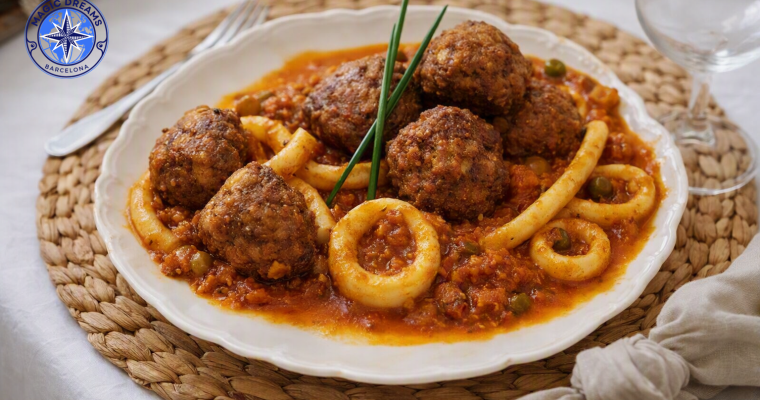
Meatballs with Cuttlefish – “Mar y Montaña”.

Meatballs with Cuttlefish – “Mar y Montaña”.

Mandonguilles amb Sèpia · A Traditional Catalan “Sea and Mountain” Recipe Catalan meatballs with cuttlefish, known locally as mandonguilles amb sèpia, are one of the finest examples of mar i muntanya, the traditional Catalan culinary philosophy that brings together ingredients from the sea and the 

Mel i Mató with Honey and Walnuts.

Mel i Mató with Honey and Walnuts.

Three simple ingredients carrying centuries of Catalan tradition Mel i Mató is one of the simplest desserts in Catalan cuisine and, at the same time, one of the recipes that most clearly represents the region’s culinary identity. Its essence lies in a humble combination: fresh 

Romesco Sauce and Calçots

Romesco Sauce and Calçots

The great gastronomic ritual of Catalan cuisine

Calçots with Romesco sauce are much more than a recipe: they represent one of the great gastronomic rituals of Catalonia.

Closely associated with Valls and the Camp de Tarragona, calçots are a variety of tender green onion traditionally enjoyed during the Calçotada, a popular celebration that brings family and friends together around fire, embers and the table.

Their preparation is simple, but it requires respecting a very specific technique.

The calçots are placed directly over the hot embers and grilled until their outer layer becomes completely blackened and charred. This first layer protects the inside and allows the heart of the calçot to cook slowly, developing a tender, juicy and slightly sweet texture.

Then comes one of the most characteristic moments of Catalan tradition: the charred outer layer is removed, the calçot is lifted by hand and the tender white part is dipped directly into the Romesco sauce.

Romesco sauce, originally from the province of Tarragona, is the perfect accompaniment. Made with roasted tomatoes, ñora peppers, almonds, hazelnuts, garlic, olive oil and vinegar, it combines toasted, sweet and slightly acidic notes with a delicate touch of spice.

The result is an extraordinary balance between the sweetness of the calçot and the intensity of the nuts, tomato and dried pepper.

The greatness of this tradition lies precisely in its simplicity.

Fire, ingredients, sauce and company.

A deeply Mediterranean Catalan cuisine that transforms a humble ingredient into a truly memorable gastronomic experience.


Ingredients

Serves 4

For the calçots

  • 40–48 fresh calçots, approximately 10–12 per person.
  • Salt, optional.
  • Romesco sauce, for serving.

For the Romesco Sauce

  • 150 g toasted almonds.
  • 100 g toasted hazelnuts.
  • 2–3 ripe tomatoes.
  • 2–3 ñora peppers.
  • 1–2 garlic cloves.
  • 1 small chili pepper or bitxo, to taste.
  • 150 ml extra-virgin olive oil.
  • 1 tablespoon wine vinegar.
  • Salt, to taste.

Optional: a small slice of toasted bread can be added to the Romesco to give it more body and a more traditional texture.


Preparing the Romesco Sauce

01 · Prepare the ñora peppers

The aromatic depth of dried pepper

Place the ñora peppers in a bowl of hot water and leave them to soak for approximately 20–30 minutes.

Once softened, carefully remove the stems and seeds.

Using a spoon, scrape out the flesh of the ñoras and set it aside.

The ñora flesh provides a deep, slightly sweet flavor that is characteristic of Romesco sauce.


02 · Roast the tomatoes and garlic

The flavor of fire

Place the tomatoes and garlic cloves on a baking tray.

Roast them in an oven at approximately 200°C / 390°F until the tomatoes are completely tender and their skins have developed lightly charred areas.

They can also be roasted directly over embers for an even more pronounced smoky character.

Remove the tomato skins and reserve the flesh.

Peel the roasted garlic.

The objective is to create concentrated, lightly toasted flavors without burning the inside of the ingredients.


03 · Grind the nuts

The characteristic texture of Romesco

Place the toasted almonds and hazelnuts in a mortar or food processor.

Grind until finely crushed but still slightly textured.

There is no need to turn the nuts into a completely uniform flour.

A little texture gives the sauce personality and preserves its traditional character.


04 · Add the tomato and ñora

The heart of the sauce

Add the roasted tomato flesh, roasted garlic and ñora pulp to the mortar or food processor.

Add the chili pepper or bitxo.

Blend until all the ingredients are well combined.

Adjust the amount of chili according to the desired level of heat.

Romesco should have character, but the spice should not overpower the toasted and sweet flavors of the nuts and tomatoes.


05 · Emulsify with olive oil and vinegar

The Mediterranean balance

Gradually add the extra-virgin olive oil while blending or stirring continuously.

Then add the vinegar little by little.

The sauce should become creamy, glossy and slightly thick.

Taste and adjust the salt.

If the sauce is too thick, add a few drops of water to reach the desired consistency.

If it is too thin, add a small amount of additional ground nuts.

Set aside at room temperature until ready to serve.


Preparing the Calçots

06 · Prepare the calçots

A simple ingredient, a precise technique

Do not wash the calçots excessively before grilling them.

Trim the roots and remove only the outer layers that are particularly damaged or dirty.

Keep most of the outer structure intact, as this is the layer that will protect the inside during cooking over the embers.

Arrange them and have them ready beside the grill.


07 · Grill directly over the embers

Fire as an ingredient

Prepare a grill with hot, glowing embers.

Place the calçots directly over the embers without adding oil.

Grill them for approximately 10–15 minutes, depending on their size and the intensity of the heat.

Turn them as necessary so they cook evenly.

The outer layer should become completely black, charred and apparently burnt.

Do not worry about their appearance.

This blackened layer acts as a protective shell, allowing the inside to cook slowly in its own steam.


08 · Rest the calçots

The heat continues to work

Once grilled, remove the calçots from the embers.

Gather them together and, if desired, wrap them for a few minutes in newspaper or heat-resistant kitchen paper.

This short resting period allows the residual heat to finish softening the interior.

The white part should be tender, juicy and slightly sweet.


The Calçotada Ritual

09 · Clean the calçots

The traditional way to eat them

Hold the calçot by its green leaves.

With your other hand, gently pull away the charred outer layer.

The tender, white and juicy heart should be revealed.

There is no need for a perfectly clean presentation.

Part of the charm of the Calçotada is precisely the informal experience of eating with your hands and sharing the moment around the table.


10 · The meeting with Romesco

The moment everyone waits for

Hold the calçot by its green leaves and generously dip the white part into the Romesco sauce.

The sauce should cover a good portion of the calçot without completely hiding its texture.

Lift the calçot and bring it directly to your mouth.

The contrast is immediate:

sweet and juicy calçot, creamy sauce, toasted nuts, tomato, ñora and a delicate touch of spice.


Gourmet Suggestions

Magic Dreams Barcelona

To elevate this tradition without losing its essence:

  • Use fresh calçots of a similar size for even cooking.
  • Prepare the Romesco with freshly toasted almonds and hazelnuts to maximize their aroma.
  • Roast the tomatoes and garlic slowly to develop greater depth of flavor.
  • Gradually incorporate the extra-virgin olive oil to control the consistency of the sauce.
  • Use a combination of almonds and hazelnuts to achieve a more complex balance of sweetness, richness and toasted notes.
  • Adjust the vinegar carefully. It should provide freshness without dominating the sauce.
  • For a more intense version, roast the tomatoes directly over the embers alongside the calçots.
  • Romesco can be prepared several hours in advance, allowing the flavors to blend.
  • Serve the sauce at room temperature so that its aromas can fully develop.

The secret to great calçots

The secret is not only the ingredient.

It is the fire.

The calçots must be cooked directly over the embers until their outer layer is completely charred.

This blackened layer may appear excessively burnt, but it is precisely what protects the inside and allows the calçot to retain its moisture.

The cooking must be intense enough to develop the aromas of the fire without destroying the heart of the vegetable.

The perfect interior should be:

tender, juicy, sweet and lightly smoky.


The Secret to Great Romesco

A good Romesco sauce should maintain a balance between five essential elements:

tomato, ñora, nuts, olive oil and acidity.

The nuts provide body and richness.

The tomato contributes sweetness and freshness.

The ñora adds depth.

The olive oil brings all the flavors together.

And the vinegar provides the acidity needed to prevent the sauce from becoming too heavy.

The heat should be used with moderation.

The perfect sauce is not necessarily the hottest one, but the one in which every ingredient can still be recognized.


Gourmet Presentation

For a gastronomic presentation, we can preserve the spirit of the traditional Calçotada by using a handmade ceramic platter or a rustic-style serving dish.

Arrange the grilled calçots in a small group and serve the Romesco separately in a bowl.

For a contemporary presentation, carefully clean some of the calçots and arrange them parallel on a plate.

Add small brushstrokes or dots of Romesco sauce around them.

Finish with a few drops of extra-virgin olive oil, lightly crushed toasted hazelnuts and small Mediterranean herb leaves.

We can also leave one calçot partially cleaned to visually represent the transformation created by the fire.

The presentation should always maintain a connection with its origins:

a rural Catalan recipe transformed into an elegant gastronomic experience without losing its popular soul.


Service

Calçots should be served freshly grilled and still hot.

Traditionally, they are wrapped in paper to retain their heat and moisture.

Romesco should be served separately, preferably at room temperature.

During a traditional Calçotada, diners clean the calçots with their hands and eat them directly.

For a gastronomic service, the calçots can be presented already cleaned and accompanied by small portions of Romesco.

In both cases, the goal is the same:

to enjoy the contrast between the sweet, smoky vegetable and the intense sauce made with nuts and tomato.


Pairing

Calçots with Romesco pair particularly well with a fresh Catalan 0.0% alcohol-free white wine with good acidity.

A Mediterranean-style white wine helps cleanse the palate after the richness of the nuts and olive oil.

They can also be served with an artisanal 0.0% alcohol-free vermouth, particularly when enjoyed as an aperitif.

For a completely refreshing option, very cold sparkling water with a few drops of lemon works beautifully.


Make-Ahead Preparation

The Romesco sauce can be prepared several hours in advance or even the day before.

In fact, resting allows the flavors of the ñora, tomato, garlic and nuts to blend together more harmoniously.

Before serving, stir the sauce and adjust its consistency with a few drops of water or extra-virgin olive oil.

The calçots, however, should be grilled as close to serving time as possible.

The gastronomic experience depends greatly on enjoying them hot, tender and freshly removed from the embers.


Storage

Romesco sauce: can be stored in an airtight container in the refrigerator for approximately 3–4 days.

Before serving, allow it to sit at room temperature for a few minutes and stir well.

Grilled calçots: are best eaten immediately. If necessary, they can be refrigerated for approximately 1–2 days, although they will lose some of their texture and smoky aroma.

We do not recommend freezing already grilled calçots.

Romesco sauce, however, can be frozen, although its texture may change slightly after thawing.


Copyright © 2016–2026 Magic Dreams Barcelona.

Catalan-Style Fideuà with Traditional Allioli.

Catalan-Style Fideuà with Traditional Allioli.

Maritime tradition, Mediterranean flavour and elegance in every bite Catalan-style fideuà, prepared using the traditional rossejat de fideus technique, is a delicious interpretation of Mediterranean coastal cuisine. Although fideuà originated on the Valencian coast, Catalonia has embraced and adapted this dish thanks to its deep 

Catalan Shrimp Suquet.

Catalan Shrimp Suquet.

A timeless maritime tradition of Catalan cuisine Suquet de Langostinos, or Catalan shrimp suquet, is an elegant interpretation of one of the most representative dishes of Catalonia’s maritime cuisine. Its name is associated with the Catalan word “suc”, meaning juice or cooking liquid, referring to 

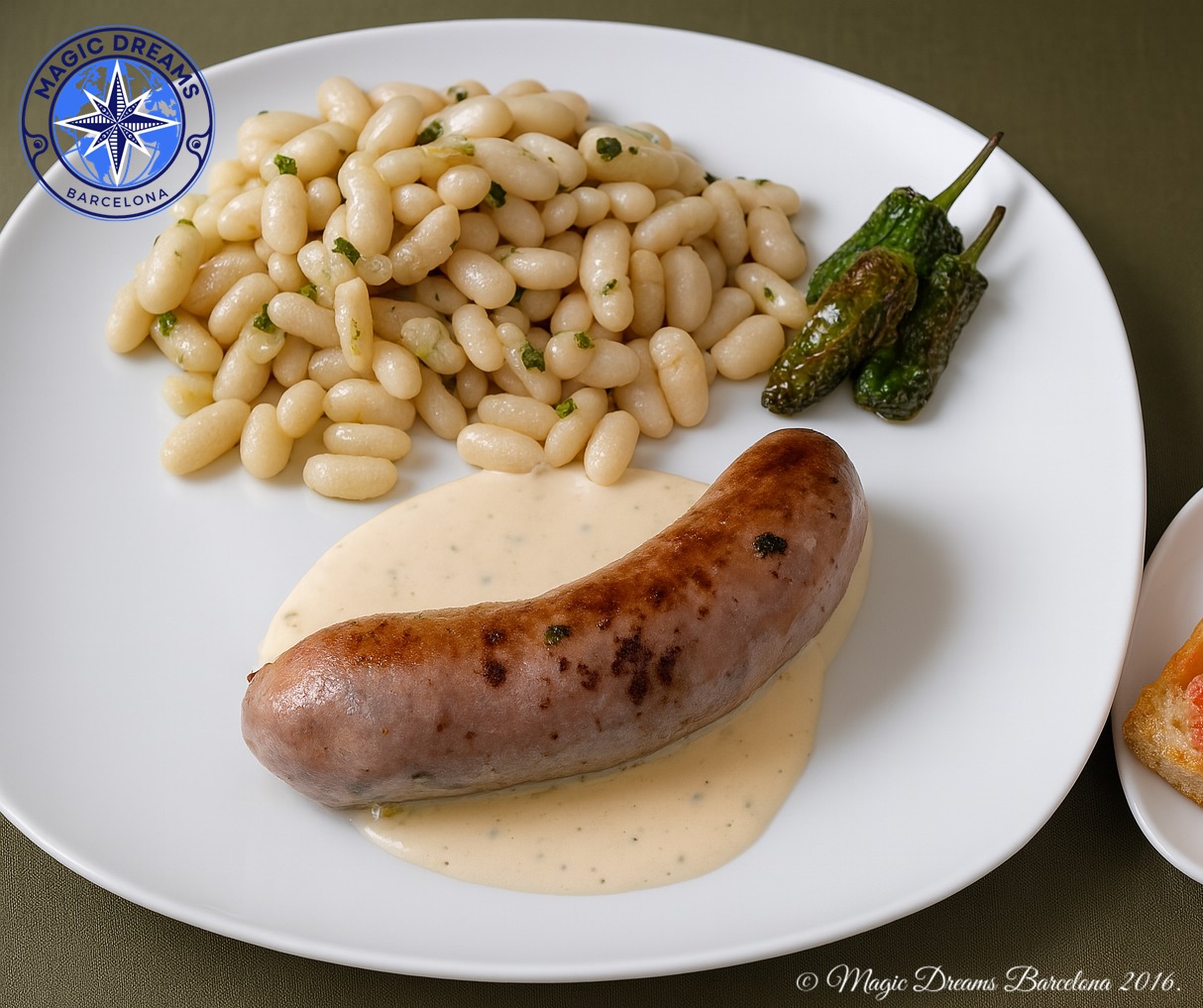
Traditional Catalan Butifarra with White Beans.

Traditional Catalan Butifarra with White Beans.

One of the great classics of traditional Catalan cuisine

Butifarra amb mongetes, also known as butifarra amb seques, is one of the simplest, most recognizable and most beloved dishes in Catalan gastronomy.

Its origins are deeply connected to Catalan rural cuisine, where nutritious, affordable and substantial dishes were created using the products available in the countryside.

The star of the dish is fresh butifarra, a traditional Catalan sausage made mainly with pork, salt and pepper. Unlike other varieties of butifarra, fresh butifarra is cooked directly, usually over a grill or on a griddle, until beautifully browned on the outside while remaining juicy inside.

The traditional accompaniment is mongetes, especially the highly regarded mongetes del ganxet, a Catalan white bean variety known for its characteristic shape, thin skin and exceptionally creamy texture.

The combination works through contrast.

The butifarra provides intensity, richness and savory depth, while the beans offer a soft and delicate texture that balances the dish.

In Catalan country houses, farmhouses and traditional restaurants, this recipe has become a true representation of authentic Catalan cooking.

And although its preparation is simple, the result depends on something fundamental:

good ingredients, proper heat and respect for tradition.


Ingredients

Serves 4

For the butifarra

  • 4 fresh artisanal butifarra sausages.
  • Extra virgin olive oil, if needed.
  • Salt, to taste.
  • Freshly ground black pepper, optional.

For the beans

  • 400 g cooked mongetes del ganxet or good-quality white beans.
  • 2 garlic cloves.
  • 2 tablespoons fresh parsley, finely chopped.
  • Extra virgin olive oil.
  • Salt.
  • Freshly ground black pepper.

To serve

  • Rustic bread.
  • Ripe tomatoes for traditional pa amb tomàquet.
  • Extra virgin olive oil.
  • Aioli, optional.

Preparation

01 · Prepare the butifarra

The star of the dish

Remove the butifarra from the refrigerator a few minutes before cooking so that it is not excessively cold when it reaches the grill or pan.

There is no need to prick the sausages repeatedly.

If you want to reduce the risk of the casing splitting during cooking, make one or two very small punctures with the tip of a knife or a needle.

Heat a grill, griddle or large frying pan.

Add a few drops of olive oil if necessary.

Place the butifarras on the hot surface and begin cooking over medium heat.


02 · Cook the butifarra

Golden outside, juicy inside

Cook the butifarras for approximately 10–12 minutes, turning them regularly to achieve an even golden-brown surface.

The outside should become deeply golden and lightly toasted, while the interior remains juicy and fully cooked.

If using a charcoal grill, cook them directly over the embers to give them an unmistakable smoky character.

Avoid excessively high heat, as it can burn the casing before the inside is properly cooked.

Once ready, remove the butifarras from the heat and allow them to rest for a few minutes.


Preparing the Beans

03 · Prepare the mongetes

The traditional accompaniment

If using canned beans, rinse them gently under cold water and drain them thoroughly.

If using home-cooked mongetes del ganxet, simply drain them carefully, taking care not to break them.

The beans should hold their shape while remaining creamy inside.

Heat a large frying pan with a generous drizzle of extra virgin olive oil.


04 · Cook the garlic

A Mediterranean aroma

Finely chop the garlic cloves.

Add them to the pan with the olive oil and cook gently over medium-low heat.

The garlic should release its aroma without becoming burnt.

As soon as it begins to turn lightly golden, add the beans.


05 · Sauté the beans

Creamy inside and lightly golden outside

Add the beans to the pan.

Sauté gently for several minutes, avoiding excessive stirring so that the beans remain intact.

Season with salt and freshly ground black pepper.

Add the fresh parsley at the very end.

The beans should be hot, lightly golden in places and still creamy inside.


Plating

06 · Serve the butifarra

Simplicity at its best

Place one freshly cooked butifarra on each plate.

Serve a generous portion of the garlic and parsley sautéed beans alongside it.

Finish with a few drops of extra virgin olive oil.

There is no need to overcomplicate the presentation.

The beauty of this recipe lies precisely in its simplicity.


Pa amb Tomàquet

The quintessential Catalan accompaniment

To complete the experience, prepare traditional pa amb tomàquet.

Cut a good rustic loaf in half.

Rub the cut surface with a ripe tomato until the bread is well coated.

Add a little salt and finish with a generous drizzle of extra virgin olive oil.

The bread should be juicy without becoming excessively wet.

Serve alongside the butifarra and beans.


Aioli

An optional accompaniment

Although not essential, aioli pairs particularly well with butifarra.

Serve a small amount in a separate bowl so that each guest can add it according to taste.

The aioli should be used sparingly so that it does not overpower the flavor of the sausage or the delicate beans.


Gourmet Suggestions

Magic Dreams Barcelona

To elevate this traditional recipe into a more refined gastronomic presentation:

  • Use fresh artisanal butifarra made with high-quality pork.
  • Whenever possible, choose mongetes del ganxet.
  • Cook the butifarra slowly to achieve an even golden crust without drying the interior.
  • Use a charcoal grill to introduce greater depth and smoky aromas.
  • Sauté the beans with a good fruity extra virgin olive oil.
  • Add the parsley at the end to preserve its freshness and aroma.
  • Avoid overcooking the beans so they do not turn into a purée.
  • Always serve the butifarra freshly cooked.
  • Prepare the pa amb tomàquet with sourdough or rustic bread.
  • For a contemporary interpretation, add a few drops of red wine reduction or a few very thin slices of truffle.

The secret to a great Butifarra amb Mongetes

The key is not to complicate something that is already simple.

A good butifarra mainly requires proper cooking.

It should be beautifully browned on the outside while remaining juicy inside.

The beans, meanwhile, should retain their shape while offering a creamy texture.

Garlic and parsley provide the necessary aromatic character, while olive oil brings everything together.

The perfect dish should offer a clear contrast:

golden, juicy butifarra, creamy beans, garlic, parsley and olive oil.


Gourmet Presentation

For a traditional presentation, use a rustic ceramic serving dish and arrange the butifarras alongside a generous portion of beans.

Add a few small leaves of fresh parsley and a drizzle of extra virgin olive oil.

For a more contemporary presentation, slice the butifarra diagonally and arrange the pieces over a bed of mongetes.

Add small touches of aioli around the plate and finish with fresh herbs.

The pa amb tomàquet can be served separately in small portions.

The presentation should always preserve the character of the recipe:

rustic, generous, Mediterranean and deeply Catalan.


Pairing

Butifarra with white beans pairs beautifully with a Catalan 0.0% alcohol-free red wine, particularly one with a fruity profile and good structure.

It can also be served with an artisanal 0.0% alcohol-free vermouth, especially when presented as part of an informal meal or tapas selection.

For a lighter option, very cold sparkling water works particularly well, helping to refresh the palate after the richness of the butifarra.


Serving

The butifarra should be served freshly cooked and hot.

The beans should ideally be prepared at almost the same time so that they do not cool down.

This dish works particularly well when served in the center of the table, accompanied by rustic bread and pa amb tomàquet to share.

The aioli can be served separately.

Catalan tradition invites us to enjoy this dish without too many formalities:

good ingredients, bread, olive oil and good company.


Make-Ahead Preparation

The beans can be cooked in advance and refrigerated until needed.

Before serving, gently reheat them in a frying pan with olive oil, garlic and parsley.

The butifarra, however, should be cooked immediately before serving.

This preserves its juiciness and characteristic golden exterior.

Pa amb tomàquet should also be prepared shortly before eating to maintain the right balance between the bread and tomato.


Storage

Cooked butifarra: refrigerate in an airtight container and preferably consume within 1–2 days.

Cooked beans: refrigerate and consume within approximately 2–3 days, also following the manufacturer’s instructions if using canned beans.

Sautéed beans: refrigerate and preferably consume within 1–2 days.

Pa amb tomàquet: should be prepared just before serving and is not recommended for storage once assembled, as the bread quickly loses its texture.

For the best result, prepare the dish to order and serve immediately.


The Essence of Catalonia on a Plate

Butifarra amb Mongetes proves that Catalan cuisine does not need complicated techniques to be extraordinary.

Two main ingredients, a good pan or grill, olive oil, garlic, parsley and good bread are enough to create a dish full of identity.

It is a recipe born from popular cooking that has remained alive from one generation to the next.

Butifarra, mongetes, pa amb tomàquet and good olive oil: one of the most authentic combinations in Catalan cuisine.

Copyright © 2016–2026 Magic Dreams Barcelona.

Chicken with Lobster — Mar i Muntanya.

Chicken with Lobster — Mar i Muntanya.

The essence of the Empordà in one dish: land, sea and Catalan tradition Chicken with lobster, known in Catalan cuisine as Pollastre amb llagosta, is one of the finest expressions of the Mar i Muntanya tradition. This distinctive style of Catalan cooking brings together ingredients 

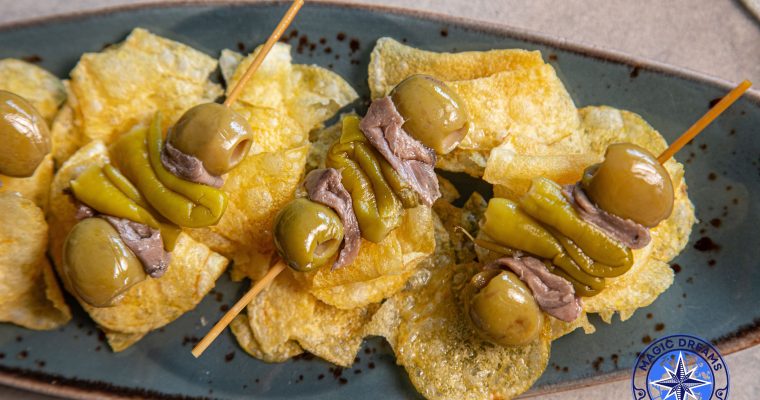
Premium Catalan-Style Gilda with Espinaler Crisps.

Premium Catalan-Style Gilda with Espinaler Crisps.

A small bite with Mediterranean soul The Gilda is one of Spain’s most recognisable pintxos. Its origins are in San Sebastián, where it became popular in the 1940s. The classic combination of olive, anchovy and pickled chilli quickly became a symbol of Basque bar culture. 

Croquettes with Allioli.

Croquettes with Allioli.

An iconic Spanish and Catalan tapa

Croquettes are one of Spain’s most popular tapas and are also deeply rooted in Catalan culinary tradition. Their modern origins are associated with French cuisine and the croquette, but in Spain they evolved into a distinctive dish strongly connected with the tradition of using leftovers creatively.

Traditionally, croquettes were a delicious way to transform leftover meat, fish, chicken or vegetables into an entirely new dish. The combination of a creamy béchamel filling, a flavourful ingredient and a crisp golden coating made them one of the great stars of Spanish tapas.

In Catalonia, you can find many varieties, from classic chicken and ham croquettes to cod, mushrooms, spinach, prawns and squid.

Serving them with allioli adds an unmistakably Mediterranean character: the creamy croquette contrasts beautifully with the intense flavour of garlic and olive oil.


Types of Croquettes to Choose From

 Chicken Croquettes

Perfect for using leftover roast or cooked chicken.

 Ham Croquettes

One of the most popular varieties, rich, savoury and creamy.

Cod Croquettes

A traditional seafood-inspired option with a delicate flavour.

 Mushroom Croquettes

An aromatic vegetarian alternative with a wonderfully earthy character.

 Prawn Croquettes

Delicate and elegant, ideal for a more refined tapas selection.

 Squid Croquettes

A distinctive seafood version with plenty of Mediterranean character.

 Spinach Croquettes

A lighter vegetarian option with a fresh flavour.

Cheese Croquettes

Rich and creamy inside with an especially crisp exterior.


Basic Croquette Recipe

Makes approximately 20–24 croquettes

Ingredients

  • 50 g butter
  • 50 g plain flour
  • 500 ml whole milk
  • 150 g filling of your choice
  • ½ small onion, finely chopped
  • Salt
  • Black pepper
  • A pinch of nutmeg
  • Olive oil for frying

For the coating

  • Flour
  • 2 eggs
  • Breadcrumbs

For the Allioli

  • 1 garlic clove
  • 150 ml mild olive oil
  • A pinch of salt
  • A few drops of lemon juice, optional

Preparation

01 · Prepare the Filling

Choose the main ingredient you would like to use.

For chicken, ham, cod, prawns, mushrooms or any other filling, make sure it is already cooked and finely chopped.

Set aside.


02 · Prepare the Sofrito

Melt the butter in a saucepan or frying pan.

Add the finely chopped onion and cook slowly for 8–10 minutes, until completely tender.

Do not allow it to brown too much.


03 · Prepare the Béchamel

Add the flour and stir for approximately 2 minutes to cook it and remove the raw flour taste.

Gradually add the milk while whisking continuously.

Cook over medium-low heat until you obtain a very creamy and thick mixture.

Season with salt, black pepper and a small amount of nutmeg.


04 · Add the Filling

Add your chosen filling to the béchamel.

Mix carefully until everything is evenly incorporated.

Continue cooking for a few minutes.

The mixture should gradually begin to pull away from the sides of the pan.


05 · Chill the Mixture

Transfer the mixture to a wide dish.

Cover directly with cling film, making sure it touches the surface to prevent a skin from forming.

Allow it to cool completely.

Ideally, refrigerate it overnight.

This resting period makes shaping the croquettes much easier.


Shaping the Croquettes

06 · Shape

Using a spoon, take small portions of the chilled mixture.

Shape them into traditional oval croquettes or round shapes, depending on your preferred presentation.

Try to keep them approximately the same size so they cook evenly.


07 · Coat

Coat each croquette in:

flour → beaten egg → breadcrumbs

Make sure they are completely covered.

For an extra-crispy crust, you can repeat the egg and breadcrumb stage.


Frying the Croquettes

08 · Achieve a Crisp Exterior

Heat plenty of olive oil to approximately 175–180°C.

Fry the croquettes in small batches.

Do not overcrowd the pan, as this will cause the oil temperature to drop.

Fry for approximately 2–3 minutes, until golden and crisp.

Remove and drain on kitchen paper.


Preparing the Allioli

09 · The Mediterranean Sauce

Place the garlic and a pinch of salt in a mortar.

Crush until you obtain a smooth paste.

Gradually add the olive oil while stirring continuously until the mixture becomes creamy and emulsified.

A few drops of lemon juice can be added for freshness.

For a quicker preparation, an immersion blender can also be used.


Presentation

Arrange the freshly fried croquettes on a wooden serving board or ceramic plate.

Serve the allioli in a small bowl in the centre.

Finish with a few leaves of fresh parsley and, if desired, a few drops of extra virgin olive oil.

The croquettes should be served hot and crisp on the outside, yet creamy inside.


The Secret to Great Croquettes

The difference between an ordinary croquette and an exceptional one is mainly the texture.

The filling should be:

creamy, flavourful and firm enough to shape.

Chilling the mixture is essential.

During frying, the oil must remain hot enough for the coating to become crisp quickly without allowing the croquettes to absorb excessive oil.


Choosing Your Filling

For a traditional tapas selection

Ham: rich and classic.

Chicken: mild and perfect for using leftovers.

Cod: elegant and seafood-inspired.

Mushrooms: aromatic and vegetarian.

Prawns: delicate and sophisticated.

Squid: intense and distinctly Mediterranean.

Spinach: light and vegetable-based.

Cheese: rich and indulgently creamy.

A selection containing several different types of croquettes is an excellent way to share tapas and experience different flavours at the same time.


Pairing

Croquettes with allioli pair particularly well with a fresh, crisp 0.0% alcohol-free white wine, especially when prepared with cod, prawns or squid.

For ham, chicken or cheese croquettes, a Mediterranean-style 0.0% alcohol-free aperitif works beautifully.

Another refreshing option is very cold sparkling water with lemon and fresh Mediterranean herbs.

Copyright © 2016-2026 Magic Dreams Barcelona.

Spicy Mussels in Tomato Sauce.

Spicy Mussels in Tomato Sauce.

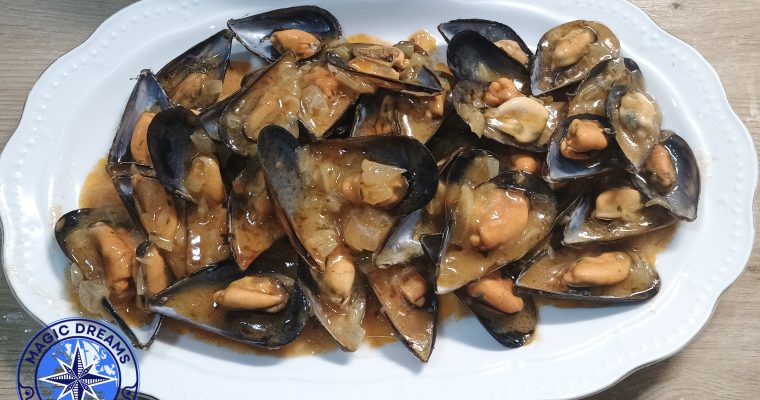
A Mediterranean seafood classic with a fiery touch Spicy mussels in tomato sauce are a simple yet intensely flavoured seafood dish that reflects the culinary traditions of the Mediterranean coast. Mussels have long been an important ingredient in popular coastal cuisine because they are affordable, 

Catalan Coca with Sausages, Tomato and Roasted Peppers.

Catalan Coca with Sausages, Tomato and Roasted Peppers.

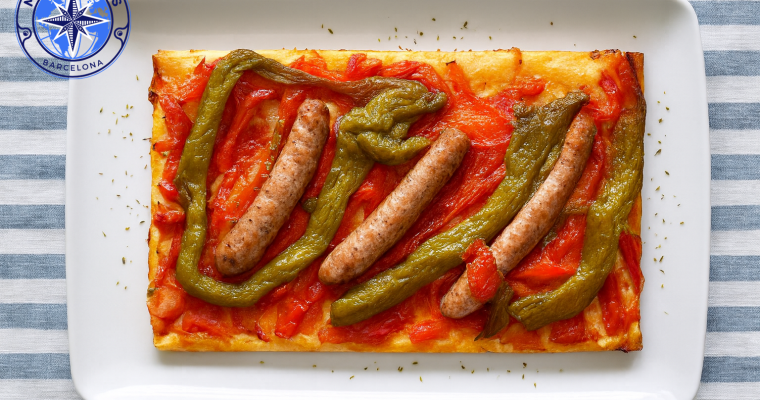
Catalan tradition, artisan dough and authentic Mediterranean flavour Coca Catalana is one of the great symbols of Catalan gastronomy and one of the oldest preparations in Catalan culinary tradition. Its origins go back centuries, when simple bread made with flour, water, salt and yeast was 

Catalan-Style Noodles in a Casserole — Fideus a la Cassola.

Catalan-Style Noodles in a Casserole — Fideus a la Cassola.

Family tradition, rich sofrito and the authentic flavour of Catalan cuisine

Fideus a la cassola, also known as Catalan-style casserole noodles, are one of the most representative dishes of traditional Catalan home cooking.

Their defining characteristic is also their greatest difference from classic Italian pasta: the noodles are cooked directly in the casserole together with the sofrito, meat and stock, gradually absorbing all the flavours.

The presence of noodles in the Iberian Peninsula has ancient roots and is linked to Arab influence, while over the centuries Catalan cuisine developed its own distinctive way of preparing them.

For generations, fideus a la cassola have been part of everyday family meals, particularly in rural Catalonia.

The recipe allows for countless variations.

There are versions with pork ribs, fresh butifarra sausage, chicken, rabbit, vegetables, mushrooms and even seafood, creating different interpretations of the same traditional concept.

The version presented here combines pork ribs with bone and fresh butifarra, together with a sofrito of onion, garlic, peppers and tomato, finished with a traditional Catalan picada of almonds, garlic, parsley and saffron.

The result is a generous, aromatic and deeply comforting dish.

A simple casserole that captures the essence of Catalan cooking.


Premium Fideus a la Cassola

Serves 4–6

Ingredients

For the Noodles and Meat

  • 500 g thick noodles, approximately nº 3–5.
  • 400–500 g pork ribs with bone, cut into pieces.
  • 2–3 fresh butifarra sausages, cut into pieces.

For the Sofrito

  • 1 large onion, finely chopped.
  • 4 garlic cloves, finely chopped.
  • 1 red pepper, diced.
  • 1 green pepper, diced.
  • 2 ripe tomatoes, grated or blended.
  • Peas, optional.
  • Seasonal mushrooms, optional.
  • Extra virgin olive oil.
  • Salt.
  • Freshly ground black pepper.

For Cooking

  • 1 litre hot meat stock.
  • 200 ml brandy or rancio wine.
  • Extra virgin olive oil.

For the Picada

  • 3–4 toasted almonds.
  • 1 garlic clove.
  • Fresh parsley.
  • A pinch of saffron.
  • A small amount of stock to loosen the mixture.

Step-by-Step Preparation

01 · Brown the Meat

The first layer of flavour

Heat a generous amount of extra virgin olive oil in a wide casserole.

Add the pork ribs and brown them over medium-high heat on all sides.

Once well coloured, add the pieces of fresh butifarra.

Cook until lightly browned and sealed.

Remove the meat and set aside.

The caramelised juices left in the bottom of the casserole will provide an important foundation for the sofrito.


02 · Prepare the Sofrito

The heart of the casserole

Using the same casserole, add the onion.

Cook over medium-low heat for approximately 10–15 minutes, until soft and lightly caramelised.

Add the garlic and peppers.

Continue cooking until the vegetables begin to soften.

Add the grated tomato and allow it to reduce slowly.

The sofrito should become thick, concentrated and deeply aromatic, without excess liquid.


03 · Deglaze the Casserole

Recover every last bit of flavour

Pour in the brandy or rancio wine.

Scrape the bottom of the casserole gently to release the caramelised cooking juices.

Cook for 2–3 minutes, allowing the alcohol to evaporate completely.

This adds considerable depth to the sauce.


04 · Return the Meat

Return the pork ribs and butifarra to the casserole.

Mix gently with the sofrito so the meat becomes coated in all the aromatic flavours.


05 · Add the Noodles

The traditional Catalan technique

Add the noodles directly to the casserole.

Toss them for 1–2 minutes, allowing them to become coated with the sofrito and the meat juices.

This is one of the defining characteristics of fideus a la cassola.

The noodles are not boiled separately.

They are cooked directly in the stew.


06 · Add the Stock

Pour in the hot meat stock.

There should be enough liquid to generously cover the noodles.

Add the peas or mushrooms if using them.

Season with salt and freshly ground black pepper.

Bring everything to a gentle simmer.


07 · Cook the Noodles

Cook over medium heat for approximately 15–20 minutes, depending on the type of noodle.

Stir occasionally and gently to ensure even cooking.

The noodles should gradually absorb the stock.

The final texture should be juicy and slightly silky, but not watery.


08 · Prepare the Picada

The traditional Catalan finishing touch

While the noodles are cooking, place the toasted almonds, garlic, parsley and saffron in a mortar.

Crush until you obtain a fine and aromatic paste.

Add a few spoonfuls of the cooking liquid to loosen the mixture.


09 · Add the Picada

Approximately 5 minutes before the end of cooking, add the picada to the casserole.

Stir gently to distribute it evenly.

The picada adds body, aroma and an additional layer of flavour to the sauce.


10 · Rest Before Serving

Turn off the heat once the noodles have reached the desired texture.

Allow the dish to rest for approximately 5 minutes.

During this time, the noodles will continue absorbing the remaining liquid and the flavours will settle beautifully.


The Secret to Fideus a la Cassola

The defining characteristic of this dish is that the noodles cook directly in the casserole.

We are not preparing pasta separately and then adding a sauce.

Instead:

every noodle absorbs the sofrito, stock, meat juices and aromatic picada.

That is why the stock is so important.

And so is the sofrito.

The more concentrated both are, the deeper and richer the final dish will be.


Gourmet Suggestions

Magic Dreams Barcelona

To elevate this traditional recipe:

  • Use high-quality thick noodles.
  • Choose pork ribs with bone for greater depth of flavour.
  • Use fresh artisanal butifarra.
  • Take time to slowly cook the sofrito.
  • Prepare homemade meat stock whenever possible.
  • Use brandy or rancio wine during cooking to enhance the sauce.
  • Add seasonal mushrooms in autumn.
  • Use good-quality saffron in the picada.
  • Never pre-cook the noodles.
  • Keep the cooking temperature controlled to preserve a juicy texture.

Mushroom and Vegetable Version

A vegetarian interpretation

The meat can be replaced with a selection of seasonal mushrooms and vegetables.

Porcini, shiitake, button mushrooms, green beans, artichokes or peppers all work beautifully.

The same traditional technique is maintained:

sofrito + noodles + stock + direct cooking.

The result preserves the spirit of the dish while offering a more vegetable-focused interpretation.


Mar i Muntanya Version

Bringing the Mediterranean into the casserole

Fideus a la cassola can also become a Mar i Muntanya dish.

Add prawns, squid or clams during the final stages of cooking.

Part of the meat stock can be replaced with seafood fumet.

The combination of pork, seafood and Catalan sofrito creates an especially intense and characterful interpretation.


Smoky Variation

For greater aromatic depth, add a small amount of smoked paprika together with the noodles.

Use it sparingly.

The aim is to provide a subtle smoky note without masking the flavour of the sofrito or meat.


Presentation

Fideus a la cassola should ideally be served directly in the casserole.

Arrange the pork ribs and butifarra visibly among the noodles.

Finish with fresh parsley and a few drops of extra virgin olive oil.

For a Premium Magic Dreams Barcelona presentation, serve individual portions in small cast-iron casseroles or handcrafted ceramic dishes.

The presentation should communicate:

tradition + quality ingredients + local character + elegance.


Pairing

For the table, we recommend a full-bodied 0.0% alcohol-free Catalan-style red wine, which complements the richness of the meat and sofrito.

For the Mar i Muntanya version, a fresh 0.0% alcohol-free Mediterranean-style white wine is particularly suitable.

A completely refreshing alternative is very cold sparkling water with lemon and fresh Mediterranean herbs.


Make-Ahead Preparation

The sofrito can be prepared several hours in advance.

The stock and browned meat can also be prepared beforehand.

However, we recommend cooking the noodles immediately before serving, because they continue absorbing liquid after the heat is turned off.

This helps preserve their characteristic juicy texture.


Storage

Cooked fideus a la cassola can be refrigerated in an airtight container for approximately 1–2 days.

When reheating, add a small amount of hot stock to restore moisture.

The dish is at its best freshly cooked, while the noodles are still juicy and the sofrito remains fully integrated.


The Spirit of the Catalan Casserole

Fideus a la cassola are much more than a recipe.

They are a way of understanding cooking.

A casserole.

A good sofrito.

Simple ingredients.

Time.

And the patience needed to allow every ingredient to give its best.

This dish demonstrates how Catalan cuisine can transform everyday ingredients into something deeply flavourful and full of character.

A comforting casserole that tastes of home, family and Catalan tradition.


The Premium Magic Dreams Barcelona Touch

At Magic Dreams Barcelona, we elevate this tradition without losing its identity.

We select quality ingredients, respect the traditional cooking method and pay particular attention to presentation.

The Catalan tradition remains at the heart of the dish; we simply elevate the experience.

Copyright © 2016-2026 Magic Dreams Barcelona.
Catalan Paella Mar i Muntanya.

Catalan Paella Mar i Muntanya.

The Mediterranean meeting of sea and land The Paella Mar i Muntanya is one of the most fascinating expressions of Catalan cuisine. Its name literally means “Sea and Mountain”, referring to the combination of ingredients from the Mediterranean coast with products traditionally associated with the 

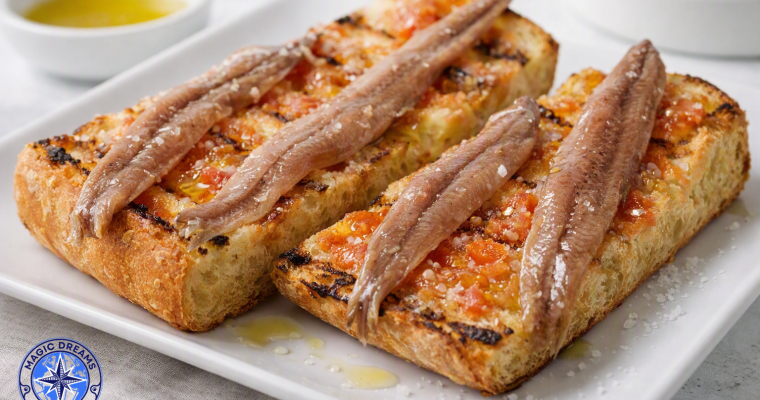
Catalan Espardenya with Escalivada and L’Escala Anchovies.

Catalan Espardenya with Escalivada and L’Escala Anchovies.

The Mediterranean on a slice of toasted bread The Espardenya is a traditional Catalan-style tapa combining toasted bread, escalivada and anchovies, bringing together the flavours of the land and the sea. The name espardenya is associated with this rustic style of preparation in Catalan cuisine, 

Puigcerdà – A Natural Paradise in La Cerdanya.

Puigcerdà – A Natural Paradise in La Cerdanya.

Puigcerdà: A Pyrenean paradise that awakens all the senses

On the banks of the River Segre, embraced by the majestic Pyrenees, lies Puigcerdà, the capital of the Cerdanya region, at approximately 1,200 metres above sea level.

Located just 150 km from Barcelona, the journey by car takes around two hours, transporting you from the lively Catalan capital to a peaceful refuge surrounded by pristine nature.

Puigcerdà is a town where time seems to move at a slower pace, inviting you to discover its landscapes, history and gastronomy. Close to the French border, it is a fascinating crossroads of cultures and traditions where nature and human life coexist in remarkable harmony.


History and Heritage

A medieval and bourgeois legacy

Puigcerdà became particularly prestigious during the second half of the 19th century and the beginning of the 20th century, when many Barcelona bourgeois families began spending their summers here to escape the heat of the city.

This period transformed the town and contributed to the redevelopment of its artificial lake, giving it a more elegant and distinguished character. The lake acquired the unusual shape of an irregular hexagon that still defines its appearance today.

Several elegant villas were built around the lake during this period and can still be admired while walking through the town.

Traditionally, families from Barcelona also spent Christmas, New Year’s Eve and the winter months in Cerdanya, particularly enjoying the surrounding mountains and skiing. This helped establish the region as an exclusive destination for leisure and mountain tourism.

The old town, with its Town Hall Square, Carrer Major, Santa Maria Square and Gothic-Romanesque bell tower, offers a journey through centuries of history.

Visitors should also discover the 12th-century regional hospital and the Cerdà Museum, dedicated to the history, ethnology and natural heritage of the region.


A Mountain Climate Shaped by Nature

Cerdanya enjoys a Mediterranean mountain climate, characterised by cold and relatively dry winters and warm, dry summers accompanied by occasional summer storms.

Autumn tends to be wetter, sometimes causing increased river flows, while spring arrives relatively late and is generally moderately rainy.

The Cerdanya plain, particularly its sunnier southern-facing areas, is considerably drier than La Molina, where winter snowfall is abundant.

The Bellver area receives more rainfall due to the arrival of humid air, although winter temperatures can be extremely low.

Spring flowering begins towards the end of April and continues throughout May, while vegetation reaches its greatest splendour during June and early July.

From late September onwards, deciduous trees begin to lose their leaves, transforming the forests into a spectacular palette of red, ochre, yellow and green.

It is one of the most beautiful seasonal transitions in the Pyrenees.


Rivers and Wildlife

The municipality of Puigcerdà is crossed by four rivers: the Segre, the principal tributary of the Ebro, together with its tributaries the Raür, Llavanera and Querol, all of which originate in France.

These waterways, together with the Lanós irrigation canal, have historically supported agriculture and the hay meadows that still form an essential part of the Cerdanya landscape.

The region is also home to an impressive variety of wildlife.

Birdlife includes migratory and occasional species such as white storks, as well as resident birds including ravens, sparrowhawks and green woodpeckers.

Around the lake, visitors can observe mallards, mute swans and white pigeons. During migration periods, other species appear, including Eurasian wigeons, moorhens and several species of gull.

The rivers and streams also support a variety of fish, including eels, catfish, carp, gudgeon, minnows and brown trout.


A Destination for the Senses and Adventure

Puigcerdà and the surrounding Cerdanya valley offer an extensive range of outdoor activities.

Visitors can enjoy:

  • Hiking.
  • High-mountain excursions.
  • Mountain biking.
  • Horse riding.
  • Quad routes.
  • Skiing.
  • Golf.
  • Nature observation.
  • Birdwatching.

A boat ride on the artificial lake in Parc Schierbeck offers a particularly peaceful experience, surrounded by trees, water and mountain scenery.

Throughout the year, the landscape changes dramatically as the seasons transform the colour of the forests and the activity of the local wildlife.

The Bosquet de Puigcerdà provides an easy but highly rewarding walk, with beautiful views towards the Querol valley and routes connecting the natural landscape with the history of the region.


Cerdanya: A Mosaic of Flavours

The local cuisine reflects the richness of the mountain valleys and the influence of neighbouring Catalan and French traditions.

Among the region’s most characteristic products are:

  • Beef and lamb.
  • Local cheeses.
  • Seasonal vegetables.
  • Cereals.
  • Farm poultry.
  • Artisan yoghurt.
  • Butter.
  • Traditional cured meats.

These ingredients form the basis of traditional dishes such as:

  • Trinxat de Cerdanya.
  • Rabbit with mushrooms.
  • Tiró amb naps, duck with turnips.
  • Garlic soups.
  • Mató, a traditional fresh Catalan cheese.
  • Artisan yoghurts.
  • Local cheeses and butter.

Specialities such as Talltendre turnips, Cerdanya pears and winter cabbage, together with traditional cured meats such as bull de fetge and black bull, complete a gastronomic experience deeply connected with the land and the seasons.


Discover Puigcerdà with Magic Dreams Barcelona

At Magic Dreams Barcelona, we invite you to experience Puigcerdà and Cerdanya in a unique and personalised way.

Our romantic weekend escapes and day trips can include transportation, carefully selected locations and native guides specialising in history, botany and ornithology.

We can also arrange gastronomic experiences in traditional local establishments or private culinary experiences with our chef, specialising in local and international cuisine.

With advance notice, our experiences can be adapted to different languages.

We also offer private wellness services, exclusive concerts, themed gastronomy and personalised experiences designed around your interests.

Every detail is carefully planned so that you can feel comfortable, accompanied and completely immersed in the destination.

Our aim is to create an experience that goes beyond conventional tourism: a journey that awakens the senses and connects you with the landscapes, traditions, flavours and cultural heritage of Cerdanya.

Discover this extraordinary corner of the Catalan Pyrenees through the eyes of Magic Dreams Barcelona and let yourself be carried away by experiences that remain in your memory long after the journey has ended.


Copyright © 2016-2026 Magic Dreams Barcelona.
Taps of Cadaqués.

Taps of Cadaqués.

A sweet taste of Costa Brava heritage In the picturesque coastal town of Cadaqués, on the Costa Brava, a unique Catalan pastry has been preserved through generations: the famous Taps de Cadaqués. These delicate sponge cakes, traditionally made with eggs, flour and sugar and finished 

Bacallà a la Llauna a great classics of traditional Catalan cuisine.

Bacallà a la Llauna a great classics of traditional Catalan cuisine.

Bacallà a la Llauna is one of the great classics of traditional Catalan cuisine: a humble dish in origin, yet remarkably rich in aromas, contrasts and Mediterranean character. Its history is closely linked to the popular cuisine of Catalonia and, particularly, Barcelona, where salt cod 

Caramelised Catalan Almonds.

Caramelised Catalan Almonds.

The sweet aroma of Catalan fairs and traditional celebrations

Caramelised almonds, known in Spanish as almendras garrapiñadas, are one of the most beloved traditional sweets found at fairs, village festivals and popular celebrations throughout Catalonia.

Their aroma is unmistakable.

The moment sugar begins to caramelise around the almonds, it evokes summer fairs, local markets, traditional festivities and childhood memories.

The recipe is wonderfully simple:

almonds + sugar + water.

Yet this combination becomes something extraordinary when exposed to heat.

The sugar first dissolves, then crystallises around the almonds and finally caramelises again, creating the characteristic crunchy, golden coating.

Traditionally, confectioners prepare them in large copper cauldrons, which provide excellent temperature control. At home, a heavy-based saucepan or heat-resistant earthenware pot can also be used.

Although almonds are the most traditional choice, the same technique can be used with hazelnuts, walnuts and other nuts, each offering a different texture and flavour.


A Sweet Tradition of Catalan Fairs

The sound of caramel and the aroma of toasted almonds

For generations, caramelised almonds have accompanied fairs, village festivals, local celebrations and traditional markets throughout Catalonia.

At traditional fair stalls, their fragrance can often be detected long before reaching the stand.

The preparation itself becomes part of the spectacle.

The nuts are constantly stirred while the sugar passes through several stages until it forms a dry, crisp and caramelised coating.

This simple process is deeply connected with popular culinary memory.

A humble sweet transformed into a taste of celebration, tradition and childhood.


Premium Recipe for Caramelised Almonds

Serves approximately 4–6

Ingredients

  • 250 g raw almonds with skin
  • 200 g sugar
  • 100 ml water
  • 1 teaspoon lemon juice, optional
  • A pinch of salt, optional
  • ½ teaspoon cinnamon, optional

For a Gourmet Version

  • Finely grated orange zest
  • Vanilla
  • A touch of fresh rosemary
  • Pure cocoa powder
  • Flaked sea salt, for finishing

Step-by-Step Preparation

01 · Prepare the Pan

Use a heavy-based saucepan, preferably copper, cast iron or heat-resistant earthenware.

Add the almonds, sugar and water.

Place over medium heat.


02 · The Transformation Begins

The sugar starts to work its magic

Stir continuously with a wooden spoon.

At first, the sugar will dissolve completely in the water.

The mixture will begin to boil and the almonds will become surrounded by a clear syrup.

Keep stirring.


03 · The Crystallisation Stage

After several minutes, the water will gradually evaporate.

The syrup will thicken.

Suddenly, the sugar may crystallise and become dry and grainy around the almonds.

Do not stop stirring.

Continue moving the nuts so they separate rather than forming one large mass.


04 · The Caramel Returns

The most delicate stage

As the heat continues, part of the crystallised sugar will begin to melt again.

This second stage allows some of the sugar to caramelise and adhere to the almonds.

The result should be a rough, crunchy and lightly glossy coating.

Control the heat very carefully.

Sugar can go from perfectly caramelised to burnt in a matter of seconds.


05 · Remove from the Heat

Once the almonds are evenly coated and golden, immediately remove the pan from the heat.

Transfer the almonds to baking paper or a silicone baking mat.

Separate them quickly using a spoon or fork.

Take great care: the caramel will be extremely hot.


06 · Allow to Cool

Leave the almonds to cool completely.

As they cool, the caramel hardens and develops its characteristic crunchy texture.

Do not store them until they are completely cool.


The Secret to Great Caramelised Almonds

The key is controlling temperature and movement.

This is not simply a matter of melting sugar.

The process goes through several stages:

syrup → crystallisation → recrystallisation → caramelisation.

This transformation is what creates the traditional coating.

Stopping the stirring too early can cause the nuts to stick together.

Using too much heat can burn the sugar.

Stopping too soon can prevent the coating from developing properly.

Patience is essential.


Hazelnut Variation

A particularly aromatic alternative

Replace the almonds with whole hazelnuts.

The process remains the same.

Hazelnuts provide a deeper roasted aroma and a wonderfully crisp texture after caramelisation.

For a gourmet version, add a touch of vanilla or orange zest.


Walnut Variation

Walnuts can also be caramelised.

For this version, large walnut halves are recommended because they are more delicate.

They create a wonderful contrast between:

crisp caramel coating + softer, buttery walnut centre.

This version is especially suitable for a premium nut tasting.


Premium Mixed Nuts

A refined sharing selection

Combine:

almonds + hazelnuts + walnuts.

Each nut brings a different flavour and texture.

For a sophisticated tasting selection, create several versions using:

  • Orange zest.
  • Cinnamon.
  • Pure cocoa powder.
  • Flaked sea salt.
  • A very subtle touch of rosemary.

Gourmet Suggestions

Magic Dreams Barcelona

For a more refined result:

  • Use high-quality almonds, preferably Marcona.
  • Work with a heavy-based pan.
  • Keep the heat carefully controlled.
  • Stir continuously.
  • Avoid overcrowding the pan.
  • Add citrus or spices only in moderation.
  • Transfer the nuts immediately after cooking.
  • Separate them before the caramel fully hardens.
  • Allow them to cool completely before storing.
  • Finish with a tiny amount of flaked sea salt for a sophisticated sweet-and-savoury contrast.

The Premium Magic Dreams Barcelona Touch

The Catalan fair transformed into a little gastronomic luxury

At Magic Dreams Barcelona, we take this much-loved traditional sweet and present it through a more refined lens without losing its original character.

We can create a premium tasting of caramelised nuts:

Marcona almonds + hazelnuts + walnuts.

Present them in small ceramic dishes, elegant tasting boxes or on a refined serving tray.

Create several flavour profiles:

classic + orange + cinnamon + cocoa + sea salt.

The result retains the soul of a traditional Catalan fair while gaining a contemporary gastronomic presentation.

Popular tradition, carefully selected ingredients and the Premium Magic Dreams Barcelona touch.


Presentation

Traditionally, caramelised almonds can simply be served in small paper cones, recalling the atmosphere of village fairs.

For a Premium presentation:

  • Use small ceramic dishes.
  • Separate each variety.
  • Add discreet aromatic elements.
  • Combine different textures and colours.

Their simplicity is part of their charm.


Pairing

Caramelised almonds are perfect with espresso, cappuccino or black tea.

For the table, they can also accompany a chilled 0.0% alcohol-free sparkling drink, particularly as part of a dessert tasting.

For a completely refreshing option, serve with sparkling water, orange peel and a small cinnamon stick.


Storage

Once completely cool, store them in an airtight container in a cool, dry place.

Moisture is the main enemy of the caramel coating.

Refrigeration is not recommended because condensation can soften the caramel and destroy its characteristic crunch.

Properly stored, they can remain crisp for several days.


A Sweet That Smells Like a Festival

Some sweets are simply eaten.

Others are remembered through their aroma.

Caramelised almonds belong to the second category.

Their fragrance announces the fair before you even reach the stall.

The crunchy sugar evokes childhood.

The toasted almond adds depth.

And every handful seems to carry a small story.

The taste of Catalan celebrations transformed into a simple and timeless sweet.


The Premium Magic Dreams Barcelona Signature

At Magic Dreams Barcelona, we love rediscovering these small treasures of popular gastronomy and presenting them from a contemporary perspective.

We do not need to change their essence.

We simply select excellent ingredients, respect the traditional technique and take care with the moment of serving.

Because true luxury can also be found in something as simple as an almond wrapped in caramel. 

Copyright © 2016-2026 Magic Dreams Barcelona.

Catànies: Caramelised almonds, silky praline and cocoa.

Catànies: Caramelised almonds, silky praline and cocoa.

Caramelised almonds, silky praline and cocoa: a little Catalan luxury Catànies are one of the most recognisable confectionery specialities of the Penedès, particularly associated with Vilafranca del Penedès, and are especially popular during Christmas and festive celebrations. Although small in size, they are remarkably complex. 

Catalan Romesco Sauce.

Catalan Romesco Sauce.

The essence of Catalan cuisine in one deeply Mediterranean sauce Romesco sauce is one of the great treasures of Catalan gastronomy. Originating in the Tarragona area and deeply connected with the maritime traditions of the Catalan coast, it has become an essential accompaniment to calçots, 

Salt-Baked Sea Bream.

Salt-Baked Sea Bream.

Mediterranean tradition, pure flavour and elegance in every bite

Salt-baked sea bream is one of the most elegant and natural ways to prepare fish in Mediterranean cuisine. Its secret lies not in adding numerous ingredients, but in respecting the fish itself and using an ancient cooking technique that preserves its natural juices and delicate flavour.

In Catalonia, where maritime cuisine has always played an important role, many varieties of fish are traditionally enjoyed, including monkfish, grouper, red scorpionfish, sole, hake, sardines, anchovies, mackerel, tuna and salted cod.

Fish may be fried, grilled, prepared in casseroles with vegetables and sofrito, cooked in suquets and seafood soups, or baked with potatoes and tomatoes.

Salt baking, however, is a technique of its own.

Here, the salt does not overpower the fish.

It protects it.

The whole fish is completely covered with coarse salt, lightly moistened with water, and baked in the oven. During cooking, the salt hardens into a protective crust — almost like a natural armour — keeping the juices inside.

The result is remarkably delicate:

moist flesh, a firm yet tender texture and a pure, concentrated taste of the sea.


An Ancient Mediterranean Cooking Technique

Salt as both protection and cooking method

Cooking in salt belongs to a long Mediterranean tradition associated with both food preservation and preparation.

The principle is beautifully simple.

The moistened salt forms a protective barrier around the fish while the heat of the oven cooks it gently inside.

The fish is usually prepared whole, with its head, skin and bones intact, and in most cases with the scales.

Very little else is needed.

The structure of the fish and the salt crust do the work.


How Does Salt Baking Work?

A little Mediterranean culinary alchemy

Coarse salt is lightly moistened with water so it can be packed around the fish.

Once placed in the oven, the heat causes the salt to harden into a firm crust.

This crust limits moisture loss.

The natural juices remain inside.

The fish therefore cooks in a protected environment, surrounded by its own steam and aromas.

When the crust is broken after baking, the result is tender, juicy and remarkably clean-tasting fish.


Premium Salt-Baked Sea Bream

Serves 2

Ingredients

  • 1 whole sea bream, approximately 800 g–1 kg
  • 1.5–2 kg coarse sea salt
  • Water
  • A few drops of extra virgin olive oil
  • Lemon, optional
  • Fresh parsley, optional

For the Premium Presentation

  • High-quality extra virgin olive oil
  • Finely grated lemon zest
  • Fresh Mediterranean herbs
  • Flaked sea salt, optional and used only for presentation

Step-by-Step Preparation

01 · Prepare the Sea Bream

Ask your fishmonger to clean the sea bream without removing the scales.

Keep the skin and head intact.

The scales provide an additional protective layer between the fish and the salt.

Dry the fish carefully.

Do not season the fish directly with salt.


02 · Prepare the Salt Base

Spread a layer of approximately 1–2 cm of coarse salt over a baking tray.

Sprinkle with a little water and mix.

The salt should be slightly damp, but never wet.


03 · Place the Fish

Place the sea bream on top of the first layer of salt.

Cover the fish completely with the remaining salt.

It should be completely enclosed, almost as though you were creating a small natural armour around the fish.

Press gently so the salt forms a compact crust.

The head and tail can also be covered.


04 · Bake

Preheat the oven to 200°C / 392°F.

Bake for approximately 20–25 minutes per kilogram of fish, depending on its exact size and your oven.

Avoid opening the oven repeatedly.

The crust should become firm and hardened.

Cooking time can vary, so always adjust it according to the actual weight of the fish.


05 · Break the Salt Crust

The most dramatic moment

Remove the sea bream from the oven.

Allow it to rest for approximately 5 minutes.

Using a spoon, small knife or similar utensil, carefully break open the salt crust.

Remove the large pieces of salt.

Work gently to prevent excessive salt from coming into contact with the flesh.


06 · Clean the Fish

Carefully remove the skin.

Separate the fillets from the central bone.

The flesh should come away easily while remaining beautifully moist.

Remove any remaining bones or traces of salt.


07 · The Final Finish

Serve the fillets immediately.

Add a few drops of excellent extra virgin olive oil.

Finish with a little fresh lemon zest and delicate Mediterranean herbs, if desired.

There is no need for a heavy sauce.

The fish should remain the star.


The Secret to Great Salt-Baked Fish

The key is not to overcomplicate the fish.

It should reach the oven almost exactly as it came from the sea.

The salt acts as a protective shell, allowing the sea bream to cook in a moist, enclosed environment.

There is no need to marinate it.

There is no need for heavy seasoning.

There is no need for an elaborate sauce.

The sophistication lies in simplicity.


Does the Fish Become Too Salty?

Not necessarily.

The salt crust acts as a barrier.

Salt does not simply penetrate the fish indiscriminately.

The fish absorbs only a limited amount during cooking, although the final result depends on factors such as the size of the fish, the moisture of the crust and the cooking time.

That is why it is important to use coarse salt and carefully remove the crust and skin before serving.


Gourmet Suggestions

Magic Dreams Barcelona

To elevate this traditional preparation:

  • Use fresh, high-quality sea bream.
  • Keep the scales on during cooking.
  • Choose good-quality coarse sea salt.
  • Moisten the salt lightly.
  • Create a completely sealed crust.
  • Adjust cooking time according to the fish’s weight.
  • Break the crust carefully.
  • Remove the skin before serving.
  • Finish with excellent extra virgin olive oil.
  • Use lemon sparingly.
  • Avoid heavy sauces that could mask the fish.

Variations

The same technique works beautifully with other whole fish.

Salt-Baked Sea Bass

One of the most popular alternatives, with delicate yet firm flesh.

Salt-Baked Red Porgy

A beautiful Mediterranean option with a more pronounced flavour.

Salt-Baked Snapper

Ideal for a slightly richer and more characterful interpretation.

The method remains the same:

whole fish + coarse salt + oven + patience.


Traditional Presentation

The sea bream can be presented whole after carefully removing the salt crust.

For a more theatrical table service, the fillets can be removed in front of the guests.

The crust is broken.

The fish is revealed.

The skin is removed.

And the clean, moist fillets are served.

It becomes part of the dining experience.


Premium Presentation

The purity of the product, elevated by Magic Dreams Barcelona

For a Premium Magic Dreams Barcelona presentation, place the sea bream fillet in the centre of a white plate.

Add a few drops of extra virgin olive oil.

Finish with:

lemon zest + Mediterranean herbs + a delicate drizzle of olive oil.

A small garnish of Mediterranean vegetables or a very light salad can accompany the fish.

Nothing should hide the natural texture and colour of the sea bream.

True elegance lies in allowing the ingredient to speak for itself.


Pairing

For the table, we recommend a fresh, dry 0.0% alcohol-free Mediterranean-style white wine, with good acidity and a clean profile that complements the delicate flavour of the sea bream.

A 0.0% alcohol-free Penedès-style white wine is an excellent option.

A chilled 0.0% alcohol-free sparkling white wine also works beautifully.

For a completely refreshing alternative, serve with sparkling water, lemon and fresh Mediterranean herbs.


Serving

Salt-baked sea bream is best served immediately after the flesh has been removed from the salt crust.

Do not leave the fillets exposed for too long, as they can gradually lose moisture.

The ideal experience is:

break the crust → clean the fish → remove the fillets → serve.


The Premium Magic Dreams Barcelona Touch

At Magic Dreams Barcelona, we believe that fine dining does not always mean adding more ingredients.

Sometimes it means removing everything unnecessary.

Fresh fish.

Salt.

Heat.

Time.

And a Mediterranean technique capable of preserving the essence of the product.

We transform a deceptively simple recipe into a carefully presented gastronomic experience that celebrates the sea and the culinary heritage of the Mediterranean.


The Alchemy of Salt

Salt-baked sea bream is one of the purest ways to cook fish.

The salt becomes an armour.

The oven provides the heat.

The fish provides its own natural juices.

And patience does the rest.

When the crust is broken and the white, glossy and succulent fillet is revealed, we understand that this is more than a recipe.

It is a small piece of Mediterranean culinary alchemy.

Copyright © 2016-2026 Magic Dreams Barcelona.
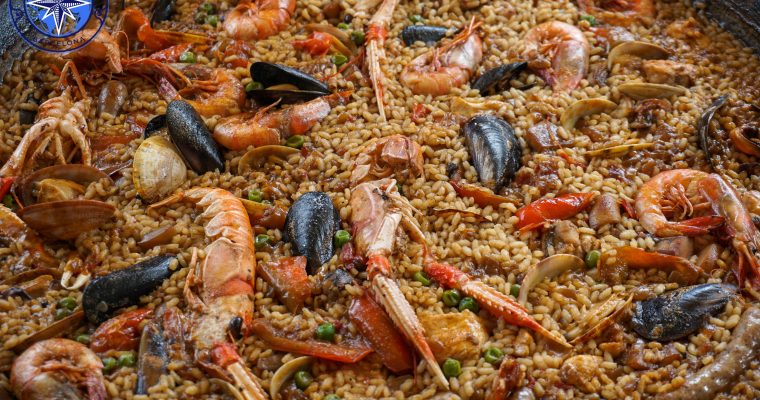
Catalan Easter Mona.

Catalan Easter Mona.

A beloved Easter tradition of chocolate, family and creativity The Mona de Pascua is one of Catalonia’s most cherished Easter traditions and one of the most recognisable symbols of Catalan pastry. It is traditionally celebrated on Easter Sunday and Easter Monday, with Easter Monday being 

Pintada a la Catalana – Traditional Catalan cuisine.

Pintada a la Catalana – Traditional Catalan cuisine.

A festive classic of traditional Catalan cuisine Pintada a la Catalana, also known as Catalan-style guinea fowl, is a traditional dish that perfectly reflects the character of Catalan festive cuisine. The guinea fowl, also known as Guinea hen or guinea fowl, is an African bird 

Fried Arengada: Catalan tradition, history and premium recipe.

Fried Arengada: Catalan tradition, history and premium recipe.

A humble Catalan classic with the soul of the Mediterranean

The Arengada is one of the preparations that best represents traditional Catalan cuisine. It is a salt-cured sardine that is subsequently pressed, and it can be eaten raw, grilled or fried.

Although its preparation is simple, this product forms part of Catalonia’s culinary heritage and perfectly reflects the essence of traditional Catalan rural cooking: simplicity, resourcefulness, preservation and respect for the products of the sea.

Its intense flavour and distinctive texture have made it a traditional ingredient in many rural dishes, particularly when combined with bread, roasted vegetables, potatoes or cabbage.

The Origin of the Name
An “herring” that is actually a sardine

The Catalan word arengada is historically related to the word herring.

However, in Catalonia, an arengada is traditionally made with sardines rather than herring, generally using larger specimens.

Historically, sardines that were not considered suitable for sale as fresh fish could be preserved through salting and pressing.

The technique provided an effective way of extending their shelf life while concentrating their flavour.

The traditional process involved cleaning freshly landed sardines, placing them in heavily salted water and then arranging them in cylindrical containers.

They were progressively pressed for approximately eight days, adding weight over time so that the fish released much of its natural oil.

This traditional process was known as “arengar”, giving rise to the name arengada.

An Ancient Mediterranean Preservation Technique
Salt, time and the wisdom of traditional cooking

Preserving fish with salt has an extremely long history throughout the Mediterranean.

Salted fish was already an important preserved food during the Roman period, allowing fish to be transported and stored for considerably longer periods.

Catalan coastal communities continued this tradition for generations.

Abundant sardine catches could be transformed into preserved products that were easier to store and transport inland.

Traditional fish shops and bacaladeries once displayed large wooden barrels filled with salted sardines, an image that has largely disappeared from modern urban life.

A Humble Food with a Social History

For generations, the arengada was regarded as a modest everyday food, particularly associated with farmers, labourers and rural households.

Its intense flavour meant that a small amount could accompany bread, vegetables or potatoes and transform an otherwise simple meal.

It was nutritious, inexpensive and easy to preserve.

There is also a curious historical anecdote associated with the Spanish Civil War (1936–1939).

According to local accounts, some rural households hung two salted sardines from a stick outside a window as a discreet signal indicating the nearby presence of Civil Guard patrols.

This story is traditionally associated with the popular nicknames “civils” or “guardias civiles” sometimes used for salted sardines.

Where the Tradition Survives

Although it is now far less common to see barrels of arengades in Barcelona, the tradition has survived in several inland Catalan regions.

It can still be encountered particularly in areas such as:

Pallars
La Noguera
Les Garrigues
Montsià

In traditional markets and specialist food shops, salted sardines remain part of the culinary memory of these territories.

Traditional Dishes with Arengada

The arengada has historically been an important ingredient in several rural Catalan dishes.

Clotxa
The iconic field workers’ meal

Especially associated with the Terres de l’Ebre, the clotxa consists of rustic bread opened and partially hollowed, then filled with salted sardine, tomato, onion, roasted garlic, salt and olive oil.

It was an ideal meal for agricultural workers because it was portable, filling and based on preserved ingredients.

Trinxat with Arengada
Mountain cuisine from the Cerdanya

A traditional combination of potatoes and cabbage, usually enriched with fried pancetta and garlic, and accompanied by an arengada.

The salty intensity of the fish contrasts beautifully with the soft, comforting texture of the vegetables.

Premium Fried Arengada Recipe
Serves 4

This version respects the traditional product while giving it a more refined presentation and a carefully balanced Mediterranean accompaniment.

Ingredients
4 desalted arengades
2 sweet onions
2 ripe tomatoes
3 garlic cloves
80 ml extra virgin olive oil
1 teaspoon sweet paprika
Freshly ground black pepper
Toasted rustic Catalan bread
Fresh chopped parsley
Optional: a small splash of wine vinegar or sherry vinegar
Step-by-Step Preparation
01 · Desalt the Arengades

If the sardines are particularly salty, place them in fresh water for approximately 20–30 minutes.

The exact time depends on how heavily salted they are.

Drain thoroughly and pat dry with kitchen paper.

The goal is not to remove all the flavour, but to bring the saltiness into balance.

02 · Prepare the Sofrito

Heat the extra virgin olive oil in a wide frying pan.

Add the onions, sliced into thin strips.

Cook slowly over medium-low heat until soft, sweet and lightly caramelised.

This gentle cooking creates the perfect contrast with the salty fish.

03 · Add the Tomato

Add the grated ripe tomatoes.

Cook over medium heat for approximately 8–10 minutes, until the tomato reduces into a thick, aromatic sauce.

Add the sweet paprika and a little freshly ground black pepper.

Stir gently.

04 · Fry the Arengades

Heat a separate frying pan.

Add the sliced garlic and cook gently until lightly golden.

Add the opened arengades.

Fry briefly on both sides until the skin becomes slightly crisp.

Do not overcook them.

The sardine should remain moist inside while developing a delicate crisp exterior.

05 · Assemble the Dish

Place a slice of toasted rustic bread on the serving plate.

Add a generous spoonful of the warm tomato and onion sofrito.

Place the fried arengada carefully on top.

Finish with fresh parsley, freshly ground black pepper and, if desired, a few drops of vinegar.

Gourmet Presentation

For a more contemporary presentation, accompany the arengada with:

Roasted peppers
Arbequina olives
Fresh seasonal greens
Extra virgin olive oil

The result combines the rustic character of the original dish with a more refined presentation.

The key is to preserve the personality of the salted sardine.

The product should remain the star.

The Secret to a Great Arengada

The most important step is controlling the salt.

The fish should be intense but not aggressively salty.

Desalting must therefore be adapted to the product rather than followed as a rigid rule.

The second key is the frying time.

The exterior should become lightly crisp while the interior remains moist.

Finally, the sweet onion and tomato sofrito provide exactly the contrast needed to balance the saltiness.

The ideal combination is:

salty fish + sweet sofrito + crisp bread + fruity olive oil + fresh acidity.

The Premium Magic Dreams Barcelona Touch
A humble preserved fish transformed into a refined Mediterranean tapa

At Magic Dreams Barcelona, we believe that premium gastronomy does not require abandoning traditional ingredients.

Instead, we select the best possible product and treat it with precision.

For an elevated version, we can serve the arengada individually over toasted artisan bread, accompanied by a small amount of tomato and caramelised onion, roasted pepper and Arbequina olives.

Finish with:

extra virgin olive oil + fresh parsley + a subtle touch of vinegar.

The result is elegant without losing its identity.

Traditional Catalan flavour, presented with the Premium Magic Dreams Barcelona touch.

Pairing

For the table, we recommend a fresh 0.0% alcohol-free Catalan-style white wine, served well chilled.

Its freshness and acidity balance the intense saltiness of the arengada and complement the sweet tomato and onion.

A 0.0% alcohol-free sparkling white wine is another excellent choice.

For a completely refreshing option, serve with very cold sparkling water, lemon and fresh Mediterranean herbs.

A Small Fish with a Great History

Arengada demonstrates how some of the simplest foods can carry extraordinary cultural stories.

From ancient Mediterranean salting techniques to rural Catalan kitchens, it represents a culinary philosophy based on preservation, practicality and respect for the ingredient.

Today it may be less common than it once was, but its flavour remains unmistakable.

A little salted sardine.

A piece of rustic bread.

Good olive oil.

And generations of Catalan culinary memory.

Copyright © 2016-2026 Magic Dreams Barcelona.
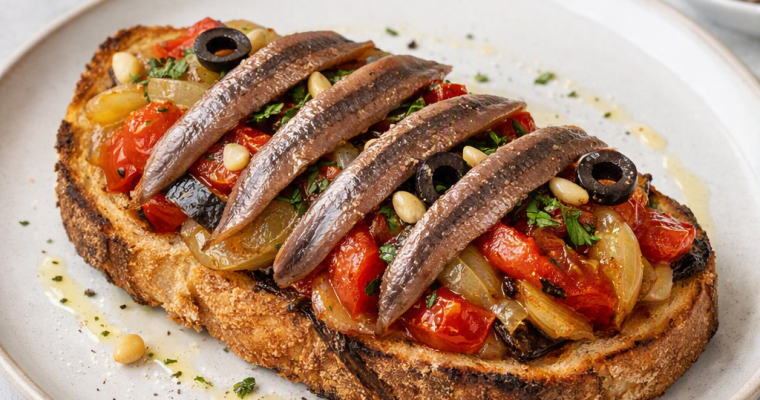
Pan de Coca with Anchovies from L’Escala.

Pan de Coca with Anchovies from L’Escala.

Pan de coca with anchovies from L’Escala is a simple yet deeply traditional expression of Catalan Mediterranean cuisine. It combines thin, crisp coca bread with extra-virgin olive oil, ripe tomato rubbed directly onto the bread and the intense flavour of traditionally cured anchovies from L’Escala. 

Catalan Olivada with Anchovies – Gourmet Mediterranean Spread.

Catalan Olivada with Anchovies – Gourmet Mediterranean Spread.

Catalan olivada is one of those simple preparations that perfectly expresses the character of Mediterranean cuisine. Traditionally made with black olives, this aromatic olive spread captures the flavour of the Catalan landscape in just a few ingredients: olive trees, extra virgin olive oil and Mediterranean 

Traditional Catalan Fuet.

Traditional Catalan Fuet.

Traditional Catalan fuet is one of the most recognizable cured sausages in Catalonia. Thin, aromatic and naturally cured, it is made primarily from pork, salt and selected seasonings. Its characteristic texture and flavour develop slowly during the curing process, making it a classic of Catalan charcuterie.

A Brief History of Catalan Fuet

Fuet belongs to the long-standing Catalan tradition of preserving pork through curing. Before modern refrigeration, curing meat was an essential way of extending its shelf life while developing new flavours and textures.

Fuet became particularly associated with areas such as Osona, La Garrotxa, Ripollès and Berguedà, where pork production and traditional charcuterie have played an important role in local gastronomy.

The town of Vic and the wider Osona region are especially well known for their charcuterie tradition and for the production of high-quality cured sausages.

Today, fuet remains a staple of Catalan cuisine and is commonly served as an appetizer, on charcuterie boards or simply sliced and enjoyed with good bread.

Ingredients

For Traditional Fuet

  • Pork meat, preferably a suitable lean cut
  • Pork fat
  • Salt
  • Black pepper
  • Selected traditional spices, according to the producer’s recipe
  • Natural thin sausage casings
  • Suitable curing starter culture, when required by the curing method

Important: Traditional dry-cured sausages require controlled temperature, humidity, sanitation and curing conditions. For home production, use a tested food-safety recipe and appropriate curing equipment rather than relying on visual appearance alone.

Traditional Production Process

1. Prepare the Meat

Select fresh, high-quality pork and trim it appropriately.

Grind the pork meat and pork fat using a suitable sausage-making grinder. Keep the ingredients properly chilled throughout the preparation.

2. Season the Mixture

Combine the ground pork with salt, black pepper and the selected seasonings.

Mix thoroughly until the ingredients are evenly distributed and the mixture develops the appropriate binding texture.

3. Fill the Casings

Stuff the mixture into thin natural casings, taking care to avoid excessive air pockets.

Form the sausages into the desired individual portions and secure the ends properly.

4. Begin the Curing Process

Hang the fuet in a controlled curing environment.

During curing, the sausage gradually loses moisture while developing its characteristic firm texture, aroma and concentrated flavour.

A natural white mould may develop on the exterior during a traditional curing process. However, mould identification should never be based solely on appearance; food-safety controls are essential.

5. Allow the Fuet to Mature

The curing time depends on the diameter of the sausage, formulation and environmental conditions.

Once properly cured, the fuet should have a firm but pleasant texture and a characteristic aromatic flavour.

Traditional Types of Fuet

Although traditional fuet is generally thin and mildly seasoned, several variations can be found.

Traditional Fuet

The classic version, with a delicate balance of pork, salt and seasoning.

Fuet de Vic

A style associated with Vic and the Osona region, an area particularly renowned for Catalan charcuterie.

Extra-Cured Fuet

Cured for longer, producing a firmer texture and a more concentrated flavour.

Seasoned Fuet

Some producers create variations using additional spices or seasonings, giving the sausage a distinctive aromatic profile.

How to Serve Fuet

The simplest way to enjoy traditional fuet is to slice it thinly and serve it at room temperature.

For a classic Catalan presentation, serve it with:

  • Rustic country bread
  • Catalan tomato bread
  • Extra-virgin olive oil
  • Catalan cheeses
  • Green or black olives
  • Almonds or other nuts
  • Cherry tomatoes

A traditional charcuterie board can combine several of these elements to create a simple but elegant Mediterranean appetizer.

Presentation

For an attractive presentation, arrange thin slices of fuet on a wooden board, slate or ceramic serving platter.

Place the slices slightly overlapping and accompany them with rustic bread, tomato bread, cheese and olives.

The presentation should remain relatively simple. Fuet is a traditional product whose quality is best appreciated without excessive decoration.

Storage

Store fuet according to the manufacturer’s instructions.

Once opened, protect the cut end appropriately and keep the product under the recommended storage conditions.

Avoid unnecessary exposure to heat, excessive humidity or direct sunlight.

If you notice unusual mould, unpleasant odours, abnormal colours or other signs of spoilage, do not consume the product.

Fuet in Catalan Gastronomy

Fuet represents an important part of Catalonia’s traditional charcuterie culture.

Its popularity comes from its simplicity: quality pork, careful seasoning and a slow curing process transform a few basic ingredients into a product with a distinctive character.

It is commonly enjoyed in homes, restaurants, markets and traditional food establishments throughout Catalonia.

Non-Alcoholic Pairings

Best 0.0% Pairing

A white 0.0% alcohol-free sparkling wine in a Brut style, served well chilled at 8–10°C, is an excellent pairing.

Its freshness and fine carbonation help cleanse the palate and provide a pleasant contrast to the savoury, cured and slightly fatty character of fuet.

Vichy Catalan

Vichy Catalan, served well chilled, is another excellent option. Its natural carbonation and mineral character refresh the palate without overpowering the delicate seasoning of the fuet.

Sparkling Water with Lemon

Very cold sparkling water with a thin slice of lemon provides a light and refreshing alternative.

The acidity of the lemon creates a clean contrast with the richness of the cured sausage.

Peach Juice

Peach juice, served chilled and preferably without excessive added sugar, provides a fruity and slightly sweet contrast to the savoury and seasoned character of traditional fuet.

Natural Pineapple Juice

Natural pineapple juice, served chilled and without added sugar, offers freshness and pleasant acidity.

Its tropical fruit character creates an interesting contrast with the richness and intensity of the cured sausage.

Espresso

After enjoying fuet as part of an appetizer or meal, a short and aromatic espresso is a simple and elegant choice.

Its natural bitterness provides a pleasant contrast to the richness of the charcuterie.

Final Note

Traditional Catalan fuet is much more than a cured sausage. It represents centuries of Catalan charcuterie tradition and the Mediterranean appreciation for simple, high-quality ingredients.

Catalan fuet: charcuterie tradition, quality ingredients and the authentic flavour of Catalonia in every slice.


Copyright © 2016-2026 Magic Dreams Barcelona.