Traditional Catalan Butifarra with White Beans.
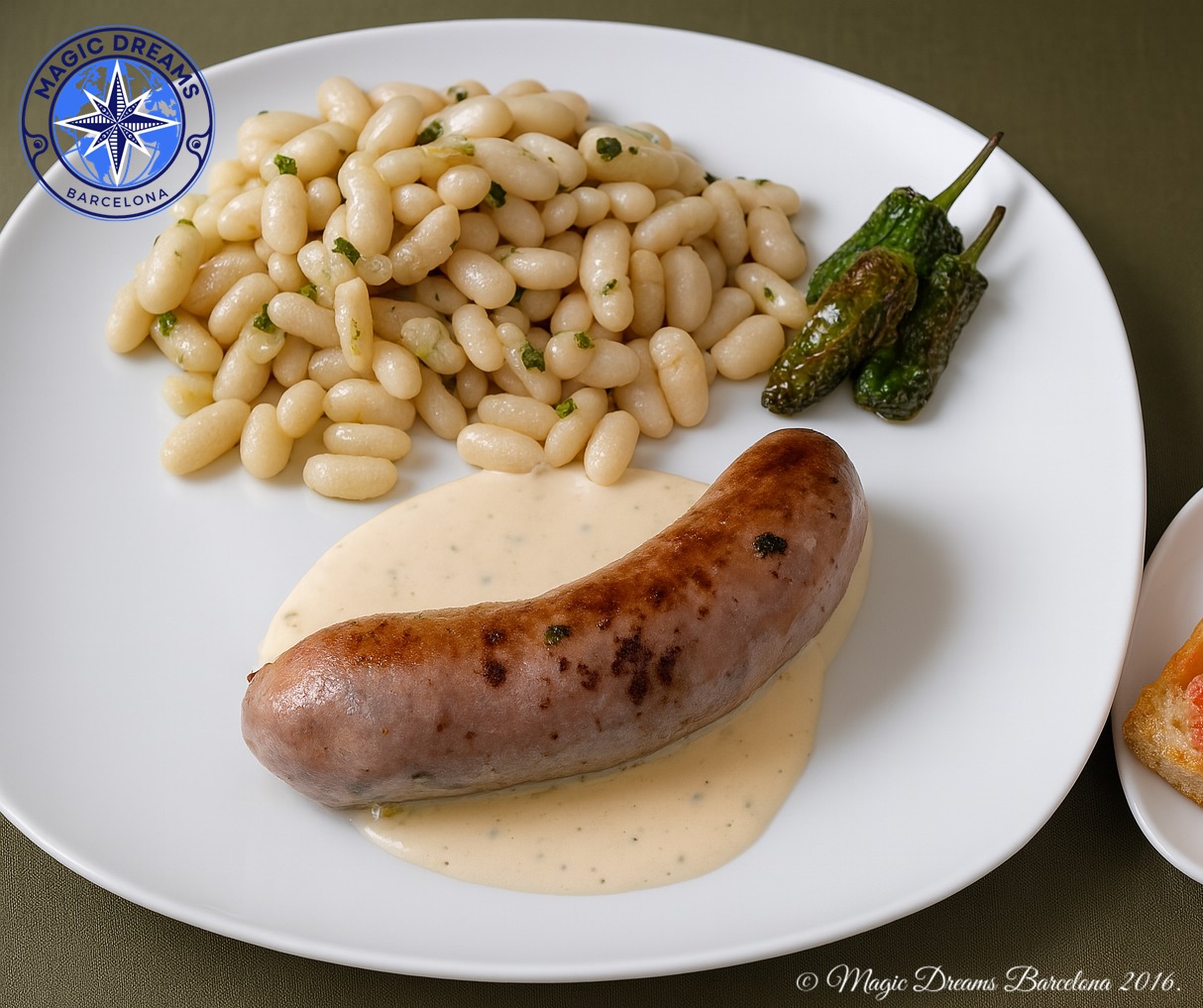
One of the great classics of traditional Catalan cuisine
Butifarra amb mongetes, also known as butifarra amb seques, is one of the simplest, most recognizable and most beloved dishes in Catalan gastronomy.
Its origins are deeply connected to Catalan rural cuisine, where nutritious, affordable and substantial dishes were created using the products available in the countryside.
The star of the dish is fresh butifarra, a traditional Catalan sausage made mainly with pork, salt and pepper. Unlike other varieties of butifarra, fresh butifarra is cooked directly, usually over a grill or on a griddle, until beautifully browned on the outside while remaining juicy inside.
The traditional accompaniment is mongetes, especially the highly regarded mongetes del ganxet, a Catalan white bean variety known for its characteristic shape, thin skin and exceptionally creamy texture.
The combination works through contrast.
The butifarra provides intensity, richness and savory depth, while the beans offer a soft and delicate texture that balances the dish.
In Catalan country houses, farmhouses and traditional restaurants, this recipe has become a true representation of authentic Catalan cooking.
And although its preparation is simple, the result depends on something fundamental:
good ingredients, proper heat and respect for tradition.
Ingredients
Serves 4
For the butifarra
- 4 fresh artisanal butifarra sausages.
- Extra virgin olive oil, if needed.
- Salt, to taste.
- Freshly ground black pepper, optional.
For the beans
- 400 g cooked mongetes del ganxet or good-quality white beans.
- 2 garlic cloves.
- 2 tablespoons fresh parsley, finely chopped.
- Extra virgin olive oil.
- Salt.
- Freshly ground black pepper.
To serve
- Rustic bread.
- Ripe tomatoes for traditional pa amb tomàquet.
- Extra virgin olive oil.
- Aioli, optional.
Preparation
01 · Prepare the butifarra
The star of the dish
Remove the butifarra from the refrigerator a few minutes before cooking so that it is not excessively cold when it reaches the grill or pan.
There is no need to prick the sausages repeatedly.
If you want to reduce the risk of the casing splitting during cooking, make one or two very small punctures with the tip of a knife or a needle.
Heat a grill, griddle or large frying pan.
Add a few drops of olive oil if necessary.
Place the butifarras on the hot surface and begin cooking over medium heat.
02 · Cook the butifarra
Golden outside, juicy inside
Cook the butifarras for approximately 10–12 minutes, turning them regularly to achieve an even golden-brown surface.
The outside should become deeply golden and lightly toasted, while the interior remains juicy and fully cooked.
If using a charcoal grill, cook them directly over the embers to give them an unmistakable smoky character.
Avoid excessively high heat, as it can burn the casing before the inside is properly cooked.
Once ready, remove the butifarras from the heat and allow them to rest for a few minutes.
Preparing the Beans
03 · Prepare the mongetes
The traditional accompaniment
If using canned beans, rinse them gently under cold water and drain them thoroughly.
If using home-cooked mongetes del ganxet, simply drain them carefully, taking care not to break them.
The beans should hold their shape while remaining creamy inside.
Heat a large frying pan with a generous drizzle of extra virgin olive oil.
04 · Cook the garlic
A Mediterranean aroma
Finely chop the garlic cloves.
Add them to the pan with the olive oil and cook gently over medium-low heat.
The garlic should release its aroma without becoming burnt.
As soon as it begins to turn lightly golden, add the beans.
05 · Sauté the beans
Creamy inside and lightly golden outside
Add the beans to the pan.
Sauté gently for several minutes, avoiding excessive stirring so that the beans remain intact.
Season with salt and freshly ground black pepper.
Add the fresh parsley at the very end.
The beans should be hot, lightly golden in places and still creamy inside.
Plating
06 · Serve the butifarra
Simplicity at its best
Place one freshly cooked butifarra on each plate.
Serve a generous portion of the garlic and parsley sautéed beans alongside it.
Finish with a few drops of extra virgin olive oil.
There is no need to overcomplicate the presentation.
The beauty of this recipe lies precisely in its simplicity.
Pa amb Tomàquet
The quintessential Catalan accompaniment
To complete the experience, prepare traditional pa amb tomàquet.
Cut a good rustic loaf in half.
Rub the cut surface with a ripe tomato until the bread is well coated.
Add a little salt and finish with a generous drizzle of extra virgin olive oil.
The bread should be juicy without becoming excessively wet.
Serve alongside the butifarra and beans.
Aioli
An optional accompaniment
Although not essential, aioli pairs particularly well with butifarra.
Serve a small amount in a separate bowl so that each guest can add it according to taste.
The aioli should be used sparingly so that it does not overpower the flavor of the sausage or the delicate beans.
Gourmet Suggestions
Magic Dreams Barcelona
To elevate this traditional recipe into a more refined gastronomic presentation:
- Use fresh artisanal butifarra made with high-quality pork.
- Whenever possible, choose mongetes del ganxet.
- Cook the butifarra slowly to achieve an even golden crust without drying the interior.
- Use a charcoal grill to introduce greater depth and smoky aromas.
- Sauté the beans with a good fruity extra virgin olive oil.
- Add the parsley at the end to preserve its freshness and aroma.
- Avoid overcooking the beans so they do not turn into a purée.
- Always serve the butifarra freshly cooked.
- Prepare the pa amb tomàquet with sourdough or rustic bread.
- For a contemporary interpretation, add a few drops of red wine reduction or a few very thin slices of truffle.
The secret to a great Butifarra amb Mongetes
The key is not to complicate something that is already simple.
A good butifarra mainly requires proper cooking.
It should be beautifully browned on the outside while remaining juicy inside.
The beans, meanwhile, should retain their shape while offering a creamy texture.
Garlic and parsley provide the necessary aromatic character, while olive oil brings everything together.
The perfect dish should offer a clear contrast:
golden, juicy butifarra, creamy beans, garlic, parsley and olive oil.
Gourmet Presentation
For a traditional presentation, use a rustic ceramic serving dish and arrange the butifarras alongside a generous portion of beans.
Add a few small leaves of fresh parsley and a drizzle of extra virgin olive oil.
For a more contemporary presentation, slice the butifarra diagonally and arrange the pieces over a bed of mongetes.
Add small touches of aioli around the plate and finish with fresh herbs.
The pa amb tomàquet can be served separately in small portions.
The presentation should always preserve the character of the recipe:
rustic, generous, Mediterranean and deeply Catalan.
Pairing
Butifarra with white beans pairs beautifully with a Catalan 0.0% alcohol-free red wine, particularly one with a fruity profile and good structure.
It can also be served with an artisanal 0.0% alcohol-free vermouth, especially when presented as part of an informal meal or tapas selection.
For a lighter option, very cold sparkling water works particularly well, helping to refresh the palate after the richness of the butifarra.
Serving
The butifarra should be served freshly cooked and hot.
The beans should ideally be prepared at almost the same time so that they do not cool down.
This dish works particularly well when served in the center of the table, accompanied by rustic bread and pa amb tomàquet to share.
The aioli can be served separately.
Catalan tradition invites us to enjoy this dish without too many formalities:
good ingredients, bread, olive oil and good company.
Make-Ahead Preparation
The beans can be cooked in advance and refrigerated until needed.
Before serving, gently reheat them in a frying pan with olive oil, garlic and parsley.
The butifarra, however, should be cooked immediately before serving.
This preserves its juiciness and characteristic golden exterior.
Pa amb tomàquet should also be prepared shortly before eating to maintain the right balance between the bread and tomato.
Storage
Cooked butifarra: refrigerate in an airtight container and preferably consume within 1–2 days.
Cooked beans: refrigerate and consume within approximately 2–3 days, also following the manufacturer’s instructions if using canned beans.
Sautéed beans: refrigerate and preferably consume within 1–2 days.
Pa amb tomàquet: should be prepared just before serving and is not recommended for storage once assembled, as the bread quickly loses its texture.
For the best result, prepare the dish to order and serve immediately.
The Essence of Catalonia on a Plate
Butifarra amb Mongetes proves that Catalan cuisine does not need complicated techniques to be extraordinary.
Two main ingredients, a good pan or grill, olive oil, garlic, parsley and good bread are enough to create a dish full of identity.
It is a recipe born from popular cooking that has remained alive from one generation to the next.
Butifarra, mongetes, pa amb tomàquet and good olive oil: one of the most authentic combinations in Catalan cuisine.
Copyright © 2016–2026 Magic Dreams Barcelona.