Route guide for visitors throughout Catalonia – Barcelona – Costa Brava – Catalan Pyrenees – Personalized experiences – Customized tour guide services – A small tribute to the wonderful city and land that saw us born – Transforming experiences into unforgettable memories - Magic Dreams Collection: exclusive universes inspired by Salvador Dalí and Gaudí. Niche perfumes, jewelry, lithographs, and collectible items celebrating the Mediterranean spirit.
Located on Barcelona’s most iconic beach, the Mirador Vela is an exceptional viewpoint offering vistas that merge the majestic Mediterranean Sea with the city’s skyline. This viewpoint and its accompanying pedestrian staircases were designed by the studio External Reference Architects, under the direction of architect …
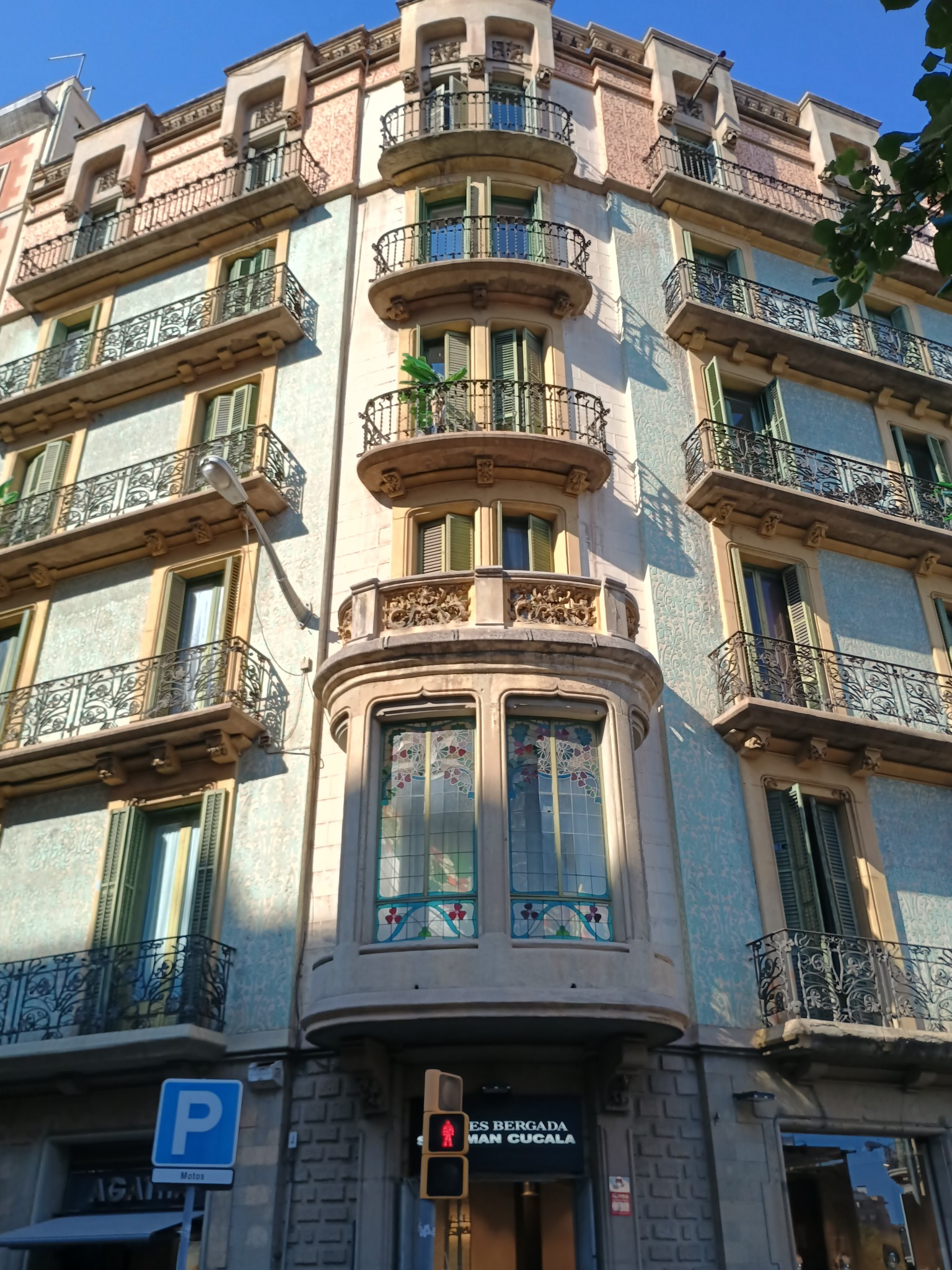
Casa Verdú – Modernism in Barcelona’s Eixample District We are standing in front of the building known as Casa Verdú, located at 103 Rambla de Cataluña, at the intersection with Provenza Street, in the emblematic Eixample district of Barcelona. This property is a remarkable example …
The Modernist Architecture in Barcelona section is dedicated to the city’s most remarkable and visually striking buildings. Here you will find a selection of emblematic constructions, to other modernist works that define the unique architectural character of Barcelona. Explore must-see locations for architecture enthusiasts, as well as surprising corners that reflect the creativity and urban legacy of the city.
Introduction In Barcelona, beyond the major modernist icons, there are lesser-known buildings with significant architectural value. One of these is the Ramon Servent House, a unique work located in the Gràcia neighborhood that stands out for its modernist composition and a singular element: the four …
The Güell Pavilions: Elegance, Symbolism, and the Beginnings of Gaudí’s Universe In the upper part of Barcelona, in the historic surroundings of Pedralbes, stands one of Antoni Gaudí’s most fascinating architectural ensembles: the Güell Pavilions. Less internationally renowned than the Sagrada Família, Park Güell, or …
A masterpiece of engineering that transformed Barcelona’s skyline
The Torre Sant Sebastià is one of the most distinctive metal structures along Barcelona’s maritime landscape. Located in the Barceloneta district, next to Moll Nou, this impressive steel construction rises approximately 78.4 metres above the harbour, making it one of the most prominent landmarks along Barcelona’s waterfront.
Its silhouette, formed by a complex metal lattice structure and diagonal bracing, evokes the aesthetic of the great European engineering works of the early twentieth century. However, its significance extends far beyond its architectural presence: the tower serves as the terminal station of the historic Transbordador Aeri del Port, the suspended cable transport system that crosses Barcelona Harbour and offers extraordinary views of the city.
Conceived in connection with the 1929 Barcelona International Exposition and inaugurated in 1931, the tower represents a decisive moment in the city’s technological and urban development.
Over almost a century, it has witnessed the transformation of the harbour, the conflicts that shaped Spanish history, and Barcelona’s evolution from a predominantly industrial and maritime city into one of the Mediterranean’s leading cultural capitals.
Torre Sant Sebastià is, at once, an engineering feat, a monument to industrial heritage, and a privileged window onto Barcelona’s maritime history.
The Origins of Torre Sant Sebastià
The dream of connecting the harbour with Montjuïc Mountain
The history of the tower is closely linked to one of Barcelona’s major modernisation projects during the first decades of the twentieth century.
In 1929, the city hosted the International Exposition, an event intended to project an image of modernity, progress, and innovation. The main exhibition grounds extended across Montjuïc Mountain, while maritime and port-related activities occupied another important area of the city.
The idea emerged of establishing an aerial connection between these two sectors, taking advantage of the possibilities offered by cable transport technology.
The project was conceived in 1926 by engineer Carles Buïgas, also known for his contribution to the development of the celebrated illuminated fountains of Montjuïc. Ramón Calzada and Josep Maria Roda also collaborated on the initiative, playing important roles in its development.
The proposal aimed to create a direct link between the waterfront and the mountain, avoiding the need to travel overland around the port facilities while offering an unprecedented panoramic experience.
However, the project encountered significant financial difficulties. The necessary private investment was not secured until 1928, too late for construction to be completed before the opening of the International Exposition.
Buïgas eventually withdrew from the initiative, and Josep Maria Roda took responsibility for continuing the project.
Construction finally progressed between 1929 and 1931, producing an infrastructure that would permanently transform Barcelona’s harbour skyline.
A Steel Structure Facing the Mediterranean
The elegance of industrial engineering
Torre Sant Sebastià stands out for its metal lattice structure, a construction method characteristic of major engineering projects from the late nineteenth and early twentieth centuries.
Its framework consists of steel sections that distribute loads and provide stability through a combination of vertical, horizontal, and diagonal elements.
Unlike traditional buildings, whose mass is supported by stone or brick walls, the tower visually expresses its own structural system.
The eye can follow its framework, understand the arrangement of its components, and appreciate how each element contributes to the stability of the whole.
The structure has a square plan and rests on concrete foundations designed to ensure stability in terrain affected by its proximity to the sea and the former coastal sandbanks.
The characteristics of the subsoil required careful foundation planning, with considerable depth needed to reach suitable supporting ground.
At the top, a larger structure houses the cable car station and the spaces associated with the tower’s installations.
This arrangement creates a particularly interesting contrast: a slender, open base supports a more compact upper section, where the cable transport system’s activity is concentrated.
The tower reaches approximately 78.4 metres in height, allowing it to dominate the surrounding harbour area and stand out above the urban fabric of Barceloneta.
Its design reflects an era when industrial engineering was beginning to acquire aesthetic value in its own right.
Torre Sant Sebastià and the Transbordador Aeri del Port
A suspended journey between the sea and the mountain
The tower was not conceived as an isolated monument, but as part of an aerial transport system that remains one of Barcelona’s most distinctive examples of technological heritage.
The Transbordador Aeri del Port, also known as the Port Cable Car, connects the Barceloneta area with Montjuïc Mountain by crossing the harbour.
The system has three main points:
Torre Sant Sebastià, located in Barceloneta, next to Moll Nou.
Torre Jaume I, built at Moll de Barcelona, near the present-day World Trade Center.
Miramar Station, located on the slopes of Montjuïc.
The complete route covers approximately 1,292 metres, offering views of the harbour from a perspective that is difficult to experience from the ground.
The cabins travel suspended from the cables, providing changing views of the docks, ships, beaches, and Barcelona’s urban skyline.
The complete journey typically takes around ten minutes, although the duration may vary depending on operating conditions.
Torre Sant Sebastià forms one end of this system and, through its location, establishes a direct connection between the urban fabric of Barceloneta and the maritime environment.
From this vantage point, the city can be perceived differently: the harbour becomes more than a transport and commercial infrastructure, revealing itself as a vast and visually compelling landscape.
Torre Jaume I
The great suspended pillar at the heart of the harbour
To understand the full scale of the Transbordador Aeri del Port, it is necessary to examine its intermediate structure: Torre Jaume I.
Located at Moll de Barcelona, this metal tower reaches approximately 107 metres in height and forms the central element of the route between Barceloneta and Montjuïc.
Its presence serves a strictly technical purpose. The distance between the two endpoints made an intermediate structure necessary to support and organise the cable system.
Torre Jaume I shares the architectural language of early twentieth-century metal engineering with Torre Sant Sebastià, although its silhouette is more slender and its upper section has a different composition.
Its height makes it one of the most prominent features of the harbour landscape.
For decades, the two towers have formed inseparable visual landmarks on Barcelona’s skyline, particularly when viewed from the beaches, the seafront promenade, and the harbour’s open spaces.
The relationship between these structures demonstrates that the project involved much more than building a tall tower. It required the design of an integrated system in which architecture, engineering, and transport had to work together.
The Inauguration of 1931
A new way to admire Barcelona
The cable car was inaugurated on 11 September 1931, two years after the International Exposition for which it had originally been conceived.
Its opening marked the culmination of a project that had required substantial investment, complex technical planning, and several years of work.
The journey between Torre Sant Sebastià and Miramar Station offered an innovative experience for its time. Passengers could travel above the harbour and admire a landscape that had previously been seen mainly from the docks, vessels, or elevated areas of Montjuïc.
In its early years, the system operated in two separate sections, with Torre Jaume I serving as the intermediate point.
The cabins operating along each section allowed passengers to travel between the waterfront and the mountain, although a transfer at the central station was necessary.
The installation incorporated engineering solutions that were advanced for its time and demonstrated the potential of aerial cable transport in an urban environment.
The inauguration in 1931 thus established one of the most original infrastructures of modern Barcelona.
The Spanish Civil War
When the towers became witnesses to conflict
The history of Torre Sant Sebastià is also marked by one of the most dramatic episodes of twentieth-century Spanish history.
During the Spanish Civil War, the Transbordador Aeri del Port ceased operating. The cables were removed, and the installations were taken out of service.
The strategic position of the towers, overlooking the harbour and providing extensive views of the maritime surroundings, meant that they acquired a role associated with Barcelona’s defence.
The civilian infrastructure thus became connected with the military needs of a harbour that was of fundamental importance to the city.
Bombing and the circumstances of the conflict prevented the service from being restored once the war had ended.
For years, the towers stood as isolated structures in the harbour landscape, reminders of a technological project interrupted by history.
Nevertheless, their presence retained considerable symbolic value. Although the cable car no longer operated, its structures remained part of Barcelona’s skyline.
The Return of the Cable Car
From abandoned infrastructure to a restored landmark
Following the end of the Spanish Civil War, restoring the system was not an immediate priority.
The installations remained closed for years, and uncertainty surrounded their future. Deterioration, repair costs, and the difficulties involved in resuming operations even led to the possibility of dismantling the towers.
The situation began to change in the late 1950s, when Teleféricos de Barcelona, S. A., took over the installations.
Finally, on 20 May 1963, the cable car resumed operations, restoring its role as an aerial connection between Barceloneta and Montjuïc.
The reopening brought new life to an infrastructure that had remained inactive for more than two decades.
The panoramic journey once again became part of Barcelona’s tourist offering, while the towers returned to their original function.
However, the passage of time once again raised questions concerning conservation and maintenance.
In 1995, the service was suspended once more to allow the installations to undergo rehabilitation.
The Restoration of the Towers
The restoration of the Transbordador Aeri del Port was an important undertaking in the preservation of Barcelona’s industrial heritage.
The Sant Sebastià and Jaume I towers, together with the rest of the installations, underwent restoration work intended to recover their structural condition and original appearance.
The interventions took place during the second half of the 1990s and around the turn of the century, as part of a process that restored prominence to these historic structures.
Restoring a metal structure exposed to the marine environment for decades requires particular care.
Humidity, salinity, and atmospheric conditions accelerate steel corrosion, making regular inspections of joints, structural sections, protective coatings, and mechanically stressed components essential.
For structures of this kind, preserving the exterior appearance is not enough. Their stability and the safety of their installations must also be ensured.
The restoration of the towers helped preserve a complex that forms part of Barcelona’s historic and artistic heritage.
It also serves as a reminder that heritage is not limited to churches, palaces, or residential buildings. Industrial and transport infrastructures are equally important elements of a city’s cultural history.
A Station Elevated Above the Mediterranean
Architecture in the service of a panoramic experience
One of Torre Sant Sebastià’s most distinctive features is its relationship with the surrounding landscape.
From its position beside the sea, the tower creates a visual dialogue between the city, the beaches, and the harbour facilities.
Its height makes it possible to understand the layout of Barcelona’s coastline and observe the relationship between the urban fabric of Barceloneta, the docks, and the harbour’s opening towards the Mediterranean.
The experience changes depending on the viewpoint.
From the ground, the tower appears as a monumental structure rising above its urban surroundings.
From the sea, its silhouette forms part of the collection of infrastructures that define Barcelona’s waterfront.
From the cable car cabins, the landscape gradually unfolds between different parts of Barcelona, from the activity of the harbour to the green spaces of Montjuïc.
This variety of perspectives makes the tower particularly interesting for understanding the relationship between architecture, engineering, and landscape.
Barceloneta and the Birth of Maritime Barcelona
A neighbourhood between seafaring traditions and urban transformation
Torre Sant Sebastià stands in an area whose history is deeply connected with the sea.
Barceloneta was established in the eighteenth century as a planned neighbourhood associated with port activity, fishing, and Barcelona’s expansion towards the coastline.
For generations, its streets were linked to maritime life, port-related occupations, and a popular culture closely connected with the Mediterranean.
Over time, the neighbourhood underwent significant changes. Fishing activities coexisted with the expansion of port infrastructure, the emergence of new industrial facilities, and the development of a city increasingly open to tourism.
Torre Sant Sebastià forms part of this evolution.
Its construction introduced a new scale to Barceloneta’s landscape and established a physical and visual connection with Montjuïc.
Today, its presence helps explain how Barcelona has historically used its coastline not only as a place of economic activity, but also as a space for communication, innovation, and urban representation.
The tower is therefore a testament to the evolution of a city that has always maintained an essential relationship with the sea.
The Tower and Barcelona’s Industrial Heritage
When engineering becomes collective memory
Torre Sant Sebastià belongs to a form of heritage that is less immediately recognisable than Barcelona’s Modernista architecture, yet equally important for understanding the city’s identity.
Its value lies in the combination of several elements.
First, it represents a period of great confidence in technology and in engineering’s ability to transform urban space.
Second, it preserves the memory of a project associated with the 1929 International Exposition, an event that helped redefine Barcelona’s modern image.
Third, it provides tangible evidence of the conflicts and transformations that affected the city during the twentieth century.
Finally, its continued existence demonstrates how infrastructure originally designed for a functional purpose can gradually acquire historical, scenic, and cultural significance.
The cable car towers are more than supports for cables. They are steel documents preserving the memory of an era and explaining how technical innovation can also become heritage.
The Landscape from Above
A different view of the harbour and the city
The Transbordador Aeri del Port offers a privileged perspective on some of Barcelona’s most significant settings.
During the journey, passengers can take in the docks, vessels, beaches, and waterfront, while the outline of Montjuïc becomes increasingly prominent as the cabin approaches the mountain.
In the opposite direction, the urban skyline unfolds above the Mediterranean.
The experience offers a better understanding of the harbour’s scale and the relationship between maritime infrastructure and the city’s growth.
It also provides an opportunity to observe Barcelona from a viewpoint different from its streets and squares.
The city then appears as an interconnected composition of neighbourhoods, open spaces, port installations, and architectural landmarks.
Torre Sant Sebastià serves as the starting or finishing point of this journey, but its significance extends beyond the ride itself.
It is an invitation to discover the city from another perspective.
Torre Sant Sebastià Today
Between heritage conservation and maritime identity
In contemporary Barcelona, Torre Sant Sebastià remains one of the most prominent features of the harbour landscape.
Its silhouette recalls the period when the city embraced major engineering projects to improve its connections and project an image of modernity.
At the same time, it forms part of an environment that has undergone profound transformation, particularly since the redevelopment of the waterfront and the restoration of spaces associated with the historic harbour.
The tower retains its significance as an architectural, historical, and tourist landmark, as well as being a fundamental component of the Transbordador Aeri del Port system.
Preserving this complex presents an ongoing challenge: protecting historic infrastructure while meeting the technical and safety requirements of a transport installation.
For this reason, before planning a journey on the cable car, visitors should consult official information to confirm whether it is operating, along with current schedules, access conditions, and the availability of each section.
Regardless of its operational status, Torre Sant Sebastià retains one essential quality: it continues to form part of Barcelona’s visual memory.
What to Look for at Torre Sant Sebastià
A visit to discover the details of engineering
Although the tower can be appreciated particularly well from the outside, closer observation reveals numerous architectural and historical details.
During a visit to Barceloneta and the surrounding harbour area, it is worth taking time to examine the following features:
The metal structure: its steel sections and diagonal elements illustrate how loads are distributed and the stability of the structure is achieved.
The steel bracing: the diagonal components reinforce the structure and form part of its characteristic geometry.
The foundations: their relationship with the ground highlights the challenges of constructing a tall structure near the former coastal sandbanks.
The upper section: this houses the cable car station and concentrates the functional elements of the transport system.
The relationship with Torre Jaume I: observing both structures helps explain the organisation of the cable car and its route across the harbour.
The maritime landscape: the tower’s location offers a privileged perspective on the harbour surroundings and Barcelona’s historic relationship with the Mediterranean.
Taking the time to observe these elements transforms a simple stop beside the harbour into an opportunity to discover architectural and engineering heritage.
How to Reach Torre Sant Sebastià
In the heart of maritime Barcelona
Torre Sant Sebastià is located next to Moll Nou, in the Barceloneta area.
Reference address: Moll Nou, Barcelona.
Its location makes it easy to combine a visit with a walk through Barceloneta, along the seafront promenade, or around the Port Vell area.
On Foot
From the Barceloneta seafront promenade, visitors can approach the tower by following the available pedestrian routes and signs towards the harbour.
Access conditions may vary depending on the route and which port areas are open to the public.
By Metro
Barceloneta station, on Metro line L4, is one of the nearest public transport options for reaching the area.
From there, the journey continues on foot.
By Bus
Several bus routes connect Barceloneta with other parts of Barcelona. It is advisable to check current stops and routes before setting out.
Combining the Visit with Montjuïc
The tower can be included in a day devoted to discovering Barcelona’s maritime heritage and the historic sites of Montjuïc.
If the cable car is operating, the aerial journey offers a particularly attractive connection between these two areas.
An Experience That Goes Beyond a Tower
History, architecture, and emotion beside the Mediterranean
Discovering Torre Sant Sebastià means exploring a part of Barcelona that often goes unnoticed alongside the popularity of the city’s great Modernista monuments.
Here, beauty does not come from carved stone or ornamental façades, but from the precision of a metal structure, the boldness of an engineering solution, and the relationship between a human creation and the maritime landscape.
Would You Like to Discover Maritime Barcelona with Us?
Torre Sant Sebastià from a different perspective
Barcelona’s history does not end with its great monuments. It can also be found in its historic paths, gardens, seafaring neighbourhoods, industrial infrastructure, and the landscapes that have accompanied the city’s evolution.
At Magic Dreams Barcelona, we see every visit as an opportunity to discover the less obvious connections that allow us to understand a place in all its depth.
Our native guide, specialising in architecture, botany, and ornithology, accompanies each experience with an informed, approachable, and sensitive perspective on cultural and natural heritage.
We organise day trips, weekend getaways, multi-day stays, and personalised tours of Barcelona, the Catalan Pyrenees, and the Costa Brava.
We can combine maritime heritage with walks through Barceloneta, explorations of Port Vell, visits to Montjuïc, and experiences dedicated to architecture, nature, and the history of the city.
We also design gastronomic itineraries, picnics in exceptional settings, private cultural experiences, and activities tailored to each visitor’s interests.
Every itinerary is carefully planned around your preferences, desired pace, and the kind of experience you are looking for.
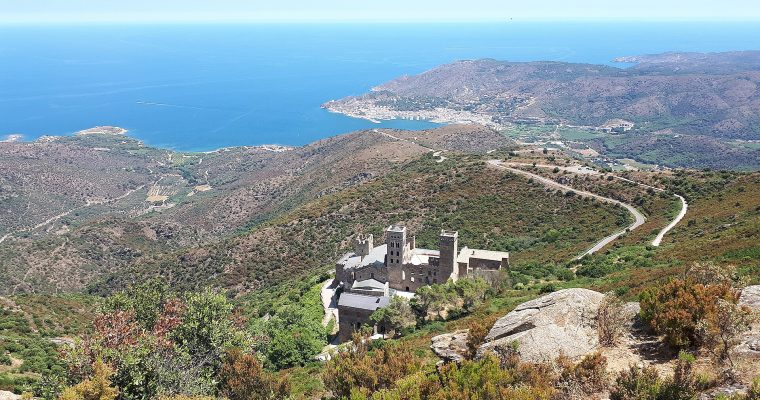
Perched on the eastern slopes of the Serra de Rodes, overlooking the Mediterranean and the spectacular landscape of Cap de Creus, Sant Pere de Rodes is one of the most extraordinary Romanesque monuments in Catalonia. Its isolated location, monumental architecture, centuries of history and fascinating …
Hidden among the landscapes of the Conca de Barberà, in the province of Tarragona, stands one of Catalonia’s most extraordinary historical treasures: the Royal Monastery of Santa Maria de Poblet. This impressive Cistercian monastery is much more than a beautiful medieval building. It is a …
One of Europe’s Great Fortresses in the Heart of the Empordà
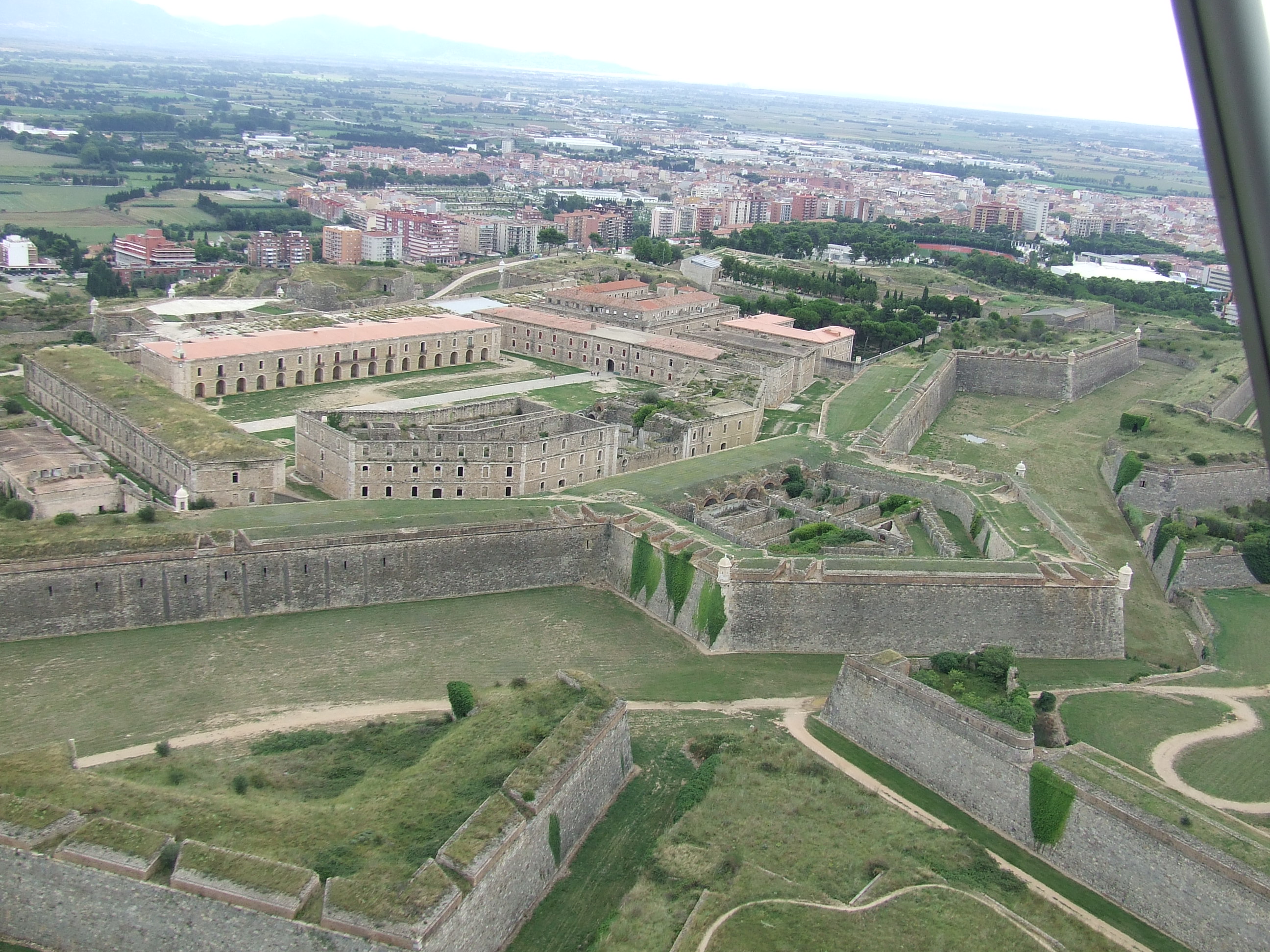
Just a few minutes from the centre of Figueres, on a hill overlooking much of the Alt Empordà, stands Sant Ferran Castle, one of the most extraordinary military constructions in Catalonia.
This is not a medieval castle. It is a huge 18th-century bastioned fortress, designed as a genuine military city and built to protect the border with France.
Its dimensions are impressive from the very first moment: approximately 550,000 m² of surface area, an outer perimeter of around 3,120 metres, large bastions, moats, stables, warehouses, pavilions, underground galleries and four large cisterns with a combined capacity of approximately nine million litres of water.
Today, in addition to preserving its extraordinary historical and architectural value, the castle offers several ways to visit it, from independent tours to guided visits through the exterior and underground areas.
WHERE IS SANT FERRAN CASTLE?
Sant Ferran Castle is located in Figueres, in the Alt Empordà region of the province of Girona.
From Barcelona, it is approximately 140 kilometres by road, a journey that normally takes around one and a half hours, depending on traffic.
Its location was chosen for strategic reasons. Figueres is close to the French border and has historically been an important communication route between Catalonia and France.
The fortress is also very close to the centre of Figueres and the Dalí Theatre-Museum, making it possible to combine both attractions during the same day.
HISTORY OF THE FORTRESS
Following the Treaty of the Pyrenees in 1659, Spain lost Roussillon and part of Cerdanya. The new border situation made it necessary to strengthen the defences of north-eastern Catalonia.
Figueres was considered a strategic position, and eventually the decision was made to build a major fortress there.
Construction began in 1753, under the direction of military engineer Juan Martín Zermeño, during the reign of Ferdinand VI, from whom the fortress originally took its name.
Construction was long and complex. The fortress was inaugurated in 1766, although work and modifications continued for decades.
The result was a fortress designed to withstand a prolonged siege and keep a large garrison supplied and operational even under extreme circumstances.
AN EXCEPTIONAL BASTIONED FORTRESS
Sant Ferran Castle is one of the most monumental examples of 18th-century military architecture.
Its layout is approximately pentagonal and organised around an east-west axis.
The complex consists of two large enclosures covering approximately 550,000 m².
The inner enclosure, measuring around 325,000 m², consists of six large bastions connected by curtain walls.
These include:
Sant Narcís.
Sant Jaume.
Sant Damià.
Sant Felip.
Santa Bàrbara.
Santa Tecla.
The defensive system is completed by hornworks, ravelins, counterguards, covered ways, galleries and a huge moat.
THE PARADE GROUND
At the centre of the fortress lies the enormous Parade Ground, approximately 149 metres long and 80 metres wide.
Around it, different pavilions were built to accommodate authorities, officers and their families.
The fortress was designed to function as a genuine military settlement, with the spaces required to house, feed and supply a large garrison.
The Generalitat states that the complex contains nine pavilions intended to accommodate authorities and their families.
A church was also built, although it was never completed.
But one of the greatest surprises lies beneath the parade ground itself.
THE CATHEDRAL OF WATER
Beneath the Parade Ground are four large cisterns, with a total capacity of approximately nine million litres of water.
This hydraulic system made it possible to guarantee the fortress’s water supply during a possible siege.
Today, one of the most unusual experiences available to visitors is the so-called Cathedral of Water, which allows visitors to enter the cisterns in an inflatable boat.
The tour lasts approximately half an hour.
It is one of the experiences we particularly recommend if you want to understand just how thoroughly the fortress was designed as a self-sufficient military infrastructure.
THE STABLES
The stables are attached to the fortress curtain walls and had capacity for approximately 500 horses.
Their function went far beyond simply providing accommodation for the animals.
They formed part of an enormous logistical infrastructure designed to maintain the garrison and its animals for long periods.
Nearby were warehouses capable of storing provisions for 10,000 people for one year.
These dimensions help explain why Sant Ferran can be regarded as a genuine fortified military city.
THE MOAT AND OUTER DEFENCES
One of the most impressive features during a visit is the enormous moat surrounding the fortress.
The outer enclosure has an approximate perimeter of 3,120 metres and consists of various defensive elements, including hornworks, ravelins and counterguards.
The moat covers approximately 10 hectares and can currently be visited, together with different underground galleries.
Walking through this area provides a much better understanding of how the defensive system worked and allows visitors to appreciate the true scale of the walls from outside.
DO MILITARY PERSONNEL STILL LIVE AROUND THE CASTLE?
The relationship between Sant Ferran and the military sphere still exists today.
This is an important point to clarify because the castle remains a property connected to the Ministry of Defence even though it is open to tourism.
The Ministry of Defence retains ownership of the entire property. In 2003, an agreement was established whereby the Ministry transferred the use of certain facilities to the Consortium for their conservation, restoration, revitalisation and cultural promotion. The same agreement expressly preserves the powers of the Ministry of Defence and certain military uses.
The Sant Ferran Castle Consortium consists of three institutions:
Ministry of Defence.
Government of Catalonia.
Figueres City Council.
The Consortium is responsible for promoting and managing the conservation and cultural promotion of the fortress, but ownership remains with the Ministry of Defence.
The statutes subsequently amended maintain this assignment to the General State Administration, specifically the Ministry of Defence.
As a result, there is currently a rather unusual situation: a large part of the castle is open to the public and operates as a cultural and tourist attraction, while restricted areas and certain uses connected to the military sphere remain.
Around the road leading up to the castle there are also historic homes associated with military personnel.
This helps explain why Sant Ferran still has a much more direct relationship with military life than might be apparent to visitors who only experience the tourist route.
THE CANTEEN AND EVERYDAY LIFE OF THE SOLDIERS
The daily life of the military personnel has also left its mark on the fortress.
One of the former powder magazines was transformed during the 20th century into a canteen for soldiers, known as the Soldier’s Home.
These spaces played an important role in garrison life: they were places for rest, socialising and eating.
Today, café and restaurant services may vary depending on the season and the programme of activities, so if you wish to eat during your visit, it is advisable to check the available services beforehand.
For a special gastronomic experience, Figueres also offers excellent options just a few minutes from the castle.
IS THERE A MUSEUM INSIDE THE CASTLE?
The castle itself is the main object of the visit.
It does not function as a conventional museum based exclusively on a permanent collection. Here, the monument itself is the main exhibit.
The experience consists of exploring its courtyards, bastions, defensive structures, moats, galleries and hydraulic systems while understanding how a fortress of this scale operated.
There are currently two main ways to visit: independent tours of the inner enclosure and complementary guided tours of the exterior and underground areas.
SALVADOR DALÍ AND SANT FERRAN
There is a particularly interesting connection between the fortress and one of Figueres’ most famous figures: Salvador Dalí.
The celebrated artist carried out his military service at Sant Ferran Castle from 1927, remaining there for approximately nine months.
This was a youthful period before his international success and coincided with a time of intense artistic experimentation.
During these years he produced works such as Cenicitas, at a moment when his artistic language was beginning to develop some of the elements that would later characterise his surrealist universe.
For visitors interested in Dalí’s life and career, Sant Ferran therefore offers a different perspective on the artist’s youth.
THE CASTLE AS A PRISON
The fortress also has a long penitentiary history.
At the beginning of the 20th century, certain areas were used for prison purposes.
In 1904, King Alfonso XIII visited the castle, and the fortress subsequently incorporated penitentiary functions.
Its use as a civilian prison continued until 1933.
During the 20th century, the complex once again assumed various military functions and also served as a military prison.
This succession of uses explains the historical complexity of the monument and the existence of spaces that have served very different purposes over the centuries.
SANT FERRAN DURING THE SPANISH CIVIL WAR
The fortress also played an important role during the Spanish Civil War.
On 1 February 1939, Sant Ferran hosted the last meeting in Spain of the Cortes of the Spanish Republic.
During the final days of the war, the fortress became connected with the Republican retreat, and its strategic position once again became extremely important.
After the conflict, the complex continued to be associated with various military functions.
ANTONIO TEJERO AND THE MILITARY PRISON
The contemporary history of the castle is also connected with Antonio Tejero, a lieutenant colonel in the Spanish Civil Guard and one of the main figures responsible for the attempted coup d’état of 23 February 1981.
Following his conviction, Tejero was transferred in 1983 to the military prison at Sant Ferran Castle, where he served part of his sentence.
In 1991 he was transferred to Alcalá de Henares, where he continued serving his sentence.
His time at Sant Ferran forms part of the fortress’s contemporary history and its final period as a military penitentiary.
NATURE, BIRDS AND BUTTERFLIES
Despite its monumental character, Sant Ferran has a very extensive outdoor area where nature is also present.
The moats, slopes, green areas and open spaces provide shelter for different species of birds and small animals.
The Alt Empordà region also has considerable bird diversity, which is particularly interesting during migration periods.
The vegetation is mainly characteristic of the Mediterranean climate of the region, with species adapted to dry and sunny conditions.
During the warmer months, visitors may also spot different species of butterflies and other pollinating insects.
If you enjoy photography, the early morning and late afternoon offer particularly attractive light on the walls and surrounding landscape.
WHAT CAN YOU DO AT SANT FERRAN TODAY?
The fortress currently maintains considerable cultural and tourist activity.
Among the main possibilities are:
Independent visits.
Audio guides.
Guided tours.
Moat tours.
Cathedral of Water visits.
Access to underground galleries.
Tours of the countermines.
Educational activities.
Family activities.
Themed visits.
Cultural activities.
Gastronomic activities.
Astronomical observation activities.
Special programmes on certain dates.
Space rental for activities and events.
The independent visit allows you to explore the inner enclosure at your own pace, while complementary tours provide access to areas that require specialised guidance.
VISITING HOURS
Opening hours vary depending on the time of year.
July, August and Easter
Monday to Sunday, 10:00 am to 8:00 pm.
April, May, June, September and October
Tuesday to Sunday, 10:00 am to 6:00 pm.
Open on public-holiday Mondays.
November to March
Tuesday to Sunday, 10:00 am to 4:00 pm.
Open on public-holiday Mondays.
Last admission is one hour before closing.
The site is closed on 25 and 26 December and from 1 to 6 January.
TICKETS AND VISIT OPTIONS
Prices depend on the type of visit you choose.
The independent visit is the simplest option for exploring the inner enclosure.
Complementary experiences, such as the moat tour or Cathedral of Water visit, have their own conditions and prices.
If you would like to experience several activities during the same day, it is advisable to plan your schedule in advance so that you can make the most of your visit.
CASTLE SERVICES
The available services and facilities include:
Parking.
Audio guides.
Independent visits.
Guided tours.
Educational facilities.
Educational activities.
Bibliographic information.
Publications.
Shop and bookshop.
Audiovisual room.
Auditorium.
Event spaces.
Rental of certain spaces.
Cultural activities.
Family activities.
Moat tours.
Cistern visits.
Group activities.
HOW MUCH TIME DO YOU NEED TO VISIT?
If you want to make a simple visit, you can allow approximately two hours.
However, to explore Sant Ferran at a relaxed pace, we recommend allowing half a day.
You can begin with the independent tour of the inner enclosure and complete the experience with a guided visit, the moat tour and the Cathedral of Water.
Afterwards, you can head into the centre of Figueres to enjoy the local cuisine and continue your day at the Dalí Theatre-Museum.
WHERE TO EAT AFTER VISITING SANT FERRAN
If you would like to round off your visit with a special meal, Figueres has several interesting gastronomic establishments.
One particularly elegant option is El Motel, a historic restaurant in the city known for cuisine based on seasonal and local products and for its interesting wine selection.
Another option is Mas Jonquer Casa Rural, in Vilanant, suitable for those who want to enjoy a stay closer to nature and the traditional atmosphere of the region.
Staying in the countryside allows you to discover Sant Ferran without rushing and spend time exploring the villages, wineries, restaurants and landscapes of the Empordà.
A FORTRESS WORTH DISCOVERING
Sant Ferran Castle is one of those monuments whose true scale is difficult to understand until you explore it in person.
Its enormous bastions, moats, stables, warehouses, galleries and cisterns demonstrate the extraordinary engineering capacity required to build a fortress of such dimensions.
But Sant Ferran is also a place of memory.
Military personnel, prisoners, politicians, artists and generations of Figueres residents have passed through its facilities.
Salvador Dalí carried out his military service here. The last meeting in Spain of the Republican Cortes was held here. And Antonio Tejero served part of his sentence here.
At the same time, the castle maintains its current institutional relationship with the Ministry of Defence, which owns the property, while the Consortium formed by the Ministry of Defence, the Government of Catalonia and Figueres City Council participates in its conservation, management and cultural promotion.
This combination of military history, heritage, culture and institutional uses makes Sant Ferran a particularly unique place.
PLAN YOUR VISIT WITH US
If you would like to discover Sant Ferran Castle in a special way, we can help you organise a complete experience in the Alt Empordà.
We can combine your visit to the fortress with restaurants, rural accommodation, cultural experiences and other activities, adapting the itinerary to the amount of time you have and the type of trip you are looking for.
You can contact us through the form and we will be delighted to prepare a personalised proposal for you.
Tossa de Mar Mediterranean Charm, History and Wellbeing on the Costa Brava A dreamlike walled town overlooking crystal-clear waters, a historic fortress steeped in centuries of stories, hidden coves and the remains of Roman villas: Tossa de Mar is a place where every moment becomes …
In our “Charming Places” section, you will find a carefully curated selection of the most remarkable towns, valleys, and corners throughout Catalonia. From the magical landscapes of the Garrotxa volcanic region, to the impressive Montserrat mountains, and the serene Pyrenean valleys, each place offers unique …
The Catalan Pyrenees is the mountainous region located in northern Catalonia, renowned for its spectacular landscapes, charming villages, and a wide range of outdoor activities. In this section, you will find all the information carefully selected by us: from the most notable villages to hiking trails, ski resorts, local cuisine, and practical advice to plan your visit. Everything you need to discover and enjoy the Catalan Pyrenees in one place.
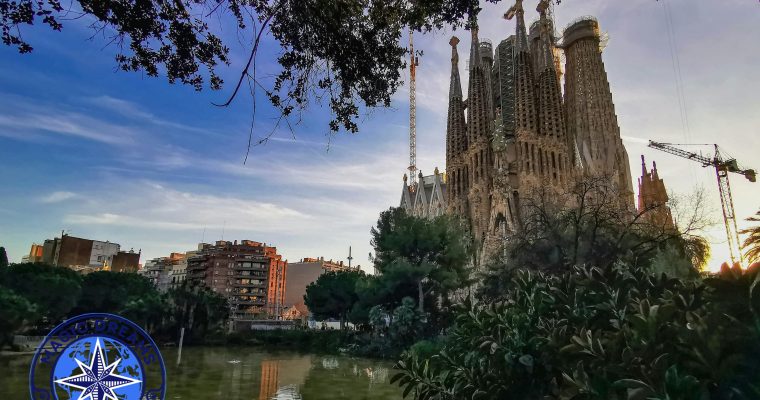
The Spiritual Vision of Antoni Gaudí, Presented by Magic Dreams Barcelona Discover the Basilica of the Expiatory Temple of the Sagrada Família, the architectural soul of Barcelona and the most significant work of the Modernist genius Antoni Gaudí. More than a monument, this temple is …
Some places surprise you with their landscapes, others with their history, and some because of the unique circumstances that make them truly exceptional destinations. Llívia combines all three. Located in the heart of Cerdanya, at an altitude of around 1,224 metres, Llívia is a Catalan …