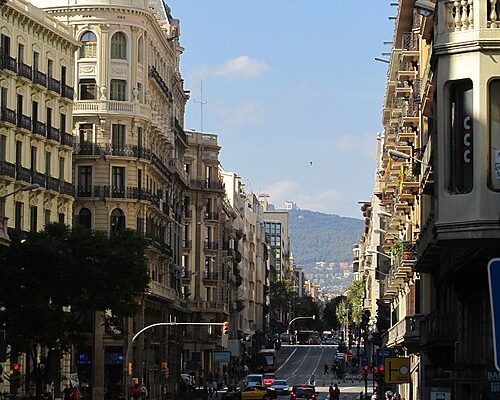
In the La Ribera neighborhood, within the Ciutat Vella district, we find a small street whose name preserves the memory of one of Barcelona’s traditional crafts: Carrer de l’Espaseria.
It is a short, narrow street located next to the Basilica of Santa Maria del Mar, and although walking along it takes only a few minutes, it is worth stopping to learn about its history.
We are in one of the areas of Barcelona where it is easiest to imagine the old city of guilds. The names of many of its streets still remind us of the trades whose workshops and businesses were located in this part of the city for centuries.
And l’Espaseria is a good example.
Where is Carrer de l’Espaseria?
Carrer de l’Espaseria is located in the Sant Pere, Santa Caterina i la Ribera neighborhood, in the heart of the Ciutat Vella district.
The street is very close to Plaça de Santa Maria, where Santa Maria del Mar is located, as well as the Fossar de les Moreres and Passeig del Born.
It is a wonderful area to explore on foot because, within just a few meters, we can find some of Barcelona’s most interesting historic sites.
If we arrive from the Pla de Palau side, we can enter via l’Espaseria and walk toward Santa Maria del Mar.
And as we move along the street, we can enjoy a beautiful view of the basilica at the end.
Why is it called l’Espaseria?
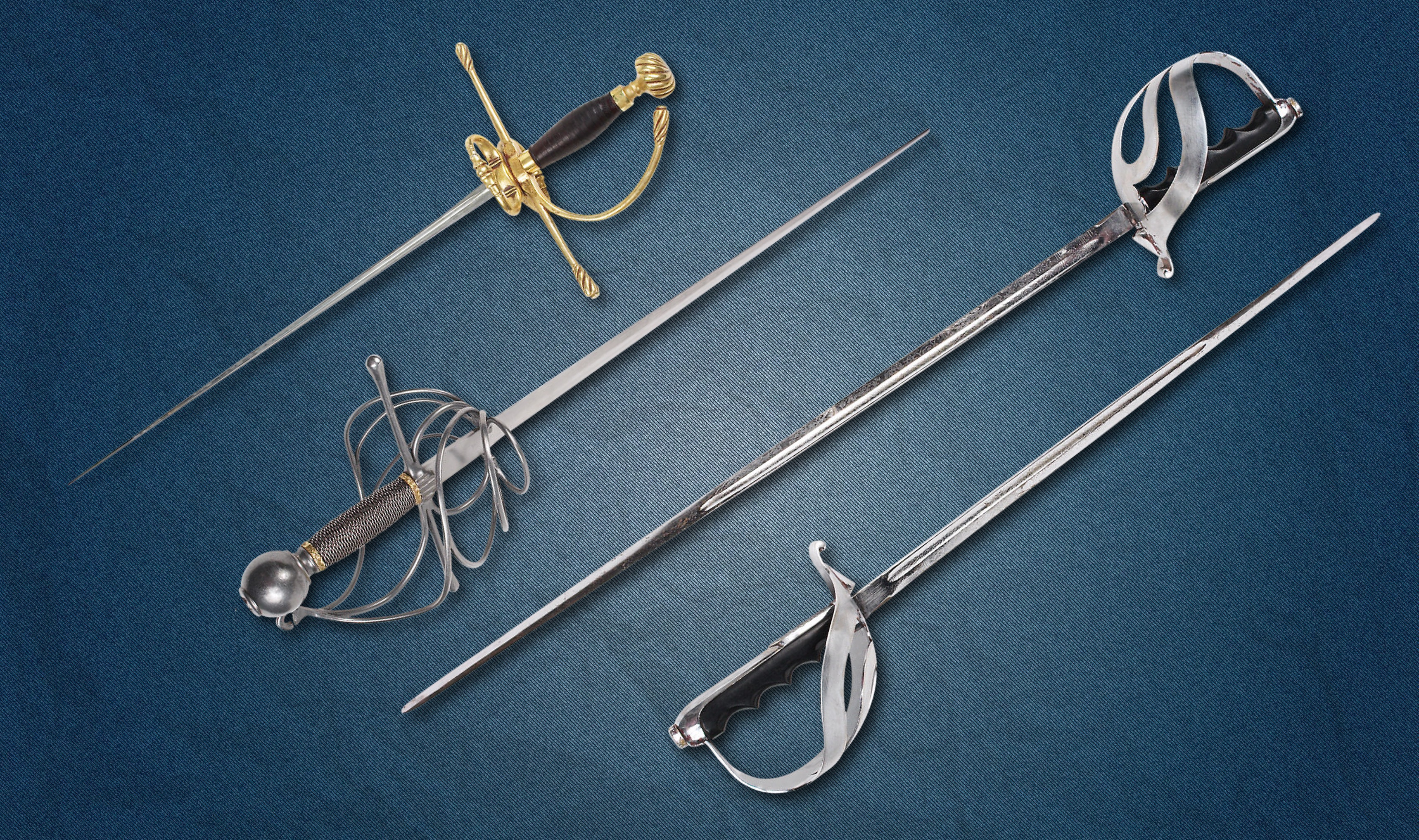
The name of the street is related to swordsmiths, the craftsmen who made and worked with swords.
The guild of armorers in Barcelona has been documented since the Middle Ages. Historical references place records of the guild as early as 1390, while its ordinances are documented from 1413.
The name of the street itself appears in documents dating from before 1633.
Therefore, when we walk along l’Espaseria today, we are following a street whose name preserves the memory of a craft that was practiced here several centuries ago.
Today, we no longer find the workshops of those old swordsmiths, but the name has survived.
Medieval Barcelona and its Guilds
La Ribera was for centuries an area of intense commercial and craft activity.
That is why, when we walk around this neighborhood, we continually come across streets whose names refer to traditional trades.
For example, Mirallers, associated with mirror makers; Argenteria, associated with silversmiths; Flassaders, associated with blanket makers; and Vidrieria, associated with glassmaking.
And, naturally, Espaseria, the street of the swordsmiths.
This is one of the things we like most about exploring Barcelona’s old town.
We can walk around at our leisure and, simply by reading the street signs, discover what activities were once carried out in each place.
A Street Worth Looking Up On
Although l’Espaseria is a very small street, I recommend walking along it slowly.
In addition to the street name and the small businesses we find today, it is worth paying attention to the façades, balconies, doorways, and other architectural details.
In this part of Barcelona, we find buildings from different periods, along with later renovations, so we can see balconies and decorative elements that vary considerably from one building to another.
My advice is simple:
when walking through Ciutat Vella, don’t just look straight ahead.
There are many interesting details above our heads.
Santa Maria del Mar
And we arrive at one of the main attractions of this street.
At the end of l’Espaseria, we find the Basilica of Santa Maria del Mar.
Santa Maria del Mar is one of the finest examples of Catalan Gothic architecture.
Construction of the present church began in 1329 and was completed in the 14th century.
Its history is closely connected with the growth of La Ribera and with the merchants, craftsmen, and workers who lived in this area.
For this reason, it is especially interesting to first explore the guild streets surrounding the basilica and then enter the church.
The visit allows us to understand the neighborhood we are in much better.
Can We Visit Santa Maria del Mar?
Yes.
We can visit the interior of the church and access different areas of the building.
One of the most interesting parts is the rooftop terraces, from where we can enjoy beautiful views over El Born and Barcelona’s historic center.
Fossar de les Moreres
Right next to Santa Maria del Mar we find the Fossar de les Moreres.
This site occupies the former cemetery associated with Santa Maria del Mar and is connected with the defenders who died during the Siege of Barcelona of 1713–1714, in the context of the War of the Spanish Succession.
On September 11, 1714, Barcelona fell after the long siege, and many of the defenders who died during the fighting were buried in this area.
Today, the Fossar de les Moreres is a memorial site.
It is a small square located right next to one of the most touristy areas of El Born, but it is worth stopping for a few minutes to learn what happened here.
How to Get to l’Espaseria
There are several options.
By Metro
The closest station is Barceloneta, on Line L4, the yellow line.
From Barceloneta, it takes approximately 4–5 minutes on foot, depending on which part of the street we are heading to.
We can also use Jaume I, also on L4, and then walk toward Santa Maria del Mar.
By Train
A very convenient option is to arrive at Estació de França.
From there, we can walk to l’Espaseria in approximately 5 minutes.
The station building itself is also worth visiting if we have never seen it before.
By Bus
We can also use various bus routes that run along the main streets in the surrounding area.
In any case, for this part of Barcelona, I consider public transportation followed by walking to be the most convenient option.
How Long Does It Take to Walk Along the Street?
The street is very short.
If we only want to walk along l’Espaseria, we can comfortably do so in 2–5 minutes.
However, I would not recommend coming here solely to walk along the street.
The interesting thing is to include it as part of a route through La Ribera.
A simple route would be:
Pla de Palau – Carrer de l’Espaseria – Plaça de Santa Maria – Santa Maria del Mar – Fossar de les Moreres – Passeig del Born – Carrer de Montcada
Without entering the monuments, we can complete the route in approximately 30 minutes, although it is normal to take longer because we will stop to take photographs and explore different places.
If we also visit Santa Maria del Mar, we can easily spend 1.5–2 hours exploring the whole area.
How Much Does It Cost?
Walking along the street is completely free.
We can also visit the exterior of Santa Maria del Mar and the Fossar de les Moreres free of charge.
Where to Have Breakfast?
If we want to have breakfast near l’Espaseria, there is a particularly convenient option.
De tot al Forn
Located at number 12 on Carrer de l’Espaseria itself.
It is a small historic café and bakery where we can have coffee, pastries, and bakery products.
It is a good option if we want to start our route in the morning and are looking for something simple.
We can estimate approximately €3–5 per person for a basic breakfast, although prices may vary.
Where to Eat?
The El Born area has an enormous variety of restaurants.
We can find everything from small bars serving tapas to restaurants offering Catalan and international cuisine.
If we want to try some typical dishes, we can look for:
- tomato bread;
- escalivada;
- croquettes;
- patatas bravas;
- butifarra;
- cod;
- cannelloni;
- Catalan cured meats;
- fish tapas;
- and various dishes to share.
If we are looking for something more casual, there are also burgers, sandwiches, and various fast-food options.
Our advice is to check the menu and prices before sitting down, especially on the more touristy streets of El Born.
Where to Eat?
The El Born area has a huge range of dining options and, in addition to the more tourist-oriented restaurants, there are still small and charming establishments where it is well worth stopping for lunch or tapas.
If we want to complete our walk around Carrer de l’Espaseria and its surroundings, these are some particularly interesting options:
- El Xampanyet: a classic El Born establishment located on Carrer de Montcada. It is a traditional old-style wine bar that has preserved much of its original atmosphere, with tiled walls, a bar, and small tables. It has been open since 1929 and has been run by several generations of the same family, becoming one of the neighborhood’s best-known establishments. We can order cava, anchovies, cured meats, and different tapas to share.
- Bar del Pla: also located on Carrer de Montcada, this is a good option if we are looking for tapas and dishes to share with a somewhat more refined presentation. Its cuisine is mainly based on Mediterranean products, and the atmosphere is very pleasant for a stop during our walk.
- Bodega del Born: located on Carrer dels Mirallers, very close to our route. It is a small bar with the feel of a traditional wine cellar, perfect if we want to make a more informal stop for a drink and a bite to eat. It is a particularly interesting option if we prefer small establishments with personality.
- Bornès Restaurant: if we are looking for somewhere to sit down for a more leisurely meal, we can choose this restaurant, which offers updated Catalan cuisine. It draws on traditional recipes and presents them with a more creative and contemporary touch. The restaurant also has plenty of character and fits perfectly with the atmosphere of El Born’s small streets.
- Arcano: here, the experience stands out for both the food and the setting. The restaurant occupies former 17th-century stables, with stone walls and a very distinctive atmosphere. Its cuisine is based on Mediterranean cooking and it is a good alternative if we want to enjoy a more relaxed lunch or dinner.
- Casa Delfín: located next to Passeig del Born, this is a historic restaurant with more than a century of history. Its cuisine is linked to Catalan and Mediterranean traditions, with dishes such as fish, rice dishes, and tapas. It is an interesting option if we want to visit an establishment with history and enjoy more traditional cuisine.
- Puertecillo Born: a different alternative for those who prefer fish and seafood. It specializes in seafood and is located in one of the liveliest areas of El Born, making it easy to combine lunch with our walk around the neighborhood.
The Streets of the Old Trades
After visiting l’Espaseria, we can continue walking through the neighborhood and look for other streets associated with historic guilds.
It is a little game we can play while exploring La Ribera.
Mirallers
It reminds us of the mirror makers.
Argenteria
Associated with silversmiths.
Flassaders
Associated with blanket makers.
Vidrieria
Associated with glassmaking.
Espaseria
The street of the swordsmiths.
In this way, we can turn a simple walk through El Born into a journey through Barcelona’s historic artisan traditions.
Copyright © 2016–2026 Magic Dreams Barcelona.