Route guide for visitors throughout Catalonia – Barcelona – Costa Brava – Catalan Pyrenees – Personalized experiences – Customized tour guide services – A small tribute to the wonderful city and land that saw us born – Transforming experiences into unforgettable memories - Magic Dreams Collection: exclusive universes inspired by Salvador Dalí and Gaudí. Niche perfumes, jewelry, lithographs, and collectible items celebrating the Mediterranean spirit.
The Portal de l’Àngel was originally one of the gates of Barcelona’s medieval wall, built in the 13th century, known as the Portal dels Orbs, meaning “Gate of the Blind.” The name refers to the presence of poor people in the area, including the blind …
El Portal de l’Àngel fue originalmente una de las puertas de la muralla medieval de Barcelona, construida en el siglo XIII, conocida como Portal dels Orbs, es decir, “portal de los ciegos”. El nombre hace referencia a la presencia en esta zona de personas pobres, …
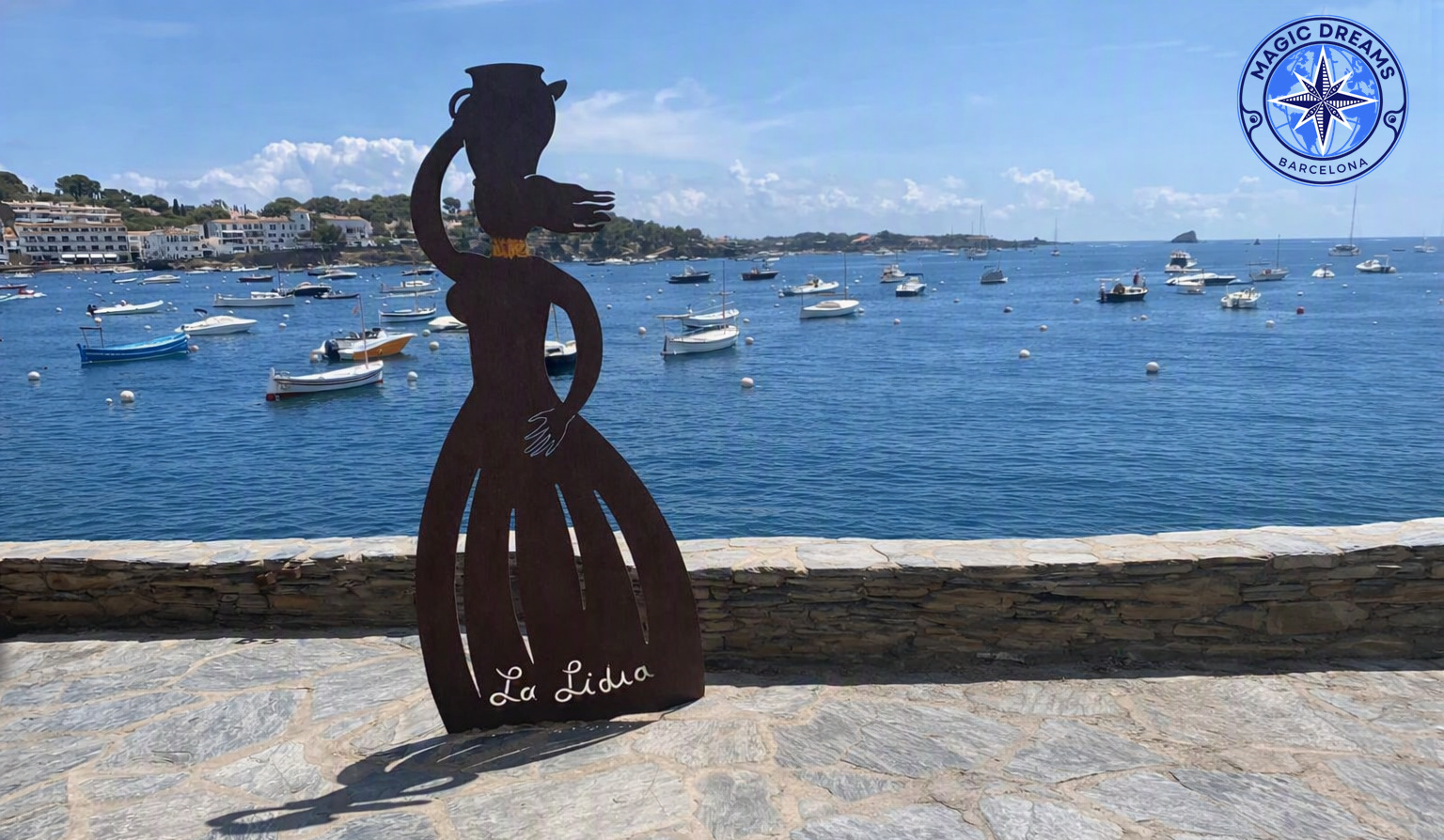
Some people become part of history. Others become legends. Lídia of Cadaqués became both.
Fisherwoman, innkeeper, storyteller and one of the most fascinating characters in the history of Cadaqués, Lídia Noguer i Sabà lived in a very different Cadaqués from the one we know today. It was a small fishing village on the Costa Brava, isolated for much of the year, where stories travelled from one person to another and where extraordinary characters could easily become part of local folklore.
Lídia was one of them.
Her life became intertwined with some of the most important figures in Catalan and European culture during the first decades of the 20th century. Yet one name would become particularly important in her story: Salvador Dalí.
Lídia was not simply a colourful character from Cadaqués. She was the woman who helped Dalí and Gala find a place where they could begin their life together and who, without knowing it, played a decisive role in the story of Portlligat.
Lídia Noguer i Sabà, the Woman Behind the Legend
Lídia Noguer i Sabà was born in Cadaqués on 30 June 1866. She was the daughter of Baldiri Noguer, a sailor, and Dolors Sabà, popularly known as Sabana, a woman remembered in Cadaqués as one of the last witches of the village.
Her mother’s reputation contributed to the extraordinary image that surrounded Lídia throughout her life. In time, Lídia herself would become one of the most intriguing figures in the collective memory of Cadaqués.
But before becoming a legend, she was a working woman.
She worked as a fish seller and later ran a guesthouse. Her home became a meeting point for travellers, artists and intellectuals who were increasingly drawn to Cadaqués and the landscapes of Cap de Creus.
Among the distinguished visitors who passed through her house were Pablo Picasso, Josep Puig i Cadafalch, Jacinto Grau, Agustí Duran Reynals and André Derain.
Cadaqués was beginning to attract artists and intellectuals from across Europe, and Lídia found herself at the heart of this fascinating world.
Lídia and Eugeni d’Ors: Fascination, Literature and Obsession
In 1904, one of the most significant encounters of Lídia’s life took place.
That year, Eugeni d’Ors stayed at her guesthouse. D’Ors was one of the most influential Catalan intellectuals of his generation: a writer, philosopher, journalist and art critic, and one of the key figures of the Noucentisme cultural movement.
For Lídia, meeting him had profound consequences.
Her admiration for the writer gradually developed into an intense fascination and eventually into an obsession. When d’Ors published La Ben Plantada in 1911, Lídia identified herself with Teresa, the central character of the novel. At times, she even claimed that Teresa was her own name.
She became convinced that the articles d’Ors published in his famous Glosario in La Veu de Catalunya contained messages directed personally at her, as if they were responses to the letters she had written to him.
But there was an important difference between Lídia’s perception and reality.
Her feelings were not reciprocated. D’Ors did not answer her letters, although Lídia continued to interpret his writings through the prism of her fascination with him.
This unusual mixture of admiration, imagination and obsession would become one of the most fascinating elements of Lídia’s story—and one that would later capture Salvador Dalí’s imagination.
A Woman Who Fascinated Salvador Dalí
Salvador Dalí had known Lídia since childhood.
He spent much of his early life in Cadaqués and, as a boy, heard the stories Lídia told to the children of the village.
Long before he became one of the most famous artists of the 20th century, Lídia was therefore already part of Dalí’s personal world.
As the years passed, however, she became much more than a colourful local character.
Dalí was fascinated by her extraordinary personality, her stories and her peculiar way of interpreting the world. Lídia seemed to inhabit a space where reality, imagination and personal mythology constantly overlapped.
That quality made her particularly intriguing to an artist whose own work would repeatedly explore dreams, obsession, memory and the unconscious.
And eventually, Lídia would become connected to one of the most important places in Dalí’s life.
When Dalí Broke with His Father
In 1929, Salvador Dalí’s relationship with his father reached a breaking point.
His relationship with Gala and the direction he had chosen for his personal and artistic life created a profound conflict with his father, the notary Salvador Dalí i Cusí.
Dalí needed somewhere to begin a new life with Gala.
And this was where Lídia entered the story.
At a crucial moment, she was the person who helped them.
Lídia made available to Dalí a small fisherman’s hut in Portlligat, where her two sons kept their fishing equipment.
It was an extremely modest building.
There was nothing luxurious about it. The original hut measured only around 22 square metres and had none of the comforts we associate with the house today—not even electricity.
Yet Dalí saw something there that was impossible to measure in square metres.
He saw the landscape.
He saw the light.
He saw the silence.
And he saw the extraordinary isolation of Portlligat.
On 20 August 1930, Dalí purchased the small fisherman’s hut from Lídia Nogués.
That simple transaction would change the history of the place forever.
From a Fisherman’s Hut to Dalí and Gala’s Home
The remarkable part of the story is that the first hut was only the beginning.
Over the following years, Dalí and Gala gradually acquired adjoining buildings and spaces, connecting them and transforming them into a unique home.
The house did not emerge from a conventional architectural plan.
It grew organically.
Room by room, studio by studio, courtyard by courtyard, Dalí and Gala transformed the original fisherman’s hut into the extraordinary residence that we know today as the Salvador Dalí House-Museum in Portlligat.
The house preserves that evolution. Its irregular spaces, studios, patios, gardens and intimate rooms reveal how the residence developed alongside Dalí’s life and work.
Portlligat eventually became Salvador Dalí’s only permanent home, the place where he lived and worked for decades with Gala.
This is why visiting Portlligat means much more than entering a museum.
It means entering the private world where Dalí created, dreamed, worked and lived.
And at the beginning of that story stands Lídia of Cadaqués.
The Woman Who Became a Literary Character
Lídia’s story did not disappear after her death.
It continued to grow.
Her personality, her stories, her fascination with Eugeni d’Ors and her unusual interpretation of the world eventually became material for literature.
Seven years after Lídia’s death, Eugeni d’Ors returned to Cadaqués with Cesáreo Rodríguez-Aguilera to gather information about her extraordinary life.
The result was La verdadera historia de Lidia de Cadaqués, published in 1954.
And d’Ors asked Salvador Dalí to illustrate the book.
The choice was particularly meaningful.
Dalí had known Lídia since childhood. He had listened to her stories and witnessed her extraordinary personality. He was also fascinated by her and was himself considering creating a work about her.
Dalí produced four illustrations for the book.
One of the most striking depicts Lídia as a woman transformed into an olive tree, deeply rooted in the rocks of Cap de Creus.
The illustration is dated 1954 and bears the signature of Gala Dalí together with a deeply meaningful dedication:
“A Lídia, que nos albergó eternamente en Portlligat.”
“To Lídia, who sheltered us eternally in Portlligat.”
Few sentences could express more clearly the place she occupied in the history of Dalí and Gala.
Lídia, Dalí and the Strange World of Cadaqués
One of the other illustrations created for the book refers to Lídia’s peculiar way of dividing the inhabitants of Cadaqués.
In her own particular vision of the village, there were the good and the bad.
The good belonged to what she called the Society of the Secret of Xènius, which included the Dalí and Pichot families.
The others belonged to what she called the Society of Goats and Anarchists.
Dalí turned this unusual classification into part of the visual world of the book.
It may seem like a curious anecdote, but it reveals why Lídia fascinated him so deeply.
She did not simply tell stories about Cadaqués.
She had created her own version of Cadaqués, with its own characters, loyalties, enemies and hidden meanings.
For an artist like Dalí, this was extraordinarily compelling.
The Final Years of Lídia of Cadaqués
Lídia’s life ended far from the Cadaqués that had shaped her identity.
Her family life had also been marked by tragedy. She married Fernando Costa, known as Nando, who died by suicide. They had two sons, Benvingut and Honori, who eventually ended their lives in psychiatric care in Salt.
During her final years, Lídia also suffered a serious deterioration in her mental stability.
She eventually lived at the Gomis Shelter in Agullana, where she died on 30 December 1946 at the age of 80.
She was buried in the cemetery of Agullana.
Her connection with Dalí, however, did not end there.
Dalí later paid for her gravestone, a gesture that showed that, despite the passing of time, Lídia remained an important and deeply memorable figure in his life.
A Woman at the Beginning of the Portlligat Story
Perhaps the best way to understand Lídia of Cadaqués is to return to Portlligat.
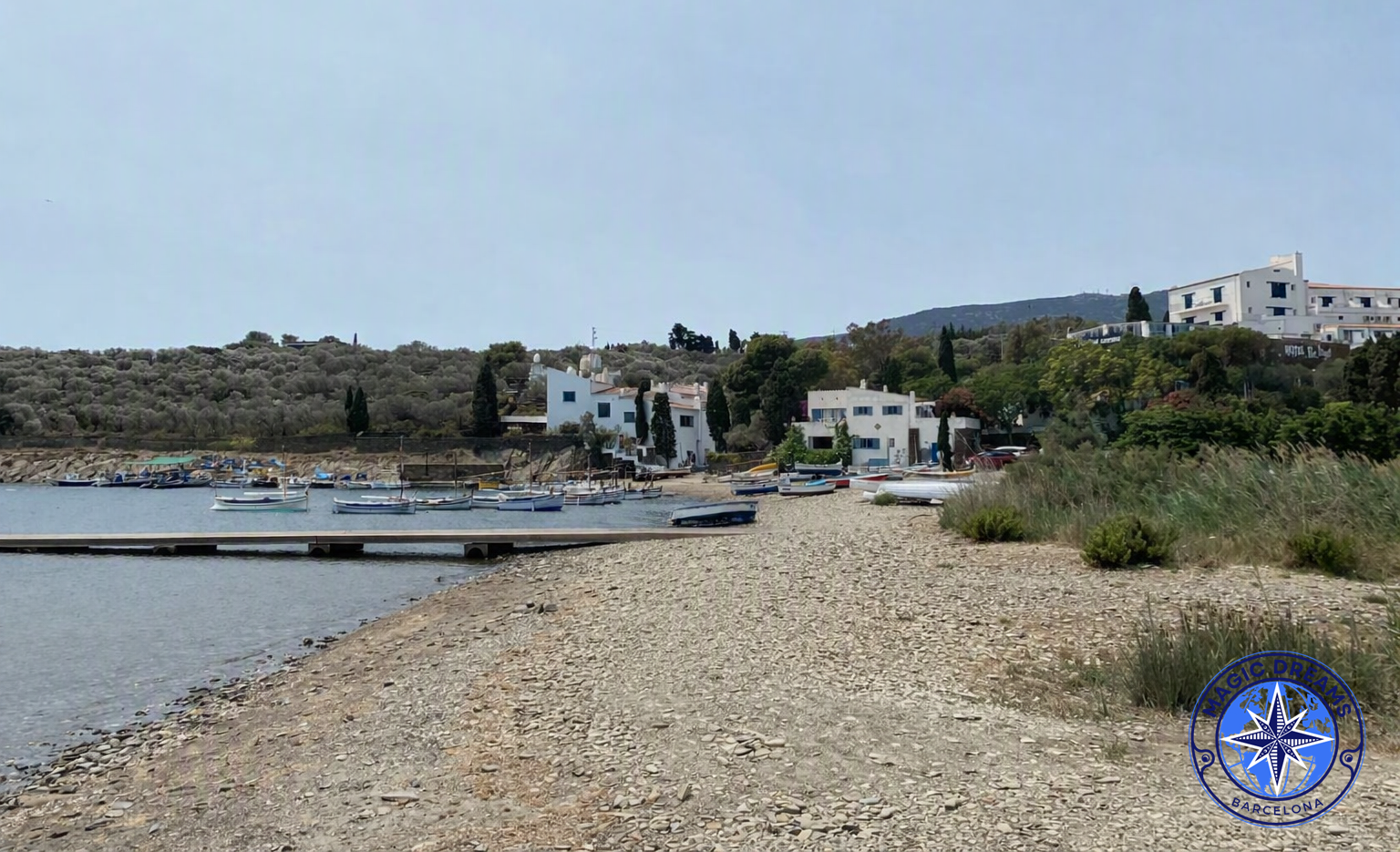
Today, the bay seems inseparable from Salvador Dalí. His house, studio, gardens and the surrounding landscape have become one of the most recognisable places associated with the artist.
But before there was a Casa Dalí, before the gardens and studios, before the world came to know Portlligat as Dalí’s private universe, there was a modest fisherman’s hut.
And that hut was connected to Lídia.
Her decision to help Dalí and Gala gave them a place where they could begin their life together.
Over the following decades, that modest beginning became a remarkable home and studio.
Portlligat became much more than a residence.
It became Dalí’s refuge, workshop, stage and personal universe.
And that is why the story of Portlligat cannot be told without remembering Lídia.
The Last Witch of Cadaqués
Lídia of Cadaqués died in 1946, but her story never truly disappeared.
She survived in the memories of the village, in Eugeni d’Ors’s literary work, in Dalí’s illustrations and in the history of the place where her life became unexpectedly connected with one of the greatest artists of the 20th century.
She was a fisherwoman, an innkeeper, a mother, a woman marked by tragedy and the protagonist of an unrequited love that eventually became part of literature and legend.
But she was also something else.
She was the woman who opened a door when Salvador Dalí needed somewhere to begin again.
And that door led to Portlligat.
Today, we can visit the house that grew from that first fisherman’s hut and walk through the landscape that became one of the greatest sources of inspiration in Dalí’s work.
But knowing Lídia’s story allows us to see Portlligat differently.
Because behind the house, behind the mythology of Dalí and Gala, and behind one of the most fascinating landscapes of Cap de Creus, there is also the story of a woman from Cadaqués who, at a decisive moment, chose to help two young people who needed somewhere to build a new life.
Perhaps that is why Dalí’s dedication means so much: Lídia did not simply give them a place to stay. She gave them a place where they could build their own story.
And if we want to discover Cadaqués, Portlligat and the world of Salvador Dalí in a truly special way, Magic Dreams Barcelona can take care of the entire experience: private transportation, guide, visits, gastronomy and logistics, allowing us to enjoy the journey without having to worry about the details.
Because sometimes, to understand an artist, we need to discover the people and places that were there before the legend.
Fotografía del Port Lligat al ataredecer de Magic Dreams Barcelona.
Fotografía del Port Lligat al ataredecer de Magic Dreams Barcelona.
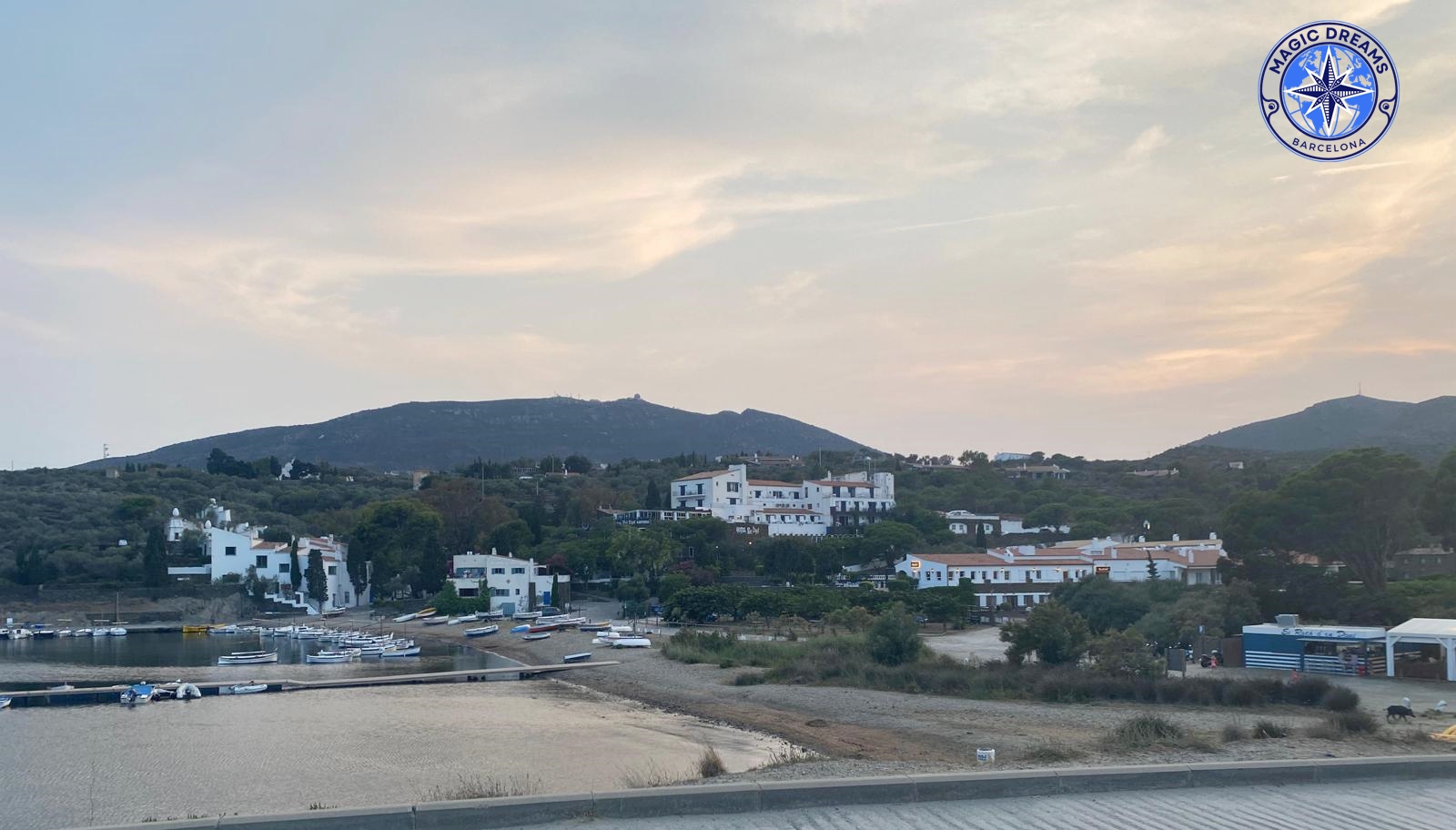
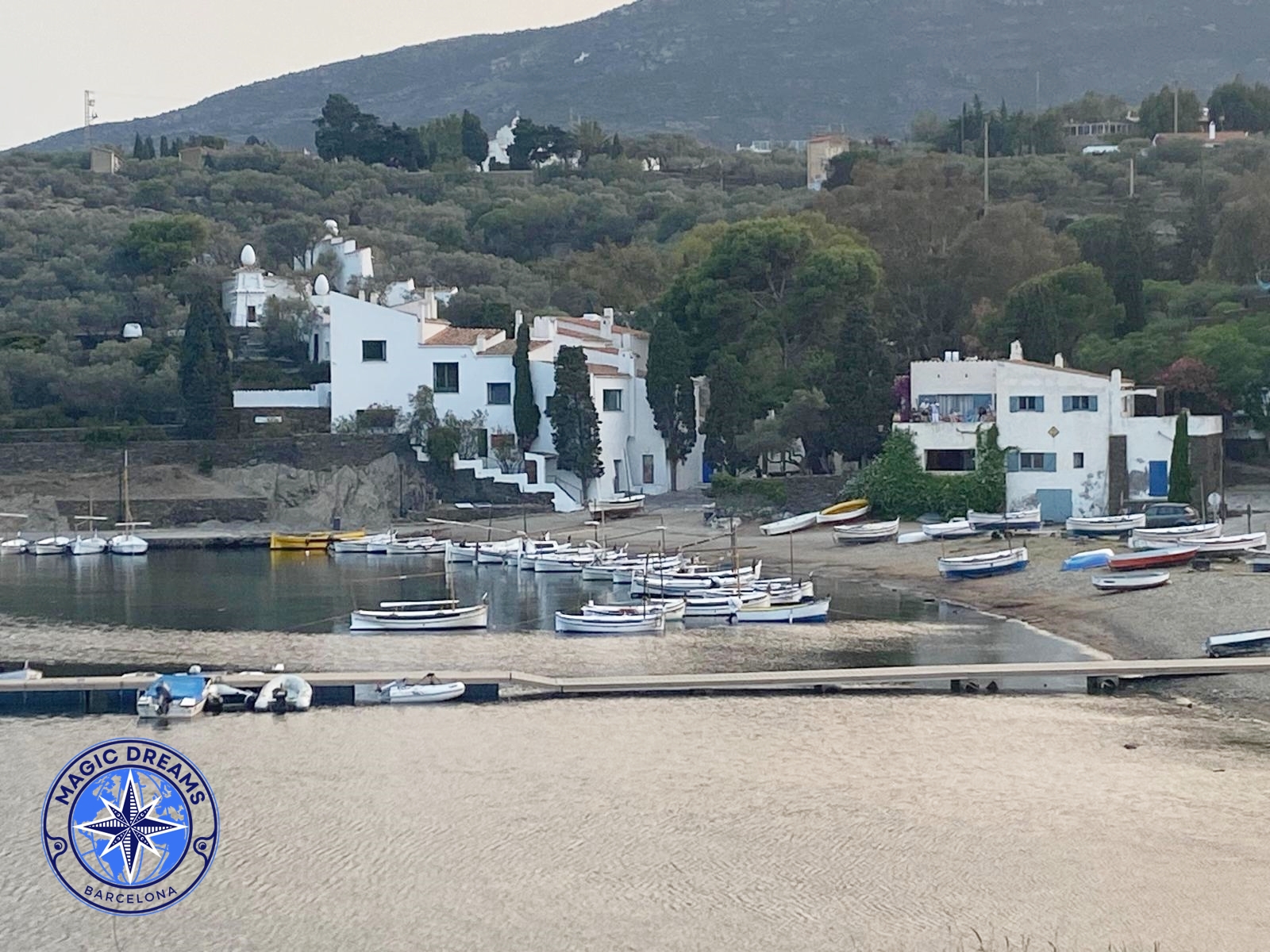
Fotografía del Port Lligat al atardecer frente a la Casa museo de Salvador Dalí y Gala de Magic Dreams Barcelona.
Fotografía del Port Lligat al atardecer de Magic Dreams Barcelona.
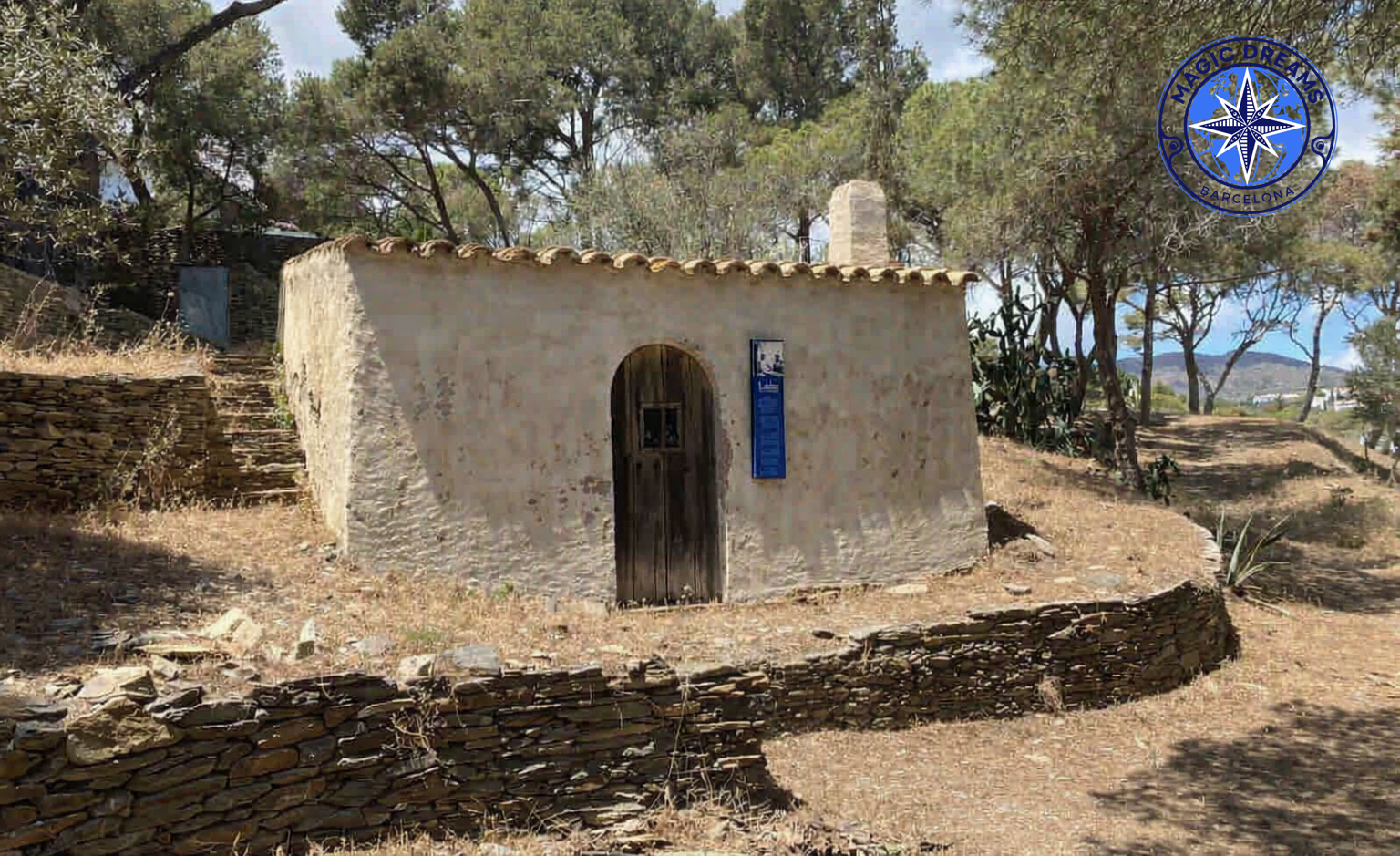
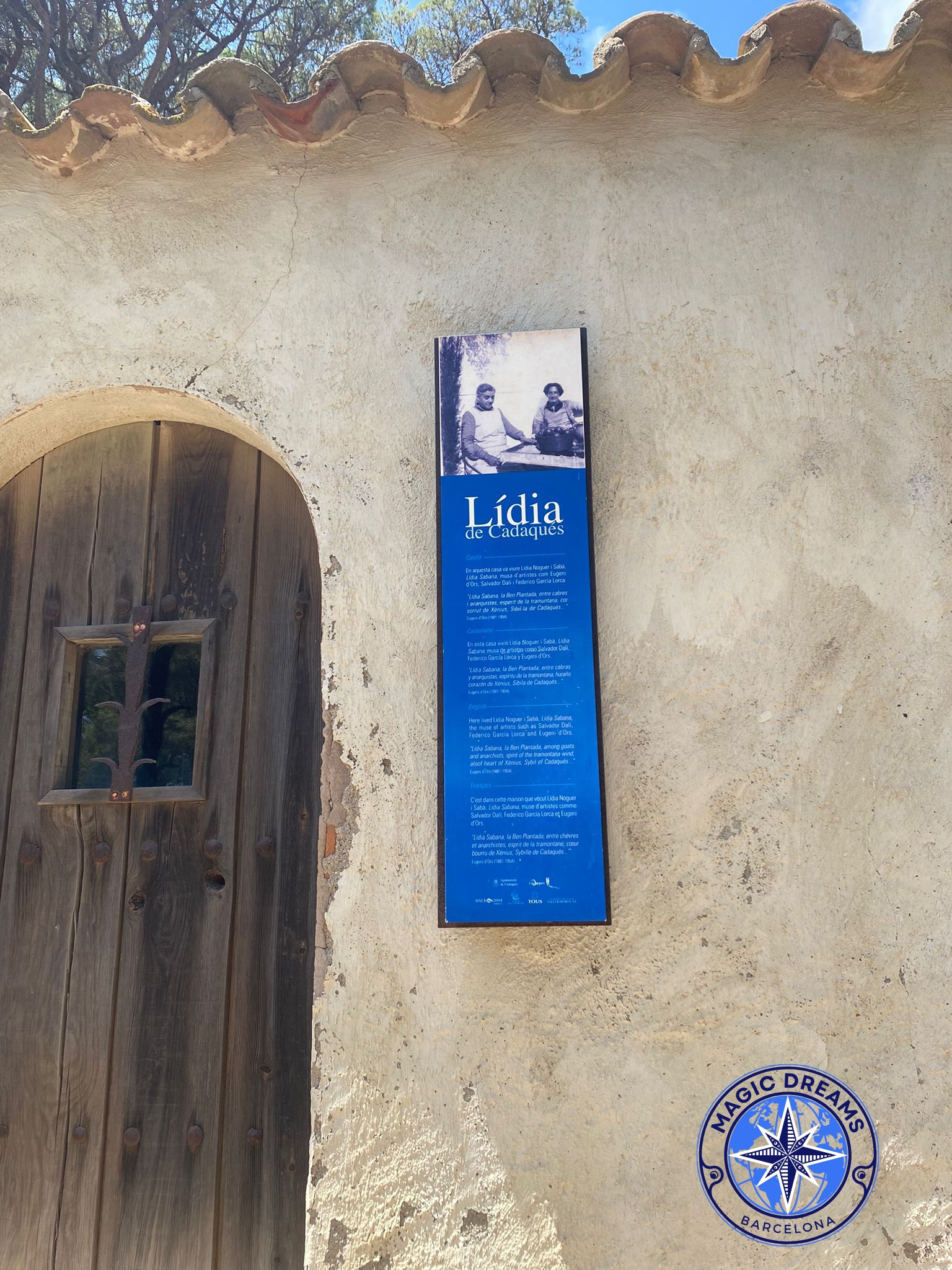
Última casa de la Lídia de Cadaqués, vivía en una barraca muy humilde, tras haber pasado por otras residencias como la de Es Llaner – Magic Dreams Barcelona.
Perspectiva a pie de la Casa de Dalí en el Port Lligat de Magic Dreams Barcelona.
Detalle en la última casa de la Lídia de Cadaqués, vivía en una barraca muy humilde, tras haber pasado por otras residencias como la de Es Llaner – Magic Dreams Barcelona.
Existen personajes que forman parte de la historia y otros que, con el paso del tiempo, terminan convirtiéndose en leyenda. Lídia de Cadaqués pertenece a los dos mundos. Pescadera, hostelera, mujer de carácter extraordinario y figura rodeada de historias, Lídia Noguer i Sabà vivió en …