Route guide for visitors throughout Catalonia – Barcelona – Costa Brava – Catalan Pyrenees – Personalized experiences – Customized tour guide services – A small tribute to the wonderful city and land that saw us born – Transforming experiences into unforgettable memories - Magic Dreams Collection: exclusive universes inspired by Salvador Dalí and Gaudí. Niche perfumes, jewelry, lithographs, and collectible items celebrating the Mediterranean spirit.
The Güell Pavilions: Elegance, Symbolism, and the Beginnings of Gaudí’s Universe In the upper part of Barcelona, in the historic surroundings of Pedralbes, stands one of Antoni Gaudí’s most fascinating architectural ensembles: the Güell Pavilions. Less internationally renowned than the Sagrada Família, Park Güell, or …
La Casa Batlló es una de las obras maestras de Antoni Gaudí y uno de los edificios más famosos de Barcelona. Situada en pleno Passeig de Gràcia, en el corazón del Eixample, esta extraordinaria construcción es uno de los grandes referentes del modernismo catalán y …
Casa Milà, universally known as La Pedrera, stands as one of the absolute masterpieces of modern architecture and as Antoni Gaudí’s last great civil work, developed between 1906 and 1912.
Conceived during the architect’s creative maturity, this masterpiece reflects the full development of his naturalist period, in which architecture merges with the organic laws of nature, ruled geometry, and unprecedented creative freedom.
Located on Passeig de Gràcia, in the heart of Barcelona’s Eixample district, La Pedrera was not conceived solely as a private residence, but as a modern, innovative apartment building deeply integrated into the city.
In 1984, Casa Milà was inscribed on the UNESCO World Heritage List as part of the group of works by Antoni Gaudí recognized for their outstanding universal value.
The Origins of La Pedrera
Pere Milà, Roser Segimon and an Extraordinary Residence
The building was commissioned in 1905 by the married couple Pere Milà and Roser Segimon, who entrusted Gaudí with the creation of their main residence on Passeig de Gràcia, while the rest of the building was intended for rental purposes.
The plans were submitted to Barcelona City Council on February 2, 1906, and construction began that same year. In 1909, the Eixample Commission recognized the monumental character of the building, and on October 31, 1912, Gaudí officially certified the completion of the works.
The project responded to an extraordinarily advanced conception of residential architecture. Gaudí did not limit himself to designing a spectacular façade; he conceived the building as a complete organism, carefully studying its structure, lighting, ventilation, circulation, and interior layout.
Architecture Without Straight Lines
Nature Transformed into Architecture
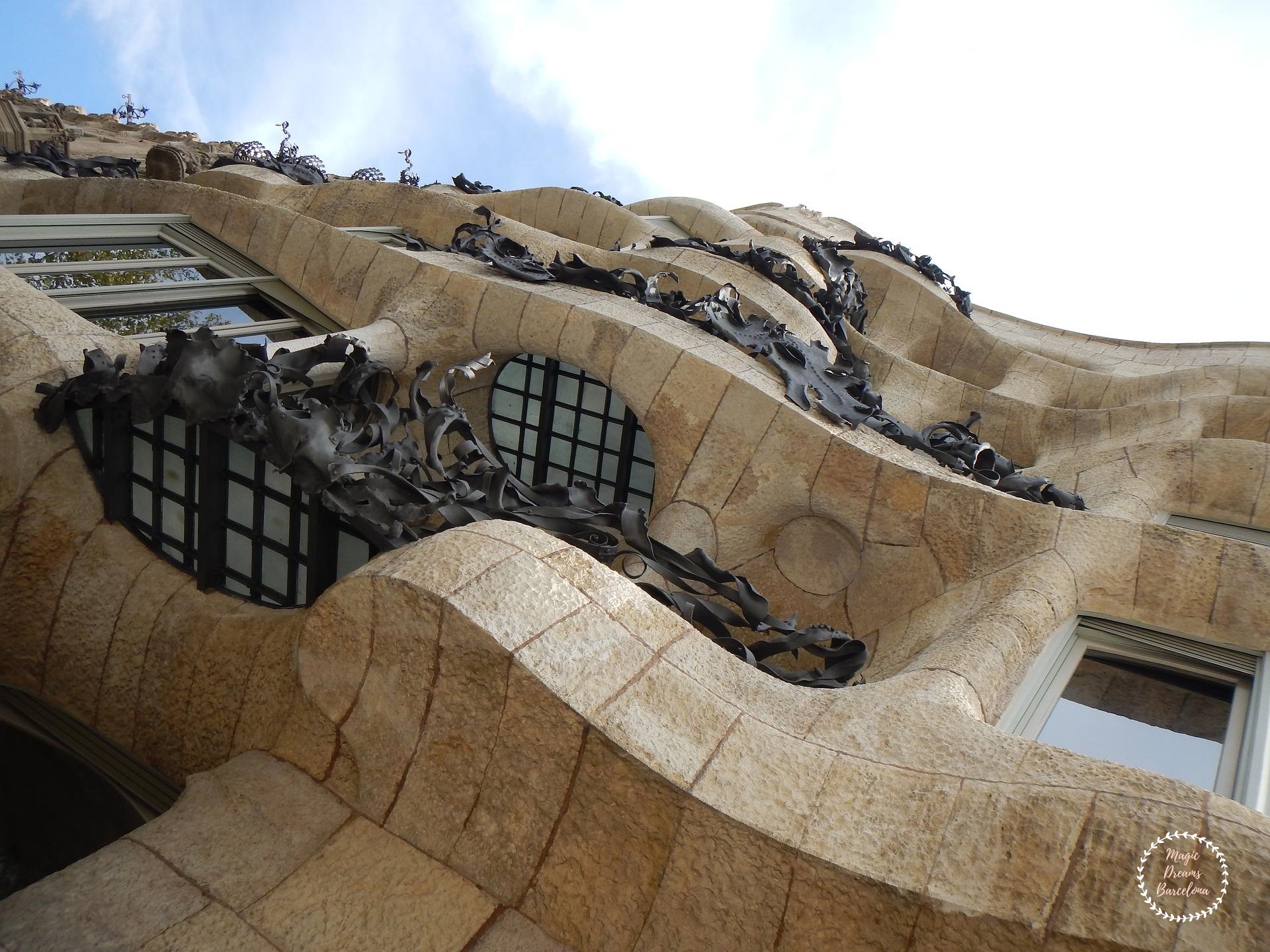
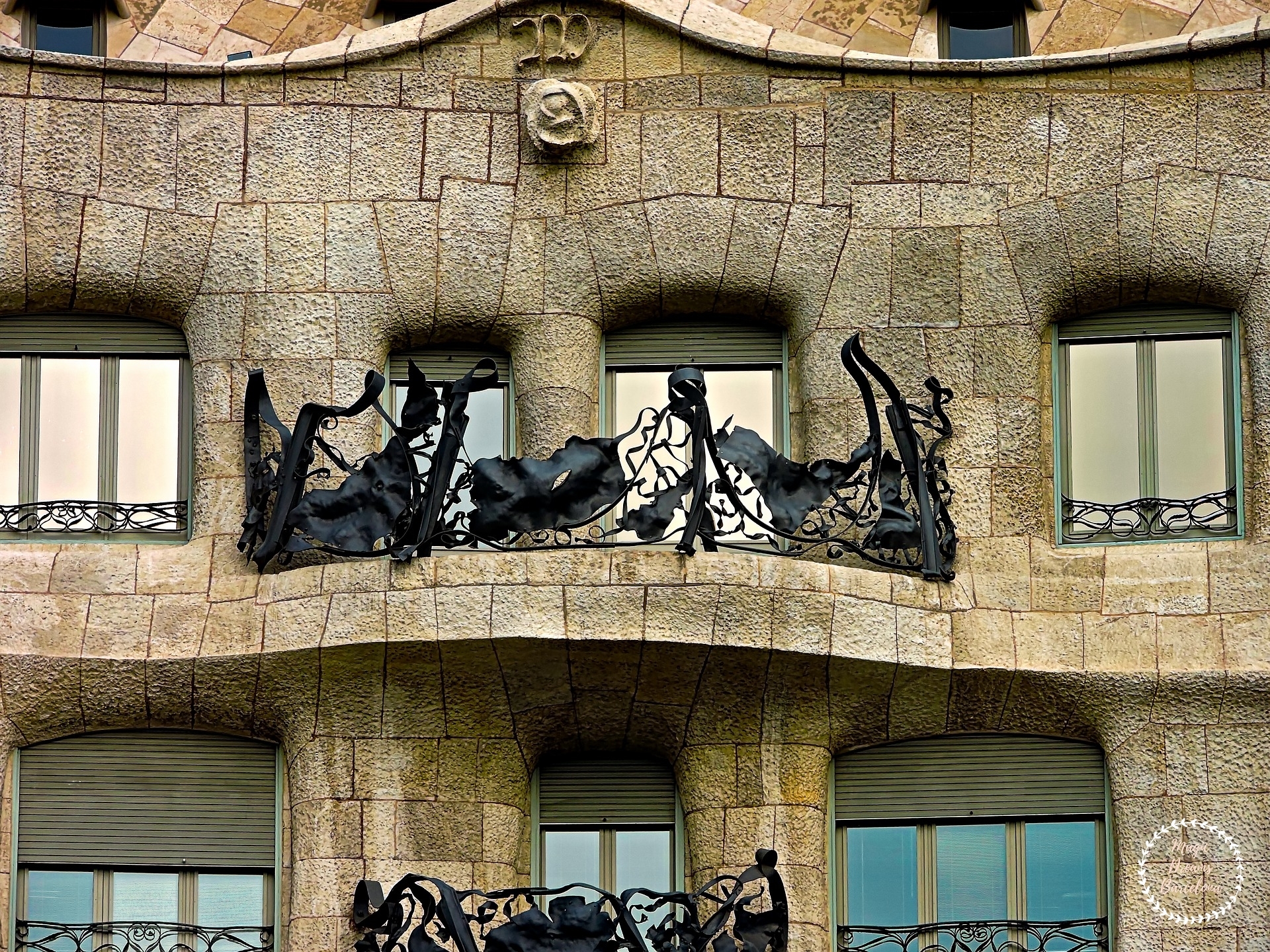
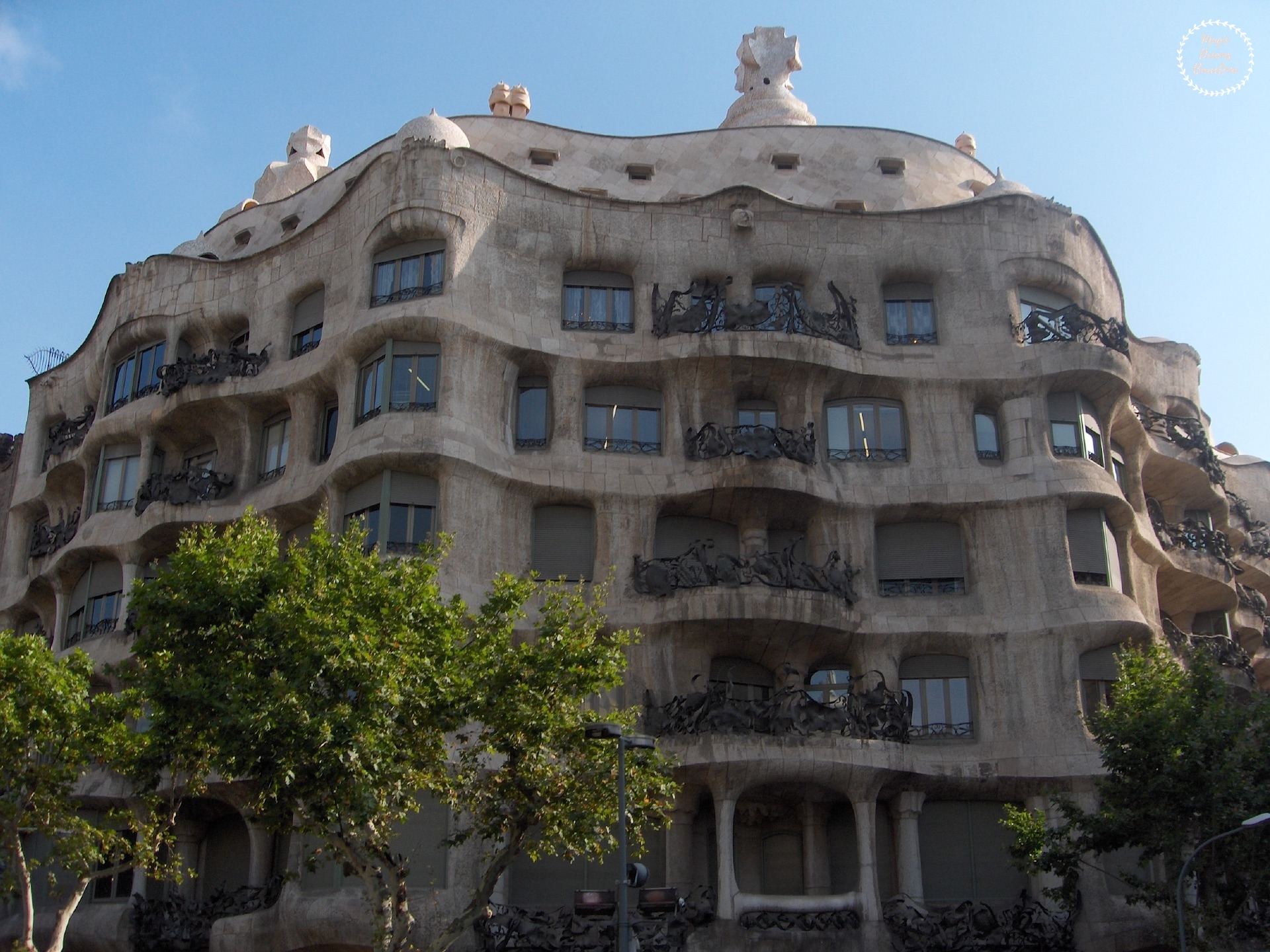
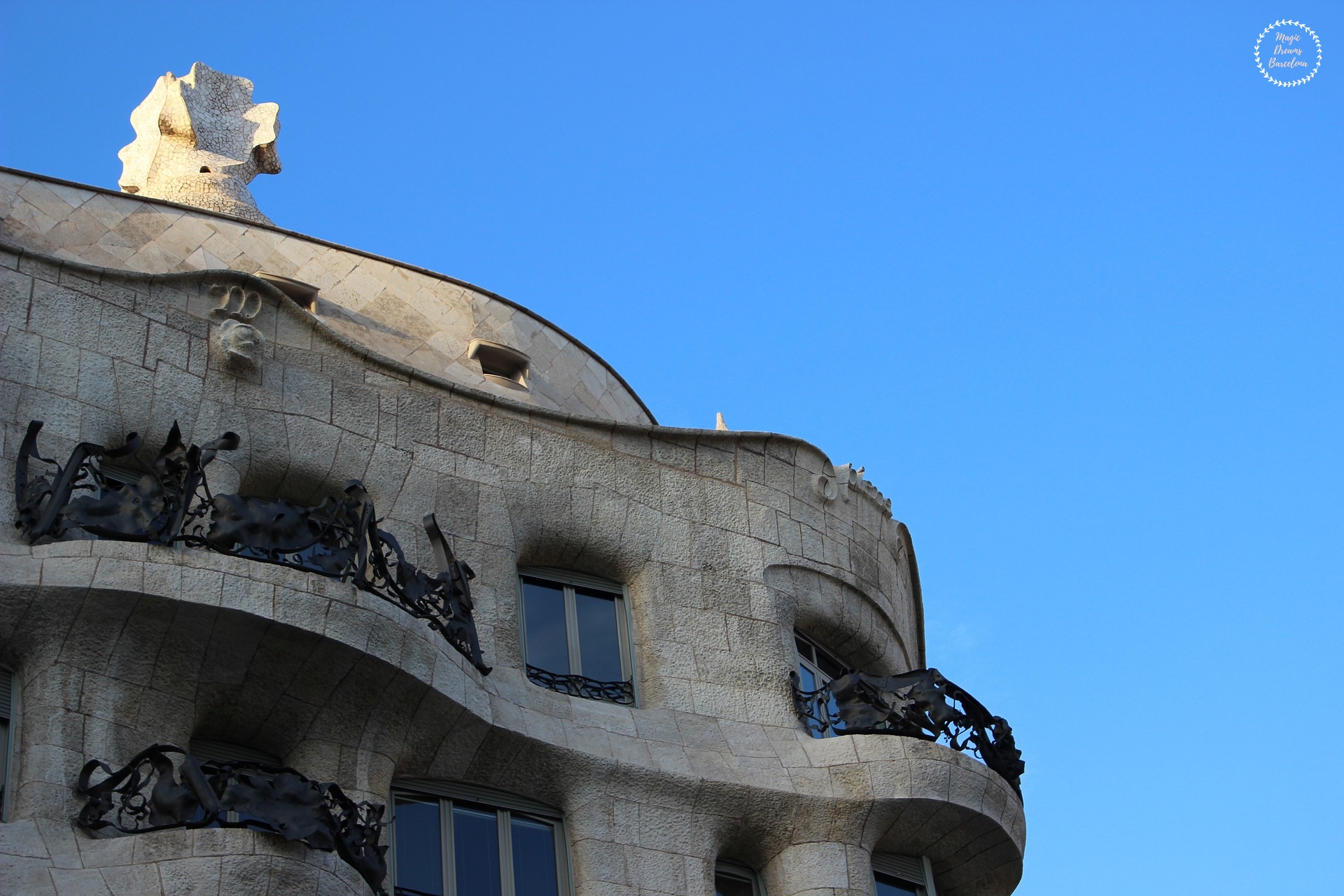
The undulating stone façade, free of straight lines, appears to have been sculpted by natural forces.
Its volumes evoke the forms of an eroded mountain, ocean waves, or a living geological formation. The stone seems to move, transforming a residential building into an authentic urban sculpture.
The wrought-iron balconies, each one unique and unrepeatable, evoke seaweed, vines, or marine movements, transforming metal into urban poetry.
Gaudí did not conceive these elements as mere ornaments, but as living sculptures that interact with light, air, and the city.
Every detail responds to the same idea: architecture should form an organic whole in which structure, decoration, and nature are inseparable.
Two Blocks and Two Large Courtyards
A Building Designed from the Inside Out
One of the least obvious aspects of La Pedrera from the street is its complex interior organization.
The building consists of two large residential blocks, with independent entrances, arranged around two large interconnected courtyards. These courtyards play a fundamental role in bringing light and ventilation into the apartments.
This organization makes it possible to better understand Gaudí’s true innovation: the exterior façade is only one part of a much more complex architectural system.
The interior layout was designed to provide bright and flexible spaces, while the pillar-based structure allowed an unusual degree of freedom for its time.
La Pedrera thus represents a particularly advanced reflection on how to construct a residential building on a chamfered corner of Barcelona’s Eixample.
A Work Ahead of Its Time
Functionality, Innovation and Beauty
Casa Milà was pioneering in countless ways.
It became the first residence on Passeig de Gràcia to have underground carriage parking, another example of the architect’s functional and innovative vision, anticipating future needs without sacrificing beauty.
Gaudí also introduced structural solutions that made it possible to create more flexible and luminous interior spaces.
The pillar structure largely freed the walls from their load-bearing function, opening up new possibilities for organizing the apartments.
At La Pedrera, construction, geometry, ergonomics, materials, light, and decoration form part of a single architectural conception.
The Courtyards of La Pedrera
Light, Colour and Nature at the Heart of the Building
The interior courtyards are one of La Pedrera’s great secrets.
From them, visitors can understand how Gaudí used architecture to bring light and air into the interior of the building.
Their curved forms, colours, and decoration transform these functional spaces into authentic architectural settings.
Walking through the courtyards also makes it possible to observe the relationship between the different floors and to discover how light constantly changes across the surfaces.
Far from being secondary spaces, they form an essential part of the La Pedrera experience.
The Attic and Espai Gaudí
The Architect’s Technical and Creative Universe
In the attic, popularly known as the whale attic, is the Espai Gaudí, dedicated to explaining the architecture and creative universe of the architect.
Its parabolic arches and structure provide an especially clear understanding of the relationship between geometry, nature, and construction.
This space displays models, studies, objects, and materials that help visitors understand the technical, symbolic, and spiritual depth of Gaudí’s work.
More than a simple exhibition, Espai Gaudí offers an insight into the thought and construction process behind buildings that, at first glance, seem to have emerged directly from the imagination.
The Rooftop of La Pedrera
A Landscape of Sculptures Above Barcelona
The rooftop of La Pedrera is one of the building’s most iconic and evocative spaces.
Rising above it are the famous chimneys, ventilation towers, and stairway exits which, beyond their technical function, take on powerful sculptural forms.
These figures — authentic mineral guardians — appear like motionless warriors, archaic beings, or creatures emerging from a dream, watching over the city from above.
Gaudí used trencadís, recycling fragments of glass and ceramics and transforming leftover materials into surfaces of extraordinary visual richness.
The rooftop contains thirty chimneys, two ventilation towers, and six stairway exits, each designed with a different formal solution.
From this privileged vantage point, the view reaches some of Barcelona’s major landmarks, establishing a visual dialogue between La Pedrera and other fundamental works by Gaudí, especially the Sagrada Família.
The Symbolism of the Rooftop
A Stage Between Architecture, Myth and Spirituality
The rooftop of La Pedrera has generated countless symbolic interpretations.
The philosopher and writer Josep Maria Carandell, in his work La Pedrera, cosmos de Gaudí, offered one of the best-known interpretations, defining the rooftop as a kind of religious allegorical drama: a staging connected with the origin of life, the family, and divine revelation.
According to this interpretation, the theatrical forms of the rooftop engage in dialogue with works such as Life Is a Dream by Calderón de la Barca, Hamlet by Shakespeare, and Ovid’s Metamorphoses, bringing together literature, religion, and cosmology.
The stairway exits thus become symbolic giants: the Fathers, located at the chamfered corner and represented as coiled dragons; the Children, represented in different moral and spiritual attitudes; and the two ventilation towers, identified as the King and Queen.
All of this can also be related to the Catalan tradition of giants, bestiaries, and ritual figures present in popular celebrations.
Regardless of whether these interpretations are understood as symbolic or open to different readings, they demonstrate the extent to which the rooftop of La Pedrera continues to inspire imagination, debate, and fascination.
A House That Has Changed with Barcelona
From Bourgeois Residence to Cultural Centre
The appreciation of La Pedrera has evolved enormously over time.
The building, which originally provoked controversy and differing opinions among Barcelona residents, eventually became one of the city’s great architectural symbols.
For decades, the building was subject to different uses and transformations.
In December 1986, Caixa Catalunya acquired the property and major restoration works began. In 1992, the restoration of the main floor was inaugurated as an exhibition space, and later the former garage was converted into an auditorium.
A permanent exhibition dedicated to the life and work of Gaudí was also installed in the attic.
Finally, in June 1996, after ten years of restoration, La Pedrera fully opened its doors to the public as a cultural centre.
La Pedrera Today
Heritage, Culture and Contemporary Life
Since January 2013, the building has housed the headquarters of the Fundació Catalunya La Pedrera, a private and independent foundation that develops social, environmental, educational, and cultural projects.
At the same time, La Pedrera continues to be a living building.
Its interior combines spaces open to visitors, exhibitions, cultural activities, offices, shops, and residential apartments.
This coexistence between historical heritage and contemporary life is one of the most distinctive features of Casa Milà.
In 2026, the building also celebrates 30 years since La Pedrera opened as a visitor attraction, an anniversary that recalls its transformation into one of Barcelona’s major cultural centres dedicated to Gaudí’s heritage.
La Pedrera and the Gaudí Year 2026
A Century Later, Gaudí Continues to Transform Barcelona
The year 2026 has special significance.
It marks the centenary of Antoni Gaudí’s death, and La Pedrera forms part of the special Gaudí Year programme, with new cultural proposals, exhibitions, activities, and events dedicated to exploring his work in greater depth.
The Nights of La Pedrera
Architecture, Music and Open Skies
During summer evenings, the rooftop of La Pedrera becomes one of Barcelona’s most magical cultural venues.
La Pedrera Jazz transforms this space into a place where architecture, music, and the night sky come together.
The experience begins with a visit to Espai Gaudí and culminates in an open-air concert, accompanied by a glass of cava, beneath the stars and with incomparable views of the city.
The architecture itself then takes on a completely different dimension.
The stone, curved forms, chimneys, and lights of Barcelona create a setting that is difficult to reproduce anywhere else.
What Can Be Visited
A Journey Through Gaudí’s Universe
The visit allows you to discover different fundamental spaces within the building:
The interior courtyards.
The former apartments.
The main floor.
The attic and Espai Gaudí.
The monumental rooftop.
The chimneys, ventilation towers, and stairway exits.
Temporary exhibitions and cultural activities scheduled throughout the year.
The essential visit lasts approximately one and a half hours.
How to Get There from Barcelona
La Pedrera on Passeig de Gràcia
Casa Milà is located at:
Passeig de Gràcia, 92 Barcelona
Its location in the heart of the Eixample makes it easy to reach from virtually anywhere in Barcelona.
Metro
Line L3 – Diagonal.
Line L5 – Diagonal.
Rail
FGC – Provença / La Pedrera.
Renfe – Passeig de Gràcia.
Bus
Several bus lines stop in the vicinity of Passeig de Gràcia and Diagonal.
Its location also makes it easy to combine the visit with other major Modernist buildings along Passeig de Gràcia.
Practical Information
Everything You Need to Know Before Your Visit
La Pedrera is open to the public throughout the year, although opening hours depend on the season and the type of visit.
The options currently available include:
La Pedrera Essential, with access to the courtyards, apartment, attic, and rooftop.
La Pedrera Sunset, designed to enjoy the building at sunset.
La Pedrera Night Experience, with a night visit, show, and glass of cava.
La Pedrera Sunrise, an experience at dawn with access before general opening hours.
Opening hours and visit options may change throughout the year, so we recommend checking the official programme before planning your visit.
A Work to Be Observed Slowly
La Pedrera Cannot Be Discovered at a Single Glance
Visiting La Pedrera is not simply a matter of admiring a façade.
You need to pause in its courtyards, observe how the light enters, discover the forms of the balconies, explore the attic, look up at the arches, and walk slowly across the rooftop.
Each space expresses a different aspect of Gaudí’s thinking.
The structure speaks of engineering.
The stone speaks of nature.
The iron speaks of movement.
The rooftop speaks of myth.
The light constantly transforms the space.
And it is precisely this union of technique, beauty, nature, and symbolism that makes La Pedrera an exceptional work.
Would You Like to Discover La Pedrera with Us?
Casa Milà from a Different Perspective
Discovering La Pedrera means entering a universe where art, nature, symbolism, and emotion intertwine.
This experience reaches an even deeper dimension when experienced through the magical, sensitive, and expert perspective of Magic Dreams Barcelona.
Our native guide, specialized in architecture, botany, and ornithology, accompanies each visit with a cultured, engaging, and deeply human narrative.
We take care of absolutely everything so that you do not have to worry about a thing.
We organize one-day experiences, week-long stays, weekend getaways in the Catalan Pyrenees or along the Costa Brava, as well as personalized day trips.
We offer services in Spanish, Catalan, and English and, upon request and with advance notice, we can adapt to any other language.
Our accommodations have been selected with the utmost attention to detail: comfortable, elegant, and welcoming.
We offer picnic services with table linens and catering selected from our menu, whether in gardens, on seaside beaches, or even aboard a yacht.
With our guide specialized in botany, butterflies, and birds, every experience becomes an unforgettable emotional journey.
We organize all kinds of services at your accommodation, themed romantic dinners featuring local or international cuisine, musicians, florists, professional photography, as well as gastronomic tours of the city’s finest restaurants and personalized workshops — from cooking to Trencadís art — designed specifically for you after completing our preferences questionnaire, whether in a premium format or completely your own way.
La Pedrera with Magic Dreams Barcelona is discovered from the soul.
Casa Milà.
Casa Milà.
Casa Milà.
Casa Milà.
Casa Milà.
Casa Milà.
Casa Milà.
Casa Milà.
Casa Milà.
Detalle exterior en la Pedrera-Casa Milá de Antoni Gaudí.
Casa Milà
Casa Milà
Casa Milà
La Pedrera-Casa Milà del arquitecto catalán Antoni Gaudí.
La Pedrera-Casa Milà de Antoni Gaudí.
Casa Milà
Casa Milà
Detalle azotea de la Pedrera-Casa Milà de Antoni Gaudí.
Detalle azotea Casa Milà-Pedrera.
Casa Milà
Casa Milà
Casa Milà
Perspectiva superior aérea de la azotea de la Pedrera – Casa Milá-
Perspectiva interior de la Casa Mila-Pedrera.
La Pedrera – Casa Mila del arquitecto catalán Antoni Gaudí.
Casa Batlló is one of the masterpieces of Antoni Gaudí and one of Barcelona’s most famous buildings. Located on Passeig de Gràcia, in the heart of the Eixample district, this extraordinary building is one of the great landmarks of Catalan Modernism and forms part of …
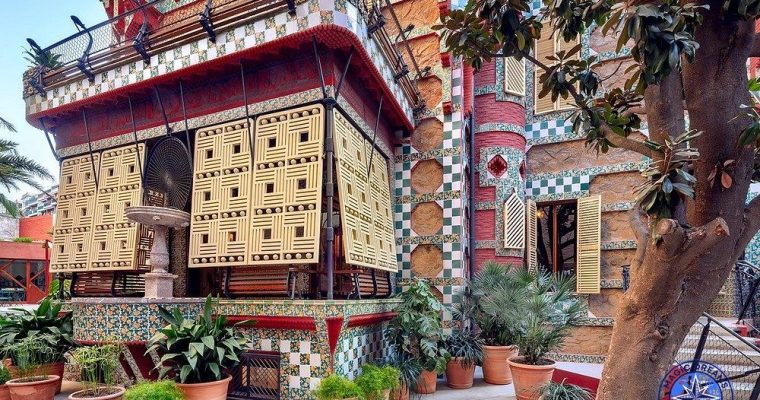
Casa Vicens: The Origins of a Genius Where Nature Becomes Architecture Casa Vicens is more than an architectural masterpiece: it is the starting point of Antoni Gaudí’s creative universe. Built between 1883 and 1885 in the then-independent town of Gràcia, this summer residence marked the …
The Spiritual Vision of Antoni Gaudí, Presented by Magic Dreams Barcelona
Discover the Basilica of the Expiatory Temple of the Sagrada Família, the architectural soul of Barcelona and the most significant work of the Modernist genius Antoni Gaudí. More than a monument, this temple is a living creation, conceived as an act of faith, a collective offering inspired by the people, and a bridge between nature, spirituality, and architecture.
Located at Carrer de la Marina, 41 (Barcelona), the Sagrada Família is now one of the most visited monuments in Spain and the world. Its construction began in 1882, funded by private donations, and Gaudí took over the project in 1883, dedicating 43 years of his life to this work, fully aware that he would not live to see it completed.
As of October 13, 2026, the upper cross of the Tower of Jesus at the Sagrada Família has already been installed, marking a historic milestone. Standing 172.5 metres tall, the tower crowns the vertical composition of the temple and makes the Sagrada Família the tallest church in the world, surpassing Ulm Minster in Germany and finally fulfilling Gaudí’s vision.
This date carries special significance, as June 10, 2026, marked the centenary of Antoni Gaudí’s death. He passed away on June 10, 1926. For this reason, 2026 is dedicated to celebrating the architect’s legacy and honouring his architectural, cultural, and artistic achievements. Exhibitions, concerts, cultural events, and commemorative Masses are taking place throughout the year, highlighting the global importance of his work.
The installation of the cross atop the Tower of Jesus, the central tower of the temple and a symbol of Catalan Modernism, represents one of the most emblematic moments of Gaudí Year 2026. This element symbolises both the completion of a fundamental stage in the construction process and the universal reach of the architect’s influence. The Sagrada Família not only achieves a historic height record but also reaffirms its status as a cultural and spiritual icon connecting centuries of history, creativity, and devotion.
Antoni Gaudí and His Spiritual Vision
Architecture as a Mission of Faith
Antoni Gaudí did not view architecture as an aesthetic exercise, but as a spiritual mission. A deeply religious man who led an austere life during the later years of his life, he understood his work as a service to God and to the community. He is often associated with the phrase, “My client is not in a hurry,” referring to God and eternity.
Gaudí conceived the Sagrada Família as a Bible carved in stone, with each façade illustrating an essential chapter of the Christian faith:
The Nativity Façade (facing east): Celebrates life, nature, and hope. It is the only façade built almost entirely during Gaudí’s lifetime.
The Passion Façade (west): Austere, angular, and dramatic, it represents the suffering and crucifixion of Christ, featuring sculptures by Josep Maria Subirachs.
The Glory Façade (south): The main entrance, dedicated to death, the Last Judgement, Glory, and the path towards God.
The 18 Towers of the Sagrada Família
An Architectural Journey Towards the Divine
The temple’s design includes 18 towers:
12 dedicated to the Apostles, 4 to the Evangelists, 1 to the Virgin Mary, and the central tower dedicated to Jesus Christ. Together, they form the defining silhouette of the Sagrada Família, making it the tallest church in the world and the tallest building in Barcelona.
Nature as a Spiritual Language
Gaudí’s Organic Architecture
On the exterior of the temple, Gaudí drew direct inspiration from nature: mountains, trees, animals, flowers, and the cycles of life. Stone is not rigid but organic; it does not merely bear weight, it seems to blossom. Each façade expresses an essential moment in the life of Christ—Nativity, Passion, and Glory—through a symbolic language accessible to everyone, conceived as a visual catechism for the people.
The Interior of the Sagrada Família
A Sacred Forest of Light and Geometry
The interior represents the culmination of Gaudí’s vision: a sacred forest where columns rise like tree trunks and branch out towards the light. Gaudí studied natural geometry—including hyperboloids, helicoids, and spirals—to create a structure that is light, strong, and harmonious.
Sunlight, filtered through coloured stained-glass windows, changes throughout the day: cool tones at dawn and warm hues at sunset, transforming the space into a cosmic and spiritual clock. For Gaudí, light was a manifestation of the divine.
The Final Years of Antoni Gaudí
A Life of Humility, Faith, and Dedication
During his final years, Gaudí led a humble, almost monastic life, devoting himself entirely to the Sagrada Família. He dressed simply, ate frugally, and spent long hours in prayer and work. On June 7, 1926, he was struck by a tram on Barcelona’s Gran Via. Because of his modest appearance, he was not immediately recognised and was taken to the Hospital de la Santa Creu, where he died three days later.
He was subsequently buried in the crypt of the Sagrada Família. His death deeply moved the city. Today, the Catholic Church’s beatification process for Gaudí remains open, recognising his life of faith, humility, and service.
The Tower of Jesus
The Culmination of Gaudí’s Architectural Vision
The Tower of Jesus, located at the centre of the Sagrada Família complex, is the temple’s tallest and most emblematic feature. Crowned by a large four-armed cross, it represents Jesus Christ and completes the vertical composition envisioned by Antoni Gaudí.
Standing 172.5 metres tall, the tower makes the Sagrada Família the tallest church in the world and the tallest building in Barcelona, bringing Gaudí’s architectural and spiritual vision to life.
The installation of the upper cross was completed in February 2026, marking one of the most significant milestones in the temple’s history and in Gaudí Year, coinciding with the centenary of the architect’s death on June 10, 1926.
The Tower of Jesus symbolises the union of architecture, nature, and spirituality, rising above Barcelona as an expression of faith and of Antoni Gaudí’s universal legacy.
The Tower of Mary
The Light of the Virgin Over Barcelona
The Tower of Mary, part of the Sagrada Família complex, is a central emblem of devotion and spirituality. Dedicated to the Virgin Mary, it symbolises purity, grace, and maternal intercession before God, rising above the city of Barcelona as a beacon of faith.
Crowned by a twelve-pointed star, the tower stands out as one of the most distinctive features of the Sagrada Família skyline. Its light and presence reinforce the spiritual dimension of the temple and express the importance of Mary within Gaudí’s religious vision.
The Tower of Mary represents a path towards spiritual elevation, symbolising humanity’s aspiration towards the divine and the Virgin’s maternal presence along the journey of faith.
The Glory Façade
The Path Towards God and Spiritual Transcendence
The Glory Façade, facing south towards Carrer de Mallorca, is the main entrance and the most ambitious façade of the Sagrada Família. Conceived by Gaudí to represent the path towards God, it focuses on redemption and spiritual transcendence. Construction began in 2002, and its design is organised into three levels: earthly, spiritual, and celestial. A grand staircase is planned to lead worshippers towards contemplation of the divine.
This façade symbolises the journey towards Glory through virtue, redemption, and the grace of the Holy Spirit. Its design includes representations of the Holy Trinity, stone clouds depicting scenes from Genesis, and columns dedicated to the seven deadly sins and the heavenly virtues. The structure features four monumental bell towers dedicated to Saint Andrew, Saint Peter, Saint Paul, and Saint James the Greater, while the main portico is designed to incorporate sixteen hyperboloid-shaped lanterns.
Between 2025 and 2026, the first columns and structural elements above pavement level along Carrer de Mallorca have been erected. Artistic and sculptural work is expected to continue for at least another decade.
Magic Dreams Barcelona
Private Experiences of Art, Culture, and Spirituality
We are professional native-speaking guides with more than 10 years of experience, specialising in Gaudí, Catalonia, and high-end cultural tourism. We offer personalised, private, and worry-free experiences, taking care of every detail. We know the symbols, mysteries, and deeper history that are rarely found in conventional guidebooks.
Premium Services
Private guided tours, available daily or weekly.
Daily or weekly cultural, botanical, architectural, and gastronomic itineraries.
Art guidance and creative workshops inspired by Gaudí’s trencadís mosaic technique.
Emotionally enriching botanical walks with a choice of premium picnics.
Personalised accommodation and comprehensive logistical support.
Private dining experiences with a local chef, featuring Catalan, Spanish, and international cuisine, with themed menus to choose from.
Live music at your accommodation or a selected venue, artisan pastries, and floral decorations.
Gastronomic experiences aboard a private yacht.
Photography experiences in unique and hidden corners of Barcelona.
Romantic getaways, weekend escapes, and tailor-made experiences.
Barcelona from the Sea
A Gastronomic Experience on a Private Yacht
Discover Barcelona from the sea with our private yacht gastronomic experience.
Enjoy an exclusive journey along the Mediterranean coastline, with privileged views of the city skyline, a personalised menu prepared by our local chef, alcohol-free 0.0% wine pairings and fresh juices, live music, and premium service. A unique sensory experience in which art, the sea, and gastronomy come together.
Every detail is designed with sensitivity, excellence, and personalised attention. Our services are available in Spanish, Catalan, and English. Other languages can be accommodated upon request.
The Words of Antoni Gaudí
Nature, Beauty, and Spirituality
To conclude, discover the words of Antoni Gaudí.
Antoni Gaudí said:
“Create beauty! Seek the image of mystery in nature and transform it into architecture.”
“The great book, always open, is the book of Nature.”
“Nothing has been invented in this world; good fortune lies in seeing what God has placed before our eyes.”
“Life is a battle; strength lies in virtue, and virtue can only be sustained through spiritual cultivation.”
Basílica del Templo Expiatorio de la Sagrada Familia.
Basílica del Templo Expiatorio de la Sagrada Familia.
Basílica del Templo Expiatorio de la Sagrada Familia.
Basílica del Templo Expiatorio de la Sagrada Familia.
Basílica del Templo Expiatorio de la Sagrada Familia.
Basílica del Templo Expiatorio de la Sagrada Familia.
Basílica del Templo Expiatorio de la Sagrada Familia.
Basílica del Templo Expiatorio de la Sagrada Familia.
Basílica del Templo Expiatorio de la Sagrada Familia.
Basílica del Templo Expiatorio de la Sagrada Familia.
Basílica del Templo Expiatorio de la Sagrada Familia.
Basílica del Templo Expiatorio de la Sagrada Familia.
Basílica del Templo Expiatorio de la Sagrada Familia.
Basílica del Templo Expiatorio de la Sagrada Familia.
Basílica del Templo Expiatorio de la Sagrada Familia.
Basílica del Templo Expiatorio de la Sagrada Familia.
Basílica del Templo Expiatorio de la Sagrada Familia.
Basílica del Templo Expiatorio de la Sagrada Familia.
Basílica del Templo Expiatorio de la Sagrada Familia.
Basílica del Templo Expiatorio de la Sagrada Familia.
Basílica del Templo Expiatorio de la Sagrada Familia.
Basílica del Templo Expiatorio de la Sagrada Familia.
High above Barcelona, surrounded by Mediterranean vegetation and the gentle slopes of Carmel Hill, lies Park Güell, one of the city’s most iconic landmarks and one of Antoni Gaudí’s most extraordinary creations. Here, architecture and nature cease to be separate elements and become part of …