Route guide for visitors throughout Catalonia – Barcelona – Costa Brava – Catalan Pyrenees – Personalized experiences – Customized tour guide services – A small tribute to the wonderful city and land that saw us born – Transforming experiences into unforgettable memories - Magic Dreams Collection: exclusive universes inspired by Salvador Dalí and Gaudí. Niche perfumes, jewelry, lithographs, and collectible items celebrating the Mediterranean spirit.
In the highlands of Val d’Aran, where stone villages meet forests, rivers and the Pyrenean mountains, Tredòs preserves the authentic character of a historic mountain village. At an altitude of 1,348 metres, in the upper part of Val d’Aran, lies Tredòs, one of the villages …
Escapada Romántica Magic Dreams Barcelona – Vielha y la Val d’Aran, el latido más puro del Pirineo catalán En el extremo noroccidental de Cataluña, allí donde el Pirineo catalan se eleva con solemnidad y la naturaleza conserva todavía un pulso ancestral, está situada la Val …
Between the Mountains, Snow, Forests and Culture of the Val d’Aran
In the highest part of the Val d’Aran, where the mountains begin to open out into a vast plateau of alpine meadows, we find one of the most distinctive landscapes in the Pyrenees: the Pla de Beret.
At an altitude of around 1,850–1,860 metres, this enormous high-altitude plateau is one of the most characteristic natural areas of Naut Aran and forms part of the Baqueira Beret ski resort, the great winter sports destination of the Val d’Aran.
But reducing Beret to skiing would mean seeing only a small part of its history.
Here, waters flowing towards two different sides of the Pyrenees converge: to the north, the waters associated with the Garonne head towards the Atlantic basin; to the south, the Noguera Pallaresa begins its journey towards the Mediterranean. The Pla de Beret is therefore a genuine watershed and one of those places where geography itself explains the history of the territory.
During winter, the great meadows disappear beneath the snow, transforming the landscape into one of the main skiing areas in the Pyrenees.
During summer, by contrast, the great mountain meadow reappears, livestock graze peacefully, and trails lead towards Montgarri, Baciver, the Clòsos lakes and other high-mountain landscapes.
It is a place for skiing, walking, observing, photographing, eating well and, above all, breathing.
WHERE IS PLA DE BERET?
At the upper end of the Val d’Aran
The Pla de Beret belongs to the municipality of Naut Aran, in the province of Lleida, within the Val d’Aran.
It is located above Baqueira and can be reached via the road that climbs from the village of Baqueira towards Beret.
From Baqueira to Pla de Beret, it is approximately 8 kilometres by road.
From Vielha, the road journey is around 19–20 kilometres, depending on the exact starting point.
The road continues towards one of the main gateways to this high-mountain landscape and takes you practically to the Pla de Beret car park itself.
What about from Barcelona?
From Barcelona to Pla de Beret, it is approximately 264 kilometres by road, with a driving time of around 4 hours, although in winter the actual journey can take considerably longer due to traffic, snow, ice or weather conditions.
For a getaway from Barcelona, therefore, you should allow around four hours of travel each way.
The usual route heads towards Lleida and the Pyrenees, subsequently entering the Val d’Aran through the Vielha Tunnel.
Historically, the connection with Catalonia was much more difficult. The opening of the Vielha Tunnel in 1948 made year-round communication considerably more reliable, after centuries during which the mountains and snow made travel towards the south extremely difficult.
HOW FAR IS IT FROM FRANCE?
A mountain landscape that practically exists between two worlds
The Val d’Aran borders France directly, and its history is deeply connected with Occitania.
The valley’s geographical orientation explains much of its character: for centuries, its relations with French territory were particularly strong, while the Garonne River forms the great natural axis connecting Aran with the French side.
The area around Montgarri, which can be reached on foot from the Pla de Beret, lies precisely beside the border with Pallars Sobirà and very close to the French department of Ariège.
For this reason, rather than giving an exact distance from the Pla de Beret car park to France — which depends on the specific border point chosen — it is more accurate to say that we are only a few kilometres from the French border as the crow flies across the mountains.
By road, however, you have to descend towards the border crossings in the Val d’Aran.
THE PLA DE BERET
A great meadow between two watersheds
The Pla de Beret is one of the largest open mountain-meadow areas in the Val d’Aran.
It is approximately 4 kilometres long and is surrounded by peaks forming the Beret massif.
Its appearance changes completely depending on the season.
In winter, we find snow, ski lifts, skiers, snowboarders, pistes and vast white expanses.
In summer, an immense green meadow appears, dotted with paths, livestock and mountain flowers.
It is one of those landscapes where you can clearly understand the historical relationship between the inhabitants of the Val d’Aran and the mountains.
For centuries, these meadows were used as summer pastures.
Livestock farming was an essential part of the traditional economy, and even today cattle can be found grazing freely during the warmer months.
A UNIQUE WATERSHED
Where the journey towards two seas begins
One of the most interesting geographical features of the Pla de Beret is its position on the watershed between the Atlantic and Mediterranean basins.
Watercourses begin in this area and then follow completely different routes.
The Noguera Pallaresa begins its journey southwards and eventually becomes part of the Mediterranean basin.
On the other side, we find waters associated with the Garonne, which cross the Val d’Aran towards France before eventually flowing into the Atlantic Ocean.
For this reason, the Pla de Beret is not simply a beautiful landscape.
It is also a place of extraordinary geographical interest.
HISTORY OF PLA DE BERET
Shepherds, mountain paths and legends
Long before chairlifts, hotels and ski resorts existed, Beret was shepherds’ territory.
Life was governed by the cycles of the mountains: the arrival of spring, the movement of livestock towards the high summer pastures and the return before the first heavy snowfalls.
The landscape still preserves this pastoral heritage.
There is also an important tradition of legends and stories involving witches and covens. The Pla de Beret was traditionally regarded as a setting for gatherings of witches and sorcerers.
These stories form part of the popular legends of the mountains and contribute to the mysterious atmosphere found in many places throughout the Pyrenees.
MONTGARRI
An essential excursion from Beret
From the Pla de Beret, you can take one of the area’s best-known hikes: the trail towards the Sanctuary of Montgarri.
The circular route is approximately 10–12 kilometres, depending on the variant chosen, and involves a moderate amount of elevation gain.
The route follows the course of the Noguera Pallaresa, crossing alpine meadows, black pine forests and mountain areas.
At the end, you reach the historic Sanctuary of Montgarri, beside the river.
The complex has medieval origins and for centuries served a much more important purpose than we might imagine today: it was a place of passage, shelter and mountain hospitality for visitors and inhabitants on both sides of the border.
In winter, the route can be completed on snowshoes, depending on conditions and the state of the trail.
It is one of the experiences that best allows you to understand the mountains beyond skiing.
CAN YOU GET THERE ON FOOT?
Yes — and it is one of the main attractions
The Pla de Beret is easily accessible on foot from its car park.
You do not need to ski to enjoy the landscape.
From the car park area, you can walk across the plateau itself and begin various trails.
One of the best known is the route towards Montgarri.
In summer, it is a pleasant hiking route, while in winter it can become a snowshoe excursion.
In addition, the Pla de Beret restaurant is accessible on foot from the car park, meaning that even people who do not ski can enjoy the atmosphere of the resort and its mountain cuisine.
This makes Beret an especially interesting option for families, companions of skiers or anyone simply looking to enjoy the snow without putting on skis.
BAQUEIRA BERET
The great ski resort of the Pyrenees
The modern history of Baqueira officially began on 6 December 1964, when the first chairlift was inaugurated.
What was then an ambitious project went on to transform the Val d’Aran profoundly.
The resort began in the Baqueira area and gradually expanded towards Beret and later towards Bonaigua and Pallars Sobirà.
The expansion towards Beret began in 1982, with the inauguration of the Reina chairlift, followed by the subsequent development of this part of the resort.
In 2003, the skiable area was expanded towards the Bonaigua valley and Alt Àneu.
Today, Baqueira Beret constitutes a large mountain domain divided mainly into the following areas:
Baqueira
Beret
Bonaigua
Baciver
BAQUEIRA BERET IN NUMBERS
A large-scale ski resort
The resort’s technical figures are approximately:
173 kilometres of pistes
131 pistes
36 lifts
Approximate lowest elevation: 1,500 metres
Highest elevation: 2,610 metres
More than 1,100 metres of vertical drop
7 kilometres of cross-country skiing
More than 2,000 hectares of skiable area
Areas for snowparks, freeride, competition and ski touring.
The resort offers pistes for different ability levels.
According to the current published figures:
Green pistes
6
These are the easiest pistes and are primarily intended for beginners.
Blue pistes
48
Ideal for skiers who have mastered the basic movements and want to progress.
Red pistes
55
Featuring steeper slopes and greater technical difficulty.
Black pistes
18
For expert skiers and suitable conditions.
In total, there are 131 marked pistes.
THE FOUR MAIN SECTORS
Each mountain has its own character
BAQUEIRA
This is the historic heart of the resort.
Here you will find the Baqueira 1,500 area, the main services, hotels, apartments, restaurants and connections to the pistes.
It is also one of the most convenient areas for those looking to combine skiing, gastronomy, accommodation and atmosphere.
BERET
This is the area surrounding the great Pla de Beret.
It has areas particularly suitable for beginners, cross-country skiing and families, although there are also more challenging routes towards the upper areas.
It is also one of the most interesting sectors for those who want to enjoy the landscape even without skiing.
BONAIGUA
On the other side of the Bonaigua Pass, the landscape changes, becoming more open and offering long mountain runs.
The area has pistes of varying difficulty and magnificent panoramic views.
BACIVER
This is one of the highest and most distinctly alpine areas of the domain.
From its upper elevations, you can enjoy views of some of the great mountains of the Pyrenees.
WHAT KIND OF SKIING CAN YOU FIND?
From beginners to freeride
Baqueira allows you to practise different disciplines:
Alpine skiing.
Snowboarding.
Cross-country skiing.
Freeride.
Ski touring.
Snowshoeing.
Training and competition.
Snow activities for families.
The Pla de Beret also has a long tradition of Nordic skiing.
The Marxa Beret, one of the major popular cross-country skiing events, is held here, with routes of different distances.
Baqueira Beret also occupies a prominent position within Spanish skiing. If we use skiable kilometres as a reference, its approximately 173 kilometres place it immediately behind Formigal-Panticosa, which has 182 kilometres, a difference of just 9 kilometres.
For Catalonia, however, Baqueira has a particular importance. The resort is located in the Val d’Aran, in the province of Lleida, and during the winter months it concentrates a significant part of the snow-related activity in the Catalan Pyrenees. The ski season usually takes place between December and February, although dates and conditions depend each year on snow conditions and weather.
For many people from Barcelona, travelling to the Pyrenees to ski is a long-established tradition linked to the proximity of the mountains. Weekends, public holidays, New Year and winter holidays are common times to travel from Barcelona to the Pyrenean resorts. Although Baqueira is farther away than other resorts in the Catalan Pyrenees, it occupies a unique position because of the size of its ski domain, its altitude and the variety of its landscapes.
SPORTS IN SUMMER TOO
When the snow disappears, another mountain emerges
Baqueira Beret does not disappear during the warmer months.
The resort and its surroundings become a destination for:
Hiking.
Trekking.
Mountain biking.
Road cycling.
Mountain cycling.
Trail running.
Family excursions.
Nature photography.
Wildlife watching.
Ski touring and alpine activities during the appropriate seasons.
Access to the Ruda valley and towards the Saboredo lakes also allows you to gradually enter high-mountain landscapes.
CYCLING AND THE PLA DE BERET
A mountain for two wheels as well
The Pla de Beret is a mountain pass known among cycling enthusiasts.
The climb from the Val d’Aran involves a significant amount of elevation gain, and the pass has formed part of routes used by major cycling races.
The Pla de Beret has hosted stages and finishes associated with both the Vuelta a España and the Tour de France.
It is an especially interesting destination for road-cycling enthusiasts during the snow-free months.
NATURE
One of the main reasons to visit Beret
The Val d’Aran has particularly rich natural surroundings due to the combination of altitude, orientation and Atlantic climate.
The forests include beech, fir, pine, oak and birch, while alpine meadows appear above the forest zones.
The humidity and relatively high levels of precipitation favour abundant vegetation.
In spring and summer, the meadows can be filled with flowers.
In autumn, the forests completely change colour.
And in winter, the landscape becomes covered in snow.
BOTANY
Alpine flowers and Atlantic forests
For botany enthusiasts, the Val d’Aran is an extraordinarily interesting region.
Species found here include:
Fir trees.
Black pines.
Beech trees.
Birch trees.
Oak trees.
Hazel trees.
Rhododendrons.
Bilberries.
Mosses.
Ferns.
Daffodils.
Mountain arnica.
Alpine orchids.
Sundews.
Water violets.
Vegetation changes radically with altitude.
In the forests, we find a humid, Atlantic-type natural environment.
At higher elevations, alpine meadows and vegetation adapted to cold, wind and a much shorter growing season appear.
WILDLIFE
A great territory for wildlife
The Val d’Aran is also one of the Pyrenean areas of greatest interest for wildlife observation.
Species that can be found include:
Red deer.
Roe deer.
Wild boar.
Marmots.
Chamois.
Foxes.
Squirrels.
Ptarmigans.
Golden eagles.
Bearded vultures.
Vultures.
Middle spotted woodpeckers.
Pyrenean brook newts.
Brown bears.
The presence of the brown bear is part of the natural heritage of the Pyrenees, although seeing one is exceptional and you should never attempt to approach or follow a wild animal.
During summer, it is possible to hear or even spot marmots in the meadow areas.
In autumn, one of the great natural spectacles is the red deer rut.
And in winter, with a great deal of luck, you may spot snow-adapted species such as the ptarmigan.
ARCHITECTURE
From traditional Aranese architecture to contemporary mountain design
The Pla de Beret, given its character as a large high-mountain area, should not be understood as a traditional village.
Its architecture is mainly associated with mountain buildings, resort infrastructure, shelters and facilities dedicated to tourism and winter sports.
The real historic architecture should be sought in nearby villages:
Baqueira, Salardú, Tredòs, Unha, Gessa, Arties and Bagergue.
Here you will find traditional Aranese architecture based on:
Stone.
Wood.
Slate.
Steeply pitched roofs.
Wooden balconies.
Small windows.
Thick walls adapted to the climate.
It is an architectural style born out of the need to withstand long winters, snow, rain and extreme temperatures.
THE BAQUEIRA STYLE
Elegant mountain architecture
From the 1960s onwards, Baqueira developed a form of tourist architecture different from that of the medieval villages in the valley.
The aim was to create a modern ski resort while integrating it visually into the landscape.
Stone and wood play an important role, while pitched roofs and a mountain aesthetic help create Baqueira’s distinctive appearance.
In the Baqueira 1500, Ruda and Baqueira 1700 areas, we find different types of accommodation, ranging from mountain apartments and buildings to higher-end hotels.
The Pleta de Baqueira is a particularly good example of this attempt to draw inspiration from traditional Aranese buildings.
WELLNESS
Mountains, silence and water
Baqueira and the Val d’Aran allow you to combine sport and wellness.
After a day of skiing or hiking, you can find:
Spas.
Massages.
Heated pools.
Saunas.
Steam rooms.
Body treatments.
Relaxation areas.
Hotels with wellness facilities.
There is also a particularly unique experience in the area:
BANHS DE TREDÒS
The Banhs de Tredòs, located at approximately 1,755 metres above sea level, combine thermal waters with a high-mountain setting.
Access is via the Aiguamòg valley, and the area is also a gateway to some of the most spectacular landscapes in the Pyrenees.
It is an especially attractive experience for combining:
The gastronomy of the Val d’Aran is deeply connected to its climate.
It is a cuisine created for cold winters, mountain work and the need to make use of locally available products.
The most emblematic dish is:
OLLA ARANESA
A hearty stew that perfectly summarises the traditional cuisine of the valley.
Other specialities include:
Mountain meats.
Beef.
Lamb.
Pork.
Cured meats and sausages.
Trinxat.
Mushrooms.
Potatoes.
Cheeses.
Dairy products.
Traditional desserts.
Traditional gastronomy continues to play an important role in the tourist experience of the Val d’Aran.
EATING AT THE PLA DE BERET
Yes, you can eat there without skiing
One of the great advantages of the Pla de Beret is that there is a restaurant with table service.
The Pla de Beret Restaurant offers à la carte cuisine, with dishes such as salads, pasta and grilled meats.
It has an indoor dining room and a terrace overlooking the Pla.
And the most interesting point for non-skiers:
it can be reached on foot from the car park.
The resort also has other dining facilities, including the Eth Audeth self-service restaurant, in Beret.
So you can simply drive up to the Pla de Beret to enjoy lunch in the mountains.
GASTRONOMY IN BAQUEIRA
From traditional dishes to fine dining
Baqueira offers a much broader gastronomic selection.
There are restaurants and cafés on the slopes, hotel restaurants and establishments in Baqueira 1500 and the nearby villages.
One restaurant with a history of its own is Ticolet, whose story began practically at the same time as the resort.
On 6 December 1964, coinciding with the inauguration of Baqueira, this establishment also began its gastronomic history.
Its current cuisine combines tradition and innovation, using local products.
Gastronomy is, in fact, an important part of the contemporary Baqueira experience.
WHERE TO STAY
From apartments to high-mountain hotels
One of Baqueira’s major advantages is the quantity and variety of accommodation.
You can choose between:
BAQUEIRA 1500
The most practical option for those who want to be close to lifts, restaurants, shops and services.
There are hotels and numerous apartments.
BAQUEIRA 1700
A higher area closely associated with access to the slopes and mountain accommodation.
BAQUEIRA RUDA
One of the best-known areas for those looking for accommodation with convenient access to the slopes and a more refined mountain aesthetic.
SALARDÚ
An excellent option for those who prefer to stay in a historic village in the Val d’Aran and travel to the slopes afterwards.
TREDÒS
Particularly interesting for those seeking peace and quiet, traditional architecture, nature and proximity to Baqueira.
ARTIES
One of the liveliest villages in the valley, with restaurants, historic heritage and a wide range of accommodation.
VIELHA
The capital of the Val d’Aran and a practical option for those who want to combine the resort with a larger town.
WHERE SHOULD I STAY DEPENDING ON THE TYPE OF TRIP?
Each area offers a different experience
For skiing and heading straight onto the slopes:
Baqueira 1500, 1700 or Ruda.
For a romantic getaway:
Arties or a hotel with a spa in the Baqueira area.
For peace and nature:
Tredòs.
For combining heritage and skiing:
Salardú.
For gastronomy and atmosphere:
Arties and Baqueira.
For a family getaway:
Baqueira or Beret, depending on the activities and accommodation.
For a wellness experience:
Baqueira + spa + Banhs de Tredòs.
BAQUEIRA WITHOUT SKIING
A resort also for non-skiers
You do not have to be a skier to enjoy Baqueira.
You can:
Walk around the Pla de Beret.
Hike to Montgarri.
Use designated areas for walking.
Go snowshoeing.
Enjoy a restaurant on the slopes.
Have a drink on a terrace.
Photograph the landscape.
Watch wildlife.
Visit Aranese villages.
Take mountain trails.
Relax in a spa.
Visit Banhs de Tredòs.
Discover Romanesque churches.
Enjoy the local gastronomy.
This allows you to create a much more complete getaway than simply spending a day skiing.
WHAT TO SEE NEAR BAQUEIRA AND BERET
A region that deserves several days
SALARDÚ
One of the most important historic villages in Naut Aran.
Its church of Sant Andreu preserves the famous Christ of Salardú, one of the great treasures of Aranese Romanesque heritage.
TREDÒS
A small traditional village located at 1,348 metres above sea level, beside the Garonne.
It preserves traditional architecture, Romanesque churches and provides access to Aiguamòg and Banhs de Tredòs.
UNHA
A small village perched above the valley, offering magnificent views.
GESSA
Another traditional village in Naut Aran.
ARTIES
One of the best-known villages in the valley.
Here you will find traditional architecture, religious heritage, restaurants and a particularly pleasant atmosphere.
BAGERGUE
One of the highest and most picturesque villages in the valley.
BANHS DE TREDÒS
Thermal waters and access to Aiguamòg.
COLOMÈRS CIRCUS
One of the great lake landscapes of the Pyrenees, with numerous glacially formed lakes.
From the Tredòs area, you can access trails leading towards this spectacular landscape.
PLA DE BERET THROUGHOUT THE YEAR
Four completely different landscapes
SPRING
Snowmelt transforms the streams and rivers.
The meadows become green again and the first flowers begin to appear.
It is a magnificent time to observe the transformation of the mountains.
SUMMER
The Pla de Beret becomes a vast meadow.
Livestock return to the pastures.
The trails allow you to walk towards Montgarri and other natural areas.
It is also an excellent season for cycling and hiking.
AUTUMN
The forests of the Val d’Aran take on shades of yellow, gold, orange and red.
It is an especially interesting season for photography, nature and gastronomy.
WINTER
Snow completely changes the identity of the place.
The Pla de Beret becomes one of the main gateways to the Baqueira Beret domain.
Alpine skiing, snowboarding, cross-country skiing and snowshoeing coexist with restaurants, hotels and mountain activities.
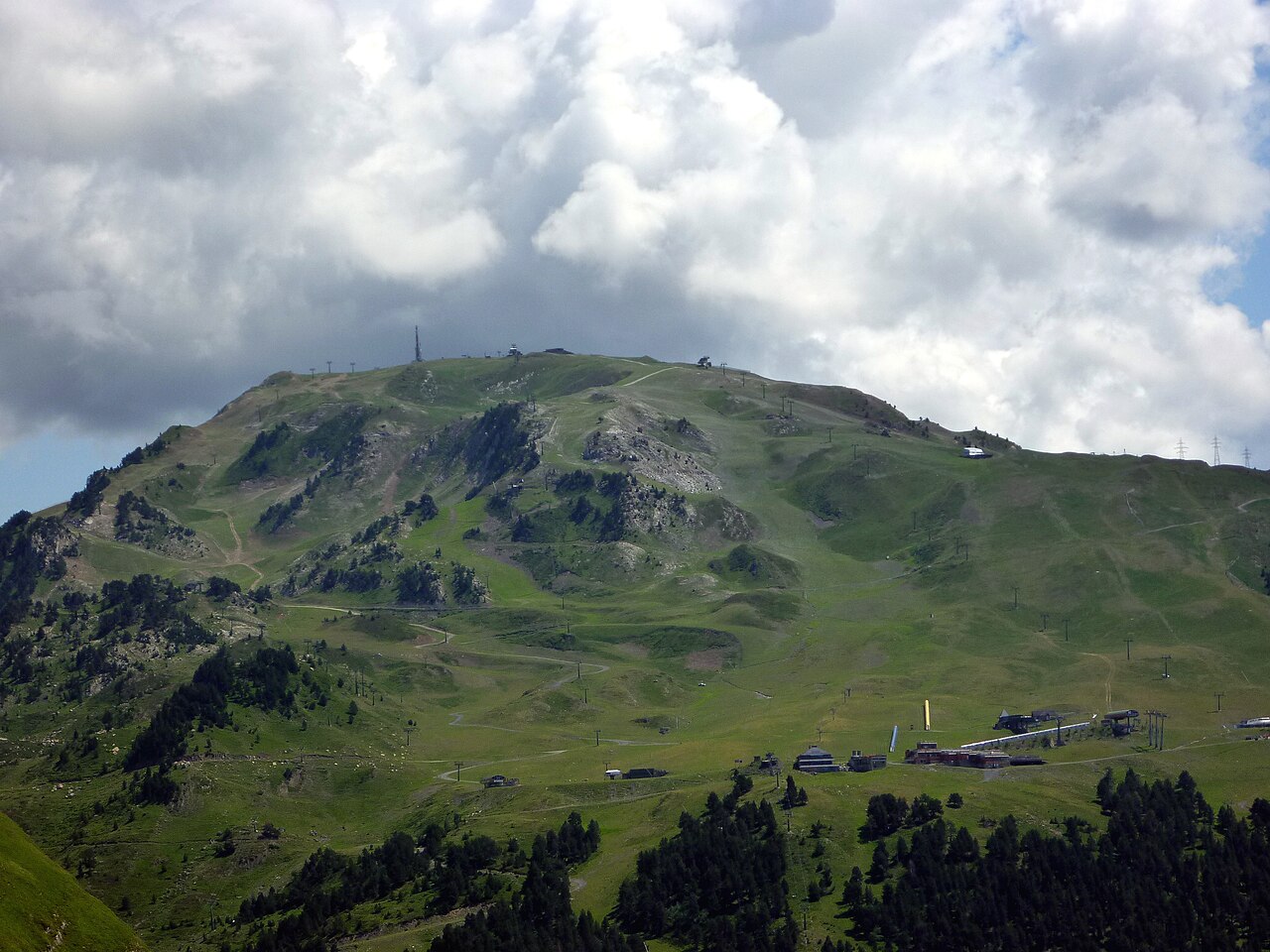
Baqueira en verano desde la carretera de de Beret (Naut Aran) – By Isidre blanc – Own work, CC BY-SA 3.0, https://commons.wikimedia.org/w/index.php?curid=27931073.
Baqueira Beret – By Cantabrucu – Own work, CC0, https://commons.wikimedia.org/w/index.php?curid=85262394.
Baqueira – By Cantabrucu – Own work, CC0, https://commons.wikimedia.org/w/index.php?curid=85262390.
Baqueira Beret – By Cantabrucu – Own work, CC0, https://commons.wikimedia.org/w/index.php?curid=85262379.
Telesilla en Baqueira – By Patrice Bon – Own work, CC BY-SA 4.0, https://commons.wikimedia.org/w/index.php?curid=75088229.
Estación de Esquí de Baqueira – By Faras – Own work, CC BY-SA 4.0, https://commons.wikimedia.org/w/index.php?curid=5502059.
Las curvas en la carretera que sube de Baqueira al Pla de Beret forman una serie de herraduras y tramos abiertos – By Anthospace – Own work, CC BY 4.0, https://commons.wikimedia.org/w/index.php?curid=150801231.
Verano del Pla de Beret y de la estación de esquí de Baqueira con muchos caballos alrededor – By Jordiferrer – Own work, CC BY-SA 3.0, https://commons.wikimedia.org/w/index.php?curid=15990431.