Tredòs: Stone, Water and Romanesque Heritage in the Heart of Val d’Aran.
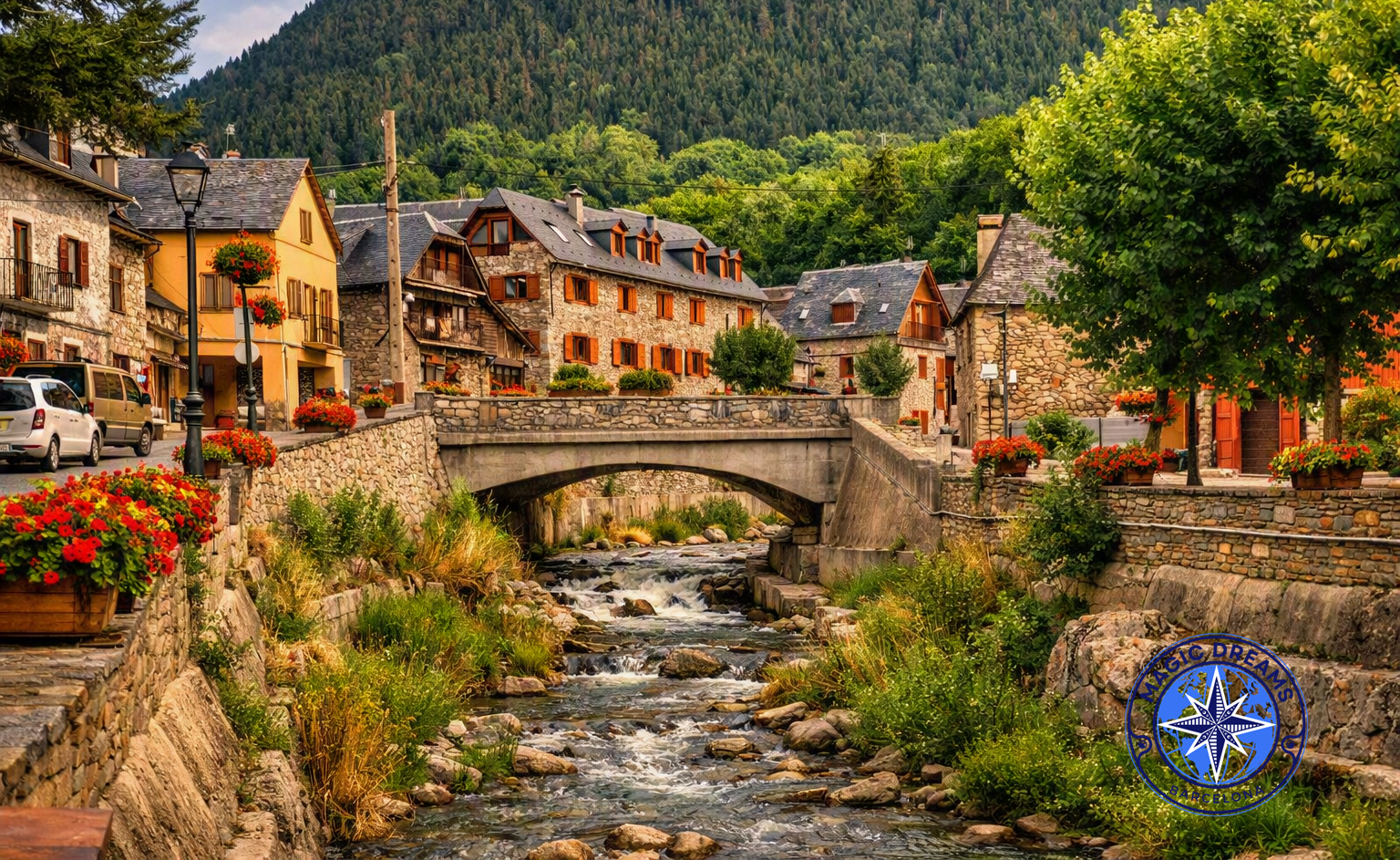
In the highlands of Val d’Aran, where stone villages meet forests, rivers and the Pyrenean mountains, Tredòs preserves the authentic character of a historic mountain village.
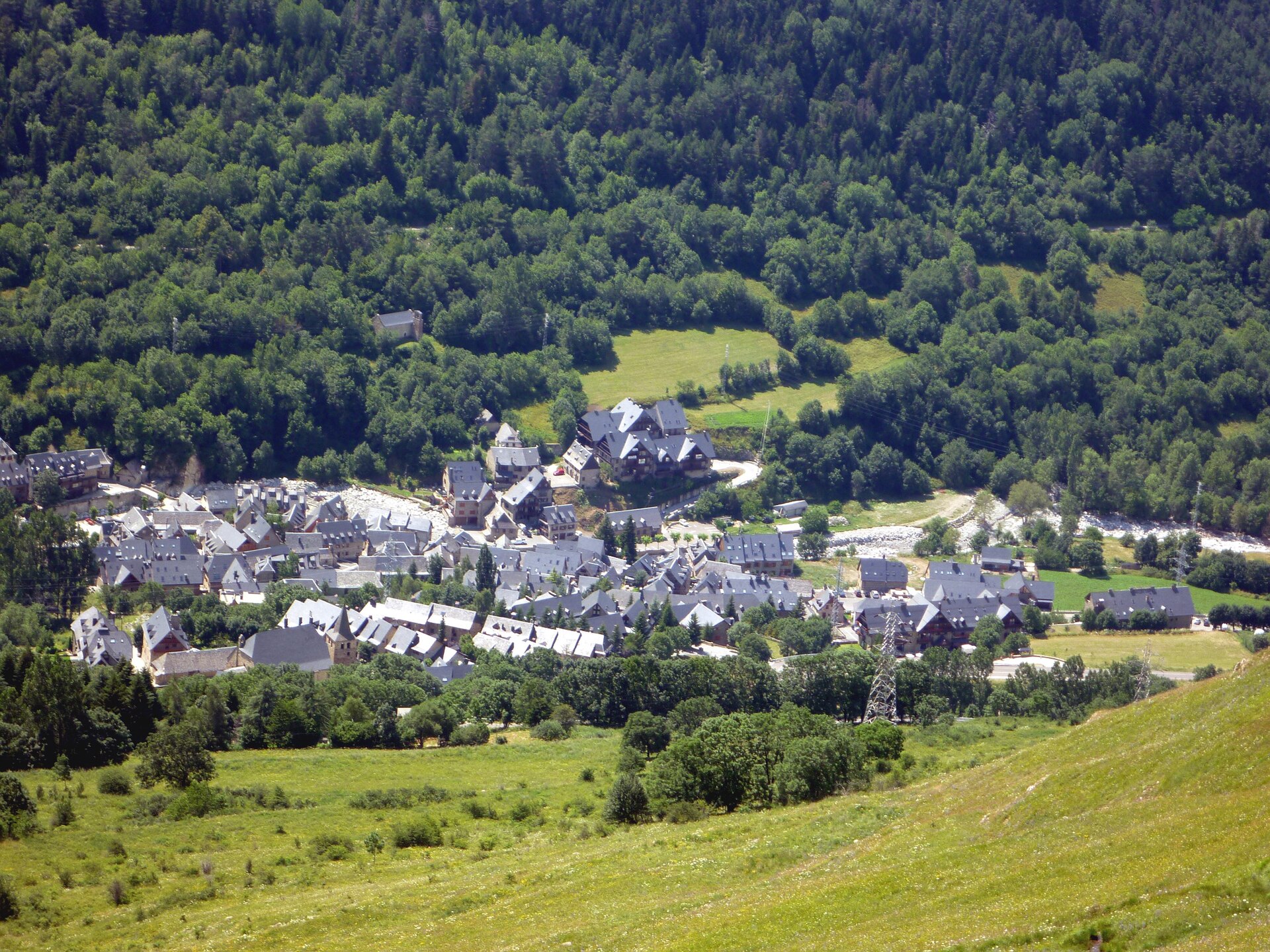
At an altitude of 1,348 metres, in the upper part of Val d’Aran, lies Tredòs, one of the villages that best reveals the architecture, nature and traditional culture of this Pyrenean territory.
Located beside the Garonne River, Tredòs is the last inhabited village in Naut Aran before reaching the surroundings of Baqueira Beret. Its privileged position also makes it one of the gateways to the Aiguamòg Valley, the Banhs de Tredòs and the Circ de Colomèrs, within the surroundings of Aigüestortes i Estany de Sant Maurici National Park.
At first glance, Tredòs may seem like nothing more than a small mountain village.
Yet behind its stone houses and slate roofs lies centuries of history, Romanesque churches, ancient paths, bridges, livestock traditions and architecture deeply adapted to the harsh climate of the Pyrenees.
It is precisely this combination that makes Tredòs so special.
Here, visitors can wander among traditional Aranese houses, admire an 11th-century Romanesque church, follow the course of the Garonne, walk into a mountain forest or sit down to enjoy a traditional olla aranesa.
And all of this can be experienced within a compact village that is best discovered slowly, on foot.
The History of Tredòs
A mountain village with medieval roots
The history of Tredòs is deeply connected to the evolution of Val d’Aran itself.
For centuries, its inhabitants lived mainly from livestock farming, mountain agriculture, forestry and the use of local natural resources.
The landscape shaped everyday life.
Meadows provided pasture for livestock, forests supplied timber and the mountains offered high-altitude grazing grounds during the summer months.
The paths connecting the different villages of the valley were also essential for trade and for the movement of people and animals.
Historically, Tredòs played a greater role than its small size today might suggest.
The village preserves important traces of its medieval and religious past, particularly through its churches.
One of the most remarkable elements of its history is Santa Maria de Cap d’Aran, where the Conselh Generau dera Val d’Aran, the historic governing institution of the valley, once held its annual meetings.
The old settlement was also protected by a defensive tower, which has since disappeared.
With the arrival of mountain tourism and, particularly, the development of Baqueira-Beret, Tredòs gradually began to change.
New homes and accommodation appeared, yet the village managed to preserve an important part of its traditional structure.
Today, old Aranese houses coexist with more recent buildings associated with tourism.
The Old Town
Stone, wood, slate and flowers
One of the best ways to discover Tredòs is simply to walk through its streets.
There is no need for a complicated itinerary.
The village itself works as a small open-air museum of traditional architecture.
The houses are mainly built from stone and wood, while slate roofs protect them from heavy rainfall and winter snowfall.
Wooden balconies, small windows, stone walls and narrow streets create the distinctive character of traditional Aranese villages.
During the warmer months, many façades and balconies are decorated with flowers.
Naut Aran Town Council places particular emphasis on the care of Tredòs’s green spaces and façades, with trees, flower planters and balconies decorated by local residents.
This attention to flowers and greenery has contributed to Tredòs being part of the Viles Florides programme.
Santa Maria de Cap d’Aran
The great Romanesque treasure of Tredòs
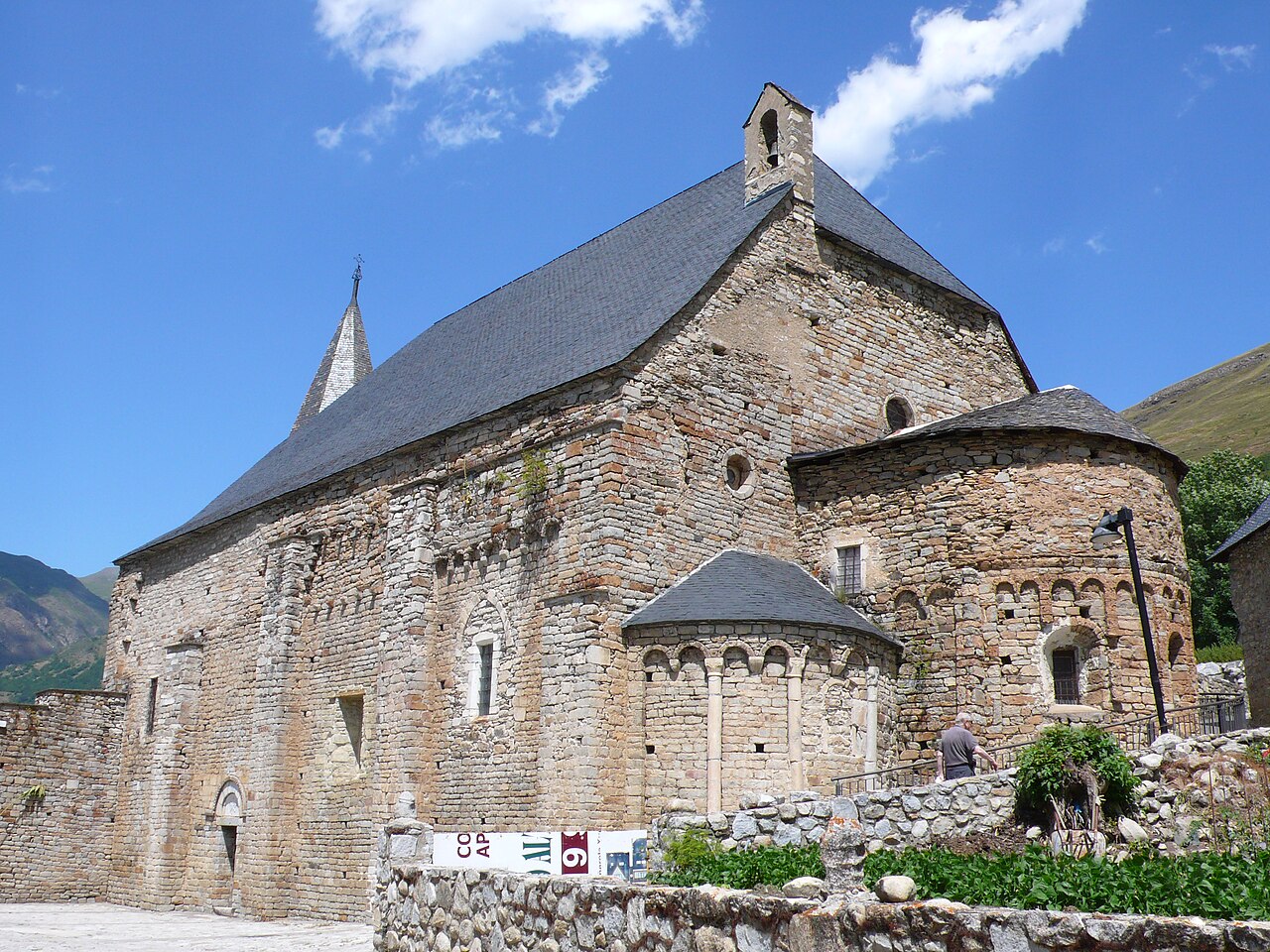
If there is one monument that should not be missed in Tredòs, it is Santa Maria de Cap d’Aran.
The church is one of the most important examples of Romanesque architecture in Val d’Aran.
Its oldest elements date back to the 11th century, although the building reflects several different stages of construction.
Its stone walls, apses and characteristic features of Lombard Romanesque architecture are particularly striking.
One of its most distinctive features is the crypt beneath the presbytery.
The church has a three-nave basilica layout and preserves a number of architectural elements that reveal the importance the temple once held within the territory.
Its interior also contained an important collection of Romanesque mural paintings.
Parts of these paintings were transferred to different institutions, and some of the best-known pieces are now held in international collections.
The church is one of the essential places for understanding the historical and artistic heritage of Tredòs.
Romanesque Art
An exceptional medieval artistic legacy
Romanesque heritage is one of Tredòs’s great attractions.
The religious architecture of Val d’Aran preserves distinctive characteristics reflecting the influence of the Pyrenean territories and Lombard architectural traditions.
At Santa Maria de Cap d’Aran, visitors can observe:
- A basilica-style layout.
- Three naves.
- Semicircular apses.
- A crypt.
- Lombard architectural elements.
- Bell-tower structures.
- Stone doorways.
- Architectural sculpture.
- Remains of mural paintings.
The artistic importance of the church extends beyond its walls.
The Romanesque paintings associated with Tredòs form part of the history of medieval European art, and some are now preserved outside Catalonia.
For art lovers, Tredòs can also form part of a wider Romanesque itinerary through Val d’Aran, including Salardú, Arties, Unha, Bossòst and other villages throughout the valley.
Sant Esteve de Tredòs
A small church beside the river
The second religious building deserving particular attention is Sant Esteve de Tredòs.
This small church has Romanesque origins and stands on the opposite side of the Garonne.
Its modest size contrasts with the historical importance of Tredòs’s wider religious heritage.
Its bell structure combines a small tower with a simple open belfry and retains elements characteristic of Aranese Romanesque architecture.
Its location also makes it possible to combine a visit with a walk beside the river and through one of the village’s most traditional areas.
The Chapel of the Virgin of the Rosary
A small sanctuary beside the bridge
Close to the Garonne stands the Chapel of the Virgin of the Rosary, a small religious building located beside the bridge.
It is one of those places that can easily be overlooked if Tredòs is visited too quickly.
The chapel, river, bridge and traditional houses create one of the village’s most characteristic scenes.
It is also one of the most attractive areas for photography.
Pont de la Capella
A classic image of Tredòs
The Pont de la Capella crosses the Garonne and connects the main part of the village with the neighbourhood on the opposite bank.
The present bridge has historic origins, and an inscription dates its construction to 1753.
The combination of the stone bridge, river, houses and vegetation makes this one of the most photogenic places in Tredòs.
The Garonne River
The water that accompanies the village
The Garonne River is one of the defining elements of Tredòs’s landscape.
The river runs through the valley and has long been closely connected to village life.
Its waters, together with small streams and tributaries, help create the exceptionally green landscape that characterises the valley during spring and summer.
In spring, melting snow increases the river’s flow.
During summer, the riverbanks become cool and pleasant places for walking.
In autumn, the water contrasts beautifully with the golden colours of the forests.
In winter, snow completely transforms the landscape.
Nature and Vegetation
A lush landscape shaped by Atlantic influences
Val d’Aran has particularly distinctive climatic conditions within the Catalan Pyrenees.
Its position on the northern side of the mountain range gives the valley a stronger Atlantic influence and supports exceptionally abundant vegetation.
Around Tredòs, visitors can find:
- Fir trees.
- Pine trees.
- Beech trees.
- Birch trees.
- Hazelnut trees.
- Oaks.
- Juniper.
- Rhododendrons.
- Bilberry bushes.
- Alpine meadows.
- A wide variety of mountain flowers.
Around Banhs de Tredòs, mountain vegetation includes extensive pine and fir forests, together with rhododendrons, juniper, birch and bilberry.
During spring and early summer, the meadows burst into bloom.
Autumn offers one of the most spectacular landscapes, as the forests gradually turn yellow, gold, orange and deep red.
Wildlife
Wildlife in the Pyrenees
The surroundings of Tredòs form part of a territory of exceptional natural richness.
The forests and mountain areas are home to species such as:
- Red deer.
- Roe deer.
- Wild boar.
- Foxes.
- Squirrels.
- Marmots.
- Pyrenean chamois.
- Ptarmigan.
- Golden eagles.
- Vultures.
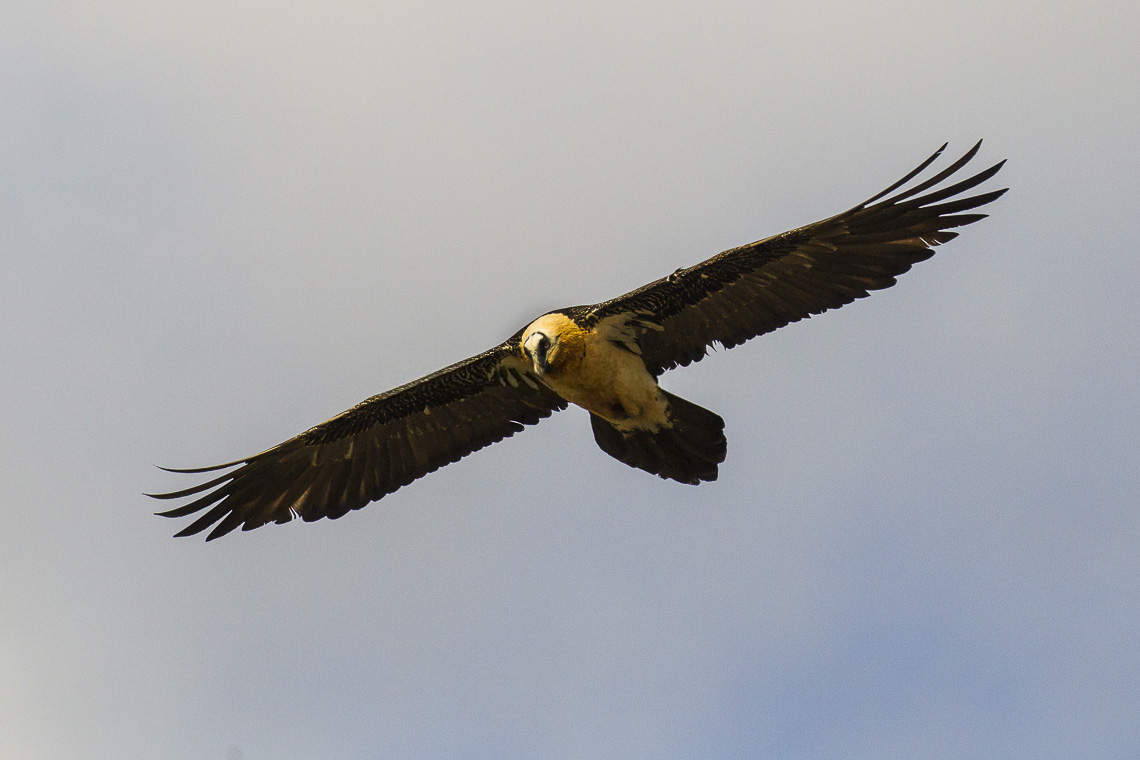
- Bearded vultures.
- Numerous species of woodland birds.
Wildlife changes according to altitude and season.
During summer, small mammals and birds become particularly active.
In autumn, signs of larger herbivores can often be found in the mountains.
During winter, snow completely alters the behaviour and movements of many species.
The brown bear is also part of the wider Pyrenean ecosystem, although sightings are extremely rare. Wild animals should never be approached, followed or deliberately disturbed.
The Climate of Tredòs
A true mountain climate
Tredòs’s altitude and Atlantic influence shape its climate.
Winters are cold and snowy, particularly at higher elevations.
Spring is generally cool and marked by significant snowmelt.
Summers are pleasantly warm during the day and cool at night, making Tredòs particularly appealing to travellers looking to escape the summer heat of Barcelona.
Autumn is one of the most beautiful seasons to visit because of the changing colours of the forests.
Winter, meanwhile, transforms Tredòs into an especially attractive destination for those wishing to combine the charm of a traditional village with the proximity of Baqueira-Beret.
Banhs de Tredòs
Thermal waters surrounded by mountains
Following the Aiguamòg Valley, visitors reach one of the most distinctive places in the surroundings: Banhs de Tredòs.
The complex stands at approximately 1,755 metres above sea level, within the protected mountain environment associated with Aigüestortes i Estany de Sant Maurici National Park.
Its thermal waters are one of the area’s main attractions.
But Banhs de Tredòs is much more than a thermal retreat.
It is also an excellent starting point for exploring the high-mountain landscapes of Aiguamòg and the Circ de Colomèrs.
During summer, visitors can enjoy hiking, trekking and e-bike routes.
In winter, activities include snowshoeing and snowmobile excursions.
The Circ de Colomèrs
More than thirty mountain lakes in a glacial landscape
One of the great natural attractions of the area is the Circ de Colomèrs.
This spectacular glacial landscape lies at the head of the Aiguamòg Valley.
The area is characterised by mountains, alpine meadows, waterfalls and an extraordinary concentration of mountain lakes.
Naut Aran Town Council highlights the trails leading from Tredòs towards the more than 30 mountain lakes of the Circ de Colomèrs.
It is one of the essential destinations for hiking enthusiasts and landscape photographers.
Baqueira-Beret
The great winter mountain destination
The proximity of Baqueira-Beret has made Tredòs one of the most attractive villages in which to stay during the snow season.
The resort offers alpine skiing and snowboarding, together with a range of mountain activities.
Yet the surrounding landscape is equally appealing outside the winter season.
In spring and summer, hiking, cycling and mountain-bike routes take centre stage.
Tredòs offers the advantage of combining the tourist infrastructure of Baqueira with the quieter atmosphere of a traditional mountain village.
Gastronomy
The flavours of Aranese mountain cuisine
Tredòs’s cuisine forms part of the traditional gastronomic heritage of Val d’Aran.
It is a hearty cuisine, historically shaped by long winters and the need to make the most of locally available ingredients.
Among its most representative dishes and products are:
- Olla aranesa.
- Trinxat.
- Mountain meats.
- Beef.
- Lamb.
- Pork.
- Cured meats and sausages.
- Wild mushrooms.
- Potatoes.
- Local cheeses.
- Dairy products.
- Traditional desserts.
Olla aranesa is probably the dish that best represents the traditional cuisine of the valley.
This substantial one-pot dish is particularly satisfying after a day spent hiking or exploring the mountains.
During autumn, wild mushrooms take centre stage, while meats and slow-cooked dishes remain deeply rooted in a culinary tradition closely connected to the local climate.
Where to Eat in Tredòs
Traditional cuisine in a mountain village
Tredòs currently offers several options for dining.
Era Caseta des deth Mestre, located in Plaça Major, is one of the village’s best-known gastronomic references.
Its cuisine is closely connected to traditional mountain cooking, with dishes such as olla aranesa, meats, stews, mushrooms and homemade desserts appearing among its offerings.
Another option in the village is Orishas Bar Tredòs, offering a more informal atmosphere.
For a relaxed drink or casual stop, Terrasseta dera Bruisha is another possibility.
The Former Golf Course at Salardú and Its New Gastronomic Life
From mountain golf to gastronomy
Just a few kilometres from Tredòs was the historic Golf Salardú, a small mountain golf course.
The course should no longer be presented as an open golf facility. However, the former Golf Clubhouse has taken on a gastronomic role.
Tourism information for Val d’Aran currently lists Wellbourne Salardú at the former Chalet del Golf, around 3 kilometres from Baqueira-Beret.
Its concept combines local Pyrenean products with international influences, complemented by a wine selection and a contemporary setting.
It offers an interesting alternative for visitors looking for a more sophisticated gastronomic experience alongside traditional Aranese cuisine.
What to Visit Around Tredòs
A landscape to discover without rushing
Tredòs’s location makes it an ideal base for exploring some of the most interesting villages and landscapes in Val d’Aran.
Salardú
Just a few minutes away lies Salardú, the historic capital of Naut Aran and one of the valley’s most important villages.
Its church of Sant Andreu houses the famous Christ of Salardú, a 12th-century Romanesque carving, together with later mural paintings.
Unha
A small village perched above the valley, offering magnificent views and traditional architecture.
Gessa
Another charming village where visitors can continue exploring Aranese architecture and the traditional character of Naut Aran.
Arties
One of the best-known villages in Val d’Aran, combining traditional architecture, religious heritage, restaurants and a lively tourist atmosphere.
Baqueira-Beret
An essential destination in winter and an excellent starting point for discovering the mountains throughout the rest of the year.
Banhs de Tredòs
Thermal waters, mountain scenery and access to Aiguamòg.
Aiguamòg
A beautiful valley leading towards some of the area’s high-mountain landscapes.
Circ de Colomèrs
One of the Pyrenees’ most spectacular lake-filled glacial landscapes.
Tredòs from Barcelona
A Pyrenean escape in around four hours
Tredòs is approximately 261 kilometres by road from Barcelona, with a driving time of around four hours under normal conditions.
The journey crosses inland Catalonia before reaching Val d’Aran.
During winter, particular attention should be paid to weather conditions and road conditions.
For a getaway from Barcelona, Tredòs is particularly well suited to a two- or three-day escape, combining the village with Salardú, Arties, Baqueira, Banhs de Tredòs and mountain trails.
Tredòs Through the Seasons
Four completely different landscapes
Spring
Snowmelt feeds the rivers and mountain streams. The meadows become green again and the first flowers begin to appear.
Summer
One of the best times for walking, mountain hiking, exploring Aiguamòg and discovering the villages of the valley.
Autumn
The forests change colour, turning Tredòs into an exceptional destination for photography, hiking and gastronomy.
Winter
Snow completely transforms the village and surrounding mountains. The proximity of Baqueira-Beret makes Tredòs an excellent base for winter sports.
Discover Tredòs with Magic Dreams Barcelona
A private experience in the heart of the Pyrenees
At Magic Dreams Barcelona, we can turn a visit to Tredòs into a completely personalised experience.
We can design an escape combining:
- Romanesque heritage.
- Traditional architecture.
- History.
- Hiking.
- Botany.
- Birdwatching.
- Landscape photography.
- Aranese gastronomy.
- Carefully selected restaurants.
- Thermal experiences.
- Baqueira-Beret.
- Private excursions.
- Mountain activities.
- Private transportation from Barcelona.
An experience can begin by exploring the streets of Tredòs and visiting Santa Maria de Cap d’Aran, continue with a route through Aiguamòg and end with a traditional meal or a more sophisticated gastronomic experience in the surrounding area.
The Charm of Tredòs
Tredòs is one of those places where the mountains are not simply scenery.
They are part of the village’s identity.
The stone tells the story of its architecture.
The Romanesque heritage recalls its past.
The Garonne shapes its landscape.
The forests reflect its climate.
Its cuisine preserves the traditions of its inhabitants.
And the mountains surrounding it remind us that we are in one of the most spectacular territories of the Pyrenees.
Tredòs invites visitors to slow down, discover its churches, cross its historic bridges, listen to the river and sit around a table to taste the flavours of Val d’Aran.
A small village with an extraordinary history, surrounded by some of the most beautiful landscapes in the Pyrenees.



Copyright © 2016-2026 Magic Dreams Barcelona.