Route guide for visitors throughout Catalonia – Barcelona – Costa Brava – Catalan Pyrenees – Personalized experiences – Customized tour guide services – A small tribute to the wonderful city and land that saw us born – Transforming experiences into unforgettable memories - Magic Dreams Collection: exclusive universes inspired by Salvador Dalí and Gaudí. Niche perfumes, jewelry, lithographs, and collectible items celebrating the Mediterranean spirit.
Located on Barcelona’s most iconic beach, the Mirador Vela is an exceptional viewpoint offering vistas that merge the majestic Mediterranean Sea with the city’s skyline. This viewpoint and its accompanying pedestrian staircases were designed by the studio External Reference Architects, under the direction of architect …
In the far northeastern corner of Alt Empordà, where the Mediterranean landscape begins to give way to the mountains, lies Maçanet de Cabrenys. The municipality is surrounded by forests, streams, old farmhouses, mountain paths and peaks that form part of the landscape along the border …
Esterri d’Àneu is a municipality located in the heart of the Catalan Pyrenees, northwest of the city of Lleida, close to the Aran Valley and the French border.
Esterri d’Àneu can only be reached by road, travelling through some of the most spectacular landscapes in the Pyrenees.
How to Get to Esterri d’Àneu from Barcelona
Esterri d’Àneu is located approximately 231 kilometres by road from Barcelona, a journey that takes around 3 hours and 30 minutes by car, depending on traffic, weather conditions and any stops along the way.
The route gradually takes you deeper into the landscapes of the Catalan Pyrenees and is, in itself, an interesting part of the journey. From Barcelona, the route heads inland through Catalonia before continuing along the mountain roads towards the Valls d’Àneu.
By Bus from Barcelona
It is also possible to reach Esterri d’Àneu by bus, an especially convenient option for travellers who prefer not to drive. ALSA operates services between Barcelona and Esterri d’Àneu, departing from Barcelona Nord Bus Station. The journey takes approximately 5 hours and 10 minutes, with fares generally ranging from around €23 to €35 each way, although prices may vary depending on the date and how far in advance you book.
The bus arrives directly in Esterri d’Àneu, meaning that you do not need a car once you are in the municipality to explore the historic centre, walk along the Noguera Pallaresa or enjoy many of the tourist services available in the Valls d’Àneu.
Other Transport Options
Another possibility is to combine train and bus. You can take the train from Barcelona to La Pobla de Segur and then continue by bus towards Esterri d’Àneu. The RL2 line operated by Ferrocarrils de la Generalitat de Catalunya connects Lleida with La Pobla de Segur, while various bus services provide onward connections to the Valls d’Àneu.
This option requires transfers and is therefore more complicated than travelling directly by car or bus. However, for travellers who want to enjoy the scenery and combine different forms of public transport, it can be an interesting alternative.
In short, travelling by car is the fastest and most flexible option, especially if you plan to explore different villages and natural areas throughout the Valls d’Àneu. The direct bus from Barcelona is a practical alternative for those who do not want to drive, while the combination of train and bus provides another way to reach the Pyrenees using public transport.
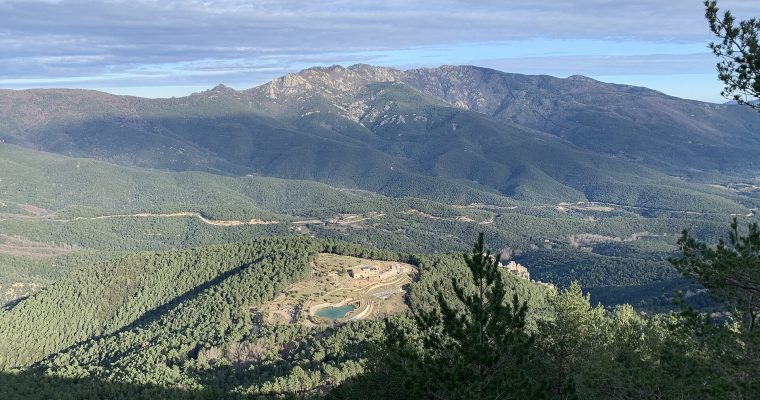
The municipality is located in the middle of a broad basin of glacial origin, surrounded by extensive green meadows and crossed by the waters of the Noguera Pallaresa River.
Esterri d’Àneu is much more than a mountain village. It is the geographical, economic, social and cultural centre of the Valls d’Àneu. Although it lies in a wide valley, the surrounding mountains are high and imposing, creating a spectacular contrast that makes this a truly magical corner of the Pyrenees.
A Village of Pyrenean Tradition
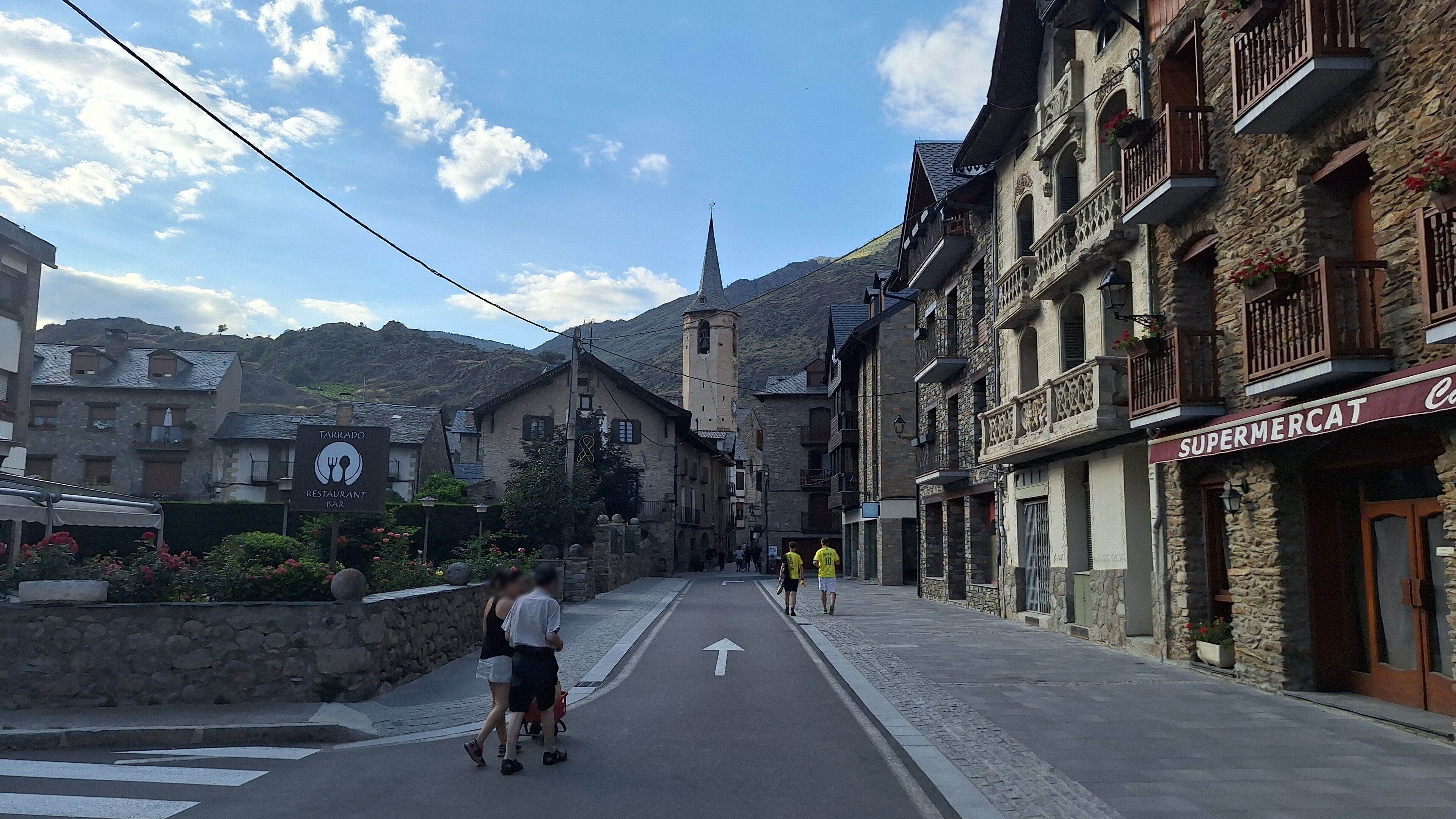
The Pyrenean tradition can be seen in the houses, squares and narrow streets of the old quarter, the historic heart of a village spread across a green meadow in the centre of the Valls d’Àneu.
Esterri d’Àneu is the most important municipality in this sub-region and serves as its main economic and geographical centre.
With a history stretching back centuries and a privileged location, the village is an excellent gateway for discovering the natural, cultural and architectural wonders of the Valls d’Àneu.
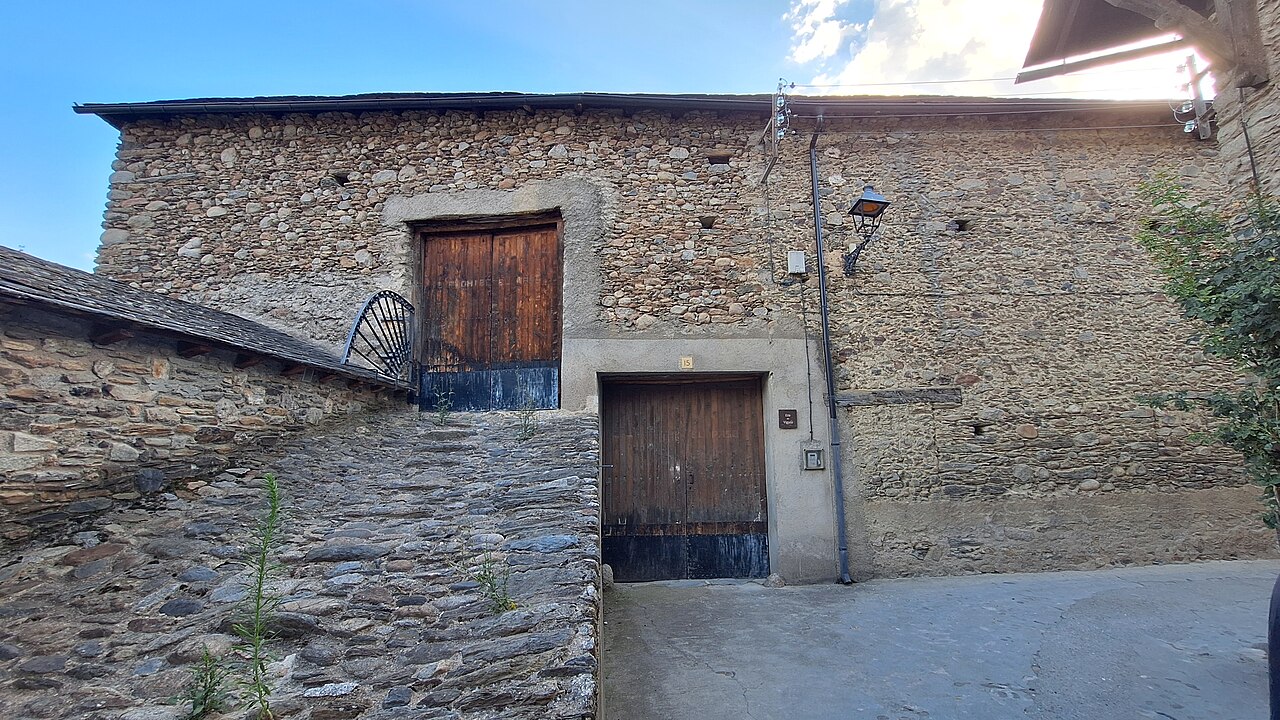
One of the best ways to experience it is to take a leisurely walk through the old town and discover its traditional mountain architecture, characterised by stone houses, slate roofs and narrow streets.
Mountain Gastronomy
Gastronomy is another of Esterri d’Àneu’s great attractions.
Traditional mountain cuisine is mainly based on local products such as mushrooms, game meats, cured meats and cheeses.
Traditional dishes and products include shepherd’s soups, hearty stews, different lamb dishes and game civet, as well as cured meats such as secallona, girella and roseta.
One of the traditional desserts is mostillo, a sweet preparation traditionally made from grape must.
The gastronomy of the Valls d’Àneu reflects the history and way of life of the Pyrenean villages, where local and seasonal products have always played a leading role.
Nature and Adventure in the Valls d’Àneu
Esterri d’Àneu is located between two areas of extraordinary natural beauty: Aigüestortes i Estany de Sant Maurici National Park and the Alt Pirineu Natural Park.
This privileged location makes the municipality an ideal destination for lovers of hiking, cycling and adventure sports.
The surrounding landscape consists of hundreds of mountain lakes, glacial cirques, granite walls, natural forests dominated by fir and black pine, waterfalls, ravines, meanders, hanging valleys and extensive high-mountain meadows.
Wildlife is also one of the area’s great attractions. Deer, fallow deer, chamois, roe deer and wild boar inhabit the mountains and forests of these valleys. The brown bear is also present throughout the Pyrenean region.
The Valls d’Àneu also provide access to some of the highest peaks in Catalonia, offering spectacular landscapes throughout the year.
Rafting on the Noguera Pallaresa: Adventure for Much of the Year
Rafting on the Noguera Pallaresa River is one of the most popular adventure activities in the Valls d’Àneu and Pallars Sobirà. Although it is not available all twelve months of the year, the river activity season generally runs from spring to autumn, approximately from March to October, depending on river conditions and each company’s operating season. In 2026, for example, RocRoi has scheduled rafting activities from 15 March to 11 October.
The Noguera Pallaresa is one of Catalonia’s main white-water rivers and offers different routes suitable for different levels of experience. Rafting involves descending the river in a shared inflatable boat, accompanied by a professional guide who leads the group and explains how to paddle and respond to the different rapids.
No previous experience is necessary for beginner-friendly routes. The difficulty depends on the section of river chosen and also on the river flow. During May and June, when snowmelt generally increases the water level, descents can be more intense. In summer, regulated flows provide conditions that are particularly suitable for families, groups and first-time rafters.
Where Can You Go Rafting Near Esterri d’Àneu?
The main adventure activity companies are located in towns such as Llavorsí and Sort, both within easy reach of Esterri d’Àneu. Different rafting trips along the Noguera Pallaresa depart from these locations.
One of the specialised companies is RocRoi, which has an activity base in Llavorsí. Its programmes include family-friendly routes and descents of different levels. In 2026, for example, the company offers a route between Llavorsí and Moleta aimed particularly at families and participants aged 8 and over.
Another option is Rafting Pallars Turisnat, based in Sort. The company offers different options on the Noguera Pallaresa, including a 14-kilometre descent between Llavorsí and Rialp for €50 per person, a 17-kilometre route between Llavorsí and Sort for €60, and an option including lunch and photographs for €70. It also offers a family option from €45 per person.
Prices may vary depending on the season, route, age of participants and available promotions. As a general reference, rafting activities on the Noguera Pallaresa currently start at approximately €35–€50 per person, while longer routes or experiences including lunch, photographs or other services can cost more than €60.
What Does a Rafting Activity Include?
The activity normally includes the technical equipment required for the descent. At Rafting Pallars, for example, the price includes a wetsuit, boots, life jacket and helmet, as well as compulsory insurance and the services of qualified instructors. Participants generally need to bring a swimsuit, towel and plenty of enthusiasm for enjoying the river.
The duration depends on the route selected. Published descents can take approximately 2 to 3 hours, although the complete experience may take longer due to preparation, transport to the starting point of the river and the return to the base.
Rafting is therefore an excellent way to experience the Noguera Pallaresa from a different perspective. It combines sport, nature and adventure while allowing visitors to enjoy the landscapes of Pallars Sobirà as they descend some of the river’s best-known sections.
It is advisable to book in advance, especially during the summer months, weekends and holiday periods. Companies may modify routes or schedules depending on river flow and safety conditions.
A Classic Hike: Les Planes de Son
One of the best-known hikes in these mountains begins at Les Planes de Son.
From here, you can climb to the Pla de la Font mountain refuge, from where you can enjoy magnificent panoramic views of the peaks of the Alt Pirineu.
From the refuge, it is worth continuing across the mountain meadows until reaching Pas del Coro, a mountain pass connecting the Montañas de Son with the Cabanes Valley.
From Pas del Coro, you can descend back towards Les Planes de Son, completing a beautiful circular route.
The route allows visitors to enjoy forests, mountain meadows and some of the most characteristic landscapes of the Catalan Pyrenees.
Must-See Places in Esterri d’Àneu
Visit the Ecomuseum of the Valls d’Àneu
The Ecomuseum of the Valls d’Àneu is one of the area’s main cultural attractions.
It is located in Casa Gassia, a traditional Pallarese house that has preserved its original structure and provides an insight into family and domestic life in these Pyrenean valleys during the first half of the 20th century.
Through its rooms and exhibitions, visitors can discover the activities that took place inside a traditional house, the relationships between its inhabitants and how household tasks and responsibilities were organised.
Casa Gassia – Carrer del Camp, 22–24, Esterri d’Àneu.
Stroll Along the Vora Riu Promenade
The Vora Riu promenade runs parallel to the right bank of the Noguera Pallaresa River.
It is the perfect place for a peaceful walk alongside the river while enjoying the surrounding scenery. It has benches, gardens and a children’s playground, making it a pleasant spot for families as well.
Discover the Old Quarter
The old town of Esterri d’Àneu retains a distinctive medieval atmosphere.
Among its main points of interest are the church of Sant Vicenç, the remains of the former church of Sant Vicenç and the historic Romanesque bridge.
The former church of Sant Vicenç was built in the 15th century and is located in Plaça del Bon Consell. Today, only its western façade remains.
The parish church of Sant Vicenç was built in the 18th century to replace the previous church and is located on Carrer Major.
Its interior consists of a single nave with six side altars. The bell tower is square at its base, with an octagonal second section and a pyramidal roof.
The entrance portal is Neoclassical in style.
The old quarter of Esterri is characterised by its narrow, winding streets, some of them quite steep, small squares and traditional stone houses with black slate roofs.
During your walk, it is worth exploring the streets of the Pont neighbourhood and Carrer de València.
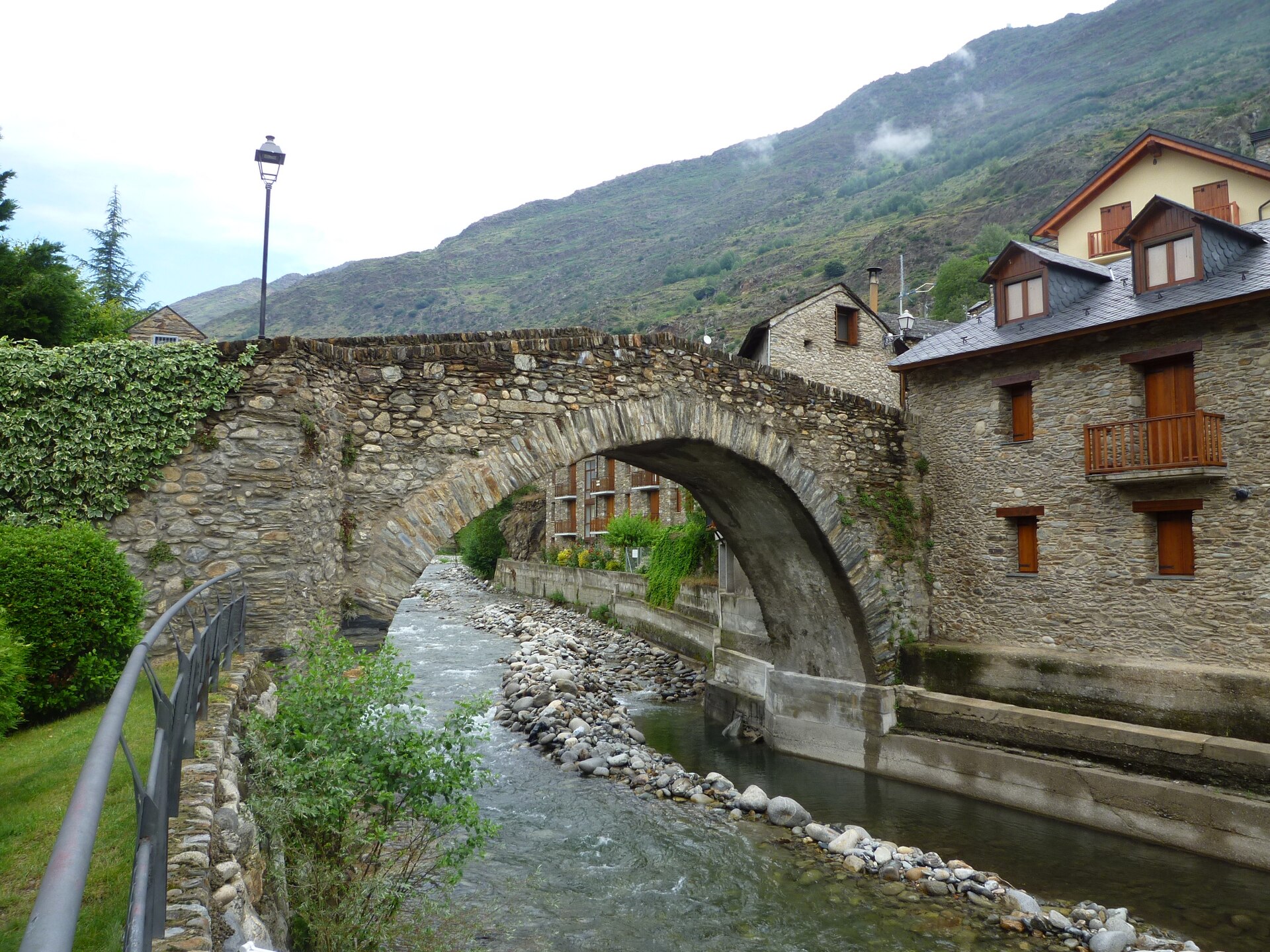
The Romanesque Bridge of Esterri d’Àneu
The bridge of Esterri d’Àneu is located on Carrer del Pont, opposite the parish church of Sant Vicenç.
It crosses the Noguera Pallaresa River and formed part of the old royal road leading towards France.
It is a stone bridge of Romanesque tradition, dating approximately from the 13th century, although it has been rebuilt at various points throughout its history.
Originally, it had three arches, of which two remain today. The main one is a large central semicircular arch, while the western arch is smaller and has a slightly lowered arch.
The bridge is approximately 28 metres long, 3.5 metres wide and reaches a maximum height of around 9 metres.
There is a change in level in the middle of the main arch, while the northern parapet is higher in order to protect the bridge from the strong winds coming from the mountain pass.
On the northern side, between the two arches, there is a buttress designed to protect the structure from flooding, such as the major flood that occurred in 1937.
The masonry consists of irregular stonework made from local slate and granite. This contrasts with the voussoirs of the arches, which are constructed from thinner slabs of stone.
The upper sections of the parapets are made from carefully arranged regular stones.
To facilitate the passage of carts and horses, passing bays were built over the bridge piers.
The roadway is approximately 105 centimetres thick and consists of a pavement made from flat, regular stones. The stairs located in the central section are the result of a later modification.
Under the western arch there was once a weir. In 1850, it was renovated to support local industrial activity and provide water to a sawmill, a factory used to clean and card wool, and a fulling mill used to compact fabrics produced by local looms.
It also supplied water to several flour mills.
Until the mid-20th century, the weir was also used as a public washing area. In 1998, it was paved over.
The weir was dedicated to Saint John the Baptist. Today, only an image of the saint remains, displayed in a glass case on the bridge.
Discover Estany Negre de Cabanes
Estany Negre de Cabanes, or Black Lake of Cabanes, is another of the great natural attractions in the surrounding mountains.
Located in a spectacular high-mountain setting, it provides an opportunity to experience first-hand the glacial landscape that characterises much of the Catalan Pyrenees.
Enjoy the Santa Teresa Fair
Every third weekend of October, Esterri d’Àneu hosts the traditional Santa Teresa Fair.
During the celebration, some of the finest Bruna cattle and Hispano-Breton horses from the Pyrenees are brought together.
Visitors can taste Pyrenean beef and horse meat, explore a market selling artisan products and attend a livestock auction.
Various competitions and activities complete the programme of this traditional fair, offering an opportunity to experience the customs, gastronomy and livestock farming traditions of the area.
Espot Ski Resort
Approximately 13 kilometres from Esterri d’Àneu lies Espot Ski Resort.
Its privileged location and snow conditions make it an interesting option for enjoying winter sports with the family.
More than 60% of its skiable area is equipped with artificial snowmaking systems, providing greater snow coverage throughout the season.
Discover Alós, Son and Escaló
The surrounding villages are also well worth visiting.
Alós, approximately 12 kilometres away, is known for its old sawmill, Romanesque bridge over the Noguera Pallaresa and Baroque church of Sant Lliser.
Son, around 6 kilometres from Esterri d’Àneu, is home to the church of Sants Just i Pastor, built in the Lombard Romanesque style.
Another place worth discovering is Escaló, approximately 9 kilometres away. This walled village preserves the Torre de Moros and the Benedictine monastery of Sant Pere del Burgal.
Visiting these villages provides an opportunity to discover the architectural, religious and historical heritage of the Valls d’Àneu.
Aigüestortes i Estany de Sant Maurici National Park
Aigüestortes i Estany de Sant Maurici National Park is the only national park in Catalonia.
Located in the central Pyrenees, it is divided into two main areas: Aigüestortes, accessed from the Vall de Boí, and Sant Maurici.
The park is known for its hundreds of mountain lakes, rivers and waterfalls, making water the true protagonist of this landscape.
The combination of glacial lakes, high peaks, forests, valleys and waterfalls creates some of the most spectacular scenery in the Catalan Pyrenees.
For hiking and nature lovers, the park offers an exceptional opportunity to discover the Pyrenean landscape at its finest.
Esterri d’Àneu: Gateway to the Authentic Pyrenees
Esterri d’Àneu brings together nature, history, architecture, gastronomy and mountain traditions in one of the most spectacular settings in the Catalan Pyrenees.
Whether you want to enjoy a peaceful walk along the river, go hiking in the mountains, discover traditional villages, practise winter sports or learn about Catalan Pyrenean culture, Esterri d’Àneu is an excellent starting point.
Its location between protected natural areas and its connections with the different valleys of the region make this municipality an exceptional destination for discovering the authentic spirit of the Pyrenees.
Discover Esterri d’Àneu with Magic Dreams Barcelona and let us design a personalised experience tailored to your interests.
Casa Vigatà – By Pere prlpz – Treball propi, CC BY-SA 3.0, https://commons.wikimedia.org/w/index.php?curid=168754375.
Era y horno de Vigatà – Esterri – By Pere prlpz – Treball propi, CC BY-SA 3.0, https://commons.wikimedia.org/w/index.php?curid=168754307.
Iglesia de Sant Vicenç, Esterri d’Áneu, Pallars Sobirá – By Cruccone – Treball propi, CC BY-SA 3.0 es, https://commons.wikimedia.org/w/index.php?curid=21261264.
Este pequeño pico, situado sobre Espot, destaca por las amplias vistas que se obtienen desde su cota sur – By Simonjoan – Treball propi, CC BY-SA 4.0, https://commons.wikimedia.org/w/index.php?curid=196619073.
Esterri d’Àneu – By Pere prlpz – Treball propi, CC BY-SA 3.0, https://commons.wikimedia.org/w/index.php?curid=168754527.
Puente Viejo de Esterri (Esterri d’Àneu) – By Isidre blanc (talk) – Own work, CC BY-SA 3.0, https://commons.wikimedia.org/w/index.php?curid=27754392.
Río Noguera Pallaresa cerca del Desfiladero de Collegats» – By Prankster – Own work, CC0, https://commons.wikimedia.org/w/index.php?curid=30456354.
Perspectiva desde el puente románico.
Camino desde el aparcamiento.Parque nacional de Aigüestortes y Estany de Sant Maurici.
Discover Vall de Núria Vall de Núria is one of those places that surprises you from the very first moment. Located in the heart of the Eastern Pyrenees, within the municipality of Queralbs, the valley is surrounded by mountains, forests, alpine meadows and peaks rising …
Between the Mountains, Snow, Forests and Culture of the Val d’Aran In the highest part of the Val d’Aran, where the mountains begin to open out into a vast plateau of alpine meadows, we find one of the most distinctive landscapes in the Pyrenees: the …
Some places surprise you with their landscapes, others with their history, and some because of the unique circumstances that make them truly exceptional destinations. Llívia combines all three.
Located in the heart of Cerdanya, at an altitude of around 1,224 metres, Llívia is a Catalan village completely surrounded by French territory. Its unusual geographical situation makes it one of the most fascinating enclaves in the Pyrenees and an ideal destination for those wishing to discover history, architecture, nature, gastronomy and traditions all in one journey.
A Catalan Village Surrounded by France
Llívia’s history is closely connected to the Treaty of the Pyrenees of 1659. Following the agreement, it was established that certain territories in Cerdanya would become part of France. However, Llívia was excluded from the transfer because it held the title of town, granted in 1528 by Emperor Charles I.
The subsequent Treaty of Llívia, signed on 12 November 1660, confirmed this situation and gave rise to the unique enclave we know today: a Catalan town geographically separated from the rest of Catalonia and surrounded by French territory.
This historical circumstance has profoundly shaped Llívia’s identity. For centuries, its inhabitants have maintained social, economic and cultural relationships with communities on both sides of the border.
Today, this geographical peculiarity should not be understood merely as a curiosity. It is also an opportunity to understand how political borders can coexist with a deeply rooted culture, language, traditions and way of life.
Llívia and Ancient Iulia Libica
Long before becoming a border enclave, Llívia was already of considerable strategic importance.
The town is associated with Iulia Libica, a Roman settlement linked to Cerdanya. The Roman presence left important archaeological remains and represents one of the key periods in understanding the history of the town.
The location chosen for the settlement was no coincidence. From Llívia, much of the Cerdanya plain could be surveyed, making it a strategic location throughout different historical periods.
Today, walking through its streets means travelling through a landscape where different historical layers overlap: Roman, medieval, modern and contemporary.
Llívia Castle: History on the Mountain
One of the town’s great landmarks is Llívia Castle, located on Puig del Castell.
The hill was occupied from very ancient times, and there are indications of a Roman presence. The first documentary reference to the castle dates back to the year 672, when it was mentioned as Castrum Libyae. The fortress subsequently became highly important during the Middle Ages.
The castle was rebuilt and strengthened during medieval times, becoming a strategically significant stronghold. During the Catalan Civil War, it endured a long siege and was eventually conquered in 1479, after which its destruction was ordered.
Today, visitors can explore the restored remains and enjoy magnificent panoramic views of Cerdanya and the surrounding Pyrenean mountains from the top.
Depending on visibility conditions, some of the area’s major peaks can be seen from here, including Puigmal, Tosa d’Alp, Moixeró, Cadí, Puigpedrós and Carlit.
The Church of Mare de Déu dels Àngels
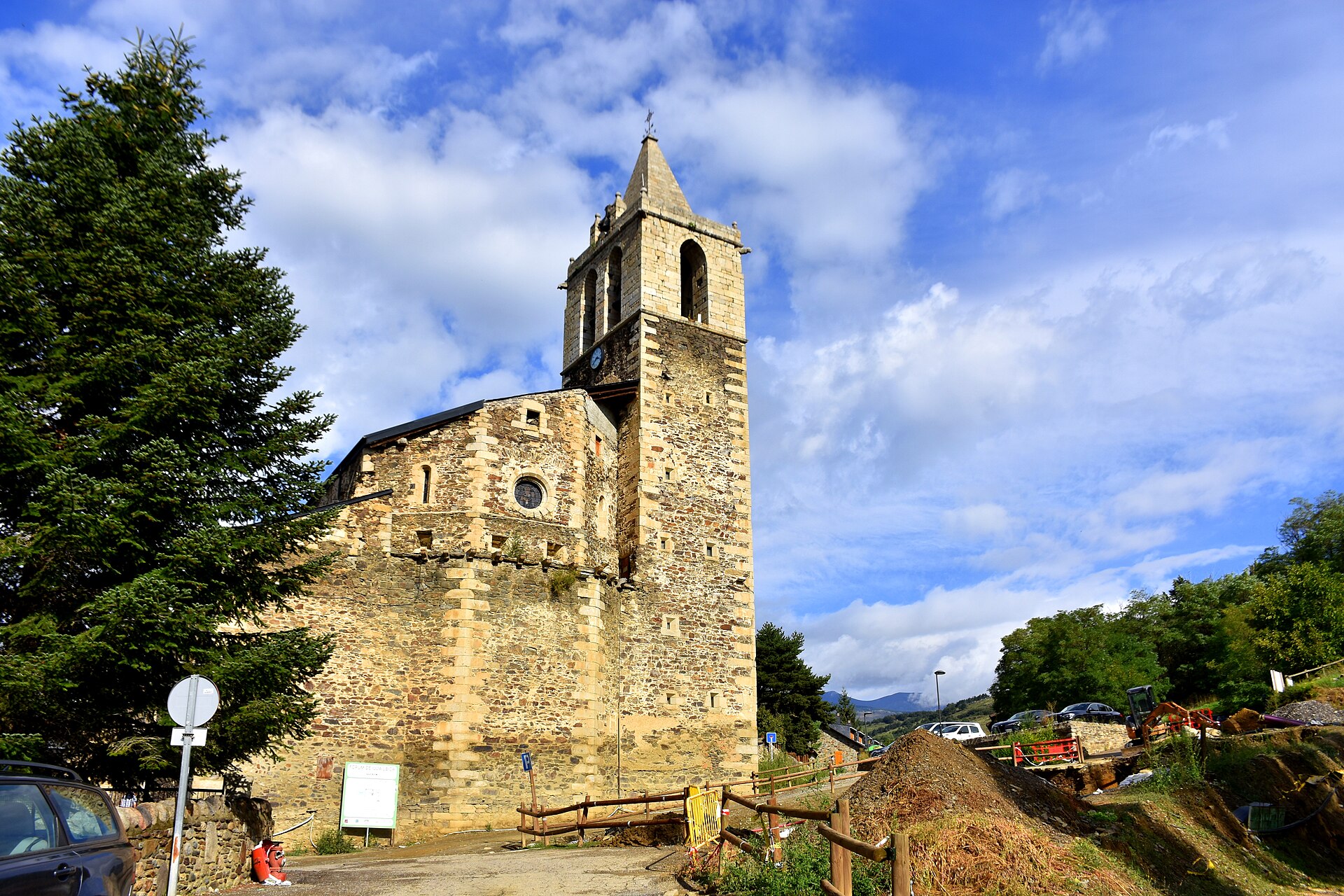
In the historic centre stands the Church of Mare de Déu dels Àngels, one of the buildings that best represents Llívia.
The present church was completed in 1617 and has a solid, almost fortified appearance, reflecting the strategic character of the town during different periods of its history.
Its interior contains several elements of artistic and historical interest, including a Renaissance doorway, medieval ironwork, a Baroque altarpiece, a baptismal font and funerary stones from different centuries. A particularly notable feature is a polychrome Christ dating from the transition between the Romanesque and Gothic periods.
Bernat de So Tower
Another essential architectural landmark is the Bernat de So Tower.
The present tower was built between 1584 and 1585 and was associated with the defensive needs of the town. It subsequently served various purposes and was used as a prison from 1834 onwards.
Over time, the building acquired a new role and today forms part of Llívia’s historical and cultural heritage.
Its presence is a reminder that Llívia was not simply a place of passage, but a community that for centuries had to protect its territory and strategic position.
Strolling Through the Old Town
One of the best ways to discover Llívia is simply to walk through its streets.
The historic centre preserves characteristic elements of traditional Cerdanya architecture: stone façades, slate roofs, granite doorways and wooden balconies and features.
The lintels of many houses also reveal part of the history of the families who once lived there. Some date from the 17th, 18th and 19th centuries and reflect the social and economic position of their former owners.
Farmàcia Esteva: A Treasure in the History of Medicine
One of Llívia’s most remarkable attractions is the Municipal Museum, located in the Town Hall building.
Its best-known collection is the Farmàcia Esteva, considered one of Europe’s oldest preserved pharmacies open to the public, with origins dating back to the beginning of the 17th century.
The collection preserves furniture, containers, instruments and various objects related to the history of pharmacy. The museum also offers an insight into local history, archaeology, ethnology and botany.
Life Between Two Territories
Llívia’s unique geographical situation has created a close relationship over the centuries with the communities of French Cerdanya.
Families in the area have historically maintained commercial, educational, family and social ties on both sides of the border. This reality remains visible today.
Children in Llívia can attend school locally within the Catalan education system, while relations with nearby French communities form a natural part of everyday life.
The Escola Jaume I provides education from the age of three through the sixth year of primary school and, among other activities, offers French and English language learning together with various cultural and educational initiatives.
In terms of employment and economic activity, Llívia currently combines tourism, hospitality, commerce, services, agriculture and livestock farming. Its proximity to communities on both sides of the border also facilitates a cross-border economic dynamic that forms part of everyday life in Cerdanya.
However, working on one side or the other of the border involves different tax, employment and social security obligations, meaning that each situation depends on the individual circumstances of the worker.
Nature: Mountains, Forests and Meadows
Llívia is surrounded by an exceptional natural environment.
Cerdanya combines a broad plain situated at around 1,200 metres above sea level with mountains, forests, rivers, meadows and high-mountain landscapes. This setting provides opportunities for excursions throughout almost the entire year.
The Pyrenean forests around Llívia include different pine species as well as areas of deciduous vegetation, while open landscapes are home to meadows and a wide variety of mountain flora.
For nature lovers, the area also offers countless opportunities for hiking, photography, wildlife watching and outdoor activities.
A Paradise for Birdwatching
Cerdanya is also a particularly interesting destination for birdwatching.
Around 220 bird species have been recorded in the region, including resident, summer, migratory and high-mountain species. Among them are ducks, booted eagles, yellow wagtails, rock thrushes and other species associated with different habitats.
In the nearby mountain and forest areas, it is also possible to encounter species such as the wallcreeper, rock ptarmigan, black woodpecker, boreal owl and capercaillie, although sightings depend on the season, habitat and terrain conditions.
For nature photographers, Llívia and Cerdanya offer an extraordinary setting: mountains, open skies, forests, meadows and wildlife that changes with the seasons.
Mountain Wildlife
The surrounding Pyrenean environment is also home to a fascinating variety of mammals.
In the mountain areas of Cerdanya and nearby natural spaces, visitors may encounter chamois, deer, roe deer, wild boar, marmots and other animals adapted to the area’s diverse landscapes and vegetation.
Observing wild animals always requires respect for the environment. Keeping a safe distance, remaining quiet and being patient are essential to avoid disturbing their natural behaviour.
Mountain Gastronomy
After walking, exploring and discovering the region, one of the great pleasures of visiting Llívia is undoubtedly its gastronomy.
Cerdanya’s cuisine is deeply connected to the mountains and to the products traditionally available in the region.
Potatoes, cabbage, meats, cured sausages, cheeses, mushrooms and hearty stews form part of a robust and comforting cuisine, particularly appealing during the colder months.
One of the region’s most representative dishes is trinxat de Cerdanya, traditionally prepared with potatoes, cabbage and bacon or crispy pork. It is a simple recipe, yet one that is deeply connected to the gastronomic identity of the region.
Other traditional dishes include escudella, mountain stews, meats and various preparations using local products.
Festivals and Traditions
Llívia maintains a calendar of celebrations that offers an insight into an important part of the town’s local identity.
Among them is Pasqüetes, Llívia’s main spring festival, which welcomes the arrival of spring with activities for all ages, an artisan fair, games, workshops, gastronomic events, music and traditional sardana dancing.
The festival of Sant Guillem, the town’s patron saint, is held during the third weekend of June and includes religious celebrations, a procession to the hermitage and sardanas.
Another particularly interesting tradition is the Transhumance Festival, revived in 2000. During the celebration, livestock is accompanied towards the mountain pastures, reviving a traditional practice closely associated with livestock farming and Pyrenean life.
On 15 August, activities connected with local flora are also held, including the creation of floral arrangements and botanical photography competitions.
Music also plays an important role thanks to the Cerdanya Music Festival, whose connection with Llívia dates back to 1982.
How to Get to Llívia from Barcelona
From Barcelona, the journey to Llívia is approximately 155–160 kilometres by road and can take around two hours, although actual travel time can vary considerably depending on traffic, weather conditions and congestion around the Cadí Tunnel.
One of the usual routes is to leave Barcelona via the C-16, travel through the Cadí Tunnel and continue towards Cerdanya. From Puigcerdà, travellers then take the N-154 to reach Llívia.
The road connecting Puigcerdà with Llívia is approximately seven kilometres long and crosses French territory before reaching the enclave.
For an organised excursion, particularly in winter or during weekends and holiday periods, it is advisable to plan the journey in advance.
What to Visit Around Llívia
One of the advantages of choosing Llívia as a destination is that it can easily be combined with other places of great interest in Cerdanya and the Pyrenees.
Depending on the time available, you can extend your experience by visiting:
Puigcerdà, with its historic centre, lake and lively commercial atmosphere.
Bourg-Madame, a French town located practically next to Puigcerdà.
Font-Romeu, known for its mountain surroundings and outdoor activities.
Mont-Louis, a fortified town of great historical interest.
Les Angles, particularly attractive for mountain activities.
Les Bulloses and the Carlit area, offering some of the most spectacular natural landscapes in the region.
In this way, a visit to Llívia can easily become a much broader experience across Cerdanya and the Pyrenees.
Llívia: A Destination to Discover at Your Own Pace
Llívia is not a destination that should be visited simply to take a photograph beside a sign or to experience a geographical curiosity.
Its true appeal emerges when you walk through its streets, admire its architecture, discover its history, visit its historic pharmacy, climb to the castle, take in the landscape and enjoy the local cuisine.
It is precisely this combination of history, culture, nature and everyday life that makes Llívia such a special destination.
Here, the border ceases to be merely a line on a map and becomes part of the history of a community that has managed to preserve its identity for centuries.
Discover Llívia with Magic Dreams Barcelona
Discovering Llívia can be much more than simply taking a day trip.
It can become an experience in which you disconnect, breathe, learn, discover, share and enjoy one of the most special corners of Catalonia and the Pyrenees.
At Magic Dreams Barcelona, we take care of every detail so that you do not have to worry about anything.
We design private and personalised experiences so that you can discover Llívia, Cerdanya, its villages, history, gastronomy and landscapes in a truly special way, adapting each experience to your preferences, interests and desired pace.
We take care of the organisation, transportation, visits, gastronomic experiences, activities, the small details and everything else that can make your journey genuinely memorable.
Because we want you to forget about the organisation and concentrate on what really matters:
enjoying, discovering and being happy.
For us, travelling is not simply about arriving at a destination.
It is about how a place is experienced, what you feel, what you discover and which memories remain long after you return home.
Let us show you Llívia in a different, thoughtful and personalised way.
Magic Dreams Barcelona
Unique experiences to discover extraordinary places, enjoy nature, explore our culture and create memories that last a lifetime.
Torre de Bernat de So de Llívia.
Por Bernard-Boehne, CC BY-SA 3.0, https://commons.wikimedia.org/w/index.php?curid=23423.
Marmota alpina – Fauna del entorno – Por François Trazzi. – François Trazzi., CC BY-SA 3.0, https://commons.wikimedia.org/w/index.php?curid=178597.
Perspectiva general de Llívia desde el Turó del Castell – Marcbel, Public domain, via Wikimedia Commons.
Museo Municipal (Farmacia antigua) – By Marcbel – Own work, Public Domain, https://commons.wikimedia.org/w/index.php?curid=7586288.
Detalle interior del Museo Farmacia Esteva – Alberto-g-rovi, CC BY 3.0 , via Wikimedia Commons.
Detalle interior del Retablo Mayor de la Iglesia de la Mare de Déu dels Àngels en Llívia,
Perspectiva exterior de la Iglesia de la Mare de Déu dels Àngels en Llívia – By Angela Llop – https://www.flickr.com/photos/angela_llop/52335262067/, CC BY-SA 2.0, https://commons.wikimedia.org/w/index.php?curid=122911019.
Águila Real, fauna del entorno – Juan Lacruz, CC BY 3.0 , via Wikimedia Commons.
Perspectiva de la distancia entre Llívia y Puigcerdà – https://en.wikipedia.org/wiki/User:Alan_Mattingly.