Esterri d’Àneu – At the Foot of the Noguera Pallaresa.

Esterri d’Àneu is a municipality located in the heart of the Catalan Pyrenees, northwest of the city of Lleida, close to the Aran Valley and the French border.
Esterri d’Àneu can only be reached by road, travelling through some of the most spectacular landscapes in the Pyrenees.
How to Get to Esterri d’Àneu from Barcelona
Esterri d’Àneu is located approximately 231 kilometres by road from Barcelona, a journey that takes around 3 hours and 30 minutes by car, depending on traffic, weather conditions and any stops along the way.
The route gradually takes you deeper into the landscapes of the Catalan Pyrenees and is, in itself, an interesting part of the journey. From Barcelona, the route heads inland through Catalonia before continuing along the mountain roads towards the Valls d’Àneu.
By Bus from Barcelona
It is also possible to reach Esterri d’Àneu by bus, an especially convenient option for travellers who prefer not to drive. ALSA operates services between Barcelona and Esterri d’Àneu, departing from Barcelona Nord Bus Station. The journey takes approximately 5 hours and 10 minutes, with fares generally ranging from around €23 to €35 each way, although prices may vary depending on the date and how far in advance you book.
The bus arrives directly in Esterri d’Àneu, meaning that you do not need a car once you are in the municipality to explore the historic centre, walk along the Noguera Pallaresa or enjoy many of the tourist services available in the Valls d’Àneu.
Other Transport Options
Another possibility is to combine train and bus. You can take the train from Barcelona to La Pobla de Segur and then continue by bus towards Esterri d’Àneu. The RL2 line operated by Ferrocarrils de la Generalitat de Catalunya connects Lleida with La Pobla de Segur, while various bus services provide onward connections to the Valls d’Àneu.
This option requires transfers and is therefore more complicated than travelling directly by car or bus. However, for travellers who want to enjoy the scenery and combine different forms of public transport, it can be an interesting alternative.
In short, travelling by car is the fastest and most flexible option, especially if you plan to explore different villages and natural areas throughout the Valls d’Àneu. The direct bus from Barcelona is a practical alternative for those who do not want to drive, while the combination of train and bus provides another way to reach the Pyrenees using public transport.
The municipality is located in the middle of a broad basin of glacial origin, surrounded by extensive green meadows and crossed by the waters of the Noguera Pallaresa River.
Esterri d’Àneu is much more than a mountain village. It is the geographical, economic, social and cultural centre of the Valls d’Àneu. Although it lies in a wide valley, the surrounding mountains are high and imposing, creating a spectacular contrast that makes this a truly magical corner of the Pyrenees.
A Village of Pyrenean Tradition
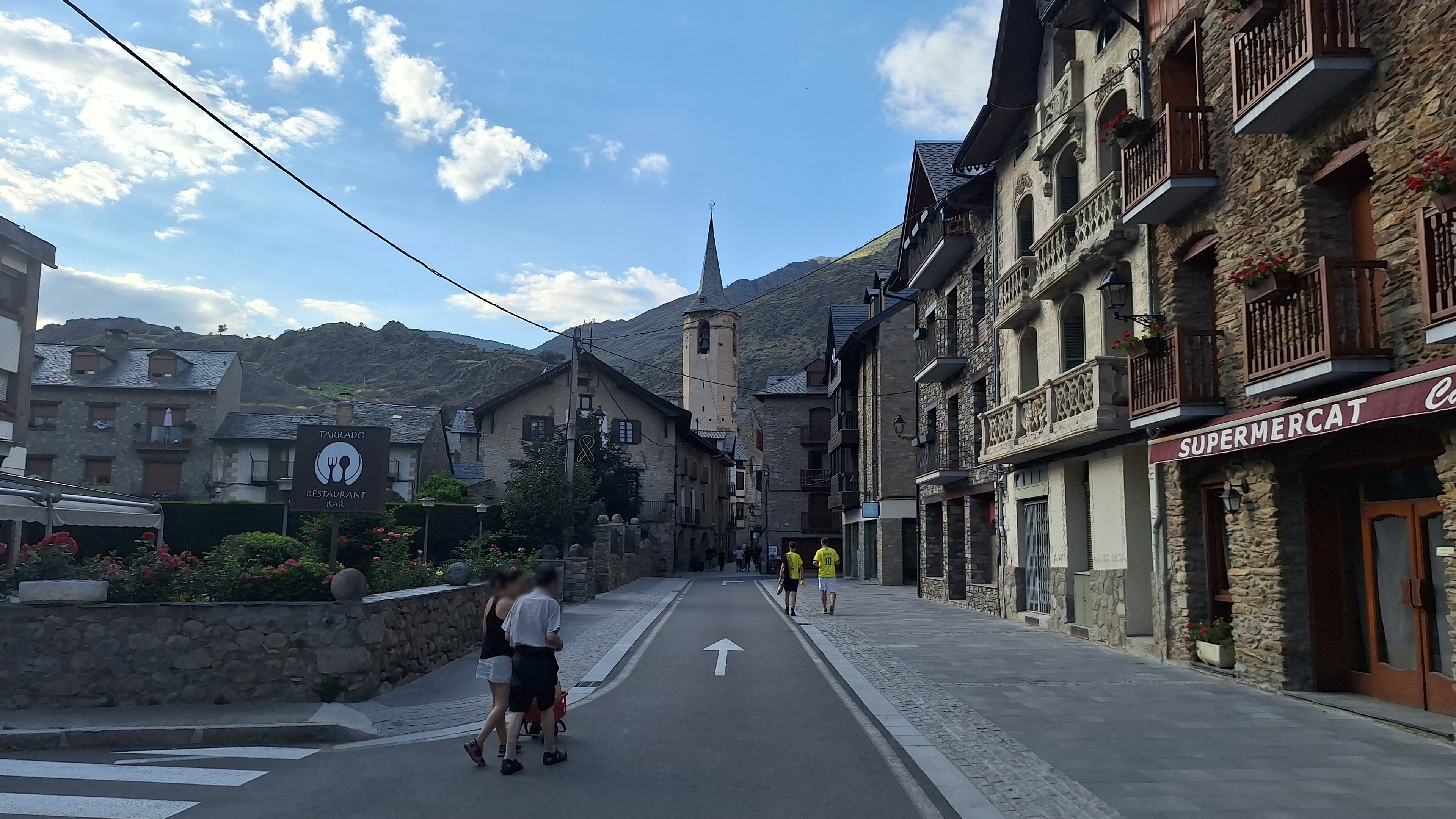
The Pyrenean tradition can be seen in the houses, squares and narrow streets of the old quarter, the historic heart of a village spread across a green meadow in the centre of the Valls d’Àneu.
Esterri d’Àneu is the most important municipality in this sub-region and serves as its main economic and geographical centre.
With a history stretching back centuries and a privileged location, the village is an excellent gateway for discovering the natural, cultural and architectural wonders of the Valls d’Àneu.
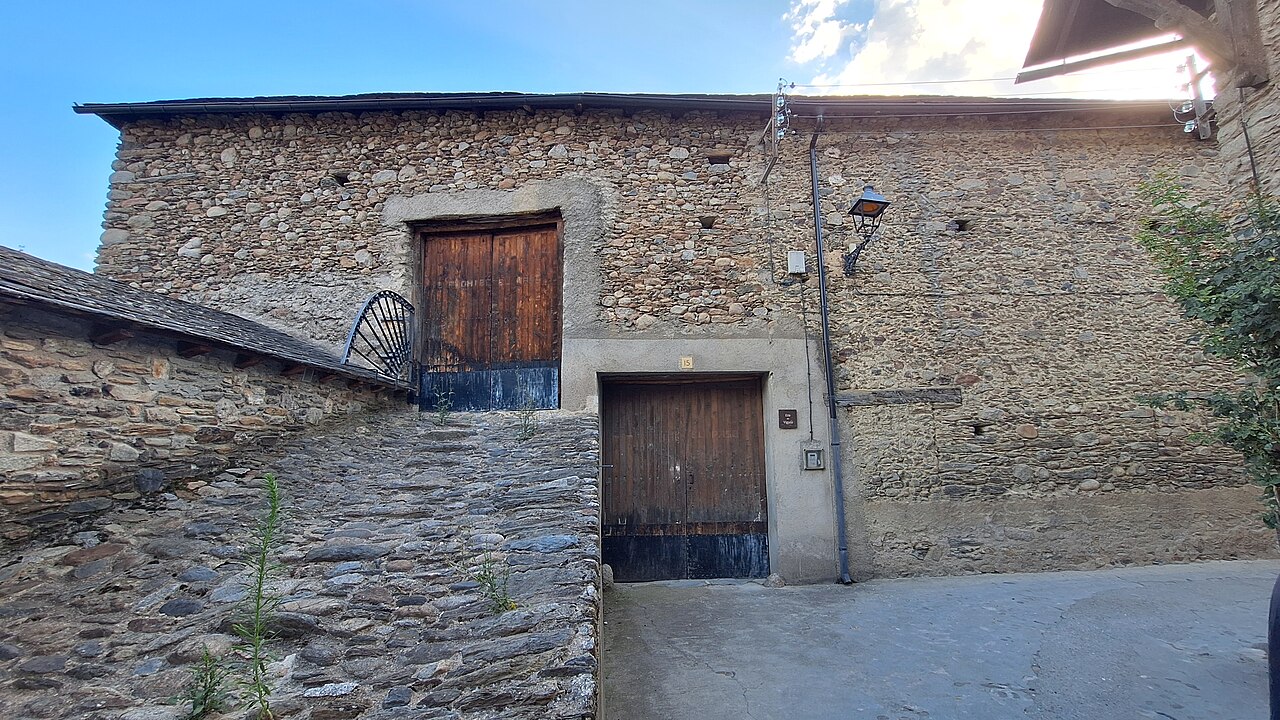
One of the best ways to experience it is to take a leisurely walk through the old town and discover its traditional mountain architecture, characterised by stone houses, slate roofs and narrow streets.
Mountain Gastronomy
Gastronomy is another of Esterri d’Àneu’s great attractions.
Traditional mountain cuisine is mainly based on local products such as mushrooms, game meats, cured meats and cheeses.
Traditional dishes and products include shepherd’s soups, hearty stews, different lamb dishes and game civet, as well as cured meats such as secallona, girella and roseta.
One of the traditional desserts is mostillo, a sweet preparation traditionally made from grape must.
The gastronomy of the Valls d’Àneu reflects the history and way of life of the Pyrenean villages, where local and seasonal products have always played a leading role.
Nature and Adventure in the Valls d’Àneu
Esterri d’Àneu is located between two areas of extraordinary natural beauty: Aigüestortes i Estany de Sant Maurici National Park and the Alt Pirineu Natural Park.
This privileged location makes the municipality an ideal destination for lovers of hiking, cycling and adventure sports.
The surrounding landscape consists of hundreds of mountain lakes, glacial cirques, granite walls, natural forests dominated by fir and black pine, waterfalls, ravines, meanders, hanging valleys and extensive high-mountain meadows.
Wildlife is also one of the area’s great attractions. Deer, fallow deer, chamois, roe deer and wild boar inhabit the mountains and forests of these valleys. The brown bear is also present throughout the Pyrenean region.
The Valls d’Àneu also provide access to some of the highest peaks in Catalonia, offering spectacular landscapes throughout the year.
Rafting on the Noguera Pallaresa: Adventure for Much of the Year
Rafting on the Noguera Pallaresa River is one of the most popular adventure activities in the Valls d’Àneu and Pallars Sobirà. Although it is not available all twelve months of the year, the river activity season generally runs from spring to autumn, approximately from March to October, depending on river conditions and each company’s operating season. In 2026, for example, RocRoi has scheduled rafting activities from 15 March to 11 October.
The Noguera Pallaresa is one of Catalonia’s main white-water rivers and offers different routes suitable for different levels of experience. Rafting involves descending the river in a shared inflatable boat, accompanied by a professional guide who leads the group and explains how to paddle and respond to the different rapids.
No previous experience is necessary for beginner-friendly routes. The difficulty depends on the section of river chosen and also on the river flow. During May and June, when snowmelt generally increases the water level, descents can be more intense. In summer, regulated flows provide conditions that are particularly suitable for families, groups and first-time rafters.
Where Can You Go Rafting Near Esterri d’Àneu?
The main adventure activity companies are located in towns such as Llavorsí and Sort, both within easy reach of Esterri d’Àneu. Different rafting trips along the Noguera Pallaresa depart from these locations.
One of the specialised companies is RocRoi, which has an activity base in Llavorsí. Its programmes include family-friendly routes and descents of different levels. In 2026, for example, the company offers a route between Llavorsí and Moleta aimed particularly at families and participants aged 8 and over.
Another option is Rafting Pallars Turisnat, based in Sort. The company offers different options on the Noguera Pallaresa, including a 14-kilometre descent between Llavorsí and Rialp for €50 per person, a 17-kilometre route between Llavorsí and Sort for €60, and an option including lunch and photographs for €70. It also offers a family option from €45 per person.
Prices may vary depending on the season, route, age of participants and available promotions. As a general reference, rafting activities on the Noguera Pallaresa currently start at approximately €35–€50 per person, while longer routes or experiences including lunch, photographs or other services can cost more than €60.
What Does a Rafting Activity Include?
The activity normally includes the technical equipment required for the descent. At Rafting Pallars, for example, the price includes a wetsuit, boots, life jacket and helmet, as well as compulsory insurance and the services of qualified instructors. Participants generally need to bring a swimsuit, towel and plenty of enthusiasm for enjoying the river.
The duration depends on the route selected. Published descents can take approximately 2 to 3 hours, although the complete experience may take longer due to preparation, transport to the starting point of the river and the return to the base.
Rafting is therefore an excellent way to experience the Noguera Pallaresa from a different perspective. It combines sport, nature and adventure while allowing visitors to enjoy the landscapes of Pallars Sobirà as they descend some of the river’s best-known sections.
It is advisable to book in advance, especially during the summer months, weekends and holiday periods. Companies may modify routes or schedules depending on river flow and safety conditions.
A Classic Hike: Les Planes de Son
One of the best-known hikes in these mountains begins at Les Planes de Son.
From here, you can climb to the Pla de la Font mountain refuge, from where you can enjoy magnificent panoramic views of the peaks of the Alt Pirineu.
From the refuge, it is worth continuing across the mountain meadows until reaching Pas del Coro, a mountain pass connecting the Montañas de Son with the Cabanes Valley.
From Pas del Coro, you can descend back towards Les Planes de Son, completing a beautiful circular route.
The route allows visitors to enjoy forests, mountain meadows and some of the most characteristic landscapes of the Catalan Pyrenees.
Must-See Places in Esterri d’Àneu
Visit the Ecomuseum of the Valls d’Àneu
The Ecomuseum of the Valls d’Àneu is one of the area’s main cultural attractions.
It is located in Casa Gassia, a traditional Pallarese house that has preserved its original structure and provides an insight into family and domestic life in these Pyrenean valleys during the first half of the 20th century.
Through its rooms and exhibitions, visitors can discover the activities that took place inside a traditional house, the relationships between its inhabitants and how household tasks and responsibilities were organised.
Casa Gassia – Carrer del Camp, 22–24, Esterri d’Àneu.
Stroll Along the Vora Riu Promenade
The Vora Riu promenade runs parallel to the right bank of the Noguera Pallaresa River.
It is the perfect place for a peaceful walk alongside the river while enjoying the surrounding scenery. It has benches, gardens and a children’s playground, making it a pleasant spot for families as well.
Discover the Old Quarter
The old town of Esterri d’Àneu retains a distinctive medieval atmosphere.
Among its main points of interest are the church of Sant Vicenç, the remains of the former church of Sant Vicenç and the historic Romanesque bridge.
The former church of Sant Vicenç was built in the 15th century and is located in Plaça del Bon Consell. Today, only its western façade remains.
The parish church of Sant Vicenç was built in the 18th century to replace the previous church and is located on Carrer Major.
Its interior consists of a single nave with six side altars. The bell tower is square at its base, with an octagonal second section and a pyramidal roof.
The entrance portal is Neoclassical in style.
The old quarter of Esterri is characterised by its narrow, winding streets, some of them quite steep, small squares and traditional stone houses with black slate roofs.
During your walk, it is worth exploring the streets of the Pont neighbourhood and Carrer de València.
The Romanesque Bridge of Esterri d’Àneu
The bridge of Esterri d’Àneu is located on Carrer del Pont, opposite the parish church of Sant Vicenç.
It crosses the Noguera Pallaresa River and formed part of the old royal road leading towards France.
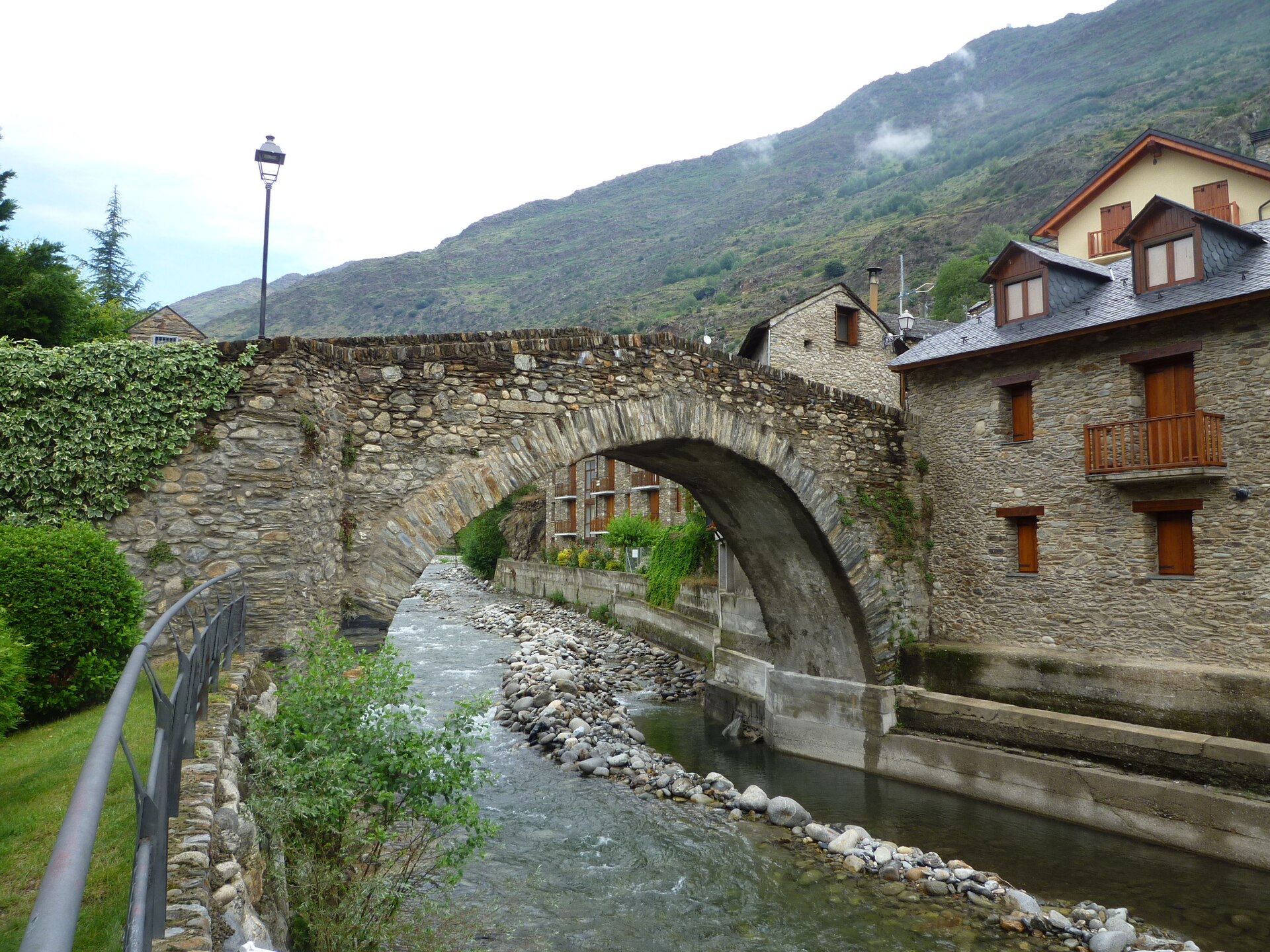
It is a stone bridge of Romanesque tradition, dating approximately from the 13th century, although it has been rebuilt at various points throughout its history.
Originally, it had three arches, of which two remain today. The main one is a large central semicircular arch, while the western arch is smaller and has a slightly lowered arch.
The bridge is approximately 28 metres long, 3.5 metres wide and reaches a maximum height of around 9 metres.
There is a change in level in the middle of the main arch, while the northern parapet is higher in order to protect the bridge from the strong winds coming from the mountain pass.
On the northern side, between the two arches, there is a buttress designed to protect the structure from flooding, such as the major flood that occurred in 1937.
The masonry consists of irregular stonework made from local slate and granite. This contrasts with the voussoirs of the arches, which are constructed from thinner slabs of stone.
The upper sections of the parapets are made from carefully arranged regular stones.
To facilitate the passage of carts and horses, passing bays were built over the bridge piers.
The roadway is approximately 105 centimetres thick and consists of a pavement made from flat, regular stones. The stairs located in the central section are the result of a later modification.
Under the western arch there was once a weir. In 1850, it was renovated to support local industrial activity and provide water to a sawmill, a factory used to clean and card wool, and a fulling mill used to compact fabrics produced by local looms.
It also supplied water to several flour mills.
Until the mid-20th century, the weir was also used as a public washing area. In 1998, it was paved over.
The weir was dedicated to Saint John the Baptist. Today, only an image of the saint remains, displayed in a glass case on the bridge.
Discover Estany Negre de Cabanes
Estany Negre de Cabanes, or Black Lake of Cabanes, is another of the great natural attractions in the surrounding mountains.
Located in a spectacular high-mountain setting, it provides an opportunity to experience first-hand the glacial landscape that characterises much of the Catalan Pyrenees.
Enjoy the Santa Teresa Fair
Every third weekend of October, Esterri d’Àneu hosts the traditional Santa Teresa Fair.
During the celebration, some of the finest Bruna cattle and Hispano-Breton horses from the Pyrenees are brought together.
Visitors can taste Pyrenean beef and horse meat, explore a market selling artisan products and attend a livestock auction.
Various competitions and activities complete the programme of this traditional fair, offering an opportunity to experience the customs, gastronomy and livestock farming traditions of the area.
Espot Ski Resort
Approximately 13 kilometres from Esterri d’Àneu lies Espot Ski Resort.
Its privileged location and snow conditions make it an interesting option for enjoying winter sports with the family.
More than 60% of its skiable area is equipped with artificial snowmaking systems, providing greater snow coverage throughout the season.
Discover Alós, Son and Escaló
The surrounding villages are also well worth visiting.
Alós, approximately 12 kilometres away, is known for its old sawmill, Romanesque bridge over the Noguera Pallaresa and Baroque church of Sant Lliser.
Son, around 6 kilometres from Esterri d’Àneu, is home to the church of Sants Just i Pastor, built in the Lombard Romanesque style.
Another place worth discovering is Escaló, approximately 9 kilometres away. This walled village preserves the Torre de Moros and the Benedictine monastery of Sant Pere del Burgal.
Visiting these villages provides an opportunity to discover the architectural, religious and historical heritage of the Valls d’Àneu.
Aigüestortes i Estany de Sant Maurici National Park
Aigüestortes i Estany de Sant Maurici National Park is the only national park in Catalonia.
Located in the central Pyrenees, it is divided into two main areas: Aigüestortes, accessed from the Vall de Boí, and Sant Maurici.
The park is known for its hundreds of mountain lakes, rivers and waterfalls, making water the true protagonist of this landscape.
The combination of glacial lakes, high peaks, forests, valleys and waterfalls creates some of the most spectacular scenery in the Catalan Pyrenees.
For hiking and nature lovers, the park offers an exceptional opportunity to discover the Pyrenean landscape at its finest.
Esterri d’Àneu: Gateway to the Authentic Pyrenees
Esterri d’Àneu brings together nature, history, architecture, gastronomy and mountain traditions in one of the most spectacular settings in the Catalan Pyrenees.
Whether you want to enjoy a peaceful walk along the river, go hiking in the mountains, discover traditional villages, practise winter sports or learn about Catalan Pyrenean culture, Esterri d’Àneu is an excellent starting point.
Its location between protected natural areas and its connections with the different valleys of the region make this municipality an exceptional destination for discovering the authentic spirit of the Pyrenees.
Discover Esterri d’Àneu with Magic Dreams Barcelona and let us design a personalised experience tailored to your interests.