Route guide for visitors throughout Catalonia – Barcelona – Costa Brava – Catalan Pyrenees – Personalized experiences – Customized tour guide services – A small tribute to the wonderful city and land that saw us born – Transforming experiences into unforgettable memories - Magic Dreams Collection: exclusive universes inspired by Salvador Dalí and Gaudí. Niche perfumes, jewelry, lithographs, and collectible items celebrating the Mediterranean spirit.
Maritime tradition, roasted garlic and the authentic flavour of the Mediterranean Monkfish with burnt garlic, known in Catalan as Rap a l’All Cremat, is a traditional seafood recipe associated with Vilanova i la Geltrú, on the Catalan coast near Barcelona. The name all cremat literally …
The taste of the Mediterranean in an elegant dish Some dishes need very little to become a memorable experience. Hake with seafood sauce is one of them: a delicate yet deeply Mediterranean recipe where the softness of the hake meets the rich flavour of a …
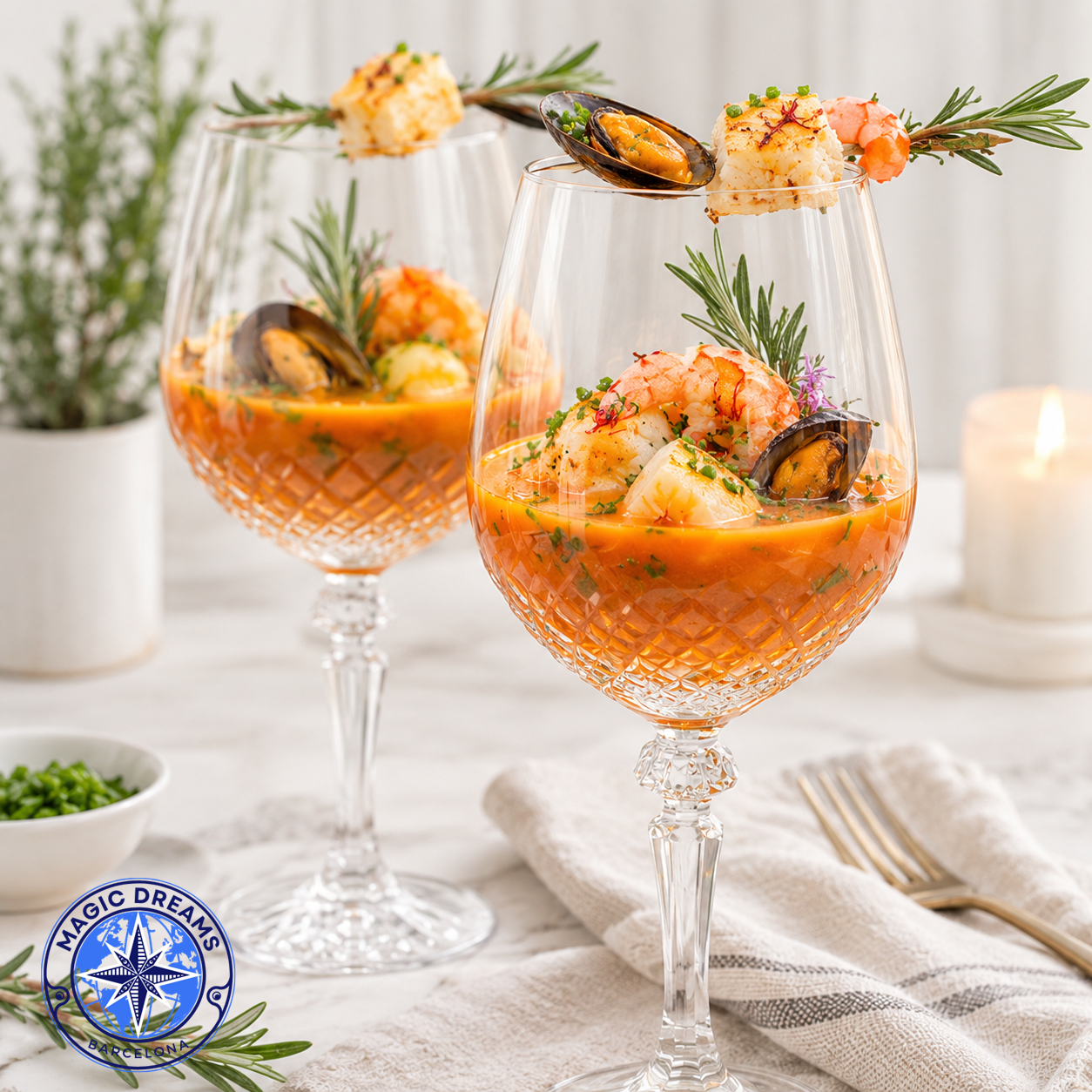
Monkfish caldereta with American sauce is one of those traditional seafood dishes that, with careful preparation and elegant presentation, can become a truly sophisticated gastronomic experience.
The monkfish provides firm, delicate and succulent flesh, while prawns and mussels enrich the dish with the full flavor of the sea. The American-style sauce, slowly prepared with the prawn heads and shells, concentrates all their natural flavors into an intense, glossy and deeply savory sauce.
The potatoes absorb some of this rich sauce, adding a wonderfully tender texture that contrasts with the golden monkfish and delicate seafood. A sophisticated Mediterranean recipe, perfect for a special meal or for creating an impressive gourmet presentation.
Ingredients
Serves 4
For the caldereta
200 g (7 oz) cleaned monkfish fillet, cut into even pieces.
4 prawns or langoustines.
12 mussels, thoroughly cleaned.
2 large potatoes, diced or shaped into small balls.
4 fresh rosemary sprigs, for the skewers.
Fresh chives, finely chopped.
Fresh herbs, to taste.
Extra virgin olive oil.
Salt.
For the American-style sauce
The heads and shells from the prawns or langoustines.
2 ripe tomatoes, diced.
1 onion, finely chopped.
1 leek, cleaned and chopped.
1 carrot, finely diced.
2 garlic cloves, sliced.
2 bay leaves.
Saffron threads.
Extra virgin olive oil.
Salt.
Water, as needed.
For the rosemary-infused oil
100 ml (3.4 fl oz) extra virgin olive oil.
1–2 fresh rosemary sprigs.
Optional: a small splash of brandy to intensify the sauce, a few drops of dry white wine, or a knob of cold butter for an even silkier finish.
Preparation
01 · Preparing the ingredients
The beginning of a true seafood experience
Clean the monkfish and cut it into evenly sized pieces.
Peel the prawns or langoustines, carefully reserving the heads and shells, as these will be essential for creating a deeply flavorful American-style sauce.
Clean the mussels and remove the beards.
Peel the potatoes and cut them into even cubes, or use a Parisienne scoop to create small potato balls for a more elegant presentation.
Finely chop the onion, leek and carrot.
Slice the garlic and dice the ripe tomatoes.
Prepare the rosemary sprigs by removing some of the leaves while leaving the tip intact. These will later be used as aromatic skewers.
02 · Preparing the rosemary oil
The fresh fragrance of the Mediterranean
Gently heat the olive oil together with the rosemary sprigs.
Keep the temperature low for a few minutes, making sure the rosemary does not burn.
Remove from the heat and allow the oil to infuse slowly.
Set aside.
This aromatic oil will be used at the end to add a delicate Mediterranean fragrance to the dish.
03 · Making the American-style sauce
The soul of the caldereta
Heat a generous splash of olive oil in a large saucepan.
Add the sliced garlic and gently sauté until it begins to turn golden.
Add the onion, leek, carrot and bay leaves.
Cook slowly for 10–15 minutes, stirring occasionally, until the vegetables are tender and lightly caramelized.
Add the ripe tomatoes and cook for another 10 minutes, allowing them to release their moisture and concentrate their flavor.
Add the reserved prawn heads and shells.
Sauté over medium-high heat, gently pressing the heads to release their juices and create an intensely aromatic base.
04 · Cooking and concentrating the sauce
All the flavor of the sea in one sauce
Add enough water to lightly cover the ingredients.
Add the saffron threads and a pinch of salt.
Simmer gently for approximately 1 hour.
During this time, the vegetables, seafood and saffron will slowly release and concentrate their aromas.
Once cooked, strain the mixture through a fine-mesh sieve or chinois, gently pressing the solids to extract all the flavorful juices.
Return the sauce to a clean saucepan and keep warm.
If the sauce is too thin, reduce it gently for a few minutes until it becomes more concentrated, glossy and slightly velvety.
Finish with a small splash of the rosemary-infused oil.
05 · Cooking the potatoes and mussels
The garnish that absorbs every flavor
Add the potatoes to the hot American-style sauce.
Cook until tender, taking care not to let them lose their shape.
When the potatoes are almost ready, add the cleaned mussels.
Cover and cook for a few minutes, until the mussels open.
Remove the mussels immediately and set them aside with the potatoes.
You can leave some mussels in their shells for presentation and remove the shells from others to incorporate them into the dish.
06 · Searing the monkfish and prawns
Golden on the outside, succulent inside
Heat a little extra virgin olive oil in a frying pan.
Sear the monkfish pieces over medium-high heat until lightly golden on the outside.
Do not overcook them: the aim is to achieve a beautifully browned exterior while keeping the inside juicy and tender.
Remove the monkfish and set aside.
Using the same pan, briefly sauté the prawns or langoustines.
They should be lightly golden on the outside while remaining juicy inside.
07 · Plating and presentation
The signature of the dish
Use a wide cocktail glass, a shallow bowl or an elegant deep plate.
Place a few potato balls or cubes at the base.
Add one whole mussel and another mussel without its shell, followed by a prawn or langoustine.
Pour in the hot American-style sauce until it reaches approximately halfway up the serving vessel.
Thread a piece of monkfish and a mussel onto a rosemary sprig.
Rest the skewer across the rim of the glass or bowl to create height and make it the centerpiece of the presentation.
08 · The gourmet finish
The final touch of Mediterranean cuisine
Finish with freshly chopped chives, a few delicate fresh herbs and several drops of rosemary-infused oil.
For an even more elegant finish, add a few saffron threads over the surface.
Serve immediately, ensuring that the sauce is piping hot while the monkfish remains succulent.
Gourmet Suggestions
Magic Dreams Barcelona
To elevate this recipe even further:
Add a small splash of brandy or Cognac to the sofrito before adding the water. Allow the alcohol to evaporate to create a deeper, richer sauce.
A few drops of dry white wine will add freshness and help balance the intensity of the seafood.
Finish the sauce with a small knob of cold butter, gently emulsifying it for an even silkier, glossier texture.
A few additional drops of rosemary-infused oil just before serving will enhance the Mediterranean character.
Serve with crusty rustic bread to enjoy every last drop of the American-style sauce.
The secret to a truly flavorful caldereta
The key is to make full use of the seafood.
Prawn heads and shells contain an enormous concentration of natural flavor. Properly sautéing them before adding the liquid allows their full character to develop and creates a much more intense sauce.
The second secret is the monkfish.
Its flesh requires precise cooking. Overcooking can cause it to lose its characteristic texture, while a brief searing produces a result that is firm, succulent and delicate.
The combination of concentrated sauce, tender potatoes, seafood and golden monkfish creates a dish in which every element has its own distinctive role.
Gourmet Presentation
Serve the caldereta in a wide cocktail glass, a shallow bowl or an elegant white deep plate, using the American-style sauce as the base and arranging the potatoes and seafood naturally around it.
The monkfish should take center stage, accompanied by the prawn and mussels.
Place the monkfish and mussel skewer on the rosemary sprig across the rim of the serving vessel to add height and elegance.
Finish with the aromatic oil, fresh chives, delicate herbs and a few saffron threads.
The result is a sophisticated interpretation of Mediterranean seafood cuisine, transforming the traditional caldereta into a contemporary presentation while preserving its authentic character.
Storage
American-style sauce: can be refrigerated in an airtight container for up to 3 days, or frozen for approximately 1 month.
Monkfish and seafood: ideally cooked just before serving to preserve their texture, juiciness and flavor.
Maritime tradition, Mediterranean flavour and elegance in every bite Catalan-style fideuà, prepared using the traditional rossejat de fideus technique, is a delicious interpretation of Mediterranean coastal cuisine. Although fideuà originated on the Valencian coast, Catalonia has embraced and adapted this dish thanks to its deep …
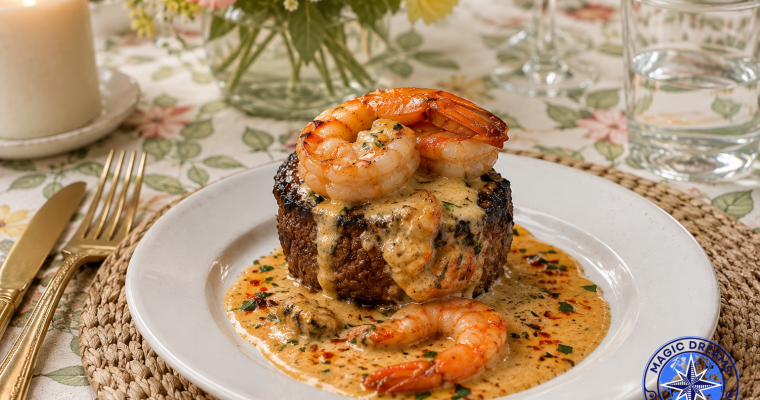
Pork tenderloin with creamy lobster and shrimp sauce is an elegant and sophisticated recipe that combines the tenderness of pork with the delicate flavors of lobster and shrimp. The meat is beautifully browned on the outside while remaining juicy inside, then served with a rich, …
Pulpo a Feira, also known as Galician-style octopus, is one of the most iconic dishes of Galicia. Traditionally prepared and served at fairs, festivals and popular celebrations, its name literally refers to this connection with traditional fairs.
Over time, it became one of the great symbols of Galician cuisine and one of Spain’s most internationally recognised seafood dishes.
The recipe is wonderfully simple, based on just a few ingredients: octopus, potatoes, extra virgin olive oil, paprika and coarse salt. Because of this simplicity, the quality of the ingredients and the cooking point are essential.
Traditionally, the octopus is boiled whole in a large pot and then cut into slices with kitchen scissors. It is served on a wooden board, accompanied by boiled potatoes known as cachelos, and finished with olive oil, paprika and coarse sea salt.
The result is tender, flavoursome octopus with a delicate bite, complemented by soft potatoes and the aromatic character of paprika.
Ingredients
Serves 4
For the octopus
1.5–2 kg fresh or frozen octopus
Plenty of water
2–3 bay leaves, optional
Salt
For the potatoes
4–5 medium potatoes
Salt
To finish
Extra virgin olive oil
Sweet paprika
A small amount of hot paprika, optional
Coarse sea salt
Preparation
01 · Prepare the octopus
Freezing helps achieve a tender texture
If using fresh octopus, clean it carefully and remove the beak and internal organs.
Traditionally, fresh octopus is frozen beforehand because freezing helps break down the muscle fibres and contributes to a more tender texture.
If using frozen octopus, allow it to thaw slowly in the refrigerator.
02 · Bring the water to a boil
Fill a large pot with plenty of water.
Add the bay leaves if desired and bring the water to a strong boil.
There is no need to add a large amount of salt at this stage.
03 · The traditional “scaring” technique
A classic Galician method
Hold the octopus by the head and dip it into the boiling water for a few seconds.
Remove it and repeat the process three times.
On the third immersion, place the octopus completely into the pot.
This traditional technique helps the tentacles curl and gives the octopus its characteristic appearance.
04 · Cook the octopus
Cook over a gentle simmer for approximately 35–50 minutes, depending on the size.
Avoid an excessively aggressive boil.
The octopus is ready when a fork or skewer can penetrate the thickest part of a tentacle with only slight resistance.
Turn off the heat and allow the octopus to rest in its cooking liquid for 10–15 minutes.
Preparing the Potatoes
05 · Cook the potatoes
Peel the potatoes and cut them into thick slices.
They can be cooked in the octopus cooking liquid or in lightly salted water until tender while still holding their shape.
Drain carefully.
Cutting the Octopus
06 · The traditional cut
Remove the octopus from the pot and allow any excess liquid to drain.
Traditionally, the tentacles are cut with kitchen scissors into small or medium-sized slices.
They should be neither excessively thick nor too thin.
Arrange the potatoes on a traditional wooden serving board and place the octopus slices on top.
The Final Seasoning
07 · Olive oil, paprika and salt
The soul of Pulpo a Feira
Generously drizzle the octopus with extra virgin olive oil.
Sprinkle with sweet paprika and, if desired, add a small amount of hot paprika.
Finish with coarse sea salt.
The paprika should add aroma and character without overpowering the natural flavour of the octopus.
Traditional Presentation
Served on a wooden board
One of the most recognisable features of Pulpo a Feira is its traditional presentation.
Arrange the potatoes on a wooden board and place the sliced octopus on top.
Finish with extra virgin olive oil, paprika and coarse salt.
Serve immediately while the octopus and potatoes are still warm.
Good rustic bread makes the perfect accompaniment.
Traditional Tips
Magic Dreams Barcelona
For an exceptional Pulpo a Feira:
Use high-quality octopus.
Freeze fresh octopus beforehand if appropriate.
Thaw slowly in the refrigerator.
Maintain a gentle cooking temperature.
Check the thickest part of a tentacle before removing it from the pot.
Allow the octopus to rest after cooking.
Cut the tentacles with scissors for the traditional presentation.
Use excellent extra virgin olive oil.
Choose good-quality paprika.
Use hot paprika sparingly.
Serve immediately.
The Secret to Tender Octopus
The perfect texture depends mainly on cooking time and the size of the octopus.
Undercooked octopus can be tough, while excessive cooking can affect its characteristic texture.
For this reason, it is better not to rely exclusively on a fixed cooking time.
The most reliable method is to insert a fork or skewer into the thickest part of a tentacle.
It should offer slight resistance but still be easy to penetrate.
The Perfect Bite
A great Pulpo a Feira should combine:
tender octopus, firm potatoes, extra virgin olive oil, aromatic paprika and a touch of sea salt.
Its greatness lies precisely in its simplicity.
Presentation
For a traditional presentation, use a round wooden serving board.
Arrange the potatoes as a base and place the octopus generously over them.
Finish with extra virgin olive oil, sweet paprika and coarse sea salt.
For a more contemporary gastronomic presentation, individual portions can be served on small wooden boards or rustic ceramic plates while maintaining the traditional ingredients.
Pairing
Pulpo a Feira pairs particularly well with a fresh, dry 0.0% alcohol-free white wine, whose acidity helps balance the olive oil and enhances the natural flavour of the seafood.
It can also be accompanied by a chilled 0.0% alcohol-free Galician-style aperitif.
For a completely refreshing alternative, serve with very cold sparkling water, lemon and fresh herbs.
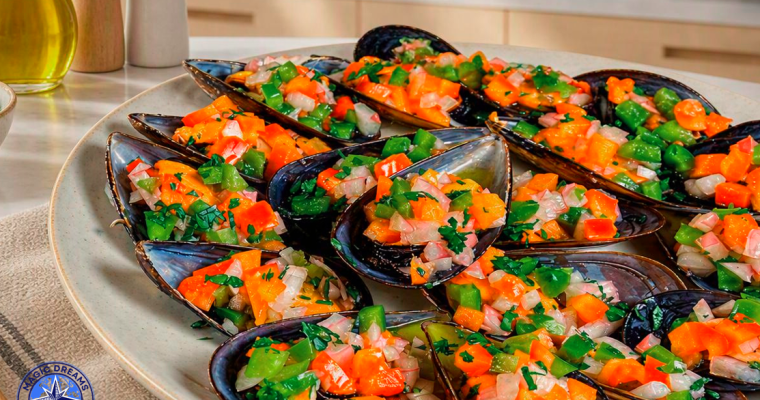
Mussels with vinaigrette are a classic appetiser built around fresh seafood, crisp vegetables and a bright, balanced dressing. The contrast between the intense flavour of the mussels and the freshness of peppers, onion and tomato makes this preparation an elegant choice for a chilled appetiser …
Seafaring Tradition Elevated into a Gastronomic Experience Fish and seafood stew is one of the great culinary legacies of the Mediterranean and Atlantic coasts. It originated as a humble dish, prepared aboard fishing boats or in kitchens close to the harbor, where fishermen made use …
Sole Meunière is one of the most elegant preparations in classic French cuisine. Its essence lies in something apparently simple: a fine sole, lightly coated in flour and gently browned, served with a sauce made from butter, lemon and parsley that adds richness, freshness and a glossy finish.
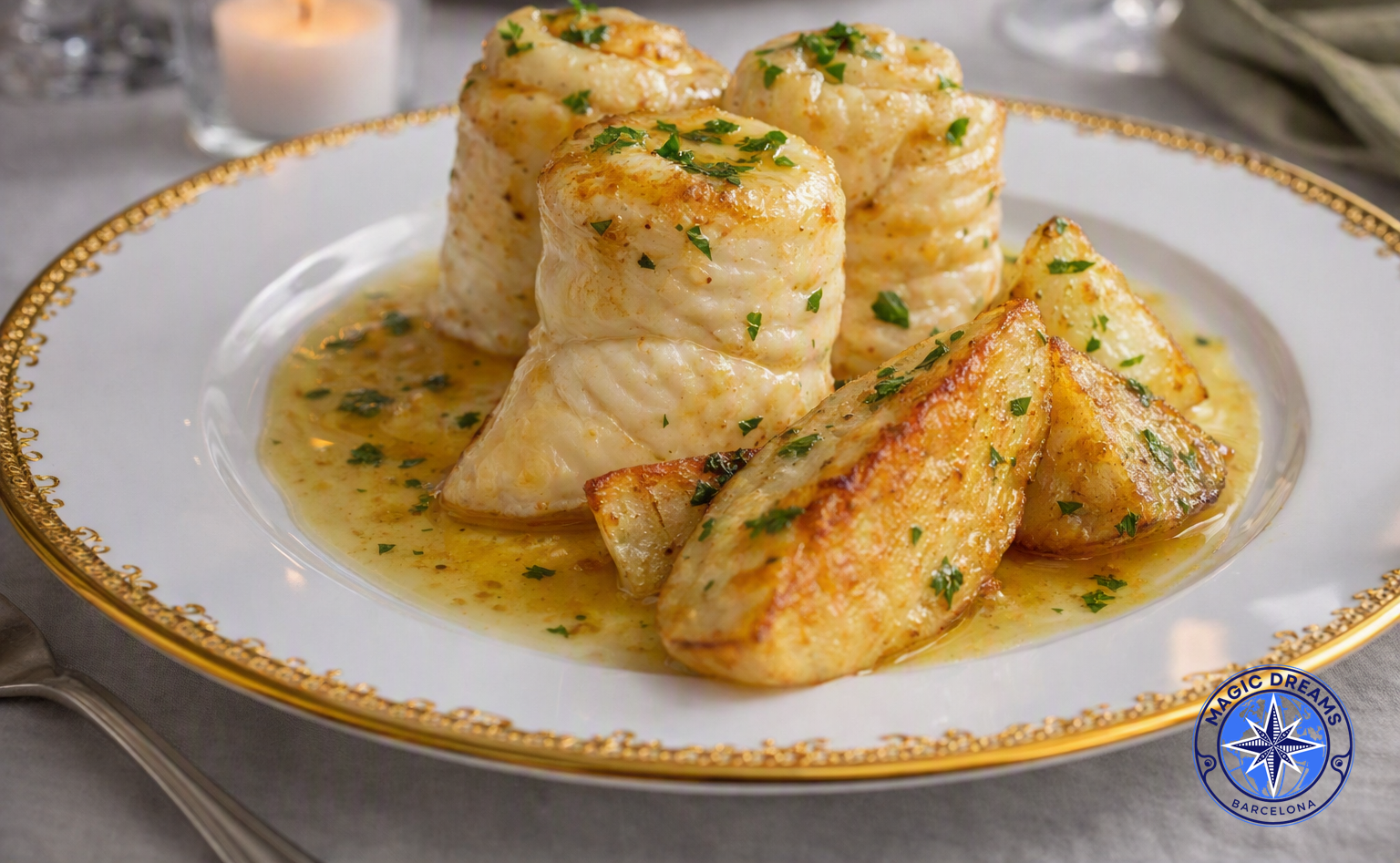
In this version, the fish is rolled and presented vertically in the centre of the plate, accompanied by rustic roasted potatoes. The result combines the delicate character of a white fish with the golden texture of the potatoes and the aromatic intensity of a freshly prepared Meunière sauce.
It is a recipe in which the quality of the ingredients and precision of technique are far more important than the number of components.
A Little History
The French term meunière literally means “miller’s wife” and refers to the technique of coating fish in flour before cooking it. This preparation belongs to the tradition of classic French cuisine and became particularly renowned when prepared with sole, a fish appreciated for its fine, delicate flesh and subtle flavour.
The traditional formula relies on only a few ingredients: fish, flour, butter, lemon and parsley. This simplicity allows the main ingredient to remain at the heart of the dish.
The technique creates a delicate golden coating during cooking, which is then complemented by the butter and lemon sauce. The butter provides richness and texture, while the acidity of the citrus balances the dish.
Over time, Sole Meunière became one of the emblematic preparations of classic French cuisine and a perfect example of how a simple recipe can achieve remarkable sophistication.
Ingredients for 4
For the Sole
4 sole, cleaned and prepared into fillets
Flour, for coating
Salt and freshly ground black pepper
Extra virgin olive oil
For the Roasted Potatoes
6 medium potatoes
Zest of 1 lemon
Extra virgin olive oil
Salt
Black pepper
For the Meunière Sauce
70 g butter
Juice of 1 lemon
Fresh parsley, finely chopped
Preparation
Before beginning, carefully clean the sole, remove the skin and separate the fillets.
Wash the potatoes and cut them into quarters without peeling them. Keeping the skin creates a more rustic presentation and gives the potatoes an especially appealing texture once roasted.
Finely grate the lemon, using only the yellow part of the peel, and squeeze the juice.
Finely chop the fresh parsley and set aside.
Finally, prepare a plate with flour so that the fish can be coated immediately before cooking.
Step-by-Step Preparation
1. Prepare the Lemon-Roasted Potatoes
Preheat the oven to 220°C / 425°F.
Place the potato wedges in a roasting dish and season with salt and pepper. Add the lemon zest and a drizzle of extra virgin olive oil.
Toss gently to ensure the potatoes are evenly coated.
Roast for approximately 30 minutes, depending on the size of the wedges, until tender inside and golden and crisp on the outside.
The lemon zest provides a subtle citrus fragrance that will harmonise beautifully with the sauce served with the sole.
2. Prepare the Sole Fillets
Season the sole fillets lightly with salt and pepper.
Carefully roll each fillet into a small cylinder and secure it with kitchen twine.
Coat each roll lightly in flour, making sure it is covered with only a very thin layer. Shake off any excess flour.
The flour should not form a thick coating. Its purpose is to help create a delicate golden surface and provide a perfect base for the sauce.
3. Brown the Fish
Heat extra virgin olive oil in a frying pan.
Once hot, carefully add the rolled sole fillets and cook for approximately 3–4 minutes, gently turning them so they brown evenly.
The cooking should be precise. The outside should develop a delicate golden colour while the inside remains moist and tender.
Once cooked, transfer the fish to a plate lined with kitchen paper.
Allow it to rest briefly before carefully removing the kitchen twine.
4. Prepare the Meunière Sauce
Melt the 70 g of butter in a saucepan over medium heat.
Once melted, add the lemon juice and allow it to reduce slightly.
The mixture should become glossy and smooth without allowing the butter to burn.
Add the finely chopped fresh parsley just before serving. This helps preserve its colour, freshness and aroma.
The sauce should achieve a clear balance between three elements: the richness of the butter, the acidity of the lemon and the fresh herbal character of the parsley.
5. Assemble the Plate
Place the rolled sole fillets vertically in the centre of the plate, making sure they retain their shape and allowing their delicate golden exterior to remain visible.
Arrange several generous wedges of skin-on roasted potatoes towards the front of the plate, creating a contrast between their crisp, golden surface and the tender texture of the fish.
Gently spoon the warm Meunière sauce over the sole.
Finish with a fine drizzle of extra virgin olive oil, freshly chopped parsley and a few delicate strands of lemon zest.
The final presentation should be clean and elegant, without overcrowding the plate.
The Secret to a Perfect Sole Meunière
The most important secret is to respect the delicate nature of the fish.
Sole has fine flesh that can quickly lose its moisture and tenderness if overcooked. The heat should therefore be high enough to create a golden exterior without extending the cooking time unnecessarily.
The flour coating should remain very light. A thick layer would conceal the texture of the fish and absorb too much fat.
The sauce also requires precision. The butter should be melted gently, with the lemon incorporated carefully to create a glossy and balanced finish.
And above all, the sauce should be prepared just before serving.
Nutritional Benefits of the Ingredients
Although Sole Meunière is a gourmet recipe containing butter and should be enjoyed as part of a balanced diet, its main ingredients provide a number of valuable nutrients.
Sole
Sole is a delicate white fish and a good source of high-quality protein.
It also provides nutrients such as vitamin B12, selenium and phosphorus, while generally being a relatively lean fish before the addition of the sauce and cooking fats.
Its light texture makes it an excellent choice for a preparation in which the sauce provides much of the dish’s richness and character.
Potatoes
Potatoes provide carbohydrates, an important source of energy, as well as potassium and other micronutrients.
In this recipe, roasting creates a crisp exterior and tender interior without the need for deep-frying.
Lemon
Lemon provides vitamin C and antioxidant compounds.
Its importance in this recipe, however, goes beyond nutrition. Its acidity is essential for balancing the richness of the butter and bringing freshness to the dish.
The zest contains aromatic essential oils that provide much of the characteristic citrus fragrance.
Extra Virgin Olive Oil
Extra virgin olive oil is primarily a source of monounsaturated fats and naturally occurring phenolic compounds.
Its aromatic character also connects this French preparation with one of the fundamental ingredients of Mediterranean cuisine.
Used in moderation, it provides a beautiful finish while enhancing the flavours of both the fish and the potatoes.
Parsley
Parsley provides small amounts of vitamins and antioxidant compounds, although its main role in this recipe is aromatic.
Its fresh, green character creates a welcome contrast with the richness of the butter.
Butter
Butter is the defining ingredient of the Meunière sauce. It provides richness, a creamy texture and a delicate dairy flavour that beautifully coats the fish.
It is also relatively high in saturated fat, so the quantity used should be considered as part of the overall recipe and a varied, balanced diet.
A Gourmet Presentation
Presentation plays an important role in this version of Sole Meunière.
The rolled sole fillets are positioned vertically in the centre of the plate, creating a delicate and structured composition. Their lightly browned exterior contrasts beautifully with the soft, tender flesh.
At the front of the plate, several large skin-on roasted potato wedges are arranged with a crisp, golden and lightly toasted surface created during roasting.
The Meunière sauce is spooned over the fish, allowing its glossy golden texture to partially coat the rolls.
Finally, a subtle drizzle of extra virgin olive oil, finely chopped fresh parsley and a few strands of lemon zest provide the final touches of colour, freshness and aroma.
The composition remains clean and sophisticated, keeping the sole as the undisputed star of the dish.
Storage and Serving
The Meunière sauce should be prepared immediately before serving, when its texture, gloss and aroma are at their best.
The cooked fish can be kept warm for a short period and covered, although ideally the dish should be assembled immediately after cooking.
The potatoes can be prepared in advance and reheated in the oven before plating.
For the best experience, serve the dish immediately, when the contrast between the warm sole, glossy sauce and crisp roasted potatoes is at its finest.
The Balance of Classic Cuisine
Sole Meunière demonstrates that sophistication does not necessarily require complexity.
A fine fish, a delicate coating of flour, butter, lemon, parsley and properly roasted potatoes are enough to create an elegant dish when every element is cooked with precision.
Fine ingredients, technique and balance: three principles of classic cuisine that transform a simple recipe into a refined gastronomic experience.
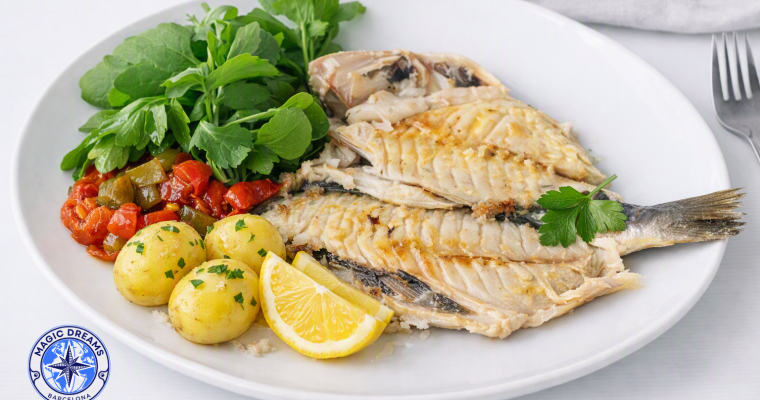
Mediterranean tradition, pure flavour and elegance in every bite Salt-baked sea bream is one of the most elegant and natural ways to prepare fish in Mediterranean cuisine. Its secret lies not in adding numerous ingredients, but in respecting the fish itself and using an ancient …
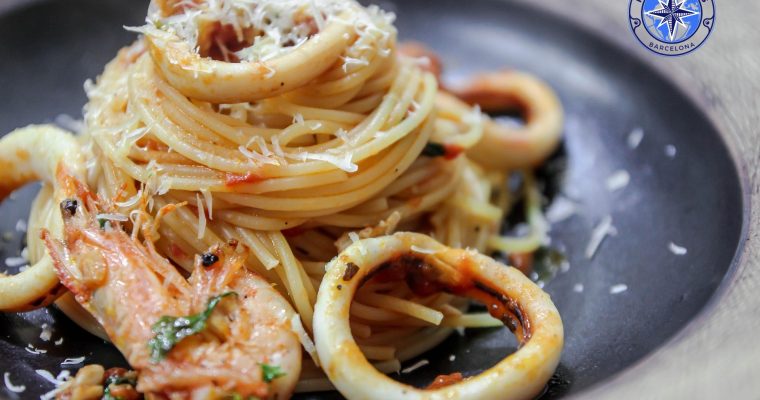
Seafood spaghetti brings together some of the most recognisable flavours of Mediterranean cuisine in a single dish: al dente pasta, seafood, tomato, extra virgin olive oil, garlic and fresh herbs. In this version, calamari and prawns provide contrasting textures and a rich marine depth that …