Etiqueta: Spanish Food

Romesco Sauce and Calçots

Romesco Sauce and Calçots

The great gastronomic ritual of Catalan cuisine Calçots with Romesco sauce are much more than a recipe: they represent one of the great gastronomic rituals of Catalonia. Closely associated with Valls and the Camp de Tarragona, calçots are a variety of tender green onion traditionally 

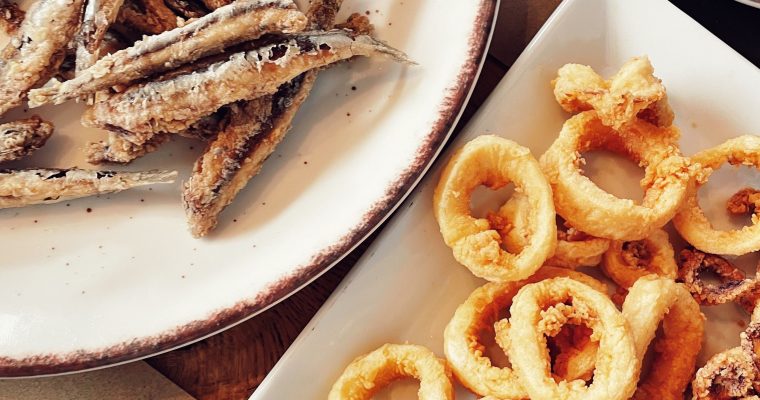
Fried Calamari and Fried Anchovies Tapas.

Fried Calamari and Fried Anchovies Tapas.

Two Mediterranean classics on one table Fried calamari and fried anchovies are two timeless dishes of Mediterranean coastal cuisine. Simple, generous and full of flavour, they are especially popular as tapas in traditional bars, taverns and seafood restaurants. Roman-style fried calamari are prepared by cutting 

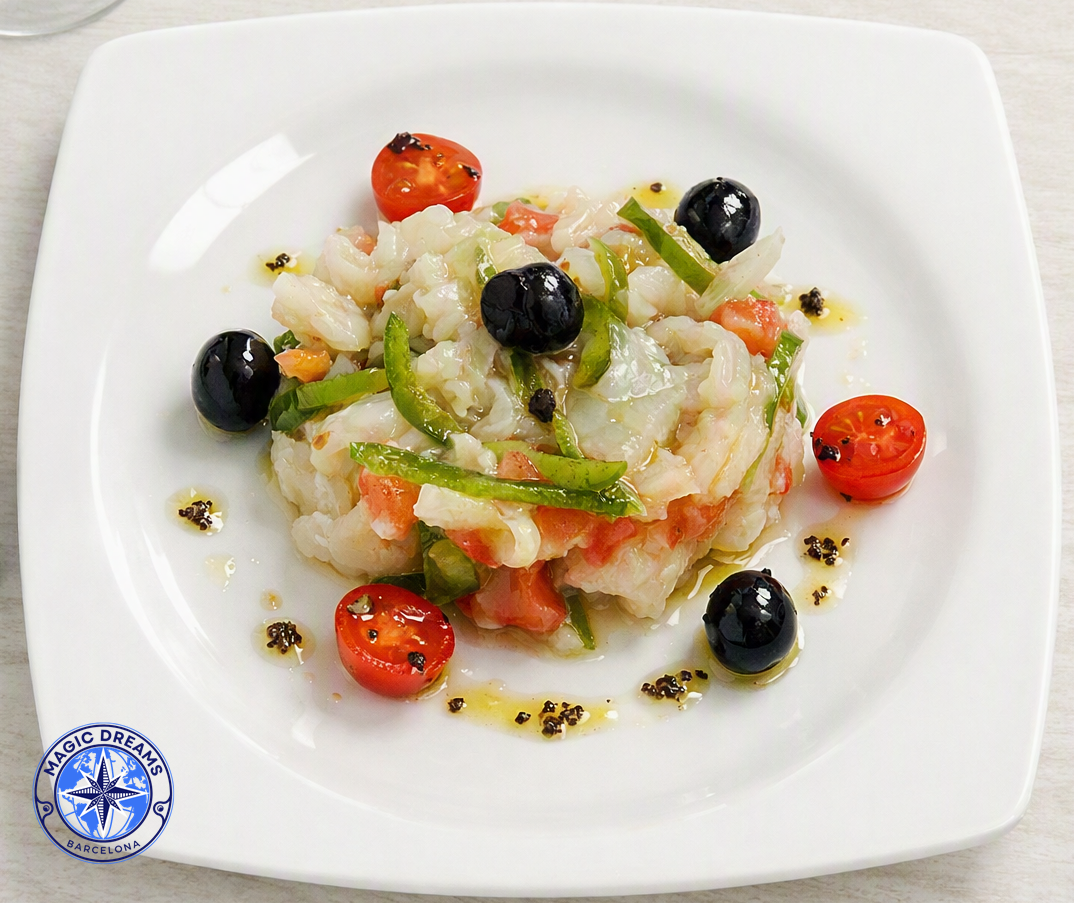
Esqueixada de Bacallà – A Fresh Catalan Classic.

Esqueixada de Bacallà – A Fresh Catalan Classic.

A Fresh Catalan Classic with Mediterranean Soul.

Some recipes seem simple until you discover the story behind them.

Esqueixada de Bacallà is one of the great classics of Catalan cuisine: a fresh, light and deeply Mediterranean dish that brings together the delicate texture of salted cod with ripe tomatoes, onion, peppers, black olives and extra virgin olive oil.

Its name comes from the Catalan verb “esqueixar,” meaning to tear or shred by hand. Traditionally, the cod is prepared precisely this way, separated into delicate, irregular flakes rather than cut into uniform pieces.

The recipe is closely connected to Catalonia’s long tradition of using salted cod, an ingredient valued for generations because salting allowed fish to be preserved for long periods.

Once desalted, cod became an incredibly versatile ingredient in Catalan cooking.

The result is a dish that perfectly expresses the Mediterranean philosophy: simple ingredients, exceptional produce and a respect for natural flavour.


Ingredients

Serves 4

  • 400 g desalted cod
  • 3 ripe tomatoes
  • 1 sweet onion or spring onion
  • 1 red bell pepper
  • 1 green bell pepper
  • 80 g black olives
  • Extra virgin olive oil
  • White wine vinegar or Sherry vinegar
  • Freshly ground black pepper
  • Salt, only if needed
  • Fresh parsley, optional

1. The Cod

If you are using salted cod, it must be desalted beforehand.

Place the cod in a large container filled with cold water and keep it refrigerated for approximately 24–48 hours, depending on the thickness of the pieces.

Change the water several times during the process.

Once properly desalted, drain the cod thoroughly and gently pat it dry.

Now comes the characteristic step of the recipe: tear the cod into small flakes using your hands.

Do not try to make the pieces perfectly uniform. The irregular texture is part of the traditional character of Esqueixada.


2. The Mediterranean Vegetables

Wash the tomatoes and cut them into small cubes.

Clean the peppers, remove the seeds and cut them into thin strips or small pieces.

Peel the onion and slice it very finely.

Try to preserve some texture in the vegetables. The dish should be fresh, juicy and slightly crisp.


3. Bringing Everything Together

Place the flaked cod in a large bowl.

Add the tomatoes, onion and peppers.

Add the black olives.

Gently combine everything so that the ingredients come together without crushing the tomatoes or breaking the cod too much.


4. The Mediterranean Dressing

Add a generous drizzle of extra virgin olive oil.

Add a small amount of vinegar and freshly ground black pepper.

Mix gently.

Taste before adding salt, as the cod may still provide enough natural saltiness.

The dressing should enhance the ingredients rather than overpower them.


5. The Resting Time

Cover the bowl and refrigerate for approximately 20–30 minutes.

This short resting period allows the cod, tomatoes, onion and peppers to absorb the olive oil and dressing.

Remove the Esqueixada from the refrigerator a few minutes before serving so that it is not excessively cold.


Presentation

Serve the Esqueixada de Bacallà on a ceramic platter or individual plates.

Arrange a generous portion of cod and vegetables and distribute a few black olives around the dish.

Finish with a delicate drizzle of extra virgin olive oil and, if desired, a few fresh parsley leaves.

For a more refined presentation, use a plating ring to create a neat central portion and finish with a few drops of olive oil around the plate.

Keep the presentation natural and elegant.

Esqueixada does not need excess. It needs excellent ingredients.


The Secret to a Great Esqueixada

The quality of the ingredients is essential.

The cod should be properly desalted while retaining its characteristic marine flavour.

The tomatoes should be ripe, aromatic and juicy.

The peppers and onion should provide freshness and texture.

And the extra virgin olive oil should be of excellent quality, as it is an essential part of the dressing.

Avoid overmixing. The dish should preserve the individual colours, textures and flavours of each ingredient.


A Fresh and Timeless Mediterranean Recipe

Esqueixada de Bacallà is much more than a cod salad.

It is an expression of Catalan cuisine: simple, honest and deeply connected to the quality of its ingredients.

It requires no complicated techniques and no long cooking time.

It simply needs good cod, ripe vegetables and excellent olive oil.

It is perfect as a starter, a light summer dish or as part of a Mediterranean table filled with small plates to share.


The Perfect Accompaniment

Serve the Esqueixada with toasted Catalan pa de pagès, the traditional rustic country bread.

A few drops of extra virgin olive oil over the warm toasted bread make a particularly delicious accompaniment.

For a lighter meal, the dish can also be served on its own, allowing the cod and vegetables to remain the true stars.


Alcohol-Free Pairing

A Fresh Catalan 0.0% White

Esqueixada de Bacallà pairs beautifully with a fresh, dry Catalan white wine with 0.0% alcohol.

A Xarel·lo 0.0% alcohol-free white can be an excellent choice. Its freshness and structure complement the cod without masking the delicate flavours of the tomatoes and vegetables.

Another elegant possibility is a Cava Brut 0.0% alcohol-free, served well chilled. Its acidity and fine bubbles refresh the palate and create a beautiful contrast with the olive oil and the texture of the cod.

Ideal Serving Temperature

Serve the 0.0% white wine at 8–10°C.

For the Cava Brut 0.0%, approximately 6–8°C is ideal.

The result is a fresh, Mediterranean and perfectly balanced pairing — with no alcohol.

Vichy Catalan: Refreshing and Naturally Mediterranean

For a completely alcohol-free and lighter option, serve well-chilled Vichy Catalan sparkling water with a few fresh lemon slices.

Its refreshing bubbles work beautifully with the natural saltiness of the cod and the freshness of the tomato.

For an even lighter and healthier alternative, serve still or sparkling mineral water with lemon and fresh herbs, such as mint or basil.

It is a simple, refreshing choice that keeps the entire experience light, Mediterranean and alcohol-free.


A Taste of Catalonia in Every Bite

Cod, tomato, onion, peppers, olives and olive oil.

Simple ingredients that tell a story.

A story of a cuisine that has always understood how to make the most of what the land and sea provide, transforming humble ingredients into dishes with unmistakable identity.

Esqueixada de Bacallà remains a beautiful reminder that great gastronomy does not always require complexity.

Sometimes, tradition has already done the work.

Esqueixada de Bacallà.
The fresh taste of Catalonia, served in its most Mediterranean form.


Copyright © 2016-2026 Magic Dreams Barcelona.

Cap i Pota – Traditional Catalan Style.

Cap i Pota – Traditional Catalan Style.

A historic Catalan stew of tender beef, sofrito and silky sauce Cap i Pota is one of the most authentic dishes of traditional Catalan cuisine. Its name literally means “head and foot”, referring to the traditional use of beef head and feet, slowly cooked until 

Cap i Pota Catalana.

Cap i Pota Catalana.

Una receta humilde convertida en un clásico de la cocina catalana El Cap i Pota es uno de los guisos más tradicionales y auténticos de la cocina popular catalana. Su nombre significa literalmente “cabeza y pata”, haciendo referencia a los principales ingredientes del plato: cabeza 

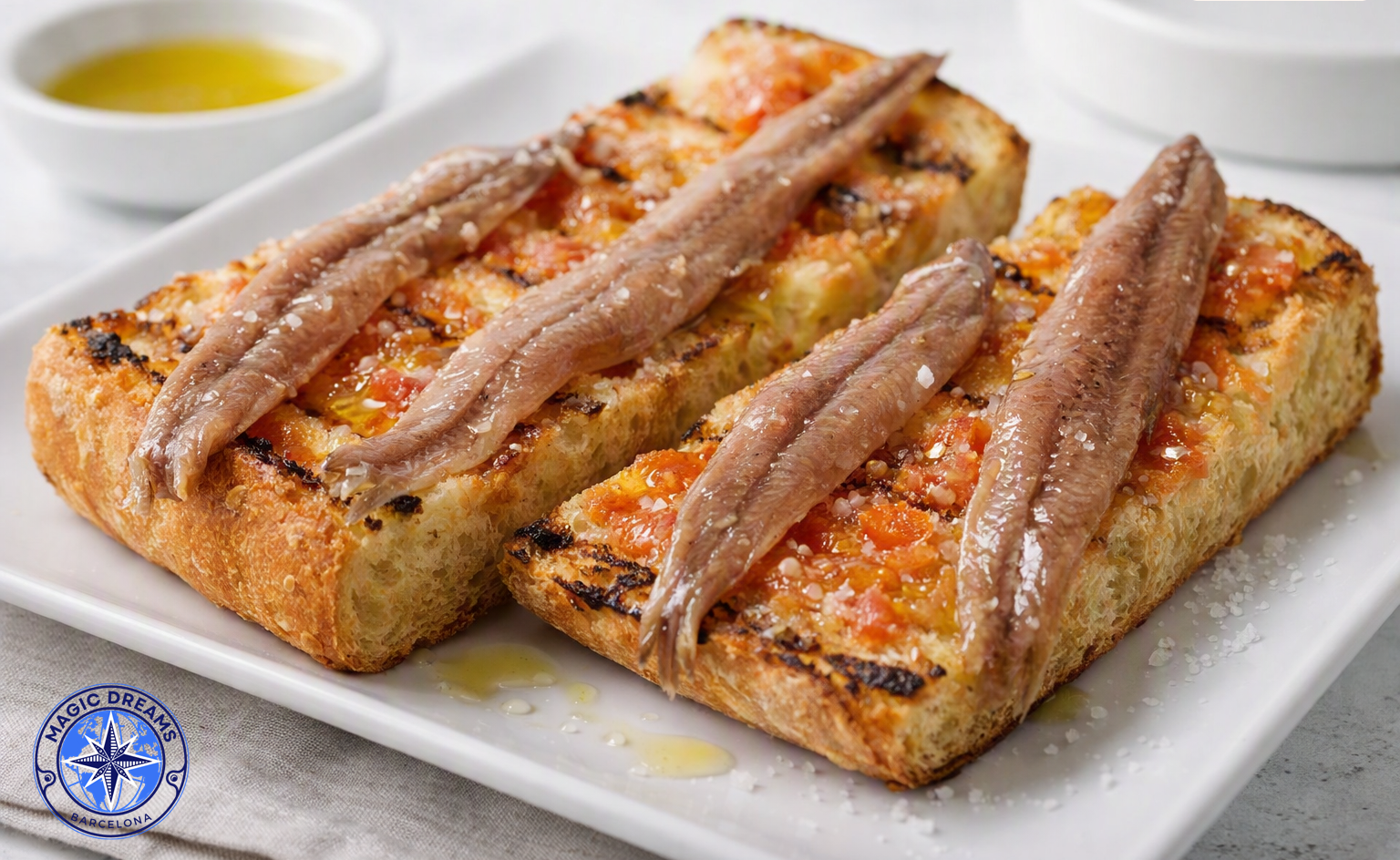
Pan de Coca with Anchovies from L’Escala.

Pan de Coca with Anchovies from L’Escala.

Pan de coca with anchovies from L’Escala is a simple yet deeply traditional expression of Catalan Mediterranean cuisine. It combines thin, crisp coca bread with extra-virgin olive oil, ripe tomato rubbed directly onto the bread and the intense flavour of traditionally cured anchovies from L’Escala.

This preparation brings together several essential elements of Catalan gastronomy: rustic bread, ripe tomato, olive oil and high-quality Mediterranean seafood.

A Brief History of L’Escala Anchovies

L’Escala, in the Alt Empordà region of Catalonia, has a long-standing connection with fishing and the traditional preservation of anchovies.

Salting was historically an essential method of preserving fish and extending its shelf life. Over time, this technique became an important gastronomic tradition in the town and an integral part of its culinary identity.

Anchovies from L’Escala are now one of the most recognised products of the Costa Brava and are enjoyed throughout Catalonia.

Their firm texture, intense flavour and characteristic salty profile make them particularly well suited to rustic bread, coca, ripe tomato and extra-virgin olive oil.

Ingredients

For the Coca

  • 250 g strong white flour
  • 150 ml lukewarm water
  • 5 g dry baker’s yeast
  • 5 g salt
  • 2 tablespoons extra-virgin olive oil
  • A small pinch of sugar, optional

For the Topping

  • 8–12 cured anchovy fillets from L’Escala
  • 1 very ripe tomato
  • Extra-virgin olive oil
  • A small amount of salt, only if necessary
  • Fresh parsley, optional

Preparing the Coca Dough

1. Activate the Yeast

Place the lukewarm water in a bowl and add the dry yeast.

If desired, add a small pinch of sugar.

Leave the mixture to rest for approximately 5–10 minutes.

2. Prepare the Dough

Place the flour in a large bowl and add the salt.

Gradually pour in the water and yeast mixture and add the extra-virgin olive oil.

Mix until the ingredients begin to form a dough.

Transfer the dough to a lightly floured work surface and knead for approximately 8–10 minutes, until smooth and elastic.

3. Let the Dough Rise

Shape the dough into a ball and place it in a lightly oiled bowl.

Cover it with a clean kitchen towel and leave it in a warm, draft-free place for approximately 1 hour, or until it has visibly increased in volume.

Preparing the Coca

4. Stretch the Dough

Preheat the oven to 220°C.

Place the dough on a baking tray lined with parchment paper.

Gently stretch it with your hands into a thin, elongated or rectangular shape.

The coca should remain relatively thin so that it becomes crisp around the edges while retaining a delicate texture.

5. Add the Olive Oil

Brush the surface lightly and evenly with extra-virgin olive oil.

You may create small indentations in the dough with your fingertips for a more rustic traditional appearance.

6. Bake

Bake for approximately 12–18 minutes, depending on the thickness of the dough and your oven.

The coca should be lightly golden and crisp around the edges.

Remove it from the oven and allow it to cool slightly.

The Traditional Catalan Tomato

7. Rub the Tomato Directly onto the Bread

This step is important.

In traditional Catalan cuisine, ripe tomato is rubbed directly onto the surface of the bread, rather than simply being grated and spooned over it.

Cut a very ripe tomato in half.

Take one half and gently rub the cut side directly over the warm coca, allowing the tomato pulp and natural juices to penetrate the bread.

Continue until the surface has absorbed a light layer of tomato.

Do not add an excessive amount. The purpose is to flavour and moisten the bread while maintaining its crisp character.

Finish with a delicate drizzle of extra-virgin olive oil.

8. Add the Anchovies

Arrange the L’Escala anchovy fillets over the tomato-rubbed coca.

Place one or two fillets on each portion, depending on their size.

Because the anchovies already provide considerable saltiness, avoid adding additional salt unless absolutely necessary.

The Traditional Catalan Combination

The classic combination is:

  • Crisp coca bread
  • Ripe tomato rubbed directly onto the bread
  • Extra-virgin olive oil
  • Cured anchovies from L’Escala

The tomato provides freshness and acidity, the olive oil adds richness and aroma, and the anchovies contribute their characteristic Mediterranean intensity.

The key is simplicity. The ingredients should complement one another without masking the flavour of the anchovies.

Presentation

Cut the coca into individual rectangular or rustic pieces.

Arrange the portions on a wooden board, ceramic platter or slate.

Place the anchovy fillets neatly over the tomato-rubbed bread and finish with a very light drizzle of extra-virgin olive oil.

You may accompany the coca with a few olives or fresh herbs, but the presentation should remain simple and elegant.

The traditional ingredients should remain the visual and gastronomic focus.

When to Serve It

Pan de coca with L’Escala anchovies is ideal as:

  • A Catalan appetizer
  • A Mediterranean tapa
  • A starter
  • An aperitif
  • A sharing dish
  • Part of a traditional Catalan table

It can also be served alongside other regional products such as Catalan cheeses, cured meats, olives and rustic bread.

Tips for the Best Result

Use a very ripe tomato: it should be juicy and naturally sweet so that it can be rubbed directly onto the bread.

Rub the tomato directly onto the coca: this is the traditional Catalan method and gives the bread its characteristic flavour.

Do not overload the bread with tomato: the coca should remain structured and slightly crisp.

Use high-quality extra-virgin olive oil: its flavour is particularly noticeable in such a simple preparation.

Control the salt: cured anchovies already provide a pronounced salty character.

Add the anchovies after baking: this preserves their delicate texture and distinctive flavour.

Non-Alcoholic Pairings

Best 0.0% Pairing

A white 0.0% alcohol-free sparkling wine in a Brut style, served well chilled at 8–10°C, is an excellent pairing.

Its freshness and fine carbonation help cleanse the palate and balance the intense, salty character of the anchovies.

Vichy Catalan

Vichy Catalan, served well chilled, is an excellent Mediterranean option.

Its mineral character and natural carbonation refresh the palate without competing with the anchovies or olive oil.

Sparkling Water with Lemon

Very cold sparkling water with a thin slice of lemon provides a light and refreshing alternative.

The acidity of the lemon complements the salty character of the anchovies and the freshness of the tomato.

Peach Juice

Chilled peach juice, preferably without excessive added sugar, provides a gentle fruity contrast to the savoury intensity of the anchovies.

Natural Pineapple Juice

Natural pineapple juice, served chilled and without added sugar, offers freshness and natural acidity.

Its fruity character creates an interesting contrast with the coca, tomato, olive oil and anchovies.

Espresso

After the meal, a short and aromatic espresso is a simple and elegant choice.

Its intensity and natural bitterness provide a pleasant contrast to the richness of the olive oil and the savoury character of the anchovies.

Catalan Tradition

Pan de coca with anchovies from L’Escala is an excellent example of the philosophy behind Catalan cuisine: simple ingredients, traditional techniques and respect for the quality of the product.

The coca provides the crisp foundation, the tomato rubbed directly onto the bread adds freshness and acidity, the extra-virgin olive oil brings Mediterranean richness, and the anchovies of L’Escala provide the unmistakable character of the Catalan coast.

Final Note

Pan de coca with anchovies from L’Escala is a simple, elegant and deeply Mediterranean preparation. It allows one of the most characteristic products of the Catalan coast to take centre stage while preserving the traditional way of enjoying bread with tomato and olive oil.

Pan de coca with L’Escala anchovies: the authentic taste of the Catalan Mediterranean in every bite.


Copyright © 2016-2026 Magic Dreams Barcelona.

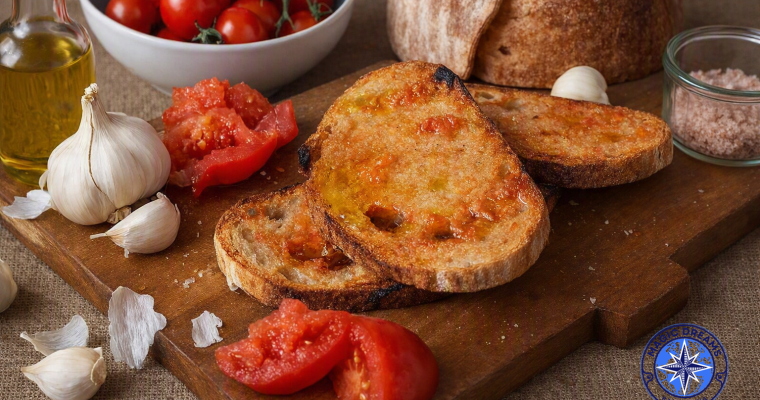
Catalan Tomato Bread — Pa Amb Tomàquet.

Catalan Tomato Bread — Pa Amb Tomàquet.

A Traditional Catalan Recipe Pa amb Tomàquet, or Catalan tomato bread, is one of the simplest and most iconic preparations in Catalan cuisine. It is made with just a few essential ingredients: good country bread, ripe tomato, salt and extra virgin olive oil. Its simplicity 

Pan de Payés con Tomate, Sal y Aceite de Oliva a la Catalana.

Pan de Payés con Tomate, Sal y Aceite de Oliva a la Catalana.

Una de las grandes expresiones de la cocina catalana El Pa amb Tomàquet, conocido en castellano como pan con tomate, es una de las preparaciones más sencillas y representativas de la gastronomía catalana. Su esencia se encuentra precisamente en la sencillez: un buen pan de 

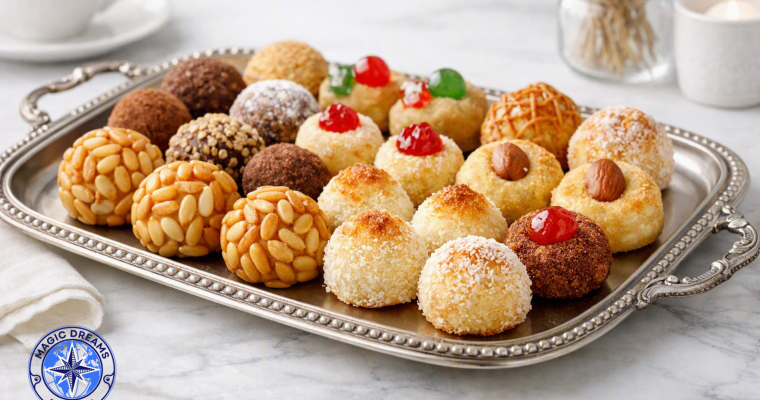
Traditional Catalan Panellets.

Traditional Catalan Panellets.

A Classic Catalan Autumn Sweet

Panellets are one of the most traditional sweets in Catalonia and are closely associated with All Saints’ Day and the Castanyada, the traditional Catalan autumn celebration held around November 1st.

These small almond-based sweets are traditionally prepared with ground almonds, sugar and potato or sweet potato. They are commonly covered with pine nuts, although many other varieties can be found, including coconut, coffee, chocolate and almond.

Simple ingredients, careful preparation and a strong connection to Catalan traditions make panellets an essential part of Catalan autumn cuisine.

A Brief History and Tradition

Panellets belong to the traditional Catalan confectionery repertoire and have been passed down through generations.

They became particularly associated with All Saints’ Day, when families would gather to celebrate the arrival of autumn. Alongside roasted chestnuts and sweet potatoes, panellets became one of the characteristic foods of the Castanyada.

The classic pine nut version is perhaps the best known. However, Catalan pastry shops and home kitchens prepare many different variations, allowing the same basic almond dough to become a wide selection of small traditional sweets.

Ingredients

Makes approximately 20–24 panellets

For the dough

  • 250 g ground almonds
  • 200 g sugar
  • 150 g potato or sweet potato
  • Finely grated zest of 1 lemon
  • 1 egg yolk

For the pine nut coating

  • 150–200 g pine nuts
  • 1 egg white

Optional varieties

Coconut Panellets

  • 40 g desiccated coconut

Coffee Panellets

  • 1 teaspoon instant espresso powder or a small amount of concentrated coffee

Chocolate Panellets

  • 1 tablespoon unsweetened cocoa powder

Almond Panellets

  • Chopped or flaked almonds

Method

1. Cook the Potato or Sweet Potato

Cook the potato or sweet potato with its skin on until completely tender.

Drain well and allow it to cool.

Peel it and mash until you obtain a smooth, lump-free purée.

It is important that the potato or sweet potato is not excessively wet, as too much moisture can make the dough difficult to shape.

2. Prepare the Almond Dough

Place the ground almonds, sugar and lemon zest in a large bowl.

Add the cooled potato or sweet potato purée and mix until the ingredients are evenly combined.

Add the egg yolk and continue mixing until you obtain a smooth, firm and workable dough.

Do not overwork the mixture. Once the ingredients are completely incorporated, the dough is ready.

3. Rest the Dough

Cover the dough and refrigerate it for at least 1 hour.

If possible, allow it to rest for several hours. This will make the dough easier to shape and allow the flavours to develop.

4. Shape the Panellets

Preheat the oven to 200°C / 390°F.

Divide the dough into small, equal portions and shape them into balls.

For the traditional pine nut panellets, lightly beat the egg white.

Coat each ball with the egg white and then cover it generously with pine nuts, gently pressing them into the surface so they adhere properly.

5. Prepare Different Flavours

For coconut panellets, mix part of the dough with desiccated coconut and shape into small portions.

For coffee panellets, incorporate espresso powder or a small amount of concentrated coffee.

For chocolate panellets, add unsweetened cocoa powder to another portion of the dough.

You may also shape some of the dough into small portions and decorate them with chopped or flaked almonds.

6. Bake

Arrange the panellets on a baking tray lined with parchment paper.

Bake for approximately 8–12 minutes, depending on their size.

They should become lightly golden on the outside while remaining soft and moist inside.

Do not overbake them, as excessive cooking will make the almond dough dry.

7. Cool Before Serving

Remove the panellets from the oven and allow them to cool completely.

As they cool, the exterior will become slightly firmer while the centre retains its characteristic soft almond texture.

Tips for Perfect Panellets

Use good-quality ground almonds.
Almonds are the principal ingredient and determine much of the final flavour.

Control the moisture.
The potato or sweet potato should be well drained before being incorporated into the dough.

Do not overbake.
The ideal panellet is lightly golden outside and tender inside.

Allow the dough to rest.
Resting makes shaping easier and improves the final texture.

Use plenty of pine nuts.
Traditional pine nut panellets should have a generous coating.

The Castanyada Tradition

Panellets are an essential part of the Catalan Castanyada, an autumn celebration traditionally associated with roasted chestnuts, sweet potatoes and these small almond sweets.

Families and friends gather around the table to enjoy seasonal foods and traditional recipes, making panellets an important part of Catalonia’s culinary heritage.

The tradition also reflects the importance of seasonal ingredients and homemade preparation within Catalan cuisine.

Presentation

Arrange the panellets on a large serving platter, grouping the different varieties together.

For an elegant presentation, combine the traditional pine nut panellets with coconut, coffee, chocolate and almond varieties.

Serve them at room temperature with coffee, tea or a refreshing non-alcoholic drink.

Non-Alcoholic Pairings

Vichy Catalan

Serve well-chilled Vichy Catalan alongside the panellets. Its natural carbonation and mineral character provide a refreshing contrast to the sweetness and richness of the almond-based pastries.

Sparkling Water with Lemon

For a lighter option, serve very cold sparkling water with a thin slice of lemon.

The freshness and acidity help cleanse the palate without adding unnecessary sweetness.

Freshly Squeezed Orange or Mandarin Juice

Fresh orange or mandarin juice works particularly well with panellets. Its natural acidity and citrus aroma balance the richness of the almonds and complement the lemon zest in the dough.

Espresso

A short, aromatic espresso is a classic pairing. Its natural bitterness provides an excellent contrast to the sweetness of the panellets.

For a lighter option, serve the espresso without added sugar.

Cinnamon and Citrus Infusion

A warm infusion made with cinnamon and orange or lemon peel is particularly suitable for an autumn afternoon.

Its warm, aromatic character complements the almonds and spices traditionally associated with the season.

A Taste of Catalan Tradition

Panellets are much more than small almond sweets. They are part of Catalonia’s seasonal traditions and an essential element of the Castanyada.

Made with simple ingredients and traditional techniques, they represent the warmth of autumn, family gatherings and the preservation of Catalan culinary heritage.

Almonds, pine nuts, citrus and tradition come together in one of Catalonia’s most beloved autumn sweets.


Copyright © 2016-2026 Magic Dreams Barcelona.

Panellets Catalanes Tradicionales.

Panellets Catalanes Tradicionales.

Un dulce emblemático de Cataluña Los panellets son uno de los dulces tradicionales que mejor representan a Cataluña y están especialmente vinculados a la celebración de Todos los Santos, el 1 de noviembre, y a la tradicional Castanyada. Su origen se inicia en la repostería 

Traditional Catalan Fuet.

Traditional Catalan Fuet.

Traditional Catalan fuet is one of the most recognizable cured sausages in Catalonia. Thin, aromatic and naturally cured, it is made primarily from pork, salt and selected seasonings. Its characteristic texture and flavour develop slowly during the curing process, making it a classic of Catalan 

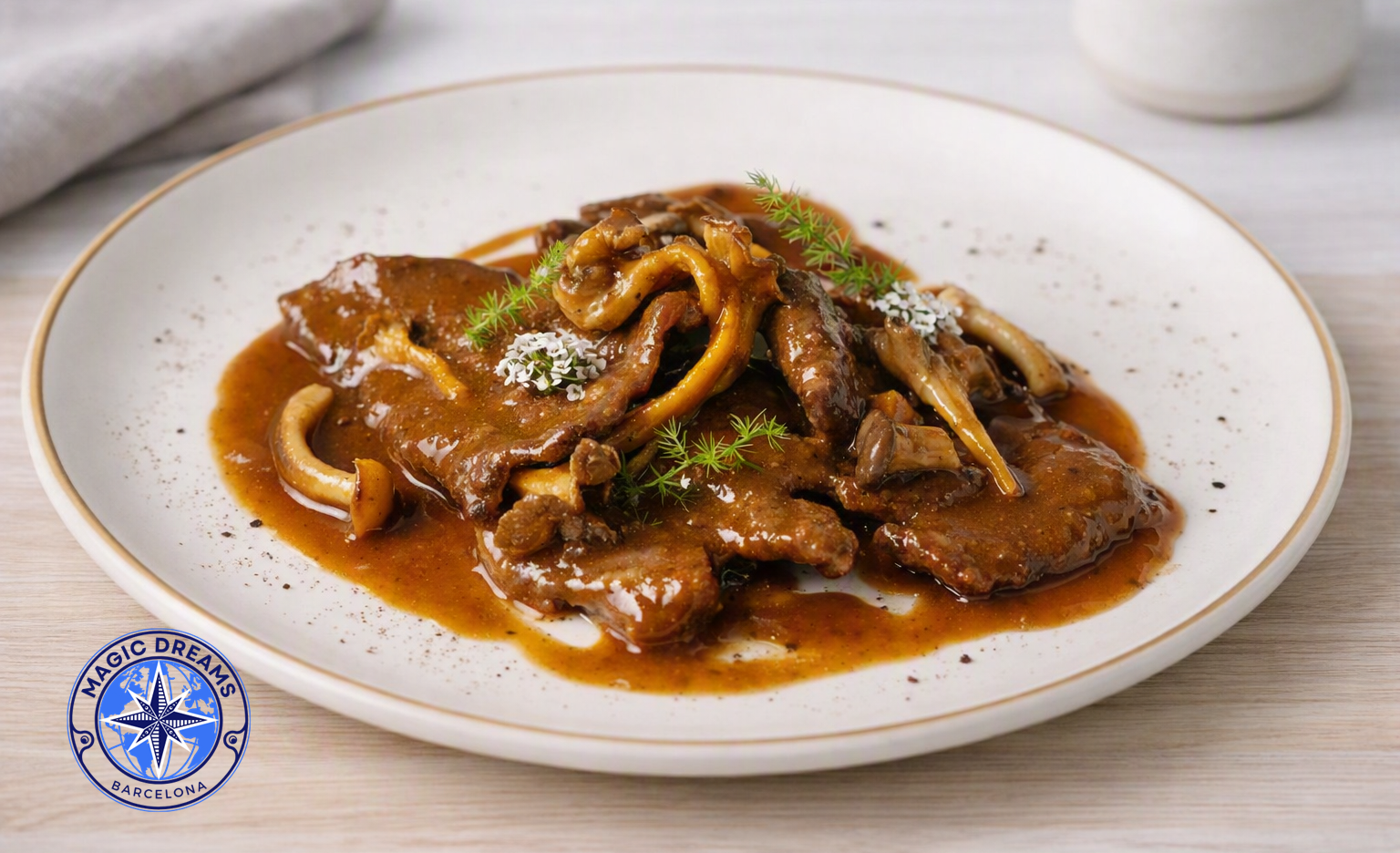
Traditional Catalan Beef Fricandó.

Traditional Catalan Beef Fricandó.

A Classic of Catalan Cuisine

Fricandó is one of the most traditional dishes in Catalan cuisine. This comforting beef stew is made with thin slices of tender beef, mushrooms and a rich sauce prepared with onion, tomato, wine and stock.

It is a dish of slow cooking and patience, where simple ingredients are transformed into a deeply flavoured and elegant preparation.

Fricandó is particularly associated with autumn, when wild mushrooms are abundant and become an important part of Catalan cooking.

A Brief History and Tradition

Fricandó has been part of Catalan home cooking for generations. Its preparation is based on thin slices of beef that are lightly floured, browned and then slowly cooked in a traditional sauce.

The addition of mushrooms gives the dish its characteristic woodland aroma and connects it strongly with Catalonia’s autumn cuisine.

Traditionally, fricandó was prepared for family meals and special occasions. It is also one of those dishes that often tastes even better after resting, allowing the sauce, beef and mushrooms to develop a deeper and more harmonious flavour.

The recipe reflects an important principle of Catalan cooking: good ingredients, careful preparation and slow cooking can create exceptional flavour without unnecessary complexity.

Ingredients

Serves 4

  • 600–700 g thinly sliced beef
  • 300 g mixed mushrooms
  • 1 large onion
  • 2 ripe tomatoes
  • 2 garlic cloves
  • 100 ml white wine
  • 400–500 ml beef stock
  • 2 tablespoons plain flour
  • 4 tablespoons extra virgin olive oil
  • Salt, to taste
  • Freshly ground black pepper
  • 1 bay leaf
  • A few sprigs of fresh thyme

For the Traditional Picada

  • 10–12 toasted almonds
  • 1 small garlic clove
  • A small handful of fresh parsley
  • 1 small slice of toasted bread

Method

1. Prepare the Beef

Pat the beef slices dry with kitchen paper.

Season lightly with salt and freshly ground black pepper.

Dust each slice with a thin layer of flour and shake off any excess.

The flour will help the meat develop a light golden crust and will later contribute to the texture of the sauce.

2. Brown the Beef

Heat the extra virgin olive oil in a large, heavy-based casserole.

When the oil is hot, brown the beef slices briefly on both sides.

Do not cook the beef completely at this stage. The purpose is simply to create a lightly browned exterior.

Remove the beef from the casserole and set it aside.

3. Prepare the Sofrito

Using the same casserole, add the finely chopped onion.

Cook over medium-low heat for approximately 10–15 minutes, stirring occasionally, until the onion becomes soft and lightly golden.

Add the finely chopped garlic and cook for another minute.

Grate the ripe tomatoes and add them to the casserole.

Cook slowly until the tomato has reduced and the sofrito becomes concentrated and aromatic.

This stage is essential for developing the depth of flavour in the final sauce.

4. Add the Wine

Pour in the white wine and slightly increase the heat.

Allow it to cook for several minutes so that the alcohol evaporates and the wine becomes incorporated into the sofrito.

5. Return the Beef to the Casserole

Place the browned beef slices back into the casserole.

Add the beef stock, bay leaf and fresh thyme.

The liquid should partially cover the meat. It does not need to completely submerge the beef.

Cover the casserole and cook gently over low heat for approximately 45–60 minutes.

The cooking should remain gentle throughout. The objective is to tenderise the beef slowly while allowing the sauce to reduce naturally.

6. Prepare the Mushrooms

Clean the mushrooms carefully, removing any soil or damaged parts.

If you are using dried mushrooms, rehydrate them according to the package instructions and reserve some of the strained soaking liquid if desired.

Heat a little olive oil in a separate frying pan.

Sauté the mushrooms until lightly golden and aromatic.

Set them aside.

7. Prepare the Picada

Place the toasted almonds, garlic, parsley and toasted bread in a mortar.

Crush until you obtain a relatively fine paste.

This traditional Catalan picada adds texture, aroma and depth to the sauce.

8. Finish the Fricandó

When the beef is almost completely tender, add the sautéed mushrooms to the casserole.

Stir in the picada gently.

Continue cooking over low heat for another 10–15 minutes.

Taste the sauce and adjust the seasoning if necessary.

The final sauce should be rich, glossy and slightly thick, coating the beef without becoming excessively heavy.

9. Allow the Dish to Rest

Turn off the heat and allow the fricandó to rest for at least 15–20 minutes before serving.

For an even deeper flavour, prepare it several hours in advance or, ideally, the day before.

After resting, the sauce becomes more harmonious and the flavours of the beef and mushrooms become even more pronounced.

Tips for the Perfect Fricandó

Choose tender, thinly sliced beef.
Uniform slices will cook more evenly and remain tender during the slow cooking process.

Do not over-brown the beef.
A quick sear is enough. The tenderness comes from the slow cooking that follows.

Take your time with the sofrito.
Well-cooked onion and properly reduced tomato are essential for a rich and flavourful sauce.

Use good-quality mushrooms.
They provide one of the defining flavours of traditional fricandó.

Keep the heat low.
A gentle simmer helps the beef become tender without drying it out.

Allow the dish to rest.
Fricandó develops even more flavour when it is allowed to rest before serving.

Presentation

Arrange the beef slices on individual plates and spoon the mushroom sauce generously over and around the meat.

Finish with a few drops of extra virgin olive oil and, if desired, a few fresh parsley leaves.

Serve with country bread to enjoy the sauce, or accompany the dish with a simple side of potatoes, rice or seasonal vegetables.

For a more refined presentation, place one or two tender slices of beef in the centre of the plate, arrange the mushrooms carefully around them and finish with a small amount of glossy sauce.

Non-Alcoholic Pairings

Best 0.0% pairing: a white 0.0% alcohol-free sparkling wine in a Brut style, served well chilled, to provide freshness and cleanse the palate against the rich sauce and earthy mushrooms.

Gramona Imperial Brut 0.0% Alcohol-Free, an elegant Catalan-style alcohol-free sparkling wine, is an excellent choice to accompany the richness of the beef fricandó, its mushrooms and traditional sauce. Serve well chilled, between 8 and 10°C.

Vichy Catalan

Vichy Catalan, served well chilled, is an excellent option with fricandó. Its fine carbonation and mineral character help cleanse the palate and balance the intensity of the sauce and mushrooms.

Sparkling Water with Lemon

A light and refreshing option is very cold sparkling water with a thin slice of lemon.

Its natural acidity provides freshness and allows you to enjoy the dish without adding sweetness.

Fresh Apple Juice

Fresh apple juice, preferably one that is not overly sweet, pairs beautifully with the tender beef and the earthy character of the mushrooms.

Fresh White Grape Juice

White grape juice offers a naturally fruity, alcohol-free alternative with pleasant acidity that complements the richness of the stew.

Espresso

After the meal, a short and aromatic espresso is a simple and elegant choice.

Its intensity and natural bitterness provide a pleasant contrast to the richness of the sauce.

Thyme and Lemon Infusion

For a lighter option, prepare a warm infusion with thyme and a few drops of fresh lemon juice.

Its herbal and refreshing character makes it particularly suitable after a slow-cooked dish such as traditional fricandó.

A Taste of Catalan Tradition

Fricandó represents the richness of traditional Catalan cuisine: tender beef, carefully prepared sofrito, mushrooms, toasted almonds and slow cooking.

It is a dish associated with family meals, autumn ingredients and the pleasure of sharing food around the table.

Its greatest secret is patience.

Traditional Catalan beef fricandó is a celebration of slow cooking, seasonal mushrooms and the deep, comforting flavours of Catalan gastronomy.


Copyright © 2016-2026 Magic Dreams Barcelona.

Fricandó de Ternera Tradicional Catalán.

Fricandó de Ternera Tradicional Catalán.

Un clásico de la cocina catalana El fricandó de ternera es uno de los grandes platos tradicionales de la cocina catalana. Se trata de un guiso elaborado con finas láminas de ternera, setas y una salsa aromática preparada lentamente con cebolla, tomate, vino y caldo.