Mediterranean tradition, pure flavour and elegance in every bite
Salt-baked sea bream is one of the most elegant and natural ways to prepare fish in Mediterranean cuisine. Its secret lies not in adding numerous ingredients, but in respecting the fish itself and using an ancient cooking technique that preserves its natural juices and delicate flavour.
In Catalonia, where maritime cuisine has always played an important role, many varieties of fish are traditionally enjoyed, including monkfish, grouper, red scorpionfish, sole, hake, sardines, anchovies, mackerel, tuna and salted cod.
Fish may be fried, grilled, prepared in casseroles with vegetables and sofrito, cooked in suquets and seafood soups, or baked with potatoes and tomatoes.
Salt baking, however, is a technique of its own.
Here, the salt does not overpower the fish.
It protects it.
The whole fish is completely covered with coarse salt, lightly moistened with water, and baked in the oven. During cooking, the salt hardens into a protective crust — almost like a natural armour — keeping the juices inside.
The result is remarkably delicate:
moist flesh, a firm yet tender texture and a pure, concentrated taste of the sea.
An Ancient Mediterranean Cooking Technique
Salt as both protection and cooking method
Cooking in salt belongs to a long Mediterranean tradition associated with both food preservation and preparation.
The principle is beautifully simple.
The moistened salt forms a protective barrier around the fish while the heat of the oven cooks it gently inside.
The fish is usually prepared whole, with its head, skin and bones intact, and in most cases with the scales.
Very little else is needed.
The structure of the fish and the salt crust do the work.
How Does Salt Baking Work?
A little Mediterranean culinary alchemy
Coarse salt is lightly moistened with water so it can be packed around the fish.
Once placed in the oven, the heat causes the salt to harden into a firm crust.
This crust limits moisture loss.
The natural juices remain inside.
The fish therefore cooks in a protected environment, surrounded by its own steam and aromas.
When the crust is broken after baking, the result is tender, juicy and remarkably clean-tasting fish.
Premium Salt-Baked Sea Bream
Serves 2
Ingredients
- 1 whole sea bream, approximately 800 g–1 kg
- 1.5–2 kg coarse sea salt
- Water
- A few drops of extra virgin olive oil
- Lemon, optional
- Fresh parsley, optional
For the Premium Presentation
- High-quality extra virgin olive oil
- Finely grated lemon zest
- Fresh Mediterranean herbs
- Flaked sea salt, optional and used only for presentation
Step-by-Step Preparation
01 · Prepare the Sea Bream
Ask your fishmonger to clean the sea bream without removing the scales.
Keep the skin and head intact.
The scales provide an additional protective layer between the fish and the salt.
Dry the fish carefully.
Do not season the fish directly with salt.
02 · Prepare the Salt Base
Spread a layer of approximately 1–2 cm of coarse salt over a baking tray.
Sprinkle with a little water and mix.
The salt should be slightly damp, but never wet.
03 · Place the Fish
Place the sea bream on top of the first layer of salt.
Cover the fish completely with the remaining salt.
It should be completely enclosed, almost as though you were creating a small natural armour around the fish.
Press gently so the salt forms a compact crust.
The head and tail can also be covered.
04 · Bake
Preheat the oven to 200°C / 392°F.
Bake for approximately 20–25 minutes per kilogram of fish, depending on its exact size and your oven.
Avoid opening the oven repeatedly.
The crust should become firm and hardened.
Cooking time can vary, so always adjust it according to the actual weight of the fish.
05 · Break the Salt Crust
The most dramatic moment
Remove the sea bream from the oven.
Allow it to rest for approximately 5 minutes.
Using a spoon, small knife or similar utensil, carefully break open the salt crust.
Remove the large pieces of salt.
Work gently to prevent excessive salt from coming into contact with the flesh.
06 · Clean the Fish
Carefully remove the skin.
Separate the fillets from the central bone.
The flesh should come away easily while remaining beautifully moist.
Remove any remaining bones or traces of salt.
07 · The Final Finish
Serve the fillets immediately.
Add a few drops of excellent extra virgin olive oil.
Finish with a little fresh lemon zest and delicate Mediterranean herbs, if desired.
There is no need for a heavy sauce.
The fish should remain the star.
The Secret to Great Salt-Baked Fish
The key is not to overcomplicate the fish.
It should reach the oven almost exactly as it came from the sea.
The salt acts as a protective shell, allowing the sea bream to cook in a moist, enclosed environment.
There is no need to marinate it.
There is no need for heavy seasoning.
There is no need for an elaborate sauce.
The sophistication lies in simplicity.
Does the Fish Become Too Salty?
Not necessarily.
The salt crust acts as a barrier.
Salt does not simply penetrate the fish indiscriminately.
The fish absorbs only a limited amount during cooking, although the final result depends on factors such as the size of the fish, the moisture of the crust and the cooking time.
That is why it is important to use coarse salt and carefully remove the crust and skin before serving.
Gourmet Suggestions
Magic Dreams Barcelona
To elevate this traditional preparation:
- Use fresh, high-quality sea bream.
- Keep the scales on during cooking.
- Choose good-quality coarse sea salt.
- Moisten the salt lightly.
- Create a completely sealed crust.
- Adjust cooking time according to the fish’s weight.
- Break the crust carefully.
- Remove the skin before serving.
- Finish with excellent extra virgin olive oil.
- Use lemon sparingly.
- Avoid heavy sauces that could mask the fish.
Variations
The same technique works beautifully with other whole fish.
Salt-Baked Sea Bass
One of the most popular alternatives, with delicate yet firm flesh.
Salt-Baked Red Porgy
A beautiful Mediterranean option with a more pronounced flavour.
Salt-Baked Snapper
Ideal for a slightly richer and more characterful interpretation.
The method remains the same:
whole fish + coarse salt + oven + patience.
Traditional Presentation
The sea bream can be presented whole after carefully removing the salt crust.
For a more theatrical table service, the fillets can be removed in front of the guests.
The crust is broken.
The fish is revealed.
The skin is removed.
And the clean, moist fillets are served.
It becomes part of the dining experience.
Premium Presentation
The purity of the product, elevated by Magic Dreams Barcelona
For a Premium Magic Dreams Barcelona presentation, place the sea bream fillet in the centre of a white plate.
Add a few drops of extra virgin olive oil.
Finish with:
lemon zest + Mediterranean herbs + a delicate drizzle of olive oil.
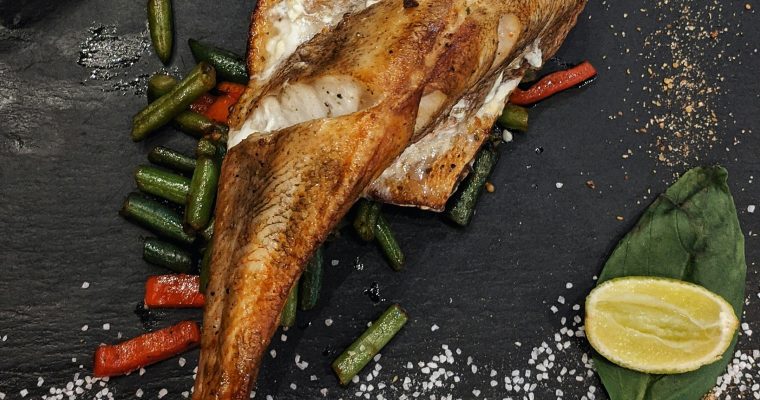
A small garnish of Mediterranean vegetables or a very light salad can accompany the fish.
Nothing should hide the natural texture and colour of the sea bream.
True elegance lies in allowing the ingredient to speak for itself.
Pairing
For the table, we recommend a fresh, dry 0.0% alcohol-free Mediterranean-style white wine, with good acidity and a clean profile that complements the delicate flavour of the sea bream.
A 0.0% alcohol-free Penedès-style white wine is an excellent option.
A chilled 0.0% alcohol-free sparkling white wine also works beautifully.
For a completely refreshing alternative, serve with sparkling water, lemon and fresh Mediterranean herbs.
Serving
Salt-baked sea bream is best served immediately after the flesh has been removed from the salt crust.
Do not leave the fillets exposed for too long, as they can gradually lose moisture.
The ideal experience is:
break the crust → clean the fish → remove the fillets → serve.
The Premium Magic Dreams Barcelona Touch
At Magic Dreams Barcelona, we believe that fine dining does not always mean adding more ingredients.
Sometimes it means removing everything unnecessary.
Fresh fish.
Salt.
Heat.
Time.
And a Mediterranean technique capable of preserving the essence of the product.
We transform a deceptively simple recipe into a carefully presented gastronomic experience that celebrates the sea and the culinary heritage of the Mediterranean.
The Alchemy of Salt
Salt-baked sea bream is one of the purest ways to cook fish.
The salt becomes an armour.
The oven provides the heat.
The fish provides its own natural juices.
And patience does the rest.
When the crust is broken and the white, glossy and succulent fillet is revealed, we understand that this is more than a recipe.
It is a small piece of Mediterranean culinary alchemy.
Copyright © 2016-2026 Magic Dreams Barcelona.