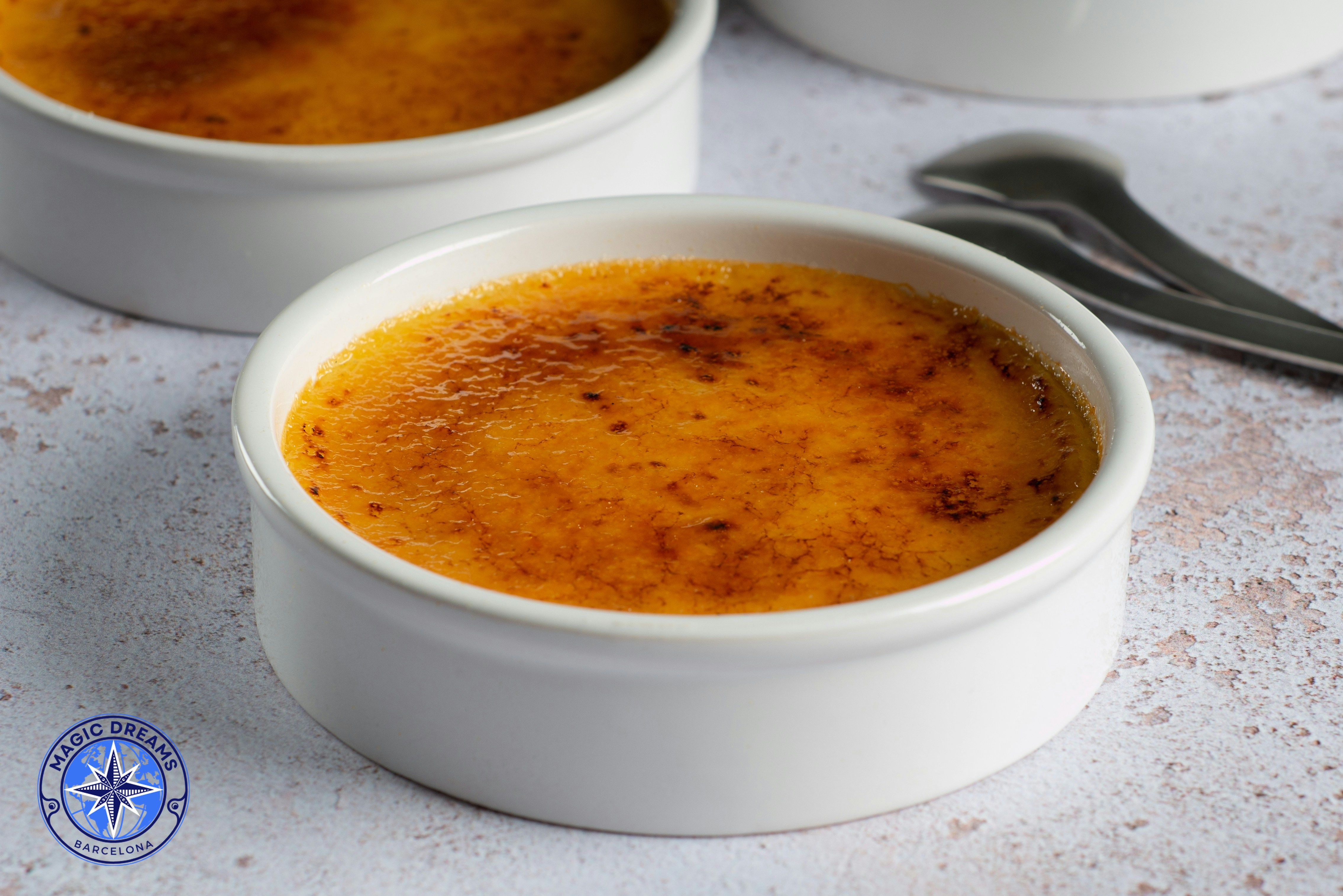
Catalan Cream, known in Catalan as Crema Catalana, is one of the most representative desserts of Catalan cuisine. It is made with a smooth custard of milk, egg yolks, sugar, cinnamon and lemon zest, finished with a thin layer of caramelized sugar.
The result is a delicate and creamy dessert with a contrasting crisp caramelized surface. Although the recipe is relatively simple, careful temperature control and constant stirring are essential to achieve a smooth, perfectly set cream.
A Brief History of Catalan Cream
Catalan Cream has been part of Catalonia’s culinary tradition for centuries. Its ingredients are simple and typical of traditional home cooking: milk, eggs, sugar and aromatic ingredients such as cinnamon and lemon.
The recipe has been passed down through generations and is traditionally served in small earthenware dishes. One of its most distinctive characteristics is the caramelized sugar topping, which is traditionally brûléed just before serving to create a thin, crisp crust.
Although Catalan Cream is often compared with French crème brûlée, it has its own identity within Catalan pastry-making, particularly because of the traditional use of cinnamon and lemon zest.
Today, it remains one of Catalonia’s best-known desserts and an essential recipe for anyone wishing to discover traditional Catalan cuisine.
Traditional Catalan Cream Recipe
Ingredients
- 1 litre whole milk
- 6 egg yolks
- 180 g sugar
- 40 g cornstarch
- 1 cinnamon stick
- Zest of 1 lemon, avoiding the white pith
- 1 teaspoon vanilla extract, optional
- Additional sugar for caramelizing
Method
1. Infuse the milk
Pour the milk into a saucepan and add the cinnamon stick and lemon zest.
Heat over medium heat until the milk is hot, but do not allow it to boil.
Remove the saucepan from the heat, cover it and leave the milk to infuse for 10-15 minutes. This allows the cinnamon and lemon to release their aromas into the milk.
2. Prepare the egg mixture
Place the egg yolks in a large bowl and add the sugar.
Whisk until the mixture becomes smooth and slightly lighter in colour.
Add the cornstarch and whisk thoroughly until there are no lumps.
3. Add the milk
Remove the cinnamon stick and lemon zest from the infused milk.
Gradually pour the warm milk into the egg mixture while whisking continuously.
Adding the milk slowly is important to prevent the heat from cooking the egg yolks.
4. Cook the cream
Return the mixture to the saucepan.
Cook over medium-low heat, stirring continuously with a whisk or spatula.
The mixture will gradually thicken. Once it reaches a smooth, creamy and consistent texture, remove it from the heat.
Do not allow the cream to boil, as excessive heat can affect its texture and cause the mixture to become lumpy.
5. Portion and chill
Pour the cream into individual serving dishes, preferably traditional earthenware dishes.
Allow it to cool slightly at room temperature before placing it in the refrigerator.
Chill for at least 2-3 hours, or until the cream is completely cold and properly set.
6. Caramelize the sugar
Immediately before serving, sprinkle a thin, even layer of sugar over each portion.
Caramelize the sugar using a kitchen blowtorch or a traditional caramelizing iron.
Move the flame gently over the surface until the sugar becomes evenly golden, glossy and crisp.
Allow the caramel to harden for a few seconds before serving.
Tips for Perfect Catalan Cream
The final texture depends largely on controlled cooking. Keep the heat at medium-low and stir continuously throughout the cooking process.
Allow sufficient time for the milk to infuse so that the characteristic combination of cinnamon and lemon develops properly.
Avoid using an excessively thick layer of sugar on top. A thin layer produces a more delicate caramel crust and makes it easier to crack with a spoon.
If the cream is prepared in advance, keep it refrigerated and caramelize the sugar only immediately before serving. This preserves the contrast between the cool, creamy custard and the crisp caramel topping.
How to Serve Catalan Cream
The traditional presentation is to serve the cream directly in small earthenware dishes.
The surface should be golden and glossy, while the interior should have a smooth, creamy and even consistency.
For the best texture, serve the dessert immediately after caramelizing the sugar.
A Classic of Catalan Cuisine
Catalan Cream is an excellent example of how traditional cuisine can transform simple ingredients into an elegant and distinctive dessert.
The combination of milk, egg yolks, cinnamon and lemon, finished with caramelized sugar, has made this dessert one of the great classics of Catalan pastry-making.