Route guide for visitors throughout Catalonia – Barcelona – Costa Brava – Catalan Pyrenees – Personalized experiences – Customized tour guide services – A small tribute to the wonderful city and land that saw us born – Transforming experiences into unforgettable memories - Magic Dreams Collection: exclusive universes inspired by Salvador Dalí and Gaudí. Niche perfumes, jewelry, lithographs, and collectible items celebrating the Mediterranean spirit.
Casa Verdú – Modernism in Barcelona’s Eixample District We are standing in front of the building known as Casa Verdú, located at 103 Rambla de Cataluña, at the intersection with Provenza Street, in the emblematic Eixample district of Barcelona. This property is a remarkable example …
Casa Verdú – Modernismo en el Eixample de Barcelona Nos encontramos frente al edificio conocido como Casa Verdú, situado en la Rambla de Cataluña número 103, a la altura de la calle Provenza, en el emblemático barrio del Eixample de Barcelona. Este inmueble constituye un …
The summit of Barcelona where history, nature and entertainment come together
Tibidabo, the highest part of the city of Barcelona, stands at 575 metres above sea level, offering an incomparable perspective of the city, the Mediterranean Sea and the surrounding hills. This remarkable place combines history, architecture, nature and entertainment, creating an unforgettable journey for all the senses.
The Temple of the Sacred Heart of Jesus
A monumental landmark overlooking Barcelona
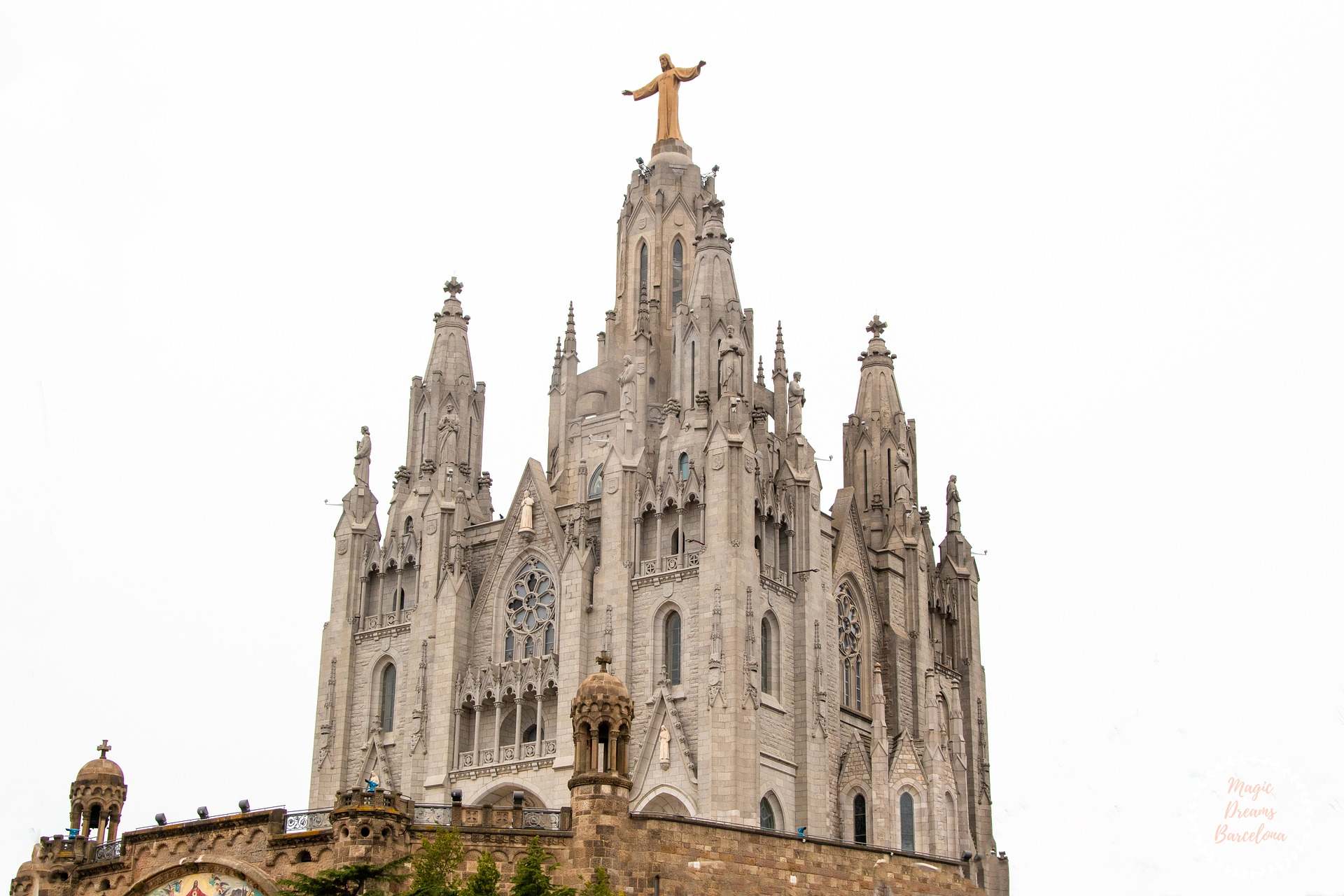
The Temple of the Sacred Heart of Jesus dominates the summit. Originally, there was a hermitage built by the Salesians, inaugurated in 1886 during the visit of Saint John Bosco to Barcelona.
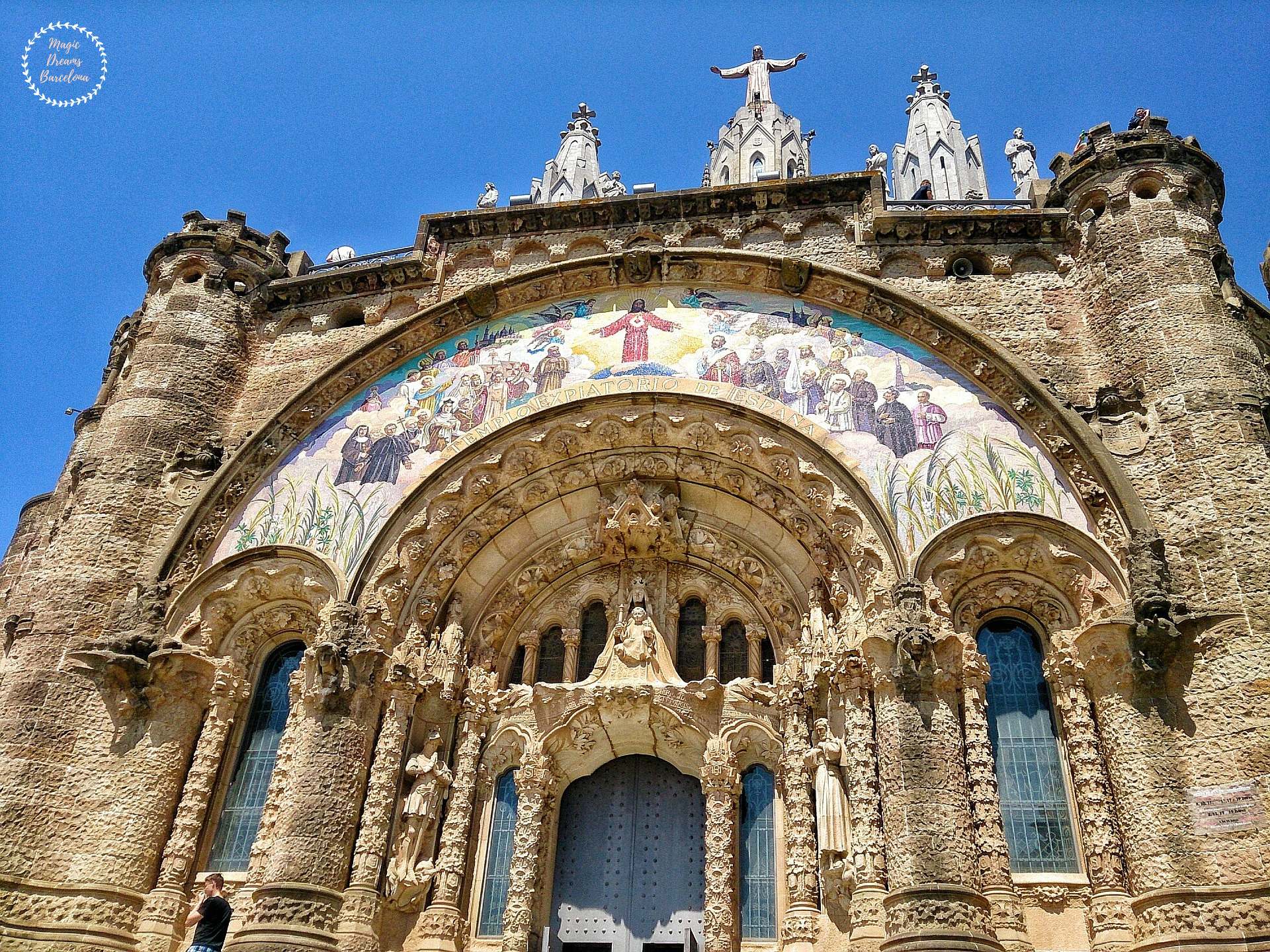
The construction of the Expiatory Temple, designed by Enric Sagnier, began in 1902 and was completed in 1961. Its historicist style combines Neo-Gothic, Neo-Romanesque and Neo-Byzantine elements.
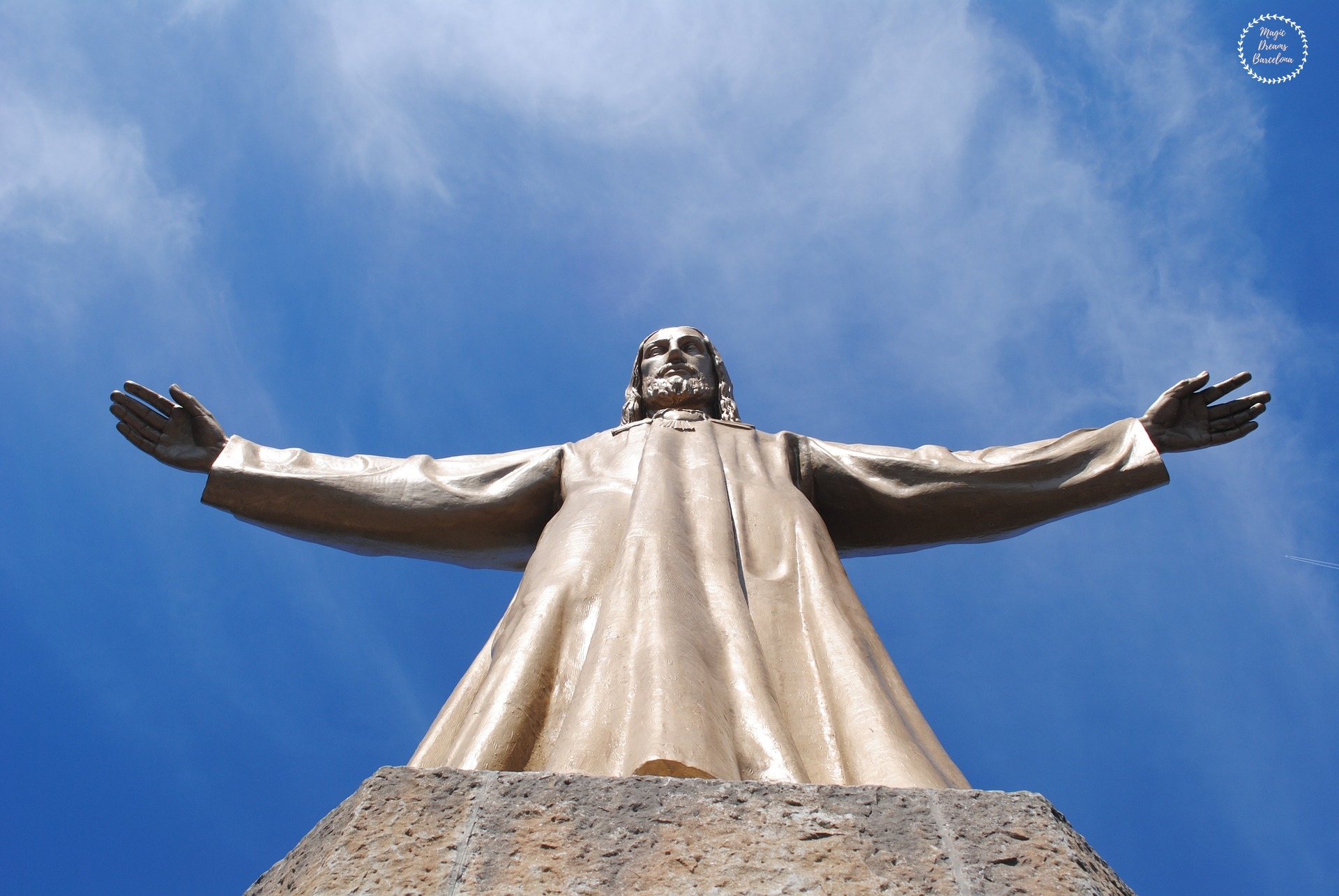
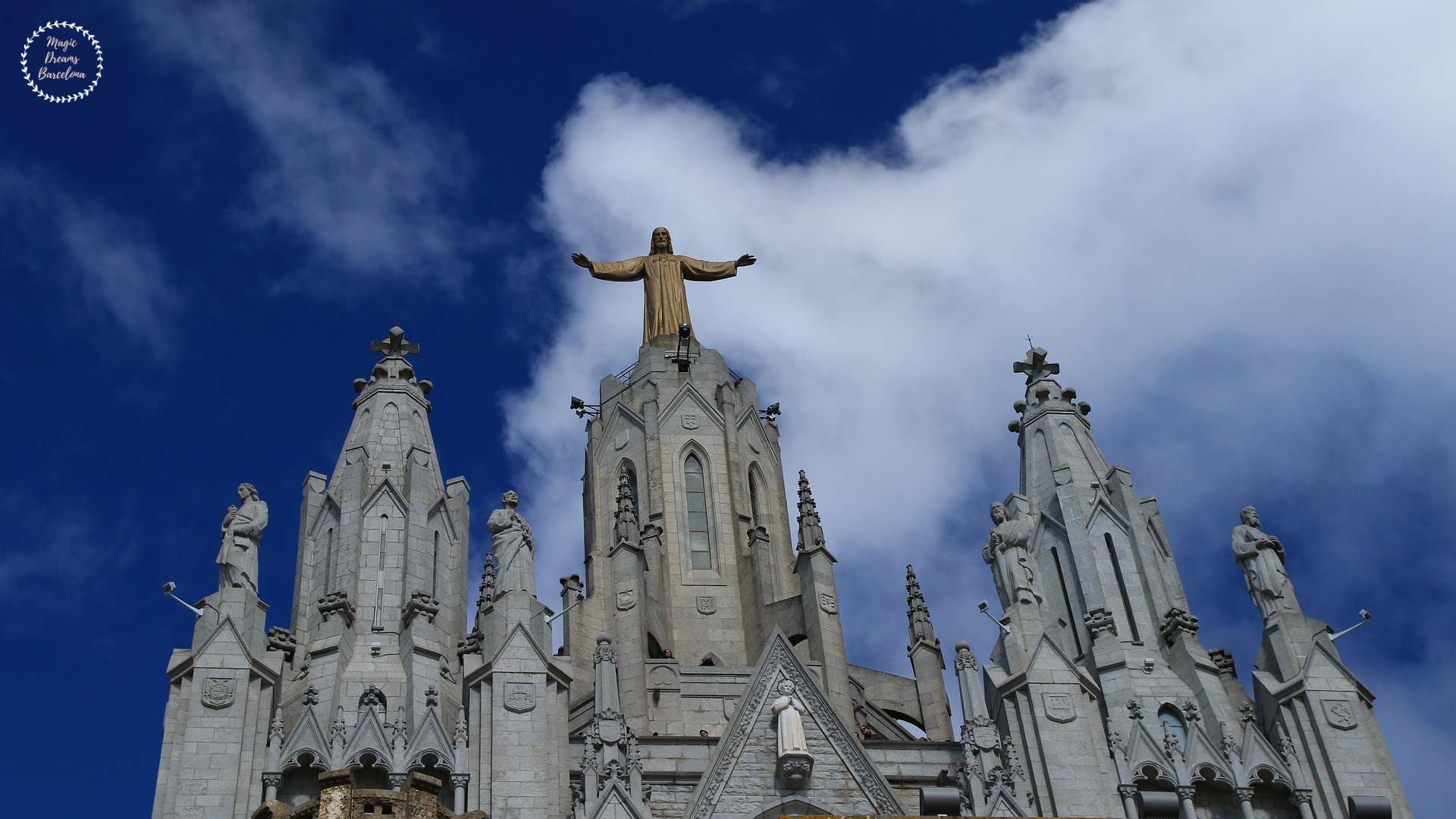
A bronze statue of the Sacred Heart crowns the summit, extending its arms over the city. An elevator provides access to the upper terrace, where visitors can enjoy privileged panoramic views of Barcelona, the Mediterranean and the surrounding landscape.
On one side, the original hermitage is still preserved, a testimony to the origins of this extraordinary place.
A Summit with an Incomparable Perspective
Barcelona, the Mediterranean and the surrounding hills at your feet
From the summit of Tibidabo, Barcelona unfolds beneath you in an extraordinary panorama. The combination of the city, the Mediterranean Sea and the surrounding hills creates a unique setting in which architecture and nature come together.
The elevated position of Tibidabo makes it one of the most remarkable viewpoints in Barcelona, offering a perspective that can be enjoyed in every season and at different times of the day.
Tibidabo Amusement Park
More than a century of entertainment overlooking Barcelona
The Tibidabo Amusement Park, inaugurated in 1899, is located next to the temple and covers more than 70,000 m² dedicated to entertainment.
Some of its historic attractions are still operating today, creating a fascinating connection between Barcelona’s past and present. Among them are the Avió, one of the world’s first flight simulators, the Museum of Automata, with more than 40 pieces from the 19th and 20th centuries, and the Talaia, which raises visitors 50 metres above the ground.
Alongside these historic attractions, modern rides such as the roller coaster offer excitement for visitors of all ages, always surrounded by a spectacular landscape.
The Avió
One of the historic icons of Tibidabo
The Avió is one of the most emblematic historic attractions in the park and one of the first flight simulators. Its presence on the summit adds a distinctive character to the Tibidabo experience, combining history, engineering and entertainment.
The Museum of Automata
A journey through mechanical art
The Museum of Automata houses more than 40 pieces from the 19th and 20th centuries.
These historic automata offer a fascinating glimpse into mechanical creativity and entertainment from another era, making the museum an essential part of the cultural and historical experience of Tibidabo.
The Talaia
Fifty metres above the summit
The Talaia raises visitors 50 metres above the ground, offering an extraordinary sensation of height and spectacular views over Barcelona and its surroundings.
It is one of the attractions that best represents the unique character of Tibidabo: a place where entertainment and panoramic views come together.
Science and Technology at the Summit
Discovering Barcelona from another perspective
The summit of Tibidabo also houses remarkable treasures of science and technology, offering experiences that go beyond its architecture and entertainment.
Two of its most significant landmarks are the Torre Collserola and the Fabra Observatory.
Torre Collserola
360° views over Barcelona
The Torre Collserola was built for the 1992 Olympic Games. Its tenth-floor observation deck offers 360° views over Barcelona and the surrounding landscape.
From this elevated viewpoint, the city can be contemplated from a completely different perspective, revealing the relationship between Barcelona, the Mediterranean Sea and the natural landscape of the surrounding hills.
Fabra Observatory
Astronomy, science and the beauty of the night sky
The Fabra Observatory has been active since 1901 and offers visitors the opportunity to observe the Moon, planets such as Jupiter, Saturn and Mars, as well as stellar systems and nebulae such as Alcyone, Albireo and the Orion Nebula.
Its scientific heritage makes it one of the most fascinating places on Tibidabo for those interested in astronomy and the universe.
The Botanical Gardens of the Fabra Observatory
Nature completing a unique sensory journey
The gardens of the Fabra Observatory, with pine trees, fir trees, holm oaks and mimosas, complete a unique sensory journey.
The combination of botanical surroundings, architecture, science and the panoramic landscape creates an experience in which nature becomes an essential part of the visit.
Dining Under the Stars
Astronomy and gastronomy in an extraordinary setting
The Fabra Observatory even offers the possibility of dining under the stars, combining astronomy and gastronomy in an exceptional setting.
It is an experience in which the night sky, the lights of Barcelona and the flavours of gastronomy come together, creating a memorable evening at one of the city’s most distinctive locations.
How to Reach Tibidabo
Comfortable and varied access to the summit
Reaching the summit of Tibidabo is comfortable and varied, with several transport options available:
Funicular from Torre de San Sebastián.
Metro, lines L3 and L5, with Vall de Hebron station.
Blue Tram.
Bus, lines 196 and T2A.
The different options make it possible to organise the visit according to each traveller’s preferences and itinerary.
Tibidabo for All the Senses
A place where history, art, architecture and nature are fully experienced
Tibidabo is much more than a viewpoint or an amusement park. It is a place where history, architecture, science, nature and entertainment coexist in a unique environment.
The Temple of the Sacred Heart of Jesus, the historic attractions of the amusement park, the Fabra Observatory, the Torre Collserola and the surrounding natural landscape create a complete experience in which every element contributes to the character of the summit.
Tibidabo with Magic Dreams Barcelona
An exclusive, intimate and sensory experience
At Magic Dreams Barcelona, we transform this visit into an exclusive, intimate and sensory experience.
Our premium services include:
Expert guides in history, architecture, art and astronomy, personalising each itinerary according to your interests and pace.
Private sensory experiences with live music, aromas, literature and themed dinners with a private chef.
Picnics and signature gastronomy in gardens, viewpoints or on yachts, with bespoke table linen and catering.
Professional photography sessions that capture every moment of the experience.
Creative workshops and exclusive getaways to the Costa Brava and the Catalan Pyrenees.
Signature Gastronomy and Private Experiences
Tibidabo experienced through the senses
A visit to Tibidabo can become much more than a sightseeing experience. With Magic Dreams Barcelona, every element can be carefully designed to create a private and personalised journey.
From gastronomy and carefully selected settings to music, aromas, literature and photography, each experience is created to reflect the character, interests and rhythm of each guest.
Experiences Created Just for You
Personalisation as the essence of a premium experience
Every journey can be adapted to your preferences, allowing you to discover Tibidabo through history, architecture, art, astronomy, nature or gastronomy.
The aim is to create an experience that is not simply observed, but fully lived and remembered.
Professional Photography and Lasting Memories
Capturing every moment of the experience
Professional photography allows every special moment to be preserved, transforming the visit into a collection of memories that can be enjoyed long after the experience has ended.
The panoramic landscapes, architecture, natural surroundings and personal moments become part of a visual story created exclusively for you.
Creative Workshops and Exclusive Getaways
Barcelona, the Costa Brava and the Catalan Pyrenees
Magic Dreams Barcelona also offers creative workshops and exclusive getaways to the Costa Brava and the Catalan Pyrenees.
These experiences extend beyond Barcelona, allowing guests to discover new landscapes, cultural traditions, gastronomy and natural environments through carefully designed private experiences.
An Experience to Be Fully Lived
History, art, architecture and nature in perfect harmony
Every visit with Magic Dreams Barcelona becomes a profound journey in which history, art, architecture and nature are experienced to the fullest.
It is not simply about observing Tibidabo, but about feeling it and understanding it in all its dimensions.
The summit becomes a place where every detail contributes to an unforgettable memory: the architecture of the temple, the views over Barcelona, the historic attractions, the stars above the city, the gardens, gastronomy and the surrounding landscape.
Discover Tibidabo with Magic Dreams Barcelona
Where every experience becomes an unforgettable memory
Discover this magical corner of Barcelona with Magic Dreams Barcelona and allow yourself to be captivated by the majesty of Tibidabo, where every experience becomes an unforgettable memory.
From its historic origins and extraordinary architecture to its panoramic views, scientific heritage, nature and entertainment, Tibidabo offers a unique way to experience Barcelona.
With Magic Dreams Barcelona, this extraordinary setting becomes an exclusive, intimate and sensory journey designed to be remembered.
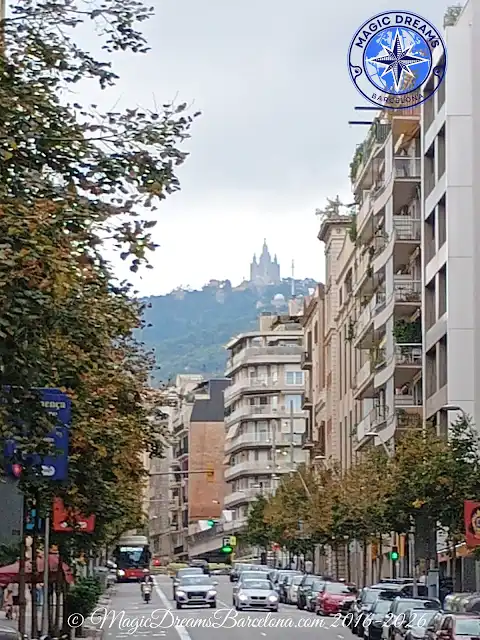
Perspectiva del Templo del Sagrado Corazón de Jesús en cima Tibidabo desde calle Balmes.
Detalle del Templo Expiatorio del Sagrado Corazón de Jesús en la cima Tibidabo
Perspectiva nocturna del Templo Expiatorio del Sagrado Corazón de Jesús en la cima Tibidabo junto al Parque de Atracciones.
Perspectiva de parte de la ciudad desde Templo Expiatorio del Sagrado Corazón de Jesús en la cima Tibidabo.
Perspectiva de parte de la ciudad desde el parque de Atracciones en la cima Tibidabo.
Templo Sagrado Corazón de Jesús.
Templo Sagrado Corazón de Jesús.
Templo Sagrado Corazón de Jesús.
Templo Sagrado Corazón de Jesús.
Templo Sagrado Corazón de Jesús.
Templo Expiatorio del Sagrado Corazón de Jesús – Barcelona.
Templo Expiatorio del Sagrado Corazón de Jesús – Barcelona.
Templo Expiatorio del Sagrado Corazón de Jesús – Barcelona.
Templo Expiatorio del Sagrado Corazón de Jesús – Barcelona.
Templo Expiatorio del Sagrado Corazón de Jesús – Barcelona.
Templo Expiatorio del Sagrado Corazón de Jesús – Barcelona.
Templo Expiatorio del Sagrado Corazón de Jesús – Barcelona.
Templo Expiatorio del Sagrado Corazón de Jesús – Barcelona.
Templo Expiatorio del Sagrado Corazón de Jesús – Barcelona.
Templo Expiatorio del Sagrado Corazón de Jesús – Barcelona.
Templo Expiatorio del Sagrado Corazón de Jesús – Barcelona.
Templo Expiatorio del Sagrado Corazón de Jesús – Barcelona.
Templo Expiatorio del Sagrado Corazón de Jesús – Barcelona.
Templo Expiatorio del Sagrado Corazón de Jesús – Barcelona.
Templo Expiatorio del Sagrado Corazón de Jesús – Barcelona.
Observatorio Fabra – By Ismaelromero – Own work, CC BY-SA 3.0 es, https://commons.wikimedia.org/w/index.php?curid=21490932.
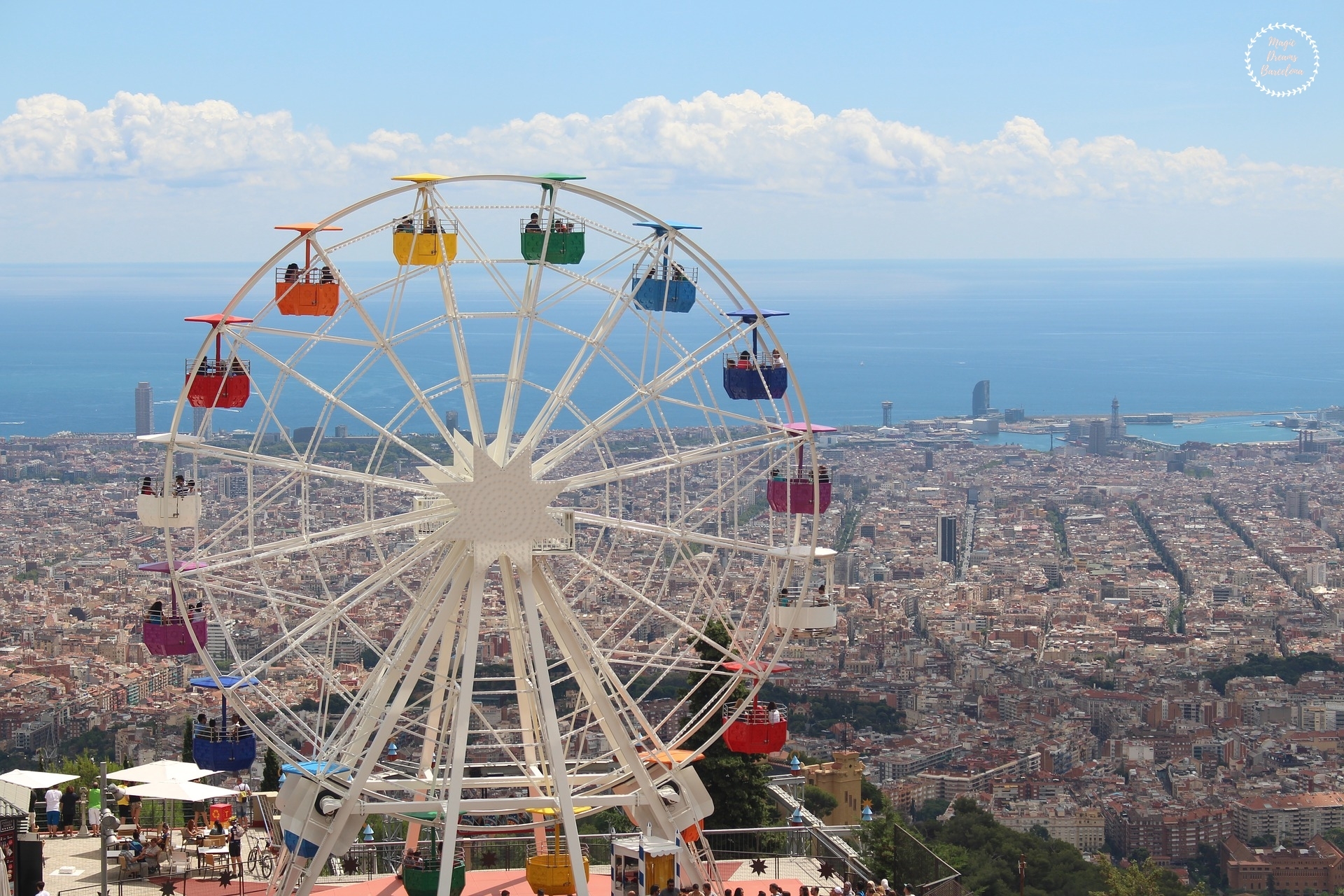
Perspectiva de parte de la ciudad desde la noria del parque de Atracciones del Tibidabo.
Perspectiva de parte de la ciudad desde la noria del parque de Atracciones del Tibidabo.
Detalle noria del parque de Atracciones del Tibidabo.
Detalle noria del parque de Atracciones del Tibidabo.
Perspectiva de parte de la ciudad desde la noria del parque de Atracciones del Tibidabo.
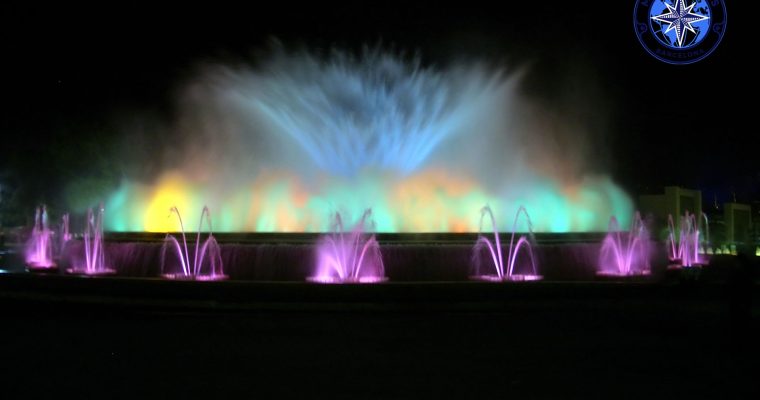
Where water, light and music come together to create one of Barcelona’s great icons Among Barcelona’s monumental landmarks, few places bring together history, architecture, engineering, art and spectacle as powerfully as the Magic Fountain of Montjuïc. Located at the foot of Montjuïc Mountain, beside Maria …
Donde el agua, la luz y la música se fusionan para crear uno de los grandes iconos de Barcelona En el panorama monumental de Barcelona, pocos lugares consiguen reunir con tanta fuerza historia, arquitectura, ingeniería, arte y espectáculo como la Fuente Mágica de Montjuïc. Situada …
Un paseo entre la historia portuaria y el Mediterráneo
El Moll de la Fusta es uno de los espacios más emblemáticos del litoral de Barcelona.
Situado frente al centro histórico, junto al Port Vell, este paseo representa mucho más que una agradable zona junto al mar.
Es el resultado de una de las grandes transformaciones urbanas de la Barcelona contemporánea.
Durante siglos, este lugar estuvo estrechamente vinculado a la actividad portuaria, al comercio y al movimiento de mercancías.
Hoy es un espacio abierto al ciudadano donde conviven el Mediterráneo, la arquitectura, la gastronomía, la cultura y la vida urbana.
Caminar por el Moll de la Fusta significa recorrer una parte fundamental de la historia de Barcelona.
Es contemplar el lugar donde la ciudad volvió a mirar hacia el mar.
Y también comprender cómo Barcelona consiguió transformar un antiguo espacio portuario en un nuevo paisaje urbano.
¿Qué es el Moll de la Fusta?
El antiguo muelle de Bosch i Alsina
El nombre oficial del espacio es Moll de Bosch i Alsina, aunque prácticamente todo el mundo lo conoce como Moll de la Fusta.
El sobrenombre está relacionado con la actividad que históricamente tuvo esta zona, vinculada al almacenamiento y distribución de madera.
El muelle forma parte del histórico Port Vell, el antiguo puerto de Barcelona.
Actualmente, el espacio constituye uno de los puntos más integrados entre la ciudad y el mar.
Palmeras, paseos, terrazas, embarcaciones y grandes perspectivas hacia el Mediterráneo crean un paisaje urbano muy diferente del que existía hace apenas unas décadas.
Los orígenes marítimos de Barcelona
Una ciudad que nació mirando al Mediterráneo
La relación entre Barcelona y el mar es mucho más antigua que el actual paseo.
La zona del actual Port Vell está situada en el entorno del antiguo puerto de la ciudad romana.
El litoral fue durante siglos un espacio fundamental para el comercio y para la actividad económica de Barcelona.
La evolución del puerto acompañó el crecimiento de la ciudad.
Con el desarrollo comercial e industrial de los siglos XVIII, XIX y XX, las instalaciones portuarias fueron adquiriendo cada vez mayor importancia.
Muelles, almacenes, tinglados, vías ferroviarias y áreas de carga ocuparon progresivamente este frente marítimo.
Durante mucho tiempo, el puerto fue principalmente un espacio de trabajo.
El ciudadano estaba físicamente cerca del mar, pero no necesariamente podía disfrutar de él.
Esta separación entre ciudad y puerto cambiaría radicalmente durante las últimas décadas del siglo XX.
El Moll de la Fusta antes de su transformación
Cuando el puerto era un lugar de trabajo
Durante buena parte del siglo XX, el área que hoy conocemos como Moll de la Fusta tenía una imagen completamente diferente.
Los grandes tinglados portuarios ocupaban buena parte del espacio.
El movimiento de mercancías, el transporte ferroviario y la actividad industrial definían el paisaje.
Hasta los primeros años de la década de 1980, el acceso ciudadano estaba muy limitado.
Los antiguos tinglados fueron desapareciendo progresivamente durante los años sesenta, pero el espacio portuario continuó separado de la vida urbana.
La transformación posterior tendría por objetivo precisamente romper esta barrera.
No se trataba solamente de embellecer el puerto.
Se trataba de devolver el mar a la ciudad.
1981: Barcelona vuelve a abrirse al mar
El inicio de una nueva relación entre ciudad y puerto
Uno de los momentos decisivos llegó en 1981.
Con motivo de la celebración del Día de las Fuerzas Armadas, el Puerto Autónomo permitió el acceso de los ciudadanos al muelle de Bosch i Alsina.
Era la primera vez en más de setenta años que el puerto se abría de esta manera a la ciudad.
Aquel gesto tuvo una importancia mucho mayor de la que podría parecer.
Barcelona empezaba a recuperar físicamente su relación con el Mediterráneo.
El puerto dejaba de ser exclusivamente un espacio de actividad económica y empezaba a convertirse también en un espacio ciudadano.
Al año siguiente, el puerto y el Ayuntamiento encargaron al arquitecto Manuel de Solà-Morales un proyecto de ordenación del muelle y de su entorno urbano.
El proyecto también contemplaba la reorganización del tráfico del paseo de Colón.
Manuel de Solà-Morales y la nueva imagen del Moll de la Fusta
Arquitectura para volver a mirar al mar
El proyecto de Manuel de Solà-Morales fue mucho más que una intervención estética.
La idea era crear un nuevo espacio público junto al agua y, al mismo tiempo, resolver la compleja relación entre el puerto, el tráfico y el centro histórico.
Las obras se desarrollaron entre 1983 y 1985.
El resultado fue un paseo abierto junto al mar, acompañado por palmeras y conectado visualmente con la ciudad.
La intervención se convirtió en uno de los primeros grandes ejemplos de recuperación urbana del litoral barcelonés.
El proyecto del Moll de la Fusta está considerado uno de los puntos de partida de la posterior transformación del Port Vell.
La gran transformación olímpica
Barcelona 1992 cambia la relación con el mar
La candidatura y posterior designación de Barcelona como sede de los Juegos Olímpicos de 1992 aceleraron un proceso de transformación urbana que ya había comenzado.
La ciudad necesitaba recuperar espacios degradados, mejorar sus infraestructuras y proyectarse hacia el Mediterráneo.
El Moll de la Fusta se convirtió en una pieza fundamental de este proceso.
La experiencia de recuperar el muelle ayudó a impulsar una transformación mucho más amplia del Port Vell.
En 1988 se creó la Gerencia Urbanística Port 2000 y, al año siguiente, se aprobó el Plan Especial del Port Vell.
El objetivo era mantener el carácter portuario de la zona, pero introducir nuevos usos comerciales, turísticos, culturales y ciudadanos.
El Moll de la Fusta había demostrado que era posible.
Del puerto industrial al Port Vell
Una nueva forma de entender el litoral
La transformación del Moll de la Fusta no fue un proyecto aislado.
Formó parte de una estrategia mucho más amplia para recuperar el antiguo puerto.
En su entorno se iniciaron nuevos espacios urbanos y equipamientos.
El Moll d’Espanya incorporó nuevos usos comerciales y de ocio.
La Rambla de Mar creó una nueva conexión peatonal sobre el agua.
El Maremagnum se convirtió en uno de los nuevos polos de actividad.
El Aquarium de Barcelona añadió una dimensión educativa y turística.
En el Moll de Barcelona, el World Trade Center reforzó la relación entre el puerto y la actividad empresarial internacional.
Barcelona estaba construyendo un nuevo frente marítimo.
El Moll de la Fusta y los Juegos Olímpicos
El mar como escenario de la nueva Barcelona
Los Juegos Olímpicos de 1992 consolidaron la transformación del litoral.
La renovación no se limitó al Port Vell.
Barcelona creó nuevas playas, recuperó espacios industriales y desarrolló el Puerto Olímpico y otras zonas del frente marítimo.
El resultado fue una nueva geografía urbana.
La ciudad que durante décadas había dado la espalda al mar empezó a utilizar el litoral como uno de sus principales espacios públicos.
El Moll de la Fusta fue uno de los primeros capítulos de esta transformación.
Los famosos chiringuitos del Moll de la Fusta
Una nueva vida junto al mar
La transformación también tuvo una dimensión gastronómica y social.
En la década de 1980 se construyeron cinco pequeños establecimientos sobre el paseo.
El Ayuntamiento convocó en 1987 un concurso para adjudicar estos espacios, concebidos como nuevos locales de restauración.
Entre las propuestas había una champañería, un restaurante, una croissanterie, una cervecería y una marisquería.
Los establecimientos empezaron a funcionar en 1988.
Aquellos locales se convirtieron rápidamente en parte de la nueva imagen del Moll de la Fusta.
Barcelona descubría una nueva forma de disfrutar del puerto.
La gastronomía, las terrazas, la arquitectura y las vistas al mar empezaban a formar parte de la experiencia urbana.
La famosa gamba de Barcelona
Una escultura convertida en icono
Entre los elementos más recordados de aquella época está la famosa Gamba diseñada por Javier Mariscal.
La escultura coronaba el restaurante Gambrinus y se convirtió rápidamente en uno de los símbolos populares del nuevo litoral barcelonés.
La enorme figura de la gamba pertenece al recuerdo visual de la Barcelona preolímpica y olímpica.
Su estética desenfadada encajaba perfectamente con la nueva imagen internacional que la ciudad estaba construyendo.
La escultura continúa siendo uno de los elementos más destacados asociados al Moll de la Fusta y al paisaje del Port Vell.
Una transformación que no fue perfecta
La evolución de un espacio urbano
La historia del Moll de la Fusta también demuestra que las grandes transformaciones urbanas necesitan tiempo.
El proyecto inicial pretendía convertir el espacio en una gran zona de paseo, ocio y restauración.
Sin embargo, durante los años posteriores aparecieron diferentes problemas relacionados con los usos nocturnos, los establecimientos y la relación entre el paseo y las grandes infraestructuras viarias.
Durante un tiempo, el espacio perdió parte del protagonismo que había tenido inicialmente.
La apertura de nuevos equipamientos en otras zonas del Port Vell también modificó los flujos de visitantes.
La ciudad volvió a intervenir.
Una nueva reforma
Más sombra, más vegetación y más espacio para caminar
A inicio del siglo XXI, el Moll de la Fusta volvió a transformarse.
Los antiguos restaurantes fueron eliminados y el paseo adquirió una imagen más tranquila.
Se incorporaron nuevos árboles, pavimentos, pérgolas, zonas de sombra y bancos orientados hacia el mar.
La intención era reforzar nuevamente la función de paseo y estancia.
La intervención recuperó algunos elementos de la historia reciente del lugar y buscó convertirlo en un espacio más amable para el peatón.
La evolución demuestra cómo Barcelona ha ido adaptando progresivamente su litoral a las necesidades de sus ciudadanos.
El Moll de la Fusta hoy
Un espacio donde Barcelona encuentra el Mediterráneo
Actualmente, el Moll de la Fusta es uno de los grandes espacios públicos del Port Vell.
Su posición es privilegiada.
Desde aquí se puede contemplar el Mediterráneo mientras, al mismo tiempo, se disfruta de una perspectiva extraordinaria del centro histórico.
A un lado aparece el perfil de Ciutat Vella.
Al otro, el puerto y sus embarcaciones.
Más allá se extiende la línea marítima de Barcelona.
El paseo permite caminar, descansar, disfrutar de actividades, asistir a eventos y observar la actividad del puerto.
El Port de Barcelona señala que el espacio acoge actualmente acontecimientos y actividades de gran afluencia, entre ellos celebraciones de La Mercè y otros eventos públicos.
Un balcón frente al Mediterráneo
Una de las mejores perspectivas urbanas de Barcelona
Una de las grandes virtudes del Moll de la Fusta es su capacidad para ofrecer diferentes perspectivas de la ciudad.
Desde el paseo es posible mirar hacia:
La Rambla
La gran arteria peatonal del centro histórico conduce hacia el puerto y conecta el corazón de Barcelona con el Mediterráneo.
El Monument a Colom
La columna dedicada a Cristóbal Colón se convierte en uno de los grandes puntos de referencia visual del frente marítimo.
Montjuïc
En dirección suroeste, la montaña aparece como telón de fondo de la ciudad.
La Barceloneta
Hacia el otro lado se extiende el paisaje marítimo que conduce hacia el antiguo barrio marinero y las playas.
El Port Vell
Las embarcaciones y marinas recuerdan constantemente que este espacio continúa siendo un puerto repleto de vida.
La arquitectura del Moll de la Fusta
Infraestructura convertida en paisaje urbano
La arquitectura del Moll de la Fusta tiene una característica particular.
No busca competir con los grandes monumentos históricos.
Su valor está precisamente en cómo organiza el espacio.
La relación entre diferentes niveles, el paseo, las infraestructuras viarias, las palmeras, el mobiliario urbano y el agua crea una experiencia espacial muy característica.
El proyecto de Manuel de Solà-Morales introdujo una nueva forma de entender el frente marítimo.
La infraestructura dejó de ser exclusivamente funcional para convertirse también en espacio público.
Esta idea tendría una enorme influencia en la transformación posterior del litoral barcelonés.
El Moll de la Fusta y la ciudad contemporánea
Uno de los grandes ejemplos de transformación urbana de Barcelona
La importancia del Moll de la Fusta no reside únicamente en su belleza actual.
Su verdadero valor está en lo que representa.
Antes de su transformación, el puerto funcionaba principalmente como una infraestructura industrial separada de la ciudad.
Después, empezó a convertirse en un espacio ciudadano.
Esta transformación forma parte de una de las grandes historias urbanas de Barcelona durante las últimas décadas del siglo XX.
La ciudad recuperó progresivamente su litoral.
Se crearon nuevos espacios públicos.
Se conectaron barrios.
Se recuperaron playas.
Se transformaron antiguas áreas industriales.
Y el Mediterráneo pasó a ocupar un lugar central en la imagen contemporánea de Barcelona.
Un paseo entre historia y vida cotidiana
Donde el pasado portuario sigue presente
A pesar de su transformación, el Moll de la Fusta no ha perdido completamente su pasado.
Todavía pueden percibirse las huellas de la antigua actividad portuaria.
Las estructuras del puerto.
Los edificios históricos.
Las embarcaciones.
Los antiguos almacenes.
Las grandes infraestructuras.
Todo recuerda que este fue durante mucho tiempo un lugar de trabajo.
La diferencia es que hoy este patrimonio se experimenta desde una perspectiva completamente diferente.
Ya no como trabajador del puerto.
Sino como ciudadano, viajero, fotógrafo o visitante.
Gastronomía junto al mar
El Mediterráneo también se saborea
La gastronomía forma parte inseparable de la experiencia del Port Vell.
En los alrededores del Moll de la Fusta encontramos restaurantes, terrazas y espacios donde disfrutar de la cocina mediterránea mientras se contempla el puerto.
Es una zona especialmente atractiva para quienes desean combinar una visita cultural con una experiencia gastronómica.
Pescados.
Mariscos.
Arroces.
Tapas.
Cocina catalana.
Productos mediterráneos.
Y una copa frente al mar.
Barcelona ofrece aquí una de sus fusiones más características:
historia, arquitectura, gastronomía y Mediterráneo.
El Moll de la Fusta al atardecer
Cuando la ciudad cambia de color
Uno de los mejores momentos para descubrir el paseo es durante las últimas horas de la tarde.
La luz comienza a suavizarse.
Las fachadas del centro histórico adquieren tonos cálidos.
El Mediterráneo refleja el cielo.
Las embarcaciones comienzan a iluminarse.
Y el paseo adquiere una atmósfera mucho más tranquila.
Es un momento especialmente recomendable para la fotografía.
También para caminar sin prisa.
O simplemente sentarse y contemplar Barcelona.
El Moll de la Fusta de noche
Barcelona iluminada frente al mar
Por la noche, el paseo adquiere otra personalidad.
Las luces del Port Vell crean reflejos sobre el agua y el perfil urbano se transforma.
La proximidad del centro histórico permite continuar fácilmente el recorrido hacia las Ramblas, el Barrio Gótico o la Barceloneta.
Para quienes buscan una experiencia nocturna más relajada, el Moll de la Fusta ofrece una alternativa interesante a las zonas más concurridas de la ciudad.
Eventos y vida cultural
Un espacio activo durante todo el año
El Moll de la Fusta no es únicamente un lugar para caminar.
Su gran superficie permite acoger eventos, celebraciones y actividades de gran formato.
A lo largo del año, el Port Vell se convierte en escenario de propuestas culturales, festivas, gastronómicas y marítimas.
Las celebraciones de La Mercè y diferentes acontecimientos vinculados al puerto forman parte de la programación que utiliza este espacio ciudadano.
El puerto también mantiene una fuerte relación con la actividad náutica.
En 2026, por ejemplo, los muelles de la Fusta y Marina Port Vell forman parte de los espacios del Salón Náutico Internacional de Barcelona, una cita histórica del calendario náutico de la ciudad.
El Moll de la Fusta y el Port Vell
Dos nombres para entender una misma transformación
Es importante distinguir entre el Moll de la Fusta y el Port Vell.
El Port Vell es el conjunto más amplio del antiguo puerto situado frente a Ciutat Vella.
El Moll de la Fusta, oficialmente Moll de Bosch i Alsina, es uno de sus espacios centrales.
Desde aquí se puede continuar el recorrido hacia diferentes áreas del puerto.
Hacia la Rambla de Mar.
Hacia el Moll d’Espanya.
Hacia el Maremagnum.
Hacia el Moll de Barcelona.
O en dirección a la Barceloneta.
Esto convierte al Moll de la Fusta en un excelente punto de partida para explorar el frente marítimo.
Qué ver cerca del Moll de la Fusta
Una ruta para descubrir el centro marítimo de Barcelona
Una visita al Moll de la Fusta puede combinarse fácilmente con otros lugares emblemáticos.
01 · Monument a Colom
Uno de los grandes símbolos del puerto de Barcelona.
02 · La Rambla
La avenida histórica que conecta el centro de la ciudad con el mar.
03 · Barrio Gótico
Un laberinto de calles medievales, plazas y edificios históricos.
04 · Port Vell
El antiguo puerto convertido en uno de los grandes espacios públicos de Barcelona.
05 · Maremagnum
Centro comercial y de ocio situado al final de la Rambla de Mar.
06 · Aquarium de Barcelona
Uno de los grandes equipamientos dedicados al mundo marino de la ciudad.
07 · Barceloneta
El antiguo barrio marinero y uno de los lugares más característicos del litoral barcelonés.
08 · Palau de Mar
Antiguo edificio comercial portuario que actualmente alberga, entre otros espacios, el Museu d’Història de Catalunya.
Una ruta histórica por el litoral
De la antigua Barcino a la Barcelona contemporánea
El Moll de la Fusta puede entenderse como una especie de resumen de la evolución de Barcelona.
Aquí podemos imaginar el antiguo puerto romano.
Después, el puerto comercial.
Más tarde, el puerto industrial.
Posteriormente, el espacio portuario cerrado a la ciudadanía.
Y finalmente, el paseo marítimo contemporáneo.
Pocos lugares de la ciudad permiten comprender de una manera tan clara la transformación de la relación entre Barcelona y el Mediterráneo.
Fotografía en el Moll de la Fusta
Un escenario privilegiado para descubrir Barcelona
El paseo ofrece infinidad de posibilidades para la fotografía urbana.
Las palmeras crean líneas de perspectiva.
El agua aporta reflejos.
Los edificios históricos forman el fondo.
Las embarcaciones añaden movimiento.
Y la luz mediterránea transforma el paisaje durante todo el día.
Entre las imágenes más interesantes encontramos:
El Monument a Colom desde el paseo.
Las embarcaciones del Port Vell.
La Rambla de Mar.
El perfil de Ciutat Vella.
Montjuïc al atardecer.
Los reflejos nocturnos sobre el agua.
La escultura de la Gamba.
Las palmeras del paseo.
La actividad marítima del puerto.
El Moll de la Fusta como experiencia mediterránea
Mucho más que un paseo
El verdadero atractivo del Moll de la Fusta está en la experiencia.
Caminar junto al mar.
Sentir la brisa mediterránea.
Observar las embarcaciones.
Descubrir la arquitectura histórica.
Sentarse en una terraza.
Contemplar el atardecer.
Escuchar el movimiento de la ciudad.
Y entender que este mismo lugar fue durante generaciones un espacio de trabajo portuario.
La transformación resulta especialmente fascinante porque permite experimentar físicamente la evolución de Barcelona.
Una de las grandes historias urbanas de Barcelona
Cuando una ciudad recuperó su mar
La historia del Moll de la Fusta es, en realidad, una historia sobre la transformación de Barcelona.
Durante décadas, el puerto y la ciudad vivieron separados.
A partir de los años ochenta, esa relación empezó a cambiar.
El Moll de la Fusta fue uno de los primeros espacios donde Barcelona experimentó una nueva manera de relacionarse con el Mediterráneo.
Después llegaron el Port Vell renovado, las playas olímpicas, el Puerto Olímpico y las posteriores transformaciones del litoral.
El resultado es la Barcelona marítima que conocemos hoy.
Por eso, caminar por el Moll de la Fusta no significa solamente disfrutar de un paseo bonito.
Significa caminar sobre una de las páginas más importantes de la historia urbana reciente de Barcelona.
¿Desea descubrir el Moll de la Fusta con nosotros?
Barcelona desde el mar, la historia y la arquitectura
En Magic Dreams Barcelona, creemos que los lugares más interesantes de una ciudad no siempre son los que aparecen primero en las guías.
A veces, para comprender Barcelona, hay que observar cómo se relacionan sus calles con el mar, sus edificios con la historia y sus espacios públicos con la vida cotidiana.
Nuestro guía nativo, especializado en historia, arquitectura, arte, botánica y ornitología, puede acompañarle en una experiencia privada por el Moll de la Fusta y el Port Vell, adaptando el recorrido a sus intereses.
Podemos diseñar una experiencia que fusione el frente marítimo con el Barrio Gótico, Las Ramblas, Barceloneta, Montjuïc o la arquitectura modernista, creando una jornada completamente personalizada.
También podemos incorporar experiencias gastronómicas, restaurantes seleccionados, fotografía profesional, picnics privados con mantelería y catering, salidas en yate, floristería, músicos, propuestas románticas y otras experiencias diseñadas especialmente para cada visitante.
Para quienes desean conocer Barcelona desde una perspectiva más profunda, también ofrecemos recorridos centrados en la historia portuaria, arquitectura, arte, gastronomía, naturaleza y evolución urbana de la ciudad.
Cada experiencia se diseña a partir de los intereses del visitante, desde una propuesta Premium hasta una experiencia completamente personalizada.
El Moll de la Fusta no es solamente un paseo frente al mar. Es el lugar donde Barcelona volvió a encontrarse con el Mediterráneo.
Perspectiva superior del Port Vell, con el paseo del Moll de la Fusta en la parte izquierda – By Diliff – Treball propi, CC BY-SA 3.0, https://commons.wikimedia.org/w/index.php?curid=5952307.
Where History Sails Towards the Mediterranean Future Port Vell is one of the oldest and most symbolic spaces in Barcelona’s relationship with the sea and remains, in 2026, one of the great places where the city meets the Mediterranean. It was Barcelona’s first major permanent …
La Casa Batlló es una de las obras maestras de Antoni Gaudí y uno de los edificios más famosos de Barcelona. Situada en pleno Passeig de Gràcia, en el corazón del Eixample, esta extraordinaria construcción es uno de los grandes referentes del modernismo catalán y …
Casa Batlló is one of the masterpieces of Antoni Gaudí and one of Barcelona’s most famous buildings. Located on Passeig de Gràcia, in the heart of the Eixample district, this extraordinary building is one of the great landmarks of Catalan Modernism and forms part of the group of Gaudí’s works declared UNESCO World Heritage Sites.
More than just a building, Casa Batlló is an architectural experience in which light, color, nature, geometry and imagination come together to create a unique space.
Its façade seems to change depending on the daylight, while the interior introduces us to a universe of curved shapes, ceramics, wood, glass and details inspired by nature.
Although Casa Batlló is often referred to as the house of the dragon, its architecture is much more complex. Gaudí transformed an existing building into a true work of art without neglecting essential aspects such as lighting, ventilation and functionality.
Where is Casa Batlló?
Casa Batlló is located at 43 Passeig de Gràcia, one of Barcelona’s most important and elegant avenues.
Its location is particularly interesting because it forms part of the famous Block of Discord, a section of Passeig de Gràcia where several outstanding examples of Catalan Modernist architecture can be found.
Within just a few metres, we can see buildings designed by some of the most important architects of the period:
Casa Batlló, by Antoni Gaudí.
Casa Amatller, by Josep Puig i Cadafalch.
Casa Lleó Morera, by Lluís Domènech i Montaner.
Casa Mulleras, by Enric Sagnier.
Casa Josefina Bonet, by Marcel·lí Coquillat.
The result is one of Barcelona’s most remarkable architectural ensembles.
The History of Casa Batlló
Although we know the building today as Casa Batlló, its history began before Gaudí’s intervention.
The original building was constructed in 1877 by architect Emili Sala Cortés, who had also been one of Gaudí’s architecture professors. At the time, Passeig de Gràcia was still developing into one of the major urban avenues of modern Barcelona.
In 1903, textile entrepreneur Josep Batlló i Casanovas acquired the building.
The original plan even contemplated demolishing the building and constructing an entirely new one. However, Gaudí succeeded in completely transforming the existing structure, and the decision was ultimately made to carry out a major renovation, undertaken between 1904 and 1906.
Josep Batlló gave Gaudí considerable creative freedom, allowing the architect to transform virtually every essential aspect of the property.
Gaudí modified the façade, reorganized the interior spaces, enlarged the light well and transformed functional elements of the residence into authentic architectural features.
Gaudí and the Transformation of the Building
One of the most fascinating aspects of Casa Batlló is that Gaudí did not start with an empty site.
He worked on an existing structure and succeeded in giving it an entirely new identity.
The intervention particularly affected:
the main façade;
the main floor;
the light well;
the staircases;
the interior spaces;
the attic;
and the rooftop.
The result demonstrates one of the fundamental characteristics of Gaudí’s architecture: decoration and functionality do not have to be separate.
At Casa Batlló, elements that serve a practical purpose also form part of the building’s artistic composition.
Ventilation, the entry of natural light, circulation between the different floors and the distribution of spaces were all carefully considered.
Architecture Inspired by Nature
Nature is one of the great protagonists of Casa Batlló.
Gaudí rejected rigid lines and sought inspiration in the forms he encountered in the natural world.
This is why we find curves, organic shapes, botanical elements, marine references and structures reminiscent of bones, scales and shells.
The architecture seems alive.
There are hardly any surfaces that feel completely conventional.
The walls undulate, the ceilings take on sinuous forms and the decorative elements seem to be part of a single organism.
This approach makes visiting Casa Batlló a very different experience from visiting a traditional historic building.
The Spectacular Façade of Casa Batlló
The façade is probably the building’s best-known feature.
Gaudí used different materials and techniques to create an extraordinarily dynamic surface.
We find sandstone, ceramics, glass and iron, combined to create a composition full of movement.
The surface seems to change depending on how the light falls upon it.
Fragments of ceramic and glass create reflections and colors reminiscent of water and the Mediterranean.
The balconies, meanwhile, have shapes that have inspired countless interpretations.
Some resemble masks, others skulls, while others suggest marine forms.
The columns on the ground floor and the main gallery also feature organic shapes that reinforce the impression that the building belongs to a natural world.
The House of Bones
One of Casa Batlló’s best-known nicknames is Casa dels Ossos, or House of Bones.
The name refers to the appearance of some of the elements on the façade.
The columns resemble skeletal structures, while the balconies have been interpreted by some as masks or skulls.
This fantastical appearance has helped make Casa Batlló one of the most photographed buildings in Barcelona.
However, it is important to understand that many of the symbolic interpretations of the façade are later readings and cannot always be documented as specific intentions on Gaudí’s part.
The Dragon of Saint George
The image of the dragon is one of the most popular interpretations of Casa Batlló.
The roof resembles the back of a huge animal covered in scales.
Ceramic pieces in different shades create an effect that makes the roof appear almost alive.
According to the traditional interpretation, the roof represents the dragon of Saint George, while the cross at the top symbolizes the saint’s sword.
This interpretation connects Gaudí’s architecture with one of Catalonia’s best-known legends: the story of Saint George and the dragon.
It is precisely this combination of architecture, tradition and symbolism that has made Casa Batlló one of Barcelona’s great cultural icons.
The Four-Armed Cross
At the top of the building we find one of Casa Batlló’s most recognizable features: the four-armed cross.
The cross crowns a small tower and becomes one of the most important visual elements of the façade.
The placement of this feature was also influenced by the architectural context of the Block of Discord and the presence of Casa Amatller, designed by Josep Puig i Cadafalch.
In this way, Gaudí did not design Casa Batlló in isolation, but took the surrounding buildings into consideration.
The Light Well: A Lesson in Light and Color
One of the most interesting spaces inside the building is the light well.
Gaudí designed it to improve the distribution of natural light and ventilation throughout the building.
The ceramic tiles feature different shades of blue, becoming more intense toward the upper floors and progressively lighter toward the lower levels.
This creates a sense of continuity and depth.
The distribution of color is not merely decorative: it forms part of the architectural strategy for making the most of natural light.
It is one of the finest examples of how Gaudí combined aesthetics and functionality.
The Main Floor
The main floor was the principal living space of the Batlló family.
Here we find some of the most spectacular interior elements, including large windows, curved forms, finely crafted woodwork and decorative details specifically designed for the building.
The main rooms were conceived to make the most of the incoming light and to create a continuous relationship between architecture and furniture.
The experience is very different from that of a traditional early twentieth-century residence.
The Attic and Gaudí’s Arches
The attic is another essential part of the visit.
Here we find the famous catenary arches, a structural solution characteristic of Gaudí.
Their forms resemble the ribs of a huge animal and have also helped reinforce the interpretation of Casa Batlló as a kind of living organism.
The attic itself creates an experience very different from that of the main living floors.
It is more restrained, yet at the same time deeply expressive.
Today, visitors can explore this space and experience Gaudí’s architecture at particularly close range.
The Rooftop and Chimneys
The rooftop is one of the most photographed areas of Casa Batlló.
Here we find the famous dragon-like roof, together with a collection of chimneys and architectural elements that Gaudí turned into a fundamental part of the overall composition.
The chimneys were not treated simply as technical elements.
Gaudí grouped them together and designed them so that they would contribute to creating a distinctive architectural landscape.
From the rooftop, visitors can also enjoy views across central Barcelona and observe details that are easy to miss from street level.
The current visitor experience includes access to the rooftop with certain ticket options.
Why Is Casa Batlló So Important?
Casa Batlló represents one of the most mature stages of Gaudí’s architecture.
It brings together several of his central preoccupations:
nature, light, color, geometry, structure and functionality.
But there is something that makes this work particularly distinctive: Gaudí’s ability to transform a private residence into a complete artistic experience.
He did not simply design rooms.
He designed doors, windows, ceilings, staircases, courtyards, chimneys, railings, lighting and decorative elements as parts of a single universe.
For this reason, walking through Casa Batlló allows us to better understand Gaudí’s idea that architecture should be a total experience.
Casa Batlló and UNESCO World Heritage
Casa Batlló forms part of the group of Antoni Gaudí’s works inscribed on the UNESCO World Heritage List.
This recognition includes other fundamental works by the architect, including Park Güell, Palau Güell, Casa Milà, Casa Vicens, the Nativity façade and crypt of the Colònia Güell.
The inscription recognizes the outstanding universal value of these works and their importance in the development of modern architecture.
Casa Batlló Today
The history of Casa Batlló did not end with Gaudí.
The building ceased to belong to the Batlló family during the 1950s and subsequently served different purposes.
Since the 1990s, the property has been owned by the Bernat family, which undertook an important restoration process.
In 1995, the house opened its doors to the public and began a new chapter as a cultural space. Since 2002, cultural visits have also been offered, and these experiences have continued to evolve over time.
Today, Casa Batlló combines heritage, architecture, technology, art and immersive experiences.
A Visit That Goes Beyond Architecture
The current visitor experience is designed to bring Gaudí’s work closer to visitors through a variety of resources.
The general experience includes an audio guide available in 15 languages and access to different areas of the building, including the main floor, courtyard, attic, staircases, atrium and rooftop, depending on the ticket type.
There are also technological resources that allow visitors to discover Gaudí’s creative universe from a contemporary perspective.
Among them is the Gaudí Cube, a 360-degree audiovisual experience created by digital artist Refik Anadol, as well as augmented-reality experiences available with certain visit options.
Casa Batlló at Night
The experience can also be enjoyed at night.
Evening visits incorporate special lighting that transforms the perception of the interior spaces.
Depending on the available experience, the visit may also include a welcome drink and other special elements. The programme and opening times may vary, so it is advisable to check the official information before planning your visit.
Art, Music and New Experiences
Casa Batlló also functions as a cultural venue and hosts different programmes throughout the year.
These include musical experiences, temporary exhibitions and special activities.
In 2026, for example, the official programme includes Magical Nights, featuring a visit, a drink and a concert, as well as new exhibition proposals.
The exhibition “Gaudí-Miró-Gomis: Deconstructed” can also currently be visited. It connects the work of Gaudí with Joan Miró and Josep Gomis through original pieces and digital interventions.
How Long Does the Visit Take?
The general visit lasts approximately 1 hour and 15 minutes.
If you choose an experience that includes additional exhibitions, the visit may take longer. For example, the combined visit with the exhibition “Gaudí-Miró-Gomis: Deconstructed” lasts approximately 1 hour and 45 minutes.
We recommend allowing at least an hour and a half if you want to explore Casa Batlló at a relaxed pace and take time to appreciate the details.
When Should You Visit Casa Batlló?
Casa Batlló is open throughout the year, although opening hours may vary depending on the experience selected.
General visiting hours currently run from 9:00 a.m. to 7:15 p.m., while the last admission time may vary depending on the type of visit.
If you want to see the façade under different lighting conditions, the morning and the final hours of the afternoon offer very different visual experiences.
For a special experience, you can also check the evening visits and cultural programme.
How Much Does It Cost to Visit Casa Batlló?
The price depends on the type of ticket and the experience selected.
The official website currently offers different options, with general admission starting at €29, while certain experiences have higher prices. Children aged 0 to 12 enter free of charge under the ticket options specified by the official website.
As prices, discounts and experiences may change, we recommend checking the official website before purchasing tickets.
How to Get to Casa Batlló
Casa Batlló’s location makes it easy to reach by public transport.
Metro
The nearest stations are:
Passeig de Gràcia, served by lines L2, L3 and L4.
Diagonal, served by lines L3 and L5.
Train
Passeig de Gràcia Station provides connections with various railway and commuter services.
Bus
Numerous bus routes run along Passeig de Gràcia and the surrounding streets.
The exact address is:
Passeig de Gràcia, 43 08007 Barcelona
Casa Batlló and Passeig de Gràcia
A visit to Casa Batlló can easily be combined with a walk along Passeig de Gràcia.
This avenue is one of the best areas in Barcelona for discovering Catalan Modernist architecture.
You can begin at Casa Batlló and continue towards Casa Amatller, Casa Lleó Morera and other Modernist works.
You can also continue towards La Pedrera – Casa Milà, another of Gaudí’s great masterpieces.
This makes it possible to spend several hours exploring one of Barcelona’s most important concentrations of Modernist architecture.
Tips for Visiting Casa Batlló
If this is your first visit, we recommend:
Buying your tickets in advance.
Allowing approximately 1–1.5 hours for the visit.
Not limiting yourself to photographing the façade: the interior is an essential part of the experience.
Paying particular attention to the light well, attic and rooftop.
Comparing Casa Batlló with Casa Amatller and Casa Lleó Morera.
Checking the special experiences available on your chosen date.
Reviewing the official opening hours and prices before visiting.
Magic Dreams Barcelona: Discover Casa Batlló in a Different Way
At Magic Dreams Barcelona, we believe that Barcelona is not discovered simply by visiting monuments.
It is discovered by understanding their stories, observing their details and connecting each place with the city’s culture, architecture and way of life.
That is why we can design personalized experiences around Casa Batlló and Gaudí’s universe.
Our services include:
Personalized organization and logistics.
Architectural and cultural itineraries.
Modernist architecture tours of Barcelona.
Private and exclusive experiences.
Botanical and nature tours connected to Gaudí’s universe.
Private gastronomy and culinary experiences.
Concerts and cultural experiences.
A selection of accommodation and personalized services.
Our team works in Spanish, Catalan and English, with other languages available upon prior request.
The idea is simple: to turn a sightseeing visit into a deeper, carefully curated and personalized experience.
Casa Batlló: A Work of Art That Deserves a Second Look
Perhaps one of the best ways to understand Casa Batlló is to see it first from the street and then step inside.
From the outside, we discover the dragon, the balconies, the colors and the undulating forms.
But once inside, we discover another Casa Batlló.
We encounter light, courtyards, doors, arches, textures, curves and all those small details that demonstrate the extent to which Gaudí designed the building as a unified whole.
Casa Batlló is not simply one of the most photographed places in Barcelona.
It is a work that allows us to understand the way Antoni Gaudí transformed architecture and turned an Eixample residence into one of the city’s great symbols.
And precisely for that reason, when walking along Passeig de Gràcia, it is worth stopping at number 43 and looking up.
Detalle exterior de Casa Batlló diseñada por el arquitecto Barcelonés Antoni Gaudí.
Perspectiva a pie de parte de Casa Amatller proyectada por el arquitecto Josep Puig i Cadafalch junto a la Casa Batlló de Antoni Gaudí.
Detalle interior de la Casa Batlló de Antoni Gaudí.
Detalle exterior de Casa Batlló de Antoni Gaudí.
Detalle mosaico diseño «Trencadís» terraza Casa Batlló de Antoni Gaudí.
Detalle exterior de Casa Batlló de Antoni Gaudí.
Detalle interior de la Casa Batlló de Antoni Gaudí.
Perspectiva exterior de Casa Batlló de Antoni Gaudí.
Detalle mosaico diseño «Trencadís» terraza Casa Batlló de Antoni Gaudí.
Detalle exterior de Casa Batlló diseñada por el arquitecto Barcelonés Antoni Gaudí.
Detalle exterior de Casa Batlló diseñada por el arquitecto Barcelonés Antoni Gaudí.
Detalle exterior de Casa Batlló diseñada por el arquitecto Barcelonés Antoni Gaudí.
Perspectiva a pie de la fachada de Casa Batlló de Antoni Gaudí.
Detalle mosaico diseño «Trencadís» terraza Casa Batlló de Antoni Gaudí.
Cruz Gaudí de Casa Batlló
Detalle exterior de Casa Batlló de Antoni Gaudí.
Detalle interior de la Casa Batlló de Antoni Gaudí.
Detalle interior de la Casa Batlló de Antoni Gaudí.