The European Robin in Catalonia.

The European robin, scientifically known as Erithacus rubecula and called pit-roig in Catalan, is one of the most distinctive small birds found in gardens, forests, and green spaces throughout Catalonia.
Its small size, characteristic orange breast, and relatively trusting behavior have made it one of the most appreciated birds among people who enjoy nature.
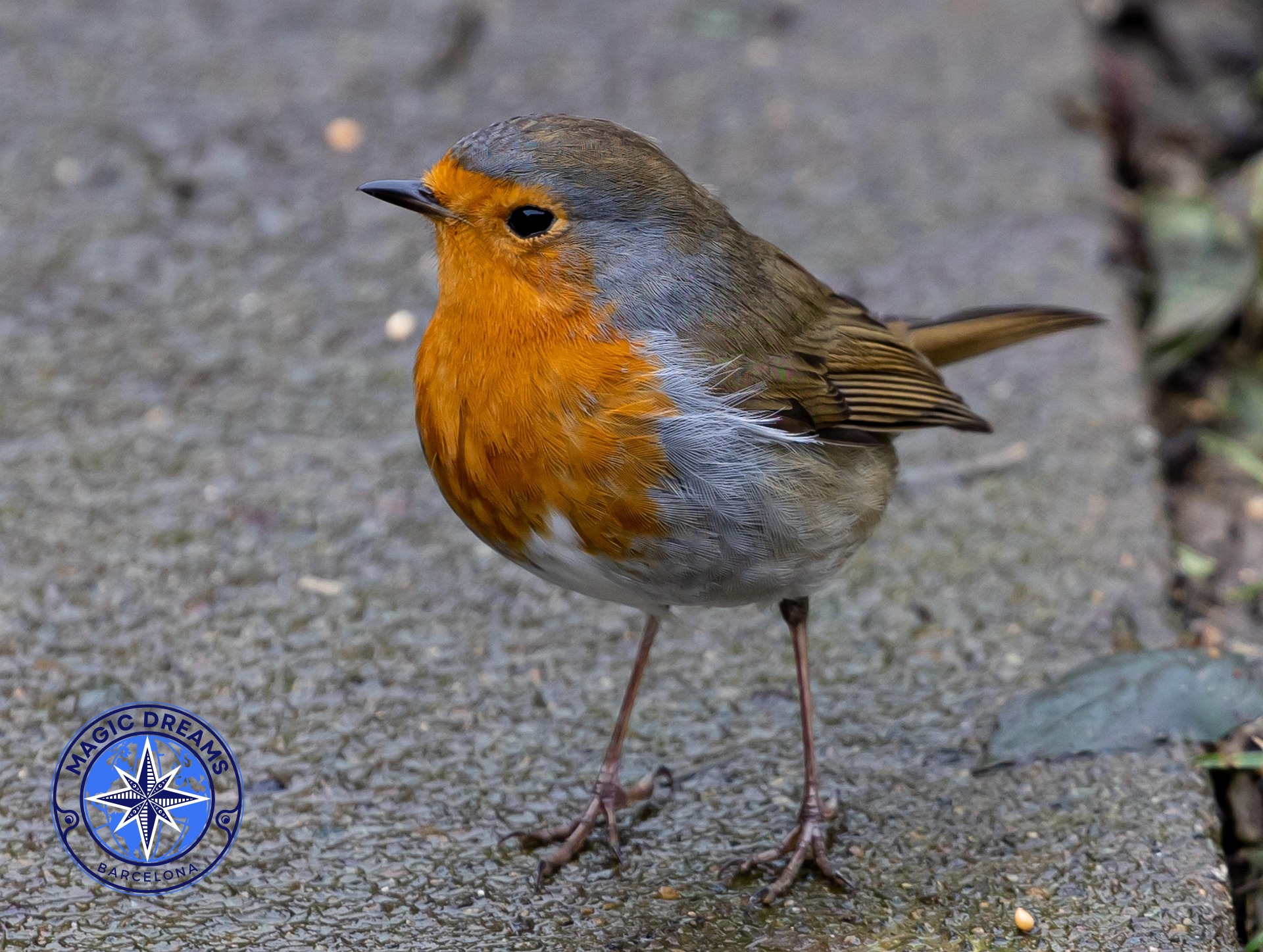
It is often seen hopping across the ground among leaves and shrubs, searching for insects and small invertebrates, or perched on a branch from which it sings its delicate song.
But behind this peaceful appearance is a territorial, active, and highly adaptable bird, capable of living in forests, agricultural areas, parks, orchards, and gardens.
In Catalonia, it also has a particularly interesting characteristic: not all individuals behave in exactly the same way throughout the year. Some populations are resident, while others make seasonal movements, and Catalonia also receives robins from other parts of Europe during the colder months.
What does the European robin look like?
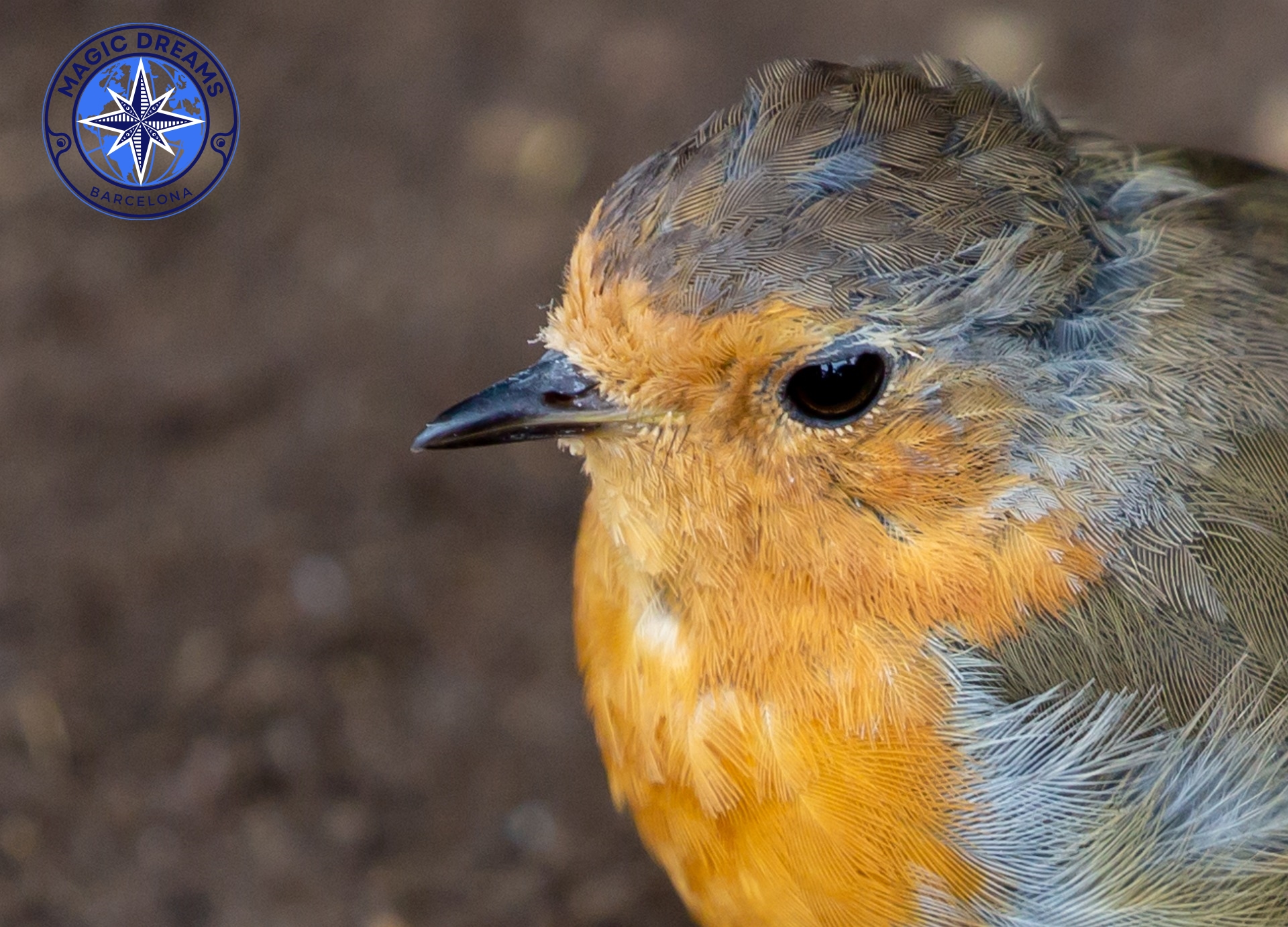
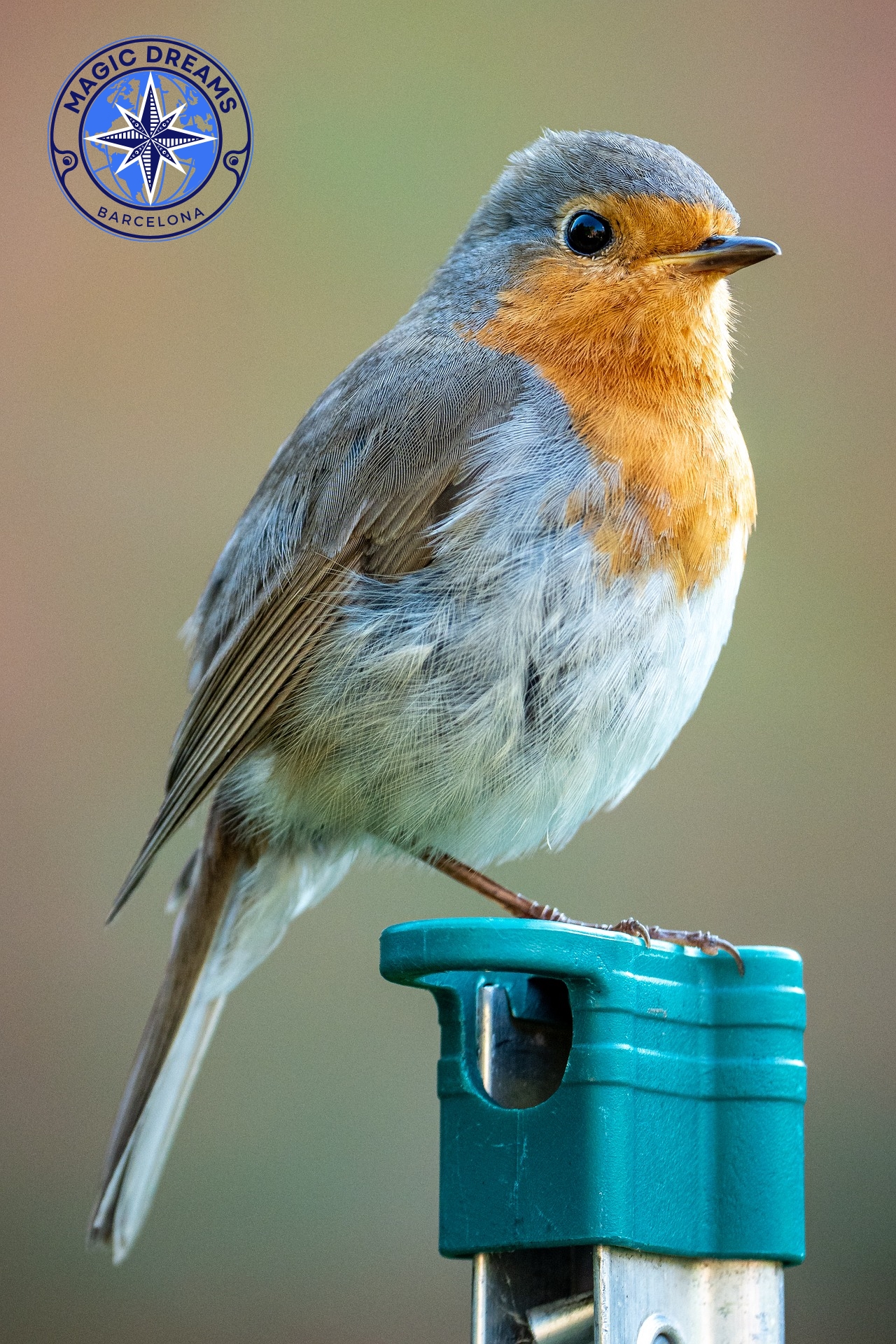
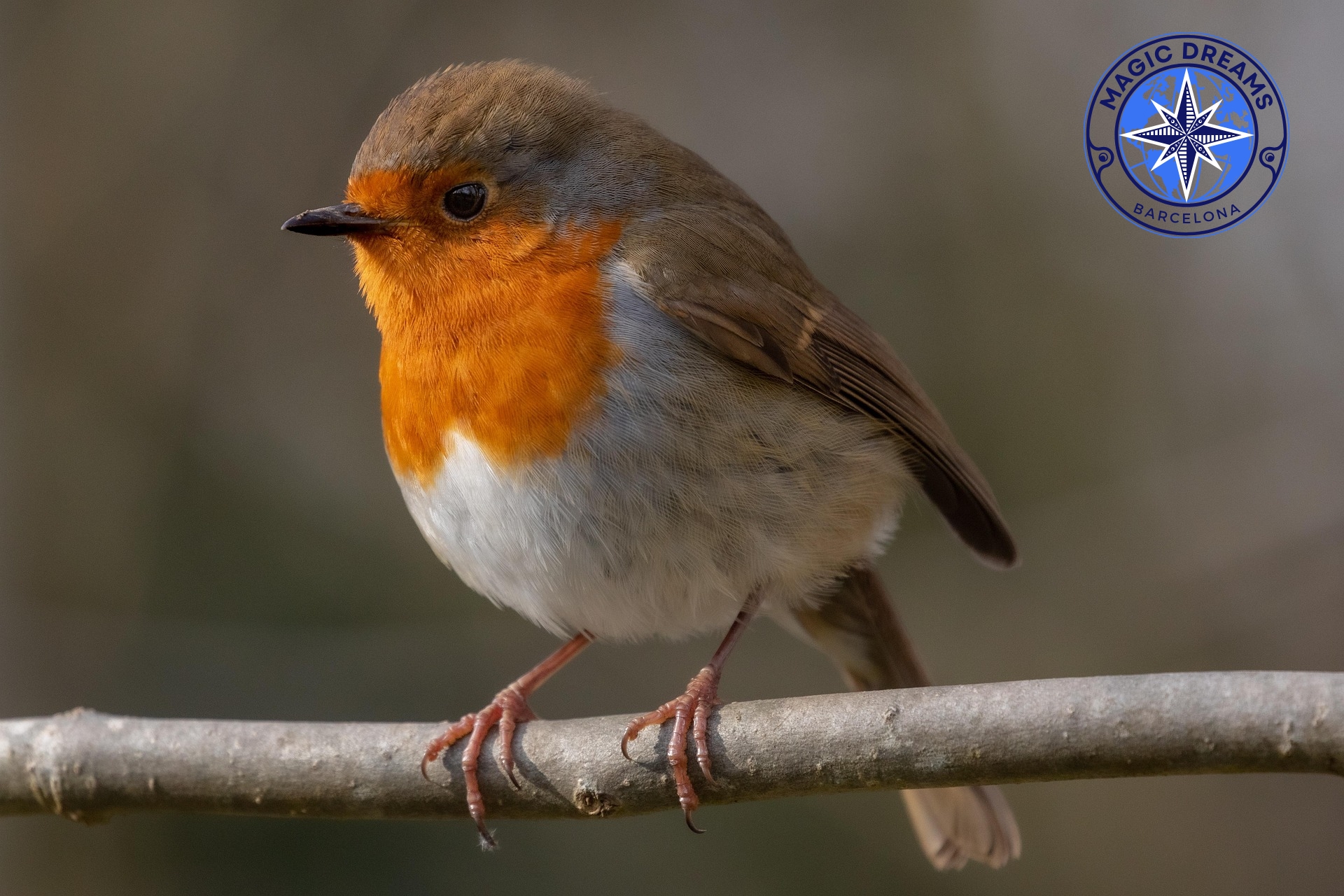
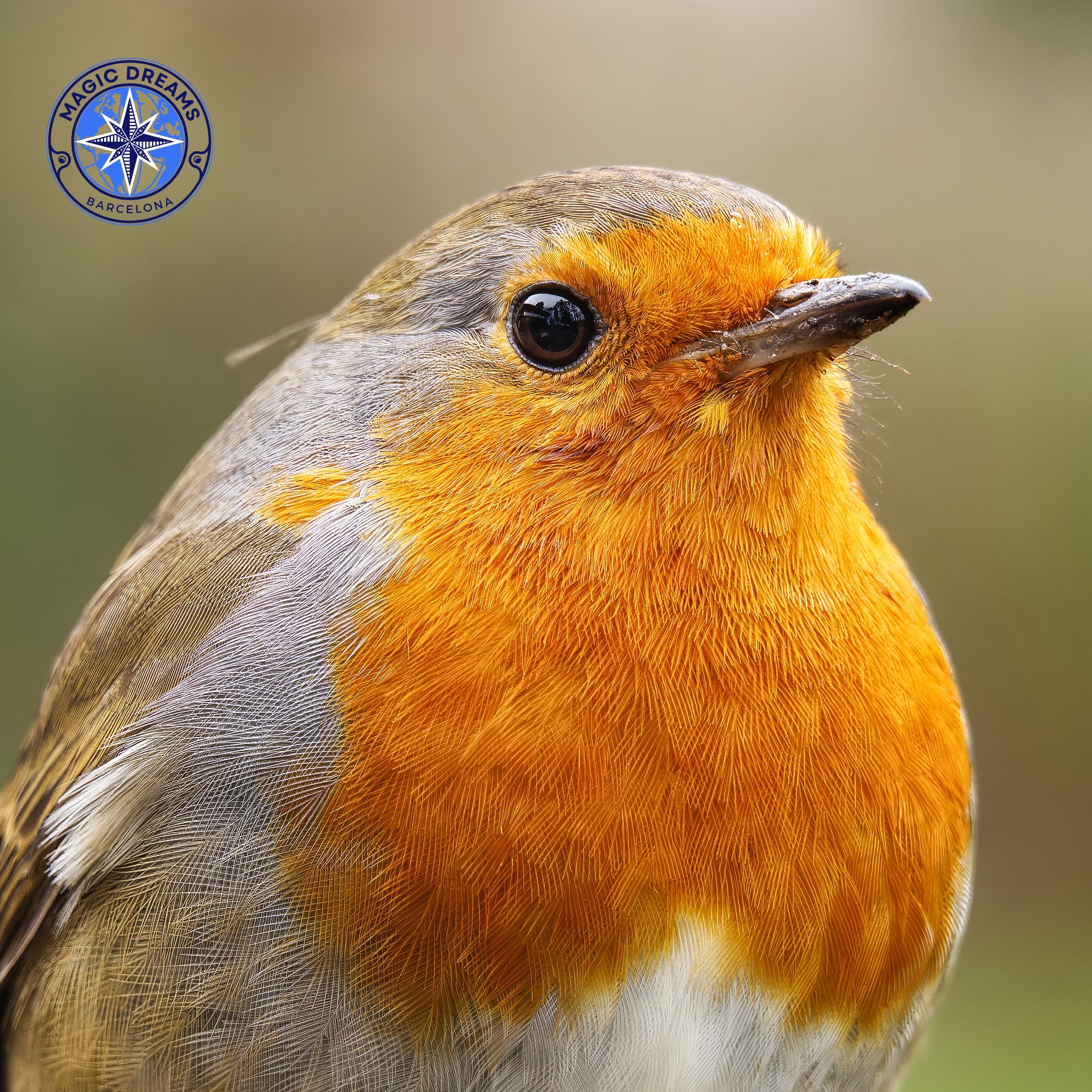
The robin is a small bird with a compact, rounded appearance.
It measures approximately 14 to 16.5 centimeters in length, with a wingspan of around 20–22 centimeters.
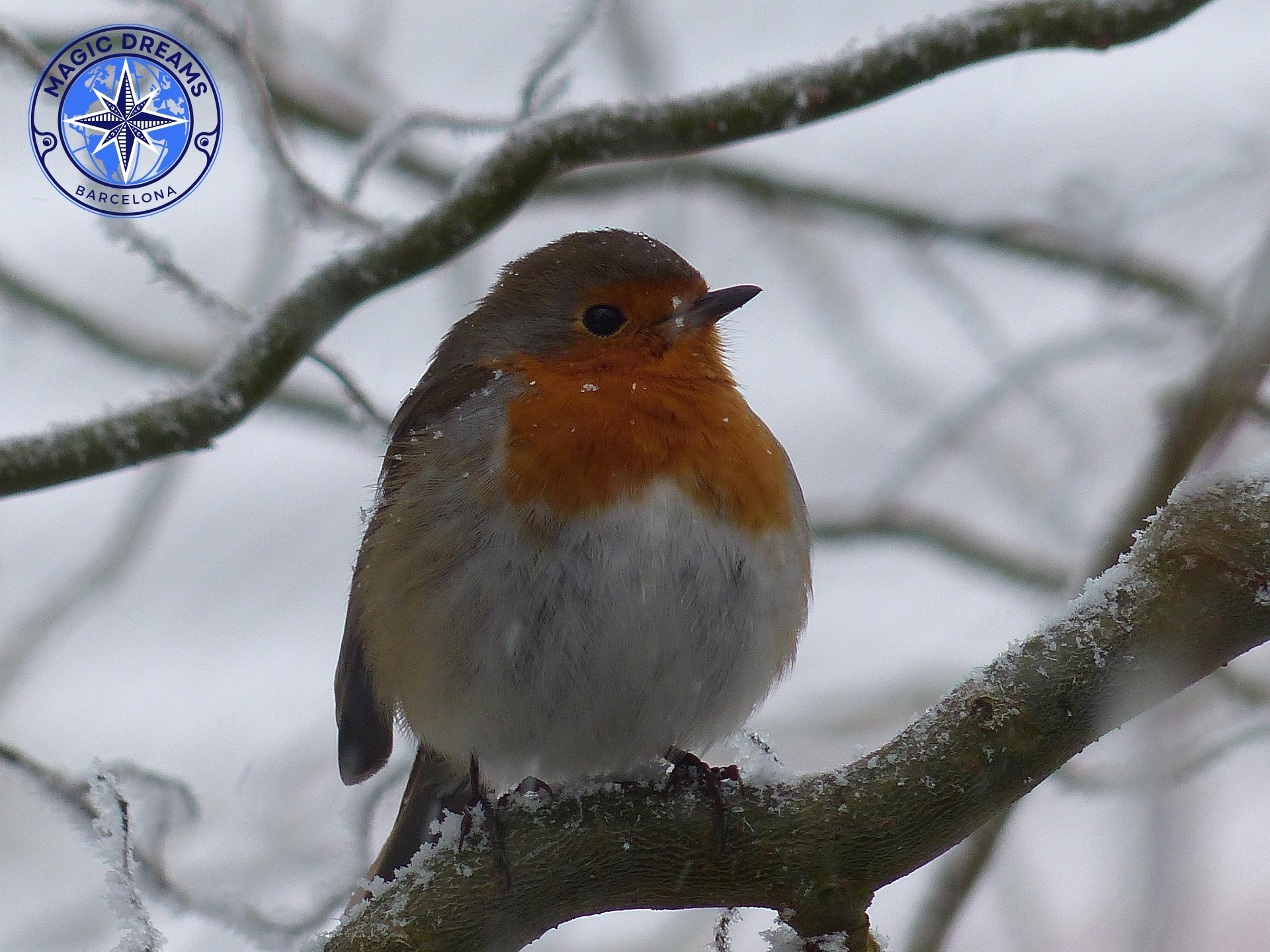
Its most striking feature is the orange or reddish coloring covering its face, throat, and upper breast.
The rest of the body has much more subdued colors, mainly brown and greenish tones on the back and wings, while the underparts are whitish.
Males and females look very similar, so it is not easy to distinguish them by sight.
Young birds look different. Their plumage is mainly brown and covered with small pale spots, without the characteristic orange breast of adults.
As they grow and undergo successive molts, they gradually acquire the characteristic appearance of adult birds.
Where does the European robin live?
The European robin has a very wide distribution throughout Europe and is capable of occupying a wide variety of habitats.
During spring and summer, it usually seeks places with abundant vegetation, especially:
- forests;
- riparian woodlands;
- mountainous areas;
- countryside;
- orchards;
- parks;
- gardens;
- shrubland.
During winter, it can be found in an even wider variety of environments, including urban parks, Mediterranean gardens, and areas close to homes.
In Catalonia, its presence in different forest and Mediterranean environments is particularly interesting.
Breeding populations are especially common in areas of the Pyrenees, Pre-Pyrenees, Transversal Range, and different sectors of the coastal mountain ranges.
During winter, its presence increases in many lowland and coastal areas.
Where can we find robins in Catalonia?
Robins can be observed in countless places throughout Catalonia, especially wherever there is a combination of vegetation, shade, natural ground, leaf litter, and available food.
Forests of the Pyrenees
In the Pyrenean forest areas, the robin is part of the typical bird community.
Cool forests with abundant vegetation provide insects, small invertebrates, and suitable places to hide and breed.
Pre-Pyrenees
It is also present in countless forest habitats and transition zones between mountains and agricultural areas.
Coastal mountain ranges
Wooded areas in the hills near the Catalan coast can support breeding populations and, during winter, receive individuals that have moved from other areas.
Maresme and the central coast
The species can also be observed in gardens, parks, orchards, and woodland areas along the coast, especially during autumn and winter.
Barcelona and metropolitan areas
The robin can appear in parks, gardens, and urban green spaces as long as it finds sufficient vegetation, food, and shelter.
It does not necessarily need a remote forest to live.
A relatively natural Mediterranean garden can become a small territory for this species.
Does the European robin migrate?
Yes, although the answer is more complex than it may seem.
Not all European robins are long-distance migrants.
The species displays different strategies depending on the population.
Populations from northern Europe make significant movements toward more southerly regions during winter.
In Catalonia, we find both resident birds and individuals that make seasonal movements.
Some robins that breed in mountainous areas may move to lower elevations during winter.
In addition, during the colder months, Catalonia receives individuals from other parts of Europe.
For this reason, a robin observed in a Catalan garden in January may not belong to the same population as the individuals we find breeding in nearby forests during spring and summer.
During which months can we see robins?
Robins can be observed in Catalonia virtually all year round.
However, their abundance and behavior change depending on the season.
January and February
This is an excellent time to observe them in gardens, parks, and Mediterranean areas.
During winter, the presence of individuals from other regions increases, and robins may occupy small individual territories.
March and April
The breeding season begins across much of their range.
Males increase their singing activity, and breeding territories become particularly important.
May and June
This is one of the most interesting periods from a breeding perspective.
Adults are constantly searching for food for their chicks.
July and August
Young birds begin to become independent, and the species’ behavior changes after breeding.
September and October
Autumn movements begin.
In Catalonia, individuals from other European regions may start to appear.
November and December
The wintering population increases, and Mediterranean gardens can become particularly attractive places.
When does the robin breed?
The breeding season depends on latitude, altitude, and climatic conditions.
Generally speaking, it can begin between March and May and continue until June or July.
Under favorable conditions, some populations may produce two broods.
Populations in cold or mountainous areas may have only one breeding attempt per year, while conditions elsewhere may allow a second brood.
In Catalonia, the exact timing can vary considerably depending on whether we are talking about a coastal garden, an inland forest, or a mountain area.
What is the robin’s courtship like?
Song plays a fundamental role in the life of the robin.
Its song is melodious and varied and can be heard from the early hours of the morning, even before dawn.
During the breeding season, singing serves to communicate occupation of the territory and keep other individuals away.
But there is a particularly interesting characteristic:
the robin also sings during winter.
Territorial behavior does not disappear completely outside the breeding season.
During winter, males and females may defend small individual territories.
How many chicks does a robin have?
A typical clutch contains between four and six eggs, although clutches of different sizes can occur.
The eggs are generally whitish or bluish and have spots of varying intensity.
Incubation lasts approximately 12–15 days.
After hatching, the chicks remain in the nest and are fed by the adults.
The young leave the nest after approximately another 12–15 days, although they may continue to depend on their parents for some time.
Leaving the nest does not mean that they are immediately independent.
During the following days they continue learning how to feed themselves and move around their environment.
Where does the robin build its nest?
Here we find one of the robin’s most interesting characteristics.
Unlike many birds that use enclosed nest boxes installed in trees, the robin usually places its nest very close to the ground.
It may use:
- cavities;
- gaps between roots;
- natural hollows;
- the bases of shrubs;
- small openings in walls;
- corners protected by vegetation.
The nest is built from plant materials such as leaves, grass, and moss.
Inside, it uses finer materials such as roots, hair, and feathers.
This characteristic is especially important if we want to help the species in our garden.
What kind of nest box does a robin need?
The robin is not the typical species for a closed nest box with a small circular entrance, such as those commonly used by tits.
A front-open or partially open shelter, placed in a quiet and protected location, is more appropriate.
The location is just as important as the nest box itself.
It should provide:
- protection from rain;
- shade or partial shade;
- nearby vegetation;
- peace and quiet;
- protection from predators;
- no constant human traffic.
It can be discreetly integrated into vegetation while still leaving suitable access.
And there is one fundamental rule:
do not put food, wool, cotton, or nesting materials inside the box.
The robin itself will choose the materials it needs to build its nest.
Where should a robin nest box be placed?
The nest box should be placed in a quiet location.
A position partially protected by vegetation may be suitable.
It is important to avoid:
- areas with frequent foot traffic;
- places excessively exposed to sunlight;
- locations where water accumulates;
- areas accessible to cats;
- places subject to constant noise.
It is not necessary to place it high in a tree.
In fact, considering that robins often nest at low heights, it may be more appropriate to integrate the shelter into an area protected by shrubs or vegetation.
Once installed, avoid disturbing it during the breeding season.
What plants can we grow to attract robins?
If we want to attract robins to a garden in Catalonia, the best strategy is not simply to put out food.
It is much more interesting to create a small ecosystem.
The goal is to provide:
- natural food;
- shelter;
- places to rest;
- water;
- areas where insects can be found;
- quiet places for breeding.
Blackberry bushes
Bramble bushes can provide fruit and shelter.
Their dense branches also offer protection from potential predators.
Elderberry
Elderberry produces fruit that can be used by various bird species.
Mastic
Mastic is particularly interesting in Mediterranean gardens.
In addition to providing vegetation structure, it produces fruit and offers shelter.
Wild olive and olive trees
Olives and wild olives can form part of the robin’s autumn and winter diet.
Native fruit-bearing plants
An interesting strategy for a Catalan garden is to incorporate species adapted to the Mediterranean climate that produce fruit during autumn and winter.
In this way, we are not simply creating a bird feeder, but a garden capable of providing natural resources throughout the year.
A garden with leaves can also be a good garden for robins
One of the simplest things we can do is not keep every corner of the garden excessively tidy.
Robins find much of their food on the ground.
They walk among leaves, shrubs, and low vegetation searching for small invertebrates.
Therefore, a completely paved garden with no leaf litter and perfectly trimmed grass offers far fewer opportunities than a garden with natural areas.
This does not mean leaving the garden abandoned.
We can create small areas with:
- leaf litter;
- branches;
- shrubs;
- native plants;
- natural soil;
- low vegetation.
These corners can become genuine natural restaurants for birds.
What does the robin eat?
The robin is primarily insectivorous.
Its prey includes:
- ants;
- beetles;
- spiders;
- small insects;
- other invertebrates.
During autumn and winter, it supplements its diet with fruit.
It may feed on fruit from species such as:
- blackberry;
- elderberry;
- mastic;
- olive;
- wild olive.
This diet explains why a biodiversity-rich garden is much more interesting to a robin than a perfectly clean garden treated with insecticides.
What can we feed robins in our garden?
If you decide to supplement its natural food, this should be done carefully.
We can offer small quantities of:
- apple;
- pear;
- grapes;
- suitable fruit for birds;
- specialized food for insectivorous birds;
- insect larvae bred as bird food;
- occasionally, specific high-fat foods for wild birds.
Fruit can be placed on a low tray or on a clean surface.
Robins often feel more comfortable feeding close to the ground than using certain elevated feeders.
We should not try to train them to eat directly from our hands.
It is preferable to maintain some distance and allow the bird to retain its natural behavior.
Can we give them bread?
It is better to avoid it.
Bread does not provide a balanced diet for birds and should not be used as a regular food.
We should also avoid:
- very salty foods;
- excessively sugary foods;
- cooked food;
- seasoned foods;
- human food leftovers;
- moldy food.
The best option is to offer suitable food for wild birds and, above all, encourage the availability of natural food.
What about water?
Water is one of the most important resources we can provide.
A small birdbath can be especially valuable during the Mediterranean summer.
It should be:
- shallow;
- stable;
- easy to clean;
- located in a quiet place;
- protected from cats.
There is no need to install an elaborate fountain.
A simple, shallow container may be enough.
The important thing is to refresh the water regularly and keep the container clean.
Feeder hygiene is essential
When different birds are concentrated in the same place, disease transmission can also be facilitated.
Therefore, it is necessary to:
- clean containers regularly;
- remove leftover food;
- prevent food from becoming wet and spoiling;
- replace the water;
- avoid accumulating large quantities of food.
A bird-friendly garden should also be a hygienic garden.
How can we protect robins from cats?
This is especially important.
A garden may provide food, water, and shelter, but if cats have unrestricted access to the area, the risk to birds increases.
We should not place feeders or nest boxes where a cat can easily jump from a wall, tree, roof, or shrub.
Nor should we install a nest box within reach of climbing animals.
A truly bird-friendly garden must also take predator safety into account.
What can we grow in a Catalan garden to attract robins?
A Mediterranean garden can become a small biodiversity refuge if we combine different layers of vegetation.
Trees
Olive trees, wild olives, and other species adapted to the environment can provide food, shade, and resting places.
Shrubs
Mastic, elderberry, and other fruit-producing species can be particularly interesting.
Flowering plants
Plants that attract insects can also indirectly benefit robins.
A biodiversity-rich garden provides more opportunities for natural feeding.
Brambles and dense vegetation
Although they may not always be the favorite plants in an ornamental garden, some areas of dense vegetation can provide shelter and food.
Leaf litter
There is no need to remove every leaf.
An area of natural soil covered with leaf litter can become an excellent feeding ground.
The robin and the seasons
One of the best ways to observe its behavior is to follow it throughout the year.
Spring
Its song becomes one of the characteristic sounds of the garden.
Territories are established and breeding begins.
Summer
Adults feed the young and the landscape changes.
The chicks begin exploring their surroundings.
Autumn
Fruit becomes more readily available and migratory movements begin.
In Catalonia, individuals from other European regions may arrive.
Winter
This is one of the most interesting times to observe robins in gardens and parks.
The species can be particularly visible in Mediterranean environments rich in shrubs and fruit.
Why does the robin come so close to people?
It is common for someone working in a garden to notice a robin appearing just a few meters away.
This has contributed greatly to its popularity.
When a person turns over soil, prunes plants, or works among vegetation, insects and other small invertebrates may be exposed.
The robin takes advantage of these opportunities and may learn that certain human activities create feeding opportunities.
But this does not mean that it is a domesticated bird.
It remains a wild and territorial animal.
The best approach is to observe it without trying to capture or touch it, or train it to eat directly from your hand.
The robin’s song
Its song is one of its most fascinating characteristics.
Unlike the songs of some birds, which can be repetitive, the robin’s song is melodic and varied.
It can be heard during much of the year.
One of the most interesting characteristics is that it can sing very early in the morning, even before sunrise.
In a city or quiet garden, hearing a robin before the sun comes up can be one of the most special experiences in birdwatching.
The meaning of the robin in Europe
The robin has acquired considerable symbolic significance in different European cultures.
Its small size, its proximity to gardens, and its relatively trusting behavior have helped turn it into a familiar character in stories, songs, illustrations, and popular traditions.
However, it is important to distinguish between cultural symbolism and scientific behavior.
There is no scientific evidence that the robin possesses special powers or acts as a supernatural messenger.
Such interpretations belong to the realm of traditions, legends, and popular culture.
The robin and British legends
In the United Kingdom, the robin is deeply integrated into popular culture.
One of the best-known associations is its connection with Christmas.
Traditional images of robins have appeared for decades on Christmas cards, illustrations, and decorations.
There are also numerous folk stories associated with its red breast.
One Christian legend says that the robin acquired its reddish coloring while attempting to ease Christ’s suffering during the Crucifixion.
This story belongs to popular and religious tradition, not to the scientific explanation of the bird’s coloration.
The robin as a symbol of hope
The robin is often associated with:
- hope;
- renewal;
- home;
- protection;
- closeness;
- the arrival of a new season;
- connection with nature.
The reason is simple.
It is a small bird that remains visible even during the colder months, when many other species are less noticeable.
Its orange breast stands out against the winter landscape and has led countless cultures to interpret it as a small symbol of life during the harshest months.
The robin in Catalonia
In Catalan, it is called pit-roig, a name related to the characteristic reddish coloring of its breast.
It is part of the region’s regular birdlife and its presence has been documented in countless Catalan environments.
It can be found in mountainous areas as well as forests, agricultural landscapes, parks, and gardens.
Its distribution changes throughout the year, and breeding populations do not behave exactly like individuals that arrive during the wintering period.
For this reason, the robin is also an interesting example of the variety of migratory strategies found among birds in Catalonia.
Can we find robins in our gardens in Catalonia?
Yes.
And you do not need to live next to a forest.
A garden can be attractive if it has:
- shrubs;
- dense vegetation;
- natural soil;
- insects;
- fruit;
- water;
- quiet areas;
- shelter.
Gardens, parks, and orchards can become important supplementary spaces for wildlife.
In a Mediterranean garden, creating small areas of natural vegetation can make a considerable difference.
How to create a robin-friendly garden in Catalonia
You do not need to turn your garden into a nature reserve.
You can start with small changes.
1. Plant shrubs
Give priority to species adapted to the local climate and, whenever possible, native plants that provide fruit.
2. Keep a natural area
Do not cut all the grass or constantly remove leaves and small branches.
3. Create a water source
A shallow container may be enough.
4. Install a low feeder
Choose a protected tray or platform where you can offer small amounts of suitable food.
5. Avoid bread
Use appropriate food for wild birds.
6. Reduce pesticide use
Robins depend to a large extent on small invertebrates.
Reducing insecticide use helps preserve their natural food supply.
7. Protect breeding areas
If you install a shelter, place it somewhere quiet and protected.
8. Keep cats away
Safety should be a priority.
Which nest box is best for a robin?
To encourage nesting, it is preferable to use a front-open shelter or nest box, designed for species that nest in open cavities, protected corners, or close to the ground.
Do not indiscriminately use a closed box with a small circular entrance designed for tits such as great tits or blue tits.
Location is just as important as the box itself.
It should be:
- protected from rain;
- partially concealed by vegetation;
- away from areas with heavy foot traffic;
- out of reach of cats;
- positioned so that it is protected from the most adverse weather conditions.
And once it is occupied:
do not open the box to look at the nest.
During the breeding season, disturbance should be kept to a minimum.
Should we put nesting material inside the box?
No.
It may be tempting to put moss, grass, cotton, or wool inside to make it more comfortable.
But it is better to leave it empty.
Birds know what materials they need and how to build their own nests.
In addition, some artificial materials can be dangerous if they become tangled around the legs or bodies of chicks.
The best approach is to provide a suitable shelter and let the bird take care of building the nest itself.
A garden that attracts robins also attracts other birds
One of the great advantages of designing a garden with robins in mind is that measures benefiting this species can also help many others.
A garden with:
- fruit;
- flowers;
- insects;
- water;
- shrubs;
- trees;
- shelters;
can become a small ecosystem.
We may receive visits from:
- blackbirds;
- warblers;
- tits;
- sparrows;
- wagtails;
- redstarts;
- thrushes;
- other Mediterranean birds.
Garden biodiversity increases when we provide different types of food, shelter, and vegetation.
The robin as an indicator of a lively garden
The presence of a robin does not automatically mean that a garden has exceptional biodiversity.
But it can be an interesting sign.
If we regularly see a robin searching for insects among leaf litter, using shrubs for shelter, and drinking from our small pond or birdbath, it means that the garden is providing some of the resources it needs.
And that is precisely the goal:
not to create a garden to artificially feed a robin, but to create a garden where a robin can naturally find what it needs.
The European robin, a small neighbor in Catalonia
The robin is much more than the little orange-breasted bird that appears on winter postcards.
It is a territorial, primarily insectivorous, adaptable bird with a fascinating variety of migratory strategies.
In Catalonia, it can form part of the birdlife of forests and mountains during the breeding season, move between different elevations and habitats during winter, and also receive individuals from other parts of Europe.
It may appear in a garden in the Maresme, a park in Barcelona, an orchard inland, or among the forests of the Pyrenees.
And we can help it.
There is no need to build a large natural area.
A few shrubs, some fruit-bearing plants, a patch of natural soil, a small water source, less pesticide use, and a quiet place to take shelter can transform an ordinary garden into a much more attractive space for wildlife.
The next time you see a small orange-breasted bird hopping among the leaves, perhaps it is not simply a visitor.
It may be one of the small wild inhabitants sharing the gardens and landscapes of Catalonia with us.
And perhaps, while you work among your plants, it is right there searching beneath the leaves for the next insect in its meal.






Copyright © 2016-2026 Magic Dreams Barcelona.