Beef with Oyster Sauce and Chinese Noodles.
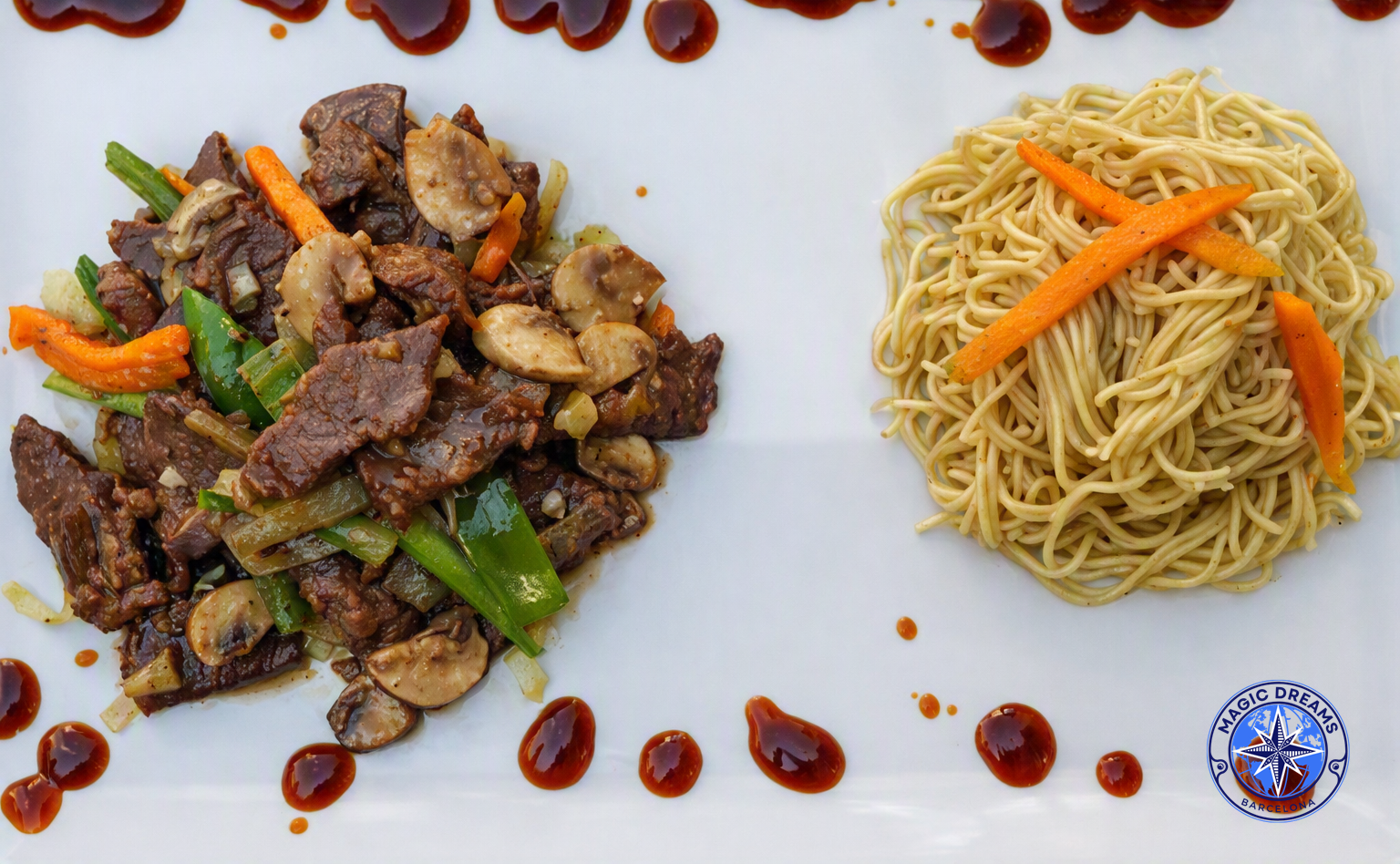
A Gourmet Asian-Inspired Experience
A classic of Asian cuisine transformed into a gourmet experience
Tender beef, crisp vegetables, delicate Chinese noodles and a glossy oyster sauce come together in a dish where umami, sweetness, freshness and texture are perfectly balanced.
Cooked over high heat, the beef remains tender while the vegetables retain their natural character. The oyster sauce creates a rich, aromatic glaze that brings all the ingredients together with an elegant Asian-inspired finish.
Ingredients
For the beef and vegetables
- 500 g tender beef, such as sirloin, ribeye or another suitable stir-fry cut
- 150 g mushrooms
- 1 green bell pepper
- 1 large carrot
- 1 small leek
- 2 garlic cloves
- 15 g fresh ginger
- 2 tbsp vegetable oil or mild olive oil
- Freshly ground black pepper
- A small amount of salt
For the oyster sauce
- 3 tbsp oyster sauce
- 2 tbsp soy sauce
- 1 tbsp honey
- 2 tbsp water
- 1 tsp freshly grated ginger
- 1 garlic clove, finely chopped
- A pinch of black pepper
For the Chinese noodles
- 200 g thin Chinese noodles
- 1 small carrot
- 1 tsp sesame oil, optional
- A small amount of soy sauce
For the gourmet presentation
- Spring onion or leek, finely julienned
- Sesame seeds
- Very fine carrot strips
- Fresh coriander, optional
- A few drops of sesame oil
Step-by-step preparation
1. Prepare the beef
Cut the beef into thin strips, slicing against the grain to achieve a more tender texture.
Pat the meat dry with kitchen paper and season lightly with freshly ground black pepper.
Avoid adding too much salt at this stage, as the oyster sauce and soy sauce will provide plenty of seasoning.
2. Prepare the vegetables
Slice the mushrooms, cut the green pepper into thin strips and julienne the carrot.
Slice the leek very finely.
Finely chop the garlic and grate the fresh ginger.
The vegetables should remain slightly crisp after cooking, creating an attractive contrast with the tender beef.
3. Prepare the oyster sauce
In a small bowl, combine the oyster sauce, soy sauce, honey and water.
Add the grated ginger, finely chopped garlic and a pinch of black pepper.
Mix well until the sauce is smooth and homogeneous.
4. Sear the beef
Heat a wok or large frying pan over high heat until very hot.
Add the oil and sear the beef quickly, preferably in batches so that the pan does not become overcrowded.
Cook for approximately 1–2 minutes per side, depending on the thickness of the strips.
The exterior should be beautifully caramelized while the interior remains tender.
Remove the beef and set aside.
5. Stir-fry the vegetables
Using the same wok, add the carrot and green pepper first.
Stir-fry over high heat for approximately 1–2 minutes.
Add the leek and mushrooms and continue cooking for another 2–3 minutes.
The vegetables should be cooked but retain their freshness and slight crunch.
6. Add the aromatics
Add the chopped garlic and grated ginger.
Stir-fry for approximately 20–30 seconds, just until their aromas are released.
Be careful not to burn the garlic.
7. Bring everything together
Return the beef to the wok.
Pour in the oyster sauce mixture and toss everything together over high heat.
Cook for approximately 1–2 minutes, allowing the sauce to reduce and coat the beef and vegetables with a glossy, aromatic glaze.
The sauce should cling naturally to the ingredients without becoming too liquid.
The perfect accompaniment: Chinese noodles
Cook the thin Chinese noodles according to the package instructions.
Drain well and toss gently with a few drops of sesame oil and a small amount of soy sauce.
For an elegant presentation, keep the noodles separate from the beef rather than mixing everything together.
Arrange them into a neat circular nest using tongs or a serving fork.
Finish with very fine strips of carrot and a few sesame seeds.
Gourmet presentation
For a refined contemporary presentation, use a large white rectangular plate.
Place the glossy beef and vegetables on one side of the plate, creating a generous but carefully controlled composition.
On the opposite side, arrange the Chinese noodles into a precise circular nest.
Finish with:
- Fine carrot strips
- Sesame seeds
- Finely sliced spring onion or leek
- A few fresh coriander leaves, if desired
- A subtle drizzle of sesame oil
For the final artistic touch, create delicate lines or small symmetrical dots of the reduced oyster sauce around the composition.
Leave generous areas of white space on the plate.
The result should feel clean, modern and sophisticated, allowing the natural colors and glossy texture of the dish to take center stage.
The secret of this recipe
The key to achieving restaurant-quality results lies in three fundamentals:
High heat. Fast cooking. Perfectly reduced sauce.
The wok or pan must be sufficiently hot to sear the beef rather than steam it.
The vegetables should cook quickly, preserving their texture, while the sauce needs just enough time to reduce and create its characteristic glossy finish.
A perfect balance of flavors
This dish is built around a carefully balanced combination of flavors:
Oyster sauce provides depth and umami.
Soy sauce adds saltiness and complexity.
Honey introduces a subtle sweetness that rounds out the sauce.
Fresh ginger contributes warmth, freshness and aromatic intensity.
Vegetables bring color, texture and natural sweetness.
Chinese noodles provide a delicate base capable of absorbing the rich sauce.
Together, these elements create a dish that is intense without being overwhelming, sophisticated without losing its Asian character.
A small tribute to oyster sauce
Oyster sauce is one of the defining ingredients of Asian cuisine.
Its characteristic dark brown color, thick texture and intense umami flavor make it an exceptional ingredient for combining different foods and creating depth in a dish.
Its history is traditionally associated with Lee Kum Sheung, who is said to have discovered the concentrated flavor of cooked oysters in 1888 after accidentally leaving a pot of oysters cooking in brine.
What began as an accidental discovery eventually led to the creation of Lee Kum Kee, a brand that would become closely associated with oyster sauce and Asian cuisine.
Today, oyster sauce remains a fundamental ingredient for creating rich, balanced and deeply savory dishes.
The final touch
Finish the dish with toasted sesame seeds, finely sliced spring onion and a few drops of sesame oil.
For a fresher aromatic profile, add a touch of fresh ginger or a few coriander leaves just before serving.
Serve immediately, while the beef is tender, the vegetables are crisp and the sauce remains glossy.
Tender beef, crisp vegetables, delicate noodles and a deeply aromatic oyster sauce.
A recipe inspired by Asian cuisine, transformed into a refined gourmet experience where flavor, texture and presentation come together in perfect harmony.
Copyright © 2016-2026 Magic Dreams Barcelona.