Balmes Street, the elegant axis of modern Barcelona.
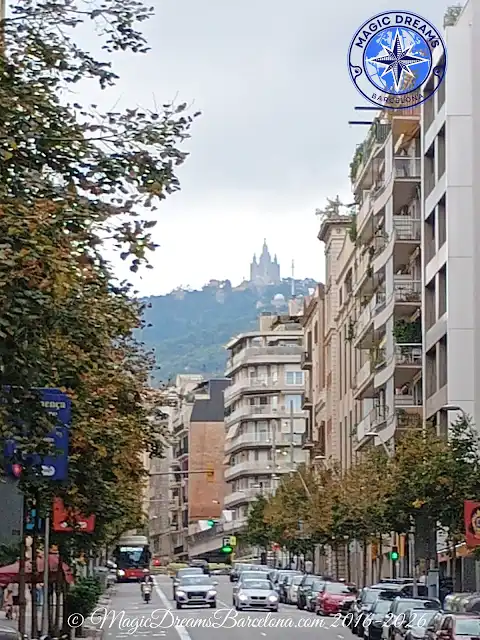
The Balmes Street, located in the heart of Barcelona, is one of the most representative urban arteries of the city’s modern evolution. Far more than a simple traffic route, Balmes is an urban narrative where history, architecture, economy, and everyday life intertwine within a broader Mediterranean and European context.
Origins and urban configuration
The street was born within the great expansion project of Barcelona following the demolition of the medieval city walls. The plan designed by engineer Ildefons Cerdà shaped the Eixample, a rational and orderly grid intended to improve hygiene, mobility, and urban integration.
Within this new urban fabric, Balmes Street became a strategic axis connecting the upper part of the city with the historic center. It was named after the Catalan philosopher Jaume Balmes, a symbol of 19th-century intellectual thought.
The bourgeois Barcelona and the consolidation of Balmes
During the late 19th and early 20th centuries, Balmes became associated with Barcelona’s bourgeois society. Elegant residential buildings were constructed in its early stretches, featuring ornate balconies, spacious entrances, and architectural details that reflected the city’s economic rise.
Its proximity to Passeig de Gràcia and other prestigious avenues reinforced its status as a desirable residential address within the expanding Eixample district.
Architecture and 20th-century transformation
Over time, Balmes adapted to the evolving needs of a growing metropolis. Original residential buildings gradually gave way to offices, medical centers, financial institutions, and commercial spaces.
This transformation did not erase its identity but reshaped it into a hybrid street where Modernist, Rationalist, and contemporary styles coexist. Today, Balmes stands as a clear example of how Barcelona has reinterpreted its urban heritage without losing functionality.
Balmes in contemporary Barcelona
Today, Balmes Street is one of the most active arteries of the Eixample district. Its role as a connector between the upper city and the center makes it a highly dynamic urban corridor.
Along its route, one can find cafés, restaurants, gyms, clinics, local shops, and office buildings. This mix creates a distinctive atmosphere: functional, cosmopolitan, and deeply urban.
Its connection to both residential and commercial areas makes it a key point in the daily flow of residents and visitors.
An urban experience in European cities
Although it is not a monumental street in the traditional sense, Balmes forms part of the authentic fabric that defines urban life in European cities. Its appeal lies in everyday life, evolving architecture, and its reflection of Barcelona as a modern Mediterranean capital.
For attentive visitors, Balmes offers a different perspective of the city: less tourist-oriented, but more authentic and lived-in.
Please leave your details and phone number, and we will get in touch with you as soon as possible, within the same day.
Copyright © 2016-2026 Magic Dreams Barcelona.