Gourmet Beef Lasagna: An Italian Classic.
Some dishes simply nourish us, while others tell a story. Beef lasagna belongs to the second category.
With layers of pasta, meat ragù, béchamel sauce and golden melted cheese, this classic of Italian cuisine brings together some of the most comforting elements of Mediterranean gastronomy. Its appeal lies not only in its flavor, but also in the ritual of preparing it, allowing its aromas to fill the kitchen and finally bringing a perfectly structured portion to the table.
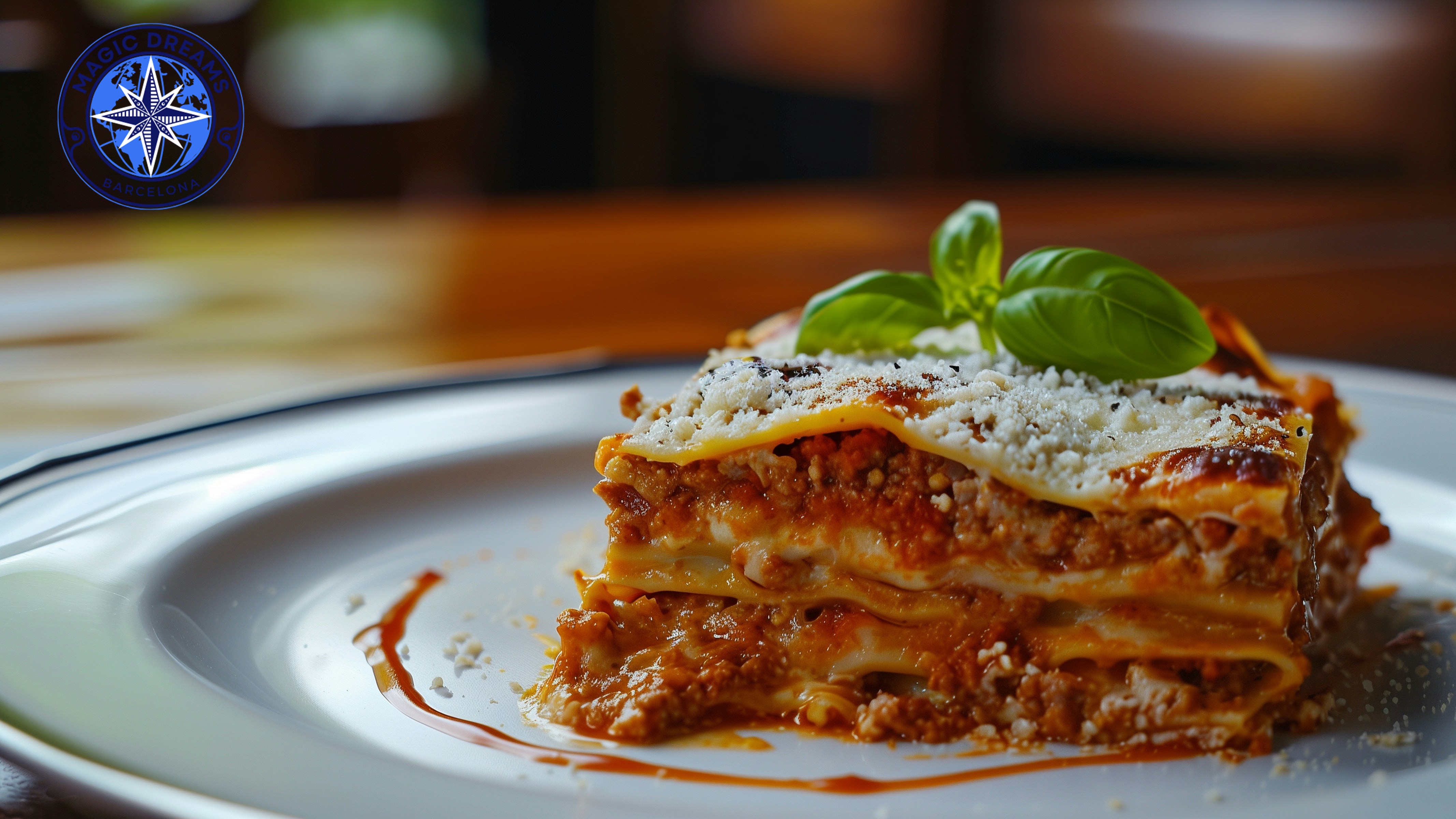
When presented with precision, a traditional lasagna can become a truly gourmet dish: beautifully defined layers, generous sauce, a creamy texture, a golden-brown surface and the fresh aroma of basil.
A Classic with Centuries of History
The history of lasagna is older than it may seem.
Although today we immediately associate it with Italy, there are historical precedents for dishes made with layers of dough and other ingredients in European cuisine dating back centuries. However, it was in Italy that this concept evolved into the dish we know today.
Italian lasagna developed different personalities depending on the region. In Emilia-Romagna, particularly around Bologna, we find one of the most celebrated versions: sheets of pasta, meat ragù, béchamel and cheese, layered together and baked until the surface becomes beautifully golden and slightly crisp.
Italian cuisine thus transformed simple ingredients into an extraordinarily complete dish.
And perhaps that is part of its magic.
The Secret Lies in the Layers
A good lasagna should not be understood as a simple succession of ingredients.
Each layer has a purpose.
The pasta provides structure and a delicate texture that holds the entire dish together.
The ragù, or Bolognese-style meat sauce, provides depth, richness and the intense character that defines the dish. The minced meat is slowly cooked with vegetables and tomatoes to create a concentrated, aromatic and well-balanced sauce.
The béchamel introduces the silkiest element of the preparation. Its creamy texture softens the intensity of the ragù and makes every bite more indulgent.
And finally, there is the cheese, responsible for that irresistible golden top layer, combining creaminess with delicate crispy edges.
The result is a gastronomic architecture in which every element has its place.
The Importance of a Great Bolognese-Style Meat Sauce
In a truly exceptional lasagna, the meat sauce should never be treated as merely an accompaniment.
It is one of the dish’s main protagonists.
A good Bolognese-style sauce begins with an aromatic base of vegetables and continues with quality minced meat, tomatoes and time. Slow cooking allows the flavors to meld while the sauce develops a thick and concentrated texture.
The goal is not to create an excessively watery sauce.
The ragù needs enough body to remain between the pasta layers while still providing the moisture necessary to keep the lasagna juicy and tender.
When this balance is achieved, every slice reveals a perfect combination of pasta, meat and sauce.
Béchamel: The Texture That Transforms the Dish
If the ragù provides intensity, the béchamel provides elegance.
Its creamy texture envelops the ingredients and creates the contrast that makes lasagna so comforting.
A well-made béchamel should be silky, delicate and light enough not to overpower the flavor of the ragù.
In a gourmet presentation, it also plays an important visual role. When the lasagna is cut, its creamy white layers appear between the pasta and meat sauce, creating a beautiful contrast of colors that makes the dish as appealing to the eye as it is to the palate.
The Gratin: The Most Irresistible Moment
There is one moment in the preparation of lasagna that almost defines its character.
The oven transforms the surface.
The cheese begins to melt, golden patches appear and the aromas intensify. The top develops a delicate crispness while the interior remains creamy and juicy.
A touch of finely grated Parmesan and a small amount of freshly ground black pepper can complete this finish.
The result is a beautifully golden crust that contrasts with the soft and creamy layers underneath.
The Fresh Touch of Basil
Fresh basil plays a much more important role than it may initially appear.
Its green leaves bring a Mediterranean aroma, slightly sweet and wonderfully fresh, contrasting with the intensity of the meat, tomato, cheese and béchamel.
It also introduces an essential visual element.
Against the golden, red and creamy tones of the lasagna, a few leaves of fresh green basil add color and natural freshness.
It is a small detail that can completely transform the presentation.
Ingredients That Define the Character of the Dish
A traditional lasagna can take many forms, but certain ingredients define its identity:
Pasta: provides structure and allows the different layers to be built.
Quality meat: provides protein and the deep flavor of the ragù.
Tomatoes: contribute acidity, natural sweetness and balance.
Vegetables: onion, carrot and celery add aroma and complexity to the sauce.
Béchamel: provides creaminess and softens the overall flavor.
Parmesan and other cheeses: add umami, saltiness and an irresistible gratinated finish.
Basil: provides freshness and aroma.
Black pepper: introduces a subtle spicy contrast.
The true greatness of this dish lies precisely in the harmony between these ingredients.
What Nutritional Benefits Does It Provide?
Although lasagna is a substantial dish, its ingredients can form part of a varied and balanced diet when enjoyed in moderation.
Meat provides high-quality protein, as well as nutrients such as iron and vitamin B12.
Tomatoes provide vitamin C, folates and carotenoids, including lycopene, an antioxidant compound naturally found in this vegetable.
The vegetables used in the sofrito, such as onion, carrot and celery, contribute fiber, vitamins and a variety of plant compounds.
Dairy products, found in the béchamel and cheese, provide protein and calcium.
Pasta provides carbohydrates, one of the body’s main sources of energy.
Of course, the final nutritional composition will depend on the quantities used, the type of meat and cheese, and the proportion of béchamel. Because of its energy density, lasagna works particularly well as a main course accompanied by a fresh salad or vegetables.
A Presentation Worthy of a Gourmet Restaurant
Lasagna can also become a visual experience.
A perfectly cut portion allows you to appreciate the regularity of its layers: pasta, Bolognese-style meat sauce, béchamel and cheese.
Served on a flat white plate, the colors become even more prominent.
The golden gratinated surface contrasts with the deep red of the sauce, while the creamy layers introduce softer tones and the basil provides the fresh green touch that completes the composition.
A delicate drizzle of tomato sauce or olive oil around the portion can add movement to the plate without taking attention away from the lasagna itself.
The key is precision.
A gourmet lasagna does not need excessive decoration. Its own structure is part of its beauty.
The Pleasure of Cutting the First Slice
There is something particularly appealing about the moment when a knife cuts through a perfectly baked lasagna.
The top layer offers a slight resistance.
Then come the pasta, meat sauce and béchamel, creating a clean slice in which every element can be clearly distinguished.
The aroma arrives before the first bite.
Tomato, slowly cooked meat, gratinated cheese, butter, spices and basil.
And then the true essence of lasagna emerges: contrast.
Crispy and creamy. Intense and delicate. Warm and aromatic. Traditional and sophisticated.
More Than a Recipe: An Expression of Italian Cuisine
Lasagna represents one of the great virtues of Italian gastronomy: the ability to transform everyday ingredients into a memorable experience.
It does not require exotic ingredients or impossible techniques.
It requires good products, time, balance and care.
A good lasagna respects its roots while also allowing for contemporary interpretations. It can be served in a family trattoria, at a home dining table or transformed into a fine-dining creation through carefully selected ingredients, precise cooking techniques and thoughtful presentation.
Because gourmet cuisine is not necessarily about making a dish more complicated.
Sometimes, it is simply about doing something we all know extraordinarily well.
A Lasagna to Enjoy Without Rushing
A perfectly gratinated slice of beef lasagna invites us to sit at the table and simply enjoy the moment.
It is a generous, warm and deeply Mediterranean dish, capable of bringing together the intensity of ragù, the softness of béchamel, the character of cheese and the freshness of basil in a single creation.
And when it arrives at the table perfectly sliced, with its layers clearly visible and its surface beautifully golden, it becomes more than just a meal.
It becomes an experience.
Because some recipes are part of our collective memory, and lasagna is certainly one of them: an Italian classic that, when prepared with quality ingredients and presented with elegance, can reach a truly gourmet dimension.
Gourmet Beef Lasagna Recipe
Preparation Time
30 minutes
Cooking Time
Approximately 1 hour 30 minutes
Total Time
2 hours
Difficulty
Medium
Servings
6 people
Ingredients
For the Meat Ragù
- 500 g ground beef
- 150 g ground pork
- 1 medium onion
- 1 carrot
- 1 celery stalk
- 2 garlic cloves
- 700 g crushed tomatoes
- 2 tablespoons tomato paste
- 100 ml red wine
- 250 ml beef stock
- 2 tablespoons extra virgin olive oil
- 1 bay leaf
- Salt to taste
- Freshly ground black pepper to taste
- A small amount of oregano, optional
For the Béchamel Sauce
- 60 g butter
- 60 g all-purpose flour
- 750 ml whole milk
- A pinch of nutmeg
- Salt to taste
- White pepper to taste
For Assembling the Lasagna
- 12–15 lasagna sheets
- 150 g grated mozzarella or cheese suitable for gratinating
- 80 g freshly grated Parmesan
- A few fresh basil leaves
- Freshly ground black pepper
- Extra virgin olive oil
How to Make the Perfect Beef Lasagna
1. Prepare the Aromatic Base
Begin by finely chopping the onion, carrot, celery and garlic.
Heat the extra virgin olive oil in a large, heavy-based saucepan and add the vegetables.
Cook them over medium heat for approximately 10–12 minutes, stirring frequently.
The goal is to create a soft and aromatic vegetable base without allowing the vegetables to burn.
This step is essential because it forms the foundation of the ragù’s flavor.
2. Cook the Meat
Add the beef and pork and slightly increase the heat.
Cook while stirring and breaking up any larger pieces of meat until it is thoroughly browned.
Do not rush this stage.
Proper browning creates greater depth and richness of flavor.
Add the red wine and allow the alcohol to evaporate for a few minutes.
3. Add the Tomatoes and Cook Slowly
Add the crushed tomatoes, tomato paste, beef stock and bay leaf.
Season with salt and black pepper and, if desired, add a small amount of oregano.
Once the sauce begins to simmer, reduce the heat to low.
Cook the ragù for 45–60 minutes, stirring occasionally.
The sauce should slowly reduce until it reaches a thick, aromatic and juicy consistency.
A good lasagna needs a ragù with plenty of body: if the sauce is too liquid, the layers may become difficult to hold together.
4. Prepare a Creamy Béchamel
While the ragù is finishing, prepare the béchamel.
Melt the butter in a saucepan over medium heat.
Add the flour and whisk for approximately one minute to cook it gently.
Gradually add the warm milk, whisking continuously.
Continue cooking until the mixture thickens and reaches a smooth, creamy and silky consistency.
Season with salt, white pepper and a small amount of nutmeg.
The béchamel should be creamy enough to coat the layers without becoming excessively thick.
5. Prepare the Pasta
If using lasagna sheets that require pre-cooking, cook them according to the manufacturer’s instructions.
Once ready, place them on a clean kitchen towel to remove excess moisture.
If using fresh pasta or no-boil lasagna sheets, you can proceed directly to assembly.
6. Assemble the Lasagna
This is one of the most important stages.
Preheat the oven to 180°C.
Spread a thin layer of ragù over the bottom of an ovenproof dish.
Add a layer of pasta.
Continue with another layer of ragù followed by béchamel.
Repeat the process:
pasta – ragù – béchamel – pasta – ragù – béchamel
until you finish with a final layer of béchamel.
Finally, distribute the grated mozzarella over the top and finish with plenty of freshly grated Parmesan.
Add a small amount of freshly ground black pepper.
7. The Perfect Gratin
Place the lasagna in the oven for approximately 30–35 minutes.
During the final few minutes, you can slightly increase the temperature or use the grill/broiler function to achieve a perfectly golden surface.
The top should develop an appetizing golden color, with small areas becoming slightly crisp.
The interior, meanwhile, should remain juicy and creamy.
Once removed from the oven, it is important to let the lasagna rest for 10–15 minutes before cutting it.
This resting time allows the layers to settle and makes it easier to achieve a clean and elegant slice.
8. The Gourmet Finishing Touch
For a more sophisticated presentation, cut a rectangular portion, taking care to keep the layers clearly visible.
Place it in the center of a flat white plate.
You can add a small drizzle of tomato sauce or a few drops of extra virgin olive oil around the lasagna.
Finish with:
- Freshly grated Parmesan
- Freshly ground black pepper
- A few small fresh basil leaves
- A delicate drizzle of extra virgin olive oil
The decoration should remain subtle.
In a gourmet presentation, the lasagna itself should always remain the star.
The Secret to Truly Exceptional Lasagna
An outstanding lasagna does not depend on a single ingredient.
It depends on balance.
The ragù should be rich, intense and concentrated.
The béchamel should be creamy and light.
The pasta should retain its structure.
The cheese should provide flavor and an appealing gratinated finish.
And all the layers should come together harmoniously, without any single element overpowering the others.
The ideal result is a portion that can be cut easily while still maintaining its beautiful structure.
Nutritional Benefits and Value
Lasagna is a complete and energy-rich dish that can form part of a balanced diet when enjoyed as part of a varied eating pattern and in appropriate portions.
The meat provides high-quality protein, iron and vitamin B12.
Tomatoes provide lycopene and vitamin C, as well as other antioxidant compounds.
Onion, carrot and celery contribute fiber, vitamins and minerals.
Milk and cheese provide calcium and protein.
Pasta provides carbohydrates, an important source of energy.
To make the meal more balanced, serve it with a green salad, roasted vegetables or another light side dish.
What to Serve with Beef Lasagna
Beef lasagna pairs particularly well with fresh side dishes that help balance its richness and intensity.
A green salad with leafy greens, arugula, tomatoes and olive oil is an excellent choice.
It can also be served with roasted vegetables, eggplant, zucchini or a Mediterranean-style salad.
To complete the experience, a good artisan loaf of bread can be the perfect companion for soaking up the delicious sauces.