Marinated Salmon.
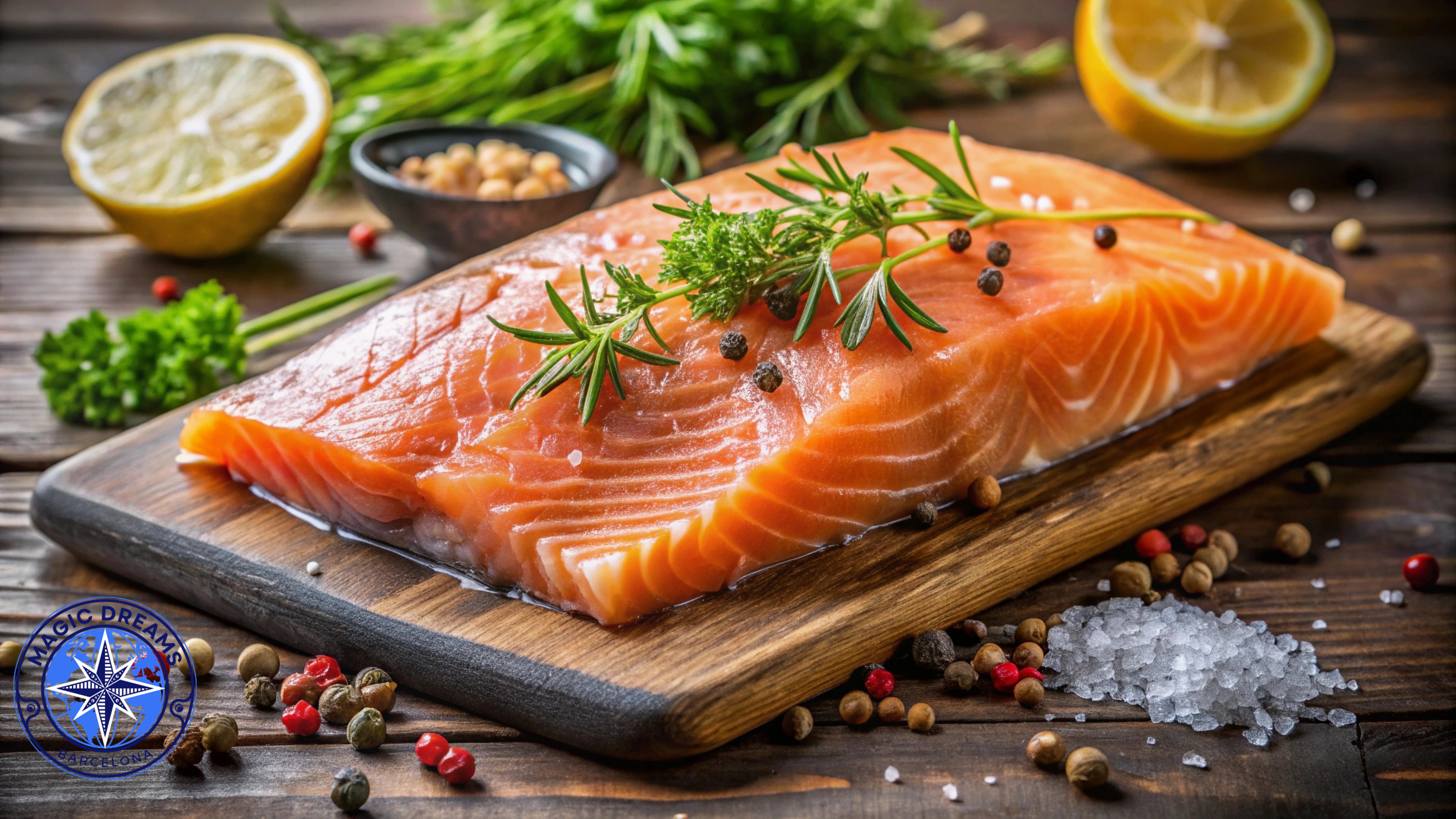
An Ancient Preservation Technique Turned into a Contemporary Culinary Classic
Marinated salmon is a preparation rooted in one of the oldest preservation techniques in cooking: salt curing.
Before refrigerators and modern preservation systems existed, salt was one of the fundamental resources used to extend the shelf life of food. The process consisted of placing the fish directly in contact with salt or submerging it in a brine. Removing part of the water from the fish made it more difficult for certain microorganisms to proliferate and allowed the fish to be preserved for longer.
Over the centuries, what was once a necessity for preservation became a culinary technique.
Today, marinated salmon is appreciated for its firm texture, delicate flavor, and extraordinary versatility. It can be served as an appetizer, used in salads and canapés, or turned into the main ingredient of elegant open-faced toasts.
One of the most balanced combinations is bread, avocado, cream cheese, and marinated salmon. Four simple ingredients that, when properly combined, offer different textures, temperatures, and flavor nuances.
Ingredients
For the Marinated Salmon
- 1 kg salmon fillet, preferably with the skin on
- 250 g salt
- 75 g sugar
- 1 tablespoon freshly ground black pepper
For Flavoring
- Fresh dill
- Finely grated lemon zest
- Orange zest
- Pink peppercorns
- Fennel seeds
The spices are optional and can be adapted to taste. Dill and citrus are particularly well suited to the rich and delicate character of salmon.
Step-by-Step Preparation
1. Prepare the Salmon
Carefully clean the salmon fillet and remove all pin bones using tweezers or fish pliers.
It is important to carry out this step patiently, running your fingers over the surface of the fish to locate any remaining bones.
Keep the skin on, as it will help maintain the structure of the fillet during the curing process.
2. Prepare the Curing Mixture
In a bowl, combine the salt, sugar, and black pepper.
If you want to add a more complex aromatic profile, add dill, lemon zest, orange zest, or the spices of your choice.
The salt is responsible for the curing process, while the sugar helps soften its intensity and provides a subtle sweet counterpoint.
3. Cover the Salmon
Spread part of the mixture over the bottom of a dish.
Place the salmon fillet on top, skin side down, and completely cover the upper surface with the remaining mixture.
The fish should be thoroughly surrounded by the salt-and-sugar mixture.
Cover the dish with plastic wrap and place it in the refrigerator.
4. The Curing Process
Over the following hours, the salt begins to draw some of the water out of the fish.
The fillet gradually develops a firmer, more compact texture while its flavor becomes more concentrated.
The minimum curing time for this recipe is 24 hours, although the final time will depend on the thickness of the fillet and the degree of curing you wish to achieve.
The longer the curing time, the firmer and more concentrated the final result will be.
5. Clean the Salmon
Once the curing process is complete, remove the fillet from the mixture.
Carefully remove all traces of salt and sugar and dry the surface thoroughly.
The salmon should be clean and dry before slicing.
6. Slice the Salmon
Using a long, very sharp knife, make clean diagonal cuts.
The aim is to obtain thin, even slices suitable both for serving as an appetizer and for preparing toasts and canapés.
Anisakis and Salmon Safety
Because this preparation does not involve complete cooking, particular attention must be paid to food safety.
Anisakis is a parasite that can be found in certain marine fish and may cause gastrointestinal problems and allergic reactions.
Prior freezing is one of the recommended measures for eliminating the risk when fish is going to be eaten raw or subjected to insufficient heat treatment.
As a reference, Spanish food-safety recommendations establish freezing at −20°C for a minimum of 24 hours or −35°C for a minimum of 15 hours in these circumstances.
At home, it is important to take into account the actual temperature reached by your freezer and the manufacturer’s instructions.
If the fish was purchased already frozen and the label indicates that it has undergone the appropriate treatment, there is no need to repeat it.
When Should You Start Preparing the Salmon?
To organize the recipe correctly, you need to consider both the freezing stage, when necessary, and the curing time.
Day 1
Freeze the salmon when required according to food-safety recommendations.
Day 2
Transfer the salmon to the refrigerator so that it can thaw slowly.
Once thawed, you can begin the curing process.
Day 2, Morning or Afternoon
Completely cover the salmon with the mixture of salt, sugar, and spices.
Cover and leave it in the refrigerator.
Day 3
After a minimum of 24 hours of curing, remove the mixture, clean and dry the salmon.
It is now ready to slice and eat.
Therefore, if you want to enjoy it on Sunday morning, you can organize the preparation from Friday or Saturday, depending on whether freezing is necessary and on the thawing process.
Avocado, Cream Cheese, and Marinated Salmon Toasts
The combination of salmon with avocado and cream cheese is particularly appealing because it balances flavors and textures.
The bread provides a crisp base and the carbohydrates needed to provide energy. The cream cheese adds creaminess. The avocado introduces a rich, smooth texture and a delicate vegetal flavor, while the salmon provides its distinctive marine character and firm texture.
For a more nutritionally complete option, you can use whole-grain or sourdough bread.
Ingredients
- Whole-grain or sourdough bread
- Ripe avocado
- Cream cheese
- Marinated salmon
- Black pepper
- A few drops of lemon juice
- Fresh dill
- Extra-virgin olive oil, optional
Preparation
Toast the bread until the surface is lightly crisp.
Spread a thin layer of cream cheese over the toast.
Place the avocado on top, either sliced or lightly mashed.
Add the slices of marinated salmon.
Finish with a few drops of lemon juice, freshly ground black pepper, and fresh dill.
There is no need to add salt, since both the marinated salmon and cream cheese may already provide a considerable amount.
The Nutritional Value of This Combination
These toasts combine foods with different and complementary nutritional characteristics.
Salmon provides high-quality protein and omega-3 fatty acids, as well as being a notable source of vitamin B12, vitamin D, vitamin B6, selenium, and phosphorus.
Vitamin B12 contributes to the normal functioning of the nervous system and to the formation of red blood cells. Vitamin D contributes to the maintenance of normal bones and teeth and to the normal functioning of the immune and muscular systems.
Selenium contributes to the protection of cells from oxidative stress and to the normal functioning of the immune system and thyroid function.
Avocado provides mainly monounsaturated fats, as well as fiber, vitamin E, vitamin K, folate, potassium, and magnesium.
Vitamin E contributes to protecting cells from oxidative stress. Vitamin K is involved in normal blood clotting and contributes to the maintenance of normal bones.
Potassium contributes to the normal functioning of the nervous and muscular systems, while magnesium is involved in energy metabolism and the normal functioning of muscles and the nervous system.
Cream cheese completes the preparation by providing protein and calcium. Calcium is necessary for the maintenance of normal bones and teeth and also contributes to normal muscle and nervous system function.
Finally, if you choose whole-grain bread, you will increase the fiber content while also obtaining vitamins and minerals from the cereal, including various B vitamins, magnesium, and iron.
Why Is This Breakfast Interesting?
The nutritional value of these toasts lies in the combination of their ingredients.
This is not a breakfast based exclusively on carbohydrates, but rather a preparation that brings together carbohydrates, protein, unsaturated fats, fiber, vitamins, and minerals.
The bread provides energy; the salmon provides protein and omega-3 fatty acids; the avocado contributes monounsaturated fats and fiber; and the cream cheese provides protein and calcium.
This combination can be particularly satisfying thanks to the presence of protein, fats, and fiber.
To complete the breakfast, the toasts can be served with a piece of fruit and a beverage such as coffee, tea, or milk.
A Source of Omega-3 Fatty Acids
One of the most interesting aspects of salmon from a nutritional perspective is its content of omega-3 fatty acids, particularly EPA and DHA.
These fatty acids are naturally present in oily fish and are one of the reasons why regular fish consumption has an important place within healthy dietary patterns.
Salmon therefore provides a simple and gastronomically appealing way to incorporate these nutrients into the diet.
Storing Marinated Salmon
Once the curing process is complete, the salmon should always be kept refrigerated and properly protected.
It is advisable to store it in a clean, airtight container and always handle it with clean utensils.
It should not be left at room temperature for prolonged periods.
Because this is a homemade fish preparation that is ready to eat, it is not appropriate to establish a universal shelf life simply because the fish has been marinated. Storage depends on factors such as refrigerator temperature, the initial condition of the fish, and handling practices.
For this reason, it is preferable to prepare moderate quantities and consume them within a few days, maintaining proper refrigeration at all times.
If there are any unusual changes in smell, color, or texture, the product should be discarded.
When to Prepare the Toasts
The toasts should be prepared just before serving.
The bread should retain its crisp texture, and the avocado should be cut at the last moment to prevent oxidation.
The best sequence is to toast the bread first, then add the cream cheese, followed by the avocado, and finish with the slices of salmon.
A few drops of lemon juice add acidity and help balance the richness of the avocado and cream cheese.
The Secret to Good Marinated Salmon
The secret to this preparation lies in balance.
The amount of salt must be sufficient to achieve the curing effect without masking the natural flavor of the fish. The sugar softens the overall profile, while the spices allow you to personalize the final result.
But just as important as the mixture is respecting time, temperature, and storage conditions.
Good marinated salmon should have a firm yet tender texture, a clean, lightly salty flavor, and a smooth, even, glossy surface.
The Result
Marinated salmon represents the evolution of an ancient preservation technique into a preparation that is now fully integrated into contemporary cuisine.
Served in thin slices on a slice of good bread, accompanied by avocado and cream cheese, it becomes an elegant and satisfying breakfast in which each ingredient contributes a different texture, flavor, and nutritional profile.
A preparation that is simple in terms of ingredients, but in which respect for technique, timing, and proper storage is essential to achieving a high-quality result.


Copyright © 2016-2026 Magic Dreams Barcelona.