House Sparrow: Guide and Habitat in Catalonia.
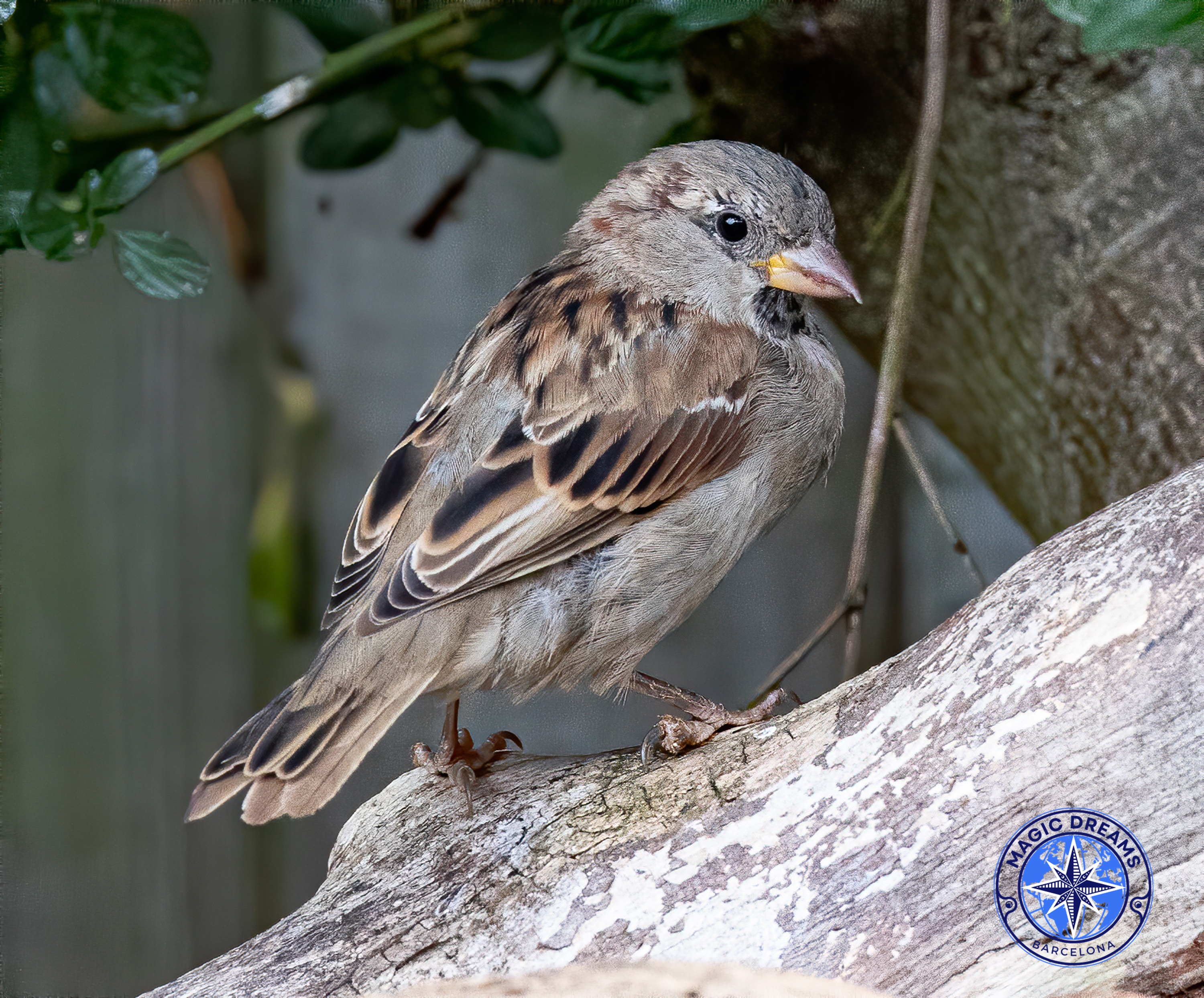
The house sparrow, scientifically known as Passer domesticus and called pardal comú in Catalan, is one of the best-known and most widespread birds in our towns, cities, parks, gardens and agricultural areas.
Its understated plumage, sociable behaviour and close relationship with human beings have made it one of the most characteristic birds of inhabited environments.
It is small, stocky and very active. We can see it hopping along the ground in search of food, moving between shrubs, resting on rooftops or gathering in small groups in trees and hedges.
Although it often goes unnoticed because of its abundance and unassuming appearance, the house sparrow is an interesting species, perfectly adapted to living alongside people and playing an important role in urban and rural ecosystems.
In Catalonia, it is part of the common birdlife found in countless municipalities. However, its presence and abundance can vary considerably depending on the type of environment, the availability of food and the existence of suitable places to shelter and breed.
In this guide, we will explore what the house sparrow looks like, where it lives, what it eats, how it reproduces and what we can do in our gardens, on our terraces or in rural surroundings to encourage its presence.
What does the house sparrow look like?
The house sparrow is a small passerine bird with a compact body, relatively short legs and a strong beak adapted to eating seeds and other foods.
It measures approximately 14–16 centimetres in length, with a wingspan generally ranging from 19 to 25 centimetres.
Its body is stocky compared with that of other birds of a similar size.
Its plumage features brown, grey and beige tones, allowing it to blend into the background as it moves across the ground or through vegetation.
How can you tell the male from the female?
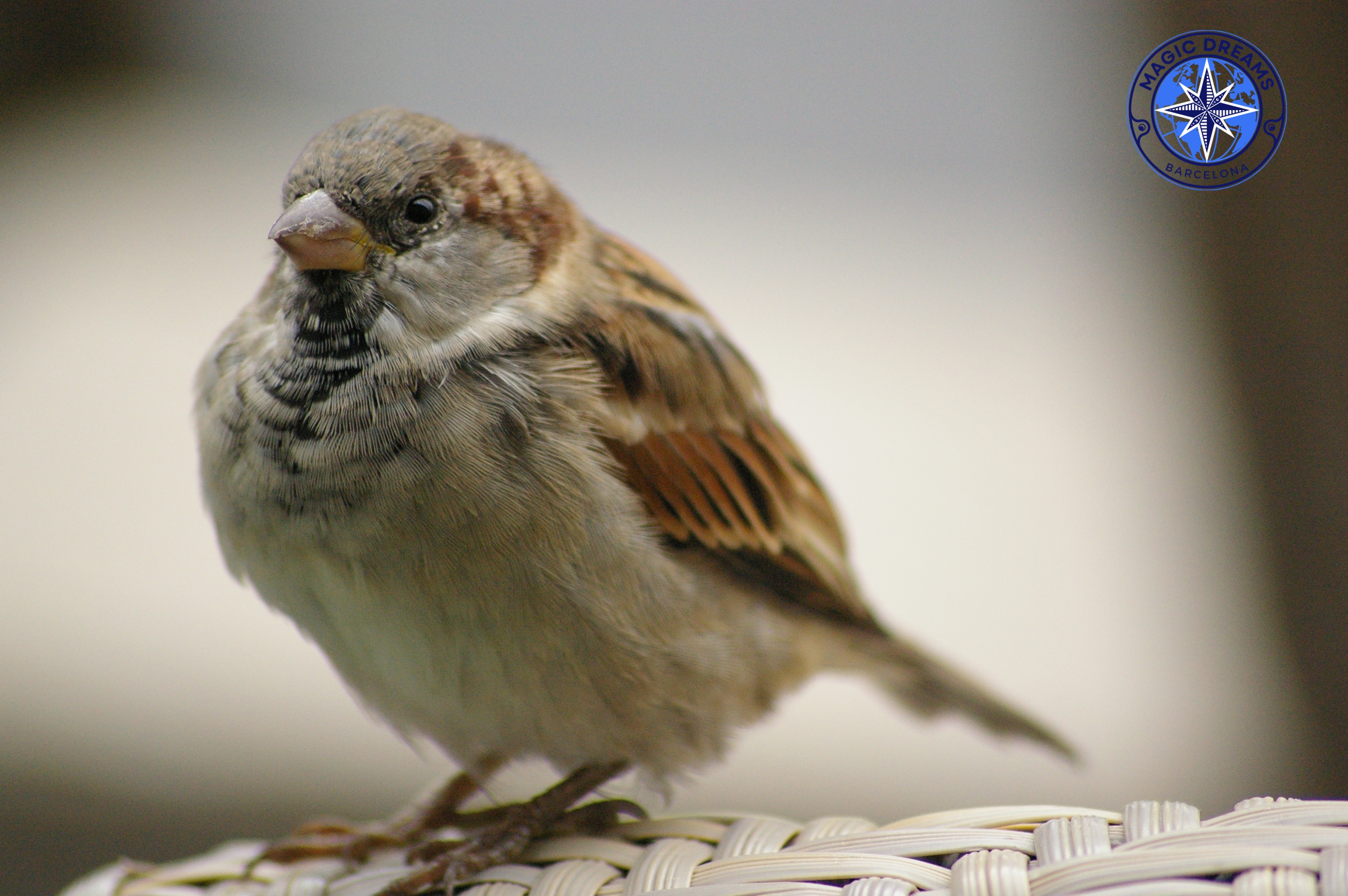
One of the most interesting characteristics of the house sparrow is its pronounced sexual dimorphism, meaning that males and females have visible physical differences.
The adult male generally has:
-
A grey area on the top of its head.
-
Whitish cheeks.
-
A black patch on its throat and upper chest.
-
Chestnut-brown colouring on the sides of its head and nape.
-
A brown back with dark streaks.
-
A beak that usually turns black during the breeding season.
The extent and intensity of some markings can vary according to age and the time of year.
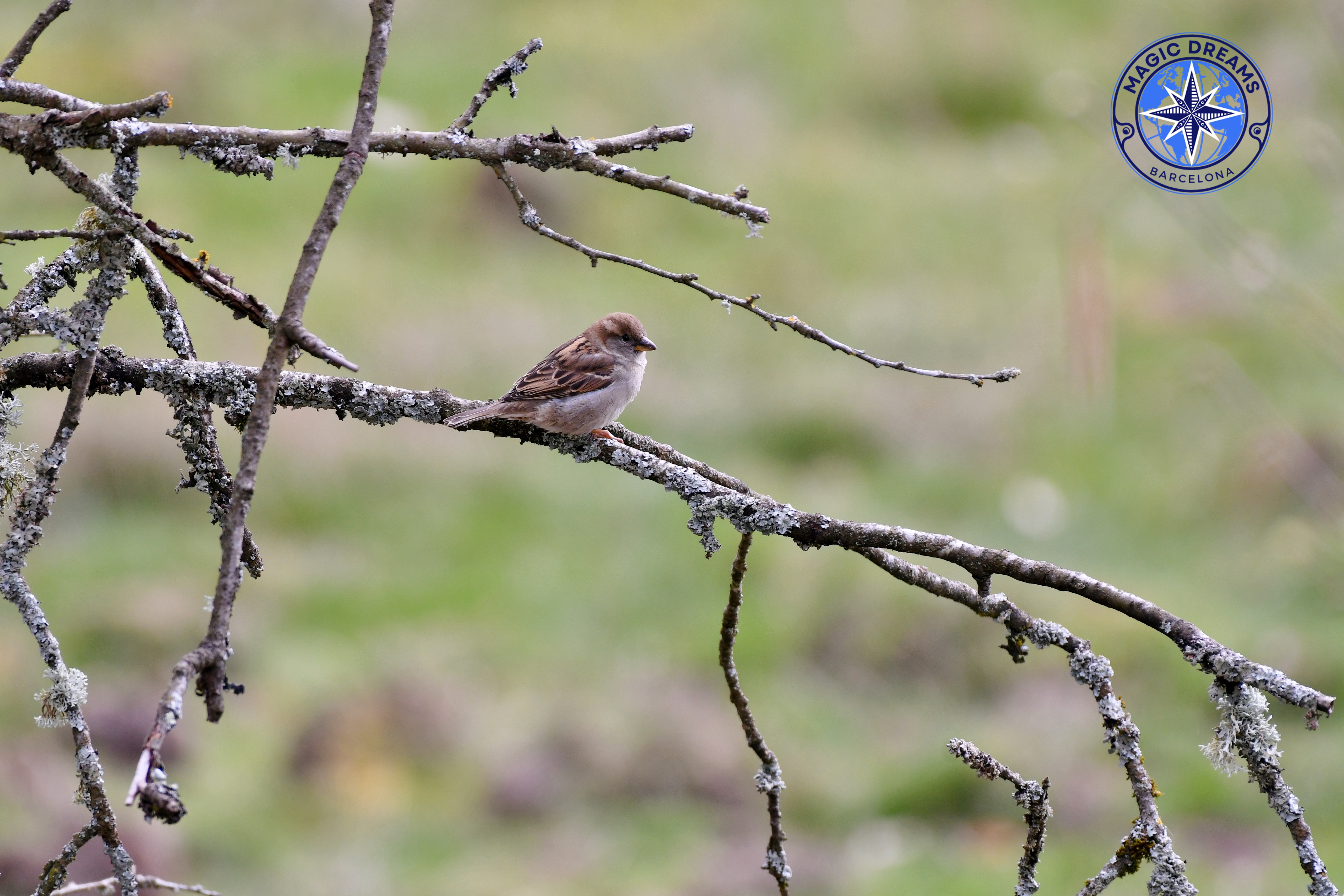
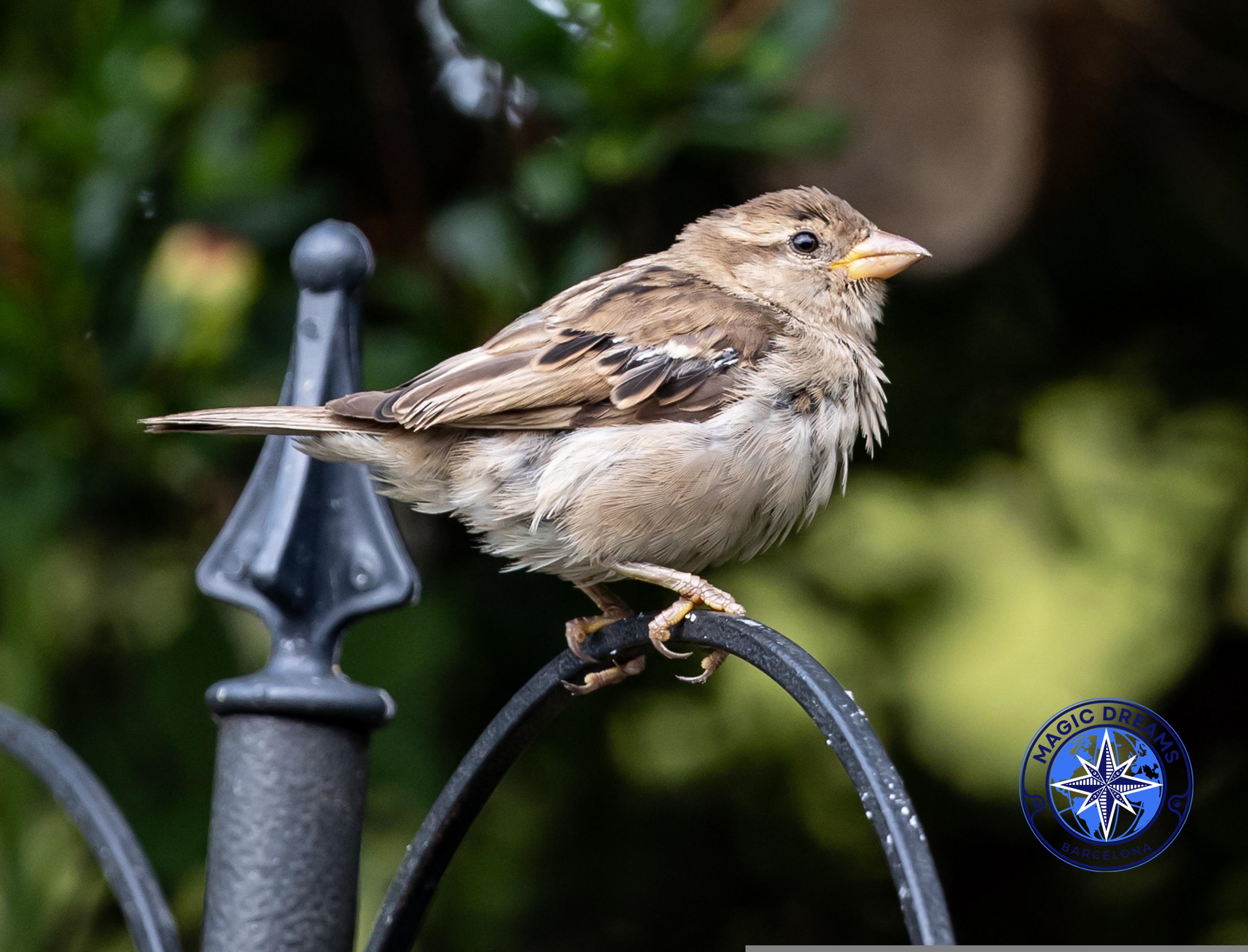
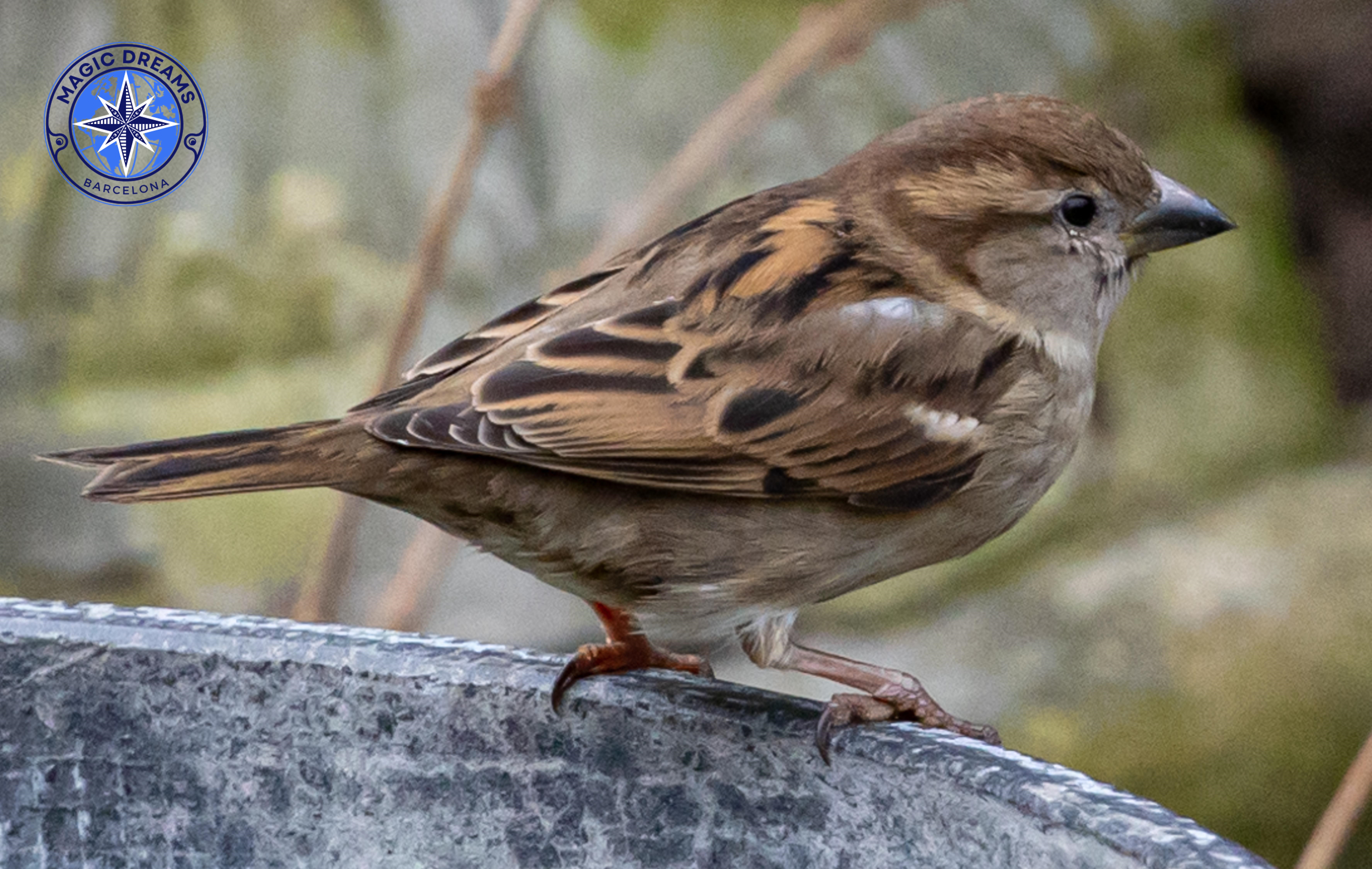
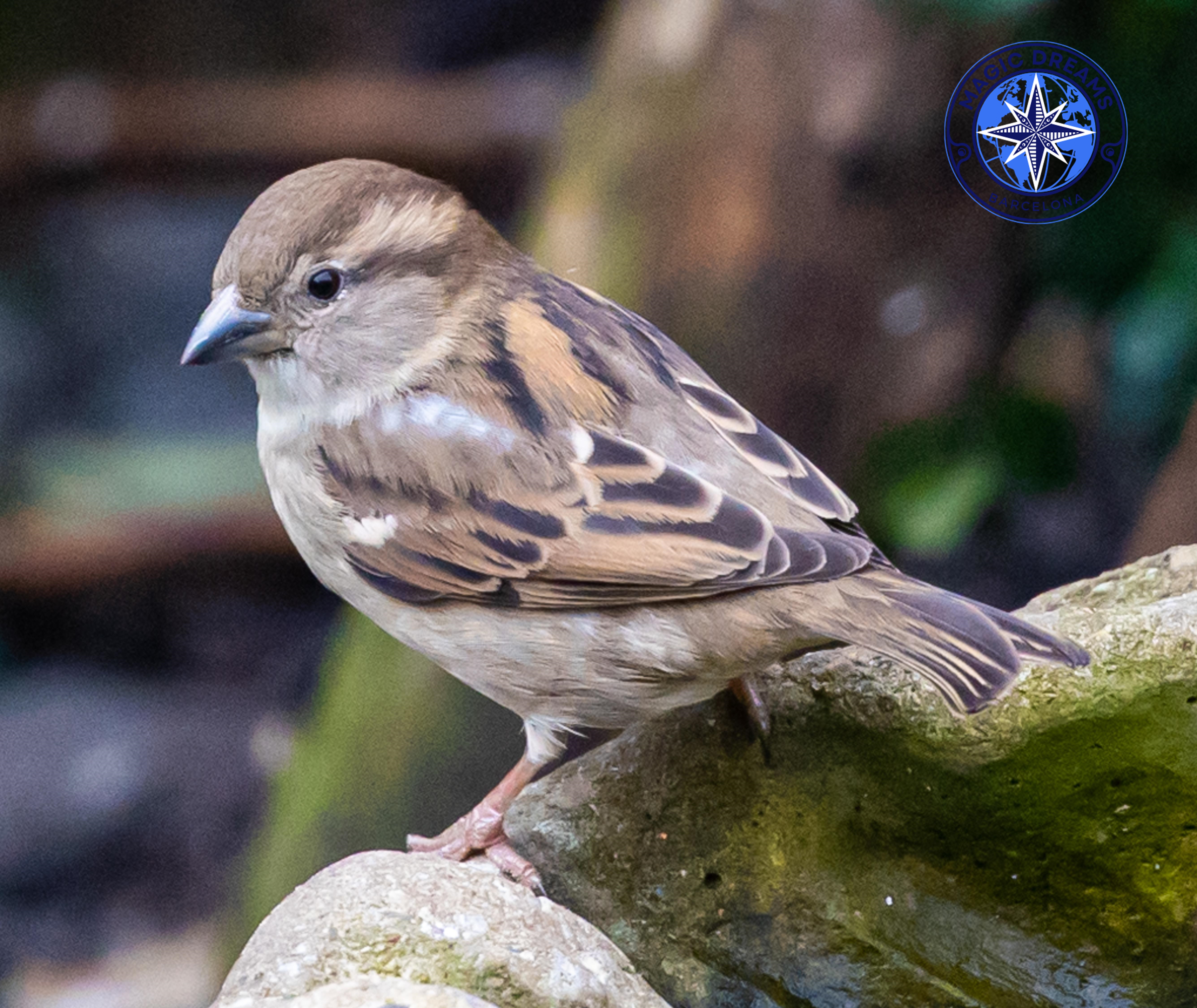
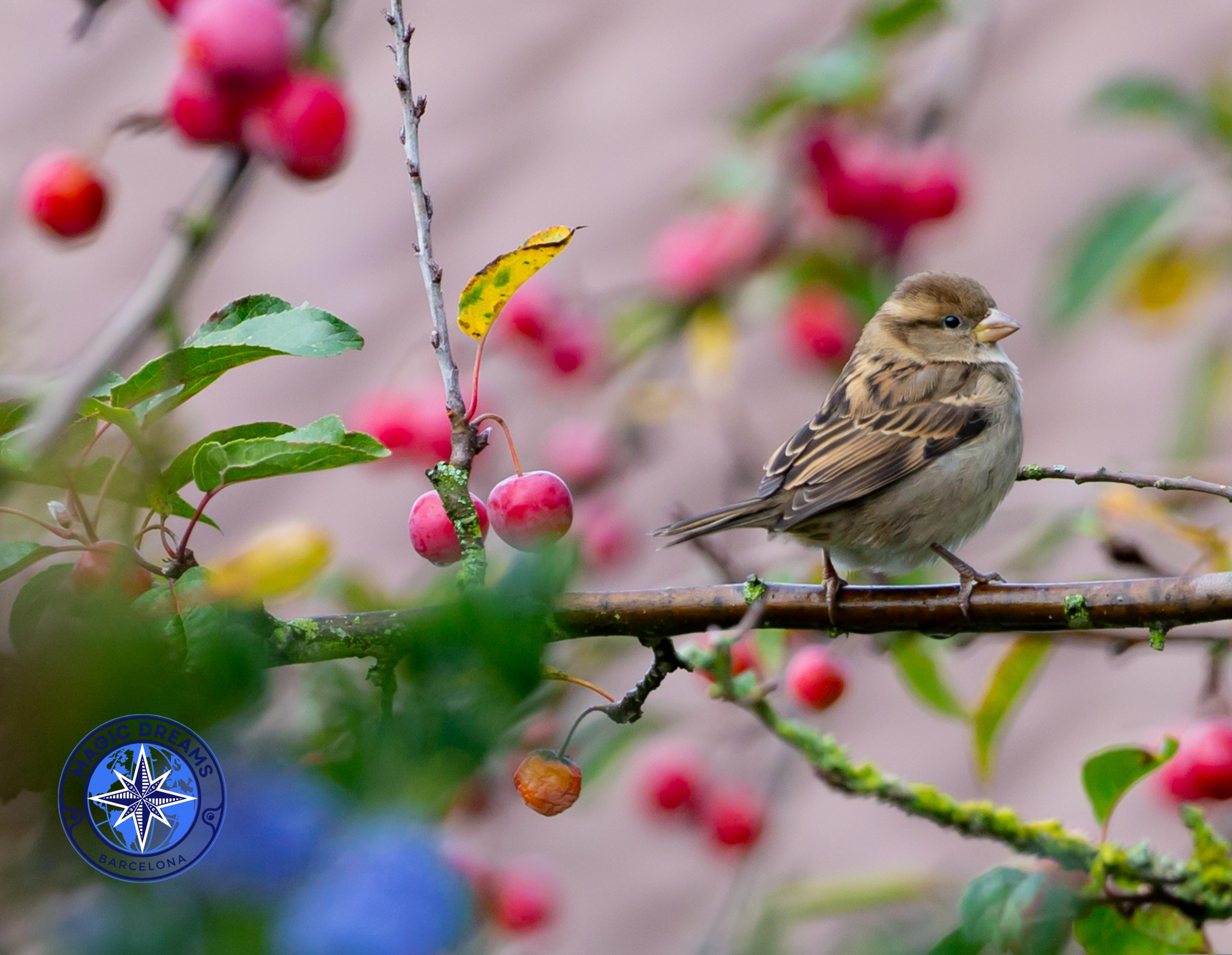
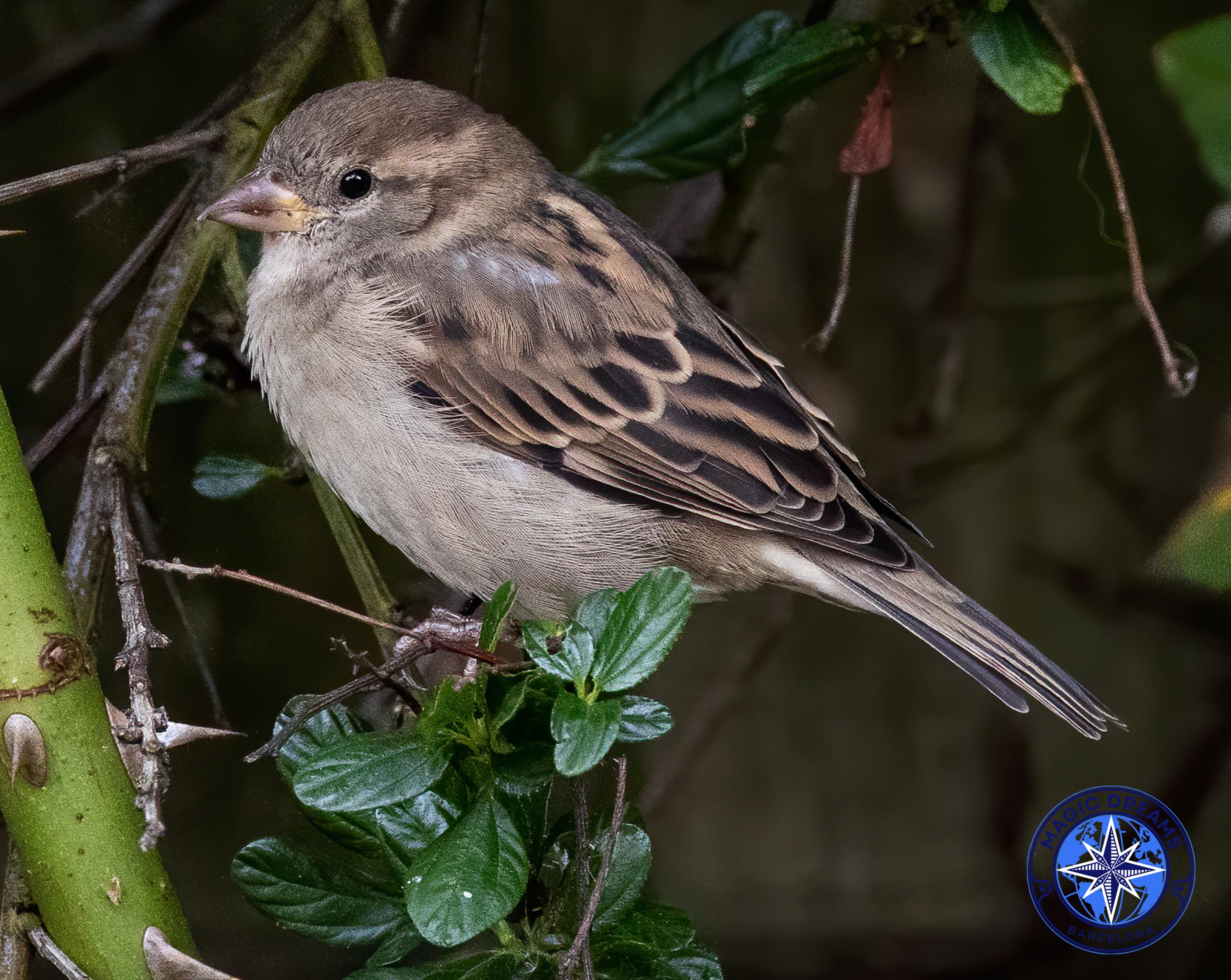
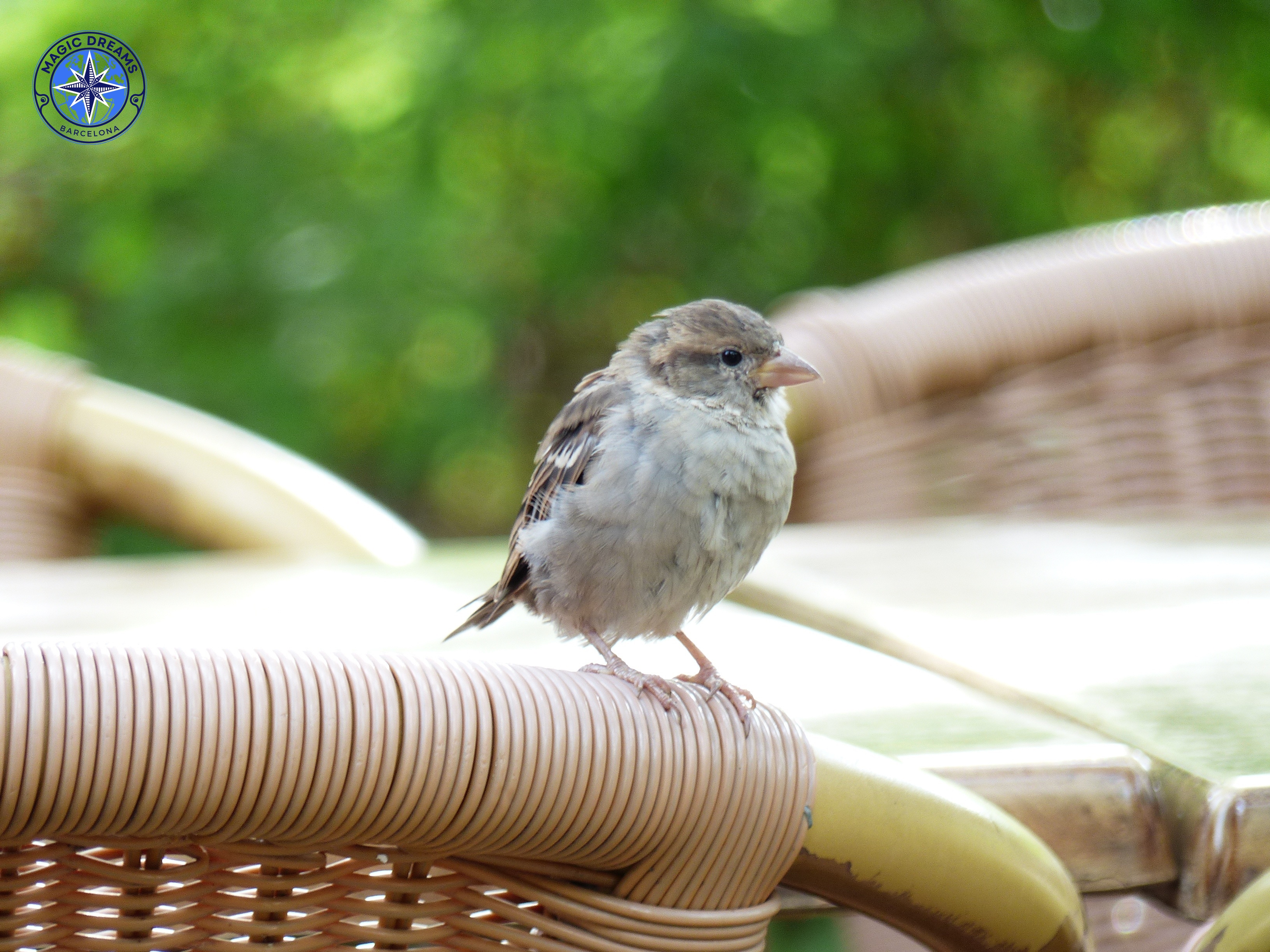
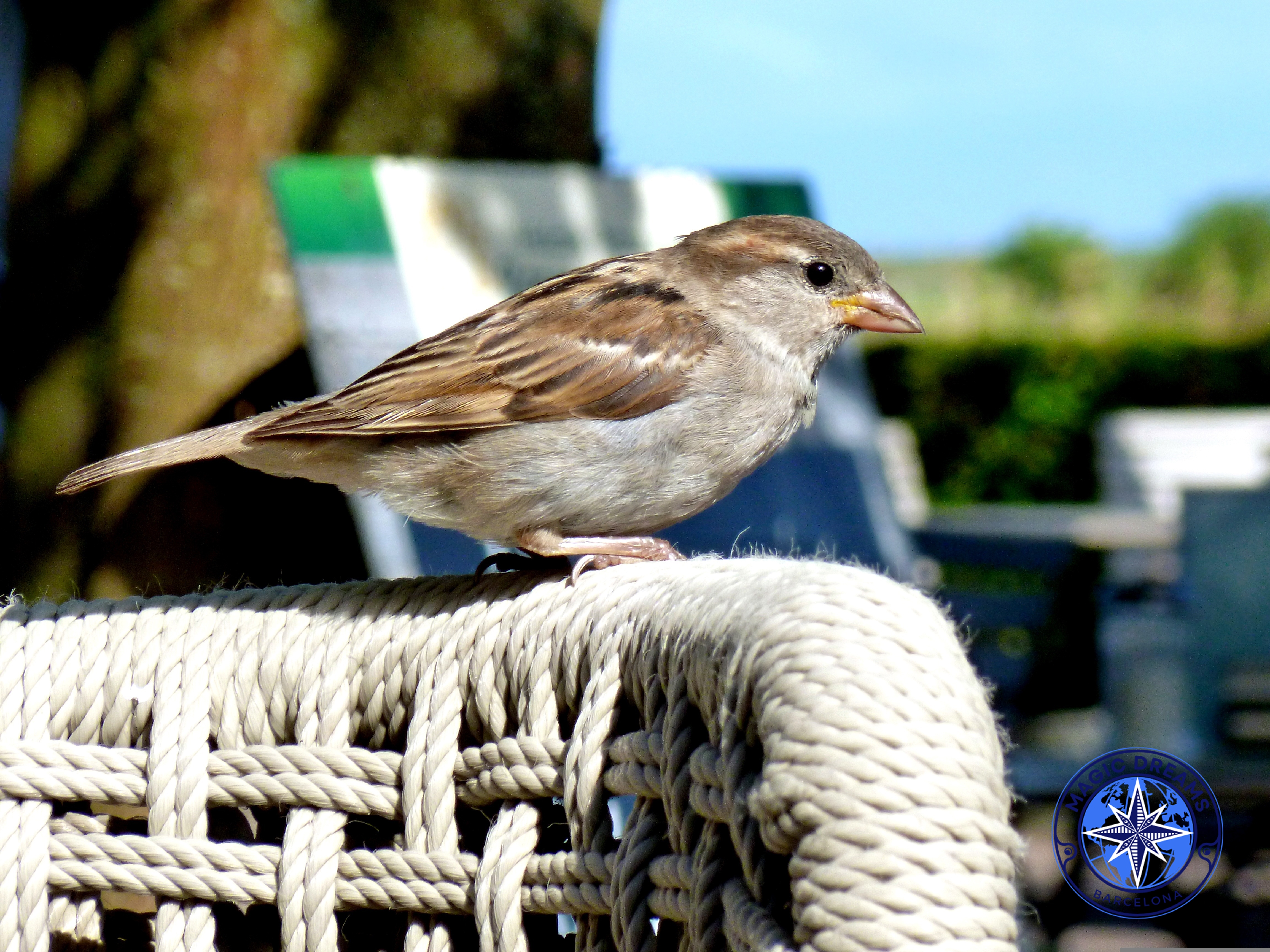
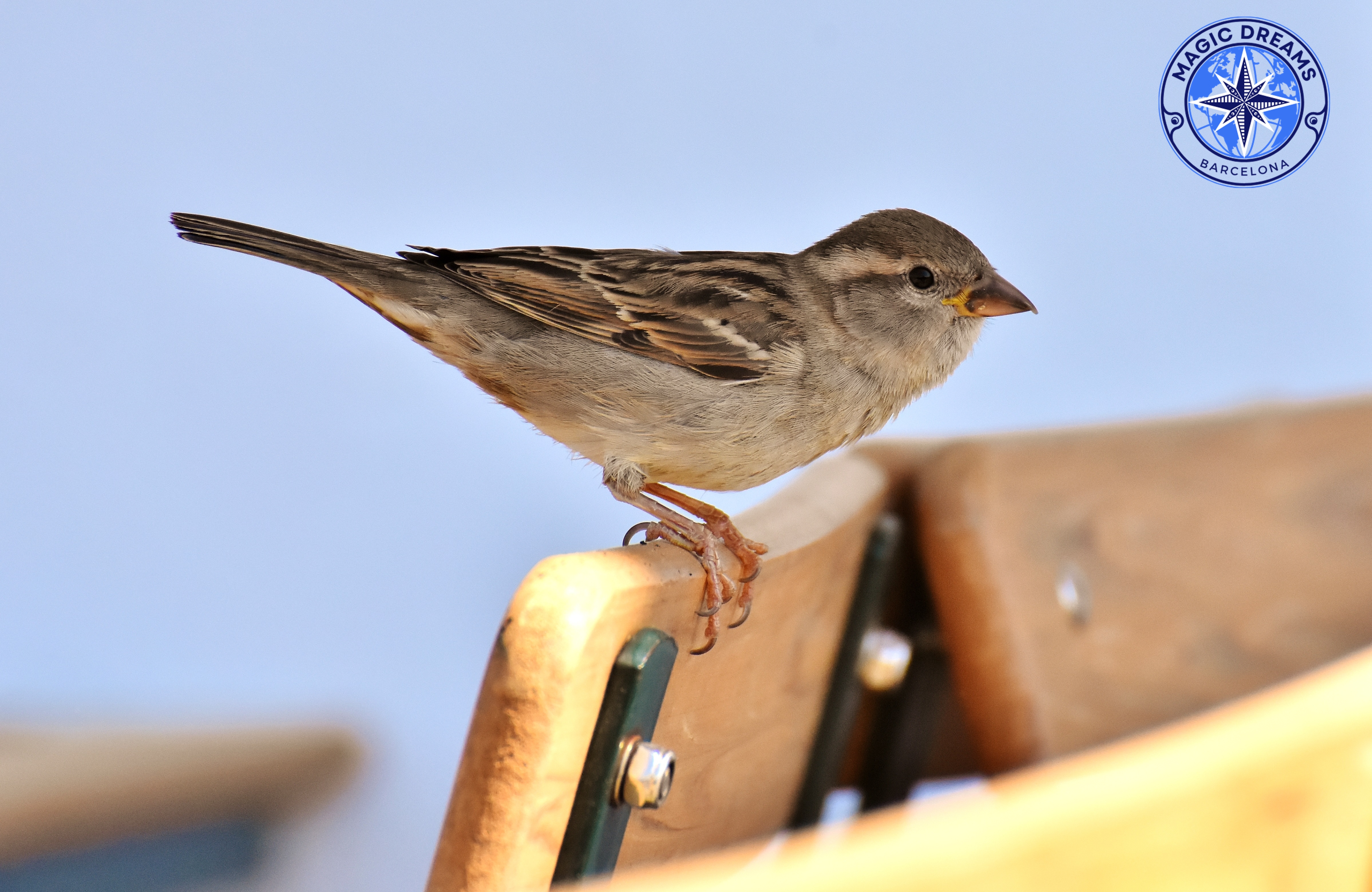
The female, on the other hand, has more understated colouring.
Its plumage is mainly brown and beige, with a pale stripe above the eye and a back marked with dark streaks.
It lacks the characteristic black bib of the adult male and the strongly defined chestnut colouring on the head.
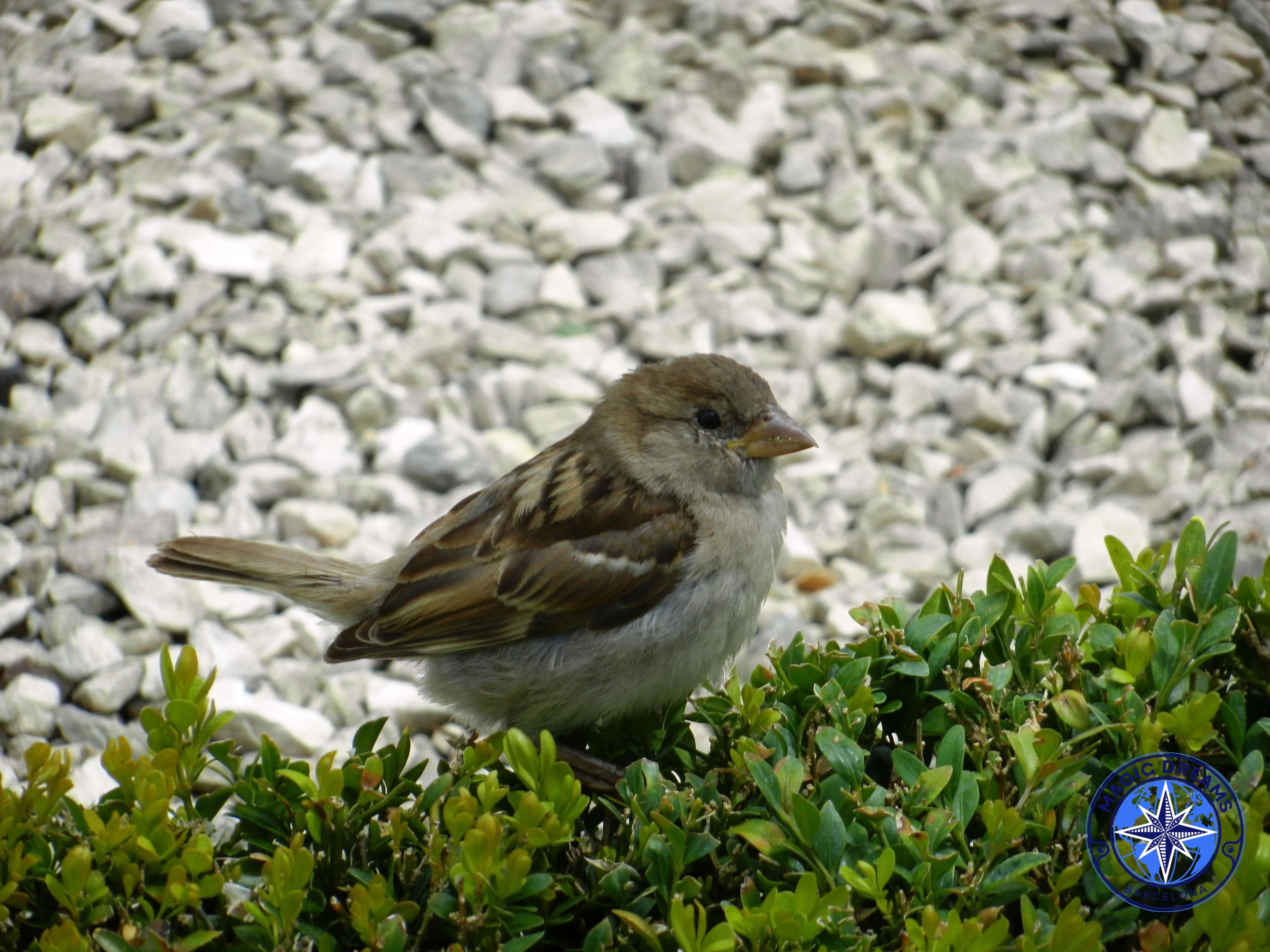
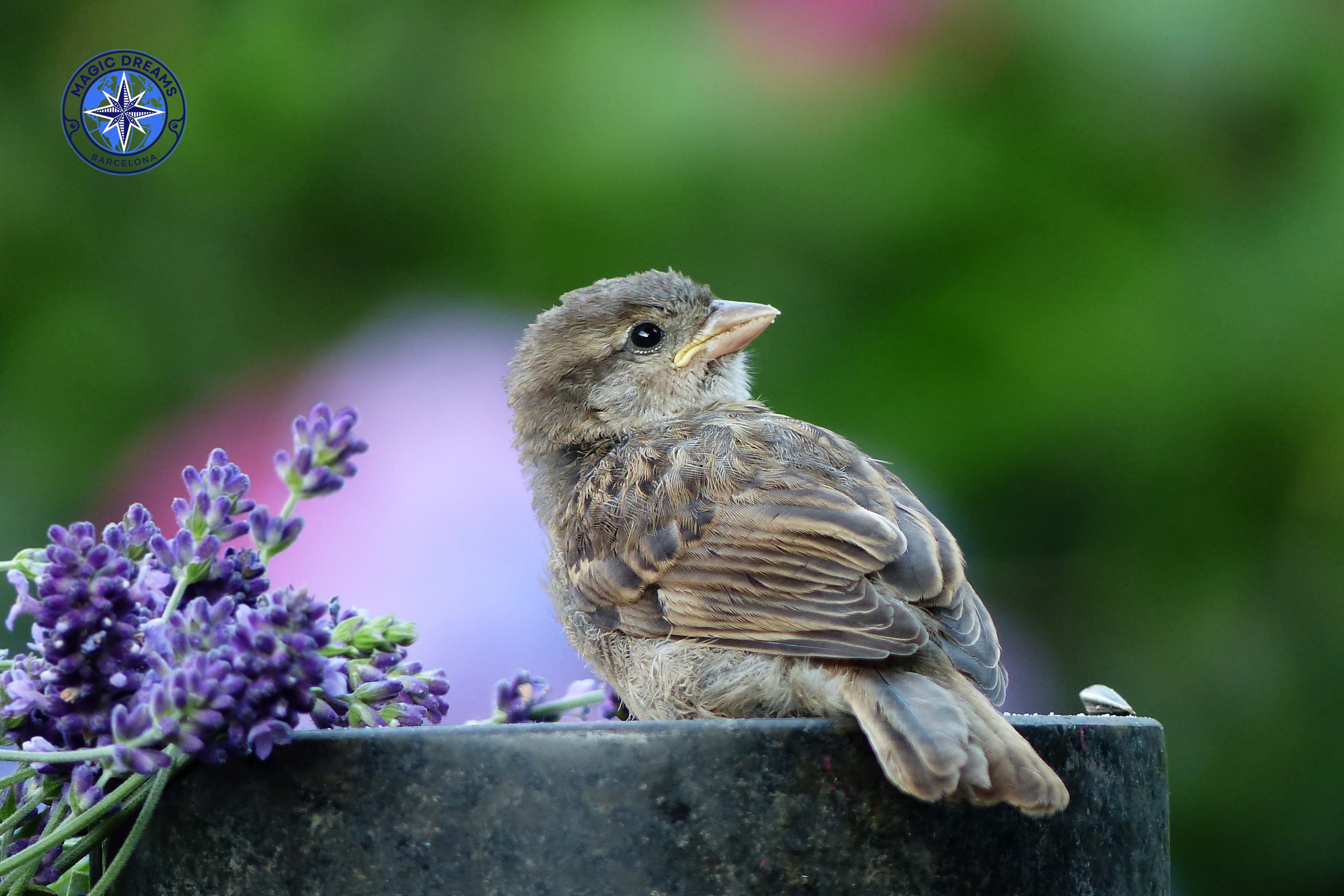
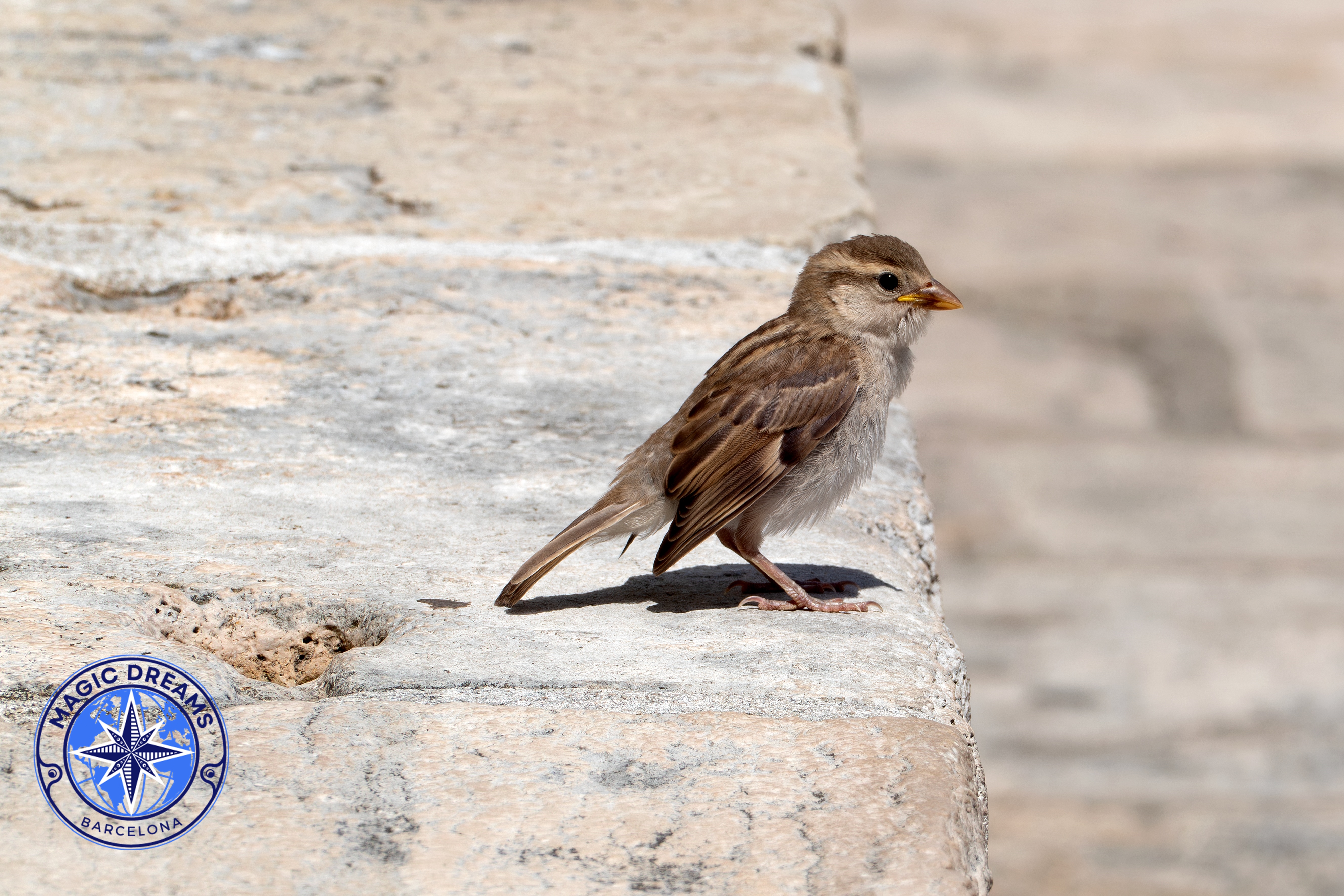
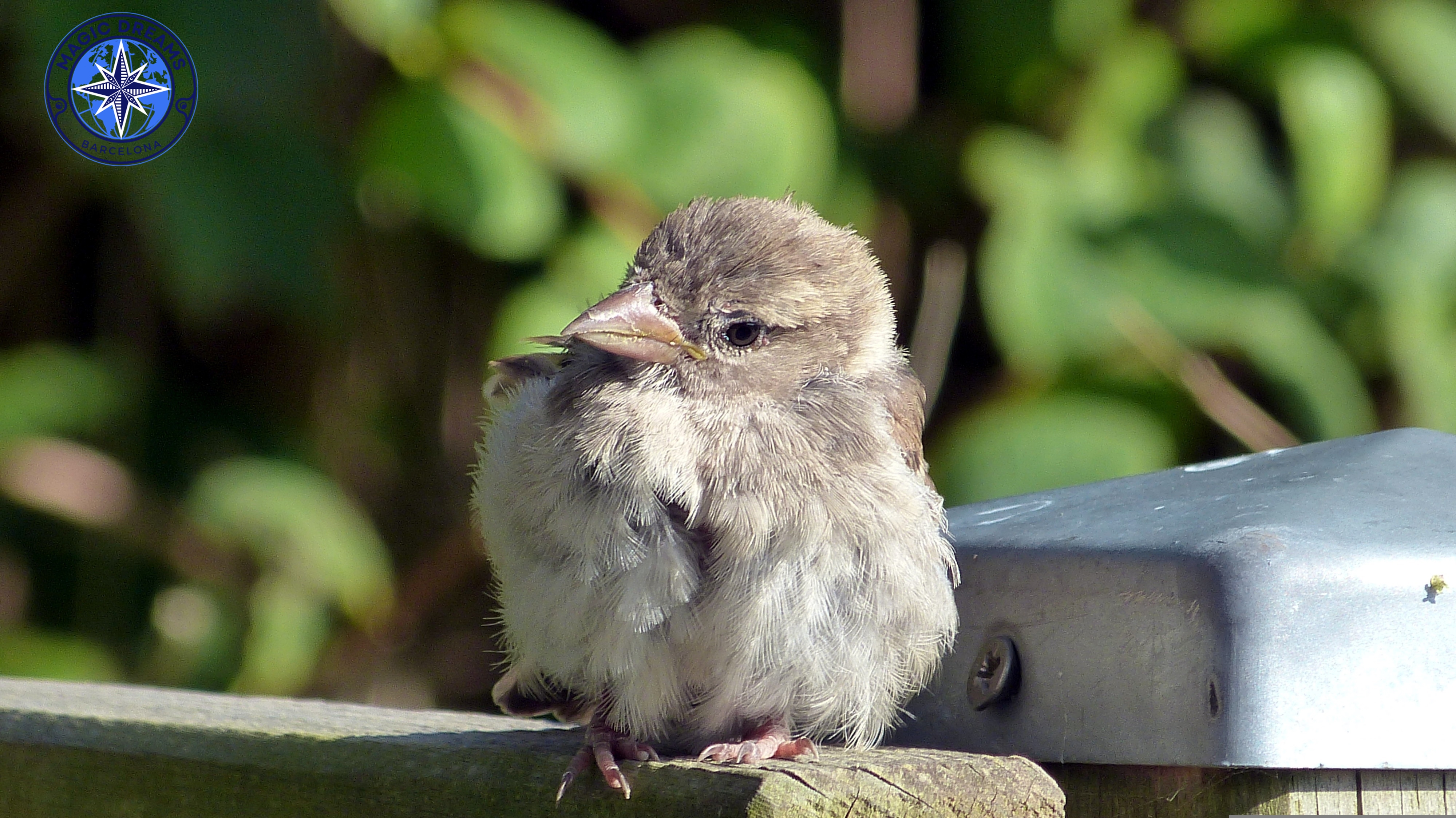
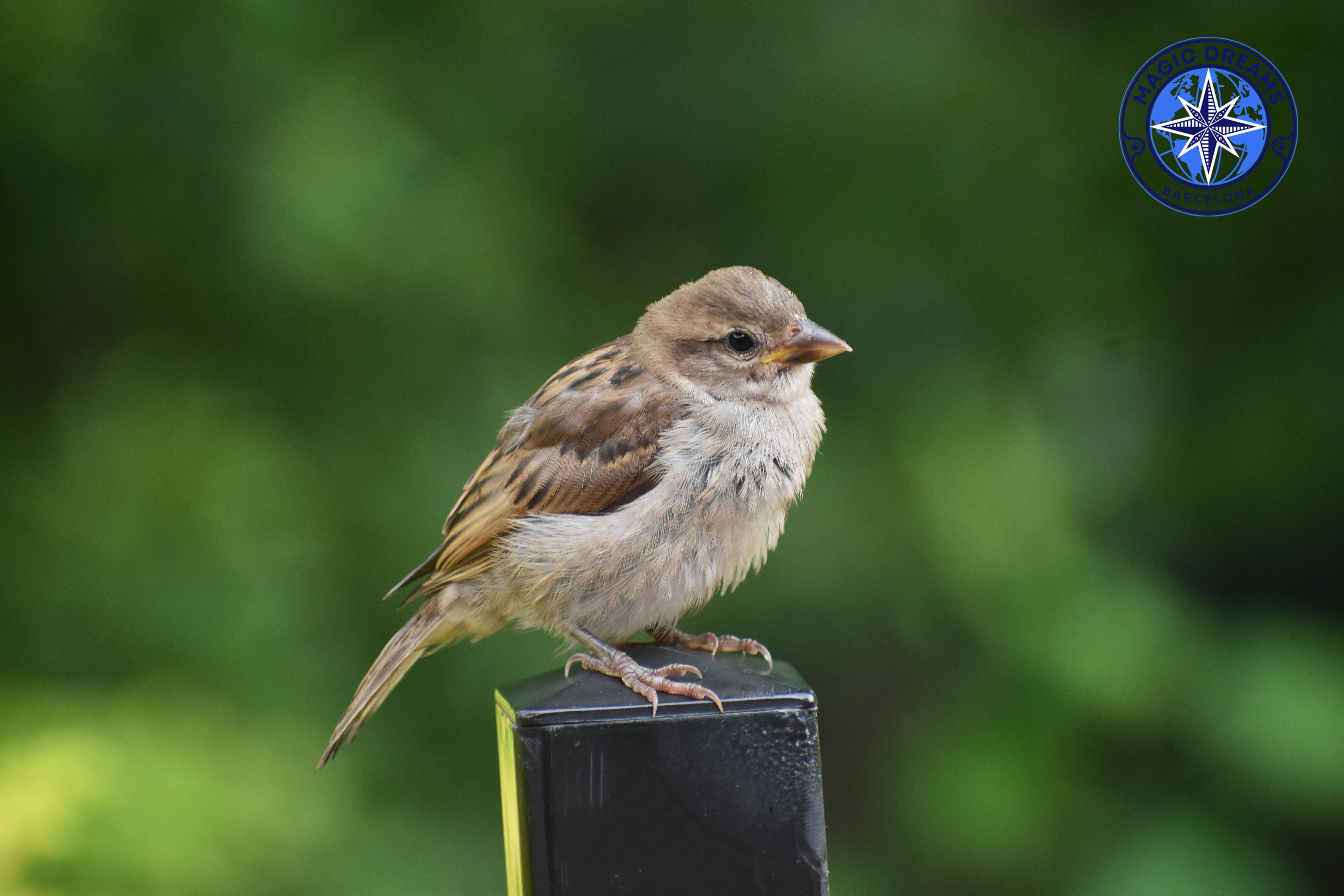
Young birds look quite similar to females, although their appearance can change as they develop.
These differences make it relatively easy to identify adult males and females when they can be observed closely.
Where does the house sparrow live?
The house sparrow has a very wide distribution and lives in numerous countries across Europe, Asia and other regions of the world where it has been introduced.
It is a species particularly associated with human settlements.
Unlike more woodland-dependent birds, such as the Eurasian blue tit, it does not need large areas of forest to establish itself.
Its presence is linked to the availability of food, buildings, trees, shrubs and places where it can build its nest.
It can inhabit:
-
Cities and towns.
-
Residential neighbourhoods.
-
Urban parks.
-
Private gardens.
-
Terraces with vegetation.
-
Vegetable gardens.
-
Farms and livestock holdings.
-
Agricultural areas.
-
Stables and warehouses.
-
Rural areas with buildings.
-
Green spaces close to homes.
Although it can also occur in natural or sparsely inhabited environments, it is generally more common in places where human structures and food resources are available.
Large areas completely lacking shelter and suitable nesting sites may be less favourable.
Where can we find house sparrows in Catalonia?
Catalonia offers a wide variety of environments where house sparrows can be observed.
Their presence is particularly associated with towns, cities, agricultural areas and places where buildings, vegetation and food are available.
Barcelona and the metropolitan area
In Barcelona and many municipalities across its metropolitan area, house sparrows can be found in parks, squares, gardens, tree-lined streets and residential neighbourhoods.
They are often seen searching for small seeds and food scraps on the ground, moving between shrubs or resting in trees and on building façades.
They may also use cavities in buildings to establish their nests.
However, not all neighbourhoods offer the same conditions.
Spaces with vegetation, shelter and suitable breeding sites may be more favourable than highly paved environments with little greenery.
Maresme and the central coastline
In Maresme and other parts of the Catalan coastline, sparrows may appear in towns, residential developments, parks, vegetable gardens and agricultural areas.
Private gardens can provide food, shelter and places to rest.
In residential areas, hedges, trees and small green spaces can be particularly valuable to this species.
Girona and the inland regions
In the regions around Girona, house sparrows can be found in both urban centres and small villages, as well as on farms.
Farms, warehouses, traditional buildings and vegetable gardens can provide suitable places to feed and breed.
In these environments, the availability of seeds and other food resources may support large groups.
Lleida and agricultural areas
The agricultural areas around Lleida offer various resources for house sparrows, particularly in rural settlements and farms with buildings and storage facilities.
They can be observed in courtyards, farmyards, livestock holdings, vegetable gardens and areas close to crops.
However, the presence of farmland alone does not guarantee large sparrow populations.
Shelter, nesting sites and a year-round food supply are also important.
Tarragona and Mediterranean environments
In Tarragona province, house sparrows occur in cities, towns, gardens, agricultural areas and residential environments.
In Mediterranean settings, trees and shrubs can provide shelter from the heat and places to rest.
Access to water can also be important during the warmer months.
The Pyrenees and Pre-Pyrenees
In the Pyrenees and Pre-Pyrenees, house sparrows can mainly be found in villages, inhabited settlements, rural areas and agricultural holdings.
Their presence is closely linked to human settlements, so they are more commonly found in villages and inhabited areas than in forests far from homes.
Altitude, climate and food availability can influence their local abundance.
Does the house sparrow migrate?
The house sparrow is a predominantly resident species throughout much of Catalonia.
This means that many individuals remain in the same municipality or its immediate surroundings all year round.
However, being a resident species does not mean that every individual always stays in exactly the same place.
Sparrows may make local movements to search for food, find shelter or take advantage of resources available in other areas.
These movements can be more noticeable in rural environments, particularly when agricultural conditions change or food becomes less available.
Some populations in other parts of Europe undertake more pronounced seasonal movements.
In Catalonia, therefore, sparrows can be observed throughout the year, although group sizes and behaviour may vary with the seasons.
During which months can we see house sparrows?
House sparrows can be observed during all twelve months of the year.
Their presence is particularly noticeable in places where they find food, shelter and suitable breeding sites.
January and February
During winter, sparrows often move around in small groups in search of food.
They are frequently seen in courtyards, parks, gardens, squares and rural areas.
At this time of year, they may gather in trees and shrubs to rest and spend the night in sheltered places.
The availability of seeds and other food becomes especially important.
March and April
As spring arrives, breeding activity increases.
Males may call more frequently, and disputes over nesting sites begin.
Pairs search for cavities, holes and other suitable places in which to build their nests.
May and June
These months often coincide with intense breeding activity.
Adults spend much of their time searching for food for their chicks.
During this period, insects become particularly important in the young birds’ diet.
We may observe adults repeatedly entering and leaving nesting sites.
July and August
During summer, family groups containing young birds may be seen.
Sparrows search for food in gardens, courtyards, agricultural areas and places where seeds and insects are available.
On hot days, shaded areas and access to water can be particularly useful.
September and October
After the breeding season, young birds continue exploring their surroundings.
In some places, larger groups may form, particularly where food resources are abundant.
They may also use fields, vegetable gardens and areas of vegetation for feeding.
November and December
During late autumn and winter, sparrows remain present in towns and cities.
They may concentrate in places where they can find food and shelter.
Dense trees, shrubs and buildings with cavities offer suitable places to rest and protect themselves from adverse weather.
When does the house sparrow breed?
The house sparrow usually breeds during spring and summer.
In Catalonia, breeding activity generally begins in spring, although it can vary according to weather conditions, food availability and the characteristics of each population.
Under favourable conditions, a pair may produce several broods during a single breeding season.
The availability of suitable nesting sites is one of the factors influencing reproductive success.
Unlike some birds that build open nests among branches, the house sparrow frequently uses cavities and sheltered spaces in buildings and other structures.
During the breeding season, the pair spends considerable time feeding and caring for its chicks.
What is the house sparrow’s courtship like?
House sparrow courtship is relatively easy to observe in places with large populations.
During spring, males may produce repeated calls and display increased activity around females.
Chases, minor confrontations and disputes over nesting sites may also occur.
Sometimes, several males gather around a female, particularly in areas where many individuals live close together.
The sparrow’s social behaviour can make these interactions quite noisy.
Its calls are part of its communication system and help individuals maintain contact within the group.
Does the house sparrow remain with the same mate for life?
One of the most interesting aspects of the house sparrow is its behaviour during the breeding season.
This small bird usually forms pairs for breeding, and both parents participate in caring for their offspring. Cooperation between the male and female is important for feeding the chicks and increasing their chances of survival.
Under certain circumstances, a pair may remain together for several breeding seasons. However, we should not assume that house sparrows necessarily stay with the same mate throughout their lives.
Although this species has a predominantly monogamous mating system, changes of mate and extra-pair matings can also occur.
Do both parents care for their chicks?
Yes. Both the male and the female participate in parental care.
After hatching, the chicks need to be fed frequently to grow and develop. During this period, both parents contribute to feeding them.
Cooperation between the adults is particularly important while the chicks remain in the nest.
Once the young birds leave the nest, their parents may continue feeding them for a time, until they become more independent.
Why is the sparrow associated with love and fidelity?
The behaviour of birds that form pairs and cooperate in raising their offspring has inspired numerous symbolic interpretations throughout history.
In the case of the sparrow, its life alongside people and the everyday scenes of courtship, nesting and feeding chicks have contributed to its association with companionship and family life.
For this reason, some cultural interpretations use the sparrow as a symbol of love, companionship and unity.
However, it is important to distinguish symbolism from biological behaviour: although sparrows can maintain pair bonds, there is no rule requiring them to remain together for life.
Their reproductive behaviour is influenced by biological and environmental factors, rather than by a human concept of fidelity.
Observing a pair of sparrows building a nest or feeding their chicks allows us to discover one of the most interesting aspects of this small bird: cooperation between parents during reproduction.
How many chicks does a house sparrow have?
The house sparrow can produce several broods during a breeding season.
Each clutch usually contains approximately 3–7 eggs, although the number can vary according to the female, the time of year and environmental conditions.
The eggs are generally whitish or greyish, with irregularly distributed dark markings.
Incubation lasts around 10–14 days.
Both parents participate in reproductive activities, including feeding the chicks.
After hatching, the young remain in the nest while they grow and develop their feathers.
Chicks usually leave the nest at approximately two weeks of age, although they still need parental care and feeding for some time afterwards.
Chick survival depends on several factors, including food availability, weather conditions and the risk of predation.
Where does the house sparrow build its nest?
The house sparrow takes advantage of a wide variety of sheltered spaces in which to build its nest.
Although it can nest in vegetation, it is particularly well known for using cavities in buildings and other human-made structures.
It may nest in:
-
Holes in walls.
-
Cavities beneath roof tiles.
-
Spaces under eaves.
-
Cracks and holes in buildings.
-
Cavities in trees.
-
Holes in rural structures.
-
Farm and warehouse buildings.
-
Suitable nest boxes.
-
Other sheltered spaces that it can access.
The nest is usually built from dry grass, small twigs, plant fibres, feathers and other available materials.
Its shape can be rather untidy, especially when it occupies a large cavity.
The main purpose is to create a sheltered space where the eggs can be incubated and the chicks kept protected.
The availability of suitable cavities is important for the species.
When buildings are renovated and all cavities are sealed, some traditional nesting sites may disappear.
For this reason, preserving suitable spaces for birds can help maintain their breeding opportunities, provided this is done without compromising building safety or hygiene.
What type of nest box does a house sparrow need?
The house sparrow can use enclosed nest boxes with an entrance hole, provided their dimensions are suitable.
However, the design should be adapted to the available space and the conditions of the surrounding environment.
A suitable nest box should offer:
-
Protection from rain.
-
Adequate ventilation.
-
A safe interior.
-
Durable, non-toxic materials.
-
An appropriately sized entrance hole.
-
Protection against predators.
-
A quiet, sheltered location.
In places where many sparrows live, nest boxes with several compartments can be useful because this species is sociable and may breed close to other pairs.
However, not every box will necessarily be occupied.
Food availability, competition with other birds and the presence of natural cavities all influence whether a nest box is used.
Sparrows may also occupy nest boxes intended for other species.
It is therefore advisable to choose the box design and location according to the birds already present in the area.
Where should you place a sparrow nest box?
The location of a nest box can have a considerable influence on the likelihood of it being occupied.
In a garden or courtyard in Catalonia, it can be installed on a wall, a stable structure or a suitable tree.
Choose a location that is:
-
Quiet and relatively undisturbed.
-
Protected from rain.
-
Sheltered from direct sunlight during the hottest hours.
-
Out of reach of cats.
-
Clear of obstructions at the entrance.
-
Safe from potential predators.
You should also avoid places where the box could become excessively hot during summer.
If you install several boxes, consider the available space and the presence of other territorial birds.
Once a box is occupied, avoid disturbing it during the breeding season.
Do not open it to check for eggs or chicks, as disturbance can harm the breeding pair.
Observe the nest from a safe distance.
Which plants can we grow to attract house sparrows?
If we want to encourage house sparrows in our gardens, we should not focus exclusively on bird feeders.
A more comprehensive approach is to create an environment that provides food and shelter throughout the year.
We can combine trees, shrubs, flowering plants and small areas of spontaneous vegetation.
The aim is to encourage:
-
A natural supply of insects.
-
Seed availability.
-
Seasonal fruits.
-
Places to shelter.
-
Resting areas.
-
Protective vegetation.
-
Overall biodiversity in the garden.
Holm oak
The holm oak is a characteristic tree in many Mediterranean environments in Catalonia.
Its branches can provide shelter and resting places.
In addition, a mature tree offers a complex plant structure that can support a variety of organisms.
Cork oak
Where environmental conditions are suitable, the cork oak can help create a tree-covered space that supports biodiversity.
Like other trees, it can also benefit birds that use trees for shelter or feeding.
Carob tree
In certain Mediterranean gardens, the carob tree can be an interesting choice if there is enough space and the climate is suitable.
As with other trees, its value to birds depends on the range of resources it provides and the vegetation growing around it.
Native shrubs
Shrubs can provide shelter from the wind, resting places and protection from some predators.
If they also produce fruit or encourage insects, they can help improve habitat quality.
It is advisable to choose species adapted to the particular area of Catalonia where the garden is located.
Flowering plants
Flowering plants can encourage insects, especially during spring and summer.
Although adult sparrows consume a significant amount of seed, they need to provide insects to their chicks during the breeding season.
For this reason, a garden that supports biodiversity may be more useful than one consisting solely of paved surfaces and closely mown lawn.
A garden with insects is also a garden for sparrows
The house sparrow has a varied diet.
Adults mainly eat seeds and other plant-based foods, but insects become particularly important when feeding their chicks during the breeding season.
The resources they may use include:
-
Small insects.
-
Larvae.
-
Wild seeds.
-
Cereal grains.
-
Plant shoots.
-
Available fruits.
-
Other foods found in their surroundings.
For this reason, a garden treated intensively with insecticides may offer fewer food resources for birds.
We should not regard all insects as harmful organisms.
Many play a role in the ecological processes that maintain a garden’s balance.
Reducing chemical use, preserving vegetation and encouraging a variety of plants can benefit wildlife as a whole.
Insects are particularly important when feeding chicks.
What does the house sparrow eat?
The house sparrow is an omnivorous bird, although its diet contains a substantial proportion of seeds and other plant-based foods.
Its diet depends on the season and the resources available.
It may eat:
-
Seeds from wild plants.
-
Cereal grains.
-
Grass seeds.
-
Small insects.
-
Larvae.
-
Plant shoots.
-
Fruit.
-
Crumbs and other food scraps found in human environments.
In agricultural areas, it may take advantage of seeds and grains available around crops.
In towns and cities, its diet may include a wider variety of foods found in parks, courtyards and other inhabited spaces.
However, the fact that sparrows can eat food scraps does not mean that all scraps are suitable.
A diet based on processed foods can be nutritionally unbalanced.
Therefore, if we want to help sparrows, we should prioritise maintaining an environment that provides natural food resources.
What can we feed them in our gardens?
If we decide to provide supplementary food, we should do so in moderation and use products suitable for wild birds.
Depending on the conditions, we can offer small quantities of:
-
Suitable wild-bird seed mixes.
-
Millet.
-
Canary seed.
-
Other seeds included in mixes specifically designed for seed-eating birds.
-
Commercial foods suitable for small birds.
Avoid salty, seasoned or highly processed products.
You should also avoid food that is spoiled, mouldy or has remained wet for too long.
Food should be placed in a clean, safe location where cats and other predators cannot easily ambush the birds.
Remove accumulated leftovers to prevent microorganisms from multiplying and rodents from being attracted.
The aim is to supplement their natural diet, not replace it.
Can we feed bread to sparrows?
Although sparrows may peck at bread crumbs, bread is not recommended as a regular food source.
Bread does not provide a complete diet and can displace other foods with better nutritional value.
It can also deteriorate quickly when wet, creating hygiene problems where it is offered.
It is preferable to use suitable wild-bird seed and maintain an environment where sparrows can find natural food.
In many gardens, vegetation, seed-producing plants and small insects already provide useful resources.
What about water?
Water is an important resource for sparrows, particularly during hot periods.
In Catalonia, summer can bring high temperatures and periods of low rainfall.
A small birdbath can provide water for drinking and, if designed appropriately, for bathing.
It should meet a few basic requirements:
-
Be shallow.
-
Have a stable surface.
-
Allow birds to enter and leave easily.
-
Be placed in a relatively quiet location.
-
Provide enough visibility for birds to detect predators.
-
Be kept clean.
-
Have its water changed frequently.
There is no need to install a large fountain.
A simple container can be sufficient, provided birds can access the water without the risk of drowning.
You should also prevent the water from remaining stagnant for long periods.
Feeder and birdbath hygiene is essential
When different birds use the same feeder or birdbath, the risk of disease transmission can increase.
For this reason, hygiene is an important part of any effort to encourage birds into a garden.
It is advisable to:
-
Clean feeders regularly.
-
Remove leftover food.
-
Prevent seeds from becoming damp.
-
Replace the water frequently.
-
Clean the birdbath.
-
Remove accumulated droppings.
-
Avoid excessive concentrations of food.
-
Temporarily stop feeding if you notice sick birds or an unusual accumulation of weakened individuals.
Feeders should be placed in safe locations and kept in good condition.
A space designed to help birds should also be a clean space.
How can we protect sparrows from cats?
Domestic cats that are allowed outdoors can pose a risk to many small birds.
Sparrows often search for food on the ground and move between shrubs and vegetation, which can expose them to attacks.
To reduce this risk, design the garden so that birds have places to shelter.
Some precautions include:
-
Avoid placing feeders where cats can hide and ambush birds.
-
Position birdbaths in open spaces with good visibility.
-
Ensure that nest boxes cannot easily be reached from nearby branches or structures that predators could use.
-
Maintain areas of vegetation that provide shelter without creating ambush points immediately beside feeders.
-
Avoid leaving food scattered on the ground for long periods.
It is also advisable to keep domestic cats under control and, where possible, limit their access to areas where birds gather.
Safety should be an integral part of designing a wildlife-friendly garden.
What can we grow in a Catalan garden to attract sparrows?
A Mediterranean garden can provide useful resources for sparrows if it combines different types of vegetation.
You do not need a particularly large area.
What matters is that the space provides food, shelter and places where birds can rest.
Trees
Holm oaks, carob trees and other species suited to the local area can provide shade and resting places.
Mature trees offer particularly valuable structures for wildlife.
Shrubs
Dense shrubs can provide shelter from the wind and protection from adverse weather.
They can also serve as resting areas and allow birds to move between different parts of the garden.
Seed-producing plants
Plants that produce seeds can provide a natural food supply.
Maintaining small areas of spontaneous vegetation can support food resources that disappear when every surface is kept excessively tidy or free of plants.
Flowering plants
Flowers can encourage insects, which are particularly important during breeding.
A greater variety of plants can help maintain food resources at different times of the year.
Hedges and varied vegetation
A garden that combines trees, shrubs and low-growing plants offers more opportunities than an area consisting solely of lawn.
Hedges can provide shelter and help birds move between different parts of the garden.
Natural areas
You do not need to remove all spontaneous vegetation to maintain a well-kept garden.
Leaving a few corners with plants adapted to the surroundings can support biodiversity and provide food for different species.
House sparrows and the seasons
Observing sparrows throughout the year helps us better understand their behaviour and needs.
Although they generally remain in Catalonia during every season, their activity changes according to the breeding cycle and environmental conditions.
Spring
Spring is one of the most important times of year for the species.
Breeding activity increases, and pairs search for suitable nesting sites.
Adults need to find enough food to support their chicks.
Summer
During summer, adults feeding chicks and groups of young birds can be observed.
Shaded areas and water sources can be particularly useful during hot weather.
Autumn
After breeding, sparrows continue searching for food in gardens, parks, fields and inhabited areas.
Groups may gather where seeds and other food resources are plentiful.
Winter
Sparrows remain present in towns and cities throughout winter.
At this time of year, the availability of food and sheltered spaces can influence where they congregate.
Dense shrubs, trees and cavities in buildings can provide places to rest and shelter.
Why do sparrows visit our gardens?
The main reason is the availability of resources.
Gardens can offer a combination of features that is particularly attractive to a species accustomed to living alongside people.
These include:
-
Seeds.
-
Small insects.
-
Water.
-
Trees.
-
Shrubs.
-
Resting places.
-
Shelter.
-
Cavities for nesting.
-
Spaces protected from adverse weather.
Gardens can also connect different green spaces within towns and cities.
A small courtyard with vegetation can form part of a network of places used by birds to move around, feed and rest.
However, not all gardens are equally favourable.
Completely paved spaces without vegetation or shelter may provide fewer resources.
For this reason, preserving trees, maintaining some shrubs and encouraging a natural supply of seeds and insects can improve the environment.
The house sparrow’s song
The house sparrow has a relatively simple repertoire of sounds, although it is highly recognisable.
Its most characteristic call consists of a series of short, repetitive notes.
When several individuals gather in the same place, their calls can create a fairly noisy chorus.
They are often heard in trees, hedges, on rooftops and in other places where they rest or congregate.
During the breeding season, males may increase their vocal activity.
Their sounds serve different communication purposes, including maintaining contact within the group and facilitating reproductive interactions.
Sometimes, we can hear a colony of sparrows before we manage to spot the birds themselves.
The house sparrow in Catalonia
In Catalonia, the pardal comú is a species closely associated with human environments.
It can be found in numerous towns and cities, as well as in gardens, parks, vegetable gardens, farms and agricultural areas.
Its presence depends largely on food availability and the existence of suitable places to shelter and breed.
In metropolitan areas, it may occupy green spaces and buildings with cavities.
In villages and rural areas, it can take advantage of the resources available in courtyards, warehouses, farms and traditional buildings.
In agricultural environments, the presence of seeds and grains can be important, although sparrows also need shelter and places to build their nests.
The conservation of this species therefore depends not only on maintaining green spaces but also on providing a combination of food, shelter and breeding opportunities.
The house sparrow in the rest of Spain
Outside Catalonia, the house sparrow is widely distributed throughout Spain.
It can be found in cities, towns, agricultural areas and other environments associated with human activity.
Its abundance varies according to local conditions.
In some places it is very common, while in others it may be less abundant.
The availability of suitable nesting cavities, vegetation and food resources can influence its presence.
It is also important to recognise that populations can develop differently depending on local conditions.
Therefore, although the house sparrow remains one of Spain’s best-known birds, we should not assume that every population is stable.
The house sparrow in Europe
The house sparrow has a very wide distribution throughout Europe.
It is closely associated with human settlements and has historically taken advantage of resources available in towns, cities and agricultural holdings.
However, European populations differ considerably in their abundance and trends.
Declines have been recorded in some areas, particularly in certain urban environments.
These changes may be linked to several factors, including changes in the urban environment, food availability and the loss of nesting sites.
The situation is not the same in every country or city.
For this reason, it is important to monitor local populations and preserve the environmental features that support their reproduction and survival.
What threats does the house sparrow face?
Although the house sparrow remains common in countless places, some populations have experienced significant declines.
Its regular presence does not mean that it is free from problems.
Factors that can affect its populations include:
-
Loss of suitable nesting sites.
-
Sealing of cavities in buildings.
-
Renovations that remove cavities used by birds.
-
Reduction of urban vegetation.
-
Reduced insect availability during the breeding season.
-
Intensive insecticide use.
-
Changes in agricultural landscapes.
-
Shortage of shelter.
-
Predation by cats.
-
Lack of suitable green spaces in certain urban environments.
Building renovations can have important consequences when they eliminate holes that sparrows use for breeding.
Similarly, urban environments with little vegetation may offer fewer opportunities to find food and shelter.
A decline in insects can also affect chick nutrition during the breeding season.
It is therefore advisable to combine the preservation of nesting sites with measures that support biodiversity.
Can we help house sparrows from our gardens?
Yes.
And you do not need a large garden.
Even a small terrace with plants or a courtyard with vegetation can help improve local conditions, although the opportunities will depend on the space available.
We can start with a few simple changes.
1. Keep trees and shrubs
Where they are safe, preserve mature trees and shrubs that provide shelter.
Vegetation offers resting places and can encourage the presence of insects and seeds.
2. Grow plants suited to the local environment
In Catalonia, choose plants appropriate for the climate and the characteristics of your municipality.
Prioritise varied vegetation that provides shelter and food resources.
3. Reduce insecticide use
Insects are particularly important for feeding chicks.
Avoiding unnecessary chemical treatments can help support garden biodiversity.
4. Preserve nesting sites
Where possible and safe, retain suitable cavities used by birds.
If you are planning building renovations where sparrows nest, check beforehand whether occupied nests are present and seek advice on applicable protection measures.
5. Install a suitable nest box
A properly designed nest box can provide an alternative when natural cavities are scarce.
It should be installed in a safe location and left undisturbed during the breeding season.
6. Provide water
A small birdbath can be useful during hot periods.
Keep it clean and replace the water frequently.
7. Maintain good hygiene
Clean feeders and birdbaths and remove food scraps.
Prevent food from accumulating or remaining wet for too long.
8. Protect birds from cats
Avoid placing feeders and nest boxes where cats can easily reach them.
Safety should be part of the garden’s design.
9. Avoid excessive tidiness
Leaving some corners with spontaneous vegetation can encourage seeds and insects.
A garden does not need to be completely cleared of vegetation to look well maintained.
10. Observe the birds
Recording sparrow sightings, behaviour and seasonal changes can help us better understand the wildlife in our surroundings.
Continued observation can also help identify changes in local abundance.
Which nest box is best for the house sparrow?
The best option is generally an enclosed nest box with a suitable entrance hole and a sufficiently spacious interior.
The design should be appropriate for small passerine birds and made from durable, non-toxic materials.
It is also important to provide adequate protection from rain and sufficient ventilation.
The box should be installed where adults can access it easily and predators have little opportunity to reach the nest.
In places where sparrows are abundant, designs with several compartments may be particularly useful.
However, before installing a nest box, consider which species already use the area.
Sparrows can compete with other small birds for nesting sites.
If your aim is to encourage biodiversity throughout the garden, choose the box type and location according to the species present.
And there is one fundamental rule:
Once the box is occupied, do not open it during the breeding season to check for eggs or chicks.
Observe the nest from outside without causing disturbance.
A garden for sparrows can also attract other birds
Measures that benefit the house sparrow can also help other species.
A garden with trees, shrubs, flowers, seeds, insects, water and sheltered spaces can become a small haven for biodiversity.
Depending on the area of Catalonia and the characteristics of the garden, you may also see:
-
Eurasian blue tits.
-
Great tits.
-
European robins.
-
Common blackbirds.
-
Warblers.
-
European goldfinches.
-
European serins.
-
White wagtails.
-
Other birds commonly found in urban and rural environments.
Each species uses its surroundings differently.
While sparrows often search for food on the ground and in open areas, other birds may concentrate on branches, leaves, shrubs or flowers.
Combining different types of vegetation can provide resources for a wider variety of species.
A garden designed to support biodiversity should therefore not focus exclusively on attracting a single bird.
The aim should be to create a space where different animals can find food, shelter and opportunities to live.
The sparrow as an indicator of urban biodiversity
The house sparrow is common in many human-modified environments, but its presence should not be taken for granted.
Regular sightings in a garden may indicate that some useful resources are available.
If we see sparrows searching for seeds, feeding among vegetation or entering a cavity with food for their chicks, it means the environment provides at least some of the things they need.
However, the presence of sparrows alone cannot determine the overall state of biodiversity.
To assess the quality of a space more accurately, we should also consider other species, plant diversity, food availability and the presence of shelter.
Furthermore, changes in sparrow numbers may be linked to different factors that are not always immediately obvious.
Observing them over time can therefore be an interesting way to learn more about changes in our surroundings.
The goal is not simply to get a bird to visit our garden.
It is to create a space where it can find food, water, shelter and suitable places to breed.
The house sparrow, a small inhabitant of Catalonia
The house sparrow is much more than one of the best-known birds in our towns and cities.
It is a sociable, adaptable species closely associated with human environments.
In Catalonia, it can be found in Barcelona and its metropolitan area, in the towns of Maresme, in the cities of Girona and Tarragona, in the agricultural areas of Lleida and in numerous inhabited settlements throughout the Pyrenees and Pre-Pyrenees.
Its presence is linked to food availability, vegetation and the places where it can shelter and reproduce.
Although it remains common in many places, some populations have experienced declines, making it important not to take its future presence for granted.
We can help this species through simple measures: preserving trees and shrubs, encouraging a natural supply of insects, maintaining clean water sources and protecting nesting sites.
We can also reduce insecticide use and avoid unnecessary removal of spaces used by birds during building renovations.
We do not need to transform our garden into a large natural habitat.
Sometimes, keeping a corner with vegetation, preserving a suitable nesting cavity or providing water during summer can help improve local conditions.
The next time you see a small bird with a brown back, greyish underparts and quick movements hopping around a square or garden, take a moment to observe it.
You are probably looking at a house sparrow, the pardal comú of Catalonia.
And if it regularly appears in your garden, it may have found something essential to this small bird: food, shelter, safety and a place to live and reproduce.







Copyright © 2016-2026 Magic Dreams Barcelona.