Rovellons in Catalonia. History, Tradition, Forests, Harvesting Season and Catalan Cuisine.

The rovelló is one of the great protagonists of autumn in Catalonia. This highly prized wild mushroom is part of a deeply rooted tradition connected to the Catalan landscape: going into the forest with a basket, walking among pine trees, observing the ground and searching through the leaf litter for the characteristic orange and reddish tones of rovellons.
The name rovelló is mainly used for species of the genus Lactarius, especially Lactarius sanguifluus and Lactarius deliciosus, the latter also commonly known in Catalonia as pinetell. Both species are closely associated with pine forests and form mycorrhizal relationships with trees.
In Catalonia, going mushroom hunting is not simply an activity related to food. It is a family tradition, a way of connecting with nature, and an important part of Catalan gastronomic culture.
During the autumn months, thousands of people travel to forested areas throughout the region to gather wild mushrooms, particularly on weekends in September and October in areas such as Cadí-Moixeró.
The rovelló also represents a direct connection between forest, gastronomy and territory.
What exactly is the rovelló?
One of Catalonia’s most prized mushrooms
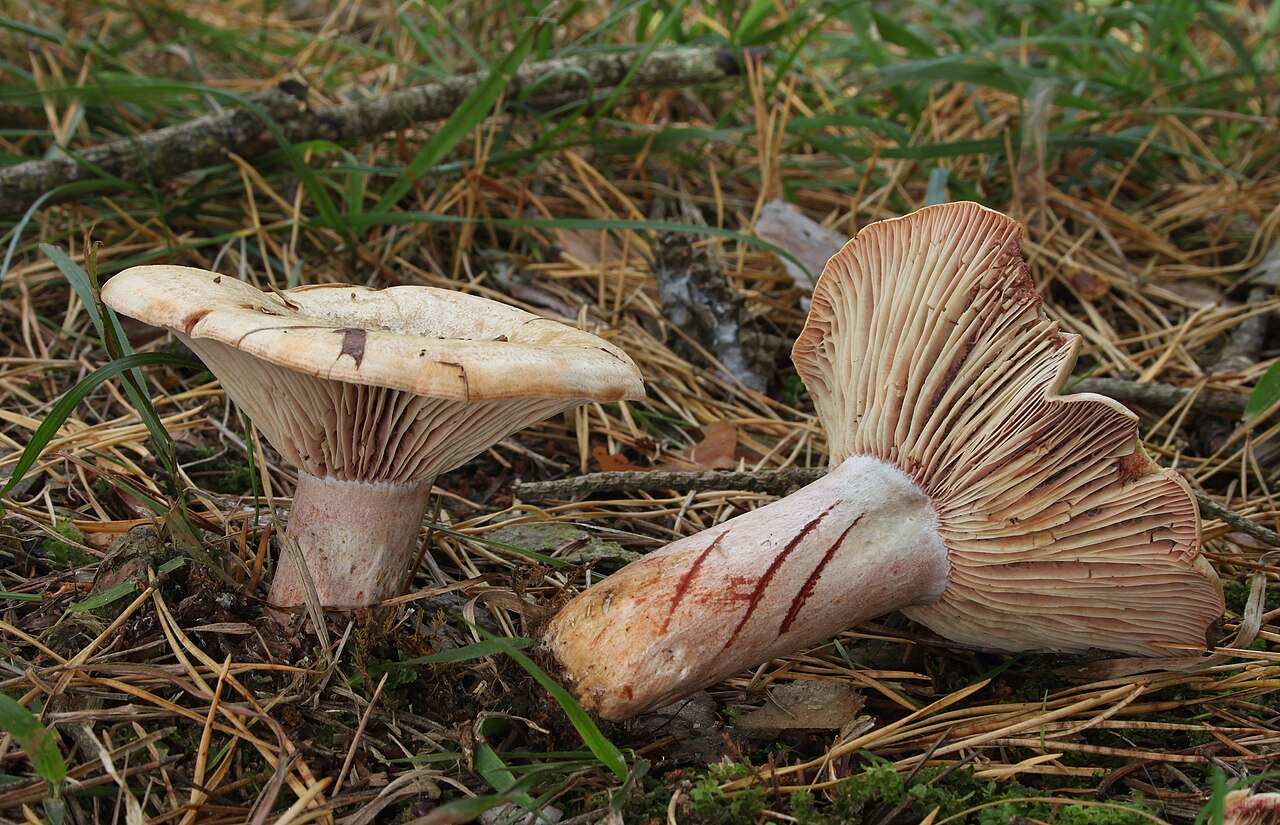
The rovelló belongs to the genus Lactarius, a group of fungi characterized by producing latex when their flesh is cut.
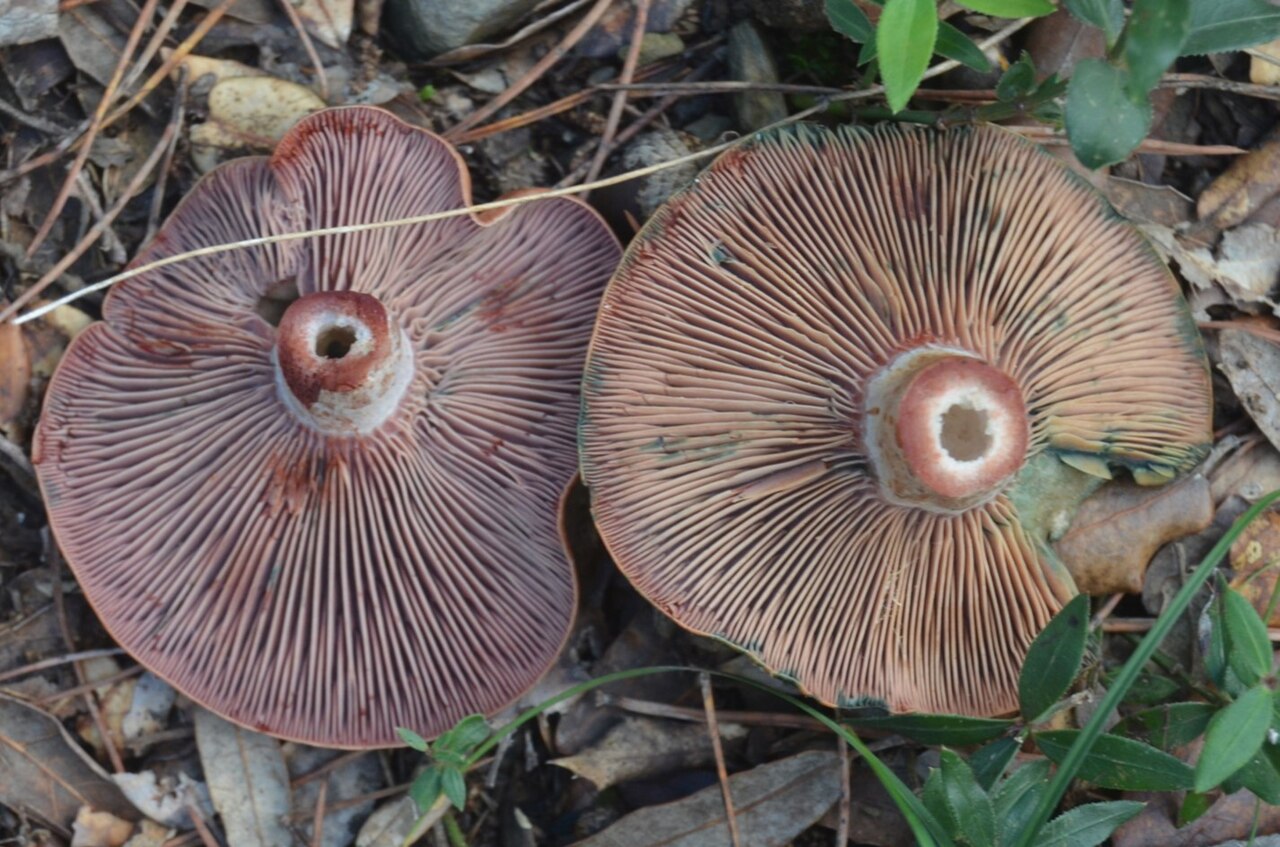
Lactarius sanguifluus, one of the true rovellons, has orange, reddish and greenish tones. When cut, it releases reddish or wine-colored latex that may become greener over time.
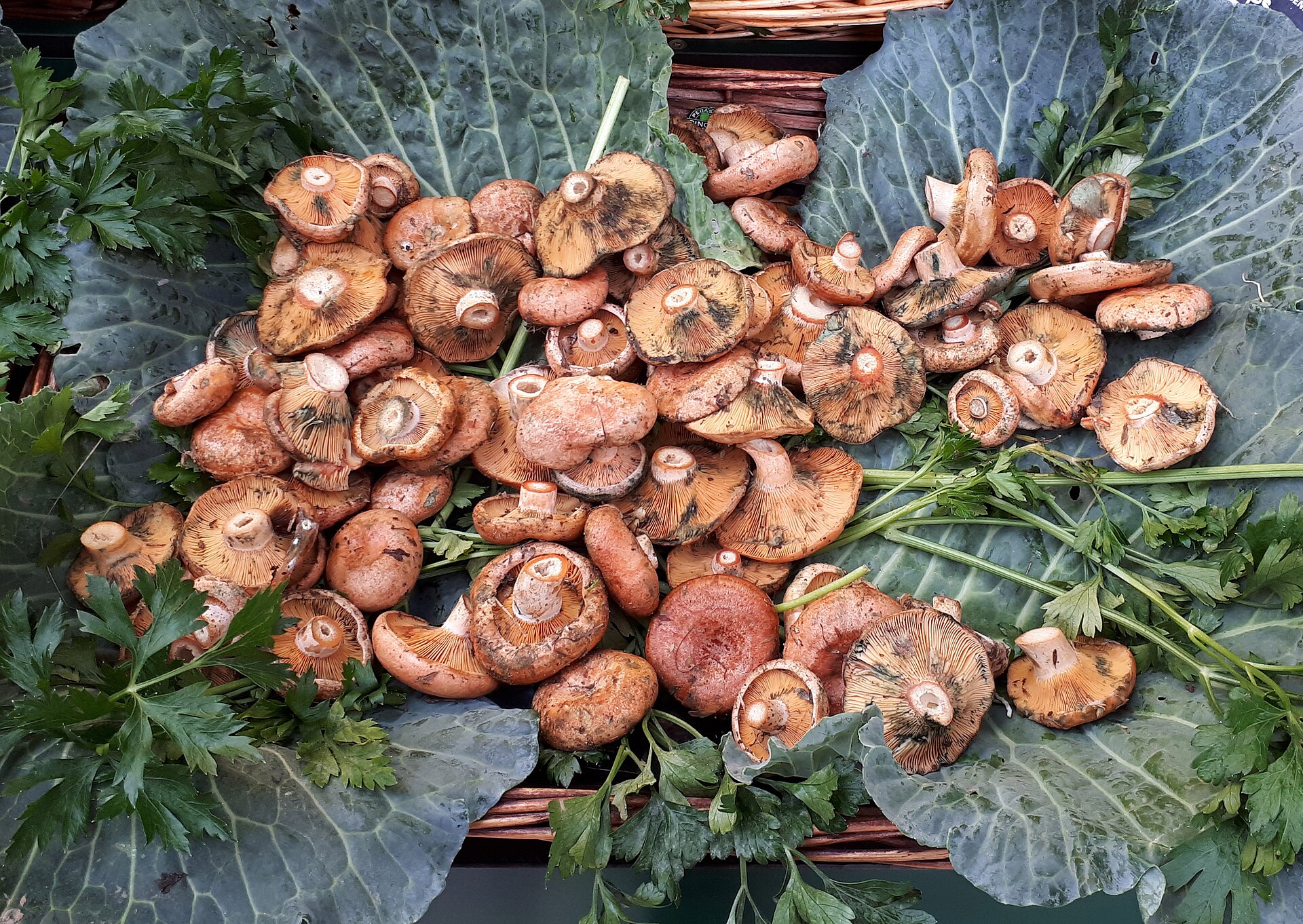
Lactarius deliciosus, commonly known as pinetell, is very similar, although its latex is more orange and its morphological characteristics make it possible to distinguish it.
Both species grow in association with pine trees and are particularly valued by Catalan mushroom gatherers.
Correct identification is essential. Catalonia is home to countless mushroom species, some of which are poisonous, so a wild mushroom should never be eaten unless it has been identified with absolute certainty.
The history of rovellons in Catalonia
A tradition that brings together forest and culture
The tradition of gathering mushrooms is deeply rooted in Catalonia.
For generations, families have passed down knowledge about forests, species, seasons and weather conditions that favor mushroom fruiting.
Mushroom gathering forms part of Catalan gastronomic and cultural traditions, and species such as rovellons, ceps and rossinyols are part of the region’s autumn culinary repertoire.
The Catalan expression “anar al rovelló” has even been used as a synonym for going mushroom hunting in general, demonstrating just how deeply this mushroom has become embedded in Catalan boletaire culture.
Mushroom-gathering culture
Much more than simply picking mushrooms
Catalonia has a genuine culture surrounding wild mushrooms.
An experienced gatherer does not simply walk through the forest. They learn to recognize:
- Types of pine.
- Altitude.
- Soil moisture.
- Slope orientation.
- Mosses.
- Associated vegetation.
- Temperature.
- Recent rainfall.
- Forest conditions.
- Fruiting season.
Rovellons are mycorrhizal fungi, meaning that they live in association with the roots of certain trees. This relationship explains why they depend so heavily on forest conditions and why their production varies enormously from one year to another.
For this reason, knowing the forest is almost as important as knowing the mushroom itself.
When does rovelló season begin?
Autumn is the great mushroom season
Rovellons may appear from late summer through autumn, depending on the area, altitude, rainfall and weather conditions.
Lactarius sanguifluus generally appears between August and December, particularly in association with pine forests.
In certain mountain areas, September and October account for a significant part of the mushroom-gathering season.
In the Cadí-Moixeró Natural Park, for example, there is traditionally a major influx of mushroom gatherers during September and October.
But there is no universal date.
The season fundamentally depends on the combination of:
rainfall + temperature + soil moisture + forest characteristics.
For this reason, two consecutive years can produce completely different harvests.
Rainfall and the mystery of rovellons
Why are there so many in some years and so few in others?
One of the great questions among enthusiasts is why a forest can be full of rovellons one year and practically empty the next.
The answer is related to multiple ecological factors.
Mushroom fruiting depends on environmental conditions and on the relationship between the fungus and its host tree.
Forest research carried out in Catalonia has studied how factors such as forest density, altitude, slope and pine species influence rovelló production.
It is therefore not enough simply to have had rain.
What also matters is when it rains, how much rain falls, what temperatures follow, and how the forest ecosystem responds.
Which forests in Catalonia are home to them?
Pine forests are the rovelló’s great territory
Rovellons are particularly associated with pine forests.
Among the trees associated with the production of different Lactarius species are:
- Scots pine.
- Black pine.
- Maritime pine.
- Stone pine.
- Other mixed pine forests.
Different pine species can favor the production of particular mushrooms in Catalan forests.
Areas traditionally associated with mushroom-gathering culture include different parts of:
- The Pre-Pyrenees.
- The High Pyrenees.
- Berguedà.
- Cerdanya.
- Ripollès.
- Solsonès.
- Alt Urgell.
- Pallars Sobirà.
- The Prades Mountains.
- Poblet Forest.
- Cadí-Moixeró.
Not all forests produce rovellons in the same way. Specific local conditions are decisive.
The Prades Mountains
One of the classic rovelló territories
The Prades Mountains are one of the areas traditionally associated with rovelló hunting in Catalonia.
Studies have been carried out in the maritime pine forests of this region on the production of Lactarius deliciosus and on the influence of forest structure on mushroom emergence.
The mushroom-gathering tradition of Prades makes these forests an especially attractive destination during the autumn season.
Poblet Forest
Rovellons among pine trees and mountains
The surroundings of the Poblet Natural Area of National Interest have a long mushroom-gathering tradition.
Different species of culinary interest can be found in its pine forests, including rovellons and pinetells.
Studies carried out in the area have highlighted the importance of maritime pine forests and the characteristics of forest stands for the production of these species.
It is an area where mushroom hunting can be combined with hiking, historical heritage and gastronomy.
Cadí-Moixeró
Mountain forests and mushroom-gathering tradition
The Cadí-Moixeró Natural Park is another emblematic territory of Catalan mushroom culture.
Among the species traditionally gathered are rovellons and pinetells, as well as llenegues, fredolics and camagrocs.
During the autumn season, especially in September and October, the forests receive a significant number of mushroom gatherers.
The combination of mountains, pine forests and gastronomic tradition makes this territory one of the great settings of the Catalan mushroom season.
What is a day of rovelló hunting like?
A day in the forest
A traditional day begins early.
The gatherer prepares a basket, suitable clothing for walking through the forest, sturdy footwear and, depending on the terrain, a walking stick or navigation equipment.
The objective is not simply to walk quickly.
The search requires constant observation of the ground.
You walk slowly among the pine trees, looking beneath branches, beside low vegetation and in areas where ground conditions appear favorable.
When the characteristic orange or reddish color appears, identification begins.
Finding the first rovelló is often one of the highlights of the day.
Then comes the search for nearby specimens.
Rovellons may appear individually, but several specimens can also be found in the same area.
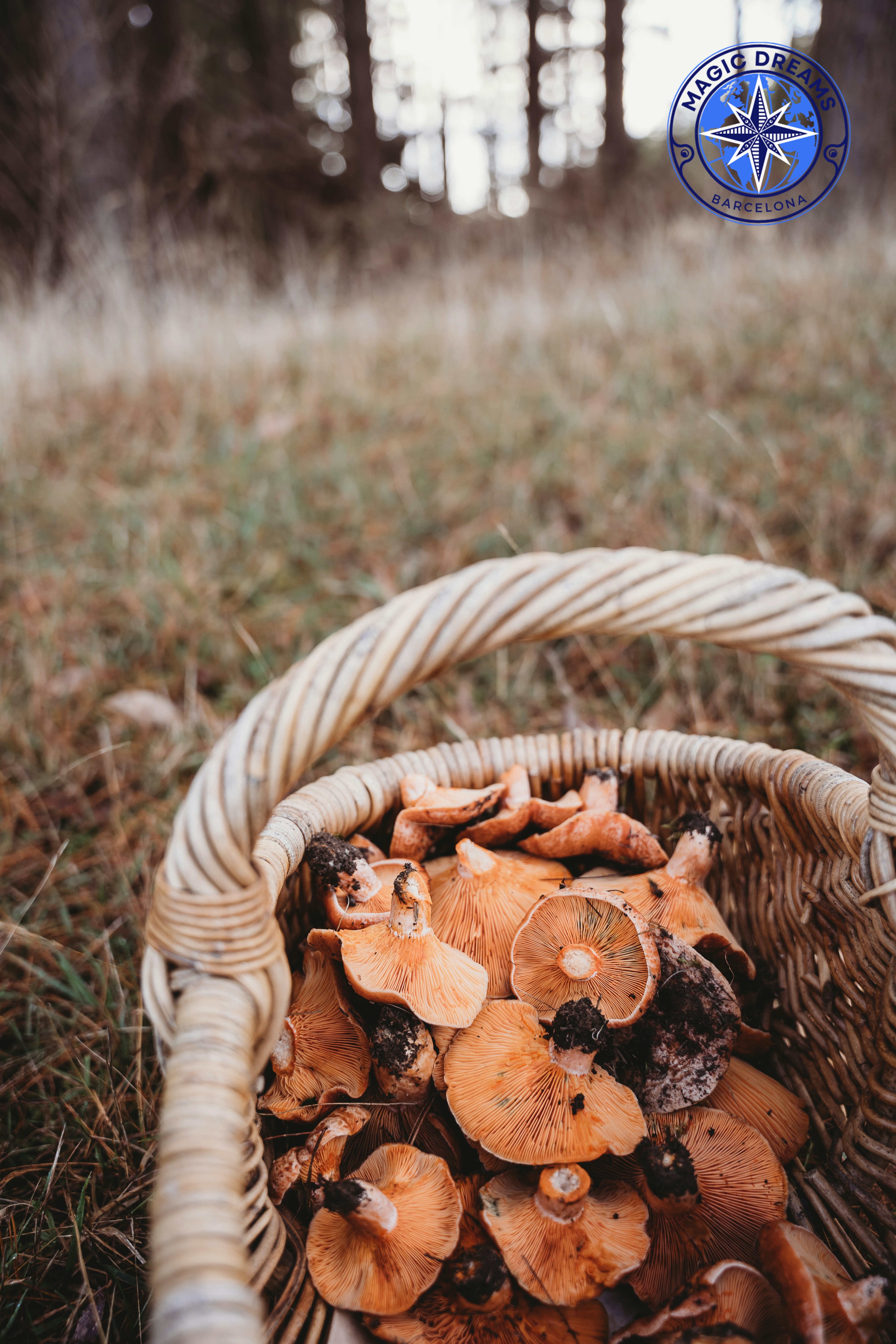
The mushroom gatherer’s basket
A Catalan tradition
The traditional basket is one of the most characteristic elements of mushroom-gathering culture.
Catalan authorities recommend collecting only species that can be identified without any doubt and respecting the natural environment.
It is also important to avoid practices that damage the forest, respect access restrictions and never leave waste behind.
Mushroom gathering should be understood as an activity that connects people with nature, rather than as indiscriminate extraction of natural resources.
How to collect rovellons correctly
Respecting the forest
Responsible harvesting is essential.
Some basic recommendations include:
- Only collect properly identified specimens.
- Never consume a mushroom if there is any doubt about its identification.
- Avoid unnecessarily damaging the soil and vegetation.
- Respect private property.
- Respect access restrictions.
- Do not leave waste behind.
- Do not drive vehicles into areas where this is prohibited.
- Carry mushrooms in a basket or suitable container that allows proper handling.
- Avoid collecting species you do not know.
Rovellons and health
A light and nutritious food
From a nutritional standpoint, mushrooms are foods with a high water content and low levels of calories and fat.
They also provide:
- Fiber.
- B vitamins.
- Minerals.
- Various bioactive compounds.
These components can contribute to a healthy diet when mushrooms are consumed as part of a balanced eating pattern.
Rovelló is therefore a seasonal food that adds flavor and texture without having a high calorie density.
That said, its nutritional benefits do not make wild mushrooms a medicinal food. The important thing is to incorporate them into a varied and balanced diet.
Why are rovellons so highly prized?
Aroma, texture and Mediterranean flavor
The gastronomic value of the rovelló is particularly associated with its intense flavor and texture.
Unlike more delicate mushrooms, rovellons withstand a variety of cooking techniques.
They can be prepared:
- Grilled.
- Pan-seared.
- Sautéed.
- With garlic and parsley.
- In rice dishes.
- In stews.
- With meat.
- With eggs.
- In sauces.
- As a garnish.
- Preserved.
Mushrooms are also highly versatile ingredients in Catalan cuisine and traditionally appear in omelets, rice dishes, stews and sautés.
Grilled rovellons
The simplest and most Mediterranean recipe
One of the best ways to enjoy fresh rovellons is to cook them over a grill.
Ingredients
- Fresh rovellons.
- Extra-virgin olive oil.
- Garlic.
- Parsley.
- Salt.
- Black pepper.
Preparation
Clean the rovellons carefully, avoiding soaking them unnecessarily in water.
Place them on a hot grill or griddle.
Add a little olive oil and cook until tender and lightly browned.
Finish with chopped garlic and parsley.
Serve immediately.
The simplicity of this preparation allows the mushroom’s natural flavor to shine.
Rovellons with garlic, parsley and olive oil
A seasonal Catalan tapa
For a more delicate version, the rovellons can be sautéed in a pan with extra-virgin olive oil.
Add sliced garlic and fresh parsley toward the end of cooking.
A touch of black pepper can complete the dish.
It is ideal as:
- A tapa.
- A garnish.
- A starter.
- An accompaniment to meat.
- An accompaniment to fish.
Mountain rice with rovellons
The forest comes to the table
Rovellons work particularly well in mountain-style rice dishes.
Ingredients
- Rice.
- Rovellons.
- Pork ribs.
- Butifarra sausage.
- Onion.
- Garlic.
- Tomato.
- Stock.
- Olive oil.
- Salt.
- Pepper.
- Parsley.
The rovellons are initially sautéed to concentrate their flavor.
Then the sofrito is prepared and the meat is added.
The rice is cooked slowly with the stock, and the mushrooms are added toward the end to preserve their texture and aroma.
The result is a deeply Catalan dish in which forest, agriculture and livestock traditions come together.
Autumn cannelloni with rovellons
A gourmet reinterpretation of Catalan cuisine
Rovellons can also be used to prepare seasonal cannelloni.
Filling
- Rovellons.
- Onion.
- Leek.
- Garlic.
- Spinach.
- Ricotta or fresh curd cheese.
- Black pepper.
- Nutmeg.
Sauté the mushrooms with the vegetables and then combine them with the cheese.
Place the filling inside the cannelloni sheets.
For a gourmet presentation, finish with a light béchamel sauce, grated Catalan aged cheese and a few slices of sautéed rovelló.
Slow-cooked egg with rovellons
A contemporary gastronomic proposal
The intense flavor of rovelló pairs particularly well with egg.
A restaurant-style presentation might include:
- Slow-cooked egg.
- Sautéed rovellons.
- Potato parmentier.
- Extra-virgin olive oil.
- Black garlic.
- Aromatic herbs.
- Flaky sea salt.
The result combines the creaminess of the egg with the firm texture of the mushroom.
It is a contemporary way of bringing a traditional forest product into fine dining.
Rovelló and Parmesan risotto
Mediterranean and Italian cuisine
Although risotto is not part of traditional Catalan cuisine, rovellons work exceptionally well in this preparation.
The rice is slowly cooked with stock while previously sautéed mushrooms are incorporated.
At the end, butter and Parmesan are added to achieve a creamy texture.
To give it a more Catalan character, extra-virgin olive oil can be used and the dish can be finished with fresh parsley.
Rovellons with butifarra
A deeply Catalan combination
Butifarra sausage and rovellons make a perfect combination for an autumn meal.
The dish can be prepared on a griddle, using the juices released by the butifarra to finish cooking the mushrooms.
It can be served with:
- Roasted potatoes.
- Country bread.
- Mild aioli.
- Caramelized onion.
- Seasonal vegetables.
It is a simple, hearty preparation closely associated with the flavors of inland Catalonia.
Preserving rovellons
How to enjoy the forest beyond the season
Fresh rovellons are quite perishable.
It is advisable to consume fresh mushrooms soon after harvesting or to store them properly under refrigeration, avoiding excessive moisture. Other preservation methods include freezing—preferably after cooking them—canning and dehydration.
Dehydration also has a gastronomic advantage: it concentrates the flavor and allows the mushrooms to be enjoyed for longer.
Another possibility is to prepare preserved mushrooms using safe and appropriate procedures.
Rovellons in Catalan markets
A product with economic value
Wild mushrooms also have an important economic dimension in Catalonia.
Around 1.2 million people, approximately 23% of the Catalan population, go mushroom gathering during the season.
Markets and the hospitality industry also sell large quantities of mushrooms, both fresh and preserved.
Rovelló is one of the most highly valued products within this market and forms part of an economy connected to forests, gastronomy and rural tourism.
The forest as an ecosystem
There is no rovelló without the tree
It is important to remember that the rovelló is not simply a product that appears on the forest floor.
The mushroom forms part of a complex ecosystem.
Lactarius species establish mycorrhizal relationships with tree roots, contributing to the functioning of the forest ecosystem.
Protecting the forest therefore also means protecting the habitat where rovellons grow.
Fungi perform essential ecological functions related to nutrient cycles, organic matter and relationships between plants and soil.
Why aren’t there rovellons every year?
The great mystery of mushroom gatherers
One year can be extraordinary and the next disappointing.
The reason is that wild mushroom production depends on numerous variables.
These include:
- Rainfall.
- Temperature.
- Humidity.
- Altitude.
- Orientation.
- Slope.
- Soil type.
- Forest age.
- Tree density.
- Pine species.
- Weather conditions following rainfall.
Catalan forest research has shown that the structure of pine stands can have a considerable influence on rovelló production.
This is why experienced mushroom gatherers know certain areas that they consider particularly productive, although even these locations can vary from one year to the next.
A gourmet rovelló day
From forest to table
A gastronomic experience centered around rovellons can begin early in a Catalan forest.
First comes the walk.
Then, the search.
Next, the basket begins to fill.
Upon returning, the mushrooms are carefully cleaned and the best specimens are selected.
Finally comes the most anticipated moment: cooking the fruits of the forest.
An autumn menu inspired by rovellons could begin with:
Appetizer
Grilled rovelló with olive oil and flaky sea salt.
Starter
Potato, leek and rovelló cream soup.
Main course
Mountain rice with rovellons and butifarra.
Gourmet alternative
Slow-cooked egg with rovellons and parmentier.
Dessert
An autumn dessert made with apple, honey and nuts.
The experience thus brings together nature, gastronomy, culture and territory.
Tips for a safe experience
Before heading into the forest
A day of rovelló hunting should be properly prepared.
It is advisable to bring:
- A basket.
- Suitable footwear.
- Mountain clothing.
- Water.
- A mobile phone.
- Sun protection.
- A map or navigation system.
- An appropriate mushroom knife.
- A reliable identification guide.
And above all, never collect or eat a mushroom unless it can be identified with absolute certainty.
There are no reliable home methods for determining whether a mushroom is poisonous.
Rovellons and rural tourism
A new way to discover Catalonia
Mushroom season offers an extraordinary opportunity to discover a different side of Catalonia.
Mycological tourism can be combined with:
- Hiking.
- Rural accommodation.
- Gastronomy.
- Wine tourism.
- Visits to medieval villages.
- Local markets.
- Catalan cuisine restaurants.
- Nature photography.
- Gastronomic experiences.
During autumn, the forests take on a special character, while seasonal cuisine makes it possible to discover products that are difficult to enjoy with the same intensity at other times of the year.
The rovelló as a symbol of Catalonia
Forest, tradition and gastronomy
The rovelló represents much more than a mushroom.
It is part of a tradition that connects generations.
It is the memory of parents and grandparents teaching children how to recognize the first specimens.
It is a walk through the forest after the first rains.
It is the basket filled on the way home.
It is the aroma of rovellons cooking with garlic and olive oil.
It is a mountain rice dish shared around a table.
And it is also an expression of the historical relationship between the people of Catalonia and their forests.
The rovelló experience in Catalonia
A tradition that begins in the forest and ends at the table
Searching for rovellons is one of those experiences that allows you to understand Catalonia through the senses.
It begins by walking among pine trees.
It continues by observing the ground and learning to interpret the forest.
You discover the satisfaction of finding a specimen hidden among the vegetation.
And finally, you arrive in the kitchen.
There, the rovelló is transformed into either a simple dish or a sophisticated gastronomic creation.
From a humble grilled rovelló to mountain rice, autumn cannelloni or a slow-cooked egg, this small mushroom is capable of representing an extraordinary part of Catalan culinary identity.
Forest, autumn, gastronomy and tradition.
That, in essence, is the rovelló experience in Catalonia.


Copyright © 2016-2026 Magic Dreams Barcelona.