Spring Citrus Bundt Cake.
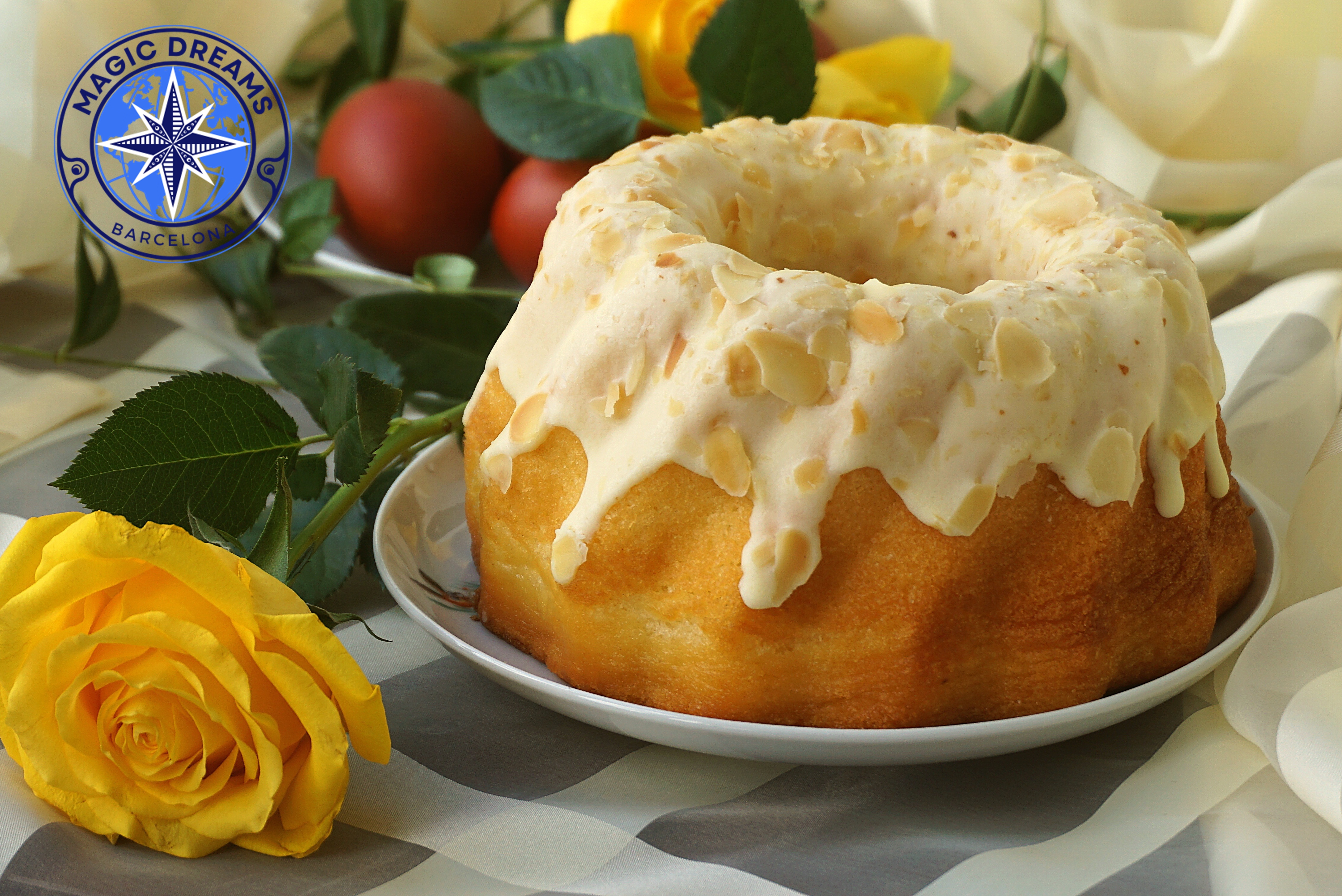
Some recipes seem made to announce the arrival of a new season. This Spring Citrus Bundt Cake is one of them: a delicate, fragrant and beautifully moist cake with bright notes of lemon and orange, finished with a white glaze that gently cascades over its characteristic ridges.
Its crown-like shape, created by the central chimney of the Bundt pan, transforms a simple cake into an elegant centerpiece. Flaked almonds add a delicate crunch, while the citrus brings freshness and lightness.
It is perfect for a spring table, an Easter celebration, or simply for enjoying with coffee when you want something special without an overly complicated preparation.
A Brief History of the Bundt Cake
The Bundt Cake is closely related to traditional European ring-shaped cakes baked in decorative molds. Its characteristic ring shape allows heat to circulate more evenly during baking, helping the cake cook uniformly even when the batter is relatively dense.
Its modern popularity grew in the United States during the 20th century, particularly with the introduction of aluminum molds featuring distinctive geometric and fluted designs that transformed the presentation of the classic cake.
Its appeal lies precisely in this combination of simplicity and sophistication: a traditional cake can take on an almost architectural appearance simply through the shape of the mold.
In this spring-inspired version, citrus adds a particularly fresh dimension. Lemon brings acidity and brightness, while orange contributes sweetness, depth and fragrance.
The result is a cake that reminds us that, in baking, elegance often comes from finding the right balance between texture, aroma and presentation.
Ingredients for 8–10 servings
For the Bundt Cake
- 250 g all-purpose flour
- 200 g sugar
- 180 g unsalted butter, at room temperature
- 4 eggs
- 120 ml milk
- 15 g baking powder
- Finely grated zest of 1 lemon
- Finely grated zest of 1 orange
- 2 tablespoons lemon juice
- 1 teaspoon vanilla extract
- 1 pinch of salt
For the Glaze
- 180 g powdered sugar
- 2–3 tablespoons lemon or orange juice
- A few drops of vanilla extract, optional
For Decoration
- Flaked almonds
- Finely grated orange zest
- A few small mint leaves, optional
Preparation
Before beginning, remove the butter and eggs from the refrigerator so they can come to room temperature.
Preheat the oven to 175°C / 350°F, using conventional top and bottom heat.
Grease the Bundt pan thoroughly, paying particular attention to all the ridges and the inside of the central chimney.
Lightly dust with flour and tap out any excess.
This step is particularly important with this type of pan: properly preparing it will help you release the cake while preserving its beautiful shape.
Wash the lemon and orange thoroughly and grate only the outer colored part of the peel, avoiding the white pith, which can taste bitter.
Step-by-Step Preparation
1. Infuse the Sugar with Citrus
Place the sugar in a large bowl and add the lemon and orange zest.
Gently rub the zest into the sugar with your fingertips for a few seconds.
This simple technique releases the citrus essential oils into the sugar and significantly enhances the aroma of the finished cake.
It is one of those small details that can make a noticeable difference in baking.
2. Cream the Butter
Add the room-temperature butter and beat it together with the citrus-infused sugar until the mixture becomes creamy, pale and airy.
There is no need to rush this step.
Incorporating air will help create a lighter, more tender crumb.
Add the eggs one at a time, beating well after each addition.
Finally, add the vanilla extract.
3. Add the Dry Ingredients
Sift the flour together with the baking powder and salt.
Add the dry ingredients to the butter mixture in several additions, alternating with the milk.
Begin and finish with the dry ingredients.
Mix only until combined.
Do not overmix the batter, as we want to preserve a tender and delicate texture.
4. Add the Citrus
Add the two tablespoons of lemon juice and gently mix.
The batter should be smooth, creamy and fluid enough to distribute evenly throughout the pan.
At this stage, the fragrance of the lemon and orange should already be clearly noticeable.
5. Bake
Pour the batter into the prepared Bundt pan.
Gently tap the pan against the work surface to remove any large air pockets, then smooth the surface with a spatula.
Bake for approximately 45–55 minutes.
The exact baking time may vary depending on the size and material of the pan.
To check for doneness, insert a skewer or toothpick into the center of the cake. It should come out clean or with just a few moist crumbs attached.
Remove from the oven and allow the cake to rest in the pan for approximately 10–15 minutes.
Then carefully turn it out onto a wire rack and allow it to cool completely.
The White Citrus Glaze
Once the Bundt Cake has completely cooled, prepare the glaze.
Place the powdered sugar in a bowl and gradually add the lemon or orange juice.
Mix until you achieve a thick but fluid consistency that will slowly flow down the sides of the cake.
The consistency is important.
If the glaze is too thin, it will disappear between the ridges of the Bundt Cake. If it is too thick, you will not achieve the elegant, irregular cascade effect.
Pour the glaze over the top and allow it to naturally run down the sides.
There is no need to make the pattern perfectly uniform. Its delicate irregularities are part of the charm of this presentation.
The Finishing Touch
Before the glaze sets completely, scatter the flaked almonds over the top.
Finish with a little finely grated orange zest to intensify the citrus aroma and add a delicate visual contrast.
The result should evoke a spring table: bright, fresh and elegant.
The Secret to a Perfect Bundt Cake
The first secret is properly preparing the pan.
Bundt pans have numerous curves, ridges and details where batter can easily stick. For this reason, it is essential to grease every part of the surface thoroughly.
The second secret is using ingredients at the right temperature.
Room-temperature butter and eggs create a more stable emulsion and a smoother batter.
The third is avoiding overmixing once the flour has been added.
As soon as the dry ingredients are incorporated, stop mixing.
And finally, there is one essential detail: do not turn the cake out immediately after removing it from the oven.
Allowing it to rest briefly gives the structure time to set and greatly reduces the risk of the cake breaking.
The Balance of Lemon and Orange
Citrus is the aromatic heart of this recipe.
Lemon brings freshness, acidity and a more intense note.
Orange, on the other hand, adds aromatic sweetness, depth and a rounder fragrance.
Together, they prevent the cake from becoming overwhelmingly sweet and create a much more balanced flavor profile.
For maximum aroma, use fresh fruit and grate the zest immediately before adding it to the batter.
The zest contains the essential oils responsible for much of the cake’s citrus character.
Nutritional Benefits of the Ingredients
As with any dessert, this Bundt Cake should be enjoyed as part of a varied and balanced diet. Its ingredients nevertheless provide a range of interesting nutrients.
Lemon and Orange
Citrus fruits are well known for their vitamin C content and various antioxidant compounds.
In this recipe, beyond their nutritional value, they serve an essential culinary purpose: providing acidity, freshness and aroma.
Almonds
Almonds provide unsaturated fats, protein, fiber, vitamin E and minerals such as magnesium.
Their presence in the decoration also creates a pleasant textural contrast with the soft cake crumb.
Eggs
Eggs provide high-quality protein as well as a range of vitamins and minerals.
In baking, they also play an essential technical role by contributing to the structure, emulsification and texture of the cake.
Milk
Milk provides protein, calcium and other micronutrients while also helping create a tender crumb.
Butter
Butter provides dairy fat and contributes significantly to the texture and characteristic flavor of this type of cake.
Because it is relatively high in saturated fat, the amount used should be considered as part of the overall dietary pattern.
A Gourmet-Inspired Presentation
A Bundt Cake does not need excessive decoration.
Its own architecture is its main decorative element.
Place the cake on a white plate or a softly colored ceramic serving platter and allow the white glaze to naturally flow down the ridges.
Scatter the flaked almonds irregularly over the surface, creating small points of texture and volume.
For a spring-inspired presentation, you can accompany it with edible flowers, mint leaves or delicate decorative elements in soft colors.
A yellow flower, for example, can create a particularly beautiful contrast with the white glaze and golden tones of the cake.
The key is to keep the composition clean.
The cake should remain the star.
Storage and Serving
The Bundt Cake can be kept at room temperature for 2–3 days, provided it is well covered to prevent it from drying out.
If the environment is particularly warm, it can be refrigerated in an airtight container, although we recommend allowing it to sit at room temperature for a few minutes before serving to restore some of its texture.
The glaze may become slightly firmer over time, but it will continue to provide its characteristic contrast between the sweet coating and tender crumb.
For the best experience, serve it with coffee, black tea, green tea or a citrus-infused herbal tea.
A Cake to Celebrate Spring
This Spring Citrus Bundt Cake is a simple way to bring the season to the table.
Its crown-like shape, the fragrance of lemon and orange, the white glaze and the delicate crunch of almonds create a combination that is particularly suited to Easter, family gatherings, spring afternoon teas or special occasions.
It does not require complicated techniques or excessive decoration.
Its elegance lies elsewhere: in a good cake batter, fresh citrus, a light and tender crumb, and a carefully considered presentation.
Because sometimes the most memorable baking is not the most complicated, but the kind that transforms everyday ingredients into a small moment of celebration.
Copyright © 2016-2026 Magic Dreams Barcelona.