Etiqueta: barcelona food

Arroz Parellada – Catalan Gastronomy.

Arroz Parellada – Catalan Gastronomy.

Arroz Parellada is one of the most iconic dishes of Catalan cuisine, especially popular in Barcelona. Its origins date back to the early 20th century and it is named after Chef Juli Maria Parellada, who created it as an elegant variation of traditional paella.This rice 

Traditional Suquet de Peix | Catalan Fish Stew.

Traditional Suquet de Peix | Catalan Fish Stew.

Suquet de Peix is one of the great classics of Catalan coastal cuisine. A humble fishermen’s stew in origin, it has become one of the most representative dishes of the Mediterranean gastronomic tradition. Traditionally prepared with the fish available that day, Suquet combines fish, potatoes, 

Bombas de la Barceloneta – Barcelona’s most emblematic tapas.

Bombas de la Barceloneta – Barcelona’s most emblematic tapas.

Bombas de la Barceloneta are one of the most iconic and recognisable tapas in Barcelona. Born in the historic fishing district of La Barceloneta, they are part of the popular culinary tradition that transformed simple ingredients into small, generous and characterful bites.

Traditionally associated with the old taverns and bodegas of the neighbourhood, these bombas became particularly famous through La Cova Fumada, one of the establishments most closely linked to the history and identity of this beloved Barcelona tapa.

Their essence is simple, but the result can be extraordinary.

A base of creamy, delicate potato surrounds a centre of well-seasoned, mildly spicy minced meat. The whole preparation is coated in breadcrumbs and fried until beautifully golden and crisp.

The contrast continues at the table with two essential accompaniments: a smooth, creamy aioli and a spicy sauce that brings intensity, freshness and character.

In this interpretation, we use kimchi sauce as the spicy element, creating a subtle dialogue between Catalan tradition and a contemporary touch while preserving the spirit of the original tapa.

The result is a bomba that is crisp on the outside, creamy within, richly seasoned, gently spicy and unmistakably Barcelonan.


Ingredients

Makes approximately 20 bombas of 100 g each

For the potato mixture

  • 2 kg Monalisa potatoes, boiled, peeled and well drained.
  • 200 g butter.
  • 50 g extra virgin olive oil.
  • Salt.
  • Freshly ground black pepper.

For the meat filling

  • 500 g minced meat, beef or a mixture of meats, according to preference.
  • Concentrated tomato sauce, as needed to achieve a thick consistency.
  • Spicy sauce, to taste.
  • 2 garlic cloves, finely chopped.
  • Olive oil.
  • Salt.
  • Freshly ground black pepper.

For the coating

  • Plain flour.
  • Beaten eggs.
  • Breadcrumbs.
  • Mild olive oil, enough for deep-frying.

For the smooth aioli

  • 250 g mild olive oil.
  • 2 eggs.
  • 1 egg yolk.
  • 2 garlic cloves, peeled and with the germ removed.
  • Salt.

For finishing

  • Kimchi sauce or another spicy sauce, to taste.
  • Fresh chives, finely chopped.
  • A few drops of extra virgin olive oil, optional.

Preparation

01 · Prepare the potatoes

The creamy foundation of the bomba

Wash the potatoes and boil them whole, with their skins on, until completely tender.

Drain and allow them to cool slightly.

Peel the potatoes while still warm and pass them through a potato ricer, or mash them until obtaining a smooth, even texture without lumps.

Add the butter and olive oil while the potatoes are still warm.

Mix thoroughly until the potato becomes creamy and homogeneous.

Season with salt and a small amount of freshly ground black pepper.

The mixture should remain firm enough to shape by hand.

Avoid adding unnecessary liquid: potatoes that are too moist will be difficult to shape and may cause the bombas to split during frying.


02 · Prepare the meat filling

The spiced heart

Heat a frying pan with a little olive oil.

Add the chopped garlic and cook gently until fragrant.

Add the minced meat and cook over medium-high heat, breaking it up with a spatula so that it cooks evenly.

Season with salt and pepper.

Once the meat is cooked and lightly browned, add the concentrated tomato sauce.

Stir well and cook for several minutes so that excess moisture evaporates and the flavours become concentrated.

Gradually add the spicy sauce, adjusting the amount according to the desired level of heat.

The filling should be flavourful, mildly spicy, compact and easy to shape.

Remove from the heat and allow it to cool completely.


03 · Shape the bombas

The perfect balance of potato and meat

For bombas weighing approximately 100 g each, use:

  • 75 g potato mixture.
  • 25 g spicy meat filling.

Take 75 g of the potato mixture and shape it into a small ball.

Using your thumb, create a hollow in the centre and place approximately 25 g of the meat filling inside.

Carefully close the potato around the filling, making sure that the meat is completely enclosed.

Roll gently between your hands until you obtain a smooth, compact sphere.

Repeat until all the mixture has been used.

The potato layer should be as even as possible so that all the bombas cook uniformly.


04 · Chill the bombas

A small secret for perfect coating

Place the shaped bombas on a tray and refrigerate them.

Alternatively, place them in the freezer for a short period to give them a brief chill, without freezing them completely.

This firms up the potato and makes the coating process considerably easier.

It also helps the bombas retain their round shape during frying and reduces the risk of them splitting.


05 · Coat the bombas

The crisp layer protecting the centre

Prepare three separate dishes:

  1. Flour.
  2. Beaten egg.
  3. Breadcrumbs.

Coat each bomba first in flour, covering the entire surface.

Shake off any excess and dip it into the beaten egg.

Finally, coat completely with breadcrumbs.

Press gently with your hands so that the breadcrumbs adhere firmly.

The coating should be even, relatively thin and strong enough to withstand frying.

For an especially crisp result, you can use a double coating, repeating the egg and breadcrumb stages.


06 · Fry the bombas

Perfectly golden, creamy inside

Heat plenty of mild olive oil to approximately 170°C / 338°F.

Fry the bombas in batches, taking care not to overcrowd the pan, as this can cause the oil temperature to drop too quickly.

Turn them gently so that they brown evenly on all sides.

The exterior should become deeply golden, crisp and light, while the interior remains hot, creamy and juicy.

Remove the bombas and place them briefly on kitchen paper to absorb any excess oil.

Serve immediately.


Smooth Aioli

The creamy sauce that completes the bomba

Place the peeled, germ-free garlic, eggs, egg yolk, a pinch of salt and the mild olive oil into a tall blending jug.

Place the immersion blender at the bottom of the jug.

Begin blending at low speed without moving the blender.

Once the mixture begins to thicken and the emulsion becomes stable, slowly lift the blender from the bottom.

Continue blending with gentle up-and-down movements until the aioli becomes smooth, creamy, glossy and stable.

Taste and adjust the seasoning if necessary.

The finished aioli should have enough garlic character to complement the bomba without overpowering the flavour of the filling.


Spicy Kimchi Sauce

The contemporary counterpoint

For this version, we use kimchi sauce as the spicy accompaniment.

Its fermented, slightly acidic and spicy character creates a particularly interesting contrast with the potato and meat.

It can be served directly or its intensity can be softened with a few drops of mild olive oil.

Adjust the quantity according to the desired level of heat.

The sauce should provide freshness, acidity and character, rather than dominate the dish.


Gourmet Suggestions

Magic Dreams Barcelona

To bring the Bombas de la Barceloneta to a more refined gastronomic level:

  • Use Monalisa potatoes, which provide a creamy texture while remaining firm enough for shaping.
  • Cook the meat until most of its moisture has evaporated. An overly wet filling may cause the bombas to split during frying.
  • Allow the filling to cool completely before shaping.
  • Give the shaped bombas a brief chill before coating to achieve a more defined shape.
  • Keep the oil at around 170°C / 338°F for a crisp exterior without burning the breadcrumbs.
  • For an especially crisp finish, use medium-textured breadcrumbs or a combination of traditional breadcrumbs and panko.
  • Avoid covering the plate with too much sauce. The aioli and spicy sauce should complement rather than hide the bomba.
  • Finish with fresh chives for colour, freshness and a delicate vegetal contrast.

The secret to a great bomba

The real challenge of this tapa is achieving the perfect balance between creamy potato, an intensely flavoured filling and a crisp exterior.

The potato should be firm yet delicate.

The filling should be savoury and mildly spicy, with enough concentration to handle easily without introducing excessive moisture.

The coating must protect the entire preparation during frying, creating a golden crust that breaks beautifully with the first bite.

The temperature of the oil is equally important.

At approximately 170°C / 338°F, the bomba can brown progressively while the centre becomes hot and creamy without burning the coating.

The ideal result is a perfect contrast of textures:

crisp on the outside, creamy inside and gently spicy at the heart.


Gourmet Presentation

Serve the bombas on an artisanal ceramic plate, a small metal tray or a surface inspired by traditional Barcelona taverns to preserve the connection with their origins.

Place two or three bombas per person, depending on their size and the rest of the menu.

Arrange a small amount of smooth aioli alongside them and add a few drops or small dots of kimchi sauce for visual and gastronomic contrast.

You can also place a small base of aioli beneath each bomba to give the dish greater visual presence.

Finish with finely chopped fresh chives and a few drops of extra virgin olive oil.

For a more contemporary presentation, cut one bomba in half and position it so that the contrast between the golden crust, creamy potato and spicy meat filling is clearly visible.

The presentation should retain the spirit of a neighbourhood tapa while displaying greater precision and elegance.

After all, the essence of a great bomba remains unchanged:

a humble popular bite transformed into a gastronomic experience.


Serving

Bombas de la Barceloneta should be served freshly fried, when the contrast between the crisp coating and creamy interior is at its best.

The aioli and spicy sauce can be prepared in advance and kept refrigerated until service.

Before serving, allow the aioli to sit out for a few minutes so that it is not excessively cold.

The bombas, however, should reach the table hot and freshly fried.


Make-Ahead and Freezing

One of the great advantages of this recipe is that the bombas can be prepared in advance.

Once shaped and coated, place them on a tray with space between each one and freeze them.

Once completely frozen, transfer them to an airtight container or freezer bag.

There is no need to thaw them completely before frying.

They can be cooked directly from frozen, adjusting the frying time slightly to ensure that the centre becomes thoroughly hot.

For professional service, this makes them particularly practical for restaurants, catering and events, as large quantities can be prepared in advance and fried to order.


Storage

Meat filling: can be refrigerated in an airtight container for 2–3 days.

Cooked and prepared potato: preferably use it on the same day, although it can be refrigerated for approximately 1–2 days.

Shaped and coated bombas: can be refrigerated for several hours before frying or frozen for longer storage.

Aioli: always keep refrigerated and preferably consume within 24–48 hours, particularly because it contains raw egg.

Fried bombas are best enjoyed immediately. If reheating is necessary, use an oven or air fryer to restore some of their crispness. Avoid reheating them in the microwave, which can soften the coating.


Copyright © 2016–2026 Magic Dreams Barcelona.


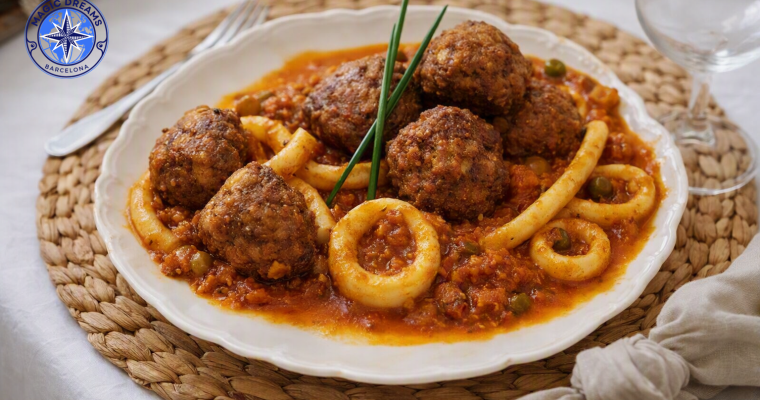
Meatballs with Cuttlefish – “Mar y Montaña”.

Meatballs with Cuttlefish – “Mar y Montaña”.

Mandonguilles amb Sèpia · A Traditional Catalan “Sea and Mountain” Recipe Catalan meatballs with cuttlefish, known locally as mandonguilles amb sèpia, are one of the finest examples of mar i muntanya, the traditional Catalan culinary philosophy that brings together ingredients from the sea and the 

Mel i Mató with Honey and Walnuts.

Mel i Mató with Honey and Walnuts.

Three simple ingredients carrying centuries of Catalan tradition Mel i Mató is one of the simplest desserts in Catalan cuisine and, at the same time, one of the recipes that most clearly represents the region’s culinary identity. Its essence lies in a humble combination: fresh 

Romesco Sauce and Calçots

Romesco Sauce and Calçots

The great gastronomic ritual of Catalan cuisine

Calçots with Romesco sauce are much more than a recipe: they represent one of the great gastronomic rituals of Catalonia.

Closely associated with Valls and the Camp de Tarragona, calçots are a variety of tender green onion traditionally enjoyed during the Calçotada, a popular celebration that brings family and friends together around fire, embers and the table.

Their preparation is simple, but it requires respecting a very specific technique.

The calçots are placed directly over the hot embers and grilled until their outer layer becomes completely blackened and charred. This first layer protects the inside and allows the heart of the calçot to cook slowly, developing a tender, juicy and slightly sweet texture.

Then comes one of the most characteristic moments of Catalan tradition: the charred outer layer is removed, the calçot is lifted by hand and the tender white part is dipped directly into the Romesco sauce.

Romesco sauce, originally from the province of Tarragona, is the perfect accompaniment. Made with roasted tomatoes, ñora peppers, almonds, hazelnuts, garlic, olive oil and vinegar, it combines toasted, sweet and slightly acidic notes with a delicate touch of spice.

The result is an extraordinary balance between the sweetness of the calçot and the intensity of the nuts, tomato and dried pepper.

The greatness of this tradition lies precisely in its simplicity.

Fire, ingredients, sauce and company.

A deeply Mediterranean Catalan cuisine that transforms a humble ingredient into a truly memorable gastronomic experience.


Ingredients

Serves 4

For the calçots

  • 40–48 fresh calçots, approximately 10–12 per person.
  • Salt, optional.
  • Romesco sauce, for serving.

For the Romesco Sauce

  • 150 g toasted almonds.
  • 100 g toasted hazelnuts.
  • 2–3 ripe tomatoes.
  • 2–3 ñora peppers.
  • 1–2 garlic cloves.
  • 1 small chili pepper or bitxo, to taste.
  • 150 ml extra-virgin olive oil.
  • 1 tablespoon wine vinegar.
  • Salt, to taste.

Optional: a small slice of toasted bread can be added to the Romesco to give it more body and a more traditional texture.


Preparing the Romesco Sauce

01 · Prepare the ñora peppers

The aromatic depth of dried pepper

Place the ñora peppers in a bowl of hot water and leave them to soak for approximately 20–30 minutes.

Once softened, carefully remove the stems and seeds.

Using a spoon, scrape out the flesh of the ñoras and set it aside.

The ñora flesh provides a deep, slightly sweet flavor that is characteristic of Romesco sauce.


02 · Roast the tomatoes and garlic

The flavor of fire

Place the tomatoes and garlic cloves on a baking tray.

Roast them in an oven at approximately 200°C / 390°F until the tomatoes are completely tender and their skins have developed lightly charred areas.

They can also be roasted directly over embers for an even more pronounced smoky character.

Remove the tomato skins and reserve the flesh.

Peel the roasted garlic.

The objective is to create concentrated, lightly toasted flavors without burning the inside of the ingredients.


03 · Grind the nuts

The characteristic texture of Romesco

Place the toasted almonds and hazelnuts in a mortar or food processor.

Grind until finely crushed but still slightly textured.

There is no need to turn the nuts into a completely uniform flour.

A little texture gives the sauce personality and preserves its traditional character.


04 · Add the tomato and ñora

The heart of the sauce

Add the roasted tomato flesh, roasted garlic and ñora pulp to the mortar or food processor.

Add the chili pepper or bitxo.

Blend until all the ingredients are well combined.

Adjust the amount of chili according to the desired level of heat.

Romesco should have character, but the spice should not overpower the toasted and sweet flavors of the nuts and tomatoes.


05 · Emulsify with olive oil and vinegar

The Mediterranean balance

Gradually add the extra-virgin olive oil while blending or stirring continuously.

Then add the vinegar little by little.

The sauce should become creamy, glossy and slightly thick.

Taste and adjust the salt.

If the sauce is too thick, add a few drops of water to reach the desired consistency.

If it is too thin, add a small amount of additional ground nuts.

Set aside at room temperature until ready to serve.


Preparing the Calçots

06 · Prepare the calçots

A simple ingredient, a precise technique

Do not wash the calçots excessively before grilling them.

Trim the roots and remove only the outer layers that are particularly damaged or dirty.

Keep most of the outer structure intact, as this is the layer that will protect the inside during cooking over the embers.

Arrange them and have them ready beside the grill.


07 · Grill directly over the embers

Fire as an ingredient

Prepare a grill with hot, glowing embers.

Place the calçots directly over the embers without adding oil.

Grill them for approximately 10–15 minutes, depending on their size and the intensity of the heat.

Turn them as necessary so they cook evenly.

The outer layer should become completely black, charred and apparently burnt.

Do not worry about their appearance.

This blackened layer acts as a protective shell, allowing the inside to cook slowly in its own steam.


08 · Rest the calçots

The heat continues to work

Once grilled, remove the calçots from the embers.

Gather them together and, if desired, wrap them for a few minutes in newspaper or heat-resistant kitchen paper.

This short resting period allows the residual heat to finish softening the interior.

The white part should be tender, juicy and slightly sweet.


The Calçotada Ritual

09 · Clean the calçots

The traditional way to eat them

Hold the calçot by its green leaves.

With your other hand, gently pull away the charred outer layer.

The tender, white and juicy heart should be revealed.

There is no need for a perfectly clean presentation.

Part of the charm of the Calçotada is precisely the informal experience of eating with your hands and sharing the moment around the table.


10 · The meeting with Romesco

The moment everyone waits for

Hold the calçot by its green leaves and generously dip the white part into the Romesco sauce.

The sauce should cover a good portion of the calçot without completely hiding its texture.

Lift the calçot and bring it directly to your mouth.

The contrast is immediate:

sweet and juicy calçot, creamy sauce, toasted nuts, tomato, ñora and a delicate touch of spice.


Gourmet Suggestions

Magic Dreams Barcelona

To elevate this tradition without losing its essence:

  • Use fresh calçots of a similar size for even cooking.
  • Prepare the Romesco with freshly toasted almonds and hazelnuts to maximize their aroma.
  • Roast the tomatoes and garlic slowly to develop greater depth of flavor.
  • Gradually incorporate the extra-virgin olive oil to control the consistency of the sauce.
  • Use a combination of almonds and hazelnuts to achieve a more complex balance of sweetness, richness and toasted notes.
  • Adjust the vinegar carefully. It should provide freshness without dominating the sauce.
  • For a more intense version, roast the tomatoes directly over the embers alongside the calçots.
  • Romesco can be prepared several hours in advance, allowing the flavors to blend.
  • Serve the sauce at room temperature so that its aromas can fully develop.

The secret to great calçots

The secret is not only the ingredient.

It is the fire.

The calçots must be cooked directly over the embers until their outer layer is completely charred.

This blackened layer may appear excessively burnt, but it is precisely what protects the inside and allows the calçot to retain its moisture.

The cooking must be intense enough to develop the aromas of the fire without destroying the heart of the vegetable.

The perfect interior should be:

tender, juicy, sweet and lightly smoky.


The Secret to Great Romesco

A good Romesco sauce should maintain a balance between five essential elements:

tomato, ñora, nuts, olive oil and acidity.

The nuts provide body and richness.

The tomato contributes sweetness and freshness.

The ñora adds depth.

The olive oil brings all the flavors together.

And the vinegar provides the acidity needed to prevent the sauce from becoming too heavy.

The heat should be used with moderation.

The perfect sauce is not necessarily the hottest one, but the one in which every ingredient can still be recognized.


Gourmet Presentation

For a gastronomic presentation, we can preserve the spirit of the traditional Calçotada by using a handmade ceramic platter or a rustic-style serving dish.

Arrange the grilled calçots in a small group and serve the Romesco separately in a bowl.

For a contemporary presentation, carefully clean some of the calçots and arrange them parallel on a plate.

Add small brushstrokes or dots of Romesco sauce around them.

Finish with a few drops of extra-virgin olive oil, lightly crushed toasted hazelnuts and small Mediterranean herb leaves.

We can also leave one calçot partially cleaned to visually represent the transformation created by the fire.

The presentation should always maintain a connection with its origins:

a rural Catalan recipe transformed into an elegant gastronomic experience without losing its popular soul.


Service

Calçots should be served freshly grilled and still hot.

Traditionally, they are wrapped in paper to retain their heat and moisture.

Romesco should be served separately, preferably at room temperature.

During a traditional Calçotada, diners clean the calçots with their hands and eat them directly.

For a gastronomic service, the calçots can be presented already cleaned and accompanied by small portions of Romesco.

In both cases, the goal is the same:

to enjoy the contrast between the sweet, smoky vegetable and the intense sauce made with nuts and tomato.


Pairing

Calçots with Romesco pair particularly well with a fresh Catalan 0.0% alcohol-free white wine with good acidity.

A Mediterranean-style white wine helps cleanse the palate after the richness of the nuts and olive oil.

They can also be served with an artisanal 0.0% alcohol-free vermouth, particularly when enjoyed as an aperitif.

For a completely refreshing option, very cold sparkling water with a few drops of lemon works beautifully.


Make-Ahead Preparation

The Romesco sauce can be prepared several hours in advance or even the day before.

In fact, resting allows the flavors of the ñora, tomato, garlic and nuts to blend together more harmoniously.

Before serving, stir the sauce and adjust its consistency with a few drops of water or extra-virgin olive oil.

The calçots, however, should be grilled as close to serving time as possible.

The gastronomic experience depends greatly on enjoying them hot, tender and freshly removed from the embers.


Storage

Romesco sauce: can be stored in an airtight container in the refrigerator for approximately 3–4 days.

Before serving, allow it to sit at room temperature for a few minutes and stir well.

Grilled calçots: are best eaten immediately. If necessary, they can be refrigerated for approximately 1–2 days, although they will lose some of their texture and smoky aroma.

We do not recommend freezing already grilled calçots.

Romesco sauce, however, can be frozen, although its texture may change slightly after thawing.


Copyright © 2016–2026 Magic Dreams Barcelona.
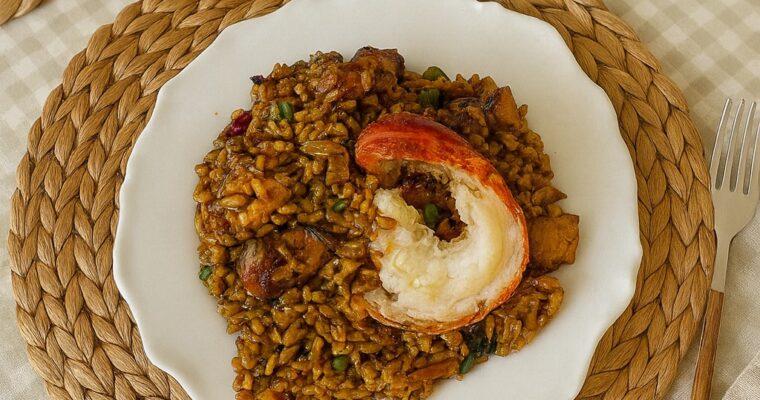
Catalan-Style Fideuà with Traditional Allioli.

Catalan-Style Fideuà with Traditional Allioli.

Maritime tradition, Mediterranean flavour and elegance in every bite Catalan-style fideuà, prepared using the traditional rossejat de fideus technique, is a delicious interpretation of Mediterranean coastal cuisine. Although fideuà originated on the Valencian coast, Catalonia has embraced and adapted this dish thanks to its deep 

Traditional Catalan Butifarra with White Beans.

Traditional Catalan Butifarra with White Beans.

One of the great classics of traditional Catalan cuisine Butifarra amb mongetes, also known as butifarra amb seques, is one of the simplest, most recognizable and most beloved dishes in Catalan gastronomy. Its origins are deeply connected to Catalan rural cuisine, where nutritious, affordable and 

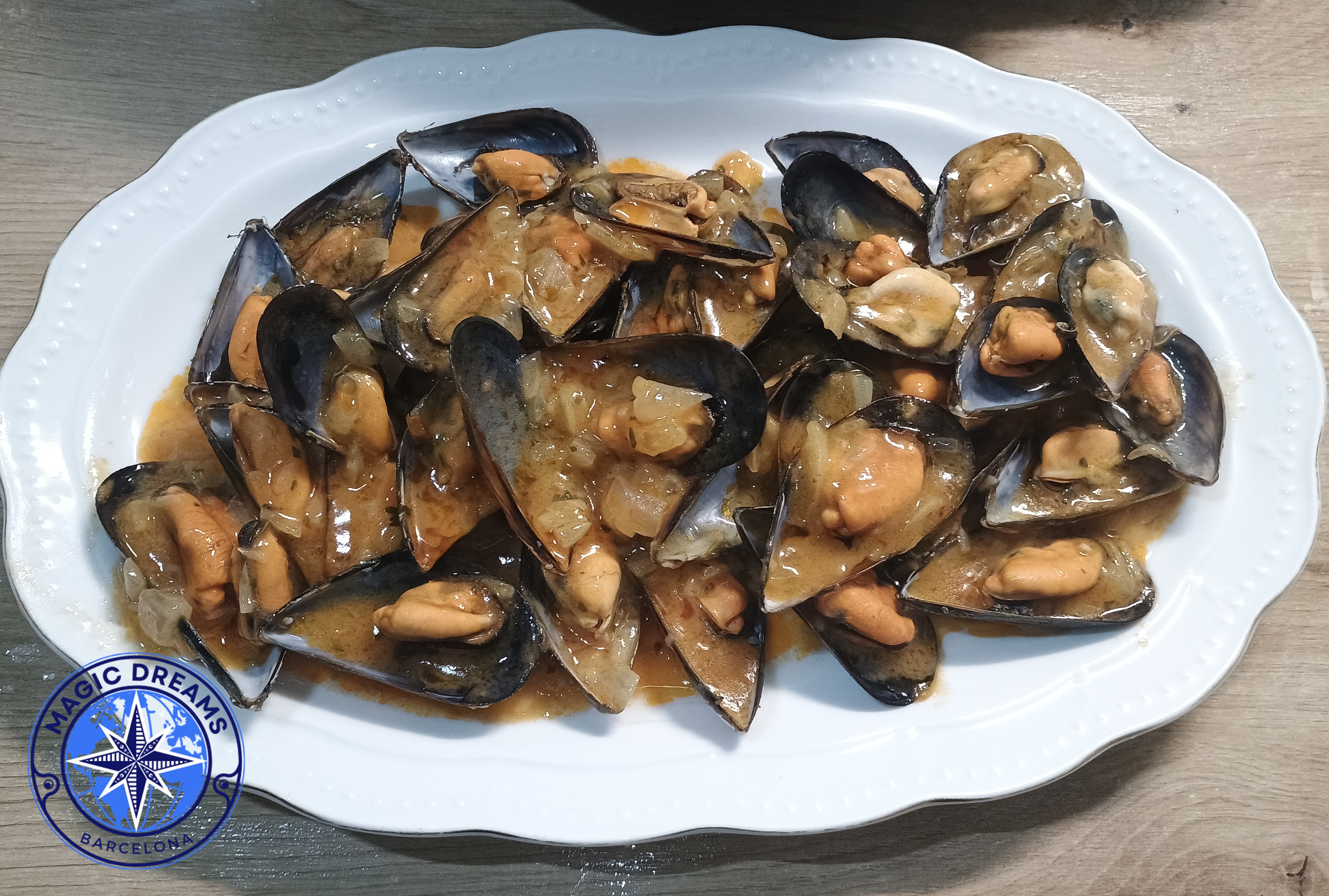
Spicy Mussels in Tomato Sauce.

Spicy Mussels in Tomato Sauce.

A Mediterranean seafood classic with a fiery touch

Spicy mussels in tomato sauce are a simple yet intensely flavoured seafood dish that reflects the culinary traditions of the Mediterranean coast. Mussels have long been an important ingredient in popular coastal cuisine because they are affordable, nutritious and naturally rich in flavour.

In Catalonia, mussels appear in many traditional preparations, from seafood stews and suquets to rice dishes and tapas. Combining them with tomato, garlic, onion and chilli creates an aromatic sauce that perfectly complements the natural sweetness and flavour of the mussels.

The secret is to respect the seafood: fresh mussels, a well-reduced sauce and carefully balanced heat that adds character without overpowering the taste of the sea.


Ingredients

Serves 4

For the mussels

  • 1 kg fresh mussels
  • 1 small onion
  • 2 garlic cloves
  • 2 ripe tomatoes, grated
  • 1 chilli pepper or bitxo
  • 100 ml fish stock
  • 50 ml dry white wine
  • Extra virgin olive oil
  • Salt, to taste
  • Fresh parsley

To finish

  • A few drops of extra virgin olive oil
  • Fresh chopped parsley
  • Lemon, optional
  • Rustic bread, to serve

Preparation

01 · Clean the mussels

Freshness comes first

Rinse the mussels thoroughly under cold running water.

Remove the beards and scrub the shells with a brush to eliminate any dirt or residue.

Discard any mussels with broken shells or those that remain open and do not close when gently tapped.

Set aside.


02 · Prepare the sofrito

The foundation of the sauce

Heat a little extra virgin olive oil in a large, wide casserole.

Add the finely chopped onion and cook over medium-low heat for approximately 8–10 minutes, until soft and translucent.

Add the chopped garlic and chilli.

Cook for about one minute, taking care not to burn the garlic.


03 · Add the tomatoes

Concentrating the Mediterranean flavour

Add the grated ripe tomatoes.

Cook over medium-low heat for approximately 10–15 minutes, stirring occasionally.

The tomato should reduce until you obtain a thick, aromatic and slightly glossy sauce.

Taste and adjust the salt.


04 · Add the wine and stock

Depth and balance

Pour in the white wine and allow it to cook for several minutes so that the alcohol evaporates and the flavours become integrated.

Add the fish stock and stir well.

Cook for another 5 minutes to allow the sauce to develop greater depth.

If you prefer a smoother sauce, blend it before adding the mussels.


05 · Cook the mussels

The decisive moment

Add the mussels to the casserole.

Cover and cook over medium-high heat for approximately 4–5 minutes.

Gently shake the casserole from time to time rather than stirring the mussels with a spoon.

Once the shells have opened, remove the casserole from the heat.

Discard any mussels that remain closed after cooking.


The Secret to the Spicy Sauce

The sauce should have character without becoming overwhelmingly hot.

The chilli provides heat, while the tomato brings sweetness and acidity.

For a milder version, use a small amount of chilli.

For a more intense version, gradually increase the quantity.

The ideal balance is one in which the spice enhances the mussels rather than masking their natural marine flavour.


Presentation

Serve the mussels directly in a traditional earthenware casserole or deep serving dish, generously covered with the spicy tomato sauce.

Finish with fresh chopped parsley and a few drops of extra virgin olive oil.

A little fresh lemon juice can be added just before serving.

And there is one essential accompaniment:

good rustic bread, perfect for dipping into the sauce.

Because with this dish, the sauce is almost as important as the mussels themselves.


Gourmet Suggestions

Magic Dreams Barcelona

To achieve particularly flavourful mussels:

  • Use fresh, good-quality mussels.
  • Clean the shells thoroughly.
  • Cook the sofrito slowly.
  • Use ripe, flavourful tomatoes.
  • Control the amount of chilli carefully.
  • Avoid overcooking the mussels.
  • Gently shake the casserole instead of stirring with a spoon.
  • Prepare and reduce the sauce before adding the seafood.
  • Serve immediately after cooking.
  • Always provide rustic bread to enjoy every last drop of the sauce.

A True Taste of the Sea

Spicy mussels perfectly represent the philosophy of Mediterranean cooking:

humble ingredients, simple technique and exceptional flavour.

No complicated ingredients are necessary.

A good sofrito, olive oil, tomato, garlic, chilli and fresh mussels are enough to create a memorable seafood tapa.


Pairing

These spicy mussels pair beautifully with a fresh, crisp 0.0% alcohol-free white wine, whose acidity refreshes the palate and balances the intensity of the sauce.

They can also be served with a Mediterranean-style 0.0% alcohol-free vermouth, particularly as an aperitif.

For a completely refreshing alternative, serve with very cold sparkling water, lemon and fresh Mediterranean herbs.

Copyright © 2016-2026 Magic Dreams Barcelona.

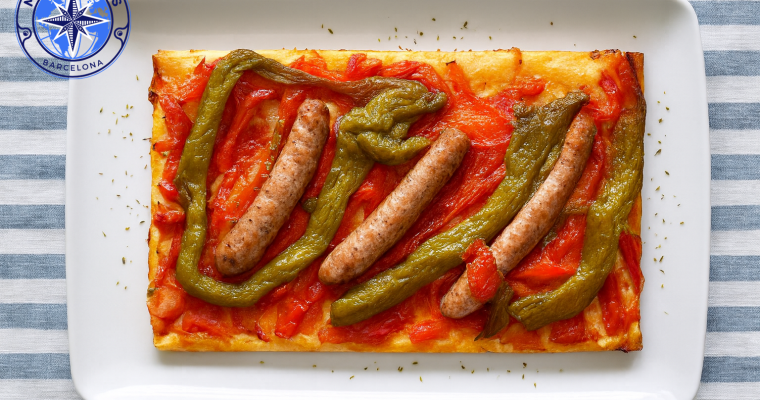
Catalan Coca with Sausages, Tomato and Roasted Peppers.

Catalan Coca with Sausages, Tomato and Roasted Peppers.

Catalan tradition, artisan dough and authentic Mediterranean flavour Coca Catalana is one of the great symbols of Catalan gastronomy and one of the oldest preparations in Catalan culinary tradition. Its origins go back centuries, when simple bread made with flour, water, salt and yeast was 

Catalan-Style Noodles in a Casserole — Fideus a la Cassola.

Catalan-Style Noodles in a Casserole — Fideus a la Cassola.

Family tradition, rich sofrito and the authentic flavour of Catalan cuisine Fideus a la cassola, also known as Catalan-style casserole noodles, are one of the most representative dishes of traditional Catalan home cooking. Their defining characteristic is also their greatest difference from classic Italian pasta: 

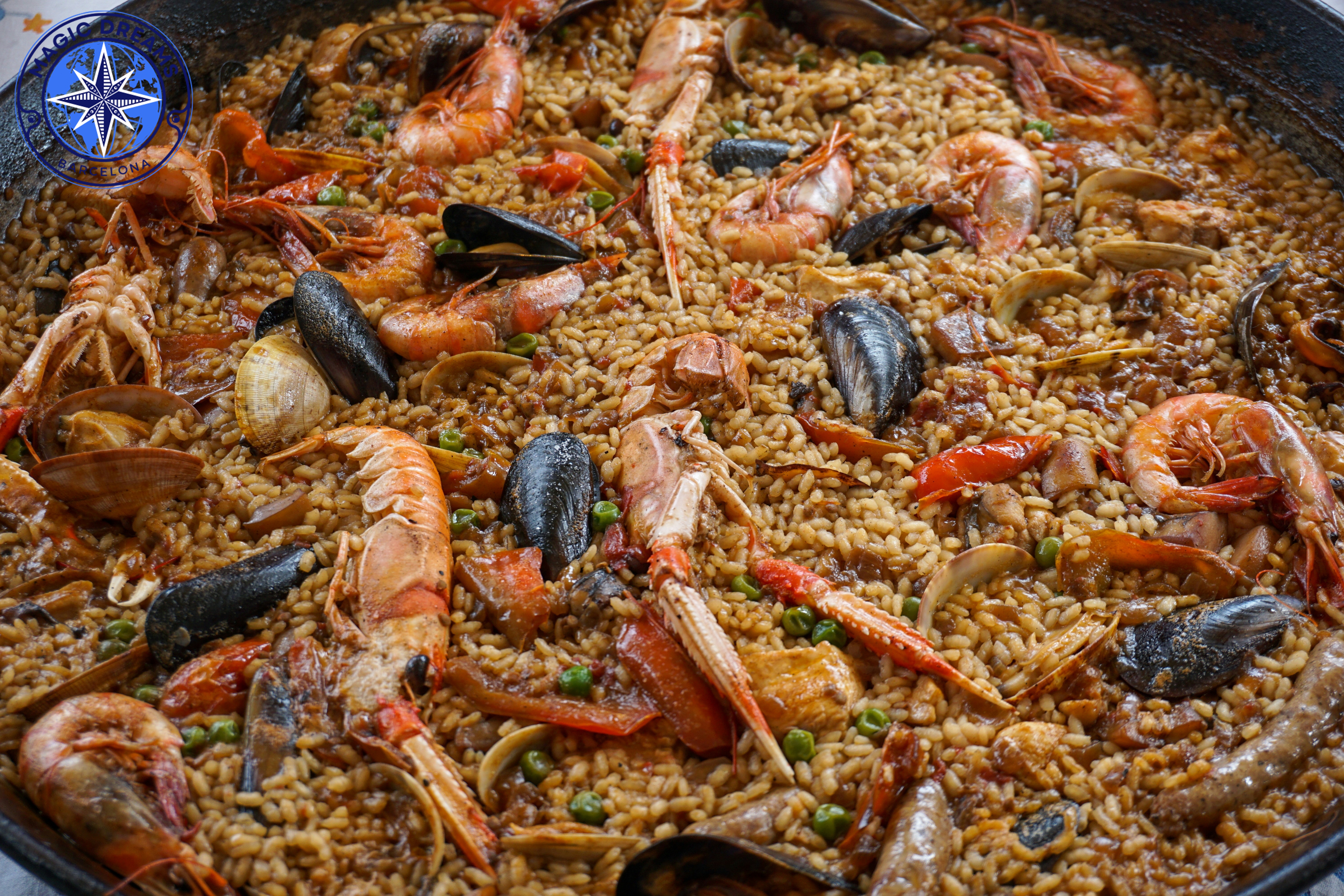
Catalan Paella Mar i Muntanya.

Catalan Paella Mar i Muntanya.

The Mediterranean meeting of sea and land

The Paella Mar i Muntanya is one of the most fascinating expressions of Catalan cuisine. Its name literally means “Sea and Mountain”, referring to the combination of ingredients from the Mediterranean coast with products traditionally associated with the countryside.

This culinary tradition is especially connected with Catalonia and the Costa Brava, where fishermen, farmers and rural families developed recipes that brought together what the sea and the land had to offer.

Unlike a purely seafood paella, the Mar i Muntanya combines meat, vegetables, seafood and rice in the same dish. Sausages provide richness and depth, while mussels, clams, langoustines, prawns and Norway lobsters bring the unmistakable character of the Mediterranean.

The foundation is a good Catalan sofrito, slowly cooked with onion, garlic and tomato, which creates the aromatic base for the rice.

The result is a generous, colourful and intensely flavoured dish that perfectly represents the Catalan philosophy of combining contrasting ingredients while allowing each one to retain its character.


Ingredients

For 4 people

For the paella

  • 320 g of bomba or other short-grain rice
  • 4 fresh Catalan sausages
  • 8 prawns
  • 4 Norway lobsters
  • 8 mussels
  • 8–10 clams
  • 150 g peas, fresh or frozen
  • 1 medium onion, finely chopped
  • 2–3 ripe tomatoes, grated
  • 2 garlic cloves, finely chopped
  • 1 small red pepper, finely diced
  • 1.2 litres of fish stock
  • 100 ml white wine
  • Extra virgin olive oil
  • Salt
  • Black pepper

For the sofrito

  • The onion
  • The garlic
  • The grated tomatoes
  • The red pepper
  • Extra virgin olive oil

Optional Catalan touches

  • A small teaspoon of sweet paprika
  • A pinch of saffron
  • A little chopped fresh parsley
  • A small amount of romesco-style picada with almonds and garlic

Preparation

01 · Prepare the seafood

The flavour of the Mediterranean

Clean the mussels carefully, removing any external impurities and beards.

Rinse the clams thoroughly.

Check the prawns and Norway lobsters and remove any unwanted shell fragments.

Keep the seafood refrigerated until needed.

If the clams contain sand, soak them in cold salted water for approximately 30–60 minutes, changing the water if necessary.


02 · Brown the sausages

The mountain begins in the pan

Cut the Catalan sausages into medium-sized pieces.

Heat a generous splash of extra virgin olive oil in a wide paella pan.

Add the sausage pieces and brown them gently on all sides.

They do not need to be completely cooked at this stage.

Remove them from the pan and set aside.

The oil will now contain some of the flavour and juices released by the meat.

This forms the first layer of flavour in our Mar i Muntanya.


03 · Sauté the seafood

The sea joins the mountain

Using the same pan, briefly sauté the prawns and Norway lobsters.

Cook them for approximately 1–2 minutes per side, just enough to release their aromas and lightly colour the shells.

Remove them and reserve.

We do not want to overcook the seafood because it will finish cooking later with the rice.


Preparing the Catalan Sofrito

04 · Cook the onion and pepper

The aromatic foundation

Reduce the heat to medium-low.

Add the finely chopped onion and red pepper to the same pan.

Cook slowly for approximately 10–15 minutes, stirring occasionally.

The onion should become soft, translucent and slightly golden.

This slow cooking is essential.

A good Catalan sofrito is not simply fried vegetables; it is a concentrated preparation in which time allows the flavours to develop.


05 · Add the garlic and tomato

The heart of the recipe

Add the chopped garlic and cook for approximately one minute.

Then add the grated tomatoes.

Cook slowly for 15–20 minutes, stirring occasionally, until the tomato has reduced considerably.

The sofrito should become thick, aromatic and slightly caramelised.

Add the sweet paprika if desired and stir quickly to prevent it from burning.

At this point, the kitchen should already be filled with the characteristic aromas of Catalan Mediterranean cooking.


Cooking the Rice

06 · Add the rice

The moment everything comes together

Add the rice directly to the sofrito.

Stir gently for approximately 1–2 minutes, allowing the grains to become coated with the concentrated flavours of the sauce.

This brief step helps the rice absorb the aromas of the sofrito before the stock is added.


07 · Add the wine

A touch of Mediterranean acidity

Pour in the white wine.

Allow the alcohol to evaporate for approximately 2–3 minutes.

Continue stirring gently until most of the liquid has disappeared.


08 · Add the hot stock

Building the foundation of the rice

Heat the fish stock separately until it is hot.

Pour it into the paella pan.

Add the peas and season lightly with salt and black pepper.

If using saffron, add it at this stage.

Bring the liquid to a lively simmer.

From this moment, avoid excessive stirring.

The rice should cook calmly and evenly while absorbing the stock and flavours of the sofrito.


09 · Add the seafood and sausages

Sea and mountain unite

After approximately 8–10 minutes, distribute the browned sausage pieces throughout the pan.

Arrange the mussels, clams, prawns and Norway lobsters over the rice.

Continue cooking for another 6–8 minutes, depending on the rice variety and the intensity of the heat.

The clams and mussels should open naturally during cooking.

Discard any shellfish that remain closed after cooking.


10 · Finish the paella

The final Mediterranean touch

When the rice is almost cooked and only a small amount of liquid remains, reduce the heat.

Allow the rice to finish absorbing the remaining stock.

If you want a traditional toasted layer at the bottom, increase the heat slightly during the final 30–60 seconds, carefully monitoring the pan.

The objective is to develop a delicate socarrat, not to burn the rice.

Turn off the heat.


The Essential Rest

11 · Let the rice rest

Patience creates flavour

Cover the paella loosely with a clean kitchen cloth or aluminium foil.

Let it rest for approximately 5 minutes.

This allows the remaining moisture to distribute evenly through the rice and helps the flavours settle.

The grains should remain separate, tender and full of flavour.


Gourmet Suggestions

Magic Dreams Barcelona

For a more sophisticated version of this Catalan classic:

  • Use bomba rice or another high-quality short-grain Mediterranean rice.
  • Prepare a slow-cooked sofrito rather than rushing the tomato and onion.
  • Use a homemade fish fumet prepared with fish bones, heads and aromatic vegetables.
  • Brown the sausages before preparing the sofrito to incorporate their flavour into the cooking oil.
  • Briefly sauté the seafood before adding it to the rice.
  • Use fresh peas when they are in season.
  • Add saffron sparingly so it enhances rather than dominates the dish.
  • For extra depth, prepare a small picada of almonds, garlic and parsley and incorporate a little into the stock.
  • Do not stir the rice continuously once the stock has been added.
  • Allow the paella to rest before serving.

The secret to a great Mar i Muntanya

The secret is balance.

The sausages should provide depth without overwhelming the seafood.

The seafood should contribute its natural marine flavour without becoming overcooked.

The peas add sweetness, while the sofrito provides the concentrated Mediterranean foundation.

The rice is the ingredient that brings everything together.

A successful Mar i Muntanya should therefore offer different sensations in every bite:

savory sausage, sweet peas, aromatic sofrito, tender rice and the unmistakable flavour of Mediterranean seafood.


Presentation

Serve the paella directly in the pan, placing the seafood attractively across the surface.

Arrange the prawns and Norway lobsters so that they are clearly visible.

The mussels and clams provide natural colour and contrast.

Finish with a small amount of freshly chopped parsley and a few drops of extra virgin olive oil.

For a more contemporary presentation, serve individual portions with one prawn, one piece of Norway lobster and a selection of mussels and clams on each plate.

A few lemon wedges can be served on the side, although the acidity should be used sparingly so that it does not overpower the carefully balanced flavours.


Serving

The Paella Mar i Muntanya should be served immediately after its resting period.

Traditionally, everyone gathers around the pan and shares the rice directly from the centre.

This communal style is part of the character of Mediterranean cuisine.

Serve with crusty rustic bread and, if desired, a fresh green salad.

For a non-alcoholic pairing, a Catalan-style 0.0% white wine or a chilled sparkling water with lemon provides a refreshing contrast.


The Catalan Spirit of Mar i Muntanya

The true importance of this dish goes beyond its ingredients.

Mar i Muntanya represents a fundamental idea in Catalan gastronomy: the ability to bring together products that at first seem completely different and transform them into a harmonious dish.

The Mediterranean provides the seafood.

The countryside provides the sausages and vegetables.

The rice connects both worlds.

And the sofrito gives the dish its Catalan soul.

It is precisely this combination of sea, land, tradition and creativity that makes Paella Mar i Muntanya such a distinctive expression of Catalan cuisine.

Sea and mountain on one plate — the essence of Catalonia in every grain of rice.

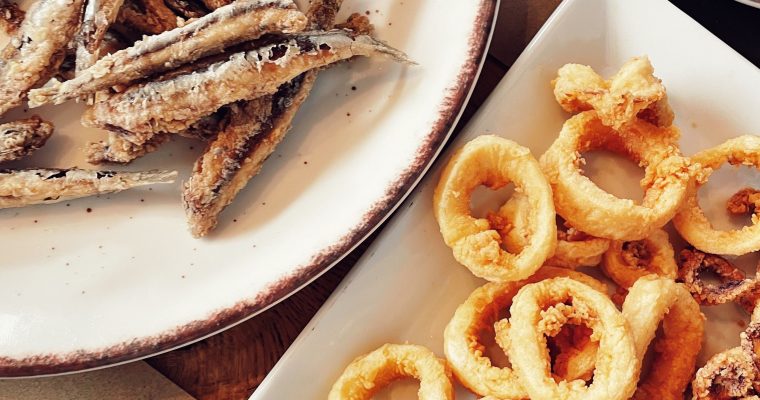
Fried Calamari and Fried Anchovies Tapas.

Fried Calamari and Fried Anchovies Tapas.

Two Mediterranean classics on one table Fried calamari and fried anchovies are two timeless dishes of Mediterranean coastal cuisine. Simple, generous and full of flavour, they are especially popular as tapas in traditional bars, taverns and seafood restaurants. Roman-style fried calamari are prepared by cutting 

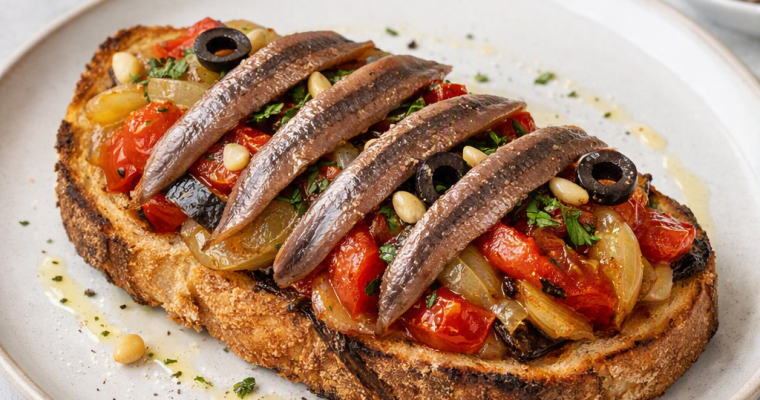
Catalan Espardenya with Escalivada and L’Escala Anchovies.

Catalan Espardenya with Escalivada and L’Escala Anchovies.

The Mediterranean on a slice of toasted bread The Espardenya is a traditional Catalan-style tapa combining toasted bread, escalivada and anchovies, bringing together the flavours of the land and the sea. The name espardenya is associated with this rustic style of preparation in Catalan cuisine, 

Cap i Pota – Traditional Catalan Style.

Cap i Pota – Traditional Catalan Style.

A historic Catalan stew of tender beef, sofrito and silky sauce

Cap i Pota is one of the most authentic dishes of traditional Catalan cuisine. Its name literally means “head and foot”, referring to the traditional use of beef head and feet, slowly cooked until wonderfully tender and rich in natural gelatin.

Originally a humble dish of Catalan peasant and working-class cuisine, it was based on the principle of using every part of the animal. Over time, this simple preparation became a much-loved classic found in traditional homes, markets and restaurants throughout Catalonia.

Its distinctive character comes from the combination of slow cooking, caramelised onion, tomato sofrito, garlic, paprika and the traditional Catalan picada of almonds, bread, garlic and parsley.

The result is a deeply savoury, comforting dish with a silky, glossy and intensely flavoured sauce.


Traditional Cap i Pota Recipe

Serves 4

Ingredients

For the stew

  • 800 g cooked beef cap i pota, cut into pieces.
  • 1 large onion, finely chopped.
  • 2 garlic cloves, finely chopped.
  • 2 ripe tomatoes, grated.
  • 1 small green pepper, optional.
  • 100 ml white wine or Catalan rancio wine.
  • 400 ml beef stock.
  • 1 teaspoon sweet paprika.
  • 1 bay leaf.
  • Extra virgin olive oil.
  • Salt.
  • Freshly ground black pepper.

For the picada

  • 10 toasted almonds.
  • 1 garlic clove.
  • Fresh parsley.
  • 1 small slice of toasted or fried bread.

Optional

  • 200 g cooked chickpeas.
  • 1 small chilli, for a gentle spicy touch.
  • Potatoes, cut into small pieces.

Preparation

01 · Prepare the Cap i Pota

If using pre-cooked cap i pota, rinse it gently and drain well.

Cut the meat into evenly sized pieces, keeping as much of the natural gelatin as possible.

This gelatin is essential for creating the characteristic thick, glossy and silky sauce.


02 · Prepare the Catalan Sofrito

Heat a generous splash of extra virgin olive oil in a large casserole.

Add the finely chopped onion and cook over low heat for approximately 15–20 minutes, until very soft and lightly caramelised.

Add the chopped garlic and, if desired, the green pepper.

Cook for a few more minutes.

Add the grated tomatoes and continue cooking slowly until the mixture becomes a rich and concentrated sofrito.

This is one of the most important stages of the recipe. Slow cooking develops the depth and sweetness of the sauce.


03 · Add the Paprika and Wine

Add the sweet paprika and stir quickly so that it does not burn.

Immediately pour in the white wine or rancio wine.

Increase the heat slightly and allow the alcohol to evaporate for several minutes.

The sofrito will become darker, richer and increasingly aromatic.


04 · Cook the Cap i Pota

Return the pieces of cap i pota to the casserole.

Add the beef stock and bay leaf.

Stir gently and cook over low heat for 25–30 minutes.

As the stew cooks, the natural gelatin from the meat will combine with the sofrito and stock, creating a rich and silky sauce.

Avoid stirring aggressively with a spoon, as the pieces can easily break apart.

Instead, gently shake the casserole from time to time.


05 · Prepare the Picada

While the stew is cooking, place the toasted almonds, garlic, parsley and toasted bread in a mortar.

Crush until you obtain a fine, aromatic paste.

The Catalan picada adds body, texture and an additional layer of flavour to the stew.

Add a little of the hot cooking liquid to the mortar, mix well and pour the picada into the casserole.


06 · Finish the Stew

Cook for another 10 minutes over very low heat.

If using chickpeas, add them during this final stage.

Taste and adjust the salt and black pepper.

The finished sauce should be thick, glossy and beautifully silky, coating the pieces of cap i pota.

Turn off the heat and allow the stew to rest for approximately 5–10 minutes before serving.


The Secret to a Great Cap i Pota

The secret is not in using a large number of ingredients.

It is in time, patience and gentle cooking.

The sofrito should be cooked slowly, while the cap i pota needs enough time to release its natural gelatin and combine with the sauce.

The perfect result should have:

Tender meat, a silky sauce and deep, savoury Catalan flavours.

Like many traditional Catalan stews, Cap i Pota can taste even better the following day.

Preparing it in advance allows the flavours to develop and the sauce to become even richer.


Gourmet Presentation

For a traditional presentation, serve the Cap i Pota in a small earthenware casserole, accompanied by rustic country bread.

For a more contemporary presentation, arrange the pieces carefully in the centre of a warm plate and spoon the glossy sauce around them.

Finish with:

  • A few drops of extra virgin olive oil.
  • Fresh parsley.
  • Lightly crushed toasted almonds.
  • A small piece of crispy bread.

The idea is to preserve the soul of this humble Catalan dish while presenting it with a more refined gastronomic style.


Traditional Serving

Cap i Pota should be served hot, with plenty of sauce.

A good piece of rustic bread is practically essential for soaking up the rich cooking juices.

For an authentic Catalan experience, serve it as a hearty main course alongside a simple seasonal salad.


Wine Pairing

Cap i Pota pairs particularly well with a medium-bodied Catalan red wine, whose structure complements the richness of the sauce.

A structured Mediterranean white wine can also work beautifully.

For an alcohol-free alternative, choose a 0.0% red wine with good body and balanced acidity.

Cap i Pota Catalana.

Cap i Pota Catalana.

Una receta humilde convertida en un clásico de la cocina catalana El Cap i Pota es uno de los guisos más tradicionales y auténticos de la cocina popular catalana. Su nombre significa literalmente “cabeza y pata”, haciendo referencia a los principales ingredientes del plato: cabeza 

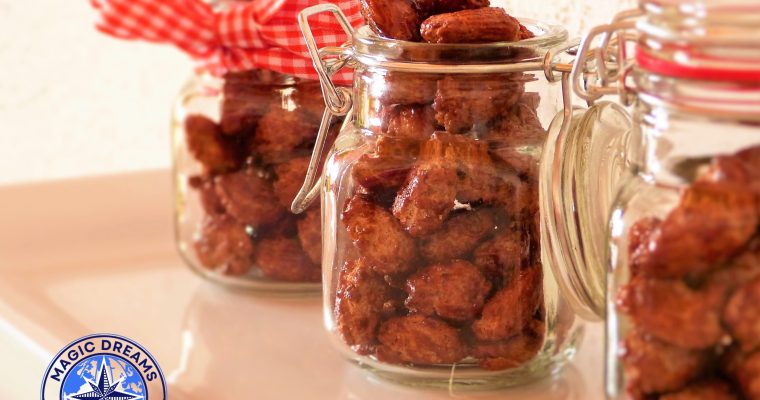
Caramelised Catalan Almonds.

Caramelised Catalan Almonds.

The sweet aroma of Catalan fairs and traditional celebrations Caramelised almonds, known in Spanish as almendras garrapiñadas, are one of the most beloved traditional sweets found at fairs, village festivals and popular celebrations throughout Catalonia. Their aroma is unmistakable. The moment sugar begins to caramelise 

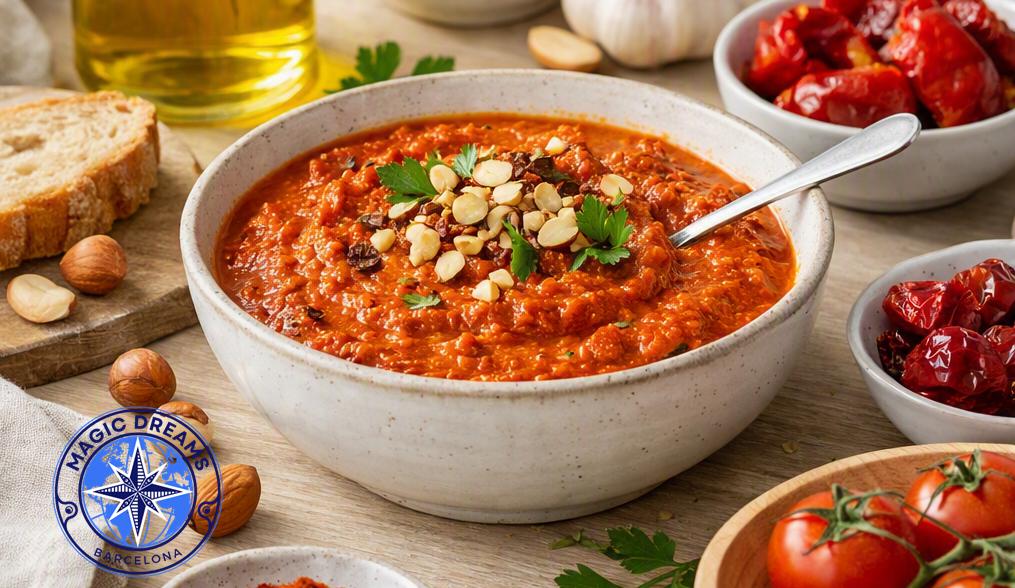
Catalan Romesco Sauce.

Catalan Romesco Sauce.

The essence of Catalan cuisine in one deeply Mediterranean sauce

Romesco sauce is one of the great treasures of Catalan gastronomy. Originating in the Tarragona area and deeply connected with the maritime traditions of the Catalan coast, it has become an essential accompaniment to calçots, fish, seafood, meat and roasted vegetables.

Its character comes from an extraordinary combination of simple ingredients: almonds, hazelnuts, tomatoes, garlic, ñora pepper, bread, olive oil and vinegar, together with a touch of bitxo or chilli for gentle heat.

The tradition is closely linked to popular and coastal cooking. Romesco developed as a versatile sauce that could accompany a wide variety of ingredients while making use of products commonly found in Catalan kitchens.

Its texture can range from rustic and chunky to smooth and creamy, depending on the local tradition, the family recipe and the dish it is intended to accompany.

When served with calçots, it becomes part of the famous Catalan calçotada tradition, although not every calçot sauce is exactly the same as traditional romesco.

Its beauty lies in the balance:

sweet tomato + toasted nuts + roasted garlic + acidity from the vinegar + aromatic ñora + gentle chilli heat.


Premium Traditional Romesco Sauce

Makes approximately 4–6 servings

Ingredients

  • 2 large ripe tomatoes
  • 1 whole head of garlic
  • 50 g toasted almonds
  • 50 g toasted hazelnuts
  • 2 dried ñora peppers
  • 1 slice rustic bread
  • 100–120 ml extra virgin olive oil
  • 1–2 tablespoons wine vinegar
  • 1 small bitxo or chilli, to taste
  • Salt
  • Freshly ground black pepper, optional

Step-by-Step Preparation

01 · Prepare the Ñora Peppers

The aromatic heart of Romesco

Cut the ñoras open and remove the seeds.

Place them in warm water for approximately 30–60 minutes, until the flesh softens.

Once hydrated, scrape out the flesh with a spoon or small knife.

Set aside.


02 · Roast the Tomatoes and Garlic

Let the fire create the flavour

Preheat the oven to 200°C / 392°F.

Place the tomatoes and whole head of garlic on a baking tray.

Roast for approximately 25–35 minutes, until the tomatoes are tender and lightly charred and the garlic becomes soft and creamy.

The roasted garlic adds sweetness and depth to the sauce.


03 · Fry the Bread

Heat a small amount of olive oil in a frying pan.

Fry the slice of bread until golden and crisp.

Remove and drain.

The bread provides body and helps create Romesco’s characteristic texture.


04 · Toast the Nuts

If the almonds and hazelnuts are not already toasted, lightly toast them in a dry frying pan.

Watch carefully so they do not burn.

Toasting intensifies their flavour and aroma.


05 · Build the Base

Place the following ingredients in a mortar:

almonds + hazelnuts + fried bread + ñora + roasted garlic.

Crush slowly until you obtain a rustic, aromatic paste.

A little roasted tomato can be added to make the process easier.


06 · Add the Tomatoes

Peel the roasted tomatoes and add them to the mortar.

Work the mixture until the ingredients are well combined.

There is no need to make it completely smooth.

Traditional Romesco can retain small pieces of nuts, adding character and texture.


07 · Add the Oil and Vinegar

Finding the final balance

Gradually incorporate the extra virgin olive oil, continuing to work the mixture.

Add the vinegar little by little.

Taste.

Adjust the salt.

Then adjust the acidity according to your preference.


08 · Add the Bitxo

Add a small amount of bitxo or chilli.

The quantity depends entirely on how spicy you want the sauce.

The heat should provide character without overpowering the tomato, nuts and ñora.


The Perfect Texture

Romesco can be prepared traditionally in a mortar for a rustic texture, or blended for a smoother, more refined finish.

The traditional version is particularly appealing when small pieces of toasted nuts remain visible.

The ideal consistency is:

thick + creamy + slightly textured + glossy.


The Secret of Great Romesco

The key lies in the toasting of the ingredients.

Tomatoes.

Garlic.

Nuts.

Bread.

Each develops a different set of aromas when exposed to heat.

This combination of toasted flavours gives the sauce its remarkable depth.

The ñora provides sweetness and a distinctive fragrance.

The vinegar balances the richness of the olive oil and nuts.

And the chilli gives the final touch of personality.


What to Serve with Romesco Sauce

Romesco is exceptionally versatile.

Calçots

Its most iconic pairing.

The sauce accompanies grilled calçots and is an essential part of the traditional Catalan calçotada.

Fish

Excellent with white fish, rock fish and grilled seafood preparations.

Seafood

Works beautifully with prawns, langoustines, octopus, mussels and other Mediterranean seafood.

Meat

Excellent with chicken, pork and grilled meats.

Vegetables

Ideal with artichokes, asparagus, aubergine, peppers and other roasted vegetables.


Romesco and Calçots

An inseparable Catalan pairing

During an authentic calçotada, the sauce takes centre stage.

The calçots are grilled directly over the flames until their outer layers become heavily charred.

They are then wrapped, cleaned and served with a generous portion of sauce.

The contrast is extraordinary:

sweet smoky calçot + rich, tangy, creamy and slightly spicy Romesco.

It is one of the most recognisable combinations in Catalan gastronomy.


Gourmet Suggestions

Magic Dreams Barcelona

To create exceptional Romesco:

  • Use ripe, flavourful tomatoes.
  • Hydrate the ñora peppers properly.
  • Toast the almonds and hazelnuts carefully.
  • Do not burn the garlic.
  • Choose good-quality rustic bread.
  • Use a high-quality extra virgin olive oil.
  • Add the vinegar gradually.
  • Control the chilli carefully.
  • Allow the sauce to rest before serving.
  • Adjust the consistency according to the dish.

The Premium Magic Dreams Barcelona Touch

Catalan tradition elevated into refined gastronomy

For a Premium Magic Dreams Barcelona version, use carefully selected toasted nuts, premium extra virgin olive oil and particularly aromatic ñora peppers.

Serve the sauce in a handcrafted ceramic bowl or use it as an elegant brushstroke across the plate.

For a contemporary presentation:

Romesco base + main ingredient + toasted nuts + a few drops of olive oil.

The sauce should enhance the dish.

Never hide it.


Presentation

For a traditional table, serve the Romesco in a ceramic sauce dish at the centre of the table.

For a more refined gastronomic presentation, use a small quenelle or a broad brushstroke of sauce alongside the fish, meat or vegetables.

Finish with a few drops of extra virgin olive oil and a scattering of toasted nuts.


Pairing

For the table, we recommend a fresh 0.0% alcohol-free Mediterranean-style white wine, with good acidity to balance the richness of the nuts and olive oil.

A 0.0% alcohol-free Mediterranean rosé can also work beautifully, especially with grilled meats and vegetables.

For a completely refreshing option, serve very cold sparkling water with lemon and fresh Mediterranean herbs.


Storage

Romesco can be stored in an airtight container in the refrigerator for approximately 3–4 days.

Before serving, allow it to come closer to room temperature and stir well.

If it has become too thick, add a few drops of olive oil or a small amount of water to restore the desired consistency.


A Sauce with Catalan Identity

Romesco perfectly demonstrates how Catalan cooking can transform simple ingredients into something extraordinary.

Tomato, garlic, nuts, ñora, bread, olive oil, vinegar and a touch of heat.

Nothing complicated.

Nothing unnecessary.

Just well-treated ingredients.

Behind them lies a culinary tradition deeply connected with Tarragona, the Mediterranean and the famous calçotada.


The Premium Magic Dreams Barcelona Touch

At Magic Dreams Barcelona, we respect this Catalan tradition while transforming it into a carefully curated gastronomic experience.

We select the ingredients, enhance their flavours through careful roasting and seek the perfect balance between sweet, acidic, savoury, spicy and toasted notes.

A simple sauce in terms of ingredients, yet extraordinary in character.

Copyright © 2016-2026 Magic Dreams Barcelona.

Salt-Baked Sea Bream.

Salt-Baked Sea Bream.

Mediterranean tradition, pure flavour and elegance in every bite Salt-baked sea bream is one of the most elegant and natural ways to prepare fish in Mediterranean cuisine. Its secret lies not in adding numerous ingredients, but in respecting the fish itself and using an ancient 

Catalan Easter Mona.

Catalan Easter Mona.

A beloved Easter tradition of chocolate, family and creativity The Mona de Pascua is one of Catalonia’s most cherished Easter traditions and one of the most recognisable symbols of Catalan pastry. It is traditionally celebrated on Easter Sunday and Easter Monday, with Easter Monday being 

Neules (Catalan Wafer Rolls).

Neules (Catalan Wafer Rolls).

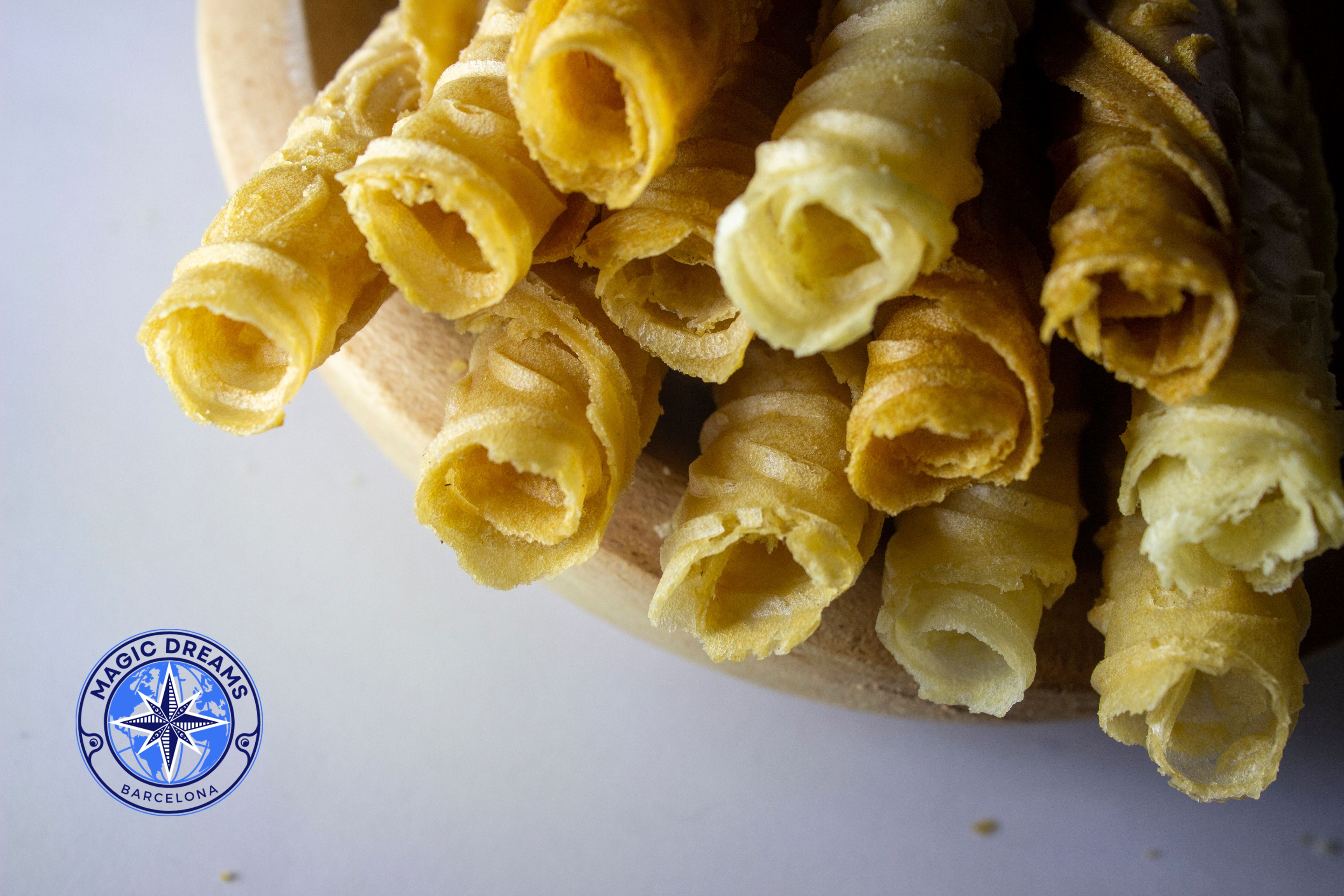
Neules are a traditional Catalan sweet and an essential part of Christmas pastry in Catalonia. They are especially appreciated for their fine, crisp and delicate texture, which distinguishes them from denser and harder types of wafers.

Their origins date back to the Middle Ages, when monasteries prepared thin doughs cooked between metal plates engraved with religious decorations. Their name is believed to derive from the Latin word nebula (“cloud”), referring to their delicate and brittle texture.

Traditionally, neules are made with:

  • Wheat flour.
  • Sugar.
  • Egg yolks.
  • Butter.
  • Lemon zest.
  • Vanilla.

Common Variations

  • Neules dipped in dark or milk chocolate.
  • White or ruby chocolate neules.
  • Neules filled with turrón or praline.
  • Neules decorated with chocolate drizzles, sugar hearts or small flowers, as shown in the photograph.

During Christmas meals, neules are traditionally served alongside turrón and cava, and they are also commonly used to accompany Crema Catalana, ice cream and sorbets.


Recipe for Catalan Chocolate-Dipped Neules

Makes approximately 25–30 neules

Ingredients

For the neules

  • 250 g icing sugar.
  • 250 g sifted wheat flour.
  • 4 egg whites.
  • 100 g melted butter.
  • Finely grated zest of 1 lemon.
  • 1 teaspoon vanilla, optional.
  • A pinch of salt.

For the chocolate coating

  • 200 g dark, milk or white chocolate.
  • 1 tablespoon coconut oil, optional, for a thinner and crispier coating.

For decoration

  • White chocolate drizzle.
  • Sugar hearts.
  • Small edible flowers.
  • Cocoa powder, optional.

Preparation

01 · Prepare the neula batter

The delicate foundation

Whisk the egg whites just until they become foamy. Do not whip them into stiff peaks.

Add the icing sugar and mix gently.

Gradually incorporate the sifted flour using smooth movements to avoid creating lumps.

Add the melted butter, vanilla and finely grated lemon zest.

Mix until you obtain a smooth, light and fluid batter.

The mixture should be easy to spread into very thin circles.


02 · Bake the neules

Thin, golden and delicate

Preheat the oven to 180°C / 350°F.

Line a baking tray with parchment paper.

Place small spoonfuls of batter onto the tray and spread each one into a very thin circle approximately 10–12 cm in diameter.

Bake for approximately 5–6 minutes, or until the edges begin to turn lightly golden.

Do not bake too many at once, especially when making neules for the first time.

The shaping stage must be done quickly while they are still hot and flexible.


03 · Roll the neules

The essential step

This is the most important stage of the recipe.

Remove the neules from the oven one at a time.

Immediately roll each one around a thin tube or cylindrical utensil, such as a clean wooden stick, the handle of a rounded spoon or a thin pastry rod.

Allow the rolled neula to cool completely.

As it cools, it will become crisp, light and delicate.

Repeat the process with the remaining batter.

If the neules cool before you have time to roll them, they will become brittle and may break.

In that case, return them to the oven for approximately 10–15 seconds to soften them again.

Work quickly and carefully, as the dough becomes firm within seconds.


04 · Dip in chocolate

A classic Catalan festive finish

Melt the chocolate gently using a bain-marie or in the microwave in short intervals, stirring between each one.

If desired, add 1 tablespoon of coconut oil to obtain a thinner, smoother and slightly shinier coating.

Dip each neula completely or only halfway into the chocolate. Both styles are suitable for a festive presentation.

Place the dipped neules on parchment paper and allow the chocolate to set completely.

For a more decorative finish, add:

  • Fine drizzles of white chocolate.
  • Small sugar hearts.
  • Tiny edible flowers.
  • A light dusting of cocoa powder.

Allow the decorations to set before serving.


Storage

Store the finished neules in an airtight metal tin.

Keep them away from humidity, as moisture will quickly soften their delicate texture.

When stored correctly, they can remain crisp for approximately one week.

Avoid storing them in the refrigerator, as condensation and humidity can affect their crispness.


Chocolate Coating Options

Dark Chocolate 70%

The most intense option, with a rich cocoa character that contrasts beautifully with the delicate sweetness of the neula.

Milk Chocolate

Smoother, creamier and sweeter, making it particularly popular for children and sweeter Christmas dessert tables.

White Chocolate

A sweeter and more delicate option that works especially well with decorative toppings.

Ruby Chocolate

A contemporary and visually striking alternative, particularly suitable for festive tables, celebrations and decorative presentations.


Gourmet Suggestions

Magic Dreams Barcelona

For a more refined result:

  • Use high-quality butter for a richer and more aromatic dough.
  • Choose a fragrant lemon and grate only the yellow part of the peel, avoiding the bitter white pith.
  • Keep the batter extremely thin when spreading it on the baking tray.
  • Bake only until the edges begin to turn golden; excessive baking can make the neules too dark and bitter.
  • Work with one or two neules at a time when rolling them to ensure they remain flexible.
  • Use a pastry rod or another smooth cylindrical utensil to achieve a more uniform shape.
  • Temper the chocolate if you want a professional-looking finish with greater shine and a crisp snap.
  • Add decorative elements while the chocolate is still slightly soft so that they adhere properly.
  • For a more contemporary presentation, combine dark chocolate neules with a few white or ruby chocolate decorations.

The Secret to Perfect Neules

The key is thinness and timing.

The batter must be spread extremely thinly, allowing the neula to become crisp without becoming excessively hard.

The second secret is to roll them immediately after removing them from the oven.

There is only a short window in which the baked dough remains flexible enough to shape.

Once it cools, it becomes crisp and fragile.

The ideal neula should be:

thin, delicate, crisp, lightly sweet and beautifully aromatic.


Gourmet Presentation

For a traditional Christmas presentation, arrange the neules vertically in a decorative ceramic container alongside turrón and other Catalan Christmas sweets.

For a more contemporary dessert table, arrange chocolate-dipped neules in small groups, alternating dark, milk, white and ruby chocolate finishes.

They can also be served alongside Crema Catalana, vanilla ice cream, chocolate mousse or citrus sorbet.

For an elegant plated dessert, place one or two neules beside a quenelle of ice cream or sorbet and finish with a few drops of chocolate sauce, citrus zest and small edible flowers.

The contrast between the delicate crispness of the neula, the creaminess of the dessert and the richness of the chocolate creates a sophisticated finish while preserving its Catalan identity.


Serving

Neules are best served at room temperature, when their texture is at its crispest and their aromas are most expressive.

They are traditionally enjoyed during Christmas celebrations, alongside turrón, cava and other festive Catalan sweets.

They are also excellent as an accompaniment to coffee, tea, hot chocolate, ice cream and sorbets.


Traditional and Modern Variations

The classic chocolate-dipped neula can be adapted in many ways while maintaining its traditional character.

Try filling the rolled neules with:

  • Turrón cream.
  • Hazelnut praline.
  • Almond cream.
  • Chocolate ganache.
  • Vanilla cream.

For an elegant modern version, dip only one end of each neula in chocolate and decorate with finely chopped toasted nuts or dried citrus zest.

For Christmas celebrations, white chocolate combined with small sugar decorations creates a particularly festive presentation.


A Taste of Catalan Christmas

Neules are much more than a simple wafer.

They are part of the Christmas culinary heritage of Catalonia, traditionally appearing on family tables alongside turrón and festive drinks.

Their delicate texture, elegant shape and subtle sweetness make them one of the most recognizable symbols of Catalan Christmas pastry.

Whether served in their traditional form or finished with contemporary chocolate decorations, the essence remains the same:

a delicate, crisp and timeless Catalan sweet made to be shared.

Copyright © 2016–2026 Magic Dreams Barcelona.
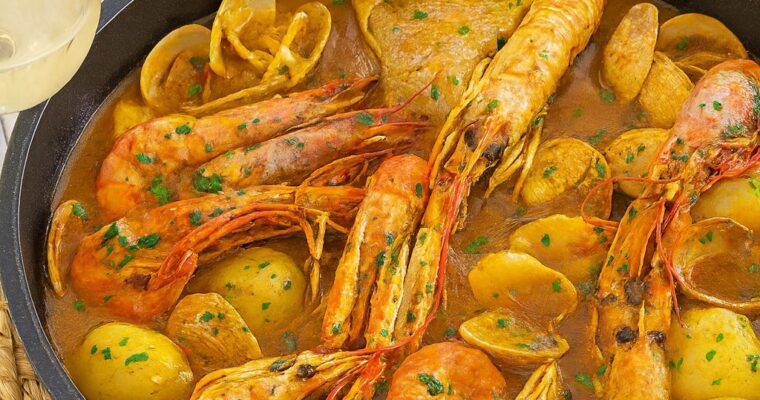
Catalan Olivada with Anchovies – Gourmet Mediterranean Spread.

Catalan Olivada with Anchovies – Gourmet Mediterranean Spread.

Catalan olivada is one of those simple preparations that perfectly expresses the character of Mediterranean cuisine. Traditionally made with black olives, this aromatic olive spread captures the flavour of the Catalan landscape in just a few ingredients: olive trees, extra virgin olive oil and Mediterranean