Traditional Suquet de Peix | Catalan Fish Stew.
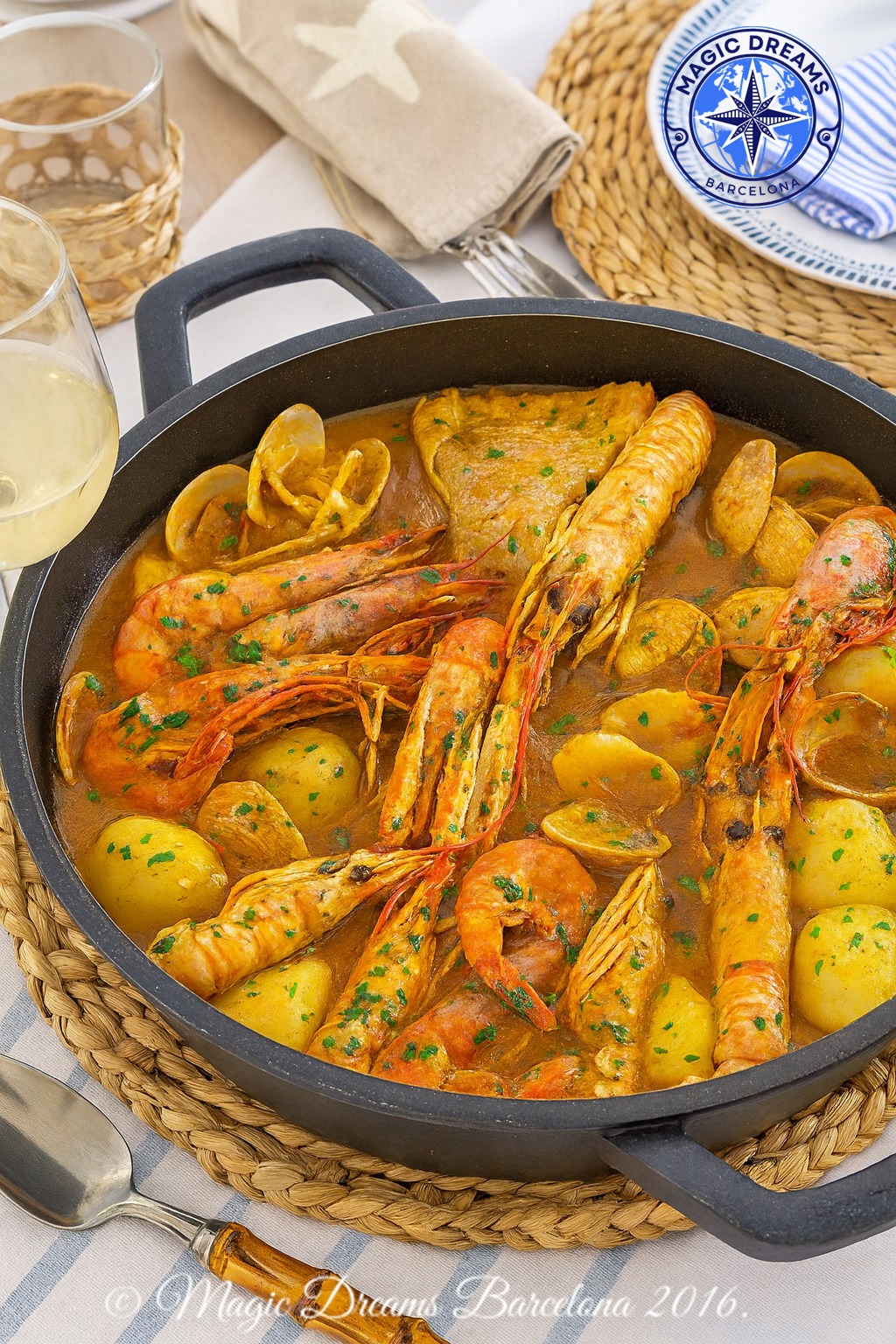
Suquet de Peix is one of the great classics of Catalan coastal cuisine. A humble fishermen’s stew in origin, it has become one of the most representative dishes of the Mediterranean gastronomic tradition.
Traditionally prepared with the fish available that day, Suquet combines fish, potatoes, sofrito, fish stock and a picada that gives the dish body, depth and aroma.
Its essence lies in creating a rich, flavorful and slightly thickened broth, perfect for soaking up with rustic bread and enjoying every last drop.
Along the Catalan coast, there are countless family versions. Some use rock fish, while others include monkfish, hake, scorpionfish or sea bream. More generous versions may also include prawns, langoustines, mussels or clams.
The combination of seafood with potatoes and picada perfectly represents the philosophy of Catalan coastal cuisine: simple ingredients transformed through technique, patience and quality produce.
Ingredients
Serves 4
For the fish and seafood
- 600–800 g mixed fresh fish, such as monkfish, hake, scorpionfish, sea bream or rock fish.
- 8 prawns or langoustines.
- 300 g mussels or clams, optional.
- Salt.
- Freshly ground black pepper.
- Extra virgin olive oil.
For the stew
- 3 medium potatoes.
- 1 onion, finely chopped.
- 2 ripe tomatoes, grated.
- 2 garlic cloves, finely chopped.
- 1 small glass of dry white wine.
- 1 litre fish stock.
- 1 bay leaf.
- 1 teaspoon sweet paprika.
- Extra virgin olive oil.
- Salt and black pepper.
For the picada
- 1 garlic clove.
- 8–10 toasted almonds.
- 1 small sprig of fresh parsley.
- A small piece of fried or toasted bread.
Optional: a few saffron threads or a small amount of ñora pepper pulp for additional colour and depth.
Preparation
01 · Prepare the fish
The product is the true protagonist
Clean the fish carefully and check that no unwanted bones remain.
Cut it into evenly sized portions and season lightly with salt and freshly ground black pepper.
If using mussels or clams, clean them thoroughly and set them aside.
Keep the prawns or langoustines refrigerated until they are ready to be added to the stew.
For an especially flavorful Suquet, prepare a homemade fish stock beforehand using fish bones, heads and trimmings.
02 · Prepare the sofrito
The aromatic foundation of the stew
Heat a wide casserole or heavy-based pot with a generous drizzle of extra virgin olive oil.
Add the chopped onion and cook over medium-low heat until soft and translucent.
Add the chopped garlic and cook gently for a few moments, taking care not to brown it too much.
Add the grated tomatoes and cook slowly until you have a rich, concentrated and aromatic sofrito.
Patience is essential at this stage.
A properly reduced sofrito provides much of the depth and character of the Suquet.
03 · Add the paprika and white wine
The Mediterranean aroma
Temporarily remove the casserole from the heat and add the sweet paprika.
Stir quickly to prevent it from burning.
Return the casserole to the heat and pour in the white wine.
Allow it to reduce for several minutes until most of the alcohol has evaporated.
The result should be a moist, aromatic and well-integrated sofrito.
04 · Add the potatoes
The characteristic texture of Suquet
Peel the potatoes and cut them using the traditional “breaking” technique: begin cutting with a knife and then break the final part of each piece rather than cutting it completely.
This releases some of the potato starch and helps naturally thicken the broth.
Add the potatoes to the casserole and toss them with the sofrito for a couple of minutes.
05 · Add the fish stock
The heart of the dish
Pour in the hot fish stock, making sure the potatoes are well covered.
Add the bay leaf and adjust the seasoning lightly.
Bring to a boil, then reduce the heat.
Cook for approximately 15–20 minutes, until the potatoes are almost tender.
The broth should gradually develop a richer texture as the starch from the potatoes is released.
06 · Prepare the picada
The secret to its depth of flavour
While the potatoes are cooking, prepare the picada.
Place the garlic, toasted almonds, parsley and fried or toasted bread in a mortar.
Crush everything until you obtain a fine, aromatic paste.
If using saffron, add it at this stage.
Stir the picada into the casserole.
The broth will begin to develop a more silky, rich and aromatic texture.
07 · Cook the fish
Just the right amount of cooking
Once the potatoes are almost tender, carefully arrange the pieces of fish on top of the stew.
Cook for approximately 6–8 minutes, depending on the thickness of the fish.
Avoid stirring vigorously, as this can break the fish apart.
Instead, gently shake the casserole in small circular movements so the sauce integrates without damaging the ingredients.
08 · Add the seafood
The final touch of the Mediterranean
Add the prawns or langoustines during the final 3 minutes of cooking.
If using mussels or clams, add them at this stage as well and cover the casserole until they open.
Discard any shellfish that remain closed after cooking.
The seafood should remain juicy and perfectly cooked, never overdone.
09 · Rest the Suquet
Time completes the dish
Turn off the heat and allow the Suquet to rest for approximately 5 minutes.
This short resting period allows the flavours to integrate and the broth to develop an even more harmonious texture.
Taste and adjust the seasoning if necessary.
The finished broth should be rich, slightly thick, glossy and deeply infused with the flavours of the sea.
Gourmet Suggestions
Magic Dreams Barcelona
To elevate the Suquet de Peix while preserving its traditional identity:
- Use fresh fish with different textures to create greater complexity.
- Prepare a homemade fish stock using bones and heads for a deeper flavour.
- Cook the sofrito slowly and reduce the tomato thoroughly before adding the stock.
- Break the potatoes rather than cutting them cleanly to release their starch and naturally thicken the broth.
- Use freshly toasted almonds in the picada to intensify the Mediterranean character.
- Add the picada towards the end of cooking to preserve its aromas.
- Avoid overcooking the fish and seafood.
- For a more refined version, add a few threads of saffron or a little ñora pepper pulp.
- Always serve with rustic bread, as the broth is an essential part of the experience.
The secret to a great Suquet
The key is the balance between broth, sofrito, potatoes and fish.
The broth should have enough intensity to support the dish without becoming excessively salty.
The potatoes should be tender while retaining their shape.
The fish should be cooked just until its flesh separates easily into flakes.
The picada should add body and depth without turning the broth into an overly heavy sauce.
The ideal result is a seafood stew in which every ingredient remains recognizable.
Gourmet Presentation
Serve the Suquet directly in a traditional earthenware or ceramic casserole, preserving its rustic character.
For a more refined presentation, place a portion of potatoes in the centre of the plate and arrange a piece of fish on top.
Add a few prawns or langoustines and, if using them, mussels or clams.
Spoon some of the broth around the fish and finish with a few drops of extra virgin olive oil and fresh parsley.
The broth should remain visible without completely covering the main ingredients.
Serve with rustic toasted bread, essential for enjoying the sauce.
The presentation should express one simple idea:
the Mediterranean served on a plate.
Serving
Suquet de Peix should be served hot and immediately after cooking.
It is best to cook the fish shortly before serving in order to preserve its delicate texture.
The casserole can be brought directly to the table to maintain its traditional character and retain the heat.
Serve plenty of rustic bread on the side for dipping into the broth.
Pairing
Suquet pairs particularly well with a fresh, dry Catalan-style alcohol-free white wine, preferably with good acidity.
A Mediterranean-style white wine helps balance the richness of the broth, olive oil and seafood.
For a more festive experience, an alcohol-free sparkling wine can also work beautifully.
For a simple and refreshing option, serve sparkling water with lemon to cleanse the palate between bites.
Make-Ahead Preparation
The fish stock and sofrito can be prepared in advance.
The picada can also be prepared several hours ahead.
However, we recommend adding the potatoes, fish and seafood close to serving time.
This allows you to control the cooking precisely and keep the fish juicy.
The Suquet can benefit from a short resting period, but avoid prolonged reheating once the fish has been added.
Storage
Suquet is best enjoyed freshly prepared.
If leftovers remain, store them in an airtight container in the refrigerator for approximately 1–2 days.
To reheat, warm gently over low heat and avoid vigorous boiling, which can dry out the fish.
The broth and sofrito can be stored separately and used as a base for future preparations.
We do not recommend freezing the finished Suquet with potatoes and fish, as the texture may deteriorate.
Copyright © 2016-2026 Magic Dreams Barcelona.