Route guide for visitors throughout Catalonia – Barcelona – Costa Brava – Catalan Pyrenees – Personalized experiences – Customized tour guide services – A small tribute to the wonderful city and land that saw us born – Transforming experiences into unforgettable memories - Magic Dreams Collection: exclusive universes inspired by Salvador Dalí and Gaudí. Niche perfumes, jewelry, lithographs, and collectible items celebrating the Mediterranean spirit.
History, heritage, beaches and coves of the Costa Brava Roses is a Catalan municipality in the Alt Empordà comarca, in the province of Girona, located on the northern coast of the Gulf of Roses, south of Cap de Creus, in the heart of the Costa …
Roses Historia, patrimonio, playas y calas de la Costa Brava Roses es un municipio catalán de la comarca del Alt Empordà, en la provincia de Girona, situado en la costa norte del golfo de Roses, al sur del Cap de Creus, en plena Costa Brava. …
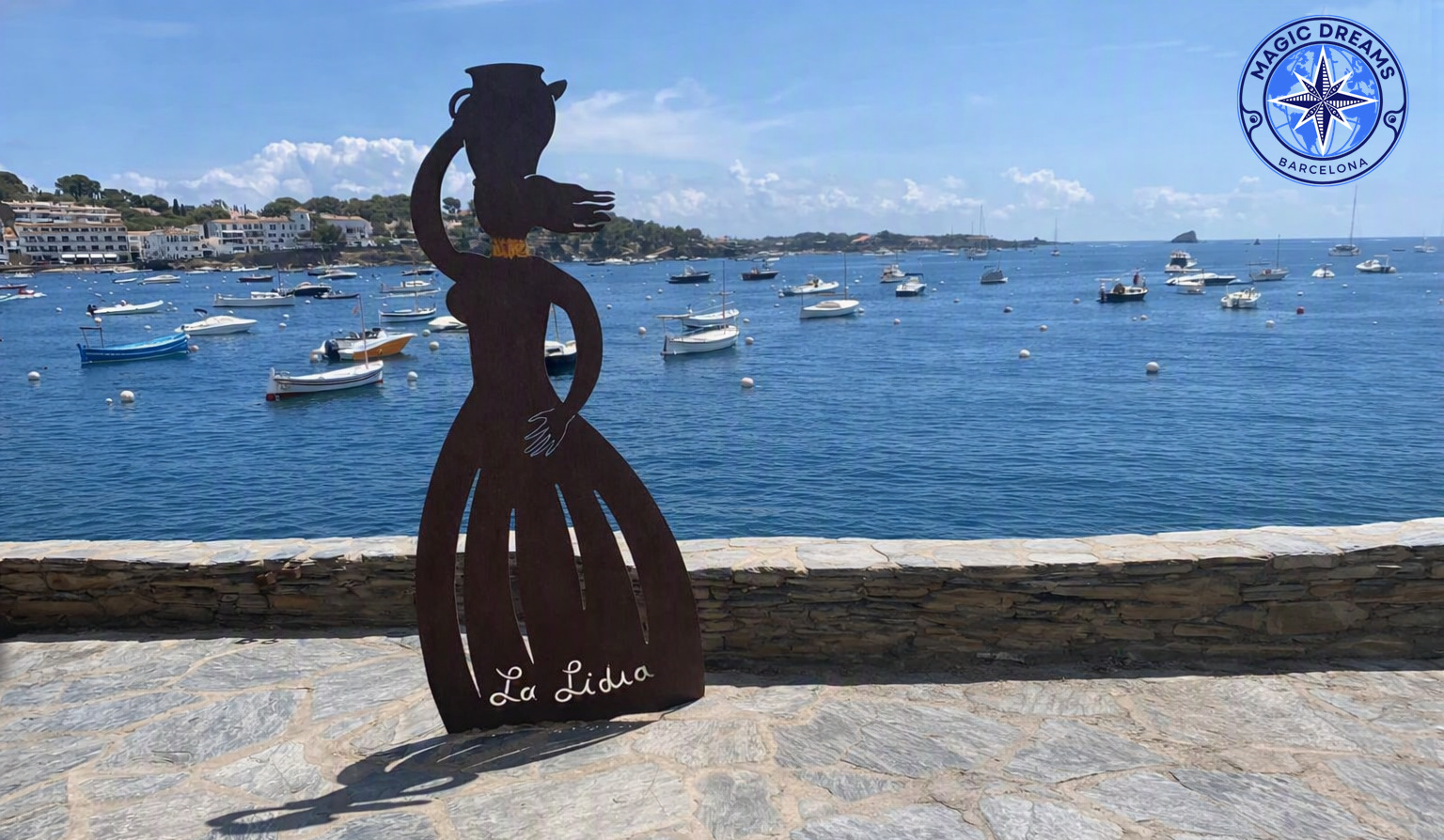
Some people become part of history. Others become legends. Lídia of Cadaqués became both.
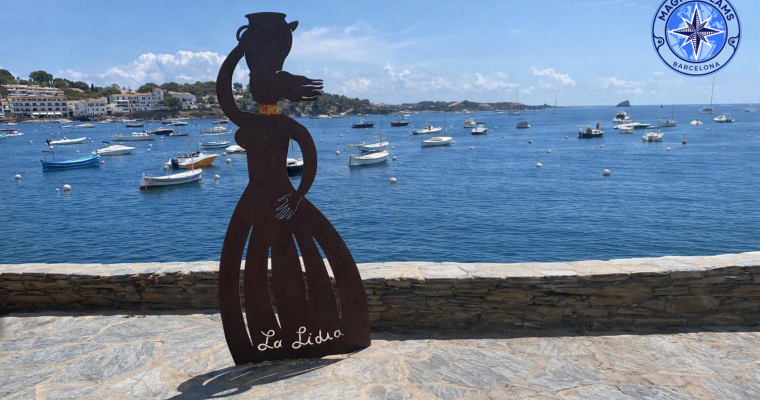
Fisherwoman, innkeeper, storyteller and one of the most fascinating characters in the history of Cadaqués, Lídia Noguer i Sabà lived in a very different Cadaqués from the one we know today. It was a small fishing village on the Costa Brava, isolated for much of the year, where stories travelled from one person to another and where extraordinary characters could easily become part of local folklore.
Lídia was one of them.
Her life became intertwined with some of the most important figures in Catalan and European culture during the first decades of the 20th century. Yet one name would become particularly important in her story: Salvador Dalí.
Lídia was not simply a colourful character from Cadaqués. She was the woman who helped Dalí and Gala find a place where they could begin their life together and who, without knowing it, played a decisive role in the story of Portlligat.
Lídia Noguer i Sabà, the Woman Behind the Legend
Lídia Noguer i Sabà was born in Cadaqués on 30 June 1866. She was the daughter of Baldiri Noguer, a sailor, and Dolors Sabà, popularly known as Sabana, a woman remembered in Cadaqués as one of the last witches of the village.
Her mother’s reputation contributed to the extraordinary image that surrounded Lídia throughout her life. In time, Lídia herself would become one of the most intriguing figures in the collective memory of Cadaqués.
But before becoming a legend, she was a working woman.
She worked as a fish seller and later ran a guesthouse. Her home became a meeting point for travellers, artists and intellectuals who were increasingly drawn to Cadaqués and the landscapes of Cap de Creus.
Among the distinguished visitors who passed through her house were Pablo Picasso, Josep Puig i Cadafalch, Jacinto Grau, Agustí Duran Reynals and André Derain.
Cadaqués was beginning to attract artists and intellectuals from across Europe, and Lídia found herself at the heart of this fascinating world.
Lídia and Eugeni d’Ors: Fascination, Literature and Obsession
In 1904, one of the most significant encounters of Lídia’s life took place.
That year, Eugeni d’Ors stayed at her guesthouse. D’Ors was one of the most influential Catalan intellectuals of his generation: a writer, philosopher, journalist and art critic, and one of the key figures of the Noucentisme cultural movement.
For Lídia, meeting him had profound consequences.
Her admiration for the writer gradually developed into an intense fascination and eventually into an obsession. When d’Ors published La Ben Plantada in 1911, Lídia identified herself with Teresa, the central character of the novel. At times, she even claimed that Teresa was her own name.
She became convinced that the articles d’Ors published in his famous Glosario in La Veu de Catalunya contained messages directed personally at her, as if they were responses to the letters she had written to him.
But there was an important difference between Lídia’s perception and reality.
Her feelings were not reciprocated. D’Ors did not answer her letters, although Lídia continued to interpret his writings through the prism of her fascination with him.
This unusual mixture of admiration, imagination and obsession would become one of the most fascinating elements of Lídia’s story—and one that would later capture Salvador Dalí’s imagination.
A Woman Who Fascinated Salvador Dalí
Salvador Dalí had known Lídia since childhood.
He spent much of his early life in Cadaqués and, as a boy, heard the stories Lídia told to the children of the village.
Long before he became one of the most famous artists of the 20th century, Lídia was therefore already part of Dalí’s personal world.
As the years passed, however, she became much more than a colourful local character.
Dalí was fascinated by her extraordinary personality, her stories and her peculiar way of interpreting the world. Lídia seemed to inhabit a space where reality, imagination and personal mythology constantly overlapped.
That quality made her particularly intriguing to an artist whose own work would repeatedly explore dreams, obsession, memory and the unconscious.
And eventually, Lídia would become connected to one of the most important places in Dalí’s life.
When Dalí Broke with His Father
In 1929, Salvador Dalí’s relationship with his father reached a breaking point.
His relationship with Gala and the direction he had chosen for his personal and artistic life created a profound conflict with his father, the notary Salvador Dalí i Cusí.
Dalí needed somewhere to begin a new life with Gala.
And this was where Lídia entered the story.
At a crucial moment, she was the person who helped them.
Lídia made available to Dalí a small fisherman’s hut in Portlligat, where her two sons kept their fishing equipment.
It was an extremely modest building.
There was nothing luxurious about it. The original hut measured only around 22 square metres and had none of the comforts we associate with the house today—not even electricity.
Yet Dalí saw something there that was impossible to measure in square metres.
He saw the landscape.
He saw the light.
He saw the silence.
And he saw the extraordinary isolation of Portlligat.
On 20 August 1930, Dalí purchased the small fisherman’s hut from Lídia Nogués.
That simple transaction would change the history of the place forever.
From a Fisherman’s Hut to Dalí and Gala’s Home
The remarkable part of the story is that the first hut was only the beginning.
Over the following years, Dalí and Gala gradually acquired adjoining buildings and spaces, connecting them and transforming them into a unique home.
The house did not emerge from a conventional architectural plan.
It grew organically.
Room by room, studio by studio, courtyard by courtyard, Dalí and Gala transformed the original fisherman’s hut into the extraordinary residence that we know today as the Salvador Dalí House-Museum in Portlligat.
The house preserves that evolution. Its irregular spaces, studios, patios, gardens and intimate rooms reveal how the residence developed alongside Dalí’s life and work.
Portlligat eventually became Salvador Dalí’s only permanent home, the place where he lived and worked for decades with Gala.
This is why visiting Portlligat means much more than entering a museum.
It means entering the private world where Dalí created, dreamed, worked and lived.
And at the beginning of that story stands Lídia of Cadaqués.
The Woman Who Became a Literary Character
Lídia’s story did not disappear after her death.
It continued to grow.
Her personality, her stories, her fascination with Eugeni d’Ors and her unusual interpretation of the world eventually became material for literature.
Seven years after Lídia’s death, Eugeni d’Ors returned to Cadaqués with Cesáreo Rodríguez-Aguilera to gather information about her extraordinary life.
The result was La verdadera historia de Lidia de Cadaqués, published in 1954.
And d’Ors asked Salvador Dalí to illustrate the book.
The choice was particularly meaningful.
Dalí had known Lídia since childhood. He had listened to her stories and witnessed her extraordinary personality. He was also fascinated by her and was himself considering creating a work about her.
Dalí produced four illustrations for the book.
One of the most striking depicts Lídia as a woman transformed into an olive tree, deeply rooted in the rocks of Cap de Creus.
The illustration is dated 1954 and bears the signature of Gala Dalí together with a deeply meaningful dedication:
“A Lídia, que nos albergó eternamente en Portlligat.”
“To Lídia, who sheltered us eternally in Portlligat.”
Few sentences could express more clearly the place she occupied in the history of Dalí and Gala.
Lídia, Dalí and the Strange World of Cadaqués
One of the other illustrations created for the book refers to Lídia’s peculiar way of dividing the inhabitants of Cadaqués.
In her own particular vision of the village, there were the good and the bad.
The good belonged to what she called the Society of the Secret of Xènius, which included the Dalí and Pichot families.
The others belonged to what she called the Society of Goats and Anarchists.
Dalí turned this unusual classification into part of the visual world of the book.
It may seem like a curious anecdote, but it reveals why Lídia fascinated him so deeply.
She did not simply tell stories about Cadaqués.
She had created her own version of Cadaqués, with its own characters, loyalties, enemies and hidden meanings.
For an artist like Dalí, this was extraordinarily compelling.
The Final Years of Lídia of Cadaqués
Lídia’s life ended far from the Cadaqués that had shaped her identity.
Her family life had also been marked by tragedy. She married Fernando Costa, known as Nando, who died by suicide. They had two sons, Benvingut and Honori, who eventually ended their lives in psychiatric care in Salt.
During her final years, Lídia also suffered a serious deterioration in her mental stability.
She eventually lived at the Gomis Shelter in Agullana, where she died on 30 December 1946 at the age of 80.
She was buried in the cemetery of Agullana.
Her connection with Dalí, however, did not end there.
Dalí later paid for her gravestone, a gesture that showed that, despite the passing of time, Lídia remained an important and deeply memorable figure in his life.
A Woman at the Beginning of the Portlligat Story
Perhaps the best way to understand Lídia of Cadaqués is to return to Portlligat.
Today, the bay seems inseparable from Salvador Dalí. His house, studio, gardens and the surrounding landscape have become one of the most recognisable places associated with the artist.
But before there was a Casa Dalí, before the gardens and studios, before the world came to know Portlligat as Dalí’s private universe, there was a modest fisherman’s hut.
And that hut was connected to Lídia.
Her decision to help Dalí and Gala gave them a place where they could begin their life together.
Over the following decades, that modest beginning became a remarkable home and studio.
Portlligat became much more than a residence.
It became Dalí’s refuge, workshop, stage and personal universe.
And that is why the story of Portlligat cannot be told without remembering Lídia.
The Last Witch of Cadaqués
Lídia of Cadaqués died in 1946, but her story never truly disappeared.
She survived in the memories of the village, in Eugeni d’Ors’s literary work, in Dalí’s illustrations and in the history of the place where her life became unexpectedly connected with one of the greatest artists of the 20th century.
She was a fisherwoman, an innkeeper, a mother, a woman marked by tragedy and the protagonist of an unrequited love that eventually became part of literature and legend.
But she was also something else.
She was the woman who opened a door when Salvador Dalí needed somewhere to begin again.
And that door led to Portlligat.
Today, we can visit the house that grew from that first fisherman’s hut and walk through the landscape that became one of the greatest sources of inspiration in Dalí’s work.
But knowing Lídia’s story allows us to see Portlligat differently.
Because behind the house, behind the mythology of Dalí and Gala, and behind one of the most fascinating landscapes of Cap de Creus, there is also the story of a woman from Cadaqués who, at a decisive moment, chose to help two young people who needed somewhere to build a new life.
Perhaps that is why Dalí’s dedication means so much: Lídia did not simply give them a place to stay. She gave them a place where they could build their own story.
And if we want to discover Cadaqués, Portlligat and the world of Salvador Dalí in a truly special way, Magic Dreams Barcelona can take care of the entire experience: private transportation, guide, visits, gastronomy and logistics, allowing us to enjoy the journey without having to worry about the details.
Because sometimes, to understand an artist, we need to discover the people and places that were there before the legend.
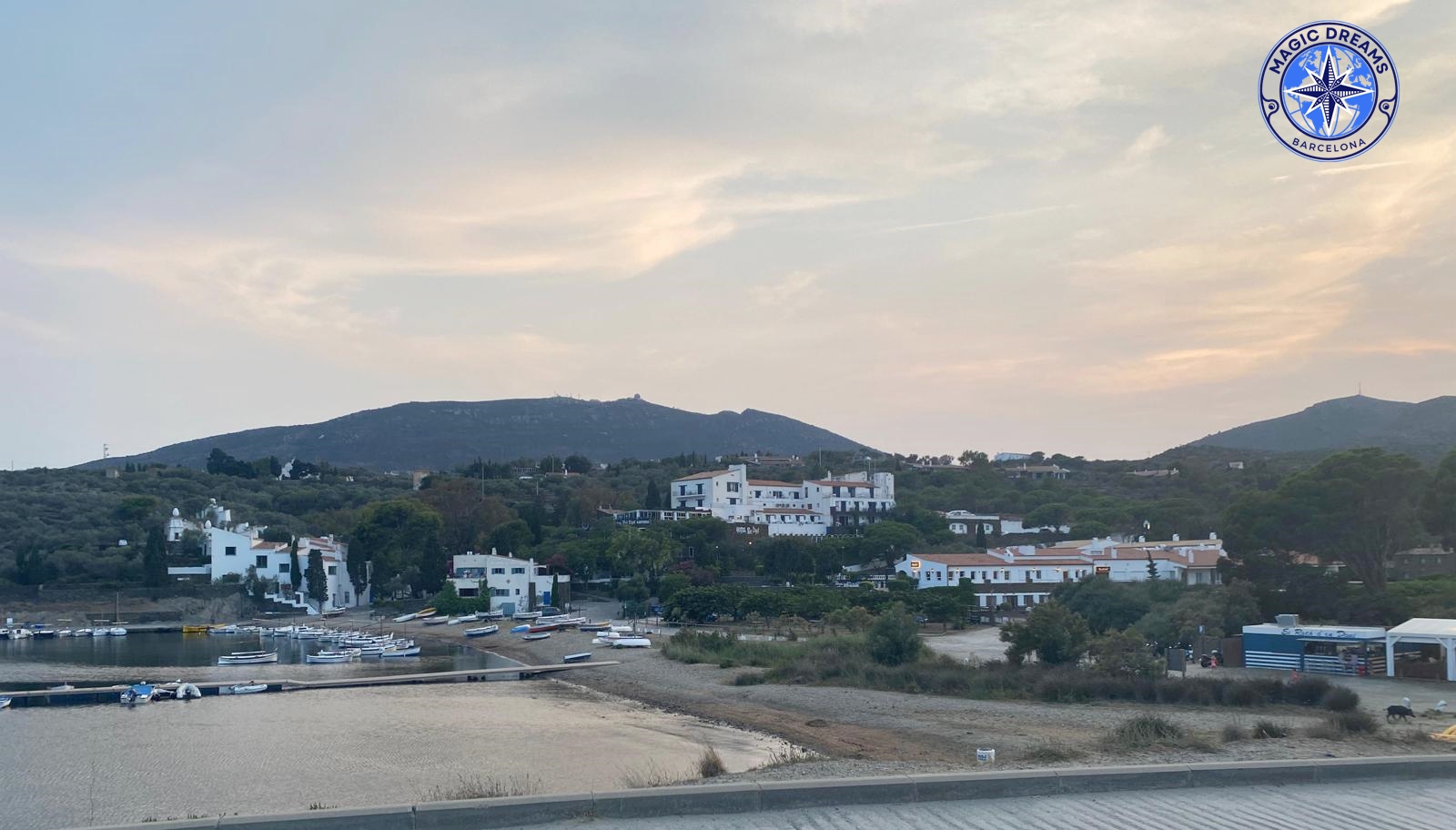
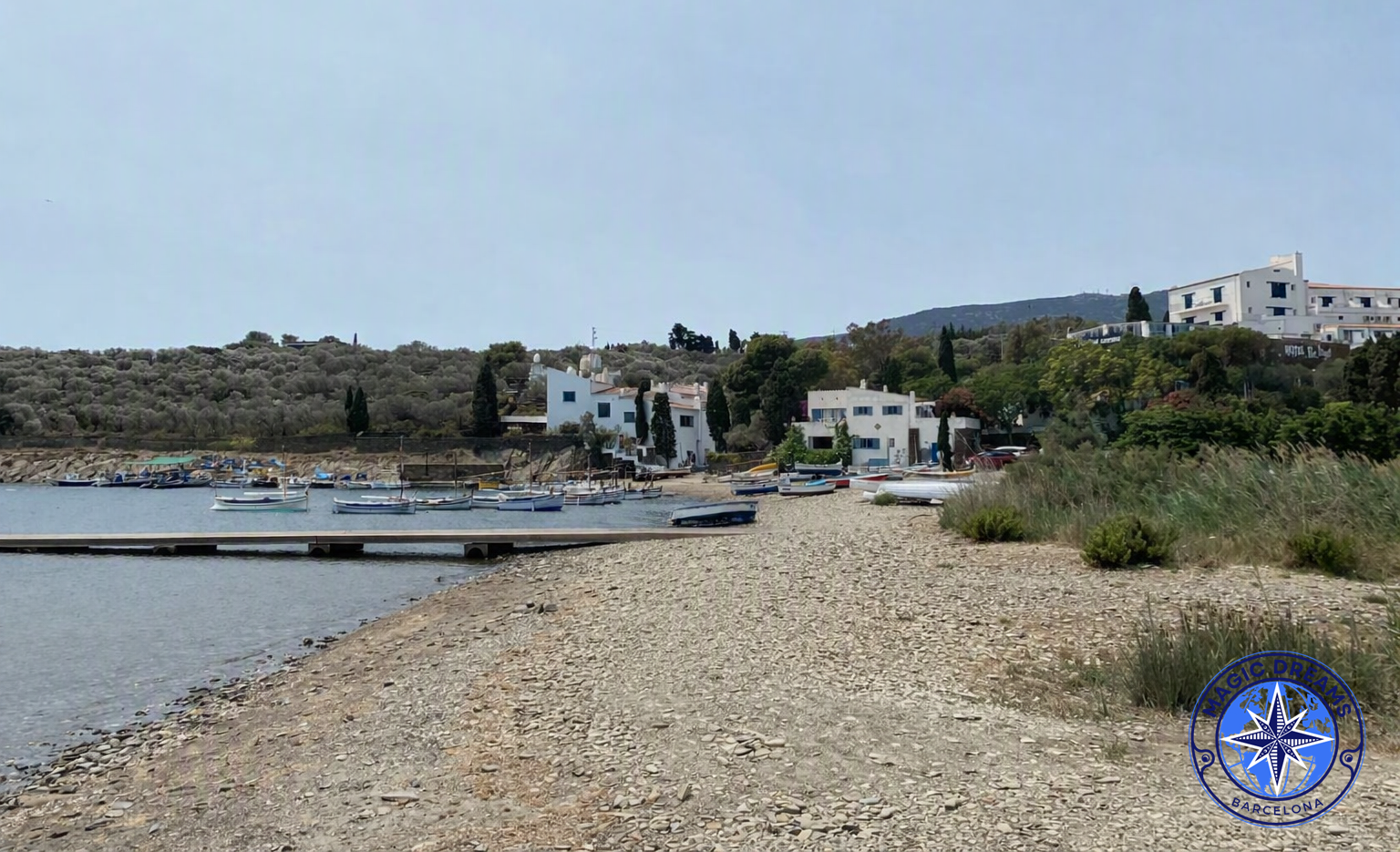
Fotografía del Port Lligat al ataredecer de Magic Dreams Barcelona.
Fotografía del Port Lligat al ataredecer de Magic Dreams Barcelona.
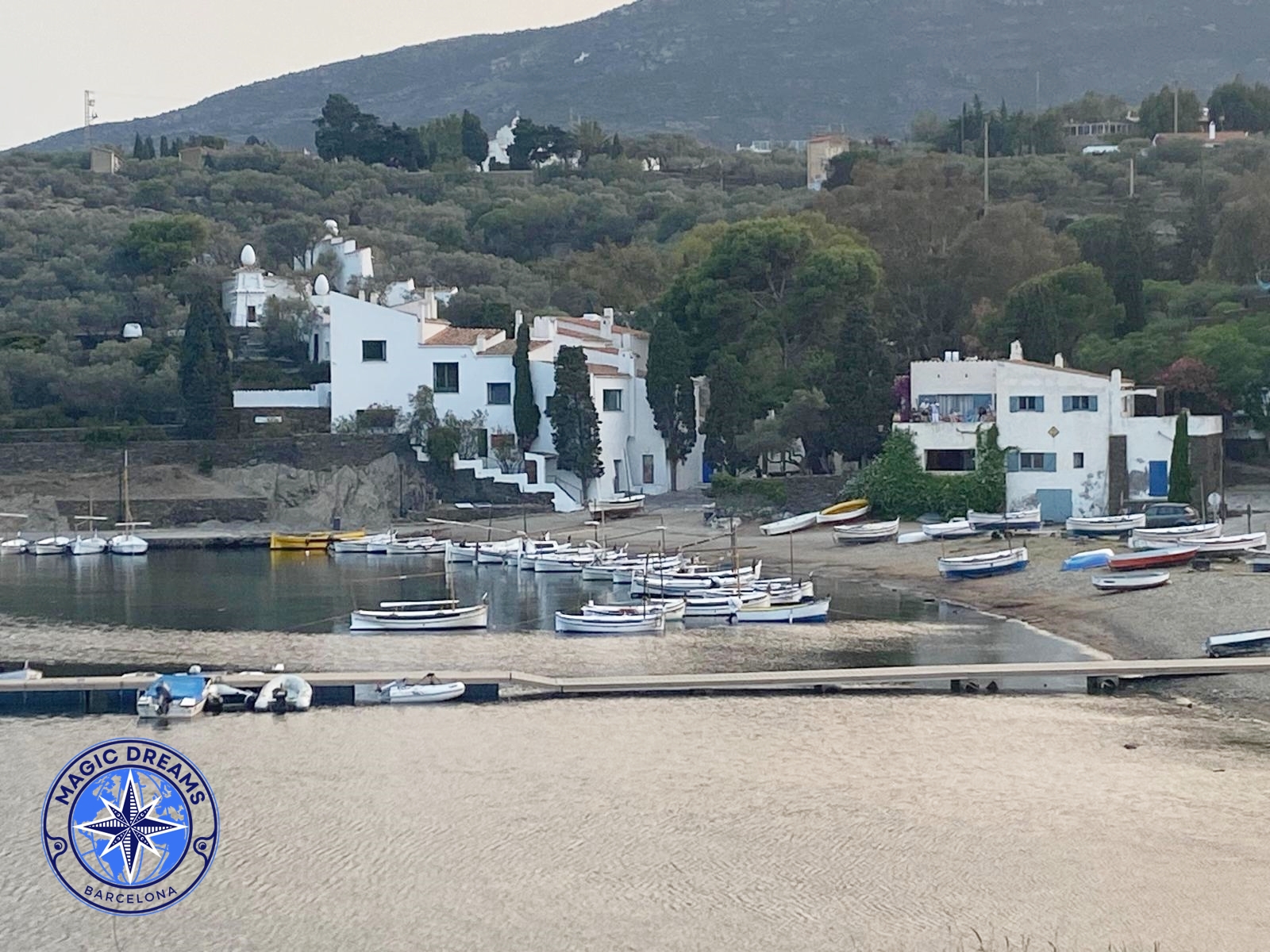
Fotografía del Port Lligat al atardecer frente a la Casa museo de Salvador Dalí y Gala de Magic Dreams Barcelona.
Fotografía del Port Lligat al atardecer de Magic Dreams Barcelona.
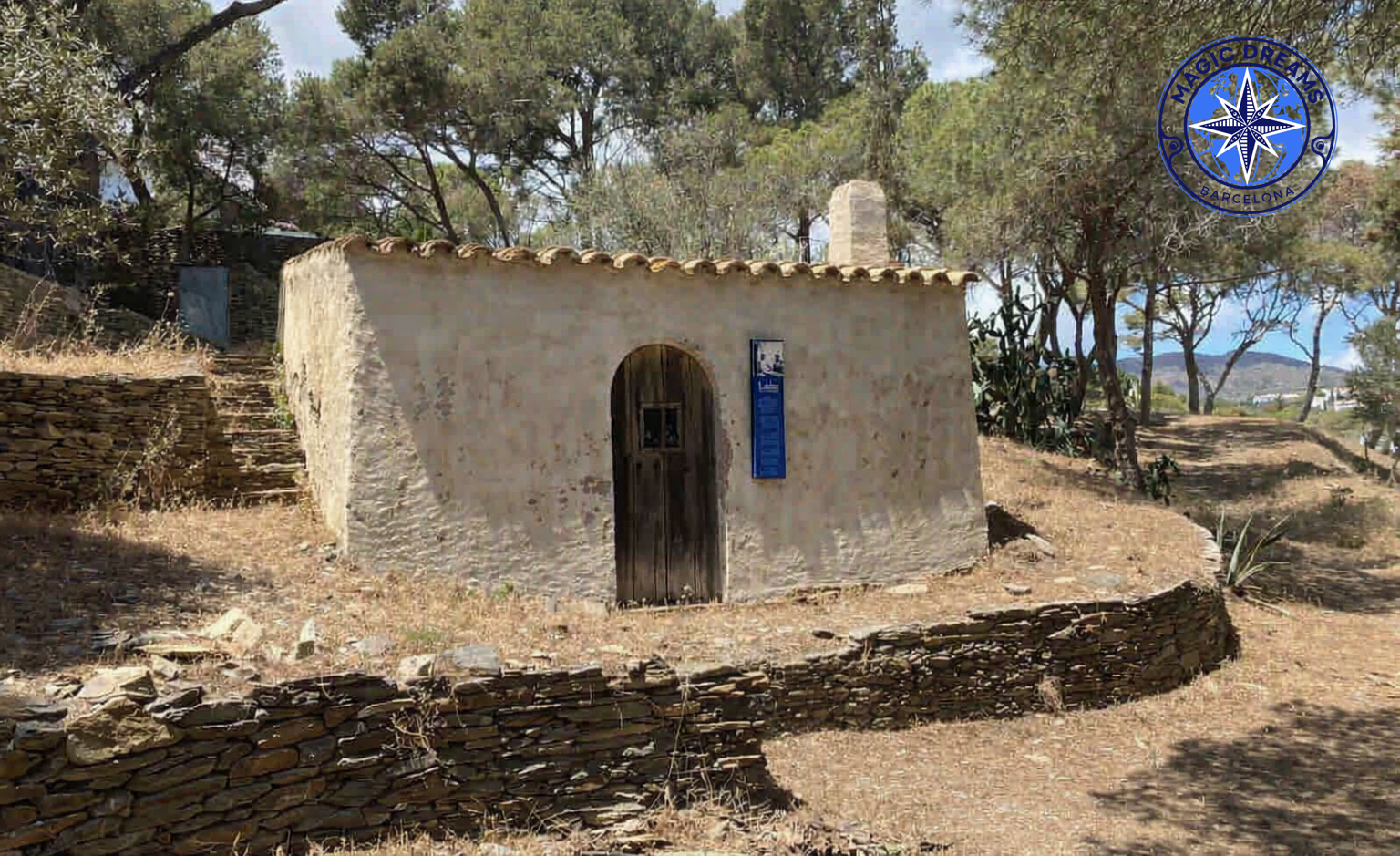
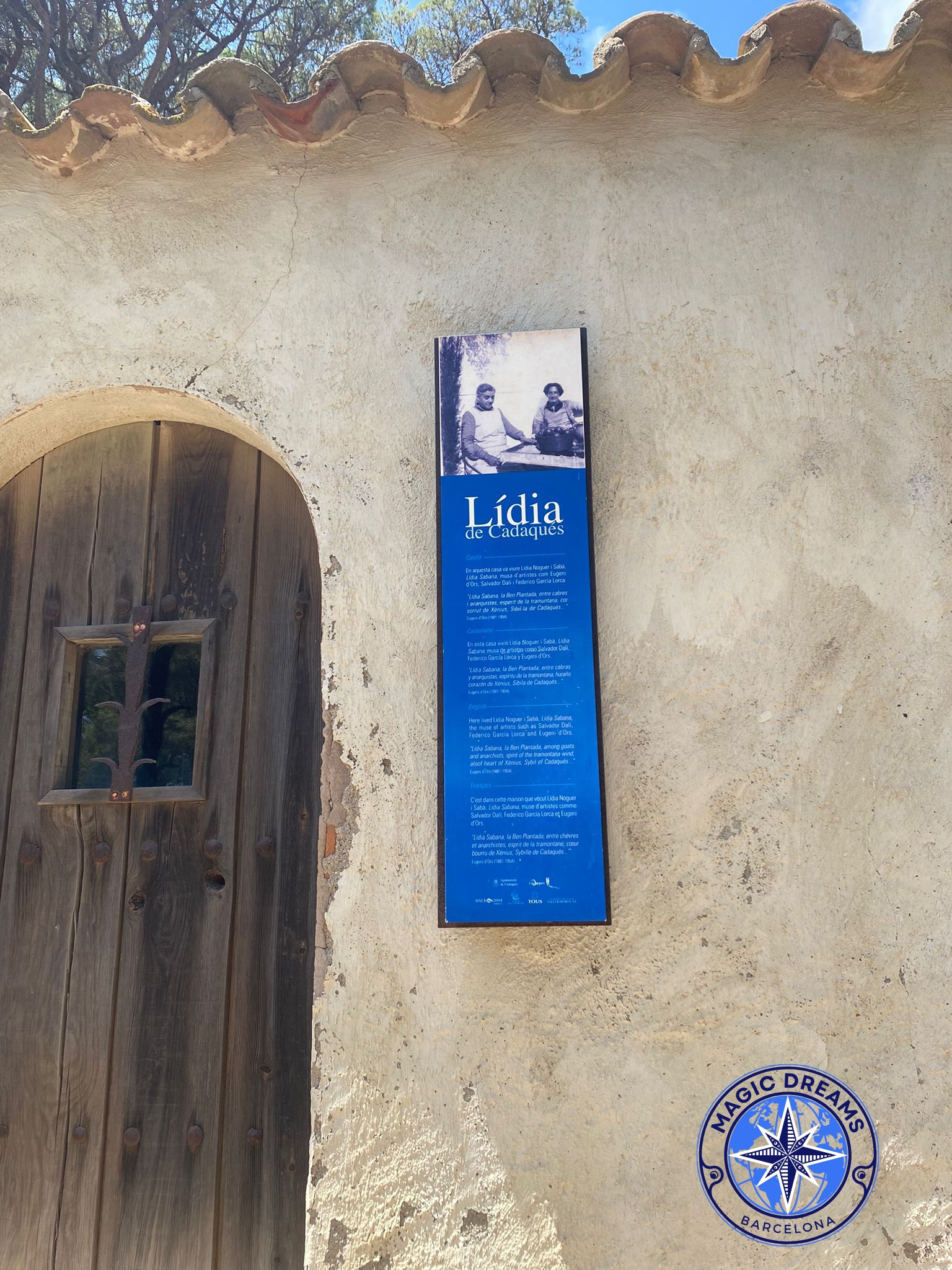
Última casa de la Lídia de Cadaqués, vivía en una barraca muy humilde, tras haber pasado por otras residencias como la de Es Llaner – Magic Dreams Barcelona.
Perspectiva a pie de la Casa de Dalí en el Port Lligat de Magic Dreams Barcelona.
Detalle en la última casa de la Lídia de Cadaqués, vivía en una barraca muy humilde, tras haber pasado por otras residencias como la de Es Llaner – Magic Dreams Barcelona.
Existen personajes que forman parte de la historia y otros que, con el paso del tiempo, terminan convirtiéndose en leyenda. Lídia de Cadaqués pertenece a los dos mundos. Pescadera, hostelera, mujer de carácter extraordinario y figura rodeada de historias, Lídia Noguer i Sabà vivió en …
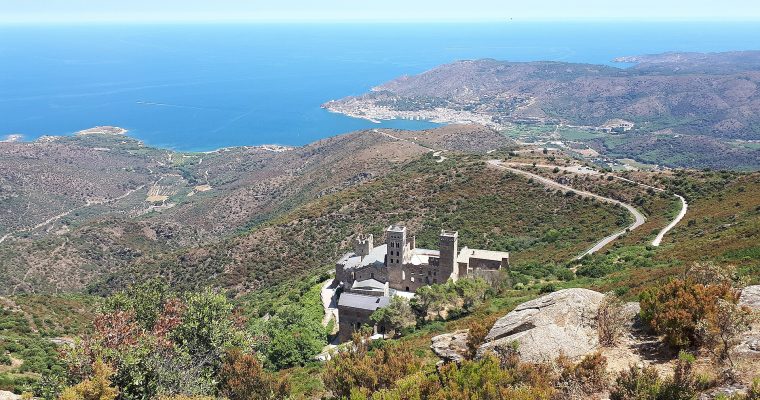
Perched on the eastern slopes of the Serra de Rodes, overlooking the Mediterranean and the spectacular landscape of Cap de Creus, Sant Pere de Rodes is one of the most extraordinary Romanesque monuments in Catalonia. Its isolated location, monumental architecture, centuries of history and fascinating …
El Monasterio de Sant Pere de Rodes es uno de los grandes monumentos del románico catalán y uno de los lugares más espectaculares del Alt Empordà.
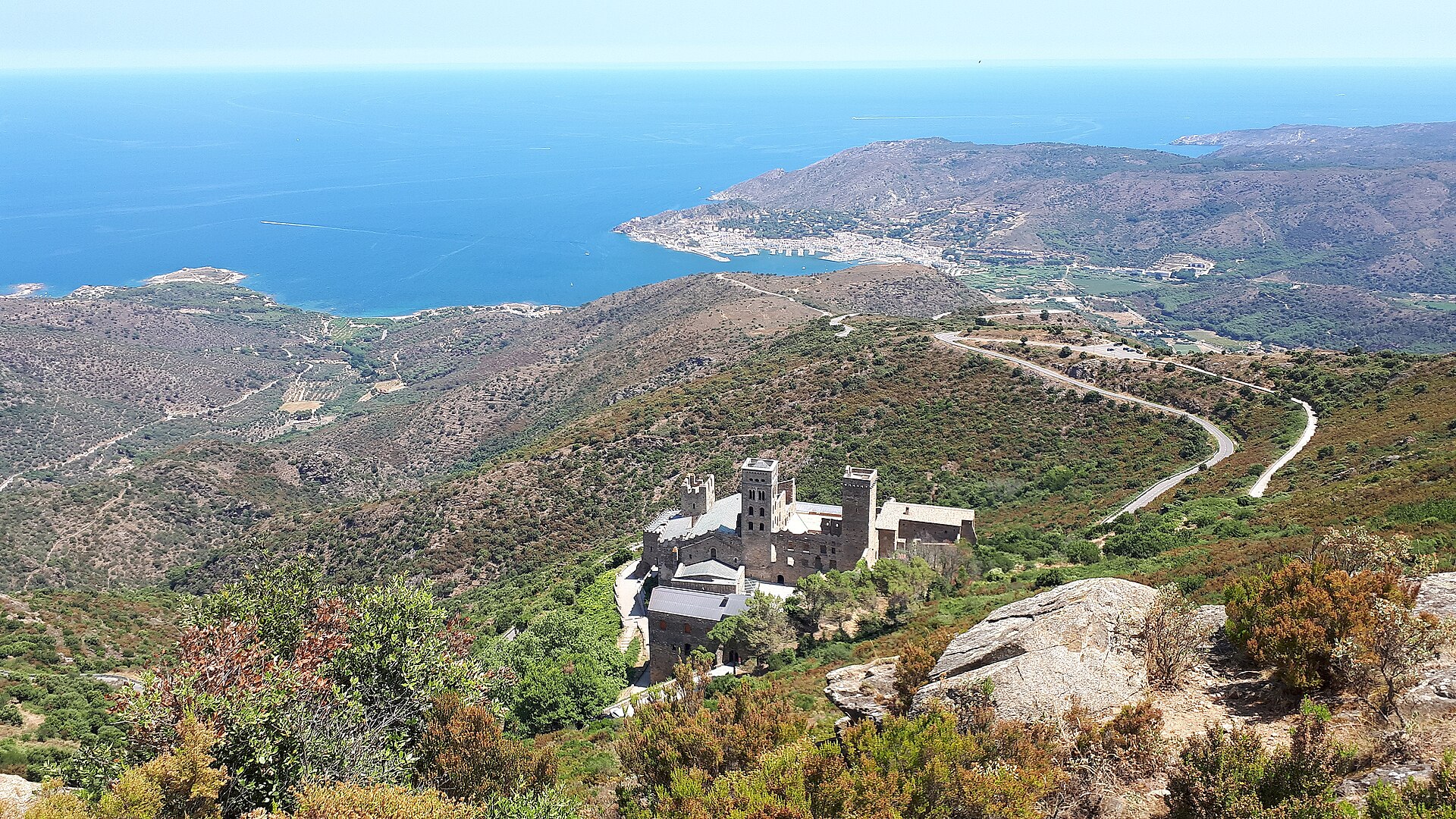
Situado en la ladera de la sierra de Verdera, dentro del entorno del Parque Natural del Cap de Creus, el monasterio combina arquitectura medieval, historia, paisaje mediterráneo y unas extraordinarias vistas sobre el litoral ampurdanés.
Su posición es excepcional. Desde aproximadamente 520 metros de altitud, el antiguo monasterio domina el paisaje que se extiende hacia El Port de la Selva, Llançà, el golfo de León y el Cap de Creus. En días despejados, la panorámica se prolonga hacia el norte hasta el litoral del Rosellón.
Pero Sant Pere de Rodes es mucho más que una iglesia románica.
El conjunto monumental permite descubrir cómo funcionaba un gran monasterio benedictino medieval, mientras que sus alrededores forman parte de uno de los espacios naturales más singulares de Cataluña, caracterizado por la tramontana, los acantilados, la vegetación mediterránea y una importante diversidad de aves, reptiles, insectos y mariposas.
Además, alrededor del monasterio existe una extraordinaria tradición de leyendas de santos, piratas, tesoros, naufragios y antiguos monjes.
¿Dónde está el Monasterio de Sant Pere de Rodes?
El monasterio está situado en:
Camí del Monestir, s/n 17489 El Port de la Selva, Girona Cataluña, España
Administrativamente pertenece al municipio de El Port de la Selva, en la comarca del Alt Empordà.
El monasterio está construido en la vertiente de la sierra de Verdera y forma parte del conjunto monumental que incluye también los restos del antiguo poblado medieval de Santa Creu de Rodes y, en una posición más elevada, el castillo de Sant Salvador de Verdera.
El conjunto es una representación de los tres pilares de la sociedad feudal:
quienes rezaban: el monasterio de Sant Pere de Rodes;
quienes producían: el poblado de Santa Creu;
quienes luchaban: el castillo de Verdera.
Es una de las razones por las que merece la pena dedicar más tiempo a la zona y no limitarse únicamente a visitar el interior del monasterio.
¿Cuántos kilómetros hay desde Barcelona?
Desde Barcelona hasta Sant Pere de Rodes hay aproximadamente 160 kilómetros por carretera, aunque la distancia exacta depende del punto de salida y del recorrido elegido.
Como referencia, el trayecto ronda:
Barcelona – Sant Pere de Rodes: aproximadamente 160 km Tiempo en coche: alrededor de 1 h 50 min – 2 h 15 min
En condiciones favorables, el trayecto puede aproximarse a las dos horas, pero durante fines de semana, verano y periodos de vacaciones conviene contar con más tiempo.
Una ruta habitual es:
Barcelona – AP-7 – Figueres – N-260 – Vilajuïga – carretera de Sant Pere de Rodes.
También puede accederse desde El Port de la Selva, aunque la carretera de montaña requiere conducir con más tranquilidad.
¿Se puede llegar en transporte público?
Sí, aunque llegar directamente hasta el monasterio resulta bastante más sencillo en coche.
El municipio de El Port de la Selva no dispone de estación ferroviaria. Las estaciones convencionales más cercanas son:
Llançà: aproximadamente 8 km.
Figueres: aproximadamente 30 km.
Portbou: aproximadamente 20 km.
La estación de alta velocidad más cercana es Figueres-Vilafant, situada a unos 30 km.
Desde Barcelona puede utilizarse la línea R11, que conecta Barcelona con Figueres y continúa hacia Portbou.
Otra posibilidad es utilizar el autobús. Existe una línea regular que conecta Figueres, Llançà y El Port de la Selva. En determinadas épocas del año también funciona la línea 32 del Cap de Creus.
¿Y desde El Port de la Selva hasta el monasterio?
Aquí está la principal dificultad.
El monasterio está situado en la montaña y no existe una estación de tren ni un servicio urbano que deje directamente en la puerta.
Por ello, las opciones más prácticas son:
Coche: la opción más cómoda.
Taxi: especialmente interesante si se llega en tren hasta Llançà o en autobús hasta El Port de la Selva.
A pie: existen caminos históricos y rutas senderistas que permiten ascender hasta Sant Pere de Rodes.
El antiguo camino desde Llançà forma parte de los itinerarios de la zona y también existen rutas que conectan el monasterio con Vilajuïga, Palau-saverdera, La Selva de Mar y El Port de la Selva.
Por tanto, si se viaja sin coche, nuestra recomendación práctica sería tren hasta Llançà + taxi hasta el monasterio, especialmente si se quiere evitar una larga caminata de montaña.
¿Qué tipo de arquitectura tiene?
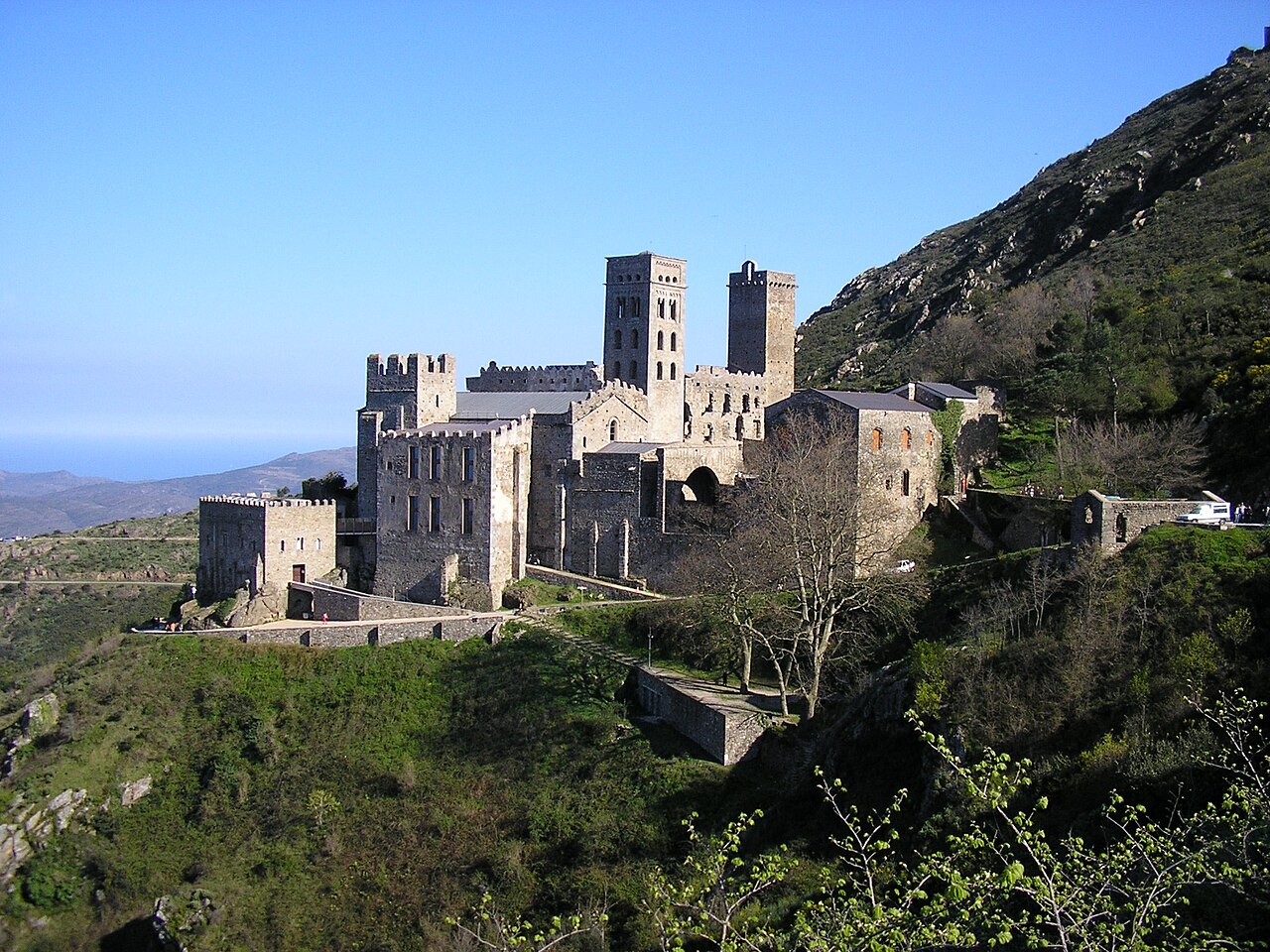
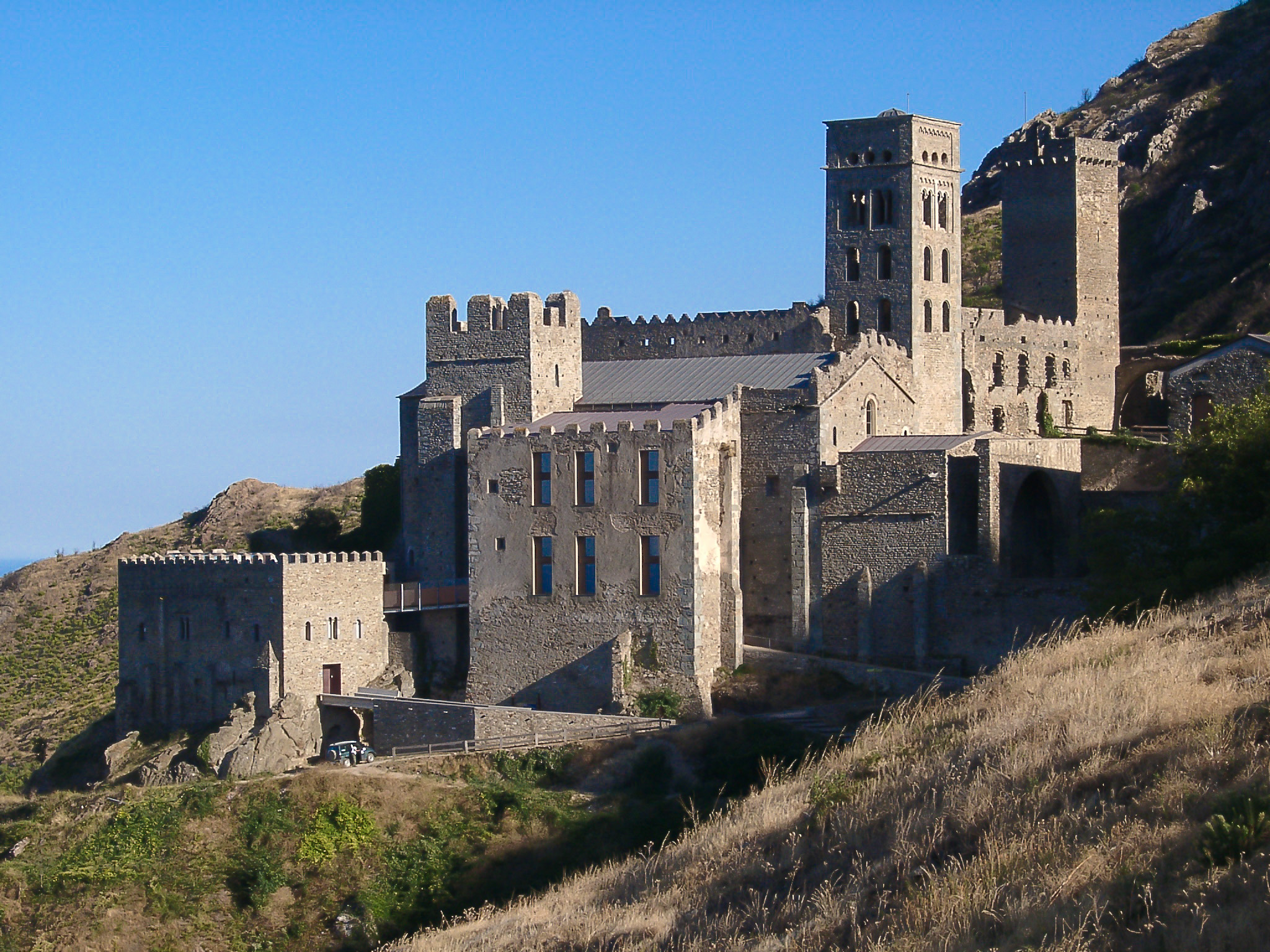
Sant Pere de Rodes es fundamentalmente una obra del románico catalán, aunque el conjunto actual es el resultado de varios siglos de construcción, ampliaciones y transformaciones.
La iglesia es uno de los elementos más importantes del conjunto y destaca por la complejidad de su arquitectura.
Las construcciones principales se desarrollaron especialmente entre los siglos X y XIII, aunque existen elementos posteriores.
El monasterio está adaptado a una montaña con una fuerte pendiente. Por ello, los edificios se organizan en diferentes niveles y terrazas.
El conjunto está formado por:
Iglesia
Campanario
Claustro inferior
Claustro superior
Cripta
Deambulatorio
Sacristías
Sala capitular
Refectorio
Dependencias monásticas
Bodegas
Almacenes
Galilea
Palacio del Abad
Espacios de defensa
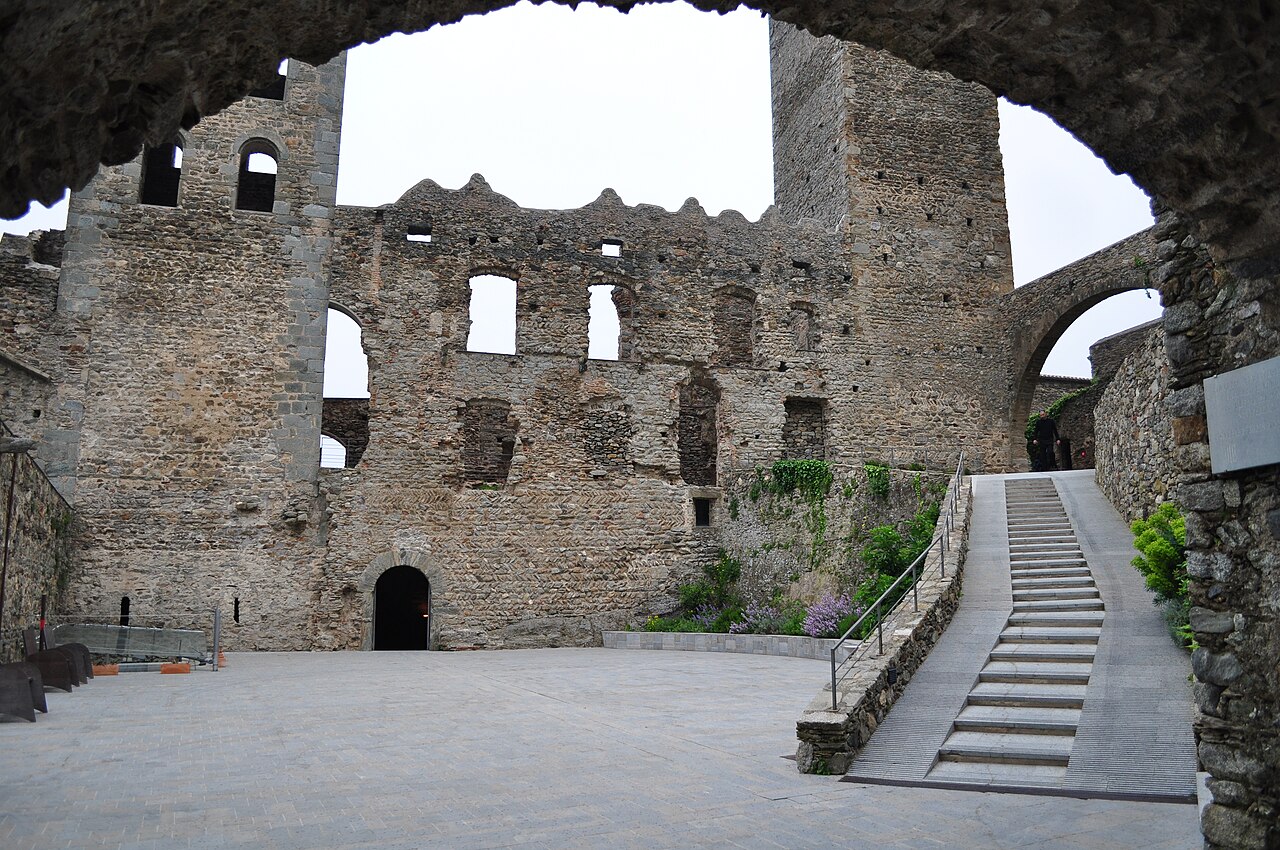
Uno de los aspectos más interesantes es que existen dos claustros que no funcionaron simultáneamente. Durante las transformaciones posteriores se construyó el claustro superior sobre el primitivo, que quedó enterrado y posteriormente fue recuperado arqueológicamente.
La iglesia de Sant Pere de Rodes
La iglesia es probablemente el espacio más impresionante del conjunto.
Su construcción se relaciona principalmente con los siglos X y XI, y presenta una arquitectura románica de gran monumentalidad.
En su interior destacan las enormes columnas, los capiteles, las naves, el transepto, la cabecera y la compleja relación entre iglesia, cripta y deambulatorio.
La iglesia fue concebida también en relación con el culto a las reliquias.
Los peregrinos podían recorrer el deambulatorio alrededor del presbiterio, mientras que en el centro existía el denominado reconditorio, una cámara destinada a custodiar las reliquias.
La cripta
La cripta es uno de los espacios que más interés despiertan durante la visita.
Su estructura está relacionada con el culto a las reliquias y presenta una disposición semicircular que permitía a los peregrinos desplazarse alrededor del espacio donde estas eran custodiadas.
El monasterio llegó a conservar una importante colección de reliquias. Un inventario del siglo XV menciona infinidad de reliquias de santos y mártires y, entre ellas, la cabeza y el brazo derecho del apóstol san Pedro.
Aquí es donde aparece una de las grandes historias legendarias de Sant Pere de Rodes.
¿Es verdad que las reliquias de San Pedro llegaron hasta aquí?
Esta es una de las preguntas más interesantes relacionadas con el monasterio.
La respuesta es: forma parte de la tradición fundacional, pero no está demostrado históricamente que las reliquias de san Pedro llegaran desde Roma hasta Sant Pere de Rodes.
Según la leyenda, ante el peligro que amenazaba Roma, el papa Bonifacio IV habría ordenado trasladar algunas de las reliquias más importantes de la Iglesia.
Tres clérigos —Félix, Ponce y Epicinio— habrían embarcado rumbo a la Galia llevando, entre otras reliquias, la cabeza y el brazo derecho de san Pedro.
El barco habría llegado a un lugar denominado Armen Rodes, identificado posteriormente con esta zona del Cap de Creus.
Los clérigos habrían escondido las reliquias en una cueva y, cuando volvieron para recuperarlas, la vegetación había ocultado el lugar.
La tradición cuenta que posteriormente se levantó sobre aquel espacio el monasterio.
La historia tuvo una enorme importancia para el prestigio del monasterio porque permitía vincular Sant Pere de Rodes directamente con Roma y el apóstol san Pedro.
Históricamente, sin embargo, lo que podemos documentar es bastante diferente.
Las primeras noticias escritas sobre una comunidad vinculada a Sant Pere de Rodes se remontan al siglo IX. En el año 878 aparece mencionada una celda monástica relacionada con Sant Esteve de Banyoles.
Por tanto:
La llegada de las reliquias pertenece a la leyenda.
La existencia de un establecimiento monástico en este lugar desde la Alta Edad Media sí está documentada.
La época de esplendor
Entre los siglos XI y XIV, Sant Pere de Rodes fue uno de los principales centros espirituales del condado de Empúries.
El monasterio acumuló poder económico, propiedades y prestigio religioso.
Su importancia fue tal que consiguió convertirse en un importante lugar de peregrinación.
En el año 974, el abad Hildesindo obtuvo una bula papal destinada a proteger los intereses del monasterio y, en 979, consiguió que Sant Pere de Rodes se convirtiera en un lugar de peregrinación.
Durante siglos se desarrolló incluso una tradición de jubileo, equiparando las indulgencias obtenidas en Sant Pere de Rodes con las de Roma.
Esto ayuda a entender por qué se construyó un monasterio de semejante tamaño en una montaña relativamente aislada.
El Maestro de Cabestany
Otro de los grandes atractivos artísticos de Sant Pere de Rodes está relacionado con el conocido como Maestro de Cabestany.
La antigua portada monumental de la iglesia estaba decorada con escenas de la vida de Cristo realizadas en mármol blanco.
Aunque la portada no ha llegado completa hasta nuestros días, los fragmentos conservados permiten apreciar la extraordinaria calidad de la escultura.
Es uno de los elementos artísticos que convierten al monasterio en una visita especialmente interesante para quienes disfrutan del arte medieval.
¿Qué se puede visitar actualmente?
El conjunto está abierto al público y se puede visitar.
La entrada general actual es de:
Adultos: 7 €
Entrada reducida: 5 €
Existe entrada gratuita para determinados colectivos y para menores de 16 años, entre otros casos contemplados por la tarifa oficial.
La visita permite conocer diferentes espacios del antiguo monasterio y comprender cómo vivía y funcionaba una comunidad benedictina.
¿Cuánto tiempo hace falta?
Para una visita básica recomendamos aproximadamente:
1–1,5 horas
Si además quieren visitar los alrededores, contemplar las vistas, acercarse a Santa Creu de Rodes o realizar alguna pequeña ruta:
2,5–4 horas
Y si se quiere combinar el monasterio con senderismo por la sierra de Verdera, puede convertirse fácilmente en una excursión de medio día o incluso de jornada completa.
Horarios
Según la información oficial actualmente disponible:
De martes a sábado, del 1 de mayo al 30 de septiembre:
10:00–19:00 h
De martes a sábado, del 1 de octubre al 30 de abril:
10:00–17:30 h
Domingos y festivos:
10:00–15:00 h
La taquilla y el acceso cierran 30 minutos antes del cierre.
El monasterio permanece cerrado los lunes no festivos, el 25 y 26 de diciembre y el 1 y 6 de enero.
Los horarios pueden modificarse por actividades especiales, por lo que es aconsejable comprobarlos antes de desplazarse.
¿Hay visitas guiadas?
Sí.
La Generalitat organiza visitas guiadas al monasterio y actividades especiales relacionadas con su historia, arquitectura y leyendas.
Las visitas guiadas habituales tienen una duración aproximada de 50–60 minutos y determinadas modalidades tienen un suplemento de unos 4 € por persona, además de la entrada al monumento cuando no está incluida.
También se organizan visitas relacionadas con:
Piratas y corsarios
La historia medieval
Las reliquias
La arquitectura románica
Santa Creu de Rodes
La tradición vinícola
Visitas nocturnas
Visitas teatralizadas
Las vistas desde Sant Pere de Rodes
Probablemente este sea uno de los motivos por los que más merece la pena subir hasta aquí.
El monasterio funciona como un enorme mirador natural.
Desde sus alrededores se contempla:
El Port de la Selva
Llançà
La costa del Cap de Creus
El golfo de León
Las montañas de la Albera
El litoral del Empordà
El Mediterráneo
Los valles y montañas interiores
La localización sobre la sierra de Verdera permite obtener una panorámica excepcional sobre la costa.
Uno de los lugares más interesantes es el entorno del Palacio del Abad, desde donde el paisaje se abre hacia el mar.
También merece la pena acercarse a los caminos próximos al monasterio.
El paisaje del Cap de Creus
El paisaje que rodea Sant Pere de Rodes es inseparable de la experiencia.
El Parque Natural del Cap de Creus es uno de los espacios naturales más singulares de Cataluña.
La geología, la exposición al Mediterráneo y, especialmente, la tramontana, han creado un paisaje extraordinariamente particular.
El viento puede alcanzar una intensidad considerable y ha condicionado tanto la vegetación como la forma de los árboles y arbustos.
Las plantas están adaptadas a:
sequía;
viento;
fuerte insolación;
salinidad;
suelos pobres y rocosos.
La botánica de Sant Pere de Rodes y el Cap de Creus
Aunque el monasterio es un monumento, sus alrededores tienen un enorme interés botánico.
Entre la vegetación mediterránea encontramos:
Lentisco
Enebro
Brezos
Jaras
Aulaga
Pino carrasco
Alcornoque
Encina
Olmo
Fresno
Aliso
Sauce
En las zonas más próximas al mar aparecen especies especialmente adaptadas a la salinidad y al viento.
Una de las plantas más interesantes es el Seseli farreny, una especie que únicamente se encuentra en el Cap de Creus.
También destacan:
Armeria ruscinonensis
Limonium tremolsii
Astragalus massiliensis
Euphorbia dendroides
Cneorum tricoccon
Son especies que ayudan a explicar por qué el Cap de Creus posee una flora tan particular.
La vegetación y la tramontana
Uno de los aspectos más curiosos es observar cómo la tramontana modifica la vegetación.
Los árboles y arbustos expuestos al viento pueden adoptar formas inclinadas y retorcidas.
El resultado es un paisaje que parece diseñado artificialmente, aunque es completamente natural.
En realidad, buena parte de esta apariencia es consecuencia de miles de años de interacción entre viento, mar, fuego, pasto y actividad agrícola.
¿Qué fauna se puede encontrar?
La fauna del entorno de Sant Pere de Rodes forma parte de la biodiversidad del Parque Natural del Cap de Creus.
Entre los reptiles pueden observarse:
Lagarto ocelado
Salamanquesa común
Galápago leproso
Tortuga mediterránea, aunque es mucho más escasa
El parque también alberga una gran variedad de anfibios.
Entre los invertebrados destaca especialmente el caracol Mastigophallus rangianus, especie endémica del Cap de Creus.
También existen especies protegidas de insectos como el coleóptero Pseudochlamys raholai y el heteróptero Campylosteia serena.
Mariposas de Sant Pere de Rodes y el Cap de Creus
Para los aficionados a la entomología, el entorno es especialmente interesante.
Los márgenes de caminos, prados, matorrales y zonas de vegetación mediterránea pueden concentrar una elevada diversidad de lepidópteros.
Entre las mariposas documentadas en el Cap de Creus encontramos:
Macaón — Papilio machaon
Es una de las mariposas más espectaculares de la zona.
Es grande, amarilla y negra y presenta pequeñas colas en las alas posteriores.
Sus orugas utilizan plantas de la familia de las umbelíferas, entre ellas el hinojo.
Mariposa del madroño — Charaxes jasius
Es una de las especies más llamativas.
De gran tamaño y vuelo potente, está asociada al madroño, que sirve de planta nutricia para sus orugas.
Es además considerada la mariposa diurna más grande de Europa.
Vanesa de los cardos — Vanessa cardui
Es una especie migradora muy conocida.
Puede aparecer en diferentes momentos del año y es frecuente encontrarla en zonas abiertas con flores.
Vanesa de los almirantes — Vanessa atalanta
Otra especie migradora que puede observarse en el parque.
Cleopatra — Gonepteryx cleopatra
Es una mariposa mediterránea muy característica.
El macho presenta una intensa coloración amarilla con una zona anaranjada en las alas anteriores. Está asociada a ambientes cálidos y vegetación mediterránea.
El seguimiento científico de mariposas en el Cap de Creus demuestra la elevada diversidad de lepidópteros de este espacio. En el itinerario de Montjoi, por ejemplo, se han registrado 54 especies.
Por tanto, si la visita se realiza en primavera o verano y se camina por los caminos cercanos, merece la pena prestar atención a los márgenes repletos de flores.
Ornitología: aves que pueden observarse
El Cap de Creus es también un lugar muy interesante para la observación de aves.
La combinación de montaña, acantilados, matorral mediterráneo y costa convierte el parque en un lugar especialmente interesante durante las migraciones de primavera y otoño.
Entre las aves rapaces que pueden observarse en el entorno de los acantilados destacan:
Águila perdicera
Halcón peregrino
Búho real
También pueden aparecer:
Cernícalo
Cuervo
Abubilla
Alondra
Abejaruco
Chova y otras aves de ambientes abiertos
En el litoral destacan especialmente las aves marinas:
Gaviotas
Cormorán moñudo
Pardelas
Charranes
Alcatraz atlántico
¿Cuál es la mejor época para observar aves?
Primavera y otoño son especialmente interesantes por el movimiento migratorio.
La posición del Cap de Creus convierte esta zona en un punto estratégico para aves que siguen las rutas migratorias del Mediterráneo occidental.
En días de viento y buena visibilidad, los acantilados próximos al monasterio pueden ofrecer excelentes oportunidades para observar aves planeadoras y rapaces.
Los antiguos viñedos
Aunque hoy vemos principalmente bosque y matorral mediterráneo, el paisaje del Cap de Creus conserva las huellas de una intensa actividad agrícola.
Buena parte del territorio estuvo ocupado históricamente por viñedos cultivados en terrazas.
Los antiguos muros de piedra seca todavía aparecen por las laderas.
Estas estructuras no solo servían para cultivar en terrenos inclinados: también creaban pequeños ecosistemas donde podían refugiarse plantas, reptiles, insectos y otros animales.
La propia vegetación actual del parque está profundamente condicionada por esta antigua transformación agrícola.
Santa Creu de Rodes
A poca distancia del monasterio se están los restos de Santa Creu de Rodes, un antiguo poblado medieval.
Su iglesia, dedicada a Santa Helena, es uno de los elementos más interesantes.
Visitarla ayuda a comprender cómo era el territorio alrededor del monasterio y permite imaginar el conjunto como un auténtico pequeño mundo medieval formado por:
monasterio + poblado + castillo.
La visita a Sant Pere de Rodes resulta, por tanto, mucho más completa si se dedica algo de tiempo a recorrer los alrededores.
El castillo de Verdera
En una posición más elevada están los restos del castillo de Sant Salvador de Verdera.
La subida requiere caminar por caminos de montaña, pero la recompensa son unas vistas todavía más amplias.
Desde allí el paisaje se abre sobre:
Cap de Creus + El Port de la Selva + Llançà + golfo de León + Empordà.
No es una visita que recomendamos hacer con prisas. Si se desea subir hasta el castillo, conviene llevar calzado adecuado, agua y reservar varias horas.
Las leyendas de Sant Pere de Rodes
Pocos lugares del Empordà tienen una tradición legendaria tan rica.
Alrededor de Sant Pere de Rodes aparecen historias de:
santos;
reliquias;
piratas;
tesoros;
sirenas;
naufragios;
monjes;
milagros.
Sant Pere y Sant Peret de Roda
Una de las leyendas más curiosas habla de un pirata conocido como «Cor de Pedra».
Según la tradición, este pirata llegó a Roses y capturó varios prisioneros.
Entre ellos había un niño de unos siete años llamado Pere.
Mientras los demás prisioneros lloraban y sufrían, el niño se dedicaba a consolarlos.
La actitud del pequeño terminó impresionando al pirata.
La historia cuenta que el pirata acabó convirtiéndose al cristianismo, abandonó la piratería y adoptó también el nombre de Pere.
Ambos personajes habrían acabado relacionados con la fundación del monasterio.
Es una leyenda popular, no un episodio histórico demostrado, pero forma parte de la tradición cultural del lugar.
La leyenda de Barba-Roja
Otra historia habla del famoso pirata Barba-Roja.
Según la leyenda, el papa de Roma habría enviado barcos cargados de oro y piedras preciosas hacia Cataluña.
Barba-Roja, informado por sus espías, habría preparado una emboscada en el entorno del Cap de Creus.
El pirata consiguió hacerse con el tesoro, pero posteriormente una gran flota enviada para perseguirlo habría obligado a Barba-Roja a arrojar el botín al mar.
La leyenda asegura que murió durante la persecución y que parte del tesoro quedó en el fondo del mar.
La tradición llega todavía más lejos: dice que en determinadas noches de luna llena puede verse brillar el tesoro hundido y hasta el sable del pirata.
Naturalmente, estamos ante una leyenda, pero es una de las historias más atractivas asociadas al paisaje marítimo de Sant Pere de Rodes.
La estancia de Carlomagno
Existe también una tradición según la cual Carlomagno habría pasado por el monasterio.
La historia forma parte de la tradición oral del territorio y fue recogida en la literatura ampurdanesa.
No debe confundirse con un hecho histórico plenamente demostrado: pertenece al conjunto de tradiciones que fueron construyendo la imagen legendaria de Sant Pere de Rodes.
La fuente de los monjes
Cerca del monasterio está la conocida como Font dels Monjos.
La fuente presenta una inscripción de 1588:
QUI BIBERIT EX AQUA SITIET ITERUM
Es decir:
«Quien beba de esta agua volverá a tener sed».
La inscripción hace referencia al Evangelio de san Juan y constituye uno de esos pequeños detalles que ayudan a descubrir la historia del lugar más allá de la iglesia y el claustro.
Gastronomía típica del entorno
Después de visitar Sant Pere de Rodes, merece la pena bajar hacia El Port de la Selva, Llançà, La Selva de Mar o Cadaqués para comer.
La gastronomía de esta parte del Alt Empordà está profundamente relacionada con el Mediterráneo y con la tradición de la pesca.
Algunos de los platos y productos que merece la pena buscar son:
Suquet de peix
Pescado de roca
Rape
Escórpora
Sardinas
Anchoas
Mejillones
Gambas
Cigalas
Langosta
Arroces marineros
Pescado al horno
Sardinas a la brasa
Pan con tomate
Alioli
Cocina ampurdanesa tradicional
El suquet de peix es probablemente uno de los platos que mejor representa esta cocina marinera.
Originalmente era una preparación de pescadores elaborada con pescado disponible y patatas. Actualmente existen infinidad de versiones, utilizando especies como rape, lubina, calamar, gambas o mejillones.
En la zona del Cap de Creus también tienen especial protagonismo las anchoas, el pescado fresco y los productos procedentes de la pesca local.
¿Dónde dormir cerca de Sant Pere de Rodes?
Para pasar la noche, mi primera opción sería El Port de la Selva.
Está suficientemente cerca del monasterio y permite combinar la visita cultural con el paisaje marítimo.
Además, el pueblo tiene una oferta de hoteles, hostales y apartamentos.
Entre los establecimientos podemos encontrar:
Hotel Porto Cristo
Hotel Spa Cap de Creus
Hotel Mariner
Hostal Boutique Es Grop
Hostal La Tina
Hostal Sol i Sombra
Hostal Arola
¿Dónde elegiríamos nosotros?
Si la prioridad es disfrutar del paisaje, elegiría El Port de la Selva antes que alojarme más lejos.
La razón es sencilla: permite estar cerca del mar, cenar en el pueblo y vover al día siguiente al entorno de Sant Pere de Rodes sin necesidad de hacer un desplazamiento largo.
Además, algunos alojamientos disponen de habitaciones o apartamentos con vistas al mar y a la montaña.
Otra posibilidad especialmente atractiva es Cadaqués, aunque está algo más alejado y suele ser una opción más turística.
¿Cuánto tiempo dedicar a toda la zona?
Si únicamente se desea visitar el monasterio:
1–1,5 horas
Si se quiere visitar el monasterio tranquilamente, Santa Creu de Rodes y disfrutar de las vistas:
2–3 horas
Si además se quiere caminar por la montaña o subir hacia el castillo de Verdera:
4–6 horas
Y si se quiere conocer realmente el entorno:
2 días
Esta última opción es la que recomendaría.
Un fin de semana permitiría combinar:
Sant Pere de Rodes – Santa Creu de Rodes – castillo de Verdera – El Port de la Selva – Cap de Creus – Cadaqués.
¿Merece la pena visitar Sant Pere de Rodes?
Sí, y por varios motivos.
Sant Pere de Rodes reúne en un mismo lugar elementos que normalmente obligarían a visitar varios destinos diferentes.
Es:
un monasterio románico excepcional,
un antiguo centro de peregrinación,
un conjunto arqueológico medieval,
un mirador sobre el Mediterráneo,
una puerta de entrada al Cap de Creus,
un espacio de gran interés botánico y faunístico
y, además,
un lugar rodeado de leyendas.
Su mayor atractivo probablemente sea precisamente esa combinación.
No se trata simplemente de llegar, entrar en una iglesia y marcharse.
Lo interesante es subir por la carretera de montaña, empezar a ver el Mediterráneo entre los árboles, encontrarse con las ruinas de Santa Creu, llegar al monasterio y descubrir que detrás de su muro existen siglos de historia.
Y cuando se sale al exterior, aparece otra parte de la visita: el paisaje del Cap de Creus.
La tramontana, los muros de piedra seca, los antiguos viñedos, las montañas, el mar y las aves convierten el entorno en una extensión natural del propio monumento.
Por eso, si dispone de tiempo, mi recomendación sería no limitar la visita al interior del monasterio.
Dedique unas horas a recorrer sus alrededores, busque los miradores hacia El Port de la Selva y Llançà, visite Santa Creu de Rodes y, si la condición física y el tiempo lo permiten, continúe hacia Sant Salvador de Verdera.
Es entonces cuando se comprende realmente por qué este monasterio fue construido precisamente aquí.
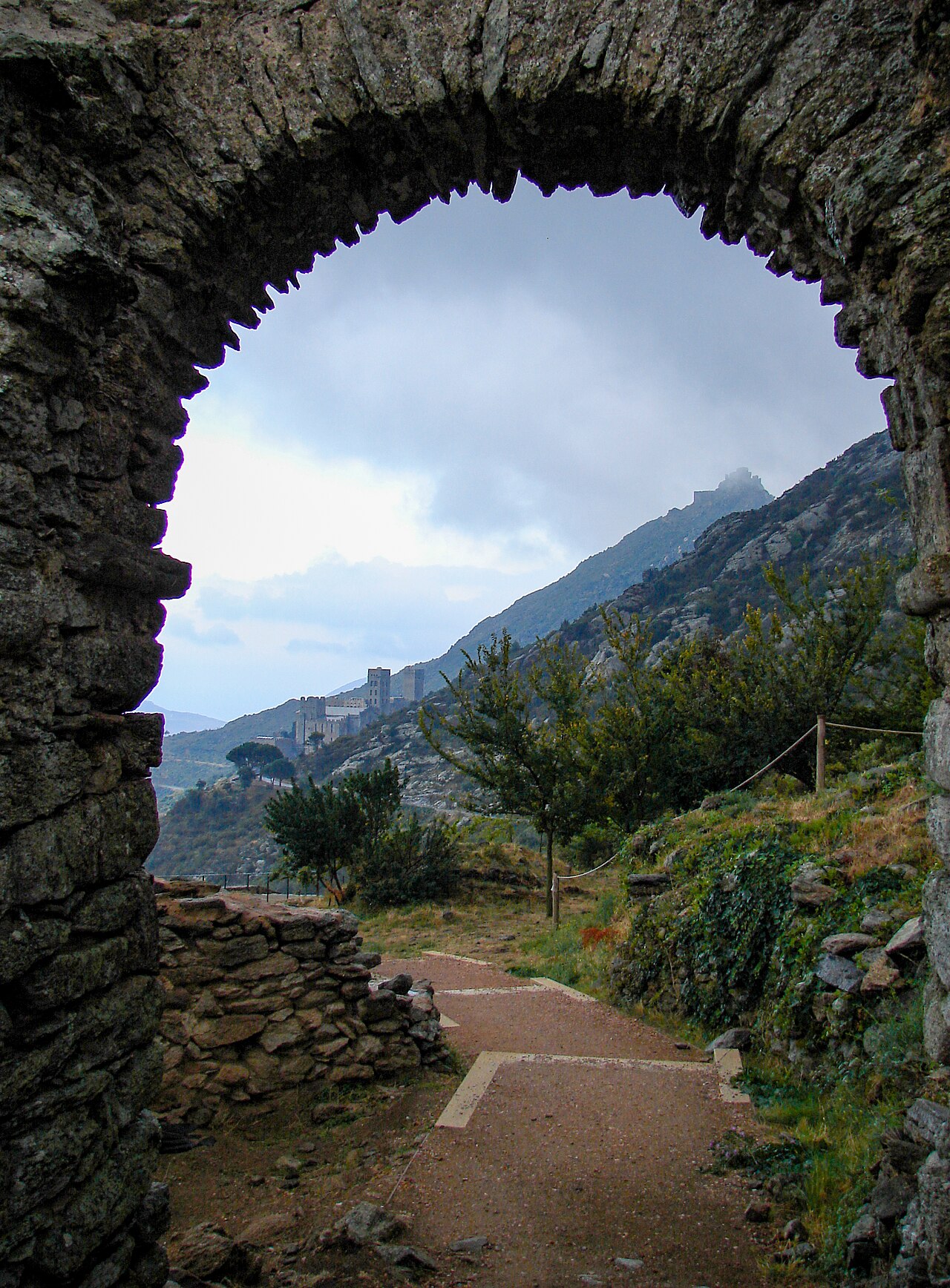
Monestir de Sant Pere de Rodes – By SBA73 – Flickr: El monestir sobre el mar / The abbey above the sea, CC BY-SA 2.0, https://commons.wikimedia.org/w/index.php?curid=16713847.
Monasterio de Sant Pere de Rodes – By Aurica – Own work, CC BY-SA 3.0 es, https://commons.wikimedia.org/w/index.php?curid=16715585.
Monasterio de Sant Pere de Rodes – Perspectiva del Conjunto – By Borjaanimal – Own work, CC BY-SA 3.0 es, https://commons.wikimedia.org/w/index.php?curid=16464590.
Monasterio de Sant Pere de Rodes – By Igor González Martín from Madrid, Spain – IMG_5863, CC BY-SA 2.0, https://commons.wikimedia.org/w/index.php?curid=16972868.
Monasterio de Sant Pere de Rodes – By David Chacobo – Flickr: Sant Pere de Rodes i Castell de Sant Salvador de Verdera, Port de la Selva, CC BY-SA 2.0, https://commons.wikimedia.org/w/index.php?curid=16770826.
Monasterio de Sant Pere de Rodes – By Photo: Eckhard Henkel / Wikimedia Commons / CC BY-SA 3.0 DE, CC BY-SA 3.0 de, https://commons.wikimedia.org/w/index.php?curid=44585716.
Monasterio de Sant Pere de Rodes desde la ermita de Santa Helena – By Pedro José Ponce Asensio – Own work, CC BY-SA 4.0, https://commons.wikimedia.org/w/index.php?curid=152862769.
A short guide to discovering one of the Costa Brava’s most extraordinary natural treasures.There are landscapes that are not simply seen, but felt, explored and remembered.Cap de Creus Natural Park is one of them.At the easternmost point of the Iberian Peninsula, where the final foothills …
Una pequeña guía para descubrir uno de los rincones más fascinantes, geológicos y naturales de la Costa Brava Existen paisajes que no se visitan únicamente con los ojos: se sienten, se recorren y permanecen en la memoria. Y el Parque Natural del Cap de Creus …
Una pequeña guía para descubrir uno de los rincones más mágicos de la Costa Brava
Existen lugares que no se visitan: se habitan.
Y Cadaqués es uno de ellos.
Escondido tras el macizo del Cap de Creus, este pueblo blanco y marinero aparece ante nosotros como un refugio detenido en el tiempo. Un lugar donde el Mediterráneo se vuelve íntimo, donde las casas blancas parecen fundirse con la piedra y donde la luz adquiere una dimensión casi irreal.
Aquí, en el extremo oriental de la península, donde los Pirineos terminan encontrándose con el mar, empieza una de nuestras escapadas románticas favoritas.
El viaje también forma parte del destino
Cadaqués está situado a unos 170 kilómetros de Barcelona, aproximadamente dos horas y media en coche, dependiendo del tráfico y de la época del año.
Pero aquí, el trayecto no es simplemente un desplazamiento.
Es parte de la experiencia.
Poco a poco dejamos atrás Barcelona y el paisaje urbano empieza a desaparecer.
Aparecen los viñedos del Empordà, las llanuras, los pequeños pueblos y finalmente las carreteras sinuosas que nos conducen hacia el Cap de Creus.
Cuando cruzamos este paisaje sentimos que algo cambia.
El ritmo se ralentiza.
El Mediterráneo adquiere otra presencia.
Y Cadaqués aparece ante nosotros como si hubiera estado esperando durante siglos.
Cadaqués, nuestro lugar de veraneo
Para muchos barceloneses, Cadaqués forma parte de la memoria familiar.
Es el lugar de los veranos interminables, de las casas junto al mar, de las sobremesas que parecen no terminar nunca y de los silencios compartidos mirando el horizonte.
Existen segundas residencias que esconden décadas de historias familiares.
Generaciones que vuelven cada verano.
Y recuerdos que permanecen ligados para siempre a una calle, una cala o una determinada puesta de sol.
Por eso, para muchos de nosotros, volver a Cadaqués no significa simplemente volver a un destino.
Significa volver a casa.
El primer amanecer de la península
Cadaqués tiene un privilegio extraordinario.
Su posición en el extremo oriental de la península permite contemplar cómo nace el día desde el Mediterráneo.
Por eso recomendamos madrugar.
Cuando el pueblo todavía permanece en silencio y los primeros rayos empiezan a iluminar la bahía, Cadaqués ofrece una de sus versiones más auténticas.
Caminamos por sus calles empedradas mientras el pueblo despierta lentamente.
Es fácil comprender entonces por qué Salvador Dalí encontró aquí una fuente constante de inspiración y orientó gran parte de su vida hacia este paisaje.
Hay amaneceres que simplemente se contemplan.
Y otros que permanecen para siempre en la memoria.
El casco antiguo
Un laberinto blanco frente al Mediterráneo
Nos dejamos llevar por el laberinto medieval del centro histórico.
Las casas blancas, las pequeñas plazas, las escaleras y el característico rastell, ese pavimento formado por piedras colocadas en forma de espiga, crean una atmósfera única.
Recorremos la antigua calle del Call, vinculada históricamente a la comunidad judía, y descubrimos un Cadaqués íntimo y en silencio.
Aquí cada rincón parece preparado para ser fotografiado.
Cada sombra tiene una historia.
Cada puerta esconde una pequeña memoria.
Y cada subida ofrece una nueva perspectiva del Mediterráneo.
La Iglesia de Santa María
En la parte más elevada del pueblo encontramos la Iglesia de Santa María de Cadaqués.
Desde aquí obtenemos una de las panorámicas más impresionantes de la bahía y del paisaje del Empordà.
El mar se abre frente a nosotros y aparecen en el horizonte lugares como Es Cucurucuc y el faro de Cala Nans.
En el interior, el templo conserva un destacado retablo barroco y un histórico órgano.
La iglesia representa también la resistencia y la historia de una localidad que durante siglos ha vivido entre el mar, la tramontana y el aislamiento geográfico.
Portlligat
El universo de Salvador Dalí
A pocos minutos del centro llegamos a Portlligat, uno de los lugares más especiales de Cadaqués.
Su pequeña bahía, protegida por islotes, crea la sensación de estar ante un lago natural abierto al Mediterráneo.
Aquí Salvador Dalí construyó su casa y desarrolló gran parte de su universo creativo.
Visitamos la Casa-Museo Salvador Dalí, formada a partir de antiguas barracas de pescadores que el artista fue transformando con el paso de los años.
El resultado es una arquitectura orgánica y absolutamente personal.
Cada estancia parece responder a una necesidad diferente.
Cada ventana está orientada hacia un paisaje.
Y cada objeto parece formar parte de una composición artística.
Los grandes huevos blancos que coronan la casa se han convertido en uno de sus símbolos más reconocidos.
En Portlligat comprendemos que para Dalí la frontera entre realidad, memoria, sueño y creación prácticamente no existía.
Cap de Creus
Donde la tierra termina y empieza el Mediterráneo
Recorrer el Parque Natural del Cap de Creus es descubrir uno de los paisajes geológicos más espectaculares de Cataluña.
La tramontana ha esculpido las rocas durante miles y miles de años.
Las formas parecen cambiantes.
Algunas recuerdan animales.
Otras parecen esculturas abstractas.
Y algunas dan la impresión de haber sido creadas por la imaginación humana.
Es aquí donde entendemos mejor la fascinación de Dalí por los paisajes mentales.
Podemos caminar hacia Cala Jugadora, descubrir Cala Culleró o acercarnos hasta Cala Nans.
Son lugares donde el tiempo parece detenerse.
Calas salvajes.
Paisajes de piedra, viento y agua.
Espacios donde la naturaleza conserva todavía una sensación de libertad absoluta.
Las playas de Cadaqués
El Mediterráneo como experiencia
Las playas de Cadaqués tienen personalidad propia.
La Platja Gran es el corazón social del pueblo.
Desde allí observamos cómo las casas blancas descienden hacia el mar y cómo las pequeñas embarcaciones aparecen y desaparecen en la bahía.
Pero también existen rincones más íntimos.
Es Sortell, por ejemplo, ofrece una de las perspectivas más bellas del conjunto del pueblo, especialmente cuando la luz transforma el color del agua y las fachadas blancas se reflejan en el Mediterráneo.
Aquí el baño no tiene por qué ser rápido.
Puede convertirse en un pequeño ritual.
Entrar lentamente en el agua.
Nadar unos minutos.
Salir.
Sentarse frente al mar.
Y simplemente contemplar.
Dónde alojarse
Hoteles para una escapada romántica
Para una experiencia íntima y especial, seleccionamos lugares que mantienen un diálogo natural con el paisaje.
Hotel Es Llané Petit
Un elegante refugio frente al mar donde despertarse significa abrir los ojos ante el Mediterráneo.
La cercanía del agua y la tranquilidad del entorno convierten este alojamiento en una opción especialmente apropiada para una escapada en pareja.
Boutique Hotel Villa Salvador
Un alojamiento íntimo y sofisticado, con una estética cuidada y una atmósfera donde predominan el diseño, la serenidad y el silencio.
Un espacio pensado para desconectar y disfrutar de Cadaqués sin prisas.
Dónde comer
Gastronomía con paisaje
En Cadaqués, algunos lugares consiguen que la experiencia gastronómica vaya mucho más allá del plato.
Compartir Cadaqués
Una propuesta de cocina mediterránea contemporánea, elegante y vibrante.
Un lugar especialmente apropiado para una cena romántica donde producto y creatividad se fusionan.
La Sal – Es Xiringuito Ses Oliveres
Un espacio absolutamente especial, con una terraza abierta al cielo y al mar.
Una propuesta donde los sabores mediterráneos, la luz y el paisaje forman parte de la misma experiencia.
Restaurante del Faro del Cap de Creus
Para quienes desean combinar gastronomía y paisaje en un mismo momento.
Las vistas panorámicas convierten la experiencia en algo difícil de olvidar.
Una escapada para los sentidos
Cadaqués no se descubre únicamente con los ojos.
Se escucha en el sonido del mar.
Se siente en la tramontana.
Se saborea en la cocina del Empordà.
Se respira en sus calles blancas.
Y se recuerda en cada amanecer.
Por eso nuestras escapadas a Cadaqués buscan algo más que recorrer lugares.
Queremos descubrir el destino sin prisas y desde una mirada más íntima.
Caminar.
Contemplar.
Comer.
Descansar.
Dialogar.
Y dejar que el paisaje haga el resto.
Cadaqués con Magic Dreams Barcelona
En Magic Dreams Barcelona diseñamos experiencias personalizadas para descubrir Cadaqués y el Cap de Creus desde una perspectiva diferente.
Podemos organizar escapadas románticas de fin de semana, experiencias privadas de un día, transporte, guías especializados, recorridos por la naturaleza, gastronomía, bienestar y propuestas diseñadas especialmente para cada pareja.
Nuestro objetivo no es simplemente llevarles a Cadaqués.
Es crear una experiencia en la que cada detalle tenga sentido.
Un amanecer frente al mar.
Una caminata por el casco antiguo.
Una mesa cuidadosamente seleccionada.
Una cala escondida.
Una cena íntima.
Una noche tranquila.
Porque un viaje verdaderamente especial no se mide únicamente por los lugares que visitamos.
Se mide por lo que sentimos mientras estamos allí.
La Cuna de la Luz
En Cadaqués, la luz transforma el paisaje constantemente.
Por la mañana, es suave y plateada.
Al mediodía, se vuelve intensa y blanca.
Al atardecer, adquiere tonos dorados y rosados.
Y cuando desaparece el sol, el pueblo recupera su silencio.
Quizás por eso tantos visitantes se han sentido atraídos por este rincón de la Costa Brava.
Porque aquí no solo contemplamos un paisaje.
Aquí sentimos que el paisaje nos contempla a nosotros.
El recuerdo de Cadaqués
Existen destinos que visitamos.
Existen destinos que recordamos.
Y existen otros que terminan formando parte de nosotros.
Cadaqués pertenece a esta última categoría.
Un lugar donde el Mediterráneo parece más cercano, donde la montaña se fusiona con el mar y donde la luz convierte lo cotidiano en algo extraordinario.
Desde Magic Dreams Barcelona, les invitamos a descubrirlo lentamente.
Sin prisas.
Con los cinco sentidos.
Porque existen lugares que nunca se olvidan…
y otros, como Cadaqués, que se quedan para siempre.