Route guide for visitors throughout Catalonia – Barcelona – Costa Brava – Catalan Pyrenees – Personalized experiences – Customized tour guide services – A small tribute to the wonderful city and land that saw us born – Transforming experiences into unforgettable memories - Magic Dreams Collection: exclusive universes inspired by Salvador Dalí and Gaudí. Niche perfumes, jewelry, lithographs, and collectible items celebrating the Mediterranean spirit.
In the upper area of Barcelona, discreet yet deeply evocative, stand the Güell Pavilions, one of the most elegant works of Antoni Gaudí. Built between 1884 and 1887 by commission of Eusebi Güell, this architectural ensemble represents a key early stage in the evolution of …
The traditional cazuela roast is one of the most emblematic dishes of Christmas celebrations in Catalonia. This rustic yet elegant recipe reflects centuries of culinary heritage and festive family gatherings. Traditionally prepared with free-range chicken and butifarra sausage, it was also common to combine several …
Just 58–60 kilometers from Barcelona, approximately an hour by car, lies one of the most unique and spiritual places in Europe: the Benedictine Abbey of Montserrat, perched 720 meters above sea level in the heart of the Montserrat Mountain Natural Park, in the Bages region. This unique site, born from a millennial dream, preserves the spiritual essence of Catalonia and is an ideal destination for a romantic weekend getaway, where nature, history, art, and silence come together in perfect harmony.
For nearly a thousand years, a Benedictine community has inhabited these mountains, faithfully following the Rule of Saint Benedict and its timeless motto, Ora et Labora. Today, the community consists of around seventy monks, dedicated to prayer, intellectual and manual work, and welcoming pilgrims and visitors. Their daily life flows to the rhythm of well-spent time, combining prayer, study, editing of cultural and religious publications, and spiritual guidance, keeping Montserrat alive as a place of encounter, silence, and contemplation.
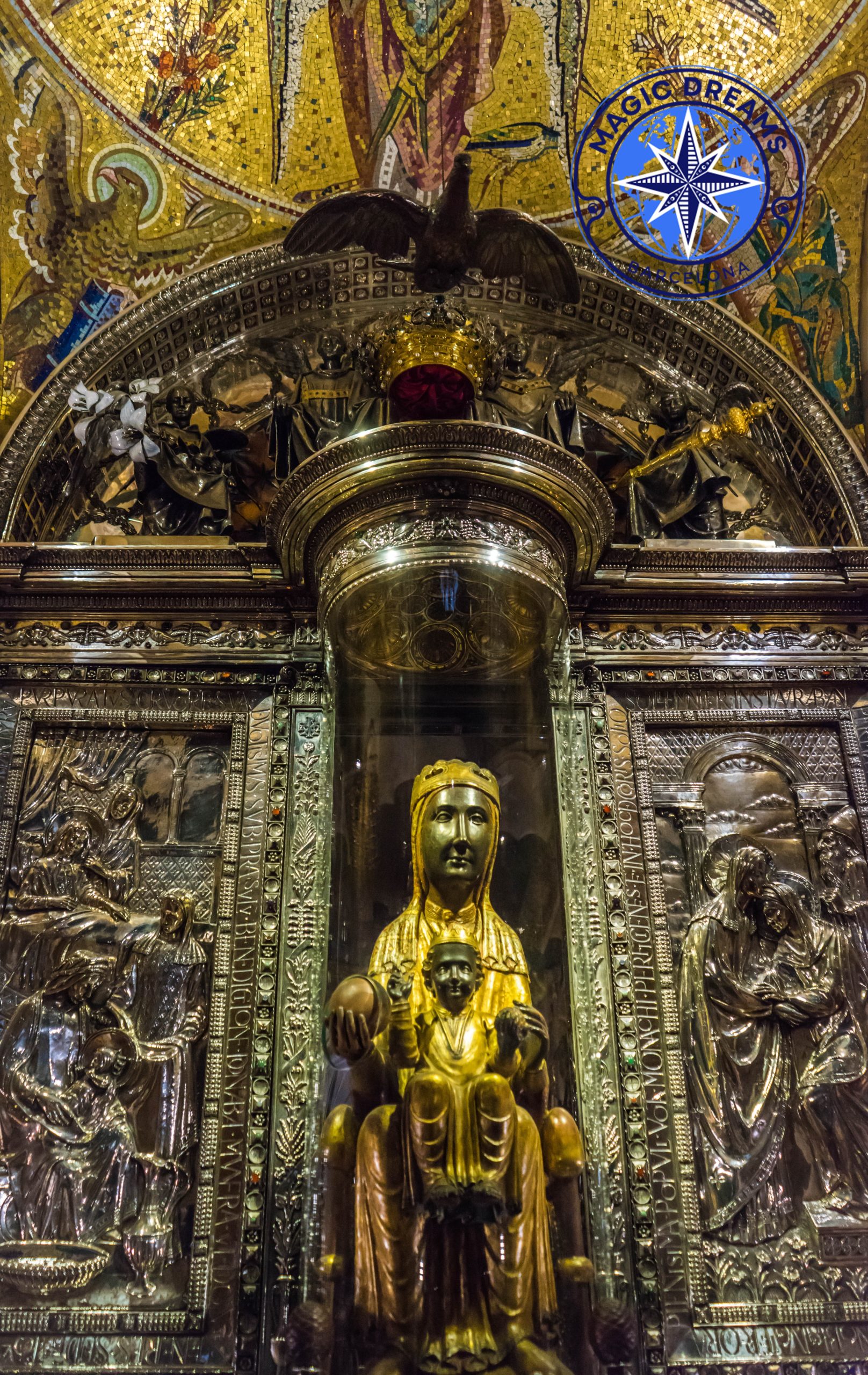
At the heart of the monastery is the Basilica of Santa Maria de Montserrat, home to the serene and venerated image of the Mare de Déu de Montserrat, popularly known as La Moreneta, patron saint of Catalonia. According to tradition, it was discovered in the year 880 by shepherd children in the Holy Cave (Santa Cova), where a chapel was soon established, giving rise to the sanctuary. The current statue, a Romanesque wooden sculpture from the late 12th century, owes its characteristic dark color to the natural oxidation of the varnish over the centuries.
The church, with a Gothic structure and Renaissance and traditional Catalan architectural elements, was heavily damaged during the Napoleonic wars (1808–1814) and rebuilt at the end of the 19th century. Its central nave measures 58 meters long and 15 meters wide, reaching 23 meters to the dome. Inside, notable features include wooden sculptures of the prophets Ezekiel, Jeremiah, Isaiah, and Daniel, carved by Josep Llimona in 1896, as well as the iconic hanging votive candles, donated by Catalan cities and associations as a symbol of the constant presence of the Catalan people at the Virgin’s feet.
The mystique of Montserrat is immediately felt when admiring its unique landscape. Its rock formations, reminiscent of sand castles sculpted by time, have inspired countless legends, giving rise to the name “Magic Mountain.” Popular stories include the discovery of La Moreneta, the tale of the woodcutter who made a pact with the devil, and the famous drummer of El Bruc, whose drum, amplified by the mountain’s echo, confused and defeated Napoleonic troops.
Montserrat is also a major cultural center. Its library preserves the oldest text written in Catalan (12th century) and a collection of over 300,000 volumes. Every day, visitors can hear the Escolania de Montserrat, the oldest boys’ choir in Europe, whose music elevates the spiritual experience to a deeply moving dimension.
The Montserrat Museum, founded in 1911, houses one of the most remarkable art collections in Spain. It includes paintings from the 13th to 18th centuries by artists such as Berruguete, El Greco, Caravaggio, Luca Giordano, and Tiepolo; a notable collection of 19th and 20th-century Catalan paintings by Fortuny, Rusiñol, Casas, Nonell, Picasso, and Dalí; as well as French Impressionism and contemporary graphic art by Chagall, Braque, Miró, Le Corbusier, and Mucha. Highlights also include the Nigra Sum space, dedicated to Marian iconography, and Phos Hilaron, featuring Byzantine and Slavic icons.
For nature lovers, Montserrat is an open-air sanctuary. Hiking, excursions, climbing, spiritual routes, and viewpoints make the mountain a perfect place to reconnect. Overnight stays are even possible at the Les Agulles refuge, at 900 meters above sea level, under a fully starry sky, offering an intimate and deeply transformative experience.
Access to the monastery is convenient and scenic thanks to the Montserrat Rack Railway, the cable car, and the Sant Joan and Santa Cova funiculars, all integrated into the landscape with respect for the natural surroundings.
Montserrat is not just a destination; it is an experience. A place where stone holds memory, where silence speaks, and where each visit becomes a shared memory.
Personalized Getaways
We organize fully personalized trips to Montserrat, tailored to all levels and preferences, taking care of every detail to make the experience unique and memorable. We provide service in Spanish, Catalan, and English, and upon request, adapt to any language so that every visitor feels accompanied from the very first moment.
En pleno barrio de Sant Pere, Santa Caterina i la Ribera, la Plaça de les Olles es un rincón que parece detener el tiempo, sus calles evocan siglos de historia y la vitalidad del presente convive con ecos del pasado medieval. Entre sus edificios surge …
Esterri d’Àneu es un municipio situado en el corazón del Pirineo Catalán, situado al noroeste de la ciudad de Lleida, limítrofe con la Vall d’Aran y cerca de la frontera con Francia. A Esterri d´ Aneu exclusivamente se puede llegar por carretera. Se encuentra ubicado …
History, heritage, beaches and coves of the Costa Brava
Roses is a Catalan municipality in the Alt Empordà comarca, in the province of Girona, located on the northern coast of the Gulf of Roses, south of Cap de Creus, in the heart of the Costa Brava.
It is a Mediterranean, maritime and tourist town, with residential developments, hotels, beaches, coves and two ports — a fishing port and a marina — which has become one of the main tourist destinations on the Catalan coast for visitors from all over the world.
Its bay combines long sandy beaches with a much more rugged coastline to the east, where cliffs, coastal paths and a great variety of coves can be found within the Cap de Creus Natural Park. Among them are Canyelles Petites, Almadrava, Murtra, Rostella, Montjoi, Pelosa, Jóncols and the small coves of Calitjàs and Canadell.
Roses is also one of those places where the Mediterranean landscape and history come together in an exceptional way. Greeks, Romans, Visigoths, medieval inhabitants, soldiers from the modern period and contemporary visitors have all left their mark on this territory.
How to Get There from Barcelona
Roses from Barcelona
Roses is approximately 152–155 km from Barcelona by road.
From Barcelona, the journey usually takes approximately 1 hour 45 minutes to 2 hours, depending on the starting point, traffic and the season. The route mainly follows the AP-7 northbound and then the roads leading towards Figueres and Roses.
By Bus
There is a direct connection from Barcelona Nord Bus Station to Roses. The journey usually takes approximately 2 hours 10 minutes, although this may vary depending on the service and traffic conditions.
By Train + Bus
Roses does not have a railway station. One alternative is to travel by train from Barcelona to Figueres and continue from there by bus to Roses.
The complete journey usually takes around 2 hours 50 minutes–3 hours 25 minutes, depending on the connection.
To explore the coves of Cap de Creus, especially the more remote ones, a car is the most practical option, although some areas have specific vehicle-access regulations and many of the most natural spots require walking.
Roses and Its Origins
A Territory Inhabited Since Prehistory
The earliest traces of human settlement in the municipality of Roses are located in the mountains surrounding the present-day town centre.
At the so-called Cau de les Guilles, archaeological remains dating from the Upper Palaeolithic or Magdalenian period have been found. They are considered among the oldest evidence of human presence discovered in the municipality.
In the area known as Casa Cremada, we find several megalithic monuments, including the Creu d’en Cobertella Dolmen, the Llit de la Generala Dolmen and other funerary remains, as well as menhirs and cists.
These monuments constitute an extraordinary example of human presence in the territory during Prehistory and help us understand that the Bay of Roses was already a place of settlement and passage long before the arrival of the Greeks and Romans.
Rhode, the Greek City
The First Great Mediterranean Gateway
The classical history of Roses is closely connected with Rhode, the ancient Greek colony located in the area now occupied by the Citadel.
The exact chronology of the foundation of Rhode remains a subject of historical debate. Ancient sources traditionally associated its origin with the Rhodians, while archaeology has documented Greek remains that allow us to place an established urban presence, at least, between the 5th and 4th centuries BC.
During the Hellenistic period, particularly between the 4th and 3rd centuries BC, Rhode achieved considerable economic prosperity.
Its strategic position in the Gulf of Roses allowed it to control maritime and commercial communications in the western Mediterranean.
The colony became an important commercial centre and minted its own currency. Among the coins associated with Rhode is the famous drachma bearing the rose, a symbol associated with the city.
Today, an essential part of that ancient city can be seen inside the Roses Citadel, where the remains of the Hellenistic quarter and the later Roman city are preserved.
The Arrival of Rome
Rhode Under Roman Influence
Roman presence in Roses is documented from the late 3rd and early 2nd centuries BC, in the context of Roman expansion into the northeastern Iberian Peninsula.
Traditional accounts of the history of Roses have associated the arrival of the Romans with the military campaigns of the Second Punic War. However, it is important to distinguish between historical traditions and what can currently be demonstrated through archaeology.
The Greek Rhode experienced a significant decline after the Punic Wars and the expansion of Rome. Later, the settlement regained importance during the Late Roman period.
The Citadel allows visitors to observe this historical continuity: its interior contains remains of the Greek colony of Rhode and subsequently the Roman city, as well as traces from medieval and modern periods.
The Mystery of the “Venus” Temple
History, Tradition and Archaeology
One of the most evocative elements of the ancient history of Roses is the reference to a supposed temple dedicated to Venus.
Traditional historical sources have associated representations of ancient Roses with the existence of a temple of Venus located in the mountains.
However, there is currently no archaeologically identified temple of Venus in Roses.
Therefore, the reference should be understood as a historical tradition connected with ancient sources and later interpretations, rather than as a preserved monument that can currently be visited.
This circumstance does not diminish the interest of the story. On the contrary, it makes the history of Roses a territory full of questions that remain open.
Archaeology has indeed confirmed the extraordinary importance of the ancient city of Rhode and its subsequent Roman occupation, whose remains can currently be seen in the Citadel.
The Roman City
Trade, Agriculture and Fish Salting
During the Roman period, various economic activities developed throughout the territory.
The ceramic industry played an important role, and agricultural villas also existed for the production of wine, olive oil and cereals.
The proximity of the sea also encouraged fishing and fish processing.
Archaeological remains corresponding to the Roman occupation are preserved in the Citadel, while research has documented different phases of the city from the Republican period through Late Antiquity.
The Bay of Roses therefore continued to be a strategic area for communication, trade and navigation.
Puig Rom
The Visigothic Castrum
Between the 6th and 7th centuries, the territory underwent an important transformation.
At Puig Rom we find a fortified settlement from the Visigothic period, which constitutes one of the most significant archaeological sites in Roses.
Its elevated position allowed the bay and access routes to the territory to be visually controlled.
Puig Rom represents a new stage in the history of Roses: after the classical world, the landscape was once again organised around an elevated defensive position.
The Roses Citadel
Twenty-Five Centuries of History in a Single Enclosure
The Roses Citadel is probably the essential place for understanding the history of the town.
The complex brings together the remains of the Greek colony of Rhode, the Roman city, Early Christian and Visigothic elements, the Romanesque monastery of Santa Maria, the medieval town and the fortifications of the modern period.
The Renaissance fortress was built in the 16th century and occupies a huge walled enclosure.
Today, the Citadel also functions as a cultural centre and archaeological museum.
What can be visited:
Remains of the Greek colony of Rhode.
Remains of the Roman city.
Early Christian necropolis.
Visigothic remains.
Romanesque Monastery of Santa Maria.
Remains of the medieval town.
Renaissance fortifications.
Archaeological Museum.
Exhibition hall.
Cultural and family activities.
The visit allows visitors to travel through more than two thousand years of history without practically leaving the same site.
Trinity Castle
The Fortress Overlooking the Gulf of Roses
Trinity Castle, also known as Poncella Castle, is one of the great defensive constructions of Roses.
It was built in 1544, during the reign of Charles I, as a strategic complement to the Citadel.
Its star-shaped design and thick walls were conceived to withstand artillery fire.
From its terrace, visitors can enjoy one of the best panoramic views over the Bay of Roses, the harbour, the coastline and Cap de Creus.
During the Peninsular War, it was partially destroyed by French troops.
It has now been restored as a monument and cultural space, with guided tours, family activities and special events during the summer.
The Megalithic Complex of Roses
Five Thousand Years Looking Out over the Mediterranean
The mountains of Roses preserve an exceptional collection of megalithic constructions.
Among the most notable sites are:
Creu d’en Cobertella Dolmen.
Llit de la Generala Dolmen.
Cap de l’Home Dolmen.
Menhirs of Casa Cremada.
Various cists and funerary structures.
These monuments reveal a very different Roses from the one of beaches and hotels: a prehistoric territory where human communities were already using the mountains as funerary and symbolic spaces.
Punta Falconera
Cliffs, Mediterranean Sea and Military Heritage
Punta Falconera is one of the most spectacular places along the Roses coastline.
The headland is located at the entrance to the gulf and forms part of the Cap de Creus landscape.
In addition to its natural value, it preserves military remains and old bunkers associated with the defence of the bay.
One of the most interesting routes is the coastal path between Almadrava and Cala Montjoi, which passes Punta Falconera and allows visitors to see the remains of the former military installations.
The official route is 4.4 km long, takes approximately 2 hours, has 193 metres of positive elevation gain and is of moderate difficulty.
Roses During the Spanish Civil War
The Air-Raid Shelters
During the Spanish Civil War, Roses suffered bombing raids and several shelters were built to protect the civilian population.
The best known and currently visitable is the Air-Raid Shelter in Plaça de la Pau.
The shelter preserves its corridors and provides an insight into one of the most difficult episodes in the contemporary history of Roses.
Between 1939 and 1948, several military installations were also built at Punta Falconera to defend the bay against a possible invasion.
The Transformation into a Tourist Destination
From Fishing Village to International Destination
From the 1960s onwards, strong tourism expansion took place.
The development of hotels, apartments and residential areas transformed the urban fabric and extended Roses along the coastline.
A broad seafront promenade was created, while Santa Margarida was developed with a network of navigable canals that allows certain boats to reach areas close to the houses.
Tourism became one of the municipality’s main economic drivers.
The Beaches and Coves of Roses
A Coastline to Discover on Foot, by Car or from the Sea
Roses offers a coastline of contrasts: urban and family-friendly beaches alongside small, wild coves surrounded by cliffs.
The municipality’s beaches and coves have EMAS and ISO 14001 environmental management systems, and many areas of Cap de Creus are particularly interesting for hiking, snorkelling and scuba diving.
Canyelles Petites Beach
Golden Sand and Crystal-Clear Waters
Canyelles Petites is located approximately 3 km from the centre of Roses.
From the centre:
On foot: approximately 40–45 minutes.
By car: around 7–10 minutes, depending on traffic.
Public transport: services to the coastal area are available, although seasonal timetables should be checked.
It is a beach of fine golden sand and crystal-clear waters with a sandy seabed, sheltered from the Tramontana wind.
Services:
Lifeguard and rescue service.
Foot-washing facilities.
Walkways.
Access for people with reduced mobility.
Restaurants.
Hotel.
Kiosks.
Sun-lounger and parasol rental.
Pedalo rental.
Boat anchoring area.
It is one of the best options for families.
Almadrava Beach
The Large Beach Sheltered from the Tramontana
Almadrava is located approximately 5 km from the centre of Roses.
From the centre:
On foot: approximately 1 hour–1 hour 15 minutes.
By car: around 10–15 minutes.
Bus: there is a bus stop.
The beach is approximately 500 metres long and 25 metres wide.
Services:
Lifeguard and rescue service.
Foot-washing facilities.
Walkways.
Access for people with reduced mobility.
Restaurants.
Hotels.
Kiosks.
Sun loungers and parasols.
Pedalo and kayak rental.
Anchoring area.
Unattended parking.
It is one of the best options for those looking to combine a comfortable beach, services and beautiful scenery.
Palangrers Beach
A Small Beach Next to the Harbour
It is located approximately 1 km from the town centre, beyond the fishing port.
From the centre
On foot: around 15–20 minutes.
By car: around 4–5 minutes.
It is approximately 140 metres long and combines sand and rocks.
Services:
Buoyed swimming area.
Lifeguard and rescue service.
Foot-washing facilities.
Bins.
Unattended parking.
Bus stop.
It is also an interesting area for activities related to the marine environment, including snorkelling.
Bonifaci Beach
A Small Gem Between Canyelles and Almadrava
Bonifaci Beach is located between Canyelles Petites and Almadrava.
There is no direct vehicle access to the beach: it is reached on foot along the coastal path from either of the two beaches.
Approximate walking times:
From Canyelles Petites: around 15–25 minutes.
From Almadrava: around 20–30 minutes.
By car: drive to Canyelles or Almadrava and continue on foot.
It is a small cove with clean, crystal-clear waters, consisting of coarse sand and pebbles.
Services:
Buoyed swimming area.
Floating mooring platform for boats.
Cala Murtra
Wild Nature and Silence
Cala Murtra is located approximately 10 km from Roses.
It is a secluded, wild-looking cove made up of pebbles and stones, where naturism is practised.
From the centre
By car: approximately 20–25 minutes to the access area.
On foot: it requires a hiking route; the time depends on the exact starting point and chosen itinerary.
Motor vehicles cannot access the cove directly.
Services:
It mainly has a buoyed swimming area.
It is therefore a cove for those looking for nature and tranquillity rather than tourist services.
Cala Murtra is also one of the areas where responsible snorkelling itineraries of 300 and 600 metres have been developed, designed to discover marine biodiversity.
Cala Rostella
A Small Cove with Turquoise Waters
Cala Rostella is located approximately 10 km from Roses.
It is a small, unspoilt cove surrounded by cliffs.
From the centre
By car: approximately 20–25 minutes to the access point.
On foot: it requires walking from the access area along a trail; the time may vary depending on where you park.
Motor vehicles cannot reach the sand directly.
Services:
Buoyed swimming area.
It is one of the best options for those looking for a natural and little-developed environment.
Cala Montjoi
The Landscape That Made Culinary History
Cala Montjoi is located approximately 12 km from the centre of Roses, within Cap de Creus Natural Park.
From the centre:
By car: approximately 25–30 minutes, depending on traffic and road conditions.
On foot: there is a coastal path from Almadrava; the official section to Montjoi is 4.4 km and takes approximately 2 hours, passing Punta Falconera, Cala Murtra and Cala Rostella.
Cala Montjoi is a wide cove made up of coarse sand and pebbles and provides natural shelter for boats.
Services:
Buoyed swimming area.
Bar and restaurant.
Bins.
It is also a place particularly associated with the history of “El Bulli”, the celebrated restaurant of Ferran Adrià that was located in this cove.
The cuisine of Roses and the Empordà region finds one of its most emblematic settings here.
Cala Calitjàs
A Small Cove Between Montjoi and Pelosa
Cala Calitjàs is located approximately 14 km from the centre of Roses.
It is a small cove of approximately 110 metres, surrounded by cliffs and crystal-clear waters.
Access:
The cove cannot be reached directly by vehicle.
It can be accessed by car along the coastal track to the nearby area and then continuing on foot along the dirt path connecting Montjoi and Jóncols.
Services
Buoyed swimming area.
It does not have the tourist infrastructure of urban beaches, so it is advisable to bring water, sun protection and everything necessary for spending several hours in nature.
Cala Pelosa
The Refuge of Cap Norfeu
Cala Pelosa is located approximately 15 km from Roses, following the coastal road towards Jóncols.
From the centre:
By car: approximately 30–40 minutes.
On foot: possible via hiking routes, although this is not a simple urban walk and requires good preparation.
The cove is protected by Cap Norfeu and has coarse sand.
Services:
Buoyed swimming area.
Bar and restaurant.
Bins.
Floating jetty.
It is an excellent option for combining swimming, scenery and Mediterranean cuisine.
Cala Canadell
The Small Wild Cove of Cap Norfeu
Cala Canadell is located between Jóncols and Pelosa, at the foot of the Cap Norfeu peninsula.
It is a small cove of barely 60 metres, made up of pebbles and rounded stones.
Access:
Access is mainly on foot from the coastal paths.
There is no motorised access to the cove itself.
Services:
Buoyed swimming area.
It is one of those places where nature completely dominates over tourist infrastructure.
Cala Jóncols
The End of the Road and the Beginning of Nature
Cala Jóncols is located approximately 18 km from the centre of Roses.
From the centre:
By car: approximately 35–45 minutes.
On foot: it requires a hiking route of several hours.
By sea: it is also possible to arrive on certain excursions and maritime services.
The coastal road reaches the area of the cove.
It is an unspoilt cove with a wild landscape and steep cliffs, particularly interesting for scuba diving.
Services:
Buoyed swimming area.
Hotel.
Bar.
Restaurant.
Bins.
Floating jetty.
There is also accommodation in the area, as well as a swimming pool, diving centre, kayak rental and water taxi services.
The GR 92 route between Cala Montjoi and Cadaqués crosses this spectacular section of Cap de Creus. The official route is approximately 10 km long and takes around 2 hours 50 minutes, with 387 metres of elevation gain and a high level of difficulty.
Cap Norfeu
The Great Natural Balcony of the Costa Brava
Cap Norfeu is one of the most impressive natural landscapes in Roses.
From its trails, visitors can contemplate the Mediterranean Sea, the Bay of Roses and the rocky formations of Cap de Creus.
Along the routes, places such as Cala Jóncols, Cala Canadell and Cala Pelosa appear, together with spectacular rock faces.
It is an area particularly suitable for:
Hiking.
Photography.
Landscape observation.
Snorkelling and marine activities.
Boating.
Wildlife and flora observation.
GR 92 Route: Cala Montjoi – Cadaqués
A Path Between Sea, Mountains and Cliffs
One of the most spectacular walks is the GR 92 section between Cala Montjoi and Cadaqués.
Route information:
Distance: 10 km.
Duration: approximately 2 hours 50 minutes.
Elevation gain: 387 m.
Type: linear.
Difficulty: 3/3.
During the route, visitors cross some of the most impressive landscapes of Cap de Creus, passing through areas near Cala Calitjàs, Cala Pelosa and Cala Jóncols.
This is a route that should be undertaken with suitable footwear, water and sun protection, especially during the summer months.
El Bulli and the Gastronomic Revolution
A Restaurant That Changed Global Cuisine
El Bulli was the restaurant located at Cala Montjoi that achieved international fame under the direction of Catalan chef Ferran Adrià.
The restaurant was awarded three Michelin stars and was repeatedly considered one of the best restaurants in the world.
Although the original restaurant ceased operating in 2011, its legacy remains closely linked to Roses.
Today, elBulli1846 represents the cultural and conceptual continuation of that gastronomic project and is one of the relevant places worth including in a contemporary visit to Roses.
Roses Lighthouse
The Guardian of the Coast
The Roses Lighthouse is another place worth including in the itinerary.
Its position beside the coastline offers magnificent views over the bay and Cap de Creus.
Its surroundings are particularly interesting because they combine:
Lighthouse.
Rocky coastline.
Trinity Castle.
Coastal paths.
Mediterranean landscape.
Views over the Gulf of Roses.
Roses Town Council currently includes the lighthouse among the municipality’s main heritage attractions.
Roses Old Town
The City Beyond the Beaches
Not everything in Roses is related to the sea.
The historic centre preserves streets, squares, traditional buildings and spaces connected with the development of the former town.
A complete visit can combine the old town with:
Citadel.
Church of Santa Maria.
Air-raid shelter.
Fishing harbour.
Seafront promenade.
Trinity Castle.
Lighthouse.
In this way, Roses can be discovered as a historic and maritime town, rather than simply as a beach destination.
Fishing Port
The Maritime Origins of Roses
The fishing port continues to be a fundamental part of the town’s identity.
Roses has an important fishing tradition, and fresh fish remains one of the protagonists of its cuisine.
The relationship between the port and local cooking largely explains the importance of fish, seafood and rice dishes in the gastronomy of Roses.
Catamaran and Boat Excursions
Roses from the Mediterranean
One of the best ways to discover the coves of Cap de Creus is from the sea.
Boat excursions allow visitors to see from another perspective:
Cala Murtra.
Cala Montjoi.
Cala Rostella.
Cala Pelosa.
Cala Calitjàs.
Cala Jóncols.
Cap Norfeu.
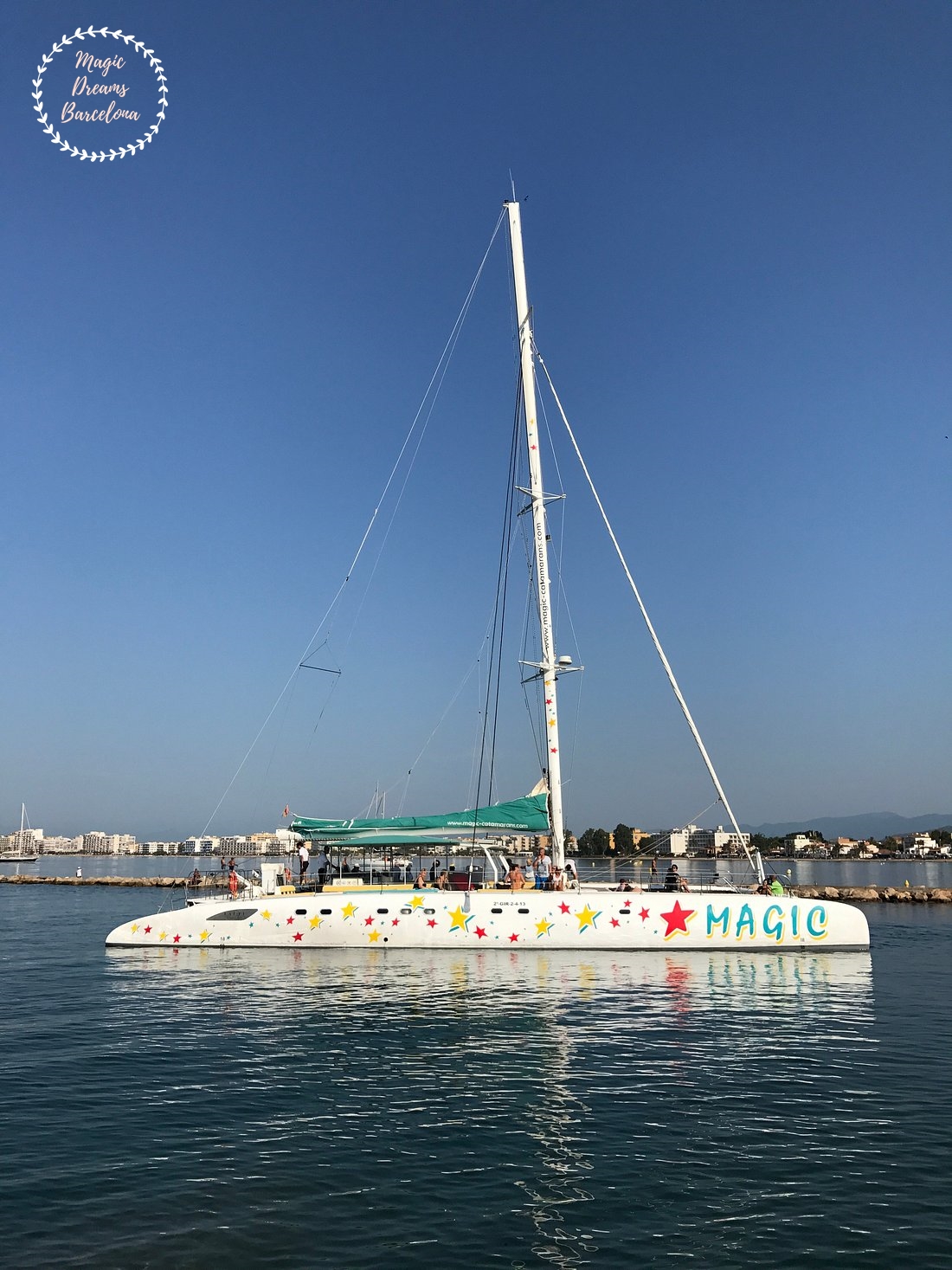
There are also boats with underwater viewing areas and different sailing options departing from Roses.
For a first visit, this alternative makes it possible to discover in a single trip places that would require several days of hiking to explore on foot.
Aquabrava
Fun for the Whole Family
Aquabrava is the water park in Roses, designed for enjoying a different kind of day during the summer months.
It is particularly interesting for families or groups wishing to alternate cultural excursions and beaches with leisure activities and water attractions.
Karting Roses
Speed and Fun
Karting Roses offers a go-kart track aimed at both adults and juniors.
It is a leisure alternative to complement a day at the beach, especially for families and groups.
Mini Golf Green
A Relaxing Activity by the Sea
Mini Golf Green, located on the seafront promenade, combines a sporting activity with views over the coastline.
Its facilities include grass courses with ramps, tunnels and obstacles, as well as landscaped areas.
It is an easy-going activity for families and for those looking for a relaxing leisure option after a day at the beach.
Gastronomy of Roses
The Mediterranean Served at the Table
The gastronomy of Roses is predominantly based on fresh fish.
As a natural harbour and traditional fishing town, Roses has an important fishing industry that provides fresh fish and seafood every day.
The most representative traditional dish is “Suquet de Peix”, a fish stew deeply connected with the Catalan fishing tradition.
Traditional cuisine and modern gastronomy are dominated by the Mediterranean character of the territory:
Fresh fish.
Seafood.
Olive oil.
Garden produce.
Anchovies.
Honey.
Rice dishes.
Meat.
Seasonal produce.
All these products create a varied, healthy and deeply Mediterranean cuisine.
Empordà Wines
A Glass to Accompany the Mediterranean
Meals in Roses can be accompanied by wines produced by wineries in the region under the Empordà Designation of Origin.
Among them we find:
Young wines.
Fruity rosés.
White wines.
Aged wines.
Blended wines.
Cava.
Garnatxa.
The gastronomy of Roses thus acquires a complete dimension: sea, mountains, agriculture, fishing and winemaking tradition.
Roses: A City Between Two Worlds
History and the Mediterranean
Roses is not simply a tourist town on the Costa Brava.
It is a territory where, practically superimposed upon one another, we can find prehistoric remains, an ancient Greek colony, a Roman city, a Visigothic settlement, a medieval monastery, a great Renaissance fortress, Civil War shelters, military installations and a modern tourist town.
All of this is complemented by one of the most extraordinary coastal landscapes in Catalonia.
From the Citadel to Cap Norfeu, from the fishing port to Cala Jóncols, Roses allows visitors to travel through thousands of years of history within a relatively compact area.
And perhaps that is precisely where the beauty of this ancient territory associated with Rhode and the old traditions concerning Venus lies: not in a temple that we can see today, but in the extraordinary accumulation of cultures, peoples, merchants, sailors, soldiers and visitors who have transformed this bay into one of the great historic landscapes of the Mediterranean.
Practical Information
Before You Travel
Distance Barcelona–Roses: approximately 152–155 km by road.
Best option for exploring the coves: car + hiking.
Best option for visiting several coves without walking long distances: boat excursion.
For Cap de Creus: bring water, suitable footwear and sun protection, and always check access conditions.
At the natural coves: do not expect the same services as at urban beaches.
Vehicle access: some coves have specific regulations, and motor vehicles are not permitted to reach the actual sand or rocky shore.
Would You Like to Discover Roses with Us?
Roses and the Costa Brava
If you would like to request any of our tourist services, excursions, experiences or activities in Roses and the Costa Brava, please do not hesitate to contact us through our web form.
Our team will receive your request and we will contact you during the day to provide you with all the information you need and help you organise your experience.
Barcelona ofrece diferentes floristerías conocidas por su estilo, tradición y calidad en el arte floral. A continuación, presentamos una selección de floristerías recomendadas por Magic Dreams Barcelona. 1 – The Boj Situada en la calle de Bigai, 5, en Sarrià-Sant Gervasi, The Boj es una …
Desde Barcelona: una hora y media hacia un sueño de piedra y naturaleza. Apenas a 98 km de Barcelona, con un trayecto en coche de aproximadamente 1 h 20 minutos por la C‑17, descubrimos Rupit i Pruit, un destino que vibra con historia, encanto medieval y un …
El Hotel W Barcelona, también conocido popularmente como Hotel Vela por su icónica silueta frente al mar, es uno de los edificios más emblemáticos del litoral barcelonés. Está situado justo frente al Mediterráneo, en el extremo occidental de la playa de Sant Sebastià, al inicio del paseo marítimo de la Barceloneta, dentro del distrito de Ciutat Vella. Su localización privilegiada le permite una relación directa y única con una de las playas más antiguas y tradicionales de la ciudad.
La playa de Sant Sebastià es la más occidental del litoral urbano de Barcelona y se caracteriza por su fuerte integración con la vida de la ciudad. Tiene una longitud aproximada de entre 660 y 1.100 metros, ya que se conecta de forma continua con la playa de Sant Miquel. Es una playa muy frecuentada tanto por residentes como por turistas y cuenta con duchas, aseos públicos, alquiler de tumbonas y sombrillas, quioscos de bebidas y helados, así como zonas deportivas, entre ellas vóley playa.
Dispone además de accesos adaptados para personas con movilidad reducida, pasarelas y servicios específicos. A su alrededor encontramos clubes náuticos históricos, espacios de ocio, bares, restaurantes y terrazas, y puntos emblemáticos como la Torre de Sant Sebastià, desde donde parte el teleférico hacia Montjuïc. En verano, la oferta se amplía con beach clubs como Bastian Beach, muy próximo al hotel W. Como en el resto de playas urbanas de Barcelona, está prohibido fumar en la arena.
En este contexto está situado el Hotel W Barcelona, un edificio diseñado por el reconocido arquitecto catalán Ricardo Bofill, fallecido en enero de 2022, con una altura aproximada de 99 metros. El proyecto fue desarrollado por el estudio Ricardo Bofill Taller de Arquitectura y se ha convertido en un referente del skyline marítimo de la ciudad. El hotel forma parte de la cadena Marriott International y se inscribe dentro de la ampliación de la zona sur del puerto de Barcelona.
El edificio cuenta con 26 plantas, dispuestas de forma perpendicular al muelle, lo que permite que la mayoría de sus espacios disfruten de vistas panorámicas excepcionales: por un lado, el mar Mediterráneo, y por el otro, la ciudad de Barcelona. Junto con la Torre Glòries (antigua Torre Agbar) y el Hotel Arts, el Hotel Vela forma parte del paisaje arquitectónico contemporáneo de la ciudad, habiendo recibido en 2010 el primer premio de los Prix Villégiature a la Mejor Arquitectura Exterior de Hotel en Europa.
El hotel ofrece habitaciones y suites de lujo con vistas al mar y a la ciudad, y destaca por su acceso directo y exclusivo a la playa de Sant Sebastià, con servicios de playa para huéspedes como camas, sombrillas, toallas, comida y bebida. Entre sus instalaciones se incluyen varios restaurantes y bares, un bar panorámico en la azotea, una piscina exterior tipo infinity frente al mar (WET Deck) con solárium y ambiente de playa, spa, y gimnasio abierto las 24 horas. También alberga la W Sound Suite, una suite singular equipada con un estudio de música privado, única en su tipo en Europa.
Ideal para vacaciones frente al mar, escapadas románticas, eventos especiales o experiencias exclusivas, el Hotel W Barcelona representa una forma contemporánea de disfrutar de la ciudad desde un enclave privilegiado frente al Mediterráneo.
“El individuo debe construirse a sí mismo antes que su obra.”
— Ricardo Bofill
Como complemento al edificio, Bofill concibió la plaza de la Rosa de los Vientos, situada junto al hotel, donde está situada la escultura titulada “Las cuatro barras de la señera catalana”, concebida como un homenaje a la bandera de Cataluña. La obra está formada por cuatro columnas ortoédricas de seis metros de altura, con un giro helicoidal que aporta dinamismo y simbolismo al conjunto arquitectónico y urbano.
Magic Dreams Barcelona – Experiencias exclusivas desde el W Barcelona
Magic Dreams Barcelona ofrece una manera única, íntima y profundamente personalizada de descubrir Barcelona, combinando la vanguardia y el lujo del Hotel W Barcelona con experiencias culturales, artísticas y sensoriales en la ciudad. Nuestro objetivo es que cada visita se transforme en un viaje inolvidable, donde el confort, la belleza y la creatividad se integran con la historia, la arquitectura y la gastronomía local.
Servicios y experiencias en la ciudad:
Alojamiento y comodidad de lujo: Nos encargamos de gestionar su estancia en el Hotel W Barcelona, con habitaciones y suites con vistas al mar Mediterráneo, acceso a la piscina infinita WET Deck, gastronomía premium y servicios exclusivos.
Transporte privado y asistencia personalizada: Traslados en vehículos de alta gama para explorar la ciudad con total comodidad.
Guías expertos y multilingües: Profesionales nativos especializados en historia, arquitectura, arte y naturaleza, disponibles en español, catalán e inglés (otros idiomas bajo solicitud).
Rutas culturales y arquitectónicas personalizadas: Visitas a monumentos icónicos como Park Güell, Sagrada Família, Casa Batlló y otros tesoros de Gaudí y del modernismo catalán, con explicaciones profundas sobre simbolismo, historia y diseño.
Experiencias artísticas y educativas: Talleres de mosaico trencadís, pintura, fotografía profesional y actividades creativas en espacios emblemáticos de la ciudad.
Gastronomía de autor y experiencias sensoriales: Picnics privados, menús exclusivos en locales seleccionados, degustaciones de cocina catalana e internacional, maridajes de vinos y cavas sin alcohol.
Bienestar y relax: Masajes, oración y meditación, experiencias sensoriales en terrazas y espacios verdes, combinando naturaleza, luz y armonía.
Excursiones de un día o fin de semana: Viajes cuidadosamente organizados a la Costa Brava, el Pirineo catalán o rutas vinícolas y gastronómicas de la región.
Experiencias fotográficas y memorables: Sesiones profesionales en los lugares más icónicos de Barcelona y en el propio hotel, capturando la ciudad desde perspectivas únicas.
Música en vivo y actuaciones privadas: Integradas en la estancia, creando atmósferas únicas en el hotel o durante los recorridos por la ciudad.
Adaptación a sus necesidades:
Nos encargamos de coordinar toda la estancia y los servicios, adaptándonos a sus intereses, preferencias y ritmo, para que la experiencia sea totalmente personalizada, cómoda y sin preocupaciones.
Cada experiencia está diseñada para que los visitantes no solo contemplen Barcelona, sino que la sientan, la vivan y la comprendan desde la sensibilidad artística, cultural y natural que caracteriza a Magic Dreams Barcelona.
Con Magic Dreams Barcelona y el Hotel W, cada estancia se convierte en un viaje de lujo, creatividad y descubrimiento, viviendo la ciudad como una experiencia inolvidable y personalizada.
Hotel W Barcelona.
Perspectiva a pie del Hotel W desde la playa de la Barceloneta.
Detalle exterior del Hotel W Barcelona.
Perspectiva de parte de la bahía de Barcelona desde el Hotel W Barcelona.
Hotel W Barcelona.
Hotel W Barcelona.
Hotel W Barcelona.
Hotel W Barcelona.
Hotel W Barcelona.
Detalle exterior del Hotel W Barcelona.
Perspectiva de parte de la bahía de Barcelona desde elDetalle exterior del Hotel W Barcelona.
Hotel W Barcelona.
Perspectiva a pie del Hotel W desde la playa de la Barceloneta.
El Arco de Triunfo de Barcelona – Belleza, Historia y Simbolismo En el corazón de Barcelona, entre el Paseo de Lluís Companys y el Paseo de Sant Joan, está situado el Arco de Triunfo, concebido como entrada principal a la Exposición Universal de Barcelona de …