Route guide for visitors throughout Catalonia – Barcelona – Costa Brava – Catalan Pyrenees – Personalized experiences – Customized tour guide services – A small tribute to the wonderful city and land that saw us born – Transforming experiences into unforgettable memories - Magic Dreams Collection: exclusive universes inspired by Salvador Dalí and Gaudí. Niche perfumes, jewelry, lithographs, and collectible items celebrating the Mediterranean spirit.
There are places where history is not simply told — it is felt. On the Costa Brava, overlooking the Mediterranean, the archaeological site of Empúries offers an extraordinary journey through more than two thousand years of history. Here, the remains of an ancient Greek settlement …
In one of the most discreet and elegant corners of the Costa Brava, where the landscape speaks without artifice and time seems to slow down, lies Tamariu: a cove transformed into a destination, and a destination transformed into an experience. Unlike other locations along the …
At the southernmost end of the province of Girona, where the Tordera River meets the Mediterranean, begins one of Catalonia’s most iconic coastal territories.
It is Blanes, an ancient fishing town traditionally regarded as the Gateway to the Costa Brava.
Its landscape brings together many of the elements that have made this coastline one of the great Mediterranean destinations: cliffs, hidden coves, golden-sand beaches, pine forests, botanical gardens, historic heritage and crystal-clear waters.
Along approximately four kilometres of coastline, the landscape is constantly changing.
Urban beaches give way to small coves.
Cliffs blend with Mediterranean vegetation.
And elevated paths offer different perspectives over the coastline.
Blanes is also a town deeply connected to the sea.
Its port, fishing tradition, beaches and gardens form part of an identity that combines Mediterranean character with a remarkable historical and natural heritage.
But perhaps the best way to understand Blanes is from its viewpoints.
From the top of Sa Palomera, from Sant Joan Castle or from the gardens overlooking the cliffs, visitors discover a coastline that seems to stretch endlessly northwards.
Welcome to the Gateway to the Costa Brava.
A Landscape Between Sea and Mountains
Blanes enjoys an exceptional geographical setting.
The town lies between the Mediterranean and the first elevations of the coastal mountain range, creating a landscape in which the sea and Mediterranean vegetation are constantly present.
Pines, palms, holm oaks, carob trees and many other species accompany countless routes and trails.
The terrain allows visitors to discover different perspectives of the coastline and makes some of its paths and viewpoints privileged places from which to watch the sunrise, sunset or simply contemplate the immensity of the Mediterranean.
The coastline combines large beaches with small coves and rocky areas.
Among the highlights are Sa Palomera, S’Abanell, Blanes Beach, Punta de Santa Anna, Cala Sant Francesc, Cala Treumal, Cala Sa Forcanera and Cala s’Agüia.
Each has its own personality.
Some are family-friendly and easily accessible.
Others are sheltered by pine forests.
And some remain almost hidden beneath the cliffs.
Sa Palomera – The Gateway to the Costa Brava
If there is one place that symbolizes Blanes, it is Sa Palomera.
This large rocky formation extends into the sea between Blanes Beach and S’Abanell and is one of the town’s great landmarks.
It is also traditionally considered the point marking the beginning of the Costa Brava.
An arch-shaped structure located next to Sa Palomera reinforces this symbolic idea of a gateway.
Climbing to its highest point offers spectacular panoramic views of Blanes.
On one side lies the town.
On the other, the Mediterranean.
Behind you stretches the coastline, while to the north begins the more rugged landscape that gave the Costa Brava its name.
It is the perfect place to stop and observe how the town merges with the sea.
The Fireworks Festival
Sa Palomera also holds a special place in one of Blanes’ best-known traditions.
Every summer, during the Santa Anna festivities, the coastline becomes the setting for the renowned International Fireworks Competition of Blanes.
The shows take place over the sea and attract thousands of spectators.
The natural configuration of the coastline makes the event particularly spectacular: the lights are reflected on the Mediterranean while fireworks illuminate the silhouette of Sa Palomera and the surrounding mountains.
For those visiting Blanes during these dates, watching the spectacle from the sea, from a viewpoint or from a private location can become a completely different experience.
The Botanical Gardens of Blanes
One of Blanes’ great distinctive features is the presence of two botanical gardens of exceptional value: Marimurtra and Pinya de Rosa.
Their presence makes the town much more than a beach destination.
Here, botany, architecture, landscape and the Mediterranean come together in a single setting.
Marimurtra Botanical Garden
Located on the cliffs overlooking the Mediterranean, the Marimurtra Botanical Garden is one of the most extraordinary natural spaces in Blanes.
Created by the German scientist and entrepreneur Carl Faust, the garden was founded with a clear scientific and botanical vocation and has become one of the great references for Mediterranean botany.
The garden contains more than 4,000 plant species from different regions of the world and extends across several hectares of land.
The experience is not simply about observing plants.
Marimurtra combines:
nature,
botany,
architecture,
landscape,
research
and the Mediterranean.
Its paths pass through different plant environments and lead to viewpoints suspended above the sea.
From certain points, the cliffs appear almost vertical beneath the gardens.
The blue of the Mediterranean contrasts with the green vegetation, creating a deeply visual experience.
Marimurtra also has significant heritage value and is officially recognized as an Asset of National Cultural Interest.
For lovers of nature, photography and landscape architecture, it is one of the essential places to visit in Blanes.
Pinya de Rosa
Nearby is the Pinya de Rosa Tropical Botanical Garden, which specializes particularly in cacti and succulent plants.
Its landscape is completely different from Marimurtra.
Here, the sculptural forms of the plants take centre stage.
Cacti, aloes, agaves and other species create natural compositions that resemble contemporary sculptures.
The garden demonstrates once again the extraordinary ability of Blanes’ Mediterranean climate to accommodate species from different parts of the world.
Together, the two gardens offer the opportunity to experience a genuine botanical route along the Costa Brava.
The Carrilet
A different way to explore Blanes and reach some of its main points of interest is by taking the Carrilet, the small tourist train connecting different areas of the town and its surroundings.
For families, private groups or visitors who prefer to reduce walking distances, it can be a comfortable and enjoyable alternative.
The route offers another perspective of Blanes and makes it possible to combine the urban visit with natural spaces.
Cala Sa Forcanera – A Secret Facing the Mediterranean
Among the small jewels of Blanes’ coastline is Cala Sa Forcanera.
Located beneath the cliffs, between Santa Anna Beach and Cala Sant Francesc and at the foot of the Marimurtra Botanical Garden, this small cove is one of the most special corners of the coast.
Its isolation is precisely one of its greatest attractions.
Land access is restricted by private property, and the cove is essentially considered accessible by sea.
From a boat, the perspective changes completely.
The cliffs rise above the water.
Vegetation cascades towards the Mediterranean.
And the small beach appears sheltered in an extraordinarily peaceful setting.
It is one of those places where you immediately feel far away from the town.
For a private experience, arriving by boat allows visitors to discover this section of coastline from a particularly privileged perspective.
Cala s’Agüia
Very close to Sa Forcanera lies another small gem: Cala s’Agüia.
It is a much smaller and wilder setting, formed mainly by large pebbles.
It can be accessed by sea and, depending on conditions and the route chosen, also on foot.
The presence of small boats usually anchored nearby and its crystal-clear waters make this an especially interesting spot for those wishing to discover the underwater landscape.
Cala Sant Francesc – Cala Bona
Also known as Cala Bona, Cala Sant Francesc is one of Blanes’ best-known beaches.
It is surrounded by pine trees and offers a particularly pleasant setting for those looking to combine swimming, nature and comfort.
Its size and facilities make it one of the most suitable options for a relaxing day beside the Mediterranean.
From here, the coastal landscape allows visitors to continue towards some of the paths and viewpoints connecting different areas of the coastline.
Cala Treumal
On the border between Blanes and Lloret de Mar lies Cala Treumal, a small bay surrounded by pine trees and rocks.
It is approximately 400 metres long and is one of the most attractive natural spaces along this section of the coast.
Its crystal-clear waters offer excellent conditions for enjoying the sea and exploring the underwater environment.
The beach also offers services such as a restaurant or bar, showers, toilets, lifeguards and boat rental during the season.
One of its most distinctive features is the natural rock passage that visually connects the surroundings of Cala Treumal with the neighbouring Santa Cristina Beach.
Erosion has created rock formations that reinforce the sensation of being on a coastline sculpted almost entirely by the sea.
Santa Cristina
Although Santa Cristina Beach administratively belongs to Lloret de Mar, it lies immediately next to Cala Treumal and forms part of one of the most attractive coastal landscapes in this section of the Costa Brava.
The beach is characterized by shallow waters, fine sand and a natural setting surrounded by vegetation.
The proximity between Santa Cristina and Cala Treumal makes it possible to combine both locations in a single seaside experience.
For families, couples and visitors looking for a day at the beach surrounded by nature, it offers a particularly appealing combination.
Sant Joan Castle
Dominating Blanes from above is Sant Joan Castle, one of the town’s great historical landmarks.
The complex began to be built in the 12th century, although defensive structures had already existed at this strategic location in earlier periods.
Its position was no coincidence.
From this mountain, a remarkably wide section of the coastline can be visually controlled.
For centuries, coastal fortifications served to protect towns from possible attacks and to monitor approaching vessels.
The tower and surviving sections of the walls allow visitors to imagine the strategic importance of this location.
But today there is another reason to climb:
the views.
From Sant Joan Castle, almost all of Blanes can be seen.
Sa Palomera is clearly visible from above.
The port lies below.
The beaches stretch along the coastline.
And the Mediterranean opens towards the horizon.
It is one of the best places to understand the geography of Blanes.
The Hermitage of Sant Joan
Next to the castle stands the Hermitage of Sant Joan, dedicated to Saint John the Baptist and historically connected to the defensive complex.
Its origins date back to the Middle Ages.
Its elevated position also makes it one of Blanes’ great viewpoints.
Inside, visitors can find mural paintings created in the 20th century by artist María Teresa Bedós.
There is also a small detail that can easily go unnoticed: a side window allows visitors to see part of the interior and its paintings when the temple is not accessible.
It is one of those small secrets that enrich a guided visit.
The Parish Church of Santa Maria
In the historic centre of Blanes stands Santa Maria Church, one of the town’s principal examples of Gothic architecture.
The building was constructed between the 14th and 15th centuries and formed part of the former palatial complex of the Viscounts of Cabrera.
The façade preserves elements of the original Gothic architecture.
Notable features include the pointed arches of the entrance, the rose window and the square bell tower.
The interior is arranged in three naves.
The church is fundamental to understanding the historical importance of Blanes during the Middle Ages and its relationship with the powerful Cabrera family.
The Palace of the Viscounts of Cabrera
The medieval history of Blanes is closely connected to the Viscounts of Cabrera.
The former viscountal palace and parish church originally formed a single architectural complex, although they were later separated.
This heritage reveals another dimension of Blanes: not simply as a coastal destination, but as a town with a deeply rooted medieval history connected to Catalan feudal power.
The Gothic Fountain
In the centre of the town stands another of Blanes’ most distinctive heritage sites: the Gothic Fountain.
It is a civil Gothic fountain considered an exceptional piece of Catalan heritage.
Built at the end of the 14th century, it remains one of the town’s historic symbols.
For centuries, the water flowing through its outlets was of fundamental importance to the local population.
Today, it remains one of the most interesting testimonies to medieval Blanes.
Hermitages and Religious Heritage
Blanes also preserves several small hermitages and chapels that reveal its spiritual and popular traditions.
Among them is the Ermita de la Antiga, located in Josep Mestres Square.
The space has particular acoustic qualities that make it suitable for concerts and literary recitals.
Another notable site is the Chapel of La Salut, associated with a religious tradition celebrated every 8 September on the occasion of the feast of Our Lady.
These smaller spaces reveal a more intimate side of Blanes, away from the main tourist routes.
The Sanctuary of the Sacred Image of Vilar
A few kilometres from the town centre lies the Sanctuary of the Sacred Image of Vilar, another site connected with the religious and cultural traditions of Blanes.
Its location makes it possible to combine heritage, landscape and tranquillity.
For those wishing to discover the spiritual dimension of the region, it can be an interesting extension to a visit to the historic centre.
The Tordera Delta
Blanes does not end at its beaches.
At the southern end of the town lies the mouth of the Tordera River, an area of particular ecological importance.
The delta is an important environment for migratory birds and is home to a variety of Mediterranean flora and fauna.
It is a completely different landscape from the cliffs in the north.
Here, the terrain opens out.
Freshwater and the Mediterranean meet.
Riparian vegetation gradually replaces the rocky coastal landscape.
At certain times of the year, visitors can observe an interesting variety of bird species.
For lovers of nature, photography and birdwatching, this is another side of Blanes that deserves to be discovered.
Blanes from the Sea
There is one particularly privileged way to understand Blanes:
from the water.
A private boat excursion allows visitors to experience the town from a completely different perspective.
Sa Palomera appears as a great natural gateway.
The cliffs of Marimurtra rise above the Mediterranean.
Sa Forcanera remains hidden beneath the vegetation.
Cala Sant Francesc and Cala Treumal display their different shades of blue.
And the silhouette of Sant Joan Castle dominates the town from above.
Sailing also makes it possible to approach small coves and corners whose land access is limited or non-existent.
For an exclusive experience, private sailing can be combined with swimming, snorkelling, gastronomy on board and a Mediterranean sunset.
The Coastal Path
The coastal paths are another wonderful way to discover Blanes.
The Camí de Ronda allows visitors to explore sections of the coastline along traditional paths beside the sea.
The landscape changes continuously.
In some areas, the path passes through pine forests.
In others, it follows the edge of cliffs.
And in certain places, small hidden coves appear below.
It is particularly suitable for those who enjoy walking, photography and nature.
Blanes’ different viewpoints also offer exceptional perspectives over the coastline.
Mediterranean Gastronomy
Blanes’ relationship with the sea is also reflected in its cuisine.
Fish, seafood, rice dishes and Mediterranean produce form part of a culinary tradition deeply connected to the town.
A gastronomic experience can begin at the market or selected establishments and continue beside the sea.
For international visitors, this dimension makes it possible to discover the Costa Brava not only through its landscapes, but also through its flavours.
Blanes at Sunset
As evening falls, Blanes takes on another personality.
The light begins to change over Sa Palomera.
The façades of the historic centre take on warm tones.
Sant Joan Castle stands out against the sky.
Boats remain anchored in front of the small coves.
And the Mediterranean slowly reflects the last colours of the day.
A walk along the coast at sunset can end at a selected restaurant, on a private terrace or aboard a boat.
It is one of the finest ways to experience the Mediterranean essence of Blanes.
A Bespoke Experience in Blanes
Blanes can be visited in just a few hours.
But it can also become a private experience lasting one or several days.
With Magic Dreams Barcelona, every experience begins with a conversation.
We want to understand what each visitor is looking for.
Nature.
The sea.
Botany.
History.
Gastronomy.
Photography.
Sailing.
Wellness.
Art.
Or simply a day of disconnection beside the Mediterranean.
From there, we design an itinerary adapted to each person’s pace and interests.
Our Services in Blanes
We can arrange experiences including:
Private transportation from Barcelona or anywhere in Catalonia.
Professional tour guides in Spanish, Catalan and English, with other languages available upon request.
Private visits to Sant Joan Castle and Blanes’ historical heritage.
Private tours of Marimurtra and Pinya de Rosa.
Specialist botanical experiences.
Nature and birdwatching tours.
Private walks along the coastline and the Camí de Ronda.
Private sailing along the Costa Brava.
Boat excursions to coves with limited land access.
Snorkelling and swimming experiences.
Private picnics beside the Mediterranean.
Signature catering and personalized gastronomy.
Alcohol-free experiences, with wines, cavas and cocktails without alcohol.
Personalized floral arrangements.
Live music.
Professional photography sessions.
Wellness and mindful experiences.
Creative and cultural workshops.
Gastronomic tours.
Private one- or multi-day experiences along the Costa Brava.
Botany and Nature: Discovering Blanes Through Different Eyes
A visit accompanied by botanical specialists allows visitors to discover a completely different dimension of Blanes.
Marimurtra offers the opportunity to learn about species originating from different regions of the world.
The coastline reveals how Mediterranean vegetation adapts to its environment.
And the Tordera Delta introduces a completely different ecosystem, particularly fascinating from a biodiversity perspective.
For those seeking a more sensory experience, we can incorporate an interpretation of the landscape based on:
scents,
textures,
colours,
sounds,
light,
temperature
and movement.
Nature ceases to be simply the setting.
It becomes part of the experience.
Photography in Blanes
Blanes offers some of the most interesting photographic settings on the Costa Brava.
Sa Palomera.
Sant Joan Castle.
The gardens of Marimurtra.
The cliffs.
The coves.
The coastal paths.
Traditional boats.
The Mediterranean.
And the light of sunset.
We can organize private sessions for:
Couples.
Families.
Celebrations.
Marriage proposals.
Anniversaries.
Private journeys.
Editorial portraits.
Fashion and lifestyle.
Photography does not have to be simply a souvenir.
It can become part of the experience.
A Perfect Day in Blanes
Morning
Departure from Barcelona in a private vehicle.
Arrival in Blanes and a tour of the historic centre.
Visit to Santa Maria Church, the Gothic Fountain and other elements of the medieval heritage.
Then, ascent to Sant Joan Castle and the Hermitage of Sant Joan to admire the views over the town and the Mediterranean.
Midday
Private visit to the Marimurtra Botanical Gardens.
Botanical exploration among Mediterranean and exotic species.
Time for photography and contemplation of the cliffs.
Lunch
The experience can continue with a private gastronomic lunch.
Fish and seafood.
Mediterranean rice dishes.
Catalan cuisine.
Or a personalized proposal based on the visitor’s preferences.
Afternoon
Private boat departure.
Sailing past Sa Palomera.
Cala Sant Francesc.
Sa Forcanera.
Cala s’Agüia.
And Cala Treumal.
Time for swimming, snorkelling or simply enjoying the Mediterranean.
Sunset
Return towards Blanes as the light begins to change.
Sant Joan Castle becomes illuminated above the town.
Sa Palomera turns into a silhouette against the horizon.
And the Mediterranean takes on golden tones.
The day ends with a private dinner or a carefully selected gastronomic experience.
A Luxury Escape Along the Costa Brava
Blanes can also be the starting point for a broader experience.
From here, we can continue towards Lloret de Mar, Tossa de Mar, Sant Feliu de Guíxols, S’Agaró, Begur, Pals or Cadaqués, designing a private journey through some of the most iconic landscapes of the Costa Brava.
We can also combine Blanes with gastronomic experiences, sailing, boutique hotels, spas, photography and cultural activities.
The Costa Brava allows for completely different itineraries.
There is no single way to discover it.
There is the way that best suits each visitor.
Privacy, Discretion and Personalized Service
At Magic Dreams Barcelona, we understand that certain travellers are looking for more than a conventional excursion.
They seek time.
Privacy.
Flexibility.
Discretion.
And truly personalized attention.
That is why every experience can be coordinated from beginning to end.
Transportation.
Guide.
Dining.
Boat.
Photography.
Activities.
Schedules.
And all the small details that transform an excursion into an experience.
Conclusion
Blanes is much more than the gateway to the Costa Brava.
It is a place where the Mediterranean merges with the mountains.
Where botanical gardens overlook the cliffs.
Where a medieval castle dominates the horizon.
Where a rock formation called Sa Palomera symbolically marks the beginning of one of the Mediterranean’s most famous coastlines.
Where small coves remain hidden beneath the cliffs.
Where the Tordera creates a completely different natural landscape.
And where the sea continues to be an essential part of the town’s identity.
Discovering Blanes means walking.
Sailing.
Contemplating.
Tasting.
Photographing.
Breathing.
And allowing the Mediterranean to set the pace.
With Magic Dreams Barcelona, Blanes can become much more than a day trip.
It can be a private experience designed around each visitor, where nature, history, gastronomy, architecture, botany, the sea and wellness come together to discover the Gateway to the Costa Brava from a completely different perspective.
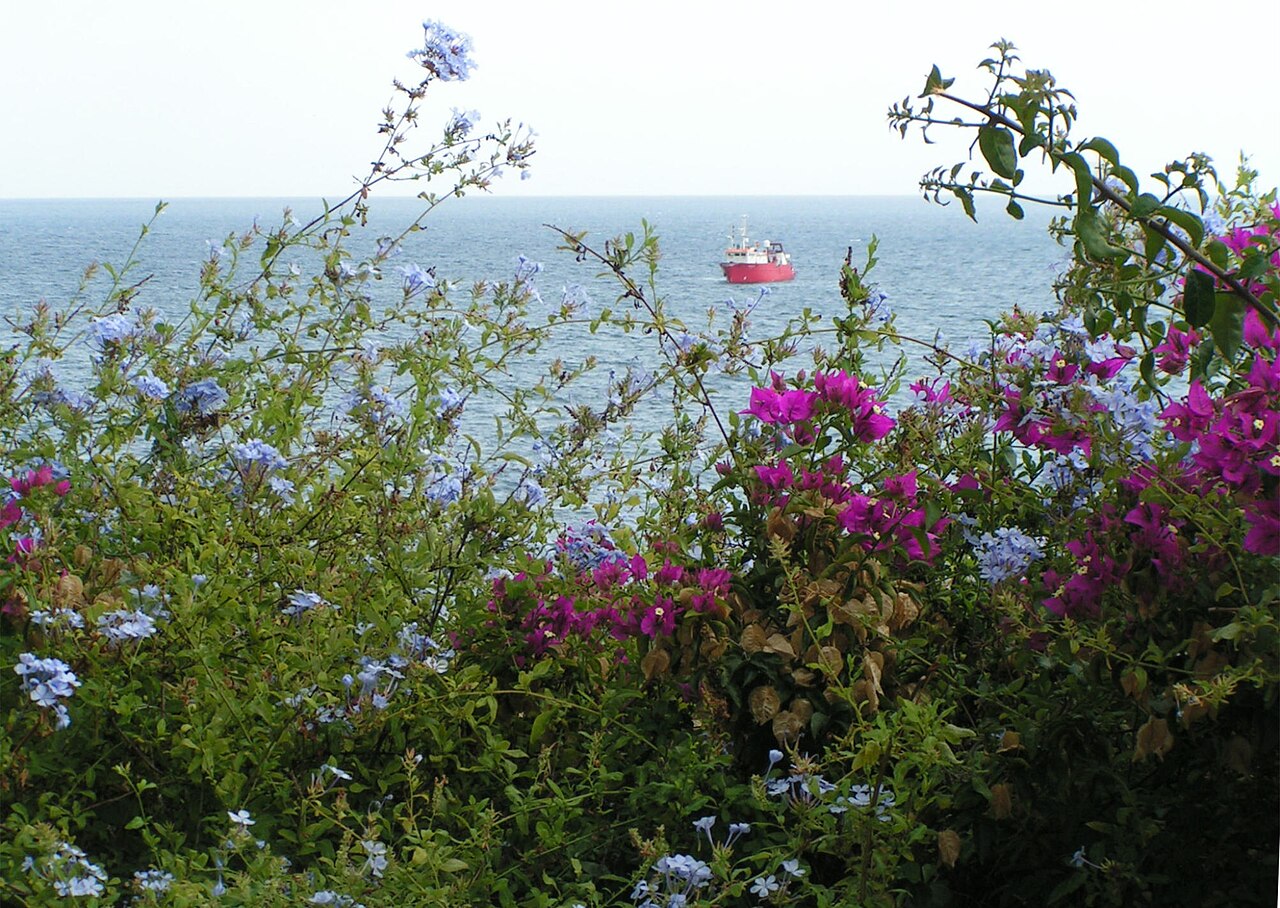
Vista desde el Jardín Botánico (Jardi Botànic Marimurtra) Blanes al Mar Mediterráneo – By Corradox – Own work, CC BY-SA 3.0, https://commons.wikimedia.org/w/index.php?curid=7351159.
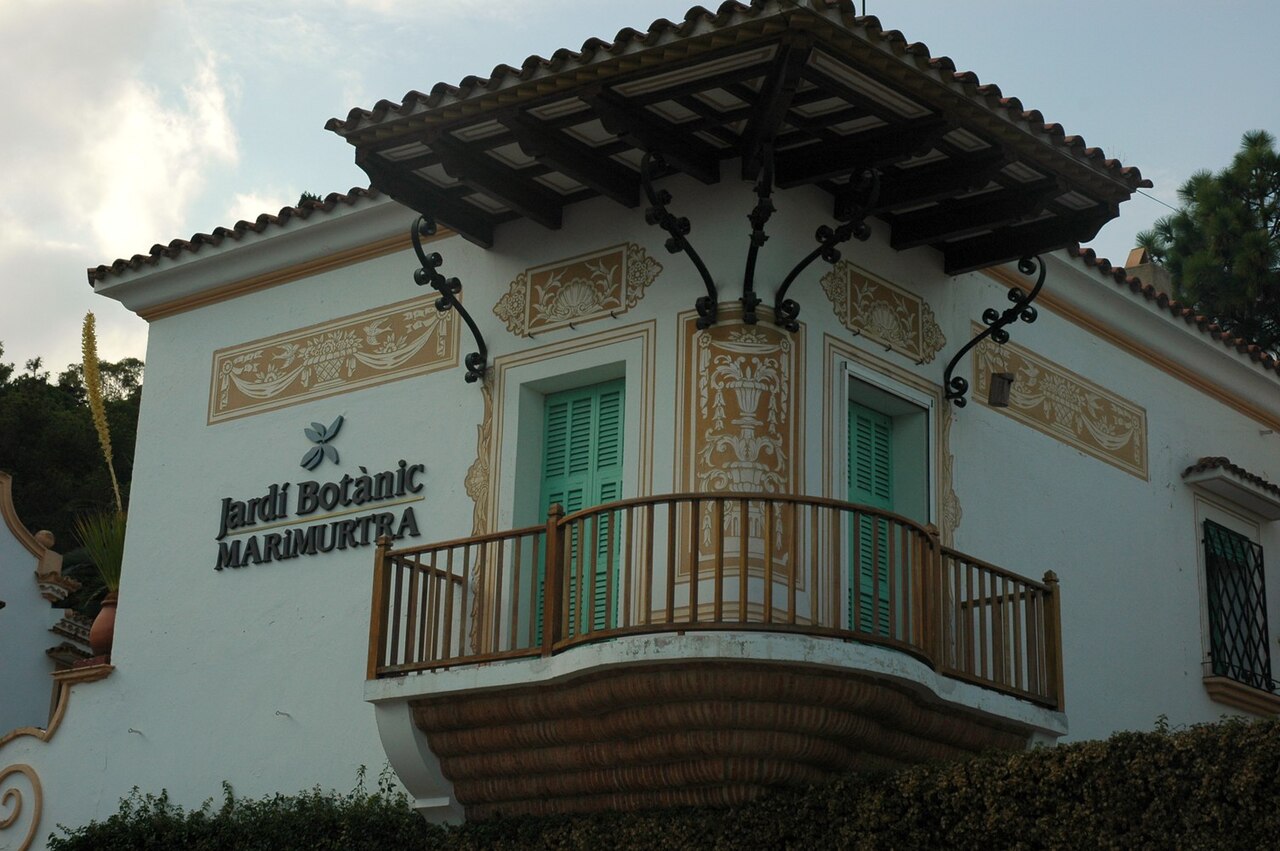
Entrada del jardín botánico Marimurtra de Blanes – Josep Renalias, CC BY-SA 3.0 , via Wikimedia Commons.
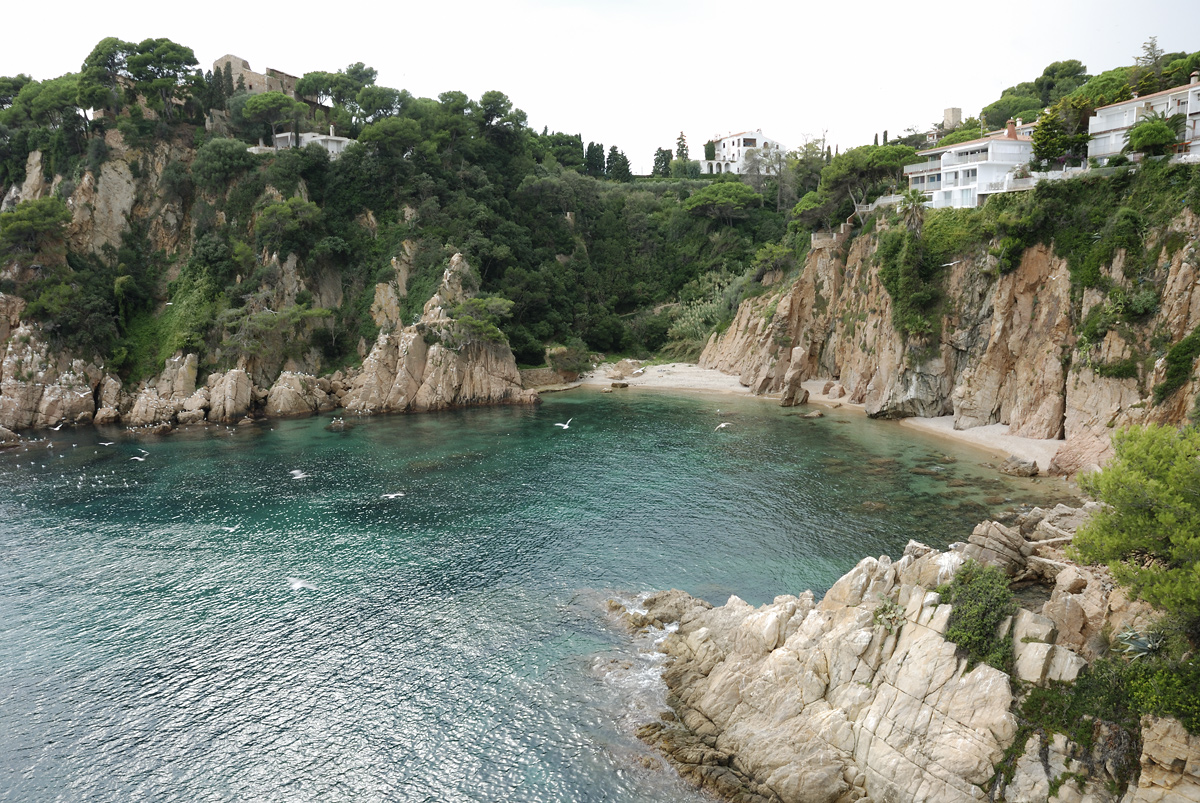
Cala sa Forcanera, al peu del Jardí Botànic Marimurtra, Blanes (Selva) – Lite, CC BY-SA 3.0, via Wikimedia Commons.
Perspectiva superior aérea del puerto de Blanes.
Puerto de Blanes.
Fuegos artificiales nocturnos en la playa de Blanes.
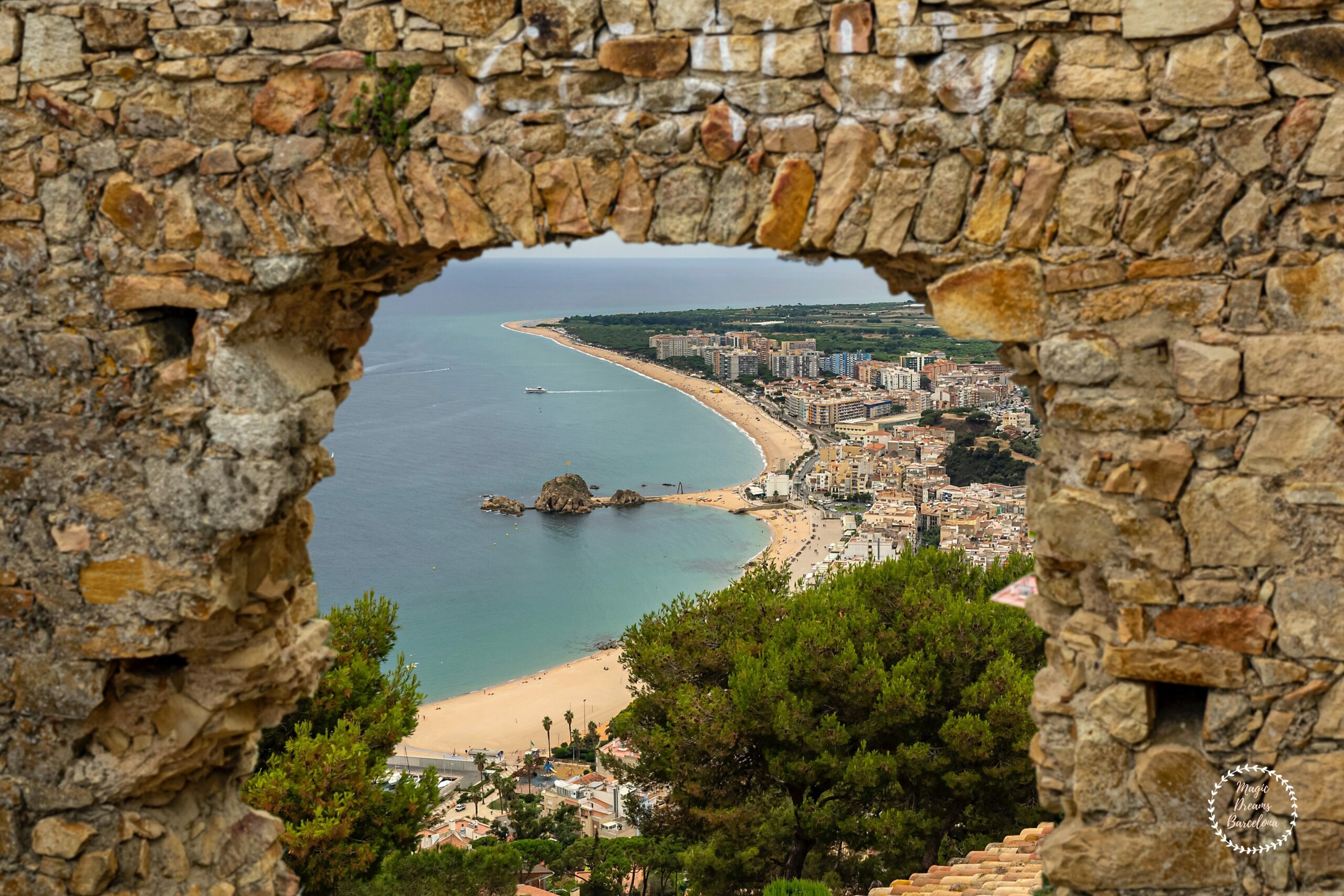
Perspectiva de parte de la bahía de Blanes, desde el Castell de Sant Joan.
Perspectiva de parte de la bahía de Blanes, desde el Castell de Sant Joan.
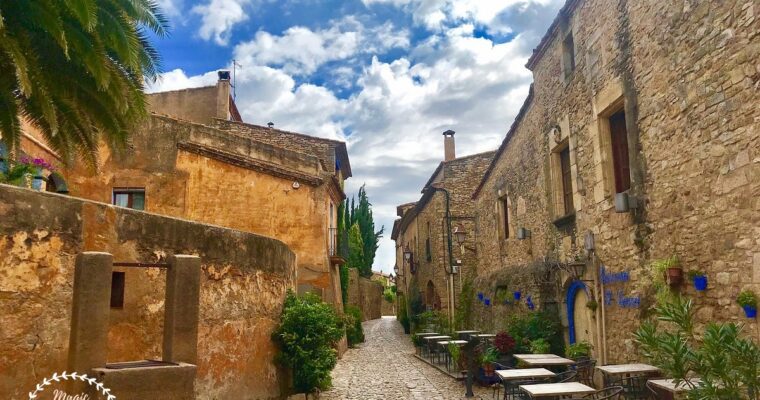
In the heart of Baix Empordà, surrounded by cultivated fields, Mediterranean forests, and small winding roads leading towards the Costa Brava, lies Peratallada, one of the most unique and best-preserved medieval villages in Catalonia. Its name derives from the very essence of the place: a …
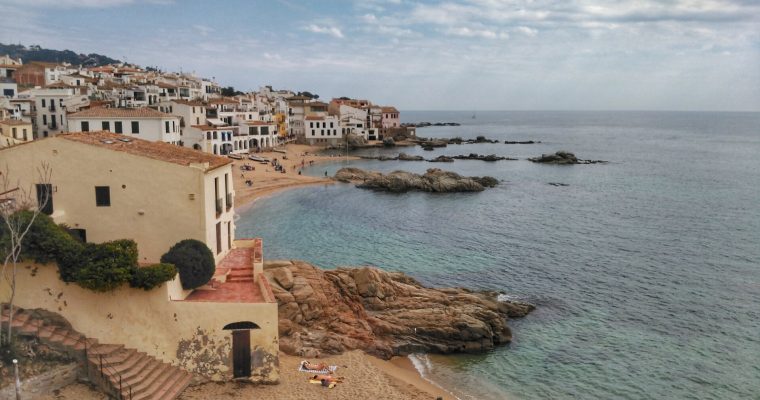
Maritime essence, beaches, heritage and Serrat’s Mediterranean Calella de Palafrugell is one of the coastal settlements belonging to the municipality of Palafrugell, in the Baix Empordà region, in the province of Girona, in the heart of the Costa Brava. It is one of those places …
The Dalí Theatre-Museum in Figueres is one of the most extraordinary museums in Catalonia and one of the most iconic places associated with Salvador Dalí. Conceived as a total work of art, the museum invites visitors to enter the artist’s imagination through paintings, sculptures, installations, optical illusions and architectural elements.
More than a conventional museum, it is an artistic experience in which the building itself becomes part of Dalí’s work.
Located in the heart of Figueres, the museum was officially inaugurated on 28 September 1974, after several years of construction and artistic development under Dalí’s supervision.
A museum created by Dalí
The Dalí Theatre-Museum occupies the site of the former Municipal Theatre of Figueres, a building that had been severely damaged during the Spanish Civil War.
Dalí transformed the remains of the old theatre into an enormous surrealist composition. He personally supervised the creative process and the placement of many of the works, turning the building into what he considered a unique artistic creation.
The museum is today regarded by the Fundació Gala-Salvador Dalí as the largest surrealist object in the world.
Its collection includes more than 1,500 works and objects, covering different periods and artistic disciplines throughout Dalí’s career.
A collection spanning Dalí’s artistic life
Inside the museum, visitors can discover paintings, drawings, sculptures, jewellery, installations and other creations that reveal the extraordinary evolution of Dalí’s artistic language.
Among the works and spaces associated with the museum are iconic pieces such as:
Self-Portrait with L’Humanité
The Spectre of Sex-Appeal
Galarina
The Basket of Bread
Gala Placidia
Rainy Taxi
The Mae West Room
The Palace of the Wind
The museum also contains works that Dalí created specifically for this unique setting, making the relationship between the artist and the building especially important.
Gala-Salvador Dalí Square
The experience begins even before entering the museum.
The square in front of the building, officially named Gala-Salvador Dalí Square, forms part of the surrealist atmosphere of the complex.
Dalí designed several elements of the exterior, creating an unmistakable visual language that prepares visitors for what they will encounter inside.
The Galatea Tower
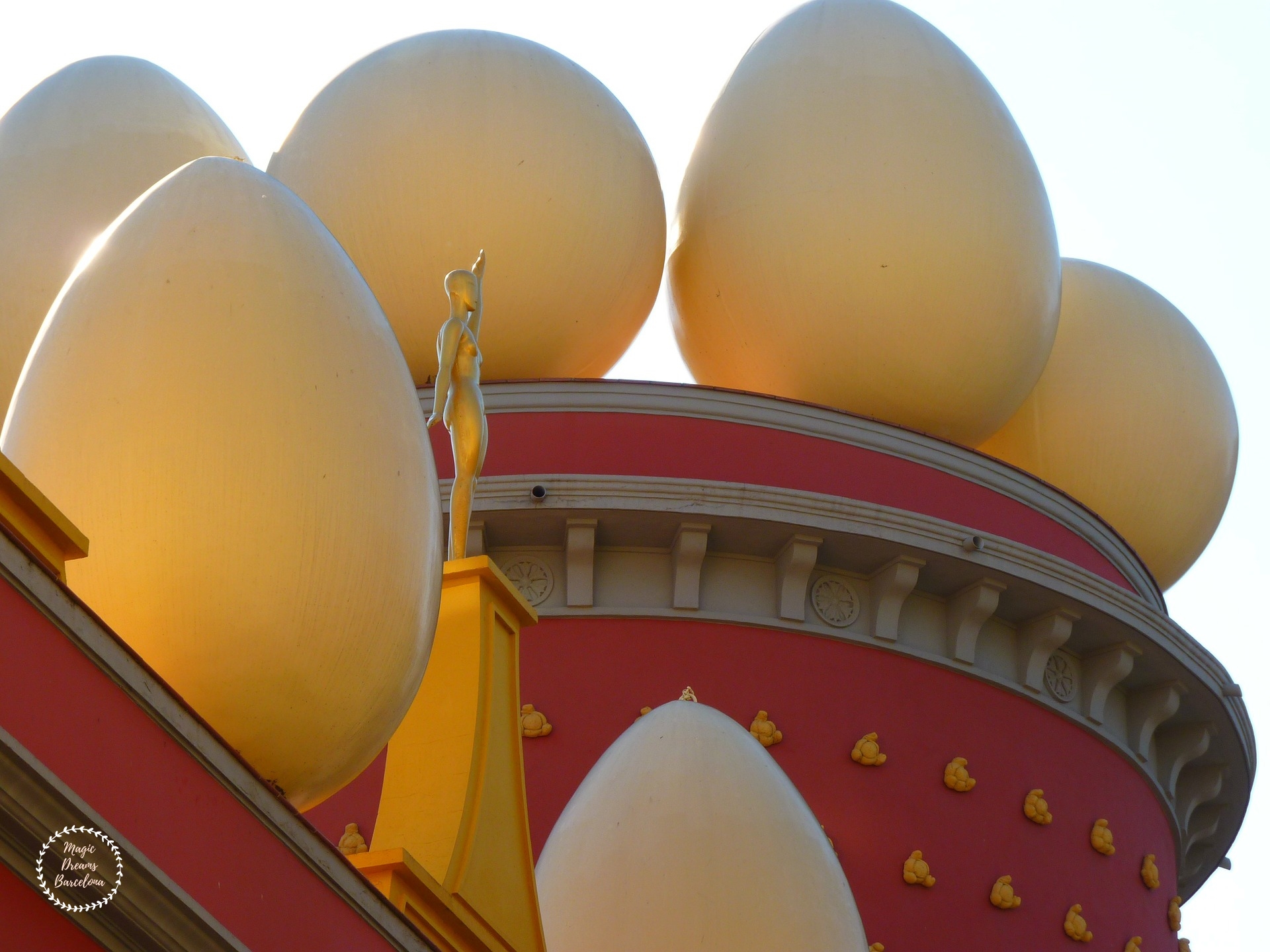
One of the most recognisable elements of the museum is the Galatea Tower, which rises above the building with its characteristic red façade covered with eggs, breads and other decorative elements.
The tower was formerly known as the Gorgot Tower. Dalí acquired it in 1981 and incorporated it into the museum complex.
Its unusual appearance perfectly reflects the artist’s fascination with transforming everyday objects into extraordinary images.
The geodesic dome
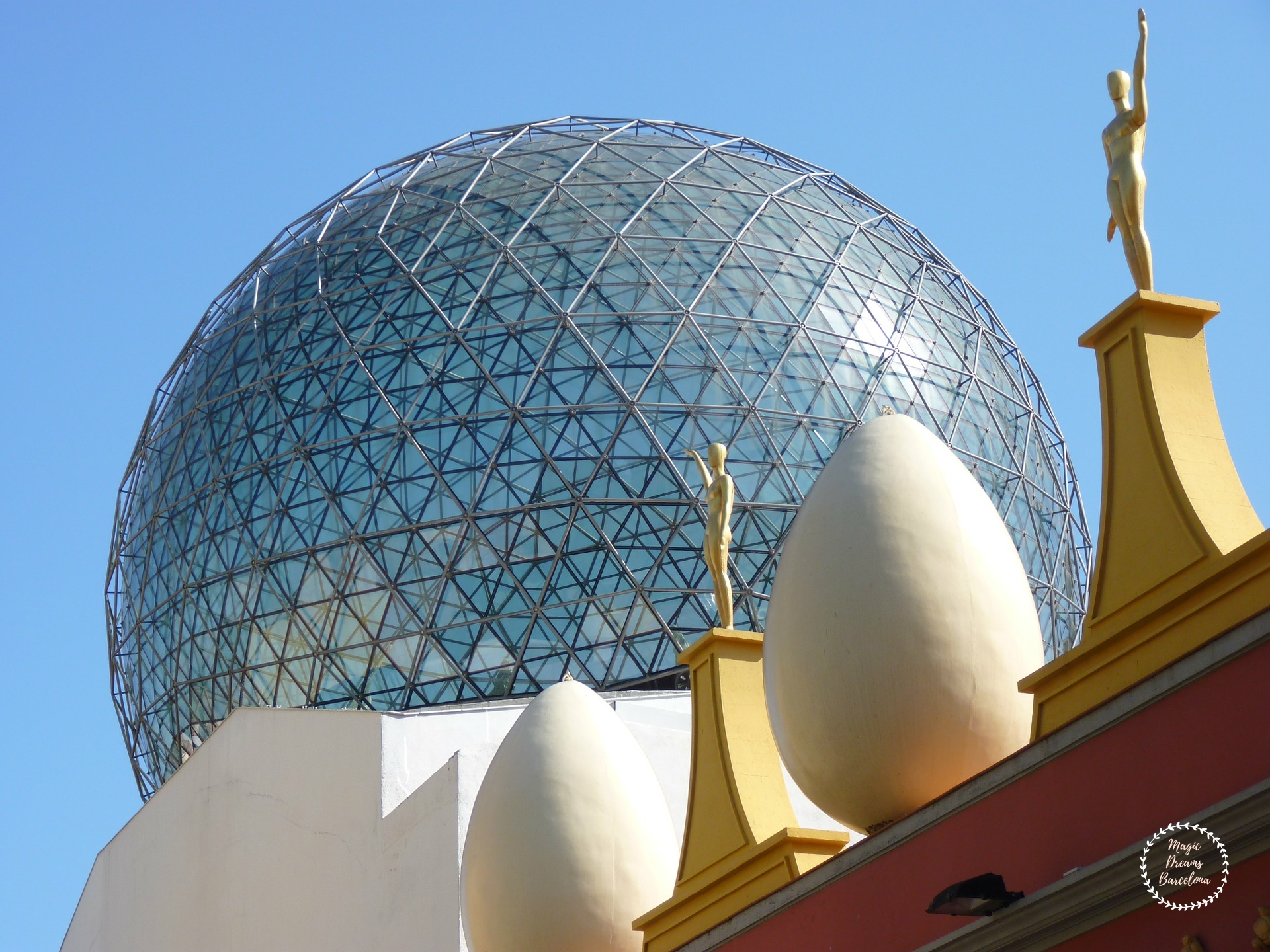
Perhaps the most recognisable symbol of the Dalí Theatre-Museum is its spectacular glass geodesic dome.
The dome became one of the defining architectural features of the museum and has made the building instantly recognisable around the world.
Dalí incorporated the dome into his artistic vision for the museum, while its construction was carried out by the Spanish architect and engineer Emilio Pérez Piñero.
From outside, the dome gives the museum a distinctive silhouette against the Figueres skyline. From inside, it creates a dramatic architectural space filled with natural light.
The former auditorium and Rainy Taxi
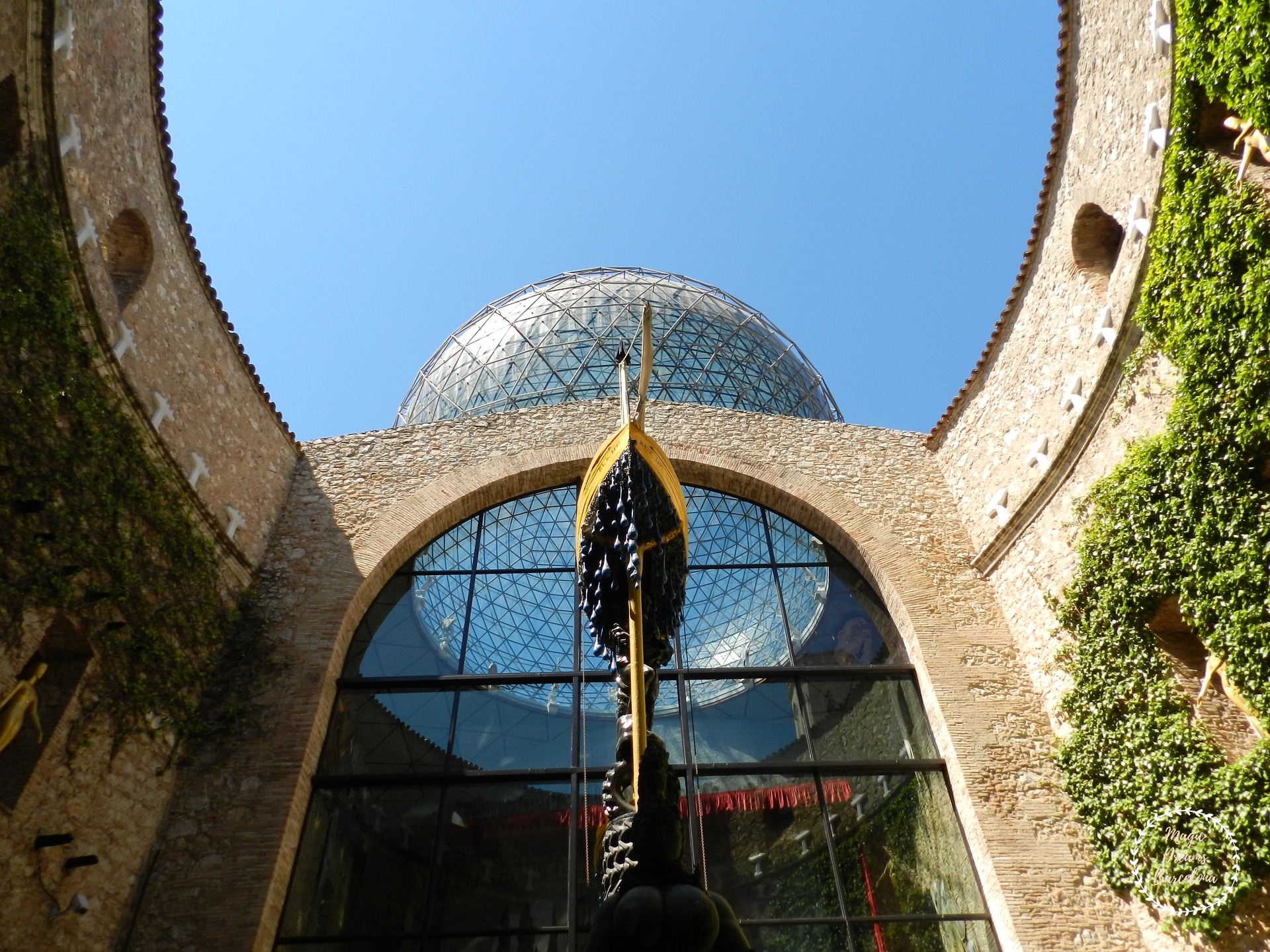
One of the most striking spaces is the former auditorium, where visitors encounter one of Dalí’s best-known installations: Rainy Taxi.
A car stands in the centre of the courtyard, surrounded by surrealist elements that transform an ordinary vehicle into an extraordinary scene.
The installation is a perfect example of Dalí’s ability to combine objects, architecture and theatrical staging into a single work.
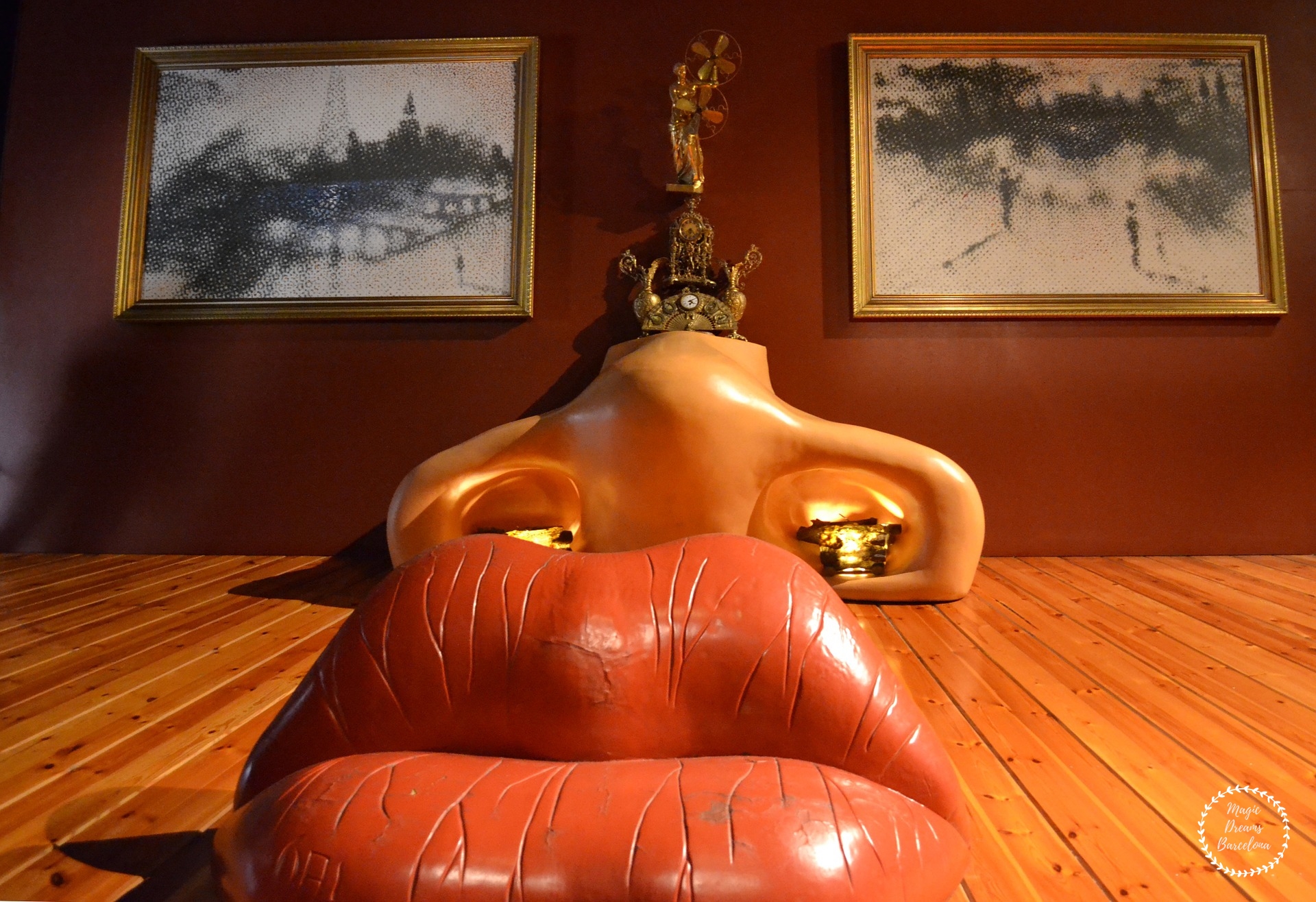
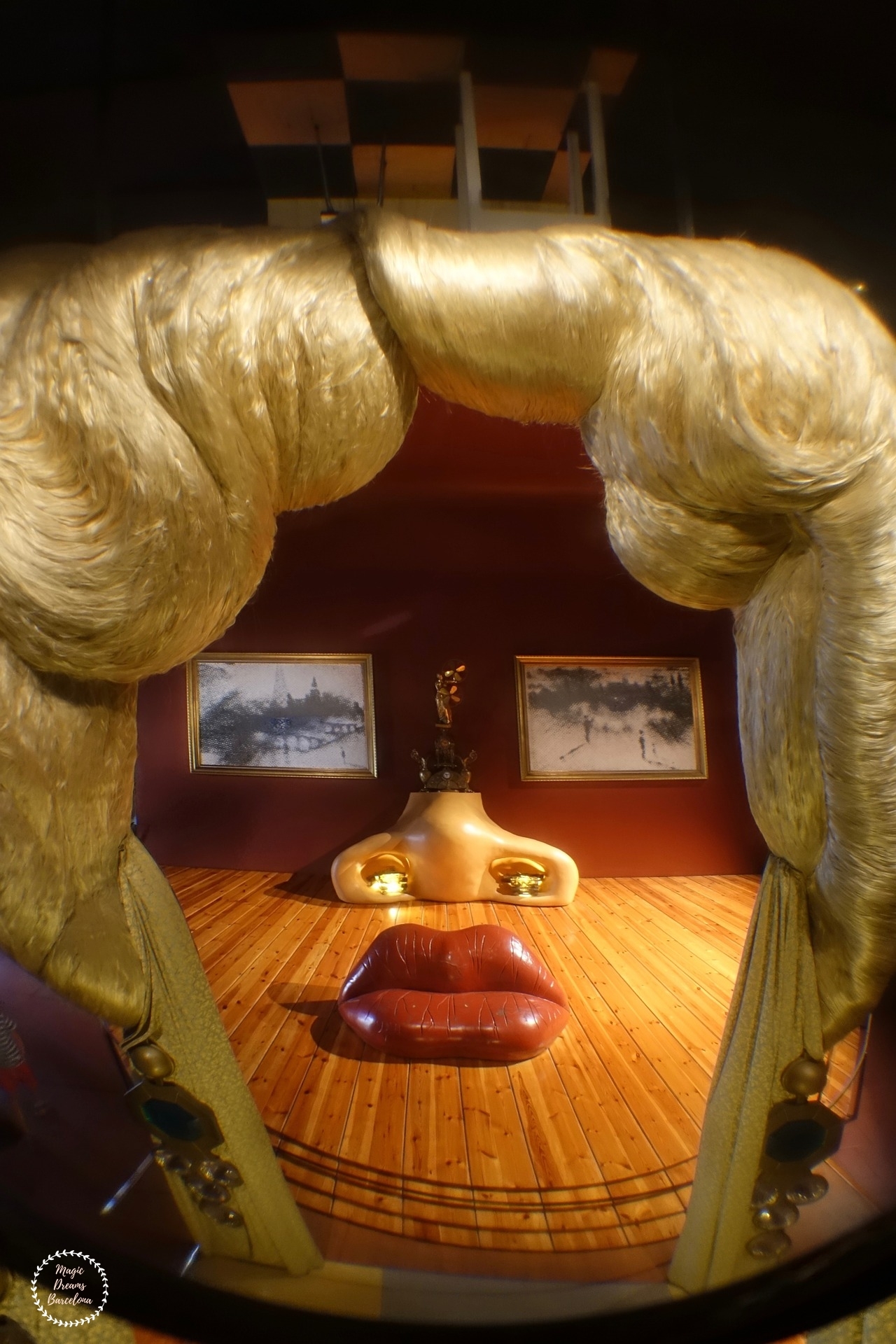
The Mae West Room
The Mae West Room is one of the museum’s most famous optical illusions.
Seen from a particular viewpoint, the furniture and architectural elements form the face of actress Mae West.
The work is based on Dalí’s fascination with double images, in which one visual composition can reveal another when viewed from the correct position.
The experience is playful, surprising and unmistakably Dalinian.
The Palace of the Wind
Another spectacular space is the Palace of the Wind, a monumental composition created between 1970 and 1973.
Originally conceived for the ceiling of the former theatre’s noble area, the work now dominates one of the museum’s most impressive rooms.
The composition combines figures, clouds, landscapes and symbolic elements in a vast visual universe inspired by Dalí’s imagination.
The stage and Labyrinth
The old theatre stage is another essential part of the museum.
Here, Dalí transformed the architecture into a theatrical and surrealist environment in which paintings, sculptures and installations interact with the original structure of the building.
The Labyrinth forms part of this extraordinary environment, inviting visitors to move through a space where reality and illusion continually overlap.
The crypt of Salvador Dalí
Salvador Dalí died on 23 January 1989 in Figueres.
His tomb is located beneath the museum, in the crypt of the former theatre.
The location connects the artist permanently with the city where he was born and with the building that became his most monumental artistic creation.
Dalí and Gala
Gala was one of the most important figures in Dalí’s life and artistic universe.
Her presence can be found throughout his work, and she also occupies a central place in the museum’s imagery.
The relationship between Dalí and Gala is essential to understanding many of the artist’s paintings, sculptures and symbolic compositions.
Works created specifically for the museum
One of the most fascinating aspects of the Dalí Theatre-Museum is that many of its elements were conceived specifically for the building.
This means that the museum should not simply be understood as a collection of works displayed in exhibition rooms.
The architecture, installations, paintings, sculptures and decorative elements were conceived to interact with one another.
The result is a genuine total work of art.
The grotesque monsters
The museum’s courtyard contains another distinctive example of Dalí’s imagination.
In 1975, Dalí and the artist Antoni Pitxot created a series of grotesque figures using branches, old gargoyles, shells and stones from Cap de Creus.
These strange creatures reinforce the surrealist atmosphere of the courtyard and demonstrate how Dalí transformed ordinary or discarded objects into artistic creations.
Dalí Jewels
The museum complex also houses the Dalí Jewels collection, presenting jewellery designed by the artist between 1941 and 1970.
Gold, precious stones and unusual forms become part of another dimension of Dalí’s artistic universe.
The jewellery reveals his interest in transforming traditional decorative arts through imagination, symbolism and surrealism.
The late-period rooms
The museum also allows visitors to explore works from Dalí’s later artistic periods.
These rooms demonstrate the artist’s continuing fascination with optical effects, classical references, science, mathematics and visual experimentation.
Rather than following a strictly chronological museum layout, the visit often feels like a journey through Dalí’s ideas and obsessions.
Dalí and science
Science played an increasingly important role in Dalí’s imagination.
Atomic physics, mathematics, optics and geometry became recurring references in his later work.
The museum reflects this fascination through paintings and compositions in which scientific concepts are transformed into artistic and symbolic images.
The obsession with geometry
Geometry is another recurring element throughout the museum.
Spheres, grids, symmetrical forms and mathematical structures appear repeatedly in Dalí’s work.
The artist used geometry not simply as a technical tool, but as a way of exploring space, perception and the relationship between order and imagination.
The dome as a universe
The geodesic dome has become an almost inseparable symbol of Figueres and Dalí.
From outside, it crowns the building like an enormous surrealist object. Inside, it changes the perception of space and reinforces the theatrical character of the museum.
Together with the former theatre structure, the dome creates an architectural environment that is unlike any conventional museum.
Figueres and Salvador Dalí
Figueres is inseparable from Salvador Dalí.
The artist was born in the city in 1904 and maintained a profound connection with it throughout his life.
The Theatre-Museum represents the culmination of that relationship, transforming the city’s former theatre into a landmark that attracts visitors from all over the world.
For anyone interested in Dalí, Figueres is therefore much more than the location of a museum: it is an essential part of his story.
The Dalinian Triangle
The Dalí Theatre-Museum forms part of the Dalinian Triangle, together with two other essential places connected with the artist:
The Dalí Theatre-Museum in Figueres
The Salvador Dalí House-Museum in Portlligat
Gala Dalí Castle in Púbol
Together, these three sites offer a deeper understanding of Dalí’s life, artistic universe and relationship with Gala and the landscapes of Catalonia.
Dalí by Night
The museum also offers special evening opening programmes on selected dates, allowing visitors to experience the building from a completely different perspective.
At night, the lighting, architecture and surrealist installations create an especially atmospheric experience.
It is an excellent option for visitors looking for a different way to discover Dalí’s world.
How long does the visit take?
A visit to the Dalí Theatre-Museum generally requires around 1.5 to 2 hours, although visitors who want to explore the collection in greater detail may wish to allow additional time.
The museum is highly visual and contains a large number of details, so it is worth taking your time rather than rushing through the rooms.
Practical information
Location:
Plaça Gala i Salvador Dalí, 5
17600 Figueres, Girona, Spain
Tickets:
General admission is currently available online and at the museum ticket office, with reduced rates and guided-visit options also available.
Because visitor capacity is limited, advance booking is recommended, particularly during weekends, holidays and the high season.
Opening hours vary depending on the season, so checking the official schedule before travelling is advisable.
How to get to Figueres from Barcelona
Figueres is approximately 140 kilometres from Barcelona and is easily accessible by road and rail.
The fastest option is generally the high-speed train, which connects Barcelona Sants with Figueres-Vilafant in around one hour.
From Figueres-Vilafant station, visitors can continue to the city centre by taxi or local transport.
By car, the journey generally takes around 1 hour 45 minutes to 2 hours, depending on traffic.
An essential visit on the Costa Brava
The Dalí Theatre-Museum is much more than an art museum.
It is a journey into the mind of one of the most influential and imaginative artists of the 20th century.
Its architecture, optical illusions, monumental paintings, sculptures and unexpected installations make every room part of the experience.
For travellers exploring Catalonia, combining Figueres, the Dalinian Triangle and the Costa Brava is an exceptional way to discover the landscapes, culture and artistic heritage of the region.
Would you like to discover the Dalí Theatre-Museum with us?
At Magic Dreams Barcelona, we can help you organise your visit to Figueres and discover the world of Salvador Dalí, combining culture, history and some of the most fascinating destinations in Catalonia.
Magic Dreams Barcelona Discover Catalonia. Live the experience.
C´´upula esf´´erica Museo Dal´´i en Figueres.
C¨¨upula Museo Dal´´i Figueres.
Detalle huevos y cúpula en el Museo Dal´´i Figueres
A short guide to discovering one of the Costa Brava’s most extraordinary natural treasures.There are landscapes that are not simply seen, but felt, explored and remembered.Cap de Creus Natural Park is one of them.At the easternmost point of the Iberian Peninsula, where the final foothills …
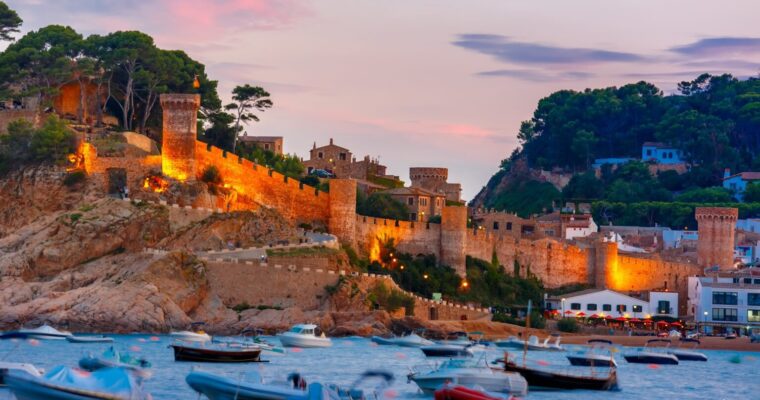
Tossa de Mar: the fishing village of the walls, the lighthouse, Ava Gardner, the coves and Chagall’s Blue Paradise A medieval wall overlooking a Mediterranean Sea of crystal-clear waters, ancient watchtowers, cobbled streets rising between stone houses, a lighthouse built on the site where the …