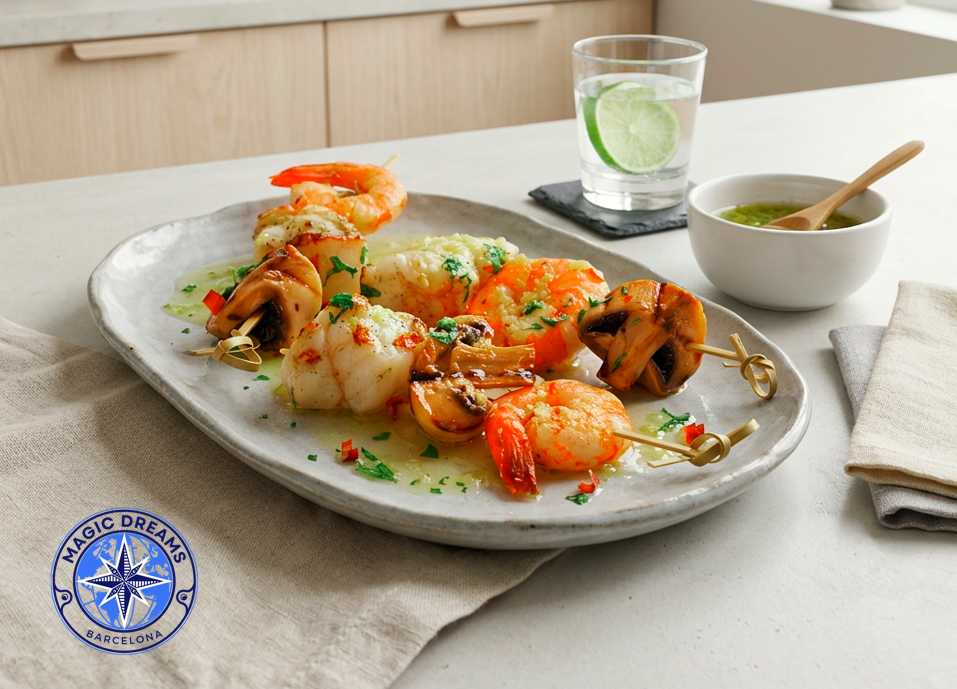
Monkfish, prawns, mushrooms and lime combined in an elegant Mediterranean-inspired skewer
Some dishes are born from the simplicity of seafood and end up becoming small pieces of gastronomy.
Fish and seafood skewers are part of the tradition of Spanish Mediterranean appetizers and tapas, especially at family gatherings, celebrations and informal meals by the sea.
Monkfish, with its white flesh, firm texture and delicate flavour, is particularly suitable for this type of preparation because it maintains its structure during cooking. Combined with the sweet, briny flavour of prawns, the earthy character of mushrooms and the fresh aroma of lime, it becomes an elegant and balanced appetizer.
In this Premium Gourmet version, each skewer combines:
monkfish + prawn + mushroom + lime + Mediterranean vinaigrette.
The result is a juicy, aromatic and light bite, with a perfect contrast between the flavours of the sea, vegetables and citrus acidity.
Ingredients
For 6 people · approximately 12 skewers
For the Skewers
- 500 g cleaned monkfish
- 12 prawns, preferably large
- 12 medium mushrooms
- 1 lime
- 2 tablespoons extra virgin olive oil
- Salt
- Freshly ground black pepper
- A small amount of fresh parsley, optional
The prawns should be prepared with their tails intact.
The mushrooms should be used cut in half, as required for the presentation of the dish.
For the Lime Vinaigrette
- 80 ml extra virgin olive oil
- 25 ml lime juice
- 1 teaspoon white wine vinegar
- 1 teaspoon honey
- Finely grated zest of ½ lime
- A small pinch of salt
- Black pepper
- Finely chopped fresh parsley, optional
The vinaigrette should be:
fresh + citrusy + slightly sweet + aromatic.
Its purpose is to enhance the monkfish and prawns, not to overpower their flavour.
Preparation
01 · Preparing the Monkfish
Remove any skin or membrane that may remain on the monkfish.
Cut the fish into large, even cubes.
Each piece should be approximately the right size to be easily threaded onto the skewer without breaking.
The monkfish should be thick enough to retain a juicy texture after cooking.
The Prawns
02 · Preparing the Prawns
Carefully peel the prawns, keeping the tails intact.
Remove the vein if necessary.
Do not cut the tails.
The tail should remain whole because it creates a much more elegant presentation and allows the ingredient to be clearly identified.
Keep the prawns refrigerated.
The Mushrooms
03 · Preparing the Mushrooms
Carefully clean the mushrooms.
Remove any remaining soil.
There is no need to peel them.
Cut each mushroom in half.
The halves should be thick enough to be threaded onto the skewer without breaking.
The mushrooms will provide moisture, texture and a pleasant earthy contrast to the seafood flavours.
The Lime
04 · Preparing the Lime
Wash and dry the lime thoroughly.
Finely grate a small amount of the peel.
Set the zest aside for the vinaigrette.
Then squeeze the lime and reserve the juice.
Do not use only the zest.
The juice provides the acidity needed to balance the natural richness of the olive oil and the intensity of the seafood.
Assembling the Skewers
05 · Threading the Ingredients
Use wooden or bamboo skewers.
If using wooden skewers, you can soak them in water for a few minutes beforehand to prevent them from burning during cooking.
Thread the ingredients alternately:
monkfish – mushroom – prawn – monkfish – mushroom
or follow whichever visual composition you prefer.
Make sure that the prawn tail always remains visible.
Do not overload each skewer.
Leaving a small amount of space between the ingredients will help ensure more even cooking.
Preparing the Vinaigrette
06 · Creating the Lime Vinaigrette
Place the following ingredients in a small bowl:
- extra virgin olive oil,
- lime juice,
- white wine vinegar,
- honey,
- lime zest,
- salt,
- pepper.
Whisk vigorously until slightly emulsified.
Add the finely chopped parsley if you would like an additional herbal note.
Taste and adjust the seasoning.
The vinaigrette should offer a balance of:
citrus + sweetness + saltiness + aroma.
The First Dressing
07 · Lightly Marinating
Place the skewers on a tray.
Lightly brush them with some of the vinaigrette.
Do not use all of it.
Reserve some for finishing the dish after cooking.
Leave to rest for approximately 10–15 minutes in the refrigerator.
We do not recommend a very long marinade because the acidity of the lime can alter the texture of the fish.
Cooking
08 · Cooking the Skewers
Heat a griddle, grill or large frying pan over medium-high heat.
Add a few drops of olive oil.
Place the skewers on the surface once it is thoroughly hot.
Cook for approximately 2–3 minutes on each side, turning them carefully.
The exact cooking time will depend on the size of the monkfish cubes and prawns.
The goal is to achieve:
juicy monkfish + cooked but tender prawn + golden mushroom.
Avoid overcooking.
The monkfish should remain moist and firm, not dry.
Perfect Browning
09 · Light Caramelisation
During the final minutes of cooking, allow the mushrooms to come into direct contact with the hot cooking surface.
They should develop a light golden colour.
The monkfish should also have a gently toasted surface.
The prawns should turn pink and develop a firm texture, while keeping their tails perfectly defined.
Finishing
10 · Adding the Vinaigrette
Remove the skewers from the heat.
Place them on a serving platter or presentation plate.
Add the remaining lime vinaigrette just before serving.
There is no need to completely cover the skewers.
A few drops distributed over the monkfish, prawns and mushrooms will be enough.
Premium Gourmet Presentation
11 · Presenting the Skewers
Place the skewers on a long serving platter or on individual plates.
You can finish with:
- finely grated lime zest,
- small lime wedges,
- fresh parsley,
- a few drops of extra virgin olive oil,
- a few additional drops of vinaigrette.
The lime can be placed alongside the skewers as a decorative element and so that guests can add a few drops just before eating.
The presentation should be clean.
Do not overcrowd the plate.
The pink colour of the prawns, the white of the monkfish, the golden colour of the mushrooms and the green of the lime create an attractive visual composition on their own.
The Balance of Flavours
This skewer works thanks to the contrast between its different elements.
Monkfish
delicate + firm + slightly sweet
Prawn
briny + juicy + slightly sweet
Mushroom
earthy + soft + aromatic
Lime
citrusy + fresh + slightly acidic
Olive Oil
fruity + smooth + enveloping
The vinaigrette acts as the element that brings all the flavours together.
History and Occasions
Fish and seafood skewers have a long-standing presence in Mediterranean gastronomic culture.
Their individual format makes them especially popular for appetizers, celebrations, cocktails, family meals and gatherings by the sea.
The concept of combining fish, seafood and vegetables on a skewer also makes it possible to use fresh ingredients and cook them quickly on a griddle or grill.
This version with monkfish and prawns brings that tradition into a more contemporary presentation.
The use of lime adds a particularly fresh citrus note, while the mushroom introduces a vegetal and earthy dimension that balances the intensity of the seafood.
It is particularly suitable for:
- gourmet appetizers,
- summer dinners,
- celebrations,
- Christmas and New Year’s Eve,
- cocktails,
- gastronomic events,
- family gatherings,
- Mediterranean menus.
Nutritional Value
Monkfish and prawns are sources of high-quality protein, which is necessary for maintaining tissues and muscle mass.
Prawns also provide minerals such as selenium, phosphorus and zinc, while fish contributes various vitamins and minerals.
Mushrooms provide fibre, B vitamins and minerals, as well as adding volume and texture to the dish without adding a high number of calories.
Extra virgin olive oil provides monounsaturated fats and antioxidant compounds characteristic of the Mediterranean diet.
Lime provides vitamin C and antioxidant compounds, as well as an intense sensation of freshness.
Overall, this is a protein-rich and relatively light preparation, particularly suitable when the amount of oil used is controlled.
A balanced, fresh Mediterranean proposal full of flavour.
The Secret to the Perfect Skewer
The key is controlling the cooking.
The monkfish needs enough heat to brown on the outside, but it must not be overcooked.
The prawn should remain firm and juicy.
The mushroom should develop a light golden colour while retaining some of its moisture.
And the lime should be incorporated mainly at the end to preserve its fresh aroma.
The ideal result is:
golden on the outside + juicy on the inside + citrusy + briny + aromatic.
Premium Gourmet Tips
- Use fresh, high-quality monkfish.
- Choose large prawns for a more elegant presentation.
- Keep the prawn tails intact.
- Cut the monkfish into even pieces.
- Use firm mushrooms and cut them in half.
- Do not marinate the fish with lime for too long.
- Cook on a very hot surface.
- Do not overload the skewers.
- Reserve part of the vinaigrette for finishing.
- Add the lime zest just before serving.
- Serve immediately after cooking.
Serving
The skewers should be served freshly made.
The ideal temperature is hot or warm, when the monkfish retains all its juiciness and the aroma of the lime is still present.
They can be accompanied by a small Mediterranean salad, grilled vegetables or a light citrus sauce.
They also work perfectly as individual appetizers.
Storage
As they contain fish and seafood, the skewers should ideally be consumed immediately after preparation.
If they need to be kept before cooking, store them refrigerated and properly covered.
We do not recommend keeping the cooked skewers for long periods, as the monkfish and prawns may lose their juiciness and texture.
The Premium Magic Dreams Barcelona Touch
At Magic Dreams Barcelona, we reinterpret Mediterranean flavours with a contemporary and elegant presentation.
Monkfish.
Prawns.
Mushrooms.
Lime.
Olive oil.
Four protagonists that transform a simple skewer into a small gastronomic experience.
The taste of the Mediterranean, threaded into a Premium Gourmet bite.
Copyright © 2016-2026 Magic Dreams Barcelona.