Etiqueta: Mediterranean Tourism

Discover the Güell Pavilions in Barcelona, a work by Antoni Gaudí.

Discover the Güell Pavilions in Barcelona, a work by Antoni Gaudí.

In the upper area of Barcelona, discreet yet deeply evocative, stand the Güell Pavilions, one of the most elegant works of Antoni Gaudí. Built between 1884 and 1887 by commission of Eusebi Güell, this architectural ensemble represents a key early stage in the evolution of 

Casa Cama i Escurra: A Refined Modernist Treasure in Gràcia, Barcelona.

Casa Cama i Escurra: A Refined Modernist Treasure in Gràcia, Barcelona.

In the vibrant neighborhood of Gràcia, far from the monumental displays of Barcelona’s Eixample, Casa Cama i Escurra stands as a refined and understated example of Catalan modernism. Located on Gran de Gràcia street, the historic heart of the former independent municipality, the building blends 

History and Charm of Passeig de Gràcia.

History and Charm of Passeig de Gràcia.

Discover the History and Charm of Passeig de Gràcia and Plaça Cinc d’Oros

Plaça Cinc d’Oros, located at the heart of Passeig de Gràcia, is far more than a simple urban meeting point—it is a living testament to Barcelona’s history and memory. From an elevated perspective, the square unfolds like a playing card laid across the city: four smaller circles embracing a larger one, according to the visionary design of Ildefons Cerdà in 1860.

Its popular name, deeply rooted in collective memory, endured despite the historical changes that temporarily altered its identity, preserving its symbolic essence within the urban landscape.

The Obelisk and Historical Memory

At its center stands the granite obelisk—designed in 1915 by Adolf Florensa and Joaquim Vilaseca and finally erected in 1936—honoring Francesc Pi i Margall. Originally crowned with a winged figure symbolizing the Republic, the monument represented freedom and democratic ideals.

Following the arrival of Francoist troops in 1939, the monument was transformed: the republican figure was replaced by Victory, and an imperial eagle crowned the structure. Decades later, democracy restored its original identity, culminating in 2017 with the official reinstatement of Plaça Cinc d’Oros.

In the nearby Jardinets de Gràcia, the artwork Solc by Frederic Amat recreates the monument’s original silhouette, acting as a poetic tribute to memory and history.

Modernism at Every Step

One of the most iconic symbols of Barcelona’s modernist identity is the lamp-bench designed by Pere Falqués i Urpí in 1906. These elements combine functionality and artistic expression through trencadís mosaics, wrought iron structures, and vegetal motifs.

Originally equipped with electric arc lighting systems, they also gave rise to a popular myth—that the benches were heated. Today, 32 preserved units continue to define the visual identity of Passeig de Gràcia, now updated with LED technology.

A Walk Through Elegance

Passeig de Gràcia is Barcelona’s most refined avenue, connecting Plaça de Catalunya with Gran de Gràcia. It showcases masterpieces by Antoni Gaudí and Lluís Domènech i Montaner, positioning itself among Europe’s most elegant boulevards.

Its 61-meter width evokes the grandeur of the Champs-Élysées in Paris or Via Condotti in Rome, blending architecture, luxury, and everyday life into a unique urban experience.

Historic boutiques, international brands, and modernist façades coexist, creating a dynamic environment where heritage and contemporary culture merge seamlessly.

Curious Facts 2026

  • Smart lighting system adapting to pedestrian flow and events
  • Augmented reality routes to explore historical transformations
  • Restored lamp-benches with environmental sensors and USB charging
  • Casa Vicens offering immersive night experiences

Magic Dreams Barcelona Experience

Magic Dreams Barcelona offers a curated journey through this iconic route, combining culture, architecture, and emotion.

  • Private guided tours in multiple languages
  • Modernist and architectural itineraries
  • Botanical routes in Jardinets de Gràcia
  • Exclusive gastronomic experiences
  • Cultural events and private concerts
  • Premium accommodation experiences

An immersive experience designed to reveal Barcelona from an intimate and refined perspective.

For collaborations, projects or professional inquiries – Reservations and quotes
Please leave your details and phone number, and we will contact you as soon as possible within the same day.

Name

Copyright © 2016-2026 Magic Dreams Barcelona.

Casa Pérez Samanillo and the Círculo Ecuestre.

Casa Pérez Samanillo and the Círculo Ecuestre.

An Icon of Bourgeois Architecture The Pérez Samanillo House, current headquarters of the Círculo Ecuestre, is one of the most elegant examples of early 20th-century bourgeois architecture in Barcelona. This historic building stands out not only for its formal elegance, but also for its ability 

Torre Glòries: A Unique Experience in Barcelona

Torre Glòries: A Unique Experience in Barcelona

Torre Glòries, one of the most recognizable contemporary icons of Barcelona’s skyline, stands as a testament to architectural innovation and sustainable design. Opened in 2005 under its original name, Torre Agbar, the tower is located in the 22@ district, the city’s technological and business hub, 

Cervantes Park: A Mediterranean Icon.

Cervantes Park: A Mediterranean Icon.

An iconic park in Barcelona

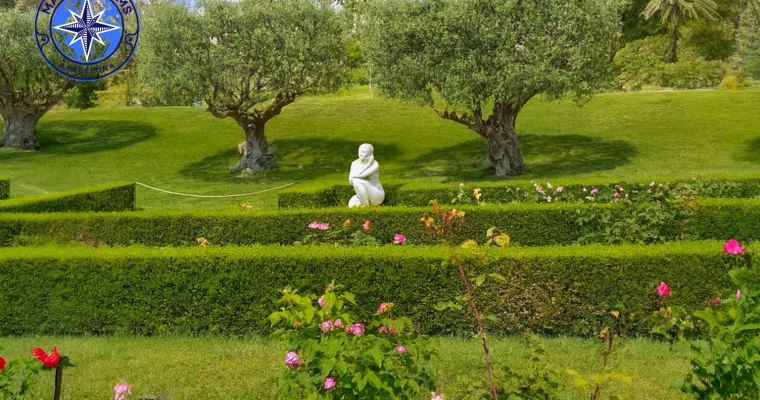
The Cervantes Park is one of the most elegant and representative green spaces in Barcelona. Located on the western edge of the city, it combines landscape tradition, botanical heritage, and a strong cultural identity linked to literature and European tourism.

Origin and history

The park was inaugurated in 1965 as part of the urban development of the university district. Its name pays tribute to Miguel de Cervantes, a key figure in Spanish and world literature.

From its beginnings, it was conceived as an open public space integrating nature, culture, and leisure, in line with Barcelona’s modern expansion during the second half of the 20th century.

Landscape design

The design follows the principles of European functional landscaping of the time:

  • Large open green areas
  • Curved paths adapted to the terrain
  • Integration of specialized botanical collections

Its most distinctive feature is the rose garden, considered one of the most important in southern Europe.

The international rose garden

The park hosts more than 10,000 rose bushes from approximately 2,000 different varieties, making it a key botanical reference in the Mediterranean region.

Every spring, the Barcelona International New Roses Competition takes place here, a major event in European gardening and specialized tourism.

Spaces and uses

Green areas

  • Large lawns
  • Shaded areas with mature trees
  • Open spaces for leisure and sports

Cultural elements

  • Sculptures distributed throughout the park
  • Monument dedicated to Miguel de Cervantes

This combination reinforces its identity as a space where nature and culture coexist in balance.

Location and access

  • Address: Avinguda Diagonal, 706, 08034 Barcelona

Public transport

  • Metro: Line 3 (Zona Universitària)
  • Tram: Trambaix (Zona Universitària stop)
  • Urban buses

It is also easily accessible by car via Avinguda Diagonal, one of the city’s main arteries.

Tourism relevance

Cervantes Park is a key reference within Barcelona’s green tourism. Its strategic location and peaceful atmosphere make it an ideal alternative to more crowded areas.

Additionally, its rose garden positions it as an important destination within Mediterranean botanical tourism.

Developments and updates (2026)

The park continues to evolve through initiatives focused on sustainability and innovation:

  • Smart irrigation systems to optimize water usage
  • Interactive signage with QR codes
  • Expanded cultural programming
  • Improved universal accessibility

These improvements strengthen its role as a modern urban green space in Barcelona.

Practical information

  • Opening hours: Open daily
  • Entrance: Free
  • Best time to visit: Spring (rose blooming season)

A green landmark in the city

Cervantes Park represents a model of large urban green space where landscape design, biodiversity, and culture are harmoniously integrated.

In 2026, it remains a key destination for those seeking a well-maintained, accessible, and distinctive natural environment within Barcelona.


For collaborations, projects or professional inquiries – Reservations and quotes
Please leave your details and phone number, and we will get in touch with you as soon as possible, within the same day.

Name


Copyright © 2016-2026 Magic Dreams Barcelona.

Avenida Gaudí: Mediterranean Charm in the Heart of the City.

Avenida Gaudí: Mediterranean Charm in the Heart of the City.

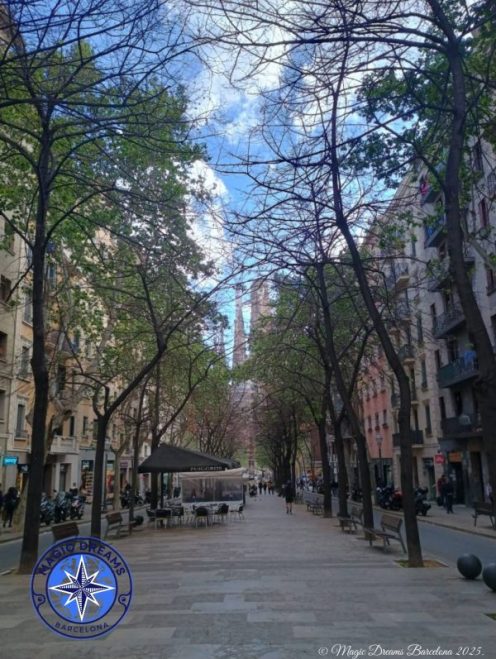
An Iconic Walk Between Two Landmarks The Avenida Gaudí is one of the most distinctive and harmonious promenades in Barcelona. Located in the Eixample district, it connects two of the city’s most remarkable architectural landmarks: the Sagrada Familia and the Hospital de Sant Pau. This 

Sant Sebastià Tower — History and Current Status (2026).

Sant Sebastià Tower — History and Current Status (2026).

The Sant Sebastià Tower is an iconic steel structure located in the Barceloneta district along Barcelona’s coastal line, and it constitutes one of the most significant elements of the city’s port landscape. It is a lattice‑style metal tower, approximately 78 meters tall, designed as the 

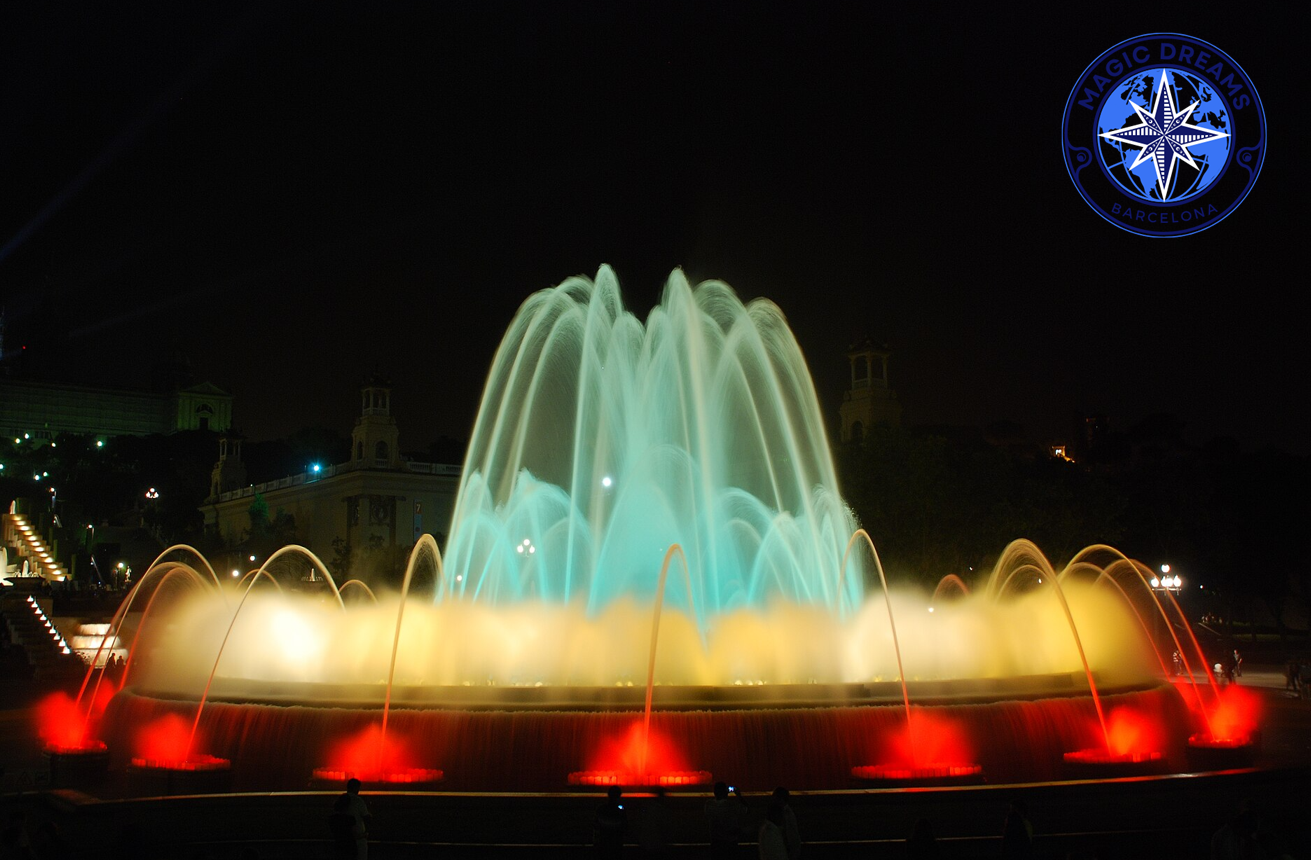
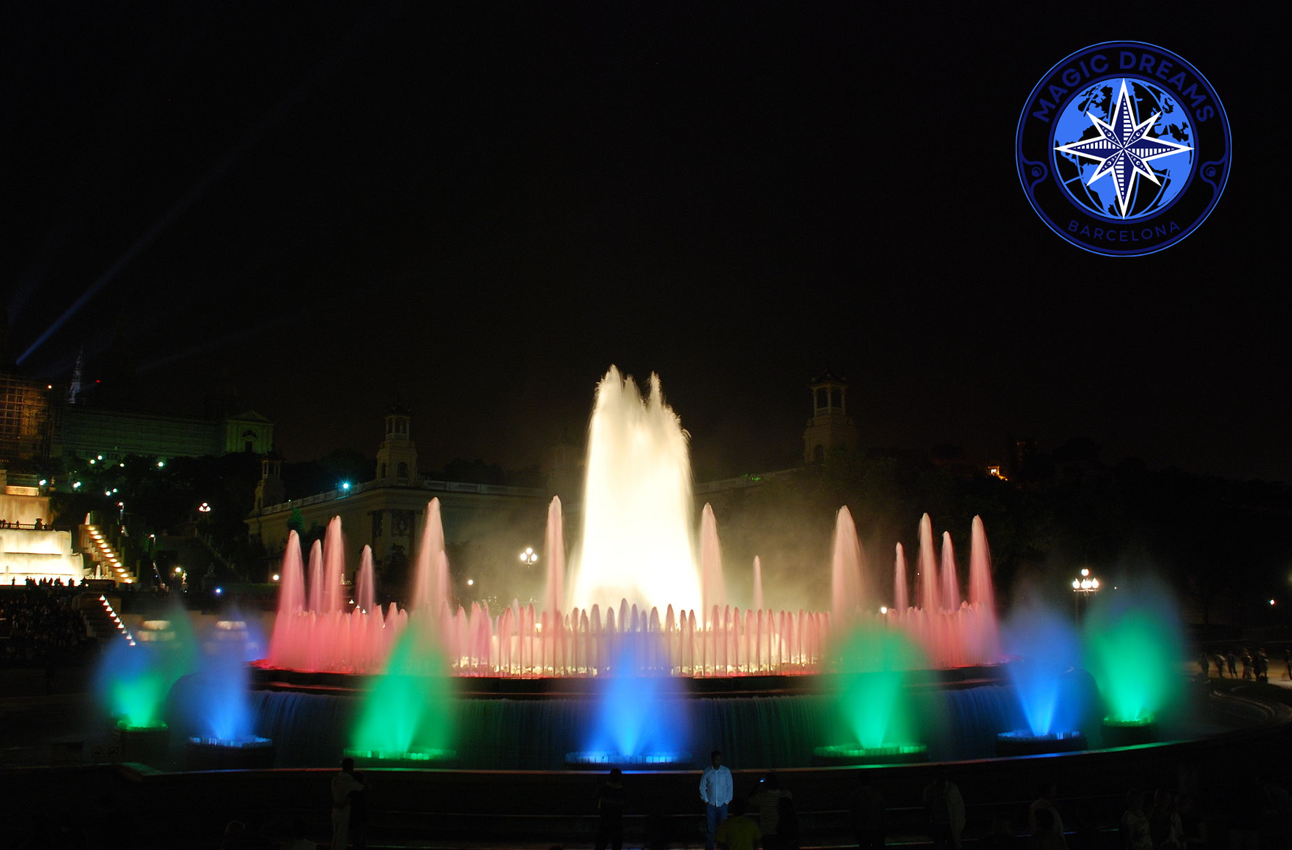
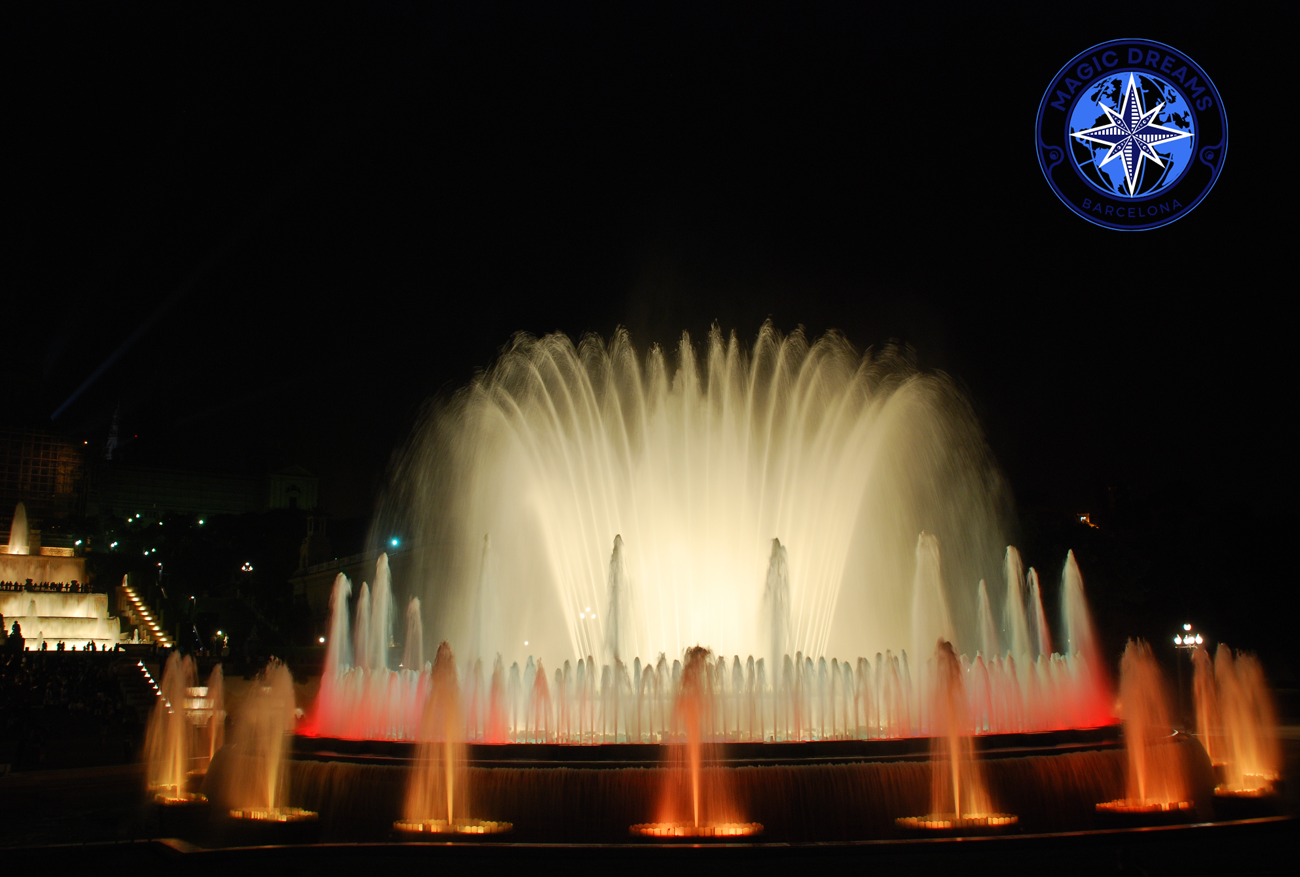
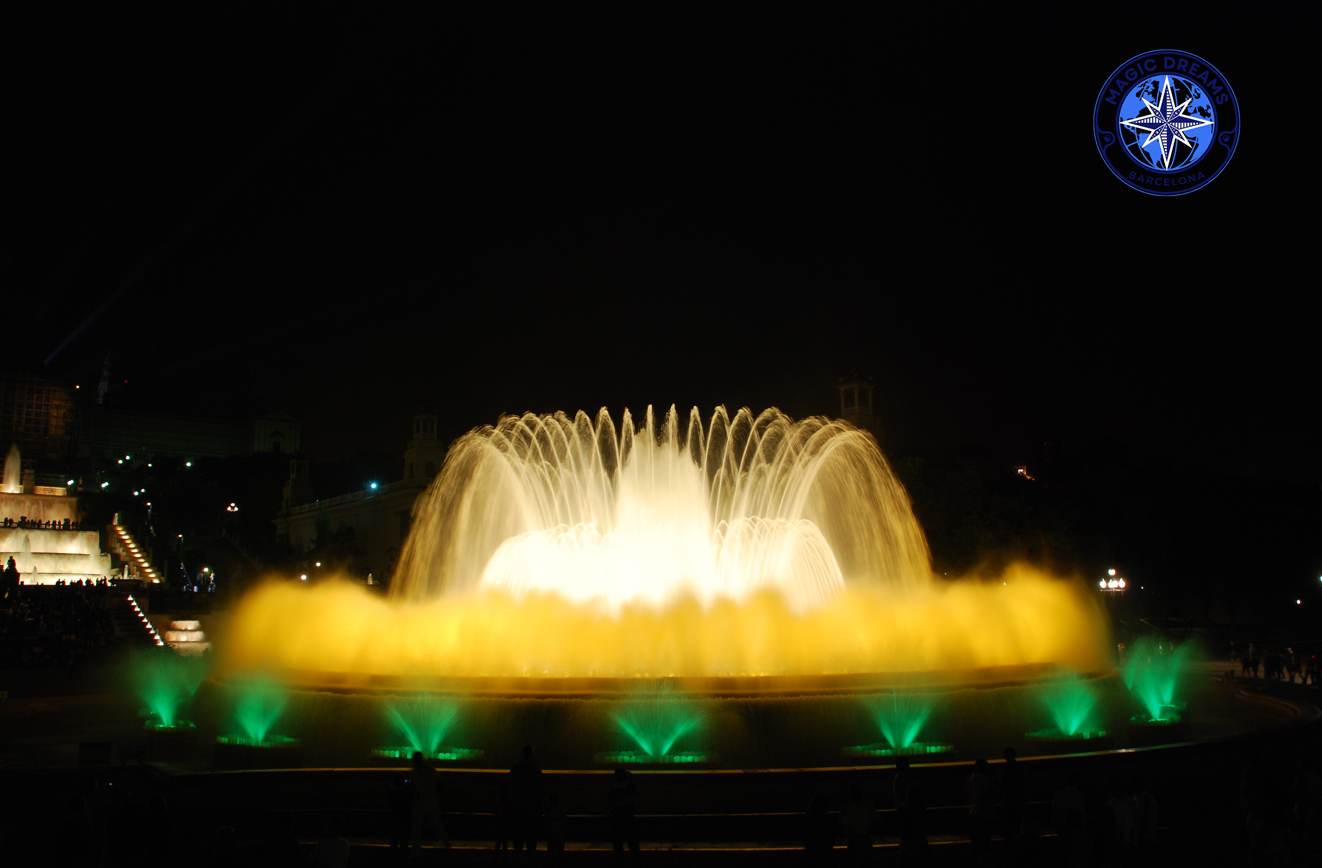
The Magic Fountain of Montjuïc.

The Magic Fountain of Montjuïc.

Introduction

In the monumental landscape of Barcelona, few landmarks embody the fusion of engineering, art, and urban planning as elegantly as the Magic Fountain of Montjuïc. This iconic site is not only a major tourist attraction but also a cultural symbol deeply connected to the city’s transformation throughout the 20th century.


History

The Magic Fountain was conceived as part of the 1929 Barcelona International Exposition, a pivotal event that reshaped the city’s architectural and urban identity. The project was designed by engineer Carles Buïgas, who envisioned an innovative installation combining water, light, and music—an idea that was groundbreaking at the time.

Despite the extremely tight construction schedule—less than a year—the fountain was completed and inaugurated to great acclaim. Over the decades, it has endured periods of neglect, particularly during the Spanish Civil War, followed by several restorations. One of the most significant renovations took place ahead of the 1992 Barcelona Olympic Games, when the fountain was modernized and reintroduced as a central attraction.


Design and Architecture

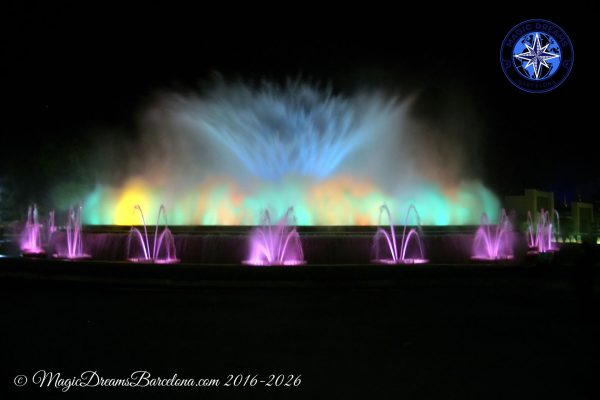
The fountain’s design reflects a theatrical approach to public space. Its elliptical structure supports a sophisticated hydraulic system capable of producing thousands of water patterns.

Key Design Features

  • Over 3,600 distinct water effects
  • Approximately 7 billion possible combinations of water, light, and motion
  • Advanced lighting system with dynamic color variations
  • Musical synchronization ranging from classical compositions to modern soundtracks

This integration creates a multisensory spectacle, transforming a static urban space into a living stage of movement and color.


Location

The Magic Fountain is located along Avinguda Maria Cristina, at the base of Montjuïc hill. It forms part of a grand architectural axis that connects the Palau Nacional with Plaça d’Espanya.

Its strategic placement makes it highly accessible and positions it as a central hub for tourism, culture, and public gatherings in the city.


Schedule and Show Experience

Show schedules vary depending on the season:

  • Spring and Summer: Frequent evening performances
  • Autumn and Winter: Reduced schedule, typically on weekends

Each performance combines choreographed water movements with music and vibrant lighting effects, offering a unique experience every time.

Note: Visitors are advised to check updated schedules in advance, as times may change due to maintenance or special events.


General Overview

The Magic Fountain of Montjuïc stands as a remarkable example of how infrastructure can transcend functionality and become a cultural landmark. Its ability to continuously reinvent itself through different performances ensures that no two visits are ever the same.


Conclusion

A visit to the Magic Fountain of Montjuïc is an immersion into a space where history, innovation, and artistic expression converge. Within the broader context of European and Mediterranean tourism, it remains an essential destination that captures the vibrant and creative spirit of Barcelona.

For collaborations, projects or professional inquiries – Reservations and quotes
Please leave your details and phone number, and we will get in touch with you as soon as possible, within the same day.

Name

Copyright © 2016-2026 Magic Dreams Barcelona.