Route guide for visitors throughout Catalonia – Barcelona – Costa Brava – Catalan Pyrenees – Personalized experiences – Customized tour guide services – A small tribute to the wonderful city and land that saw us born – Transforming experiences into unforgettable memories - Magic Dreams Collection: exclusive universes inspired by Salvador Dalí and Gaudí. Niche perfumes, jewelry, lithographs, and collectible items celebrating the Mediterranean spirit.
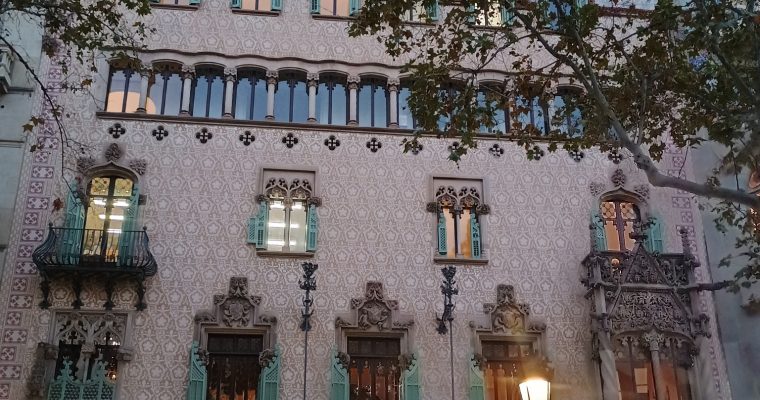
Located on the iconic Passeig de Gràcia, one of Barcelona’s most elegant avenues, stands one of the finest and most distinctive jewels of Catalan Modernism: Casa Amatller. Its stepped façade, sculptural details and delicate decorative elements make it an unmistakable landmark. However, its true charm …
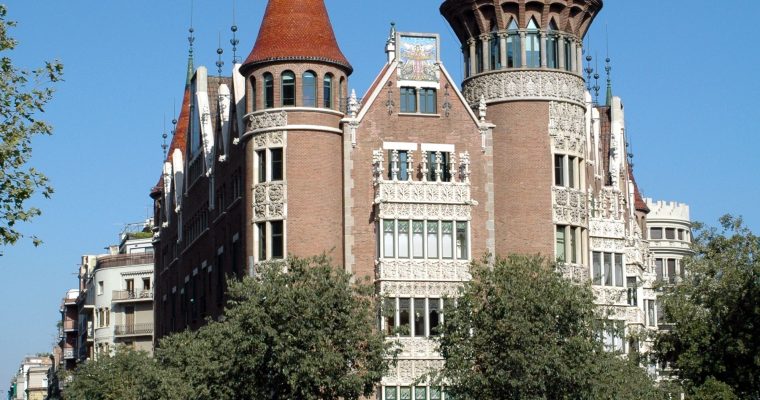
A jewel of Catalan Modernisme combining medieval legends, architecture and elegance Located in the Dreta de l’Eixample district, overlooking one of the chamfered corners of Avinguda Diagonal, Casa de les Punxes stands out among the most remarkable buildings created during Barcelona’s golden age of Modernisme …
Some places surprise us with their history, others with their beauty, and some with their ability to convey a sense of calm even when they are located right in the heart of the city. Turó Park combines all three qualities.
Located in the Sarrià-Sant Gervasi district, next to Avenida Diagonal and just a few minutes’ walk from Plaça Francesc Macià, this elegant garden is one of those corners of Barcelona where you can escape the pace of the city for a while without actually leaving it behind.
Among centuries-old trees, magnolias, palm trees, laurels and holm oaks, a small pond covered with water lilies creates one of the most peaceful areas of the park. Around it, sculptures dedicated to musicians, writers and artists can be discovered, while different poems invite visitors to stop, read and contemplate.
Today’s Turó Park is much more than a garden.
It is a place where nature, art, music, literature and history coexist within just a few square metres.
A Former Amusement Park
To understand today’s Turó Park, we have to travel back to the beginning of the 20th century.
In 1912, land belonging to the Bertrand-Girona family became home to a large amusement park called Turó Park. At the time, it became one of the best-known leisure destinations in Barcelona.
The park featured various attractions and entertainment options aimed particularly at the city’s affluent society. Among them were the famous Venetian gondolas, as well as shows, dances and other recreational activities.
Barcelona was very different during those years. The city was growing rapidly, while the land surrounding the park still contained large areas of greenery and undeveloped spaces.
The amusement park eventually closed its doors in 1929, during a period of major urban transformation in Barcelona. The Bertrand-Girona family subsequently reached an agreement with the City Council that allowed part of the land to be preserved as public space, while other areas were developed.
The amusement park disappeared, but its name remained.
And a few years later, a new chapter began.
Nicolau Maria Rubió i Tudurí and the Birth of the Garden
In 1934, the City Council commissioned architect, landscape designer and urban planner Nicolau Maria Rubió i Tudurí, one of the key figures in the history of modern landscape design in Barcelona, to transform the site.
Rubió i Tudurí conceived the new space as something very different from an ordinary ornamental garden.
His intention was to create a place where nature and people could coexist, combining elements of Mediterranean gardens with influences from the English landscape tradition.
The result was an elegant garden that was also welcoming and designed to be enjoyed.
The vegetation, paths, resting areas, pond and sculptures were integrated into a harmonious setting in which each element has its own presence without disturbing the overall balance.
The present-day park was inaugurated in 1934 and dedicated to the poet and writer Eduard Marquina, becoming one of the most distinctive public gardens in 20th-century Barcelona.
A Garden Designed for Walking
One of Turó Park’s greatest virtues is that it does not need monumental buildings to be special.
Its beauty reveals itself gradually as you walk.
The paths pass through different types of vegetation, allowing visitors to discover corners that change with the seasons. In spring, flowers and water lilies bring colour to the landscape; during the warmer months, the shade of the trees turns the park into a particularly pleasant refuge; and in autumn, the vegetation takes on new shades that completely transform some of its paths.
Among its most characteristic species are holm oaks, magnolias, palm trees, laurels, poplars and carob trees, together with other ornamental species.
One of the best-known specimens is the centuries-old carob tree, a living witness to the transformation of this area and to the evolution of a Barcelona that, within just a few decades, went from being surrounded by farmland and private estates to becoming the great city we know today.
A Small Botanical Treasure
Turó Park can also be discovered as a genuine urban botanical garden.
There is a botanical route that allows visitors to appreciate the diversity of plants and observe its trees, shrubs, flowers and other species in greater detail.
Among its different environments are the magnolia parterre, the area surrounding the oval pond, the holm oak grove, various shrub areas and other landscaped spaces.
This botanical diversity is not accidental.
It forms part of Rubió i Tudurí’s landscape concept, in which vegetation was intended to play a leading role and visitors could experience different sensations as they moved through the garden.
The Water-Lily Pond
One of the park’s most recognisable features is its oval pond.
Surrounded by trees and vegetation, the water creates one of the most peaceful corners of Turó Park. During spring and summer, water lilies cover part of its surface and help create an almost idyllic atmosphere.
The benches around the pond make this one of the favourite places to sit, read or simply watch life unfold around the park.
It is no coincidence that Turó Park is considered one of Barcelona’s particularly pleasant places for reading. The combination of water, vegetation, shade and silence creates an atmosphere that feels completely different from the streets surrounding it.
For a few minutes, the city seems far away.
A Park Dedicated to Music and Poetry
But if there is one feature that particularly distinguishes Turó Park from other gardens in Barcelona, it is its relationship with music, literature and poetry.
The park is dedicated to the poet Eduard Marquina and contains several sculptures associated with prominent figures from Catalan and European culture.
Along the so-called poetry route, visitors can discover different sculptures and panels featuring literary texts.
Among the writers represented along this itinerary are names such as Federico García Lorca, Fernando Pessoa, Dylan Thomas, Sylvia Plath, Walt Whitman, Narcís Comadira, Salvador Espriu, Joan Vinyoli and Alfonsina Storni, among others.
The walk through the park therefore becomes a small journey through literature.
There is no need to enter a library or visit a museum.
Poetry appears outdoors, among the trees.
Pau Casals: Music Transformed into Sculpture
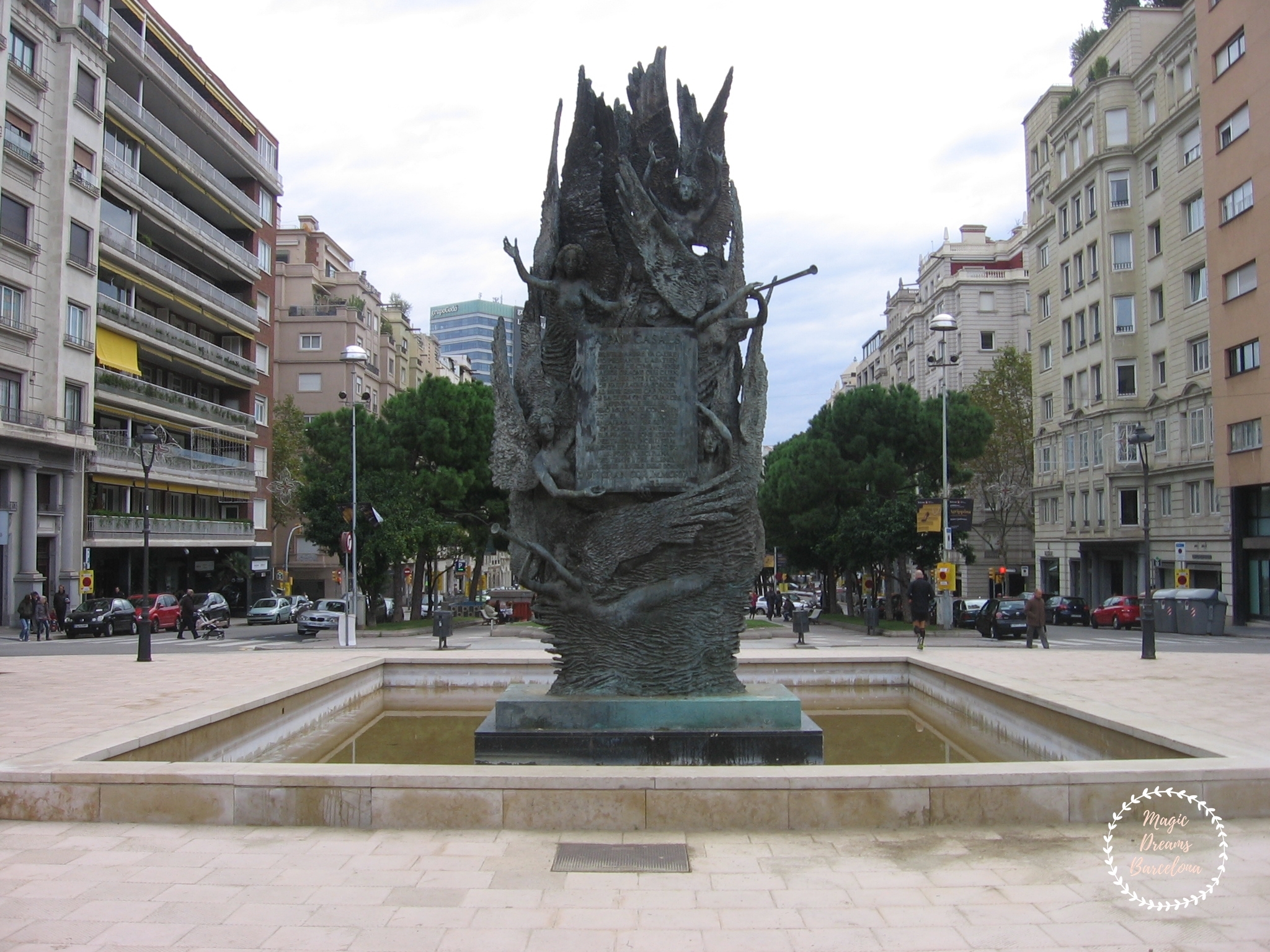
One of the most important works in Turó Park is the sculpture dedicated to the great Catalan cellist Pau Casals.
Created by Apel·les Fenosa, the sculpture forms part of the park’s artistic heritage and pays tribute to one of the most internationally recognised figures in Catalan music.
Casals was much more than an extraordinary musician.
His life and career were deeply connected to the defence of peace, culture and freedom, making him a figure of considerable international importance.
Finding his tribute in a garden dedicated precisely to music and poetry reinforces the cultural identity of Turó Park.
Francesc Viñas and the Operatic Tradition
Another important sculpture is dedicated to tenor Francesc Viñas, created by sculptor Josep Clarà.
Viñas was one of the great voices of Catalan and Spanish opera in the late 19th and early 20th centuries, with an important international career.
His presence means that music is represented in Turó Park from different perspectives: from Pau Casals’s instrumental performances to the world of opera and the human voice.
La Ben Plantada and Eugeni d’Ors
In the park’s meadow stands another of its best-known works:
La Ben Plantada, by Eloïsa Cerdan.
The bronze sculpture refers to the character created by writer and philosopher Eugeni d’Ors in his celebrated work La Ben Plantada.
The sculpture was placed in the park in 1961 and has gradually become one of its most recognisable features.
Its location in the meadow allows visitors to contemplate it within the surrounding landscape, following one of the fundamental principles of the park’s design: sculptures should not function merely as isolated monuments, but as an integral part of the garden.
La Biga de la Font de l’Aurora
Another artistic feature worth discovering is La Biga de la Font de l’Aurora, created by Joan Borrell i Nicolau.
Located along the axis of the magnolia parterre, the composition depicts a quadriga and is one of the park’s most striking sculptural elements.
Its history is particularly interesting, as it originated from a sculptural ensemble associated with the former gardens in the Gràcia area.
It is one of those details that can easily go unnoticed during a quick walk, but becomes especially fascinating once its history is known.
An Artistic Route Through the Park
In addition to the sculptures dedicated to Pau Casals, Francesc Viñas and Eugeni d’Ors, Turó Park contains other works that turn a walk through the garden into a small artistic route.
Among them is Un Oiseau, by French artist Jean-Michel Folon.
The combination of works from different periods and by different artists means that visitors can experience the park from a different perspective each time.
One visit might focus on the vegetation.
Another on the sculptures.
Another simply on sitting beside the pond.
And another can become a small literary journey following the poems installed throughout the garden.
A Place for Reading and Tranquillity
Some parks invite us to exercise.
Others are designed primarily for families.
Turó Park has a different personality.
Its layout, mature trees and various resting areas make it particularly suitable for quiet walks, reading or simply enjoying a few moments of disconnection.
Its proximity to Diagonal makes this feeling even more remarkable.
You only have to pass through one of its entrances for the noise of the traffic to become partially softened by the surrounding vegetation.
It is precisely this combination of central location and tranquillity that makes Turó Park one of the most special gardens in Barcelona’s upper city.
The Café at Turó Park
At the heart of the park, surrounded by trees, there is a pleasant café and restaurant with a terrace.
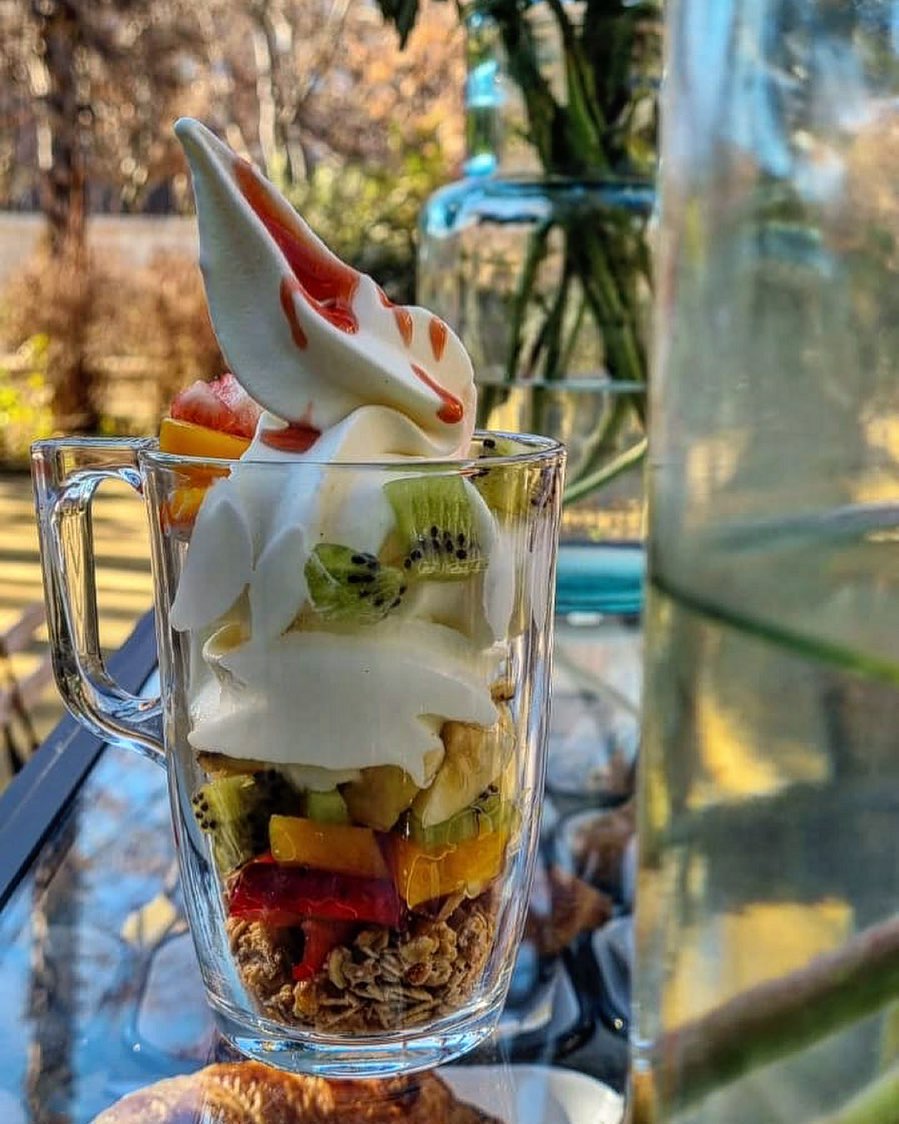
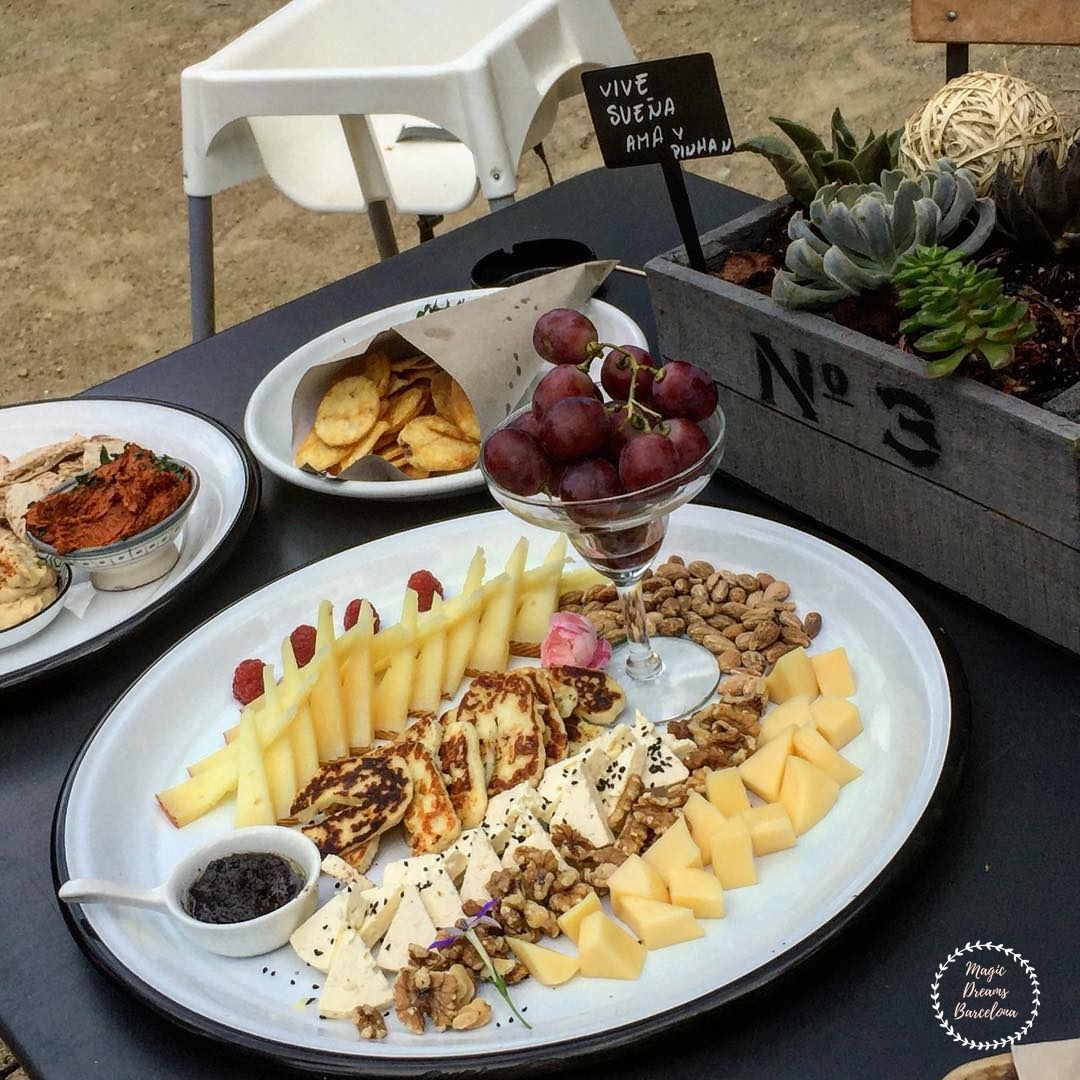
The well-known Pinhan offers the perfect place to take a break during your walk, enjoy a coffee, have breakfast, enjoy brunch, eat something or simply sit down for a drink while taking in the garden.
The terrace is particularly pleasant when the weather is good.
After exploring the sculptures, discovering the pond and walking among the magnolias, sitting beneath the trees allows you to extend the experience without having to leave the park.
It is one of those small pleasures that can turn a simple visit into a special moment.
A Park to Discover in Every Season
One of the advantages of Turó Park is that it is constantly changing.
Spring brings the gardens to life and is one of the best times to see the water lilies and seasonal blooms.
Summer is ideal for enjoying the shaded areas and the café terrace.
Autumn transforms the vegetation and creates a more intimate atmosphere, with different shades appearing throughout the trees.
Winter, although more subdued in terms of vegetation, allows visitors to appreciate the structure of the garden, its sculptures and the landscape design that is often partially hidden during the rest of the year.
There is therefore no single perfect time to visit.
Each season offers a different Turó Park.
A Park Integrated into Barcelona’s Everyday Life
Turó Park is not an isolated garden.
It is part of everyday life in this neighbourhood of Barcelona.
Surrounding it are some of the city’s most elegant residential areas, as well as shops, restaurants, hotels, cultural centres and major avenues.
Its location makes it easy to combine a visit to the park with a walk along Avinguda Diagonal, Plaça Francesc Macià, Sant Gervasi-Galvany or Sarrià.
It can also become part of a broader itinerary exploring the architecture and green spaces of this part of Barcelona.
Turó Park and the City’s Architecture
A visit to the park can also be an opportunity to discover the relationship between landscape and architecture that characterises this part of Barcelona.
The area surrounding Turó Park contains a wide variety of interesting residential buildings and examples of architecture from the late 19th century, early 20th century and contemporary period.
This makes it possible to create an itinerary combining gardens, architecture, urban design and heritage.
The experience is particularly appealing to visitors who want to discover a side of Barcelona beyond its major tourist landmarks.
Here, you will not find the crowds of the Sagrada Família or Park Güell.
Instead, you discover another Barcelona:
the Barcelona of gardens, elegant neighbourhoods, cafés, residential architecture and everyday life.
A Park Designed to Protect Its Heritage
Turó Park also has a particular feature related to coexistence and the protection of its environment.
It has traditionally been regarded as one of Barcelona’s first public parks to introduce specific restrictions regarding dogs, due to the need to protect both its vegetation and its sculptural heritage.
To facilitate coexistence, the City Council created a dedicated dog area of more than 1,000 square metres a few minutes from the park.
Today, the city’s official information identifies a dog area associated with the Turó Park facilities, so it is advisable to check the current regulations before visiting.
This reflects something important: Turó Park is not simply a place to pass through, but a garden whose natural and artistic heritage requires special care.
A Park for the Whole Family
Although its atmosphere particularly invites peaceful walks, Turó Park also includes spaces designed for different activities.
The municipal facilities include a children’s play area, table tennis tables, public toilets and spaces for outdoor activities and performances.
Throughout the year, the park also hosts different cultural events and family activities.
Its character is therefore not exclusively contemplative.
It is also a place for people to meet.
Culture in the Open Air
One of the most interesting characteristics of Turó Park is precisely its ability to combine the garden with culture.
Throughout the year, concerts, performances and activities for different audiences are organised.
The current municipal programme includes music, theatre, circus, family activities and other cultural initiatives.
In a way, this brings back part of the entertainment spirit that was already present on these grounds when the amusement park operated here.
The difference is that today’s attractions have been replaced by music, theatre, poetry, nature and culture.
How to Get to Turó Park
Turó Park is located at Avinguda de Pau Casals, 19, in the Sarrià-Sant Gervasi district.
Its location next to Plaça Francesc Macià and Diagonal makes it very easy to include in an itinerary around this part of Barcelona.
One of the simplest options is to reach Francesc Macià and continue walking along Avinguda de Pau Casals.
It can also be reached by several bus routes and other forms of public transport.
For those exploring Barcelona on foot, the park is particularly interesting because it can easily be combined with different itineraries through Sarrià-Sant Gervasi and along Diagonal.
Opening Hours
The park is open to the public, with opening hours that vary depending on the time of year.
During the summer schedule, from 1 April to 31 October, it is generally open from 8:00 a.m. to 9:00 p.m.
During the winter schedule, from 1 November to 31 March, it is generally open from 8:00 a.m. to 7:00 p.m., although closing times may be adjusted according to daylight hours.
Before planning a special visit, particularly if you wish to attend a cultural event, it is advisable to check the latest opening hours and programme.
What to Do After Visiting Turó Park
One of the great advantages of this park is its location.
After exploring it, you can continue your walk towards Plaça Francesc Macià and Diagonal, discover some of the area’s buildings and shops, or head towards Sarrià and Sant Gervasi.
You can also turn the visit into a gastronomic experience by combining your walk through the park with breakfast, brunch, lunch or dinner at one of the nearby establishments.
For architecture lovers, the area also offers numerous examples of residential and Modernist buildings.
In this way, Turó Park can become the starting point for a much broader day dedicated to discovering one of the most elegant and peaceful sides of Barcelona.
Turó Park as a Refuge Within the City
Perhaps Turó Park’s greatest attraction cannot be measured in square metres or by the number of sculptures it contains.
Its true value lies in the feeling it creates.
Entering the park means moving from one of Barcelona’s busiest urban areas into a space where the sound of the trees, the water in the pond and the birdsong become more noticeable.
It is a place to walk slowly.
To read a few pages.
To sit on a bench.
To contemplate a sculpture.
To discover a poem.
To enjoy a coffee.
To have a conversation.
Or simply to do nothing for a while.
And in a major city, that is a genuine privilege.
A Place Where Nature and Culture Come Together
Turó Park represents a particular way of understanding public space.
It is not simply about planting trees and creating paths.
It is about creating a place where nature can coexist with art and culture, and where people can find somewhere to rest, meet and enjoy themselves.
That idea remains present almost a century after the garden was created by Rubió i Tudurí.
The trees have grown.
The city has changed.
Buildings have occupied the land that once surrounded the park.
But Turó Park continues to offer what it was originally designed to provide:
a small green refuge within Barcelona.
Turó Park: A Walk Through Music, Poetry and Nature
Visiting Turó Park is not simply about discovering another park in Barcelona.
It means discovering a small part of the city’s history.
It means remembering that an amusement park once stood here and was part of Barcelona’s social life for almost two decades.
It means discovering the work of Nicolau Maria Rubió i Tudurí and his vision of landscape design.
It means walking among magnolias, holm oaks, palm trees and centuries-old trees.
It means contemplating the pond and its water lilies.
It means discovering sculptures dedicated to Pau Casals, Francesc Viñas, Eugeni d’Ors and other artists.
It means encountering the poetry of writers from different countries and generations.
And above all, it means discovering that there are still places in Barcelona where it is possible to stop time for a while.
Discover Turó Park with Magic Dreams Barcelona
Discovering Barcelona can be much more than visiting its most famous landmarks.
The city can also be found in its gardens, neighbourhoods, small stories and those hidden corners that often go unnoticed by first-time visitors.
Turó Park is one of those places.
At Magic Dreams Barcelona, we design private and personalised experiences that allow you to discover Barcelona from a different perspective, combining heritage, culture, nature, gastronomy and those small experiences that make it possible to truly get to know a city.
We can turn a walk through Turó Park into part of a much more complete experience around Sarrià-Sant Gervasi, Diagonal and Barcelona’s more elegant and lesser-known side.
We take care of the organisation, transportation, visits, gastronomic experiences, activities and all those small details that allow you to enjoy the experience without worrying about the logistics.
Because we believe that travelling and discovering a city is not simply about arriving somewhere.
It is about how you experience it, what you feel, what you learn and which memories remain afterwards.
And perhaps Turó Park is precisely one of those places that reminds us that sometimes, to discover something extraordinary, we do not need to travel very far.
We simply need to know where to look.
Magic Dreams Barcelona
Unique experiences to discover extraordinary places, enjoy nature, explore our culture and create memories that last a lifetime.
Detalle en la cafetería del Pinhan en el Turó Park.
A Francesc Viñas, de Josep Clarà.
Picnic en Pinhan.
Platos del Pinhan.
Platos del Pinhan.
Perspectiva desde el Pinhan.
Detalle en la cafetería del Pinhan en el Turó Park.
The summit of Barcelona where history, nature and entertainment come together Tibidabo, the highest part of the city of Barcelona, stands at 575 metres above sea level, offering an incomparable perspective of the city, the Mediterranean Sea and the surrounding hills. This remarkable place combines …
A Modernist Gem at the Crossroads of History, Architecture and Barcelona’s Past The La Rotonda building, also known as Torre Andreu, is one of the most recognisable architectural landmarks in Sant Gervasi–La Bonanova and one of the most distinctive historic buildings in the upper part …
On Montjuïc Mountain, far from the hustle and bustle of the city centre, there is a garden where nature tells the story of five corners of the planet. Barcelona Botanical Garden is much more than a green space: it is a journey through Mediterranean landscapes, a collection of biodiversity and a privileged place to discover the richness of the plant world.
A Garden Among Mountains and Landscapes
Barcelona Botanical Garden is located on Montjuïc, surrounded by the mountain’s cultural and natural attractions. Its address is Carrer del Doctor i Font i Quer, 2, 08038 Barcelona.
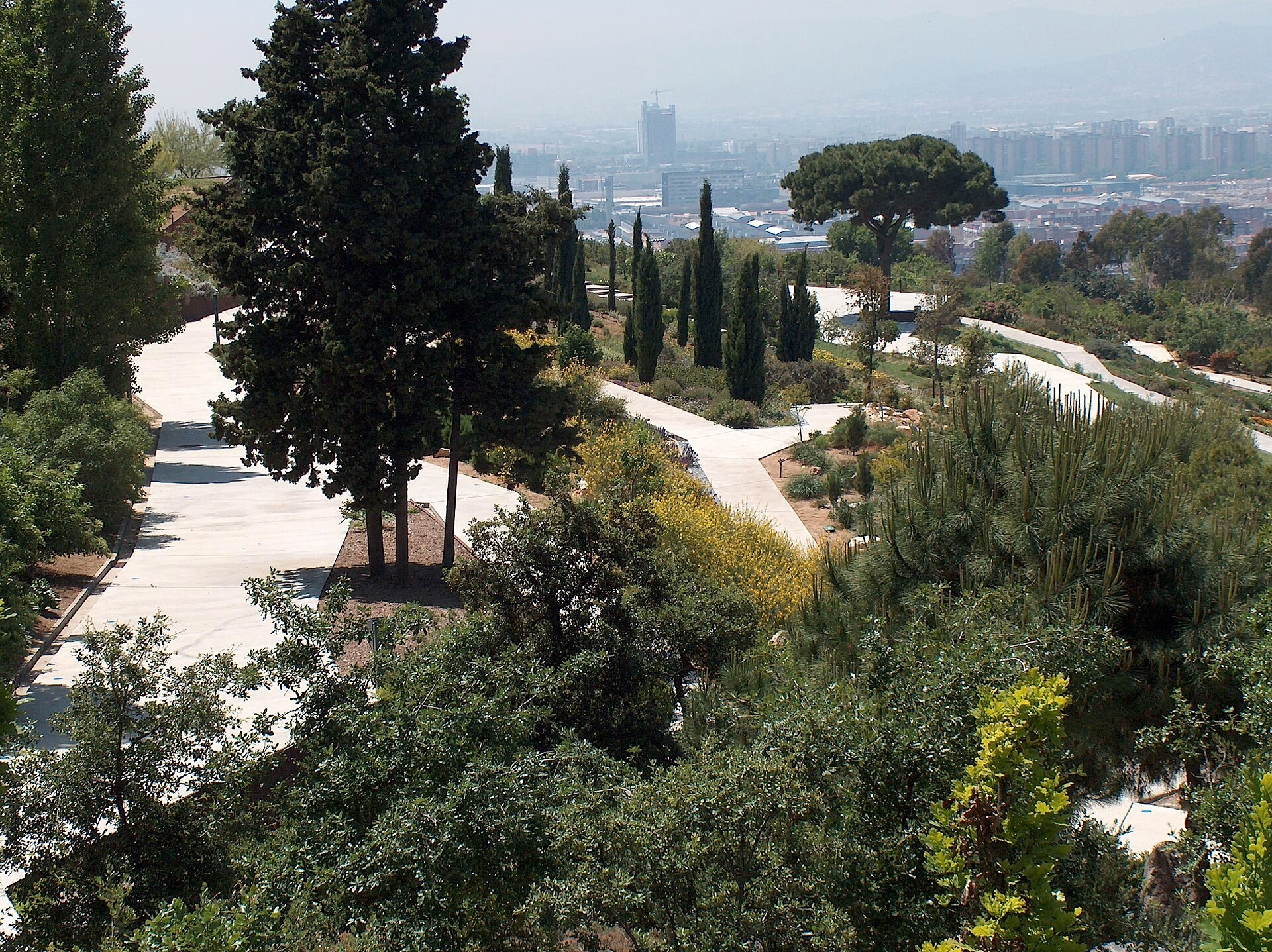
Its location, between the Olympic Stadium and Montjuïc Castle, offers a peaceful setting and magnificent views of the city and its surroundings.
Covering approximately 14 hectares, the garden is organised to showcase the vegetation of five major regions of the world that share a Mediterranean climate: the Mediterranean Basin, California, central Chile, the Cape region of South Africa and southwestern Australia.
This layout makes it possible to compare how nature has developed similar solutions in places separated by thousands of kilometres.
Five Regions, One Shared Climate
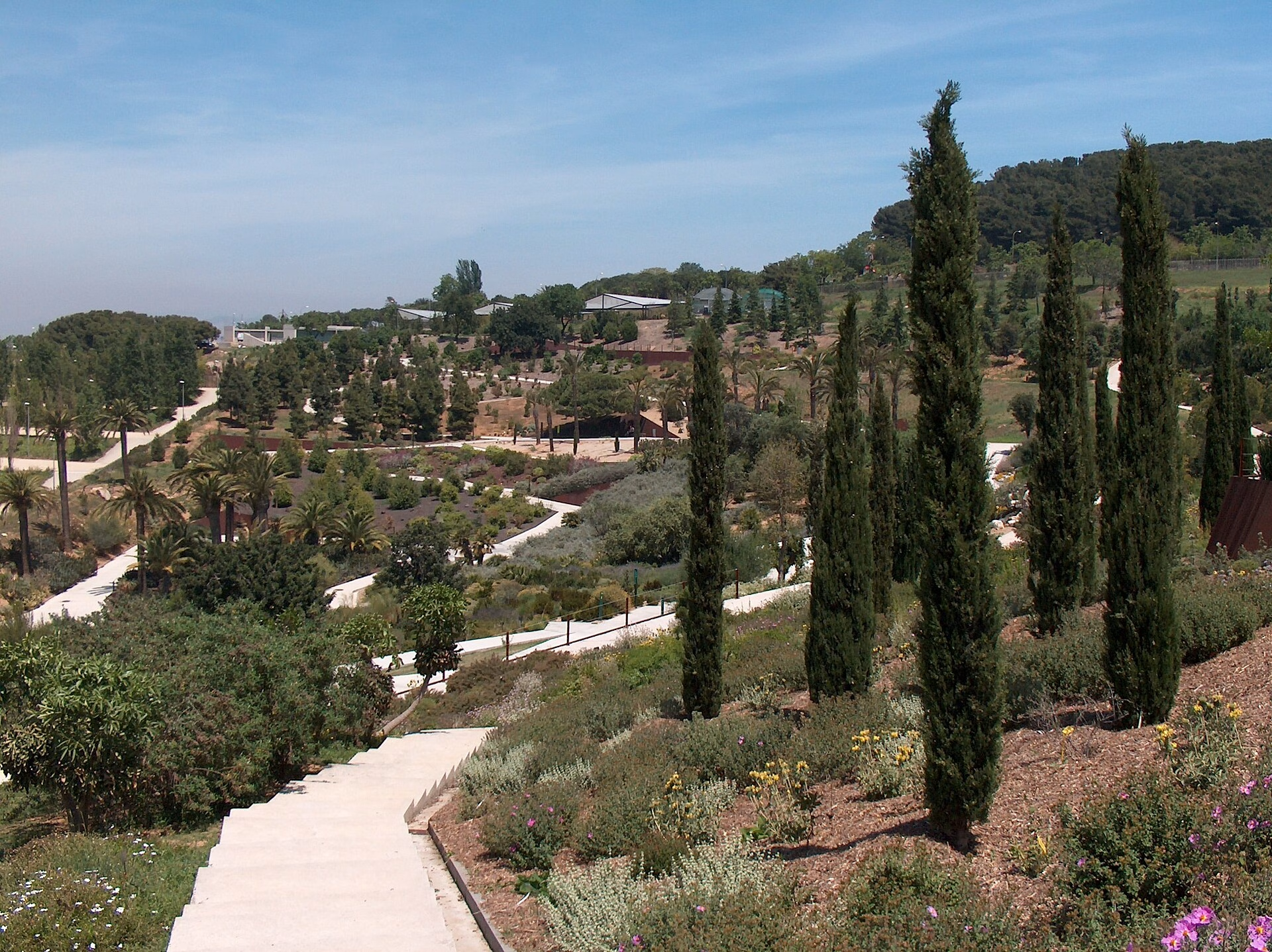
One of the garden’s most interesting features is its landscape design. Rather than organising plants solely according to botanical criteria, the walking route recreates the landscapes of the five Mediterranean-climate regions of the world.
Along its paths, you can discover forests, scrubland, aromatic plants, shrubs and trees adapted to dry summers and mild, rainy winters.
Each area has its own character and allows visitors to appreciate the differences between ecosystems which, despite sharing similar climatic conditions, are home to very different species.
The garden brings together around 2,000 plant species and offers an exceptional opportunity to explore botanical diversity without leaving Barcelona.
The Plant Species of Barcelona Botanical Garden: A World of Plants on Montjuïc
One of the main attractions of Barcelona Botanical Garden is the variety of species it contains. Its collection allows visitors to discover plants from different regions of the world that share a Mediterranean climate, although each has developed its own adaptations to survive in the conditions of its environment.
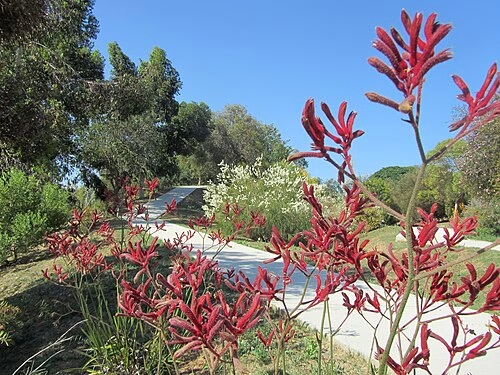
Among remarkable trees, shrubs, aromatic plants, succulent species and brightly coloured flowers, visitors can enjoy a genuine botanical journey across four continents.
Australia: Eucalyptus, Acacias and Banksias
The Australian section stands out for its trees and shrubs characteristic of the southwestern part of the continent. Visitors will find representatives of genera such as Acacia, Eucalyptus, Melaleuca, Callistemon, Hakea, Banksia and Grevillea.
Also attracting attention are the grass trees, known as tree-like grasses, unusual-looking plants that have developed adaptations to withstand fires. Casuarinas and conifers from the Callitris genus complete this almost prehistoric-looking landscape.
Chile: Araucarias, Puya Plants and Cacti
The Chilean section showcases vegetation shaped by oceanic influences, dry terrain and thorny scrubland. Among its most characteristic species is the monkey puzzle tree (Araucaria araucana), a majestic tree that can grow to impressive heights.
Also represented are Chilean mesquite trees (Prosopis chilensis), espino trees (Acacia caven), Chilean guava (Ugni molinae) and exotic-looking plants such as puyas and other bromeliads. In the driest areas, visitors can discover cacti adapted to water scarcity.
South Africa: Proteas, Gazanias and Resilient Plants
The South African region is home to an extraordinarily diverse flora, with countless endemic species. Its landscapes feature plants adapted to poor soils, dry periods and recurring episodes of wildfires.
Among the genera that best represent this region are proteas, alongside shrubs, succulent plants and brightly coloured flowers such as gazanias. It is one of the most interesting areas for observing the variety of forms and survival strategies developed by Mediterranean vegetation.
California: Redwood Trees, Oaks and Plants from Dry Environments
California’s flora combines forests, scrubland and semi-arid areas. Oaks, pines and other conifers are characteristic of this Mediterranean region, along with species adapted to drought.
Plants such as agaves and yuccas are also part of this landscape. They are easily recognisable by their rigid leaves and their ability to store or make efficient use of water in challenging conditions.
The Mediterranean Basin: Olive Trees, Holm Oaks and Aromatic Plants
The Mediterranean section allows visitors to recognise species more familiar from our own landscapes. Highlights include trees such as the olive tree, the holm oak and the carob tree, as well as shrubs and aromatic plants commonly found in Mediterranean forests and scrubland.
The route also showcases plant formations from the western and eastern Mediterranean, North Africa and the Canary Islands. These include species adapted to drought, with small, resilient leaves, woody stems or thorns that help reduce water loss.
A Collection Worth Exploring at Leisure
The richness of Barcelona Botanical Garden lies not only in the number of species it contains, but also in the opportunity to observe how plants from distant parts of the world have developed similar adaptations to survive in comparable climatic conditions.
The collection includes around 2,000 plant species, although its composition may change over time as a result of conservation and renewal work. This means that every visit offers the opportunity to discover new details and experience the landscapes from a different perspective.
A Place with History and a Scientific Mission
The current garden opened its doors in 1999, although Montjuïc has a much longer botanical tradition. In 1930, the Historic Botanical Garden was established, linked to the work of botanist Pius Font i Quer.
The new garden was created with a different purpose: to display the vegetation of the world’s Mediterranean-climate regions and become a centre for conservation, education and research.
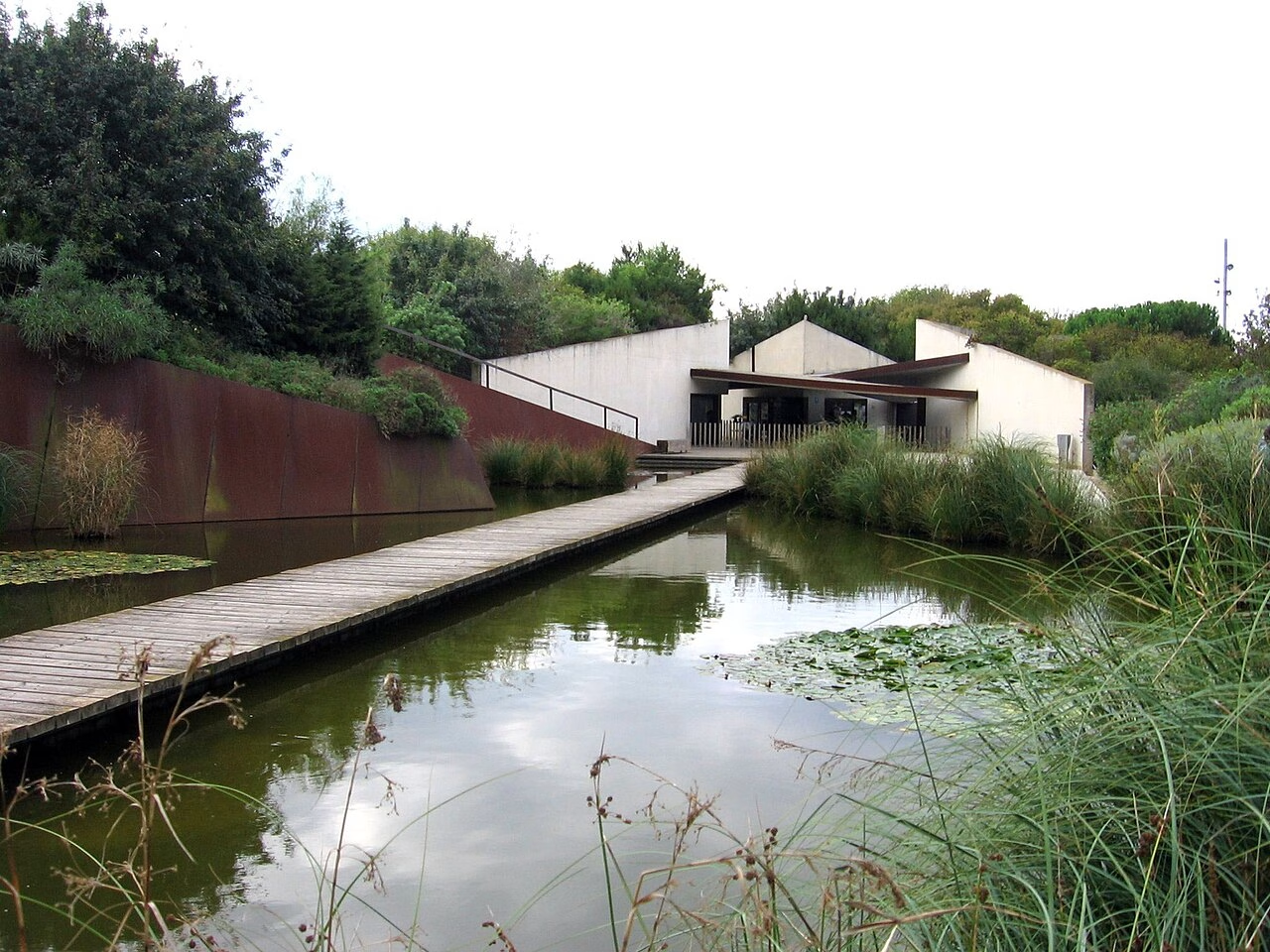
Its architectural and landscape design was adapted to the mountain’s topography, integrating the paths into the terrain and making use of its slopes to create different natural environments.
Barcelona Botanical Garden is associated with the Barcelona Natural Science Museum and the Botanical Institute of Barcelona, institutions dedicated to scientific research, conservation and public education.
For this reason, a visit is not simply an aesthetic experience: it also provides an opportunity to understand the importance of protecting biodiversity and preserving plant species.
A Visit to Enjoy at Your Own Pace
The garden’s walking route is designed for strolling, observing and discovering. Its paths wind through different landscapes, offering quiet spots where visitors can stop to admire the plants, identify species and enjoy the peaceful surroundings.
We recommend wearing comfortable shoes, especially if you plan to explore the garden at a leisurely pace. Allow approximately one and a half to two hours to enjoy your visit without rushing.
Spring and autumn are generally particularly pleasant seasons to explore the garden, although each time of year offers a different perspective on the landscape.
How to Get to Barcelona Botanical Garden
By Public Transport
You can reach Montjuïc using several bus routes. Bus line 150 connects Plaça d’Espanya with different areas of the mountain. You can also check the routes that stop near the garden, such as bus line 13.
Another option is to take the metro to Plaça d’Espanya and continue by bus. If you prefer to travel up from the Paral·lel area, you can take the Montjuïc funicular and complete the journey on foot or by public transport.
We recommend checking transport connections before setting off, as routes and frequencies may vary.
By Car
If you wish to travel by private vehicle, you can reach Montjuïc by following the signs towards the Olympic Stadium and Montjuïc Castle. Enter the following address into your navigation system:
Carrer del Doctor i Font i Quer, 2.
There are parking spaces in the surrounding area, although availability may vary depending on the day and the number of visitors. It is advisable to check parking conditions and fees before travelling. You should not assume that parking is free.
Opening Hours and Ticket Prices
Barcelona Botanical Garden is open every day of the week, including Sundays and public holidays, with opening hours that vary throughout the year to adapt to daylight hours.
November to January: 10:00 am – 5:00 pm.
February and March: 10:00 am – 6:00 pm.
April, May, September and October: 10:00 am – 7:00 pm.
June to August: 10:00 am – 8:00 pm.
The garden is closed on 1 January, 1 May, 24 June and 25 December. Please note that the last admission is permitted up to half an hour before closing time.
Regarding ticket prices, general admission costs approximately €5 per person, while reduced admission is €2.50 for visitors who meet the museum’s eligibility requirements.
There is also a combined ticket with the Barcelona Natural Science Museum, priced at €8 for general admission and €4 for reduced admission.
A great opportunity to visit the garden free of charge is to take advantage of the first Sunday of every month, when admission is free throughout the day, as well as Sundays from 3:00 pm onwards.
We recommend checking the official opening hours and ticket prices before your visit in case of changes or extraordinary closures.
Much More Than a Garden
Barcelona Botanical Garden is a unique place thanks to the way it introduces visitors to five regions of the world through their distinctive plant landscapes. Its scientific interest, educational value and integration into Montjuïc Mountain make it a particularly worthwhile visit for anyone wishing to discover a different side of Barcelona.
You do not need to be a botanical expert to enjoy it. All you need is curiosity, a willingness to walk and the desire to stop and observe the little details that so often go unnoticed.
Discover Barcelona in a Different Way with Magic Dreams Barcelona
At Magic Dreams Barcelona, we believe that getting to know a city means going beyond its most famous landmarks. That is why we design personalised experiences to discover Barcelona from different perspectives, combining culture, nature, architecture and gastronomy.
We can accompany you on tours of Montjuïc and other hidden corners of the city, organise private experiences and help you discover places that reflect the most authentic essence of Barcelona.
Because sometimes the most special memories are made away from the usual tourist routes, among paths, gardens and landscapes that invite you to see the city through different eyes.
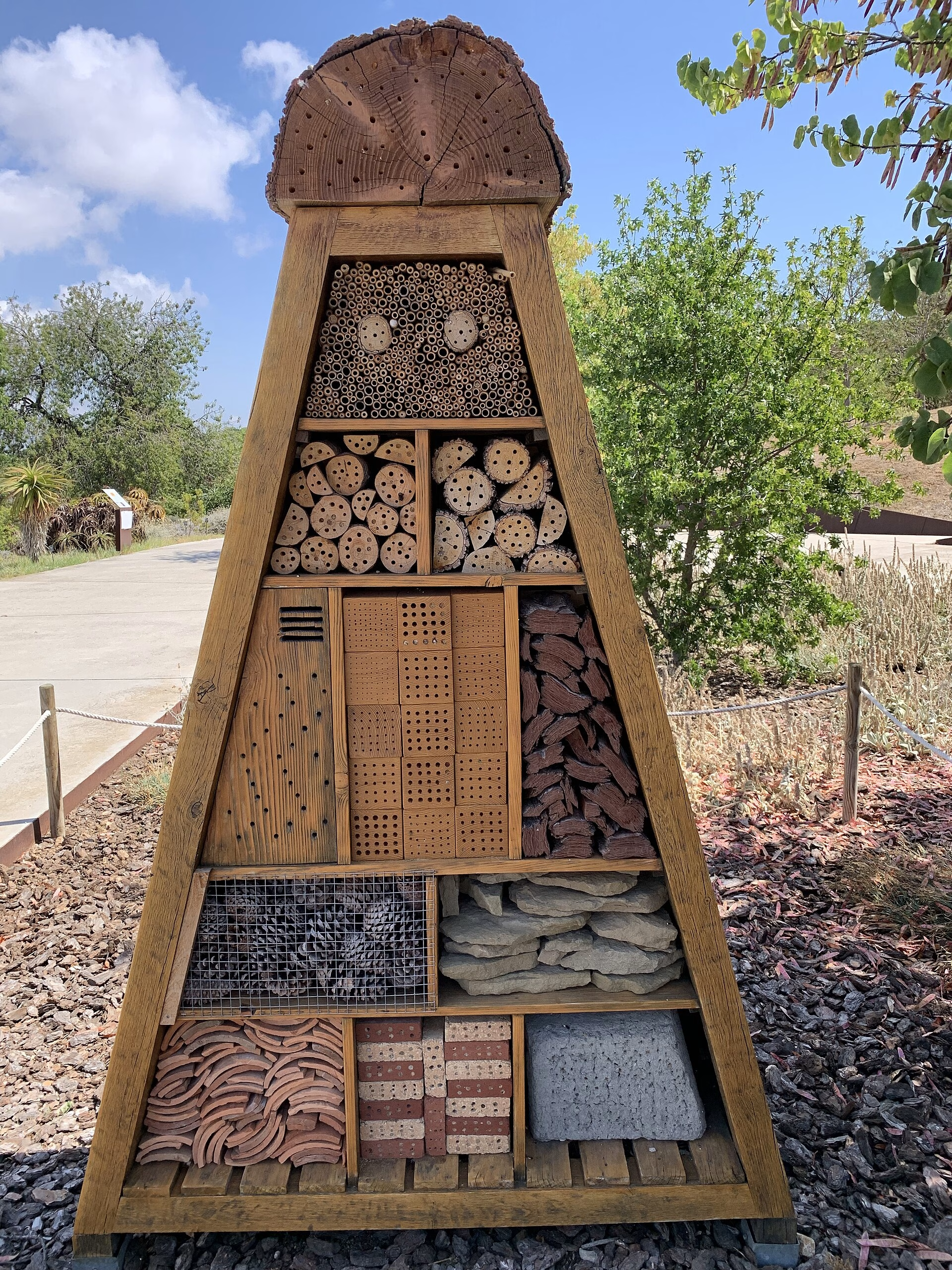
Jardín Botánico de Barcelona – By 19Tarrestnom65 – Own work, CC BY-SA 4.0, https://commons.wikimedia.org/w/index.php?curid=180835833.
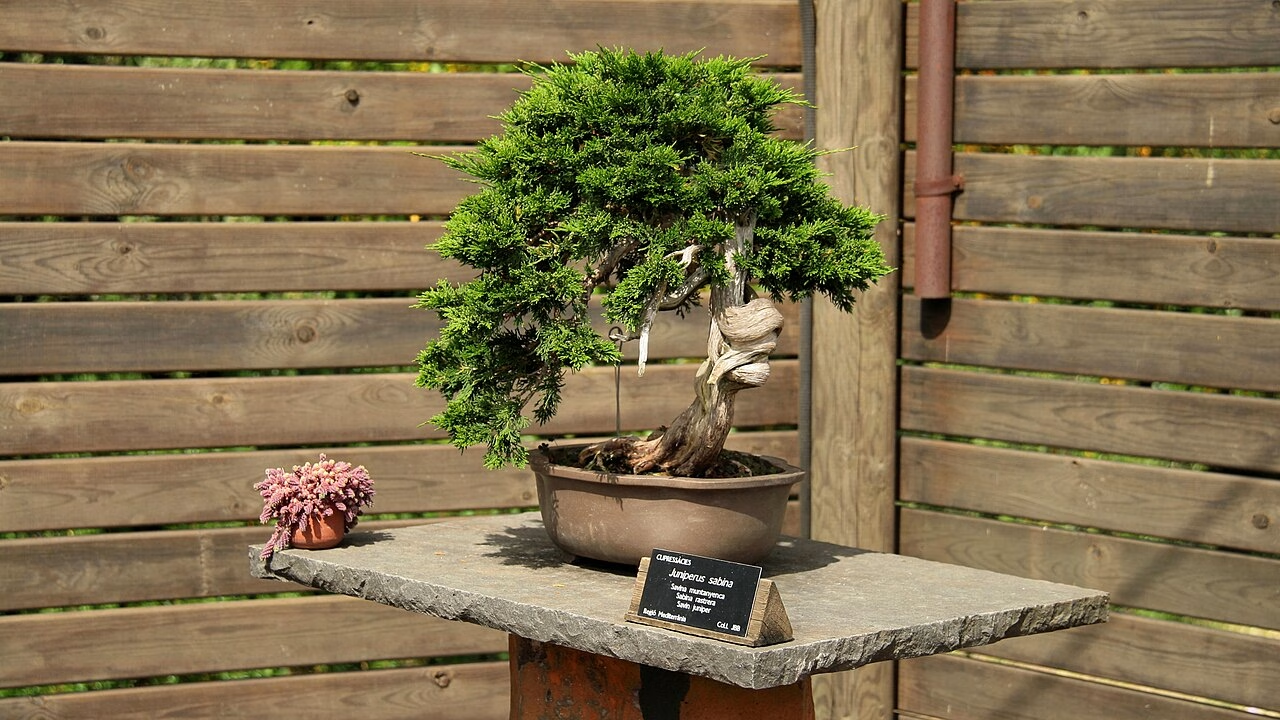
Jardí Botànic de Barcelona – By Jorge Franganillo from Barcelona, Spain – Jardí Botànic de Barcelona, CC BY 2.0, https://commons.wikimedia.org/w/index.php?curid=76935825.
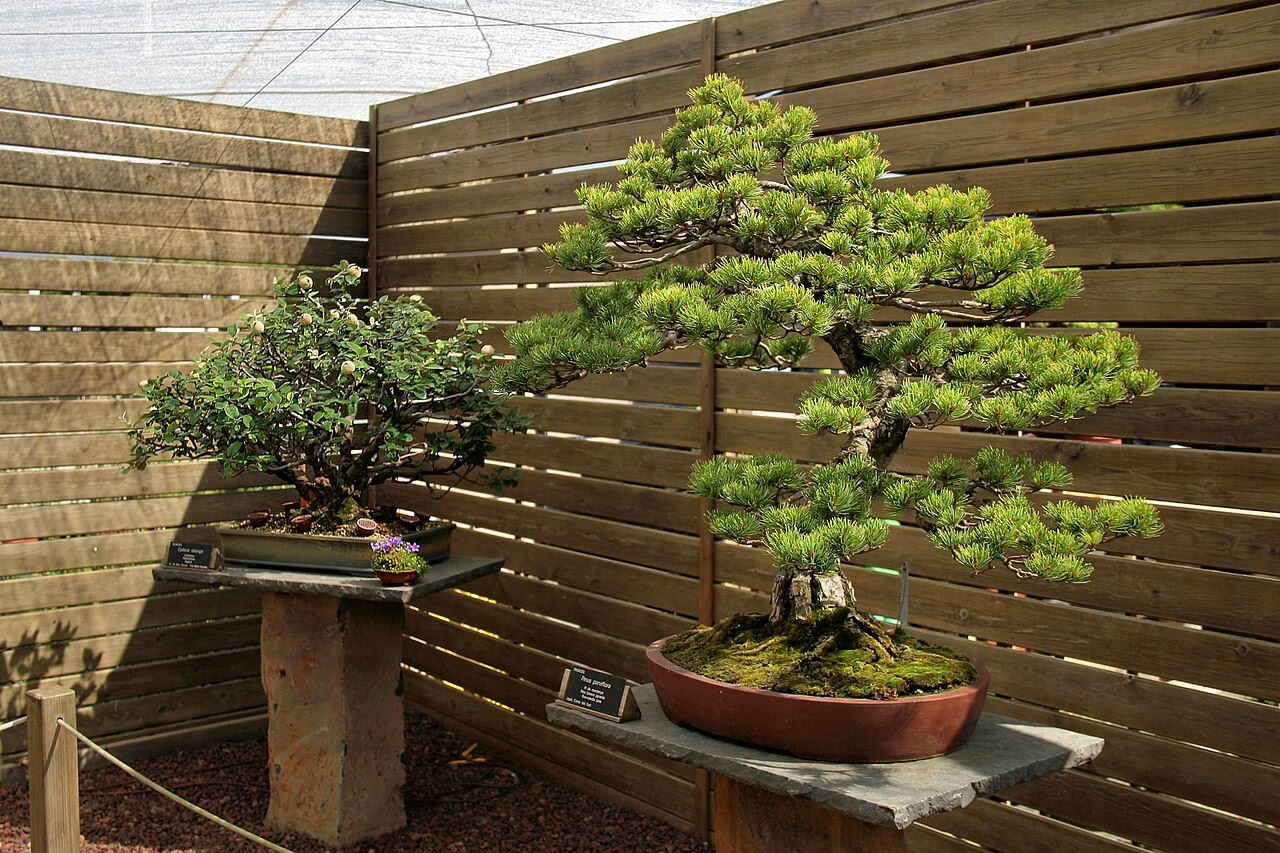
Jardín botánico de Barcelona – By Jorge Franganillo from Barcelona, Spain – Jardí Botànic de Barcelona, CC BY 2.0, https://commons.wikimedia.org/w/index.php?curid=76935841.
Jardín botánico de Barcelona Anigozanthos – By Jvhertum – Own work, CC BY-SA 3.0, https://commons.wikimedia.org/w/index.php?curid=20170439.
Jardín botánico de Barcelona – By Canaan – Own work, CC BY-SA 3.0, https://commons.wikimedia.org/w/index.php?curid=30893625.
Jardín botánico de Barcelona – CC BY-SA 3.0, https://commons.wikimedia.org/w/index.php?curid=214637.
Jardín botánico de Barcelona – CC BY-SA 3.0, https://commons.wikimedia.org/w/index.php?curid=214626.