Casa de les Punxes – The Barcelona Neuschwanstein Castle.

A jewel of Catalan Modernisme combining medieval legends, architecture and elegance
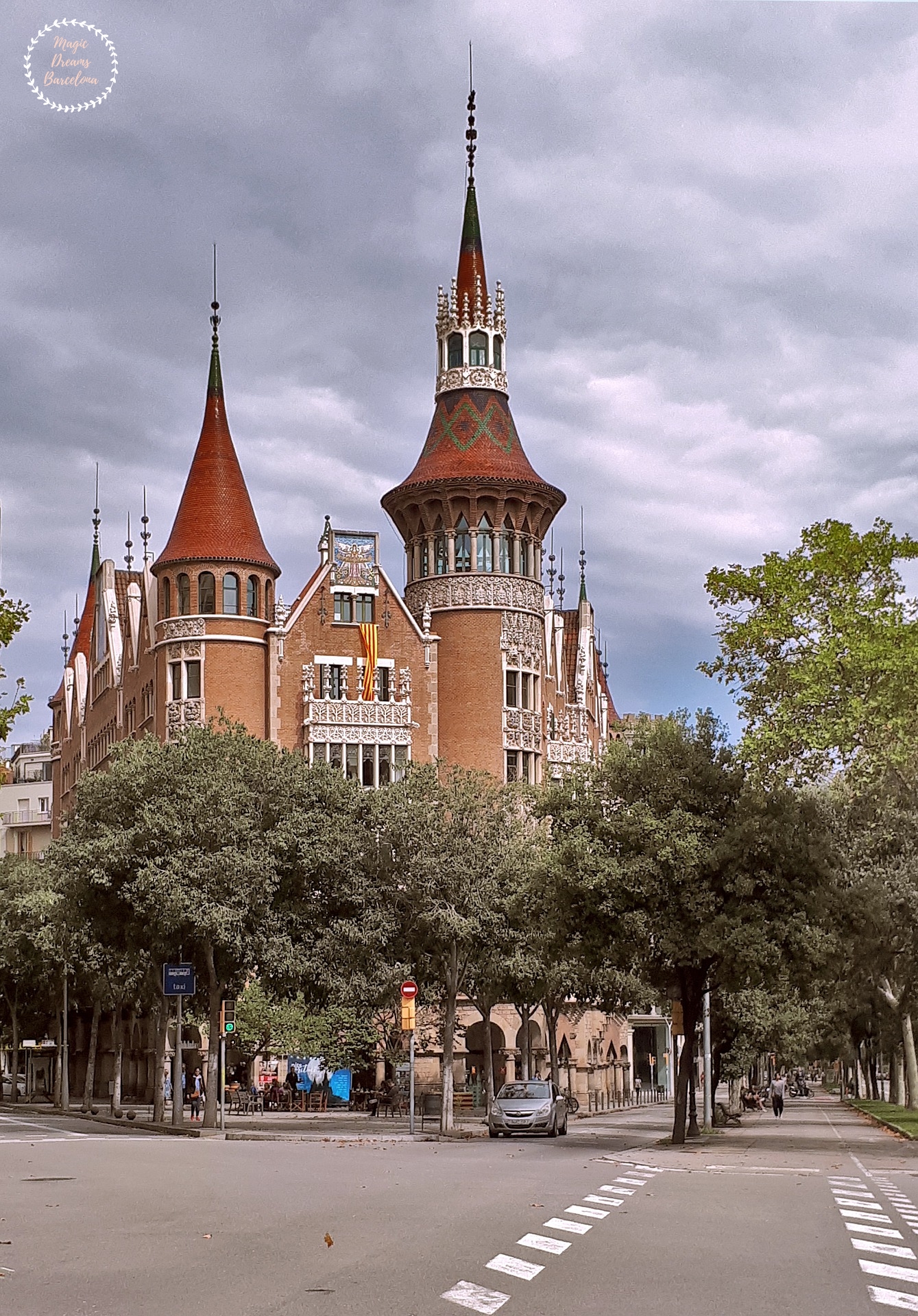
Located in the Dreta de l’Eixample district, overlooking one of the chamfered corners of Avinguda Diagonal, Casa de les Punxes stands out among the most remarkable buildings created during Barcelona’s golden age of Modernisme in the early 20th century.
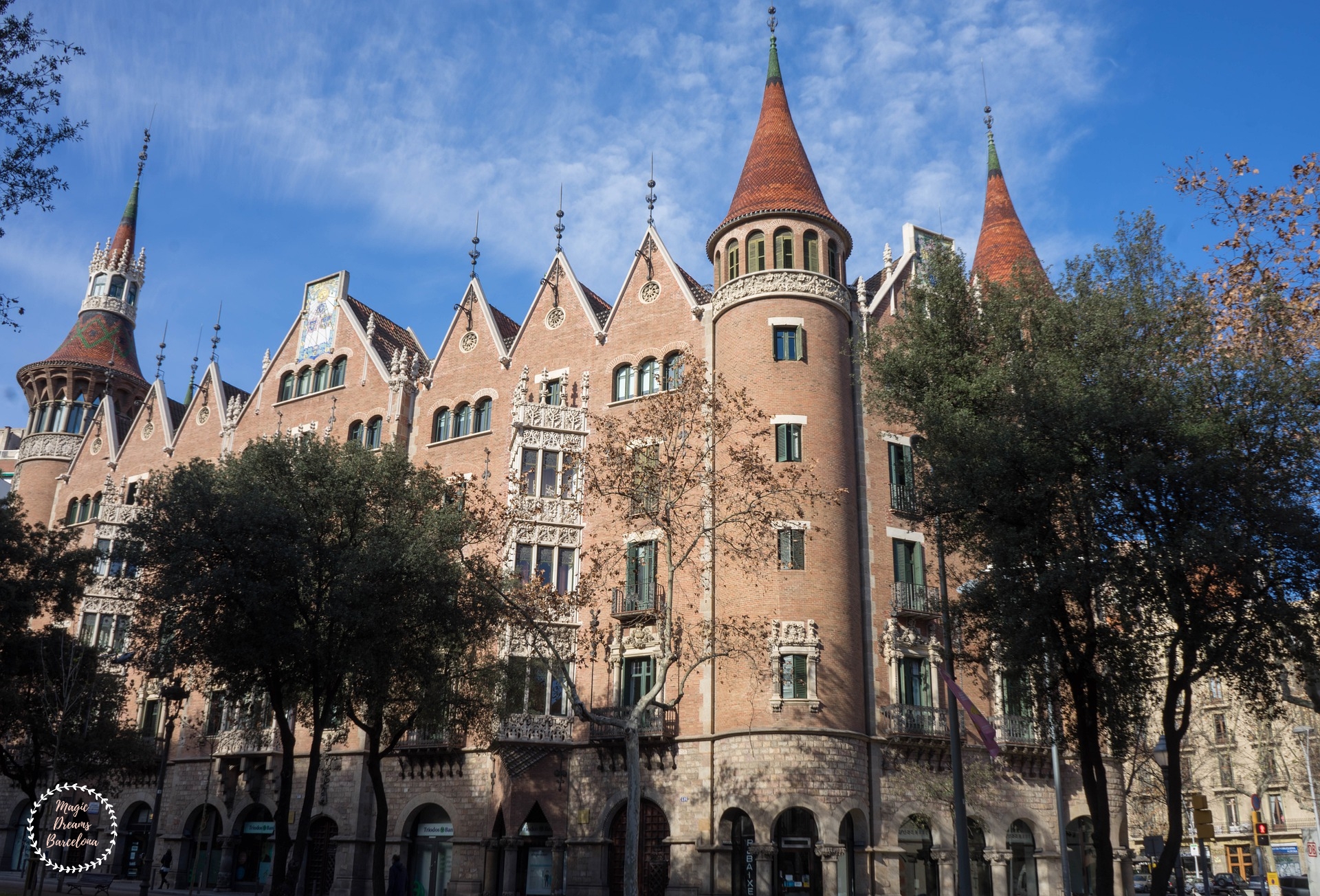
Officially known as Casa Terradas, it is one of the most recognisable works by the Catalan Modernist architect Josep Puig i Cadafalch. Its extraordinary silhouette, crowned by six pointed towers, evokes ancient medieval castles and has earned it the nickname “The Barcelona Neuschwanstein Castle”.
The building is a fascinating combination of Gothic architecture, medieval references, decorative elements inspired by Northern European styles and innovative construction techniques typical of Catalan Modernisme.
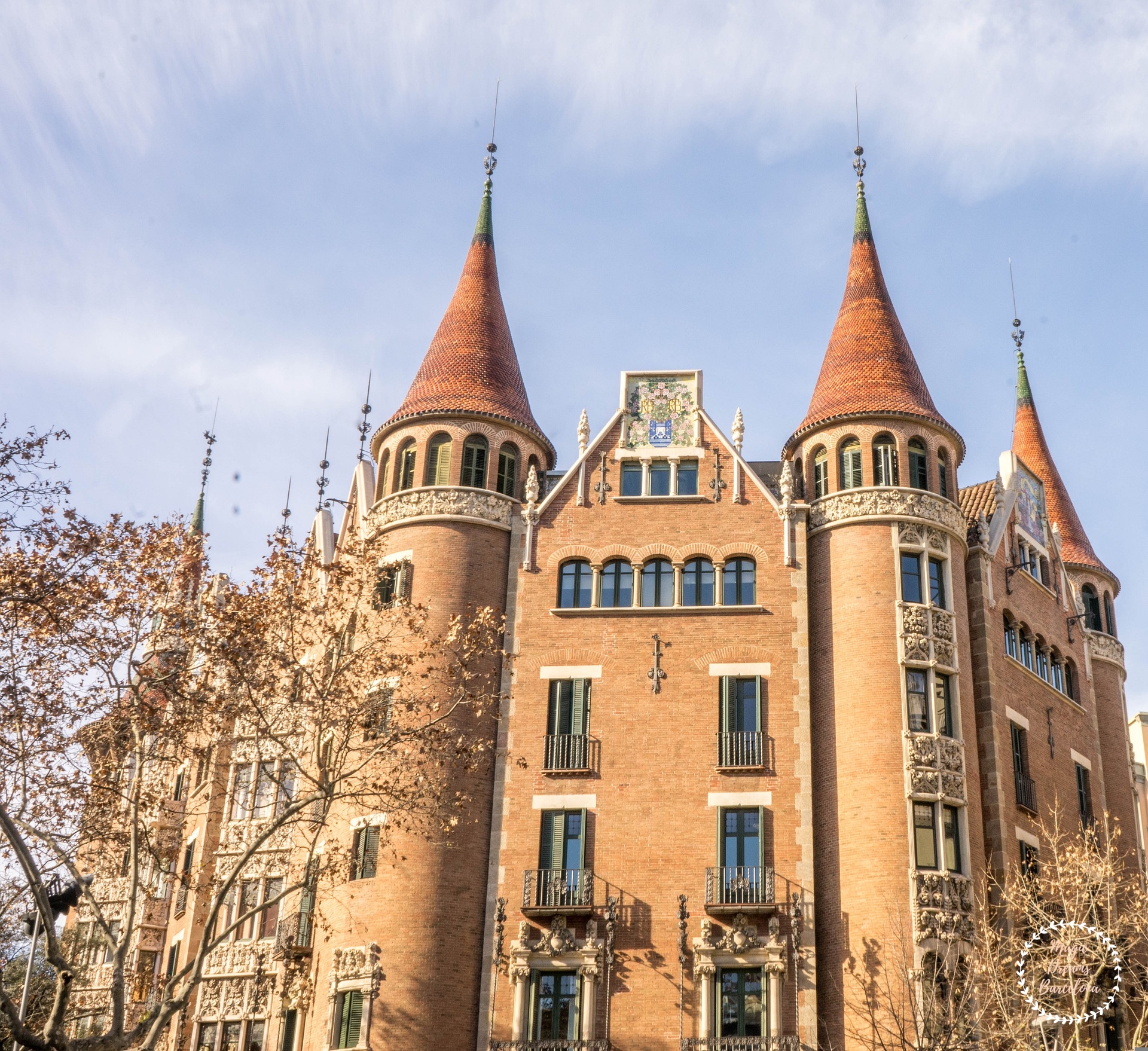
Its exposed brick façade, conical towers, wrought-iron balconies, colourful stained-glass windows and sculptural reliefs make the building a true architectural masterpiece.
Casa de les Punxes is much more than a historic residential building. It is also a testament to Barcelona’s bourgeois society at the beginning of the 20th century, its cultural aspirations and the close relationship between architecture, decorative arts and new ways of understanding the city.
The Origins of Casa de les Punxes
A home for three sisters in Modernist Barcelona
The history of Casa de les Punxes began at the start of the 20th century, during a period of significant urban transformation and economic prosperity in Barcelona.
In 1905, Bartomeu Terradas Brutau commissioned Josep Puig i Cadafalch to design a house for each of his three daughters: Àngela, Josefa and Rosa. The project had to accommodate the unusual geometry of a city block located between Avinguda Diagonal and Rosselló and Bruc streets.
The architect devised an extraordinary solution: a large architectural complex made up of three independent buildings, united by a common visual and decorative language.
Construction took place between 1903 and 1905, resulting in one of the most original buildings of Barcelona’s Modernist architecture.
Its design was inspired by the architecture of medieval European castles, with an appearance particularly reminiscent of Neuschwanstein Castle in Bavaria, Germany.
The result was a monumental construction that broke away from the usual forms of residential buildings in the Eixample district and transformed that corner of Diagonal into one of the city’s most recognisable landmarks.
Josep Puig i Cadafalch and Catalan Modernisme
An architect who turned history into architecture
Josep Puig i Cadafalch was one of the leading figures of Catalan Modernisme, alongside architects such as Antoni Gaudí and Lluís Domènech i Montaner.
Born in Mataró in 1867, he developed a career that combined architecture, historical research, monument restoration and cultural activity.
His work is characterised by the incorporation of medieval references, particularly Gothic elements, together with influences from European architecture and the decorative arts.
Unlike other Modernist buildings dominated by curved lines and organic shapes, Casa de les Punxes features a composition of strong geometric character, with clearly defined volumes, soaring towers and ornamentation reminiscent of ancient castles.
Puig i Cadafalch successfully integrated different artistic influences into a unified project, creating a building with its own distinctive identity within Barcelona’s architectural landscape.
Other notable works by the architect in Barcelona include Casa Amatller, Palau Macaya and Palau del Baró de Quadras.
Architecture Inspired by a Medieval Castle
Six pointed towers overlooking Avinguda Diagonal
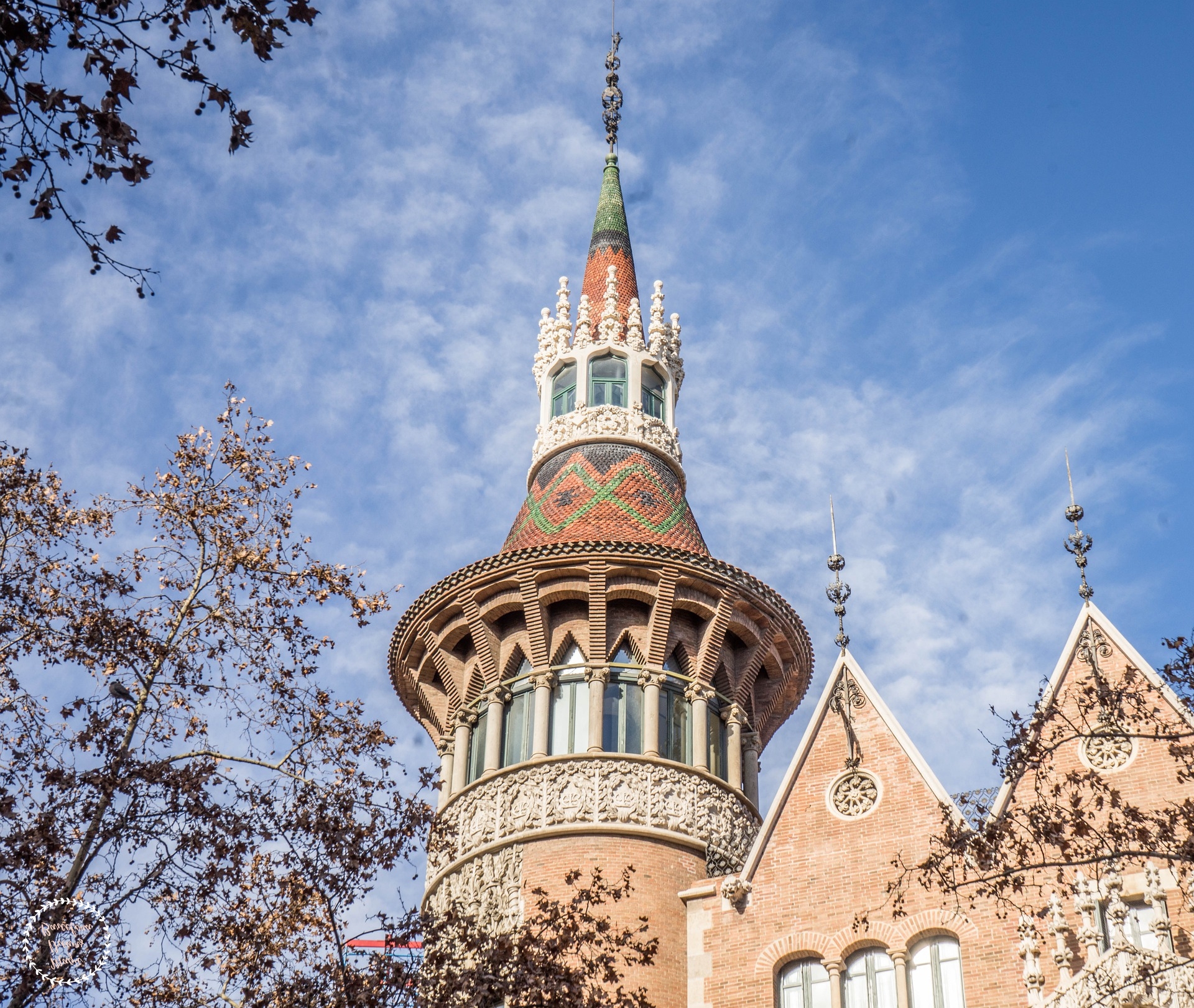
One of the most distinctive features of Casa de les Punxes is its six pointed towers, crowned with conical spires.
These towers rise above the corners of the building and are the defining feature behind its popular name: “Casa de les Punxes”, meaning “House of Spikes”.
Their presence evokes medieval defensive structures and creates an unmistakable silhouette in the urban landscape of the Eixample district.
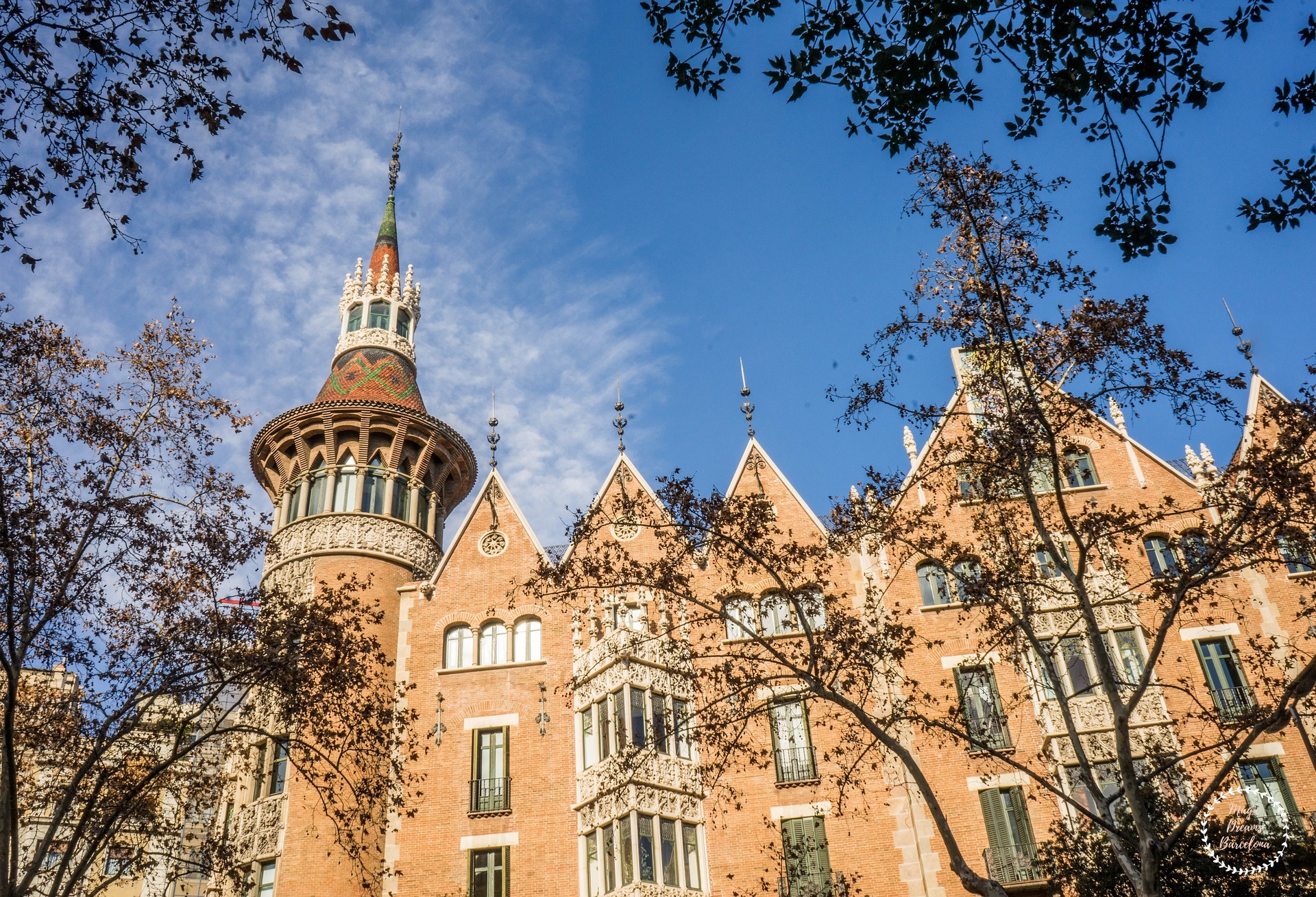
The complex consists of three independent buildings designed in a unified architectural style. Their arrangement adapts to the unusual triangular geometry of the block, at the junction of Avinguda Diagonal and Rosselló and Bruc streets.
The construction combines four main floors with a highly complex roof structure, where the towers, domes and various decorative elements reinforce its castle-like appearance.
The verticality of its architectural features, sloping roofs and conical coverings create a monumental composition that stands out among the surrounding residential buildings.
The Façade: Brick, Wrought Iron and Sculpture
An extraordinary dialogue between materials and decorative arts
The façade of Casa de les Punxes is one of its most remarkable artistic features.
The exposed brickwork adds texture, colour and solidity to the building, while the wrought-iron balconies introduce delicate ornamentation that contrasts with the robustness of its architectural volumes.
The ironwork was created by Manuel Ballarín, one of Puig i Cadafalch’s regular collaborators.
The building also features Neo-Gothic-inspired sculptural reliefs, in which Alfons Juyol took part, as well as colourful stained-glass windows created by Eduard Amigó.
The ceramic decoration adds another artistic dimension to the façades. Its motifs include symbolic and cultural references to Catalonia, integrated into a composition in which every element contributes to the building’s identity.
One of the most curious details can be found in the panel dedicated to Sant Jordi (Saint George), where a face representing the architect Josep Puig i Cadafalch himself can be recognised.
This small detail demonstrates the care taken in designing the ornamental elements and the importance given to craftsmanship throughout the project.
The Interior of Casa de les Punxes
Medieval, Gothic and Modernist decoration
Inside, Casa de les Punxes preserves an architectural concept in which decoration plays a fundamental role.
Medieval, Gothic and Modernist influences can be seen throughout its materials, shapes and ornamental features.
The tiled murals, uniquely designed doors, robust columns, sculptures, large windows and delicate colourful stained-glass panels form part of this decorative world.
The combination of stone, brick, wood, ceramics and wrought iron reflects one of the essential characteristics of Modernisme: the desire to bring architecture and applied arts together in a single work.
The building also incorporates innovative technical solutions for its time. These include structural features that helped reduce the reliance on traditional load-bearing walls and allowed for more flexible interior spaces.
This relationship between aesthetics and functionality demonstrates Puig i Cadafalch’s ability to combine historical inspiration with the construction possibilities available in the early 20th century.
The Towers and Rooftops
A fairytale silhouette in the heart of the Eixample
The six pointed towers are the main protagonists of Casa de les Punxes’ exterior appearance.
Their conical roofs, topped with spires, evoke the towers of European castles and create an architectural profile that can be recognised from different points along Avinguda Diagonal.
Each tower contributes to the character of the complex and reinforces the sense of verticality that defines the building.
The rooftops also reveal the complexity of its architectural composition: different volumes, slopes and decorative details come together to create a structure that seems to have emerged from a medieval story.
The relationship between the towers, balconies and brick façades makes the building one of the most distinctive examples of Catalan Modernisme.
Casa de les Punxes and the Legend of Sant Jordi
A symbol of Catalan culture incorporated into architecture
The figure of Sant Jordi (Saint George) occupies a prominent place in Catalan cultural identity and is also present in the decoration of Casa de les Punxes.
The ceramic panel dedicated to Sant Jordi is one of the façade’s most recognisable details, establishing a connection between Modernist architecture and Catalonia’s popular traditions.
This choice was no coincidence. Catalan Modernisme revived numerous elements from history, literature, mythology and medieval culture, incorporating them into buildings that sought to express a distinctive cultural identity.
At Casa de les Punxes, this inspiration can be seen both in its medieval castle-like appearance and in the decorative motifs adorning its façades.
The presence of Sant Jordi adds a symbolic dimension to a building that brings together historical references, tradition and modernity.
Casa de les Punxes and Barcelona’s Heritage
A nationally recognised historic monument
The architectural and cultural importance of Casa de les Punxes was officially recognised in 1975, when it was declared a National Historic-Artistic Monument of National Interest.
It is currently protected as a Cultural Asset of National Interest, a designation that recognises its exceptional heritage value.
This protection reflects the uniqueness of its architecture, the quality of its decorative elements and its importance in the history of Catalan Modernisme.
The building also represents a fundamental period in the urban transformation of the Eixample district, when Barcelona’s bourgeoisie promoted the construction of residences combining social prestige, architectural innovation and decorative richness.
Casa de les Punxes forms part of a collection of Modernist buildings that have made Barcelona one of the world’s leading destinations for early 20th-century architecture.
Casa de les Punxes Today
A private building that remains part of Barcelona’s cultural life
Throughout its history, Casa de les Punxes has undergone various changes of use and transformation while retaining its emblematic character within the city’s architectural heritage.
Between 2016 and 2020, it housed a museum space open to the public, dedicated to sharing the history of the building and the work of its architect, Josep Puig i Cadafalch.
However, since 2021, the building has no longer offered general tourist visits to its interior. It has become a private property, with spaces intended for offices and professional activities.
It is also used to host different types of private and corporate events, ranging from gala dinners and company cocktails to professional gatherings and team-building activities.
It is important to bear this in mind before planning a visit: although its exterior can be freely admired from the street, access to the interior is not available as part of a standard tourist visit. Access to certain spaces depends on the private events and services being organised.
Despite this, Casa de les Punxes remains an essential stop for anyone wishing to discover Barcelona’s Modernist architecture.
Curiosities You May Not Know
The little details that make Casa de les Punxes extraordinary
- Three houses in one complex. The building was designed for the three daughters of Bartomeu Terradas Brutau: Àngela, Josefa and Rosa.
- Six pointed towers. They are the most distinctive feature of its architecture and the origin of its popular name.
- Medieval inspiration. Its appearance recalls the great European castles, particularly Neuschwanstein Castle in Bavaria.
- An unusual city block. Its design responds to the distinctive geometry of the junction between Avinguda Diagonal and Rosselló and Bruc streets.
- The architect hidden in the façade. A face representing Josep Puig i Cadafalch can be recognised in the ceramic panel dedicated to Sant Jordi.
- A collaborative work of art. Renowned craftsmen and artists took part in its decoration, including Manuel Ballarín, Alfons Juyol and Eduard Amigó.
- A museum in its past. Between 2016 and 2020, the building opened as a space dedicated to its architecture and history.
- Heritage protection. It was declared a National Historic-Artistic Monument of National Interest in 1975.
Practical Information for Visitors
Everything you need to know before planning your visit
Location
Avinguda Diagonal, 420, Barcelona.
Casa de les Punxes is located in the Dreta de l’Eixample district, at the junction of Avinguda Diagonal and Rosselló and Bruc streets.
Visits and Access
Casa de les Punxes is currently privately owned and does not offer general tourist visits to its interior.
The building can be admired from the outside and forms part of Barcelona’s Modernist architectural routes.
Its interior spaces are used for offices and private and corporate events, subject to availability and access conditions.
How to Get There
- Metro: L5 (Blue Line), Verdaguer station.
- Metro: L3 (Green Line), Diagonal station.
- Bus: Several bus routes operate along Avinguda Diagonal and the surrounding streets.
- On foot: It can easily be combined with a walk along Passeig de Gràcia, taking in Casa Milà, Casa Batlló and other Modernist buildings in the Eixample district.
Things to Keep in Mind
- Take time to admire the six towers and the architectural details of the façades.
- Look for the ceramic panel dedicated to Sant Jordi and discover the architect’s portrait.
- Observe the wrought-iron balconies, stained-glass windows and sculptural reliefs.
- Combine the exterior visit with other buildings along Barcelona’s Modernist Route.
- Check the official information before your visit if you wish to access the interior through a private event or activity.
Tickets and Admission Prices
The previous prices of €12.50 for a self-guided visit and €20 for a guided visit should not be considered current admission fees. As there is currently no general tourist visit available, there is no standard entrance ticket.
For information about private access or events, it is advisable to consult the building’s official information.
A Building Worth Discovering Slowly
Architecture is observed, history is understood and beauty is felt
Admiring Casa de les Punxes means discovering one of the most fascinating interpretations of medieval architecture within Catalan Modernisme.
It means pausing before its six towers, observing the details of its wrought-iron work, discovering its sculptural reliefs and appreciating how brick, ceramics and stained glass come together in an extraordinary composition.
It also means imagining Barcelona at the beginning of the 20th century: a city undergoing profound transformation, where architects, artists and craftsmen worked together to create buildings that reflected the cultural and social aspirations of their time.
Its medieval castle-like appearance, family history and rich decorative details make Casa de les Punxes a building that deserves to be admired carefully.
Although general tourist visits to its interior are currently unavailable, its façade continues to offer an exceptional architectural experience and an opportunity to discover an essential part of Barcelona’s Modernist heritage.
Would You Like to Discover Casa de les Punxes and Barcelona’s Modernisme with Us?
A tailor-made cultural experience with Magic Dreams Barcelona
At Magic Dreams Barcelona, we transform the discovery of the city’s most emblematic buildings into personalised experiences, designed to explore history, art, architecture and culture from a cultural, sensory and deeply human perspective.
Our tours offer the opportunity to discover Catalan Modernisme, its great architects and the details that make each building unique.
We organise private experiences and tailor-made routes that can combine Casa de les Punxes —through an exterior visit— with other emblematic sites such as Casa Milà, Casa Batlló, Palau de la Música Catalana and the Sagrada Família.
We also design special proposals for those who wish to go beyond a conventional sightseeing tour:
- Expert guides in history, art and architecture, with explanations tailored to each visitor.
- Private and personalised tours, designed around individual cultural interests, available time and preferred pace.
- Sensory experiences, incorporating music, literature and carefully selected fragrances into the itinerary whenever the location allows.
- Signature gastronomy and exclusive picnics, in suitable locations selected to complement the experience.
- Creative workshops, including mosaic art, trencadís and activities related to Catalan traditions.
- Getaways to the Costa Brava and the Catalan Pyrenees, combining landscapes, heritage and carefully selected gastronomic experiences.
- Personalised services throughout your stay, from romantic experiences to cultural activities and gastronomic tours.
We take care of the details to ensure that every day unfolds with comfort, coherence and personalised attention. Each experience is designed around our clients’ preferences and the availability of the relevant venues and services.
Our aim is to transform heritage from a succession of dates and monuments into a memorable experience, where historical knowledge meets the excitement of discovery.
Casa de les Punxes is much more than a Modernist building: it is a medieval-inspired castle in the heart of Barcelona, a work by Josep Puig i Cadafalch where history, art, tradition and architecture come together.
With Magic Dreams Barcelona, every journey becomes a unique experience.
Copyright © 2016-2026 Magic Dreams Barcelona.