Tulips: History, Varieties, Meaning and How to Grow Them in Barcelona.
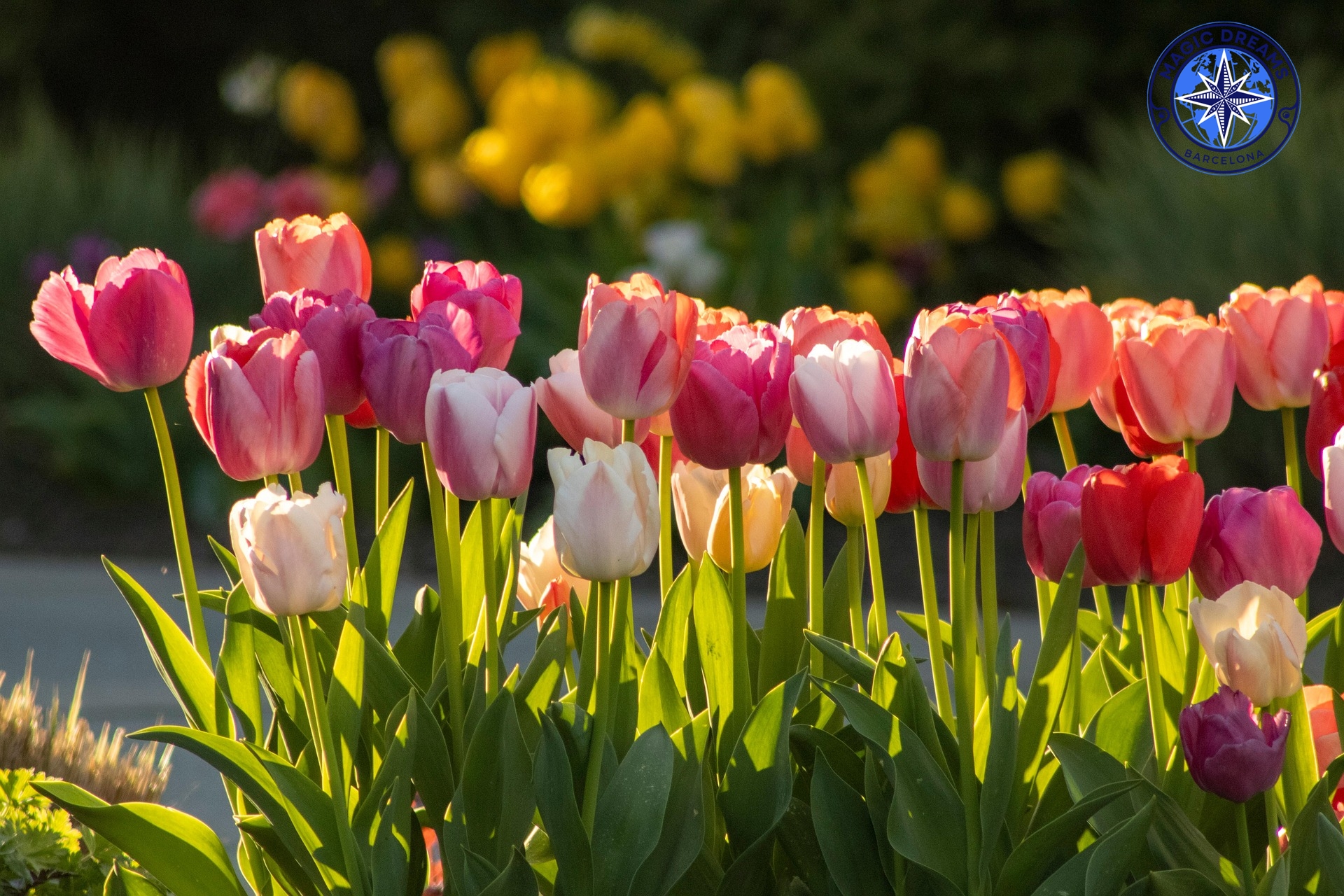
Tulips are one of those flowers that can transform a garden with very little effort. Their elegant shape, extraordinary range of colours and spectacular spring flowering have made them one of the most popular bulbs in the world.
Although they are often associated with the Netherlands, tulips actually originated much farther east, in regions of Central Asia, the Caucasus and Anatolia. From there, they travelled through the Ottoman Empire before reaching Europe, where they became a true horticultural obsession.
Growing tulips in Barcelona is possible, although the Mediterranean climate presents one particular challenge: many tulip varieties need a period of winter cold in order to flower properly. Choosing the right bulbs, planting them at the right time and ensuring good drainage are therefore essential.

Where do tulips come from?
Tulips belong to the genus Tulipa, within the Liliaceae family. Their natural distribution extends across areas of Central Asia, the Caucasus, Iran and Anatolia.
For centuries, these plants were cultivated and appreciated in the Ottoman world, where they became symbols of beauty, refinement and prestige.
The tulip that we know today is the result of centuries of cultivation, selection and hybridisation. Modern horticulture has produced thousands of varieties with different colours, shapes, flowering periods and heights.
Tulips in the Ottoman Empire
The tulip became particularly important during the Ottoman period. It was cultivated extensively in gardens and became an important element of artistic and decorative culture.
The flower was represented in textiles, ceramics, manuscripts and other forms of art. Its elegant silhouette made it an ideal decorative motif.
The word tulip is also associated with the Ottoman Turkish word lale, which became strongly linked to the cultural identity of the period.
The arrival of tulips in Europe
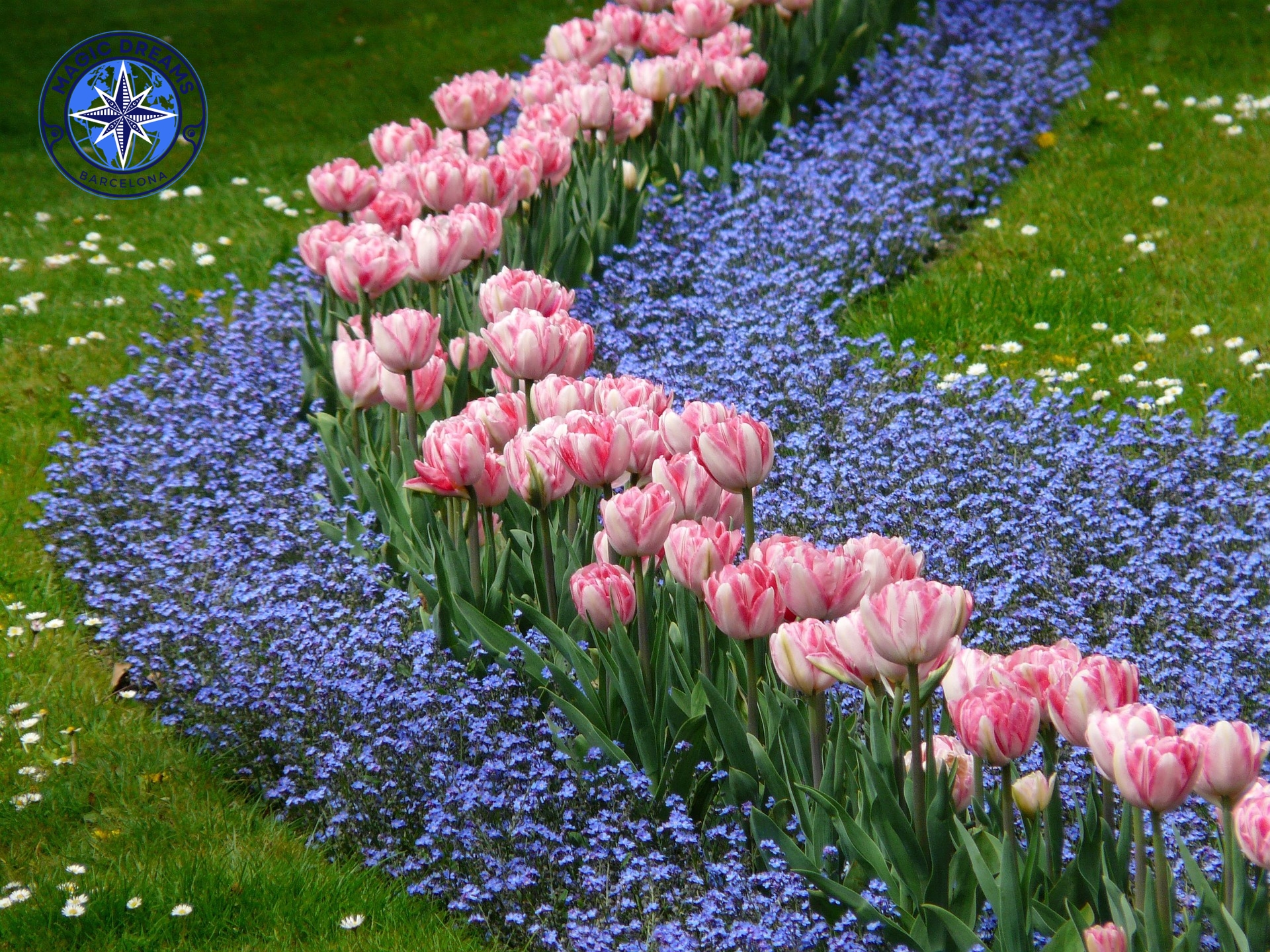
Tulips reached Western Europe during the sixteenth century. One of the most important figures in their early European history was the botanist Carolus Clusius, who played a major role in introducing and cultivating tulips in the Low Countries.
From then on, interest in the flower grew rapidly.
The Netherlands eventually became the centre of tulip cultivation, breeding and international trade. Today, Dutch tulip production is famous throughout the world, but the flower’s origins are much older and much farther east.
Tulip Mania
Few flowers have caused such economic and social excitement as the tulip.
During the seventeenth century, the Netherlands experienced what became known as Tulip Mania, when rare tulip bulbs reached extraordinarily high prices.
Although some later accounts have exaggerated the scale of the phenomenon, there is no doubt that certain tulip bulbs became objects of intense speculation.
This episode helped establish the tulip as much more than a garden flower: it became a symbol of luxury, rarity and social status.
Modern tulips
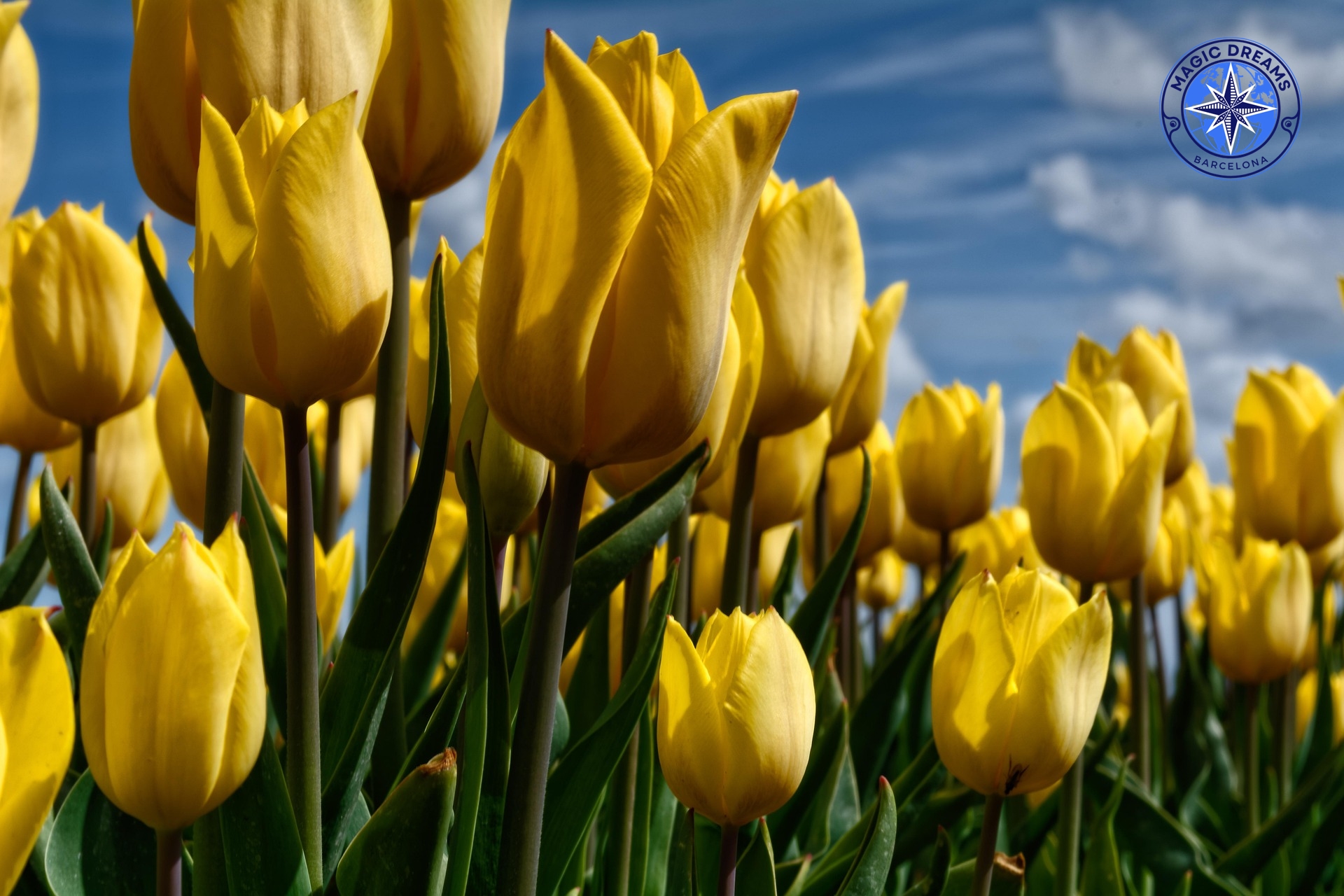
Today there are thousands of cultivated tulip varieties. They differ in colour, size, shape, flowering time and growth habit.
There are simple tulips, double-flowered varieties, fringed forms, parrot tulips and many others.
This diversity makes it possible to create very different spring displays, from elegant monochromatic combinations to vibrant mixtures of contrasting colours.
Can tulips be grown in Barcelona?
Yes, tulips can be grown successfully in Barcelona, especially in pots, containers, raised beds and well-drained garden soil.
However, the Mediterranean climate creates a particular problem: winters can be too mild to provide the cold period that many tulips require.
This does not mean that tulips cannot be grown. It means that the choice of bulbs and cultivation technique becomes particularly important.
For the best results, choose healthy, good-quality bulbs and consider varieties that are known to perform well under relatively mild winter conditions.

The great secret in Barcelona: the cold period
Tulip bulbs need a period of cold to stimulate proper flowering. In colder climates, this happens naturally during winter.
In Barcelona, winter temperatures are often mild, so this requirement may not always be met naturally.
One practical solution is to purchase pre-chilled bulbs, which have already received the necessary cold treatment before planting.
This can significantly improve flowering and is especially useful when growing tulips in containers or on terraces.
Where should tulips be planted?
Tulips prefer a bright, sunny position, particularly during the growing and flowering period.
Choose a location with:
- Plenty of natural light.
- Good air circulation.
- Well-drained soil.
- Protection from excessive heat once temperatures begin to rise.
- No persistent waterlogging.
Good drainage is essential because excess moisture around the bulbs can encourage rot.
If the garden soil is heavy or clay-rich, growing tulips in raised beds or large containers can make cultivation much easier.
How to plant tulip bulbs
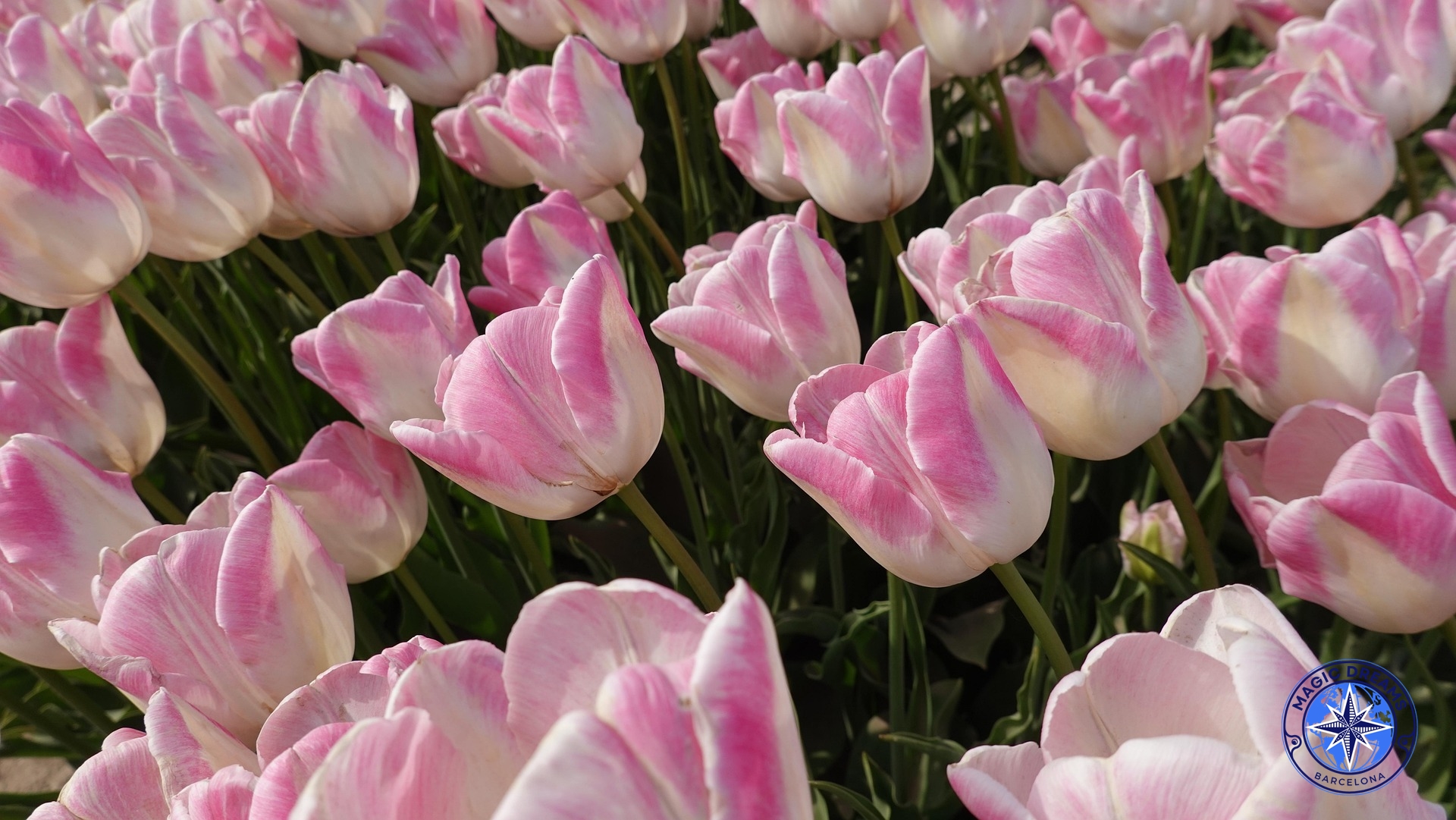
Tulip bulbs are normally planted in autumn.
As a general rule, plant the bulb at a depth of approximately two to three times its height, with the pointed end facing upwards.
The soil should be loose and well drained. Avoid compacted ground and areas where rainwater accumulates.
After planting, water lightly to settle the soil, but avoid keeping it permanently wet.
Once planted, the bulbs develop their roots during autumn and winter before producing leaves and flowers in spring.
Tulip growing calendar in Barcelona
September–October: choose the bulbs
This is a good time to select and purchase tulip bulbs.
Choose bulbs that are firm, healthy and free from mould or soft areas.
If you live in a mild climate, consider varieties that perform well with pre-chilling.
October–November: planting time
Plant the bulbs in well-drained soil or containers.
This is the key moment to establish the plants before winter.
November–December: root development
The bulbs remain underground while their root systems develop.
Avoid excessive watering, especially during rainy periods.
December–January: winter period
The bulbs remain relatively inactive while undergoing their cold period.
In Barcelona, naturally occurring cold may be insufficient for some varieties, which is why pre-chilled bulbs can be particularly useful.
January–February: first shoots
Depending on the variety and weather conditions, the first leaves may begin to appear.
At this stage, provide good light and avoid waterlogging.
February–March: rapid growth
The plants begin to grow more quickly.
Maintain moderate soil moisture and ensure that the plants receive plenty of light.
March–April: flowering
This is the great moment of the tulip.
Depending on the variety and local conditions, flowering can extend through part of the spring.
Removing faded flowers can help keep the planting area tidy and prevents the plant from putting unnecessary energy into seed production.
April–May: after flowering
Once flowering has finished, allow the leaves to remain until they naturally turn yellow.
The leaves are still photosynthesising and helping the bulb replenish its energy reserves.
Do not cut them while they are still green.

Can tulips flower again the following year?
This is one of the most common questions when growing tulips.
Some tulips naturalise and return reliably year after year, while many modern hybrid varieties are less consistent after their first season.
In Barcelona, this can be even more noticeable because the winter may not provide sufficient cold.
For this reason, gardeners often treat certain tulips as seasonal bulbs and plant fresh bulbs each autumn for the strongest flowering display.
Tulip colours and their main types
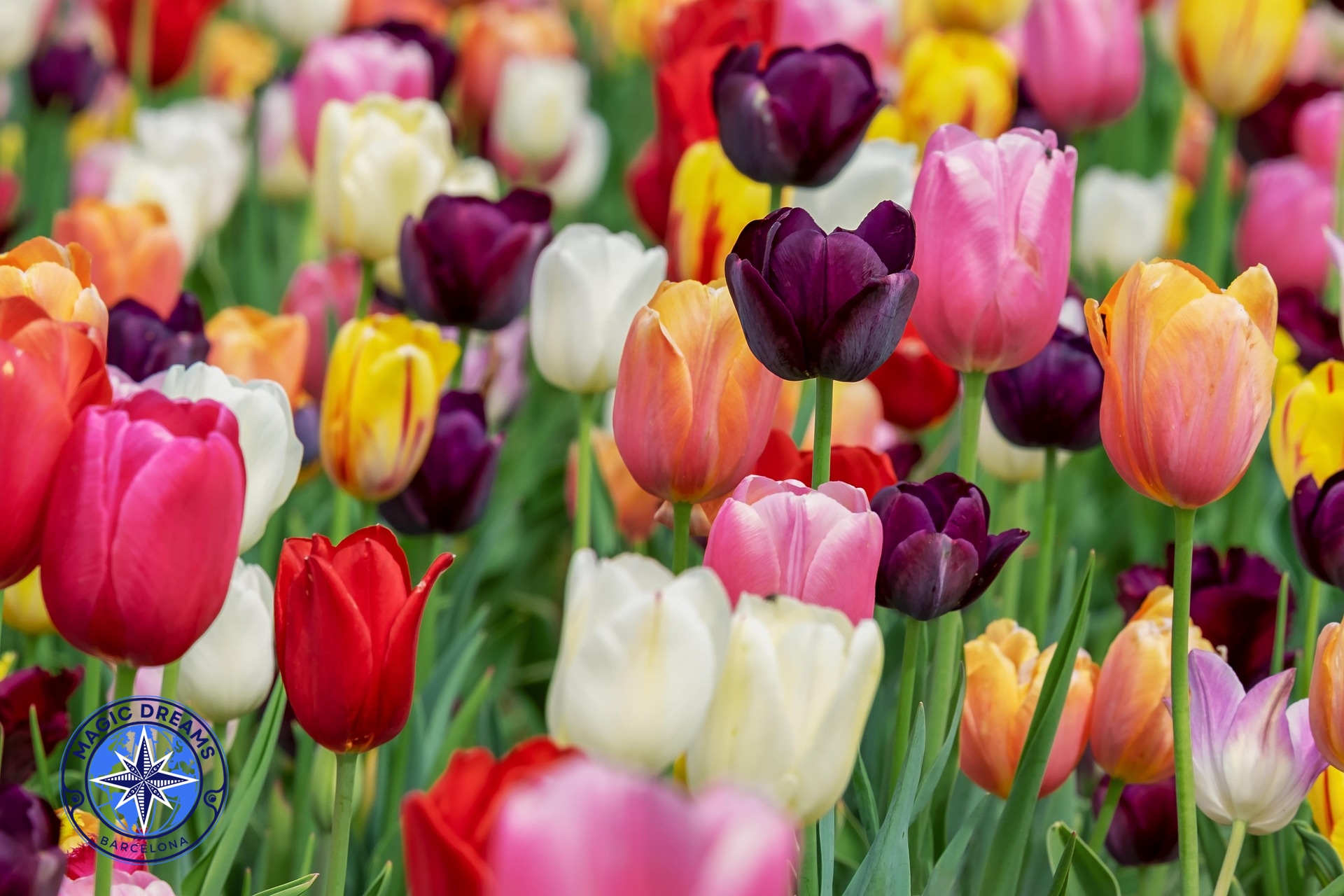
One of the great attractions of tulips is their extraordinary range of colours.
You can find:
- White
- Cream
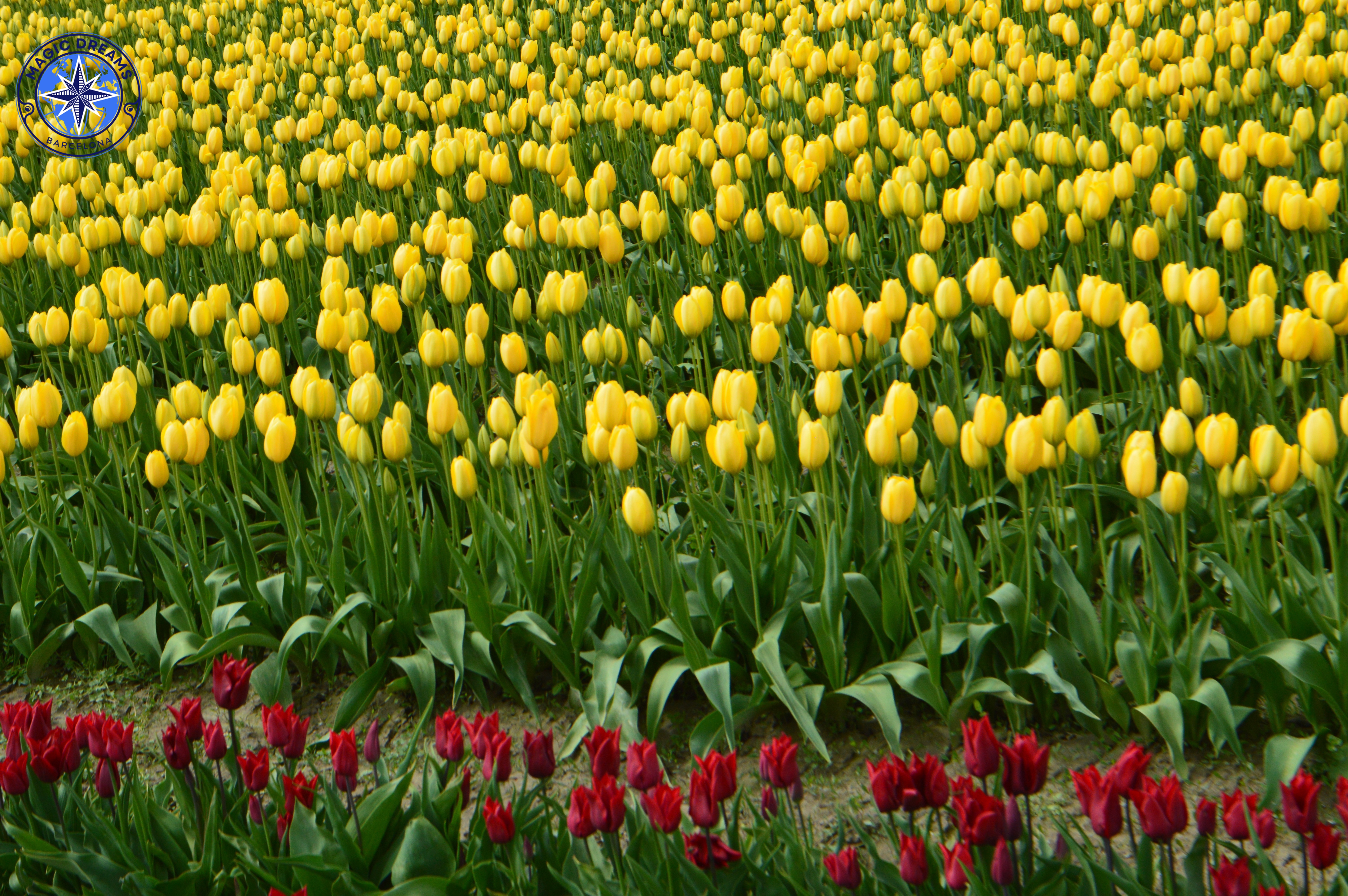
- Yellow
- Orange
- Pink
- Salmon
- Red
- Burgundy
- Purple
- Violet
- Almost black
- Bi-coloured combinations
There are also many different flower forms.
Single early tulips
Elegant flowers that bloom relatively early in spring.
Double early tulips
Their many petals give them a fuller, almost peony-like appearance.
Triumph tulips
One of the most popular groups, combining strong stems with classic tulip-shaped flowers.
Darwin hybrid tulips
Large flowers, tall stems and excellent visual impact make these particularly useful for borders and larger displays.
Parrot tulips
Their petals are irregular, deeply cut and often spectacularly twisted.
Fringed tulips
Their petals have fine fringes along the edges, creating a delicate and sophisticated appearance.
Late tulips
These flower later in spring and can be used to extend the tulip season.
What do tulips symbolise?
As with other flowers, the language of flowers is not scientific or universal. Meanings vary according to culture and tradition.
Nevertheless, certain associations are widely used.
Red tulips
They are traditionally associated with love, passion and deep affection.
Pink tulips
They often represent tenderness, affection and appreciation.
Yellow tulips
They are associated with joy, friendship, optimism and happiness.
Orange tulips
They suggest enthusiasm, energy and vitality.
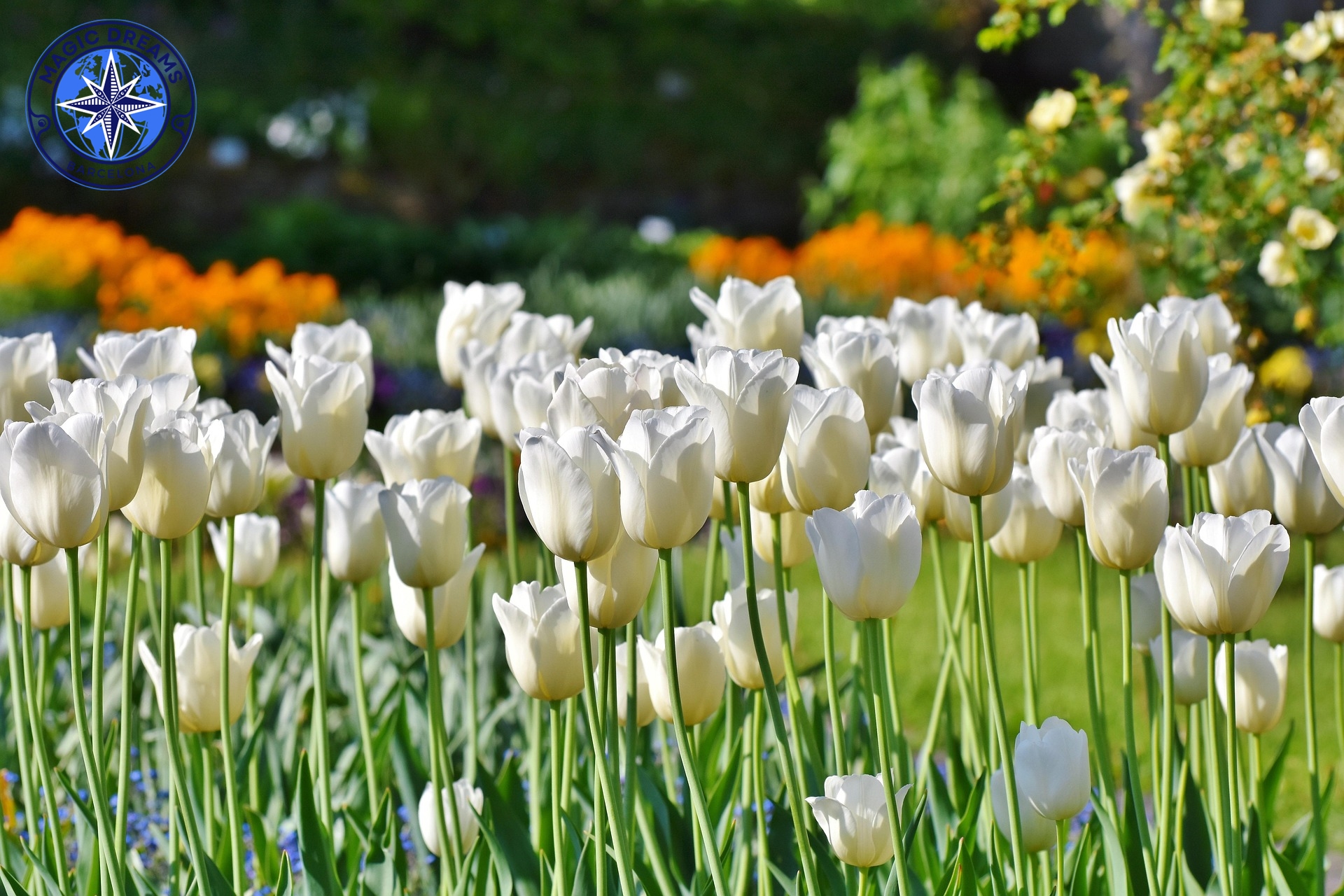
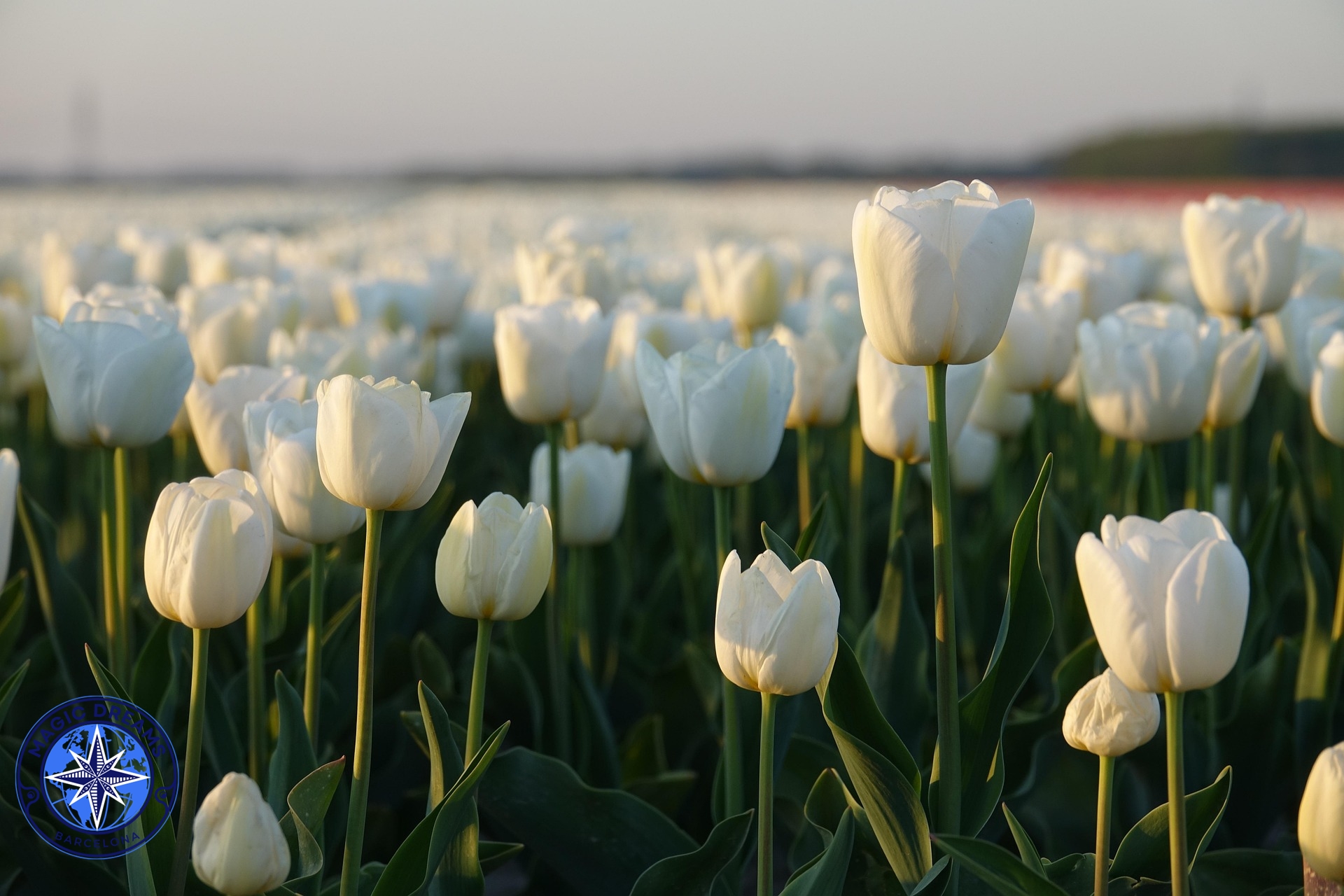
White tulips
They are often linked to purity, elegance, peace and sincerity.
Purple tulips
They traditionally evoke distinction, elegance and mystery.
Bi-coloured tulips
Their unusual combinations can suggest creativity, individuality and originality.
Tulips as cut flowers
Tulips are excellent cut flowers and can bring a fresh spring atmosphere indoors.
For the longest vase life:
- Cut the stems when the flowers are still slightly closed.
- Use a clean vase.
- Replace the water regularly.
- Keep them away from direct sunlight and heat sources.
- Trim the stems if necessary.
Their simple shape makes them particularly effective in minimalist arrangements, while mixed-colour tulips can create a more abundant and informal effect.
Growing tulips in pots and on terraces
Tulips are particularly well suited to containers, making them an excellent choice for balconies, patios and urban terraces.
Choose a deep, stable container with drainage holes.
Use a light, well-drained growing medium and avoid allowing excess water to remain in the pot.
A terrace also makes it easier to manage the cold requirement because containers can be moved or protected when necessary.
For a sophisticated effect, plant several bulbs of the same variety together rather than scattering individual bulbs throughout a large container.
Elegant colour combinations
Tulips can be used to create very different visual effects.
Some combinations that work particularly well include:
White + cream + pale yellow
A soft, luminous and elegant palette.
Pink + salmon + peach
Romantic and delicate.
Red + orange
Warm, energetic and highly visible.
Purple + fuchsia
Intense and contemporary.
White + burgundy
A sophisticated combination with strong contrast.
Tulips in a Mediterranean garden
Although tulips are strongly associated with cooler European gardens, they can also work beautifully within a Mediterranean planting scheme.
The key is to combine their short but spectacular flowering period with plants that provide structure and interest during the rest of the year.
Tulips can be combined with:
- Lavender
- Rosemary
- Ornamental sage
- Mediterranean aromatic plants
- Ornamental grasses
- Low-growing perennial plants
The result is a garden that changes throughout the seasons rather than relying on one flower for year-round interest.
The most common mistakes when growing tulips
Overwatering
Too much water is one of the biggest risks for tulip bulbs.
Poor drainage
If water remains around the bulbs, rot can develop.
Planting without considering the cold requirement
In a mild Mediterranean climate, this can lead to disappointing flowering.
Planting low-quality bulbs
Small, damaged or diseased bulbs are less likely to produce strong flowers.
Cutting the leaves too early
The leaves need time to replenish the bulb after flowering.
Exposing containers to excessive heat
Once spring temperatures rise, pots can heat up quickly, particularly on south-facing terraces.
Expecting every variety to return every year
Many modern tulips are at their best during their first season and may not reliably repeat in mild climates.
Which tulip colour should you give as a gift?
| Colour | Traditional meaning |
|---|---|
| Red | Love and passion |
| Pink | Affection and tenderness |
| Yellow | Joy and friendship |
| Orange | Enthusiasm and vitality |
| White | Purity and elegance |
| Purple | Distinction and mystery |
| Bi-coloured | Creativity and originality |
These meanings belong to the traditional language of flowers and should not be considered universal or scientific.
The tulip in a Mediterranean garden
Tulips demonstrate that a Mediterranean garden does not have to rely exclusively on plants that remain in flower throughout the year.
Their beauty lies partly in their seasonality.
A few carefully selected bulbs, planted at the right time and grown in well-drained soil, can create a spectacular spring display.
In Barcelona, the key points are simple:
Choose healthy bulbs.
Plant them in autumn.
Use well-drained soil or substrate.
Provide plenty of light.
Take the winter cold requirement into account.
With these basic principles, tulips can become one of the most striking highlights of the Mediterranean garden as winter gives way to spring.
Copyright © 2016-2026 Magic Dreams Barcelona.