Blue Tit: Guide and Habitat in Catalonia.

The Blue Tit, scientifically known as Cyanistes caeruleus, is one of the most distinctive small birds found in the forests, parks, orchards, and gardens of Catalonia.
Its combination of blue, yellow, white, and greenish tones makes it one of the most colourful birds that can be observed close to home.
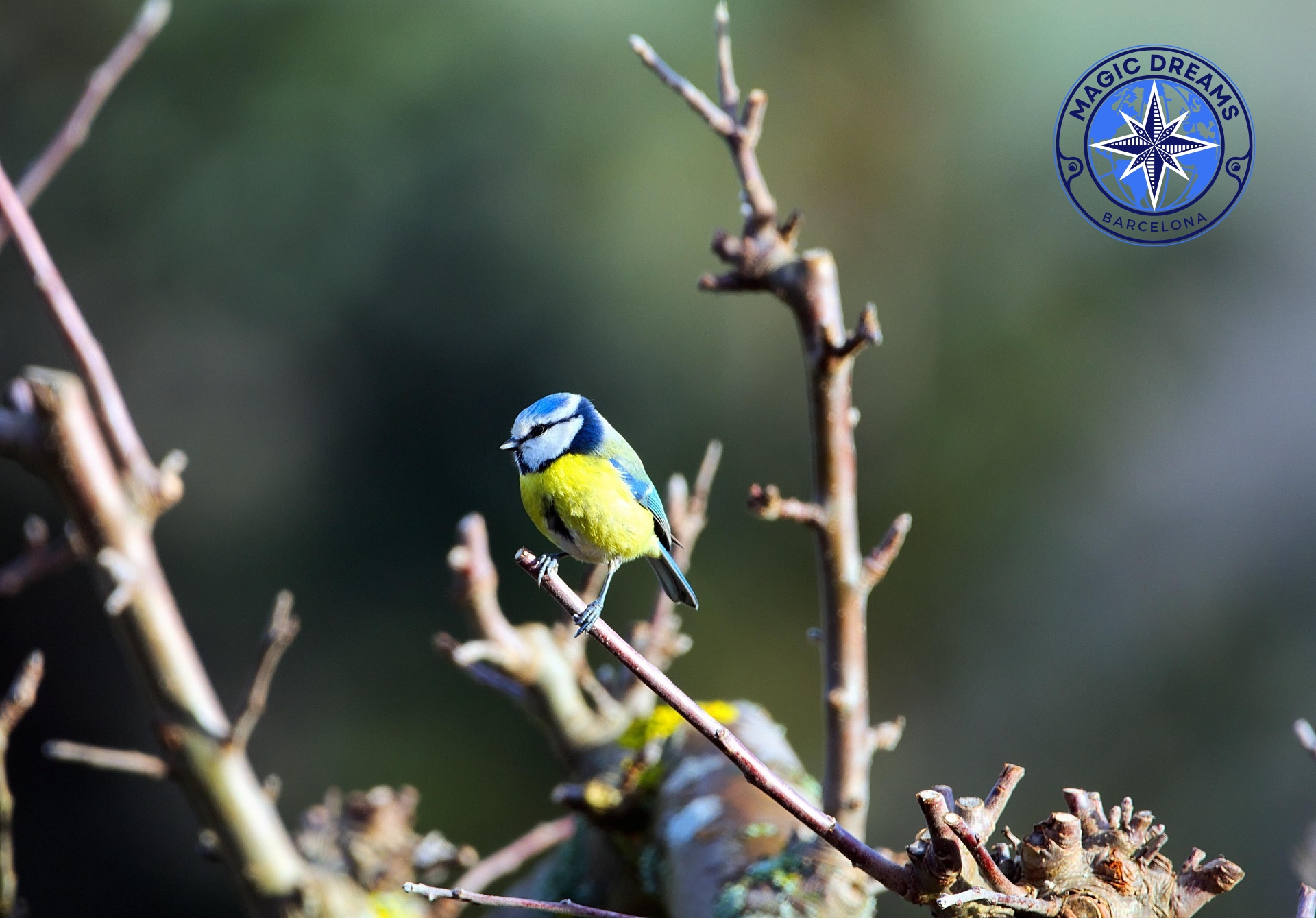
It is small, restless, and highly active. It constantly moves among the branches, inspecting leaves and bark in search of small insects, and it may frequently visit trees and shrubs in a garden.
Despite its small size, it is a bird perfectly adapted to woodland environments and also to human-modified areas, provided that trees, food, and suitable places for shelter and breeding are available.
In Catalonia, it is a regular part of the local birdlife and can be found both in forested areas and in parks, orchards, and gardens. Its distribution also extends throughout much of Spain and across large areas of Europe.
What Does the Blue Tit Look Like?
The Blue Tit is a small, compact member of the tit family.
It measures approximately 11.5 centimetres in length, with a wingspan of around 17.5–20 centimetres.
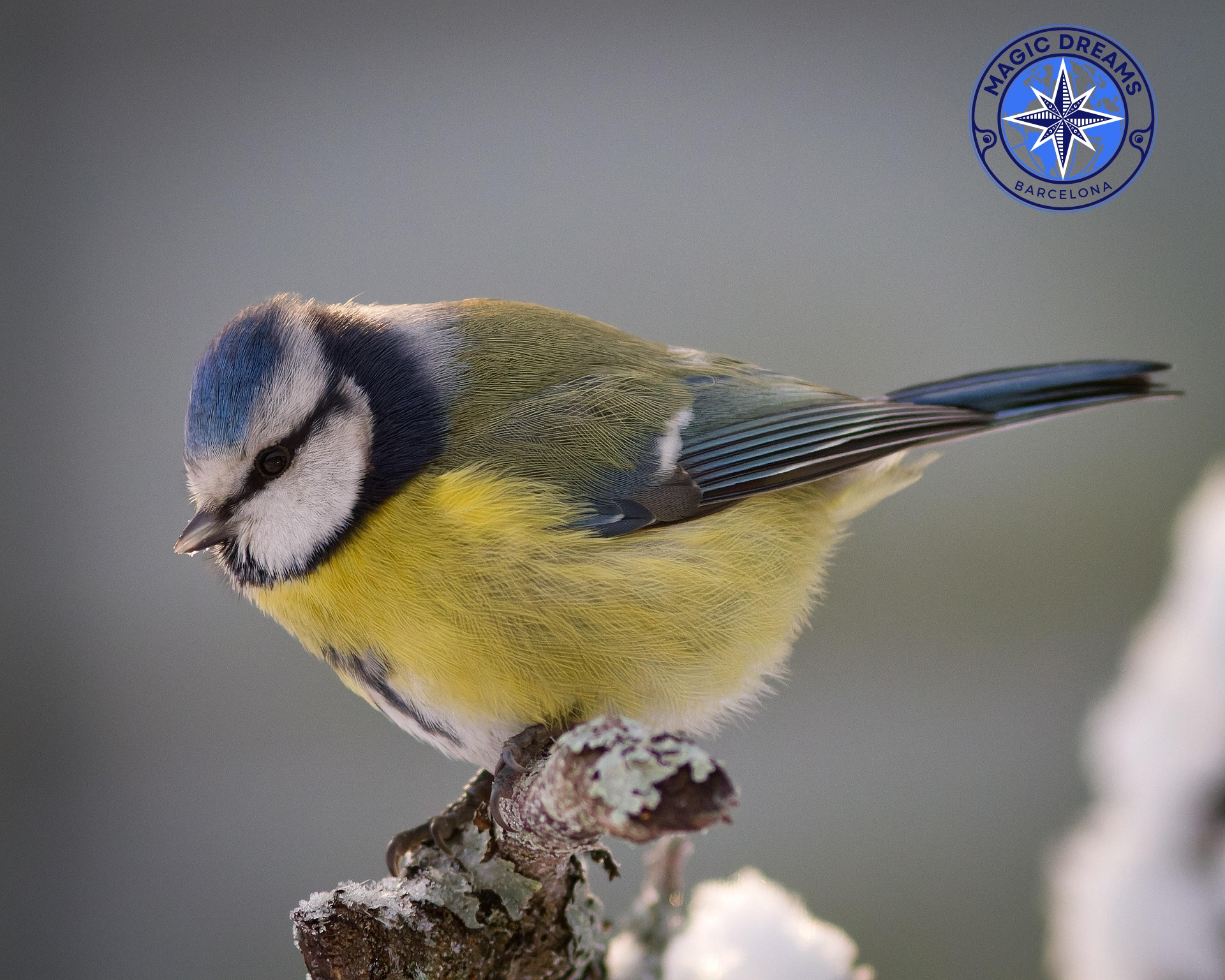
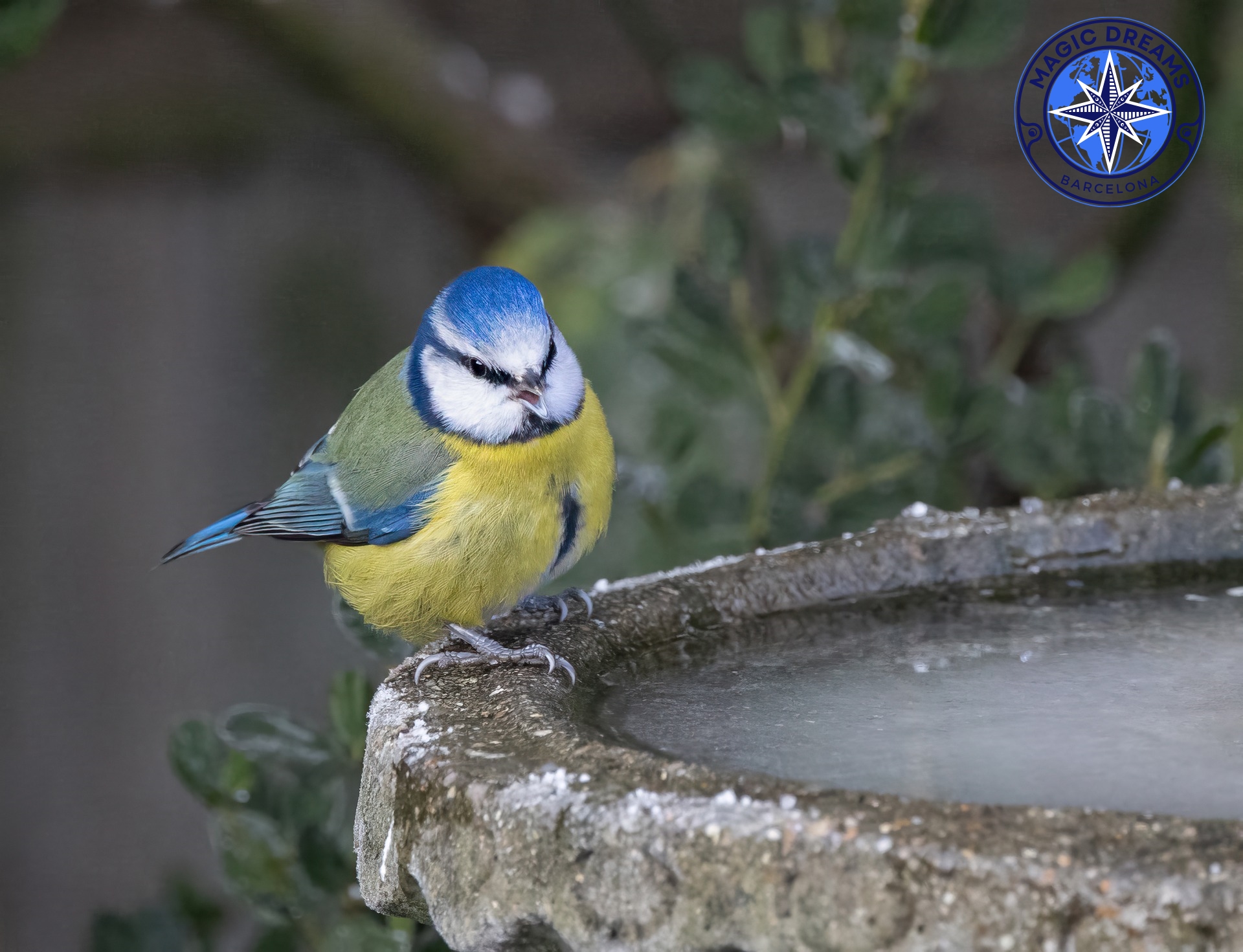
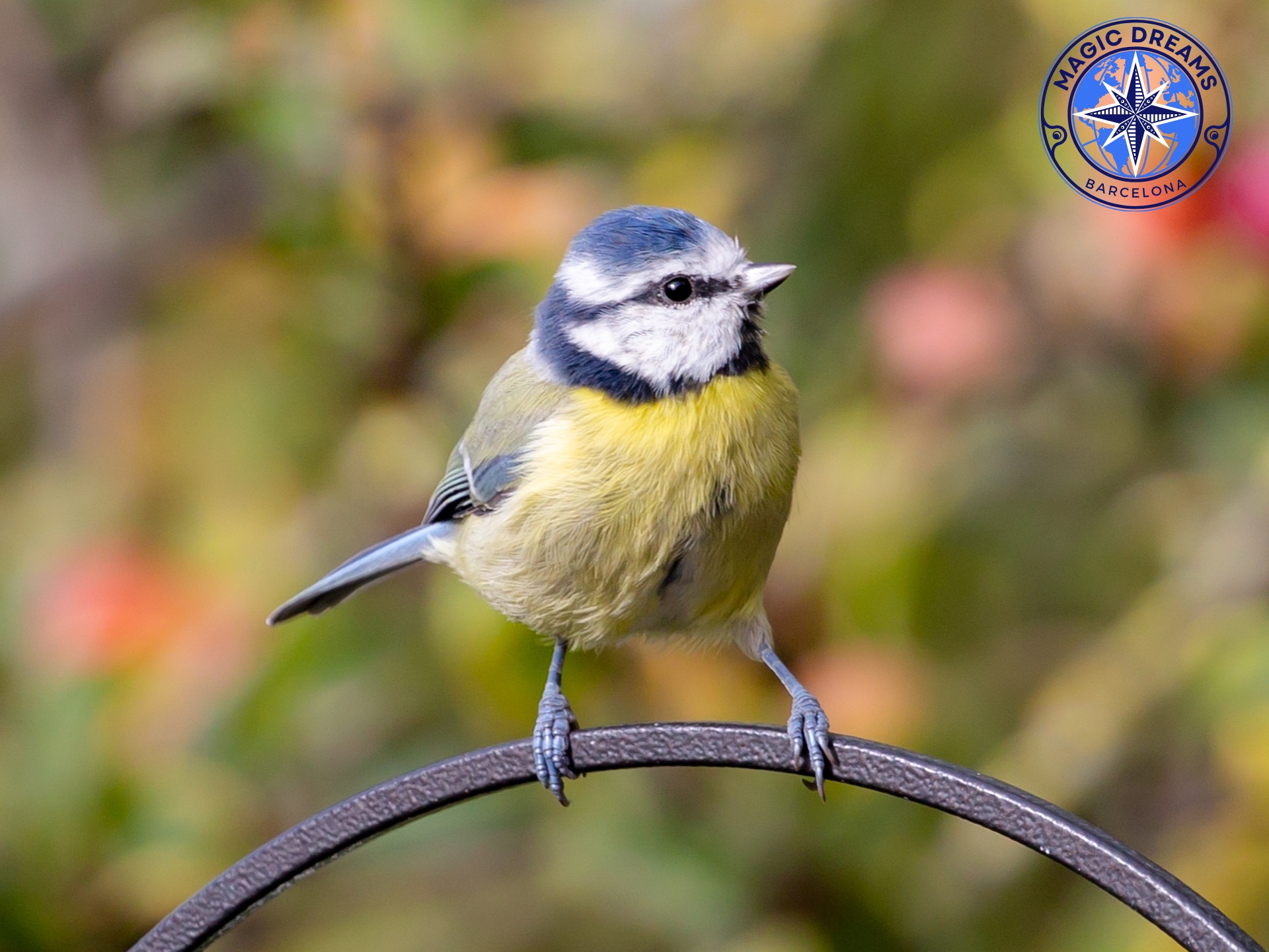
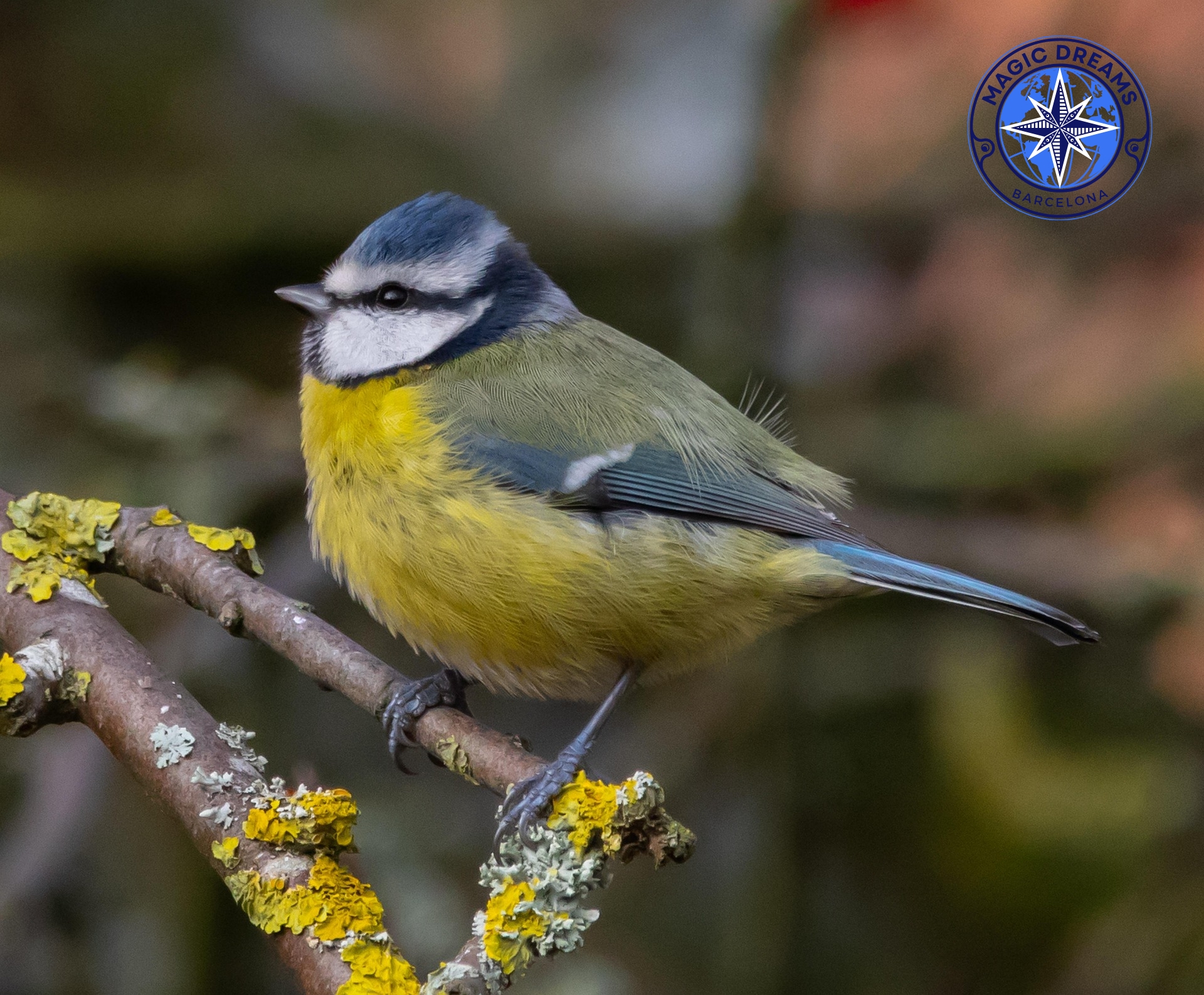
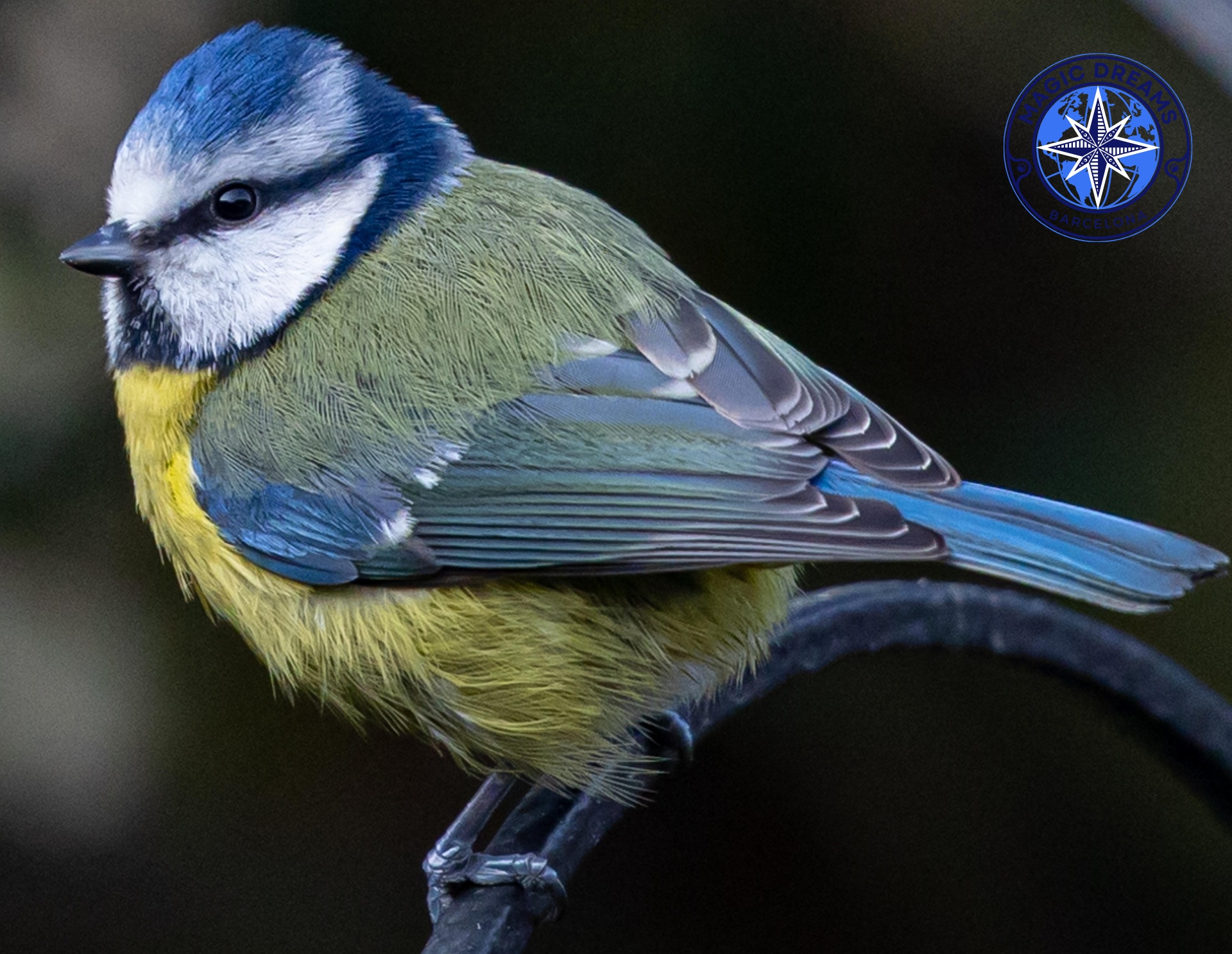
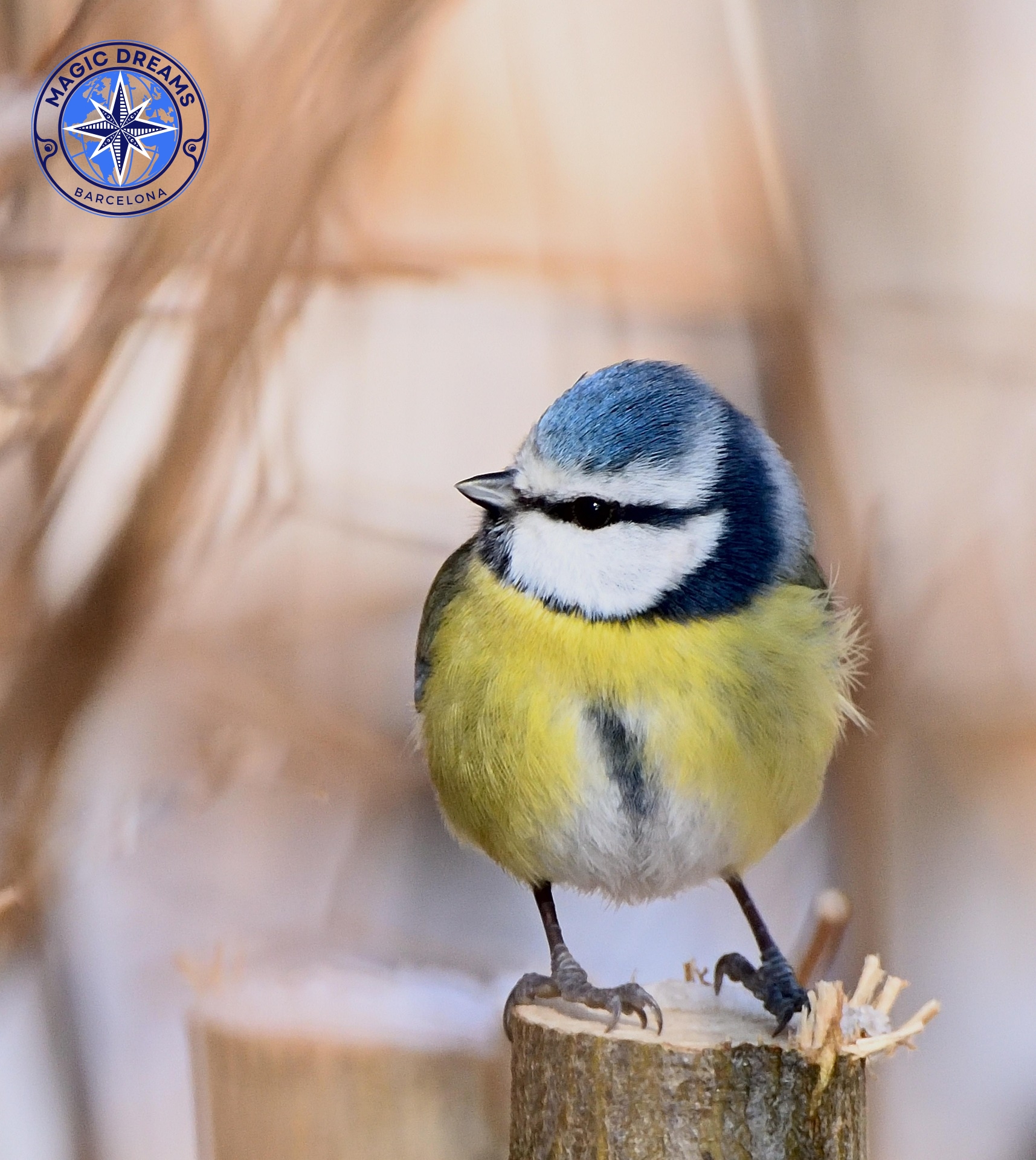
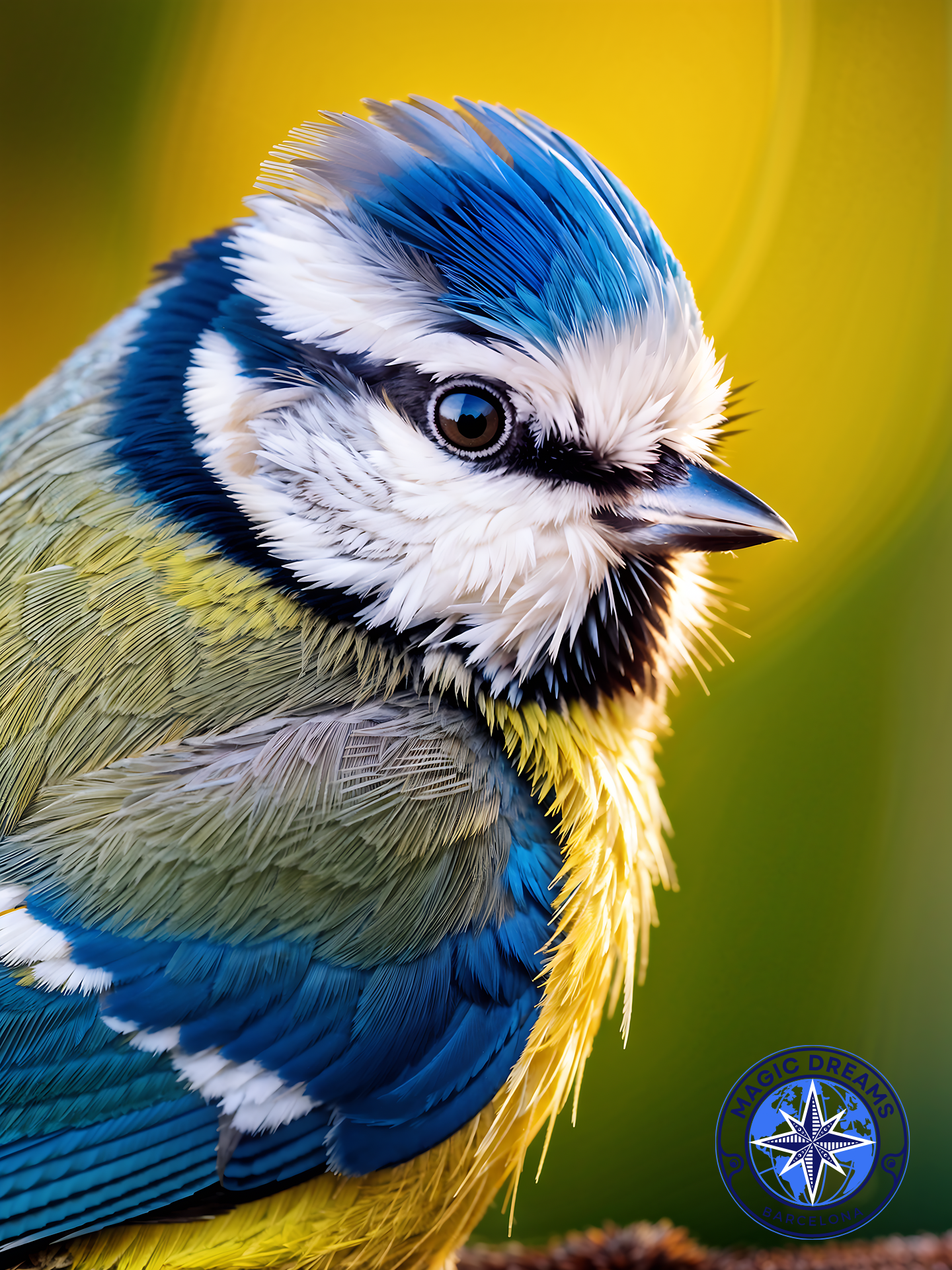
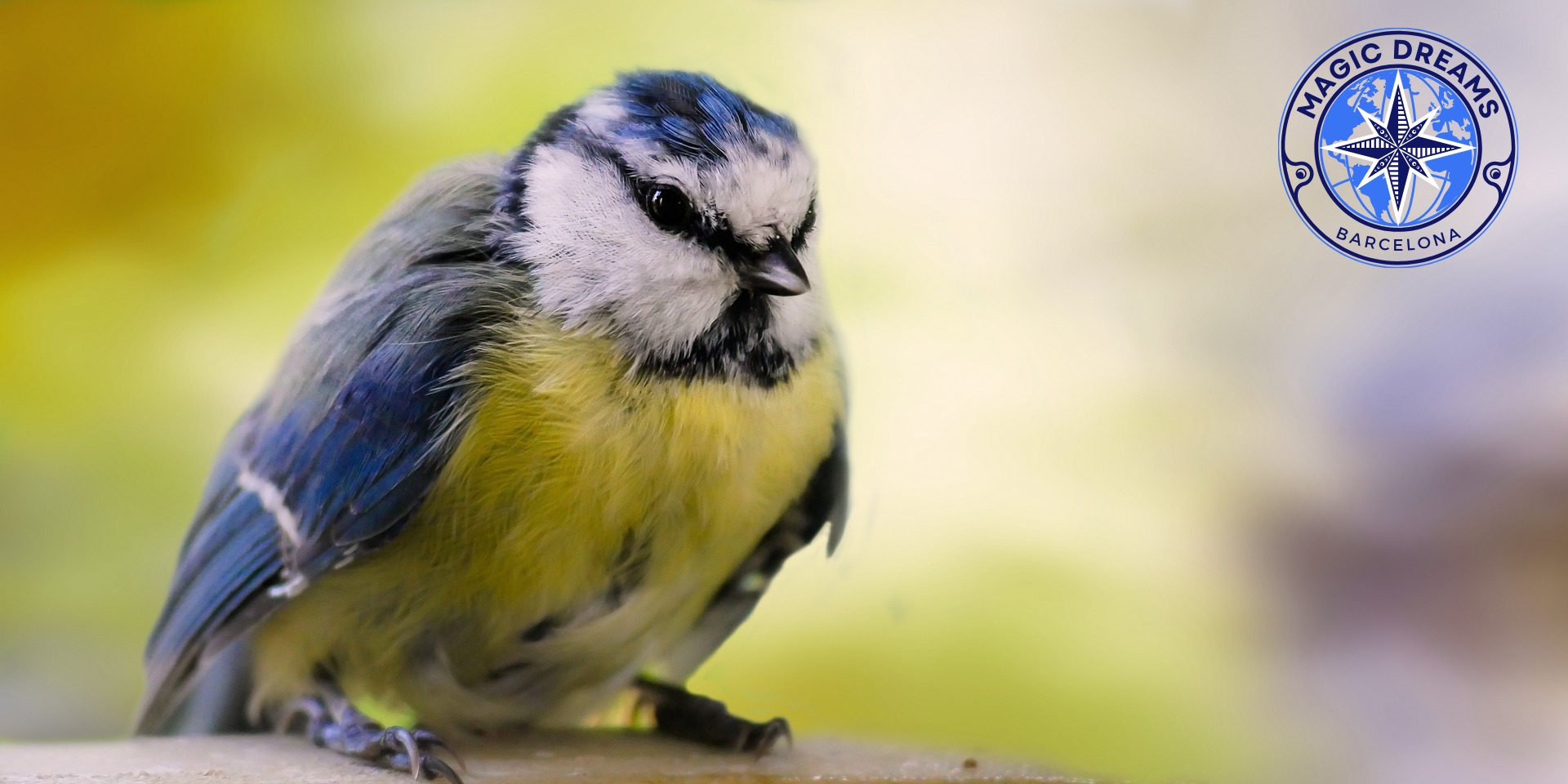
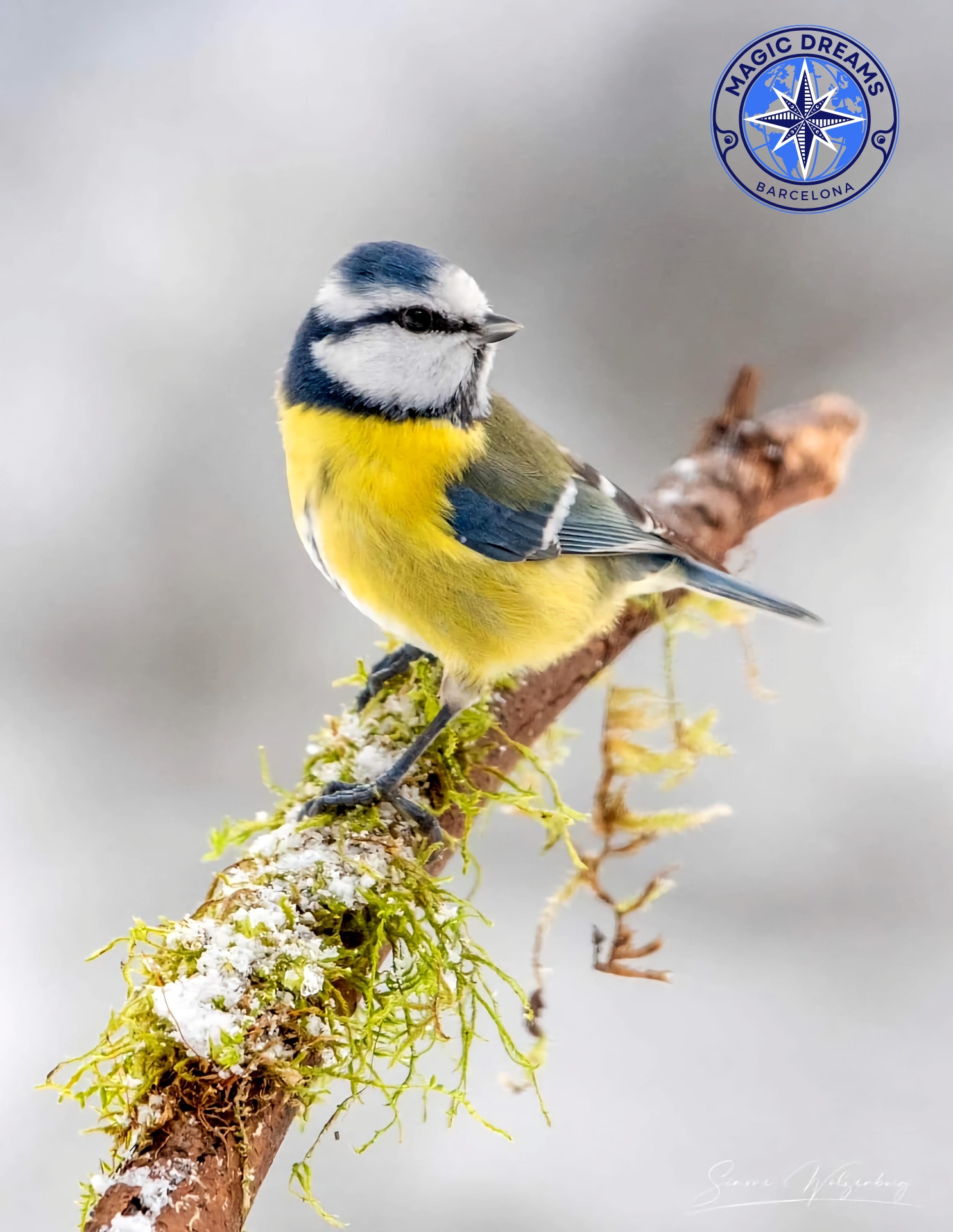
Its most striking feature is its head, where blue tones stand out against a white area on the cheeks.
The upperparts of the body are blue and greenish, while the underparts are mainly yellow.
The wings and tail have a more intense blue colour, which is especially noticeable when the bird moves among the branches.
Its combination of colours makes it possible to distinguish the Blue Tit from other tit species, although it can sometimes be confused with the Great Tit.
The Great Tit is considerably larger and has a very distinctive black head, as well as a black stripe running across its yellow breast.
Young birds have somewhat duller colouring, and their cheeks are less white than those of adults.
Where Does the Blue Tit Live?
The Blue Tit is widely distributed throughout Europe.
Its range extends from the British Isles and much of western and central Europe to regions of eastern Europe and the Ural Mountains.
It is mainly a woodland species, although it does not necessarily require large areas of continuous forest.
It can inhabit:
- deciduous forests;
- holm oak forests;
- cork oak woodlands;
- riverside forests;
- parks;
- orchards;
- gardens;
- open wooded areas;
- agricultural landscapes with trees.
It mainly avoids environments that are completely devoid of trees and other woody vegetation.
In Spain, it occurs in almost all mainland provinces and is also present in the Balearic Islands, although its abundance varies considerably depending on the type of habitat.
Where Can We Find Blue Tits in Catalonia?
Catalonia offers a wide variety of suitable habitats for this species.
Its presence is particularly associated with areas where trees, shrubs, and a good supply of small invertebrates are available.
Pyrenean Forests
The forests of the Pyrenees provide suitable habitat for the Blue Tit, particularly in areas with deciduous trees and diverse woodland formations.
During winter, individuals living at higher elevations may move down to lower altitudes.
Pre-Pyrenees
In the Pre-Pyrenees, Blue Tits can be found in a variety of woodland habitats and in transition zones between forested areas and agricultural land.
Forests containing mature trees are particularly valuable because they provide both food and natural cavities for breeding.
Transversal Ranges
The forested areas of inland Catalonia also provide suitable habitat.
The presence of oaks, holm oaks, and other tree species encourages the presence of insects and small invertebrates, which form an important part of the Blue Tit’s diet.
Coastal Ranges
Wooded areas near the Catalan coast can also support Blue Tits.
In these environments, they may occur in holm oak forests, cork oak woodlands, parks, and well-vegetated gardens.
Barcelona and the Metropolitan Area
Blue Tits can also be observed in urban parks and gardens.
They do not necessarily need to live in a remote forest.
A garden with trees, shrubs, insects, and suitable cavities can provide enough resources for them to remain in the area.
Maresme and the Central Coast
Gardens, orchards, and small woodland areas along the coast can provide suitable habitat for the species.
In these areas, a mixture of Mediterranean vegetation, mature trees, and green spaces can favour their presence.
Does the Blue Tit Migrate?
The Blue Tit is considered mainly a resident species in the Iberian Peninsula.
Iberian individuals generally remain close to their breeding territories, although they may make short-distance movements, particularly during winter.
Birds living in mountainous areas may move down to lower elevations during the colder months.
In addition, during autumn, Iberian populations may be joined by birds originating from central, northern, and northeastern Europe.
For this reason, although many Blue Tits seen in Catalonia remain in the same region throughout the year, local populations may increase during autumn and winter.
During Which Months Can We See Blue Tits?
The Blue Tit can be observed throughout practically the entire year.
Its behaviour changes with the seasons, as does the ease with which we can detect it.
January and February
During winter, it remains active and may move through gardens, parks, and woodland areas.
Individuals from mountainous areas may be found at lower elevations, and birds from other European regions may also join the local population.
March and April
Breeding activity begins to become increasingly important.
Individuals begin occupying and defending suitable nesting sites.
May and June
This is one of the most interesting periods for observing the species.
Adults search for large quantities of small invertebrates to feed their chicks.
July and August
After breeding, young birds begin moving around the surrounding area and family groups may be observed.
September and October
Autumn movements begin.
The Iberian Peninsula may receive individuals arriving from other European regions.
November and December
The species remains present in forests, parks, orchards, and gardens.
Areas with trees and fruit can become particularly interesting places during this period.
When Does the Blue Tit Breed?
Breeding generally begins during spring.
The breeding period can vary depending on location, altitude, and environmental conditions.
In many populations, breeding begins between March and April and may continue throughout spring.
The species usually produces one brood, although some populations may produce two.
The availability of suitable cavities is particularly important for breeding.
What Is the Blue Tit’s Courtship Like?
Song and different types of calls play an important role during the breeding season.
The Blue Tit is a highly active bird and produces a variety of sounds to communicate with other individuals.
Its song is high-pitched and may contain rapid sequences of notes.
During spring, it is particularly easy to hear in wooded areas.
The song not only contributes to communication between individuals but is also associated with the occupation and defence of territory.
How Many Chicks Does a Blue Tit Have?
The Blue Tit can produce relatively large broods.
A clutch usually contains between 6 and 12 eggs, although the number can vary.
The eggs are whitish with small reddish markings.
Incubation lasts approximately 12–16 days and is carried out mainly by the female.
After hatching, both parents take part in feeding the chicks.
The young leave the nest at approximately three weeks of age, although they continue to require parental care for some time afterwards.
Where Does the Blue Tit Build Its Nest?
This is one of the most interesting characteristics of the Blue Tit.
Unlike the European Robin, the Blue Tit is a true specialist in using cavities.
It may build its nest in:
- tree holes;
- old trunks;
- natural cavities;
- holes in walls;
- nest boxes;
- suitable artificial cavities.
The female builds the nest using materials such as moss, grass, dry leaves, hair, and feathers.
The inside is lined with softer materials to protect the eggs and, later, the chicks.
The availability of suitable cavities can become a limiting factor when old trees disappear or natural cavities are removed.
What Type of Nest Box Does a Blue Tit Need?
In this case, a closed nest box with a small entrance hole is appropriate.
It is important to use a model designed for small tits.
The entrance hole should be suitable for the species and should help prevent larger birds from easily occupying the box.
The nest box should provide:
- protection from rain;
- shade or partial shade;
- a suitable entrance;
- a safe interior;
- freedom from toxic materials;
- protection from predators.
Nest boxes can be very useful when there are few trees with natural cavities. However, they must be installed and maintained correctly to avoid increasing the risk of predation or parasite accumulation.
Where Should a Blue Tit Nest Box Be Placed?
The location is just as important as the nest box itself.
It can be installed on a tree or stable structure in a quiet and sheltered place.
It is advisable to avoid:
- areas with constant traffic;
- direct exposure to sunlight for many hours;
- places where water can enter;
- areas accessible to cats;
- locations subject to frequent disturbance.
The entrance should remain clear, and the box should not be completely hidden by vegetation that prevents adults from accessing it.
Once installed, it is advisable not to open the box during the breeding season.
Which Plants Can We Grow to Attract Blue Tits?
If you want to attract Blue Tits to your garden, there is no need to rely solely on a bird feeder.
A much more effective strategy is to create a space that naturally provides food and shelter.
The aim is to encourage:
- insects;
- spiders;
- larvae;
- fruit;
- seeds;
- trees;
- shrubs;
- sheltered areas.
Holm Oak
The holm oak is particularly interesting in Mediterranean gardens and is part of countless woodland habitats in Catalonia.
Its leaves and branches support small organisms that can form part of the garden’s food web.
Cork Oak
Where conditions are suitable, the cork oak provides structure, shade, and an environment favourable to invertebrates.
Oaks
Oak trees can be particularly valuable for biodiversity.
A mature tree provides food and shelter and, over time, can develop cavities that are used by different species.
Native Shrubs
Fruit-bearing native shrubs can supplement the diet of many birds during autumn and winter.
Plants That Attract Insects
Flowering plants that encourage insect populations can indirectly benefit the Blue Tit.
During the breeding season, having a healthy population of insects is particularly important.
A Garden with Insects Is Also a Garden for Blue Tits
The Blue Tit is mainly insectivorous.
Its diet includes a wide variety of invertebrates, including spiders, beetles, flies, butterfly and moth larvae, and other small organisms.
For this reason, a garden that is excessively treated with insecticides can be much less favourable to this species.
We should not consider every insect to be a pest.
A significant proportion of insects form part of the ecosystem that provides food for birds.
Creating a biodiverse garden means accepting some insect activity and maintaining a natural ecological balance.
What Does the Blue Tit Eat?
Its diet is mainly insectivorous, although not exclusively so.
Throughout much of the year it eats:
- spiders;
- beetles;
- flies;
- butterfly and moth larvae;
- other small insects;
- various other invertebrates.
It may also consume buds, seeds, and fleshy fruits.
During autumn and winter, it may make use of plant-based resources when insect availability decreases.
What Can We Feed Blue Tits in Our Garden?
If you decide to provide supplementary food, it should be done in moderation.
Blue Tits may visit certain feeders and take suitable seeds and foods intended for wild birds.
You can offer small quantities of:
- seeds suitable for birds;
- unsalted and unseasoned nuts;
- specialist mixes for small insectivorous and seed-eating birds;
- specialist high-fat food for wild birds.
We should not offer:
- salty foods;
- seasoned foods;
- processed foods;
- table scraps;
- mouldy food;
- sugary products.
The aim should be to supplement natural resources, not replace them.
Can We Feed Blue Tits Bread?
It is better to avoid it.
Bread does not provide an appropriate diet for Blue Tits and should not be used as a regular food source.
It is preferable to provide suitable food for wild birds and, above all, to create a garden that naturally produces insects, seeds, and fruit.
What About Water?
Water is a very important resource, especially during periods of hot weather.
A small birdbath can be beneficial in a Catalan garden during summer.
It should be:
- shallow;
- stable;
- easy to clean;
- refilled frequently;
- located in a quiet place.
It is also important to place it somewhere where birds have a clear view of their surroundings and can detect potential predators.
There is no need to install a large fountain.
A simple, shallow container can be enough.
Feeder and Birdbath Hygiene Is Essential
When we concentrate several birds in the same place, we can also facilitate the transmission of diseases.
For this reason, it is important to:
- clean feeders regularly;
- remove leftover food;
- prevent food from becoming wet;
- replace the water;
- clean the birdbath;
- avoid leaving large quantities of food out.
A bird-friendly garden should also be a clean and hygienic garden.
How Can We Protect Blue Tits from Cats?
This is particularly important.
Blue Tits constantly move between trees and shrubs, so a garden with cats can pose a considerable risk.
Feeders and nest boxes should not be placed close to locations from which a cat could easily jump.
It is also important to ensure that nest boxes cannot be reached from nearby branches, walls, or roofs.
Safety should be an integral part of garden design.
What Can We Grow in a Catalan Garden to Attract Blue Tits?
A Mediterranean garden can become a favourable environment for this species if it combines different types of vegetation.
Trees
Holm oaks, cork oaks, other oak species, and other trees suited to each local area can provide food, shade, and resting places.
Shrubs
Native shrubs provide shelter and may produce fruit at different times of the year.
Flowering Plants
Plants that support insect populations can be particularly valuable during spring.
Diverse Vegetation
A garden with different vegetation layers — trees, shrubs, and low-growing plants — offers more opportunities than an area consisting only of lawn.
Mature Trees
Whenever they are safe, mature trees are particularly valuable.
Over time, they can develop natural cavities that provide nesting sites for different bird species.
The Blue Tit Throughout the Seasons
One of the best ways to observe this species is to follow its changes throughout the year.
Spring
Breeding activity begins.
Adults search for suitable cavities and territorial activity increases.
Summer
Adults take care of feeding their chicks.
The young subsequently begin moving around the surrounding area.
Autumn
Movements among European populations may increase.
Individuals from other regions of central, northern, and northeastern Europe may appear in the Iberian Peninsula.
Winter
Iberian individuals continue to occupy their territories, although some birds from mountainous areas may move to lower elevations.
Parks and gardens with trees can become interesting places for observing them.
Why Do Blue Tits Visit Our Gardens?
The main reason is the availability of resources.
A garden can offer a combination that can be difficult to find in a completely urbanised environment:
- trees;
- insects;
- seeds;
- fruit;
- water;
- shelter;
- cavities.
In addition, gardens and parks can function as small connections between different green areas.
For this reason, even a relatively small space can form part of a network of habitats that are useful for birds.
The Song of the Blue Tit
The Blue Tit has a fairly varied repertoire of sounds.
Its calls are high-pitched and rapid and can be heard among the branches when several individuals move through the same area.
During spring, vocal activity increases, and its song becomes one of the easiest ways to detect its presence when the bird remains hidden among vegetation.
In a garden with several trees, it is common to hear a Blue Tit before actually seeing it.
The Blue Tit in Catalonia
In Catalonia, the Blue Tit is a regular part of the local birdlife.
It can be found in a variety of woodland habitats and also in human-modified environments, provided there is sufficient tree cover.
Its presence is particularly interesting because it demonstrates how certain woodland birds can adapt to parks, orchards, and gardens.
In mountainous areas, it can occupy forests and move to lower elevations during winter.
In Mediterranean areas, it may occur in holm oak forests, cork oak woodlands, parks, orchards, and gardens.
The Blue Tit in the Rest of Spain
Outside Catalonia, the Blue Tit is widely distributed throughout mainland Spain and is also found in the Balearic Islands.
Its presence is closely linked to the existence of trees and decreases across large areas that are completely devoid of woody vegetation.
It can be found from northern woodland areas to Mediterranean holm oak and cork oak forests.
In mountainous regions, it can reach high elevations during the breeding season, while in winter it may move towards lower-altitude habitats.
The Blue Tit in Europe
In Europe, it is a widely distributed species.
It can be found in numerous European countries and occupies a wide variety of forests and wooded habitats.
Populations in northern and central Europe behave differently from Iberian populations, particularly in terms of seasonal movements.
For this reason, the Blue Tit should not be considered to behave in exactly the same way everywhere in Europe.
Its behaviour depends to a large extent on latitude, altitude, climate, and food availability.
What Threats Does the Blue Tit Face?
The Blue Tit is not currently among the bird species in Spain considered to be threatened.
It is classified as Least Concern.
However, this does not mean that its populations face no challenges.
Factors that may affect the species include:
- loss of woodland habitat;
- disappearance of mature trees;
- reduction in natural nesting cavities;
- use of insecticides;
- loss of biodiversity;
- predation at poorly installed nest boxes.
The availability of suitable breeding sites is particularly important for a species that depends on cavities.
Can We Help Blue Tits from Our Garden?
Yes.
And you do not need a large garden.
We can start with small changes.
1. Keep Trees and Shrubs
Whenever they are safe, preserve mature trees and vegetation that provide shelter.
2. Use Plants Suited to the Local Environment
In Catalonia, you can choose Mediterranean species suited to your particular area that provide food or shelter.
3. Reduce the Use of Insecticides
Insects are a fundamental part of the Blue Tit’s diet, particularly during breeding.
4. Install a Suitable Nest Box
Use a model specifically designed for small tits and install it correctly.
5. Provide Water
A small birdbath can be particularly useful during hot periods.
6. Maintain Good Hygiene
Clean feeders and birdbaths regularly.
7. Protect Nesting Areas
Once a nest box has been occupied, avoid disturbing it during the breeding season.
8. Keep Cats Away
Protection from predators should be part of any garden designed to support birds.
Which Nest Box Is Best for a Blue Tit?
Unlike the European Robin, the Blue Tit readily uses enclosed nest boxes.
The box should have an appropriately sized entrance and be made from durable, non-toxic materials.
It should be placed in a quiet location protected from rain and excessive direct sunlight.
It is not advisable to place it too close to other nest boxes occupied by territorial species.
And there is one fundamental rule:
Once installed, the box should not be opened during the breeding season to check for eggs or chicks.
Observation should always be carried out from outside.
A Blue Tit-Friendly Garden Can Also Attract Other Birds
Measures that benefit the Blue Tit can also benefit other species.
A garden with:
- trees;
- shrubs;
- flowers;
- fruit;
- insects;
- water;
- shelter;
- cavities;
can become a small area of biodiversity.
Depending on the part of Catalonia and the type of garden, you may also observe Great Tits, European Robins, Blackbirds, warblers, House Sparrows, wagtails, and other species.
Each species will use a different part of the garden.
The Blue Tit may move among branches and leaves, while other birds search for food on the ground or among shrubs.
The Blue Tit as an Indicator of a Biodiverse Garden
The presence of a Blue Tit does not, by itself, mean that a garden has exceptional biodiversity.
However, seeing one regularly can indicate that some suitable resources are available.
If we see a Blue Tit searching for insects among the leaves, exploring tree branches, or entering a nest box, our garden is providing at least some of the elements it needs.
And that should be the objective.
It is not simply about getting a bird to visit our garden.
It is about creating a space where it can find food, shelter, and suitable places to breed without depending exclusively on artificial feeding.
The Blue Tit: A Small Resident of Catalonia
The Blue Tit is much more than a small blue-and-yellow bird.
It is a woodland, insectivorous, active species that is perfectly adapted to a wide range of environments.
In Catalonia, it can be found in the forests of the Pyrenees and Pre-Pyrenees, in inland woodland areas, along the coastal ranges, and also in parks, orchards, and gardens.
Throughout the rest of Spain, it maintains a broad distribution that is closely related, to varying degrees, to the presence of trees.
Across Europe, it forms part of a large population occupying countless woodland habitats.
We can help this species in simple ways: by preserving trees, maintaining diverse vegetation, encouraging natural insect populations, providing water, and using nest boxes correctly.
We do not need to transform our garden into a large natural area.
Sometimes, preserving an old tree, leaving a corner of the garden in a more natural state, and reducing the use of insecticides can be enough to make a start.
The next time you see a small bird with a blue head, white cheeks, and a yellow breast moving rapidly among the branches, you are probably looking at a Blue Tit.
And if it regularly appears in your garden, perhaps it has found something that is essential to this small bird: trees, food, shelter, and a safe place to live.






Copyright © 2016-2026 Magic Dreams Barcelona.