Vilassar, Land of Roses.
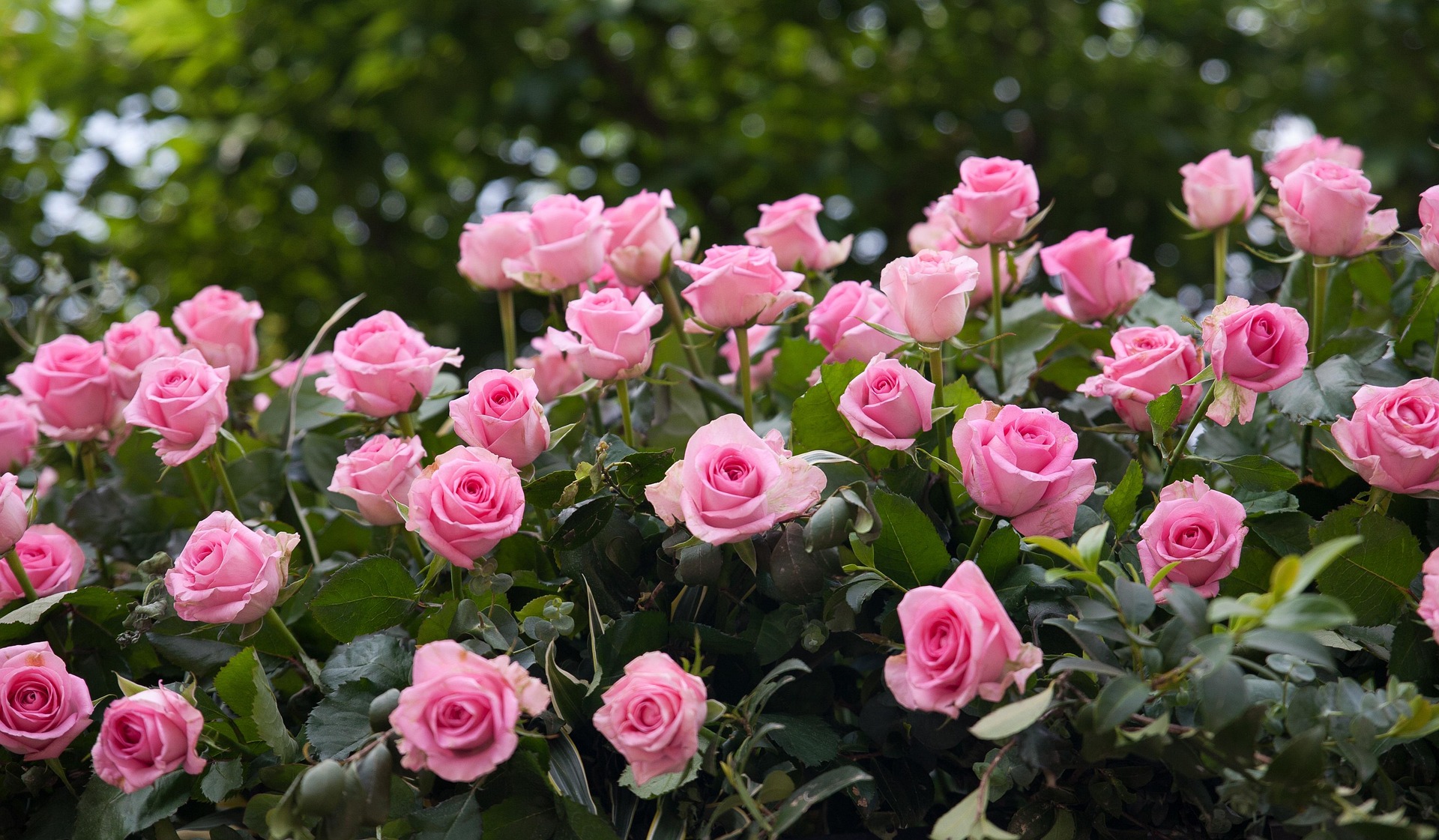
Talking about roses in Catalonia also means talking about the Maresme. For much of the 20th century, the municipalities located between Barcelona and the Maresme coast developed an important tradition of flower growing, eventually turning this region into one of Catalonia’s major areas for cut-flower production.
Within this agricultural landscape, Vilassar de Mar, Vilassar de Dalt, Premià de Mar, Premià de Dalt, Cabrils, Cabrera de Mar, Tiana, Sant Andreu de Llavaneres and Santa Susanna, among other municipalities, stood out in particular.
The historic protagonist of Maresme floriculture was initially the carnation, but gladioli, roses, gerberas and countless ornamental plants were subsequently introduced. The region’s natural conditions — relatively mild temperatures, abundant sunlight, permeable and well-drained soils, and water availability — favoured the development of these crops.
The history of the Maresme rose is also a story of transformation: from agricultural fields and family-run greenhouses to an increasingly professionalised sector and, later, to much smaller-scale local production as a result of international competition.
The Maresme, Land of Flowers
The Maresme’s floricultural tradition predates the great expansion of the 20th century. In Premià de Mar, records point to the beginnings of flower growing around 1832.
However, the major change came during the first decades of the 20th century.
In 1922–1923, Beniamino Farina, of Italian origin and based in Vilassar de Mar, introduced commercial carnation cultivation to the area. The activity subsequently spread to other municipalities across the Maresme and ultimately transformed the agricultural landscape profoundly.
The Museu de Vilassar de Mar itself explains that, following the decline of other crops, local agriculture turned towards market gardening, potatoes and cut flowers, and that during the 1960s floriculture became economically and commercially very important, including for exports.
Flower production gradually diversified and, alongside carnations, roses, gladioli and other ornamental plants appeared. The expansion of greenhouses made it possible to better control temperature, humidity and production cycles.
The Maresme thus became a region closely associated with cut flowers.
Vilassar de Mar, One of the Major Centres of Catalan Floriculture
Vilassar de Mar occupies a particularly important place in this history.
The municipality was one of Catalonia’s main centres for the production and marketing of cut flowers. The creation of the Mercat de Flor i Planta Ornamental de Catalunya in 1983 consolidated Vilassar’s commercial importance as a distribution centre.
The market itself explains that the sector began developing in Vilassar de Mar during the first half of the 20th century and that its major expansion came during the 1960s, when flowers from the Maresme gained a presence in the European market.
The story was not limited to farmers. Cooperatives and marketing structures also emerged.
One example is Florimar, the Sociedad Cooperativa del Campo Floricultores de la Maresma, established in 1949 by 25 carnation growers. Its purpose was to organise the production, marketing and distribution of flowers. During its period of greatest expansion, the cooperative brought together hundreds of flower growers.
For decades, greenhouses and flower fields were a characteristic part of the landscape of Vilassar and other nearby municipalities.
Vilassar de Dalt and Premià: The Maresme’s Floral Landscape
The history of floriculture should not be limited to Vilassar de Mar.
Vilassar de Dalt, located immediately inland, was part of this specialised agricultural territory. The relationship between the municipalities in the area developed through both geographical proximity and the production and marketing networks for flowers and ornamental plants.
Premià de Mar and Premià de Dalt were also closely linked to this agricultural transformation.
In Premià de Mar, the gradual disappearance of traditional crops following the phylloxera crisis favoured the expansion of new forms of production. Flower growing became part of an increasingly intensive agriculture oriented towards the markets.
For this reason, when we talk about the “Vilassar rose”, we should actually understand it as part of a much broader floral landscape: the Maresme.
Why Is the Maresme Suitable for Growing Roses?
The region combines several characteristics that are well suited to cut-flower production.
These include:
-
relatively mild temperatures due to the Mediterranean influence;
-
abundant sunlight;
-
proximity to the sea;
-
well-drained soils in certain areas;
-
historical availability of water from wells;
-
proximity to Barcelona and major transport routes;
-
an agricultural tradition and specialised knowledge;
-
the development of greenhouses and protected growing systems.
Documentation on rose production in the Maresme specifically highlights the combination of mild temperatures, sunlight, soil drainage and water characteristics as favourable factors for flower production.
This combination made it possible to produce flowers for both the Catalan market and other European markets.
The Maresme Rose and Sant Jordi
If there is one date inseparable from the rose in Catalonia, it is Sant Jordi, on 23 April.
The rose became one of the great symbols of this celebration, and for decades Catalan production played a very important role in meeting demand.
During the 1970s, the Maresme supplied an extraordinarily significant share of the roses sold for Sant Jordi. A recent study on the evolution of Catalan rose production states that at that time the region could supply around 80% of Catalan demand for the celebration.
But the market has changed radically.
Rose production has faced strong competition from flowers grown in countries with large specialised farms and different production costs.
According to data published in 2025, the quantity of Catalan roses marketed for Sant Jordi had fallen dramatically compared with previous decades, and local production had become concentrated among a small number of growers.
This makes the rose grown in the Maresme more than just a flower: it is also part of the region’s agricultural heritage.
The Gradual Disappearance of the Large Rose Fields
During the second half of the 20th century, the Maresme was home to hundreds of farms devoted to flowers and ornamental plants.
Over time, however, many agricultural plots were sold for construction, while growers had to cope with labour, energy, water and infrastructure costs, international competition and changing consumer habits.
The area devoted to cut flowers declined considerably.
Even so, the tradition has not disappeared completely.
In 2025, rose growers were still documented in the Maresme, although on a much smaller scale than in previous decades.
For this reason, buying a locally grown rose can carry an added meaning: besides purchasing a flower, you are helping to preserve a small part of an agricultural tradition that was fundamental to the region’s economy for decades.
What Types of Roses Are Grown?
When we talk about “roses”, we may be referring to garden plants, climbing roses, historic roses or roses grown as cut flowers.
To understand them better, we can divide them into several broad groups.
Hybrid Tea Roses
These are some of the best-known roses in floristry.
They generally produce large, elegant flowers on long stems, making them particularly popular for bouquets.
They are the roses many people imagine when they think of a classic red rose.
They can be found in countless colours:
-
red;
-
white;
-
pink;
-
yellow;
-
orange;
-
cream;
-
salmon;
-
burgundy;
-
mixed shades.
Floribunda Roses
Floribunda roses produce clusters of flowers and generally offer abundant flowering.
They are particularly interesting for gardens because they provide a great deal of colour throughout the season.
Climbing Roses
Climbing roses can be used to cover:
-
pergolas;
-
walls;
-
fences;
-
arches;
-
façades;
-
garden structures.
In a Mediterranean garden, they can create spectacular scenes when combined with stone, wood or aromatic plants.
Shrub Roses
These are roses with a more natural growth habit that can be used as individual specimens or planted in groups.
Some modern varieties also have a very long flowering period.
Miniature Roses
These are small varieties especially suited to:
-
terraces;
-
balconies;
-
patios;
-
pots;
-
small gardens.
They make it possible to enjoy a rose bush even when there is little or no garden space.
Old and Historic Roses
Old roses are particularly interesting to enthusiasts of historic gardening.
Many have highly fragrant flowers and forms that differ from those of modern commercial roses.
Some visually evoke traditional garden roses and can be especially interesting in historic garden restoration projects.
How Do You Grow a Rose Bush in the Maresme?
The Mediterranean climate can be favourable for roses, although attention needs to be paid to heat, watering and fungal diseases.
A rose bush mainly needs:
-
plenty of light;
-
fertile soil;
-
good drainage;
-
regular watering;
-
good air circulation;
-
appropriate fertilisation;
-
pruning according to the type of rose.
In a plot in the Maresme, drainage is particularly important. Soil that retains too much water can damage the roots.
When growing roses in pots, it is advisable to use a sufficiently deep container and a good-quality growing medium that allows excess water to drain away.
Spring
Spring is one of the periods of greatest activity.
The rose begins producing new shoots and leaves, and its need for water and nutrients gradually increases.
It is also a good time to watch for aphids and other pests.
Summer
During the Mediterranean summer, the main problem can be stress caused by high temperatures.
It is preferable to give deep waterings when necessary rather than frequent, shallow waterings.
Mulching around the plant can help retain moisture and reduce soil temperature.
Autumn
After the intense summer heat, many roses may produce new flushes of flowers.
It is a particularly interesting time to observe varieties that flower several times a year.
Winter
Growth slows down, and it becomes time to carry out certain pruning tasks, depending on the type of rose.
With young plants, it is also advisable to check that the roots do not remain waterlogged after periods of rain.
Where Are Maresme Roses Sold?
Historically, a very important part of the trade passed through the Mercat de Flor i Planta Ornamental de Catalunya in Vilassar de Mar, which became one of the major distribution centres for flowers and ornamental plants.
Historical documentation on Sant Jordi roses also highlights the importance of this market and Mercabarna in distributing roses to florists and other points of sale.
Today, the system is more complex.
Roses can reach consumers through:
-
florists;
-
markets and fairs;
-
direct sales from growers;
-
wholesalers;
-
specialist shops;
-
Sant Jordi campaigns;
-
online shops;
-
home-delivery services.
In Vilassar de Mar, the tradition also remains visible during Sant Jordi. In 2025, the town council authorised rose and book stalls and designated different locations for the sale of roses during the Diada.
In Vilassar de Dalt, the tradition of Sant Jordi rose stalls also continues; in 2026, Plaça de la República Catalana once again brought together shops, organisations and stalls selling books and roses.
Can You Buy Roses Online in Vilassar de Mar?
Yes.
Buying roses in the Maresme is no longer limited to visiting a florist in person.
There are businesses that allow customers to place orders online and have flowers delivered to their homes.
For example, https://www.florscatalunya.cat/ has a shop in Vilassar de Mar and offers online purchasing and flower-delivery services.
In Vilassar de Dalt, there are also florists offering home delivery, such as the network at https://www.interflora.es/floristerias/cataluna/vilassar-de-dalt/.
So today there are two possibilities: buying in person and buying online.
The important difference lies in the origin of the rose. Buying online does not necessarily mean that the rose was grown in the Maresme. If you are specifically looking for a local rose, it is advisable to ask the florist or grower where it was grown.
Where Can You Buy Roses in Person?
For those who want to buy in person, there are several possibilities.
The first is florists in Vilassar de Mar, Vilassar de Dalt, Premià and other municipalities in the Maresme.
The second is the special Sant Jordi campaigns, when countless temporary stalls appear.
The third is the professional environment of the Mercat de Flor i Planta Ornamental de Catalunya.
It is worth bearing in mind that a wholesale market does not necessarily operate like a florist open to the general public. Therefore, before travelling there, it is advisable to check the sales conditions and whether the specific establishment sells directly to consumers.
The Catalan Rose versus the Imported Rose
This issue is fundamental when talking about the Maresme rose.
Today, a rose sold in Catalonia may come from different parts of the world.
The major international cut-flower production areas include countries such as:
-
Ecuador;
-
Colombia;
-
Kenya;
-
Ethiopia;
-
the Netherlands.
These producers compete with Catalan roses in terms of price, volume and year-round availability.
Local production, meanwhile, has other characteristics: proximity, tradition, a shorter distance between grower and consumer, and a direct connection with the territory.
In this context, buying a rose grown in the Maresme means supporting a local agricultural activity that has undergone a major decline over recent decades.
How Can You Tell Whether a Rose Is Really from the Maresme?
It is not always obvious.
Buying a rose from a florist in Vilassar or Premià does not necessarily mean that it was grown there.
If you are looking for a local rose, the best approach is to ask:
Where does this rose come from?
And, if it is important to you:
Was it grown in Catalonia or in the Maresme?
During Sant Jordi, this question becomes particularly important because the supply combines locally grown and imported roses.
The Colour of Roses and Their Symbolism
The symbolism of flowers is not a science, nor is there a universal meaning for each colour.
Associations depend on culture, historical period and floral traditions.
Nevertheless, some interpretations are widespread.
Red Rose: Love and Passion
It is probably the most widely recognised floral symbol.
The red rose is traditionally associated with:
-
love;
-
passion;
-
desire;
-
romance;
-
intensity.
At Sant Jordi, red is the classic colour and the one most closely associated with the tradition.
Pink Rose: Affection and Admiration
Pink shades tend to convey a more delicate emotion.
They can be associated with:
-
affection;
-
tenderness;
-
admiration;
-
gratitude;
-
fondness.
It is an appropriate alternative when you want to give a rose without the strongly romantic character of red.
White Rose: Purity and Elegance
The white rose is often associated with:
-
purity;
-
serenity;
-
elegance;
-
respect.
It also frequently appears at celebrations and ceremonies.
Yellow Rose: Friendship and Joy
Yellow conveys brightness and energy.
It is traditionally associated with:
-
friendship;
-
joy;
-
optimism;
-
celebration;
-
affection.
It is a particularly appropriate colour to give to a friend or to celebrate a joyful occasion.
Orange Rose: Enthusiasm and Energy
Orange roses are often interpreted as an expression of:
-
enthusiasm;
-
vitality;
-
admiration;
-
energy;
-
a desire to celebrate.
They are particularly striking in contemporary floral arrangements.
Peach Rose: Gratitude and Delicacy
Peach and salmon shades have a softer symbolism.
They can convey:
-
gratitude;
-
sympathy;
-
warmth;
-
elegance;
-
affection.
Lilac or Purple Rose: Mystery and Sophistication
Purple and lilac roses are frequently associated with:
-
mystery;
-
fascination;
-
originality;
-
sophistication;
-
distinction.
They are an interesting choice for someone looking for something different from the classic red rose.
Green Rose: Nature and Renewal
Green roses are unusual and have a strong ornamental presence.
Their symbolism is often associated with:
-
nature;
-
renewal;
-
balance;
-
hope;
-
growth.
Two-Tone Roses
Roses with several colours can convey a sense of personality, originality and complexity.
They are particularly interesting for contemporary floral arrangements.
The Sant Jordi Rose
In Catalonia, the rose also has a meaning that goes far beyond the international language of flowers.
It is one of the great symbols of Sant Jordi, one of the country’s most distinctive cultural celebrations.
The tradition of giving roses on Sant Jordi has a long history and became particularly established during the 20th century.
The combination of the book and the rose turned this flower into a cultural symbol deeply connected with Catalonia.
In municipalities such as Vilassar de Mar and Vilassar de Dalt, the celebration also maintains a particularly interesting connection with the region’s own agricultural history: for decades, a significant part of the local economy was linked to flower production.
A Rose Can Tell the Story of an Entire Region
The history of the rose in the Maresme cannot be understood solely through gardening.
It is also a story of farmers, families, cooperatives, greenhouses, markets, exports and urban development.
Vilassar de Mar was one of the main centres of this activity, and the Flower and Ornamental Plant Market became a fundamental part of the commercialisation of flowers and plants.
The landscape also changed.
The flower fields that characterised much of the Maresme for decades gradually disappeared as urbanisation increased and the profitability of certain crops declined.
And yet the rose continues to appear on the streets every spring.
Every 23 April, Sant Jordi stalls remind us that behind an apparently simple flower lies an agricultural history spanning more than a century.
The Maresme Rose Today
Rose production in the Maresme no longer has the scale it reached during its golden decades.
But the tradition remains.
It remains in the growers who still cultivate cut flowers, in the Vilassar market, in florists, in private gardens, in Sant Jordi celebrations and in the memories of generations who grew up surrounded by greenhouses.
The most recent data published on the Sant Jordi campaign reflect this contradictory situation: Catalan roses are far less abundant than they were decades ago, but growers still remain committed to maintaining the activity.
For this reason, when we buy a rose grown in the Maresme, we are buying more than a flower.
We are buying a small part of the agricultural history of Vilassar de Mar, Vilassar de Dalt, Premià, Cabrils, Cabrera and the entire Maresme.
And perhaps that is one of the reasons why the rose continues to be such a special flower.





Copyright © 2016-2026 Magic Dreams Barcelona.