Peralada: History, Heritage, Culture and Nature in the Alt Empordà.

Peralada is one of those places in the Alt Empordà that surprises visitors with the amount of history, heritage and nature it offers within a relatively small area. Its medieval past, historic streets, Peralada Castle, local traditions and the landscapes around the Muga River make it an appealing destination for anyone looking to discover a different side of Catalonia, away from the major tourist centres.
The History of Peralada
Peralada has ancient origins, with archaeological evidence dating back several centuries before our era. However, it was during the Middle Ages that the town gained particular importance.
At the end of the 8th century, the area became part of the territory known as the Spanish March, and Peralada eventually became the capital of a county. During the early medieval period, it played an important strategic and military role. Over time, political power shifted towards Castelló d’Empúries, and Peralada gradually lost some of its political importance.
The town later experienced a period of prosperity under the Rocabertí family, one of the most influential noble families associated with the history of Peralada.
In 1285, during the conflict between the Crown of Aragon and France, Peralada was invaded and set on fire, destroying much of the medieval settlement. After the destruction, a new palace was built outside the original fortified area and the town’s defensive structures were strengthened.
During the Middle Ages, Peralada was also an important commercial and craft centre. Its streets and squares still provide glimpses of a period shaped by markets, workshops, merchants and noble families.
Peralada’s Historic Centre
One of the best ways to discover Peralada is to explore its historic centre on foot. Its streets preserve numerous elements that reveal the town’s development over the centuries.
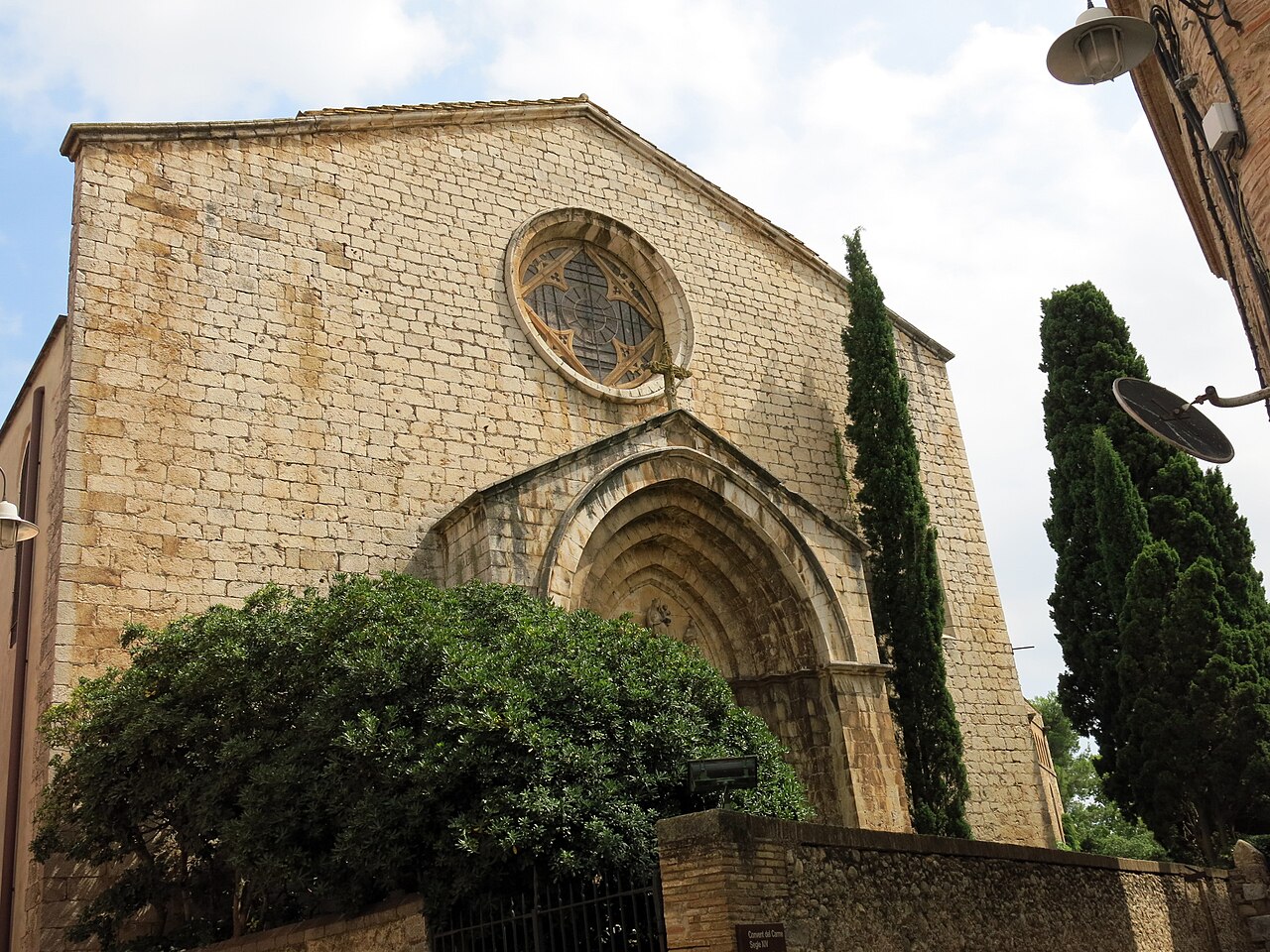
Among the places worth discovering are Sant Martí Church, the former hospital, the Carmelite convent, remnants of the old town walls, the Portal del Comte and several other sites connected with Peralada’s medieval past.
The former Jewish quarter is also part of the town’s history. A Jewish community lived in Peralada during the Middle Ages, with its historic area located close to the Carmelite convent.
Another important figure associated with Peralada is Ramon Muntaner, who was born here in 1265. He was a soldier and chronicler, best known for his military campaigns and for writing the Crònica, one of the major historical chronicles of medieval Catalonia and the Crown of Aragon.
Walking through the old town at a relaxed pace allows visitors to discover architectural details, historic buildings and quiet corners that can easily be missed when travelling through the area too quickly.
Peralada Castle
Peralada Castle is undoubtedly one of the town’s most recognisable landmarks.
The present castle originated after the destruction of the original castle during the invasion of 1285. Over the centuries, the building underwent several transformations, eventually becoming the remarkable architectural complex visitors can see today.
Its appearance combines medieval elements with significant later renovations, particularly those carried out during the 19th century. The result is an elegant historic complex surrounded by gardens and other heritage spaces.
The castle and its associated buildings house important art and book collections. Its library is particularly noteworthy, with an exceptional collection of historic books and documents.
The complex also includes the former Carmelite convent, a Gothic building of considerable architectural interest. Its cloister and distinctive polychrome wooden ceiling are among its most remarkable features.
The Castle and Gastronomy
The castle is also closely connected with gastronomy and the wine tradition of the surrounding area.
Castell Peralada Restaurant has become one of the leading fine-dining destinations in the Empordà, offering cuisine centred on quality ingredients and the character of the region.
If you are planning to combine a visit to the castle with a gastronomic experience, it is advisable to check opening times and booking conditions in advance, as these may vary depending on the season, events and the programme of the complex.
Wine and Peralada’s Viticultural Tradition
Wine has been part of Peralada’s identity for centuries. The area’s viticultural tradition has become one of the town’s major gastronomic attractions.
Visitors can enjoy wine-related experiences, including tastings and visits connected with wine production and ageing.
These experiences offer an opportunity to understand the relationship between the Empordà landscape, agriculture and wine culture.
Traditions and Celebrations in Peralada
Peralada preserves a rich calendar of local traditions throughout the year.
One of the most distinctive is Carnival, when the traditional Ranxo is prepared. This communal dish has a long history and remains an important part of the local culinary heritage.
The celebration of Saint Martin, around 11 November, is another traditional occasion, with music, dancing and community activities.
Other celebrations throughout the year include Easter, Saint John’s Eve, the Castañada and Christmas traditions.
During the summer months, Peralada also becomes a particularly lively cultural destination thanks to its musical programme and concerts held in the surroundings of the castle.
Nature and the Muga River
A cultural visit to Peralada can also be combined with time in nature around the Muga River.
There are areas along the river where people have traditionally gone to relax and spend time outdoors, surrounded by trees and vegetation.
Years ago, one of these areas had stone picnic tables and several stone-built barbecues, where people would gather for outdoor meals. Times and regulations have changed, and making fires is no longer permitted in this area. The old barbecues should therefore be regarded only as part of the site’s past.
A little further down, the river reaches sections where the water can be calmer and wider, creating an environment that resembles a small natural river beach. Surrounded by vegetation and trees, the area can be particularly pleasant during the warmer months.
It is a lovely place to walk, relax and enjoy the landscape, while taking care around the river and respecting the natural environment.
How to Get to Peralada from Barcelona
Peralada is located in the northern part of Girona province, in the Alt Empordà region.
From Barcelona, the journey by car is approximately 140–145 kilometres, depending on the starting point and route. Under normal traffic conditions, the drive generally takes around 1 hour 30 minutes to 1 hour 45 minutes, although journey times can be considerably longer during periods of heavy traffic.
The most common route is to take the AP-7/E-15 north towards Girona and France, continue towards Figueres and then follow the road towards Peralada.
Once in the town, the historic centre and the castle area can be explored comfortably on foot.
How Much Time Should You Spend in Peralada?
For a first visit, we recommend allowing at least half a day. This gives you enough time to explore the historic centre, discover its main heritage sites and visit the area around Peralada Castle.
If you would also like to enjoy a gastronomic experience, take part in a wine-related activity or spend some time beside the Muga River, allowing a full day is a better option.
Peralada can also easily be included in a wider itinerary through the Alt Empordà, combining history, gastronomy, wine and nature.
Where to Stay in Peralada
For visitors wishing to stay overnight, there is a five-star hotel within the wider Peralada resort complex.
It is important to note that the hotel is not inside the castle itself. It is located within the surrounding resort and offers accommodation, a wine spa, dining options and experiences connected with wine and the Empordà landscape.
Room prices vary considerably according to the date, season and type of stay. As a general indication, rates may start at around €230–€250 per night, while prices can be higher during periods of strong demand.
There are also packages combining accommodation with gastronomy, wine experiences and spa treatments.
Peralada from Barcelona: A Different Kind of Getaway
Peralada is an excellent choice for a getaway from Barcelona when you are looking for something beyond a conventional city or coastal trip.
Its medieval history, historic centre, Peralada Castle, wine tradition, gastronomy and the natural surroundings of the Muga River allow visitors to enjoy several different experiences in a single day.
It is particularly appealing to travellers interested in historic villages, architecture, gastronomy and the landscapes of the Empordà.
Magic Dreams Barcelona Recommendation
At Magic Dreams Barcelona, we recommend discovering Peralada without rushing. A good itinerary is to begin with a walk through the historic centre, continue to Peralada Castle and its gardens, allow time to enjoy the local gastronomy and, when conditions are suitable, finish the day by exploring the natural surroundings of the Muga River.
Peralada has a special character: within a relatively short distance, you can move from medieval history to wine, from architecture to gastronomy and from cultural heritage to nature.
If you are looking for a different day trip from Barcelona, Peralada deserves a place on your Alt Empordà itinerary.



Copyright © 2016-2026 Magic Dreams Barcelona.