Begur – Magical Corners of Turquoise-Blue Water.
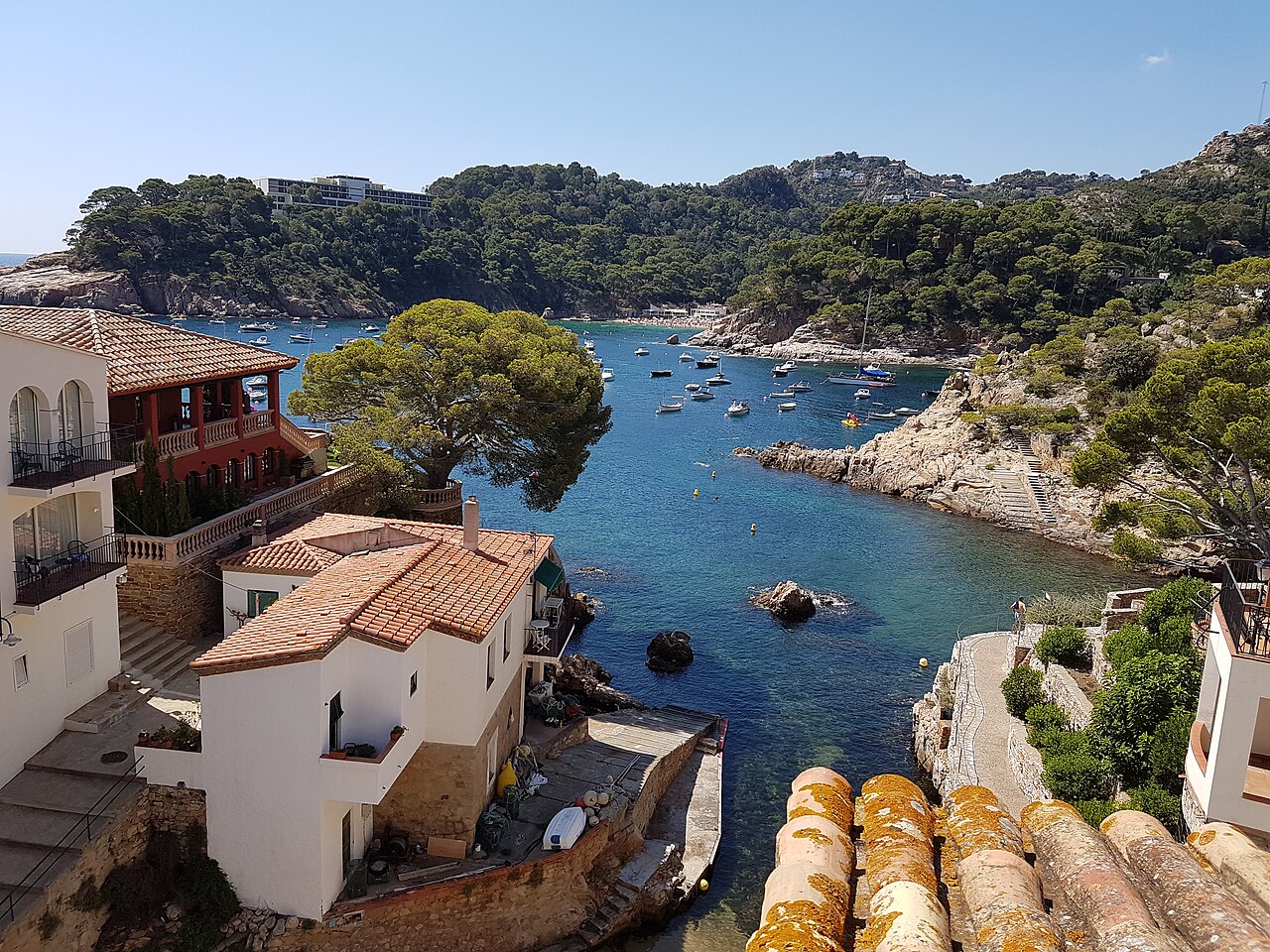
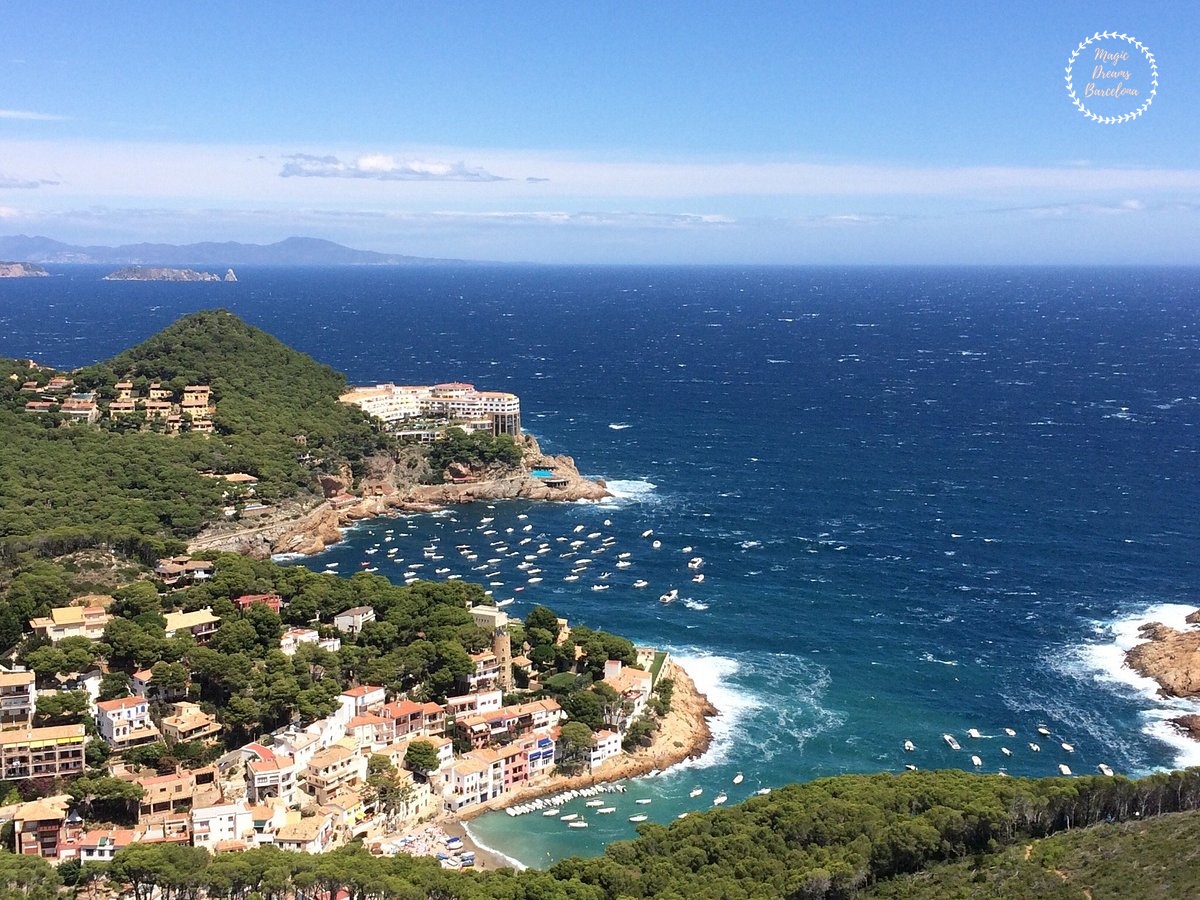
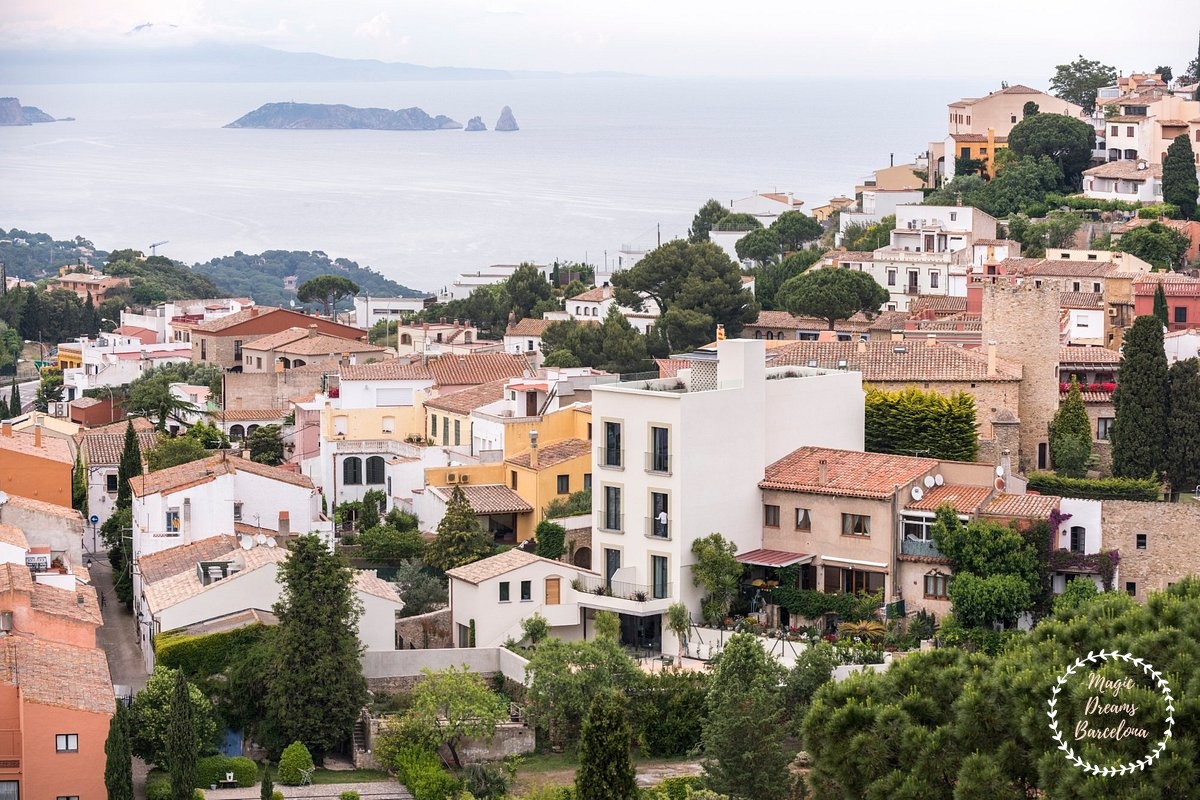
Perched on the hills of the Begur Massif and washed by the waters of the Mediterranean, we find one of the most distinctive corners of the Costa Brava. Begur combines a spectacular coastline of small coves, cliffs and pine forests with a historic old town full of character, Indian houses, old defensive towers and the remains of a medieval castle.
It is one of those places where it is well worth doing more than simply heading down to the beach. Begur invites you to wander through its streets, discover its viewpoints, follow one of its coastal paths, sit on a terrace, visit its old Indian houses and end the day admiring the Mediterranean from one of the elevated viewpoints around the municipality.
One of its main attractions is precisely this combination of the historic centre, the old castle, Esclanyà and its eight beaches and coves, creating a highly distinctive landscape.
Where is Begur and how far is it from Barcelona?
Begur is located in the province of Girona, in the Baix Empordà comarca, in the heart of the Costa Brava.
From Barcelona to Begur, it is approximately 130–135 kilometres by road, depending on the starting point and route chosen. Under normal conditions, the journey by car takes around 1 hour 40 minutes to 2 hours, although journey times can increase considerably in summer, at weekends and on bank holidays.
By road, the usual route from Barcelona follows the AP-7, taking the exit towards Vidreres and then continuing along the C-35 towards Sant Feliu de Guíxols, Platja d’Aro and Palamós. From there, continue towards Palafrugell and finally Begur.
How to get to Begur from Barcelona
By car
This is the most convenient option if you intend to explore the different coves, as many of them are some distance from the town centre and the access roads can be quite winding.
The journey is approximately 129–133 km and, without traffic, takes around 1 hour 40 minutes to 2 hours.
During July and August, it is advisable to set off early, especially if you want to visit Aiguablava, Sa Tuna or Sa Riera, as the roads and car parks can become very busy.
By bus
There is a direct bus connection between Barcelona Estació del Nord and Begur, operated by Moventis/Sarfa.
The journey takes around 2 hours 35 minutes and the indicative fare is approximately €23–€45 each way, depending on the date and ticket available.
Check Moventis timetables and buy tickets
This is an especially useful option if you do not want to drive, although once in Begur you will need to rely on local transport, taxis or seasonal buses to travel between the coves.
By train
Begur does not have a railway station. The nearest railway station is Flaçà, around 31 km away.
From Barcelona, you can take a train to Flaçà and then continue by bus to Palafrugell and Begur. The Tourist Office points out that there is no direct railway connection to Begur.
The combined journey can take more than 3 hours, making it less straightforward than the direct bus.
Bus services between the beaches
During the summer season, the Town Council operates the so-called Bus Platges, connecting Begur town centre and Esclanyà with the main beach areas: Sa Riera, Sa Tuna and Aiguablava.
It usually operates from around mid-June to mid-September, although it is advisable to check the exact timetable each season.
A little history of Begur
Begur is much more than a beach destination.
The town developed around its medieval castle and for centuries was closely connected with the sea, fishing, the coral trade and, later, cork production and emigration to the Americas.
One of the most fascinating chapters in its history is that of the Indians or Americanos. During the 19th century, more than 500 people from Begur crossed the Atlantic in search of their fortunes, particularly in Cuba. Some later returned with considerable wealth and built large colonial-style houses that can still be admired as you walk through the historic centre.
This heritage is so important that Begur even has the Interpretation Centre of the Indians of Catalonia, where admission and the heritage route with an audio guide are free.
Another important chapter in local history is linked to pirate attacks. The defensive towers built in the 16th century provided refuge during these incursions and still form part of Begur’s urban landscape today.
Begur medieval castle
At the highest point of the town stand the remains of the former Castle of Begur, documented since the early 11th century.
The castle was destroyed at different points throughout history, with the Napoleonic Wars bringing its final major destruction in 1810. Today, only remnants of the former structure remain, and the site is primarily used as a magnificent viewpoint.
From here, you can enjoy impressive views over the coast, the Medes Islands, the Bay of Ter, the Baix Empordà landscape and, on clear days, the Pyrenees.
At the summit, there is also a ceramic map that helps visitors identify some of the geographical features visible from this privileged location.
What to see in Begur town centre
If you spend a few hours away from the beaches, you will discover a completely different side of Begur.
Sant Pere Church
Sant Pere Church is one of the most important historic buildings in the old town. The original church is documented from 1199 and was enlarged between 1600 and 1624, following late Gothic architectural characteristics.
Inside, the small Chapel of the Blessed Sacrament is particularly noteworthy and is one of the corners worth discovering during a stroll through the town centre.
The Indian houses
As you walk around Begur, you will come across numerous houses built by the so-called Indians.
These colonial-style buildings reflect the prosperity achieved by some local residents after emigrating to the Americas. Casa Mas Carreras and Casa Pere Roger are among the finest examples.
The Cultural Casino
Built in 1870 on the initiative of the Indians, it was known as the Casino de los Señores or Casino Viejo. Today it forms part of the municipality’s cultural heritage and retains interesting architectural features, including large windows, mouldings and stone walls.
Les Escoles Velles
The former school buildings are also part of the local heritage. The building is now used for cultural and municipal purposes and retains a charming inner courtyard.
Carrer del Castell and Carrer de Vera
Two particularly interesting streets to explore are Carrer del Castell, a narrow, stepped street that once formed the natural approach to the castle, and Carrer de Vera, associated with Begur’s traditional coral traders.
You should also visit Es Pedrís Llarg, beside the church. This old stone bench was traditionally a meeting place where local residents would gather and chat.
Esclanyà, another side of Begur worth visiting
The municipality also includes the small village of Esclanyà, located to the north-west.
Here the landscape changes and the atmosphere is considerably more peaceful. Sant Esteve Church has been documented since 1280 and preserves elements from different periods of the Romanesque era.
You will also find the so-called Esclanyà Tower, belonging to the former castle, of which a rectangular tower with battlements remains. Traditionally, Esclanyà’s economy was associated with growing vines and olive trees and with tile production.
It is a highly recommended visit for those who want to discover the more rural and historic side of Begur.
Begur’s natural landscape: pines, holm oaks, cork oaks and Mediterranean vegetation
Begur’s landscape is closely linked to the Begur Massif, a coastal extension of the Catalan Coastal Range.
The vegetation is predominantly Mediterranean. There are extensive areas of stone pine, Aleppo pine and maritime pine, as well as holm oak and cork oak woodland.
There are also Mediterranean scrublands made up of rosemary, heather, rockroses and other species adapted to periods of drought and to the soils of the massif. Environmental studies of the municipality indicate that pine forests have occupied much of the land that was historically covered by holm oak and cork oak woodland.
In many places, this vegetation reaches almost to the sea, and it is precisely the combination of pines, rock, cliffs and crystal-clear waters that gives Begur one of its most characteristic landscapes.
Wildlife, birdwatching and butterflies
Nature lovers will find Begur an especially interesting area for observing Mediterranean wildlife.
The woodland is home to small mammals such as squirrels and foxes, as well as reptiles and a wide variety of smaller animals associated with pine forests, scrubland and rocky areas. Environmental studies of the municipality have also documented amphibian species in some streams, including the European tree frog and the natterjack toad.
Begur for birdwatchers
Around 65 bird species have been documented within the municipality, including woodland species and birds of prey such as the long-eared owl, eagle owl, goshawk, common buzzard, peregrine falcon and, occasionally, Eleonora’s falcon.
In the pine forests you may also spot species such as the coal tit, goldcrest, wryneck, Eurasian jay and great spotted woodpecker, depending on the time of year.
If you are interested in birdwatching, the paths and viewpoints around the massif are particularly rewarding during migration periods.
In the wider Baix Ter area and the Montgrí, Medes Islands and Baix Ter Natural Park, more than 300 bird species have been recorded. Those planning a dedicated birdwatching trip can therefore combine Begur with the nearby wetlands and natural areas.
What about butterflies?
Mediterranean scrubland, pine forests and flower-filled clearings also provide suitable habitats for a wide variety of pollinating insects and butterflies.
However, there is no single, up-to-date municipal list of butterfly species in Begur equivalent to the bird inventory. If your visit has a particular lepidopterological focus, we recommend planning it with a naturalist guide and extending your itinerary to nearby natural areas in the Baix Empordà.
Begur’s eight beaches and coves
The Begur coastline has eight main beaches and coves: Platja del Racó, Illa Roja, Sa Riera, Aiguafreda, Sa Tuna, Platja Fonda, Fornells and Aiguablava.
Each has a different character, which is precisely why it is worth visiting more than one.
Platja del Racó
Located near the boundary with Pals, this is a much larger beach than many of the other coves in the municipality.
From here you can enjoy magnificent views towards the Medes Islands and join the coastal path leading towards Illa Roja.
Illa Roja
It is probably one of the most famous images of this part of the Costa Brava.
Its enormous reddish rock, standing just offshore, gives the cove its name. It is traditionally a nudist beach and lies in a wild, rugged setting without the usual facilities found at other beaches.
The contrast between the reddish rocks, sand and turquoise water makes this one of those places where it is worth having your camera ready.
Sa Riera
At around 300 metres long, Sa Riera is one of Begur’s largest beaches.
It is one of the most convenient options for those looking for facilities, restaurants, bars and water sports.
Its name comes from the stream that once crossed the beach before flowing into the Mediterranean.
Aiguafreda
Aiguafreda is completely different.
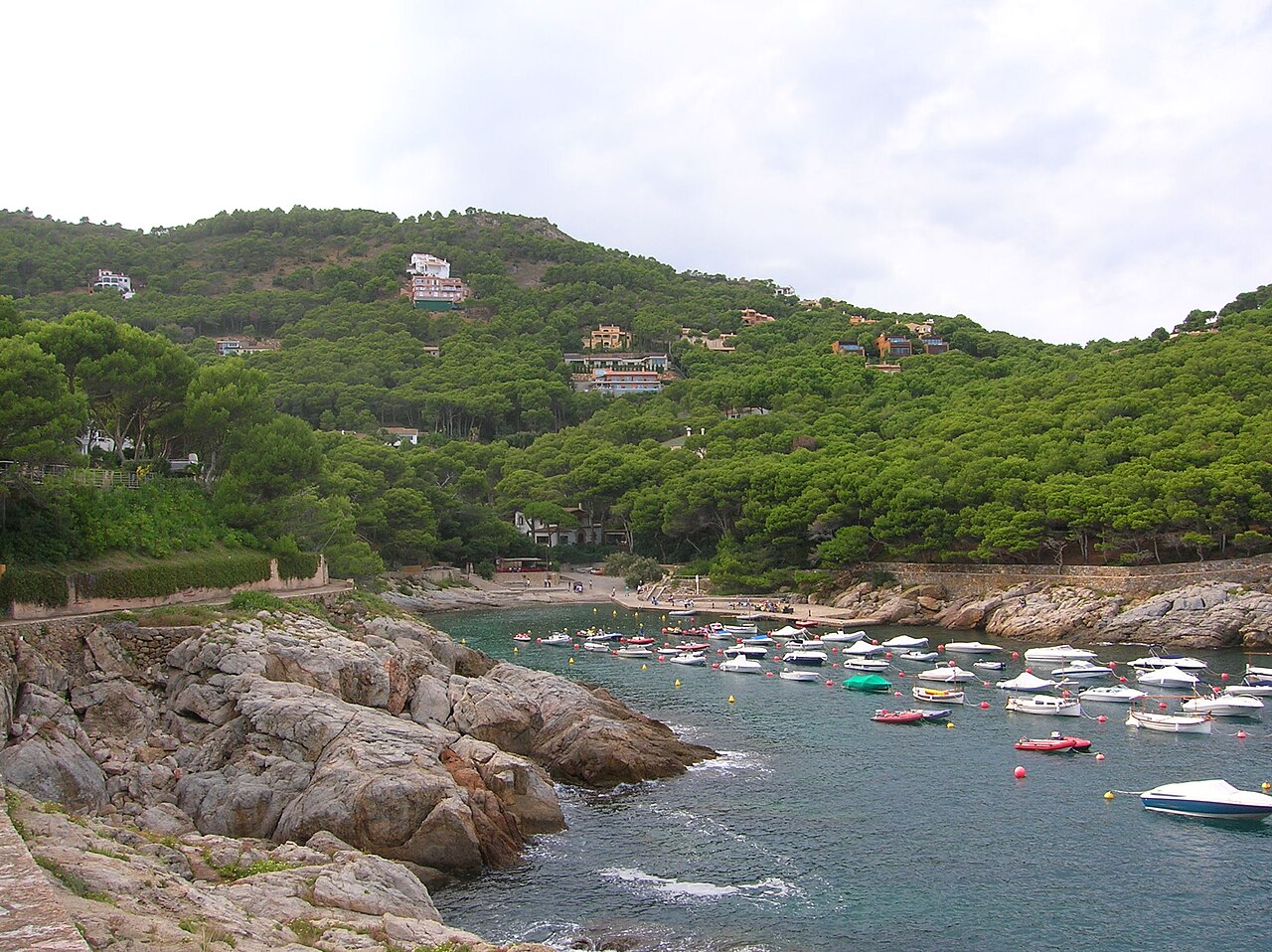
Small, sheltered and protected by Mount Rodó, it is surrounded by pine trees and has a small area equipped beside the water.
It is not a typical sandy beach, but rather a particularly interesting spot for snorkelling, rocky seabeds and tranquillity.
Sa Tuna
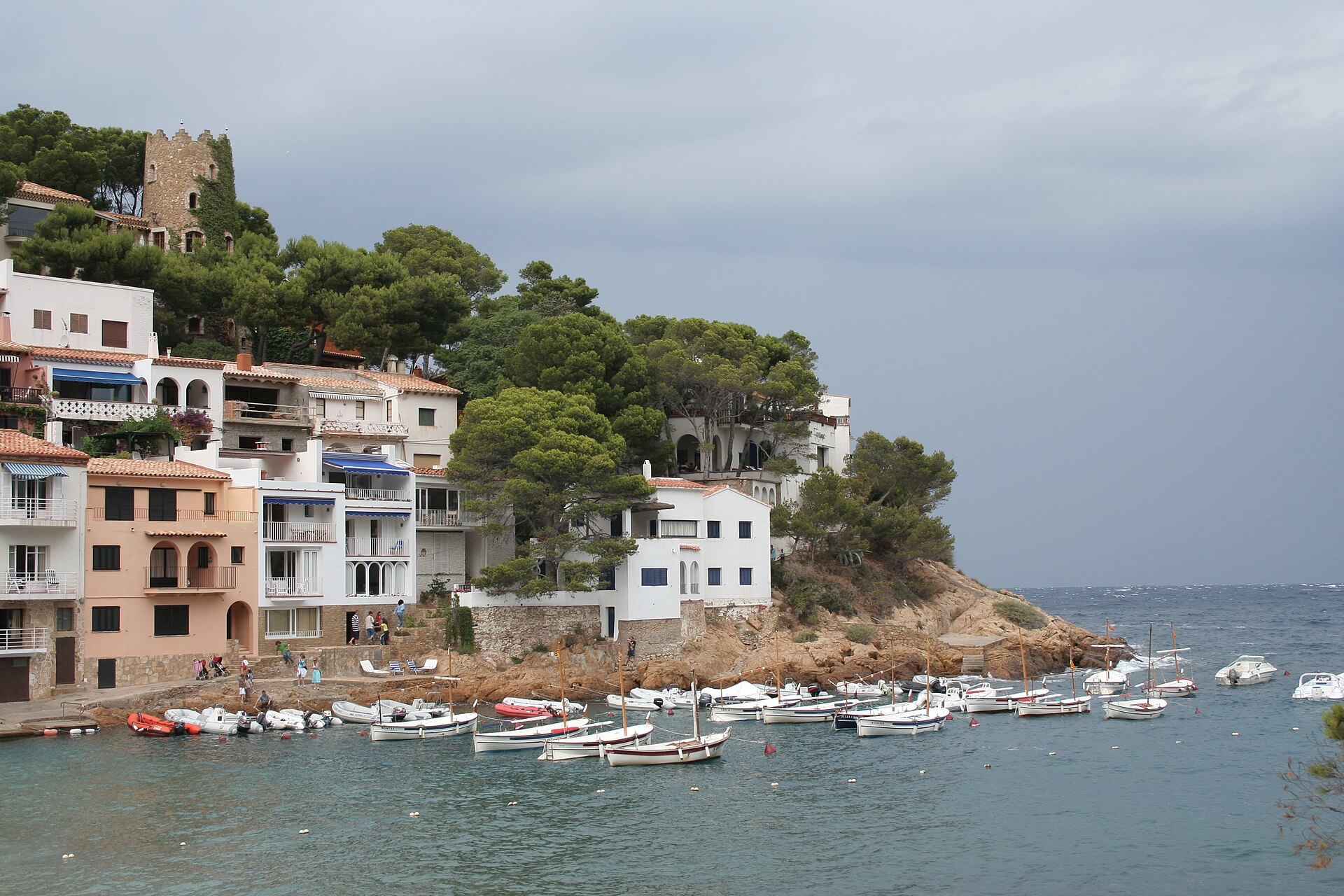
Sa Tuna still retains the appearance of a small fishing village.
Its houses beside the sea, protective rocks and crystal-clear waters make this cove one of Begur’s best-known locations.
It has access ramps and walkways, a bar, showers and a parking area. Public transport is also available in summer.
From Sa Tuna, you can walk along the coastal path to Aiguafreda.
It is also worth visiting the small Cala S’Eixugador, which can be reached on foot or by swimming from Sa Tuna.
Another curious spot is the Cova de Sant Pau, where you will find a naturally shaded area beside the beach. During the summer, habanera performances take place here, a tradition closely associated with the Catalan coast.
Platja Fonda
Below Cap de Begur lies Platja Fonda, a dark-sand beach contrasting with the intense blue of the water.
Access is more difficult than at some other beaches, as you have to descend a staircase, but this has helped preserve a more natural atmosphere.
Nearby is the stretch of coastline traditionally associated with the episode in which the poet Ferran Agulló is said to have used the name Costa Brava to describe this coastline.
Fornells
The Fornells area comprises several small coves: N’Estasia, Ses Orats and Cala d’en Malaret, connected by coastal paths.
It is a very pleasant area for walking beside the sea, admiring the houses built along the coast and discovering less obvious corners.
Aiguablava
Finally, we reach one of Begur’s best-known images.
Aiguablava, whose name literally means «blue water», is protected by Punta d’es Mut and the rocky outcrops of Cala de Cabres and Ses Falugues.
Pine and olive trees grow almost down to the water’s edge, while the purplish tones of the rocks contrast with the fine sand and shallow turquoise-blue waters.
The beach is approximately 75 metres long and 25 metres wide and has parking, showers, water sports, pedal-boat hire and restaurants.
The coastal paths: one of the best ways to discover Begur
If you want to discover the true essence of the coast, do not simply drive to the beaches.
The coastal paths connect different coves and reveal perspectives that cannot be seen from the road.
One of the most interesting routes connects Aiguafreda and Sa Tuna, although some sections involve steps and changes in elevation.
There is also the GR-92 route, which allows you to leave Begur towards Sa Tuna and continue through some of the wildest sections of the coastline.
For those who prefer viewpoints, Begur also has a Viewpoint Route with 17 locations, some accessible by car and others on foot. It can be enjoyed throughout the year.
Begur can also be enjoyed away from the beach
One of Begur’s great advantages is that you can plan a getaway even when the weather is not suitable for swimming.
In autumn and winter, the town centre becomes much quieter, allowing you to stroll among the Indian houses, visit the castle, explore Esclanyà, follow a hiking route or discover the viewpoints.
Spring is particularly appealing for combining nature and gastronomy, while summer brings the greatest activity to the coves, coastal paths, terraces, water sports and local festivities.
Ultimately, Begur is one of those destinations where the beach can be the beginning of your visit, but it certainly does not have to be the end.
Shopping and shops in Begur
You will also find an interesting range of shops.
The town centre has shops selling fashion and accessories, home décor, jewellery, food, wine and cellars, crafts, ceramics, beach products, books, art, cosmetics, hairdressing services and specialist goods.
So, as well as buying a souvenir of your trip, you can find local gastronomic products, Empordà wines, handicrafts and small items inspired by the Mediterranean.
The weekly market, together with various fairs and commercial activities, also helps keep the town centre lively outside the strictly summer season.
Customs, festivals and traditions
Begur’s culture is shaped by the sea, fishing, emigration to Cuba and its Indian heritage.
One of the best-known celebrations is the Fira d’Indians, held every year at the beginning of September.
During these days, the streets are transformed as the historic relationship between Begur and Cuba is recreated through a market selling overseas products, crafts, music, habaneras, performances and period-themed activities.
In 2026, the Fira d’Indians took place on 4, 5 and 6 September, with an edition dedicated to the theme of the sea and sailing.
Habaneras are also part of the musical tradition of the coast and can be heard during the summer at various venues.
Another important gastronomic tradition is the Rock Fish Gastronomic Campaign, held in spring and celebrating one of the most characteristic products of Begur’s coastline.
Where to eat in Begur?
Begur’s cuisine is directly connected with the Mediterranean.
You will find fish and seafood, rice dishes, traditional seafaring cuisine, seasonal dishes, Catalan specialities and contemporary proposals. Rock fish holds a particularly important place in the local culinary tradition.
Among the restaurants you may wish to consider are:
Restaurant Aigua Blava
Located in the Fornells area, its main attraction is the combination of traditional Catalan cuisine, Mediterranean produce and spectacular views over the bay.
The restaurant offers an à la carte menu, seasonal menus and special gastronomic options.
As a guide, the average à la carte price is around €40–€50 per person, although this may vary depending on your choice of dishes and wine.
https://www.restaurantaiguablava.com/
Restaurante Mar i Vent – Parador de Aiguablava
Another option worth considering if you would like to dine practically suspended above the Mediterranean.
The current menu includes starters such as Empordà anchovies, mussels, razor clams and squid; various rice dishes, fish from the local fish market, prawns and grilled meats.
As a 2026 price reference, the creamy rice with half a lobster is listed at €38 per person, the fish and seafood paella at €23 per person, fish from the fish market at €79/kg, and desserts at approximately €7–€8. The indicated average price for the restaurant is around €40.
https://paradores.es/es/restaurante-mar-i-vent-parador-de-aiguablava
Restaurant Turandot
Located in central Begur, this is an alternative for those who prefer to stay in the historic centre and combine dinner with a stroll through its streets.
El Racó de Sa Riera
An interesting option for eating close to Sa Riera beach, particularly if you want to combine a day at the beach with lunch without having to travel into the town centre.
Humo Begur
Located in the town centre, it offers a grill and fire-cooking concept, providing an alternative to exclusively seafood-based cuisine.
In any case, we recommend booking in advance during July and August.
Where to stay in Begur: three very different options
Parador de Aiguablava
Parador de Aiguablava – official website
Located on Punta d’es Mut, around 4 km from the centre of Begur, the Parador occupies one of the most spectacular locations in the area.
Its rooms, gardens, swimming pool and spa offer views over the Mediterranean. The building was reopened in 2020 and retains architecture inspired by the Mediterranean coast. It also houses a collection of more than 200 works by Catalan artists.
It offers double rooms, superior rooms and suites, a restaurant, bar, garden, gym, seasonal outdoor swimming pool, free parking and an electric vehicle charging station.
Spa at the Parador de Aiguablava
This is one of the main attractions for those looking for a wellness break.
The spa includes:
- Jacuzzi.
- Sauna.
- Steam room.
- Waterfall.
- Jet and hydrotherapy pool.
- Thermal loungers.
- Relaxation area.
- Outdoor solarium.
- Personalised treatments.
The basic circuit currently costs €45 for non-residents and €40 for hotel guests. Paradores Friends members have specific rates, while residents of Begur have a listed rate of €35.
The circuit is open from 10:00 to 20:00 and advance booking is essential for both the circuit and treatments.
As for accommodation, indicative rates of €124, €264 and €374 are offered depending on the category or board basis indicated in the table, so it is advisable to check the exact rate for your chosen dates.
Hotel Aigua Blava
Hotel Aigua Blava – official website
Hotel Aigua Blava is one of the Costa Brava’s historic establishments.
It was founded by Clara Capellà, known as «la Clareta», in 1934 and remains in the hands of the same family today.
Its location overlooking the Fornells and Aiguablava area provides magnificent sea views.
It offers:
- Heated outdoor swimming pool.
- Mediterranean gardens.
- Tennis.
- Padel.
- Gym.
- Children’s playground.
- Restaurant.
- Panoramic terrace.
- Private parking.
- Wellness area.
- Hairdressing and beauty salon.
Wellness at Hotel Aigua Blava
Its Wellness Area offers rooms for therapeutic massages, facial and body treatments, beauty treatments and beauty rituals.
Couples’ treatments are also available, using high-end cosmetic brands such as Natura Bissé, Kérastase, L’Oréal Paris, Scens and Germaine de Capuccini.
It is particularly appealing for those looking to combine the beach, gastronomy and wellness with a stay overlooking the Mediterranean.
The restaurant
Hotel Aigua Blava’s restaurant is open to the public and offers traditional Catalan cuisine based on fresh, seasonal produce.
You can choose from a lunch menu, seasonal menu, dinner menu, daily menu, wine list and special menus. Special gastronomic offerings are also organised, including rock-fish menus and Indian-inspired menus.
As a guide, the restaurant costs approximately €40–€50 per person à la carte.
In 2026, for example, Hotel Aigua Blava’s special rock-fish menu is offered at €80 per person, including water, Castell de Perelada wine and coffee.
For accommodation, indicative rates for Hotel Aigua Blava are €151, €301 and €421, depending on the rate and room category.
What is the best time to visit Begur?
Spring
Probably one of the most interesting seasons for those wanting to combine nature, hiking and gastronomy.
Temperatures are pleasant for walking along the coastal paths and the Mediterranean landscape begins to fill with flowers.
It also coincides with the Rock Fish Gastronomic Campaign, one of the municipality’s major culinary events.
Summer
This is the season for coves, swimming, snorkelling, water sports, terraces and evenings by the sea.
On the other hand, it is also when you will encounter the largest crowds, particularly at Aiguablava, Sa Tuna and Sa Riera.
If you are travelling in July or August, we recommend getting to the beaches early and booking restaurants and accommodation in advance.
Autumn
September is particularly pleasant. The sea remains warm and outdoor temperatures are generally milder.
Begur also holds its famous Fira d’Indians at the beginning of September.
Winter
This is the quietest season.
The beaches take on a completely different appearance and the coastal paths have a much more peaceful atmosphere.
It is a good time to explore the old town, Indian houses, Esclanyà, viewpoints, gastronomy and heritage.
Some of the viewpoint routes can also be enjoyed throughout the year.
A perfect day in Begur
You can start the morning by exploring the old town, visiting Sant Pere Church, the Indian houses and the area around the castle.
Then climb up to the old castle to enjoy the panoramic views.
Afterwards, head down towards Sa Tuna or Aiguafreda, walk a short section of the coastal path and finish with a swim if the season allows.
For lunch, choose one of the terraces in Sa Riera, Sa Tuna or Aiguablava, depending on where you are.
In the afternoon, head towards Aiguablava, explore Fornells and finish by watching the sunset from one of the viewpoints.
And if you would like to turn the day into a truly relaxing experience, you can book a spa circuit at the Parador or enjoy a Wellness treatment at Hotel Aigua Blava.
Begur, much more than a turquoise-water beach
Begur has a remarkable ability to surprise because beneath the image of its crystal-clear waters lie many other stories.
There is the Begur of fishermen and coral traders, of the Indians who returned from Cuba, of the towers built to protect the town from pirates, of the old paths towards Sa Tuna, of colonial houses, cork, habaneras and small coves hidden among the pine trees.
And, of course, there is the Mediterranean Begur of Aiguablava, Sa Tuna, Aiguafreda, Sa Riera, Illa Roja, Platja Fonda, Fornells and Platja del Racó — eight different corners that make every visit a little different.
For this reason, if you want to discover Begur in a different way, do not limit yourself to the photograph of Aiguablava cove.
Walk through its streets, climb up to the castle, discover its Indian houses, sit on a terrace, follow one of the coastal paths, visit Esclanyà, explore its forests and birdlife, and make time to enjoy the local gastronomy.
And if you would like to experience all this and discover Begur with us, get in touch through our contact form. We will tailor the experience to your preferences, the time of year you are travelling and the way in which you would like to discover this wonderful corner of the Costa Brava.






Copyright © 2016-2026 Magic Dreams Barcelona.