Oven-Baked Pork Knuckle with Creamy Mashed Potatoes.
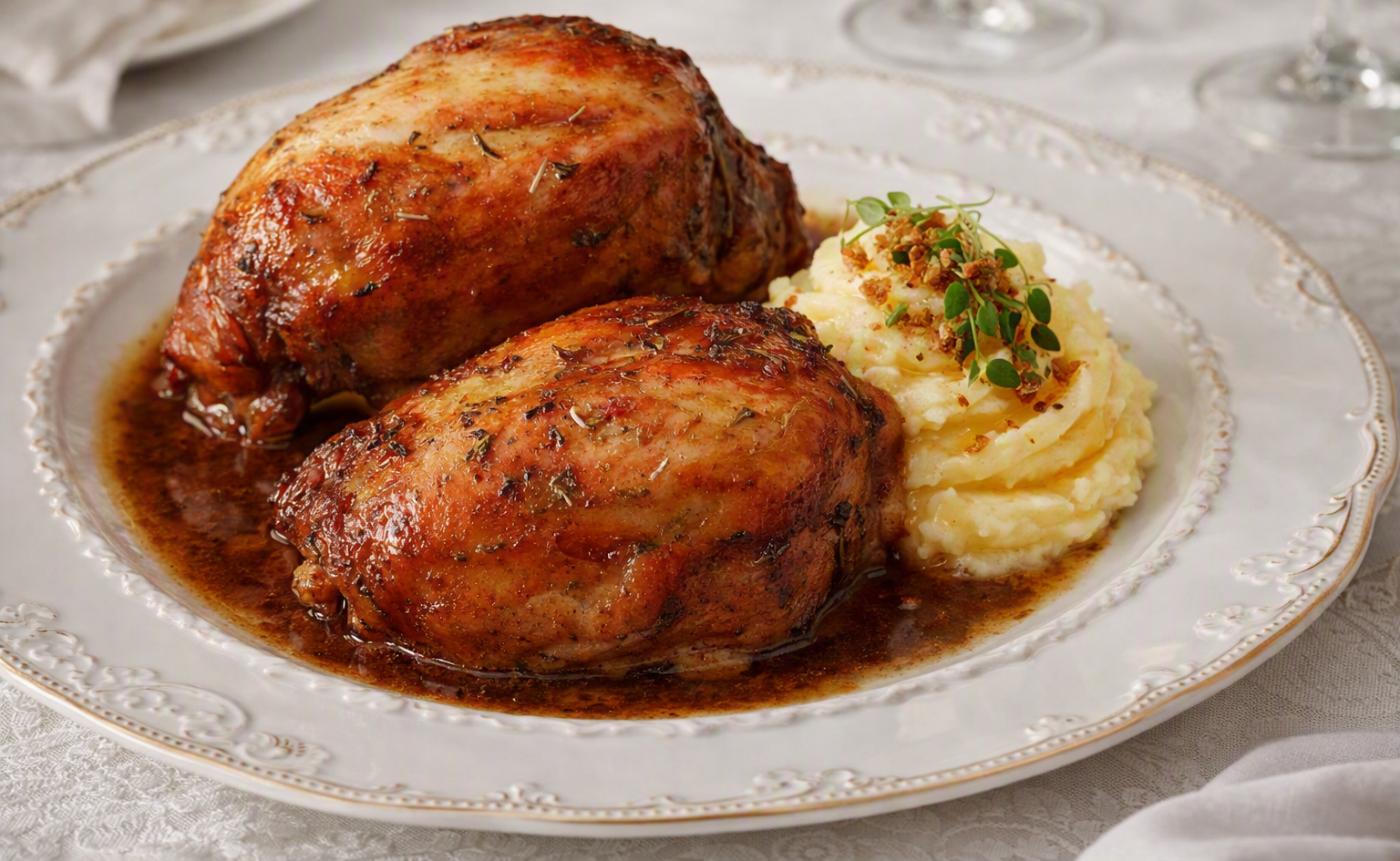
A traditional slow-cooked classic elevated into a refined gourmet experience
Some dishes simply need time to reveal their full character.
Oven-baked pork knuckle is one of them. A humble but exceptionally flavourful cut that, when slowly cooked, becomes tender, succulent and deeply aromatic.
In this gourmet version, the pork knuckles are first seared to develop a beautifully caramelised exterior before being slow-roasted over a rich base of vegetables, herbs and dry white wine.
The result is tender, succulent meat that almost falls away from the bone, finished with an elegant glaze made with honey, Dijon mustard, soy sauce and orange zest. The glaze provides shine, caramelisation and a delicate balance between sweetness, acidity and savoury depth.
The pork is served with silky, creamy mashed potatoes, enriched with butter and warm milk and designed to absorb every drop of the rich roasting sauce.
The result is a generous, sophisticated and comforting dish.
The soul of traditional cooking, presented with a refined gourmet finish.
Gourmet Oven-Baked Pork Knuckle
Serves 4
Ingredients
For the pork knuckles
- 2 fresh pork knuckles, approximately 1–1.2 kg each.
- 2 tablespoons extra-virgin olive oil.
- 1 large onion, chopped.
- 2 carrots, sliced.
- 1 leek, chopped.
- 1 celery stalk, chopped.
- 4 garlic cloves, lightly crushed.
- 2 bay leaves.
- 1 sprig fresh rosemary.
- 4 sprigs fresh thyme.
- 1 teaspoon black peppercorns.
- Coarse sea salt, to taste.
- 1 glass dry white wine.
- 500 ml beef stock.
For the gourmet glaze
- 2 tablespoons honey.
- 1 tablespoon Dijon mustard.
- 1 teaspoon soy sauce.
- Finely grated zest of ½ orange.
For the creamy mashed potatoes
- 1 kg potatoes, preferably floury potatoes.
- 80 g butter.
- 150–200 ml whole milk, approximately.
- Fine sea salt, to taste.
- White pepper, to taste.
- A pinch of nutmeg, optional.
- 1 tablespoon extra-virgin olive oil, optional, for finishing.
Method
01 · Begin with a proper sear
Remove the pork knuckles from the refrigerator shortly before cooking so they are not completely chilled.
Pat them thoroughly dry with kitchen paper.
Season generously with coarse sea salt and black pepper.
Heat a large ovenproof casserole or heavy-based frying pan with the extra-virgin olive oil.
When the oil is hot, add the pork knuckles.
Sear them slowly on every side, including the ends, until they develop a deep golden-brown crust.
This step is essential.
We are not simply colouring the meat. We are creating the caramelised flavours that will form the foundation of the finished dish.
Once beautifully browned, remove the pork knuckles and set them aside.
The Aromatic Base
02 · Build the vegetable foundation
Using the same casserole and taking advantage of all the caramelised juices left by the pork, add the onion, leek, carrots and celery.
Add the lightly crushed garlic cloves.
Cook over medium heat for approximately 8–10 minutes, stirring occasionally.
The vegetables should become tender and lightly caramelised.
Do not rush this stage.
Well-cooked vegetables will give the roasting sauce greater depth and complexity.
03 · Add the herbs
Add the bay leaves, rosemary, thyme and black peppercorns.
Stir for approximately one minute, allowing the herbs to release their aromas.
The fragrance should become rich, warm and distinctly Mediterranean.
04 · Deglaze with white wine
Pour in the dry white wine.
Using a wooden spoon or spatula, carefully scrape the bottom of the casserole to release all the caramelised juices.
Allow the wine to reduce by approximately half.
This concentrates the flavour and provides a subtle acidity that balances the natural richness of the pork.
Slow Roasting
05 · Prepare the pork for the oven
Preheat the oven to 160°C / 320°F.
Return the pork knuckles to the casserole, placing them over the vegetables.
Pour in the beef stock until it reaches approximately one-third of the height of the pork knuckles.
There is no need to completely cover the meat.
The aim is to create a moist cooking environment while allowing the upper surface of the pork to develop its own concentrated flavour.
Cover the casserole tightly with aluminium foil or its lid.
06 · Slow-cook until tender
Place the pork knuckles in the oven and cook for approximately 2 hours and 30 minutes.
Every 40–50 minutes, carefully remove the cover and baste the pork with its own cooking juices.
Cover again and return to the oven.
If the liquid becomes too reduced during cooking, add a little more hot stock.
The meat should gradually become exceptionally tender.
The ideal texture is reached when the meat can be easily pulled away with a fork while the pork knuckle still maintains its shape around the bone.
The Gourmet Glaze
07 · Prepare the finishing glaze
While the pork is cooking, prepare the glaze.
In a small bowl, combine:
- the honey,
- Dijon mustard,
- soy sauce,
- finely grated orange zest.
Mix until smooth and glossy.
The honey provides caramelisation and shine.
The Dijon mustard brings depth and gentle acidity.
The soy sauce adds savoury umami notes.
The orange zest introduces freshness and a delicate citrus aroma.
Together, these ingredients create a balanced glaze that complements the richness of the pork.
The Final Golden Crust
08 · Glaze and caramelise
After approximately 2 hours and 30 minutes, remove the cover.
Increase the oven temperature to 200°C / 400°F.
Brush the pork knuckles generously with the glaze.
Return them to the oven for 10–12 minutes.
Remove the tray.
Carefully turn the pork knuckles over.
Brush them again with the glaze and roast for another 10–12 minutes.
The surface should become deeply golden, glossy, caramelised and slightly crisp.
Watch carefully during the final minutes, as the honey can caramelise quickly.
The Roasting Sauce
09 · Turn the cooking juices into a gourmet sauce
Remove the pork knuckles from the roasting tray and keep them warm.
Strain all the cooking liquid through a fine-mesh sieve.
Press the vegetables gently to extract as much of their flavourful liquid as possible.
Transfer the liquid to a saucepan and bring it to a gentle simmer.
Reduce slowly until you obtain a concentrated, glossy sauce.
Taste and adjust the seasoning if necessary.
For an especially refined finish, strain the sauce once more before serving.
The final texture should be smooth, silky and intensely flavoured.
Silky Creamy Mashed Potatoes
10 · Cook the potatoes
Peel the potatoes and cut them into evenly sized pieces.
Place them in a saucepan, cover with cold water and season with salt.
Bring to a boil and cook until completely tender.
Drain thoroughly.
It is important to remove as much excess water as possible because we want a rich and concentrated mash.
11 · Create a restaurant-quality texture
Pass the hot potatoes through a potato ricer or food mill.
Avoid using a blender or food processor, as this can make the potatoes overly elastic and sticky.
Warm the milk separately.
Add the butter to the hot potatoes and mix gently.
Gradually add the warm milk while stirring until you achieve a smooth, luxurious consistency.
Season with fine sea salt, white pepper and, if desired, a small pinch of nutmeg.
For an additional Mediterranean touch, finish with a few drops of extra-virgin olive oil.
The finished mash should be silky, smooth and exceptionally creamy.
Gourmet Presentation
12 · Bring the dish to the table
Choose wide, neutral-coloured plates to highlight the golden tones of the pork.
Place a generous spoonful of creamy mashed potatoes in the centre.
Carefully position one pork knuckle on top or alongside the mash.
Drizzle the reduced roasting sauce over the meat, leaving part of the beautifully caramelised surface visible.
Add a few drops of sauce around the plate.
For a refined finishing touch, garnish with a few small thyme leaves or a little fresh rosemary.
Avoid over-decorating the plate.
The pork knuckle should remain the star.
The Secret to Perfect Pork Knuckle
The success of this recipe comes from combining three essential techniques:
Initial searing:
Creates a deeply flavoured, caramelised exterior.
Slow roasting:
Allows the collagen to break down gradually, producing exceptionally tender and succulent meat.
Final glazing:
Adds shine, caramelisation, crispness and a sophisticated balance of flavours.
Together, these three stages transform a traditional cut into a genuinely gourmet dish.
A Mash Worthy of the Dish
The mashed potatoes should not be treated as merely a side dish.
They play an essential role in the final composition.
Their soft, creamy texture balances the richness of the pork while allowing you to enjoy every drop of the concentrated roasting sauce.
Butter provides richness, while warm whole milk creates the luxurious texture without overpowering the natural flavour of the potato.
For an even more sophisticated result, choose high-quality floury potatoes and avoid overworking them once cooked.
Premium Tip
For an even deeper flavour, season the pork knuckles the night before and keep them refrigerated.
Before cooking, pat them thoroughly dry.
This helps season the meat more deeply and, importantly, allows you to achieve a more intense golden crust when searing.
You can also prepare the vegetable and wine base in advance, making the final cooking process easier when entertaining guests.
A Dish for Special Occasions
These oven-baked pork knuckles with creamy mashed potatoes are perfect for a special lunch, a family celebration or an elegant Sunday table.
The meat becomes tender and succulent.
The exterior develops a beautifully caramelised crust.
The roasting juices are transformed into an intensely flavoured sauce.
And the creamy mashed potatoes provide the perfect silky contrast.
It is traditional cooking elevated through patience, technique and carefully balanced flavours.
Slow cooking, deep flavour and a refined gourmet finish — the perfect way to transform a classic into an unforgettable dining experience.
Copyright © 2016-2026 Magic Dreams Barcelona.